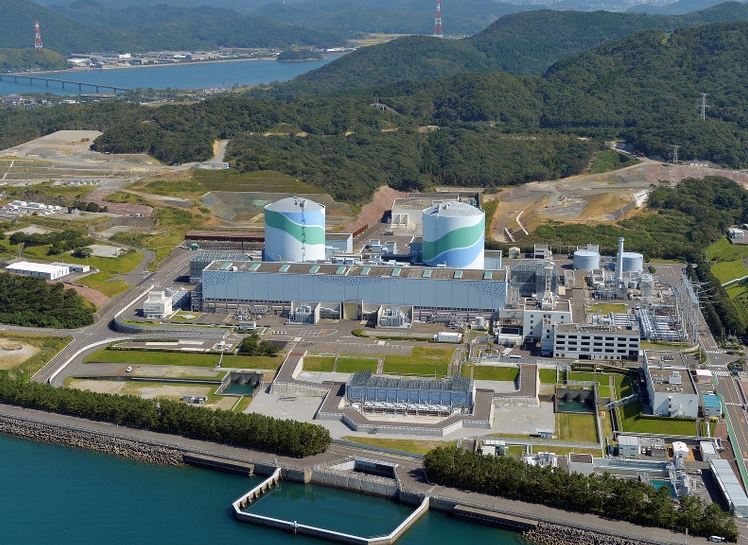
Japan’s Sendai nuclear reactor 1 offline because not meeting safety requirements
|
Nuclear reactor in southwestern Japan goes offline, https://www3.nhk.or.jp/nhkworld/en/news/20200316_35/ The operator of a nuclear power plant in southwestern Japan has suspended one of its reactors as it cannot meet the deadline for building mandatory facilities to deal with emergencies.Kyushu Electric Power Company began work to reduce output at the No.1 reactor at the Sendai plant in Kagoshima Prefecture at 2:30 a.m. on Monday. The reactor went offline at 1:01 p.m.
Kyushu Electric will start regular inspections on the reactor earlier than scheduled. This is the first time for a reactor to go offline because of its failure to meet the government’s new regulations. The regulations were drawn up in 2013 after the nuclear accident at the Fukushima Daiichi plant two years earlier. They require nuclear plant operators to construct facilities to ensure the safety of reactors in the event of emergencies such as acts of terror and aircraft crashes. The Nuclear Regulation Authority, or NRA, obliges the operators to erect such facilities within five years of construction plans being approved. Kyushu Electric says it aims to put the reactor back online after completing the necessary facilities by December and gaining approval from the NRA. The utility also plans to shut down the No.2 reactor at the Sendai plant in May for failing to meet the deadline. Kansai Electric Power Company is also expected to suspend the No.3 and No.4 reactors at the Takahama nuclear plant in Fukui Prefecture in August and October respectively for the same reason. |
|
Starting the Olympic torch relay in Fukushima should remind us of the dangers of nuclear power
 Starting the Olympic torch relay in Fukushima should remind us of the dangers of nuclear power https://www.japantimes.co.jp/opinion/2020/03/13/commentary/japan-commentary/starting-olympic-torch-relay-fukushima-remind-us-dangers-nuclear-power/#.XmvxdqgzbIU
BY CASSANDRA JEFFERY AND M. V. RAMANA 13 Mar 20, If the Tokyo Olympics are held on schedule, thousands of athletes will soon come to Japan. Considering the multiple reactors that melted down there nine years ago, in March 2011, the government’s decision to start the ceremonial torch relay in Fukushima Prefecture seems a bit odd, to say the least.
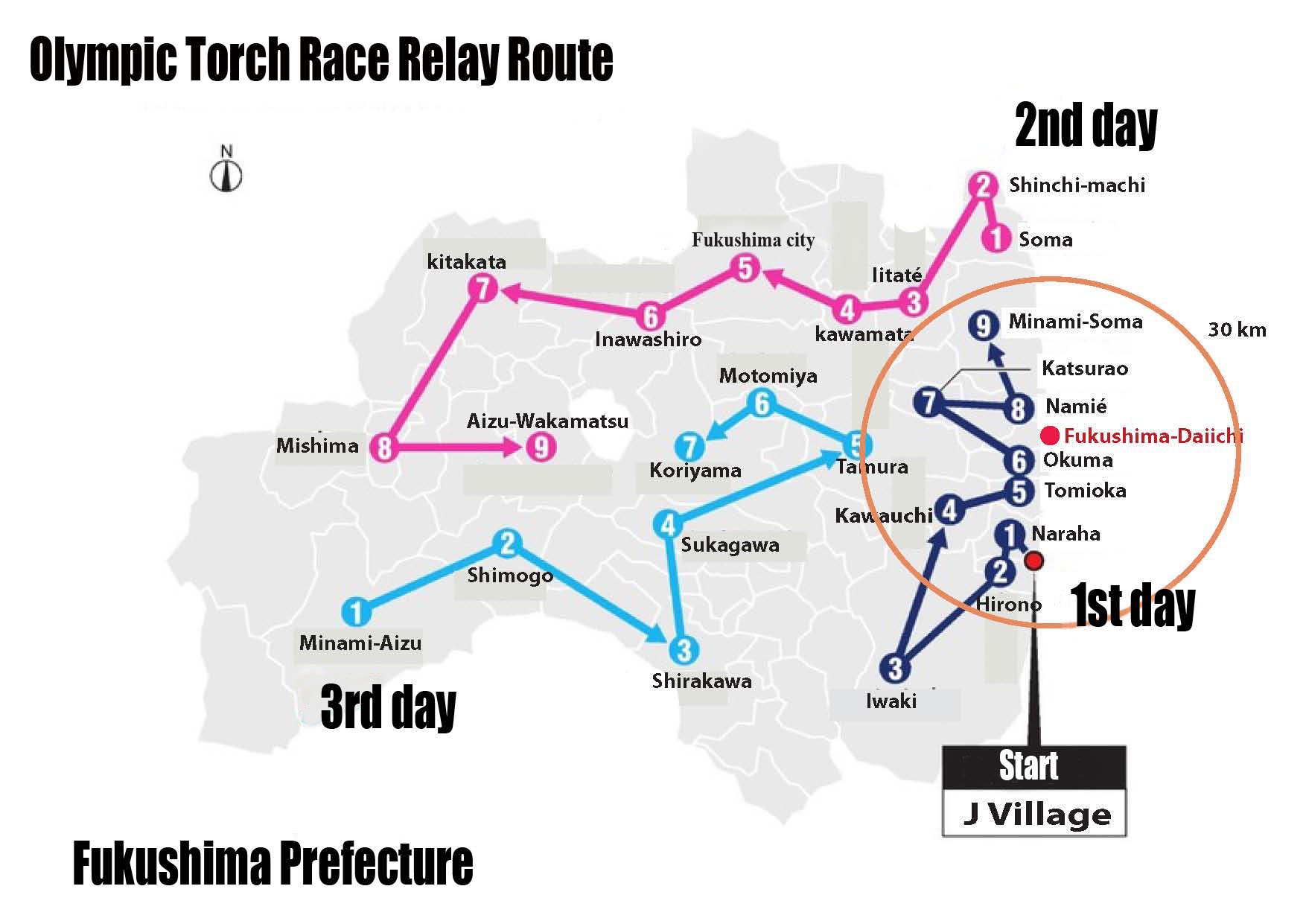
While radiation levels may have declined since 2011, there are still hot spots in the prefecture, including near the sports complex where the torch relay will begin and along the relay route. The persistence of this contamination, and the economic fallout of the reactor accidents, should remind us of the hazardous nature of nuclear power.
Simultaneously, changes in the economics of alternative sources of energy in the last decade invite us to reconsider how countries, including Japan, should generate electricity in the future.
Japan is not alone in having experienced severe nuclear accidents. The 1986 Chernobyl accident also contaminated very large areas in Ukraine and Belarus. As in Japan, many people had to be evacuated; about 116,000, according to the 2000 report of the U.N. Scientific Committee on the Effects of Atomic Radiation. Many of them never did return; 34 years after the accident, thousands of square kilometers remain closed off to human inhabitation.
Events such as these are, naturally, traumatic and result in people viewing nuclear power as a risky technology. In turn, that view has led to persistent and widespread public opposition around the world.
This is evident in Japan too, where opinion polls show overwhelming opposition to the government’s plans to restart nuclear plants that have been shut down. One poll from February 2019 found 56 percent of respondents were opposed to, with only 32 percent in favor of, resuming nuclear operations. Other polls show significant local opposition, one example coming out of Miyagi Prefecture. Even the Japan Atomic Energy Relations Organization, which aims to promote nuclear power, finds that only 17.3 percent prefer nuclear energy, with much larger majorities preferring solar, wind and hydro power.
There is also the immense cost of cleaning up after such accidents. Estimates for the Fukushima disaster range from nearly $200 billion to over $600 billion. In 2013, France’s nuclear safety institute estimated that a similar accident in France could end up costing $580 billion. In Japan, just the cost of bringing old nuclear power plants into compliance with post-Fukushima safety regulations has been estimated at $44.2 billion.
Even in the absence of accidents and additional safety features, nuclear power is already very expensive. For the United States, the Wall Street firm Lazard estimates an average cost of $155 per megawatt-hour of nuclear electricity, more than three times the corresponding estimates of around $40 per MWh each for wind and solar energy. The latter costs have declined by around 70 to 90 percent in the last 10 years. In the face of the high costs of nuclear power — economic, environmental and public health — and overwhelming public opposition, it is puzzling that the government would persist in trying to restart nuclear power plants.
To explain his support for the technology, Prime Minister Shinzo Abe claims that the country cannot do without nuclear power, especially in view of climate change concerns. The claim about the necessity of nuclear power makes little sense. Since 2011, the country has been generating only a fraction of the nuclear electricity it used to generate, and yet the lights have not gone off. Further, starting in 2015, Japan’s total greenhouse gas emissions have fallen below the levels in 2011, because of “reduced energy consumption” and the increase in “low-carbon electricity.” The latter, in turn, is because of an increasing fraction of renewable energy in electricity generation, a factor that could play an important role in the future.
Some, including the Global Energy Network Institute and a group of analysts led by Stanford University’s Mark Jacobson, argue that Japan could be 100 percent powered by renewable energy. Regardless of whether Japan reaches that goal, there is little doubt that Japan could be expanding renewable energy, and that increased reliance on renewables makes economic and environmental sense.
Instead, the Abe government seems to be involved in lowering incentives for the development of solar energy, and promoting nuclear power. Efforts by Abe to support the failing and flailing nuclear sector in Japan are indicative of the significant political power wielded by the “nuclear village,” the network of power companies, regulators, bureaucrats and researchers that controls nuclear and energy policy.
Moreover, Abenomics involves exports of nuclear components and technology, as well as conventional arms, as an important component. So far, despite many trips by Abe to various countries, Japan has yet to export any reactors in the last decade; a project with the most likely client, Turkey, collapsed because of high costs.
This suggests one possible explanation: Perhaps Abe realizes that before exporting nuclear reactors, he first has to shore up the domestic nuclear industry and prove that Japan has fully recovered from the 2011 nuclear disaster. But is that worth the risk?
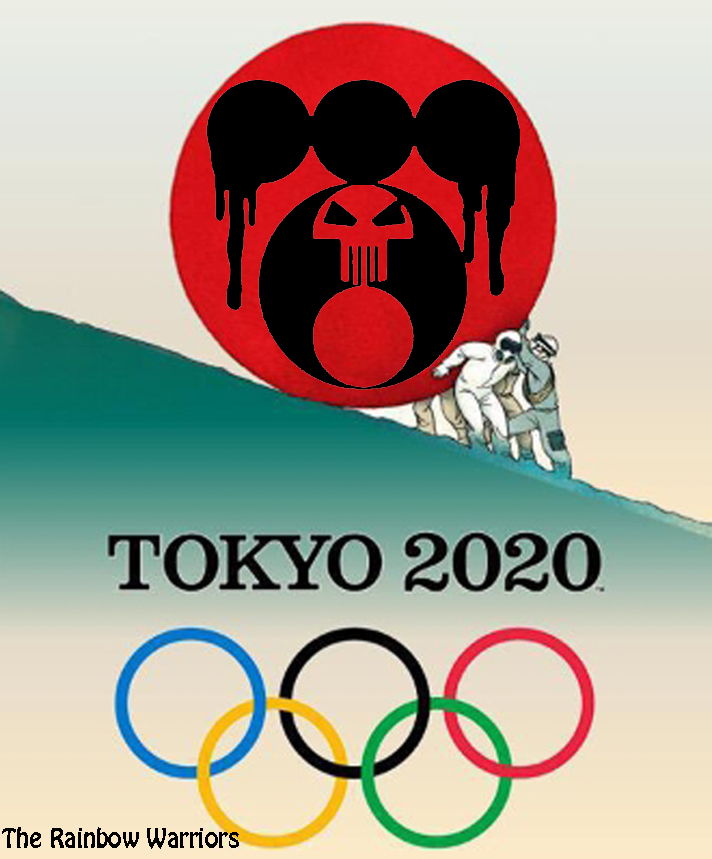
Restarting nuclear reactors or constructing new ones, should that ever happen, only increases the likelihood of more nuclear accidents in the future and raises the costs of electricity. Regardless of who we cheer for at the Olympic Games, nuclear power does not deserve our applause.
In Tokyo, a growing sense of angst over possible virus-hit Olympics
 A man walks in front of the Tokyo Metropolitan Government building on Feb. 25.
Mar 11, 2020
For weeks, Olympic organizers have relentlessly pushed a consistent message: The Summer Games in Tokyo will not be canceled or postponed.
On Wednesday, Olympic Minister Seiko Hashimoto called postponement “inconceivable,” pushing back on a Wall Street Journal report in which Haruyuki Takahashi, a member of the executive board for the Japanese organizing committee, suggested that the games could be delayed by one or two years if unable to be held as scheduled due to the coronavirus outbreak.
“With the star athletes in the middle of preparations for this event which happens only once every four years, a cancellation or delay to the Tokyo games is inconceivable,” Hashimoto said in a parliamentary committee. “A delay is not under consideration.”
But behind the scenes, sponsors who have pumped billions of dollars into the games have grown increasingly nervous about how the coronavirus outbreak will impact the event.
When organizers and sponsors met privately to discuss preparations last Wednesday, the companies learned there had been no decision on whether — or when — there would be any changes to the games.
“A lot of people are starting to worry, but there’s nothing much we can do,” a representative of an Olympic sponsor, who was present at the previously unreported meeting, said.
“If this continues into April, May, June, it will be an issue, but we’re still waiting to see what will happen,” added the representative, who was not authorized to speak to the media and spoke on condition of anonymity.
The meetings between the Tokyo 2020 organizing committee and “partner companies,” including sponsors, take place regularly. There were dozens of people present at the one last week.
“Nothing has been decided. On the inside, it’s a mess,” said a person briefed on the meeting, speaking on condition of anonymity because of the sensitivity of the matter.
The final decision belongs to the powerful International Olympic Committee chief, Thomas Bach. Companies such as Coca-Cola Co., Bridgestone Corp, Canon Inc., Toyota Motor Corp. and Panasonic Corp. sponsor the games, and Japanese brands have for decades been some of the most generous.
The IOC said on Wednesday that “the preparations for the Olympic Games Tokyo 2020 are continuing as planned.”
Tokyo 2020 organizing committee did not respond to a request for comment.
The meeting last week brought into focus the scale of what organizers are grappling with: pressure to avoid a coronavirus crisis among 600,000 expected overseas spectators and athletes at an event that could see $3 billion in sponsorships and at least $12 billion spent on preparations evaporate.
Takahashi, one of more than two dozen members of the board of the Tokyo 2020 organizing committee, said it has just started working on scenarios for how the virus could affect the games. But a sponsor representative present at the meeting last week said those plans are not being shared with the companies.
Prime Minister Shinzo Abe has staked his legacy as the longest-serving Japanese leader on staging a successful games and bringing a massive jolt, estimated at $2.3 billion, to the stagnant economy with tourism and consumer spending.
Some Olympic qualifiers and test events have been relocated or delayed. The games themselves don’t start until late July, leaving some time for the organizers to make the final call.
Neal Pilson, the former head of CBS Sports, who was involved in broadcasting rights negotiations for three Winter Olympics said he expected organizers to assess the situation by early May at the latest, when they “will have a better fix on whether the epidemic is tapering down or continuing to expand.”
Hashimoto said the end of May was a possible time frame for a decision.
Organizers have begun to modify their tone. At a news conference last week, Tokyo 2020 chief Yoshiro Mori vehemently denied that the games would be canceled, but added that planners were “listening to various opinions” and responding “flexibly because the situation changes day by day.”
Last week, Hashimoto was questioned in parliament on the clause in the contract between the IOC and the organizers in Japan that determines when the Olympic committee could terminate the games.
One of the scenarios is the inability of the host city to hold the Olympics in 2020.
The mention of the clause touched off speculation that the minister was hinting at a delay, which sponsors at last week’s meeting were told sparked the ire of the IOC.
As a result, Hashimoto called senior members of the Tokyo 2020 organizing committee to explain how she was “misunderstood.”
According to the contract, the Tokyo metropolitan government, the Tokyo 2020 organizing committee and the Japanese Olympic Committee signed away any right to indemnity, damages or compensation from the IOC.
The contract says the IOC may scrap the games when safety is “seriously threatened,” among other reasons.
Those three bodies have formed a task force on the virus that consults closely with the World Health Organization, which last week warned against “false hopes” that the virus would disappear with warmer summer weather.
Many sports in Japan, such as rugby and sumo, have held recent matches without spectators.
Although keeping spectators away would cost estimated $800 million in lost ticket sales, it could still provide billions in revenue from broadcast and marketing rights.
But experts said it would still be difficult to organize safe games with thousands of athletes living in close proximity.
“In the Olympic village alone, you’re bringing together 17,000-18,000 people, they’re living in close quarters, interacting with each other, coming from all over the world,” said Andrew Zimbalist, an economist at Smith College specializing in sports economics.
A Tokyo 2020 official involved in the discussions on Olympics and the virus said that delaying the games until later in the year would be difficult.
Takahashi, of the organizing committee, said a one- or two-year delay would better accommodate professional sports schedules, which are planned years in advance.
“We need to start preparing for any possibility. If the games can’t be held in the summer, a delay of one or two years would be most feasible,” Takahashi said.
Japan’s Olympic Games propaganda really tops the lies that cover up the Fukushima nuclear catastrophe
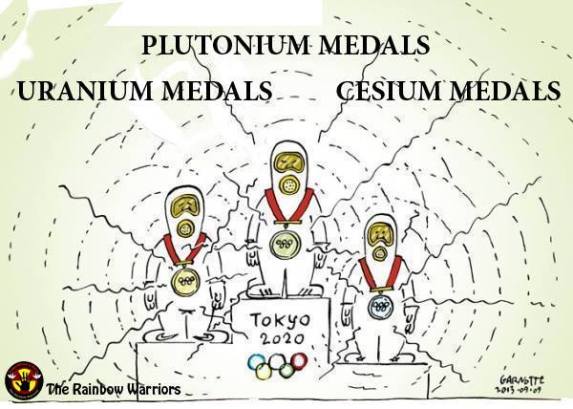
Japan’s Nuclear Cover-up Continues, Nine Years after the Fukushima Disaster, Fairewinds Energy Education, March 10, 2020 by Arnie Gundersen “……. 2020 Olympics
In order for Japan to win its Olympic bid in 2013, two years later, Japan’s next Prime Minister Abe stated that the Fukushima disaster was ‘under control’. This statement was also a blatant lie that succeeded in winning the bid to hold the 2020 Olympics in Tokyo at the expense of the taxpayers and residents of Japan. Don’t take Fairewinds word for it! Read what Japan’s former Prime Minister, Junichiro Koizumi said to Reuters in September 2016. Entitled Abe’s Fukushima ‘under control’ pledge to secure Olympics was a lie: former PM, Reuters wrote,
Japanese Prime Minister Shinzo Abe’s promise that the crippled Fukushima nuclear plant was “under control” in his successful pitch three years ago for Tokyo to host the 2020 Olympic Games “was a lie”, former premier Junichiro Koizumi said on Wednesday.
Frequent readers of the Fairewinds newsletter will remember last year’s posts entitled Atomic Balm 1 and Atomic Balm 2 in which Fairewinds Energy Education described in detail the path of deception that Japan has used to take the world’s attention off of the lives of its own people, who are still being compromised by the Fukushima Daiichi nuclear tragedy. The 2020 Olympics puts the media focus onto something else – so that the world continues to believe that nuclear power reactors are still a safe form of generating electricity.
This nine year legacy of lies by the government of Japan, nuclear incentivized governments worldwide, and the atomic industry are a harbinger for the seemingly inevitable approach of the 2020 Tokyo Olympics. Hopefully mainstream media covering the summer games will finally see through this glamorous marketing scam and identify the fact that Fukushima Prefecture remains severely radiologically contaminated. Real people, who are citizens of Japan, are seeing their health and that of their families being compromised for generations as they are forced to return to radiologically contaminated areas. Entire families and their communities are facing significant health risks simply to enable corporate profiteering of those investors, energy producers, banks, and government officials associated with the ongoing operation of nuclear power plants in Japan and around the world. https://www.fairewinds.org/demystify/japans-nuclear-cover-up-continues-nine-years-after-the-fukushima-disaster
Fukushima’s huge accumulation of radioactive water – a pressing problem as Olympics approach
 Contaminated water at nuclear plant still an issue ahead of Tokyo Olympics, https://www.thecanary.co/global/world-news/2020/03/10/contaminated-water-at-nuclear-plant-still-an-issue-ahead-of-tokyo-olympics/ Work to deal with contaminated water at Japan’s Fukushima nuclear power plant continues as the Olympic Games approach.
Inside a giant decontamination facility at the destroyed plant, workers in hazmat suits monitor radioactive water pumped from three damaged reactors.
The decontamination process is a key element of a contentious debate over what should be done with the nearly 1.2 million tons of still-radioactive water being closely watched by governments and organisations around the world ahead of this summer’s Tokyo Olympics.
The plant’s operator, Tokyo Electric Power Company, or Tepco, says it needs to free up space as work to decommission the damaged reactors approaches a critical phase. It is widely expected that Tepco will gradually release the water into the nearby ocean following a government decision allowing it to do so.
The company is still vague on the timing.
But local residents, especially fishermen, are opposed to the plan because they think the water release would hurt the reputation of already battered fisheries, where annual sales remain about half of the level before the nuclear accident, even though the catch has cleared strict radioactivity tests.
Tepco chief decommissioning officer Akira Ono says the water must be disposed as the plant’s decommissioning moves forward because the area used by the tanks is needed to build facilities for the retrieval of melted reactor debris.
Workers are planning to remove a first batch of melted debris by December 2021.
Remote control cranes are dismantling a highly contaminated exhaust tower near Unit 2, the first reactor to get its melted fuel removed.
At Unit 3, spent fuel units are being removed from a cooling pool ahead of the removal of melted fuel.
The dilemma over the ever-growing radioactive water is part of the complex aftermath of the magnitude 9.0 earthquake and tsunami that hit on March 11 2011, destroying key cooling functions at the Fukushima Dai-ichi plant.
Three reactors melted, releasing massive amounts of radiation and forcing 160,000 residents to evacuate.
About 40,000 still have not returned.
Except for the highly radioactive buildings that house the melted reactors, most above-ground areas of the plant can now be visited while wearing just a surgical mask, cotton gloves, a helmet and a personal dosimeter.
The area right outside the plant is largely untouched and radiation levels are often higher.
The underground areas remain a hazardous mess.
Radioactive cooling water is leaking from the melted reactors and mixes with groundwater, which must be pumped up to keep it from flowing into the sea and elsewhere.
Separately, even more dangerously contaminated water sits in underground areas and leaks continuously into groundwater outside the plant, experts say. The contaminated water pumped from underground first goes through caesium and strontium removal equipment, after which most is recycled as cooling water for the damaged reactors.
The contaminated water pumped from underground first goes through caesium and strontium removal equipment, after which most is recycled as cooling water for the damaged reactors.
Katsumi Shozugawa, a radiology expert at the University of Tokyo who has been analysing groundwater around the plant, said the long-term consequences of low-dose exposure in the food chain has not been fully investigated.
“At this point, it is difficult to predict a risk,” he said.
“Once the water is released into the environment, it will be very difficult to follow up and monitor its movement.
“So the accuracy of the data before any release is crucial and must be verified.”
After years of discussions about what to do with the contaminated water without destroying the local economy and its reputation, a government panel issued a report earlier this year that narrowed the water disposal options to two: diluting the treated water to levels below the allowable safety limits and then releasing it into the sea in a controlled way, or allowing the water to evaporate in a years-long process.
The report also urged the government to do more to fight the “reputational damage” to Fukushima fishing and farm produce, for instance by promoting food fairs, developing new sales routes and making use of third-party quality accreditation systems.
Tepco and government officials promise the plant will treat the water for a second time to meet legal requirements before any release.
At the end of a tour of the treatment facility, a plant official showed journalists a glass bottle containing clear water taken from the processing equipment.
Workers are required to routinely collect water samples for analysis at laboratories at the plant.
Radiology technicians were analysing the water at one lab.
Officials say the treated water will be diluted with fresh water before it is released into the environment.
Doubts about the plant’s water treatment escalated two years ago when Tepco acknowledged that most of the water stored in the tanks still contains cancer-causing caesium, strontium and other radioactive materials at levels exceeding safety limits.
Renewable energy push for Fukushima
|
Nine years since nuclear disaster, Fukushima looks to hydrogen as recovery efforts chug along, https://www.straitstimes.com/asia/east-asia/nine-years-since-nuclear-disaster-fukushima-looks-to-hydrogen-as-recovery-efforts11 Mar, 20 TOKYO – Fukushima is staking its future on renewable energy, taking the lead in a country that is not just squarely wedded to coal-fired power, but also reluctant to give up nuclear energy.This despite the anniversary on Wednesday (March 11) of the devastating triple tragedy nine years ago.
One of the world’s biggest renewable-based hydrogen power facilities was opened in Fukushima last Saturday, in the town of Namie that is home to just 1,100 people, or 5 per cent of the pre-disaster population. Many municipalities in the hardest-hit coastal areas of north-east Japan remain ghost towns, despite exclusion orders being gradually lifted, as former residents do not return. The full decommissioning of the crippled Fukushima Daiichi nuclear power plant is expected to continue until 2040 at best, while local fishermen despair over the increasing likelihood that water from the plant will be released into the Pacific Ocean. Japanese experts say all radioactive particles, except harmless tritium, would have been removed in the treatment process. Still, there are concerns that the move will further hurt a region already suffering from “toxic rumours” that have reduced demand for its produce despite stringent testing standards. Much of Japan observed a minute of silence at 2.46pm on Wednesday as emotions remain raw, especially among those directly affected by the catastrophe. It was the fateful time, down to the minute, when a magnitude 9.0 earthquake triggered 14m-high monster waves that caused nuclear meltdowns in three reactors at the Fukushima Daiichi plant. It was one of the world’s worst nuclear tragedies. Latest National Police Agency figures show a death toll of 15,899 people, with 2,529 missing. Another 3,739 people died owing to disaster-related causes, the Reconstruction Agency said. As many as 470,000 people fled their homes at the peak of the nuclear disaster, but more than 47,000 still have not returned. While many official memorial ceremonies were either scaled down or cancelled because of the coronavirus outbreak, Prime Minister Shinzo Abe vowed that the government will continue providing “seamless support to rebuild the lives of victims”. This involves not just physical infrastructure – including homes and retail businesses – to improve the living environment, but also support for new industries like that of renewables. The initial plan was to abolish the Reconstruction Agency in March 2021. But after 32 trillion yen (S$424.5 billion) was spent on rebuilding, the government decided to keep the organisation for another 10 years. Meanwhile, the Japanese government and Fukushima Daiichi operator Tokyo Electric Power Company (Tepco) continue to face civil lawsuits from Fukushima evacuees, although the sole criminal case arising from the disaster ended in a “not guilty” verdict last year. There are about 30 such civil lawsuits throughout the country. In the latest decision in favour of the plaintiffs, the Sapporo District Court on Tuesday ordered the government and Tepco to pay 52.9 million yen in damages to 89 people who evacuated to Hokkaido. Another judgment, by the Sendai High Court, is expected on Thursday. Still, Mr Abe has branded the upcoming Olympic Games as the “Reconstruction Olympics” to show the world how the region has recovered. The Olympic torch relay, which will pass through all 47 of Japan’s prefectures, is set to flag off on March 26 from the J-Village soccer training facility. It is just 20km from the nuclear plant and viewed as one of Fukushima’s key symbols of reconstruction. But environment group Greenpeace Japan had flagged in a report on Monday that typhoons like Hagibis, which battered the region last year, had created new radiation hot spots in areas that were previously cleared by the authorities. “It is vital to constantly monitor radiation levels and carry out decontamination work,” said Greenpeace representative Kazue Suzuki. Its survey found 40 hot spots with radiation levels more than four times the government’s decontamination standard of 0.23 microsievert per hour, including one with 71 microsieverts per hour near the J-Village complex. Long-term Fukushima residents, including Mr Nobuyoshi Ito, who lives in Iitate Village, have yielded similar results in grassroots surveys. “Perhaps, for runners passing through, the exposure is not very high, but the situation is still not ideal for those who have returned and are exposed to the radiation 24 hours a day, 365 days a year,” the 76-year-old said. “No matter how much money has been put into this, it is evident that full reconstruction or recovery back to how lives were before the disaster is not possible,” Mr Ito added. “That is the reality of a nuclear disaster.” |
|
Japan may have to cancel the Olympics
Covid-19 could scupper Prime Minister Abe Shinzo’s pet project

March 7, 2020
IF BANYAN HAD to choose one country in which to ride out a pandemic, it would surely be Japan. Early 19th-century woodblock prints of bathing testify to Japan’s old and admirable cult of cleanliness. Modern Japanese have for years been quick to don a face mask at the first sniffle, out of consideration for others. And the population responds swiftly to public messaging.
Hygiene measures advocated against covid-19 since mid-January emphasise frequent washing of hands. This has surely helped slow the spread of the coronavirus, especially given that of Japan’s 1,035 covid-19 cases and 12 deaths, most are associated with a cruise ship held for weeks off Yokohoma. One striking and positive side-effect is already apparent: unlike in Europe or America, doctors report sharp falls in cases of ordinary flu, not only compared with previous years but also with the first part of the winter. Given that 3,300 deaths were attributed to flu in Japan in 2018, the good hygiene inculcated in recent months may well have saved far more lives than covid-19 has claimed.
For all that, social strains have shown in recent days. In Tokyo scuffles have broken out in queues for facemasks outside pharmacies. Panic-buying of toilet paper has left shelves bare. A photograph of toilet rolls in a public lavatory chained to their dispenser with a bicycle lock has done the rounds. While hardly “Lord of the Flies”, it is all highly unusual in such a well-behaved country.
Blame a squall of doubt over the government of the usually assertive prime minister, Abe Shinzo. His problems seem, precisely, to have begun with the cruise ship, the Diamond Princess. When cases of covid-19, contracted overseas, became clear among the 3,700 people aboard, measures to isolate them failed badly. The vessel was, as one passenger put it, a floating petri dish, as the number of infected soared to over 700, with seven deaths. Extraordinarily, crew were eventually let ashore from the infected vessel, and Japanese passengers allowed to return home on public transport, with no further quarantine measures.
When it comes to bumbling crisis management, Japan has form. After the Kobe earthquake in 1995, yakuza (gangsters) set up soup kitchens, so slow was government help to arrive. Bureaucratic disarray ruled in the Diamond Princess’s handling, too. European ambassadors with nationals aboard complained they did not know who in the government to call. Fans wondered whether Mr Abe, invisible during the crisis, had lost his touch. His hitherto unassailable poll ratings fell sharply.
To contain the damage to his reputation as well as the coronavirus, on February 27th Mr Abe took the initiative, telling all schools to close until April. Preparing for the worst, he rushed through legislation this week allowing a state of emergency to be declared. And he unveiled an emergency spending package.
The assertive Abe, then, is back. So much so that questions are growing about what expert advice, if any, he drew on for his schools decision. New social stresses will surely emerge, not least for working mothers (it never seems to be fathers) who must now drum up weeks of day-time childcare. “The government does not grasp what it’s like to raise children,” one mother complains.
The government claims that Japan will return to normal in April. That seems implausible. A state visit by China’s president, Xi Jinping, which was supposed to put the two countries’ listing relationship on an even keel, has already been postponed. There is little political cost to Mr Abe—after all, nationalists who backed his rise to power had been grumbling about his hosting the Chinese dictator.
Much more rides on the Olympic Games in Tokyo this summer. Mr Abe intends them to foster the patriotism whose absence among ordinary Japanese he laments. He wants the games to make Japan seem open, global and even multicultural. And, though vastly over budget, they are to crown the prime minister’s seven-year rule.
To cancel the games would generate not only disappointment among ordinary Japanese but anger at the wasted expense they have already had to bear. But a pandemic would take the decision out of his hands—not least, says Nakano Koichi of Sophia University, because the Olympic village would be “a cruise ship on land”. Bet on a postponement of the games at the very least, and on a long delay before the prime minister’s popularity shines again.
Will coronavirus cancel the Tokyo 2020 Olympics?
March 6, 2020
Games on? Or Games over?
It would be one of the biggest sports news stories ever.
The postponement – or cancellation – of the world’s greatest sporting mega-event because of coronavirus would be unprecedented in peacetime.
The 2020 Olympics are due to take place in Tokyo from 24 July to 9 August – here are some of the key questions as the Olympic movement faces up to unchartered territory.
What is the latest in Japan?
There is inevitably mounting concern; Japan’s proximity to China where the outbreak began, the postponement of Tokyo 2020 volunteer training, the restrictions placed on last weekend’s Tokyo marathon where only elite runners were allowed to participate, the suspension of J-League matches and other sports events, and the country’s closure of schools.
The Asia Sevens rugby tournament, which was due to be a pre-Games test event held in Tokyo next month, was cancelled on Wednesday.
The news came just as International Olympic Committee (IOC) president Thomas Bach was facing the media in Lausanne, after a two-day executive board meeting.
Tokyo 2020 organisers had also agreed to scale back the torch relay in response to coronavirus, with the lighting of the flame due to take place in Greece next week.
Japan’s Olympics minister broke ranks on Tuesday, saying that Tokyo’s contract with the IOC allowed for the Games to be postponed until later this year.
What has the IOC said?
 President Thomas Bach says the IOC remains ‘fully committed’ to Tokyo 2020
At the news conference on the banks of Lake Geneva, Bach fended off a barrage of questions about whether the Olympics could be delayed.
The admission 24 hours earlier from Japan’s Olympics minister perhaps forced Bach into a hastily arranged and unscheduled statement, in which he tried to make clear his confidence the event would proceed as planned, and urged athletes to prepare “full steam”.
At his news conference the following day, Bach struck an even more defiant tone.
He denied having a ‘Plan B’, refused to be drawn on when any decision could be made and remarkably insisted that the words “cancellation” and “postponement” were not even mentioned during the meeting.
The president did admit to a “challenge” when it came to the cancelling of some qualifying events, as has the International Paralympic Committee (IPC), which has also said qualification criteria will be reviewed as a result.
In a letter to athletes on Thursday, Bach seemed to reveal a little more realism, admitting the coronavirus was “a major concern for all of us” and was “a major subject of discussion” at the executive board meeting.
When asked what exactly his confidence was based on, Bach referred to the guidance the IOC is receiving from the World Health Organisation, part of a dedicated task-force that is now in regular dialogue, without explaining what that advice actually was.
Why no ‘Plan B’?
Bach’s reassuring messaging will no doubt be welcomed by many in Japan, the Olympic movement, its stakeholders, and many athletes.
But some may wonder whether the president is in denial. Or merely delaying the inevitable. Others will ask if it is irresponsible or naive not to have a contingency plan.
The reality is the IOC almost certainly does have a ‘Plan B’. Insiders explain that it always does for unforeseen events at the Olympics, ranging from terrorism and war to natural disasters and boycotts.
As Bach – a man who never gives the impression of panicking – explained in Lausanne, he has been faced with challenges ahead of previous Games before – from the Zika virus and Russia’s state-sponsored doping scandal before Rio 2016, to the threat of nuclear war on the Korean peninsular in the build-up to Pyeongchang 2018.
So perhaps his calm exterior should not come as too great a surprise. The IOC operates in something of a bubble after all, and will not be pushed into an expression of alarm just because some in the outside world expects it.
Perhaps this is wise. This crisis comes with the IOC facing a challenge to persuade cities to bid to host Games at the best of times. Bach is hardly going to rush into cancelling or delaying Tokyo 2020 – and perhaps in doing so deter other cities from bidding in the future – until it becomes absolutely necessary.
Why no decision yet?
 The 2020 Olympics are due to run from 24 July to 9 August
Firstly, because it may be premature. If the Games were being held now, it is hard to see how it could proceed as planned given the current approach of the Japanese authorities to mass gatherings and thousands of athletes in close proximity to each other in the village. But if, as many hope, the outbreak peaks, and then eases in the summer months, then it would be Games on.
And secondly, if the IOC were to publicly countenance a delay or cancellation, it would almost certainly have a detrimental effect, harming sales of tickets and hospitality packages, worrying athletes, and harming the all-important broadcast and sponsorship partners who ultimately bankroll the Olympic movement.
The only exception to this stance so far has come from long-serving IOC member Dick Pound, who last week admitted a decision to cancel could be made as late as May.
Ultimately, the situation is fluid and developing all the time, and just because Bach is confident now, it does not mean the situation will not change. So his words should be viewed with that in mind.
Who decides?
Under the heading ‘Termination’, clause 66 of the official Tokyo 2020 host city contract gives the IOC the authority to “withdraw the Games from the city” in the event of war (as happened in 1916, 1940 and 1944), civil disorder or boycott, or if the organisation believes that the safety of participants would be threatened “for any reason whatsoever”.
Significantly perhaps, the document states the IOC can also terminate if the Games do not take place in 2020. There is no reference to postponement.
The IOC then, is in control. But ultimately it will act on the advice of the experts at the World Health Organisation – and the Japanese government.
And with so much at stake, until they tell the IOC that to proceed would be irresponsible, expect the show of confidence to be maintained for as long as possible.
Could there be a short delay?
The distinct sense I picked up in Lausanne this week was that the kind of short-term three to four-month delay mooted by Japan’s Olympic Minister is highly unlikely. In fact, almost impossible.
It would certainly be very difficult trying to fit an autumn or winter Games into an already crowded sporting calendar, with so many other international events planned years in advance and potentially impacted.
Under a deal agreed four years ago, more than 5,000 apartments in the athletes’ village are due to be sold to private residents after the Paralympics, so it is unclear whether it would even be possible to accommodate 11,000 competitors and thousands more support staff at a later date in the event of a postponement. The availability of hotel rooms and volunteers would be uncertain.
The IOC’s most important live broadcast partner NBC – which has just announced it has sold a record £970m of advertising for Tokyo 2020 – may also take a dim view of the prospect of the Games clashing with the professional US basketball and NFL seasons, with the obvious negative knock-on effect that would have on audiences.
What are the other options?
- Stage the Games without fans and behind closed doors, as suggested this week by British Cycling performance director Stephen Park.
Intriguingly, this suggestion was not ruled out by a senior IOC insider when it was put to him in Lausanne as a possible worst-case scenario this week, and the medical directors of international federations have been consulted on their thoughts about this option.
It would make for a strange and diminished Olympic experience of course. TV cameras would be told to focus on the athletes, rather than the empty seats. The Tokyo authorities would have to refund the cost of millions of tickets, at a cost of hundreds of millions of pounds.
But at least the athletes would get to compete. And the IOC would have honoured its commitment to its broadcast partners to stage the event. In Japan, as elsewhere in the world, sports like baseball and sumo wrestling are currently being staged behind closed doors. Could this be the authorities preparing for and learning about how to handle such an approach later in the year? Is Plan B already being rehearsed?
- Delay it by a whole year.
- Try to re-locate the event elsewhere.
- Or cancel it altogether, which as Pound suggested last week, actually feels like the most likely outcome in the event the outbreak prevents the Games taking place as planned.
That may seem unthinkable. The impact would be hard to quantify, But interestingly, it may not be as cataclysmic to the IOC as you may imagine.
The host city contract states that in the event of a cancellation, the local organising committee “waive any claim and right to any form of indemnity, damages or other compensation or remedy of any kind”. So Tokyo could not sue the IOC for damages.
The IOC has built up reserves of about £700m in case a Games is lost, and which would enable it to still support international sports federations and national Olympic committees.
The IOC is thought to have spent about £20m on insurance to cover most of the £800m investment it pumps into each summer Olympics.
On the assumption that its policy covers diseases like coronavirus, the IOC could claim for lost income.
Who would be the biggest losers in the event of cancellation?
The insurance industry, which would suddenly face hundreds of millions of pounds’ worth of claims from broadcasters, advertisers, sponsors, hotels, and of course the local organisers themselves, all trying to claw back some of the losses they would incur.
Japan, which may have insurance for lost ticket sales, but would be unable to reclaim the estimated £10bn it has spent on infrastructure and preparation for the Games over the past seven years as it tries to use the event as a means of kickstarting a recovery from the 2011 Tohoku disaster. And it is too late to scale back now. The investment has been made. The loss in tourism revenue would also be a major blow to the country’s struggling economy.
And finally the athletes, men and women who have spent years dreaming of and training for the Games. For many, Tokyo will be their only chance of experiencing the Olympics.
When one considers just how much is at stake, perhaps it is no surprise that Bach seems so reluctant to even contemplate the suggestion of a delay or cancellation, and is in no rush to take a decision before he needs to.
High Courts in Japan to assess government liability for Fukushima nuclear disaster
|
Attention is on how the courts will assess the liability of the government, which has flatly denied responsibility over the accident at Tokyo Electric Power Company Holdings Inc.’s Fukushima No. 1 nuclear plant. The plant suffered meltdowns in three of its reactors after being hit by a massive earthquake and tsunami on March 11, 2011, forcing many residents to evacuate. So far, six of 10 district courts have found the government responsible for the nuclear accident, while the other four did not recognize government liability. The key issues are whether the government was able to predict the huge tsunami and was able to avert the catastrophe by taking preventive measures. The plaintiffs claim that the government could have prevented the accident if it had urged Tepco to take measures by exercising its regulatory power, based on its long-term earthquake prediction issued in 2002. All of the 10 district courts recognized Tepco’s responsibility to pay damages to the plaintiffs based on a law obliging a plant operator to pay damages over a nuclear accident, regardless of whether it was negligent or not. The Maebashi District Court and five others found that the long-term earthquake assessment was reliable, saying it was a reasonable prediction that should have been taken into account when considering tsunami countermeasures. The courts thus recognized the government’s responsibility, finding that it acted illegally by neglecting to order Tepco to take preventive measures — such as relocating power sources to a higher location at the plant. By contrast, two separate rulings issued by the Chiba District Court did not support the claim of government responsibility, reaching verdicts that the nuclear accident could not have been avoided even if preventive measures had been taken. Still, all district court rulings found that the government had been able to foresee the possibility of a huge tsunami hitting the plant. “Based on the premise that a nuclear plant should be protected at any cost, the government should exercise its regulatory power soon after it predicts a tsunami,” said Izutaro Managi, a lawyer involved in a case filed with the Fukushima District Court. The Fukushima case involves some 3,800 plaintiffs — the largest number among suits filed against Tepco and the government over the nuclear accident. The first high court ruling is expected later this year. “If high courts issue rulings in succession recognizing state responsibility over the nuclear accident, the Japanese government as a perpetrator should act to address damages from the accident,” Managi said. Specifically, he called on the government to review its compensation guidelines, which include measures such as monthly payments of ¥100,000 to each resident in evacuation zones. |
|

Negative reputation for Fukushima fishing industry – recovery is a long way away
Fukushima Fishing Industry Still Far from Recovery https://www.nippon.com/en/japan-data/h00664/fukushima-fishing-industry-still-far-from-recovery.html Mar 9, 2020 [excellent graphs] While fishing ports and other infrastructure in Fukushima Prefecture have made progress toward recovery, the area still suffers from a negative reputation.
The coastal area off Ibaraki and Fukushima Prefectures, where the Oyashio and Kuroshio Currents meet in the Pacific Ocean, is an excellent fishing ground. The seafood caught in this area became known as Jōban-mono and was prized by professional chefs and Tsukiji Market connoisseurs. However, the 2011 Great East Japan Earthquake had a profound effect on the local fishing industry, when it caused a tsunami that destroyed all the fishing ports and led to an accident at the Fukushima Daiichi Nuclear Power Plant that damaged the reputation of the waters.
According to Fukushima Prefecture sea-fishing industry statistics, the total catch in 2010 stood at 38,600 tons, before plummeting in 2011. While fishing ports and other infrastructure have steadily recovered since, catches remain low. In 2018, 5,900 tons of fish were caught, equivalent to only 15% of the volume prior to the earthquake. This was worth ¥796 million, or only 7.3% of the ¥11.0 billion generated in 2010. (Aggregated data for 2019 is due to be released later in March 2020.)
After the nuclear accident, the fishing industry in Fukushima came to a standstill for approximately one year. Then, in June 2012, trial fishing operations began. Currently, there are still no catches within a 10-kilometer radius of the Daiichi plant and any made outside that area are subject to prefectural inspections for radioactive materials, alongside inspections by the fishing cooperatives themselves, in order to ensure safety. Although there have been zero cases of results for prefectural inspections outside acceptable levels for more than four years, the area’s negative reputation remains, so full recovery in the fishing industry is yet to be seen .
Japan may have to cancel the Olympics – a “cruise ship on land”
|
Covid-19 could scupper Prime Minister Abe Shinzo’s pet project “……. To contain the damage to his reputation as well as the coronavirus, on February 27th Mr Abe took the initiative, telling all schools to close until April. Preparing for the worst, he rushed through legislation this week allowing a state of emergency to be declared. And he unveiled an emergency spending package…… The government claims that Japan will return to normal in April. That seems implausible. A state visit by China’s president, Xi Jinping, which was supposed to put the two countries’ listing relationship on an even keel, has already been postponed. ….. Much more rides on the Olympic Games in Tokyo this summer. Mr Abe intends them to foster the patriotism whose absence among ordinary Japanese he laments. He wants the games to make Japan seem open, global and even multicultural. And, though vastly over budget, they are to crown the prime minister’s seven-year rule. To cancel the games would generate not only disappointment among ordinary Japanese but anger at the wasted expense they have already had to bear. But a pandemic would take the decision out of his hands—not least, says Nakano Koichi of Sophia University, because the Olympic village would be “a cruise ship on land”. Bet on a postponement of the games at the very least, and on a long delay before the prime minister’s popularity shines again.https://www.economist.com/asia/2020/03/07/japan-may-have-to-cancel-the-olympics?cid1=cust/ednew/n/bl/n/2020/03/5n/owned/n/n/nwl/n/n/EU/420030/n |
|
Coronavirus: Tokyo 2020 Olympics could be postponed?
 Seiko Hashimoto says Tokyo 2020 organisers are “doing all we can” to make sure the Games go ahead as planned
Coronavirus: Tokyo 2020 could be postponed to end of year – Japan’s Olympic minister
March 3, 2020
Japan’s Olympic minister says the Tokyo 2020 Games could be postponed from the summer until later in the year amid fears over the coronavirus outbreak.
In a response to a question in Japan’s parliament, Seiko Hashimoto said Tokyo’s contract with the International Olympic Committee (IOC) “calls for the Games to be held within 2020”.
She added that “could be interpreted as allowing a postponement”.
The Games are due to be held from 24 July to 9 August.
“We are doing all we can to ensure that the Games go ahead as planned,” Hashimoto added.
Under the hosting agreement the right to cancel the Games remains with the IOC.
IOC president Thomas Bach says his organisation remains “very confident with regard the success” of the Games in Tokyo.
“I would like to encourage all the athletes to continue their preparations with great confidence and full steam,” added the German.
A number of high-profile sporting events have already been cancelled or postponed as a result of the coronavirus outbreak, including the World Athletics Indoor Athletics Championships and the Chinese Grand Prix, which was scheduled for 19 April.
Coronavirus, which originated in China, has spread to more than 60 countries and claimed more than 3,000 lives so far.
The IOC executive board met in Lausanne, Switzerland on Tuesday and in a statement “expressed its full commitment to the success of the Olympic Games Tokyo 2020 taking place from 24 July to 9 August”.
It said a “joint task force” was started in mid-February, involving the IOC, Tokyo 2020 organisers, the host city of Tokyo, the government of Japan and the World Health Organization.
The executive board added that it “appreciates and supports the measures being taken, which constitute an important part of Tokyo’s plans to host safe and secure Games”.
“We will continue to support the athletes and their NOCs with regular updates of information, which we will provide,” Bach added.
 The Olympic rings outside the International Olympic Committee headquarters in Lausanne, Switzerland, where leaders discussed the Tokyo Games and the threat of the coronavirus outbreak
Japanese official raises possibility of postponing 2020 Summer Olympics
March 3, 2020
Even as Olympic leaders reiterated their confidence that the coronavirus outbreak will not force the cancellation of the upcoming 2020 Tokyo Games, a Japanese official suggested the host city has a contractual right to postpone the competition until the end of the year.
The dueling pronouncements came Tuesday as the International Olympic Committee’s executive board convened for a regularly scheduled meeting in Lausanne, Switzerland. Board members devoted much of the day to discussions on the matter.
“We remain very confident with regard to the success of these Olympic Games,” IOC President Thomas Bach said.
Half a world away, a question in the Japanese parliament prompted that country’s Olympic minister to discuss nuances of the contract that all host cities must sign when they are awarded the Games.
“The IOC has the right to cancel the Games only if they are not held during 2020,” Seiko Hashimoto told parliament, according to the Associated Press. “This can be interpreted to mean the Games can be postponed as long as they are held during the calendar year.”
Hashimoto added that officials “are making the utmost effort so that we don’t have to face that situation.”
Since the COVID-19 virus was detected in China late last year, more than 92,000 people have been infected and 3,100 have died worldwide. Still, as of early Tuesday, the World Health Organization had yet to classify the outbreak as a pandemic because it has severely affected only a handful of countries.
Some health experts have questioned the wisdom of holding any mass public gathering in light of the outbreak; others have said it is too early to make any such decisions,
The modern Olympics have been canceled only three times, during the first and second World Wars. In other instances, they have endured through various concerns, including the spread of the Zika virus around the time of the 2016 Summer Games in Rio de Janeiro.
This time, there is concern because the coronavirus has caused events such as international soccer games and a major car race to be postponed, moved or canceled.
Tokyo is expecting more than 10,000 athletes and an estimated 600,000 tourists from around the globe. Organizers have devoted billions of dollars to venue construction and other preparations but would likely have insurance to cover cancellation for unforeseeable reasons.
American broadcasters said Tuesday they also would be covered in case of cancellation.
“We try to anticipate for big events what might happen so that we’re protected there, and we also have insurance for any expenses we make,” Comcast chairman Brian Roberts, adding: “We’re optimistic the Olympics are going to happen.”
As for postponement, any date later this year or into 2021 could conflict with world championships and other competitions already scheduled. There is an additional, historical perspective.
The Spanish flu pandemic of 1918 was relatively light when it first appeared during the winter and spring. But after a dormant summer, it returned with greater force in the fall, ultimately infecting as many as 500-million people and killing 20 million to 50 million worldwide.
Last month, the IOC formed a task force that includes representatives from the WHO, the Tokyo 2020 organizing committee and the Japanese government.
“Of course we will continue this regular consultation with this joint task force to be able to address any developments which may occur,” Bach said.
Olympic leaders dismissed suggestions of a postponement, repeating their expectation that the Tokyo Games will begin as scheduled on July 24.
“You can come up with all sorts of speculation, all sorts of doomsday scenarios,” IOC spokesman Mark Adams told reporters. “We would prefer to stick to the advice from the experts.”
Japan pushes to remove Fukushima references from U.N. exhibition
 Protesters hold placards during a demonstration against the Olympics, Prime Minister Shinzo Abe and nuclear energy, near the crippled Fukushima No. 1 nuclear power plant on Feb. 29, 2020.
Mar 3, 2020
The Foreign Ministry has pushed for references to the Fukushima nuclear disaster to be removed from an upcoming exhibition at the United Nations, an anti-nuclear group said Tuesday.
The Japan Confederation of A- and H-Bomb Sufferers Organizations is slated to mount the exhibition during the review conference for the Nuclear Non-Proliferation Treaty from April 27 to May 22.
The ministry, which has supported the confederation’s three previous exhibitions, suggested it could withdraw its backing unless the requested changes are made, said Sueichi Kido, the group’s secretary general.
The exhibition in the lobby of the U.N. headquarters in New York will consist of around 50 panels mainly describing the horrors of nuclear weapons, including the aftermath of the 1945 atomic bombings of Hiroshima and Nagasaki.
Two of the panels will touch on the nuclear disasters at the Fukushima No. 1 power plant in 2011 and Ukraine’s Chernobyl power plant in 1986.
According to Kido, the ministry argues the panels contradict the spirit of the nonproliferation treaty, which allows for the peaceful use of nuclear technology.
A ministry official said its support for the exhibition was under review and declined to confirm whether any pressure had been applied to change its content.
Kido said there had been a “breach of trust” and the confederation, which represents survivors of the atomic bombings, plans to hold the exhibition as planned with or without the ministry’s support.
“Atomic bombs and nuclear accidents are the same in the sense that they cause harm through radiation. As a victim of atomic bombing, Japan has a responsibility to work toward the elimination of nuclear weapons,” Kido added.
In pre-Olympics propaganda, Japan’s govt opens just 4% of Futaba town
 Japan opens part of last town off-limits since Fukushima nuclear disaster, Japan Times, AP, JIJI, MAR 4, 2020 The government on Wednesday opened part of the last town that had been off-limits due to radiation since the Fukushima nuclear disaster nine years ago, in a symbolic move to show the region’s recovery ahead of the Tokyo Olympics.
The entire population of 7,000 was forced to evacuate Futaba after three reactors melted down, when the nuclear plant in the town was damaged by a magnitude 9 earthquake and tsunami on March 11, 2011.
The partial lifting of the entry ban comes weeks before the Olympic torch is carried through another town in Fukushima. The torch could also pass through Futaba, about 4 kilometers (2.4 miles) from the wrecked nuclear plant.
The town also saw the first easing of the evacuation order that was issued after the nuclear disaster. The move also marked the first such loosening of restrictions for a “difficult-to-return” zone with relatively high radiation levels.
Unrestricted access, however, is only being allowed to an area in the northeastern part of Futaba, or 4 percent of the town’s total area, as well as difficult-to-return zones around Futaba Station on East Japan Railway Co.’s Joban Line. The station will reopen later this month to reconnect it with the rest of the region for the first time since the accident. Access to the vast majority of Futaba is restricted to those who can secure permission for a day visit.
The three reactor meltdowns at the town’s Fukushima No. 1 nuclear power plant caused the release of massive amounts of radiation that contaminated the surrounding area and, at the disaster’s peak, forced more than 160,000 people to flee.
At midnight on Tuesday, the gate at a checkpoint was opened, and Futaba officials also placed a signboard at their new town office……
Town officials say they hope to see Futaba’s former residents return, but prospects are grim because of lingering concern about radiation. Many residents also found new jobs and ties in other communities after evacuating, and only about 10 percent say they plan to return.
The number of residents registered in Futaba has already decreased by 1,000 from the town’s pre-disaster population of 7,000. After long bus trips, stopovers and time spent staying in shelters at an athletic arena and an abandoned high school, many evacuees ended up remaining in the city of Kazo, Saitama Prefecture. Futuba’s government reopened in a makeshift office in Iwaki, another Fukushima town…….. https://www.japantimes.co.jp/news/2020/03/04/national/japan-opens-part-of-futaba-fukushima/#.XmANQKgzbIU
The Olympic torch relay promoting “radiation recovery” – not so popular in Fukushima
In Fukushima, Olympic torch relay faces cool welcome from nuclear evacuees WTVB,
FUTABA, Japan (Reuters) – Dressed in protective plastic coveralls and white booties, Yuji Onuma stood in front of the row of derelict buildings that included his house, and sighed as he surveyed his old neighborhood.
On the once-bustling main street, reddish weeds poked out of cracked pavements in front of abandoned shops with caved-in walls and crumbling roofs. Nearby, thousands of black plastic bags filled with irradiated soil were stacked in a former rice field.
“It’s like visiting a graveyard,” he said.
Onuma, 43, was back in his hometown of Futaba to check on his house, less than 4 kilometers from the Fukushima nuclear power plant, which suffered a triple meltdown in 2011 following an earthquake and tsunami, leaking radiation across the region.
The authorities say it will be two more years before evacuees can live here again, an eternity for people who have been in temporary housing for nine years. But given the lingering radiation here, Onuma says he has decided not to move back with his wife and two young sons.
Most of his neighbors have moved on, abandoning their houses and renting smaller apartments in nearby cities or settling elsewhere in Japan.
Given the problems Futaba still faces, many evacuees are chafing over the government’s efforts to showcase the town as a shining example of Fukushima’s reconstruction for the 2020 Tokyo Olympics.
While there has been speculation that the global spread of the coronavirus that emerged in China last month might force the cancellation of the Olympics, Japanese officials have said they are confident the Games will go ahead.
The Olympic torch relay will take place in Fukushima in late March – although possibly in shortened form as a result of the coronavirus, Olympic organizers say – and will pass through Futaba. In preparation, construction crews have been hard at work repairing streets and decontaminating the center of town.
I wish they wouldn’t hold the relay here,” said Onuma. He pointed to workers repaving the road outside the train station, where the torch runners are likely to pass. “Their number one aim is to show people how much we’ve recovered.”
He said he hoped that the torch relay would also pass through the overgrown and ghostly parts of the town, to convey everything that the 7,100 residents uprooted of Futaba lost as a result of the accident.
“I don’t think people will understand anything by just seeing cleaned-up tracts of land.”
UNDER CONTROL”
In 2013, when Prime Minister Shinzo Abe was pitching Tokyo as the host of the 2020 Games to International Olympic Committee members, he declared that the situation at the Fukushima nuclear plant was “under control”.
The Games have been billed as the “Reconstruction Olympics” – an opportunity to laud Japan’s massive effort to rebuild the country’s northeastern region, ravaged by the earthquake and tsunami, as well as the meltdowns at the nuclear plant owned by Tokyo Electric Power Co.
After the disaster, the government created a new ministry to handle reconstruction efforts and pledged 32 trillion yen ($286.8 billion) in funding to rebuild affected areas.
Signs of the reconstruction efforts are everywhere near the plant: new roads have been built, apartment blocks for evacuee families have sprouted up, and an imposing tsunami wall now runs along the coastline. An army of workers commutes to the wrecked plant every day to decommission the reactors.
In March, just days before the Olympic relay is scheduled to be held across Fukushima, Japan will partially ease a restriction order for Futaba, the last town that remains off-limits for residents to return.
This means that residents like Onuma will be able to freely come and go from the town without passing through security or changing into protective clothing. Evacuees will still not be able to stay in their homes overnight.
After a few years bouncing between relatives’ homes and temporary apartments, Onuma decided to build a new house in Ibaraki, a nearby prefecture. His two sons are already enrolled in kindergarten and primary school there.
“You feel a sense of despair,” said Onuma. “Our whole life was here and we were just about to start our new life with our children.”
When Onuma was 12, he won a local competition to come up with a catchphrase promoting atomic energy. His words, “Nuclear Energy for a Brighter Future” was painted on an arch that welcomed visitors to Futaba.
After the nuclear meltdowns, the sign was removed against Onuma’s objections.
“It feels like they’re whitewashing the history of this town,” said Onuma, who now installs solar panels for a living.
The organizing committee for the Tokyo 2020 Olympics did not respond to requests for comment from Reuters.
“BACK BURNER”
Other residents and community leaders in nearby towns say the Olympics may have actually hindered the region’s recovery.
Yasushi Niitsuma, a 60-year-old restaurant owner in Namie, said the Olympics stalled local reconstruction projects because of surging demand and costs to secure workers and materials ahead of the games in Tokyo.
“We need to wait two years, three years to have a house built because of the lack of craftsmen,” said Niitsuma. “We are being put on the back burner.”
Fukushima’s agriculture and fisheries industries have also been devastated.
“I was astonished by the “under control” comment made in a pitch to win the Olympic Games,” said Takayuki Yanai, who directs a fisheries co-op in Iwaki, 50 kilometers south of the nuclear plant, referring to Abe’s statement.
“People in Fukushima have the impression that reconstruction was used as a bait to win the Olympic Games.”
A government panel recently recommended discharging contaminated water held at the Fukushima plant to the sea, which Yanai expects to further hurt what remains of the area’s fisheries industry……..
Radiation readings in the air taken in February near Futaba’s train station were around 0.28 microsieverts per hour, still approximately eight times the measurement taken on the same day in central Tokyo.
Another area in Futaba had a reading of 4.64 microsieverts per hour on the same day, meaning a person would reach the annual exposure upper limit of 1 millisievert, recommended by the International Commission on Radiological Protection, in just nine days.
Despite the official assurances, it’s hard to miss the signs of devastation and decay around town.
The block where Takahisa Ogawa’s house once stood is now just a row of overgrown lots, littered with concrete debris. A small statue of a stone frog is all that remains of his garden, which is also scattered with wild boar droppings.
He finally demolished his house last year after he failed to convince his wife and two sons to return to live in Futaba.
Ogawa doubts any of his childhood friends and neighbors would ever return to the town.
“I’ve passed the stage where I’m angry and I’m resigned,” he said.
(Reporting by Mari Saito and Kiyoshi Takenaka; Writing by Mari Saito; Editing by Philip McClellan) https://wtvbam.com/news/articles/2020/mar/02/in-fukushima-olympic-torch-relay-faces-cool-welcome-from-nuclear-evacuees/990039/
1 This Month
Chernobyl: The Lost Tapes – A good documentary on Chernobyl on SBS available On Demand for the next 3 weeks– https://www.sbs.com.au/ondemand/tv-program/chernobyl-the-lost-tapes/2352741955560

of the week–London Campaign for Nuclear Disarmament

Tell the Ukrainian Government to Drop Prosecution of Peace Activist Yurii Sheliazhenko
To see nuclear-related stories in greater depth and intensity – go to https://nuclearinformation.wordpress.com
-
Archives
- April 2026 (139)
- March 2026 (251)
- February 2026 (268)
- January 2026 (308)
- December 2025 (358)
- November 2025 (359)
- October 2025 (376)
- September 2025 (257)
- August 2025 (319)
- July 2025 (230)
- June 2025 (348)
- May 2025 (261)
-
Categories
- 1
- 1 NUCLEAR ISSUES
- business and costs
- climate change
- culture and arts
- ENERGY
- environment
- health
- history
- indigenous issues
- Legal
- marketing of nuclear
- media
- opposition to nuclear
- PERSONAL STORIES
- politics
- politics international
- Religion and ethics
- safety
- secrets,lies and civil liberties
- spinbuster
- technology
- Uranium
- wastes
- weapons and war
- Women
- 2 WORLD
- ACTION
- AFRICA
- Atrocities
- AUSTRALIA
- Christina's notes
- Christina's themes
- culture and arts
- Events
- Fuk 2022
- Fuk 2023
- Fukushima 2017
- Fukushima 2018
- fukushima 2019
- Fukushima 2020
- Fukushima 2021
- general
- global warming
- Humour (God we need it)
- Nuclear
- RARE EARTHS
- Reference
- resources – print
- Resources -audiovicual
- Weekly Newsletter
- World
- World Nuclear
- YouTube
-
RSS
Entries RSS
Comments RSS
 nuclear-news