Government, nuclear industry badly in need of a reality check
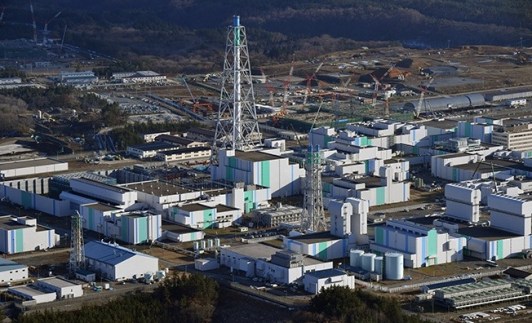 Japan Nuclear Fuel Ltd.’s spent nuclear fuel reprocessing facility in Rokkasho, Aomori Prefecture
May 15, 2020
In his 1991 book “Rokkashomura no Kiroku” (Record of Rokkasho village), journalist Satoshi Kamata documented the displacement of residents for a planned large development project in the northern village.
Kamata reproduced an essay written by an elementary school pupil, whose school was earmarked for closure because of the megaproject.
“I detest development more than I could ever say,” the youngster wrote.
The villagers were promised a rosy future, with rows of factories turning their rural community into a vibrant urban center. But none of that happened, and the school closed in 1984.
“All that talk about the factories was a lie,” the child lamented. “I truly hate being made to feel so sad and lonely.”
Instead of this development project that never materialized, the village of Rokkasho in Aomori Prefecture ended up hosting a facility for reprocessing spent nuclear fuel.
A series of delays held up the project for years, but the Nuclear Regulation Authority finally ruled the plant’s safety measures acceptable under its new standards on May 13.
The Rokkasho plant was meant to be the “nucleus” of the nation’s nuclear fuel recycling program of the future, with the purpose of minimizing nuclear waste by reusing spent fuel.
The reprocessed fuel was to be burned in fast-breeder reactors, but efforts to develop a viable fast-breeder reactor have gone nowhere. Attempts to use the reprocessed fuel in conventional nuclear reactors have also stalled.
The whole project has effectively become a proverbial pie in the sky.
But neither the government nor utilities would acknowledge this reality and review the project, apparently because they fear the issue of nuclear waste will become the focus of attention.
I wonder how long they are going to keep their heads in the sand without addressing the thorny problem of how to dispose of nuclear waste.
Here’s a riddle: What cannot be seen when your eyes are open, but can be seen when your eyes are closed? The answer is a dream.
Where the nuclear fuel recycling program is concerned, I imagine the nation’s nuclear community must be dreaming or hallucinating.
Japan should end its nonsensical effort to recycle nuclear fuel
 A view of the under-construction reprocessing plant, seen from the Obuchi-numa swamp in Rokkasho, Aomori Prefecture, on May 12.
May 14, 2020
Japanese nuclear regulators have endorsed the safety of a contentious plant to reprocess spent nuclear fuel.
The Nuclear Regulation Authority (NRA) on May 13 approved a draft report on the safety inspection of the reprocessing plant being built in Rokkasho, Aomori Prefecture, by Japan Nuclear Fuel Ltd.
The report says the plant meets the new nuclear safety standards introduced after the 2011 Fukushima nuclear disaster. The NRA’s decision represents a big step forward toward bringing the long-delayed Rokkasho reprocessing plant online.
Japan’s policy program to establish a nuclear fuel recycling system to recover plutonium from spent nuclear fuel to be reused in reactors, however, is already bankrupt beyond redemption. Operating the reprocessing plant simply does not make sense because of the many problems it entails with regard to nuclear proliferation, cost effectiveness, energy security and other important policy issues.
Prime Minister Shinzo Abe’s administration should change its policy concerning nuclear fuel recycling. It would be irresponsible to maintain this unsustainable national policy aimlessly simply because of the NRA’s verdict that the plant meets the new safety standards.
TROUBLE-PLAGUED PLANT
The government and the electric power industry have been promoting the concept of recycling separated plutonium back into the fuel of reactors as a valuable “semi-homemade” energy source for a nation without much natural resources.
The Rokkasho reprocessing plant, the core facility for this strategy, was originally scheduled to be completed in 1997, but the deadline has been delayed as many as 24 times due to a series of technological glitches and other problems.
The plant started a trial run in 2006, but the process was plagued by malfunctions and suspended after the catastrophic accident at the Fukushima No. 1 nuclear power plant in 2011.
The NRA, which was created after the accident, spent six years carefully assessing the safety of the reprocessing plant. It was the body’s first safety screening mission for a nuclear fuel reprocessing facility.
Despite the nuclear watchdog’s effective endorsement of its safety, the plant still has a long way to go before it becomes ready for full-scale operation. The details of its design will be scrutinized while the work to install required safety measures has yet to be carried out.
It is unclear whether the plant will be completed in fiscal 2021, the new deadline set by the operator. Winning the consent of the local community is another challenge that has to be overcome before the plant can come on stream.
At nuclear power plants across the nation, growing amounts of spent nuclear fuel are waiting to be shipped to the reprocessing plant. At some nuclear plants, there is not much room left in the spent fuel pools. The power industry warns that there could be disruptions in power generation unless the reprocessing plant starts operating.
The Rokkasho plant is designed to reprocess up to 800 tons of spent fuel annually to extract plutonium. It is true that the facility would help prevent a situation where there is no room left in the pools.
UNUSABLE PLUTONIUM
The plant, when it operates at full capacity, could extract as much as seven tons of plutonium from spent reactor fuel a year. The problem is that there will be few plausible ways to use the material.
The plan to develop a fast neutron reactor that can burn and breed plutonium, which was supposed to be the key technology for plutonium consumption, has gone awry after it was decided that Japan’s “Monju” prototype sodium-cooled fast-breeder reactor should be decommissioned following a sodium leak accident.
There is no plan to develop a new demonstration fast-breeder reactor to succeed the Monju.
The Japanese government then considered participating in France’s Advanced Sodium Technical Reactor for Industrial Demonstration (ASTRID) project to build a prototype sodium-cooled nuclear reactor. But the idea was dropped after the French government decided to scale down and possibly pull the plug on the project.
Japan’s plan to burn so-called MOX (mixed oxide) fuel, which is usually plutonium blended with natural uranium, in existing nuclear reactors has also failed to make progress as fast as the government expected. Currently, only four reactors are using MOX fuel, far less than the industry’s target of operating 16 to 18 MOX reactors.
In short, there is little prospect for massive consumption of plutonium in this nation, at least in the near future.
Japan has a stockpile of 46 tons of weapons-usable plutonium, enough for producing 6,000 atomic bombs. Japan has made an international commitment to reducing its plutonium stock.
If Japan starts extracting plutonium from spent nuclear fuel through reprocessing, the international community will become doubtful of its commitment to reducing its plutonium stockpile despite being the only country to have suffered the devastation of atomic bombings.
Japan could even be suspected of harboring an ambition to develop and possess nuclear weapons in the future.
The government plans to limit the amount of plutonium extracted from spent fuel to less than the volume consumed at the MOX reactors.
But reprocessing spent reactor fuel to recover plutonium simply does not make sense in the first place when the amount of material stored in Japan should be slashed.
SHIFTING FINANCIAL BURDEN IS UNACCEPTABLE
The nuclear fuel recycling policy is also losing its economic rationale as well due to ballooning costs.
Even ordinary nuclear power generation is losing its competitiveness against other energy sources because of higher costs. The cost of building the reprocessing plant is now estimated at 2.9 trillion yen ($27.13 billion), four times higher than the original estimate. The total amount to be shelled out for the project, including operational and scrapping costs, is projected to be nearly 14 trillion yen.
Most major industrial nations have given up on the idea of nuclear fuel recycling as not being worth the cost. All the other countries that are still pursuing this path, including China and Russia, are nuclear powers. Most of these projects are strategic state-financed efforts that disregard costs.
But the reprocessing and MOX reactor projects in Japan are private-sector businesses. The costs involved have to be passed onto consumers through higher electricity bills.
The government and the industry should not be allowed to continue pursuing this unreasonable nuclear fuel policy at the expense of consumers.
In many other parts of the world, renewable energy sources are fast gaining ground, eroding the share of nuclear power.
In addition to sharp declines in costs, the fact that solar and wind power is a purely “homemade” energy source for any country is accelerating the trend.
If Japan really places a high policy priority on energy security, it would make much more sense for it to expand “purely homemade” energy sources than promote a “semi-homemade” one.
But the government continues sticking to the nation’s traditional nuclear power policy, putting a damper on growth in renewable energy production.
If the government decides to scuttle the nuclear fuel recycling agenda, it will immediately face the sticky challenge of deciding how to dispose of spent nuclear fuel.
But the project should not be kept alive through irresponsible collusion between the government and the power industry to avoid tackling this challenge.
Political leaders should make the tough decision as soon as possible to put the nation on a path toward a new energy future.
Green light for Rokkasho nuclear reprocessing plant, but is it viable?

@ú{´RÌgpÏÝjR¿ÄHêSAÂX§ZPºi¤¯ÊMÐ@©çj
The NRA’s approval means the long-troubled and controversial plant has moved closer to going into operation. Here’s a look at the Rokkasho plant and the problems it has faced.
What is the Rokkasho reprocessing plant? The plant at Rokkasho is a 3.8 million square meter facility designed to reprocess spent nuclear fuel from the nation’s nuclear reactors.
Construction began in 1993. Once in operation, the plant’s maximum daily reprocessing capacity will be a cumulative total of 800 tons per year.
During reprocessing, uranium and plutonium are extracted, and the Rokkasho plant is expected to generate up to eight tons of plutonium annually. Both are then turned into a mixed uranium-plutonium oxide (MOX) fuel at a separate MOX fabrication plant, also located in Rokkasho, for use in commercial reactors. Construction on the MOX facility began in 2010 and it’s expected to be completed in 2022.
The Rokkasho reprocessing plant can store up to 3,000 tons of spent nuclear fuel from the nation’s power plants on-site. It’s nearly full however, with over 2,900 tons of high-level waste already waiting to be reprocessed.
Why has it taken until now for the Rokkasho plant to secure approval from the nuclear watchdog? Decades of technical problems and the new safety standards for nuclear power that went into effect after the 2011 triple meltdown at the power plant in Fukushima Prefecture have delayed Rokkasho’s completion date 24 times so far. It took six years for the plant to win approval under the post-3/11 safety standards.
There has also long been concern and unease over the entire project — and not just among traditional anti-nuclear activists — which the government has been forced to address. Japan is the only non-nuclear weapons state pursuing reprocessing. But as far back as the 1970s, as Japan was debating a nuclear reprocessing program, the United States became concerned about a plant producing plutonium that could be used for a nuclear weapons program.
The issue was raised at a Feb. 1, 1977, meeting between U.S. Vice President Walter Mondale and Prime Minister Takeo Fukuda.
“Reprocessing facilities which could produce weapons grade material are simply bomb factories,” noted a declassified U.S. State Department cable on the meeting. “We want to cooperate (with Japan) to keep the problem under control.”
…….. technical mishaps led to plans being made and then scrapped for many years, while arms control experts continued to worry that Japan could end up stockpiling plutonium that could lead to proliferation problems.
After the 2011 disaster, the NRA created tougher measures to minimize damage from natural disasters, forcing more construction and upgrades at the plant, leading to higher costs.
The Tokai plant halted operations in 2007. The decision to scrap it was made in 2014, as it was judged to be unable to meet the new safety standards. But little progress is being made, due to uncertainty over where to store all of the radioactive waste.
Safety concerns over the Rokkasho plant have remained, especially since 2017 when it was revealed that Japan Nuclear Fuel had not carried out mandatory safety standards for 14 years
By the time of the NRA announcement on May 13, the price tag for work at the Rokkasho plant had reached nearly ¥14 trillion.
What happens next? The NRA is soliciting public comment on its decision until June 12, but the Ministry of Economy, Trade, and Industry is expected to formally approve the decision. After that, the Aomori governor would be asked to give his approval, though that is not a legal requirement. The last bureaucratic hurdles would then have been cleared to start operations at the plant by the spring of 2022.
However, there are other issues that could force a delay to the start of reprocessing. Japan had originally envisioned MOX fuel powering between 16 and 18 of the nation’s 54 commercial reactors that were operating before 2011, in place of conventional uranium.
But only four reactors are using it out of the current total of nine officially in operation. MOX fuel is more expensive than conventional uranium fuel, raising questions about how much reprocessed fuel the facilities would need, or want…….
Japan finds itself caught between promises to the international community to reduce its plutonium stockpile through reprocessing at Rokkasho, and questions about whether MOX is still an economically, and politically, viable resource — given the expenses involved and the availability of other fossil fuel and renewable energy resources. https://www.japantimes.co.jp/news/2020/05/31/national/social-issues/aomoris-rokkasho-nuclear-plant-gets-green-light-hurdles-remain/#.XtQfrTozbIU
Coronavirus pandemic hampers Japan’s nuclear regulators’ probe into Fukushima disaster

 Nuclear regulators’ Fukushima crisis probe hit by coronavirus, https://mainichi.jp/english/articles/20200530/p2g/00m/0na/054000c May 30, 2020 (Mainichi Japan) TOKYO (Kyodo) — A probe by nuclear regulators into the causes of the March 2011 Fukushima crisis has been hampered by the coronavirus pandemic, with the dispatch of staff from Tokyo postponed for fear of spreading infection among the some 4,000 on-site decommissioning workers.
The Nuclear Regulation Authority had resumed its investigation last October, deeming radiation levels in some areas of the crippled Fukushima Daiichi nuclear plant had lowered sufficiently enough, nearly a decade since the disaster.
NRA officials had repeatedly traveled to the site from Tokyo and succeeded last December in filming scattered debris and a damaged ceiling on the third floor of the No. 3 reactor building, where a hydrogen explosion occurred during the crisis triggered by the quake-tsunami disaster.
In late March, the watchdog set seven priorities in conducting the probe for the time being, including checking the radiation levels on the fourth floor of the No. 3 reactor building, and radiation contamination levels at the No. 2 reactor facility.
The NRA originally intended to send its staff to the plant every one or two weeks in April and May, but the plan came to a halt following the government’s declaration of a state of emergency over the coronavirus on April 7 for Tokyo and six other prefectures, which was expanded nationwide on April 16.
“It would be impermissible should the virus be brought from Tokyo in any case” to the Fukushima complex, NRA Chairman Toyoshi Fuketa said.
The nuclear watchdog was compelled to cancel the planned dispatch of its staff for the probe because any coronavirus infection among the employees at the plant could stop their decommissioning work.
The state of emergency declaration was lifted on Monday for the entire nation, but the NRA fears it may take even more time before staff can enter the site again.
Further delays in the resumption of the probe could affect the NRA’s goal of compiling a report by the end of the year.
“We can’t do it during the summer period,” a senior NRA official said, as it will be impossible to carry out an investigation under the summer heat wearing heavy radiation protection gear.
The NRA is looking to restart sending the staff from the fall, according to sources close to the matter.
Time that Japan faced up to the folly of its nuclear fuel cycle dream
As the situation stands, plutonium will start to pile up with no prospects of it being consumed. Reducing the amount produced is also an issue that needs to be addressed.
The United States and Britain have already pulled out of a nuclear fuel cycle.
|
Editorial: Time to set a course away from Japan’s troubled nuclear fuel cycle https://mainichi.jp/english/articles/20200518/p2a/00m/0na/029000c, May 18, 2020 (Mainichi Japan) The Rokkasho Nuclear Fuel Reprocessing Facility being constructed in the northern Japan prefecture of Aomori has cleared a safety inspection by the Nuclear Regulation Authority (NRA). Spent fuel from Japan’s nuclear power plants will be reprocessed at this facility, which will play a key role in Japan’s “nuclear fuel cycle” policy. Under the policy, uranium and plutonium extracted from such fuel is to be processed for further use. Japan Nuclear Fuel Ltd., the operator of the reprocessing facility, aims to complete construction by autumn next year, but there are no immediate prospects of the facility going into operation. On top of this, due to changes in the circumstances surrounding nuclear power, the meaning of the facility’s existence is no longer clear. The first issue to consider is declining demand for the use of fuel to be reprocessed at the facility. Such fuel was originally destined to go mainly to the Monju fast-breeder reactor in the western Japan prefecture of Fukui, but a spate of problems with the sodium-cooled reactor led to a decision in 2016 to decommission it. There are no plans to construct a replacement facility. There were also plans to use reprocessed fuel at nuclear power stations to generate electricity, but there are only four reactors that can handle it, far fewer than the 16 to 18 originally planned. As the situation stands, plutonium will start to pile up with no prospects of it being consumed. Reducing the amount produced is also an issue that needs to be addressed. Japan already possesses more than 45 metric tons of surplus plutonium, and there are fears in international society that it could be converted for use in nuclear weapons. In 2018, the government pledged to reduce the amount. A realistic approach is not to reprocess the fuel in the first place. Forming the backdrop to Japan’s persistence with fuel reprocessing is the problem of how to handle the large amount of spent nuclear fuel being stored on the grounds of the reprocessing facility. If Japan gives up on its nuclear fuel cycle policy, then the spent fuel will be sent back to nuclear power plants across the country. But those facilities are already pressed for storage space, making it difficult for them to accept the spent fuel. The total cost of the reprocessing facility, including construction and maintenance costs, stands at 14 trillion yen. Some of the cost will be tacked onto electricity bills. There is a need to rethink the question of whether the public is receiving benefits commensurate with the huge investment into the facility. NRA Chairman Toyoshi Fuketa said he would check with the minister of economy, trade and industry whether operation of the reprocessing plant was in line with the nation’s energy policy. In the wake of the 2011 Great East Japan Earthquake and tsunami and the ensuing nuclear disaster, many countries across the world turned in the direction of abandoning nuclear power. There are sufficient uranium resources in the world, and the justification for reprocessing as “effective utilization of limited resources” has faded. The United States and Britain have already pulled out of a nuclear fuel cycle. Japan must avoid a situation in which it wastes time by sticking to a national policy and becomes laden with risks. The country should squarely face up to the fact that it is in a no-win situation, and search for an alternative to the nuclear fuel cycle policy. |
3600 working in Nuclear power plants in Japan – concerns raised over coronavirus
| N-reactor inspection cannot abide by physical distancing rules, causing coronavirus fear in locals |

 http://www.japan-press.co.jp/modules/news/index.php?id=12907, April 29 & May 3, 2020
Seven civil organizations in Fukui on April 28 jointly demanded that KEPCO suspend operations of reactors at all NPPs in the prefecture and cancel all work to bring offline reactors back online or decommission them in order to prevent the coronavirus from spreading further.
According to KEPCO, the number of workers will increase by about 1,800 to check on the No.3 reactor at the Oi NPP. Of them, about 900 will come from outside Fukui. At the Oi NPP, the Nos.1 and 2 reactors are currently under the process of decommissioning with about 1,800 workers working daily. Thus, the number of workers in three reactors combined will reach 3,600.
Japanese Communist Party member of the Oi Town Assembly, Saruhashi Takumi pointed out, “The reactor buildings are hermetically closed. Many workers work close together in a confined space. So, the ‘three Cs are unavoidable, but our town has a limited number of hospital beds to treat patients with coronavirus infection. If a mass infection occurs, medical facilities in the town will soon be overwhelmed.”
JCP member of the Fukui Prefectural Assembly Sato Masao criticized KEPCO by saying, “The utility places priority on the resumption of operations of reactors at its NPPs over preventive measures against the coronavirus.”
Apart from the Oi NPP, KEPCO has the Takahama NPP and the Mihama NPP in Fukui Prefecture, and about 4,500 workers and 3,000 workers work at those plants every day, respectively.
* * *
KEPCO postpones regular inspection of No.3 reactor
KEOCO on May 2 announced that it will postpone a regular inspection of the No.3 reactor at its Oi NPP for a few months.
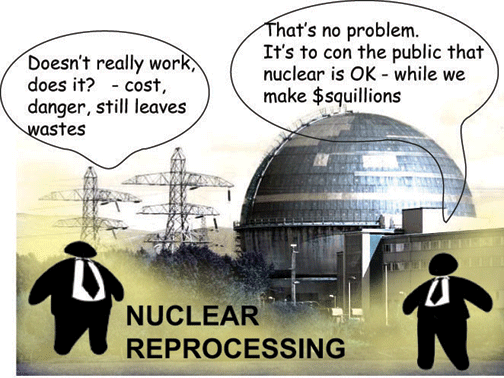
Rokkasho nuclear reprocessing, a pointless effort , to postpone coping with plutonium trash

the project should not be kept alive through irresponsible collusion between the government and the power industry to avoid tackling this challenge.
Political leaders should make the tough decision as soon as possible to put the nation on a path toward a new energy future.
|
Japan should end its nonsensical effort to recycle nuclear fuel http://www.asahi.com/ajw/articles/13372798, May 14, 2020 Japanese nuclear regulators have endorsed the safety of a contentious plant to reprocess spent nuclear fuel.
The Nuclear Regulation Authority (NRA) on May 13 approved a draft report on the safety inspection of the reprocessing plant being built in Rokkasho, Aomori Prefecture, by Japan Nuclear Fuel Ltd. The report says the plant meets the new nuclear safety standards introduced after the 2011 Fukushima nuclear disaster. The NRA’s decision represents a big step forward toward bringing the long-delayed Rokkasho reprocessing plant online. Japan’s policy program to establish a nuclear fuel recycling system to recover plutonium from spent nuclear fuel to be reused in reactors, however, is already bankrupt beyond redemption. Operating the reprocessing plant simply does not make sense because of the many problems it entails with regard to nuclear proliferation, cost effectiveness, energy security and other important policy issues. Prime Minister Shinzo Abe’s administration should change its policy concerning nuclear fuel recycling. It would be irresponsible to maintain this unsustainable national policy aimlessly simply because of the NRA’s verdict that the plant meets the new safety standards. TROUBLE-PLAGUED PLANT Continue reading |
Rokkasho – Japan’s nuclear ‘pie in the sky’
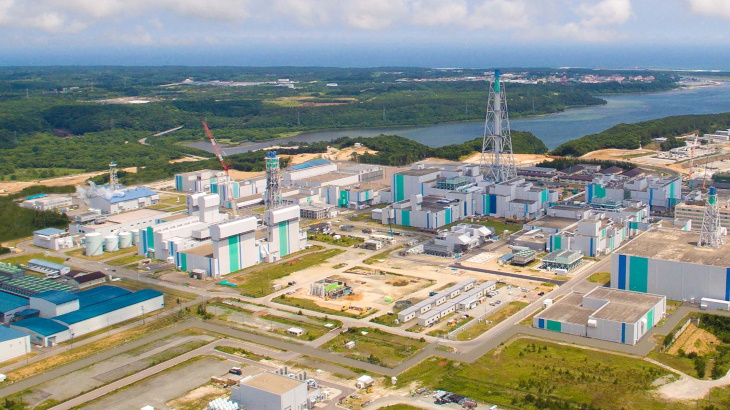 VOX POPULI: Government, nuclear industry badly in need of a reality check http://www.asahi.com/ajw/articles/13375632Vox Populi, Vox Dei is a daily column that runs on Page 1 of The Asahi Shimbun., May 15, 2020 In his 1991 book “Rokkashomura no Kiroku” (Record of Rokkasho village), journalist Satoshi Kamata documented the displacement of residents for a planned large development project in the northern village.
Kamata reproduced an essay written by an elementary school pupil, whose school was earmarked for closure because of the megaproject.
“I detest development more than I could ever say,” the youngster wrote.
The villagers were promised a rosy future, with rows of factories turning their rural community into a vibrant urban center. But none of that happened, and the school closed in 1984.
“All that talk about the factories was a lie,” the child lamented. “I truly hate being made to feel so sad and lonely.”
Instead of this development project that never materialized, the village of Rokkasho in Aomori Prefecture ended up hosting a facility for reprocessing spent nuclear fuel.
A series of delays held up the project for years, but the Nuclear Regulation Authority finally ruled the plant’s safety measures acceptable under its new standards on May 13.
The Rokkasho plant was meant to be the “nucleus” of the nation’s nuclear fuel recycling program of the future, with the purpose of minimizing nuclear waste by reusing spent fuel.
The reprocessed fuel was to be burned in fast-breeder reactors, but efforts to develop a viable fast-breeder reactor have gone nowhere. Attempts to use the reprocessed fuel in conventional nuclear reactors have also stalled.
The whole project has effectively become a proverbial pie in the sky.
But neither the government nor utilities would acknowledge this reality and review the project, apparently because they fear the issue of nuclear waste will become the focus of attention.
I wonder how long they are going to keep their heads in the sand without addressing the thorny problem of how to dispose of nuclear waste.
Here’s a riddle: What cannot be seen when your eyes are open, but can be seen when your eyes are closed? The answer is a dream.
Where the nuclear fuel recycling program is concerned, I imagine the nation’s nuclear community must be dreaming or hallucinating.
Regulator confirms safety of Japanese reprocessing plant
13 May 2020
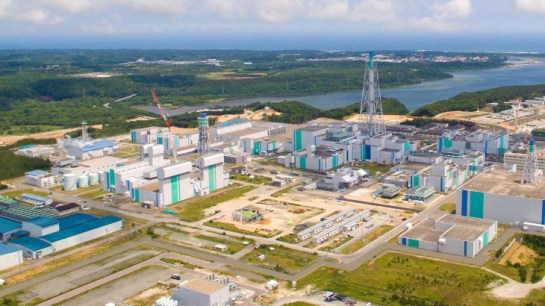
Japan’s Nuclear Regulation Authority (NRA) today approved a draft report concluding Japan Nuclear Fuel Limited’s (JNFL’s) reprocessing plant at Rokkasho in Aomori Prefecture meets new safety standards. The approval brings the plant, construction of which began in 1993, closer to starting up.
Following the March 2011 accident at the Fukushima Daiichi nuclear power plant, new safety standards for nuclear fuel cycle facilities came into force in December 2013. The requirements vary from facility to facility, but generally include reinforcement measures against natural threats such as earthquakes and tsunamis, and in some cases tornadoes, volcanoes and forest fires. Reprocessing plants need to demonstrate these as well as countermeasures specifically for terrorist attacks, hydrogen explosions, fires resulting from solvent leaks and vaporisation of liquid waste.
The NRA today approved a draft report saying that the Rokkasho reprocessing plant meets these new safety standards. It set a one-month period to solicit feedback from industry minister Hiroshi Kajiyama and other parties concerned.
“We believe the facility’s design ensures high safety margins against possible accidents,” NRA Chairman Toyoshi Fuketa was quoted as saying by Jiji Press. “The [seismic] faults near the facility were sufficiently examined and the screening was conducted adequately.”
At the Rokkasho plant, additional equipment and systems are being installed for the recovery of radioactivity in the event of a severe accident. An evaluation is also being carried out of the impact on control devices and equipment in the event of a leak of high-pressure and high-temperature steam, and the development and installation of relevant countermeasures, if deemed necessary. A new emergency control room is also being constructed at the plant. Additional safety-related countermeasures are also being put in place, such as internal flood protection, strengthening of the seismic resistance of pipework, improving cooling water tower resistance against tornadoes and improving measures against internal fires.
In a statement, JNFL said: “The acceptance of the draft examination is a big step forward for us today, and we will continue to make every effort to pass the examination.”
Construction of the Rokkasho reprocessing plant began in 1993 and was originally expected to be completed by 1997. However, its construction and commissioning have faced several delays. Problems in the locally-designed vitrification plant – where dried out and powdered high-level radioactive waste is mixed with molten glass for permanent storage – have contributed to these delays. JNFL designed the vitrification unit to go with the reprocessing section supplied by Areva. The Rokkasho reprocessing facility is based on the same technology as Orano’s La Hague plant in France. Once operational, the maximum reprocessing capacity of the Rokkasho plant should be 800 tonnes per year, according to JNFL.
JNFL aims to complete the necessary safety countermeasures in the first half of fiscal 2021 (ending March 2022).
https://world-nuclear-news.org/Articles/Regulator-approves-safety-of-Japanese-reprocessing
More delay for Japan to open Onagawa nuclear power plant Unit 2: Unit 1 to be closed
|
Onagawa 2 upgrade faces further delay, WNN, 04 May 2020
The completion of safety countermeasures at unit 2 of the Onagawa nuclear power plant in Miyagi Prefecture, in Japan, will not be completed until March 2023, two years later than previously scheduled, Tohoku Electric Power Company announced on 30 April. Japan’s nuclear regulator concluded in February the unit meets revised safety standards, clearing the way for it to resume operation.
Tohoku expects to spend about JPY340 billion (USD3.2 billion) on the countermeasures, which include seismic reinforcement of Onagawa 2 and construction of a 29-metre high and 800m long sea wall to protect the plant from tsunamis. The company had originally planned to complete this construction work by April 2017, but the schedule has been pushed back a number of times. The latest plan had been for the countermeasures to be in place by the end of financial year 2020 (ending March 2021). However, Tokohu has now announced it has reviewed its upgrade works plan for Onagawa 2’s operation. Based on discussions it has had with the Nuclear Regulation Authority (NRA), Tohoku has decided to expand or revise its construction works for improving the facilities at the plant. As a result, the entire plan of construction work has been delayed and is now expected to be completed in FY2022 (ending March 2023). ……..
Tohoku has already decided to decommission unit 1 of the plant and is considering applying to restart unit 3. https://www.world-nuclear-news.org/Articles/Further-delay-in-completion-of-Onagawa-2-safety-up
|
|
16 Japanese Financial institutions won’t invest in companies involved in nuclear weapons
 Many Japanese lenders refuse to invest in companies linked to nuclear arms https://www.japantimes.co.jp/news/2020/05/03/business/corporate-business/many-japanese-lenders-refuse-invest-companies-linked-nuclear-arms/#.Xq8zaqgzbIU
KYODO Sixteen Japanese financial institutions say they refrain from investing in and extending loans to companies involved in the manufacturing of nuclear weapons and delivery systems, according to a Kyodo News survey released Sunday.
The survey found the lenders set guidelines for such issues in an effort to avert international criticism against conducting business with nuclear-related companies amid growing public perceptions about the inhumane nature of nuclear weapons and other weapons of mass destruction.
The 16 lenders include three megabanks — MUFG Bank under Mitsubishi UFJ Financial Group Inc., Mizuho Bank under Mizuho Financial Group Inc., and Sumitomo Mitsui Banking Corp. under Sumitomo Mitsui Financial Group Inc. — as well as Japan Post Bank Co. and Resona Bank under Resona Holdings Inc.
Kyodo sent a written questionnaire to a total of 119 city banks, regional banks and online banks from late February to early March. Of those, 35 responded.
About 70 percent of the total did not answer because they said they have never discussed the issue.
A Resona Bank official said the Osaka-based lender drew up written rules in March 2018 that it will not invest in nuclear, anti-personnel mines and other such fields due to rising international criticism against conducting businesses with companies involved in the manufacturing and development of weapons of mass destruction.
Eleven other lenders possessing such guidelines are Saitama Resona Bank in Saitama Prefecture, Aozora Bank in Tokyo, SBI Sumishin Net Bank, Hokkaido Bank and North Pacific Bank in Hokkaido, Tohoku Bank in Iwate Prefecture, Ogaki Kyoritsu Bank in Gifu Prefecture, Kansai Mirai Bank in Osaka Prefecture, Minato Bank in Hyogo Prefecture, Higo Bank in Kumamoto Prefecture and Kagoshima Bank in Kagoshima Prefecture.
According to the survey, nine respondents including Hokkaido Bank, the Bank of Kochi in Kochi Prefecture and Oita Bank in Oita Prefecture said they backed the Treaty on the Prohibition of Nuclear Weapons.
Of 20 lenders expressing reservation about the 2017 U.N. nuclear ban treaty, five questioned the Japanese government’s reluctance to sign it.
Japan does not possess nuclear weapons but remains under the nuclear umbrella of the United States.
Twelve respondents including Tohoku Bank, Higo Bank and the Bank of Toyama in Toyama Prefecture said they think the adoption of the U.N. pact would generate risks in the future to investment in nuclear-related companies.
None of the 35 respondents said they have provided funds to companies developing intercontinental ballistic missiles, bombers capable of loading nuclear weapons and other nuclear weapons-linked infrastructure.
However, the three megabanks declined to disclose their investments in nuclear-related companies.
 While welcoming the 16 lenders for supporting such guidelines, the International Campaign to Abolish Nuclear Weapons, or ICAN, a nongovernmental organization and the 2017 Nobel Peace Prize laureate, said it suspects some still continue to invest in nuclear-related businesses.
“Companies that manufacture nuclear weapons conduct businesses in other areas,” said Akira Kawasaki, a member of the International Steering Group of ICAN. “We see it as a perception gap between us and some banks that claim they abstain from investing in nuclear weapons manufacturing businesses.”
ICAN wants those banks to disclose details about their guidelines, Kawasaki said.
Half of highly radioactive exhaust stack dismantled at Fukushima Nuclear Reactor 1
Asahi Shimbun 30th April 2020, Work to dismantle the upper half of an exhaust stack at the crippled Fukushima No. 1 nuclear power plant finished on April 29, the first time a
structure highly contaminated by radiation was dismantled at the plant. The
chimney, which is 120 meters tall and about 3 meters in diameter, was used
for the No. 1 and No. 2 reactors of the plant, operated by Tokyo Electric
Power Co. On the morning of April 29, workers spent an hour to lower sliced
parts of the stack to the ground from a height of about 60 meters. With its
upper half removed, the chimney now stands 59 meters high.
Animals in radiation zones are not doing well

above – Chernobyl bird at right has facial tumour
Not thriving, but failing https://beyondnuclearinternational.org/2018/03/11/not-thriving-but-failing/ https://beyondnuclearinternational.org/2018/03/11/not-thriving-but-failing/ Animals in radiation zones are not doing well, By Linda Pentz Gunter
It started with wolves. The packs around the Chernobyl nuclear plant, which exploded on April 26, 1986, were thriving, said reports. Benefitting from the absence of human predators, and seemingly unaffected by the high radiation levels that still persist in the area, the wolves, they claimed, were doing better than ever.
Appearances, however, can be deceptive. Abundant does not necessarily mean healthy. And that is exactly what evolutionary biologist, Dr. Timothy Mousseau and his team began to find out as, over the years, they traveled to and researched in and around the Chernobyl disaster site in the Ukraine. Then, when a similar nuclear disaster hit in Japan — with the triple explosions and meltdowns at Fukushima Daiichi on March 11, 2011 — Mousseau’s team added that region to its research itinerary.
Mousseau has now spent more than 17 years looking at the effects on wildlife and the ecosystem of the 1986 Chernobyl nuclear disaster. He and his colleagues have also spent the last half dozen years studying how non-human biota is faring in the wake of Fukushima. Ninety articles later, they are able to conclude definitively that animals and plants around Chernobyl and Fukushima are very far indeed from flourishing.
Mousseau’s findings strongly contradicted earlier work including the 2006 Chernobyl Forum report which claimed the Chernobyl zone “has become a wildlife sanctuary,” and a subsequent article published in Current Biology in 2015 that said wildlife was “thriving”around Chernobyl.
“I suppose everyone loves a Cinderella story,” speculated Mousseau, who is based at the University of South Carolina. “They want that happy ending.” But Mousseau felt sure the moment he read the Forum report, which, he noted, “contained few scientific citations,” that the findings “could not possibly be true.
What Mousseau found was not unexpected given the levels of radiation in these areas and what is already known about the medical effects of such long-term exposures. Birds and rodents had a high frequency of tumors.
“Cancers are the first thing we think about,” Mousseau said. “We looked at birds and mice. In areas of higher radiation, the frequency of tumors is higher.” The research team found mainly liver and bladder tumors in voles and tumors on the head, body and wings of the birds studied.
But Mousseau wanted to look beyond cancers, which is what everyone expects to find and what researchers had looked for, but only in humans. There were few wildlife studies, a fact Mousseau found surprising, given nature’s ability to act as a sentinel for likely impending human health impacts.
Mousseau and his fellow researchers found cataracts in birds and rodents. Male birds had a high rate of sterility. And the brains of birds were smaller. All of these are known outcomes from radiation exposure.
“Cataracts in birds is a problem,” Mousseau said. “A death sentence.”
Mental retardation has been found among children exposed to radiation in utero. Mousseau and colleagues discovered the same pattern in the birds they studied. “Birds already have small brains, so a smaller brain size is a definite disadvantage,” he said.
There were also just fewer animals in general. “There were many fewer mammals, birds and insects in areas of higher radiation,” Mousseau said. And they had their hunch as to why.
He and his colleagues extracted sperm from the male birds they caught and were shocked to find that “up to 40% of male birds in the radiologically hottest areas were sterile.”
The birds’ sperm were either deformed or dead. None would be able to reproduce. The discovery, he said, was “not at all surprising. These are the levels of radiation known to influence reproduction. At the same time, there is no safe level of radiation below which there aren’t detectable effects.”
Fewer birds have already been observed in the contaminated areas around Fukushima, said Mousseau. “Although it’s too early to assess the long term impact on abundance and diversity around Fukushima, there are very few butterflies and many birds have declined in the more contaminated areas. If abundance is compressed, biodiversity will follow.”
The consequences of radiation exposure, says Mousseau, “will have a tremendous impact on the quality of life of these animals, and the length of quality of life. It need not necessarily be cancers,” that cause these damages he said. “There is no doubt that the levels of radiation in Chernobyl and Fukushima generate genetic damage.”
Read more about Dr. Timothy Mousseau’s work.
Buildings around Fukushima Daiichi nuclear plant in poor condition, unsafe
The company says the condition of around 10 buildings, including the one that houses the No.4 reactor, have deteriorated due to the tsunami that triggered the accident and subsequent hydrogen explosions.
The NRA argues that the walls or other structures of these buildings could collapse in the event of an earthquake and injure people engaged in decommissioning work.
TEPCO says it will announce by the end of May how and when it will address the problem.
The utility also says it has inspected 340,000 pieces of equipment at the plant, and found that 36,000 of them lack devices that prevent leaks of radioactive materials as well as leak detectors.
New tsunami estimates for megaquakes off Japan

April 21, 2020
A Japanese government panel says tsunami waves measuring more than 20 meters high could hit northern Japan if a megaquake of magnitude 9 or stronger occurs in one of two deep-sea trenches.
The government panel has been studying the possible scale of an earthquake, and tsunami waves it could trigger, in either a part of the Chishima Trench or the Japan Trench. The targeted area of the Chishima Trench extends from the Kuril Islands to Hokkaido while the area of the Japan Trench extends from Hokkaido to Iwate Prefecture. The study began after the 2011 disaster in northeastern Japan.
The panel’s latest estimate says a quake along the Chishima Trench would have a magnitude of 9.3.
Parts of eastern Hokkaido would be hit by tremors with an intensity of six-plus to seven on the Japanese scale of zero to seven.
A wide area of eastern Hokkaido would see tsunami more than 20 meters high. Waves could reach 27.9 meters in the town of Erimo.
A quake along the Japan Trench would have a magnitude of 9.1. Parts of Aomori and Iwate prefectures could have tremors with an intensity of six-plus.
Tsunami waves would top ten meters in northeastern Japan. Hachinohe City in Aomori Prefectures would be hit by tsunami as high as 26.1 meters, and Miyako City in Iwate Prefecture as high as 29.7 meters. Some areas could be hit by waves higher than those that struck in 2011.
As these areas have had powerful earthquakes in the past, the panel says massive tsunami can strike at any time.
The Cabinet Office plans to estimate the extent of damage and draw up disaster control measures based on these new figures by the end of March next year.
1 This Month
Chernobyl: The Lost Tapes – A good documentary on Chernobyl on SBS available On Demand for the next 3 weeks– https://www.sbs.com.au/ondemand/tv-program/chernobyl-the-lost-tapes/2352741955560

of the week–London Campaign for Nuclear Disarmament

Tell the Ukrainian Government to Drop Prosecution of Peace Activist Yurii Sheliazhenko
To see nuclear-related stories in greater depth and intensity – go to https://nuclearinformation.wordpress.com
-
Archives
- April 2026 (126)
- March 2026 (251)
- February 2026 (268)
- January 2026 (308)
- December 2025 (358)
- November 2025 (359)
- October 2025 (376)
- September 2025 (257)
- August 2025 (319)
- July 2025 (230)
- June 2025 (348)
- May 2025 (261)
-
Categories
- 1
- 1 NUCLEAR ISSUES
- business and costs
- climate change
- culture and arts
- ENERGY
- environment
- health
- history
- indigenous issues
- Legal
- marketing of nuclear
- media
- opposition to nuclear
- PERSONAL STORIES
- politics
- politics international
- Religion and ethics
- safety
- secrets,lies and civil liberties
- spinbuster
- technology
- Uranium
- wastes
- weapons and war
- Women
- 2 WORLD
- ACTION
- AFRICA
- Atrocities
- AUSTRALIA
- Christina's notes
- Christina's themes
- culture and arts
- Events
- Fuk 2022
- Fuk 2023
- Fukushima 2017
- Fukushima 2018
- fukushima 2019
- Fukushima 2020
- Fukushima 2021
- general
- global warming
- Humour (God we need it)
- Nuclear
- RARE EARTHS
- Reference
- resources – print
- Resources -audiovicual
- Weekly Newsletter
- World
- World Nuclear
- YouTube
-
RSS
Entries RSS
Comments RSS
 nuclear-news