France Info 7th March 2021, For four days and four nights in March 2011, hundreds of workers tried, sometimes risking their lives, to contain the damage from the earthquake
and tsunami that destroyed the Japanese nuclear power plant.
”……….March 11, 2011, 3:27 p.m. The ocean begins to hit the enclosure of the nuclear power plant. A first wave about 4 meters high crashes against the dike. But ten minutes later, a wave some 15 meters high swept over Fukushima Daiichi. The doors of the turbine buildings are not watertight: the generators, electric meters and batteries are flooded. Vehicles and rubble litter the roads. Two operators who had gone to watch the machines in the basement of reactor building 4 drowned.
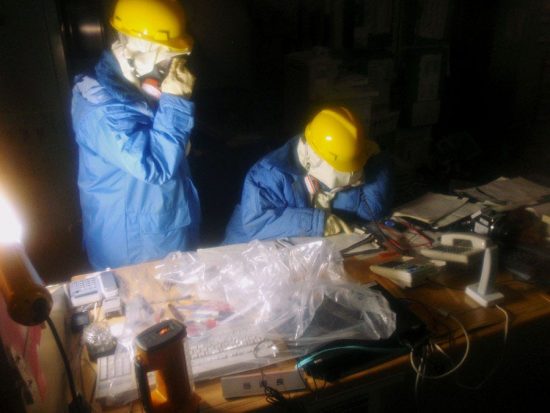
On the second floor of the earthquake-resistant building, all the lights go out. It’s pitch black in this windowless building. Worse, the measurement indicators no longer work. Impossible to know the temperature and the pressure inside the reactors, therefore to know if the emergency cooling systems are still functioning. However, if the water level in a reactor drops, the fuel rods heat up and can melt until they pierce the concrete enclosure and cause a major nuclear disaster.
“We were left speechless”
“At that time, it was astonishment. We were all so devastated that we were left speechless,” recalls Masao Yoshida during an audition transcribed in A story of Fukushima (PUF editions), by Franck Guarnieri and Sébastien Travadel. The scarce information is communicated to the two external crisis units which are set up 250 km away, in Tokyo. One at the headquarters of Tepco, the company that operates the plant; the other at Kantei, the residence of the Prime Minister.
The teams take action. Two solutions are being considered for cooling the reactors: using diesel engine fire pumps or fire trucks which are already on the site. In the absence of a measuring system, the employees concentrate first on Reactor 2. What they do not know is that the back-up system is operating there. The emergency is actually located in reactor 1. Around 6 p.m., its heart begins to melt inside the containment……..
The teams take action. Two solutions are being considered for cooling the reactors: using diesel engine fire pumps or fire trucks which are already on the site. In the absence of a measuring system, the employees concentrate first on Reactor 2. What they do not know is that the back-up system is operating there. The emergency is actually located in reactor 1. Around 6 p.m., its core begins to melt inside the containment.
That’s when they were most irradiated”
Among employees, fear of radiation escalates. “The state of Reactor 1 scared young people,” said Ryuta Idogawa, one of the plant’s reactor pilots, in an interview with Yuki Kobayashi, a doctoral student in science and engineering of risky activities. Despite the danger, however, it is necessary to choose men to open the valves of the reactors manually.
Around 4 am, the injection of fresh water, stored on site in the event of a problem, is finally launched into reactor 1. “When we saw water coming out of the pipe and reaching the reactor, we all yelled, ‘Yes!’ and raised our fists in the air “, tells the Telegraph * Kazuhiko Fukudome, one of the firefighters involved in the accident. Workers are constantly refueling the trucks to operate the water pump. “I think that’s when they were most irradiated,” admits Masao Yoshida.
……… “We sent men and it exploded”
March 13, 2011, 2:42 a.m. While the situation in reactor 1 appears to have stabilized, it is the turn of the reactor 3 emergency cooling system to cease functioning. New operations must be relaunched, but fatigue begins to be felt. “How long can we continue to work without ever sleeping? The answer is 36 hours. That’s the limit for all men,” said Takeyuki Inagaki, group leader at the plant, in an interview with Yuki Kobayashi. This duration has just been reached by the employees, fed on rice bars and instant noodles. Even Masao Yoshida dozes off.
However, new operations resume before sunrise. Reactor 3 must be ventilated and cooled. After a few hours of hard work amidst the debris, the workers succeed in hooking up new pumps and watering the building to prevent overheating. Several of them are exposed to doses of radioactivity greater than 100 millisieverts (mSv), according to the Japanese nuclear safety agency, or five times more than the annual dose authorized in France for employees in the sector.
March 14, 2011, 11:01 a.m. A new explosion, even more impressive than the first, resonates in the heart of the plant. “HQ! HQ! It’s terrible! We have a problem on site number 3!” shouts Masao Yoshida, in a recording of the Crisis Staff. This time, it is the reactor building 3 which is blown up because of the hydrogen. The manager has to face his decisions: “I was sorry. We weren’t sure, but we thought it would not explode right away. We sent men and it exploded,” he admits. .
“Right after the explosion, when I learned that there were about 40 missing, I really iexpected to die. myself.”
Masao Yoshida, director of the plant before a commission of inquiry.
The explosion ultimately caused no death, but a dozen injured. It also has an immediate consequence for the plant: the destruction of the emergency cooling system of reactor 2. “I think that is the moment when I hit rock bottom. I saw us all dead,” says Masao Yoshida. On this Monday morning, the teams are overwhelmed. “I will never forget that afternoon. My stomach ached as if a block of lead was left there,” recalls group leader Takeyuki Inagaki.
”I ask you to sacrifice your lives”
In the middle of the afternoon, the director begins to envisage an evacuation of the few hundred non-essential employees of the plant. He orders that coaches be ready to leave in case of further complications. But shortly before 8 p.m. the hard work of the workers paid off. The injection of sea water begins in reactor 2. Reluctant to any evacuation of the employees, the Prime Minister addresses them during a night videoconference: “I ask you to sacrifice your lives.”
March 15, 2011, 6:14 a.m. It has been four days since the disaster struck, and employees must continue their endless battle against the elements. This time, it is a leak in the enclosure of reactor 2 which causes an explosion and damages reactor 4. Luckily, the explosion does not cut off the seawater cooling system of the first three reactors. The exhausted workers managed to stabilize these time bombs and contain what could have turned out to be a much more deadly disaster.
“There is a special bond between us. I cannot express it in words. I imagine that it is the camaraderie that can be between soldiers in time of war, will tell the Guardian later * l One of the engineers, Atsufumi Yoshizawa. In our case, the enemy was the nuclear power plant. And we fought it together. ” This Tuesday, reinforcements will finally arrive from the surrounding power plants to restore power supplies and build protective structures. The closed-door hell of Fukushima Daiichi power plant workers is over.
East Asia Forum 6th March 2021, Ten years after the world watched the explosions at the Fukushima Daiichi Nuclear Power Plant, Japan’s pro-nuclear advocates have lost policy
implementation power.
As part of the three-yearly energy policy review, Prime Minister Yoshihide Suga’s government needs to decide on the electricity mix for 2030 this year — including the future of nuclear
power. But given the need to maintain safety standards and public opposition to building new reactors, Japan’s nuclear target is realistically constrained to no more than an 8–10 per cent share of projected power needs.
Most 2011 quake, Fukushima crisis survivors back ending nuclear power
March 6, 2021 (Mainichi Japan) TOKYO (Kyodo) — About four in five survivors of the 2011 earthquake, tsunami and Fukushima nuclear crisis in northeastern Japan support abolishing nuclear power generation immediately or gradually, a Kyodo News survey showed Saturday nearly 10 years after the disaster.
Some 30 percent of respondents said all nuclear power plants should be abolished immediately, with 52 percent supporting phasing out nuclear power and eventually eliminating it.
The poll conducted in November in the three hardest-hit prefectures of Iwate, Miyagi and Fukushima had 300 respondents and found that only 15 percent were in favor of restarting nuclear reactors and relying on them in the future.
Following a magnitude-9.0 earthquake and subsequent tsunami that hit on March 11, 2011, the Nos. 1 to 3 reactors at the Fukushima Daiichi nuclear plant owned by Tokyo Electric Power Company Holdings Inc. suffered meltdowns.
Decommissioning work continues to prove difficult and evacuation orders are still in place in some areas around the complex a decade after the world’s worst nuclear accident since the 1986 Chernobyl disaster.
All reactors in Japan were halted after the nuclear crisis but some have resumed operations in recent years under stricter safety regulations. The government aims for renewable energy to account for 50-60 percent of overall electricity by 2050 while relying on 30-40 percent from thermal power and nuclear energy.
By prefecture, 40 percent of respondents in Fukushima supported an immediate exit from nuclear energy, higher than 27 percent in Iwate and 24 percent in Miyagi.
FOCUS: Decades-long challenge to scrap Fukushima plant by 2051 in a bind.By Junko Horiuchi, KYODO NEWS – Mar 1, 2021 The decades-long challenge to scrap the Fukushima Daiichi nuclear plant, crippled by the massive earthquake and tsunami disaster that struck northeastern Japan in 2011, is becoming more complex as recent remote-controlled probes have highlighted just how damaged the reactors are.Tokyo Electric Power Company Holdings Inc., operator of the six-reactor nuclear complex, aims to scrap the plant between 2041 and 2051. But critics have cast doubts on the schedule, citing not only the extremely high radiation levels, but problems associated with delayed probes and underdeveloped robots and other technology needed to extract an estimated nearly 900 tons of melted fuel debris.
Decommissioning of the plant, scene of the world’s worst nuclear accident since the 1986 Chernobyl disaster, is crucial for Japan if it wants to stick to using nuclear power safely and show the world that the nuclear crisis is under control.
“It is likely that the roadmap will not be completed as scheduled,” said Tetsuro Tsutsui, a member of the Citizens’ Commission on Nuclear Energy, a group comprising academics and nuclear experts.
He added the “melted debris is mixed with fractured parts of buildings and concrete material and is highly radioactive, making it hard for robots to clear the debris.”
The scrapping of the plant involves the daunting decision on how to dispose of the huge amount of radioactive waste left as a byproduct. This has been made worse as no municipality offered to become the final disposal site when the plant was operating……….
“Nearly 10 years have passed following the Fukushima accident but with respect to the long decommissioning process, we are still hovering around the start line. We have a long journey ahead,” said Fukushima Gov. Masao Uchibori in a recent briefing.
“The most difficult step is the safe and stable retrieval of the debris but we don’t know what state it is in,” he added.
Despite the use of computer simulations and small-scale internal probes using remote cameras, data is scarce about the exact locations and other details of the melted fuel — crucial information to determine the retrieval methods and develop the appropriate technology and robots.
Robotic probes at the Nos. 2 and 3 units have captured images of large amounts of material that appear to be melted fuel, but attempts so far have been unsuccessful at the No. 1 unit.
TEPCO opted to start the fuel removal at the No. 2 unit as it has the best grasp of the internal conditions there but no time frame has been set for the two other units
In a setback for retrieval efforts, the company said in late December removing melted fuel from the No. 2 unit would be delayed from its initial starting period in 2021 by at least a year as the coronavirus pandemic has stalled the development in Britain of a robotic arm to be used for the extraction.
That robotic arm, however, can only extract a few grams of melted fuel debris at a time. To completely remove the hundreds of tons of melted fuel from the reactor larger machinery is required, experts say.
In another development that may affect the decommissioning process, a Nuclear Regulation Authority study group said in January a high concentration of radioactive cesium is likely to have accumulated in the lids of the containment vessels for the No. 2 and No. 3 reactors.
The regulator’s findings in a new interim report draft on the Fukushima accident came as a shock because it was previously believed that most of the radioactive material remained at the bottom of the reactors in the form of melted nuclear fuel debris……..
TEPCO, whose biggest shareholder is the Japanese government, has not given an estimate of the costs for the debris removal, which would add to the 8 trillion yen ($75 billion) already forecast for the decommissioning process.
The utility and the government have also been grappling with the buildup of radioactive water, which is generated in the process of cooling the meltdown reactors………
According to Yasuro Kawai, another member of the commission, the government’s decision to release treated water into the sea is in fact the government’s attempt to minimize the impact of the Fukushima crisis and say dismantling work is on track.
“But the roadmap is nothing but pie in the sky,” he said.
The commission says it is more logical to keep the debris inside the reactors than to retrieve it and suggests constructing a shield around the reactors and postpone taking out the melted fuel until 100 years or 200 years later when radioactive activity levels have decreased.
On March 11, Japan marks a decade since a huge earthquake and tsunami left more than 22,000 people dead or missing and triggered the world’s worst nuclear accident since Chernobyl.
Here is a brief timeline of events after the 9.0 magnitude quake, the biggest recorded in Japan’s history:
March 11, 2011: A 9.0 magnitude quake hits off the coast of northeast Japan, triggering a tsunami that devastates towns and villages. The tsunami swamps backup power and cooling systems at Tokyo Electric Power Co’s (TEPCO) Fukushima Daiichi nuclear plant, eventually causing meltdowns at three of six reactors. Two months later, TEPCO confirms meltdowns occurred.
Government declares a nuclear emergency and tells residents within a 3 km radius of the plant to evacuate. The evacuation zone is expanded in stages to a 20 km radius over the next two days. More than 160,000 people are eventually evacuated.
March 12: TEPCO begins injecting seawater to cool the reactors’ fuel rods. People stock up on groceries and supplies in Tokyo, about 250 km away, amid radiation fears.
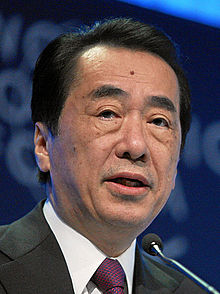
Naoto Kan, prime minister at the time, says later he feared he might have to evacuate Tokyo.
March 16: Emperor Akihito gives a rare televised address expressing deep worry about the crisis.
March 22: Technicians working at the plant attach power cables to all six reactors and start a pump at one to cool overheating nuclear fuel rods.
April 4: Engineers release over 10,000 tons of contaminated water – about 100 times more radioactive than legal limits – that had been used to cool overheated fuel rods after running out of storage capacity.
May 20: TEPCO’s president, Masataka Shimizu, 66, resigns, taking responsibility for the nuclear crisis.
Aug. 26: Kan confirms he will resign.
Dec. 16: Japan declares damaged reactors are in a stable state of “cold shutdown”.
July 1, 2012: Kansai Electric Power Co restarts the 1,180-megawatt No. 3 unit at its Ohi atomic plant, Japan’s first nuclear reactor to come back online since the Fukushima crisis, despite public concerns about nuclear safety.
July 5, 2012: A commission appointed by parliament concludes Fukushima was a “profoundly man-made disaster” that could have been prevented, and mitigated by a more effective response.
Dec. 26, 2012: Shinzo Abe elected prime minister after his Liberal Democratic Party wins general election, ousting the Democratic Party of Japan, in power at the time of the crisis.
July 22, 2013: TEPCO admits that since the 2011 reactor breaches, radioactive water has continued to leak from the plant into groundwater, making it radioactive, with implications for drinking water and for the Pacific Ocean.
Sept. 7, 2013: In a bid led by Abe, Tokyo is declared the host of the 2020 Summer Olympic Games, with a promise of showcasing a reconstructed Fukushima. Abe says the crippled plant is “under control”.
April 1, 2014: People begin to return to the 20-km exclusion zone around Fukushima as decontamination of the area is completed.
June 3, 2014: TEPCO begins work on an “ice wall” to slow the flow of ground water into the wrecked plant, but the buildup of contaminated water continues, slowing recovery efforts.
Nov. 5, 2014: TEPCO removes 400 tonnes of spent uranium fuel from a damaged reactor building, the first of four sets of used rods to be removed in a cleanup expected to last decades.
Feb. 7, 2018: TEPCO ordered to pay about 1.1 billion yen ($10 million) to 321 Fukushima residents for damages in a class action suit.
Sept. 5, 2018: Japan acknowledges for the first time that radiation at the Fukushima plant killed a worker there, ruling that compensation should be paid to the family of the man in his 50s who died of lung cancer.
Sept. 19, 2019: Former TEPCO chairman Tsunehisa Katsumata, and former executives Ichiro Takekuro and Sakae Muto cleared of criminal charges of professional negligence resulting in injury and death in the only criminal case to arise from the crisis.
March 1, 2021: TEPCO said it had moved spent uranium fuel from a damaged reactor to a safer location – the second successful operation of its kind and the first to be carried out by remote control, because of the high radiation in the reactor building.
Decade After Fukushima Disaster, Greenpeace Sees Cleanup Failure, Bloomberg Green, By Aaron Clark,
Land identified for cleanup remains contaminated: Study
Long-term threat to human and environmental health remains
Ten years after the worst nuclear accident since Chernobyl, land Japan identified for cleanup from the triple reactor meltdown of the Fukushima Dai-Ichi atomic power plant remains contaminated, according to a report from Greenpeace.
In addition, Greenpeace said its own radiation surveys conducted over the last decade have consistently found readings above government target levels, including in areas that have been reopened to the public. The lifting of evacuation orders in places where radiation remains above safe levels potentially exposes people to an increased risk of cancer, the report said.
On average, just 15% of land in the “Special Decontamination Area,” which is home to several municipalities, has been cleaned up, according to the environmental advocacy group’s analysis of government data. That’s despite the government’s claims that the area has largely been decontaminated, the group said.
……..While the government has been steadily lifting evacuation orders on towns since 2014, roughly 36,000 people are still displaced.
Seattle Times 3rd March 2021,The head of the wrecked Fukushima nuclear plant says there’s no need to extend the current target to finish its decommissioning in 30-40 years despite uncertainties about melted fuel inside the plant’s three reactors.
Ten years after meltdowns of three of its reactors following a massive March 2011 earthquake and tsunami that devastated northeastern Japan, the Fukushima Daiichi plant has stabilized but faces new challenges.
Nuclear regulators recently found fatal levels of contamination under the lids of two reactors, a test removal of melted fuel debris from one reactor has been delayed for a year, and a recent earthquake may have caused new damage to the reactors.
About 900 tons of melted fuel debris remain inside the plant’s three damaged reactors, and its safe removal is a daunting task that its operator, Tokyo Electric Power Co., or TEPCO, and the government say will take 30-40 years to finish. The removal of spent fuel units from cooling pools is already being delayed for up to five years. But Akira Ono, who as head of the plant is also its chief decommissioning officer, said he doesn’t plan to change the current goal to finish decommissioning between 2041 and 2051.
Decade after Fukushima disaster survivor looks back | Tomioka just 10 km from wrecked nuclear plant
Wall St Journal 3rd March 2021. At a seaside nuclear-power plant here, a concrete wall stretching a mile along the coast and towering 73 feet above sea level offers protection
gainst almost any conceivable tsunami. Two reactors are ready to start splitting atoms again to heat water into steam and generate power, the operator has told regulators.
Yet despite safety measures set to cost nearly $4 billion, the Hamaoka plant hasn’t produced a single kilowatt since May 2011, and it has no target date to restart.
The paint on billboards is fading and an old “no trespassing” sign outside the barbed wire lies on the ground—signs of creeping neglect. Even a local antinuclear leader, Katsushi Hayashi, said he spent more time these days fighting an unrelated rail line in the mountains, confident that regulators and public opinion wouldn’t let the plant open any time soon.
“Fukushima gave us all the proof we need. It’s dangerous,” Mr. Hayashi said. A decade after Fukushima, just nine reactors in Japan are authorized to operate, down from 54 a decade ago, and five of those are currently offline owing to legal and other issues.
All of Fukushima prefecture’s reactors are closed permanently or set to do so. Chubu Electric Power Co. , owner of the Hamaoka plant, declined to make an executive available for comment. It has formally applied to reopen two reactors at the plant and told regulators that new measures such as the wall, mainly completed in 2015, make them safe to operate.
Nuclear Power’s Prospects Cool a Decade After Fukushima Meltdowns
Disaster at the Japanese reactors marked a turning point for an industry that once promised to give the world a nearly unlimited source of energy WSJ, By Peter Landers, March 3, 2021
OMAEZAKI, Japan—At a seaside nuclear-power plant here, a concrete wall stretching a mile along the coast and towering 73 feet above sea level offers protection against almost any conceivable tsunami. Two reactors are ready to start splitting atoms again to heat water into steam and generate power, the operator has told regulators.
Yet despite safety measures set to cost nearly $4 billion, the Hamaoka plant hasn’t produced a single kilowatt since May 2011, and it has no target date to restart. The paint on billboards is fading and an old “no trespassing” sign outside the barbed wire lies on the ground—signs of creeping neglect.
Even a local antinuclear leader, Katsushi Hayashi, said he spent more time these days fighting an unrelated rail line in the mountains, confident that regulators and public opinion wouldn’t let the plant open any time soon. “Fukushima gave us all the proof we need. It’s dangerous,” Mr. Hayashi said.
The triple meltdowns at Japanese nuclear reactors in Fukushima after the March 11, 2011, earthquake and tsunami marked a turning point in an industry that once dreamed of providing the world with nearly unlimited power.
A decade after Fukushima, just nine reactors in Japan are authorized to operate, down from 54 a decade ago, and five of those are currently offline owing to legal and other issues. All of Fukushima prefecture’s reactors are closed permanently or set to do so. Chubu Electric Power Co. , owner of the Hamaoka plant, declined to make an executive available for comment. It has formally applied to reopen two reactors at the plant and told regulators that new measures such as the wall, mainly completed in 2015, make them safe to operate…… (subscribers only)https://www.wsj.com/articles/nuclear-powers-prospects-cool-a-decade-after-fukushima-meltdowns-11614767406
The Olympic Games, dubbed the “reconstruction Olympics”, should allow Japan to move on from the Fukushima tragedy. The region, a symbol of the 2011 disaster, has officially been cleaned up but many problems remain, such as radioactivity and “forbidden cities”. Over the course of several months, our reporters followed the daily lives of the inhabitants of this “cursed” region.
In recent months, Japanese authorities have been working hard to finish rebuilding the Fukushima region in time for the Summer Games. This huge reconstruction and decontamination project is never-ending and is expected to cost nearly €250 billion.
Although the work undertaken over the past 10 years is colossal and the region is partly rebuilt, it’s still not free from radioactivity. The NGO Greenpeace has detected radioactive hotspots near the Olympic facilities. And at the Fukushima power plant, Tepco engineers continue to battle against radioactive leaks. They also face new issues such as contaminated water, which is accumulating at the site and poses a new-fangled problem for Japan. Our reporters were able to visit the notorious nuclear power plant.
They bring us a chronicle of daily life in Fukushima, with residents determined to revive their stricken region.
Fukushima resident still can’t return home 10 years after nuclear disaster, March 3, 2021 (Mainichi Japan) FUKUSHIMA— Yasuko Sasaki’s house lies just 30 kilometers away from the Fukushima Daiichi Nuclear Power Station, where a meltdown took place following the 2011 Great East Japan Earthquake and tsunami. On Feb. 1, Sasaki temporarily returned to clean up leaves that had fallen on the grave at the back of the property.
Once a month, the 66-year-old visits her house in the Tsushima district in the Fukushima Prefecture town of Namie from the prefectural village of Otama — 50 kilometers away — where she is currently evacuated to. It has been almost 10 years since she became unable to live at her own residence.
Due to high radiation levels, Tsushima was designated a “difficult to return” zone, where restrictions for entering are in place, and people are barred from living there. Homes without their owners living in them have been ransacked by wild animals. While Sasaki has been away, wild animals chewed up stuffed turtle and bird specimens kept at her house. She continues to clean her house so that she “can return at any time.”…………
The Reconstruction Design Council in response to the Great East Japan Earthquake, an advisory panel to the prime minister, deemed that “recovery from the devastating disaster will not be completed until Fukushima soil recovers.” The government has set up Specified Reconstruction and Revitalization Bases within difficult-to-return zones and is carrying out decontamination work and developing infrastructure so that people can reside in the area once again. It aims to lift evacuation orders for the bases in between 2022 and 2023.
However, the areas designated as reconstruction bases are limited. In the Tsushima district, a 153-hectare space surrounding the town hall’s Tsushima branch is designated — just 1.6% of the whole district. Of the 532 households in the district at the time of the disaster, 80% including Sasaki’s house are not included in the reconstruction base area, and there are no prospects for these people to be able to return to their homes.
Sasaki said, “Everything’s still the same, even 10 years after the (nuclear) disaster. I wonder for how many more years I’ll have to continue cleaning (my house).”
FUKUSHIMA, Japan (Reuters) – A decade ago, Sakae Kato stayed behind to rescue cats abandoned by neighbours who fled the radiation clouds belching from the nearby Fukushima nuclear plant. He won’t leave.
“I want to make sure I am here to take care of the last one,” he said from his home in the contaminated quarantine zone. “After that I want to die, whether that be a day or hour later.”
So far he has buried 23 cats in his garden, the most recent graves disturbed by wild boars that roam the depopulated community. He is looking after 41 others in his home and another empty building on his property.
Kato leaves food for feral cats in a storage shed he heats with a paraffin stove. He has also rescued a dog, Pochi. With no running water, he has to fill bottles from a nearby mountain spring, and drive to public toilets.
The 57-year-old, a small construction business owner in his former life, says his decision to stay as 160,000 other people evacuated the area was spurred in part by the shock of finding dead pets in abandoned houses he helped demolish.
The cats also gave him a reason to stay on land that has been owned by his family for three generations.
“I don’t want to leave, I like living in these mountains,” he said standing in front of his house, which he is allowed to visit but, technically, not allowed to sleep in.
The two-storey wooden structure is in poor condition.
Rotten floorboards sag. It is peppered with holes where wall panels and roof tiles that kept the rain out were dislodged by a powerful earth tremor last month, stirring frightening memories of the devastating quake on March 11, 2011, that led to a tsunami and a nuclear meltdown.
The cats also gave him a reason to stay on land that has been owned by his family for three generations.
“I don’t want to leave, I like living in these mountains,” he said standing in front of his house, which he is allowed to visit but, technically, not allowed to sleep in.
The two-storey wooden structure is in poor condition.
Rotten floorboards sag. It is peppered with holes where wall panels and roof tiles that kept the rain out were dislodged by a powerful earth tremor last month, stirring frightening memories of the devastating quake on March 11, 2011, that led to a tsunami and a nuclear meltdown.
FEAR LINGERS
About 30 km (19 miles) southeast, still in the restricted zone, Hisae Unuma is also surveying the state of her home, which withstood the earthquake a decade ago but is now close to collapsing after years of being battered by wind, rain and snow.
“I’m surprised it’s still standing,” the 67-year-old farmer said, a week after the tremor that damaged Kato’s house.
“I could see my cattle in the field from there,” she said pointing to the living room, a view now blocked by a tangle of bamboo.
Unuma fled as the cooling system at Tokyo Electric Power Co’s nuclear plant 2.5 km away failed and its reactors began to melt down.
The government, which has adopted Fukushima as a symbol of national revival amid preparations for Tokyo Olympic Games, is encouraging residents to return to decontaminated land.
Lingering fears about the nuclear plant, jobs and poor infrastructure are keeping many away, though.
Unuma, now a vegetable farmer in Saitama prefecture near Tokyo, where her husband died three years ago, won’t return even if the government scrapes the radioactive soil off her fields.
Radiation levels around her house are around 20 times the background level in Tokyo, according to a dosimeter reading carried out by Reuters.
Only the removal of Fukushima’s radioactive cores will make her feel safe, a task that will take decades to complete.
“Never mind the threat from earthquakes, those reactors could blow if someone dropped a tool in the wrong place,” she said.
Before making the four-hour drive back to her new home, Unuma visits the Ranch of Hope, a cattle farm owned by Masami Yoshizawa, who defied an order to cull his irradiated livestock in protest against the government and Tokyo Electric Power.
Among the 233 bullocks still there is the last surviving bullock from the 50-strong herd Unuma used to tend, and one of her last living links to the life she had before the disaster.
Her bullock ignores her when she tries to lure him over, so Yoshizawa gives her a handful of cabbage to try to tempt him.
“The thing about cattle, is that they really only think about food,” Yoshizawa said.
(This story corrects date to March 11, 2011 in paragraph 9)
Reporting by Tim Kelly and Kim Kyong Hoon; Additional reporting by Akira Tomoshige; Editing by Pravin Char
Both were proponents of nuclear power while in office but became critics following the March 11, 2011, earthquake, tsunami and subsequent triple meltdown at the Fukushima Daiichi nuclear plant.
“Japan has so much natural sources of energy like solar power, hydropower and wind power. Why should we use something that’s more expensive and less safe?” said Koizumi, a maverick reformist who held office from 2001 to 2006, at a joint press conference.
Kan, who led the response to the disaster at the time, criticized Yoshihide Suga’s vow to reduce Japan’s net carbon emissions to zero by 2050, calling it a pretense to restart nuclear reactors across the country, most of which have been halted as utilities wait to clear tougher regulations imposed after the Fukushima crisis.
While the former prime ministers come from opposite ends of the political spectrum — Koizumi led the center-right Liberal Democratic Party while Kan headed the now-defunct Democratic Party of Japan, which leaned left — they said opposing nuclear energy was a nonpartisan stance.
The main obstacle to shifting toward renewable energy is structural, Kan said, stemming from the entrenched interests of utility companies, government agencies and academics who constitute the “nuclear power village.”
“They know it would be too expensive to build new plants, or that there’s no way to properly dispose of nuclear waste. But there are a lot of stakeholders and they want to keep it that way,” said Kan, now a member of the Constitutional Democratic Party of Japan.
Regarding tritium-laced water at Fukushima Daiichi quickly filling up tanks, Koizumi said in the press conference at the Foreign Correspondents’ Club of Japan that plans to release the water into the sea were fiercely opposed by local fishermen and that further research into other options was needed.
Japan got 76 percent of its electricity from thermal power in fiscal 2019, compared with 18 percent from renewable energy and 6 percent from nuclear energy, according to preliminary data from the Ministry of Economy, Trade and Industry.
Under Suga’s “Green Growth Strategy,” the country is aiming to increase renewable energy to 50-60 percent while thermal power and nuclear energy is to constitute a combined 30-40 percent.
The supposedly failsafe containment system at Fukushima Dai-ichi Unit Three failed and released massive amounts of radioactivity into the local environment and the worldwide atmosphere. Such an enormous human tragedy will happen again at an atomic power reactor somewhere in the world.
Think about that.No nuke in the world can withstand a supersonic shockwave, and here is the evidence on international TV and across the Internet that it occurred in 2011, as Fairewinds said.
As we approach the 10th commemoration of Japan’s March 11, 2011, Fukushima Dai-ichi triple meltdowns, organizations around the globe, including environmental groups, nonprofits (like Fairewinds Energy Education), engineering and pronuclear organizations, and media organizations like Japan’s Nippon TV, will release new information.
Some of this information is really new and recently uncovered. Other media events will bring people together to share and discuss what these major meltdowns meant to the people of Japan and communities worldwide. And sometimes, these media events are just a corporation or an agency marketing new nukes by putting their positive spin on nuclear power rather than acknowledging its dangers. For example, nuclear zealots continue to claim that atomic power reactors are safer for workers than working at Toys R Us, and reactors cannot meltdown and certainly will never blow up. The Fukushima disaster proved them wrong, but yet they persist!
As Fukushima Daichi Units One, Two, and Three were melting down, Nippon TV, the largest and flagship station of the Nippon Television Network System, dispatched television film crews to monitor the events as they unfolded. No one in the world has ever captured the core melting down, but Nippon TV captured two meltdown-induced explosions on film.
At Fairewinds, we congratulate Nippon for the excellent work they did to create the original initial explosion footage in 2011 and on this essential remastered copy just completed in 2021. Nippon’s newly released digital footage is important historically and technically.
That said, the new video footage and Nippon’s ensuing interview with Tokyo Electric Company (TEPCO), the atomic power corporation that owns all six Fukushima Dai-ichi nuclear power plants, contain three glaring technical errors.
First, Fairewinds continues to have significant concerns about TEPCO’s technical interpretations of these explosions’ cause.
Second, TEPCO is blaming newly uncovered lethal radioactivity sitting at the top of the containment structure on the supersonic shockwave.
Third, TEPCO does not discuss that there likely was a second explosion that occurred 3 seconds after the first.
Understanding the mechanics behind explosions is critical to understanding what happened at Fukushima and what such a danger means to nuclear power anywhere in the world.
There are two explosion methods: a deflagration shock wave, which happened at Fukushima Unit One and Three Mile Island in Middletown, Pennsylvania, in the United States. While still destructive, a deflagration shockwave travels at subsonic speeds (less than 760 miles an hour, the speed of sound).
The second type of explosion is called a detonation shockwave. It is much more destructive because it travels at supersonic speeds.
Does it matter whether or not an explosion at Fukushima was a detonation or a deflagration? Absolutely! Hydrogen gas at room (atmospheric) pressure cannot create a supersonic shockwave. Fairewinds’s 2011 findings that a detonation shockwave occurred should have changed the scientific and nuclear engineering analyses of such events worldwide.
No nuclear power radioactive release containment system built anywhere in the world will withstand a detonation shockwave!
The nuke industry and its regulatory handlers do not believe that a supersonic shockwave explosion will ever happen in a nuclear power plant. If they admitted that an atomic reactor containment system would fail by detonation, the nuke industry would also have to acknowledge that nuke plants’ containment systems are not failsafe. Nuclear power containment systems will fail when there is a supersonic shockwave explosion.
The supposedly failsafe containment system at Fukushima Dai-ichi Unit Three failed and released massive amounts of radioactivity into the local environment and the worldwide atmosphere. Such an enormous human tragedy will happen again at an atomic power reactor somewhere in the world.
Think about that.No nuke in the world can withstand a supersonic shockwave, and here is the evidence on international TV and across the Internet that it occurred in 2011, as Fairewinds said.
Fairewinds second area of concern about TEPCO’s analysis on this latest NIPPON video is the linkage of recently discovered lethal radiation levels at the top of the containment to the supersonic detonation. Ten years ago, immediately following the three meltdowns at Fukushima in 2011, Fairewinds identified superheated highly radioactive gases escaping from this same area that TEPCO suddenly claims it has just uncovered in 2021. The containment was leaking before the explosion and continued to spread radioactivity after the blast. Still, no nuclear engineer or scientist is surprised that significant contamination continues to leak from the damaged containment system. The containment was breached, which allowed this radiation to leak! However, there is no evidence to suggest that the explosion is the cause of that leak since the containment was leaking before the supersonic shockwave.
Finally, Nippon’s remastered video vividly shows Fairewinds’ third concern. The eye is drawn to the detonation’s sudden flash and the ensuing upward-moving black cloud of rubble. Now, look again. About three seconds after the initial vertical blast, a white cloud suddenly moves horizontally at ground level to the north. (see picture on original -comparing the first and second plumes)
Community-volunteer citizen-scientists Arnie met while collecting radioactive samples in Fukushima prefecture say they heard more than one explosion. They said it sounded like the snapping of bamboo burning in a fire. This new video shows that there were at least two explosions, one vertically and one horizontally. As more data becomes available, Fairewinds Energy Education will put forward the reasons why, but as of now, the entire explosion sequence at Fukushima Unit Three is something the nuclear industry zealots want to ignore. They continue to hope that history will not repeat itself while they continue to build and operate more lethally radioactive and highly risky atomic reactors.
Throughout the Nippon video, the announcer reverentially refers to TEPCO and the Japanese Regulators as “the authorities” and “officials”. This kind of public propaganda occurs because TEPCO, the Japanese Government and its regulators, and the International Atomic Energy Agency (IAEA) have successfully captured the Japanese media.
What was called for in 2011 and is still desperately required in 2021 are independent experts. These would be people from outside TEPCO, its captive regulators, or its allies embedded in the nuclear industry. Once again, Fairewinds calls for an independent consortium of experts who would be able to give a frank assessment of the magnitude and extent of the problems that lie ahead for the failed Fukushima cleanup.
Did you know that in 2013, Fairewinds and 16 other international experts coauthored a letter to the United Nations (UN) asking it to establish this independent panel? The UN never had the courtesy even to acknowledge that it received these serious requests and recommendations. Such machinations by TEPCO, the Japanese Government, and the international nuclear industry are indeed a human rights and environmental injustice issue!
Ten years have passed, yet Japan’s citizens still wait for independent oversight of the Fukushima disaster. The people of Japan deserve better than the authorities covering up the truth and lying to them.
Ten years ago, three of the nuclear reactors at the Fukushima Daiichi Nuclear Power Station suffered melt downs in the days following a Magnitude 9 earthquake that struck off the northeast coast of Japan on 11 March 2011. Along with the 1986 nuclear accident at the Chernobyl Nuclear Power Station in the former Soviet Union, it was one of the two worst nuclear power accidents in history.
On the tenth anniversary, it is important that we remember what happened then and what has happened since. It is in the interests of those who caused the accident that we forget. We must refuse to do so, for the sake of the victims and to prevent more disasters in future.
The most important take-home message is that the disaster is far from over. In order to win the bid for the (now postponed) 2020 Olympics, then Prime Minister Abe asserted that the nuclear accident was ‘under control’. The government now calls the games (if they are ever held) ‘the recovery Olympics’, with the torch relay route running through Fukushima Prefecture. But despite the efforts of the Japanese Government and the nuclear industry to lull the Japanese public and the world into a false sense of security, the fact is that radioactive contamination remains and many people continue to suffer. Even where compensation is available, nothing can undo the damage done to people’s lives and to the environment.
It is also important to understand that the Fukushima Daichi nuclear accident was by no means the worst-case scenario for nuclear power. But for a few remarkable pieces of good fortune, the disaster could have been far worse.
This paper summarises some of the key issues. In brief:
thousands of people are still classified as evacuees;
they have not been adequately compensated;
the radioactive fallout is still a major problem;
decommissioning of the nuclear reactors will take decades and has barely begun;
the total cost of decommissioning, decontamination and compensation is astronomical;
the culprits have not been punished; and
nuclear vested interests are back in charge of Japan’s energy policy.







 nuclear-news