Greenpeace says that TEPCO ignored risks to South Korea when assessing radiological impact of releasing Fukushima nuclear water waste.
The international environmental organization called TEPCO’s radiological
impact assessment “highly selective” in its use of IAEA guidelines. The
international environmental group Greenpeace sent an opinion to the Tokyo
Electric Power Company (TEPCO) on Thursday stating that the company’s
radiological impact assessment of contaminated water from the Fukushima
Nuclear Power Plant made convenient use of International Atomic Energy
Agency (IAEA) guidelines without considering the potential damages to
residents of neighboring countries such as South Korea.
The opinion from Greenpeace was based on its review of the draft version of a contaminated
water radiological impact assessment report released by TEPCO last month.
Hankyoreh 18th Dec 2021
http://english.hani.co.kr/arti/english_edition/e_international/1023823.html
A lonely evening at home for Fukushima man retracing past
Unsurprisingly, concerns about radiation levels are still on the minds of many former residents. His wife, Mikiko, 64, refused to accompany him for that reason. Ikeda was the only individual in his neighborhood who took up the offer to return home.

December 11, 2021
OKUMA, Fukushima Prefecture–Settling in for the night, Mitsuhide Ikeda poured sake into a glass and raised a toast to framed photos of his deceased parents: “I finally made it back home. Let’s drink together.”
The last time the 60-year-old cattle farmer spent a night at home was 10 years and nine months ago.
Large parts of this town that co-hosts the Fukushima No. 1 nuclear power plant were declared “difficult-to-return” zones after the triple meltdown triggered by the 2011 earthquake and tsunami disaster.
Ikeda’s parents died after the nuclear accident.
The Shimonogami district where the Ikeda’s home is located lies about five kilometers southwest of the Fukushima nuclear facility.
As part of efforts to rebuild the areas around the plant, the government recently began letting residents return home for an overnight stay as a means of preparing for the day when they can do so permanently.
Unsurprisingly, concerns about radiation levels are still on the minds of many former residents. His wife, Mikiko, 64, refused to accompany him for that reason. Ikeda was the only individual in his neighborhood who took up the offer to return home.
Dangerously high radiation levels registered immediately after the disaster that made it impossible for anybody to live in the area have gradually fallen. The government spent vast sums on the time-consuming process of decontaminating topsoil as a way of reducing radiation levels.
It intends to lift the evacuation order for some parts of Okuma in spring. That would be the first step for setting the stage for residents to return home.
The temporary overnight stay program began in Katsurao on Nov. 30 and is gradually being expanded to five other municipalities, including Okuma.
A check for radiation in November on the Ikeda plot found one spot with a reading of 3.8 microsieverts per hour, above the level deemed safe enough for the government to lift the evacuation order.
Even though the Environment Ministry is planning additional decontamination work, Mikiko was unsettled by the reading and concluded it would be impossible to pick up the threads of their past life in Okuma.
Other changes in the close to 11 years since the nuclear disaster make a return to Okuma unrealistic.
While a large supermarket, hospital and bank branch remain standing in the town, there is no indication when those facilities might resume operations.
In the interim, the Ikedas plan to commute to Okuma from the community they moved to as evacuees.
The overnight stay program is restricted to an area close to what was once the bustling center of the town. About 7,600 residents lived there before the nuclear disaster.
The town government envisions that as many as 2,600 people will reside in the town within five years of the evacuation order being finally lifted if plans proceed to rebuild social infrastructure.
But the writing is on the wall for many people.
According to the Environment Ministry, about 1,150 homes in the district had been torn down as of the end of September.
And as of Dec. 8, only 31 residents in 15 households applied for the overnight stays.
Even Ikeda admits that Okuma will likely never return to the community he knew before 2011.
“Too much time has passed,” he said.
Japan PM to push for progress at NPT meet to scrap nuclear weapons
Japan PM to push for progress at NPT meet to scrap nuclear weapons
TOKYO, Dec 9 (Reuters) – Japanese Prime Minister Fumio Kishida vowed on Thursday to do his utmost to push for meaningful progress at a January meeting to review the Non-Proliferation Treaty and encourage action to rid the world of nuclear weapons.
The comment by Kishida, who hails from the nuclear memorial city of Hiroshima, comes after the previous such meeting, in New York in 2015, failed to adopt a final document following disagreement over a plan for a nuclear-free Middle East………… https://www.reuters.com/business/energy/japan-pm-push-progress-npt-meet-scrap-nuclear-weapons-2021-12-09/
Tepco to repair Fukushima nuclear station’s partially melted protective ice wall.

Ice Wall to Halt Groundwater Flow at Japan’s Fukushima Nuclear Plant to Be Repaired https://thewire.in/world/ice-wall-to-halt-groundwater-flow-at-japans-fukushima-nuclear-plant-to-be-repaired
Tokyo Electric Power Co (Tepco) will launch remedial works at the stricken plant after ice wall tests indicated partial melting. Tokyo: Tokyo Electric Power Co (Tepco) will launch remedial works at the stricken Fukushima Daiichi nuclear plant to strengthen an ice wall intended to halt the flow of groundwater after testing indicated partial melting.
The work could begin as early as the start of December, according to a presentation from the plant operator dated Thursday, part of a costly and troubled effort to secure the site following the 2011 earthquake and tsunami.
The ice wall is intended to limit the seepage of groundwater into the plant, which has created large amounts of toxic water being stored by Tepco in tanks.
Japan plans to release more than 1 million tonnes of water into the sea after treating it. The water contains the radioactive isotope tritium, which cannot be removed.
Japan’s nuclear regulator inspecting seismic risks at Shika nuclear power station.
NRA looking into fault risks at nuclear plant https://www3.nhk.or.jp/nhkworld/en/news/20211118_26/ Japan’s nuclear regulator is inspecting the Shika nuclear power plant on the Sea of Japan coast to determine whether a fault beneath a reactor building is active.
The two-day inspection by the Nuclear Regulation Authority began at the plant in Ishikawa Prefecture on Thursday with 14 NRA experts taking part.
They went into a ditch dug for the survey, observed cross sections of geological strata and touched soil walls to confirm the layers’ conditions near faults.
Hokuriku Electric Power Company, which operates the plant, applied for screenings of the Number 2 reactor, which has been offline since 2011.
The NRA launched the screenings in 2014 with a focus on whether 10 faults at the plant, including one beneath the building that houses the Number 2 reactor, are active. In 2016, a panel of the authority said it could not deny that some of the faults could move.
In response, the firm insisted that the faults are not active, citing new data on constituents of mineral samples collected from the faults.
New guidelines for nuclear safety do not allow operators to build important facilities such as reactor buildings above active faults that could move.
If the fault beneath the Number 2 reactor is found to be active, operation of the facility cannot resume and it may eventually be dismantled.
The experts are expected to confirm on Friday the length of an active fault that runs near the complex.
Japanese municipalities are finding resistance to hosting nuclear waste dump, despite substantial government bribes.

The two municipalities are meeting strong resistance from residents and nearby local governments.
Since Suttsu and Kamoenai expressed their willingness to accept the first-stage survey, the assemblies of some nearby municipalities have enacted ordinances declaring a rejection of nuclear waste and their governments have declined state grants related to the survey.
One year on, outlook for nuclear waste storage unclear Japan Times, 17 Nov 21, The outlook for the possible hosting of a final storage facility for nuclear waste in two Hokkaido municipalities remains uncertain, with Wednesday marking one year since a first-stage survey for the site’s selection started there, for the first time in Japan.
The town of Suttsu, along with the nearby village of Kamoenai, is undergoing the first-stage survey, known as literature investigation, to check whether it is suited to host a permanent underground storage site for high-level radioactive waste from nuclear power plants across the country.
The two municipalities are meeting strong resistance from residents and nearby local governments.
The government is seeking a location for the dump site, which will hold nuclear waste, or the remnants of spent nuclear fuel that has been treated, for a long period said to extend for 100,000 years.
The literature investigation, conducted by the Nuclear Waste Management Organization of Japan, or NUMO, will take about two years to confirm that there is no volcanic activity or active faults in the area by reviewing geological literature and data. The first-stage survey does not involve drilling.
Up to ¥2 billion in subsidies from the state will be paid to each location, as well as surrounding municipalities, for the first-stage investigation. The two municipalities plan to use the grants to set up regional revitalization funds.
Suttsu held a mayoral election last month in which the survey became a central topic of debate. Incumbent Mayor Haruo Kataoka, who decided to accept the first-stage research a year ago in line with what he felt was the will of the residents, won re-election.
However, his opponent, who called for a halt to the survey, gained about 80% of Kataoka’s vote count, suggesting that public opinion is still split.
The town government will decide whether to proceed to the second stage of the survey, called preliminary investigation, in a referendum.
Since Suttsu and Kamoenai expressed their willingness to accept the first-stage survey, the assemblies of some nearby municipalities have enacted ordinances declaring a rejection of nuclear waste and their governments have declined state grants related to the survey.
Suttsu and Kamoenai initially planned to have monthly opportunities for residents to exchange opinions on the issue, but the novel coronavirus crisis has limited such sessions to four each so far. The second-stage survey requires the consent of not only the municipal mayors, but also of Hokkaido Gov. Naomichi Suzuki, who is opposed to the investigation on the grounds that a prefectural ordinance rejects nuclear waste being brought to the prefecture.
U. N. nuclear agency team to review plans for release of Fukushima water
U. N. nuclear agency team to review plans for release of Fukushima water, The Hindu, AP TOKYO:, NOVEMBER 15, 2021
The experts from IAEA are to meet with Japanese officials and visit the Fukushima Daiichi plant to discuss technical details of the planned release, Japanese officials said.
A team from the U.N. nuclear agency arrived in Japan on Monday to assess preparations for the release into the ocean of treated radioactive water from the wrecked Fukushima nuclear plant.
The experts on the team from the International Atomic Energy Agency (IAEA) are to meet with Japanese officials and visit the Fukushima Daiichi plant to discuss technical details of the planned release, Japanese officials said.
The government and the plant’s operator, Tokyo Electric Power Company (TEPCO) Holdings, announced plans in April to start gradually releasing the treated radioactive water in the spring of 2023 to allow the removal of hundreds of storage tanks to make room for facilities needed for the destroyed plant’s decommissioning.
The plan has been fiercely opposed by fishermen, local residents and Japan’s neighbours, including China and South Korea.
Japan has requested assistance from the IAEA to ensure the discharge meets international safety standards and to gain the understanding of the international community. A larger 11-member IAEA mission is expected next month.
Japanese Economy and Industry Minister Koichi Hagiuda pledged last week that Japan will explain the outcome of the IAEA reviews to the international community “in a courteous and transparent manner.” A separate IAEA taskforce on water testing earlier collected fish samples from the Fukushima coast as part of a routine review along with technical assistance for the plant’s decommissioning. The team included an expert from South Korea…………https://www.thehindu.com/news/international/u-n-nuclear-agency-team-to-review-plans-for-release-of-fukushima-water/article37498602.ece
Japan’s PM Kishida resolved to achieve nuclear-free world
Kishida resolved to achieve nuclear-free world, https://www.japantimes.co.jp/news/2021/11/15/national/kishida-un-disarmament-chief/ Prime Minister Fumio Kishida on Monday voiced his commitment to leading efforts to realize a world free of nuclear weapons in a meeting with the U.N. disarmament chief, ahead of next year’s U.N. conference on nuclear nonproliferation.
In a 15-minute meeting in Tokyo with Izumi Nakamitsu, U.N. undersecretary general and high representative for disarmament affairs, the two agreed on the importance of meaningful results at the review conference on the Nuclear Non-Proliferation Treaty, to be held in New York from Jan. 4 to 28, according to the Foreign Ministry.
As the leader of the only country to have suffered atomic bombings, in Hiroshima and Nagasaki in 1945, Kishida voiced his “determination to lead international efforts to realize a world without nuclear weapons” during the meeting, the ministry said. The prime minister’s family hails from Hiroshima Prefecture and he represents a constituency in the prefecture.
Nakamitsu expressed hope Japan will play a proactive role as a bridge between nations with differing stances.
Nakamitsu also met with Foreign Minister Yoshimasa Hayashi later in the day and invited him to attend the NPT review conference. Hayashi told her that “as the only country in the world to have suffered wartime atomic bombings, Japan has a very important responsibility” to push forward nuclear disarmament.
‘No One Died From Radiation At Fukushima’: IAEA Boss Statement Met With Laughter At COP26

‘No One Died From Radiation At Fukushima’: IAEA Boss Statement Met With Laughter At COP26, Forbes, Sofia Lotto Persio Forbes Staff Sustainability I oversee sustainability coverage and curate the Daily Dozen. Nov 21, The tsunami-triggered destruction of the Fukushima nuclear power plant in 2011 provoked a rethink of nuclear power across the world—and remains a sore spot for the industry even as it tries to champion its low-carbon energy source status to gain prominence in the fight against climate change.
On Thursday, the day dedicated to discussing energy at the COP26 UN Climate Conference in Glasgow, Scotland, the International Atomic Energy Agency (IAEA) was given a prominent spot, with director general Rafael Mariano Grossi being interviewed on stage by Financial Times journalist Gillian Tett.
It was an opportunity for Grossi to highlight the benefits of nuclear power, its appeal as part of a country’s energy mix, and dispel concerns about nuclear waste and safety, but his assertion that the multiple nuclear meltdowns at the Fukushima Daiichi Nuclear Power Plant in the town of Okuma—which forced the evacuation of more than 160,000 residents—resulted in no deaths from exposure to radiation was met with skepticism from the audience………
For years since the disaster, Grossi’s statement held true. But in 2018, the Japanese government recognized the death of one Fukushima plant worker to be attributable to radiation exposure, disbursing compensation to his family. The worker, a man in his 50s who had spent nearly 29 years working at nuclear stations in Japan until September 2015, was in charge of measuring radiation at the Fukushima plant. In the period of December 2011 and September 2015, the amount of radiation he was exposed to more than doubled from roughly 34 millisieverts to around 74 millisieverts, as the Japanese newspaper Mainichi reported. The maximum level of radiation exposure workers should be exposed to is 100 millisieverts every five years—an annual exposure to that level of radiation is linked to an increase in cancer risk. The worker was diagnosed with lung cancer in 2016 and died of the disease.
| Fukushima nuclear plant operator Tokyo Electric Power Company Holdings Inc. (Tepco) is still facing lawsuits for its failure to safeguard the nuclear complex. In February, the company and the Japanese government were ordered to pay $2.6 million in compensation to 43 evacuees for failing to enact preemptive measures against the disaster. Establishing a clear link between exposure radiation and cancer in a court of law can be more difficult. Tepco won one case in May because the plaintiff, who had worked on removing debris from the Fukushima complex between July and October 2011, developed three cancers between 2012 and 2013, whereas government guidelines stipulate the minimum latency period for a disease to develop following radiation exposure is five years…. https://www.forbes.com/sites/sofialottopersio/2021/11/04/no-one-died-from-radiation-at-fukushima-iaea-boss-statement-met-with-laughter-at-cop26/?sh=241acac17a47 |
Fukushima farmers fear nuclear-tainted water’s impact on business
A decade on, Fukushima farmers fear nuclear-tainted water’s impact on business, Channel Newa Asia, 5 Nov 21, WAKI, Japan: Fukushima farmers fear the Japanese government’s planned release of water from the crippled power plant could revive concerns about contamination and again hit the price of their produce, undoing a decade of slow recovery from nuclear disaster.
Japan plans to release more than one million tonnes of contaminated water from the plant in the country’s northeast into the sea after treating it, as the site reaches storage limits for the water. Although international authorities support the plan, it has sparked concern from neighbours China and South Korea and worried local fisherman and farmers.
“We’re just about seeing our prices go back to normal after a big drop following the disaster, but now we will have to deal with the potential reputational damage all over again because of the release of the water,” said Hiroaki Kusano, a pear farmer and vice-leader of the local agricultural co-operative.
The water is to be processed to remove radioactive contamination other than from tritium, which cannot be removed. Water with the radioactive isotope diluted to one-seventh of the World Health Organization’s guidelines for drinking water will be released into the Pacific a kilometre out from the plant around spring 2023, under a government plan.
Nuclear plants worldwide routinely release water containing tritium, considered the least-toxic byproduct of atomic power…………….
DECOMMISSIONING
The Daiichi plant is being decomissioned as part of a clean-up by operator Tokyo Electric Power Company Holdings (Tepco) expected to take decades,
Some 1,000 tanks, each 12m tall, crowd the site and hold enough radioactive water to fill around 500 Olympic-sized swimming polls. The release of water that once passed through contaminated areas of the plant marks a milestone in decommissioning and will free up space for the clean-up.
……………… Tepco will compensate for damages related to the water release, said Junichi Matsumoto, a company official overseeing decommissioning work. Tepco says it has so far paid out some ¥10.1 trillion (US$89 billion) in damages from the crisis…
There are additional concerns because the Fukushima water has been sitting around for years, said Toru Watanabe, a radioactivity researcher at the Fukushima Fisheries and Marine Science Research Center.
“The water has been in those tanks for a long time. The quality of that water needs to be thoroughly understood before it’s released,” he said.
Farmers say there is not much they can do once the water is released. They worry about their tough customers – Japanese shoppers are famously picky about produce and pay close attention to freshness and place of origin… https://www.channelnewsasia.com/asia/decade-fukushima-farmers-fear-nuclear-tainted-waters-impact-business-2293361
Japan’s election – winning candidates at odds on the future of nuclear power

Survey: LDP and Komeito take differing stances on nuclear power https://www.asahi.com/ajw/articles/14474326
By RYUTARO ABE/ Staff Writer, November 3, 2021 According to a new survey, winning candidates in the ruling coalition in the Oct. 31 Lower House election differ greatly on the future of nuclear power in Japan.
Broken down by political parties, 72 percent of ruling Liberal Democratic Party winners supported nuclear power, the highest rate among parties, while just 9 percent of junior coalition partner Komeito victors did so.
The survey, jointly conducted by The Asahi Shimbun and a team led by Masaki Taniguchi, a professor of political science at the University of Tokyo, analyzed the political views of winners in the Lower House election.
For the survey, questionnaires were sent out from Sept. 2, and 448 of 465 election winners responded to them by Oct. 31. The response rate was 96.34 percent.
The survey asked the candidates which view they were leaning toward: “Abolish nuclear power immediately” or “Keep it as a power source for the future.”
Among the winners, those wanting to abolish nuclear power accounted for 19 percent, compared to 24 percent in the previous survey for the 2017 Lower House election.
Winners who favor maintaining nuclear power accounted for 45 percent, compared to 47 percent in the previous survey. Nearly half of the winners believe that nuclear power should remain as a source of power in the future.
Excluding the choice of “neither,” 13 percent of Komeito winners supported the abolition, 4 percentage points higher than those who support nuclear power.
t the time of the 2017 Lower House election, 33 percent of Komeito winners favored retaining nuclear power while no one supported abolishing it. In the new survey, many Komeito candidates drastically changed their stances.
Komeito, in its manifesto for the Lower House election, said, “We aim to achieve a nuclear-free society, not relying on nuclear power for the future.”
The survey also revealed differing stances on nuclear power among all the competing parties.
All the election winners of the Japanese Communist Party, Reiwa Shinsengumi and the Social Democratic Party supported pulling the plug on nuclear power, followed by victorious Constitutional Democratic Party of Japan members at 62 percent.
No winners of the Democratic Party for the People supported its abolition, while 27 percent supported nuclear power.
Thirty-nine percent of winners of Nippon Ishin (Japan Innovation Party) want to retain nuclear power, the second highest rate after that of the LDP victors. The previous survey in 2017 showed just 9 percent favored nuclear power.
The survey also asked candidates about releasing processed radioactive water collected at Tokyo Electric Power Co.’s crippled Fukushima No. 1 nuclear power plant into the sea.
Sixty-two percent of all the winners viewed the water release into the sea as “inevitable.” The LDP and Komeito winners, who shared the view, accounted for 80 percent and 59 percent, respectively.
At the same time, 95 percent of Nippon Ishin winners support the release, the highest rate among parties, followed by DPP victors at 73 percent.
Sixty-five percent of CDP winners leaned toward opposing the release, but 10 percent said, “It is inevitable.”
Japan’s election gives reprieve for nuclear sector.
Japan’s election gives reprieve for nuclear sector, Argus, By Motoko Hasegawa 1 November 2021
Japan’s ruling Liberal Democratic Party (LDP) secured a victory in the 31 October general elections to the lower house of parliament. This allows the government to maintain its updated energy policy, which lays out plans to restart safe nuclear reactors to help reduce the country’s greenhouse gas emissions.
The LDP secured a majority in Japan’s lower house after voting closed, without accounting for parliamentary seats secured by its junior coalition partner Komeito. This could make it easier for the LDP to push forward with its nuclear policy before the next general upper house election next year. Komeito had pledged to strictly adhere to the 40-year lifespan limit for reactors and a future no-nuclear society, as other opposition parties had insisted on.
LDP leader and prime minister Fumio Kishida and cabinet ministers last month endorsed a basic energy policy that did not include plans for construction or replacement of nuclear reactors and only focused on the restart of safe reactors. But the government did not directly prohibit building reactors, in a reprieve for the nuclear industry………….
Japan has restarted 10 nuclear reactors since the 2011 Fukushima nuclear disaster closed all the country’s reactors to enhance their safety measures. But it will have to phase out existing reactors without any capacity additions. All Japanese reactors are allowed to operate for 40 years with a one-time option to extend their lifespan to 60 years under current nuclear safety rules. This has 15 of the existing 33 reactors with a combined capacity of 14,057MW closing by December 2030 and no operational reactors in 2050, assuming a 40-year lifespan. https://www.argusmedia.com/en/news/2269158-japans-election-gives-reprieve-for-nuclear-sector
Japan looks to renewables, role of nuclear elusive ahead of election
Oct 29, 2021
Japan aims to increase its reliance on renewable energy in achieving net-zero emissions, but the role of nuclear power to be played toward that end appears to be elusive even in the government’s energy plan approved by the Cabinet about a week ahead of Sunday’s general election.
The plan outlines ways to achieve carbon neutrality by 2050 and cut greenhouse gas emissions 46 percent in fiscal 2030 from fiscal 2013 levels, an ambitious leap from the previous reduction target of 26 percent.
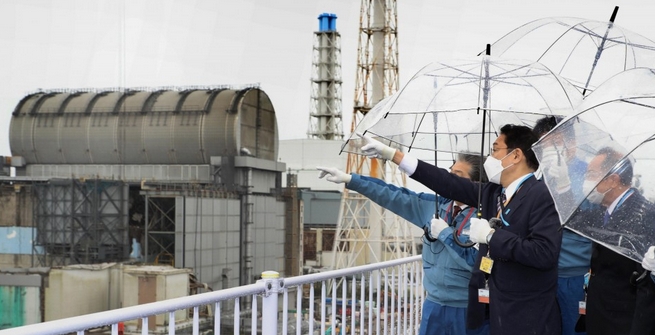
The government aims to have renewables account for 36 to 38 percent of Japan’s total power generation capacity in fiscal 2030, more than double the 18 percent recorded in fiscal 2019, while the percentage of fossil-fuel-fired thermal power has been slashed to 41 percent, down from 76 percent.
But the percentage for nuclear power remains unchanged at 20 to 22 percent from the previous plan, released in 2018.
The status of many nuclear plants in 2030 and thereafter is unclear considering the facilities’ 40-year operating limit and other regulatory hurdles, and there has been no public consensus on whether the country should continue to use nuclear power beyond 2050 either.
Yudai Maeda, an executive of renewable energy firm afterFIT Co., said people’s emotional reactions toward nuclear issues have somewhat subsided from the years after the 2011 Fukushima nuclear disaster and voter interests have been taken over by the coronavirus pandemic.
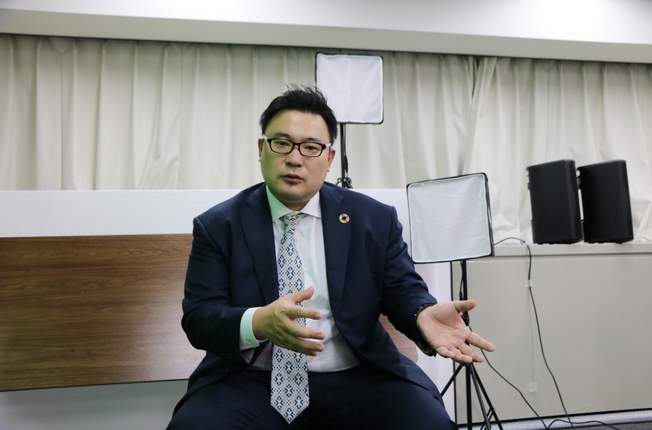
“Major issues in the election are more like how to restore the economy after the COVID-19 pandemic,” Maeda said.
A recent Kyodo News poll showed 36.7 percent will decide on who to vote for in the general election based on economic policies, while 16.1 percent said coronavirus measures were paramount.
Tsutomu Miyasaka, a professor of biomedical engineering at Toin University of Yokohama and pioneering researcher on thin and flexible solar cells, also believes energy and environmental issues should attract attention, just as climate change was one of the key issues for German voters in their September election.

A report by the U.N. Environment Programme released this week warned that the average global temperature could rise 2.7 C by the end of the century despite various climate pledges and mitigation steps.
That is well above the aspirational goal of the Paris Agreement — to keep global warming below 1.5 C this century over pre-industrial levels.
The international organization also said that whether the world can meet the goal of avoiding potential catastrophe hinges on efforts by humanity to halve annual greenhouse gas emissions in the next eight years.
Net-zero commitments, declared by 49 nations, including Japan, and the European Union could shave off another 0.5 C, if these pledges were made robust and if 2030 promises were made consistent with the net-zero commitments.
“Climate change is no longer a future problem. It is a now problem,” said Inger Andersen, executive director of UNEP, ahead of the upcoming U.N. climate change conference known as COP26. “The clock is ticking loudly.”
To achieve the 2030 emissions cut target, Maeda said nuclear power plants are necessary. However, Japanese political parties cannot agree on what to do with nuclear plants even though they agree on the country’s direction toward carbon neutrality.
Prime Minister Fumio Kishida said his Liberal Democratic Party will restart idled nuclear plants, providing they have adequate safety measures, in order to supply electricity stably and at a reasonable price.
In contrast, the major opposition Constitutional Democratic Party of Japan pledges to abandon nuclear power as soon as possible and will not allow any new nuclear plants to be built.
The Democratic Party for the People, a smaller opposition party, has said it will restart nuclear plants that cleared safety rules but will not allow the construction of new ones.
Following the nuclear crisis in Fukushima Prefecture triggered by a massive earthquake and tsunami, most of the nuclear plants in Japan remain offline under stricter safety regulations.
“Realistically, I think (Japan) cannot help but to heavily rely on nuclear and solar power to achieve that 2030 goal,” said Maeda, a former Foreign Ministry official.
He stressed nuclear should not be a long-term power supply given the tremendous amount of money needed in the event of an accident and falling renewable energy costs.
In the long run, energy experts have high expectations for offshore wind power.
“Producing large quantities of electricity from renewables requires a vast amount of space. Since Japan is a maritime nation with the world’s sixth-largest exclusive economic zone, it’s got to be offshore wind,” he said, adding floating turbines will hold the key.
Solar cells produced by Miyasaka, also a fellow at the University of Tokyo’s Research Center for Advanced Science and Technology, are expected to contribute to improving the space problem for renewables if they overcome durability challenges and go into commercial mass production.
Miyasaka’s perovskite solar modules are thin, flexible, and light yet capable of generating high voltages compared with silicon photovoltaics, with their characteristics enabling them to be installed or applied on unconventional places, including low load-bearing roofs, windows and automobile bodies.
In the not too distant future, Miyasaka believes people will be able to generate power by perovskite solar modules on places such as balcony floors and car bodies, store it in batteries and then use it during the night.
In building such a society, Miyasaka said the reliance on nuclear power could be reduced soon rather than later because disaster-prone Japan faces higher risks than many other countries.
“It is time for us to seriously engage in finding ways to live without nuclear power plants,” he said.
Japan PM’s nuclear push faces resistance ahead of election
Oct 28, 2021
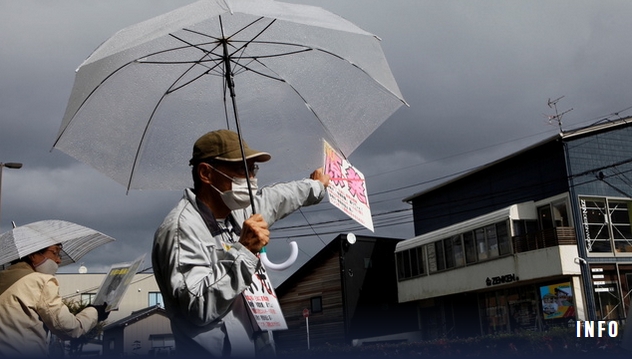
KASHIWAZAKI, Japan – A decade after triple meltdowns at Fukushima forced mass evacuations and a shut-down of the nuclear industry, Japan has restarted only a third of its 33 operable reactors
Prime Minister Fumio Kishida’s push to restart Japanese nuclear power plants idled after the Fukushima disaster faces stiff opposition ahead of a
general election on Sunday, October 31, where his future as leader hangs in
the balance if the vote is tight.
A decade after triple meltdowns at Fukushima forced mass evacuations and a shut-down of the nuclear industry, Japan has restarted only a third of its 33 operable reactors.
Debate over whether to fire more of them back up is highly charged, with 40% of the population opposing the move.
It matters most in rural cities hosting the idled plants which had once relied on them for economic activity, such as Kashiwazaki, 265 km (165 miles) northwest of Tokyo – home to the world’s largest atomic power complex.
“The reason why we feel so strongly about this is because we feel the danger of the nuclear power plant – it hangs over our heads every day,” said Mie Kuwabara, a resident of a town close to Kashiwazaki and anti-nuclear activist.
Voters mostly care about economic recovery from the pandemic. But energy policy came into sharp focus last month, when Kishida beat a popular anti-nuclear candidate in the race for the Liberal Democratic Party (LDP) chief.
The architect of Kishida’s victory, party veteran Akira Amari, assumed a key party post and immediately pushed for restarts of 30 reactors while also promoting new, smaller reactors to replace aging ones.
Amari says Japan must revert to nuclear power to meet its 2050 carbon neutrality pledge, avoid rapidly rising prices of imported coal and gas and to cut its reliance on other countries for energy needs.
Amari faces a tight race in his home district, where he is struggling to attract support from anti-nuclear junior coalition partner, Komeito.
Opposition to his plan is strong in Kashiwazaki too.
“This prefecture as a whole, even within the LDP, is united behind the idea that the nuclear power plant can’t be restarted,” said Mineo Ono, who runs the LDP’s local chapter where anti-nuclear proponent Taro Kono polled higher than Kishida in the leadership race vote.
Ono cited local distrust caused by what he called multiple mishaps by the plant’s operator, Tokyo Electric Power Holdings (Tepco).
The nuclear regulator upended plans for a restart of the Kashiwazaki-Kariwa plant, which can power 24 million households, in April, after identifying operational issues including faulty intruder detection alarms and the misuse of ID cards.
Nation-wide, restarts have been delayed by technical issues, lawsuits and regulatory reviews.
Tepco in an emailed statement apologized and said it would work to regain the trust of locals. It added that while nuclear energy is instrumental in achieving carbon neutrality, the time is not right to discuss restarts.
That poses a problem for the LDP, which polls show is on the brink of losing its simple majority, an outcome that would still let it cling to power thanks to the coalition with Komeito, but that may lead to a push inside the party to oust Kishida.
The government said in its latest energy policy on Friday it would double 2020 levels of renewable energy to 38%, but has maintained nuclear power will provide some 22% of the country’s energy by 2030, up from 6% in the 2018 financial year.
‘Dividing factor’
Kashiwazaki, a town of 80,000, sits on the coast of the Sea of Japan. In the evening, buses unload workers maintaining the complex around the main train station.
“We host the world’s biggest nuclear plant, but that energy goes mostly to Tokyo and its surrounding regions. Locals feel deeply about that,” LDP’s Ono said. There is a ‘divide’ between the sentiment of the locals and people in Tokyo, he said.
A restart is critical for Tepco, which needs money to fund the clean-up at its Fukushima plant. Restarting two reactors at Kashiwazaki-Kariwa would save an estimated $880 million per year in fuel costs, it says.
But even the local chamber of commerce, instrumental in wooing the plant which started operations in 1985, says it is tired of what it sees as Tepco’s repeated failures.
“It’s almost unbearable, seeing how shoddy they are,” said chamber of commerce chief Masao Saikawa.
To allay these fears, Kenichi Hosoda, the LDP candidate in the district who serves as the vice minister at the Ministry of Industry overseeing energy policy, has toned down his pro-nuclear message.
“Now is not the time to discuss the issue,” he told Reuters after a recent rally held near the plant.
In response to a question on why discussions on the nuclear plant have been toned down before the vote, local LDP leader Ono spoke of “a large group of swing voters who the candidates have to capture.”
“When it comes down to it, the issue of nuclear energy will be the dividing factor. It’s a fact that the nuclear element has an influence,” said Ono. – Rappler.com
https://www.rappler.com/world/asia-pacific/japan-pms-nuclear-push-faces-resistance-ahead-of-election
World without nuclear weapons remains a goal after Sunao Tsuboi’s death
October 29, 2021 (Mainichi Japan) Sunao Tsuboi, a champion of the anti-nuclear movement, has died at age 96. He had served as a representative member of the Japan Confederation of A- and H-Bomb Sufferers Organizations and chairman of the Hiroshima Prefectural Confederation of A-bomb Sufferers Organizations. For many years, Tsuboi led nuclear disarmament activism and dedicated his life to calling for a world without nuclear weapons, while telling himself and others to “never give up.”
Tsuboi himself was a survivor of the atomic bombing of Hiroshima. He continued to share his experience, revealing the inhumaneness of nuclear arms………..
It was because Tsuboi and other hibakusha persistently shared stories about their experiences outside Japan that the inhumane nature of nuclear weapons became widely known across the world. And this led to the enforcement of the Treaty on the Prohibition of Nuclear Weapons, which bans nuclear arms and related activities.
When then U.S. President Barack Obama visited Hiroshima as the first sitting U.S. president to do so in May 2016, Tsuboi said to him, “It (dropping the atomic bomb) was one of the mistakes humanity made. We have to overcome that, and head for the future.”
These words stemmed from Tsuboi’s desire for peace, based on his belief that hatred is fruitless.
Grave challenges still remain after Tsuboi’s departure………..
The number of hibakusha has now declined to about 127,000 and their average age is approaching 84. Anti-nuclear activist and hibakusha Sumiteru Taniguchi, who led the movement in Nagasaki, the second city to be bombed in 1945, passed away in 2017. We will eventually enter a time when there are no hibakusha left in the world.
“An uphill path may continue, but I’m not going to give up and I’ll continue working on eliminating these dreadful weapons from the world,” Tsuboi once said. Succeeding generations must take the baton from him. https://mainichi.jp/english/articles/20211029/p2a/00m/0op/028000c
1 This Month
To see nuclear-related stories in greater depth and intensity – go to https://nuclearinformation.wordpress.com/

29 Jan. Thursday 7-8 p.m. Webinar – World’s Largest Nuclear Station in Port Hope, ON?


31st January – Challenging the War Machine – a DECLASSIFIED UK SUMMIT


Website of the Week
Now until to February 10, 2026 Radioactive waste storage in France: the debate is finally open! How to participate?
-
Archives
- January 2026 (259)
- December 2025 (358)
- November 2025 (359)
- October 2025 (376)
- September 2025 (258)
- August 2025 (319)
- July 2025 (230)
- June 2025 (348)
- May 2025 (261)
- April 2025 (305)
- March 2025 (319)
- February 2025 (234)
-
Categories
- 1
- 1 NUCLEAR ISSUES
- business and costs
- climate change
- culture and arts
- ENERGY
- environment
- health
- history
- indigenous issues
- Legal
- marketing of nuclear
- media
- opposition to nuclear
- PERSONAL STORIES
- politics
- politics international
- Religion and ethics
- safety
- secrets,lies and civil liberties
- spinbuster
- technology
- Uranium
- wastes
- weapons and war
- Women
- 2 WORLD
- ACTION
- AFRICA
- Atrocities
- AUSTRALIA
- Christina's notes
- Christina's themes
- culture and arts
- Events
- Fuk 2022
- Fuk 2023
- Fukushima 2017
- Fukushima 2018
- fukushima 2019
- Fukushima 2020
- Fukushima 2021
- general
- global warming
- Humour (God we need it)
- Nuclear
- RARE EARTHS
- Reference
- resources – print
- Resources -audiovicual
- Weekly Newsletter
- World
- World Nuclear
- YouTube
-
RSS
Entries RSS
Comments RSS
 nuclear-news