Finish nuclear power – says Japan’s potential next Prime Minister

 Japan PM contender says ditch nuclear, FT.com, By Mure Dickie and Tom O’Sullivan in Tokyo 4 July 11, A leading contender to replace Naoto Kan as Japan’s prime minister has called for the country to phase out nuclear power over the next two decades.
Seiji Maehara, one of the most popular figures in the ruling Democratic party, told the Financial Times in an interview that construction of new nuclear reactors should “basically be stopped” following the crisis at the tsunami-crippled Fukushima Daiichi atomic plant……A Japanese retreat from atomic power would have far-reaching implications for domestic utilities and companies such as Toshiba, Hitachi and Mitsubishi Heavy Industries, which are seeking to sell nuclear technology overseas.….
Opinion polls suggest a majority of voters support a gradual reduction in the use of atomic energy. Mr Maehara said Japan should aim to phase out nuclear power completely. “That is what is going to happen and … what should happen, but given that we depend on nuclear power for 30 per cent of electricity generation, we can’t get rid of it right away,” he said. “While increasing the safety of nuclear power, we need to use preferential policies to reduce our dependence on it over 10 or 20 years.”
Mr Maehara’s relative popularity and status as a former leader of the DPJ mean his call for a nuclear phase-out could put the issue at the centre of any party election to replace Mr Kan. Mr Maehara’s status as a possible successor to Mr Kan has been boosted by recent opinion polls. One survey by the Nikkei Shimbun suggested one-fifth of voters thought him the most suitable person to become DPJ leader and thus premier…. http://www.ft.com/cms/s/0/caa106b6-a581-11e0-83b2-00144feabdc0.html#ixzz1R7kQ1HSH
Opposition in Japan to restarting Genkai nuclear reactors
Saga governor comes under fire over Genkai restart, Japan Times, July 2, 2011, KYODO, Saga — Saga Gov. Yasushi Furukawa came under fire at the prefectural assembly Friday over his apparent willingness to approve the restart of two reactors at the Genkai nuclear power station. …
During a session of the assembly’s committee on nuclear power safety, Yasushige Miyazaki, an independent, said a possible future crisis cannot be ruled out at the plant in the town of Genkai, Saga Prefecture.
He also expressed doubts about the Nuclear and Industrial Safety Agency’s explanation that the crisis at the Fukushima No. 1 nuclear plant was triggered by the March 11 tsunami rather than the magnitude 9.0 earthquake.
Miyazaki urged the governor to seek more data from the central government to confirm that no serious damage was caused to the crippled Fukushima plant by the initial quake. But the governor rejected the request, saying the government has provided sufficient data.
…..many of the assembly’s 38 members oppose a resumption of operations, citing local residents’ safety concerns.
Furukawa said he will make a final decision after meeting with Prime Minister Naoto Kan on whether to restart the No. 2 and No. 3 reactors of the Genkai plant, which are currently shut down for regular checks. Their restart has been delayed due to the Fukushima crisis……..http://search.japantimes.co.jp/cgi-bin/nn20110702a3.html
More radiation problems predicted for Japan
Specifically, Mr. Kosako said the government set a relatively high ceiling for acceptable radiation in school yards, so that only 17 schools exceeded that limit. If the government had set the lower ceiling he had advocated, thousands of schools would have required a full cleanup. With Mr. Kan’s ruling party struggling to gain parliamentary approval for a special budget, the costlier option didn’t get traction, he said.
“When taking these steps, the only concern for the current government is prolonging its own life,” Mr. Kosako said……
He said he is especially concerned with contamination of the ocean by the large amounts radioactive material from the damaged Fukushima Daiichi reactors dumped into surrounding waters.
Radiation Expert Predicts More Threats, WSJ By YUKA HAYASHI, 2 July 11, Tokyo
In his first media interview since resigning his post in protest in April, Toshiso Kosako, one of the country’s leading experts on radiation safety, said Mr. Kan’s government has been slow to test for dangers in the sea and to fish, and has understated certain radiation threats to minimize clean-up costs. In his post, Mr. Kosako’s role was to advise the prime minister on radiation safety.
And while there have been scattered reports of food contamination—of tea leaves and spinach, for example—Mr. Kosako predicted there will be broader discoveries later this year, especially as rice, Japan’s staple, is harvested. Continue reading
Need to test children in Fukushima region for internal radiation contamination
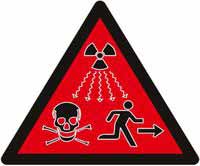 When asked whether the cesium levels found in these children were significant, Mr. Boilley said, “The amount of cesium should be zero.” He said Acro has determined traces of Cesium-137 in the air, soil and water around the world before the Fukushima Daiichi disaster, saying these traces could be remnants from nuclear experiments in the 1960s and the Chernobyl disaster in 1986. But he says that Cesium-134 is certainly from the Fukushima disaster.
More Fukushima Worries: Internal Contamination, WSJ By Anna Novick, 2 July 11 A urine analysis performed by a French non-profit organization on a small number of children in Fukushima city suggests they may have suffered internal radiation contamination from reactor fuel from the crippled Fukushima Daiichi nuclear power plant, even though they live outside the national government’s 30-kilometer evacuation zone. Continue reading
30 years radiation health monitoring for 2 million Fukushima residents
Residents in the Fukushima region have expressed growing concern surrounding the possible longterm health risks, in particular for children, triggered by the on-going nuclear power plant crisis.
Two million Fukushima residents to undergo radiation health checks Telegraph By Danielle Demetriou in Tokyo, 21 June 11 More than two million residents living in the region surrounding Japan’s damaged nuclear power plant will undergo longterm health checks starting from this month. 20 Jun 2011 The health of residents in Fukushima prefecture in northeast Japan will be monitored over the next 30 years in order to ease growing concerns surrounding radiation contamination. Continue reading
UK government held gravest fears about Fukushima crisis
 A substantial number of documents were withheld on grounds that they contained “information which, if disclosed, would adversely affect international relations,” the government’s civil contingencies team said…….
UK government’s Fukushima crisis plan based on bigger leak than Chernobyl As Japan’s nuclear emergency unfolded, scientists devised a worst case scenario involving issuing iodine pills to Briton. Ian Sample, science correspondent. guardian.co.uk, 20 June 2011
The British government made contingency plans at the height of the Fukushima nuclear crisis which anticipated a “reasonable worst case scenario” of the plant releasing more radiation than Chernobyl, new documents released to the Guardian show. Continue reading
TEPCO’s sloppy care of 3700 nuclear clean-up workers
Whereabouts of 30 nuclear power plant subcontractors unknown: Health Ministry Mainichi Daily News 21 June 11 The whereabouts of about 30 subcontractors who helped deal with the crisis at the crippled Fukushima No. 1 Nuclear Power Plant is unknown, the Ministry of Health, Labor and Welfare said on June 20.
The workers are among some 3,700 who worked to control the disaster in March, the month the plant was struck by the Great East Japan Earthquake and tsunami.
The workers’ names were listed in records showing that they had been loaned dosimeters, but when the plant’s operator, Tokyo Electric Power Co. (TEPCO), contacted the companies they were associated with, the companies replied that there was no record of those workers.
The ministry has branded TEPCO’s administration of workers “sloppy” and ordered the company to conduct an investigation to identify the workers.
“We don’t know why there is no record of the workers. The records and dosimeters were managed by TEPCO and its administration can only be described as sloppy,” a representative of the ministry’s Labor Standards Bureau said…..http://mdn.mainichi.jp/mdnnews/news/20110621p2a00m0na005000c.html
Another failure in Fukushima water treatment system
Decontamination system fails again at Japan nuclear plant THE HINDU 22 June 11The operator of a damaged Japanese nuclear plant suspended another test run of a newly installed water-treatment system after its pump stopped on Tuesday.
Tokyo Electric Power Co said the pump was overburdened by excessive liquid flow, Kyodo News reported.
The system designed to decontaminate highly radioactive water stopped only five hours into full operation on Friday at the Fukushima Daiichi plant, 250 kilometres north-east of Tokyo.
The operator concluded on Monday that absorbent materials inside the decontamination equipment needed changing more frequently than previously estimated, public broadcaster NHK reported.
The company is trying to reduce radioactivity in water that has accumulated around the plant as a result of emergency measures to cool the reactor cores. Storage facilities for contaminated water were reaching capacity.
Giant cover for No 1 nuclear reactor to stop Fukushima radiation to atmosphere
 N-bldg cover to be built, unbuilt, rebuilt, The Yomiuri Shimbun, 21 June 11 IWAKI, Fukushima–-Work to assemble parts of a giant cover for the No. 1 nuclear reactor building at Tokyo Electric Power Co.’s Fukushima No. 1 nuclear power plant is proceeding at a fever pitch at Onahama Port in Iwaki, Fukushima Prefecture.
The giant cover is designed to prevent most radioactive substances from dispersing into the atmosphere from the No. 1 reactor, which was damaged by a hydrogen explosion on March 12.
It will enclose an area of 42 meters by 47 meters and will stand 54 meters high.
To limit workers’ exposure to radiation and shorten the construction period, 62 parts, including pillars, beams and polyester-sheeted panels, are being assembled at the port into a unified structure. After it is confirmed that the parts fit together properly, the cover will be disassembled and transported to the nuclear power plant by ship.
On-site assembly of the components is scheduled to start next Monday. TEPCO plans to complete the work in late September. Final construction of the cover will be carried out by two giant cranes, which will be remote-controlled.A traditional Japanese insertion-only joint method, which does not employ welding or bolts for joining materials, is being used to assemble the cover… http://www.yomiuri.co.jp/dy/national/T110620004790.htm
Japan experimenting with incineration of radioactive rubble
Environment Ministry to approve incineration of rubble contaminated with radiation, (Mainichi Japan) June 20, 2011 The Environment Ministry has decided to approve the proposed incineration of rubble contaminated with radiation from the tsunami-hit Fukushima nuclear power plant at existing incineration facilities equipped with exhaust gas filters and absorption devices, officials said.
It made the decision after discussing how to safely dispose of rubble contaminated with radiation from the crippled Fukushima No. 1 Nuclear Power Plant.
No law currently provides for ways to dispose of waste contaminated with radiation from a crippled nuclear power plant. After consultations between ministries and agencies concerned, the government decided to apply the Waste Disposal and Public Cleaning Law to the disposal of radioactive rubble.
The ministry had initially urged local governments not to move radioactive rubble out of temporary storage sites. However, it will explain its decision to local governments concerned and ask them to resume their disposal of contaminated rubble as early as the end of this month……….
The government will also try to form a consensus among Fukushima residents about its plan to build final disposal sites for radioactive waste in the prefecture….http://mdn.mainichi.jp/mdnnews/news/20110620p2a00m0na017000c.html
Tokyo residents fearful, as radiation ‘hot spots’ confirmed, far from Fukushima
Some city, ward, town and village governments in the Tokyo metropolitan area have started doing their own radiation checks. An increasing number of citizens also are apparently checking radiation levels themselves…..
 Precise response needed to quell ‘hot spot’ concerns,The Yomiuri Shimbun,18 June 11 As the crisis at the Fukushima No. 1 nuclear power plant continues to unfold, high radiation readings have been confirmed in several isolated areas outside evacuation zones. Residents in these areas are feeling increasingly anxious about their radiation exposure.The government must quickly expand the scope of radiation measurements to grasp the actual condition on the ground and take steps to remedy the problem.”Hot spots” with high levels of radiation also were detected after the 1986 Chernobyl nuclear meltdown in the former Soviet Union. Some were several thousand kilometers from the Chernobyl plant. Continue reading
Japan’s green tea industry hit with radiation crisis
 VIDEO Crisis brewing as Japan’s tea farmers face radiation ban June 19, 2011CNN) — Japan’s green tea fields sway in the early summer winds, the picture of bucolic beauty. But beneath these peaceful rows of young green buds, ready for the second harvest of the year, a national crisis is brewing.Earlier this month, Japan’s government banned green tea from parts of three prefectures: Tochigi, Chiba and Kanagawa; and banned tea from all of a fourth prefecture, Ibaraki.The authorities had detected levels of radioactive cesium in tea leaves above the legal limit of 500 becquerels per kilogram.Now the discovery of radiation in fields further south in Shizuoka, Japan, some 400 kilometers away from the crippled Fukushima Daiichi Nuclear Plant, threatens the most robust tea-producing region in Japan.The Shizuoka government says it asked five tea manufacturing plants in the Warashina district of Shizuoka to voluntarily stop shipping green tea leaves, after tests revealed dried tea contained 581 to 654 becquerels of cesium per kilogram…Crisis brewing as Japan’s tea farmers face radiation ban – CNN.com
Japan’s atomic bomb victims call for move away from nuclear energy
Japan Confederation of A- and H-bomb Sufferers Organizations to strengthen its opposition to nuclear energy, Hiroshima Peace Media Center, (June 14, 2011),by Kohei Okada, At its annual meeting in Tokyo, held on June 8, the Japan Confederation of A- and H-bomb Sufferers Organizations (Nihon Hidankyo) determined its policy for this fiscal year, indicating that, among other actions, it will demand strongly that the Japanese government move away from the nation’s reliance on nuclear energy and call for the decommission of nuclear reactors that have been shut down. This intention goes beyond its previous policy of demanding “changes in Japan’s energy policy.”……..Japan Confederation of A- and H-bomb Sufferers Organizations to strengthen its opposition to nuclear energy – News – Hiroshima Peace Media Center
Radiation rise forces Japan to halt Fukushima water clean-up
Japan nuclear: Radiation halts water clean-up, The radioactive water will be temporarily stored in special tanks when it is removed from the site, BBC News 18 June 11 Operators of Japan’s Fukushima nuclear plant have suspended an operation to clean contaminated water hours after it began due to a rapid rise in radiation.
Some 110,000 tonnes of water have built up during efforts to cool reactors hit by the 11 March earthquake and tsunami. The contaminated water, enough to fill 40 Olympic-sized swimming pools, has been at risk of spilling into the sea.
A spokesman for the plant operators said engineers were trying to find the cause of the jump in radiation levels.
“The level of radiation at a machine to absorb caesium has risen faster than our initial projections,” a spokesman for the Tokyo Electric Power Company (Tepco) said. Earlier this week, officials had warned that the growing pools of radioactive water at the Fukushima Daiichi plant were in danger of spilling into the sea within a week….http://www.bbc.co.uk/news/world-asia-pacific-13819767
Radiation travelling far and wide in Japan
Elevated radiation levels widespread in eastern Japan, Unsafe levels of radioactive contamination have been reported from multiple sources throughout vast areas of eastern Japan in locations far away from the Fukushima nuclear power plant, Smart Planet By David Worthington | June 17, 2011
Science Magazine cites data from the prefectural government of Iwate revealing radioactive cesium has traveled over 100 miles away from Fukushima. Pastoral grasses are contaminated beyond safety standards
Japanese scientists have begun to track background radiation levels independently, according to the magazine’s report. Levels are exceeding acceptable safety limits in many locations.
A “citizens’ map” of radiation levels is being maintained by a group of Japanese bloggers. Levels appear highest near Fukushima and toward its northwest. The vicinity around immediate southwest of the reactors shows elevated radiation, and a large pocket of contamination has settled further south in the outskirts of Tokyo……. http://www.smartplanet.com/blog/intelligent-energy/elevated-radiation-levels-widespread-in-eastern-japan/7160
1 This Month



Read the Public Inquiry Report, the Commissioners’ report, Surrendering Australia: The AUKUS Deception is available to download for free at aukuspublicinquiry.com. Or just watch the replay of the National Press Club Luncheon.

19 November – Webinar – The Reality of Reprocessing
Time: 11:00 AM Pacific Time (US & Canada) / 2:00 PM Eastern / 7:00 PM UK / 8:00 PM CET
Register for the Zoom Event Here


Shut down the radiation-damaged Heysham nuclear reactors now
To see nuclear-related stories in greater depth and intensity – go to https://nuclearinformation.wordpress.com

Say No to NASA’s Reckless Nuclear Reactor on the Moon
Say No to NASA’s Reckless Nuclear Reactor on the Moon
-
Archives
- November 2026 (128)
- October 2026 (302)
- September 2026 (339)
- August 2026 (330)
- July 2026 (355)
- June 2026 (287)
- May 2026 (306)
- April 2026 (356)
- March 2026 (251)
- February 2026 (267)
- January 2026 (308)
- December 2025 (358)
-
Categories
- 1
- 1 NUCLEAR ISSUES
- business and costs
- climate change
- culture and arts
- ENERGY
- environment
- health
- history
- indigenous issues
- Legal
- marketing of nuclear
- media
- opposition to nuclear
- PERSONAL STORIES
- politics
- politics international
- Religion and ethics
- safety
- secrets,lies and civil liberties
- spinbuster
- technology
- Uranium
- wastes
- weapons and war
- Women
- 2 WORLD
- ACTION
- AFRICA
- Atrocities
- AUSTRALIA
- Christina's notes
- Christina's themes
- culture and arts
- Events
- Fuk 2022
- Fuk 2023
- Fukushima 2017
- Fukushima 2018
- fukushima 2019
- Fukushima 2020
- Fukushima 2021
- general
- global warming
- Humour (God we need it)
- Nuclear
- RARE EARTHS
- Reference
- resources – print
- Resources -audiovicual
- Weekly Newsletter
- World
- World Nuclear
- YouTube
-
RSS
Entries RSS
Comments RSS

