Nuclear power in Japan may be a mistake we are doomed to repeat
https://www.asahi.com/ajw/articles/14663000VOX POPULI: Nuclear power in Japan may be a mistake we are doomed to repeat. Vox Populi, Vox Dei is a daily column that runs on Page 1 of The Asahi Shimbun., July 7, 2022
The Supreme Court was extremely lenient with the government in its June 17 verdict concerning the Fukushima nuclear catastrophe of 2011.
Multiple high courts had already ruled that the government was liable for damages for failing to order Tokyo Electric Power Co. to take sufficient preventive measures against a potentially disastrous tsunami.
The top court, however, overturned all these rulings.
Explaining the reason, the presiding justice noted to the effect that the tsunami turned out to be “simply too massive.”
The gist of his argument was that since the accident would have occurred anyway even if the government had ordered TEPCO to install a seawall, his court could not hold the government responsible as a nuclear safety regulator.
What an utterly magnanimous ruling for a government that failed to do its part. This is akin to giving someone a pass because they are too inexperienced or immature to be treated seriously.
I could not possibly support this ruling. However, trying to go along with the court’s reasoning just for the sake of argument, the conclusion to be drawn is the government was never capable of regulating a nuclear power plant at all.
Ultimately, any discussion of nuclear power boils down to whether humans are ever capable of being a party to handling it.
Radioactive nuclear waste must be kept isolated for an utterly mind-boggling period of 100,000 years. We have also learned that once a nuclear accident occurs, we cannot even go near the accident site, let alone control it.
For some years after the Fukushima disaster, the idea of ending nuclear power generation was a major issue in national elections.
A decade has elapsed, however, and the issue is hardly “hot” in the July 10 Upper House election. In fact, the recent rise in energy prices has given a boost to advocates for a greater reliance on nuclear energy.
If radioactive nuclear waste could talk, it must be scoffing at our forgetfulness and taunting us: “You will never be able to measure us by your yardstick.”
Japan’s Nuclear Power Plants in 2022
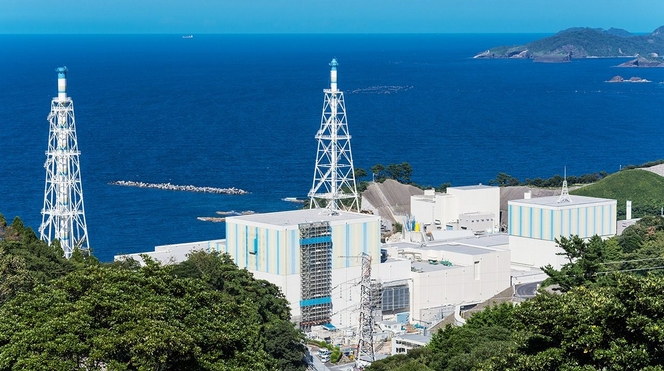
June 29, 2022
As of June 2022, 10 nuclear reactors at six power stations have been given the go-ahead to restart in Japan but only 4 reactors are currently in operation. Despite local governments agreeing to restart the reactors, some have not yet become operational due to the time required to implement safety measures and complete other construction work.
Prior to the Great East Japan Earthquake of 2011, 54 nuclear reactors were in operation in Japan, supplying approximately 30% of the country’s electric power. However, the disaster at the Fukushima Daiichi Nuclear Power Plant was a drastic blow to nuclear power’s reputation, leading to increased distrust and unease toward the energy source.
As of June 2022, only 10 reactors have been restarted with local approval at the following six power stations: Ōi, Takahama, and Mihama (Kansai Electric Power Company), Genkai and Sendai (Kyūshū Electric Power Company), and Ikata (Shikoku Electric Power Company). These plants based in western Japan all use pressurized water reactors, which are different from the boiling water reactors at the Fukushima Daiichi Nuclear Power Plant.
Boiling water reactors at the Onagawa (Tōhoku Electric Power Company), Kashiwazaki-Kariwa (Tokyo Electric Power Company), Tōkai Daini (Japan Atomic Power Company), and Shimane (Chūgoku Electric Power Company) nuclear power stations have all been approved under the new regulatory standards, but none have received the green light to restart.
In total, 21 nuclear reactors have been decommissioned since the 2011 Great East Japan Earthquake.

Nuclear Power Plants: Major Developments Since the Great East Japan Earthquake


(Translated from Japanese. Banner photo: Shimane Nuclear Power Plant, operated by Chūgoku Electric Power Company. © Pixta.)
Japan has approved restarts of 10 nuclear reactors, but only 4 actually in operation
As of June 2022, 10 nuclear reactors at six power stations have been given
the go-ahead to restart in Japan but only 4 reactors are currently in
operation. Despite local governments agreeing to restart the reactors, some
have not yet become operational due to the time required to implement
safety measures and complete other construction work.
Nippon 29th June 2022
Britain to lift restrictions on food from Fukushima
Food from Fukushima will be freely available in the UK from Wednesday,
weeks after Boris Johnson snacked on popcorn from the Japanese prefecture
hit by a triple nuclear meltdown in March 2011. Britain restricted
Fukushima imports after the disaster, the world’s worst nuclear accident
since Chernobyl, but has gradually lifted them, even as other countries
limit or ban produce from the region. Johnson confirmed that the remaining
restrictions would end on Wednesday in a meeting the previous day with the
Japanese prime minister, Fumio Kishida, on the fringes of the G7 summit in
Germany. Johnson told Kishida that UK-Japan relations were going from
“strength to strength”.
Guardian 29th June 2022
Japan to Give Plutonium from Spent Fuel to France

June 21, 2022
Tokyo, June 21 (Jiji Press)–The Japan Atomic Energy Agency will give France plutonium extracted from spent nuclear fuel from its Fugen advanced converter reactor, officials have said.
The agency will conclude a contract with a French nuclear company this month at the earliest, according to the officials.
The French side is expected to reprocess the spent nuclear fuel from the reactor, which is in the decommissioning process, in the central Japan prefecture of Fukui.
On Wednesday, the Japanese and French governments exchanged notes on the transportation and reprocessing of spent nuclear fuel and the return of high-level radioactive waste to Japan.
The two sides agreed to start the removal of 731 spent nuclear fuel assemblies from Fugen in April 2023 and complete the work by the end of March 2027.
120 High School Students Connect Voices for Nuclear Abolition Video Produced by Masaharu Fukuyama Released

June 15, 2022
On March 15, a video of the “Peace Book Relay,” in which approximately 120 high school students from Japan and abroad send messages for the abolition of nuclear weapons to the music of Masaharu Fukuyama, 53, a singer from Nagasaki City, was released on the Internet. Mr. Fukuyama produced and directed the video. The video can be viewed on the website of the Nagasaki Camphor Tree Project (https://nagasaki.kusunoki-project.jp/page/), for which Mr. Fukuyama serves as general producer, and on the Nagasaki City official channel on the video-sharing website “You Tube.
The video is about 15 minutes long, and features “High School Peace Ambassadors” from 16 prefectures and high school students from Hawaii, Russia, and South Korea holding up their wishes for nuclear abolition in sketchbooks and other media in a relay format, with background music provided by Mr. Fukuyama’s songs “Camphor Tree,” “That’s All There is” and “Ammonite’s Dream.
https://mainichi.jp/articles/20220615/k00/00m/040/110000c?fbclid=IwAR3O6lOIU9ZFHdGss7fZkIRMtr2gb2hgiPRnNgjpEg0mSG-BPavTGSZFJzU
Japan to Give Plutonium from Spent Fuel to France, – (but the high level wastes must be returned to Japan)
https://www.nippon.com/en/news/yjj2022062000945/japan-to-give-plutonium-from-spent-fuel-to-france.html Tokyo, June 21 (Jiji Press)–The Japan Atomic Energy Agency will give France plutonium extracted from spent nuclear fuel from its Fugen advanced converter reactor, officials have said.
The agency will conclude a contract with a French nuclear company this month at the earliest, according to the officials.
The French side is expected to reprocess the spent nuclear fuel from the reactor, which is in the decommissioning process, in the central Japan prefecture of Fukui.
On Wednesday, the Japanese and French governments exchanged notes on the transportation and reprocessing of spent nuclear fuel and the return of high-level radioactive waste to Japan.
The two sides agreed to start the removal of 731 spent nuclear fuel assemblies from Fugen in April 2023 and complete the work by the end of March 2027.
Apprehension in Japan, about the idea of getting nuclear-powered submarines.
Kishida cautious about Japan acquiring nuclear-powered sub Nikkei Asia, June 19, 2022
Natsuo Yamaguchi, head of the LDP’s junior coalition partner Komeito, echoed Kishida’s view, calling the idea of a nuclear-powered submarine “unrealistic.”
Ichiro Matsui, leader of the Japan Innovation Party, and Yuichiro Tamaki, head of the Democratic Party for the People, called for acquisition of a nuclear-powered submarine to boost deterrence and reconnaissance capacity……….
The main opposition Constitutional Democratic Party of Japan’s leader Kenta Izumi was against acquiring a nuclear-powered submarine, saying the country’s defenses “won’t get stronger simply because some deluxe equipment is added.”………………. https://asia.nikkei.com/Politics/International-relations/Indo-Pacific/Kishida-cautious-about-Japan-acquiring-nuclear-powered-subs
Court rules Japanese government not responsible for Fukushima nuclear disaster damage
ABC News18 June 22
Key points:
- The nuclear disaster, caused by a tsunami striking the Fukushima Daiichi power plant, forced hundreds of thousands of people from their homes
- The ruling in the government’s favour may set a precedent for future cases
- The company Tepco were forced to pay damages to about 3,700 people in March K
Japan’s government is not liable for damages demanded by people whose lives were devastated by the Fukushima nuclear disaster, the country’s top court said on Friday, the first such ruling in a series of similar cases.
The ruling’s effect as a precedent will be closely watched, local media said……………… https://www.abc.net.au/news/2022-06-17/japan-government-not-responsible-for-nuclear-damage-court/101163670
Japan gov’t to skip 1st U.N. nuclear ban meeting next week
KYODO NEWS 15 June 22, – Japan will not join the first meeting of parties to a U.N. treaty banning nuclear weapons to be held in Vienna next week, Prime Minister Fumio Kishida said Wednesday, despite high expectations for its attendance as the only nation that has suffered atomic bombings.
Japan, which has not signed the Treaty on the Prohibition of Nuclear Weapons, did not complete the procedures for taking part in the three-day meeting, including as an observer, by the Tuesday deadline.
Survivors of the U.S. atomic bombings of Hiroshima and Nagasaki in August 1945, as well as member nations of the U.N. treaty, had hoped that the Japanese government would participate in the gathering that kicks off next Tuesday………………. https://english.kyodonews.net/news/2022/06/740ac3501176-japan-govt-to-skip-1st-un-nuclear-ban-meeting-next-week.html
Japanese youths at Vienna Nuclear Ban Treaty meeting, call for abolition of nuclear weapons
Japanese youths to call for abolition of nuclear weapons at Vienna meeting, https://www3.nhk.or.jp/nhkworld/en/news/20220612_14/ Fourteen Japanese youths plan to call for the abolition of nuclear weapons at the first meeting of signatories to the UN Treaty on the Prohibition of Nuclear Weapons in Vienna later this month.
In an online meeting on Sunday, Takahashi Yuta, a university student from Hiroshima, said the younger generation must take over from the atomic-bomb survivors, or hibakusha.
He said many young people will travel to the meeting in Vienna, and he wants to convey the hibakushas’ voices to the world.
Okuno Kako, another university student from Hiroshima, is also working on environmental
Okuno said if nuclear weapons are used, they would cause temperatures to fall globally. She added that nuclear tests and the production of nuclear weapons also adversely affect the environment.
She said she wants to appeal for the abolition of nuclear weapons from the viewpoint of both environmental protection and peace, although they may appear to be unrelated.
The students plan to explain the hibakushas’ experiences at events organized by non-governmental organizations, and to give speeches calling for the abolition of nuclear weapons.
They also hope to convey the hibakushas’ views to representatives of the signatory countries in Vienna.
Aging Fukui nuclear unit to restart in Aug., 2 months early

June 10, 2022
An aging nuclear reactor in central Japan’s Fukui Prefecture will resume operating in August, about two months earlier than scheduled, with the unit expected to help ease tight electricity supply conditions during the busy summer season, its operator said Friday.
After being offline for about 10 years, Kansai Electric Power Co.’s Mihama No. 3 reactor initially restarted in June last year, becoming the first nuclear unit to operate beyond the government-mandated 40-year service period introduced under new rules set after the 2011 Fukushima disaster.
But the No. 3 unit was then suspended just four months after its restart after failing to meet the Oct. 25 deadline set by regulators to implement antiterrorism measures.
Kansai Electric said it will now start operation of a designated safety facility in late July and thus bring forward the schedule for the reactor’s restart from Aug. 12.
With the reactor back online, it is hoped the country’s power reserve rate, except for Hokkaido and Okinawa, in August will improve to 4.7 percent from 4.4 percent. The reactor was initially scheduled to operate from Oct. 20.
While the No. 3 unit was given the green light to operate, the Nos. 1 and 2 units of the plant in Mihama on the Sea of Japan coast were terminated in April 2015 in line with the 40-year limit.
Disaster-prone Japan has recently been struggling to provide stable power supply, with most of its nuclear power plants remaining offline under stricter safety regulations imposed since the Fukushima nuclear accident and an increasing number of aging thermal power plants being shut down.
“We will operate our nuclear plants in a safe manner while considering current challenges in the power supply and demand,” Kansai Electric said in a statement.
Even so, power supply still looks tight this summer as the government projects the reserve rate to drop to 3.1 percent in July, just 0.1 point above the required level for stable power supply.
Economy, Trade and Industry Minister Koichi Hagiuda on Friday urged the public again to save energy such as by setting air conditioning to 28 C, turning off unnecessary lights and avoiding stacking too much food in refrigerators.
Japan court: Nuclear plant’s tsunami safeguards inadequate.
TechXplore, 10 June 22, A Japanese court on Tuesday ordered a utility not to restart a nuclear power plant because of inadequate tsunami safeguards, backing the safety concerns of residents at a time the government is pushing for more reactors to resume power generation after pledging to ban imports of Russian fossil fuels.
The Sapporo District Court ruled that Hokkaido Electric Power Co. must not operate any of the three reactors at its coastal Tomari nuclear power plant in northern Japan because the inadequate tsunami protection could endanger people’s lives.
The utility said it will appeal the ruling, which it called “regrettable and absolutely unacceptable.”………………..
About 1,200 people from the area of the Tomari plant and elsewhere filed a lawsuit in late 2012 demanding that it be decommissioned because of inadequate earthquake and tsunami protections. In its ruling, the court dismissed that demand.
Chief Judge Tetsuya Taniguchi said Hokkaido Electric failed to take steps to address safety concerns and demonstrate the adequacy of the plant’s existing seawall, which was built after the Fukushima disaster but has since faced questions about its weak foundation.
………… The court also ruled that Hokkaido Electric had failed to adequately explain how it can ensure the safety of spent nuclear fuel inside the reactors. https://techxplore.com/news/2022-05-japan-court-nuclear-tsunami-safeguards.html
EDITORIAL: Vienna meeting on the Treaty on the Prohibition of Nuclear Weapons -best chance for Japan to lead the way

Vienna meet best chance for Japan to make case for
nuclear abolition https://www.asahi.com/ajw/articles/14640066. June 8, 2022 Nuclear weapons must never be used. The international community must stand as one and make this plea. The urgency has never been greater than it is now.
As the only nation to have experienced atomic warfare, Japan’s mission is to lead the way.
The first meeting of the signatories to the Treaty on the Prohibition of Nuclear Weapons will be held in Vienna late this month against the backdrop of Russia’s war against Ukraine, which has escalated into a threat to use nuclear weapons.
The treaty categorically forbids all signatory nations to own, use or threaten to use nuclear weapons.
It went into force in January last year and has been ratified by more than 60 nations and regions.
The conference has been eagerly awaited as an opportunity to counter moves by the nuclear powers to expand their weapons arsenals and continue calls for a world without nuclear weapons.
All U.N. members are qualified to attend. Some have chosen to participate as observers, without having signed or ratified the nuclear ban treaty.
They include Germany and Norway, members of the North Atlantic Treaty Organization, as well as Sweden and Finland, which have announced they plan to join the military alliance.
Participating in discussions for the elimination of nuclear weapons does not conflict with remaining under the U.S. “nuclear umbrella.”
Observer nations intend to focus on long-term goals while dealing with the current Russian threat.
But the Japanese government has not changed its decision to sit out the conference, asserting there is no point in participating without engaging the nuclear powers in the process.
How will the international community regard the absence of Japan at this conference, given that it is the nation most familiar with the horrors that befell Hiroshima and Nagasaki?
We deplore the government’s stance.
Prime Minister Fumio Kishida, elected from Hiroshima, has stressed that background in projecting his political persona. He has appraised the nuclear ban treaty as “an important exit.”
We understand Kishida’s position of stressing the importance of Japan’s alliance with the United States.
But that stance must be all the more reason for him to seek Washington’s understanding and proudly attend the Vienna conference. That, we believe, is what “peace diplomacy” boils down to.
In the meantime, the government has appointed young anti-nuclear activists as “special youth envoys” and is sending them to the conference to convey the horrors of atomic bombing to the world.
Prime Minister Fumio Kishida, elected from Hiroshima, has stressed that background in projecting his political persona. He has appraised the nuclear ban treaty as “an important exit.”
We understand Kishida’s position of stressing the importance of Japan’s alliance with the United States.
But that stance must be all the more reason for him to seek Washington’s understanding and proudly attend the Vienna conference. That, we believe, is what “peace diplomacy” boils down to.
In the meantime, the government has appointed young anti-nuclear activists as “special youth envoys” and is sending them to the conference to convey the horrors of atomic bombing to the world.
We hope the delegation will remind the world firmly of the inhumanity of nuclear weapons.
During the Cold War, nuclear weapons were perceived as “the ultimate weapons that cannot be used.”
But since then, they have been reduced in size and become more readily available. Conspicuous moves have been made to lower the hurdle of their deployment. Fears of an accidental nuclear explosion have not evaporated.
How do we reconcile nuclear disarmament and arms control with initiatives for the abolition of nuclear weapons?
It will be a tough challenge, but we must keep striving to reach this goal.
–The Asahi Shimbun, June 8
Nuclear Contaminated Water From Fukushima Should Never Be Out Of One’s Mind

Nuke Contaminated Water From Fukushima Should Never Be Out Of One’s Mind, https://nation.com.pk/2022/06/07/nuke-contaminated-water-from-fukushima-should-never-be-out-of-ones-mind/ By Zhou Dingxing. Jun 7, 2022, In 2011, the “3/11” earthquake in Japan caused the meltdown of the Fukushima Daiichi Nuclear Power Plant reactor core, unleashing enormous amounts of radioactive material. The operator of the plant, Tokyo Electric Power Company (TEPCO), decided to pour in seawater to cool the reactor and contain the leakage. And because the used seawater became highly contaminated with radioactive material, TEPCO had to put it in storage tanks. A decade on, the nuclear contaminated water generated by the Fukushima Daiichi Nuclear Power Plant are about 150 tons per day in 2021, and will reach the upper limit of the storage tank capacity of 1.37 million tons in the spring of 2023.
According to estimates by the Japan Centre for Economic Research, it will cost 50-70 trillion yen (about $400-550 billion) to scrap and decontaminate the reactor, the bulk of which goes to the treatment of contaminated water. So in April 2021, the Japanese government announced that the problem of increasing amounts of nuclear contaminated wastewater would be addressed by dumping it into the sea. On May 18, 2022, the Japan Atomic Energy Regulatory Commission granted initial approval for TEPCO’s ocean dumping plan.
After the Fukushima nuclear accident, the Japanese government set up the “Nuclear Damage Compensation and Decommissioning Facilitation Corporation” (NDF), which is an official agency with 50.1 percent of TEPCO’s voting rights, in order to prevent TEPCO from going bankrupt. In other words, TEPCO is now under direct jurisdiction and control of the Japanese government. It is not hard to see that both TEPCO and the Japanese government are the masterminds behind the nuclear contaminated water dumping plan, because for them, this is the most expedient, cost-effective and trouble-saving way. Japan would need to spend only 3.4 billion yen (about $27 million) according to this plan. But the threat to nature, the environment and human life as a result of such reckless actions was probably never on their minds.
NUCLEAR CONTAMINATED WATER IS NOT NUCLEAR TREATED WATER
Monitoring data collected in 2012 showed that the concentration of Cesium in the waters near Fukushima was 100,000 becquerels per cubic meter, which is 100 times higher than what was detected in the Black Sea after the Chernobyl nuclear leak. Ten years later in 2021, 500 becquerels of radioactive elements per kilogram of weight could still be detected in the flat scorpionfish caught by Japanese fishermen off the coast of Fukushima Prefecture, or five times higher than Japan’s own standards. In the 11 years since the nuclear disaster, one or two thyroid cancer cases have been reported for every 60,000 children in Fukushima Prefecture, much higher than the normal rate.
The Japanese government and TEPCO have repeatedly claimed that nuclear contaminated water is “safe” to be dumped into the ocean because it would go through the multi-nuclide removal system (Advanced Liquid Processing System, ALPS). But it is only the radioactive substance called “Tritium” that has reached this standard. And what Japan doesn’t say is that, even after treatment, the water still contains other radioactive substances such as Strontium 90 and Carbon 14 that cause genetic mutation in the ecosystem.
Since the release of the ALPS-related report, the Japanese government has not held any briefings or hearings for the public. And in order to justify the dumping plan, the Japanese government contacted citizen and groups to ask them to stop using the words “nuclear contaminated water”, and use “nuclear treated water” instead. Vigorous public relations (PR) efforts have also been carried out to whitewash the plan. In the 2021 budget of the Japanese Reconstruction Agency, PR expenses related to the Fukushima nuclear accident have increased to 2 billion yen (around $16 million), over four times than the previous year figure. The money has been used on professional teams to weaken and remove negative public opinion in Japan and abroad about the nuclear contaminated water through various propaganda programs.
Furthermore, TEPCO’s track records for handling the nuclear accident have been filled with deception and distortion. In 2007, TEPCO admitted that it had tampered with data and concealed potential safety hazards in a total of 199 regular inspections of 13 reactors in its nuclear power plants since 1977, including the cooling system failure in the Fukushima nuclear accident. One week after the 2011 nuclear accident when experts had already made the judgment that the cores of Units 1 to 3 of the Fukushima Daiichi Nuclear Power Plant had melted, the company still refused to announce the truth to the public, and instead chose to use “core damage,” a term that was significantly less alarming. With a past so bad it is hard to make one believe that TEPCO will dump “safe” nuclear contaminated water into the sea.
WAVES OF OPPOSITION AT HOME AND ABROAD
The Japanese government has so far failed to provide sufficient and credible explanations on the legitimacy of the nuclear contaminated water dumping plan, the reliability of nuclear contaminated water data, the effectiveness of the purification devices, and the uncertainty of the environmental impact. To promote the plan under such circumstances has only brought about wide criticism and questions by various communities in Japan and beyond.
Up to 70 percent of the people in Fukushima Prefecture have expressed opposition to the dumping plan. Konno Toshio, former president of Fukushima University, was opposed to advancing the ocean dumping plan without prior understanding at home and abroad, because this plan could affect future generations and must be treated with great caution. The fishery cooperatives and local councils in Miyagi Prefecture, which is adjacent to Fukushima Prefecture, believe that the dumping of nuclear contaminated water into the ocean may affect the safety of local aquatic products and cause significant economic losses to related industries. Already, 180,000 people in Japan have signed the petition to the Japanese government to adopt disposal options other than ocean dumping.
Vladimir Kuznetsov, academician at the Russian Academy of Natural Sciences, said that radioactive substances in the nuclear contaminated water can only be partially filtered, and the treated water still contains extremely dangerous radionuclides, which will pollute marine life and spread to the entire ocean through fish migration. This will gravely harm the global marine environment and cause serious harm to the health of people in the periphery. According to a research model established by GEOMAR Helmholtz Centre for Ocean Research Kiel, half of the Pacific Ocean will be polluted in less than 57 days if nuclear contaminated water is dumped at the speed announced by Japan.
Voices of justice
Japan’s ocean dumping plan of nuclear contaminated water is a serious threat to the marine environment, and it damages marine interests of the neighbors and other littoral countries. It also violates multiple international conventions such as the United Nations Convention on the Law of the Sea, the Convention on Assistance in Nuclear Accidents or Radiation Emergencies, and the Convention on Nuclear Safety as well as principles of the international law. Many countries, including China, have expressed concern over or opposition to it.
The Russian Foreign Ministry issued a statement criticizing the Japanese government for not consulting with or providing any related information to its neighbors when the decision was made, and expressing grave concern over Japan’s dumping of nuclear polluted water into the ocean. The South Korean Foreign Ministry summoned the Japanese ambassador to Seoul to make a serious protest against Japan’s unilateral decision while large crowds gathered in front of the Japanese embassy to protest. The International Atomic Energy Agency (IAEA) has launched an assessment of Japan’s plan.
The spokesperson of the Chinese Ministry of Foreign Affairs has repeatedly pointed out that Japan’s dumping of nuclear contaminated water into the ocean is extremely irresponsible, and demanded that Japan fully consult with neighbouring countries, other stakeholders, and relevant international institutions to find a proper way to dispose of the nuclear contaminated water, before which the dumping into the ocean shall not be initiated.
The ocean is a treasure for all mankind and our home for survival. It is essential for sustainable development and our future. To dump nuclear contaminated water from Fukushima into the ocean is a major issue that bears on the environment for human survival and health, it is not just Japan’s internal affairs. Although keenly aware of the grave harm to the global marine environment caused by the dumping of such water into the sea, Japan has attempted to push through the plan without exhausting all other safe methods. Such an opaque and irresponsible approach is unacceptable, let alone trusted by countries in the region and the larger international community.
–The author is a scholar on international studies
1 This Month

of the week – Shut Down Drone Warfare!


Tell the Ukrainian Government to Drop Prosecution of Peace Activist Yurii Sheliazhenko

Petition to revoke the licensing of the Near Surface Nuclear Disposal Facility (NSDF) at Chalk River. https://www.ourcommons.ca/petitions/en/Petition/Details?Petition=e-7247
To see nuclear-related stories in greater depth and intensity – go to https://nuclearinformation.wordpress.com
-
Archives
- April 2026 (103)
- March 2026 (251)
- February 2026 (268)
- January 2026 (308)
- December 2025 (358)
- November 2025 (359)
- October 2025 (376)
- September 2025 (257)
- August 2025 (319)
- July 2025 (230)
- June 2025 (348)
- May 2025 (261)
-
Categories
- 1
- 1 NUCLEAR ISSUES
- business and costs
- climate change
- culture and arts
- ENERGY
- environment
- health
- history
- indigenous issues
- Legal
- marketing of nuclear
- media
- opposition to nuclear
- PERSONAL STORIES
- politics
- politics international
- Religion and ethics
- safety
- secrets,lies and civil liberties
- spinbuster
- technology
- Uranium
- wastes
- weapons and war
- Women
- 2 WORLD
- ACTION
- AFRICA
- Atrocities
- AUSTRALIA
- Christina's notes
- Christina's themes
- culture and arts
- Events
- Fuk 2022
- Fuk 2023
- Fukushima 2017
- Fukushima 2018
- fukushima 2019
- Fukushima 2020
- Fukushima 2021
- general
- global warming
- Humour (God we need it)
- Nuclear
- RARE EARTHS
- Reference
- resources – print
- Resources -audiovicual
- Weekly Newsletter
- World
- World Nuclear
- YouTube
-
RSS
Entries RSS
Comments RSS
 nuclear-news