Fukushima’s leaking water 90,000 times more radioactive than the “safe level”
 Fukushima Radiation Leaks Rise Sharply By William Boardman, Reader Supported News 11 July 13 Bad as the situation is at Fukushima, it’s gotten worse.
 erhaps you’ve heard that radiation levels of the water leaving the Fukushima Daiichi nuclear power plant in Japan and flowing into the Pacific Ocean have risen by roughly 9,000 per cent. Turns out, that’s probably putting a good face on it.
By official measurement, the water coming out of Fukushima is currently 90,000 times more radioactive than officially “safe” drinking water.
These are the highest radiation levels measured at Fukusmima since March 2011, when an earthquake-triggered tsunami destroyed the plant’s four nuclear reactors, three of which melted down.
As with all nuclear reporting, precise and reliable details are hard to come by, but the current picture as of July 10 seems to be something like this:
On July 5, radiation levels at Fukushima were what passes for “normal,” which means elevated and dangerous, but stable, according to measurements by the owner, the Tokyo Electric Power Company (TEPCO).
- On July 8, radiation levels had jumped about 90 times higher, as typically reported. TEPCO had no explanation for the increase.
- On July 9, radiation levels were up again from the previous day, but at a slower rate, about 22 per cent. TEPCO still had no explanation.
- On July 10, Japan’s Nuclear Regulation Authority (NRA) issued a statement saying that the NRA strongly suspects the radioactive water is coming from Fukushima’s Reactor #1 and is going into the Pacific.
Rising radioactivity in Fukushima’s leaking water
- 11,000 becquerels per liter – TEPCO’s measurement of Cesium-134 on July 9.
- 18,000 becquerels per liter — TEPCO’s measurement of Cesium-137 on July 8.
- 22,000 becquerels per liter – TEPCO’s measurement of Cesium-137 on July 9.
Fukushima Radiation Leaks Rise Sharply By William Boardman, Reader Supported News 11 July 13 “………Here’s another perspective on the same situation:
- 10 becquerels per liter – The officially “safe” level for radioactivity in drinking water, as set by the NRA.
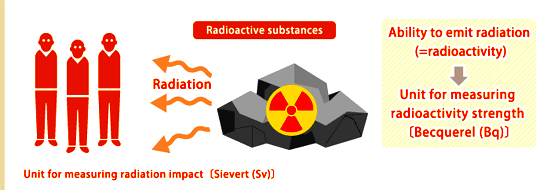
A becquerel is a standard scientific measure of radioactivity, similar in some ways to a rad or a rem or a roentgen or a sievert or a curie, but not equivalent to any of them. But you don’t have to understand the nuances of nuclear physics to get a reasonable idea of what’s going on in Fukushima. Just keep the measure of that safe drinking water in mind, that liter of water, less than a quart, with 10 becquerels of radioactivity.
- 60 becquerels per liter – For nuclear power plants, the safety limit for drinking water is 60 becquerels, as set by the NRA, with less concern for nuclear plant workers than ordinary civilians.
- 60-90 becquerels per liter – For waste water at nuclear power plants, the NRA sets a maximum standard of 90 becquerels per liter for Cesium-137 and 60 becquerels per liter of Cesium-134.
At some of Fukushima’s monitoring wells, radiation levels were in fractions of a becquerel on July 8 and 9. At the well (or wells) that are proving problematical, TEPCO has provided no baseline readings. Continue reading
Fukushima’s radioactive water storage space nearly full, and leaking
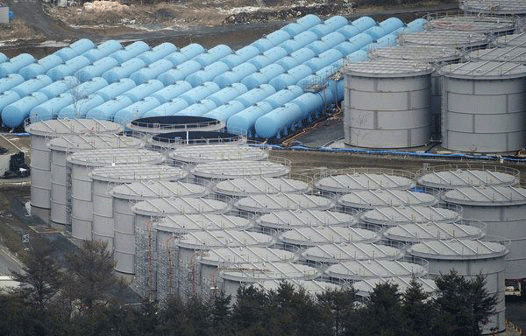 No thanks to Tepco’s ongoing failures, the Fukushima disaster is nowhere near over
The most pressing problem aside from stopping the leaks is that storage space for the irradiated water is running out—the Wall Street Journal reports(paywall) that 310,000 of the 350,000 tons of storage space at the site are now occupied, and at least one tank has been leaking. Neither Tepco nor the Japanese government have a long-term solution to the problem.
Two years after the tsunami, Fukushima is still leaking radiation and Tepco is still clueless http://qz.com/102992/two-years-after-the-tsunami-fukushima-is-still-leaking-radiation-and-tepco-is-still-clueless/ By Jake Maxwell Watts @jmwatts_ July 11, 2013 Radioactive water has been steadily leaking into the sea around the damaged Fukushima Daiichi nuclear power plant ever since it was hit by an earthquake and tsunami in March 2011, Japan’s nuclear watchdog announced on Wednesday. Plant operator Tokyo Electric Power Co, widely reviled for its inept response to the disaster, had long insisted that no leakage was taking place; in recent days it has backtracked to saying that it is “not sure” if there’s a leak.
The levels of cesium detected by the nuclear regulator are high enough to cause significantly increased rates of cancer, but are not an immediate threat to public health because they are in a remote location.
Tepco has been pumping water into three reactors for the past two years in an attempt to cool them, creating enough radioactive water to fill an Olympic-sized swimming pool every week. Now it seems that at least some of that contaminated water has also been flowing into the sea. Continue reading
Fukushima radiation seeps into the ocean
The threat of radioactive substances spreading into the Pacific Ocean has prompted concerns from Japan’s neighbors
Toxic water at Fukushima likely contaminating sea – Japan’s nuclear watchdog RT.com July 10, 2013 Japan’s nuclear watchdog says that highly contaminated radioactive water is likely seeping into the ground from the crippled Fukushima Daiichi nuclear reactors and contaminating the Pacific Ocean.
Shunichi Tanaka, chairman of the Nuclear Regulation Authority (NRA), said the contamination is “strongly suspected” and has been occurring since March 2011, when a massive earthquake and tsunami triggered three meltdowns in the Fukushima plant.
“I think contamination of the sea is continuing to a greater or lesser extent,” Tanaka said. “It was contaminated at the time of the accident, but I think it has been continuing for the last two years. Coming up with countermeasures against all possible scenarios is a top priority.”
The plant operator, Tokyo Electric Power Co. (Tepco), claims that the source of contamination is the pit from which radioactive water is leaking into the sea. However, Tanaka believes that this may be not the only source of contamination. Continue reading
Radioactive cesium levels 90% higher in Fukushima groundwater
 Fukushima Groundwater Shows Record Radiation Levels HUFFINGTON POST, Reuters 07/09/2013 “……SITUATION WORSENS Tokyo Electric Power Co, the operator of the Fukushima station, hit by the March 2011 earthquake and tsunami, said that an observation well between the damaged reactor No. 2 and the sea showed levels of radioactive caesium-134 were 90 times higher on Monday than they had been the previous Friday.
Tokyo Electric, also known as Tepco, said it detected caesium-134 at 9,000 becquerels per litre, 150 times above Japan’s safety standard. A becquerel is a measure of the release of radioactive energy. The reading for caesium-137, with a half life of 30 years, was some 85 times higher than it had been three days earlier.
The latest findings, 25 metres from the sea, come a month after Tepco detected radioactive caesium in groundwater flowing into its wrecked plant far from the sea on elevated ground. The level of caesium found in June was much lower than the amount announced on Tuesday.
The spike, combined with recent discoveries of high levels of radioactive elements like tritium and strontium, suggest that contaminated water is spreading toward the sea side of the plant from the reactors sitting on higher ground…..
Fukushima groundwater has radioactive contamination
Toxic radiation detected in groundwater at Fukushima nuclear plant Raw Story France-Presse July 7, 2013 Toxic radioactive substances have once again been detected in groundwater at the crippled Fukushima nuclear plant, its Japanese operator said on Sunday, the latest in a series of incidents at the tsunami-battered complex.
Tokyo Electric Power Co (TEPCO) said tests showed that tritium, a radioactive isotope of hydrogen used in glow-in-the-dark watches, was present at levels 10 times the permitted rate. “From test samples on July 5… we detected a record high 600,000 becquerels per litre” of tritium, 10 times higher than the government guideline of 60,000 becquerels per litre, TEPCO said in a statement….
The new readings came after TEPCO said in late June that it had detected the highly toxic strontium-90, a by-product of nuclear fission that can cause bone cancer if ingested, at levels 30 times the permitted rate. At the time it had detected tritium at around eight times the allowed level, or 500,000 becquerels per litre.
The substances, which were released by the meltdowns of reactors at the plant in the aftermath of the huge tsunami of March 2011, were not absorbed by soil and have made their way into underground water.
Subsoil water usually flows out to sea, meaning these two substances could normally make their way into the ocean, possibly affecting marine life and ultimately impacting humans who eat sea creatures…. http://www.rawstory.com/rs/2013/07/07/toxic-radiation-detected-in-groundwater-at-fukushima-nuclear-plant/
Once again, a rat causes equipment failure at Fukushima nuclear reactor
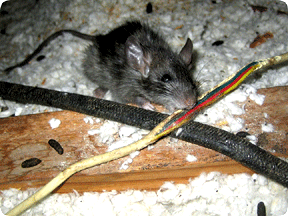 Rat causes equipment breakdown at Fukushima No. 2 nuclear plant http://enenews.com/rat-equipment-breakdown-fukushima-2-nuclear-plant
Title: TEPCO reports another rat problem, this time at Fukushima No. 2 plant
Source: THE ASAHI SHIMBUN
Date: July 04, 2013
A rat caused a battery charger to break down in an emergency gas turbine generator vehicle at the Fukushima No. 2 nuclear plant, the latest rodent-related problem to hit Tokyo Electric Power Co.
The rat is believed to have entered the vehicle through a 3- to 4-centimeter opening for cables and then shorted a switchboard, a TEPCO official said July 3. […]
The gas turbine generator vehicle was deployed for emergency use at the No. 2 plant after the Great East Japan Earthquake […]
See also: NYT: Rat Chase Again Bedevils Fukushima Nuclear Plant — Power lost to spent fuel pool for hours
Tepco rushes effort to restart two nuclear reactors, ignores local councils
TEPCO gets harsh response from Niigata gov. over restarting reactors Global Post 5 July 13 Tokyo Electric Power Co. faced a harsh response on Friday from Niigata Gov. Hirohiko Izumida in its attempt to swiftly apply for a state safety assessment of two reactors there as a step toward resuming their operations.
After meeting with Izumida and the mayors of two municipalities that the Kashiwazaki-Kariwa plant straddles, TEPCO President Naomi Hirose admitted it is “difficult” to join other utilities’ moves to apply for safety assessment of reactors next Monday, when a set of new regulations for atomic power plants take effect.
Izumida said TEPCO did not offer any explanation to local people before announcing the company’s plan to file for the assessment of the plant’s Nos. 6 and 7 reactors.
“Why did you rush (to make a decision to file for application)?” the governor said in the meeting, while also refusing to accept a paper in which TEPCO sought approval on a plan to install a safety system which is essential to restart the two units under the new safety standards…… http://www.globalpost.com/dispatch/news/kyodo-news-international/130705/tepco-gets-harsh-response-niigata-gov-over-restarting-
Fukushima Prefecture voters stress the reality of the nuclear crisis
Fukushima voters urge politicians to face reality of nuclear crisis Global Post 5 July 13 Voters in Fukushima Prefecture, where about 150,000 people are still living as evacuees from their homes due to the nuclear disaster triggered by the 2011 earthquake and tsunami, urged politicians to face the reality of the crisis as official campaigning for the July 21 House of Councillors election got under way Thursday…….
Yasuo Yoshida, a 46-year-old fisherman in Iwaki, a coastal city in the prefecture, said politicians should visit the areas affected by the nuclear disaster more often and listen to the local people.
“Now we face a moment of truth in trying to rebuild Fukushima’s fishing industry and I want politicians to ensure that the central government will take responsibility” for the revival of fishing, he said. Continue reading
Highest radiation levels for 12 months found at Fukushima
 Fukushima records highest radiation level in a year http://www.straight.com/blogra/398066/fukushima-records-highest-radiation-level-year by CHARLIE SMITH on JUL 4, 2013 You might think that radiation levels would be falling more than two years after Japan’s most serious nuclear disaster since the bombing of Nagasaki in the Second World War.
But on a rooftop in Fukushima, radioactive cesium levels were at the highest levels observed in the past year, according to the Asahi Shumbun newspaper. The publication reported that University of Tokyo associate professor Ryoji Enomoto found moss with 1.7 million becquerels just over 50 kilometres from a crippled nuclear-power plant.
This was confirmed by a nonprofit group, the newspaper noted. According to an article by David Chandler of the Massachusetts Institute of Technology, a dose of 500 millisieverts can cause symptoms of radiation poisoning. It’s not easy converting becquerels, which measures radiation emitted, to millisieverts, which measure biological damage.
But you would likely want to move if levels of 1.7 million becquerels were ever detected in your neighbourhood.
Scientists detect highest cesium levels in a year in Fukushima http://ajw.asahi.com/article/0311disaster/fukushima/AJ201307040081 July 04, 2013 FUKUSHIMA–Radioactive cesium levels found in moss on a rooftop in downtown Fukushima exceeded 1.7 million becquerels, the highest levels detected in a year, researchers said. Continue reading
Japan’s nuclear industry has poor safety culture
 Japan: Building Nuclear Safety Culture Will Take ‘Long Time’ VOA, Reuters July 04, 2013 TOKYO — Japan’s nuclear regulator said on Thursday that elevating safety culture to international standards will “take a long time.” That assessment came days before new rules take effect that aim to avoid a repeat of the Fukushima nuclear disaster that occurred in March 2011………..
 “The new regulations include extremely stringent requirements that the operators would not be able to endure if they don’t change their culture,” authority chairman Shunichi Tanaka told reporters. “We will need a long time to change this culture, but day-to-day efforts to meet those tough standards will in the end lead to the improvement in the safety culture.”
Trying to restart
Tokyo Electric Power Co., operator of the Fukushima plant that had three meltdowns, Kansai Electric Power Co., and three other listed nuclear operators have said they will apply for restarts after the rules go into effect.
Tanaka declined to comment on whether he considered Tokyo Electric – still struggling to contain leaks and power cuts at its ravaged plant – fit to operate nuclear facilities. He added that whether the company will be given a green light would depend on the contents of its application…….
Tanaka stressed that the new regulator had what it took to impose the new regulations. “We have large authority and powers. If the operator does not comply with our regulations, they won’t be able to operate, let alone restart their reactors,” he said.http://www.voanews.com/content/japan-says-building-nuclear-safety-culture-will-take-long-time/1695038.html
Shutdown in September for Japan’s only two operating nuclear power units
Japan’s only two operating nuclear units to shut in September: regulator Tokyo (Platts)–4 Jul 2013 Kansai Electric Power Co can continue operating Ohi-3 and -4, the only nuclear units running in Japan, until they will have to be shut for maintenance in September, Nuclear Regulation Authority commissioners agreed unanimously Wednesday.
Ohi-3 and -4 can run until September 2 and 15, respectively. Japanese law allows reactors 13 months of continuous operation before they must shut for maintenance.
The units, each with gross capacity of 1,180 MW, are sometimes referred to as Ooi and are the largest of Kansai EPC’s 11 power reactors.
Ohi-3 and -4 were assessed against NRA’s safety requirements, which will come into force Monday. The assessment of the units, including an inspection of the site June 15, found they “will not cause serious safety problems immediately,” a 46-page NRA staff document said.
Japan’s other 48 operational nuclear units have remained down after completing maintenance and refueling outages following the March 11, 2011 earthquake and tsunami that resulted in permanent shutdowns of units 1 through 4 at Tokyo Electric Power Co.’s Fukushima I……….http://www.platts.com/latest-news/electric-power/Tokyo/Japans-only-two-operating-nuclear-units-to-shut-26076364
Secret promises to USA, by Japan, to burn plutonium
 Mainichi: Japan’s secret promise with U.S. to burn plutonium — “It is abnormal for sure” — “Expected to stir up controversy” http://enenews.com/mainichi-japan-secretly-promised-to-burn-plutonium-it-is-abnormal-for-sure-expected-to-stir-up-controversy
Title: Japan made secret promise with U.S. to restart pluthermal nuclear program
 Source: Mainichi
Date: June 25, 2013
A Japanese prime ministerial envoy secretly promised to the United States that Japan would resume its controversial “pluthermal” program, using light-water reactors to burn plutonium, according to documents obtained by the Mainichi.
The secret promise was made by Hiroshi Ogushi, then parliamentary secretary of the Cabinet Office, to Daniel Poneman, deputy secretary of the U.S. Department of Energy, during Ogushi’s visit to the United States on behalf of then Prime Minister Yoshihiko Noda in September last year.
[…] The fact that a Japanese official promised to the U.S. to implement such a controversial project without a prior explanation to the Japanese public is expected to stir up controversy. […]
“It is abnormal for sure,” said one official with the Agency for Natural Resources and Energy. […]
See also: Plutonium-burning reactors to restart in Japan? — Gov’t forcing companies to use MOX fuel — Official: “We have no other choice”
Radioactive water being pumped into Fukushima nuclear building
Report: Contaminated water purposely being pumped into basement of Fukushima reactor’s turbine building http://enenews.com/report-contaminated-water-purposely-being-pumped-into-basement-of-fukushima-reactors-turbine-building
Title: Water in all leaky trenches at No. 1 routed to other storage, Tepco says
Source: Kyodo, JIJI
Date: July 3, 2013
Water in all leaky trenches at No. 1 routed to other storage, Tepco says
Tokyo Electric Power Co. has finished pumping out radioactive water from all seven of its huge covered trenches at the crippled Fukushima No. 1 nuclear plant […]
[…] It was found that the highly radioactive water that had been pumped into the trenches, which are triple-lined, was seeping into the ground. […]
The less-contaminated water was pumped into the basement of the reactor 6 turbine building and will eventually be transferred to above-ground containers, Tepco said late Monday. […]
See also: Japan Engineer: Fukushima contaminated water to go in giant pit — “It can easily be discharged underground” (VIDEO)
Japanese political party to campaign for abolishing nuclear power
Your Party stands against tax hike, nuclear plants Japan Times, 3 July 13 BY REIJI YOSHIDA Your Party will stress its call to freeze the upcoming consumption tax hike and promise to abolish all nuclear power plants by 2030 when the campaign for the Upper House officially starts Thursday, party leader Yoshimi Watanabe
said. Continue reading
1 This Month

Read the Public Inquiry Report, the Commissioners’ report, Surrendering Australia: The AUKUS Deception is available to download for free at aukuspublicinquiry.com. Or just watch the replay of the National Press Club Luncheon.



19 November – Webinar – The Reality of Reprocessing
Time: 11:00 AM Pacific Time (US & Canada) / 2:00 PM Eastern / 7:00 PM UK / 8:00 PM CET
Register for the Zoom Event Here



Shut down the radiation-damaged Heysham nuclear reactors now
To see nuclear-related stories in greater depth and intensity – go to https://nuclearinformation.wordpress.com

Say No to NASA’s Reckless Nuclear Reactor on the Moon
Say No to NASA’s Reckless Nuclear Reactor on the Moon
-
Archives
- November 2026 (109)
- October 2026 (302)
- September 2026 (339)
- August 2026 (330)
- July 2026 (355)
- June 2026 (287)
- May 2026 (306)
- April 2026 (356)
- March 2026 (251)
- February 2026 (267)
- January 2026 (308)
- December 2025 (358)
-
Categories
- 1
- 1 NUCLEAR ISSUES
- business and costs
- climate change
- culture and arts
- ENERGY
- environment
- health
- history
- indigenous issues
- Legal
- marketing of nuclear
- media
- opposition to nuclear
- PERSONAL STORIES
- politics
- politics international
- Religion and ethics
- safety
- secrets,lies and civil liberties
- spinbuster
- technology
- Uranium
- wastes
- weapons and war
- Women
- 2 WORLD
- ACTION
- AFRICA
- Atrocities
- AUSTRALIA
- Christina's notes
- Christina's themes
- culture and arts
- Events
- Fuk 2022
- Fuk 2023
- Fukushima 2017
- Fukushima 2018
- fukushima 2019
- Fukushima 2020
- Fukushima 2021
- general
- global warming
- Humour (God we need it)
- Nuclear
- RARE EARTHS
- Reference
- resources – print
- Resources -audiovicual
- Weekly Newsletter
- World
- World Nuclear
- YouTube
-
RSS
Entries RSS
Comments RSS

