Under pressure from Washington, Japan rearms
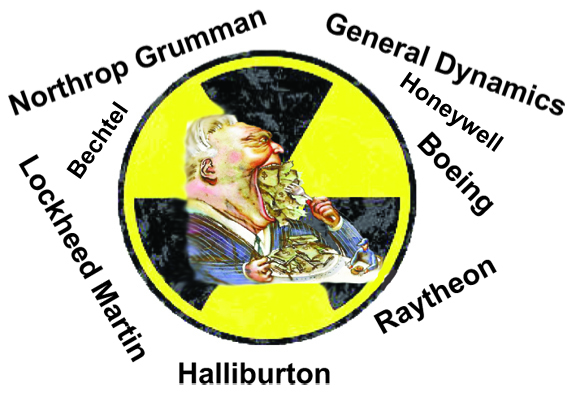
U.S. corporate power is the immediate beneficiary of this sharp turn in policy, built on military threats and economic sanctions.
JAPAN REARMS UNDER WASHINGTON’S PRESSURE, Popular Resistance, By Sara Flounders, Workers World. December 29, 2022
A Wake-Up Call To The Antiwar Movement.
The Dec. 16 announcement by Japan’s Prime Minister Fumio Kishida of a new defense strategy, while doubling military spending by 2027 to implement it, is the largest defense shake-up in decades and a wake-up call to the antiwar movement.
The decision includes openly acquiring offensive weapons and reshaping its military command structure for its expanded armed forces. On Dec. 23, the draft budget was approved by Kishida’s cabinet.
Japan’s dangerous military expansion should set off international alarm bells. This major escalation is taking place based on intense U.S. imperialist pressure. It is the next step in the “Pivot to Asia,” aimed at threatening and surrounding China and attempting to reassert U.S. dominance in the Asia Pacific.
The movements opposing endless U.S. wars must begin to prepare material and draw mass attention to this ominous threat.
The plan to double military spending will add $315 billion to Japan’s defense budget over the next five years and make Japan’s military the world’s third largest, after the U.S. and China. Defense spending will escalate to 2% of gross domestic product, equal to the goal the U.S. sets for its NATO allies. Japan’s economy is the world’s third largest.
The Japanese government plans to buy up to 500 Lockheed Martin Tomahawk missiles and Joint Air-to-Surface Standoff Missiles (JASSM), procure more naval vessels and fighter aircraft, increase cyber warfare capabilities, manufacture its own hypersonic guided missiles and produce its own advanced fighter jets, along with other weapons. The plan shifts from relying solely on missile defense to also embracing “counterstrike” capabilities.
Three key security documents — the National Security Strategy (NSS), as well as the National Defense Strategy (NDS) and the Defense Buildup Program (DBP) — shed some of the postwar constraints on the Japanese military.
Article 9 – a class struggle against military rearmament
Although the U.S. occupation force, after defeating Japan’s military in World War II, imposed a “pacifist” constitution on Japan, for decades now U.S. strategists have pressured Japan’s government to aggressively rearm, and especially to buy U.S.-made weapons, to act as a junior partner to U.S. efforts to dominate the Asia-Pacific region.
Article 9 of the imposed Japanese constitution prohibits Japan from maintaining an army, navy and air force. To get around this, the “Japanese Self-Defense Forces” (JSDF) have since 1952 been treated as a legal extension of the police and prison system. The U.S. occupiers considered the JSDF an essential repressive tool defending capitalist property relations against the workers’ movement.
The decision for aggressive military expansion is in open violation of Japan’s supposedly pacifist constitution……………………………………
Targeting China
Japan’s military expansion fits in with Washington’s aggression aimed at China, the DPRK and Russia. U.S. strategists’ goal is to use the U.S. alliance with Japan, South Korea and Australia, just as it uses the U.S.-led NATO alliance in Europe………………………..
China is Japan’s largest trading partner in both imports and exports. Previous National Strategy Documents said Japan was seeking a “mutually beneficial strategic partnership” with China. Suddenly Japanese strategists started labeling China “the greatest strategic challenge in ensuring the peace and security of Japan.” (U.S. Institute of Peace, Dec. 19)………..
U.S. praise of Japan’s rising militarism
The U.S. media praised Japan’s new security strategy document as a “bold and historic step.” U.S. National Security Advisor Jake Sullivan praised the defense spending hike, which “will strengthen and modernize the U.S.-Japan alliance.” U.S. Secretary of State Antony Blinken called Japan an “indispensable partner” and cheered that the changed security documents reshape the ability to “protect the rules-based order in the Indo-Pacific region and around the world.” (quotes, whitehouse.gov, Dec. 16)
U.S. corporate power is the immediate beneficiary of this sharp turn in policy, built on military threats and economic sanctions………………………………………………………………….
Having goaded Russia into an invasion of Ukraine in a bid to weaken and fragment Russia, the U.S. is next seeking to turn Taiwan into a military quagmire for China. The Biden administration is facilitating Taiwan’s purchase of advanced weaponry from the U.S. and greater diplomatic ties with the island. https://popularresistance.org/japan-rearms-under-washingtons-pressure-%E2%88%92-a-wake-up-call-to-the-antiwar-movement/
EDITORIAL: Without national debate, radical nuclear policy shift intolerable

But the most fundamental and intractable challenge is how to deal with spent nuclear fuel and radioactive waste from nuclear plants, inevitable byproducts of nuclear power generation.
The grim reality is that there is no prospect for establishing a nuclear fuel recycling system or securing a site for final disposal of nuclear waste in the foreseeable future.
Let us not forget the lessons of the 2011 nuclear disaster and consider how best to fulfill our responsibility to future generations.
https://www.asahi.com/ajw/articles/14800117 December 23, 2022
Prime Minister Fumio Kishida is embarking on yet another radical policy shift without weighing the possible consequences. The government devised new policy guidelines for expanding the use of nuclear energy while turning a blind eye to fundamental and intractable issues that inevitably will result. It also failed to address a host of doubts and questions.
The Kishida administration spent only four months on this policy initiative without making any serious effort to win broad public support. The attempt to chip away at important policy principles comes on the heels of its recent decision to drastically beef up Japan’s defense capabilities.
The administration’s new agenda calls for accelerating the process of restarting idled nuclear reactors, extending the life span of aging reactors and constructing new ones to replace moribund facilities. It deviates sharply from the restrictive policy in place since the 2011 Fukushima nuclear disaster. We beg the administration to retract this unacceptable policy about-face.
RASH MOVE BASED ON DUBIOUS LOGIC
Kishida in late August called for debate on promoting nuclear power generation. He did not mention any potentially controversial key elements of the proposal during the July Upper House election, such as “reconstruction” of old reactors, even though this represents a major regime shift. After the election, the administration raced to develop new policy guidelines in a manner that were far from democratic.
It amounts to keeping the nation heavily dependent on nuclear energy for decades to come. This will hollow out the principle of reducing the nation’s reliance on nuclear power “as much as possible,” which has been upheld since the catastrophic triple meltdown more than a decade ago.
The administration is also using distorted logic and dubious arguments to support the policy change.
Kishida cited the “ongoing crisis” of a power crunch and rush to realize a carbon-neutral future as reasons for expanding the use of nuclear power.
But the government’s plan to promote nuclear power generation will not help ride out the current energy crisis. Restarting an offline reactor requires following established procedures, so this approach will not increase the nation’s power supply quickly or significantly. Extending the life span of aging reactors and building new ones to replace those destined to be decommissioned will only start producing benefits after 10 or more years. The outlook of these plans is murky and a strong case cannot be made for rushing into the decision.
The government also has its policy priorities askew. The overriding priority is to secure a stable energy supply and reduce the nation’s carbon footprint. This should be accomplished by promoting domestic renewable energy sources, not on expanding nuclear power generation. The government has promised to develop renewable energy into a major power source. It should first make all-out efforts to ramp up power generation using renewable energy sources and, if shortages remain, consider ways to tap other energy sources.
NUMEROUS QUESTIONS UNANSWERED
The proposal to bolster nuclear power generation raises numerous questions.
The older a reactor grows the more uncertain its safety becomes. The legal life span of a nuclear reactor is 40 years in principle but can be extended to 60 years in certain cases. This rule was introduced under a bipartisan agreement after the disaster at the Fukushima No. 1 nuclear plant and incorporated into the related law under the jurisdiction of the Nuclear Regulation Authority (NRA).
But the government has decided to transfer this rule to the jurisdiction of the Ministry of Economy, Trade and Industry, which champions nuclear power generation. The move is aimed at paving the way for extending the life span of reactors beyond the 60-year limit by establishing a new system of periodical reactor inspections for safety checks at intervals of 10 years or less. This amounts to nothing more than a fait accomplis to secure reactor operations beyond 60 years without engaging in meaningful policy debate. It could also gut the principle of “the separation between promotion and regulation.”
Rebuilding aged reactors is also questionable from an economic viewpoint. The cost of building new reactors keeps ballooning. The government has offered to subsidize the costs in response to a request from the power industry. That could lead to an excessive and unreasonable financial burden on the public.
The government’s plan also calls for developing and constructing “next-generation innovative reactors.” The only next-generation innovative reactor that appears technologically feasible in the near term, however, is a conventional light-water reactor equipped with a better safety mechanism than the current version. These reactors are already in operation in some countries. But it remains doubtful whether this is really a safety innovation.
In addition to Japan’s susceptibility to major natural disasters, potentially grave nuclear safety hazards include its ability to deal with a a possible military attack like the one that occurred in Ukraine.
But the most fundamental and intractable challenge is how to deal with spent nuclear fuel and radioactive waste from nuclear plants, inevitable byproducts of nuclear power generation.
The grim reality is that there is no prospect for establishing a nuclear fuel recycling system or securing a site for final disposal of nuclear waste in the foreseeable future.
The new nuclear policy guidelines offer no answers to these questions. Just as it did in making a radical shift in the nation’s security policy, the Kishida administration is taking advantage of public anxiety to rush headlong into a major nuclear policy change by simply stressing the benefits of the move without responding to legitimate questions and concerns.
The four-month process of making the decision on this policy change indicates the government only acted in line with predetermined conclusions and a certain timeframe in mind.
LESSONS OF FUKUSHIMA
The advisory council for the industry ministry that discussed the proposal did not even scrutinize the core question of how nuclear power generation will help secure a stable energy supply, which is supposed to be the core purpose of the new policy initiative.
Instead, the panel spent ages discussing approaches to extending the life of reactors and building new ones, apparently on the assumption that promoting nuclear power is a given.
Members of the panel were mostly proponents of expanded use of atomic energy. A small number who remained cautious called for national debate on the matter over the next 12 months, but the idea was brushed aside.
Nuclear power remains a sharply divisive policy issue. Ensuring stability in this field requires broad public support. If the government gives short shrift to the process of listening to a wide range of views to build broad public consensus, it cannot hope to recover public trust in its nuclear policy that was dashed by the disaster.
The government says it will solicit public opinions and hold meetings with concerned parties to alleviate any fears. But such steps would be meaningless if they are intended only to placate disgruntled citizens to ease the political pressure of opposition.
Meaningful debate requires the involvement of a wider spectrum of experts, including those who have no interest in nuclear power generation and those who remain skeptical. The country deserves a meticulous and multifaceted debate on all key issues and questions, including whether it is really vital to produce more electricity with nuclear power to achieve a carbon-free future.
The Diet has an important role to play. All the political parties should start independent discussions on this issue.
Any rash change in nuclear policy is unacceptable. Let us not forget the lessons of the 2011 nuclear disaster and consider how best to fulfill our responsibility to future generations.
METI panel of experts approves policy of extending operating period and promoting rebuilding of nuclear power plants
December 16, 2022
The Ministry of Economy, Trade, and Industry (METI) has approved a proposal for the utilization of nuclear power plants by the Ministry of Economy, Trade, and Industry (METI), which focuses on the reconstruction (replacement) of nuclear power plants that the government has kept under wraps following the TEPCO Fukushima Daiichi nuclear accident, at a meeting on December 16. This is a clear shift in nuclear energy policy only less than five months after Prime Minister Fumio Kishida’s order, amid the ongoing restoration work from the Fukushima accident and compensation for the victims of the disaster. The government will make a formal decision at the Green Transformation (GX) Implementation Conference to be held before the end of the year.

At a meeting of the Basic Policy Subcommittee of the Advisory Committee on Natural Resources and Energy, Yasutoshi Nishimura, Minister of Economy, Trade, and Industry, said, “We would like to move forward with concrete steps to rebuild the reactors we have decided to decommission into next-generation innovative reactors (next-generation nuclear power plants)” on the premise that safety is assured and local governments understand the situation.
The law was amended after the Fukushima accident to limit the operating period of nuclear power plants to “40 years in principle, with a maximum of 60 years,” but by excluding the shutdown period due to the Nuclear Regulation Authority’s review and other factors, it will be possible to operate nuclear power plants for over 60 years. The government is expected to submit the revised bill to the ordinary Diet session next year.
At the end of July, the prime minister had ordered a study of measures to ensure a stable energy supply toward a decarbonized society. (Shinichi Ogawa)
◆An overwhelming majority of committee members advocate the promotion of nuclear power generation
On July 16, the Ministry of Economy, Trade, and Industry (METI) held a meeting of its experts, the Subcommittee on Basic Policy of the Advisory Committee on Natural Resources and Energy, and approved the ministry’s policy, which focuses on rebuilding (replacing) nuclear power plants and allowing them to operate for 60 years or longer. The committee approved the policy. While an overwhelming majority of the committee members advocated the promotion of nuclear power plants, only one member called for careful discussion.
At 1:00 p.m. in a conference room on the 17th floor of the Ministry of Economy, Trade and Industry (METI) in Kasumigaseki, Tokyo. Eighteen of the 21 committee members were present, including online, and three were absent. In addition to METI Minister Yasutoshi Nishimura, the meeting was attended by executives including Hosaka Shin, director general of the Agency for Natural Resources and Energy.
The METI officials explained that the public discussion should be held over a period of about one year. The only one who “waited” on the METI’s proposed policy on the use of nuclear power plants was Ms. Chisato Murakami, an advisor to the committee on consumer affairs. Murakami also criticized the ministry’s approach to the discussion, saying that it was “too hasty” at another METI expert panel meeting on the nuclear energy subcommittee, which discussed the use of nuclear power plants in detail.
Each committee member had five minutes to express his or her opinion. The other committee members supported METI’s policy, calling it “groundbreaking. Shuzo Sumi, a member of the committee and Senior Advisor to Tokio Marine & Nichido Fire Insurance, commented, “Construction of nuclear power plants has been halted for more than 10 years. We need to make a decision now in terms of human resources and industry.
Commissioner Takeo Tachibanagawa, Vice President of Kokusai University, said that while nuclear power plants are necessary, he disagreed with the current policy. He pointed out the contradiction in the policy, saying, “Extending the operation of nuclear power plants will postpone the construction of next-generation innovative reactors (next-generation nuclear power plants), which will cost about 1 trillion yen. He also questioned the policy guideline, the Basic Energy Plan, which calls for renewable energy to be the main source of power, but “there was not much talk about renewable energy.
The meeting ended in two hours, 30 minutes earlier than scheduled. The executives of the Agency for Natural Resources and Energy, who had been looking at each other sternly, left the meeting room looking relaxed and chatting with the committee members. (The meeting ended 30 minutes early.)
https://www.tokyo-np.co.jp/article/220394
No nuclear power plant in the world has been in operation for more than 60 years. Troubles continue to occur
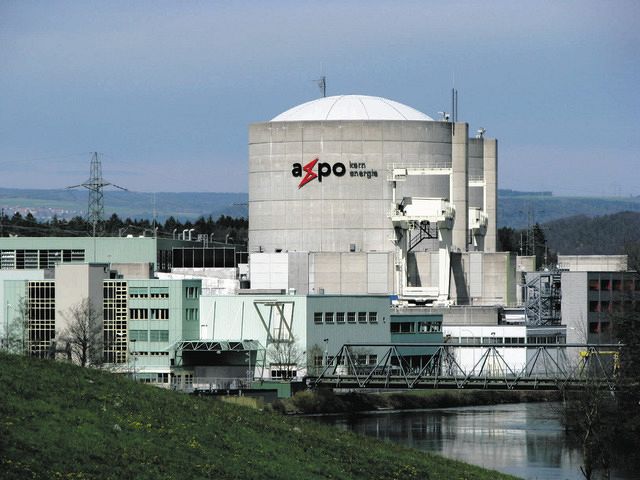
Beznau nuclear power plant in northern Switzerland in 2012, after 53 years of operation.
December 9, 2022
The draft action guidelines for the utilization of nuclear power plants, which were discussed at the METI’s experts’ meeting on December 8, would maintain the current restriction on the operating period and allow operation beyond the “maximum 60 years,” with a view to eliminating the limit in the future. However, there is not a single example in the world of a nuclear power plant that has operated for more than 60 years. In Japan, there has been a string of troubles due to equipment deterioration, and the Nuclear Regulation Authority is having a hard time regulating this “unexplored area. (The Nuclear Regulation Authority of Japan is having a hard time regulating this “unexplored area.)

A thin piece of iron rust (triangle in the center) stuck in a pipe (bottom right) inside the steam generator at the Takahama Unit 4 nuclear power plant in Fukui Prefecture (courtesy of Kansai Electric Power Co.).
According to the International Atomic Energy Agency (IAEA), the longest operating period of a nuclear power plant in the world, including those that have already been decommissioned, is 53 years and one month for India’s Tarapur reactors Nos. 1 and 2. All four reactors are still in operation.
Like Japan, the U.S. has a 40-year operating period, but if a plant passes a regulatory review, it can be extended for 20 years, and there is no limit to the number of extensions. In the U.K. and France, there is no upper limit to the operating period, and a review is required every 10 years.
However, many nuclear power plants were designed and built with a 40-year service life in mind. As nuclear power plants age, maintenance and management costs become higher, and many operators are likely to choose decommissioning over long-term operation.
Even nuclear power plants in Japan that are less than 40 years old are experiencing problems due to deterioration.
Since 2018, KEPCO’s Takahama Units 3 and 4 (Fukui Prefecture), which have been in operation for 37 years, have experienced a series of troubles in which flakes of iron rust have accumulated in the steam generators connected to the reactors over many years of operation, hitting and damaging pipes. The problem was confirmed six times during regular inspections and recurred even after the steam generators were cleaned.
Even more serious are inspection leaks. In 2004, at Mihama Unit 3, which had been in operation for less than 30 years, a pipe that had been omitted from the inspection list and never checked became thin and broke due to age-related deterioration, spewing hot water and steam that killed five people and seriously injured six others.
At TEPCO’s Kashiwazaki Kariwa Nuclear Power Station in Niigata Prefecture, it was discovered in October of this year that the piping in the turbine building of Unit 7, which was shut down shortly after the Fukushima Daiichi nuclear accident, had not been inspected in 11 years and had developed holes due to corrosion.
Hiromitsu Ino, professor emeritus of metallurgy and materials science at the University of Tokyo, said, “Ultrasonic inspection to check the deterioration status is difficult to measure behind the pipes. If deterioration progresses due to long-term operation, the risk of inspection leakage increases, leading to a serious accident,” he warned.
The Regulatory Commission, which examines whether or not to extend operation from the aspect of safety, has been unable to begin considering concrete measures on how to regulate nuclear power plants that are over 60 years old.
A major hurdle is the lack of data on how reactors actually deteriorate. The way of understanding the degree of deterioration differs from that of the U.S., which is ahead of the U.S. in the examination of operation extensions. Shinsuke Yamanaka, the chairman of the committee, said at a press conference, “The period beyond 60 years is an unknown area. We need to create Japan’s own rules,” he said, acknowledging the difficulty of the study.
While the regulations remain unclear, only the mechanism to make it possible to exceed 60 years is moving ahead. Mr. Ino emphasizes. Japan has many earthquakes and a high population density. The situation is different from other countries. Nuclear power plants should be operated for 40 years, which is the design guideline.”
https://www.tokyo-np.co.jp/article/218838.
Tokyo enacts ordinance mandating solar power for homes, first in Japan, starting in spring of 2025
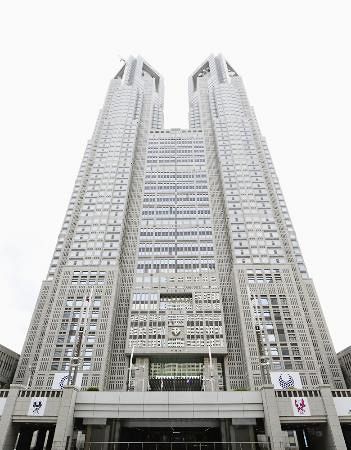
December 15, 2022
On December 15, the final day of the regular session of the Tokyo Metropolitan Assembly, a revised ordinance related to the nation’s first mandatory installation of solar panels on newly constructed single-family homes was passed and enacted with a majority of votes in favor. The aim is to reduce greenhouse gas emissions in the residential sector. The new system will begin in April 2025, after a preparatory period to support businesses and inform residents.
According to the Tokyo Metropolitan Government, major housing manufacturers will be obligated to install panels on buildings with a total floor area of less than 2,000 square meters, including residences. Purchasers will be required to reduce the environmental impact of their homes as an obligation to make an effort.
The TMG estimates that if 4-kilowatt panels are installed, the initial cost of 980,000 yen can be recovered in 10 years through the income from electricity sales, and only 6 years if the TMG subsidy is used.
https://www.tokyo-np.co.jp/article/220091
Japanese Power Plants Less Than 40 Years Old Are Experiencing Problems.
Due To Relatively Rapid Deterioration. A nuclear power plant that has been in operation for more than 60 years, there is no example in the world Design life is 40 years Piping breaks, holes due to corrosion … troubles occur one after another December 9, 2022, 06:00 ~ tokyo-np.co.jp https://www.tokyo-np.co.jp/article/218838...
Japanese prime minister may seek in-depth nuclear abolition talks at Hiroshima G7 summit
Japan Times, 11 Dec 22, HIROSHIMA – Prime Minister Fumio Kishida on Sunday expressed hope to hold thorough debates for a world without nuclear weapons at next year’s Group of Seven summit in Hiroshima in May.
“I want to deepen discussions (at the G7 summit) so that we can release a strong message toward realizing a world free of nuclear weapons,” he said at a closing ceremony for the first meeting of the International Group of Eminent Persons for a World without Nuclear Weapons, or IGEP, held in Hiroshima for two days from Saturday.
“We are facing tough barriers over nuclear disarmament, such as growing threats to use nuclear weapons,” Kishida said, asking IGEP member experts to “produce meaningful outcomes regarding specific ways to bring the tough reality closer to the ideal.”………………… more https://www.japantimes.co.jp/news/2022/12/11/national/fumio-kishida-nuclear-weapons/
News WatchNews Watch by Citizens’ Nuclear Information CenterNews Watch

December 4, 2022
NRA Complicit in Abolishing NPP Operation Period Limits
After hearing Director General Matsuyama Yasuhiro of the Energy Conservation and Renewable Energy Department (Agency for Natural Resources and Energy of the Ministry of Economy, Trade and Industry (METI)) explain METI’s point of view at a regular meeting of the Nuclear Regulation Authority (NRA) on October 5, NRA Chairman Yamanaka Shinsuke indicated a positive stance toward METI’s proposal to rescind the rule under Japan’s Nuclear Reactor Regulation Act that says for nuclear power plants (NPPs), in general “the period set forth” may be extended “only once upon the expiration thereof, not exceeding 20 years,” and limits it to special cases. Yamanaka remarked, “The operation period is a policy decision on the ideal way to employ nuclear power, and is not a matter for NRA to comment on.” Moreover, on November 2, barely a month later, he went as far as to say new regulatory system proposals were being drafted that would allow operation of NPPs in excess of 60 years for 10-year periods providing the facilities underwent inspections for deterioration and met the new regulatory standards.
Regarding METI’s proposals, which are described below, at a press conference following an NRA meeting on November 9, the same Chairman Yamanaka expressed negativity toward the exclusion of periods when operation of a reactor was suspended from the operation periods as an immediate means of extending operation past 60 years, saying “Our regulations are so-called calendar-based, and we evaluate by calendar year.”
METI Proposals for NPP Operation Period Extension Rules
METI submitted three proposals for future operation rules to the “Nuclear Power Subcommittee” panel of experts on November 8, regarding extension of NPP operation periods, which is being considered by Japan’s government. The three proposals METI submitted are 1) maintaining the current rule based on a 40-year limit with extension of up to 20 years if the NPP obtains NRA approval., 2) no upper limit on additional extensions, and 3) setting a uniform upper limit on operation periods (e.g., 20 years), while not counting periods of suspended operation resulting from “heteronomous factors” that are difficult for electric power companies to anticipate as part of the operating period.
At the meeting that day, only two people supported proposal 1), CNIC Secretary General Matsukubo Hajime and Nippon Association of Consumer Specialists Director Murakami Chisato, both of whom opposed any extensions to begin with. The other 16 committee members were nuclear power supporters from the outset, so a number of them supported proposal 3), but proposal 2) drew the most support. Nevertheless, the mass media all said that proposal 3) had the most backing. This clearly reflects METI’s intentions.
Examples of “heteronomous factors” put forward were suspension periods for meeting stronger safety regulations following the Fukushima nuclear accident and suspension periods based on provisional dispositions by courts ordering injunctions against operation.
Japan’s government is expected to set forth its new rules before year end, but many, in particular the Liberal Democratic Party (LDP) faction supporting nuclear power, are seeking the abolition of upper limits on operation periods as in proposal 2).
Applications Filed for 60-year Operation of Sendai Units 1 and 2
Kyushu Electric Power Co. filed for approval from the NRA on October 12 to extend the operation periods of Sendai NPP Units 1 and 2 by 20 years. They said no problems with deterioration of the equipment had been found in the special inspections performed for the Unit 1 reactor in October 2021 and for the Unit 2 reactor in February 2022 and that the soundness of the reactors up to the 60-year point had been confirmed. The results of the special inspections, however, were examined by the Kagoshima Prefectural Nuclear Safety and Evacuation Planning Committee, who pointed out a number of issues with them. At a meeting on October 17, one committee member expressed his view that the principle of good faith had been violated due to the applications being filed before those results were made available.
Doubling of Subsidies to Municipalities that Approve NPP Restarts
METI announced on October 10 that it would expand the subsidies provided to municipalities hosting NPPs upon their restart. The maximum subsidy provided to prefectures where NPPs are located and which have been restarted in April 2022 or later will be doubled from 500 million yen to 1 billion yen, and subsidies of up to 500 million yen will also be newly provided to prefectures adjacent to municipalities hosting those NPPs. The rules for Infrastructure Development Support Project Grants for areas hosting NPPs were to have been revised by the end of October.
The same day, Commissioner Hosaka Shin of METI’s Agency for Natural Resources and Energy held talks on-line with Governor Maruyama Tatsuya of Shimane Prefecture and Governor Hirai Shinji of Tottori Prefecture to tell them that they would be the recipients of the first round of the newly expanded subsidies, with up to 1 billion yen to be provided to Shimane Prefecture, which had agreed to restart Chugoku Electric Power Co.’s Shimane NPP Unit 2 reactor, and up to 500 million yen to the adjacent Tottori Prefecture.
Mission of the UN Special Rapporteur on Human Rights of Internally Displaced Persons to Japan
UN Special Rapporteur on Human rights of Internally Displaced Persons Cecilia Jimenez-Damary visited Japan in September, where for about two weeks she investigated the circumstances of the Fukushima nuclear accident evacuees. She presented the results of her investigation as a provisional statement at a press conference at the Japan National Press Club on October 7. The official report will be released in Geneva next June.
The provisional statement made it clear that the evacuees, “Regardless of whether or not they come from areas designated [as] areas where forced evacuation orders were enforced, are all internally displaced persons with the same rights and entitlements as citizens of Japan” and that their categorization as forced or voluntary evacuees in terms of receiving support and assistance “should therefore be dropped in practice.”
Compensation for Fukushima Nuclear Accident: Capital Repayment from TEPCO to Take as Long as until FY2064
The Board of Audit of Japan released its report on its audits of account settlements for FY2021 on November 7, 2022. In the report, the Board of Audit’s estimations revealed that the recovery of funds that had been lent in effect to Tokyo Electric Power Co. (TEPCO) by Japan’s government for providing compensation for the accident involving that company’s Fukushima Daiichi Nuclear Power Station could take as long as until FY2064. A similar estimation four years ago said it would take up to until FY2051, so the current estimation has the repayment period prolonged by 13 years. The amount of compensation TEPCO is paying to the disaster victims still has the potential to increase, and the Board of Audit notes, “The current estimation of the recovery completion date suggests the possibility of further delays in the future.”
To pay the compensation, the government borrowed money from financial institutions and loaned it in effect via the Nuclear Damage Compensation and Decommissioning Facilitation Corporation (NDF) to TEPCO interest-free, for use in covering compensation, decontamination and other expenses. Each year, the NDF receives a “General Assessment” from each of Japan’s major electric power companies that have NPPs, plus an additional “Special Assessment” from TEPCO, and pays these funds back to the government. The interest paid by the government to the loaning financial institutions is entirely covered by taxes.
The original General Assessment and Special Assessment for the NDF’s repayments to the government have been insufficient, so the government has adopted a new idea of a “past portion” of the compensation funds that should have been secured before the nuclear accident. From FY2020, it has had the customers of Power Producer & Suppliers (new electric power businesses under Japan’s liberalized system) bear part of the burden in the form of an additional charge on power grid usage (consignment charge) by the major electric power companies. For FY2021, that additional charge came to 60.9 billion yen.
When the Board of Audit investigated the contribution charges, the General Contribution paid by each of the major electric power companies in FY2013-2020 was 163 billion yen, but in FY2021 it decreased to 133.7 billion yen. Details on this change were not released. The Special Contribution paid by TEPCO had been ranging from 50 billion to 110 billion yen per year, but in FY2021, it fell to a record low of 40 billion yen. Regarding the method for determining the Special Contribution, the Board of Audit says, “It is not clear if it meets legal criteria.”
According to the Board of Audit, 13.5 trillion yen worth of government bonds have been issued to support TEPCO, and about 8 trillion yen of that has yet to be repaid by the NDF to the government. In addition to the General Contribution, the NDF collects the Special Contribution from TEPCO, profits from sales of TEPCO shares by the NDF and other sources of funding, and uses them to pay back the loans. The Board of Audit’s estimations of how long it will take to pay back the full amount are based on the state of these funds.
The Board of Audit bases its estimations on the assumptions that TEPCO’s business conditions and stock price will not improve as expected, that, in the case where the most time is needed, the Special Contribution will be 40 billion yen annually in and after FY2023, and that the profits from sales of TEPCO shares will only be 110 billion yen. In such a scenario, they estimate it will take 42 more years—until FY 2064—to repay the full amount.
However, the oceanic release of processed contaminated water accompanying decommissioning work is expected to commence in the spring of FY2023, and if this results in reputational damage to TEPCO, the amount of compensation it will have to pay out could increase. Moreover, since the amount of compensation ordered in the suit brought by the disaster victims and evacuees nationwide exceeds the standard based on the government’s guidelines, those guidelines may be reviewed, which could result in further increases in compensation.
Because of these factors, the Board of Audit says, “If the amount granted (loaned) by the government increases further as a result of increased compensation, the burden borne by Japan’s citizens will increase.” It is therefore asking the government to explain this to its citizens in an appropriate manner and requesting TEPCO to improve its profitability.
Source: https://cnic.jp/english/?p=6363
THE ROBOTS OF FUKUSHIMA: GOING WHERE NO HUMAN HAS GONE BEFORE (AND LIVED)
https://hackaday.com/2022/12/08/the-robots-of-fukushima-going-where-no-human-has-gone-before-and-lived/ by Ryan Flowers, 9 Dec 22
The idea of sending robots into conditions that humans would not survive is a very old concept. Robots don’t heed oxygen, food, or any other myriad of human requirements. They can also be treated as disposable, and they can also be radiation hardened, and they can physically fit into small spaces. And if you just happen to be the owner of a nuclear power plant that’s had multiple meltdowns, you need robots. A lot of them. And [Asianometry] has provided an excellent synopsis of the Robots of Fukushima in the video below the break.
Starting with robots developed for the Three Mile Island incident and then Chernobyl, [Asianometry] goes into the technology and even the politics behind getting robots on the scene, and the crossover between robots destined for space and war, and those destined for cleaning up after a meltdown.
The video goes further into the challenges of putting a robot into a high radiation environment. Also interesting is the state of readiness, or rather the lack thereof, that prompted further domestic innovation.
Obviously, cleaning up a melted down reactor requires highly specialized robots. What’s more, robots that worked on one reactor didn’t work on others, creating the need for yet more custom built machines. The video discusses each, and even touches on future robots that will be needed to fully decommission the Fukushima facility.
For another look at some of the early robots put to work, check out the post “The Fukushima Robot Diaries” which we published over a decade ago.
‘A form of self-destruction’: Japan weighs up plan to expand nuclear power
Japan’s prime minister is pushing for as many as 17 nuclear reactors to be switched back on, more than a decade on from the meltdown at Fukushima
Guardian, Justin McCurry in Onagawa, 30 Nov 22,
“…………………………………. In a sweeping change to the country’s energy policy, the prime minister, Fumio Kishida, has announced plans to build next-generation reactors and restart those left idle after the 2011 triple meltdown, in an attempt to end Japan’s dependence on imported fossil fuels and help meet its net zero target by 2050.
Kishida’s “green transformation”, which could include extending the lifespan of existing reactors beyond the current maximum of 60 years, underlines Japan’s struggle to secure an affordable energy supply as a result of the war in Ukraine and a power crunch that has triggered warnings of potential blackouts in Tokyo during this summer’s heatwave.
Most of Japan’s nuclear power plants have remained offline since the Fukushima meltdown, and previous governments indicated they would not build new reactors or replace ageing ones, fearing a backlash from a shaken and sceptical public.
Japan plans for nuclear to account for 20-22% of its electricity supply in 2030, compared with about a third before Fukushima. In 2020 the figure was less than 5%. Just 10 nuclear reactors among more than 30 have been restarted since the post-Fukushima introduction of stricter safety standards.
If Kishida gets his way though, seven additional reactors will be restarted after next summer, including the No. 2 unit at Onagawa, which sustained structural damage from the 2011 earthquake and tsunami but escaped a catastrophic meltdown despite being the closest atomic plant to the quake’s epicentre.
‘A threat to the safety of local people’
The restart has been approved by Japan’s nuclear watchdog and given “local consent” by Yoshihiro Murai, the governor of Miyagi – the prefecture where Onagawa is located.
But many residents argue that contingency plans for potential accidents would put lives at risk.
“The evacuation plans won’t work … they are a threat to the safety of local people,” says Masami Hino, one of 17 residents living within 30km of the plant who last year launched a legal action to block the restart, now scheduled for early 2024.
In the event of a serious accident, 1,000 residents living within 5km of the plant would leave immediately, while 190,000 people within a 30km radius would evacuate in stages, according to the official blueprint.
But many residents argue that contingency plans for potential accidents would put lives at risk.
“The evacuation plans won’t work … they are a threat to the safety of local people,” says Masami Hino, one of 17 residents living within 30km of the plant who last year launched a legal action to block the restart, now scheduled for early 2024.
In the event of a serious accident, 1,000 residents living within 5km of the plant would leave immediately, while 190,000 people within a 30km radius would evacuate in stages, according to the official blueprint.
“How can Tohoku Electric and the prefecture guarantee that an evacuation would go smoothly after something like a major earthquake? It’s impossible,” says Mikiko Abe, an independent member of the Onagawa town assembly who has spent 40 years campaigning for the plant’s closure.
“Instead of planning for an evacuation, wouldn’t it be better to live safely in a place where there’s no need to even think about fleeing our homes?”………………………………………….
While pro-nuclear members of the Miyagi prefectural assembly have helped resist calls for a referendum, a poll in April by the local Kahoku Shinpo newspaper found that 56% of residents were “strongly” or “somewhat” opposed the restart.
“All of Japan’s nuclear power plants are on the coast … and this is a country that has earthquakes, tsunamis and volcanoes,” says Tsuyoshi Suda, a member of local anti-nuclear group Kaze no Kai, as he looked at the plant – complete with a newly built 29-metre high seawall – from a nearby beach.
“For Japan to keep putting its faith in nuclear power plants is like a form of self-destruction.”
140,000 signatures “against” extending the operational period and rebuilding nuclear power plants submitted to the government “Reducing dependence on nuclear power plants is the voice of the people.

Toshi Kamata speaks in front of approximately 140,000 signatures opposing the promotion of nuclear power plants in Chiyoda Ward, Tokyo, on April 2.
December 2, 2022
On December 2, the “Sayonara 10 Million People Action Committee,” a citizens’ group, submitted 140,463 signatures to the Ministry of Economy, Trade, and Industry (METI) demanding the withdrawal of the nuclear power promotion measures being considered by the Kishida administration, including the extension of the operating period of nuclear power plants, which is stipulated to be “40 years in principle and 60 years maximum,” and the reconstruction (replacement) of nuclear power plants that are scheduled to be decommissioned. The signatures were submitted to the Ministry of Economy, Trade and Industry (METI) in late October.
The signatures had been collected by the Executive Committee since late October. On the same day, a rally was held in the National Diet building, where reportage writer Toshi Kamata, representative of the callers, said, “The people’s voice in the wake of the TEPCO’s Fukushima Daiichi nuclear power plant accident is to reduce dependence on nuclear power as much as possible. These are angry signatures asking what they are thinking,” he explained, handing the signatures to a METI official on the spot.
During the exchange of opinions following the submission of the signatures, participants voiced their opinions, such as “We should hold public hearings and listen to the public before reaching a conclusion,” but the METI official merely stated, “We will consider public comments at an appropriate time.
Regarding the proposal to rebuild a nuclear power plant that has been decided to be decommissioned with a next-generation nuclear power plant, the METI side said, “Instead of decommissioning the plant, we will build one. Whether or not they will be built on the exact site has not yet been determined,” the ministry said, declining to elaborate.
The government aims to decide on a policy to utilize nuclear power plants at the end of the year and submit a bill to amend related laws to the Diet next year. (Nozomi Masui)
https://www.tokyo-np.co.jp/article/217564?fbclid=IwAR3_igZhYVZS84Y2FGrwmzbgO0okOf0-NcGLmeIPJMGLw9hLBSTussbThn0
Ministry’s action plan drops nuclear policies set after 3/11
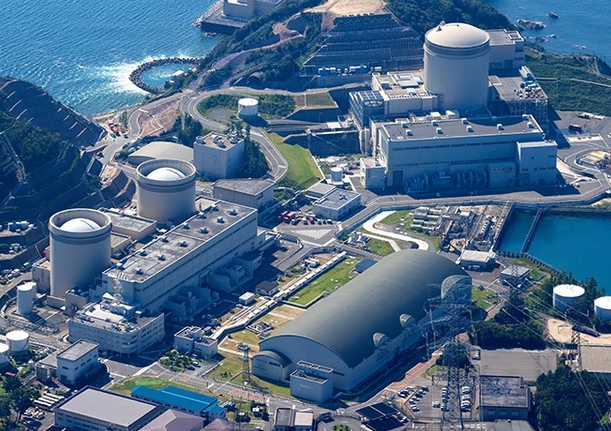
Local officials want new reactors to replace the two retired units at the front of Kansai Electric Power Co.’s Mihama nuclear plant in Fukui Prefecture.
November 29, 2022
The industry ministry proposed building new nuclear reactors to replace retired ones and effectively extending their operating lives beyond 60 years, a reversal of policies set after the 2011 Fukushima nuclear disaster.
The proposals were presented to the ministry’s advisory council, the Nuclear Energy Subcommittee, at a meeting on Nov. 28 as a draft action plan for the Kishida administration’s slogan to “make maximum use of nuclear energy.”
Although many subcommittee members endorsed the proposals, some members said not enough time was spent on discussing such a major change in energy policy.
Prime Minister Fumio Kishida in August issued a directive to a special government panel tasked with decarbonizing Japan to review the current nuclear energy policy.
The government has maintained that “for now,” it does not expect construction of new nuclear plants or a replacement of any reactor.
Because of opposition expected from local governments, the plan also did not propose building nuclear plants in areas that have never hosted such facilities or adding new reactors to existing plants.
But under the action plan, the Ministry of Economy, Trade and Industry states that construction of new reactors “will begin with those replacing retired ones,” giving utilities the green light to build reactors to take the place of those being decommissioned.
The ministry is also seeking “advanced light water reactors” as replacement units, expecting them to start operating in the 2030s. They will each come with an estimated price tag of at least 500 billion yen ($3.57 billion).
Such reactors have enhanced safety features and are an extension of current nuclear technologies, the ministry said.
The action plan also pushes for a system that will effectively extend the life cycle of reactors beyond the maximum of 60 years set under rules adopted after the 2011 triple meltdown.
It suggests that often lengthy periods when reactors are offline for examinations by the Nuclear Regulation Authority on whether they meet standards for restarts be excluded from the 60-year limit.
In addition, the time frame should not include periods when reactor operations are suspended because of lawsuits, the ministry said.
Under those proposals, a reactor that has been idle for 10 years for those reasons could operate for up to 70 years since it first went into service.
The proposed exclusions from the 60-year limit have been criticized as “taking the teeth from” the rigorous reactor regulations set in 2013.
One subcommittee member said the exclusions are “akin to ditching the lessons learned from the Fukushima accident.”
The action plan also called for a new system to provide grants to local governments that promote the use of recycled nuclear fuel at facilities in their jurisdictions.
This is meant to give some leverage to the nation’s trouble-plagued nuclear fuel cycle policy.
Although the action plan represents a sweeping policy change, it does not directly deal with a slew of challenges that have remained unsolved for decades.
For example, it is unclear when the nuclear fuel reprocessing plant under construction in Rokkasho, Aomori Prefecture, a key component in the nuclear fuel cycle program, will go into operations.
Under the program, plutonium retrieved from spent nuclear fuel from across Japan will be recycled as fuel for use at nuclear plants.
The completion date of the reprocessing plant has been pushed back 26 times so far. Around 14 trillion yen has been invested in the project.
Another big headache for the central government is securing a final disposal site for highly radioactive nuclear waste from nuclear power plants across the country.
Two small municipalities in Hokkaido have shown an interest in hosting such a storage facility in exchange for generous grants.
But the Hokkaido governor is opposed to the plan. And no other local governments in Japan have come forward as potential final disposal sites.
The ministry’s action plan did not list any specific proposals to resolve these issues. It merely said: “The state should bolster efforts to gain the understanding” of the public to the nuclear policy.
Plaintiffs claim that the wide-area evacuation plan is ineffective.

November 28, 2022
On November 28, a lawsuit filed by residents of the Onagawa Nuclear Power Plant seeking an injunction against the restart of the No. 2 reactor at Tohoku Electric Power Company’s Onagawa Nuclear Power Plant was concluded. The verdict will be handed down in May next year.
On the 28th, the plaintiffs made their final statements in oral arguments at the Sendai District Court. The plaintiffs again argued that the “wide-area evacuation plan” formulated by the prefectural government and others is ineffective because it does not include specific details about the inspection sites that would be set up along evacuation routes in the event of an accident to check residents’ radiation exposure, including the securing of personnel and materials and equipment.
Mr. Nobuo Hara, leader of the plaintiffs: “How ineffective is the wide-area evacuation plan?
Mr. Nobuo Hara, leader of the plaintiffs’ group: “We have shown how ineffective the wide-area evacuation plan is. The most realistic way to stop the restart of nuclear power plants is to obtain a ruling that nuclear power plants must not be restarted under the evacuation plan. It is the firm belief of the plaintiffs that such a ruling will be reached.”

The trial will conclude on May 28, and the verdict will be handed down on May 24 next year. Tohoku Electric Power aims to restart the Onagawa Unit 2 reactor in February 2024.

Japan studies plan to extend life of 60-year-old nuclear plants

Nov 28, 2022
Japan will consider keeping some nuclear reactors operating beyond a current 60-year limit as the country focuses increasingly on atomic power as a solution to an ongoing squeeze on energy supply.
Officials are studying a plan to exclude periods when reactors were offline from an existing limit on their lifespan, which would allow some facilities to operate for longer, according to a document released Monday by a trade ministry panel. Reactors are often halted for years to allow the nation’s nuclear watchdog to perform inspections, or as a result of legal challenges.
Following the 2011 Fukushima nuclear disaster, which was triggered by a massive earthquake and tsunami, Japan introduced stricter safety standards limiting the operation of nuclear reactors to 40 years in principle.
But operation for an additional 20 years is possible if safety upgrades are made and a reactor passes screening by regulators.
The proposal to allow operations beyond the 60-year limit comes as Japan’s public and government shift back in favor of nuclear power, despite experiencing one of the worst atomic meltdown disasters. The import-dependent country has this year grappled with more expensive fossil fuel prices as a result of Russia’s war in Ukraine, along with a weak yen, and seen its stretched power grid put under severe pressure.
The government has repeatedly asked people to take steps to limit their electricity consumption, by using fewer appliances or cutting back on heating.
In August, Prime Minister Fumio Kishida said the government will explore developing and constructing new reactors, and that it will also aim to restart seven more idled reactors from next summer.
The trade ministry proposals also call for new, next-generation nuclear reactors to be built at sites where existing units will be decommissioned.
Japanese manufacturers have announced plans to develop next-generation reactors this year. Mitsubishi Heavy Industries is jointly developing an advanced light water reactor with four other Japanese power producers, while a venture between Hitachi and General Electric is also reported to be developing a new reactor model.
https://www.japantimes.co.jp/news/2022/11/28/national/nuclear-plant-extension/
Expert panel full of proponents of nuclear power plants to discuss direction on March 28th, extending operation period and developing next-generation models, rushing to conclusion on “Prime Minister’s directive.

Basic policy subcommittee discusses extending the operational period of nuclear power plants in Kasumigaseki, Tokyo.
November 27, 2022
The Ministry of Economy, Trade, and Industry (METI) will present its direction on measures to utilize nuclear power plants, including the extension of the operating period of nuclear power plants, which is stipulated as “40 years in principle, with a maximum of 60 years,” and the development and construction of next-generation nuclear power plants, at the “Nuclear Energy Subcommittee,” a meeting of experts on November 28. Discussions will reach their final stage about three months after Prime Minister Fumio Kishida ordered the committee to study the issue in August. However, the committee did not solicit opinions from the public before reaching a conclusion, and its deliberations were noticeably more hasty than past energy policy debates. (The discussion has been held in a very slow pace compared to past energy policy debates.)
◆Draft government policy at several subcommittee meetings
Of the 21 members of the Atomic Energy Subcommittee, which discusses nuclear energy policy, only two, including Hajime Matsukubo, executive director of the NPO Nuclear Data and Information Office, have made negative statements about nuclear power at recent meetings. In the discussion on extending the operating period, many committee members called for removing the maximum 60-year limit, and at the meeting on March 28, METI is expected to push for a proposal to exclude from the number of years of operation the period during which a nuclear power plant is shut down to undergo a review before it can be restarted, without removing the limit in consideration of public outcry.
The contents of the Nuclear Energy Subcommittee’s deliberations will be discussed by the Basic Policy Subcommittee, which brings together expert panels on energy policy, and the conclusions of the subcommittee will serve as a draft of the government policy.
At the meeting on March 15, Ms. Chisato Murakami, an advisor on consumer affairs, commented, “The use of nuclear power plants will not directly lead to an end to the tight power supply and demand situation. I would like to propose that we take time to deepen the national debate.” She objected to the way the discussion was proceeding, but no other opinions were expressed calling for a reconsideration.
The subcommittee has met twice so far. The committee is expected to hold one or two more meetings before the end of the year to reach a conclusion, after which public comments will be sought.
◆Energy Basic Plan to be discussed 17 times and opinions solicited via the Internet
The previous energy policy discussions were different.
In the discussion of the “Sixth Basic Energy Plan,” a medium- to long-term guideline for energy policy formulated last October, subcommittee meetings were held 17 times over a period of 10 months. In addition, an opinion box was set up on the website during the discussions in order to listen to the opinions of the public at large. The opinions received were submitted as materials to each of the subcommittee meetings for consideration. In total, about 640 opinions were collected, with about 300 calling for a nuclear power phase-out, while about 80 supported the promotion of nuclear power.
At that time, members of the subcommittee expressed the opinion that extending the operational period of nuclear power plants and building new plants were necessary to realize a decarbonized society by 2050, but this was not explicitly stated in the basic plan. The policy of “reducing dependence on nuclear power plants as much as possible,” which came to be stated after the Fukushima accident, was also maintained.
◆Ministry of Economy, Trade, and Industry (METI) official: “The directive to reach a conclusion by the end of the year cannot take too much time.
The government has been stressing the use of nuclear power plants against the backdrop of the recent tight power supply and demand and soaring fuel prices. However, the development of next-generation nuclear power plants, for example, will take a long time and will not be a quick fix, so there is no need to reach a hasty conclusion. Even after Murakami pointed out this contradiction at the subcommittee meeting, a METI official told the interviewer, “We cannot take too much time because [Prime Minister Kishida] has instructed us to reach a conclusion by the end of the year. We will come up with a direction as soon as possible.
Mr. Matsukubo commented, “This is a heavy-handed way of proceeding, not listening to the public and having the Council of Eminent Persons decide what the government wants to do. The government’s policy of making nuclear power a given may narrow the scope for the introduction of renewable energies in the future.
https://www.tokyo-np.co.jp/article/216285?fbclid=IwAR1q4FkmUf5IMHwP2VfT5TG3LA6wvwN1V1CU7vRueWSFSkMq6upQHAuxkG4
1 This Month

of the week – Shut Down Drone Warfare!


Tell the Ukrainian Government to Drop Prosecution of Peace Activist Yurii Sheliazhenko

Petition to revoke the licensing of the Near Surface Nuclear Disposal Facility (NSDF) at Chalk River. https://www.ourcommons.ca/petitions/en/Petition/Details?Petition=e-7247
To see nuclear-related stories in greater depth and intensity – go to https://nuclearinformation.wordpress.com
-
Archives
- April 2026 (103)
- March 2026 (251)
- February 2026 (268)
- January 2026 (308)
- December 2025 (358)
- November 2025 (359)
- October 2025 (376)
- September 2025 (257)
- August 2025 (319)
- July 2025 (230)
- June 2025 (348)
- May 2025 (261)
-
Categories
- 1
- 1 NUCLEAR ISSUES
- business and costs
- climate change
- culture and arts
- ENERGY
- environment
- health
- history
- indigenous issues
- Legal
- marketing of nuclear
- media
- opposition to nuclear
- PERSONAL STORIES
- politics
- politics international
- Religion and ethics
- safety
- secrets,lies and civil liberties
- spinbuster
- technology
- Uranium
- wastes
- weapons and war
- Women
- 2 WORLD
- ACTION
- AFRICA
- Atrocities
- AUSTRALIA
- Christina's notes
- Christina's themes
- culture and arts
- Events
- Fuk 2022
- Fuk 2023
- Fukushima 2017
- Fukushima 2018
- fukushima 2019
- Fukushima 2020
- Fukushima 2021
- general
- global warming
- Humour (God we need it)
- Nuclear
- RARE EARTHS
- Reference
- resources – print
- Resources -audiovicual
- Weekly Newsletter
- World
- World Nuclear
- YouTube
-
RSS
Entries RSS
Comments RSS
 nuclear-news
