Low-Dose Radiation Affects Cardiovascular Disease Risk in Human Aortic Endothelial Cells by Altering Gene Expression under Normal and Diabetic Conditions.
#nuclear #Nuclear-free #anti-nuclear #NoNukes
by Soo-Ho Lee 1,†, Ye Ji Jeong 1,†, Jeongwoo Park 1,2, Hyun-Yong Kim 1, Yeonghoon Son 1, Kwang Seok Kim 1,* and Hae-June Lee 1,*
Divisions of Radiation Biomedical Research, Korea Institute of Radiological and Medical Sciences, Seoul 01812, Korea
2 New Drug Development Center, Daegu Gyeongbuk Medical Innovation Foundation, Daegu 41061, Korea
*Authors to whom correspondence should be addressed.
†These authors contributed equally to this work.
2 August 2022 (This article belongs to the Special Issue Advances in Radiation Toxicity)
Abstract
High doses of ionizing radiation can cause cardiovascular diseases (CVDs); however, the effects of <100 mGy radiation on CVD remain underreported. Endothelial cells (ECs) play major roles in cardiovascular health and disease, and their function is reduced by stimuli such as chronic disease, metabolic disorders, and smoking. However, whether exposure to low-dose radiation results in the disruption of similar molecular mechanisms in ECs under diabetic and non-diabetic states remains largely unknown; we aimed to address this gap in knowledge through the molecular and functional characterization of primary human aortic endothelial cells (HAECs) derived from patients with type 2 diabetes (T2D-HAECs) and normal HAECs in response to low-dose radiation. To address these limitations, we performed RNA sequencing on HAECs and T2D-HAECs following exposure to 100 mGy of ionizing radiation and examined the transcriptome changes associated with the low-dose radiation. Compared with that in the non-irradiation group, low-dose irradiation induced 243 differentially expressed genes (DEGs) (133 down-regulated and 110 up-regulated) in HAECs and 378 DEGs (195 down-regulated and 183 up-regulated) in T2D-HAECs. We also discovered a significant association between the DEGs and the interferon (IFN)-I signaling pathway, which is associated with CVD by Kyoto Encyclopedia of Genes and Genomes (KEGG) pathway analysis, protein–protein network analysis, and module analysis. Our findings demonstrate the potential impact of low-dose radiation on EC functions that are related to the risk of CVD.
Keywords: low-dose radiation; endothelial cells; diabetes mellitus; gene profiling; cardiovascular disease …………………………………………………………………………….more https://www.mdpi.com/1422-0067/23/15/8577
Fukushima Study Links Low-Dose Radiation to Diabetes
Mirage, 3 Oct 23
New research to be presented at this year’s Annual Meeting of The European Association for the Study of Diabetes (EASD), Hamburg (2-6 Oct), suggests that exposure to low doses of radiation may contribute to an increased risk of diabetes.
The study by Dr Huan Hu and Dr Toshiteru Ohkubo from the Japanese National Institute of Occupational Safety and Health involved more than 6,000 out of around 20,000 emergency workers who responded to the radiation accident at the Fukushima Daiichi Nuclear Power Plant, which was hit by a huge tsunami in March 2011.
Substantial amounts of radioactive materials were released into the environment following explosions at the nuclear plant.
In 2014, the Epidemiological Study of Health Effects in Fukushima Emergency Workers (NEWS) was established to clarify the long-term health effects of radiation among emergency workers.
Few human studies have examined the impact of radiation exposure on diabetes development, particularly at low doses. To find out more, researchers examined the association between low-dose radiation exposure and risk of diabetes in 5,326 male emergency workers (average age 46 years) taking part in the NEWS study.
Between March and December 2011, individual emergency worker’s radiation exposure was measured using a pocket alarm dosemeter for external exposure and a whole-body counter for internal exposure.
Study participants underwent regular health examinations involving more than 70 components, including blood sugar, lipids, urine tests, inflammation biomarkers, thyroid function tests, and eye examinations.
Between 2012 and 2021, 392 participants developed diabetes—defined as a fast plasma glucose level of at least 126 mg/dL, an HbA1c level of at least 6.5%, or self-reported diagnosis of diabetes.
The researchers assessed the association between incident diabetes and cumulative radiation exposure after adjusting for a wide range of potential confounders including age, body mass index, smoking, alcohol consumption, leisure-time physical activity, employment at the nuclear power plant, dyslipidaemia (abnormally high levels of fats in the blood), and high blood pressure.
The analysis found that compared with the lowest cumulative low-dose radiation exposure (0-4 millisieverts [mSv]), the risk of developing diabetes was 6% higher for workers exposed to 5-9 mSv, and 47% and 33% greater for those exposed to 10-19 mSv and 20-49 mSv, respectively.
However, no elevated risk was detected in those exposed to radiation doses of 50 mSv or higher, likely due to the small sample size in this group.
“Our findings suggest an increased risk of diabetes among nuclear emergency workers from low levels of radiation. While the potential mechanisms remain somewhat unclear, reports suggest that radiation can adversely affect pancreatic cells responsible for insulin production, potentially contributing to diabetes. Additionally, there is an association between radiation exposure and heightened inflammation, a well-known factor in insulin resistance and the development of diabetes”, explains lead author Dr Hu.
He adds, “Ongoing follow-up of NEWS participants will provide an even clearer picture of diabetes risk at low radiation doses. As more diabetes cases emerge within our study group, our expanded dataset will enable more robust analyses, allowing researchers to better assess the link between radiation exposure and diabetes risk.”……………………………………………………………………………………………………….. more https://www.miragenews.com/fukushima-study-links-low-dose-radiation-to-1095852/
Editorial: Japan city’s rejection of nuclear waste site probe casts doubt on gov’t stance.

Tsushima Mayor Naoki Hitakatsu announced on Sept. 27 that
the Nagasaki Prefecture city will not accept a reference material-based
preliminary survey for the construction of a final disposal facility for
nuclear waste, going against the local assembly’s initial adoption of a
petition calling for the survey’s approval.
The Japanese government must accept the reality that the search for a candidate site to dispose ofhighly radioactive nuclear waste, which will continue to accumulate as long
as nuclear power plants are in operation, is proving difficult.
Mainichi 30th Sept 2023
https://mainichi.jp/english/articles/20230930/p2a/00m/0op/009000c
Japan city forgoes applying for government survey on nuclear waste site

The mayor of Tsushima in southwestern Japan said Wednesday he has decided
against applying to the state for a preliminary survey to gauge the island
city’s suitability to host an underground disposal site for highly
radioactive waste from nuclear power generation. The decision comes in
contrast with the local assembly’s approval earlier this month of a request
filed by proponents urging the city to accept the survey.
“There is insufficient consensus among the public,” Mayor Naoki Hitakatsu said at a city assembly session, with some fearing the potential impact on tourism and primary industries such as fisheries.
He later told reporters he also has concerns about reputational damage that may arise from conducting the survey.
The preliminary survey is the first step in a three-stage process spanning two decades to select a permanent disposal site for nuclear waste. Struggling to find one, the central government is looking for municipalities willing to accept the survey, but only two municipalities in Hokkaido have so far done so.
Tsushima, on a remote island in Nagasaki Prefecture, was identified as a potential disposal site on a map of such locations released by the central government in 2017.
Hitakatsu has raised worries about hosting such a site, saying, “The risks that may arise from unperceived factors cannot be ruled out.”
Opponents of the plan have also said it would not be appropriate for the city to host a disposal site for nuclear waste given the history of the U.S. atomic bombing of Nagasaki city in 1945.
Local construction groups and other proponents argued that state subsidies of 2 billion yen ($13.4 million) for accepting the survey could be used for measures to rev up the shrinking city’s economy and support child-rearing.
The mayor, who may seek a third four-year term after his current term expires in March, told a press conference that the reputational damage that may arise from carrying out the survey “cannot be covered by a subsidy of 2 billion yen.”
He also said he “judged it would become difficult to reject” the subsequent geological research if the preliminary survey showed that the city is suited as a site for the final disposal of nuclear waste.
The surveys, conducted by the Nuclear Waste Management Organization, a quasi-government body in Tokyo, involve checking land conditions and volcanic activity based on published geological sources.
Following Tsushima’s decision, the central government said it will continue efforts to find more areas to carry out preliminary surveys.
“We are very grateful that Tsushima showed interest and had considered” accepting the survey, said Chief Cabinet Secretary Hirokazu Matsuno at a press conference.
Fast-aging Tsushima, where the number of residents fell below 30,000 in 2020, depends on squid fishing and pearl farming but is struggling to find young people to carry on the running of its industries.
It is located closer to the South Korean port city of Busan, 50 kilometers away, than any major Japanese cities.
High-level radioactive waste, produced when extracting uranium and plutonium from spent fuel, must be stored in bedrock at least 300 meters underground for tens of thousands of years until the radioactivity declines to levels that pose no harm to human health or the environment.
Japan, like many other countries with nuclear plants, is struggling to find a site for such disposal.
Kyodo News 27th Sept 2023
Japan to release second batch of wastewater from Fukushima nuclear plant next week
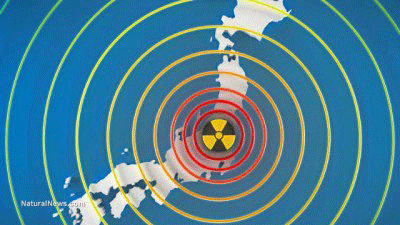
UN-approved release to go ahead despite China’s ban on all Japanese sea imports following first batch
Japan will begin releasing a second batch of wastewater from the crippled
Fukushima nuclear plant from next week, its operator has said, an exercise
that angered China and others when it began in August.
Guardian 29th Sept 2023
Radioactive material leaks detected at Japan’s plutonium nuclear fuel research facility

New Straits Times By Bernama – September 13, 2023
TOKYO: The Japan Atomic Energy Agency (JAEA) has confirmed the detection of radioactive material leaks in one of its nuclear fuel research facilities but reported no adverse effects on the health of the staff or the surrounding environment, Xinhua quoted local media reports.
The leaks were detected within the Plutonium Fuel Development Room No. 3 at the JAEA’s Nuclear Fuel Cycle Engineering Laboratories, located in Tokai Village, Ibaraki Prefecture, national news agency Kyodo reported, citing the agency.
Last Friday, the Plutonium Fuel Development Room No. 3 identified pollution caused by radioactive materials at four locations within the facility.
The pollution was discovered during a routine inspection of the glovebox equipment, which is designed to be airtight………………………..
At present, the cause of the radioactive material leak is under investigation. Authorities at the laboratories suspected that the radioactive materials may have seeped out of the equipment. –BERNAMA https://www.nst.com.my/world/world/2023/09/954873/radioactive-material-leaks-detected-japans-nuclear-fuel-research-facility
Japan to start old nuclear reactor checks in October
Japan’s Nuclear Regulation Authority (NRA) will begin receiving
applications for nuclear safety inspections of aged reactors from October,
ahead of the country’s new nuclear safety regulations that will take effect
on 6 June 2025.
Under the new rule, all the country’s reactors that will be
operating for or beyond 30 years as of 6 June 2025 will in advance need to
secure approval from the NRA for safety plans by 5 June 2025. Nuclear power
operators will have to obtain such permission every 10 years or less after
their 30-year operating period is over. The NRA will start safety screening
of each old reactor.
But it is still unclear how long the process will
take. If a nuclear power operator fails to secure safety permission by 5
June 2025, the company could shut down the reactor, an official at the NRA
said.
Argus Media 13th Sept 2023
https://www.argusmedia.com/en//news/2488629-japan-to-start-old-nuclear-reactor-checks-in-october
The Discharge of Fukushima’s Radioactive Water could be a Precedent for Similar Actions

Obviously, it would be misleading to rely on the IAEA’s statements suggesting that radioactive wastewater does not pose any risk to global health. This information strengthens the likelihood that the IAEA did not reveal valid and precise radiation data regarding the Chornobyl accident and Zaporizhia nuclear power plant during the ongoing Ukrainian war either.
Pinar Demircan 7 Sept 23 https://www.dianuke.org/the-discharge-of-fukushimas-radioactive-water-could-be-a-precedent-for-similar-actions/
Underlying the disregard for objections from global civil society and transforming the ocean into a nuclear waste dump lies a bigger goal inspired by capitalist practices that arise from its crisis: to achieve another threshold by normalization of cost-cutting measures for the sake of the nuclear industry.
While the climate crisis is rapidly turning forests and habitats of living creatures into coal and ash with a tiny spark of fire in Turkiye, Greece, and Canada, the planet’s seas, already polluted with plastics and waste, are also being recklessly infused with radioactivity, driven by profit and cost-centered policies. On August 24, within the framework of the procedures carried out by the Japanese government and TEPCO, the discharge of 1.34 million tonnes of radioactive water which is accumulated in tanks at the plant site, started.
The installation of a treatment system costing 23 million USD, the discharge of wastewater without an Environmental Impact Assessment (EIA) is being realized by foregoing safer alternatives such as solidification of wastewater into construction materials or long-term storage costing 100 times more that constitutes ecocide. Clearly, this method of release that is expected to be carried out over the next 40 years, indicates a systemic assault on the global ecosystem that is longer and more severe than presently apparent.
The Japanese Government is not telling the truth about ‘purification’
The discharge process of the wastewater resulting from the complete meltdown of three reactor cores at the Fukushima nuclear facility began in 2011 and is at par with the danger level ascribed to the Chornobyl disaster. This also highlights how the Fukushima discharge differs from the regular discharge processes of nuclear power plants and indicates the extent of danger that nuclear power plants pose. Furthermore, the radioactive isotopes treated in the accumulated wastewater is only half of the whole amount according to what was stated on the website of the Japanese Ministry of the Environment.
A detail that has been overlooked till today is that there is no information regarding the amount of discharge during this 40-year time frame for the disposal of radioactive water into the ocean. This might indicate that the discharged amount may even be equivalent to the period of, for example, 100 years despite the declared duration of 40. In addition, since the present objections have been disregarded, it is worth considering the potential impact of future oppositions at the end of the 40 years.
A threshold to be achieved
Apparently, over the next decade, the radioactive water discharged from Fukushima is anticipated to disseminate into multiple seas worldwide, encompassing the Marmara, Mediterranean, Aegean, and Black Sea, which surrounds Turkiye. A recent scientific study [2] suggests that the evaporation in these seas will escalate industrial radioactivity levels in the ecosystem. Given this backdrop, it is important to ask why TEPCO, the Japanese government, and the IAEA continue to disregard the adverse impacts of the discharge, which also makes them responsible for the potential increases in cancer, DNA damage, increased miscarriages, hormone imbalances, and unhealthy future generations worldwide? Underlying the disregard for objections raised by global civil society, and transforming the ocean into a nuclear waste dump, lies a bigger goal inspired by capitalist practices that arise from its crisis: to achieve another threshold of the normalization of cost-cutting measures for the sake of nuclear industry.
How can we be sure of the exact amount to be released?
It is also possible to consider the above statement with the possibility of adding wastewater from the other nuclear power plants across Japan to the already 1 million 340 thousand tonnes of water accumulated over the past 12 years at Fukushima. While nuclear power plants operate under higher costs and have to cope with four times cheaper renewable energy production costs, the ocean dumping of the radioactive wastewater offers an easy solution for the nuclear industry. Crossing this threshold guarantees the capability to manage climate-induced hazards to nuclear facilities since now, societal consent has been obtained for this plan of action. Imagine how beneficial this course of action will be for the nuclear industry, with the IAEA promising its support for the industry – to the 410 reactors operating worldwide, approximately 50 reactors under construction, and 80 reactors [3] in various stages of maintenance, repair, decommissioning, and dismantling.
Take for example, Rosatom of Russia, the owner of the Akkuyu Nuclear Power Plant which reached its final stage of construction for the first reactor in Turkiye. It has a long history of concealing the Mayak nuclear power plant accident, well into the 1990s. Furthermore, from 1948 to 2004, Rosatom discharged nuclear waste into the Techa River, thus reinforcing its already questionable track record, and also points to how the legalization of nuclear discharge might be beneficial for the industry. It is also easy to predict the potential impact of this approach in the Mediterranean region by a nation with an underdeveloped democratic system and institutional dynamics dominated [4] by political power. This is especially important since an exemption made for the Akkuyu NPP in the article which allows for the discharge water from the facilities around the Mediterranean temperature of the plant and allows the sea temperature to reach up to 35 Celsius and poses serious ecological challenges indicating that Turkiye violates Barcelona Agreement.
The Role of the IAEA
The example of Fukushima’s radioactive water discharge presents us a picture of a political power that has adopted the corporate management mentality prioritizing profits and industry interests under the guise of efficiency and profitability. The International Atomic Energy Agency (IAEA) plays a vital role in ensuring that nuclear energy generation is conducted safely and within established guidelines. However, a leaked document [5] from the IAEA reveals that the agency, which declared its support for TEPCO and the Japanese government, advised them to refrain from making statements that could portray nuclear power plants negatively and disseminate information that influences the press and public opinion. As this scandal brings to light the deep connections between the IAEA, the Japanese government, and TEPCO, it is important to consider the role of the IAEA as a highly regarded global organization.
It is noteworthy to mention that the IAEA’s involvement in the nuclear industry stems from a confidential agreement WHA 12-40 [6] with the World Health Organization (WHO) in 1959, stating that “whenever either organization proposes to initiate a programme or activity on a subject in which the other organization has or may have a substantial interest, the first party shall consult the other with a view to adjusting the matter by mutual agreement”. Consequently, the IAEA, established to promote the growth of nuclear power plants worldwide, refrained from disclosing any potential health hazards posed by these plants.
Obviously, it would be misleading to rely on the IAEA’s statements suggesting that radioactive wastewater does not pose any risk to global health. This information strengthens the likelihood that the IAEA did not reveal valid and precise radiation data regarding the Chornobyl accident and Zaporizhia nuclear power plant during the ongoing Ukrainian war either.
It is important to inform the global society that the IAEA, which focuses mainly on promoting nuclear power, should not be involved in discussions related to public health in line with the principle of separating responsibilities to avoid conflict of interest. Therefore, it is recommended that civil society should inform the international community about the content of the recently disclosed IAEA document and demand an end to the discharge of radioactive water from Fukushima into the ocean. Accordingly, it should be ensured that all processes involved in disposing radioactive contamination in Fukushima are subject to internal and financial control measures performed by a minimum of two separate units.
At this stage, it is essential to take measures by clarifying the issues emphasized by the non-governmental organizations following the processes, and it should be ensured that realistic solutions can only be produced with the involvement of a consortium of neighbouring countries such as South Korea, China, Taiwan and the Pacific Islands. In this regard, the process management for the construction of the steel dome shelter, which was completed in 2016 with financing by 40 countries that came together in 1997 to protect the exploded fourth reactor of the Chornobyl Nuclear Power Plant from external weather conditions, can be taken as an example. [7]
Undoubtedly, the economic and administrative control mechanisms created for Chornobyl due to Ukraine’s lack of financial resources is not acceptable for the technology-giant Japan, which bears the costs of the disaster on its own. However, since global society has not entirely shown its commitment to changing the system, an in-system solution can prevent adding the radioactive disaster to the climate crisis before the transformation of life on the planet hits its constraints. In other words, claiming efficiency and profitability and institutionalization of the logic of ‘running the state like a business’, which has become the common discourse of political powers will at least help to achieve the rationality of emulated corporate management.
” The future of nuclear as an alternative energy source relies on the success of the Fukushima release” – Rafael Grossi.

“more broadly, the future of nuclear as an alternative energy source relies on the success of the Fukushima release,” he said. Though there has been heightened public alarm toward nuclear plants recently – for instance, regarding the Russian-occupied Zaporizhzhia plant in Ukraine – “the problem there is war, the problem is not nuclear energy,” Grossi said.
AEA chief ‘completely convinced’ it’s safe to release treated Fukushima nuclear wastewater .
By Jessie Yeung, Marc Stewart and Emiko Jozuka, Tokyo CNN, 7 July 23
Japan’s plan to release treated radioactive water into the ocean is safe and there is no better option to deal with the massive buildup of wastewater collected since the 2011 Fukushima nuclear disaster, the head of the United Nations’ nuclear watchdog told CNN.
Japan will release the wastewater sometime this summer, a controversial move 12 years after the Fukushima nuclear plant meltdown. Japanese authorities and the IAEA have insisted the plan follows international safety standards – the water will first be treated to remove the most harmful pollutants, and be released gradually over many years in highly diluted quantities.
But public anxiety remains high, including in nearby countries like South Korea, China and the Pacific Islands, which have voiced concern about potential harm to the environment or people’s health. On Friday, Chinese customs officials announced they would maintain a ban on food imports from 10 Japanese prefectures including Fukushima, and strengthen inspections to monitor for “radioactive substances, to ensure the safety of Japanese food imports to China.”……………………..
On Tuesday, Grossi formally presented the IAEA’s safety review to Japanese Prime Minister Fumio Kishida. The report found the wastewater release plan will have a “negligible” impact on people and the environment, adding that it was an “independent and transparent review,” not a recommendation or endorsement……………………….
The 2011 disaster caused the plant’s reactor cores to overheat and contaminate water within the facility with highly radioactive material. Since then, new water has been pumped in to cool fuel debris in the reactors. At the same time, ground and rainwater have leaked in, creating more radioactive wastewater that now needs to be stored and treated.
That wastewater now measures 1.32 million metric tons – enough to fill more than 500 Olympic-sized swimming pools.
Japan has previously said there were “no other options” as space runs out – a sentiment Grossi echoed on Friday. When asked whether there were better alternatives to dispose of the wastewater, the IAEA chief answered succinctly: “No.”
It’s not that there are no other methods, he added – Japan had considered five total options, including hydrogen release, underground burial and vapor release, which would have seen wastewater boiled and released into the atmosphere………………………………………
International skepticism
But some critics have cast doubt on the IAEA’s findings, with China recently arguing that the group’s assessment “is not proof of the legality and legitimacy” of the wastewater release.
Many countries have openly opposed the plan; Chinese officials have warned that it could cause “unpredictable harm,” and accused Japan of treating the ocean as a “sewer.” The Secretary General of the Pacific Islands Forum, an inter-governmental group of Pacific island nations that includes Australia and New Zealand, also published an op-ed in January voicing “grave concerns,” saying more data was needed.
And in South Korea, residents have taken to the streets to protest the plan. Many shoppers have stockpiled salt and seafood for fear these products will be contaminated once the wastewater is released – even though Seoul has already banned imports of seafood and food items from the Fukushima region.
International scientists have also expressed concern to CNN that there is insufficient evidence of long-term safety, arguing that the release could cause tritium – a radioactive hydrogen isotope that cannot be removed from the wastewater – to gradually build up in marine ecosystems and food chains, a process called bioaccumulation…………………………………
more broadly, the future of nuclear as an alternative energy source relies on the success of the Fukushima release, he said. Though there has been heightened public alarm toward nuclear plants recently – for instance, regarding the Russian-occupied Zaporizhzhia plant in Ukraine – “the problem there is war, the problem is not nuclear energy,” Grossi said……….. https://edition.cnn.com/2023/07/06/asia/japan-fukushima-water-iaea-chief-interview-intl-hnk/index.html
Japan’s Insane Immoral, Illegal Radioactive Dumping
CounterPunch, BY ROBERT HUNZIKER 8 Sept 23

Japan cannot possibly outlive the atrocity of dumping radioactive wastewater into the Pacific Ocean. In fact, Tokyo Electric Power Company (TEPCO) is an example of how nuclear meltdowns negatively impact the entire world, as its toxic wastewater travels across the world in ocean currents. The dumping of stored toxic wastewater from the meltdown in 2011 officially started on August 24th, 2023. Meanwhile, the country restarts some of the nuclear plants that were shut down when the Fukushima Daichi Nuclear Power Plant exploded.
Fukushima’s broken reactors are an example of why nuclear energy is a trap that can’t handle global warming or extreme natural disasters. Nuclear is an accident waiting to happen, for several reasons, including victimization by forces of global warming.
According to Dr. Paul Dorfman, chair of the Nuclear Consulting Group, former secretary to the UK Scientific Advisory Committee on Internal Radiation, and Visiting Fellow, University of Sussex: “It’s important to understand that nuclear is very likely to be a significant climate casualty. For cooling purposes nuclear reactors need to be situated by large bodies of water, etc. …” Essentially, global warming is nuclear energy’s Waterloo; it has already seriously endangered France’s 56 nuclear reactors with partial shutdowns because of extreme global warming. Nuclear reactors cannot survive global warming. See “the nuclear energy trap” link at the end of this article.
TEPCO’s treacherous act of dumping radioactive water into a wide-open ocean is a deliberate violation of human decency, as it clearly violates essential provisions of the International Atomic Energy Agency’s (IAEA) General Safety Guide No. 8 (GSG-8).
Japan should be forced to stop its diabolical exercise of potentially destroying precious life. Shame on the IAEA and shame on the member countries of the G7 for endorsing this travesty. They’ve christened the ocean an “open sewer.” Hark! Come one, come all, dump your trash, open toxic spigots, bring chemicals, bring fertilizers, bring plastic, bring radioactive waste that’s impossible to dispose… the oceans are open sewers. It’s free! Yes, it’s free but only weak-minded people would allow a broken-down crippled nuclear power plant to dump radioactive waste into the world’s ocean. It is a testament to human frailty, weakness, insipience, not courage.
According to Arjun Makhijani, Ph.D. Institute for Energy and Environmental Research, TEPCO’s ALPS-treated Radioactive Water Dumping Plan Violates Essential Provisions of IAEA’s General Safety Guide No. 8 (GSG-8) and Corresponding Requirements in Other IAEA Documents, June 28, 2023: “The IAEA is an important United Nations institution. Like the rest of the Expert Panel, the author of this paper has been reluctant to criticize the IAEA. Yet, its outright refusal to apply its own guidance documents in full measure is stark. Its constricted view of the dumping plan has allowed it to evade its responsibilities to many countries. Its eagerness to assure the public that harm will be “negligible” has been carried to the point of grossly overstating well-known facts about tritium. The serious lapses of the IAEA in the Fukushima radioactive water matter have made criticism unavoidable.”………………………………………………………………………………………………………….
“At high doses, ionizing radiation can cause immediate damage to a person’s body, including, at very high doses, radiation sickness and death. At lower doses, ionizing radiation can cause health effects such as cardiovascular disease and cataracts, as well as cancer. It causes cancer primarily because it damages DNA, which can lead to cancer-causing gene mutations.” (Source: National Cancer Institute)
How is it possible to justify dumping any amount of radioactive wastewater into the Pacific Ocean? Is the world’s consciousness so low, so lacking a moral compass, that it’s okay to dump the most toxic material on the planet into the oceans?
Stop destroying the oceans!
And please contemplate the dire ramifications of the nuclear energy trap. more https://www.counterpunch.org/2023/09/08/japans-insane-immoral-illegal-radioactive-dumping/?fbclid=IwAR0IaIETBoTgZeDUmJ3caeJAlFFWGPrdCtsqt5oR0A7XP8NEl1fKqLJwu54
Robert Hunziker lives in Los Angeles and can be reached at rlhunziker@gmail.com.
Residents file suit to halt wastewater release from Fukushima plant

About 150 residents from prefectures such as Fukushima and Miyagi went to court on Friday to halt the release of treated radioactive water from the crippled Fukushima nuclear plant, making it the first lawsuit of its kind.
In the suit filed with the Fukushima District Court against the central government and plant operator Tokyo Electric Power Company Holdings Inc, the plaintiffs said the water discharge, which started on Aug. 24, threatens citizens’ right to live safely and hinders local fishermen’s businesses.
They are also seeking nullification of nuclear regulators’ approval of facilities installed for the water discharge and a ban to be placed on the release.
An additional lawsuit at the end of October is being planned…………………………………………………………………. https://japantoday.com/category/national/residents-file-suit-to-halt-wastewater-release-from-fukushima-plant
How a nuclear disaster spurred Fukushima to become a renewables leader

Japan Times, BY FRANCESCO BASSETTI, MINAMISOMA, FUKUSHIMA PREF. – 5 Sept 23
As you reach the coast on Fukushima Prefectural Route 74, which runs between the towns of Minamisoma and Soma, scenes typical of the Japanese countryside — rice paddies and hills blanketed by lush green forests — undergo a swift transformation.
Now, expanses of metal, glass and silicon shimmer in the midday sun, stretching out to a horizon dotted with four white wind turbines, blades humming as they turn in the summer breeze.
Following the 2011 triple disaster — and the subsequent cratering of support for nuclear energy — Fukushima Prefecture has positioned itself at the forefront of Japan’s low-carbon transition.
Few projects better exemplify that than the Minamisoma Mano-Migita-Ebi solar power plant, which was the largest in Fukushima Prefecture until 2019 and is made up of 220,000 solar panels that, if laid end to end, would cover 350 kilometers — roughly the distance between Nagoya and Tokyo. The panels can generate up to 60 megawatts of electricity, enough to power 20,000 households.
Because of projects like the Minamisoma facility, Fukushima Prefecture has claimed the crown as the Tohoku region’s leader in cumulative solar power generation since 2013, and this is a direct consequence of the reconstruction policies that were put in place after the March 2011 earthquake, tsunami and nuclear disaster.
But today, grid connection issues, opposition by incumbent energy companies and a return to nuclear energy in some parts of the country are slowing progress in Fukushima and beyond. In 2022 almost 80% of the increase in total electricity generation in Japan came via fossil fuels — a worrying signal that, although renewable energy generation continues to increase, it is not keeping up with the pace of electrification.
Renewable recovery
Particularly in the coastal areas of Fukushima Prefecture, solar panels have a strong presence: They cover fields, occupy clearings that have been carved out of forests and hillsides, and rest on the rooftops of houses. Cars and trucks brandishing the names of the companies that operate them are a regular feature as they carry equipment and workers along well-kept roads…………………………………………………………………………………………………………………….
“Recovery plans have always been tied to developing a society that is no longer dependent on nuclear power,” says Masaki Moroi, deputy director of Fukushima Prefecture’s Energy Division.
By the end of 2021, Fukushima Prefecture had covered 47% of its energy demand with renewables, compared with just 23.7% in 2011. That’s a particularly impressive feat when compared with Japan’s national average of just 22.7% in 2022.
“Fukushima took the lead after 2011 because of its direct experience with disaster and clear commitment by policymakers to quit nuclear energy and back renewables,” says Hikaru Hiranuma of the Tokyo Foundation for Policy Research.
According to Hiranuma, the single most influential policy in the initial boom in renewable energy was the introduction of a feed-in-tariff program by the Ministry of Economy, Trade and Industry in July 2012………………………………………………………………………………………..
Beyond Minamisoma, Fukushima Prefecture implemented policies promoting renewable energy projects in areas affected by the tsunami and nuclear fallout where there were high rates of abandoned land………………………………………………………………………………………………………………………. more https://www.japantimes.co.jp/environment/2023/09/05/fukushima-renewable-energy-leader/
Japan announces emergency relief for seafood exporters hit by China’s ban over Fukushima water
Japan announces emergency relief measures for seafood exporters hit by
China’s ban. Japanese Prime Minister Fumio Kishida announced on Monday a
20.7 billion yen ($141 million) emergency fund to help exporters hit by a
ban on Japanese seafood imposed by China in response to the release of
treated radioactive wastewater from the damaged Fukushima nuclear power
plant.
Daily Mail 4th Sept 2023
Globe & Mail 5th Sept 2023
Exhibition for nuclear-free world opens online
Sunday, Sept. 3 https://www3.nhk.or.jp/nhkworld/en/news/20230903_05/
An online exhibition promoting a nuclear-free world has opened, set up by a group of survivors of the atomic bombings of Hiroshima and Nagasaki.
The Japan Confederation of A-and H-bomb Sufferers Organizations, or Hidankyo, says the threat of nuclear weapons is increasing as Russia’s invasion of Ukraine continues.
The group’s Assistant Secretary General Hamasumi Jiro said the world must be informed of the consequences of nuclear weapons now more than ever, amid the heightened risk of nuclear weapons being used.
The exhibition, made up of about 50 panels of photos and texts, was set up by the confederation and other non-profit organizations.
It features items displayed in the past by the group at the UN Headquarters and elsewhere. Online visitors can see images of the devastation in Hiroshima and Nagasaki immediately after the bombings.
The site is available in Japanese and English to highlight the efforts of the survivors and others whose aim is to realize a world without nuclear weapons.
Officials say that the English site has been accessed mainly by overseas viewers in the US.
Crowdfunding is helping to manage the site with hopes of soon making it available in the languages of nuclear states Russia and China.
Nuclear discharge leading tourists to rethink travel plans
By Wang Xiaoyu | China Daily 2023-08-28
Japan’s move to discharge nuclear-contaminated water from the Fukushima Daiichi Nuclear Power Plant into the ocean from Thursday has prompted some Chinese tourists and tourism agencies to reconsider their travel plans to the country.
Japan is among the third batch of countries that are allowed group tourism from China following the easing of COVID-19 restrictions as announced by Chinese authorities on Aug 8. But growing enthusiasm for visiting Japan could be dampened by the wastewater release.
“I have received quite a number of inquiries on trips to Japan in recent weeks, but news of the nuclear-contaminated water will definitely affect tourism to the country,” Di Mingyang, an employee at a travel agency in Beijing, said on Sunday.
…………………………………………. In 2019, 9.59 million Chinese tourists visited Japan, accounting for 30 percent of its foreign travelers, according to Japanese newspaper Asahi Shimbun…………………………… more https://www.chinadaily.com.cn/a/202308/28/WS64ebe54ea31035260b81e760.html
1 This Month



26 September – International Day for the Total Elimination of Nuclear Weapons


PLEASE OPPOSE HR 8255 AND S.3639 – bills would accelerate satellite deployment, with no environmental review or safeguards – https://ncstd5li.quorum.us/campaign/169331/
To see nuclear-related stories in greater depth and intensity – go to https://nuclearinformation.wordpress.com
-
Archives
- September 2026 (219)
- August 2026 (330)
- July 2026 (355)
- June 2026 (287)
- May 2026 (306)
- April 2026 (356)
- March 2026 (251)
- February 2026 (267)
- January 2026 (308)
- December 2025 (358)
- November 2025 (359)
- October 2025 (375)
-
Categories
- 1
- 1 NUCLEAR ISSUES
- business and costs
- climate change
- culture and arts
- ENERGY
- environment
- health
- history
- indigenous issues
- Legal
- marketing of nuclear
- media
- opposition to nuclear
- PERSONAL STORIES
- politics
- politics international
- Religion and ethics
- safety
- secrets,lies and civil liberties
- spinbuster
- technology
- Uranium
- wastes
- weapons and war
- Women
- 2 WORLD
- ACTION
- AFRICA
- Atrocities
- AUSTRALIA
- Christina's notes
- Christina's themes
- culture and arts
- Events
- Fuk 2022
- Fuk 2023
- Fukushima 2017
- Fukushima 2018
- fukushima 2019
- Fukushima 2020
- Fukushima 2021
- general
- global warming
- Humour (God we need it)
- Nuclear
- RARE EARTHS
- Reference
- resources – print
- Resources -audiovicual
- Weekly Newsletter
- World
- World Nuclear
- YouTube
-
RSS
Entries RSS
Comments RSS
 nuclear-news