Residents file suit to halt wastewater release from Fukushima plant

About 150 residents from prefectures such as Fukushima and Miyagi went to court on Friday to halt the release of treated radioactive water from the crippled Fukushima nuclear plant, making it the first lawsuit of its kind.
In the suit filed with the Fukushima District Court against the central government and plant operator Tokyo Electric Power Company Holdings Inc, the plaintiffs said the water discharge, which started on Aug. 24, threatens citizens’ right to live safely and hinders local fishermen’s businesses.
They are also seeking nullification of nuclear regulators’ approval of facilities installed for the water discharge and a ban to be placed on the release.
An additional lawsuit at the end of October is being planned…………………………………………………………………. https://japantoday.com/category/national/residents-file-suit-to-halt-wastewater-release-from-fukushima-plant
How a nuclear disaster spurred Fukushima to become a renewables leader

Japan Times, BY FRANCESCO BASSETTI, MINAMISOMA, FUKUSHIMA PREF. – 5 Sept 23
As you reach the coast on Fukushima Prefectural Route 74, which runs between the towns of Minamisoma and Soma, scenes typical of the Japanese countryside — rice paddies and hills blanketed by lush green forests — undergo a swift transformation.
Now, expanses of metal, glass and silicon shimmer in the midday sun, stretching out to a horizon dotted with four white wind turbines, blades humming as they turn in the summer breeze.
Following the 2011 triple disaster — and the subsequent cratering of support for nuclear energy — Fukushima Prefecture has positioned itself at the forefront of Japan’s low-carbon transition.
Few projects better exemplify that than the Minamisoma Mano-Migita-Ebi solar power plant, which was the largest in Fukushima Prefecture until 2019 and is made up of 220,000 solar panels that, if laid end to end, would cover 350 kilometers — roughly the distance between Nagoya and Tokyo. The panels can generate up to 60 megawatts of electricity, enough to power 20,000 households.
Because of projects like the Minamisoma facility, Fukushima Prefecture has claimed the crown as the Tohoku region’s leader in cumulative solar power generation since 2013, and this is a direct consequence of the reconstruction policies that were put in place after the March 2011 earthquake, tsunami and nuclear disaster.
But today, grid connection issues, opposition by incumbent energy companies and a return to nuclear energy in some parts of the country are slowing progress in Fukushima and beyond. In 2022 almost 80% of the increase in total electricity generation in Japan came via fossil fuels — a worrying signal that, although renewable energy generation continues to increase, it is not keeping up with the pace of electrification.
Renewable recovery
Particularly in the coastal areas of Fukushima Prefecture, solar panels have a strong presence: They cover fields, occupy clearings that have been carved out of forests and hillsides, and rest on the rooftops of houses. Cars and trucks brandishing the names of the companies that operate them are a regular feature as they carry equipment and workers along well-kept roads…………………………………………………………………………………………………………………….
“Recovery plans have always been tied to developing a society that is no longer dependent on nuclear power,” says Masaki Moroi, deputy director of Fukushima Prefecture’s Energy Division.
By the end of 2021, Fukushima Prefecture had covered 47% of its energy demand with renewables, compared with just 23.7% in 2011. That’s a particularly impressive feat when compared with Japan’s national average of just 22.7% in 2022.
“Fukushima took the lead after 2011 because of its direct experience with disaster and clear commitment by policymakers to quit nuclear energy and back renewables,” says Hikaru Hiranuma of the Tokyo Foundation for Policy Research.
According to Hiranuma, the single most influential policy in the initial boom in renewable energy was the introduction of a feed-in-tariff program by the Ministry of Economy, Trade and Industry in July 2012………………………………………………………………………………………..
Beyond Minamisoma, Fukushima Prefecture implemented policies promoting renewable energy projects in areas affected by the tsunami and nuclear fallout where there were high rates of abandoned land………………………………………………………………………………………………………………………. more https://www.japantimes.co.jp/environment/2023/09/05/fukushima-renewable-energy-leader/
Japan announces emergency relief for seafood exporters hit by China’s ban over Fukushima water
Japan announces emergency relief measures for seafood exporters hit by
China’s ban. Japanese Prime Minister Fumio Kishida announced on Monday a
20.7 billion yen ($141 million) emergency fund to help exporters hit by a
ban on Japanese seafood imposed by China in response to the release of
treated radioactive wastewater from the damaged Fukushima nuclear power
plant.
Daily Mail 4th Sept 2023
Globe & Mail 5th Sept 2023
Exhibition for nuclear-free world opens online
Sunday, Sept. 3 https://www3.nhk.or.jp/nhkworld/en/news/20230903_05/
An online exhibition promoting a nuclear-free world has opened, set up by a group of survivors of the atomic bombings of Hiroshima and Nagasaki.
The Japan Confederation of A-and H-bomb Sufferers Organizations, or Hidankyo, says the threat of nuclear weapons is increasing as Russia’s invasion of Ukraine continues.
The group’s Assistant Secretary General Hamasumi Jiro said the world must be informed of the consequences of nuclear weapons now more than ever, amid the heightened risk of nuclear weapons being used.
The exhibition, made up of about 50 panels of photos and texts, was set up by the confederation and other non-profit organizations.
It features items displayed in the past by the group at the UN Headquarters and elsewhere. Online visitors can see images of the devastation in Hiroshima and Nagasaki immediately after the bombings.
The site is available in Japanese and English to highlight the efforts of the survivors and others whose aim is to realize a world without nuclear weapons.
Officials say that the English site has been accessed mainly by overseas viewers in the US.
Crowdfunding is helping to manage the site with hopes of soon making it available in the languages of nuclear states Russia and China.
Nuclear discharge leading tourists to rethink travel plans
By Wang Xiaoyu | China Daily 2023-08-28
Japan’s move to discharge nuclear-contaminated water from the Fukushima Daiichi Nuclear Power Plant into the ocean from Thursday has prompted some Chinese tourists and tourism agencies to reconsider their travel plans to the country.
Japan is among the third batch of countries that are allowed group tourism from China following the easing of COVID-19 restrictions as announced by Chinese authorities on Aug 8. But growing enthusiasm for visiting Japan could be dampened by the wastewater release.
“I have received quite a number of inquiries on trips to Japan in recent weeks, but news of the nuclear-contaminated water will definitely affect tourism to the country,” Di Mingyang, an employee at a travel agency in Beijing, said on Sunday.
…………………………………………. In 2019, 9.59 million Chinese tourists visited Japan, accounting for 30 percent of its foreign travelers, according to Japanese newspaper Asahi Shimbun…………………………… more https://www.chinadaily.com.cn/a/202308/28/WS64ebe54ea31035260b81e760.html
Respect for hibakusha, and hope in younger generations
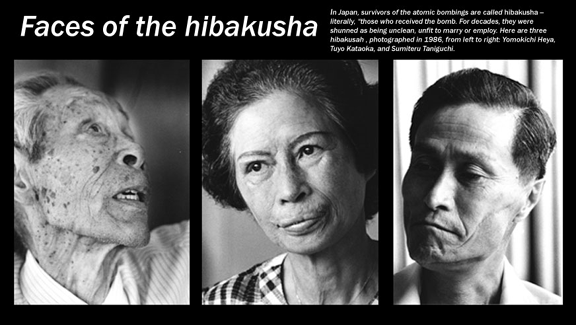
Hibakusha, atomic bombing survivors, have been tirelessly exerting themselves toward a world free of nuclear weapons, with their only wish that no one else should go through the sufferings they have experienced
The Bulletin, By Masako Toki | August 22, 2023
For too long, nuclear weapons narratives have been dominated by those who saw the mushroom cloud from afar or above. Or maybe just in photos, TV, or videos. Most absurdly, the voices of people who suffered the most under the mushroom cloud have often been marginalized.
There have been numerous efforts to raise awareness of the inhumane nature of nuclear weapons among hibakusha (atomic bomb survivors), people in Hiroshima and Nagasaki, and more broadly, in the international community. One of the most important milestones came when the 2010 Nuclear Nonproliferation Treaty (NPT) Review Conference adopted a final document that included, for the first time “the catastrophic humanitarian consequences of any use of nuclear weapons.” Since then, the humanitarian initiative for nuclear disarmament has been gaining momentum.
Three conferences on the humanitarian impact of nuclear weapons contributed to the start of the negotiation of the Treaty on the Prohibition of Nuclear Weapons (TPNW) and to adoption of the treaty. Through this process, a wide range of civil society members, along with like-minded governments, energized the humanitarian initiatives and tenaciously supported bringing humanitarian dimensions to nuclear weapons policy discussion.
The adoption of the TPNW has brought a glimmer of hope to nuclear disarmament advocates, although they are fully aware that this is a first step of the long process. Still, this is considered to be one of very few positive developments in recent nuclear disarmament efforts. The world is currently moving backward on nuclear disarmament. The Russian invasion of Ukraine has caused unspeakable human suffering and raised the risk of nuclear war. Today, nuclear threats are at the highest level since the end of the Cold War,
Hibakusha, atomic bombing survivors, have been tirelessly exerting themselves toward a world free of nuclear weapons, with their only wish that no one else should go through the sufferings they have experienced.
As the memories of Hiroshima and Nagasaki are further fading away every year given the advanced age of hibakusha, it is urgent for younger generations to learn more. Time is of the essence. Earlier this year, the average age of hibakusha reached 85.01 years, according to Japan’s Ministry of Health, Labor and Welfare. In addition, the number of hibakusha decreased by 5,286 to 113,649 this year. As the A-bomb survivors continue to age, the issue of how to pass on the message of the catastrophic impact of nuclear weapons to the next generation becomes increasingly pressing. Informing and educating the next generation is how we can ensure that nuclear weapons will never be used again, and eventually, achieve a world free of nuclear weapons.
The time to learn from hibakusha directly is limited and is getting shorter and shorter. The peace declaration this year read by Nagasaki Mayor Shiro Suzuki quoted Sumiteru Taniguchi, one of the late hibakushas who dedicated his life to nuclear disarmament. Taniguchi admonished that “[p]eople appear to be gradually forgetting the suffering of the past. This forgetfulness terrifies me. I fear that forgetfulness will lead to the acceptance of further atomic bombings.”
Keiko Ogura, a Hiroshima hibakusha and an English-Japanese interpreter for peace activities, shared her testimonials with world leaders in May this year at the G7 Hiroshima Summit. She asked the leaders to “relive the struggles in the hearts of hibakusha” that have been felt for so long, and to imagine the invisible wounds, traumas, sorrows, and unspeakable secrets through her eyes and heart. One of the most important abilities you need when you work for nuclear disarmament is to be able to empathize with other’s suffering. Ogura asked the G7 leaders to do precisely this. She also sent a message to Russian President Vladimir Putin through a reporter for one of her numerous interviews, saying, “You don’t know what a nuclear weapon is, the reality of a nuclear weapon. So come here and see.”
Earlier this summer, at a civil society event, Ogura calmly started her atomic bombing testimonial by encouraging the audience to imagine how it feels like to be under the mushroom cloud at the time of the bomb’s detonation. “I was at that time under the mushroom cloud you can see there,” while showing the picture of the mushroom cloud after the bomb was dropped.
Nothing is more powerful and effective than hibakusha testimonials in helping others to understand the horrific reality of the use of nuclear weapons. It is very important to imagine what really happened under the mushroom cloud. When you hear about the Hiroshima bombing or the Nagasaki bombing, the first image that comes to your mind may be the mushroom cloud. But we need to understand that people were under the mushroom cloud. Most of the victims were civilians, including small children.
Every year, the Hiroshima and Nagasaki remembrance days come. These are the days that we have to make efforts to remember and renew our resolve to work for nuclear disarmament. Soon, we will not be able to listen to hibakusha directly. As the hibakusha are aging in the middle of increasing nuclear risks, we cannot do business as usual every year, or think about nuclear disarmament only on these remembrance days……………………………………………………………….more https://thebulletin.org/2023/08/respect-for-hibakusha-and-hope-in-younger-generations/?utm_source=Facebook&utm_medium=SocialMedia&utm_campaign=FacebookPost082023&utm_content=NuclearRisk_HibakushaAndHope_08222023&fbclid=IwAR0hzzEqc_dLq2NN_fF9F4OQl0uI31cz7QW9BA5nL5TPKrLpASBAUt9dRDg
At Fukushima Daiichi, decommissioning the nuclear plant is far more challenging than water release.
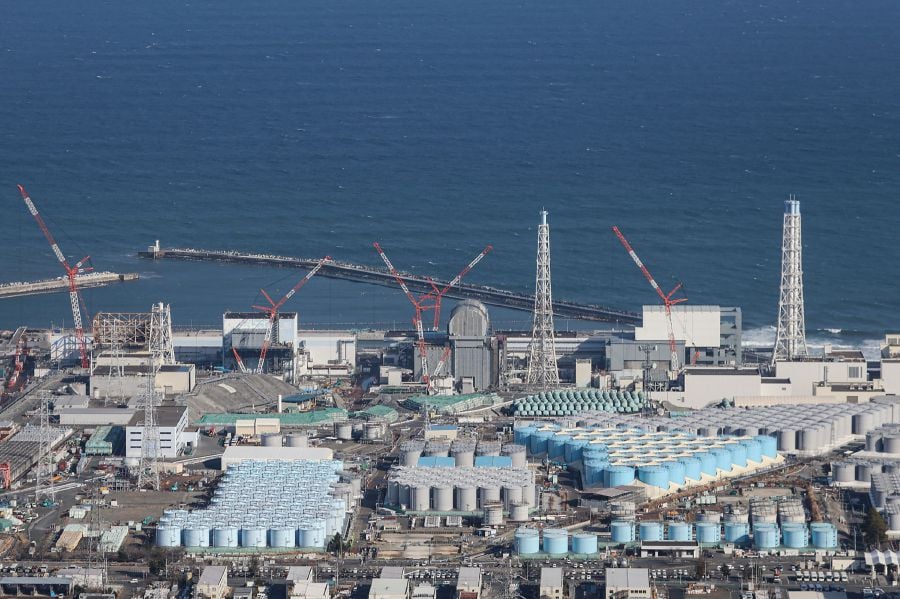
“technical difficulty involving the decommissioning is much higher” than the water release and involves higher risks of exposures by plant workers to remove spent fuel or melted fuel.
Some experts say it would be impossible to remove all the melted fuel debris by 2051 and would take 50-100 years, if achieved at all.
BY MARI YAMAGUCHI, August 27, 2023
FUTABA, Japan (AP) — For the wrecked Fukushima Daiichi nuclear plant, managing the ever-growing volume of radioactive wastewater held in more than 1,000 tanks has been a safety risk and a burden since the meltdown in March 2011. Its release marks a milestone for the decommissioning, which is expected to take decades.
But it’s just the beginning of the challenges ahead, such as the removal of the fatally radioactive melted fuel debris that remains in the three damaged reactors, a daunting task if ever accomplished.
Here’s a look at what’s going on with the plant’s decommissioning:
…………………………………………………… WILL THE WASTEWATER RELEASE PUSH DECOMMISSIONING FORWARD?
Not right away, because the water release is slow and the decommissioning is making little progress. TEPCO says it plans to release 31,200 tons of treated water by the end of March 2024, which would empty only 10 tanks out of 1,000 because of the continued production of wastewater at the plant.
The pace will later pick up, and about 1/3 of the tanks will be removed over the next 10 years, freeing up space for the plant’s decommissioning, said TEPCO executive Junichi Matsumoto, who is in charge of the treated water release. He says the water would be released gradually over the span of 30 years, but as long as the melted fuel stays in the reactors, it requires cooling water, which creates more wastewater.
Emptied tanks also need to be scrapped for storage. Highly radioactive sludge, a byproduct of filtering at the treatment machine, also is a concern.
WHAT CHALLENGES ARE AHEAD?
About 880 tons of fatally radioactive melted nuclear fuel remain inside the reactors. Robotic probes have provided some information but the status of the melted debris remains largely unknown.
Earlier this year, a remote-controlled underwater vehicle successfully collected a tiny sample from inside Unit 1’s reactor — only a spoonful of the melted fuel debris in the three reactors. That’s 10 times the amount of damaged fuel removed at the Three Mile Island cleanup following its 1979 partial core melt.
Trial removal of melted debris using a giant remote-controlled robotic arm will begin in Unit 2 later this year after a nearly two-year delay. Spent fuel removal from Unit 1 reactor’s cooling pool is set to start in 2027 after a 10-year delay. Once all the spent fuel is removed, the focus will turn in 2031 to taking melted debris out of the reactors. But debris removal methods for two other reactors have not been decided.
Matsumoto says “technical difficulty involving the decommissioning is much higher” than the water release and involves higher risks of exposures by plant workers to remove spent fuel or melted fuel.
“Measures to reduce radiation exposure risks by plant workers will be increasingly difficult,” Matsumoto said. “Reduction of exposure risks is the basis for achieving both Fukushima’s recovery and decommissioning.”
HOW BADLY WERE THE REACTORS DAMAGED?
Inside the worst-hit Unit 1, most of its reactor core melted and fell to the bottom of the primary containment chamber and possibly further into the concrete basement. A robotic probe sent inside the Unit 1 primary containment chamber found that its pedestal — the main supporting structure directly under its core — was extensively damaged.
Most of its thick concrete exterior was missing, exposing the internal steel reinforcement, and the nuclear regulators have requested TEPCO to make risk assessment.
CAN DECOMMISSIONING END BY 2051 AS PLANNED?
The government has stuck to its initial 30-to-40-year target for completing the decommissioning, without defining what that means.
An overly ambitious schedule could result in unnecessary radiation exposures for plant workers and excess environmental damage. Some experts say it would be impossible to remove all the melted fuel debris by 2051 and would take 50-100 years, if achieved at all.
‘Animals could become MUTATED’ from the 1.3 million tons of radioactive waste dumped from Japan’s nuclear power plant in the Pacific
Japan started dumping more than 1.3 million tons of radioactive water into
the Pacific Ocean Thursday – and an expert has warned it ‘has the potential
to cause mutations as seen in Chernobyl.
‘The wastewater is currently being
held in the nation’s Fukushima nuclear plant, which is set to be
decommissioned and must be cleaned to prevent accidental leaks. The
contaminated water has been filtered to remove isotopes, leaving only
tritium and carbon-14, which are radioactive isotopes of hydrogen and
carbon that cannot be easily removed from water.
Timothy Mousseau, a
researcher at the University of South Carolina, told DailyMai.com: Tritium
and carbon-14, along with the other radionuclides [that cause cancer] to be
released, all have the potential to cause mutations, cancers and
developmental deformities, as seen in Chernobyl.’
Daily Mail 24th Aug 2023
Fukushima waste-water decision disregards scientific evidence, violates the human rights of Pacific region communities

Japan announces date for Fukushima radioactive water release
Greenpeace International, 22 August 2023 https://www.greenpeace.org/international/press-release/61364/japan-announces-date-for-fukushima-radioactive-water-release/
Tokyo – Greenpeace Japan criticises the Japanese government’s announcement of the start date for radioactive water discharges from the Fukushima Daiichi nuclear station into the Pacific Ocean.
The decision disregards scientific evidence, violates the human rights of communities in Japan and the Pacific region, and is non-compliant with international maritime law. More importantly it ignores its people’s concerns, including fishermen. The Japanese government and Tokyo Electric Power Company (TEPCO) – the nuclear power plants’ operators – falsely assert that there is no alternative to the decision to discharge and that it is necessary to move towards final decommissioning. This further highlights the failure of the decommissioning plan for the nuclear plants destroyed in the 2011 earthquake, stating that tens of thousands of tons of contaminated water will continue to increase with no effective solution.
“We are deeply disappointed and outraged by the Japanese Government’s announcement to release water containing radioactive substances into the ocean. Despite concerns raised by fishermen, citizens, Fukushima residents, and the international community, especially in the Pacific region and neighboring countries, this decision has been made,” said Hisayo Takada, Project Manager at Greenpeace Japan.
The increasing volumes of and the pending release of the radioactive water demonstrate the failure of the decommissioning plan for the Fukushima Daiichi. The contaminated water will continue to accumulate for many years without effective measures to stop it. The Japanese Government and TEPCO falsely claim that discharge is the only viable option necessary for eventual decommissioning. Nuclear power generation, which experiences shutdowns due to accidents and natural disasters, and perpetually requires thermal power as a backup, cannot serve as a solution to global warming.
“The deliberate pollution of the Pacific Ocean through these radioactive waste discharges is a consequence of the 2011 nuclear disaster and Japan’s decades long nuclear power program. Instead of acknowledging the flaws in the current decommissioning plan, the ongoing nuclear crisis, and the massive amount of public funds required, the Japanese government intends to restart more nuclear reactors despite evidence of major earthquakes and safety risks. The current government energy plan fails to deliver secure and sustainable renewables such as wind and solar energy that the climate emergency demands,” said Takada.
As of 8 June 2023, there were 1,335,381 cubic meters of radioactive wastewater stored in tanks[1], but due to the failure of the ALPS (Advanced Liquid Processing System) processing technology, approximately 70% of this water will have to be processed again. Scientists have warned that the radiological risks from the discharges have not been fully assessed, and the biological impacts of tritium, carbon-14, strontium-90 and iodine-129, which will be released in the discharges, have been ignored.[2]
The International Atomic Energy Agency (IAEA) endorsed Japan’s plans for discharge. However, the IAEA has failed to investigate the operation of the ALPS, has completely ignored the highly radioactive fuel debris that melted down which continues every day to contaminate ground water – nearly 1000 cubic meters every ten days. Furthermore, the discharge plan has failed to conduct a comprehensive Environmental Impact Assessment, as required by its international legal obligations, given that there is a risk of significant transboundary harm to neighboring countries. The IAEA is not tasked with protecting the global marine environment but it should not encourage a state to violate it.
“The myth is being perpetuated that discharges are necessary for decommissioning. But the Japanese government itself admits that there is sufficient water storage space in Fukushima Daiichi.[3] Long-term storage would expose the current government decommissioning roadmap as flawed, but that is exactly what needs to happen. The Fukushima Daiichi nuclear station is still in crisis, posing unique and severe hazards, and there is no credible plan for its decommissioning,” emphasized Shaun Burnie, Senior Nuclear Specialist at Greenpeace East Asia.
Member states at the United Nations Human Rights Council in Geneva, as well as UN Special Rapporteurs, have opposed and criticized Japan’s discharge plans.[4] Japan’s discharge plans also disregard the groundbreaking Human Rights Council resolution 48/13, which in 2021 determined that it is a human right to have a clean, healthy and sustainable environment.[5] Furthermore, Japan has failed to comply with its legal obligations under the United Nations Convention for the Law of the Sea (UNCLOS), to protect the marine environment including its legal requirement to conduct a comprehensive Environmental Impact Assessment into the discharges into the Pacific Ocean, given the risk of significant transboundary harm to neighboring countries.[6]
“Instead of engaging in an honest debate about this reality, the Japanese government has opted for a false solution – decades of deliberate radioactive pollution of the marine environment – during a time when the world’s oceans are already facing immense stress and pressures. This is an outrage that violates the human rights of the people and communities of Fukushima, and other neighboring prefectures and the wider Asia-Pacific region,” said Burnie.
Fukushima Daiichi Nuclear Power Station is still continuing to release radioactive materials

A new argument for considering the issue of contaminated ALPS water release .
This brief examines the amount of radioactive material that has been
leaking from the Fukushima Daiichi Nuclear Power Station ever since the
meltdowns occurred more than 12 years ago.
It is huge. Both TEPCO and the
government are undoubtedly aware of this reality. Despite this, they are
now attempting to release even the radioactive materials they have been
able to manage in tanks to the outside world. While attention focuses on
this release, this brief attempts to highlight the even larger problems of
Fukushima Daiichi and the irresponsible way the authorities are dealing
with them.
CNIC 23rd Aug 2023
Fukushima: What are the concerns over waste water release?
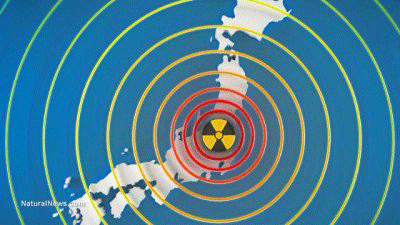
By Tessa Wong, Asia Digital Reporter, BBC News, 23 Aug 23,
Japan’s controversial plan to release treated waste water from the Fukushima nuclear plant into the Pacific Ocean has sparked anxiety and anger at home and abroad.
Since the 2011 tsunami which severely damaged the plant, more than a million tonnes of treated waste water has accumulated there. Japan has said it will start discharging it from 24 August.
Despite an endorsement from the UN nuclear watchdog, the International Atomic Energy Agency (IAEA), the plan has been deeply controversial in Japan with local communities expressing concerns about contamination.
Fishing industry groups in Japan and the wider region are also worried about their livelihoods, as they fear consumers will avoid buying seafood.
China has accused Japan of treating the ocean as its “private sewer”, and criticised the IAEA of being “one-sided”. While South Korea’s government has said it has no objections to the plan, many of its citizens are opposed to it.
So what is Japan’s plan and how exactly has it churned the waters?
What is Japan doing with the nuclear waste water?
Since the disaster, power plant company Tepco has been pumping in water to cool down the Fukushima nuclear reactors’ fuel rods. This means every day the plant produces contaminated water, which is stored in massive tanks.
More than 1,000 tanks have been filled, and Japan says that it needs the land occupied by the tanks to build new facilities to safely decommission the plant. It has also pointed out concerns that the tanks could collapse in a natural disaster.
Releasing treated waste water into the ocean is a routine practice for nuclear plants – though critics have pointed out that the amount from Fukushima is on an unprecedented, far vaster scale.
Tepco filters the Fukushima water through its Advanced Liquid Processing System (ALPS), which reduces most radioactive substances to acceptable safety standards, apart from tritium and carbon-14…………………………………………….
What do critics say?
Despite years of government assurances, the plan remains deeply controversial to the Japanese public. Only 53% said they support it, while 41% said they did not, in a survey conducted in August by the newspaper Asahi Shimbun.
UN-appointed human rights experts have opposed the plan, as have environmental activists. Greenpeace has released reports casting doubt on Tepco’s treatment process, alleging it does not go far enough in removing radioactive substances.
Critics say Japan should, for the time being, keep the treated water in the tanks. They argue this buys time to develop new processing technologies, and allow any remaining radioactivity to naturally reduce.
There are also some scientists who are uncomfortable with the plan. They say it requires more studies on how it would affect the ocean bed and marine life.
“We’ve seen an inadequate radiological, ecological impact assessment that makes us very concerned that Japan would not only be unable to detect what’s getting into the water, sediment and organisms, but if it does, there is no recourse to remove it… there’s no way to get the genie back in the bottle,” marine biologist Robert Richmond, a professor with the University of Hawaii, told the BBC’s Newsday programme.
Tatsujiro Suzuki, a nuclear engineering professor from Nagasaki University’s Research Center for Nuclear Weapons Abolition, told the BBC the plan would “not necessarily lead to serious pollution or readily harm the public – if everything goes well”.
But given that Tepco failed to prevent the 2011 disaster, he remains concerned about a potential accidental release of contaminated water, he said.
What have Japan’s neighbours said?
China has been the most vocal, accusing Japan of violating “international moral and legal obligations” and “putting its selfish interests above the long-term wellbeing of the entire humanity”.
It has also warned that Tokyo “must bear all consequences”, and has already banned seafood from Fukushima and surrounding prefectures…………….
n contrast to China, Seoul – which has been keen to build ties with Japan – has soft-pedalled its concerns. It says it “respects” the IAEA’s findings and has endorsed the plan.
But this approach has angered the South Korean public, 80% of whom are worried about the water release according to a recent poll.
“The government enforces a strong no-littering policy at sea… But now the government is not saying a word (to Japan) about the wastewater flowing into the ocean,” Park Hee-jun, a South Korean fisherman told BBC Korean………….
Thousands have attended protests in Seoul calling for government action, as some shoppers fearing food supply disruptions have stockpiled salt and other necessities.
In response, South Korea’s parliament passed a resolution in late June opposing the water release plan – though it is unclear what impact this would have on Japan’s decision. Officials are also launching “intense inspections” of seafood, and are sticking to an existing ban of Japanese seafood imports from regions around the Fukushima plant……………………………
the biggest vindication may lie with the IAEA report, released by the agency’s chief Rafael Grossi while visiting Japan in July.
The report, which came after a two year investigation, found that Tepco and Japanese authorities were meeting international safety standards on several aspects including facilities, inspections and enforcement, environmental monitoring, and radioactivity assessments.
Mr Grossi said the plan would have a “negligible radiological impact on people and the environment”.
Yet, Japan’s decision to start discharging the Fukushima water has set the stage for an intensified showdown with its critics.
Additional reporting by Yuna Ku and Chika Nakayama. https://www.bbc.com/news/world-asia-66106162
Japanese students urge end to nuclear weapons in 1st visit to U.N. Geneva in 4 years
Japan Today 23 Aug 23
A group of Japanese high school students called for the abolition of nuclear weapons on Tuesday as they visited the U.N. office in Geneva as peace messengers for the first time in four years after the COVID-19 pandemic halted any trips.
The 22 female students from 16 prefectures, aged 15 to 18, submitted some 625,000 signatures that they had collected since 2020 to push for the abolition of nuclear weapons and attended the U.N. conference on disarmament, dedicated to a discussion on the elimination of nuclear weapons.
The members are selected each year to convey the messages of the two Japanese cities of Hiroshima and Nagasaki, which were devastated by U.S. atomic bombs in the final days of World War II.
“The peace maintained by the presence of nuclear weapons is not sustainable,” said Koharu Osawa, a 16-year-old student from Nagasaki during a meeting with Carolyne-Melanie Regimbal, chief of service of the U.N. Office for Disarmament Affairs’ Geneva Office.
Noting that “Nuclear weapons continue to be tremendous risks to our society,” Regimbal said that “Japan has a long-standing commitment to peace, disarmament but also youth leadership,” adding, “The U.N. remains determined to find solutions” with the peace messenger initiative………………………………….
The Peace Messenger initiative dates back to 1998, when India and Pakistan conducted nuclear tests, and since then more than 2,620,000 signatures have been collected and delivered to the United Nations https://japantoday.com/category/national/japan-students-urge-end-to-nukes-in-1st-visit-to-u.n.-geneva-in-4-yrs
The Fukushima nuclear plant will start releasing treated wastewater. Here’s what you need to know.
The Canadian Press, Mari Yamaguchi, The Associated Press 23 Aug 23,
TOKYO (AP) — Japanese officials plan to start discharging treated radioactive wastewater from the damaged Fukushima Daiichi nuclear power plant into the Pacific Ocean on Thursday, a contentious step more than 12 years after a massive earthquake and tsunami set off a battle against ever-increasing amounts of radioactive water at the plant.
The government and plant operator say the release is an unavoidable part of its decommissioning and will be safely carried out, but the plan faces opposition in and outside Japan. Here is a look at the controversy.
WHY IS THERE SO MUCH WASTEWATER?
The March 2011 earthquake and tsunami destroyed the plant’s cooling systems, causing three reactors to melt. Highly contaminated cooling water applied to the damaged reactors has leaked continuously to building basements and mixed with groundwater.
The plant operator, Tokyo Electric Power Company Holdings (TEPCO), has taken steps to limit the amount of groundwater and rainwater entering the reactor area, and has reduced the increase in contaminated water to about 100 tons a day, 1/5 of the initial amount. The water is collected and partly recycled as cooling water after treatment, with the rest stored in around 1,000 tanks, which are already filled to 98% of their 1.37 million-ton capacity.
WHY IS TEPCO RELEASING THE WATER NOW?
The government and TEPCO say they need to make room for the plant’s decommissioning and prevent accidental leaks from the tanks.
Japan has obtained support from the International Atomic Energy Agency to improve the transparency and credibility of the release and ensure it meets international safety standards. The government has also stepped up a campaign promoting the plan’s safety at home and through diplomatic channels.
WHAT’S IN THE TREATED WATER’?
The water is being treated by what’s called an Advanced Liquid Processing System, which can reduce the amounts of more than 60 selected radionuclides to government-set releasable levels, except for tritium, which officials say is safe for humans if consumed in small amounts.
About 70% of the water held in the tanks still contains cesium, strontium, carbon-14 and other radionuclides exceeding government-set levels. It will be retreated until the concentrations meet those limits, then diluted by more than 100 times its volume of seawater before it is released. That will bring it way below international safety limits, but its radioactivity won’t be zero.
HOW SAFE IS IT?
IAEA concluded in a report that the plan, if conducted as designed, will have negligible impact on the environment and human health. IAEA chief Rafael Grossi visited the plant and said he was satisfied with preparations.
Japan’s government says the release of tritium into the sea is a routine practice by nuclear plants around the world and that the amount will be several times lower than from plants in China and South Korea.
Scientists generally support the IAEA’s conclusion, while some call for more attention to dozens of low-dose radionuclides that remain in the water, saying data on their long-term effects on the environment and marine life are insufficient.
HOW WILL IT BE RELEASED?
TEPCO executive Junichi Matsumoto says the release will begin with the least radioactive water to ensure safety. After samples are analyzed in final testing, the water will be transported through a thin black pipe to a coastal area where it will be diluted with hundreds of times its volume of seawater.
The diluted water will enter an undersea tunnel and be released a few minutes later from a point 1 kilometer (0.6 mile) off the coast. The release will be gradual and will continue for decades until the decommissioning of the plant is finished, TEPCO officials say. Matsumoto said the slow release will further reduce the environmental impact.
Final preparation for the release began Tuesday when just 1 ton of water was sent for dilution with 1,200 tons of seawater, and the mixture was to be kept in the primary pool for two days for final sampling to ensure safety, Matsumoto said. A batch of 460 tons will be sent to the mixing pool Thursday for the actual discharge.
The company plans to release 31,200 tons of treated water by the end of March 2024, which would empty only 10 tanks because of the continued production of wastewater at the plant. The pace will later pick up.
WHY ARE PEOPLE WORRIED?
Fukushima’s badly hit fisheries, tourism and economy are still recovering from the disaster. Fisheries groups worry about a further damage to the reputation of their seafood. Fukushima’s current catch is only about one-fifth its pre-disaster level due to a decline in the fishing population and smaller catch sizes.
The head of the National Federation of Fisheries Cooperatives, Masanobu Sakamoto, said on Monday that “scientific safety and the sense of safety are different.”
Groups in South Korea and China have also raised concerns, turning the release into a political and diplomatic issue. China has stepped up radiation testing of fishery and agricultural products from Fukushima and nine other prefectures, halting exports at customs for weeks, Fisheries Agency officials say.
WHAT IF SOMETHING GOES WRONG?
The Japanese government says potential risks from the release of treated water are limited to reputational damage resulting from rumors, rather than scientific study. It has allocated 80 billion yen ($550 million) to support fisheries and seafood processing and combat potential reputation damage. TEPCO has also promised to deal with reputational damage claims.
More nuclear challenges await Japan after Fukushima water release
By Kiyoshi Takenaka, TOKYO, Aug 24 (Reuters) https://www.reuters.com/world/asia-pacific/more-nuclear-challenges-await-japan-after-fukushima-water-release-2023-08-24/ Twelve years after the Fukushima nuclear disaster, Japan has started to release treated radioactive water into the sea, a key step in the process of decommissioning the stricken plant, but much tougher tasks lie ahead, such as molten fuel removal.
Here are the challenges facing the government and plant operator Tokyo Electric Power Co (Tepco) (9501.T) as they try to draw a line by the middle of the century under the world’s worst nuclear accident since Chornobyl.
MOLTEN FUEL REMOVAL
Tepco has described the effort to remove highly radioactive fuel debris from reactor cores as an “unprecedented and difficult challenge never attempted anywhere in the world”.
Trial-based retrieval at the No.2 reactor, the first at the plant to go through such a step, has been delayed twice from an initially scheduled date of 2021, and is now set for a six-month period starting in October.
At Three Mile Island (TMI), the U.S. nuclear plant in Pennsylvania that partly melted down in 1979 after a failure, fuel debris was kept under water during retrieval work, providing a shield against radiation.
That was the worst nuclear plant accident before the 1986 Chornobyl tragedy in Ukraine, then part of the Soviet Union.
Japan and Tepco plan to remove molten fuel while it is exposed to air because it is difficult to fill the badly damaged reactor cores with water.
But that will also make it hard to protect workers and retrieval gear from strong radiation.
The Fukushima plant suffered triple meltdowns, compared to the single fuel core meltdown at Three Mile Island, which means the debris retrieval operation will be much larger and more complicated this time around.
The retrieval will be done by a remotely controlled, 22-metre-long (72-foot) robot arm. The initial stage aims to extract only a few grammes of fuel debris, although the total molten fuel at the plant is estimated to be 880 metric tonnes.
RADIOACTIVE SOIL
The 2011 accident spewed radiation into the air, which eventually contaminated the soil. Part of that tainted soil is stored at an interim site more than four times as big as New York’s Central Park.
But the law requires the soil stored at the interim site, located next to the tsunami-wrecked power plant, to be moved out of Fukushima within 30 years from when it began operating in 2015.
More than a quarter of that interval has elapsed with no clear sign the government is nearer to securing permanent storage, though the environment ministry says the earliest the search for specific locations will start is 2025.
BALLOONING COSTS
In 2016, the government doubled to 21.5 trillion yen ($148.60 billion) its estimate of the costs of responding to the Fukushima disaster, including compensation, decommissioning and decontamination efforts.
About 12.1 trillion yen had been spent on such activities by March 2022, Japan’s audit panel, which reviews government expenditures, has said.
That represents an expenditure of more than half of the government’s estimate, even before really tough tasks such as fuel debris retrieval have begun, in turns raising concerns about cost overruns.
Tepco’s continuing payouts to the victims hits its bottom line.
In 2019, a private think tank, the Japan Center for Economic Research, said compensation, decommissioning and decontamination costs were expected to reach 41 trillion yen in a scenario in which Fukushima water was diluted and discharged into the sea.
($1 = 144.6800 yen)
Japan’s nuclear wastewater – should we be worried?
August 22, 2023 https://www.nst.com.my/opinion/leaders/2023/08/945792/nst-leader-japans-nuclear-wastewater
FUKUSHIMA is a dreaded word in the region because what happens there doesn’t stay there. There in Japan on March 11, 2011, an earthquake and tsunami, in that order, knocked out the Fukushima Daiichi nuclear-power plant, releasing untreated radioactive water into the sea.
Given the state of the nuclear plant technology then — or even now — there wasn’t the time for the radioactive elements to self-destruct. The human mind, including the Japanese ones, for some reason didn’t perceive that calamities can happen all at once.
The Fukushima disaster is such a tale of instantaneous conjunction of calamities. On a visit to the disaster zone on Sunday, Japanese Prime Minister Fumio Kishida was quoted by news agency AFP as saying that he was refraining from “commenting on a concrete timing of the release into the ocean at this point in time”, leaving ample room for a prime ministerial hint that it will be soon.
Some 500 Olympic-size swimming pools of wastewater, accumulated over 12 years after the disaster, are expected to be released into the Pacific Ocean. The fact that it would be a slow release over 10 years registered no effect in the region’s dread meter.
The region is on dread-watch, but much of it is coated with diplomatic niceties. China has been the most vociferous in opposing the release of the wastewater into the ocean. In China, dread comes mixed with geopolitical anger, given that Tokyo is a tango partner of Washington.
If a taste of Chinese animus is needed, here is one quote from a Beijing official, gleefully circulated by the Western media: Japan is treating the sea as its sewer. An interesting take, we must say, now that all nations without exception are treating the seas as their sewer.
How many marine lives were destroyed or how many people have ingested radioactive materials through seafood after the accident 12 years ago is hard to tell. Nuclear literature tells us if the water isn’t treated properly, dangerous isotopes can have devastating effects, including DNA-damaging ones. Should we fear? Yes and no. Start with yes.
The Tokyo Electric Power Company (Tepco), the operator of the crippled nuclear plant, and Japanese regulators stand accused of negligence, notwithstanding the earthquake and tsunami. Now that Tepco and the government are saying the 1.34 million tonnes of wastewater planned to be released into the Pacific Ocean is safe, many in Japan don’t believe them. Both are victims of trust deficit.
Kishida, though he wasn’t prime minister when disaster struck in 2011, is in need of reputation management advice. Not just to repair the trust deficit at home, but also abroad.
China has banned seafood from Fukushima and considering a wider ban. Others in the region are beginning to be infected by China’s isotope fear, not because of Beijing’s geopolitics, but because of the nightmarish outcome of radioactive contamination. If the dread grows, it will cripple more than Fukushima.
Now for the no, our second response to Japan’s release of the treated wastewater into the ocean. The world shouldn’t fear because the Japanese guarantee that the dangerous radioactive elements have been filtered out and comes stamped with the approval of the United Nations’ International Atomic Energy Agency
Unless, of course, if the world has reasons to believe that the IAEA, too, comes branded with a trust deficit.
1 This Month
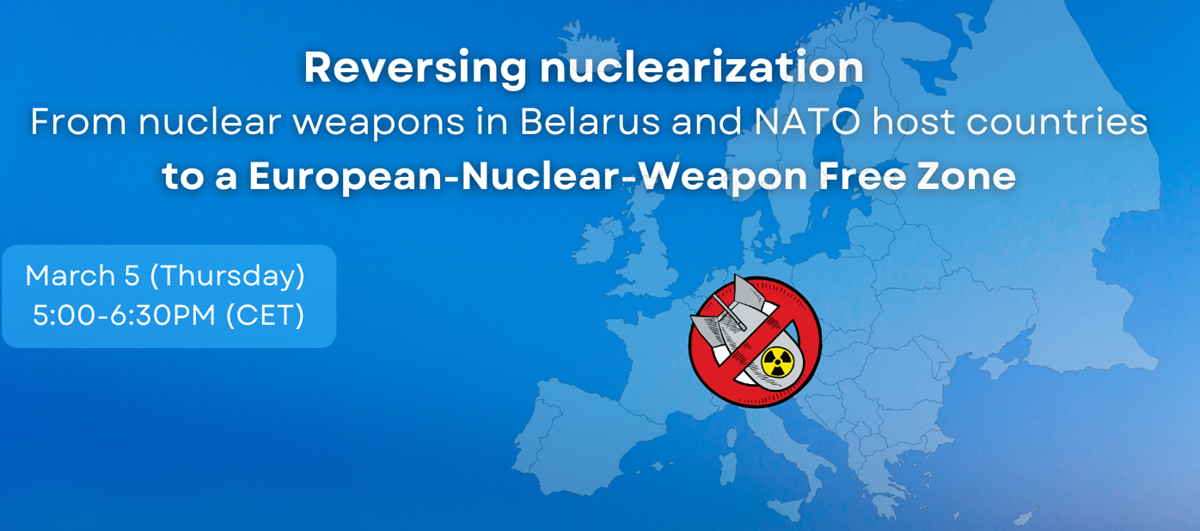
5 March -Online – Reversing nuclearization:
From nuclear weapons in Belarus and NATO host countries to a European-Nuclear-Weapon Free Zone
11am-12:30pm Eastern Time USA / 5pm-6:30pm CET

of the week – Advocating for a
nuclear free beach – https://www.samuellawrencefoundation.org/
The Samuel Lawrence Foundation advocates for a Nuclear Waste Free Beach at San Onofre, join us and take action!

10 March A LIVE WEBINAR THE REAL EFFECTS OF NUCLEAR POWER
What the Industry Isn’t Telling Us
1:00 PM Mountain, 2 pm Central, 3 pm Eastern. Live on the Keepers of the Water Facebook page

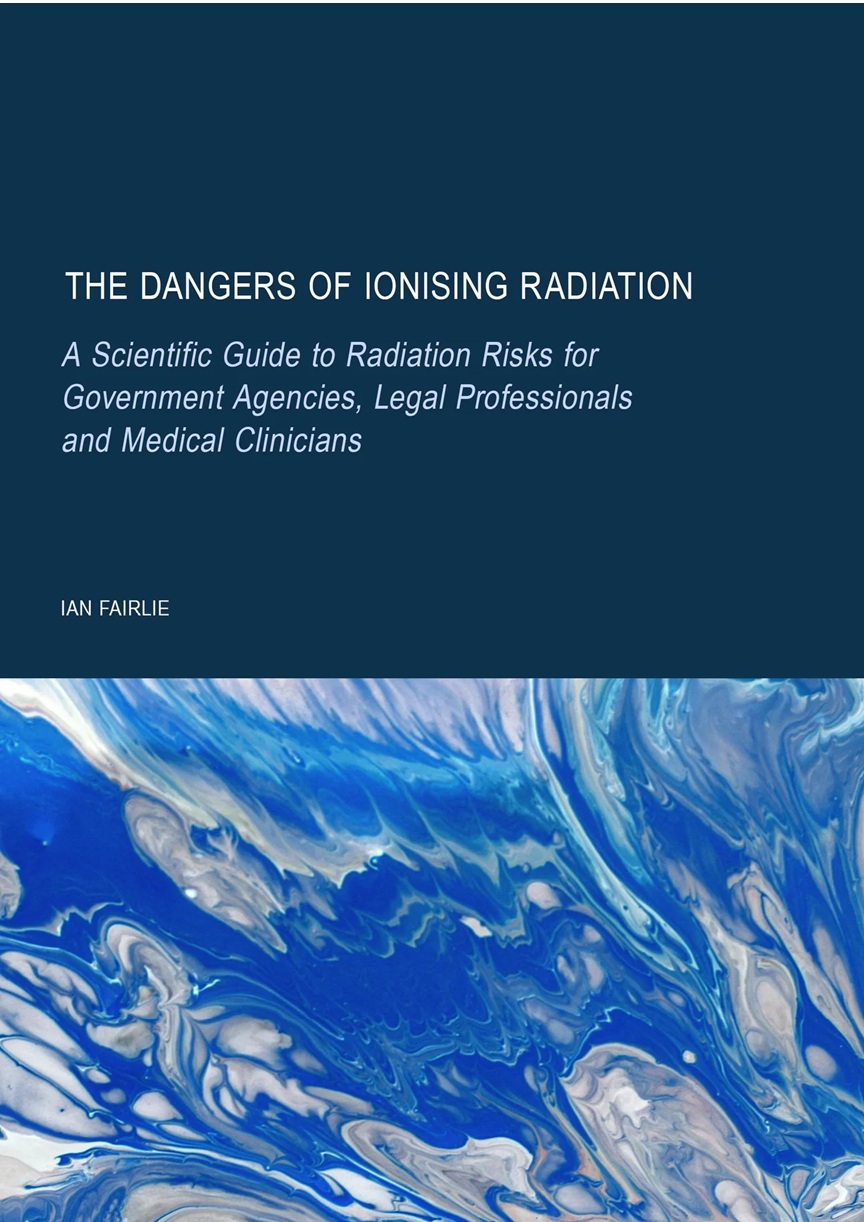
18 March Webinar @ 1 PM EST: An Assessment of SMR Projects: The Case of Canada
register for the zoom:
https://us02web.zoom.us/webinar/register/WN_o8BIIOUvQ2ONJR1nta65DQ#/registration

of the week – STOP SMALL MODULAR REACTORS IN CANADA
To see nuclear-related stories in greater depth and intensity – go to https://nuclearinformation.wordpress.com
-
Archives
- March 2026 (51)
- February 2026 (268)
- January 2026 (308)
- December 2025 (358)
- November 2025 (359)
- October 2025 (376)
- September 2025 (258)
- August 2025 (319)
- July 2025 (230)
- June 2025 (348)
- May 2025 (261)
- April 2025 (305)
-
Categories
- 1
- 1 NUCLEAR ISSUES
- business and costs
- climate change
- culture and arts
- ENERGY
- environment
- health
- history
- indigenous issues
- Legal
- marketing of nuclear
- media
- opposition to nuclear
- PERSONAL STORIES
- politics
- politics international
- Religion and ethics
- safety
- secrets,lies and civil liberties
- spinbuster
- technology
- Uranium
- wastes
- weapons and war
- Women
- 2 WORLD
- ACTION
- AFRICA
- Atrocities
- AUSTRALIA
- Christina's notes
- Christina's themes
- culture and arts
- Events
- Fuk 2022
- Fuk 2023
- Fukushima 2017
- Fukushima 2018
- fukushima 2019
- Fukushima 2020
- Fukushima 2021
- general
- global warming
- Humour (God we need it)
- Nuclear
- RARE EARTHS
- Reference
- resources – print
- Resources -audiovicual
- Weekly Newsletter
- World
- World Nuclear
- YouTube
-
RSS
Entries RSS
Comments RSS
 nuclear-news