Japan’s Hokuriku Elec reports oil leak from Shika nuclear plant
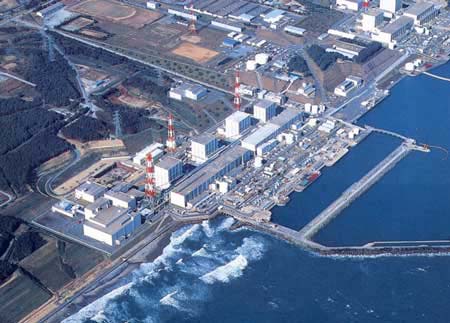
The magnitude 7.6 quake, which has killed more than 120 people in the Hokuriku region, shook the idled Shika power station, which is located around 65 kilometres (40 miles) from the quake’s epicentre.
The utility had already reported temporary power outages, oil leaks at the transformers, and water spill-over from spent nuclear fuel pools following Monday’s jolt, but no radiation leakage.
On Sunday, a small amount of oil film was detected in the gutter and on the road surrounding the main transformer of the No. 2 reactor, it said.
Additionally, an oil slick measuring about 5 meters by 10 meters was observed floating on the sea surface in front of the power station, Hokuriku Electric said, adding it promptly treated the oil film using a neutralizing agent.
The utility believes the oil slick resulted from a transformer insulating oil leak during the Jan. 1 quake, which triggered the fire extinguishing system, dispersing oil and spraying water around the transformer.
Subsequently, the oil appears to have entered the gutter due to rainfall, the company said, adding it was still analysing further details.
The oil slick is not within the radiation-controlled area and there are no external radiation effects, the company said.
Key external power supplies, monitoring facilities, and cooling systems at the plant are functioning normally, it added. (Reporting by Yuka Obayashi Editing by Mark Potter)
Japan earthquake casts cloud over push to restart nuclear plants

January 5, 2024
TOKYO, Jan 4 (Reuters) – The powerful earthquake that hit Japan’s western coast on New Year’s Day has underscored the country’s exposure to natural disasters, casting fresh doubt over a push to bring its nuclear capacity back online.
Nuclear power plants dot the coast of mountainous Japan, which is prone to earthquakes and tsunamis due to its location on the seismically active “Ring of Fire” around the Pacific Ocean.
Monday’s magnitude 7.6 earthquake, which has killed more than 80 people in the Hokuriku region, destroyed infrastructure and left homes without power, struck days after regulators lifted an operational ban on Tokyo Electric’s (9501.T) Kashiwazaki-Kariwa nuclear power plant.
Tepco hopes to gain local permission to restart the plant, which is around 120 kilometres from the quake’s epicentre and has been offline since 2012. The utility was banned in 2021 from operating the plant due to safety breaches including a failure to protect nuclear materials.
“The Japanese public is still generally less positive toward nuclear power now than they were before the Fukushima disaster,” analysts at Rystad Energy wrote in a client note.
“As a result, public sentiment – and potentially government policy – is likely to be sensitive to any new power-plant disruptions caused by the most recent quake or any future ones.”
Japan had planned to phase out nuclear power after the March 2011 tsunami and Fukushima meltdown, but rising energy prices and repeated power crunches have prompted a shift towards restarting idled capacity and developing next-generation reactors.
After the Jan. 1 quake Tepco reported water had spilled from nuclear fuel pools at the Kashiwazaki-Kariwa plant – the world’s largest – but said radiation levels were normal.
“Citizens had felt that Tepco could probably be able to restart reactors by the end of 2024, but this earthquake seems to have reignited a sense of fear,” said Yukihiko Hoshino, a Kashiwazaki city assembly member opposing the plant restart.
Monday’s tsunami warning reminded him of the Fukushima disaster, he said.
Tepco shares fell as much as 8% on Thursday, the first trading day since the earthquake, before closing up 2.2%.
Hokuriku Electric (9505.T), whose idled Shika plant is located around 65 kilometres from the earthquake’s epicentre, slid as much as 8% before paring losses to end down 2.2%.
The company, which reported water spill-over from spent nuclear fuel pools and oil leaks at the plant after the quake, hopes to restart the No.2 reactor there sometime after April 2026, it said in October………………………………… Reporting by Kantaro Komiya, Sudarshan Varadhan, Mariko Katsumura and Sam Nussey; Editing by Hugh Lawson
Rokkasho redux: Japan’s never-ending nuclear reprocessing saga

By Tatsujiro Suzuki | December 26, 2023, https://thebulletin.org/2023/12/rokkasho-redux-japans-never-ending-reprocessing-saga/
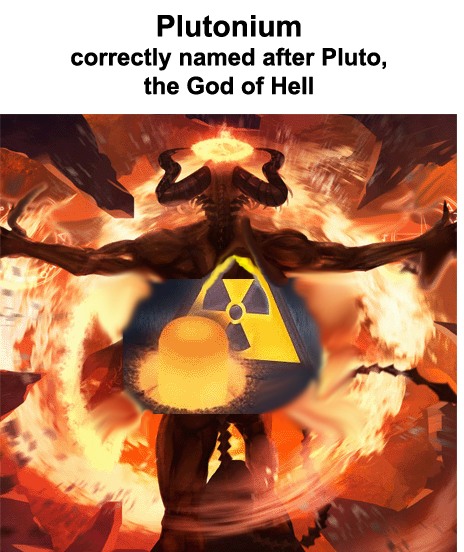
The policy seeks to at least begin to deal with the huge stocks of plutonium Japan has amassed
According to a recent Reuters report, Japan Nuclear Fuel Ltd (JNFL) still hopes to finish construction of Japan’s long-delayed Rokkasho reprocessing plant in the first half of the 2024 fiscal year (i.e. during April-September 2024). The plant—which would reprocess spent nuclear fuel from existing power plants, separating plutonium for use as reactor fuel—is already more than 25 years behind schedule, and there are reasons to believe that this new announcement is just another wishful plan that will end with another postponement.
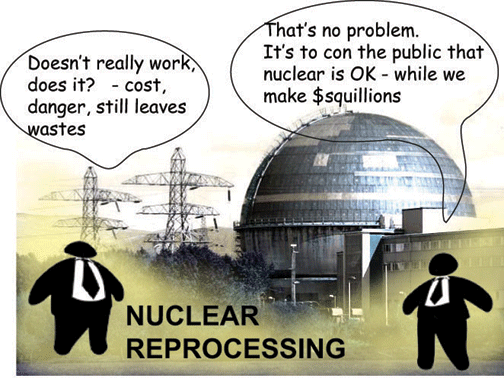
One indication of further possible delays: On September 28, 2023, Naohiro Masuda, president of JNFL, stated that the safety review of the reprocessing plant by Japan’s Nuclear Regulation Authority will be difficult to complete by the end of 2023. He nevertheless insisted that the company could still meet completion target date in 2024.
Here is a partial history of past key developments that make completion in 2024 seem unlikely:
1993: Construction starts.
1997: Initial target for completion.
2006-2008: Hot tests conducted, revealing technical problems with the vitrification process for dealing with waste produced during reprocessing.
2011: Fukushima Dai-ichi nuclear plant accident.
2012: New safety regulation standards introduced.
2022: Completion target date postponed to June 2024)
The 2022 postponement was the 26th of the Rokkasho project.
Why so many postponements? There seem to be at least five underlying reasons for the postponements for the Rokkasho plant. First, JNFL lacks relevant expertise to manage such a technologically complex and hazardous project, which is owned by nine nuclear utilities plus all other major companies associated with nuclear power in Japan. Most of the firm’s senior executives are from shareholding companies (especially utility companies) and are not necessarily experts in the field of reprocessing spent nuclear fuel.
Second, the technologies in the plant came from different companies and institutions. The management of the project is therefore technically complex.
Third, the post-Fukushima-accident nuclear facility safety licensing review process is much more stringent than what existed before the accident. For example, the Nuclear Regulation Authority told JNFL at their November 25, 2023 meeting: “JNFL should immediately make improvements because it is clear that JNFL does not understand the contents of the permit well enough to confirm the adequacy of the design of the facilities on site and has not visited the site.”
Fourth, the financial costs to JNFL of postponement are covered by the utilities’ customers, because the utilities must pay a “reprocessing fee” every year, based on the spent fuel generated during that year, whether or not the reprocessing plant operates. The system by which the Nuclear Reprocessing Organization of Japan decides the reprocessing fee is not transparent.
Fifth, the project lacks independent oversight. Even though JNFL’s estimate of the cost of building and operating the Rokkasho plant has increased several-fold, no independent analysis has been done by a third party. One reason is that some of the shareholders are themselves contractors working on the plant and have no incentive to scrutinize the reasons for the cost increases or the indefinite extension of the construction project.
After so many postponements, there is reason to wonder whether the plant will ever operate, but the government and utilities continue to insist that the plant will open soon. Even if Rokkasho were to operate, it may suffer from the same kinds of problems that marked Britain’s light-water reactor spent fuel reprocessing experience, as described in Endless Trouble: Britain’s Thermal Oxide Reprocessing Plant (THORP).
Why does Japan’s commitment to reprocessing continue?
Despite the serious and longstanding problems the Rokkasho plant has faced (and continues to face), Japanese regulators and nuclear operators have doggedly pursued the project. There are four reasons:
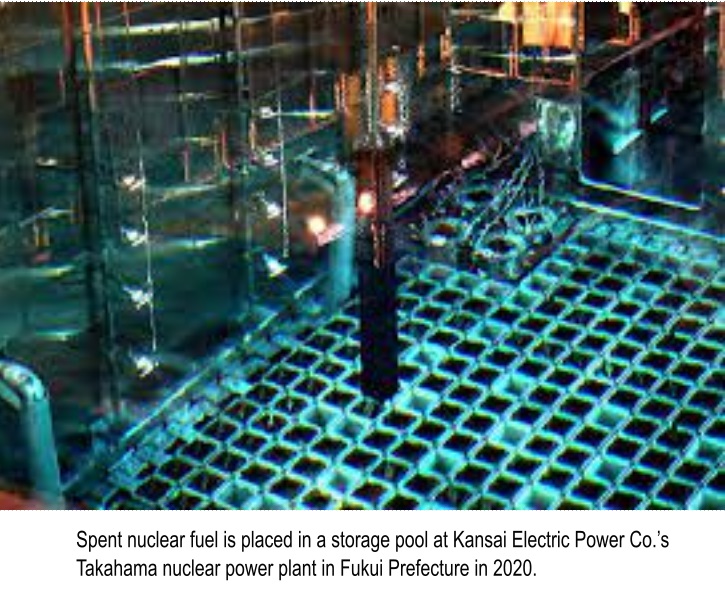
Spent fuel management. Currently, most of Japan’s spent nuclear fuel is stored in nuclear power plant cooling pools. But the pool capacities are limited, and the 3,000-ton-capacity Rokkasho spent fuel pool is also almost full. The nuclear utilities must therefore start operating the Rokkasho plant unless they can create additional spent fuel storage capacity, either on- or off-site. The Mutsu spent fuel storage facility is a candidate for additional capacity, but due to the concern that spent fuel could stay there forever, Mutsu city refuses to accept spent fuel unless the Rokkasho reprocessing plant begins to operate. The Rokkasho plant design capacity is 800 tons of spent fuel per year.
Legal and institutional commitments. Under Japan’s nuclear regulations, utilities must specify a “final disposal method” for spent fuel. The law on regulation of nuclear materials and nuclear reactors states that “when applying for reactor licensing, operators must specify the final disposal method of spent fuel” (Article 23.2.8). In addition, there was a clause that “disposal method” should be consistent with implementation of the government policy, which specified reprocessing as the disposal method. Although that clause was deleted in the 2012 revision of the law after the Fukushima accident, the Law on Final Disposal of High-Level Radioactive Waste still bans direct disposal of spent fuel. In addition, the 2016 Law on Reprocessing Fees legally requires utilities to submit reprocessing fees for all spent fuel generated every year since they stated in their applications that “final disposal method” for their spent fuel would be reprocessing.
Commitments to hosting communities. The nuclear utilities committed—albeit tacitly—to the communities hosting nuclear power plants that they would remove the spent fuel to reprocessing plants, since that was the national policy. Separately, JNFL signed an agreement with Rokkasho village and Aomori prefecture that says that if the Rokkasho reprocessing plant faces “severe difficulties,” other measures will be considered—including the return of spent fuel stored at Rokkasho to the nuclear power plants.
Local governments hosting nuclear power plants were not involved in this deal, however. They could therefore just refuse to receive spent fuel from Aomori.
In fact, after the Fukushima accident, when the government was considering amending the nuclear fuel cycle policy to include a “direct disposal option” for spent fuel in a deep underground repository, the Rokkasho village parliament (at the behind the scenes suggestion by the then JNFL president, Yoshihiko Kawai), issued a strong statement asking for “maintenance of the current nuclear fuel cycle policy.”
The statement continued that, if Japan’s fuel cycle policy changed, Rokkasho would: refuse to accept further waste from the reprocessing of Japan’s spent fuel in the UK and France; require the removal of reprocessing waste and spent fuel stored in Rokkasho; no longer accept spent fuel; and seek compensation for the damages caused by the change of the policy.
Institutional and bureaucratic inertia. In Japan, bureaucrats rotate to new positions every two or three years and are reluctant to take the risk of changing existing policies. They therefore tend to stick with past commitments. Institutional inertia becomes stronger as a project becomes bigger. The Rokkasho reprocessing project is one of the largest projects ever in Japan. Changing the project is therefore very difficult.
Will Japan’s new plutonium capping policy have any real impact? In 2018, Japan’s Atomic Energy Commission announced a new policy on “Basic Principles on Utilization of Plutonium” (see also this post). Under the new policy, the commission proposed that Japan would reduce its stockpile of separated plutonium, starting with a commitment not to increase it, and that reprocessing would take place only when a credible plan to use the separated plutonium existed.
The policy seeks to at least begin to deal with the huge stocks of plutonium Japan has amassed, both in European separation facilities (some 36.7 tons) and in Japan (10.5 tons), in anticipation of using the plutonium widely to fuel nuclear reactors—which so far has not materialized. In conjunction with the new Reprocessing Fee Law, the new plutonium policy gives the government legal authority to control the pace of reprocessing.
But it is not clear how the “capping policy” will be implemented. It is not a legally binding document, and no regulation has been introduced to control reprocessing. Utilities must submit specific plans for plutonium use to the Atomic Energy Commission for its review before reprocessing of their fuel begins. But the commission can only give advice to the government about the credibility of these plans, giving rise to questions about whether the policy will lead to sustained changes in reprocessing activity. A similar “paper rule” on plutonium has existed since 2003.
A way out. Japan could extricate itself from its reprocessing and plutonium problems in several ways. All involve significant changes in policy that would:
Find additional spent fuel storage capacity, on- or off-site. Local communities may be more willing to accept on-site dry cask storage of spent fuel if they are told that it is safer than spent fuel pool storage. For example, Saga Prefecture and Genkai-town, which host Kyushu Electric’s Genkai Nuclear Power Plant, have agreed to host dry cask storage starting in 2027. Host communities may want guarantees that spent fuel will be removed after a specified storage period. Such a guarantee could be given by the central government.
Amend the law on final disposal of high-level radioactive waste. An amendment could allow direct disposal of spent nuclear fuel in a deep underground repository. This would provide more flexibility in spent fuel management and make it easier for communities to host interim spent fuel storage.
Amend the Reprocessing Fee Law and shut down Rokkasho. An amendment to the law on reprocessing fees could allow the government to use reprocessing funds to implement a shutdown of the Rokkasho reprocessing plant. Such a plan could include payment of the debt JNFL has incurred while pursuing the Rokkasho project and funds for dry cask interim storage. This would enable the government to finally end the problem-plagued Rokkasho reprocessing plant project.
TODAY. The subtle ways that the nuclear lobby manipulates corporate media. Example KISHA CLUBS OF JAPAN
Media in other countries are controlled in a similar way, but Japan has the longest and most successful story of corporate media’s obedience to the pro nuclear dogma that prevails across the world.
Paul Richards 5 Jan 24
Starting with, the source: KISHA CLUBS OF JAPAN
Japan’s Press Club System, known as “kisha clubs,” is a unique arrangement that fosters close relationships between journalists and the institutions they cover. This system is prevalent in government offices, ministries, major corporations, and other influential entities.
1] STRUCTURE OF PRESS CLUBS
Exclusive Access:
Journalists from major media outlets join these clubs, gaining exclusive access to news briefings, announcements, and events hosted by specific institutions. Each institution typically has its own press club.
Regular Briefings:
Officials provide information to journalists within these clubs, fostering a symbiotic relationship. In return for access, journalists are expected to adhere to certain unwritten rules, which can include not reporting certain sensitive topics or leaks without permission.
2] HIERCAHICAL EFFECT
Access to Information:
Press club members receive information directly from sources, creating an information hierarchy where those outside the clubs might lack timely or direct access to crucial news.
Influence and Reporting Bias:
The system can create a situation where reporters develop close ties with the sources they cover. This might lead to a reluctance to publish critical or controversial information that could jeopardise their access or relationships. As a result, it can challenge the ability of the press to hold political power accountable.
3] CHALLENGING POLITICAL POWER
Limited Critical Reporting:
While the press club system provides access, it can also limit critical reporting. Journalists might self-censor to maintain access or avoid upsetting their sources, which can indirectly challenge the media’s ability to scrutinise political power thoroughly.
Alternative Media and Challenges:
Independent or smaller media outlets not part of these press clubs might face difficulties accessing information. However, these outlets sometimes challenge the established narrative and provide alternative perspectives, albeit with limited resources and access to official sources.
While the Press Club System provides journalists with unique access to information and sources, it also poses challenges to independent and critical reporting.
The hierarchical nature of information distribution in Japan within these clubs can lead to a cosy relationship between the press and political power, impacting the media’s ability to fully challenge or scrutinise those in authority.
There have been many concerns raised about the Japanese government’s ruling parties, and pressure on media outlets indirectly, such as withholding access to information or using informal means to influence coverage.
This might affect the independence and objectivity of reporting, though direct censorship is not a prevalent practice.
Overall, Japan maintains, it has a reputation for press freedom compared to many other countries.
However, concerns persist about self-censorship, indirect influences, and the limitations of the press club system that can impact the diversity and depth of news coverage.
The nature of political control over the press in Japan tends to be more subtle and indirect rather than overt and explicit.
Japan earthquake raises concerns over restarting country’s nuclear plants
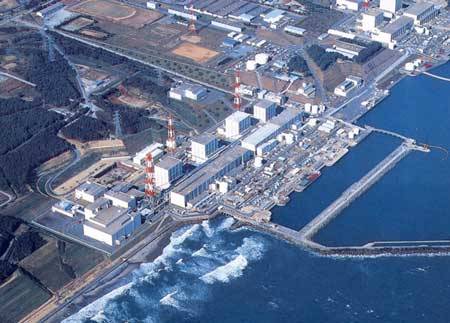
The earthquake struck days after Japan’s regulators lifted a two-year operational ban on a power plant run by Tokyo Electric Power Company (Tepco), which operated the wrecked Fukushima nuclear plant.
Ashima Sharma, January 5, 2024, https://www.power-technology.com/news/japan-earthquake-raises-concerns-over-restarting-countrys-nuclear-plants/?cf-view
The 7.6 magnitude earthquake that hit Japan’s western coast on 1 January has raised concerns over the push to bring the country’s nuclear capacity online.
The earthquake struck just days after the country’s regulators lifted a two-year operational ban on Tepco’s Kashiwazaki-Kariwa nuclear power plant.
Tepco’s plant is located around 120km from the earthquake’s epicentre but has been offline since 2012. Tepco was also the operator of the wrecked Fukushima nuclear plant and in 2021 was banned from transporting new uranium fuel to its Kashiwazaki-Kariwa nuclear plant.
The move was to prevent Tepco from restarting the facility’s seven nuclear reactors, ten years after two of its reactors incurred a triple meltdown at Fukushima.
Following the quake, Tepco reported water spillage from two nuclear fuel pools of the No. 7 and No. 2 reactors at the Kashiwazaki-Kariwa nuclear power plant.
The company ascertained that about 14 litres of water containing radioactive materials spilled from the pools, although it said the radiation levels were normal.
The Shika nuclear power plant, operated by another company, Hokuriku Electric, and located 65km from the epicentre, also reported spillage from spent nuclear fuel pools and oil leaks.
After the Fukushima nuclear disaster in March 2011, there was a strong public and political sentiment to phase out nuclear plants in the country. However, over the years, severe power crunches coupled with rising energy prices have pushed Japan towards restarting idle reactors.
In 2023, Japan’s Kansai Electric Power restarted its 12th nuclear reactor at the Takahama plant. The 826MW Takahama No. 2 was the country’s second-oldest operating reactor, having entered service in 1975.
We care about Japan’s disaster situation and are concerned about nuclear safety:
By Global Times, Jan 03, 2024
As of Tuesday evening, the 7.6-magnitude strong earthquake that occurred in Japan has caused at least 57 deaths, multiple casualties, building collapses, widespread power outages, and fires. The latest development is a collision between a Japan Airlines plane and a Japan Coast Guard aircraft at Tokyo’s Haneda Airport during landing, resulting in at least five deaths among the six crew members of the latter. The Japan Coast Guard aircraft was originally scheduled to transport relief supplies to the earthquake-stricken area in Ishikawa Prefecture. It was preparing for takeoff on the runway when the incident occurred. It’s not difficult to imagine the various chaos that this major earthquake has brought to Japan.
This is the strongest earthquake in Japan since the “3.11” earthquake in 2011. The Japan Meteorological Agency stated on Tuesday that since January 1 local time, there have been 155 earthquakes in Japan, including two strong earthquakes of over magnitude 6. It is uncertain whether there will be continuous aftershocks or even larger earthquakes. Despite Japan’s rich experience in dealing with disasters such as earthquakes and tsunamis, human society remains vulnerable in the face of unexpected natural disasters.
Meanwhile, we also notice that in this earthquake, there is some important information that may not have received enough attention. For example, Tokyo Electric Power Company (TEPCO) announced on the evening of January 1 that the water from the fuel pools at the top floors of the No. 7 and No. 2 reactors at the Kashiwazaki-Kariwa nuclear power plant in Niigata Prefecture spilled over due to strong earthquakes. These waters contain radioactive materials, and the radiation levels are currently being measured. In addition, there was a situation at the Shika Nuclear Power Station in Ishikawa Prefecture where some water had sloshed from a cooling pool for spent fuel rods. Regarding the issues at these two nuclear power stations, the Japanese authorities have promptly concluded that they are “currently safe,” stating that “no damage or leaks were confirmed” and that the fuel cooling at the Shika Nuclear Power Station was “unaffected.”
We certainly hope that this accurately reflects the current situation regarding the nuclear power plants. The information has garnered significant attention from netizens, leading to doubts about whether Japan will experience another catastrophic nuclear accident similar to the Fukushima incident following an earthquake. One reason for this concern is that Japan is one of the countries with the highest concentration of nuclear power plants in the world, coupled with its limited land area. Once a serious nuclear disaster occurs, Japan can hardly cope with it independently. The Fukushima nuclear accident serves as a painful reminder.
More importantly, the Japanese government and TEPCO have a bad track record of mishandling nuclear accidents. To some extent, they have lost credibility. Furthermore, Japan’s stubborn and irresponsible actions regarding the dumping of nuclear-contaminated water from Fukushima have caused great concerns among the Japanese people
Japan needs to take these legitimate concerns seriously. Although the epicenter of this earthquake was in the Noto Peninsula in Ishikawa Prefecture, its impact was widespread, ranging from Hokkaido to Kyushu. The coastal areas of northern Japan, where numerous nuclear facilities and power plants are located, have been affected to varying degrees. The Kashiwazaki-Kariwa nuclear power station, which has witnessed problems, is one of the largest in the world.
It is crucial to assess the condition of these nuclear facilities and the radiation levels in the surrounding sea. Does Japan have a comprehensive monitoring plan in place? Are other nuclear power plants along the coast in a safe state? How does Japan ensure transparency in information disclosure? These issues are directly related to the well-being of the Japanese people and the surrounding countries, and they require a serious response from Japan in the process of dealing with this earthquake………………. https://www.globaltimes.cn/page/202401/1304687.shtml
Operational Ban Lifted on Major Japan Nuclear Plant
by Sydney Leimbach | Jan 3, 2024
Japan’s nuclear power regulator has lifted its operational ban on Tokyo Electric Power’s (Tepco) Kashiwazaki-Kariwa nuclear plant, the largest nuclear site in the world, after shutting it down about three years ago due to safety concerns.
The plant, which reportedly has a capacity of 8.2 gigawatts, was the only operable atomic power station in the country when it was shut down. It had previously been offline since the 2011 Fukushima disaster caused all nuclear power plants in the country to cease operations.
Tepco was barred from operating the Kashiwazaki-Kariwa plant in 2021 after the Nuclear Regulation Authority reportedly found safety breaches such as failing to protect nuclear materials and finding an unauthorized staff member accessing sensitive areas of the plant.
Last week, Japan’s Nuclear Regulation Authority found that counterterrorism and safety measures had since been improved at the plant after conducting inspections. Before the plant may come back online, however, consent must be achieved from local governments in Niigata, Kashiwazaki city, and Kariwa village, where the plant is located.
“The government will seek the understanding and cooperation of Niigata prefecture and local communities, emphasizing ‘safety-first’,” said Yoshimasa Hayashi, the government’s top spokesperson, in a Reuters report.
The company has compiled a report on the causes of the infractions that led to its ban and how improvements have been made since. Shares in Tepco dramatically increased when the Nuclear Regulation Authority indicated that the ban would be lifted, especially as the country works to revitalize its nuclear power profile, https://www.environmentenergyleader.com/2024/01/operational-ban-lifted-on-major-japan-nuclear-plant/
 | |||
| |||
Following earthquake, Japan’s nuclear reactors escaped serious problems – THIS TIME.
Japan’s nuclear power plants largely undamaged following quake
BY ERIC JOHNSTON, STAFF WRITER, Japan Times, 2 Jan 24
Japan’s nuclear power plants along the Sea of Japan coast escaped serious damage in the New Year’s Day earthquake that struck the Noto Peninsula in Ishikawa Prefecture.
But the 7.6 magnitude quake, which triggered tsunami warnings from Hokkaido to Kyushu and led to evacuations in nine prefectures, could once again spark public concern about the safety of nuclear power in an earthquake-prone country at a time when Prime Minister Fumio Kishida plans to ramp up its usage as part of his “green transformation” policy.
In Ishikawa Prefecture, Hokuriku Electric Power’s Shika nuclear plant saw its electricity system partially disabled following the quake, but no major abnormalities have been reported. The plant’s No. 1 and No. 2 reactors were offline prior to the quake.
The Nuclear Regulation Authority (NRA) reported that Shika plant workers heard what sounded like an explosion, and then smelled something burning near a transformer that received electricity for use in the No. 2 reactor. Staff checking the area discovered the fire extinguishing system had been activated.
No fire was detected but the reactor’s electricity supply was partially disabled. Hokuriku officials believe pressure inside the transformer increased due to the tremor. This triggered a device to release the pressure, causing a loud noise and activation of the fire extinguishing system rather than an actual fire.
Electric power for equipment critical for the plant’s safety was secured through other systems, and cooling pools where spent nuclear fuel is stored continued to operate. Hokuriku Electric officials said Monday they were assessing the damage but that there was no change in the readings of the plant’s monitoring posts, and that no external radiation had been detected. However, of the 101 radiation monitoring posts in the plant’s vicinity, 13 are no longer operational. As of Tuesday, the cause was still unknown.
At Tokyo Electric Power Company Holdings’ Kashiwazaki Kariwa Nuclear Power Station in Niigata Prefecture, home to seven nuclear reactors — all of which were offline before the quake — plant officials confirmed Monday that water from a spent fuel pool spilled over due to the earthquake, but that no abnormalities in operation had been detected………………………………………………..
While the nuclear power plants avoided damage, the New Year’s Day quake and tsunami warnings brought back memories of the devastating Great East Japan Earthquake and triple meltdowns at the Fukushima No. 1 power plant, and could revive doubts about the nuclear industry — especially at a time when the government has plans to use more reactors, many located on the Sea of Japan coast, that have been offline since the quake on March 11, 2011.
Last February, the Kishida Cabinet approved its green transformation policy, which would extend the lifespan of nuclear reactors beyond 60 years and replace those that get scrapped. It was a major reversal of the policies that went into place following the 2011 disaster.
Currently, 12 nuclear power plants have been officially restarted since 2011, while five have received permission to restart and are undergoing final preparations to do so. Another 10 reactors are still undergoing inspections for a possible restart. Nine reactors have not applied for restart, and 24, including 10 Tepco reactors in Fukushima Prefecture, are being decommissioned.
Systems to supply power to nuclear plant in Ishikawa partially unusable
NHK News, Tuesday, Jan. 2, 2024
The operator of the Shika nuclear power plant in quake-hit Ishikawa Prefecture says systems to supply electricity to the facility from outside sources remain partially unusable.
But the utility says electricity continues to be supplied to the plant through other means and that sources of power for important safety equipment are secure.
Hokuriku Electric Power Company held a news conference on Tuesday, one day after a magnitude 7.6 earthquake struck the prefecture.
Both of the No.1 and No.2 reactors at the plant, which are located in the town of Shika, had been taken offline long before the earthquake…………………………..
Hokuriku Electric officials said the pipes of two transformers used for the two reactors to receive electricity from outside have been damaged due to the earthquake, with oil for insulation and cooling leaking out.
The officials said the oil leakage amounts to 3,600 liters at the No.1 reactor and 3,500 liters at the No.2 reactor. They said systems using the two transformers remain unable to receive electricity.
They also said both reactors are receiving electricity from other means, adding that emergency diesel generators have enough fuel to last seven days.
The officials say there are no problems with the systems for cooling spent nuclear fuel. more https://www3.nhk.or.jp/nhkworld/en/news/20240102_33/
Japan Earthquake: Water Levels Rose At Shika Nuclear Plant After Monday’s Tsunami, Says Report

Earlier, it was said that there was no significant change in water levels while monitoring the gauge at Shika nuclear plant.
The water levels rose at Japan nuclear plant— Shika after Monday’s tsunami.
The broadcaster NHK quoting the operator of the nuclear power plant in quake-hit Ishikawa Prefecture said water levels rose by about three meters at the site following tsunami triggered by the magnitude 7.6 earthquake in central Japan.
The plant is located in the prefecture’s Noto region, the report mentioned.
A major tsunami warning was temporarily issued for the area following the quake, which struck around 4:10 p.m. on Monday, the report mentioned.
It also stated the waves later reached multiple locations along the Sea of Japan coast.
Staff at Hokuriku Electric Power Company checked a water level gauge near a seawater intake. They found out the level had been three meters higher than usual between 5:45 p.m. and 6 p.m. on Monday,” it said.
Earlier, it was said that there was no significant change in water levels while monitoring the gauge at the plant.
It was also said a four-meter high seawall installed to protect the No.1 reactor was tilting by several centimeters when its workers took a second look at the plant premises, the report mentioned.
The report mentioned some systems at the plant are not functioning after pipes of transformers used to supply outside electricity to the reactors sustained damage in the earthquake. The rupture led to oil leaks, it said.
The operator says the plant is using other means to supply power to critical equipment, the report said.
The report said the recovery work started on Tuesday and is proceeding quickly. That work includes retrieving the leaked oil, it said.
Both the No.1 and No.2 reactors at the plant were taken offline long before the earthquake, the report said.
Radioactive water spills over after quakes hit Japan
By JIANG XUEQING in Tokyo | China Daily 3 Jan 24
Radioactive water from the fuel pools of two reactors at the Kashiwazaki-Kariwa Nuclear Power Plant in Japan’s Niigata prefecture spilled over after a magnitude 7.6 earthquake and multiple aftershocks rocked the country on New Year’s Day.
However, Tokyo Electric Power Company, which owns and operates the plant, said the reactors were offline before the quake hit and no abnormalities in operation had been detected……………………………………………………………………………………………
TEPCO said that about 10 liters of water containing radioactive materials spilled from the fuel pool of the No 2 reactor and about 4 liters from the fuel pool of the No 7 reactor at around 6:45 pm on Monday.
After the 2011 earthquake triggered a triple meltdown at the Fukushima Daiichi plant, Japan introduced a maximum operating life of 60 years for its nuclear reactors. However, the limit was scrapped in May as the nation shifted its policy to promote nuclear energy, aiming for an early restart of nuclear power plants, The Yomiuri Shimbun reported. https://www.chinadaily.com.cn/a/202401/03/WS65949a3ba3105f21a507a34e.html
Prolonged impact of the Fukushima Nuclear Power Plant Accident on health and society
3rd January 2024, https://www.openaccessgovernment.org/article/prolonged-impact-of-the-fukushima-nuclear-power-plant-accident-on-health-and-society/171684/
Naomi Ito, Research Assistant at the Fukushima Medical University, tells us how the 2011 Fukushima Daiichi Nuclear Power Plant Accident impacted and continues to impact local residents
The health effects on local residents following a nuclear power plant accident are diverse, not only because of radiation exposure but also because of changes in lifestyle and social environment. It has also been indicated that various environmental changes that could emerge during the restoration process may affect residents in various ways over a long time.
What is the Fukushima Daiichi Nuclear Power Plant Accident?
On March 11, 2011, the Great East Japan Earthquake struck Japan with a magnitude of 9.0. Within an hour, a tsunami hit the shore. Three reactors at the Fukushima Daiichi Nuclear Power Plant (FDNPP, operated by Tokyo Electric Power Company) lost power. The reactors could not be cooled, and core meltdowns occurred, which resulted in an explosion due to hydrogen being generated at high temperatures. As a result, radioactive materials were released and scattered northwest from the power plant.
The Japanese Government declared a nuclear emergency and ordered residents within a 30km radius of the reactor to evacuate. In the Fukushima prefecture, more than 160,000 residents were forced to evacuate immediately due to the earthquake, tsunami, and explosion at the Daiichi Nuclear Power Plant. Subsequently, the evacuation order was gradually lifted. While some residents have returned under the national repatriation policy, many others have decided to continue living in the places they evacuated to.
Health Indicators Worsening
It has been reported that in areas where evacuation orders were issued after the nuclear power plant accident, the number of residents who are overweight has increased. Health indicators such as BMI, high blood pressure, and hyperglycaemia have generally deteriorated. Living in an evacuation site involves major changes in the social environment, which worsens various health parameters. At the same time, there was also an extremely high level of depression among residents who continued to evacuate and a sharp increase in the number of people using nursing care. Various health measures have been taken to address these problems.
What is happening in the area after the evacuation order was lifted has been a concern. The evacuation order for most of Katsurao Village, which initially had one thousand four hundred people, was lifted in 2016 (Figure 1). Seven years have passed since then, but the number of people who have returned to the village has yet to reach 30%, and the aging rate of those who have returned to the village is nearly 60%.
Urgent Long-Term Care Issues
Evacuated residents who remain outside the village are more likely to fall under the category of frailty regarding motor function than those who have returned. Early preventive intervention for residents would be important in the event of a disaster where long-term evacuations are expected (Figure 2).
Intention to Return and Health Issues
The number of residents in the village has remained constant at around four hundred for the past few years, and it is unlikely that many more will return. We found that there are a certain number of people who want to go back but are not able to do so. By interviewing them, we learned that they are staying at their evacuation destinations since they need medical treatments and/or nursing care or they started receiving new services there. We believe that intention to return and health issues are closely related. Enhancement of clinics and visiting services in the village, and improved access to medical institutions, are essential for rebuilding the lives of returning residents. (1)
Dual Life After Disaster
After the evacuation order was lifted, a fairly large number of people kept houses in their evacuation destination and the original one in the village, moving back and forth. Unlike natural disasters such as typhoons and tsunamis, this ‘double-base living (or dual life?)’ is considered a unique phenomenon of nuclear disasters, where the original houses remain intact. Still, there is a fear of invisible radiation. Above all, the prolonged evacuation has drastically changed people’s lives. The challenge would be how to respond to the health needs of people living new lifestyles. (2)
References
- Ito, N.; Moriyama, N.; Furuyama, A.; Saito, H.; Sawano, T.; Amir, I.; Sato, M.; Kobashi, Y.; Zhao, T.; Yamamoto, C.; et al. Why Do They Not Come Home? Three Cases of Fukushima Nuclear Accident Evacuees. International journal of environmental research and public health 2023, 20.
- Ito, N.; Amir, I.; Saito, H.; Moriyama, N.; Furuyama, A.; Singh, P.; Montesino, S.; Yamamoto, C.; Sato, M.; Abe, T.; et al. Multisite Lifestyle for Older People after the Fukushima Nuclear Disaster. Geriatrics (Basel, Switzerland) 2023, 8.
In Quake-Scarred Japan, 2011 Fukushima Disaster Still Looms Large
As another major quake struck Japan, the country was still reckoning with the nuclear crisis triggered by the 8.9-magnitude earthquake and a tsunami of 13 years ago.
By Emma Bubola, Jan. 1, 2024, https://www.nytimes.com/2024/01/01/world/asia/japan-fukushima-quake-tsunami.html
As Japan assesses the damage from Monday’s major earthquake, it is still reckoning with the devastating nuclear crisis triggered by an quake nearly 13 years ago, one that placed the name of Fukushima on par with Chernobyl’s and traumatized the nation.
In March 2011, an 8.9-magnitude earthquake and a tsunami devastated the northeast coast of Japan and knocked out cooling systems at three of the Fukushima Daiichi nuclear plant’s reactors, causing a triple meltdown that spewed radioactive fallout over large swaths of land around it.
The quake and tsunami killed more than 19,000 people, and the nuclear calamity, one of history’s worst, raised alarms around the world. Tens of thousands of people were evacuated from towns and farming villages around the plant, and a decade later some still had not returned.
The cleanup of the area around the Fukushima plant is still in an early phase. The government said the treated radioactive wastewater that was used to cool nuclear fuel rods would likely be released over a period of 30 years.
Last summer, the government announced that it would start releasing the treated water into the ocean. The International Atomic Energy Agency declared that the government’s plan had met the agency’s safety standards, but it still raised objections from some scientists, anxiety among fishermen who feared it would hurt their business, and tensions with the Chinese and South Korean governments.
All of Japan’s nuclear reactors were shut after the 2011 crisis, and much of its nuclear power program remains shuttered.
How Japanese earthquake has chilling echoes of 2011 tsunami disaster that killed at least 20,000 and caused nuclear meltdown
Daily Mail, By PERKIN AMALARAJ, 2 January 2024
Japan earthquake LIVE: Four countries now on tsunami ALERT
A devastating earthquake hit central Japan today with a preliminary magnitude of 7.6, prompting mass evacuations – in what will have been a chilling reminder for the country of its tsunami disaster in 2011.
A total of 21 quakes above 4.0 magnitude rang out shortly after 4pm local time (7am UK time) today, and videos shared on social media and broadcast on Japanese TV showed how buildings collapsed in Suzu, a city close to the epicentre of the largest quake, with huge cracks appearing in roads.
Other clips showed terrified shoppers thrown to the ground in department stores and flooding at a train station after water pipes burst, as tsunami waves began lashing the coastlines.
For many, it will have been a painful reminder of when tragedy struck on March 11, 2011…………………………………………………………………………………….
The ensuing meltdown of three of the Fukushima Daiichi nuclear plant’s reactors blanketed nearby areas with radiation, rendering some towns uninhabitable for years and displacing tens of thousands of residents.
Seawater flooded electrical grids in the area, and took out many of the power plant’s backup generators.
This meant there was no energy to cool down the reactors, leading to a catastrophic meltdown.
Heat built up, and hydrogen gas was generated, accumulating in the upper part of the refuelling hall.
Upon ignition, the roof of the refuelling hall exploded, spreading radioactive material everywhere.
Everyone within a 12 mile radius was evacuated, and the tens of thousands of people who left fearing radiation are still displaced. Around two percent of Fukushima remains off-limits.
Most of Japan’s nuclear reactors are still offline, and government plans to revitalise the sector are controversial………………….. https://www.dailymail.co.uk/news/article-12916139/How-Japanese-earthquake-chilling-echoes-2011-tsunami-disaster-killed-20-000-caused-nuclear-meltdown.html
“Forbidden news” Water Containing Radioactive Materials Spills Over atKashiwazaki-Kariwa nuclear power plant.
When you go to these news sites - you get “Forbidden”
Water from the fuel pools at the top floors of the No. 7 and No. 2 reactors at the Kashiwazaki-Kariwa nuclear power plant in Niigata Prefecture spilled over due to strong earthquakes, Tokyo Electric Power Company Holdings, Inc. announced Monday. No damage or leakage out of the buildings was confirmed.
No further details on damage to people or the environment were immediately available
1 This Month



26 September – International Day for the Total Elimination of Nuclear Weapons


PLEASE OPPOSE HR 8255 AND S.3639 – bills would accelerate satellite deployment, with no environmental review or safeguards – https://ncstd5li.quorum.us/campaign/169331/
To see nuclear-related stories in greater depth and intensity – go to https://nuclearinformation.wordpress.com
-
Archives
- September 2026 (219)
- August 2026 (330)
- July 2026 (355)
- June 2026 (287)
- May 2026 (306)
- April 2026 (356)
- March 2026 (251)
- February 2026 (267)
- January 2026 (308)
- December 2025 (358)
- November 2025 (359)
- October 2025 (375)
-
Categories
- 1
- 1 NUCLEAR ISSUES
- business and costs
- climate change
- culture and arts
- ENERGY
- environment
- health
- history
- indigenous issues
- Legal
- marketing of nuclear
- media
- opposition to nuclear
- PERSONAL STORIES
- politics
- politics international
- Religion and ethics
- safety
- secrets,lies and civil liberties
- spinbuster
- technology
- Uranium
- wastes
- weapons and war
- Women
- 2 WORLD
- ACTION
- AFRICA
- Atrocities
- AUSTRALIA
- Christina's notes
- Christina's themes
- culture and arts
- Events
- Fuk 2022
- Fuk 2023
- Fukushima 2017
- Fukushima 2018
- fukushima 2019
- Fukushima 2020
- Fukushima 2021
- general
- global warming
- Humour (God we need it)
- Nuclear
- RARE EARTHS
- Reference
- resources – print
- Resources -audiovicual
- Weekly Newsletter
- World
- World Nuclear
- YouTube
-
RSS
Entries RSS
Comments RSS
 nuclear-news