TEPCO planning to send probe into Fukushima nuke reactor
By TOMOYUKI SUZUKI/ Staff Writer, March 4, 2026 ,
https://www.asahi.com/ajw/articles/16341286
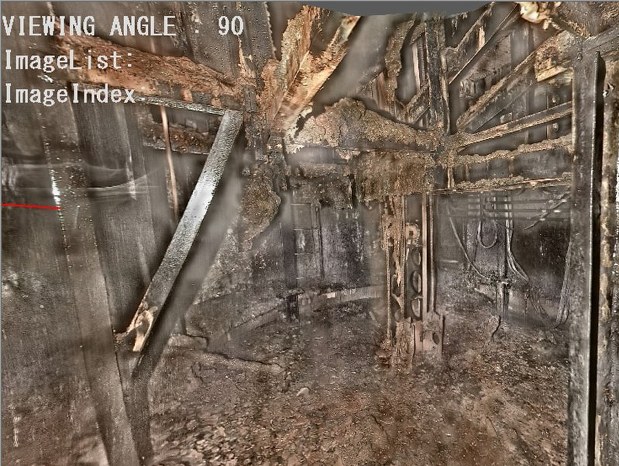
Tokyo Electric Power Co. will soon launch a probe, the first of its kind, into the pressure vessel at one of the hobbled reactors at its Fukushima No. 1 nuclear power plant to scope out the current conditions.
The effort is part of TEPCO’s long-standing goal of retrieving melted nuclear fuel debris, left in the aftermath of the triple reactor meltdowns following the 2011 Great East Japan Earthquake and tsunami.
TEPCO officials said they are planning to insert a camera-equipped fiberscope into the plant’s No. 2 reactor to shoot footage and measure radiation levels during the first half of fiscal 2026 between April and September.
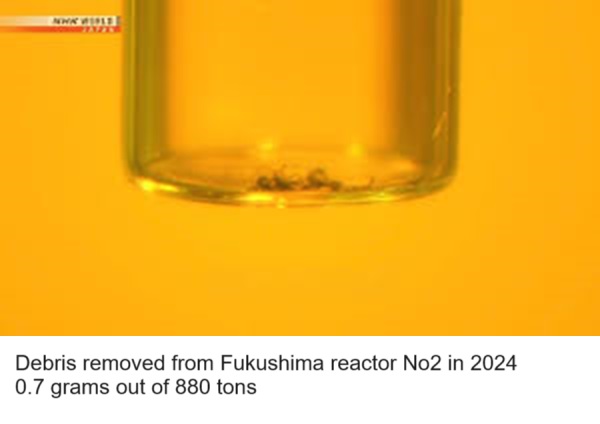
An estimated 880 tons of fuel debris remain inside the No. 1, 2 and 3 reactors at the Fukushima No. 1 plant.
TEPCO plans to approach the contaminated debris, which remains in the pressure vessels, from the tops of the reactor buildings and pulverize the debris to reduce the volume and collect it by sucking it from the side or by other means.
TEPCO officials are hoping, during the planned probe, to monitor the interior of the pressure vessel visually and ascertain the radiation levels on a location-by-location basis to help work out concrete methods for retrieving the fuel debris.
The fiberscope to be used in the probe, which resembles an endoscope, will be inserted into the pressure vessel from the side through piping.
The officials said they will be probing not the core part of the vessel but the outer side of a shroud of stainless steel, which has been installed to surround nuclear fuel, to determine, among other things, if the shroud has been deformed and if there is any debris in sight.
They said they will conduct mock-up drills in the days and months to come. They added that they will take measures to block air from leaking from the pressure vessel’s interior so workers will not be exposed to radiation.
The probe was initially scheduled to begin in fiscal 2024, but the work has been delayed because the development of a dosimeter-equipped fiberscope and other processes have turned out to be more time-consuming than expected.
“When the distribution of dose levels is known, that could, depending on the circumstances, help give an estimate of the amount of residual fuel (which has yet to turn into debris),” said Akira Ono, president of TEPCO’s Fukushima Daiichi Decontamination & Decommissioning Engineering Co., which is overseeing the corresponding processes at the Fukushima No. 1 nuclear plant.
TEPCO plans to start large-scale retrieval of the Fukushima No. 1 plant’s debris at its No. 3 reactor in fiscal 2037 or later.
The dose levels and circumstances of the areas surrounding the reactor buildings are not the same for the No. 1, 2 and 3 reactors.
TEPCO officials said they have set a target date of 2027 for studying the design of debris removal equipment and other specifics for those reactors.
2222222
TEPCO removing empty tanks to advance Fukushima plant decommissioning work
February 28, 2026 (Mainichi Japan) https://mainichi.jp/english/articles/20260228/p2g/00m/0na/010000c
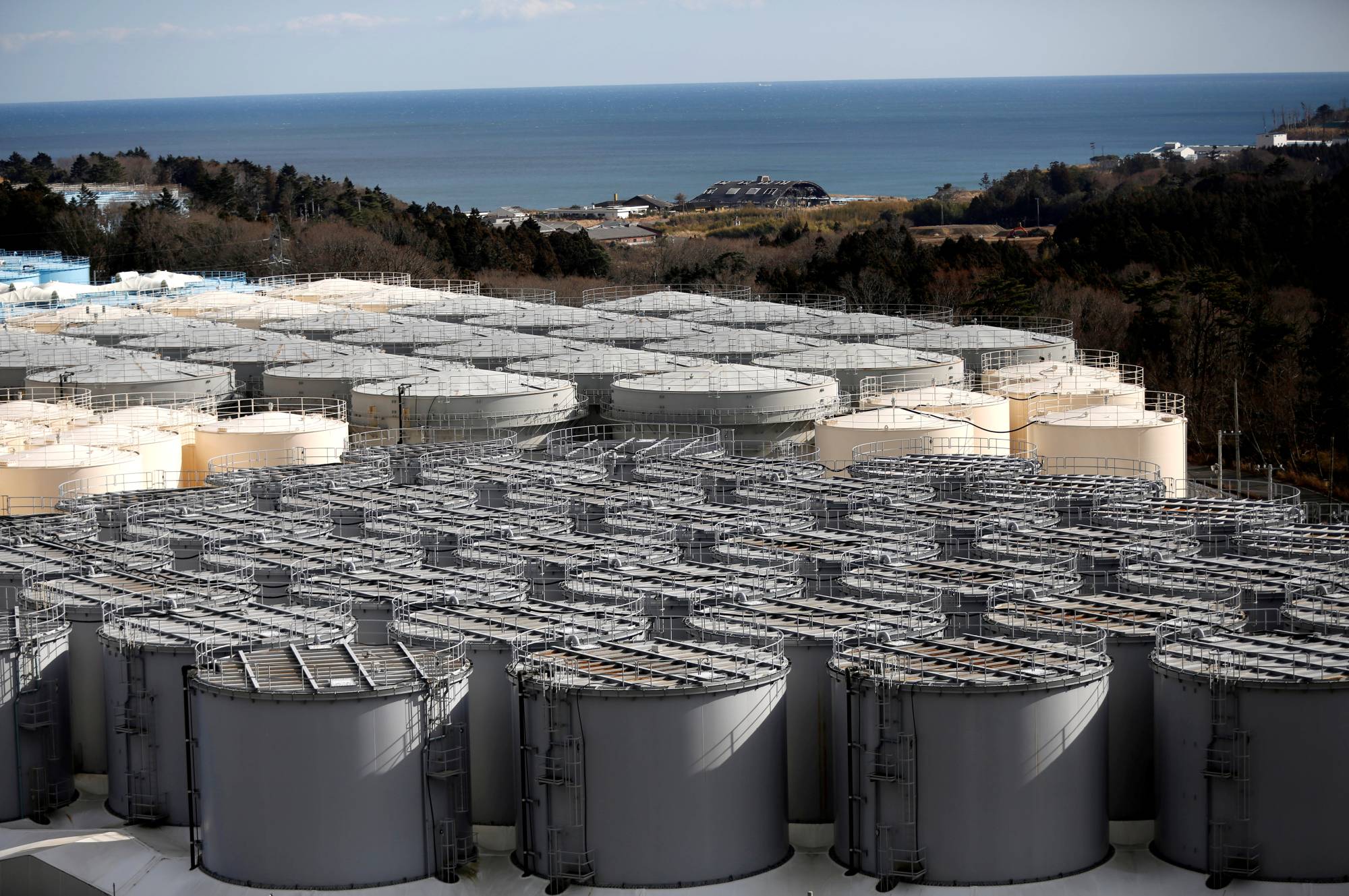
TOKYO (Kyodo) — The operator of the Fukushima Daiichi nuclear power plant continues to demolish tanks emptied by the release of treated radioactive water into the sea, aiming to use the freed-up space to build facilities to advance decommissioning work.
Nearly 15 years after the nuclear accident triggered by a massive earthquake and tsunami, Tokyo Electric Power Company Holdings Inc. is still coping with radioactive water generated in the process of cooling melted reactor fuel, although the daily buildup is on track to be the smallest in the current fiscal year.
The discharge of treated water into the Pacific Ocean began in August 2023, as more than 1,000 tanks installed at the site to store the wastewater were deemed to be taking up too much space and hindering progress in decommissioning work.
The first tank dismantling following the water release took place in February 2025 in an area known as J9. After workers finished removing a dozen tanks there by September, they moved on to the adjacent area known as J8, where nine tanks stand.
Each of the nine tanks is 12 meters tall and 9 meters wide, with a capacity of 700 tons. Removing the tanks in the two sections will free up about 2,900 square meters.
The utility plans to use the land to build facilities to store melted fuel debris to be retrieved from the No.3 reactor and to conduct maintenance for debris removal devices.
Some 880 tons of debris are estimated to remain in the Nos. 1 to 3 reactors that suffered core meltdowns in the world’s worst nuclear crisis since the 1986 Chernobyl disaster. Hydrogen explosions damaged the buildings housing the Nos. 1, 3 and 4 units.
TEPCO and the government plan to start full-fledged removal of debris at the No. 3 reactor no earlier than fiscal 2037, pushing back the early 2030s target due to the time needed for preparation.
Radiation levels inside the empty tanks have been confirmed to be lower than the average air dose level outside, indicating that contamination was relatively low, according to the operator.
Disassembled tank parts will be cut into small pieces using gas cutting torches and stored in cargo containers on the power plant premises.
Fukushima review – a devastating account of disaster and denial in 2011 nuclear catastrophe
A tense return to the disaster foregrounds the heroism of the ‘Fukushima 50’ while raising questions about corporate secrecy and nuclear safety.
Peter Bradshaw, Wed 18 Feb 2026, https://www.theguardian.com/film/2026/feb/18/fukushima-review-2011-nuclear-disaster-japan
The terrifying story of Japan’s Fukushima nuclear accident of 2011, caused by a cataclysmic earthquake and tsunami, is retold by British film-maker James Jones and Japanese co-director Megumi Inman. The natural disaster left 20,000 dead, and 164,000 people were displaced from the area around the nuclear plant, some with no prospect of return. The earthquake damaged the cooling systems that prevent meltdowns and caused three near-apocalyptic explosions, bringing the nation close to a catastrophe that would have threatened its very existence. Incredibly, the ultimate calamity was finally staved off by nothing more hi-tech than a committed fire brigade spraying thousands of tons of water on the exposed fuel rods.
The film plunges us into the awful story moment-by-moment, accompanied by interviews with the chief players of the time – prominently nuclear plant employee Ikuo Izawa, a shift supervisor and de facto leader of the “Fukushima 50” (actually 69 people) who became legendary in Japan and beyond for their self-sacrificial courage, staying in a nightmarish reactor when everyone else had been evacuated.
Perhaps we could have been given more context and less immediate drama, particularly more background about the plant’s dismal corporate owners, the Tokyo Electric Power Company, or Tepco, which had closed a nuclear plant in 2007 after an earthquake, with a resulting loss of profits. But to skimp on the drama might be obtuse, given the pure hair-raising shock of events. The archive footage of the tsunami spreading across the fields and farmland of Japan is deeply disturbing; “nightmare” is a word casually used, but appropriate here.
The Japanese soul had been uniquely traumatised by the nuclear issue in 1945 and Fukushima was the opening of an old wound; Barack Obama’s offers to help were received warily and the film hints that some of a certain age might have even suspected a kind of opportunistic emergency takeover, like the Douglas MacArthur rule that followed the war. There is something chillingly military in the company’s need for volunteers for a so-called “suicide squad” to vent the reactors to forestall a pressure buildup.
And as far as comparisons with the Chornobyl disaster go, that involved a single reactor; Fukushima had six ready to blow. Before I watched this film, I assumed that Japan’s modern democracy would at least have meant more transparency than the sclerotic and malign Soviet apparatchiks. But maybe not. Tepco has still not released a full history of exactly what went wrong and what discussions took place at the time. And in any case, politicians were themselves dismally eager to cover themselves by tentatively blaming Tepco.
The most robust witness here is the New York Times’s Tokyo bureau chief Martin Fackler, who gives us a crisp account of the official chaos and bungling – and the fact that Tepco had already received a report indicating the Fukushima plant was vulnerable to an earthquake and did nothing. He is interesting on corporate obeisance to the “safety myth”, an industry article of faith which does not result in vigilant and innovative efforts to improve safety, but rather icy disapproval of anyone who questions existing safety provisions. Doing so was disloyalty to the industry and could damage your career.
Perhaps inevitably, the larger questions are left open. Fossil fuels cause slow-motion catastrophe to the planet – in fact, not so slow – while nuclear fuel does not cause climate change, but could cause instant calamity. So is the answer simply what the industry says it is? More and better safety? Or can other renewables fill the gap? Either way, this is a gripping film.
Fukushima is out in the UK and US from 20 February.
This article was amended on 19 February 2026 to clarify that the death toll relates to the natural disaster alone.
Wastewater release from Fukushima nuclear plant enters third year.

By Ian Stark, Aug. 25 (UPI) —
The Japanese utility that keeps the nuclear fuel inside the damaged Fukushima plant cool reports its release of treated wastewater has entered its third year.
The Tokyo Electric Power Company announced Monday that it has completed its third discharge of Advanced Liquid Processing System treated water into the sea on Monday…………………
According to TEPCO, the ALPS is designed to remove 62 types of radioactive materials from the affected sea and dilute the water to lower the tritium levels. The water is considered “treated” to distinguish it from water yet to be decontaminated…………………………..
Around 70 tons of radioactive wastewater is produced daily at the plant, which cools the nuclear fuel that melted inside the reactor buildings at the Fukushima nuclear power plant. As of the first week of August, around 102,000 tons of treated water have been released. https://www.upi.com/Top_News/World-News/2025/08/25/Japan-Fukushima-nuclear-wastewater-TEPCO-radioactive/9871756140747/
Fukushima nuclear plant decommissioning seen overrunning estimate
Fukushima nuclear plant decommissioning seen overrunning estimate. $35bn
already committed, with debris removal price ‘difficult’ to guess. The
amount spent or budgeted so far to decommission the Fukushima Daiichi
nuclear power plant has reached 5.2 trillion yen ($35.4 billion), it was
learned Friday, making it highly likely that the grand total will exceed
the government’s estimate of 8 trillion yen.
Nikkei Asian Review 22nd Aug 2025, https://asia.nikkei.com/business/energy/fukushima-nuclear-plant-decommissioning-seen-overrunning-estimate
Tepco wraps up latest round of treated water release in Fukushima

Tokyo Electric Power Company Holdings said Sunday that it has completed
the second round of its fiscal 2025 release of treated water into the ocean
from the Fukushima No. 1 nuclear power plant.
The discharge of the water, containing radioactive tritium, was suspended due to a tsunami caused by a major earthquake near Russia’s Kamchatka Peninsula last week, but there
were no problems with the facilities involved in the operation. In the
second round, which began on July 14, Tepco diluted 7,800 tons of treated
water with large amounts of seawater before releasing it about 1 kilometer
off the coast of Fukushima Prefecture through an undersea tunnel. In the
current fiscal year through next March, a total of 54,600 tons will be
released into the sea in seven rounds, at the same pace as the previous
year.
Japan Times 3rd Aug 2025, https://www.japantimes.co.jp/news/2025/08/03/japan/tepco-2nd-round-treated-water-release/
Tepco ordered to pay ¥100 million in damages over 2011 disaster
Japan Times 30th July 2025
The Tokyo District Court ordered Tokyo Electric Power Company Holdings on Wednesday to pay about ¥100 million ($675,000) in damages over the 2011 accident at its Fukushima No. 1 nuclear power plant.
Presiding Judge Masahiko Abe ordered the payment mainly as compensation for damage to property and consolation money for life during evacuation while dismissing the claim against the state.
In the lawsuit, Katsutaka Idogawa, 79, former mayor of Futaba, a town in Fukushima Prefecture, blamed the central government and Tepco for their inadequate handling of the accident, arguing that it led to his exposure to radiation…………………………. (Subscribers only) https://www.japantimes.co.jp/news/2025/07/30/japan/crime-legal/tepco-ordered-to-pay-damages-nuclear-disaster/
Debris removal at Fukushima nuclear plant pushed back to 2037 or later

30 July 25, https://www.japantimes.co.jp/news/2025/07/30/japan/fukushima-nuclear-plant-debris-removal/
Full-scale removal of nuclear fuel debris from the No. 3 reactor of Tokyo Electric Power Company Holdings’ crippled Fukushima No. 1 nuclear power plant will not start before fiscal 2037, officials said Tuesday.
The removal was previously planned to begin in the early 2030s. This delay may push the completion of the plant’s decommissioning process beyond the target year of 2051 set by the government and Tepco.
The new timeline for the work was announced by Tepco and Nuclear Damage Compensation and Decommissioning Facilitation, or NDF, at separate news conferences. They determined that preparations for the work, such as the demolition of an adjacent building, will take about 12 years to 15 years.
“We aren’t in a situation where we should deny (the feasibility of) the decommissioning target,” said Akira Ono, head of Tepco’s in-house company in charge of the decommissioning work. “We remain committed to the goal of completing (the decommissioning process by 2051.)”
A total of 880 metric tons of debris, or a mixture of melted nuclear fuel and reactor structures, is believed to be in the No. 1 to No. 3 reactors at the nuclear plant, which suffered a triple meltdown following the March 2011 massive earthquake and tsunami.
Tepco began to extract debris from the No. 2 reactor on a trial basis last year, and has collected a total of about 0.9 gram so far.
According to Tepco and the facilitation organization, debris removal will be carried out using a combination of what is known as the nonsubmerged method, in which the debris is collected from the air, and what is called the filling and solidification method, which involves pouring a filling agent into the reactor and solidifying it.
A small hole will be opened in the upper part of the reactor building to insert a device that will crush the debris into fine pieces, while a filling agent will be injected as needed. The debris will be collected using a device inserted from the side of the building.
Tepco and the organization said demolishing a waste treatment building on the north side of the No. 3 reactor is necessary to ensure work safety and create space for new equipment. They also said that necessary facilities need to be built in the upper part of the reactor building, and such preparations are expected to take about 12 years to 15 years.
Govt Eyes Reuse of Fukushima Soil at PM’s Office

Tokyo, May 23 (Jiji Press) https://jen.jiji.com/jc/eng?g=eco&k=2025052300665
–The Japanese government is considering reusing soil removed from the ground during radiation decontamination work after the 2011 nuclear reactor meltdowns in Fukushima Prefecture in the grounds of the prime minister’s office in Tokyo, informed sources have said.
The government hopes to promote public understanding over the reuse of the soil from the decontamination work in the northeastern Japan prefecture, home to Tokyo Electric Power Company Holdings Inc.’s disaster-stricken Fukushima No. 1 nuclear power plant.
The move came after planned pilot projects for using the soil in Tokyo and its northern neighbor, Saitama Prefecture, have stalled due to opposition from local residents.
The government plans to compile a basic policy on the recycling and final disposal of the soil shortly, including its use at the prime minister’s office. It also plans to draw up a specific road map by around this summer.
Some 14 million cubic meters of the soil from the decontamination work is currently stored at interim facilities in the Fukushima towns of Okuma and Futaba, where the TEPCO plant is located.
Robotic arm struggles to take fuel sample from Fukushima plant

By KEITARO FUKUCHI/ Staff Writer, April 28, 2025, https://www.asahi.com/ajw/articles/15704793
A narrow, attic-like space lies directly below the No. 5 reactor at the Fukushima No. 1 nuclear power plant, showing the difficult route a robotic arm must take to collect samples of melted fuel debris in a sister reactor.
The robotic arm is 22 meters long, weighs 4.6 tons and has 18 articulatable joints.
It has been developed to retrieve samples from the No. 2 reactor of Tokyo Electric Power Co.’s Fukushima No. 1 plant—which was crippled when the 2011 Great East Japan Earthquake and tsunami triggered a nuclear disaster at the facility.
To this day, an estimated 880 tons of melted fuel debris remain in the No. 1 through No. 3 reactors, and recovering this material is considered the most challenging phase in the long decommissioning process.
After more than six years of development using taxpayer money and undergoing numerous setbacks, the robotic arm may go on its first real debris retrieval mission later this fiscal year—or face being scrapped.
“The latest attempt may prove a failure since numerous trials have produced no successful outcomes so far,” said a nuclear industry insider. “The robot arm might be left to gather dust without ever being used.”
News reporters were given a tour in January of the crippled power plant’s No. 5 reactor, which is the same model and reportedly has the same dimensions as the No. 2 reactor, to see the route the arm must take if it is to succeed.
THE MISSION
To reach the debris, the arm will have to be navigated—by remote control—through the same narrow route at the No. 2 reactor that the reporters traversed at its twin.
The first step will be to carefully insert the arm, which is 40 centimeters tall, through an opening with an inner diameter of just 55 cm.
Once inside the 1.5-meter-tall space directly under the reactor, the approximately 4-meter-long tip of the arm will be slowly rotated and lowered to reach the fuel debris at the bottom of the containment vessel.
“Adjusting the joints’ angles is particularly difficult,” said a TEPCO public relations representative. “Even a single error can cause the device to hit its surroundings.”
TRIAL AND ERROR
The robotic arm has been under development since fall 2018 by Mitsubishi Heavy Industries Ltd. and a British company from the nuclear power industry. As much as 7.8 billion yen ($53.1 million) in taxpayers’ money has been invested in the arm and related projects.
However, the project has faced numerous setbacks.
The government and TEPCO initially planned to debut the arm in a debris retrieval test in 2021, but the device was unable to move with the necessary precision, causing delays.
When the first retrieval test was finally undertaken in November 2024, a simpler device with a solid track record in past applications was used instead. The same device was used in the second retrieval test earlier this month—while revisions on the robotic arm continued.
Because the arm’s weight is supported at its base, the device tends to bend and move unsteadily when extended.
“They are working hard to carry out this difficult procedure under particularly challenging conditions,” said Hajimu Yamana, president of the Nuclear Damage Compensation and Decommissioning Facilitation Corp. (NDF), which serves as an adviser on the decommissioning work.
As the arm’s development dragged on for more than half a decade, new problems arose in and after August 2024.
Disconnection of motor cables that had deteriorated over time was detected, as was a failure in the arm’s obstacle removal mechanism.
In December that year, the robotic arm came into contact with a model of the containment vessel during a test. However, it later safely passed through the opening without encountering any obstructions after its operators fine-tuned the insertion point.
“New issues arise each time a test is conducted,” lamented Yusuke Nakagawa, a TEPCO group manager involved in the project. “We just have to address them one by one again and again.”
TEPCO began dismantling part of the robotic arm in February to examine the deteriorated cable. The inspection is expected to take three to four months, and the arm will likely undergo additional operational tests after that.
THE FUTURE
For now, TEPCO plans to put the robotic arm to practical use at the site in the latter half of fiscal 2025.
“The final decision (on whether to actually use the arm on site) will be made after taking into account the results of the envisioned operational tests,” said Akira Ono, president of TEPCO’s Fukushima Daiichi Decontamination and Decommissioning Engineering Co.
The future of the robotic arm is still unclear given that its official introduction has already been delayed four times.
Officials involved are expressing a growing sense of alarm.
Toyoshi Fuketa, an ex-chairman of the Nuclear Regulation Authority, calls for reviewing the current plan.
“Never changing a plan once it has been decided upon, even if it does not work properly, is a bad habit of Japan,” he noted. “People should have the courage to back down at times (by giving up on the robotic arm).”
Robot starts 2nd mission to retrieve debris at Fukushima nuclear plant
Apr. 16 , By Mari Yamaguchi, TOKYO, https://japantoday.com/category/national/robot-starts-2nd-mission-to-retrieve-debris-at-fukushima-nuclear-plant
A remote-controlled robot on Tuesday embarked on its second mission to retrieve tiny bits of melted fuel debris from inside a damaged reactor at the Fukushima nuclear plant that was wrecked by a tsunami 14 years ago.
The mission, which follows the first such debris retrieval in November, is aimed at eventually developing the technology and robots needed for a larger scale cleanup of the plant, destroyed by the earthquake and tsunami in March 2011.
The extendable “Telesco” robot carries cameras and a tong to grip tiny nuggets of radioactive debris. It entered the No. 2 reactor’s primary containment vessel Tuesday, according to Tokyo Electric Power Company.
This time, the company aims to send the robot further into the containment vessel to get a sample from an area closer to the center where more melted fuel is believed to have fallen.
It is expected to take several days before the front tip of the robot reaches the targeted area, where it will lower a device carrying a tong and camera in a fishing-rod style.
That first sample retrieval in November, despite a number of mishaps, was a crucial step in what will be a daunting, decades-long decommissioning that must deal with at least 880 tons of melted nuclear fuel that has mixed with broken parts of internal structures and other debris inside the three reactors ruined in 2011.
After a series of small missions by robots to gather samples, experts will determine a larger-scale method for removing melted fuel, first at the No. 3 reactor, beginning in the 2030s.
Experts say the huge challenge of decommissioning the plant is just beginning, and that the work could take more than a century.
China calls for strict, long-term international supervision over Fukushima wastewater discharge: spokesman
2025-03-26, https://www.bastillepost.com/global/article/4690031-china-calls-for-strict-long-term-international-supervision-over-fukushima-wastewater-discharge-spokesman?fbclid=IwY2xjawJSuCVleHRuA2FlbQIxMQABHRXbhJz-aEa94Wd_9BghnsxtDEzzaxDZiiCBsWn9LWkvzinWWdeZIhe3Zg_aem_9apdp3Teicc2HwmyoEjwCw
Guo made the statement at a press conference in Beijing in response to a media query about Japan’s wastewater discharge.
China calls for strict and long-term international supervision over Japan’s discharge of nuclear-contaminated wastewater from the crippled Fukushima Daiichi Nuclear Power Plant into the ocean, Chinese Foreign Ministry spokesman Guo Jiakun said on Wednesday.
“I would like to emphasize that China opposes Japan’s unilateral discharge of nuclear-contaminated wastewater into the ocean, and this position remains unchanged. Since last year, Chinese experts have visited Japan twice to independently collect samples and announced the relevant test results in a timely manner. On the basis that Japan has fulfilled its commitments and the test results haven’t shown any abnormalities, the General Administration of Customs of China held in Beijing on March 12 technical exchanges with Japan over the safety of Japanese aquatic products,” Guo said.
“China will continue to work with the rest of the international community to urge Japan to earnestly fulfill its commitments and ensure that the discharge of Fukushima nuclear-contaminated wastewater into the sea is always under strict international supervision,” said the spokesman.
Hit by a magnitude-9.0 earthquake and an ensuing tsunami on March 11, 2011, the Fukushima Daiichi nuclear power plant suffered core meltdowns in three reactors that released radiation, resulting in a level-7 nuclear accident, the highest on the International Nuclear and Radiological Event Scale.
The plant then generated a massive amount of wastewater tainted with radioactive substances from cooling down the nuclear fuel in the reactor buildings.
Disregarding domestic and foreign questioning and protests, the Japanese government decided in April 2021 to “filter and dilute” the nuclear contaminated wastewater from the plant and started the ocean discharge of the radioactive wastewater on August 24, 2023. This process is expected to last 20 to 30 years, until the nuclear power plant is scrapped.
Subsidies attract companies, but not workers, to Fukushima zones
By SUSUMU OKAMOTO/ Staff Writer, Asahi Shimbun March 18, 2025
Billions of yen in government subsidies have attracted businesses and fueled a surge in industrial park development across areas affected by the Fukushima nuclear disaster.
But one big problem remains: Most workers are not returning to these municipalities that were depleted through evacuation orders.
………………………………………………………………………………….Industrial parks developed by local governments are almost entirely funded by the central government.
So far, 21 parks have opened in the region since the disaster, with nine more planned.
The total cost has exceeded 100 billion yen.
While the construction boom has given the impression of an economic revival, actual progress has fallen short of government and local expectations.
WORKERS NOT RETURNING
………………………………….Interviews with local governments and companies show that 89 businesses and organizations employ around 2,500 people in newly developed industrial parks.
Around 1,050 work in six towns and villages with high radiation levels and restricted access―Tomioka, Okuma, Futaba, Namie, Katsurao and Iitate.
But only about 15 percent of them live within those municipalities. Most of the workers commute from Iwaki and other nearby cities.
DEBATE OVER CONTINUING SUBSIDIES
In November, municipalities affected by the nuclear disaster strongly opposed a government review that suggested a possible end to the industry ministry’s subsidy program around 10 years after the lifting of all evacuation orders.
Experts on the review panel argued that the economic impact of the subsidies remains unclear.
But Kawauchi Mayor Yuko Endo, whose entire village was evacuated, warned, “The town won’t survive if the subsidies are cut off.”
Over the eight years through fiscal 2023, the ministry’s program has distributed 95.9 billion yen to 135 companies and organizations.
“Without jobs, people won’t return to nuclear disaster-affected areas,” a ministry official said. “Without people, neither commercial nor medical facilities can come back.”
The government has allocated an additional 11 billion yen for the program in fiscal 2025.
LONG ROAD TO SUSTAINABLE GROWTH
“Young people in Fukushima Prefecture were already leaving for cities before the disaster,” said Toshiyuki Kanai, a professor at the University of Tokyo’s of Faculty of Law. “Creating jobs alone won’t bring people back.”
However, he added: “The government has little choice but to continue support, given its responsibility for the displacement caused by the nuclear disaster. The scale of the damage is irreparable.”………………… https://www.asahi.com/ajw/articles/15656086?fbclid=IwY2xjawJG4llleHRuA2FlbQIxMQABHflEUQCKoAUe6O8fzoy952K_909rjqNLcrSehKzuCAKI-j0j72skaYMOlQ_aem_Qo9irxiJmty4KnXYMVu3aA
Governor urges contaminated soil be disposed of outside Fukushima by 2045

Soil from radiation decontamination work after the 2011 nuclear reactor
meltdowns in Fukushima Prefecture should be disposed of outside the
prefecture by the deadline set by law, Fukushima Gov. Masao Uchibori said
in a recent interview. A law stipulates that all such soil must be disposed
of outside Fukushima by March 2045.
“The final disposal must be completed
within 20 years, no matter whether the soil is reused (within Fukushima) or
not,” the governor said. However, Shiro Izawa, the mayor of Futaba — one
of the towns hosting Tokyo Electric Power Company Holdings’ crippled
Fukushima No. 1 plant — said lasts month that soil from radiation
decontamination work should be reused in Fukushima. The mayor said this was
his personal opinion. Uchibori pointed out the heavy burden placed on
Futaba and the neighboring town of Okuma for accepting interim storage
facilities for soil from decontamination work.
Japan Times 11th March 2025. https://www.japantimes.co.jp/news/2025/03/11/japan/fukushima-gov-soil-disposal/
‘Nervous and rushed’: Massive Fukushima plant cleanup work involves high radiation and stress
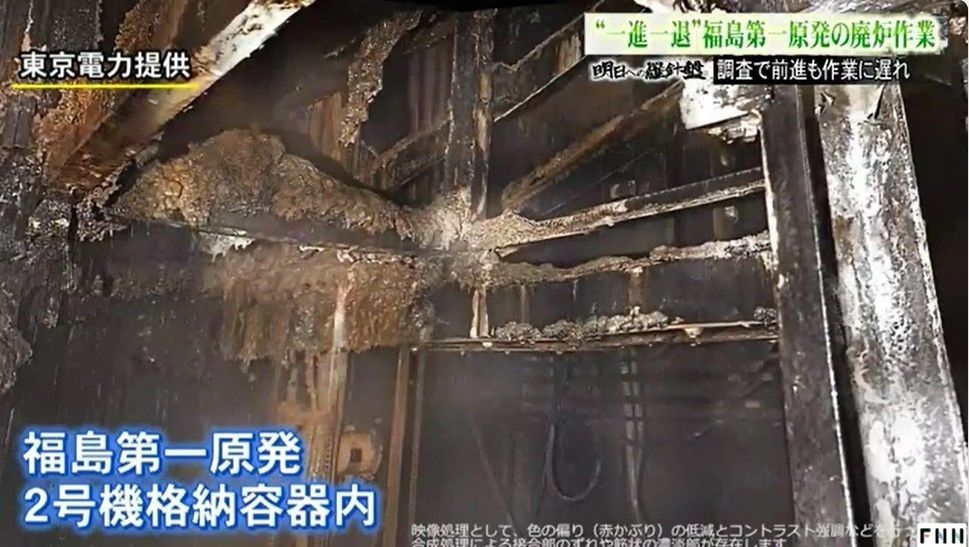
Experts say the hard work and huge challenges of decommissioning the plant are just beginning. There are estimations that the work could take more than a century. The government and TEPCO have an initial completion target of 2051, but the retrieval of melted fuel debris is already three years behind, and many big issues remain undecided.
By ASSOCIATED PRESS, 12 March 2025
OKUMA, Japan (AP) – The Fukushima Daiichi nuclear power plant’s radiation levels have significantly dropped since the cataclysmic meltdown in Japan 14 years ago. Workers walk around in many areas wearing only surgical masks and regular clothes.
It’s a different story for those who enter the reactor buildings, including the three damaged in the 2011 earthquake and tsunami. They must use maximum protection – full facemasks with filters, multi-layered gloves and socks, shoe covers, hooded hazmat coveralls and a waterproof jacket, and a helmet.
As workers remove melted fuel debris from the reactors in a monumental nuclear cleanup effort that could take more than a century, they are facing both huge amounts of psychological stress and dangerous levels of radiation.
The Associated Press, which recently visited the plant for a tour and interviews, takes a closer look.
A remote-controlled extendable robot with a tong had several mishaps including equipment failures before returning in November with a tiny piece of melted fuel from inside the damaged No. 2 reactor.
That first successful test run is a crucial step in what will be a daunting, decades-long decommissioning that must deal with at least 880 tons of melted nuclear fuel that has mixed with broken parts of internal structures and other debris inside the three ruined reactors…………………………………………………
Radiation levels are still dangerously high inside the No. 2 reactor building, where the melted fuel debris is behind a thick concrete containment wall. Earlier decontamination work reduced those radiation levels to a fraction of what they used to be.
In late August, small groups took turns doing their work helping the robot in 15- to 30-minute shifts to minimize radiation exposure. They have a remotely controlled robot, but it has to be manually pushed in and out.
“Working under high levels of radiation (during a short) time limit made us feel nervous and rushed,” said Yasunobu Yokokawa, a team leader for the mission. “It was a difficult assignment.”
Full-face masks reduced visibility and made breathing difficult, an extra waterproof jacket made it sweaty and hard to move, and triple-layered gloves made their fingers clumsy, Yokokawa said.
To eliminate unnecessary exposure, they taped around gloves and socks and carried a personal dosimeter to measure radiation. Workers also rehearsed the tasks they’d perform to minimize exposure…………………………………………………..
a growing number of workers are concerned about safety and radiation at the plant, said Ono, the decommissioning chief, citing an annual survey of about 5,5,00 workers……
Yokokawa and a plant colleague, Hiroshi Ide, helped in the 2011 emergency and are team leaders today. They say they want to make the job safer as workers face high radiation in parts of the plant.
On the top floor of the No. 2 reactor, workers are setting up equipment to remove spent fuel units from the cooling pool. That’s set to begin within two to three years.
At the No. 1 reactor, workers are putting up a giant roof to contain radioactive dust from decontamination work on the top floor ahead of the removal of spent fuel.
To minimize exposure and increase efficiency, workers use a remote-controlled crane to attach pre-assembled parts, according to TEPCO. The No. 1 reactor and its surroundings are among the most contaminated parts of the plant.
Workers are also removing treated radioactive wastewater. They recently started dismantling the emptied water tanks to make room to build facilities needed for the research and storage of melted fuel debris.
After a series of small missions by robots to gather samples, experts will determine a larger-scale method for removing melted fuel, first at the No. 3 reactor.
Experts say the hard work and huge challenges of decommissioning the plant are just beginning. There are estimations that the work could take more than a century. The government and TEPCO have an initial completion target of 2051, but the retrieval of melted fuel debris is already three years behind, and many big issues remain undecided.
Ide, whose home in Namie town, northwest of the plant, is in a no-go zone because of nuclear contamination, still has to put on a hazmat suit, even for brief visits home…….
https://www.dailymail.co.uk/wires/ap/article-14484347/Nervous-rushed-Massive-Fukushima-plant-cleanup-exposes-workers-high-radiation-stress.html
1 This Month
10 March A LIVE WEBINAR THE REAL EFFECTS OF NUCLEAR POWER
What the Industry Isn’t Telling Us
1:00 PM Mountain, 2 pm Central, 3 pm Eastern. Live on the Keepers of the Water Facebook page



18 March Webinar @ 1 PM EST: An Assessment of SMR Projects: The Case of Canada
register for the zoom:
https://us02web.zoom.us/webinar/register/WN_o8BIIOUvQ2ONJR1nta65DQ#/registration


of the week – STOP SMALL MODULAR REACTORS IN CANADA
To see nuclear-related stories in greater depth and intensity – go to https://nuclearinformation.wordpress.com
-
Archives
- March 2026 (99)
- February 2026 (268)
- January 2026 (308)
- December 2025 (358)
- November 2025 (359)
- October 2025 (376)
- September 2025 (258)
- August 2025 (319)
- July 2025 (230)
- June 2025 (348)
- May 2025 (261)
- April 2025 (305)
-
Categories
- 1
- 1 NUCLEAR ISSUES
- business and costs
- climate change
- culture and arts
- ENERGY
- environment
- health
- history
- indigenous issues
- Legal
- marketing of nuclear
- media
- opposition to nuclear
- PERSONAL STORIES
- politics
- politics international
- Religion and ethics
- safety
- secrets,lies and civil liberties
- spinbuster
- technology
- Uranium
- wastes
- weapons and war
- Women
- 2 WORLD
- ACTION
- AFRICA
- Atrocities
- AUSTRALIA
- Christina's notes
- Christina's themes
- culture and arts
- Events
- Fuk 2022
- Fuk 2023
- Fukushima 2017
- Fukushima 2018
- fukushima 2019
- Fukushima 2020
- Fukushima 2021
- general
- global warming
- Humour (God we need it)
- Nuclear
- RARE EARTHS
- Reference
- resources – print
- Resources -audiovicual
- Weekly Newsletter
- World
- World Nuclear
- YouTube
-
RSS
Entries RSS
Comments RSS
 nuclear-news