Nuclear war between India and Pakistan very unlikely
|
‘Very dim chances of India, Pakistan nuclear war’
2 neighbors became nuclear power in May 1998 triggering new arms race in region, AA, Aamir Latif |15.05.2020 KARACHI, PakistanPakistan’s top nuclear scientist sees “very dim” chances of a nuclear war with neighboring India despite mounting tensions between the two arch-rivals in recent months. “I won’t say a zero chance but there are very dim chances of a war between the two neighbors involving nuclear arsenal despite escalating tensions,” Samar Mubarakmand, a former chairman of Pakistan Atomic Energy Commission (PAEC), and head of a team of the scientists that conducted six “successful” nuclear tests in remote Chaghi district of southwestern Balochistan province on May 28, 1998……… “The leadership of both countries are fully aware of the catastrophe a nuclear war can cause. They won’t go for that option no matter how tense the situation is,” observed Mubarakmand, who served at PAEC from 1962 to 2007 and played a key role in developing the country’s nuclear program. Conventional provocations, he said, would continue between the two longtime rivals but, he reckoned, both sides would not “cross the limit” to go for nuclear option. Both countries have long been reeling from poverty, illiteracy, and other health and economic issues. Wars or undue competition in arms race are not in the interest of the two nations,” he maintained. Nuclear powers India boasts the world’s third-largest army after the US and China, with an active troop strength of over 1.3 million. Pakistan, meanwhile, stands eighth on the list with a 600,000-man army……… https://www.aa.com.tr/en/asia-pacific/-very-dim-chances-of-india-pakistan-nuclear-war/1841657 |
|
|
Hundreds of foreign companies procuring nuclear materials for India and Pakistan
|
Reuters 30th April 2020, Hundreds of foreign companies are actively procuring components for India and Pakistan’s nuclear programmes, taking advantage of gaps in the global
regulation of the industry, according to a report by a U.S.-based research group.https://uk.reuters.com/article/uk-india-pakistan-nuclear-exclusive/exclusive-india-pakistan-nuclear-procurement-networks-larger-than-thought-study-shows-idUKKBN22C2JO?rpc=401& |
India’s dangerous nuclear triad
|
Why India’s Nuclear Triad Is Such a Dangerous Weapon No joke. National Interest
by Caleb Larson, 10 Apr 20, India’s indigenously developed technology—and a lot of Russian hardware and help—all keep Pakistan and China at bay.
No-First-Use “An NFU policy essentially constitutes a promise, backed by a survivable nuclear arsenal, to only use nuclear weapons in response to a nuclear attack,” explained a Carnegie publication. “The logic is simple and effective: you don’t nuke me, and I won’t nuke you. India and China both have declared no-first-use policies, whereas Pakistan and the United States, among others, do not rule out the first use of nuclear weapons in a conflict.” Despite India’s formidable nuclear arsenal, India had since 2003 maintained it will not use said weapons of mass destruction first, but strictly in a retaliatory manner for deterrence. Triad India maintains a nuclear triad—that is a three-pronged nuclear weapon delivery system that utilizes a diverse array of means for delivering nuclear payload on target. New Delhi has air-launched nuclear missiles, land-based nuclear missiles, and most recently submarine-launched missiles. ……. Armed and Dangerous Over all, India’s nuclear triad is a mix of capabilities—free-falling bombs, long-range and quite sophisticated missiles, and sub-launched missiles of unclear capabilities and likely limited range. Still, India is one of the preeminent nuclear powers in the region, behind China. Look to Russia for more developmental help in the future. https://nationalinterest.org/blog/buzz/why-india%E2%80%99s-nuclear-triad-such-dangerous-weapon-142272 |
|
China is Willing to Negotiate on Nuclear Arms, But Not on Trump’s Terms

 China is Willing to Negotiate on Nuclear Arms, But Not on Trump’s Terms, Defense One, BY GREGORY KULACKI, 30 Mar 20
President Trump announced to the world in a March 5 tweet that he would propose “a bold new trilateral arms control initiative with China and Russia.” China immediately rejected the idea the very next day. It would be wrong, however, to infer that Chinese leaders are opposed to nuclear arms control. They are not. They are just not interested in what Trump appears to be offering.
There are good reasons for China to suspect Trump’s motives. He used China as a scapegoat when withdrawing from the Intermediate Nuclear Forces Treaty, for example, and he may be using this vague new initiative to justify allowing the New START Treaty to expire. China was not a party to either agreement. Walking away from treaties with Russia and blaming China for it is unlikely to encourage Chinese leaders to come to the negotiating table.
Trump premised his announcement of this new initiative with a questionable claim that China will “double the size of its nuclear stockpile” before the end of the decade. That sounds ominous, but in fact China has only about 300 warheads and barely enough plutonium to get to 600. Meanwhile, the United States and Russia each possess more than 6,000 warheads. Any new agreement based on parity among the three states would require steep U.S. and Russian cuts even if China did indeed double its arsenal.
China certainly would welcome major U.S. and Russian reductions. But there is no sign either nation is willing to make them. On the contrary, Trump and President Putin have announced ambitious nuclear modernization programs that dwarf China’s. Since neither of the two countries are planning to reduce their arsenals, it is difficult for Chinese leaders to understand what Trump wants to discuss. Neither the president nor his aides have provided a tentative agenda or cited desired outcomes.
Despite Trump’s apparent failure to engage China, if he or his successor wants to bring China to the negotiating table, there is a path to follow. Below are four steps the United States can take to convince Chinese leaders to negotiate on nuclear arms.
Step 1. Pursue International, not Multilateral, Negotiations
There is a marked difference between international and multilateral negotiations, and it matters to China……..
Step 2. Accept Mutual Vulnerability
Accepting mutual vulnerability sounds defeatist. But all it means is that no one can win a nuclear arms race. The United States cannot prevent China from being able to retaliate and deliver some number of nuclear weapons if the United States should ever choose to use nuclear weapons first during a war……
Step 3. Take No-First-Use Seriously
China is serious about not using its nuclear weapons first in an armed conflict. In a statement after its first nuclear test in 1964, the Chinese government declared it will “never at any time and under any circumstances be the first to use nuclear weapons.”…
Step 4. Discuss Limits on Missile Defense
When the United States and the Soviet Union finally realized that no one could win a nuclear arms race, they decided to talk. Negotiators quickly discovered that limiting offense was impossible without limiting defense as well, since an effective way to counter defenses is to build more offensive weapons…..https://www.defenseone.com/ideas/2020/03/china-willing-negotiate-nuclear-arms-not-trumps-terms/164204/
Westinghouse nuclear reactors – a very poor deal for India
Pushing the wrong energy buttons, https://www.thehindu.com/opinion/op-ed/pushing-the-wrong-energy-buttons/article30965454.ece?fbclid=IwAR1ymOL6TLlSxlUKkVVSL6_ukPPeiSzDlI_JM-He3CMG2qBD4HaBU0vezog, M.V. Ramana, Suvrat Raju, MARCH 03, 2020
The idea of India importing nuclear reactors is a zombie one with serious concerns about their cost and safety
Red flags in the U.S. deal
Because of serious concerns about cost and safety, the two organisations should have been told to abandon, not finalise, the proposal.
Indeed, it has been clear for years that electricity from American reactors would be more expensive than competing sources of energy. Moreover, nuclear reactors can undergo serious accidents, as shown by the 2011 Fukushima disaster. Westinghouse has insisted on a prior assurance that India would not hold it responsible for the consequences of a nuclear disaster, which is effectively an admission that it is unable to guarantee the safety of its reactors.
The main beneficiaries from India’s import of reactors would be Westinghouse and India’s atomic energy establishment that is struggling to retain its relevance given the rapid growth of renewables. But Mr. Trump has reasons to press for the sale too. His re-election campaign for the U.S. presidential election in November, centrally involves the revival of U.S. manufacturing and he has been lobbied by several nuclear reactor vendors, including 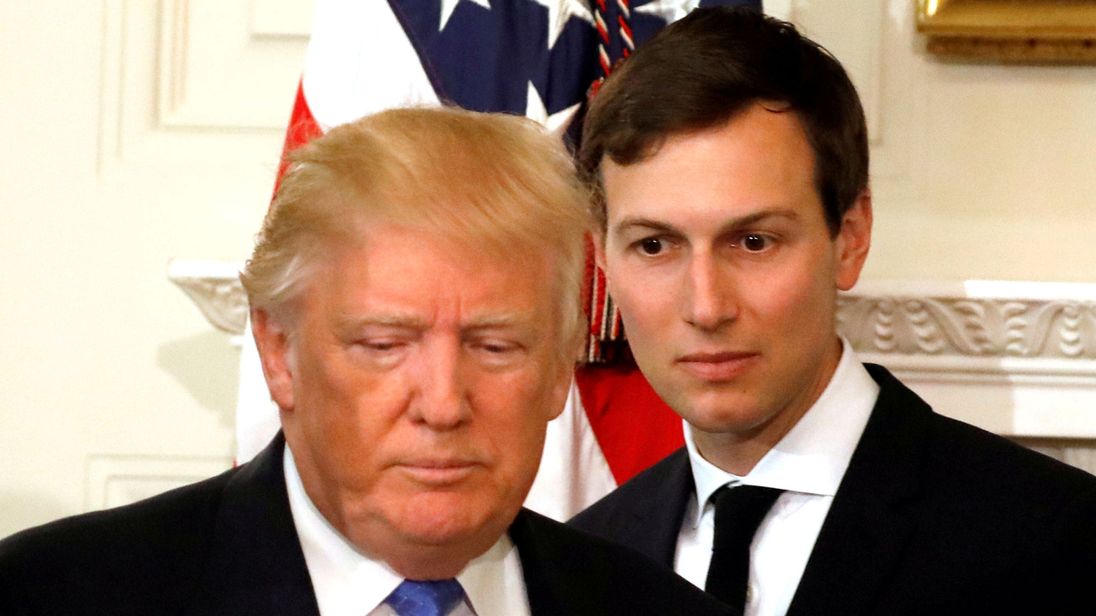 Westinghouse, reportedly to “highlight the role U.S. nuclear developers can play in providing power to other countries”. Finally, he also has a conflict-of-interest, thanks to his son-in-law and adviser, Jared Kushner, who accompanied him during the India visit.
In 2018, the Kushner family’s real-estate business was bailed out by a Canadian company that invested at least $1.1-billion in a highly unprofitable building in New York. Earlier that year, Brookfield Business Partners, a subsidiary of that Canadian company, acquired Westinghouse Electric Company. It violates all norms of propriety for Mr. Kushner to be anywhere near a multi-billion dollar sale that would profit Brookfield enormously.
What renewables can offer
Analysts estimate that each of the two AP1000 units being constructed in the U.S. state of Georgia may cost about $13.8 billion. At these rates, the six reactors being offered to India by Westinghouse would cost almost ₹6 lakh crore. If India purchases these reactors, the economic burden will fall upon consumers and taxpayers. In 2013, we estimated that even after reducing these prices by 30%, to account for lower construction costs in India, the first year tariff for electricity would be about ₹25 per unit. On the other hand, recent solar energy bids in India are around ₹3 per unit. Lazard, the Wall Street firm, estimates that wind and solar energy costs have declined by around 70% to 90% in just the last 10 years and may decline further in the future.
How safe?
Nuclear power can also impose long-term costs. Large areas continue to be contaminated with radioactive materials from the 1986 Chernobyl accident and thousands of square kilometres remain closed off for human inhabitation. Nearly a decade after the 2011 disaster, the Fukushima prefecture retains radioactive hotspots and the cost of clean-up has been variously estimated to range from $200-billion to over $600-billion.
The Fukushima accident was partly caused by weaknesses in the General Electric company’s Mark I nuclear reactor design. But that company paid nothing towards clean-up costs, or as compensation to the victims, due to an indemnity clause in Japanese law. Westinghouse wants a similar arrangement with India. Although the Indian liability law is heavily skewed towards manufacturers, it still does not completely indemnify them. So nuclear vendors have tried to chip away at the law. Instead of resisting foreign suppliers, the Indian government has tacitly supported this process.
Starting with the Tarapur 1 and 2 reactors, in Maharashtra, India’s experiences with imported reactors have been poor. The Kudankulam 1 and 2 reactors, in Tamil Nadu, the only ones to have been imported and commissioned in the last decade, have been repeatedly shut down. In 2018-19, these reactors produced just 32% and 38%, respectively, of the electricity they were designed to produce. These difficulties are illustrative of the dismal history of India’s nuclear establishment. In spite of its tall claims, the fraction of electricity generated by nuclear power in India has remained stagnant at about 3% for decades.
The idea of importing nuclear reactors is a “zombie idea” that, from a rational viewpoint, should have been dead long ago. In fact an earlier plan to install AP1000s in Mithi Virdi, Gujarat was cancelled because of strong local opposition. In 2018, Gujarat Chief Minister Vijay Rupani declared that the reactors “will never come up” in Gujarat. The Prime Minister should take a cue from his own State and make a similar announcement for the rest of the country.
India retains its nuclear weapons no-first-use policy
There has been no change in India’s nuclear doctrine, the Ministry of External Affairs (MEA) said on March 4.
Responding to a question in the Lok Sabha, Minister of State for External Affairs V. Muraleedharan said India is committed to maintaining credible minimum deterrence and the policy of no-first use of nuclear weapons.
There has been no change in India’s nuclear doctrine,” he said.
USA desperately pushing the fantasy of Small Nuclear Reactors to India
|
“………Ahead of Trump’s recent visit to India, officials of the US Department of Energy were quoted as saying that they are strongly encouraging Westinghouse Corporation to ensure further progress on the nuclear projects already in the pipeline.
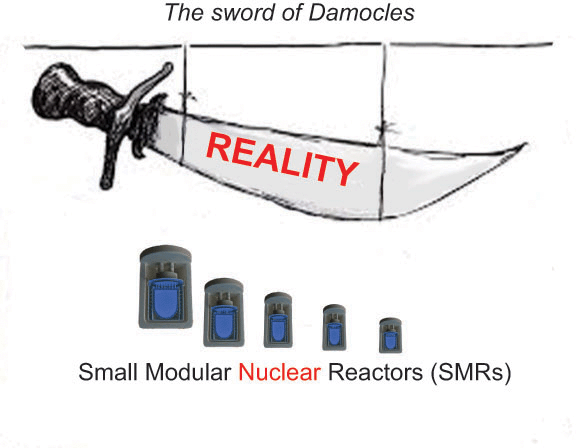
Another addition to the nuclear bucket list this time are the Small Modular Reactors (SMRs), which the industry has been fervently pushing both within and outside the United States. While US-based corporations have individually attempted to introduce their SMR business in India in recent years, this is the first time these reactors have been formally introduced as part of the official US-India nuclear dialogue. Globally, nuclear lobbies have promoted SMRs as an innovation that will help address the perennial problems of cost, feasibility, environmental impacts, and scalability associated with conventional large reactors.
However, as independent experts in the field suggest, SMRs are an old and discredited idea – a make-believe renaissance after the Fukushima accident thwarted dreams of building massive-sized nuclear power parks across the globe. SMRs are neither cheap nor innovative nor green, as a number of leading experts in the field have pointed out. In particular, SMRs will be disastrous in densely populated countries like India, which already has an electricity surplus, and whose problems in the power sector owe more to its people’s lack of purchasing power, messy regulatory frameworks that do not allow it to take advantage of renewable energy sources despite their increasing efficiency and competitiveness, and the larger questions surrounding its neoliberal growth model. India has also been desperately trying to position itself as an exporter of SMRs, and the reaffirmation of US support for India’s accession to the Nuclear Suppliers’ Group (NSG) “without any delay” in the joint statement is expected to boost this ambition.
However, much like the other projections made by the Indian nuclear establishment, the pipedream of India becoming a nuclear exporter reflects its postcolonial aspirations of becoming a big player internationally, rather than being grounded in any realism. India does not have much to offer beyond the sub-300MWe capacity Pressurized Heavy Water Reactors (PHWRs) that it mastered in the 1970s by reverse engineering the Canada-imported reactors called CANDUs. Invariably these reactors had huge cost and time overruns, and India is now building their larger versions, 700MWe each, at sites such as Gorakhpur, Chutka, and Kaiga. The smaller designs are evidently unattractive for potential SMR buyers for reasons of cost, safety and reliability. However, simply pitching them in the foreign market will bring to India the tag of a major nuclear player, which is enough international recognition for the chest-thumping present regime. Despite the hype that Trump’s recent visit generated – of an upgrade of US-India relations to a ‘Comprehensive Global Strategic Partnership’ and so on – there is very little that India stands to gain. In the absence of any new meaningful and people-centric cooperation on trade, environment, education or technology, this nuclear tango will only remain a farcical buildup at the cost of the safety and livelihoods of Indian citizens.
Not long ago, Modi’s own home state of Gujarat had rejected a US-imported nuclear project labeling it unacceptably risk-prone, especially in the wake of the 2011 Fukushima accident. This leaves the Modi government with no moral right to impose the US reactors on people in other parts of the country. Kumar Sundaram is founding editor of DiaNuke.org, an international platform for nuclear-related discussions and campaigns. https://www.thecitizen.in/index.php/en/NewsDetail/index/6/18388/Namaste-Nukes-Trumps-Toxic-Sales-Pitch-for-the-Stalled-Westinghouse-Nuclear-Project-in-India
|
|
|

Trump’s toxic nuclear sales pitch to India- undermining India’s nuclear liability law
|
In a rush to please the Americans, no matter the cost The recently concluded US President’s visit to India was marked by the odious displays of pomposity for which both Modi and Trump are known to have a soft spot. Even as Delhi burned, with deadly riots engineered and unleashed by majoritarian mobs backed by the ruling party, Modi and Trump continued their photo-ops around the Taj Mahal and Gandhi Ashram. What risks being ignored amid this deafening cacophony are crucial issues concerning the US-imported nuclear reactor project in India, to which both the media and civil society have not paid adequate attention, perhaps due to the fact that these nuclear negotiations have been in the pipeline for more than twelve years now and their mention in bilateral summits and statements appears little more than ceremonious. However, there are additional twists to the India-US nuclear story that deserve our attention. To recap, in 2008, in exchange for the American heavy-lifting of the decades-long nuclear embargo that India faced internationally for testing atomic weapons, a massive contract for a 6-unit nuclear power park was signed with the US nuclear giant, Westinghouse. In a reciprocal gesture for this diplomatic favour, India announced the project without any cost-benefit calculation, safety or environmental impact analysis, and in the stark absence of dialogue, negotiations or the consent of the local communities in Kovvada, a site on India’s eastern coast in Andhra Pradesh. Although the Indian government, in a rush to please its American counterpart, has already pushed through land acquisition in Kovvada, bulldozing grassroots dissent and even resolutions passed by democratically elected local bodies, the project has been stalled by a number of other factors, including the global decline of the nuclear industry post-Fukushima, which led Westinghouse to first sell its stakes to Toshiba and then eventually, declare itself bankrupt.
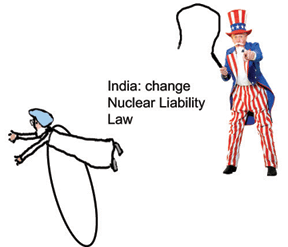
Additionally, certain other India-specific factors have stalled the nuclear power projects which corporations in the US, France and Russia have been eyeing in order to resurrect themselves. Nuclear liability tops the list here – foreign vendors have been wary of the 2010 liability law enacted by the Indian parliament, which they view as overly restrictive, even as civil society activists and safety experts consider the legislation extremely weak. The Indian law provides for a ‘right of recourse’ in Clause 17(b) under which, in case of a future nuclear accident, the nuclear operator can demand liability from the equipment suppliers.
The nuclear industry lobbies have found this provision to be an anathema and the US government has taken the lead in pressuring successive Indian governments to do away with it.
Despite his party’s vociferous criticism of such moves
 by the earlier Singh-led government when in opposition, Modi’s unabashed dalliance with the US has barely remained under wraps – he and Obama jointly declared in 2015 that India would actively take steps to limit liability in the case of a nuclear accident. by the earlier Singh-led government when in opposition, Modi’s unabashed dalliance with the US has barely remained under wraps – he and Obama jointly declared in 2015 that India would actively take steps to limit liability in the case of a nuclear accident.However, Modi didn’t stop at that. Not only did his government ensure that the liability rules were dubbed ‘ultra vires’ and against the spirit of the law by former Solicitor-General Soli Sorabjee, entered into force in 2016, it also went on to ratify the Convention on Supplementary Compensation (CSC) – an international template promoted by the nuclear lobbies to ensure a liability-free market, thereby deliberately creating a contradiction between India’s domestic law and its international commitments. Ever since it assumed power, the Modi government has consistently undermined nuclear liability provisions meant to safeguard the interests of the Indian people.
If the recent utterances of senior officials from the US Department of Energy offer any clues, the American nuclear vendors do not want to settle for anything short of amending the original Nuclear Liability Act – “to be clear, there are still open issues around the liability issue,” the US DoE Assistant Secretary is reported to have said in a Reuters report published last week. As the street protests by indignant survivors of Bhopal’s gas accident during Trump’s recent visit suggest, Indian citizens have had an agonising experience due to the apathy of governments and judicial processes, with the most vulnerable sections having been denied both compensation and justice in the case of the world’s worst industrial disaster. Successive governments in both the US and India have managed to ensure that concerned corporations remain unscathed and that their owners go unpunished.
Neither the routine exhortations of India-US summits being spaces for a rendezvous between two democracies, nor Modi’s much celebrated cleanliness drive, have translated into an open dialogue with the victims of the Bhopal disaster, or the detoxification of the accident site even three decades after the horrific chemical industrial accident.
Trump’s domestic energy policy and budget allocations disproportionately favour the nuclear industry, and exporting American nuclear reactors to developing countries is also a key part of this policy shift. The US under Trump has concluded nuclear deals with the UAE despite massive proliferation concerns………. Despite the hype that Trump’s recent visit generated – of an upgrade of US-India relations to a ‘Comprehensive Global Strategic Partnership’ and so on – there is very little that India stands to gain. In the absence of any new meaningful and people-centric cooperation on trade, environment, education or technology, this nuclear tango will only remain a farcical buildup at the cost of the safety and livelihoods of Indian citizens.
Not long ago, Modi’s own home state of Gujarat had rejected a US-imported nuclear project labeling it unacceptably risk-prone, especially in the wake of the 2011 Fukushima accident. This leaves the Modi government with no moral right to impose the US reactors on people in other parts of the country. Kumar Sundaram is founding editor of DiaNuke.org, an international platform for nuclear-related discussions and campaigns. https://www.thecitizen.in/index.php/en/NewsDetail/index/6/18388/Namaste-Nukes-Trumps-Toxic-Sales-Pitch-for-the-Stalled-Westinghouse-Nuclear-Project-in-India |
|



Communist Party of India (CPI (M) oppose purchase of U.S nuclear, with Jared Kushner’s vested interest
|
Party leader urges Centre to protect the country’s securityDemanding dropping of nuclear power plant proposed by Nuclear Power Corporation of India Ltd (NPCIL) at Kovvada in Srikakulam district, CPI (M) State Secretariat member Ch. Narsinga Rao on Monday said United States President Donald Trump was on a visit to India to pursue supply of reactor to the plant, among other things. He told reporters along with Greater Visakha unit president of CPI (M) B. Mr. Narsinga Rao said Westhouse company, which agreed to supply the reactor to Kovvada, had been acquired by Brookfield Asset Management, an investment company in which Qatar Investment Authority is a major stakeholder. The CPI (M) leader said Mr. Kushner was an investor in Qatar Investment Authority.
Mr. Trump might be keen on proceeding with the MoU on Kovvada, he alleged and asked the Centre to protect the country’s security by rejecting America’s plea to supply the rector to NPCIL. He said originally nuclear power plant was proposed at Mithivirdi in Gujarat and due to public protest, it was later decided to set up the plant at Kovvada. He said the Kovvada plant would be expensive and unviable and banks funding it were bound to turn bankrupt. Mr. Rao said former Union Power secretary E.A.S. Sarma had also strongly opposed the move to sign MoU with the US for supply of six reactors for Kovvada from the erstwhile Westinghouse company. |
|
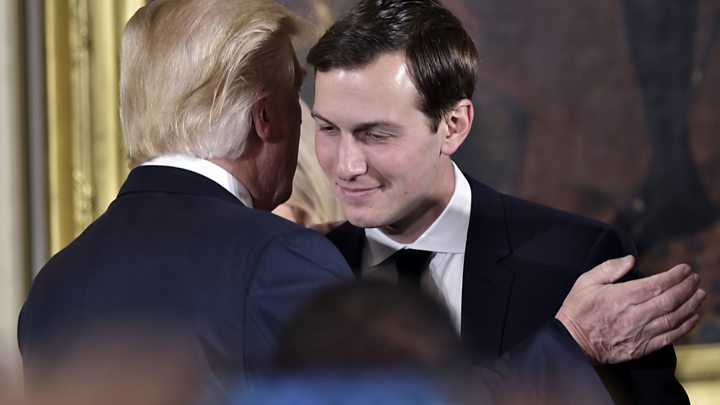
Trump to visit India as salesman for Westinghouse nuclear reactors
 Westinghouse to sign deal for six nuclear reactors in India during Trump’s visit: report HTTPS://THEHILL.COM/POLICY/INTERNATIONAL/INDIA/483820-WESTINGHOUSE-TO-SIGN-DEAL-FOR-SIX-NUCLEAR-REACTORS-IN-INDIA-DURING BY JUSTINE COLEMAN – 02/20/20 U.S. energy company Westinghouse is expected to sign a deal for six nuclear reactors with the state-run Nuclear Power Corporation of India (NPCIL) during President Trump’s trip to the country, Reuters reported.The deal will outline timelines and name the lead local constructor for building the reactors at Kovvada in southern India, according to the news service. Westinghouse to sign deal for six nuclear reactors in India during Trump’s visit: report HTTPS://THEHILL.COM/POLICY/INTERNATIONAL/INDIA/483820-WESTINGHOUSE-TO-SIGN-DEAL-FOR-SIX-NUCLEAR-REACTORS-IN-INDIA-DURING BY JUSTINE COLEMAN – 02/20/20 U.S. energy company Westinghouse is expected to sign a deal for six nuclear reactors with the state-run Nuclear Power Corporation of India (NPCIL) during President Trump’s trip to the country, Reuters reported.The deal will outline timelines and name the lead local constructor for building the reactors at Kovvada in southern India, according to the news service.
India has reportedly been open to receiving nuclear reactors since its 2008 civil nuclear energy pact with the U.S. Last year, the countries announced they had committed to six reactors. Representatives from the U.S. Energy and Commerce departments, Westinghouse, the U.S.-India Strategic Partnership Forum and The Nuclear Energy Institute have met in India for negotiations, Reuters noted. Rita Baranwal, assistant secretary for the Office of Nuclear Energy in the U.S. Department of Energy, told the news service that the team is “optimistic” the agreement will be signed “shortly.” “We are encouraging moving forward with Westinghouse and NPCIL to sign a MoU. It certainly is a private industry-to-private industry, a business-to-business decision,” she said, referring to a memorandum of understanding. Representatives from the U.S. Energy and Commerce departments, Westinghouse, the U.S.-India Strategic Partnership Forum and The Nuclear Energy Institute have met in India for negotiations, Reuters noted. The Hill reached out to Westinghouse and NPCIL for comment. |
|
Large U.S. nuclear delegation to India to con Indians into buying Small Modular Nuclear Reactors
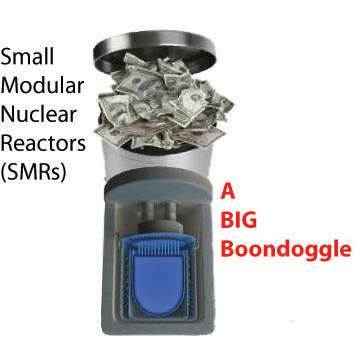 Nuclear ties in focus ahead of Trump visit, Live Mint 18 Feb 2020, Elizabeth Roche Nuclear ties in focus ahead of Trump visit, Live Mint 18 Feb 2020, Elizabeth Roche
|
|
Why India is not defined as a “Nuclear Power”, though it has nuclear bombs
Among the big changes in the global strategic landscape since the Nuclear Non-Proliferation Treaty came into force in 1970 is the expansion of the nuclear club from five to nine. All five nuclear powers at that time were recognised as nuclear-weapon states by the NPT. Since then, four more countries have gate-crashed the exclusive nuclear club: Israel, India, Pakistan and North Korea.
The first three have been de facto nuclear-armed states for decades, and North Korea conducted its first nuclear test in 2006. But because of an Alice-in-Wonderland definition in the treaty—nuclear-weapon states are countries that nuclear-tested before 1 January 1967—they can’t be recognised as nuclear-weapon states. The legal straitjacket means the NPT can’t function as the normative framework for the nuclear policies of four of the world’s nine nuclear-armed states: a triumph of definitional purity over strategic reality. …….. https://nationalinterest.org/blog/buzz/india-has-nuclear-bombs%E2%80%94-its-not-defined-nuclear-power-124721
India’s problematic nuclear security
Mapping the Negative Indian Nuclear Security, https://moderndiplomacy.eu/2020/02/14/mapping-the-negative-indian-nuclear-security/ By Rabia Javed, 14 Feb 20, Nuclear security has been a key issue for South Asia for several decades since India conducted its nuclear tests in 1974. Indian struggle to attain the maximum number of weapons is still underway since New Delhi conducted its so called peaceful nuclear test. While living with the kind of achieving the maximum numbers of nuclear weapons by India, the Indian struggle to achieve the maximum is moving steadily forward without great exertion but with abundant support.That is unfortunate.
Overall, the issue mainly revolves around the dangerous bargain that India had with the United States (U.S.) under the civil nuclear cooperation. Countries with major powers has up till now bend the rules for making India’s nuclear program to maintain the cooperation U.S. had with India in nuclear trade. Supporting India was also done with the aim of countering China’s emergence as a super power and controlling its influence. These steps taken in support of India have encouraged New Delhi more in expanding her nuclear weapons program that is already expanding at a higher rate.
By and large, India has on various accounts progressed below par in a comprehensive international reportage, such as the Nuclear Threat Initiative’s Nuclear Security Index. There have been other many reports that have shown that India’s nuclear security is quite under the negative flex. Ignoring these reports, it still is continuing to expand her nuclear forces.
Traditionally, the growing and bulging danger of insider threats also highlights the importance of personnel reliability programs (PRPs).Interestingly such issues exist in Indian facilities at larger scale.
While turning down pages from the past one can found that, CISF man kills 3 colleagues at Kalpakkam atomic plant. The incident occurred was though a fresh example which must have considered as India’s serious shortcomings in securing its nuclear facilities. Where later estimates given by Stockholm International Peace Research Institute found that an estimate of around 110 nuclear bombs are stored in such or same facilities which are being guard by these security forces.
With large number of such incidents that started happening or being covered by mainstream media starting from 1993, there exists another important instance that happened in 2008.
A criminal gang was found in smuggling low grade uranium which can be used in a radiation dispersal device, from India to Nepal. However, in the same year another gang was caught in smuggling such materials that have close connections with an employee at India’s Atomic Minerals Division. Similar lapses had occurred in 2018 where, a uranium smuggling racket was busted by the Kolkata police with one kilogramme of radioactive material which has a market value of INR 30 million ($440,000). All of aforementioned factors highlight the security measure India has up till now in securing its facilities that cannot be ignored.
India is operating a plutonium production reactor, Dhruva, and a uranium enrichment facility that are not subject to IAEA safeguards. India’s build-up of South Asia’s largest military complex of nuclear centrifuges and atomic-research laboratories is somehow threatening efforts related to nuclear security and safety. These facilities will ultimately give India the ability to make more large-yield nuclear arms & hydrogen bombs. The international task force on the prevention of nuclear terrorism is of the view that the possibility of nuclear terrorism is increasing keeping in mind the rapid nuclear development by India. Whereas, U.S. officials and experts are of the view that India’s nuclear explosive materials are vulnerable to theft.
Amusingly, in India, nuclear facilities are guarded by Central Industrial Security Force (CISF) and CISF guard admitted that security at the installations needs more enhancements. Mysterious deaths of Indian nuclear scientists is a matter of concern as some were reported suicide and some were murdered. The possibility of nuclear secrecy gets out in the hands of terrorists cannot be ignored.
Such risks stemmed in part from India’s culture of widespread corruption. India has refused and rebuffed repeated offers of U.S. help in countering such issue and alignments. The U.S. president’s coordinator for arms control and weapons of mass destruction from 2009 to 2013, Gary Samore, stated that:
We kept offering to create a joint security project [with India] consisting of assistance of any and every kind. And every time they would say, to my face, that this was a wonderful idea and they should grasp the opportunity. And then, when they returned to India, we would never hear about it again.”
India has a dangerous history of unsafeguarded sensitive facilities, where exist larger insider threats of nuclear bomb being stolen by insiders with grievances, ill motives, or in the worst case, connections to terrorists.
At the bottom of this entire debate is a disturbing fact concerning how a country can be trusted with uranium and nuclear deals with over dozens of countries ignoring its security issues related to nuclear safety. What might change India’s calculation that more deals and weapons would not equates to more security? The safest route to reduce nuclear dangers on the subcontinent is through concerted efforts to improve relations. A nuclear arsenal built by proliferation, as India did in 1974, is inherently unstable.
Delhi’s disaster – disappearing water supplies
|
Delhi is facing a water crisis. Ahead of day zero, the city’s residents have turned to the mafia and murder https://www.abc.net.au/news/2020-02-08/delhi-water-crisis-leads-to-mafia-murder-and-mutiny/11931208
By South Asia correspondent James Oaten and Som Patidar
On a crisp Delhi morning, dozens of women, men and children in one of the city’s poorest areas gather on the side of the road holding plastic bottles and buckets. They’re waiting for a water truck to arrive, clearly identifiable with its large tank on the back and hoses sprouting from the top like tentacles. When it does, the residents will have just a few minutes to fill their containers as much as possible to hopefully secure enough water for the day. In winter, when Delhi is cool, the situation is relatively calm. But in summer, when temperatures surge past 40 degrees Celsius, the situation becomes much more desperate. Fights have broken out. People have been killed. What it’s like to live with limited access to waterWe are getting water now as it is winter, but the crisis deepens in summer,” mother-of-three Babli Singh explained. The Delhi government has in recent years tried to supply water to unauthorised colonies by drilling water bores, but this is a short-term solution that exacerbates a bigger problem. Elsewhere, private enterprises — known locally as the “water mafia” — have been able to profit from the despair by building their own bores. The activity is illegal, but there has been little to nothing done to crack down on the practice. The ABC saw one such private enterprise drilling in a street, and the workers explained they were digging deeper than ever in an effort to find new water. Locals have been forced to borrow money to pay for waterMs Singh is one of the many families that had to pay the so-called water mafia to get their home connected to an illegal bore water supply. Her father-in-law, Inder Dev Singh, said he feels forgotten. “We are not getting any help from the government,” he explained. “The government has been promising us a water pipeline for a long time. We paid for our own private pipeline.” “We have to run behind water tankers. Sometimes I do not get water.” Ms Singh and her family of nine live in what’s considered Asia’s largest “unauthorised colony,” Sangam Vihar — which is home to well over 1 million residents and is located in Delhi’s southern outskirts. The buildings and infrastructure here were never designed or approved by a government agency. Rather, residents simply built their homes on a small plot of land with whatever resources they could muster, mostly concrete and brick. It’s a claustrophobic environment, with dusty roads so congested and narrow that cars often cannot enter. Essential services are also lacking, with the vast majority of residents relying on tanker water for drinking and groundwater for cleaning and washing. But with reserves so low, there’s real concern underground supplies will run dry in just a few months. “Our children go to school without a bath for four or five days,” Ms Singh said. “We are suffering. Life is very hard.” The rise of the ‘water mafia’ Delhi is one of 21 Indian cities that could run out of groundwater this summer, according to a 2018 government thinktank report. If and when this happens, it will be known as “day zero”. The water woes are a product of years of booming population growth, drought and mismanagement. During the summer, that pipe is only turned on for two hours, giving the family a small but crucial window to fill up a large underground tank they installed themselves. The water is drinkable if it is boiled first, he explained. Buying extra water is an option, but in an area where work is infrequent and wages are low, people often need to borrow money to buy extra allocations. “Water is supposed to be free,” Mr Singh explained. “[The private providers] do not want us to get a [government] water by pipeline as they are earning lot of money by providing water by tankers. “There will be a time when there will be no water.
A man was shot in a dispute over waterThe issue of water often only gets attention during the summer, when the situation becomes amplified. In the summer of 2018, a man was shot in Sangam Vihar during a dispute over water. In the same year, in another part of Delhi, a group of men and a juvenile were arrested for beating to death a father and son in another water dispute. Videos of skirmishes and violence also regularly emerge in summer on social-media application WhatsApp. This year, the issue is getting unseasonal attention as Delhiites head to the polls for local government elections. Political candidates, keen on securing votes from the city’s poorest, have made sweeping promises to build pipes to deliver water to every house in Delhi. “It does not get the respect it deserves,” explained Jyoti Sharma, who heads up the water security not-for-profit organisation, FORCE. “Water is central to everything we do. But everybody takes it for granted. So, it does not get the attention it deserves. It’s just these few election days that it’s being talked about.” Ms Sharma says there have been some positive steps in recent years, including forcing large homes to capture rainwater, and directing recycled water into rivers and ponds to recharge underground reserves. But it’s not enough to reverse the depleting trend. She worries about “day zero” but thinks it won’t occur this summer. “I am an Indian,” she explains.
“I’m hoping day zero will not happen. I am hoping it will not happen.” |
|
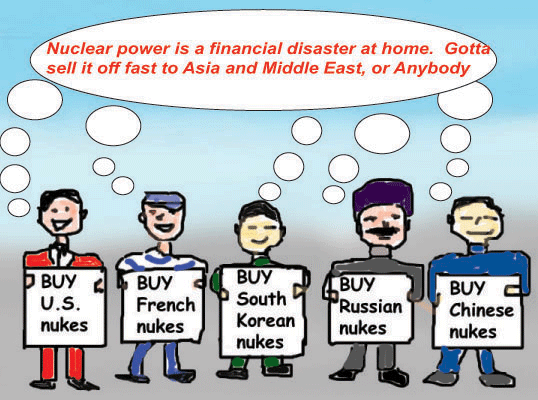
India joins the panic to sell costly, impractical, nuclear power to Africa and Middle East
|
Indian Envoy To Russia Says Countries Could Build Nuclear Power Plants In Africa & Middle East Caspian Newa By Vusala Abbasova January 26, 2020 Russia and India may team up to construct nuclear power plants in Africa and the Middle East, according to India’s ambassador to Russia, building on their current experiences in Bangladesh.
“We are already working under the scheme in Bangladesh,” Varna added, referring to the current construction of the country’s first nuclear power plant, called Rooppur. “Now Russia is also pretty active in the construction of nuclear power plants in the Middle East and Africa. That opens a new pathway of cooperation for us.” Varma believes the two sides could also launch projects in Africa using the experience they gained from joint work on Rooppur, which is being built by Russia’s Rosatom State Atomic Energy Corporation and costing over $13 billion. “Russia already has agreements in this field with a number of African countries,” Varma said. “Ethiopia is one of them, and there are some countries in the Middle East.”
|
|
1 This Month
23-25 October – on Zoom – World BEYOND War’s annual global conferenc


Shut down the radiation-damaged Heysham nuclear reactors now
To see nuclear-related stories in greater depth and intensity – go to https://nuclearinformation.wordpress.com

Say No to NASA’s Reckless Nuclear Reactor on the Moon
Say No to NASA’s Reckless Nuclear Reactor on the Moon

-
Archives
- October 2026 (247)
- September 2026 (339)
- August 2026 (330)
- July 2026 (355)
- June 2026 (287)
- May 2026 (306)
- April 2026 (356)
- March 2026 (251)
- February 2026 (267)
- January 2026 (308)
- December 2025 (358)
- November 2025 (359)
-
Categories
- 1
- 1 NUCLEAR ISSUES
- business and costs
- climate change
- culture and arts
- ENERGY
- environment
- health
- history
- indigenous issues
- Legal
- marketing of nuclear
- media
- opposition to nuclear
- PERSONAL STORIES
- politics
- politics international
- Religion and ethics
- safety
- secrets,lies and civil liberties
- spinbuster
- technology
- Uranium
- wastes
- weapons and war
- Women
- 2 WORLD
- ACTION
- AFRICA
- Atrocities
- AUSTRALIA
- Christina's notes
- Christina's themes
- culture and arts
- Events
- Fuk 2022
- Fuk 2023
- Fukushima 2017
- Fukushima 2018
- fukushima 2019
- Fukushima 2020
- Fukushima 2021
- general
- global warming
- Humour (God we need it)
- Nuclear
- RARE EARTHS
- Reference
- resources – print
- Resources -audiovicual
- Weekly Newsletter
- World
- World Nuclear
- YouTube
-
RSS
Entries RSS
Comments RSS

