Prominent Indian activist Medha Patkar urges Tamil Nadu’s Chief Minister to close down Kudankulam nuclear power station.

Medha Patkar urges Stalin to close nuclear plant at Kudankulam https://www.dtnext.in/News/TamilNadu/2021/12/14043718/1333730/Medha-Patkar-urges-Stalin-to-close-nuclear-plant-at-.vpf
Dec 14,2021 Noted activist Medha Patkar met Chief Minister M. K. Stalin in Chennai on Monday and urged him to shut down the Kudankulam Nuclear Power Plant
Chennai: “Radiation causes serious impact on human beings as well as aquatic species, and when there are over four nuclear plants (at Koodankulam nuclear plants) close to the sea, it is even more destructive,” said social activist Medha Patkar, while discussing environmental issues in Tamil Nadu, at Chennai press club on Monday.
Even as the opposition to the two units of nuclear power plants was continuing, they have started the construction of 3, 4, 5 and 6 units. In this situation, they are planning to begin the seventh and eighth unit and reprocessing plant said the national convener of the National Alliance of People’s Movement.Chennai: “Radiation causes serious impact on human beings as well as aquatic species, and when there are over four nuclear plants (at Koodankulam nuclear plants) close to the sea, it is even more destructive,” said social activist Medha Patkar, while discussing environmental issues in Tamil Nadu, at Chennai press club on Monday.
Even as the opposition to the two units of nuclear power plants was continuing, they have started the construction of 3, 4, 5 and 6 units. In this situation, they are planning to begin the seventh and eighth unit and reprocessing plant said the national convener of the National Alliance of People’s Movement.
Renewable energy growing at a fast pace, China and India leading the way.

Growth in renewable energy is set to hit an all-time record this year, but is still falling “well short” of what is necessary to slash planet-warming emissions, according to the International Energy Agency. The energy watchdog estimates that around 290 gigawatts (GW) of renewable energy capacity came online around the world in 2021 — enough electricity for approximately 200 million average US homes — according to a report published Wednesday.
By 2026, the agency predicts global renewable capacity will rise more than 60% from 2020 levels, an amount equivalent to the current total global power capacity of fossil fuels and nuclear combined, it said.
But to reach net-zero emissions by 2050, a goal many nations have set, renewables need a far bigger push. The current pace is being driven by China, which the agency says remains the global leader in renewable energy growth. The country is expected to reach 1200 GW of total wind and solar
capacity in 2026, four years sooner than its target date. Renewables are also being rapidly embraced in India, where they are projected to double new installations this year, in comparison to 2015-2020.
FT 1st Dec 2021
https://www.ft.com/content/317424af-a559-4598-a4df-5fe7c9fff947
Why India’s nuclear ICBM test is counterproductive for tactical and strategic stability
Why India’s nuclear ICBM test is counterproductive for tactical and strategic stability, CGTN,
Hamzah Rifaat Hussain 31 Oct 21, On the threat of nuclear weapons during conflict, the rule is that skirmishes, tensions and conventional conflicts between countries need to be resolved through confidence-building measures and dialogue to prevent it from descending into the nuclear domain, when conversely, adding nuclear dimensions to tensions would only exacerbate trust deficits and threaten nuclear nonproliferation.
Despite this, better sense has not prevailed in New Delhi either on the results of Corps Commander-level talks or the decision to establish credible deterrence, given its decision to test a nuclear capable intercontinental missile (ICBM) called “Agni-5” amid tensions with China with a range of 5,000 kilometers on October 27.
The missile, which descended into the Bay of Bengal, is touted to have a high degree of accuracy, yet it belittles the significance of border talks with China, which was previously considered pivotal by Defense Minister Rajnath Singh.
Furthermore, India tackling China by strengthening its weapons systems will not resolve its numerous internal quagmires, which include a pandemic stricken economy and challenges to inclusivity. …………. https://news.cgtn.com/news/2021-10-31/Why-India-s-nuclear-ICBM-test-is-counterproductive-for-stability-14Oa6m7T9Xq/index.html
Tamil Nadu leaders call for a nuclear-free zone, and stopping of development of Kudankulam project

—TAMIL NADU Declare T.N. a nuclear free zone, say leaders https://www.thehindu.com/news/national/tamil-nadu/declare-tn-a-nuclear-free-zone-say-leaders/article37100662.ece 20 Oct 21, They express concern over KKNPP
Leaders of political parties, led by VCK chief Thol. Thirumavalavan, on Wednesday sought to declare Tamil Nadu a “nuclear-free zone”.
At a press conference here, he said the unscientific disposal of radioactive waste from the nuclear reactor at Kudankulam was likely to increase the risk to public health. “Experts have said some of the reasons for the disaster in Chernobyl and Fukushima were similar to the existing conditions at Kudankulam,” he said.
Pointing to the issues in the disposal of radioactive waste from the Kudankulam reactor, Mr. Thirumavalavan said the Union Government had continued such activities which were dangerous to people. “The Union Government should suspend the operations pertaining to the third and fourth reactors. It should announce the location of the deep geological repository before conducting the public consultations on the development of the facility away from reactor.”
The government should not develop the fifth and sixth reactors too, he added.
The group of leaders called for a White Paper on the Kudankulam project and the withdrawal of cases against the residents who protested against the project.
The first reactor was stopped for maintenance from June 22 and resumed operations on September 2. After 35 days, it was stopped again. The frequent disruption of operations and snags had increased the risk of disaster, a release said.
India, China and the new missile silos
CHINA’S MISSILE SILOS AND THE SINO-INDIAN NUCLEAR COMPETITION, War on the Rocks, DEBAK DAS 15 Oct 21, This summer, U.S. analysts using commercial satellite imagery discovered that China was significantly expanding its nuclear forces and building hundreds of new missile silos. With the new silos, China could potentially double the size of its arsenal of intercontinental ballistic missiles. The news sent shockwaves through Washington. The head of Strategic Command called the developments “breathtaking,” and the news is sure to embolden efforts to fund U.S. nuclear modernization efforts on Capitol Hill. While the United States has a much larger nuclear force than China — with 3,750 nuclear warheads in its nuclear weapons stockpile compared to China’s 350 warheads — it will still likely take a forceful response to China’s latest nuclear developments.
But how will India — China’s other nuclear armed adversary — react to Beijing’s new missile silos? India has a nuclear triad and is reported to have 150 nuclear warheads deployed on different air-, sea-, and land-based platforms. China, meanwhile, is estimated to have its nuclear weapons stockpile of 350 nuclear warheads deployed across different platforms. However, with the new missile silos and fears of an increase in Chinese nuclear warheads, the strategic asymmetry in the Sino-Indian nuclear relationship may become more stark.
Moreover, China and India continue to engage in hostilities in the Himalayas. In August 2021, over a hundred soldiers from the Chinese People’s Liberation Army crossed over to the Indian side of the border and damaged a bridge and other infrastructure before retreating. In June 2020, in the deadliest clash between the two countries in 45 years, more than 20 soldiers were killed in the Galwan Valley in Ladakh. This led to a heightened state of tensions and a war scare between the two countries. High-level military talks between the two nuclear states remain deadlocked, with regular hostilities at different points along the 3,488-kilometer Line of Actual Control. An increase in Chinese nuclear capabilities in this context has the potential to destabilize the region and spark a nuclear arms race. But will it?
India has been cautious in its nuclear relationship with China and is unlikely to have a dramatic response to the new missile silos at the moment. It has two nuclear-armed adversaries to consider, and its focus will remain on Pakistan. India will continue to modernize its nuclear arsenal with new counterforce nuclear delivery systems and to test multiple independently targeted re-entry ballistic missiles, which will allow it to manage its nuclear relationship with both nations. While the counterforce missiles and short-range nuclear delivery systems are aimed at Pakistan, India’s nuclear relationship with China will continue to be based on ensuring a secure second-strike capability.
No First Use, Second-Strike, and Caution
Despite the continuing military engagements along the Line of Actual Control, the Sino-Indian nuclear relationship remains stable. This is because India’s nuclear relationship with China rests on its survivable second-strike nuclear doctrine. It has pledged not to use its nuclear weapons first as a part of a no first use policy. This doctrine means that as long as India has a secure-second-strike capability — that is, the capability to absorb a nuclear first strike on its soil and then retaliate using its remaining nuclear forces — it will not need to build a large arsenal of nuclear weapons. It just needs to make sure that its nuclear weapons systems are well dispersed and survivable……….
Manageable Historical Asymmetry
China’s additional nuclear silos do not represent a new strategic problem for India………………….
Border Conflict Remains at Low Escalation Level ………..
……… https://warontherocks.com/2021/10/chinas-missile-silos-and-the-sino-indian-nuclear-competition/
Aukus fallout: for years, US told India it couldn’t share nuclear submarine technology. ‘And now this
Aukus fallout: for years, US told India it couldn’t share nuclear submarine technology. ‘And now this …’
Deal between Australia, the US and Britain to share nuclear-powered submarine technology has some in India asking why it hasn’t been granted similar access to US technology…….. https://www.scmp.com/week-asia/politics/article/3149446/aukus-fallout-years-us-told-india-it-couldnt-share-nuclear?module=perpetual_scroll&pgtype=article&campaign=3149446 Pranay Sharma 20 Sep 21.
Is AUKUS pact a signal to India to go for nuclear attack submarines?
With a new aircraft carrier, six new Kalvari class diesel attack submarines and Vishakhapatnam class of destroyers, the Indian Navy is going to be very potent force in the Indo-Pacific by 2025. By Shishir Gupta, Hindustan Times, New Delhi SEP 18, 2021 With Australia signing a pact with US and UK to go in for eight nuclear powered conventional attack submarines or SSNs to deter China in Indo-Pacific, India also needs to have a relook at its 1999 conventional submarine plan and move swiftly towards nuclear powered sub-surface vessels.
The AUKUS pact will not be without security ramifications for the Quad partners as there is a distinct possibility that China may build an SSN for its client Pakistan citing the transfer of nuclear reactor under AUKUS to Australia. This will create a bigger security headache for India and for other countries in the IOR. https://www.hindustantimes.com/india-news/is-aukus-pact-a-signal-to-india-to-go-for-nuclear-attack-submarines-101631944254552.html
Over 200kg uranium theft in India poses threats of nuclear terrorism.
Over 200kg uranium theft in India poses threats of nuclear terrorism, The News, 5 Sept 21, I SLAMABAD: The theft of over 200 kilograms of nuclear material during last two decades in India poses serious threats of nuclear terrorism, necessitating the global powers’ role to raise safety standards in the country.
The countries in the region including China and Pakistan have repeatedly called for strengthening regulations following repeated incidents of theft of nuclear material in India. Such incidents raised concerns about India emerged as a potential hotspot in illegal trade of nuclear technology and materials vital for a malicious nuclear supply chain for state and non-state actors.
According a timeline issued by The South Asia Strategic Stability Institute (SASSI), 18 nuclear material’s theft and lost incidents were reported in India from 1994 to 2021 involving over 200kg nuclear material.
The Indian authorities recovered 2.5kg uranium in 1994; 111kg in 1998, also involving an opposition leader; 59.1kg in 2000; 200 grams in 2001; 225 grams in 2003; 4kg in 2008; 5kg in 2009; 9kg in 2016; 1kg in 2018 and 13.75kg in 2021 in multiple incidents.
According to a research paper jointly issued by SASSI President Dr Maria Sultan and now Human Rights Minister Dr Shireen Mazari, the reports of Indian involvement in the theft of nuclear fissile material dates back to the early 1970s, the magnitude of the threat increased manifold in the 1980s and 1990s.
In the late 1980s, the CIA had concluded that India was trying to develop a sophisticated Hydrogen bomb. In 1994, on a tip-off, a shipment of beryllium was caught in Vilnius, worth $24 million. “The material could fall into the hands of extremists and terrorists in India with disastrous consequences. The out-of-control material could also be a cause of concern due to the proliferation reasons. It is also the responsibility of global organisations and India’s partners to raise the standard of nuclear safety and security in the country and investigate shortcomings for maintaining tight controls on nuclear and radioactive materials,” said Sarman Ali, an Islamabad-based defence analyst.
Pakistan had repeatedly called for thorough investigation of such incidents and measures for strengthening the security of nuclear materials to prevent their diversion.
Foreign Office spokesperson said in a recent statement that such incidents were a matter of deep concern as they point to lax controls, poor regulatory and enforcement mechanisms, as well as possible existence of a black market for nuclear materials inside India………….. https://www.thenews.com.pk/print/888297-over-200kg-uranium-theft-in-india-poses-threats-of-nuclear-terrorism
Yet another incident of stolen nuclear materials in India
In yet another incident of the capture of nuclear-related materials from
unauthorized persons in India has made headlines in the Indian media but
largely ignored in the international media.
On 4th June 2021, as reported in the Indian media, the authorities arrested seven people possessing
approximately 6.4 kilograms of Uranium in the Eastern State of Jharkhand.
This is the second time in less than a month where Indian authorities have
captured such a gang in an attempt to sell uranium illegally.
An incident of the same nature was reported just a few days ago in May 2021 where
authorities apprehended unauthorized persons, who were trying to sell
nearly 7 kilograms of natural uranium on the black market. Notably, Indian
authorities themselves believe that these events might be linked to a
“national gang involved in illegal uranium trade”.
Modern Diplomacy 12th June 2021
Incidents of Uranium Theft in India: Depleting Nuclear Safety and International Silence
Explosion forced Indian Navy to return nuclear submarine to Russia?
Explosion forced Indian Navy to return nuclear submarine to Russia?
Explosion forced Indian Navy to return nuclear submarine to Russia? The INS Chakra was inducted into the Indian Navy in 2012 on a ten-year lease The Week, Web Desk June 09, 2021 On June 4, Twitter was abuzz after photographs from Singapore showed the Indian Navy’s nuclear-powered submarine INS Chakra transiting through the Malacca Straits.
Later in the day, reports emerged that the warship was on its way back to Russia. India agreed to lease the INS Chakra from Russia nearly two decades ago and inducted it into the Indian Navy in 2012 on a ten-year lease. The Non Proliferation Treaty (NPT) bans the sale of nuclear-powered vessels, but is silent on leasing of such ships. This was the second Indian Navy submarine to have the name Chakra.
The ‘early’ return of the INS Chakra had triggered a buzz as she was the only nuclear-powered attack submarine in the Indian Navy. Attack submarines are meant primarily to destroy enemy surface ships and submarines. The Chakra was from a Russian class of submarines that NATO codenamed the Akula (shark in Russian). Before being handed over to the Indian Navy, the Chakra was known as the Nerpa in Russian service….
On Wednesday, Russian state news agency TASS reported the early return of the INS Chakra was necessitated due to an explosion on board the vessel in the spring of 2020, which damaged both its hulls. The Chakra, like many other Russian-designed submarines of its era, is a ‘double-hulled’ submarine, with a pressure inner hull and a lighter outer hull to allow for more buoyancy and capacity to absorb damage in the event of being hit by a torpedo or mine.
The Russian language website of TASS quoted a source in the Russian “military-industrial complex” as saying, “The explosion of a high-pressure air cylinder on the Chakra submarine… occurred in the spring of 2020.” The report claimed the high-pressure air cylinder was located between the two hulls. In addition to damage to the hulls, the explosion also damaged “electronic weapons and hydro-acoustic equipment”.
Previous accidents………. https://www.theweek.in/news/india/2021/06/09/explosion-forced-indian-navy-to-return-nuclear-submarine-to-russia.html
India is operating the world’s most dangerous, fastest-growing, nuclear weapons and missile programs in the world
World’s most dangerous fastest-growing nuclear weapons programme
Nowadays, South Asia is categorized by international analysts as one of the unstable regions of the world, where the chances of nuclear brinkmanship are high because of the longstanding rivalry between Pakistan and India, The Nation, Syed Zain Jaffery, May 11, 2021
‘‘…………………India is operating the world’s most dangerous fastest-growing nuclear weapons and missile programs in the world, which are not only threatening for the region but world peace because of flawed nuclear safety and security standards. Increasing stocks of Indian fissile material and the development of nuclear triad capability – bombers, missiles and nuclear power/capable submarines – have increased the capability of New Delhi in the strategic realm. Contrary to International media claims, the Indian triad consists almost 500 nuclear weapons including thermonuclear weapons and has the capacity to produce over 2,600 nuclear weapons for tactical and strategic use.
Today, the undisclosed plutonium stocks have not been under IAEA’s inspection and left with Indian arms production facilities under the discriminatory nuclear cooperation deal between the United States and India. The civilian Plutonium reserves that are outside the safeguards of the IAEA and designated for strategic purposes are the main cause of concern. In a three-stage plan, India is continuing to expand its unsafeguarded nuclear power program. The installation of several nuclear reactors has also been announced by New Delhi. This capability will generate excessive fissile material, other than the fuel necessary for breeder and naval reactors. Over the next few years, India will be capable to replace China, France and the United Kingdom in terms of its abilities to produce nuclear weapons to become the third behind the US and Russia.
Under the influence of the rising economy of India, like-minded Western analysts are trying to divert the consideration of the international community from the fastest growing Indian nuclear weapons program and threats associated with it to the peaceful neighboring countries. Since 1974, the Indian intentions are clear that it will use any kind of advanced technology, which provided under the rubric of peaceful purposes, for military use and will violate any international law related to nuclear, space and missiles program to exercise hegemony in the region. The Indian policy aims, concerning nuclear weapons, are solely constructed to push its hegemony in the region. Now it is time for the international community to realize the Indian nuclear threat.
https://nation.com.pk/11-May-2021/world-s-most-dangerous-fastest-growing-nuclear-weapons-programme
Pakistan expresses deep concern over the seizure of nuclear explosive material in India
Pakistan Expresses Deep Concern Over The Seizure Of Nuclear Explosive Material In India, https://eurasiantimes.com/pakistan-expresses-deep-concern-over-the-seizure-of-nuclear-explosive-material-in-india/ ByEurAsian Times DeskMay 8, 2021
Pakistan has expressed deep concern over the seizure of natural uranium in the Indian state of Maharashtra. Uranium is used in several areas, including nuclear explosives.
A tweet by Pakistan’s Foreign Office read – We have noted with serious concern reports about the seizure of more than 7 Kg natural uranium from unauthorized persons in India. Security of nuclear materials should be the top priority for all countries, and there is a need for a thorough investigation of the matter.
Earlier, Indian authorities seized around seven kilograms of natural uranium and arrested two people in Maharashtra (the capital of India’s financial hub – Mumbai) for “illegally possessing” the highly radioactive substance.
“We had received information that one person identified as Jigar Pandya was going to illegally sell pieces of Uranium substance, a trap was laid and he was arrested,” the Maharashtra police said. “Investigation into the case revealed that another person identified as Abu Tahir gave him these pieces of Uranium.”
The police said a huge quantity of substance was recovered when Tahir was apprehended.
The case was registered after a report from the Bhabha Atomic Research Centre in Mumbai authenticated the seized material is highly radioactive. “A report was received that the substance is natural uranium. It’s highly radioactive and dangerous to human life,” the police said.
It is the second time in India that such a highly radioactive material has been seized by police in recent years. In 2016, police seized around nine kg of depleted uranium in the Thane area of Maharashtra.
France desperate to sell its flawed nuclear technology to India, Time for India to cancel Jaitapur nuclear power project.
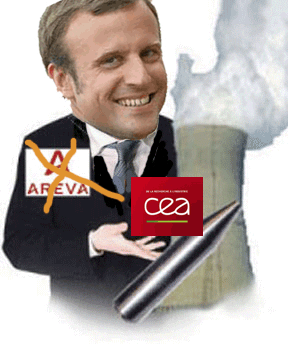
Time for India to cancel Jaitapur nuclear power project, France keen on flogging its ‘messy’ tech to India Business May 2, 2021 By Ranvir Nayar Media India Group France remains desperate to sell its severely troubled EPR nuclear reactors to India, even though its own project at home and at both the sites outside of France have had severe cost and time overruns and continue to face safety issues.
On March 3, 2021, Electricité de France, EDF, the sole operator of nuclear power plants in France, informed the country’s nuclear safety body, Autorité de Sûreté Nucléaire (ASN), of a design anomaly on three nozzles of the main primary system of the European Pressurised Reactor that it has been building at Flamanville in north-west France.
The design flaw is serious as the main primary system contains water used to cool the reactor core and transfer energy from the nuclear reaction to the steam generators. The design dates back to 2006 and the nozzles were manufactured in 2011.
https://mediaindia.eu/business/jaitapur-nuclear-france/
In India’s pandemic nightmare, India and Pakistan need to invest in health, not nuclear weapons.

Oxygen is more important than uranium, DW, 1 May 21, India and Pakistan can afford to buy weapons and test ballistic missiles, but they can’t cope with the COVID crisis. DW’s Shamil Shams says it is time for both to invest in public health and focus less on warmongering.
Dr. Mubarak Ali, a progressive Pakistani historian, recently wrote on social media that the mishandling of the coronavirus pandemic in India and Pakistan proves that “oxygen is more important than uranium.”
Both India and Pakistan are grappling with an acute public health crisis brought on by coronavirus. India lacks oxygen for COVID patients, and Pakistan can’t afford to buy vaccines.
However, both nuclear-armed states continue to devote a large chunk of their national budgets to military spending.
The pandemic situation in India is nightmarish. During the week following April 18, India reported 2.24 million new cases, the highest number recorded by any country in a seven-day period since the pandemic began.
India also logged 16,257 deaths, almost double the 8,588 deaths recorded the previous week, according to Health Ministry data. Since the start of the pandemic last year, India has registered over 17.6 million COVID cases and almost 200,000 related deaths.
This “second wave” is particularly lethal and has exposed the fragility of India’s health infrastructure. Hospitals are overwhelmed with COVID patients, and there aren’t enough places to cremate or bury the dead.
The situation is Pakistan is getting worse by the day. Infections and deaths are surging.
As of Tuesday, April 27, Pakistan has recorded almost 805,000 COVID cases and 17,329 deaths. Experts say the actual numbers are likely much higher.
The vaccine rollout has been quite slow in Pakistan because the government doesn’t have the funding to purchase doses. China and other countries have donated a few million vaccine doses, but it is not enough to vaccinate a country of 220 million people.
Stubborn arrogance
Yet, the ruling classes in India and Pakistan are not ready to reevaluate their public spending policies.
For over 70 years since both countries gained independence from British rule, India and Pakistan have invested more in defense than in the wellbeing of their people.
Their militaries have thrived, even as a large segment of their populations have fallen below the poverty line.
This is what happens when a developing county prioritizes security-based national spending. India and Pakistan have the latest tanks and fighter jets, yet their hospitals lack ICU beds and ventilators………
Misplaced priorities
Even the world’s most developed health care systems have been pushed to the edge by the coronavirus pandemic. And for developing countries, the pandemic has demonstrated the necessity of a functional health care system for prosperity.
Powerful militaries and massive defense budgets cannot fight a virus.
Therefore, India and Pakistan can no longer justify supporting a nuclear arsenal while their populations suffer due to a lack of medicines, oxygen cylinders and hospitals.
The rulers of the two nations must put an end to their warmongering and resolve their disputes politically and diplomatically. The best way to deal with COVID – and potential pandemics in the future – is through regional cooperation.
The way many Pakistanis have offered support to Indians during their health crisis is proof that the two nations can overcome many challenges if they help each other.
The pandemic has demonstrated that if the arch-rival south Asian neighbors don’t move toward reconciliation and peace, their economies are bound to collapse in the long run, and even their mighty armies will not be able to stop it. https://www.dw.com/en/opinion-oxygen-is-more-important-than-uranium/a-57350243?fbclid=IwAR3Cwkkmbw2jocuXnqY6MpWWHOnWzy182c0WUa1XIkWRvAntNSlZS2t4CVY
France’s EDF imposes conditions on India, re massive nuclear station planned for Jaitapur. EDF will be “Neither investor in the project nor responsible for construction”.
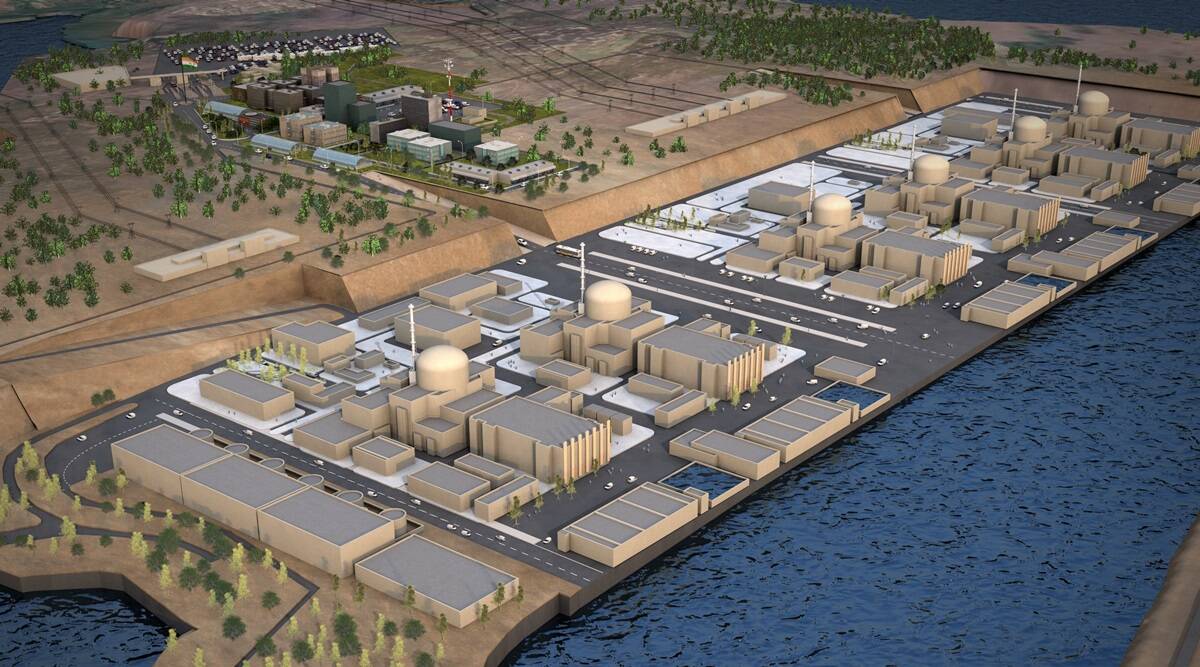
World Nuclear News 23rd April 2021, French company EDF has submitted to Nuclear Power Corporation of India Ltd (NPCIL) its binding techno-commercial offer to build six EPRs at Jaitapur in Maharashtra. The offer is the culmination of work that began with the 2018signature of an agreement between the two companies and paves the way for discussions towards a binding framework agreement.
https://world-nuclear-news.org/Articles/EDF-submits-offer-for-Jaitapur-project
Le Monde 23rd Aprilo 2021, It is believed to be the largest civilian atomic infrastructure in the world, with an installed capacity of 9,600 megawatts. This offer should initially have been submitted at the end of 2018 to the Nuclear Power Corporation of India Limited (NPCIL) group, the future operator of the plant.
But the approach of India’s spring 2019 general elections had made it untimely in the eyes of nationalist Prime Minister Narendra Modi, who is a candidate for his return to power. If the drafting of the document, more than 7,000 pages, finally took much longer than expected, it is also because of the sensitivity of its central subject: the distribution of responsibilities between the French corporation and the public operator. Indian.
In this case, EDF intends to impose its conditions. While the company chaired by Jean-Bernard Lévy originally said that it would build the entire Jaitapur plant, it now proposes to provide only “engineering studies and equipment”,
without being “Neither investor in the project nor responsible for construction”.
1 This Month
To see nuclear-related stories in greater depth and intensity – go to https://nuclearinformation.wordpress.com/
12 February – Webinar The Big Push: New Nuclear Projects in Canada
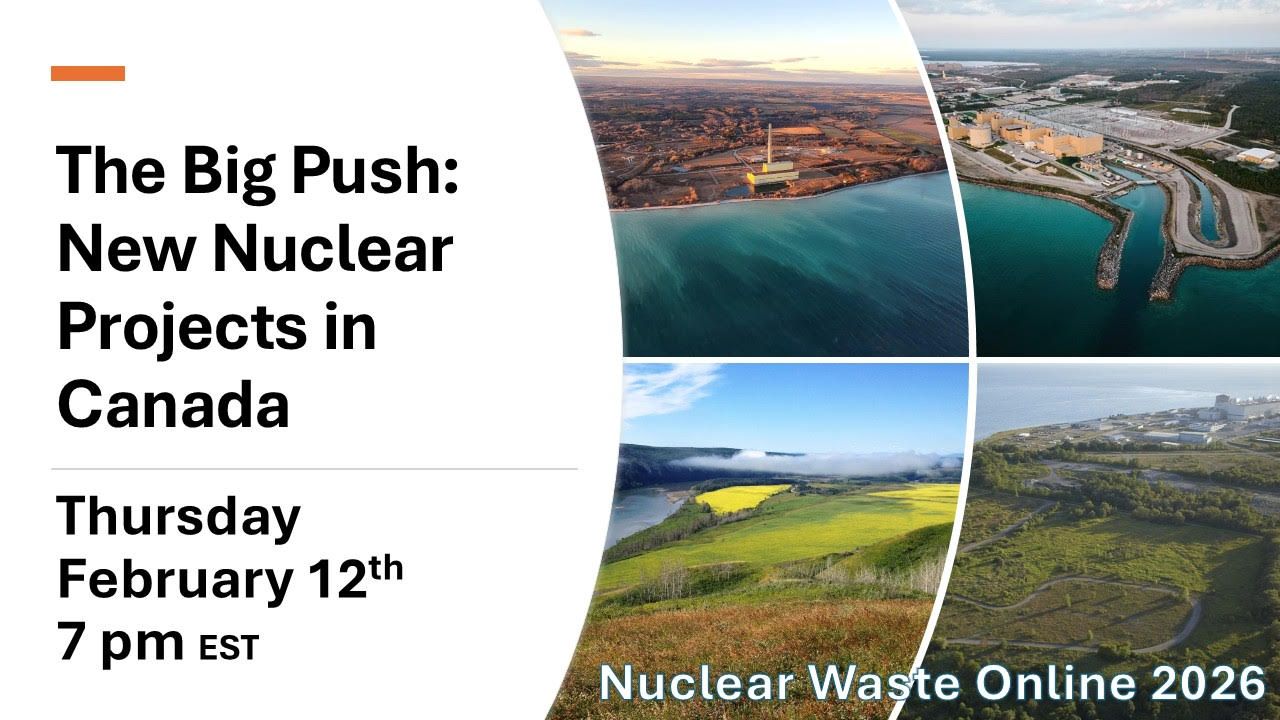
Thursday, February 12, 7 pm Eastern | 2nd of 4 sessions in the 2026 Nuclear Waste Online webinar series
Join a webinar on the push for new nuclear generation in Canada. Go to Northwatch.org to register or use the registration link https://us02web.zoom.us/webinar/register/WN_ZfWOf1GITqSRIZX8CB-A9w
-
Archives
- February 2026 (115)
- January 2026 (308)
- December 2025 (358)
- November 2025 (359)
- October 2025 (376)
- September 2025 (258)
- August 2025 (319)
- July 2025 (230)
- June 2025 (348)
- May 2025 (261)
- April 2025 (305)
- March 2025 (319)
-
Categories
- 1
- 1 NUCLEAR ISSUES
- business and costs
- climate change
- culture and arts
- ENERGY
- environment
- health
- history
- indigenous issues
- Legal
- marketing of nuclear
- media
- opposition to nuclear
- PERSONAL STORIES
- politics
- politics international
- Religion and ethics
- safety
- secrets,lies and civil liberties
- spinbuster
- technology
- Uranium
- wastes
- weapons and war
- Women
- 2 WORLD
- ACTION
- AFRICA
- Atrocities
- AUSTRALIA
- Christina's notes
- Christina's themes
- culture and arts
- Events
- Fuk 2022
- Fuk 2023
- Fukushima 2017
- Fukushima 2018
- fukushima 2019
- Fukushima 2020
- Fukushima 2021
- general
- global warming
- Humour (God we need it)
- Nuclear
- RARE EARTHS
- Reference
- resources – print
- Resources -audiovicual
- Weekly Newsletter
- World
- World Nuclear
- YouTube
-
RSS
Entries RSS
Comments RSS
 nuclear-news