Safety fault in China’s European Pressurised Water Reactor (EPR) does not bode well for UK’s Hinkley Point C and Sizewell nuclear projects

Key safety components in the UK’s first new nuclear power station for 30 years may need to be redesigned and the project could be delayed after defects were detected at a similar reactor in China.
The £22 billion Hinkley Point C plant in Somerset is already well over budget and a decade late but the defects mean that the scheduled date for starting electricity generation, of June 2026, may have to be revised. The same power plant design is due to be used for another nuclear power station, Sizewell C in
Suffolk, which is planned but has not yet been approved.
An investigation is still under way into the cause of the problems with the plant in Taishan, in the southern Chinese province of Guangdong. It was shut down in August after reports of damage to fuel rods, which hold nuclear materials used to fuel the reactor.
The plant is operated by China General Nuclear Power Group and owned in partnership with the French state-controlled EDF, the two companies involved in building Hinkley Point C.
The Commission for Independent Research and Information on Radioactivity, a French association
created in the aftermath of the Chernobyl disaster, said that a whistleblower had reported that a design flaw in the reactor pressure vessel could be the cause of the problem at Taishan. An industry source
told The Times that the investigation was likely to show that the pressure vessel was “demonstrably safe” but it might also show that design changes were needed.
Paul Dorfman, a nuclear expert at the University of Sussex, said: “If the news we are hearing from the Taishan EPR [European pressurised reactor] is right, then it’s beginning to look like there’s a potential generic fault with the key safety mechanism of the EPR reactor design itself. “If so, this is serious news for ongoing construction at Hinkley Point C and plans for Sizewell C.
Times 1st Dec 2021
https://www.thetimes.co.uk/article/ef84adce-5215-11ec-8d72-b8ab431649b1
Whistleblower explained the tank design problem that caused the shutdown at Taishan nuclear power station
Last July, in China, the Taishan nuclear power plant was shut down. A few weeks earlier, an incident had taken place in the only EPR plant in service in the world, designed jointly by the Chinese CGN and the French EDF.
At the end of November, perhaps finally an explanation: the incident was due to a fault in the design of the vessel, according to a major French association specializing in nuclear safety. The incident which led in July to the shutdown of a reactor at the EPR nuclear power plant in Taishan, in southern China, is believed to be due to a design flaw in the vessel, the French association CRIIRAD said on Saturday.
The Commission for Independent Research and Information on Radioactivity (CRIIRAD) would get its
information from a “whistleblower”. “This is a Frenchman who works in the nuclear industry, having access to very precise technical information on the situation of the Taishan 1 reactor core,” a CRIIRAD official told AFP.
Taishan is the only pressurized water reactor (EPR) plant in the world, with two reactors. Four other EPR reactors are under construction, all in Europe: one in Finland, one in France in Flamandville and two in England. It is a tank design problem that would be the cause of the incident in Taishan reported on June 14, 2021. This is a first explanation.
TV5Monde 28th Nov 2021
Renewable energy growing at a fast pace, China and India leading the way.

Growth in renewable energy is set to hit an all-time record this year, but is still falling “well short” of what is necessary to slash planet-warming emissions, according to the International Energy Agency. The energy watchdog estimates that around 290 gigawatts (GW) of renewable energy capacity came online around the world in 2021 — enough electricity for approximately 200 million average US homes — according to a report published Wednesday.
By 2026, the agency predicts global renewable capacity will rise more than 60% from 2020 levels, an amount equivalent to the current total global power capacity of fossil fuels and nuclear combined, it said.
But to reach net-zero emissions by 2050, a goal many nations have set, renewables need a far bigger push. The current pace is being driven by China, which the agency says remains the global leader in renewable energy growth. The country is expected to reach 1200 GW of total wind and solar
capacity in 2026, four years sooner than its target date. Renewables are also being rapidly embraced in India, where they are projected to double new installations this year, in comparison to 2015-2020.
FT 1st Dec 2021
https://www.ft.com/content/317424af-a559-4598-a4df-5fe7c9fff947
Design flaw: the incident that shut down China’s EPR nuclear station could happen to other EPR reactors.

| The type of incident that caused a reactor shutdown at Taishan plant could happen to other plants. The incident in the Chinese reactor last June is believed to be due to a design flaw in the reactor vessel. The incident which led in July to the shutdown of a reactor at the EPR nuclear power plant in Taishan (China) is believed to be due to a fault in the design of the vessel, the Independent Research and Information Commission said on Saturday (November 27th) on radioactivity (CRIIRAD) which warns against the risk of an identical problem on other EPRs. An association created in the aftermath of the Chernobyl disaster, CRIIRAD wrote on Saturday to the management of the Nuclear Safety Authority (ASN) to share this information with it, which it says it has from a “whistleblower”. “This is a French person who works in the nuclear industry, having access to very precise technical information on the situation of the Taishan 1 reactor core,” said Bruno Chareyron, director of the CRIIRAD laboratory. Sud Ouest 28th Nov 2021 https://www.sudouest.fr/nucleaire-le-type-d-incident-qui-a-provoque-l-arret-de-l-epr-de-taishan-pourrait-arriver-a-d-autres-centrales-7148273.php |
Design flaw could explain problem at EDF’s Chinese nuclear plant
Design flaw could explain problem at EDF’s Chinese nuclear plant-NGO https://www.reuters.com/markets/commodities/design-flaw-could-explain-problem-edfs-chinese-nuclear-plant-ngo-2021-11-29/Reuters PARIS, Nov 29 (Reuters) – A design flaw in the reactor pressure vessel could be the cause of a problem that was made public in June at French company EDF’s jointly-owned nuclear power plant in China, a French non-governmental organisation said, quoting a whistleblower.
China puts forward proposals as Iran nuclear talks resume
China puts forward four proposals as Iran nuclear talks resumeCGTN China welcomes the resumption of talks about the Iran nuclear deal and has made four proposals in the hope of pushing forward the negotiation process, Chinese Foreign Ministry spokesperson Wang Wenbin told reporters on Monday…….
Reiterating China’s support for a diplomatic settlement, Wang put forward four proposals.
First, the U.S. is the initiator of the Iran nuclear crisis, Wang said, urging the U.S. to lift sanctions against Iran and third-party entities and individuals. On this basis, Iran should fully resume its nuclear commitments. Neither party should impose any other conditions for this, Wang said.
Second, all parties should respect each other’s legitimate rights and concerns, Wang said, calling on relevant parties to uphold the principle of mutual respect and win-win cooperation so as to promote regional peace and stability.
| The legitimate rights and interests of parties involved in economic and trade cooperation with Iran should be respected, added Wang.Third, the spokesperson called for a pragmatic and flexible negotiation strategy and encouraged all parties to use their political wisdom and settle the issue through equal consultation.China supports pushing forward the negotiation based on the previous consensuses, he noted.Fourth, Wang stressed that all parties should stay committed to a political settlement of the issue, and stay restrained and rational to maintain the negotiation process……. https://news.cgtn.com/news/2021-11-29/China-puts-forward-four-proposals-as-Iran-nuclear-talks-resume-15ADhfujpqE/index.html |
China calls on the Association of Southeast Asian Nations (ASEAN) to make Southeast Asia a nuclear-weapons-free zone
China pushes for nuclear-weapon-free Southeast Asia, KhmerTimes, Aandolu Agency ISTANBUL 22 Nov 1 – China on Monday said it is ready to work with the members of the Association of Southeast Asian Nations (ASEAN) towards a nuclear-weapon-free region besides ensuring stability in the disputed South China Sea.
“China supports ASEAN’s efforts to build a nuclear-weapon-free zone, and is prepared to sign the Protocol to the Treaty on the Southeast Asia Nuclear-Weapon-Free Zone as early as possible,” President Xi Jinping told the China-Asia summit marking 30 years of the relations between two sides.
Beijing’s demand for a nuclear-free Southeast Asia comes as the US and UK empower their ally Australia with nuclear-armed submarines under a deal called AUKUS signed in September………..
The bilateral trade between China and ASEAN has skyrocketed by 85 times to $684.6 billion in 2020 from less than $8 billion in 1991, making the two sides each other’s largest trading partners. https://www.khmertimeskh.com/50975461/china-pushes-for-nuclear-weapon-free-southeast-asia/
China and Saudi Arabia blocking progress towards a deal at COP26
China and Saudi Arabia are blocking progress towards a deal at Cop26 by
refusing to accept that they must be fully transparent about their
greenhouse gas emissions. Senior negotiators at the climate change
conference in Glasgow said that both countries had objected to proposed
reporting requirements aimed at resolving concerns that some nations
conceal the extent of their emissions.
The dispute is delaying progress on
other ingredients of a deal, including rules on establishing a global
market for carbon offsetting. China is understood to object because its
climate target is based on a reduction in emissions per unit of GDP,
meaning that full transparency would reveal data it wants to keep secret
about its economic growth.
Saudi Arabia’s emissions are strongly
influenced by its biggest company, the oil giant Saudi Aramco, and it is
thought to be concerned about revealing information about its performance.
China and Saudi Arabia are also objecting to proposed wording in the final
text that emphasises the need to limit warming to 1.5C, meaning the coal
and oil on which they depend would have to be phased out more quickly.
Times 9th Nov 2021
https://www.thetimes.co.uk/article/chinese-and-saudis-thwart-moves-towards-climate-deal-5pr86frjv
China’s Taishan nuclear power plant remains closed, following fuel leak.
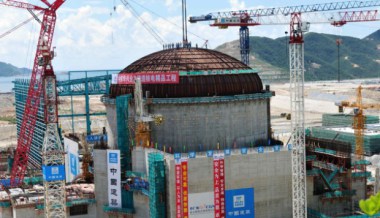
A nuclear reactor in China run by the developers behind Britain’s £20bn
Sizewell C power station remains shut for repair after fuel rods started
leaking.
Inspections are ongoing at the Taishan power plant, where the
reactor was shut in August after radioactivity was found in the cooling
waters. The plant is owned by China General Nuclear (CGN) and France’s
EDF, which are also building the Hinkley Point C plant in Somerset and
Sizewell C in Suffolk, using the same reactor design as at Taishan.
CGN,
which is a minority partner to EDF in Hinkley, has a 20pc development phase
stake in the Sizewell with an option to participate in the construction
phase. The Government is understood to be keen to push CGN out of the
project, however, amid rising concern about Chinese influence in critical
national infrastructure.
There are also hopes that more American investors
would be encouraged to invest if CGN were not involved. Experts have said
cracked fuel rods are “not uncommon” in the industry. An EDF spokesman
said: “The fuel and reactor vessel inspection is still ongoing. The
origin of the fuel rod leakage will only be determined once the analysis is
completed.” The inspection is being carried out under the joint venture
company which runs the plant, TNPJVC, owned 70pc by CGN and 30pc by EDF.
Telegraph 7th Nov 2021
China’s strategy in its nuclear weapons buildup
China’s Nuclear Gambit
Don’t be distracted by the aerial incursions and naval build-ups – the real action is China’s nuclear build-up, in the hopes of deterring any U.S. intervention in a regional conflict. The Diplomat, By Valerie Niquet, November 06, 2021
”……………………………….. Anxious not to suffer the fate of the Soviet Union, China has always refused to be dragged into an unwinnable arms race with the United States. A guaranteed second-strike nuclear capability is enough to achieve China’s objectives. But that objective is threatened by U.S. conventional precision strike capabilities, superiority in next-generation ISR, and ballistic missile defense developments at the regional level. This last aspect threatens the deterrent effect of China’s nuclear-capable middle-range ballistic missiles, which can target U.S. bases in Asia as well as the United States’ closest allies in the region.
China’s nuclear doctrine and objectives have not changed fundamentally. Credible nuclear capabilities have always been part of China’s strategy of deterrence and anti-access/area denial (A2/AD) against the United States. By reinforcing the credibility and certainty of its second-strike capability, China expects to deter the United States from intervening in a regional conflict, for example, Taiwan’s “reunification” by force or grey zone tactics. China wants to assert its capacity in order to make use of a set of pressure tactics, using public opinion in the United States as well as among U.S. allies such as Japan. In the event of a conflict in the Taiwan Strait, Japan would be very nearly on the frontline. However, Japan is also extremely risk-averse and vulnerable to threats of missile strikes from China.
To win in a regional conflict, China must maintain pressure to dissuade the United States from intervention by using the threat of escalation, to make the idea of intervention impossible to fathom. China is playing on reticence among the U.S. public to engage in asymmetric wars, where one side projects a high level of will when the other seems to be less involved. China is betting on a “Munich moment,” relying on its nuclear capabilities to keep any future conflict local or even under the threshold of war, thereby winning without fighting.
The acceleration of silo construction and the testing of new “game-changing” arms are all part of a nuclear signaling game in times of peace that serve to demonstrate China’s determination and impress the adversary. By increasing these capacities, China is testing the sole guarantor of strategic stability in Asia, the United States, and the will of the U.S. to intervene….. https://thediplomat.com/2021/11/chinas-nuclear-gambit/
China’s grandiose plans for nuclear build and export of reactors.
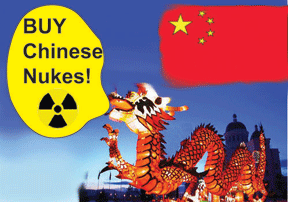
Along with the potential for geopolitical fallout, potential partners have other concerns. China hasn’t signed on to any of several international treaties that set standards for sharing liability in the event of accidents. It also hasn’t offered to take back spent fuel, an added disadvantage when competing with Russia, which does……………
China’s Climate Goals Hinge on a $440 Billion Nuclear Buildout. China is planning at least 150 new reactors in the next 15 years, more than the rest of the world has built in the past 35. Bloomberg, By Dan Murtaugh and Krystal Chia, 3 November 2021, Nuclear power once seemed like the world’s best hope for a carbon-neutral future. After decades of cost-overruns, public protests and disasters elsewhere, China has emerged as the world’s last great believer, with plans to generate an eye-popping amount of nuclear energy, quickly and at relatively low cost. ……………..
China also expects its domestic projects to persuade potential overseas buyers. In 2019, the former chairman of China National Nuclear Corp. said China could build 30 overseas reactors that could earn Chinese firms $145 billion by 2030 through its Belt and Road Initiative.
Its most eager customer has been Pakistan which, like China, shares a sometimes violently contested border with India. China’s built five nuclear reactors there since 1993, including one that came online this year and another expected to be completed next year.
Other countries have been more hesitant. Romania last year canceled a deal for two reactors with CGN and opted to work with the U.S. instead. A 2015 agreement with Argentina has been stalled by economic upheaval and changes in the country’s leadership. Memorandums of understanding to build reactors with countries including Kenya and Egypt have yet to develop into anything concrete.
Along with the potential for geopolitical fallout, potential partners have other concerns. China hasn’t signed on to any of several international treaties that set standards for sharing liability in the event of accidents. It also hasn’t offered to take back spent fuel, an added disadvantage when competing with Russia, which does……………
Prior to the meltdown at Fukushima, China’s nuclear goals were even bigger. Within a week of the tsunami that triggered a meltdown at the Japanese atomic plant, the Chinese government put a moratorium on new projects and began a deep safety review of its entire program. By 2014, it decided against building any more reactors that required active safety measures, like the one at Fukushima did. It paused approvals again for several years until it was satisfied with its new technology.
Fukushima, Chernobyl, Three-Mile Island: Each new disaster underscores the most obvious risk in nuclear energy. Plants house incredibly dangerous radioactive material — even after 10 years of cooling, spent fuel can release twenty times the fatal dose of radiation in one hour. And in the event of a leak or an explosion, the potential for immediate and long-term damage is enormous. In Chernobyl, 350,000 people had to be evacuated after an explosion shot radioactive material into the atmosphere, and dozens of workers died of radiation poisoning within weeks. More than 30 years later, there are still reports of dangerously high levels of radiation in locally produced milk and grain. ……….
public support for nuclear power has waned to the point that new investment is politically untenable in most democracies. At COP26, applications by the International Atomic Energy Agency and industry advocates to set up shop at a more public and visible area were rejected. Japan’s efforts to restart its fleet are mired in court actions and public opposition, Germany will take the last of its reactors offline next year, and France has pledged to cut its reliance on nuclear energy from 70% to 50% by 2035.
Beijing’s own record was largely spotless until June, when reports emerged of an issue at the French-designed plant in Taishan. Any report of a problem at a nuclear plant is alarming, let alone one at a facility within 100 miles of both Hong Kong and Shenzhen.
The incident underscored the potential problem with big nuclear projects, and how they can be made worse by Chinese firms’ typical lack of transparency or public accountability. While media reports and rumors swirled about a possible problem at the plant, CGN insisted everything was fine. Its partner, the French utility EDF, wasn’t so sure, and eventually took its case to the public as a way to push for more information, at one point alerting the U.S. government.
It took weeks before Chinese officials clarified that the problem involved a few damaged fuel rods, which is common and in this case, experts agreed, unthreatening. The plant was eventually shut for maintenance, which EDF said would have happened as a matter of course in France.
While the incident ended up being largely uneventful, it widened the already gaping trust gap between China and the global marketplace for nuclear technology. China’s business practices are often opaque and sometimes downright hostile to the world’s other big emitters. The U.S., India and others are unlikely to build critical infrastructure around Chinese technology, even if it does prove safe and cost-effective.
………. In 2016, China’s CGN invested in three U.K. reactor developments, part of an effort to upgrade an aging nuclear fleet. Now, even as the country confronts a potentially crippling energy crisis this winter, government officials are trying to minimize CGN’s involvement in one of the projects and buy out its stake in the other two.
Crisis or no, it’s hard to see the country move actively toward more nuclear now, given the country’s fraught relationship with China, said Michal Meidan, director of the China Energy Research Programme at the Oxford Institute for Energy Studies. “The lack of transparency and concerns about working relationships have become deeper,” she said. https://www.bloomberg.com/news/features/2021-11-02/china-climate-goals-hinge-on-440-billion-nuclear-power-plan-to-rival-u-s
China increasing its nuclear arsenal, but still far smaller than USA’s
China increasing nuclear arsenal much faster than was thought, Pentagon says . Guardian, China is expanding its nuclear force much faster than US officials predicted just a year ago, highlighting a broad and accelerating buildup of military muscle designed to enable Beijing to match or surpass US global power by mid-century, according to a new Pentagon report. The number of Chinese nuclear warheads could increase to 700 within six years, the report said, and may top 1,000 by 2030. The report released on Wednesday did not say how many weapons China has today, but a year ago the Pentagon said the number was in the “low 200s” and was likely to double by the end of this decade. The numbers would still be significantly smaller than the current US nuclear stockpile of about 3,750 nuclear weapons. The Biden administration is undertaking a comprehensive review of its nuclear policy and has not said how that might be influenced by its China concerns………… https://www.theguardian.com/world/2021/nov/03/china-increasing-nuclear-arsenal-much-faster-than-was-thought-pentagon-says |
U.S Suspends Nuclear Trade With Chinese Group
U.S 1. Suspends Nuclear Trade With Chinese Group, November 2021
The U.S. Nuclear Regulatory Commission (NRC) has suspended shipments of radioactive materials to China’s state-owned and -operated nuclear company, the China General Nuclear Power Group (CGN). The action includes restrictions on deuterium, a hydrogen isotope used in nuclear reactors and boosted nuclear weapons.
Concerned about China’s growing nuclear weapons program, the NRC decided Sept. 27 that a suspension was “necessary to further the national security interests of the United States and to enhance the United States common defense and security consistent with the Atomic Energy Act of 1954.” ……………..
The United Kingdom is also planning to remove CGN from the nuclear power plant under construction in Suffolk by selling China’s 20 percent stake in the project. https://www.armscontrol.org/act/2021-11/news-briefs/us-suspends-nuclear-trade-chinese-group
Response to claims about China’s space aims
Response to claims about China’s space aims, by Michael Wong, 25 Oct 21
The claim – ”US must build space superhighway before China stakes claims-Senior Space Force Officer. From “Breaking Defense”: https://breakingdefense.com/2021/10/us-must-build-space-superhighway-before-china-stakes-claims-senior-space-force-officer/?utm_source=Sailthru&utm_medium=email&utm_campaign=EBB%2010.21.21&utm_term=Editorial%20-%20Military%20-%20Early%20Bird%20Brief
Some quotes with falsehoods:
- “China fully intends to extend its “territoriality” to the Moon, flouting international law in exactly the same way as it has with regard to the South China Sea, Brig. Gen. John Olson, chief advisor to Space Force head Gen. Jay Raymond on mobilization and space logistics, asserted today.” My comment: There is no evidence that China has any such intentions. China has not said anything like that, has not broken any international laws, nor taken any actions that are anywhere near as aggressive as US actions.
- “If you read their language, if you read their products — which I am a vigorous student of — if you look at what they do they telegraph everything that they’re going to do, they believe that the Moon is manifest destiny for them” and part of their “economic … and security equation,” Olson said.” My comment: In the San Francisco Chinese community of which I’m a part, I have many political friends including scholars, retired elected officials, and others who are from Hong Kong, China, or Taiwan, are native Chinese speakers, and follow the news from China and Asia closely. They have not reported any language, products, or anything else which implies that China believes the moon is “manifest destiny” for China. Remember American lies about WMD in Iraq, incubator babies thrown on the floor in Kuwait, or the Gulf of Tonkin “incident” in Vietnam? These are typical American lies to demonize a nation that the US decides to attack, and justify increased US defense money.
- “The officer drew a direct line between how Beijing has ignored a World Court ruling on a sovereignty dispute with the Philippines in the South China Sea to how Chinese leaders could act in space, without regard to the prohibitions of the 1967 Outer Space Treaty (OST.)” My comment: Check out this 11 minute video from a US Marine veteran living in Thailand, which breaks down this whole distorted narrative about China and the South China Sea: https://www.youtube.com/watch?v=if-fV9U_sWs
- “…US military space leaders more and more openly paint China as an aggressor in space, with goals of not just world but galactic domination.” My comment: “…galactic domination???” Come on, Washington, have you any idea how big the galaxy is? Do you really think China intends to dominate it? What is it with you guys? We hippies were the ones doing LSD in the ’60’s, why are you guys the ones hallucinating now?
Bottom line, it’s all about the money and American domination of the world. To get more and more of the US national budget, the military industrial complex needs an enemy to justify their existence. And they project their mindset onto the Chinese, who are a completely different nation and culture, and who simply don’t think like Washington (if you want to read a longer article on the mindset of the Chinese, here’s my take on it: https://peacepivot.org/america-china-life-death-the-long-game/ ).
China backs ‘no first use’ nuclear policy, calls on nations to cut warhead stockpile
China backs ‘no first use’ nuclear policy, calls on nations to cut warhead stockpile
Recent statement by former Chinese ambassador for disarmament suggests Beijing should rethink ‘no first use’ policy to counter US military presence in region
Position paper marks 50th anniversary of Beijing being awarded UN seat representing China over Taipei, SCMP, Liu Zhen in Beijing, 22 Oct, 2021 China has underlined its “no first use” nuclear policy in a position paper amid discussion over its commitments in a developing nuclear arms race.
In the “Position Paper on China and United Nations Cooperation” issued by the foreign ministry on Friday, China declared it had a history of initiating the no first use (NFU) principle, and said nuclear-weapon states should abandon pre-emptive deterrence policies.
| “Bear in mind that ‘a nuclear war cannot be won and must never be fought’,” the paper said.It called on all nuclear powers to reduce the role of nuclear weapons as part of their national security policy, stop developing and deploying global anti-ballistic missile systems and cease deployment of land-based intermediate-range ballistic missiles overseas. It called on them to promote global strategic balance and stability…………. Besides making a statement on NFU, Friday’s position paper continued to stress that “countries with the largest nuclear arsenals have special and primary responsibilities in nuclear disarmament”, with Beijing also under international pressure to do more in nuclear arms control and disarmament efforts……..https://www.scmp.com/news/china/diplomacy/article/3153387/china-backs-no-first-use-nuclear-policy-calls-nations-cut |
1 This Month

of the week – Shut Down Drone Warfare!


Tell the Ukrainian Government to Drop Prosecution of Peace Activist Yurii Sheliazhenko

Petition to revoke the licensing of the Near Surface Nuclear Disposal Facility (NSDF) at Chalk River. https://www.ourcommons.ca/petitions/en/Petition/Details?Petition=e-7247
To see nuclear-related stories in greater depth and intensity – go to https://nuclearinformation.wordpress.com
-
Archives
- April 2026 (68)
- March 2026 (251)
- February 2026 (268)
- January 2026 (308)
- December 2025 (358)
- November 2025 (359)
- October 2025 (376)
- September 2025 (257)
- August 2025 (319)
- July 2025 (230)
- June 2025 (348)
- May 2025 (261)
-
Categories
- 1
- 1 NUCLEAR ISSUES
- business and costs
- climate change
- culture and arts
- ENERGY
- environment
- health
- history
- indigenous issues
- Legal
- marketing of nuclear
- media
- opposition to nuclear
- PERSONAL STORIES
- politics
- politics international
- Religion and ethics
- safety
- secrets,lies and civil liberties
- spinbuster
- technology
- Uranium
- wastes
- weapons and war
- Women
- 2 WORLD
- ACTION
- AFRICA
- Atrocities
- AUSTRALIA
- Christina's notes
- Christina's themes
- culture and arts
- Events
- Fuk 2022
- Fuk 2023
- Fukushima 2017
- Fukushima 2018
- fukushima 2019
- Fukushima 2020
- Fukushima 2021
- general
- global warming
- Humour (God we need it)
- Nuclear
- RARE EARTHS
- Reference
- resources – print
- Resources -audiovicual
- Weekly Newsletter
- World
- World Nuclear
- YouTube
-
RSS
Entries RSS
Comments RSS
 nuclear-news