Iran’s Comprehensive Peace Proposal to the United States

The Middle East stands at a crossroads between endless war and comprehensive peace. A framework for peace does exist. Will the US finally seize it?
Jeffrey D. Sachs, Sybil Fares, Common Dreams, Feb 09, 2026
History occasionally presents moments when the truth about a conflict is stated plainly enough that it becomes impossible to ignore. Iranian Foreign Minister Abbas Araghchi’s February 7 address in Doha, Qatar (transcript here) should prove to be such a moment. His important and constructive remarks responded to the US call for comprehensive negotiations, and he laid out a sound proposal for peace across the Middle East.
Last week, US Secretary of State Marco Rubio called for comprehensive negotiations: “If the Iranians want to meet, we’re ready.” He proposed for talks to include the nuclear issue, Iran’s military capabilities, and its support for proxy groups around the region. On its surface, this sounds like a serious and constructive proposal. The Middle East’s security crises are interconnected, and diplomacy that isolates nuclear issues from broader regional dynamics is unlikely to endure.
On February 7, Iranian Foreign Minister Araghchi’s responded to the United States’ proposal for a comprehensive peace. In his speech at the Al Jazeera Forum, the foreign minister addressed the root cause of regional instability – “Palestine… is the defining question of justice in West Asia and beyond” and he proposed a path forward.
The Foreign Minister’s statement is correct. The failure to resolve the issue of Palestinian statehood has indeed fueled every major regional conflict since 1948. The Arab-Israeli wars, the rise of anti-Israel militancy, the regional polarization, and the repeated cycles of violence, all derive from the failure to create a State of Palestine alongside the State of Israel. Gaza represents the most devastating chapter in this conflict, where Israel’s brutal occupation of Palestine was followed by Hamas’s attack on Israel on October 7, 2023, and then by Israel’s genocide against the people of Gaza.
In his speech, Araghchi condemned Israel’s expansionist project “pursued under the banner of security.” He warned of the annexation of the West Bank, which Israeli government officials, as National Security Minister Ben Gvir, continually call for, and for which the Knesset has already passed a motion.
Araghchi also highlighted another fundamental dimension of Israeli strategy which is the pursuit of permanent military supremacy across the region. He said that Israel’s expansionist project requires that “neighboring countries be weakened—militarily, technologically, economically, and socially—so that the Israeli regime permanently enjoys the upper hand.” This is indeed the Clean Break doctrine of Prime Minister Netanyahu, dating back 30 years. It has been avidly supported by the US through 100 billion dollars in military assistance to Israel since 2000, diplomatic cover at the UN via repeated vetoes, and the consistent US rejection of accountability measures for Israel’s violations of international humanitarian law.
Israel’s impunity has destabilized the region, fueling arms races, proxy wars, and cycles of revenge. It has also corroded what remains of the international legal order. The abuse of international law by the US and Israel with much of Europe remaining silent, has gravely weakened the UN Charter, leaving the UN close to collapse.
In the concluding remarks of his speech, he offered the US a political solution and path forward. “The path to stability is clear: justice for Palestine, accountability for crimes, an end to occupation and apartheid, and a regional order built on sovereignty, equality, and cooperation. If the world wants peace, it must stop rewarding aggression. If the world wants stability, it must stop enabling expansionism.”
This is a valid and constructive response to Rubio’s call for comprehensive diplomacy…………………………………………………………………………………………………………………….. https://www.commondreams.org/opinion/comprehensive-peace-plan-middle-east
If You Think Our Rulers Do Bad Things In Secret, Wait Til You See What They Do Out In The Open.
Caitlin Johnstone, Feb 09, 2026, https://www.caitlinjohnst.one/p/if-you-think-our-rulers-do-bad-things?utm_source=post-email-title&publication_id=82124&post_id=187345674&utm_campaign=email-post-title&isFreemail=true&r=1ise1&triedRedirect=true&utm_medium=email
They launched a live-streamed genocide in full view of the entire world.
They’re openly targeting civilian populations with siege warfare in Iran and Cuba in full view of the entire world.
They openly kidnapped the president of a sovereign nation in full view of the entire world.
They deliberately provoked a horrific and dangerous proxy war in Ukraine in full view of the entire world.
They spent years actively backing Saudi Arabia’s monstrous genocidal atrocities in Yemen in full view of the entire world.
They’re plundering and exploiting the resources and labor of the global south in full view of the entire world.
They’re killing the biosphere we all depend on for their own enrichment in full view of the entire world.
They’re circling the globe with hundreds of military bases to secure planetary domination in full view of the entire world.
They engage in nuclear brinkmanship and wave around armageddon weapons like pistols in full view of the entire world.
People go homeless and die of exposure while billionaires buy private islands and choose the next president in full view of the entire world.
Weapons manufacturers lobby for wars and then profit from the death and destruction they cause in full view of the entire world.
The president of the United States has repeatedly admitted to being bought and owned by the world’s richest Israeli in full view of the entire world.
The US Treasury Secretary has been repeatedly admitting that the US deliberately sparked the violence and unrest in Iran by methodically immiserating the population via economic warfare, in full view of the entire world.
I keep seeing people freaking out and asking how it’s possible that the individuals in the Epstein files haven’t been arrested for their secret nefarious behavior. And I always want to ask them, mate, have you seen the nefarious behavior they’re engaging in right out in the open?
Pay attention to the Epstein files. Pay attention to what little we can learn about how these freaks conduct themselves behind closed doors. By all means, pay close attention to these things.
But don’t forget to also pay attention to the far greater evils they are inflicting in full view of the entire world.
Trump is not threatening war on Iran over its nuclear program, but because it challenges U.S. dominance.
In short, it is about removing Iran from the strategic playing field, as it is the sole actor in the region that is powerful, influential, and beyond the United States’ direct control. The U.S. and Israel desperately want to remove that oppositional force.
So Trump is buying time by agreeing to talks that cannot succeed on the terms he and Rubio have laid down. He is likely to use that time to magnify the threat against the Iranian leadership in the vain hope that they will acquiesce to his demands.
The U.S. is once again threatening a war on Iran that could devastate the region. Trump knows Iran is not pursuing nuclear weapons, but that has never been the point. It is about removing Iran as the only actor in the region beyond U.S. control.
By Mitchell Plitnick February 6, 2026, https://mondoweiss.net/2026/02/trump-is-not-threatening-war-on-iran-over-its-nuclear-program-but-because-it-challenges-u-s-dominance/
American and Iranian negotiators are meeting in Muscat to see if they can come to an agreement and avoid an American attack on Iran. The chances don’t look good.
There was some initial hope because Donald Trump agreed to hold talks at all. The buildup of American forces in the region and the frequent planning meetings with Israeli political and military officials gave the appearance of an unstoppable buildup to war.
But American allies Türkiye, Saudi Arabia, Qatar, and Oman have been working hard to convince Trump not to attack Iran. They fear the potential backlash of an American attack on the Islamic Republic, believing that Iran is not likely to respond to an attack with the restraint they have shown in the past.
Israel is urging Trump to attack, as the government of Benjamin Netanyahu is the one entity that stands to benefit from the chaos that an attack on Iran could bring.
Indeed, Iran has warned that an attack this time will be met with a very different response than previous ones. Yet, paradoxically, it is the very fact that Iran is capable of a more damaging response than it has taken in the past that creates the impasse that is likely to derail negotiations.
What each side wants
Iran’s desires from any talks with the U.S. are straightforward: they want the U.S. to stop threatening to attack, and to lift the sanctions that have helped to cripple Iran’s economy.
But the United States has more complicated demands.
- The United States wants Iran to completely abandon nuclear power. This demand is not just about weaponry, but includes all civilian nuclear power under Iran’s control. No uranium at all can be enriched by Iran, regardless of whether it is for civilian or military purposes, and all enriched uranium Iran has must be handed over.
- The U.S. is demanding that Iran agree to limits dictated by Washington on the range and number of ballistic missiles it can possess.
- The U.S. is demanding that Iran end its support of any and all armed resistance groups in the region.
All of these demands are unreasonable. But the United States is holding a loaded gun to Iran’s head. The U.S. has moved a large carrier group into the waters near Iran, and between American and Israeli intelligence, they surely have a very clear map of where they want to strike to go along with the technical capability to essentially ignore Iran’s defenses.
But while Iran can do very little to shield itself from an American or Israeli attack, it is capable of responding to one. That is what the last two American demands are focused on, and it’s really the reason all of this is happening.
If the U.S. or Israel attacks Iran and Iran elects to respond with all of its capabilities—which it has not done in previous attacks—it has the ability to kill many American soldiers, severely disrupt oil production in the Gulf, or cause significant damage to Israel.
Iran can do this because it has a large battery of long-range ballistic missiles. It has already shown, last June, that it can hurt Israel, and that was an attack largely meant to be a warning.
Iran also backs various militias in the region, some large, like Ansar Allah in Yemen, others smaller. That means it can launch guerrilla attacks on American bases or other key sites in places like Iraq and Syria.
Iran can also target oil fields throughout the region, either with missiles or drones or with militia attacks. That’s a major reason Trump’s friends in the Gulf are reluctant to see him start a war.
The ability to do all of that gives Washington pause. Donald Trump likes it when he can do quick operations with little or no pushback, as he did recently in Venezuela or last year in Iran. Trump has carefully avoided situations where American soldiers might be killed. Iran might not let the U.S. off so easily this time around.
The reality behind U.S. demands
That brings us to why talks are so unlikely to succeed.
Iran has already made it clear it has no intention to negotiate on their support for groups throughout the region or on their ballistic missile arsenal. They understand that the reason the United States is trying to force them to agree to such measures is that it would leave Iran defenseless. Giving in to these demands would be tantamount to national suicide.
The Iranian leadership is more than happy to discuss the issue of nuclear power. As unfair as the terms might be, they might even be willing to reach a compromise that allows them to use nuclear power without enriching uranium themselves. That’s far from ideal, but Iran is facing a considerable threat.
But this holds little interest for the Trump administration. Despite American chest-thumping, they know that Iran is not pursuing a nuclear weapon, nor were they before the U.S. damaged so much of their nuclear infrastructure last year. Trump’s own intelligence corps confirmed that Iran was not actively seeking a nuclear weapon, just as it had affirmed that finding every year since 2007.
But none of this has ever been about an Iranian nuclear weapon. Rather, it has always been about pressuring the Islamic Republic either to fall or to radically change its behavior in the region. It has always been about getting Iran to stop supporting the Palestinian cause rhetorically and to stop arming Palestinian factions. It has always been about stopping Iran from supporting militias in the region that act outside of the American-run system, unlike those that are backed by Saudi Arabia, the UAE, or other states in the region that are on good terms with Washington.
In short, it is about removing Iran from the strategic playing field, as it is the sole actor in the region that is powerful, influential, and beyond the United States’ direct control. The U.S. and Israel desperately want to remove that oppositional force.
Trump weighs the consequences of attacking Iran
Does Trump really want a war? That concern with Iran is a long-term U.S.-Israeli policy goal. What Donald Trump personally wants is always difficult to know. It can change from day to day, and is often based on a less-than-full understanding of the real world.
From all appearances, Trump felt emboldened by the American success in Venezuela. He kidnapped the head of state and his wife, and suffered no American casualties in doing so. The short-term political backlash, both in Latin America and in the U.S., was brief and minimal.
No doubt, he envisioned a similar success in Iran, when the protests there and the Iranian government’s brutal response helped to create what might have looked superficially like similar circumstances. Trump began issuing one threat after another, and while their frequency has been intermittent, they have not stopped.
But his friends in Saudi Arabia, Qatar, Türkiye, and elsewhere in the Mideast explained to Trump that the outcome in Iran would be very different from that in Venezuela. Iran has the capabilities we’ve already discussed here, but there are other key differences.
For one, Iran has a deep governmental infrastructure, and there is no one in it who is both capable of taking over from Ayatollah Ali Khamenei and willing to compromise with Trump in the way Delcy Rodriguez has in Caracas. Despite the occasional protester in Iran calling out the name of Reza Pahlavi, the son of the last Shah of Iran, who was deposed in 1979, there is no infrastructure of support for him in Iran, and it would likely be impossible to simply install him without a full-scale invasion of the country.
So Trump is buying time by agreeing to talks that cannot succeed on the terms he and Rubio have laid down. He is likely to use that time to magnify the threat against the Iranian leadership in the vain hope that they will acquiesce to his demands.
But the primary purpose of that time is to continue to position American and Israeli forces to counter what they can anticipate of an Iranian response. That would mean not just the stationing of ships in striking distance of Iran, but also positioning whatever military assets they might have in countries like Iraq and Syria, as well as in other Gulf states, to counter guerrilla attacks by Iran-aligned militias and getting friendly states to agree to help with shooting down Iranian missiles and drones, as they did last year.
With Rubio and Benjamin Netanyahu pushing Trump toward a regime change war with Iran, and given the amount of bluster he has already put out there, it is hard to see Trump backing away from a war if Iran will not agree to compromise on its missiles and the militias it supports. And Iran is not about to do that.
The war that will ensue stands a good chance of toppling the Iranian government, but with nothing to replace it, the power vacuum that will surely follow will mean chaos not only for Iran but for the whole region. That isn’t really in Trump’s interests, and it certainly does not benefit his Gulf Arab allies.
Netanyahu, on the other hand, will have made the “neighborhood” that much more dangerous just as Israel’s election season begins to ramp up. While many Israelis have lost faith that “Mr. Security” can protect them after October 7, a heightened sense of danger to Israelis remains the atmosphere that is most favorable to Netanyahu electorally. It’s therefore no surprise that Israel is the one actor in the region that is pressing for this regime change war.
Averting that war will mean the Trump administration climbing down from its maximalist demands. There are indications that the U.S. is looking, at least,for an option that allows it to do that without appearing to have shied away from Iranian retaliation. But that remains an unlikely outcome, as hawks in Israel, Washington, and among the anti-regime exile Iranian community continue to urge an attack.
Iran suggests it could dilute highly enriched uranium for sanctions relief
Aljazeera, 9 Feb 26
Iran’s atomic energy chief makes comment as more mediated negotiations with the US expected.
Iran’s atomic energy chief says Tehran is open to diluting its highly enriched uranium if the United States ends sanctions, signalling flexibility on a key demand by the US.
Mohammad Eslami made the comments to reporters on Monday, saying the prospects of Iran diluting its 60-percent-enriched uranium, a threshold close to weapons grade, would hinge on “whether all sanctions would be lifted in return”, according to Iran’s state-run IRNA news agency.
Eslami did not specify whether Iran expected the removal of all sanctions or specifically those imposed by the US.
Diluting uranium means mixing it with blend material to reduce its enrichment level. According to the United Nations nuclear watchdog, Iran is the only state without nuclear weapons enriching uranium to 60 percent.
US President Donald Trump has repeatedly called for Iran to be subject to a total ban on enrichment, a condition unacceptable to Tehran and far less favourable than a now-defunct nuclear agreement reached with world powers in 2015.
Iran maintains it has a right to a civilian nuclear programme under the provisions of the nuclear Non-Proliferation Treaty, to which it and 190 other countries are signatories.
Eslami made his comments on uranium enrichment as the head of Iran’s Supreme National Security Council, Ali Larijani, prepares to head on Tuesday to Oman, which has been hosting mediated negotiations between the US and Iran.
Al Jazeera’s Ali Hashem, reporting from Tehran, said Larijani, one of the most senior officials in Iran’s government, is likely to convey messages related to the ongoing talks
Trump said talks with Iran would continue this week……………………………………………………………………………………………………………………………. https://www.aljazeera.com/news/2026/2/9/iran-suggests-it-could-dilute-highly-enriched-uranium-for-sanctions-relief
Why Iran–US negotiations must move beyond a single-issue approach to the nuclear problem
By Seyed Hossein Mousavian | February 5, 2026, https://thebulletin.org/2026/02/why-iran-us-negotiations-must-move-beyond-a-single-issue-approach-to-the-nuclear-problem/?utm_source=ActiveCampaign&utm_medium=email&utm_content=Iran-US%20negotiations&utm_campaign=20260209%20Monday%20Newsletter
Iran’s nuclear crisis has reached a point at which it can no longer be treated as a purely technical or legal dispute within the framework of the Nuclear Non-Proliferation Treaty (NPT). It has evolved into a deeply security-driven, geopolitical, and structural challenge whose outcome is directly tied to the future of the nonproliferation order in the Middle East and beyond. If the negotiations scheduled for Friday between Iran and the United States are to be effective and durable, they must move beyond single-issue approaches and toward a comprehensive, direct, and phased dialogue.
The format and venue of Iran–US negotiations. The first round of talks between Iranian Foreign Minister Abbas Araghchi and US envoy Steve Witkoff took place on April 12, 2025, in Muscat, Oman. At Iran’s insistence, these negotiations were defined as “indirect.” On April 8, 2025, I emphasized in a tweet that direct negotiations—particularly in Tehran—would significantly increase the chances of reaching a dignified, realistic, and timely agreement. “Wasting time is not in the interest of either country,” I insisted. Despite these warnings, nearly 10 months were lost, during which the region suffered heavy and regrettable losses.
It now appears that Tehran has agreed to direct talks among Witkoff, son-in-law and key adviser to President Trump Jared Kushner, and Araghchi, again in Oman. The most effective format going forward, however, would be to hold direct talks in Tehran and then in Washington. This formula would not only break long-standing political taboos but also enable deeper mutual understanding. A visit by Witkoff and Kushner to Tehran would allow them to engage not only with the foreign minister but also with other key decision-makers, including the secretary of the Supreme National Security Council, members of parliament, and relevant institutions—engagement that is essential if any sustainable agreement is to be achieved. Araghchi should engage in Washington not only with US negotiators, but also with President Trump, officials from the Pentagon, and members of the US Congress, to gain a clearer understanding of the current political environment in Washington.
Why a single-issue agreement is not sustainable. In hundreds of articles and interviews since 2013, I have argued that a single-issue agreement—even if successful on the nuclear file—will be inherently unstable. Under current conditions, three core issues require reasonable, dignified, and lasting solutions.
The US demand for zero enrichment. Ahead of negotiations, the United States is demanding that Iran entirely stop all uranium enrichment and give up its stockpile of around 400-kilograms of highly enriched uranium, steps that would prevent Tehran from possible diversion toward weaponization. Since 2013, a group of prominent nuclear scientists from Princeton University and I have proposed a “joint nuclear and enrichment consortium” for the Persian Gulf and the broader Middle East as a way for Iran to continue its peaceful nuclear program and for the United States and regional countries to be reassured that program will not be used as a cover for the production of nuclear weapons. This proposal was repeatedly articulated—up to 10 days before the 2025 Israeli and US attacks on Iran—but unfortunately failed to gain serious attention.
Today, the only realistic solution to the question of uranium enrichment remains the establishment of a joint nuclear and enrichment consortium involving Iran, Turkey, Egypt, Saudi Arabia, the Arab states of the Persian Gulf, and major global powers. This model would address nuclear proliferation concerns while safeguarding equal access to peaceful nuclear technology.
Iran’s missile and defensive capabilities. Defensive capabilities are the ultimate guarantor of territorial integrity, sovereignty, and national security. Since 2013, I have repeatedly recommended two regional agreements: a conventional weapons treaty and a non-aggression pact among the states in the Persian Gulf and the Middle East. A regional conventional weapons treaty would ensure a balance of defensive power, while a non-aggression pact would lay the foundation for collective security. Without these frameworks, expectations for unilateral limitations on Iran’s defensive capabilities are neither realistic nor sustainable.
Iran’s support for the “axis of resistance” and regional security order. My book, A New Structure for Security, Peace, and Cooperation in the Persian Gulf, presented a comprehensive framework for regional cooperation and collective security, including a nuclear and weapons of mass destruction free zone. This framework would enable progress on four major issues: the roles of non-state and semi-state actors; the Persian Gulf and energy security; the antagonism among Iran, the United States, and Israel; and a safe and orderly US withdrawal from the region.
If a sustainable agreement is to be reached, Iran and Israel must put an end to mutual existential, military, and security threats. “Despite major differences, the United States and China both worry about the conflict. China has close Iran relations, and Israel is a US strategic partner, making them qualified mediators serving as communication channels,” I suggested in 2023.
A warning to Washington: Iran’s nuclear file and the future of nonproliferation. The global non-proliferation order is undergoing a fundamental transition. The world is moving away from a system in which nuclear strategy is defined by possession or non-possession of nuclear weapons, and toward one defined by positioning, reversibility, and strategic optionality.
Nuclear-weapon states have not only failed to meet their NPT obligations to make good-faith efforts toward nuclear disarmament; they are also actively modernizing and expanding their arsenals. At the same time, some non-nuclear states that face threats to their security are seeking deterrence without formal weaponization, and political leverage without legal rupture.
The Iranian case demonstrated that full compliance with the 2015 Joint Comprehensive Plan of Action (aka the Iran nuclear deal) and unprecedented cooperation with the International Atomic Energy Agency (IAEA) did not produce security for Iran. The US withdrawal from the agreement, the imposition of sweeping sanctions, and subsequent military attacks conveyed a clear message to the Iranian government: Maximum restraint can create vulnerability. Meanwhile, Israel—outside the NPT and enjoying unwavering US support—remains the region’s sole nuclear-armed state.
For the first time in the history of nuclear non-proliferation, safeguarded nuclear facilities of a non-nuclear-weapon state were attacked, without meaningful condemnation from either the IAEA or the UN Security Council. This episode has fundamentally altered the meaning of non-proliferation commitments.
The conclusion is clear: If Iran’s nuclear crisis is treated as a narrowly defined, Iran-specific issue, it will not lead to a sustainable agreement. Instead, it will accelerate the spread of “nuclear ambiguity” across the Middle East as multiple countries seek the capability to build nuclear weapons, even if they do not immediately construct weapons. Any new nuclear agreement between Iran and the United States must therefore be firmly grounded in the principles and obligations of the Nuclear Non-Proliferation Treaty (NPT), applied in a balanced, non-discriminatory, and credible manner. The fate of Iran-US negotiations is inseparably linked to the future of non-proliferation in the region and around the world. Decisions made today will shape regional and international security for decades to come.
Left to Bleed: How Israeli Forces Treat the Killing of Palestinian Children as Routine

February 8, 2026, by Joshua Scheer, https://scheerpost.com/2026/02/08/left-to-bleed-how-israeli-forces-treat-the-killing-of-palestinian-children-as-routine/
New reports have surfaced regarding a 14-year-old Palestinian boy, Jadallah Jadallah, who was shot by Israeli paratroopers in the al-Fawar (also spelled al-Faraa) refugee camp in the northern West Bank in November 2025. Video footage cited by Haaretz shows Jadallah bleeding on the ground for nearly 45 minutes while Israeli soldiers remained nearby, with no immediate medical assistance despite his pleas for help. The delay has drawn widespread scrutiny from rights groups and critics of the military’s conduct, raising questions about the handling of the incident and broader practices surrounding the use of force in occupied territory. The Israel Defense Forces have stated that troops engaged a threat and provided initial treatment, but the footage and eyewitness accounts continue to fuel debate over the response to the teenager’s wounding.
Jadallah Jadallah, a 14-year-old Palestinian, was shot by an Israeli paratrooper unit in the al-Far’a refugee camp. Video footage shows him bleeding on the ground while pleading for help, as his family reportedly watched from a distance. Israel is currently holding his body. According to the Israel Defense Forces, “a terrorist who posed an immediate threat was identified, the force fired at him and provided first aid.”
For more on the story
None of this is new. The killing of Palestinian children has become so routine that individual cases blur into one another, barely registering before the next name is added to the list. In today’s Palestine, Israeli violence is not an aberration or a “tragic mistake,” but a system—one sustained by decades of impunity, political cover, and media fatigue. Each child’s death is treated as an isolated incident, even as the pattern is unmistakable: an occupation that normalizes lethal force and renders Palestinian lives, especially those of children, disposable. With Al Jazeera reporting among others a long list of murders of Children with Israeli human rights group B’Tselem saying
“Israel’s army routinely fires live ammunition, tear gas, stun grenades, and other weapons at Palestinians in the occupied territories, often justifying the assaults by claiming stones were thrown. B’Tselem has described the military’s conduct as an “open-fire policy” that permits the “unjustified use of lethal force” and “conveys Israel’s deep disregard for the lives of Palestinians.”
The consequences are especially severe for children. “Decades of systemic impunity has created a situation where Israeli forces shoot to kill without limit,” Defense for Children International–Palestine (DCI-P) said last month following the killing of a 16-year-old Palestinian boy by Israeli forces in the northern West Bank. “As Palestinian children are increasingly targeted in the West Bank, Israeli forces’ rules of engagement seemingly allow for the direct targeting of Palestinian children where no threat exists to justify the use of intentional lethal force.”
And so the killings continue—not because they are hidden, but because they are allowed and most damning is not that these deaths occur, but that they clearly no longer shock anyone who has the power to stop them.
Iran says US nuclear talks off to ‘good start’ but draws line at missile, proxy issues.

Iran’s top diplomat struck an optimistic note after talks on its nuclear program, despite US pressure to broaden the agenda.
7 February 2026, https://www.sbs.com.au/news/article/iran-says-us-nuclear-talks-off-to-good-start-but-draws-line-at-missile-proxy-issues/hkypxkf3e
Iran’s top diplomat said that nuclear talks with the US mediated by Oman were off to a “good start” and set to continue, lowering concerns that failure to reach a deal might nudge the Middle East closer to war.
But Iranian foreign minister Abbas Araqchi reiterated that it wanted the talks to solely focus on the country’s nuclear program.
“Any dialogue requires refraining from threats and pressure. [Iran] only discusses its nuclear issue … We do not discuss any other issue with the US,” he said.
Discussions on Friday took place in the Omani capital Muscat, which involved Araqchi, US special envoy Steve Witkoff and US President Donald Trump’s son-in-law Jared Kushner.
The US has wanted to expand the dialgogue to cover Iran’s ballistic missiles, support for armed groups around the region and “treatment of their own people,” US secretary of state Marco Rubio said on Wednesday.
A regional diplomat briefed by Iran on the talks said Iran insisted on its “right to enrich uranium” during the negotiations with the US, and its missile capabilities were not raised in the discussions.
Trump on Friday ratcheted up the pressure on Iran with an executive order imposing a 25 per cent tariff on imports from any country that “directly or indirectly” purchases goods from Iran, following through on a threat he made last month.
The White House has said the measure is intended to deter third countries from maintaining commercial ties with Iran, particularly in energy, metals and petrochemicals, sectors that remain key sources of revenue for the Iranian government.
Very serious’ talks, Oman says
Mediator Badr al-Busaidi, Oman’s foreign minister, said the talks had been “very serious” and the goal was to reconvene in due course.
Despite the talks, the United States announced on Friday it was sanctioning 15 entities and 14 shadow-fleet vessels connected to illicit trade in Iranian petroleum, petroleum products and petrochemical products.
Iran’s leadership remains deeply worried that Trump may carry out his threats to strike Iran after a US military buildup in the region.
Last June, the US struck Iranian nuclear targets, joining in the final stages of a 12-day Israeli bombing campaign. Iran has since said it has halted uranium enrichment activity.
The naval buildup, which Trump has called a massive “armada,” has followed a bloody government crackdown on nationwide protests in Iran last month, heightening tensions between the US and Iran.
Trump has said “bad things” will probably happen if a deal cannot be reached, increasing pressure on the Islamic Republic in a standoff that has led to mutual threats of airstrikes
The US Keeps Openly Admitting It Deliberately Caused The Iran Protests
Caitlin Johnstone, Feb 06, 2026, https://www.caitlinjohnst.one/p/the-us-keeps-openly-admitting-it?utm_source=post-email-title&publication_id=82124&post_id=187080859&utm_campaign=email-post-title&isFreemail=true&r=1ise1&triedRedirect=true&utm_medium=email
Speaking before the Senate Banking Committee on Thursday, US Treasury Secretary Scott Bessent explicitly stated that the US deliberately caused a financial crisis in Iran with the goal of fomenting civil unrest in the country.
Asked by Senator Katie Britt what more the US can be doing to place pressure on the Ayatollah and Iran, Bessent explained that the Treasury Department has implemented a “strategy” designed to undermine the Iranian currency which crashed the economy and sparked the violent protests we’ve seen throughout the country.
“One thing we could do at Treasury, and what we have done, is created a dollar shortage in the country,” Bessent said. “At a speech at the Economic Club in March I outlined the strategy. It came to a swift and I would say grand culmination in December when one of the largest banks in Iran went under. There was a run on the bank, the central bank had to print money, the Iranian currency went into free fall, inflation exploded, and hence we have seen the Iranian people out on the street.”
This is not the first time Bessent has made these admissions. Speaking at the World Economic Forum in Davos last month, the treasury secretary said the following:
“President Trump ordered Treasury and our OFAC division, Office of Foreign Asset Control, to put maximum pressure on Iran. And it’s worked, because in December, their economy collapsed. We saw a major bank go under; the central bank has started to print money. There is dollar shortage. They are not able to get imports, and this is why the people took to the street. So, this is economic statecraft, no shots fired, and things are moving in a very positive way here.”
Following these remarks, Jeffrey Sachs and Sybil Farres wrote the following for Common Dreams:
“What Secretary Bessent describes is of course not ‘economic statecraft’ in a traditional sense. It is war conducted by economic means, all designed to produce an economic crisis and social unrest leading to a fall of the government. This is proudly hailed as ‘economic statecraft.’
“The human suffering caused by outright war and crushing economic sanctions is not so different as one might think. Economic collapse produces shortages of food, medicine, and fuel, while also destroying savings, pensions, wages, and public services. Deliberate economic collapse drives people into poverty, malnutrition, and premature death, just as outright war does.”
Bessent laid out these plans in advance at the Economic Club of New York back in March of last year, saying the following:
“Last month, the White House announced its maximum pressure campaign on Iran designed to collapse its already buckling economy. The Iranian economy is in disarray; 35% official inflation, has a currency that has depreciated 60% in the last 12 months, and an ongoing energy crisis. I know a few things about currency devaluations, and if I were an Iranian, I would get all of my money out of the Rial now.
“This precarious state exists before our Maximum Pressure campaign, designed to collapse Iranian oil exports from the current 1.5–1.6, million barrels per day, back to the trickle they were when President Trump left office.
“Iran has developed a complex shadow network of financial facilitators and black-market oil shippers via a ghost fleet to sell oil, petrochemical and other commodities to finance its exports and generate hard currency.
“As such, we have elevated a sanctions campaign against this export infrastructure, targeting all stages of Iran’s oil supply chain. We have coupled this with vigorous government engagement and private sector outreach.
“We will close off Iran’s access to the international financial system by targeting regional parties that facilitate the transfer of its revenues. Treasury is prepared to engage in frank discussions with these countries. We are going to shut down Iran’s oil sector and drone manufacturing capabilities.
“We have predetermined benchmarks and timelines. Making Iran Broke Again will mark the beginning of our updated sanctions policy. Watch this space.”
The US has been orchestrating plans to foment unrest in Iran by causing economic strife for years. In 2019 Trump’s previous secretary of state Mike Pompeo openly acknowledged that the goal of Washington’s economic warfare against Iran was to make the population so miserable that they “change the government”, cheerfully citing the “economic distress” the nation had been placed under by US sanctions.
As unrest tore through Iran last month, Trump egged protesters on and encouraged them to escalate, saying “To all Iranian patriots, keep protesting, take over your institutions, if possible, and save the name of the killers and the abusers that are abusing you,” adding, “all I say to them is help is on its way.”
Deliberately trying to ignite a civil war in a country by immiserating its population so severely that they start attacking their own government out of sheer desperation is one of the most evil things you can possibly imagine. But under the western empire it’s just another day. They’re doing it in Iran, and they’ve also aggressively ramped up efforts to do it in Cuba, where the government has just announced it will be rationing oil as the US moves to strangle the island nation into regime change.
A lot of attention is going into the Epstein files right now, and understandably so. But it’s worth noting that nothing in them is as depraved and abusive as what our rulers are doing right out in the open.
The new era of Israeli expansionism and the war economy that fuels it
By Ahmed Alqarout February 2, 2026, https://mondoweiss.net/2026/02/the-new-era-of-israeli-expansionism-and-the-war-economy-that-fuels-it/
While Israel’s current trajectory is being framed domestically as a triumph, its long-term outlook remains grim and costly. Permanent war locks Israel into permanent military mobilization, accelerates demographic and moral exhaustion, and increases long-term exposure to asymmetric retaliation from Palestinian resistance, Syria, Lebanon, and others.
How Israel’s war-driven economy, regional realignments, and Netanyahu’s push for military independence are ushering in a new period of Israeli expansionism in its quest for regional dominance.
Israel has entered a new era of territorial expansionism and military aggression beyond the borders of historic Palestine. Its belligerent actions have accelerated across Jordan, Lebanon, Syria, Yemen, Iran, Qatar, Libya, and most recently, Somaliland. These developments aren’t due to a change in Israeli strategic ambitions, but rather to the loosening of constraints that had kept it bounded before October 2023.
This expansionist turn reflects a structural recalibration of risk, leverage, and international tolerance rather than a sudden ideological shift. But it is also due to the way Israel’s economy is now structured: the military industry has been carrying the economy ever since Israel experienced a level of global isolation that decimated most other sectors over the past two years. The result? Israel now has an additional structural incentive to be in a perpetual state of war.
Prime Minister Benjamin Netanyahu gave voice to this reality when he announced that Israel would need to become a “super Sparta” — a highly militarized warrior state with a self-sufficient military industry, capable of defying international pressure and arms embargoes because it no longer has to rely on American military beneficence.
A crucial recent strategic declaration sharpens this trajectory. In January 2026, Prime Minister Benjamin Netanyahu announced his intention to end U.S. military aid to Israel within roughly a decade, framing this as a path toward military-industrial self-sufficiency and strategic autarky. This announcement signals that Israel is no longer content to remain subordinate to the U.S., instead seeking to operate as its strategic partner in the region at a time when the U.S.’s national security strategy is shifting attention from the Middle East to the Western Hemisphere.
Netanyahu’s declaration amplifies the urgency of the export-led growth model, which is largely based on arms and defense-linked industries. The problem is, if Israel is to replace $3.8 billion in annual U.S. military aid, it must dramatically scale up its domestic production and export capacity.
Also read: Israel moves to embrace its isolation.
The Israeli state is attempting to institutionalize this export surge through policy, committing roughly NIS 350 billion (equivalent to $100–108 billion) over the coming decade to expand an independent domestic arms industry. Economically, this means that military production will become central to Israel’s long-term industrial strategy, diverting capital, labor, and state support toward weapons manufacturing rather than civilian recovery, a strategy that is untenable during wartime. This also embeds Israeli firms deeper into global security supply chains, even as the state itself becomes diplomatically isolated.
The structural dimension: incentive for permanent war
Since 2023, Israeli military exports have become one of the few sectors compensating for its broader economic slowdown. In 2023, defense exports reached approximately $13 billion, and in 2024 they climbed further to around $14.7–15 billion, setting successive records. This expansion took place while civilian economic growth weakened, labor shortages and unemployment intensified due to the prolonged mobilization of the army, and large segments of the small and medium enterprise sector reported sustained losses and bankruptcies. Arms exports essentially functioned as a countercyclical stabilizer during wartime stress, but now they’re becoming a permanent part of how the Israeli economy aims to reproduce itself.
In 2025, this trajectory accelerated even further. Israel signed some of its largest defense agreements to date with the U.S., UAE, Germany, Greece, and Azerbaijan, covering air defense systems, missiles, drones, and advanced surveillance technologies. While full contract values are not always disclosed, these deals are expected to push total defense exports beyond the 2024 record, reinforcing the arms sector as Israel’s most dynamic export industry, even as other exports, such as agriculture, face an imminent “collapse,” according to Israeli farmers.
The war economy has become the organizing principle of political survival and regime insurance.
As civilian sectors stagnate, the war economy provides growth, foreign currency earnings, and political insulation. This creates a structural incentive for permanent mobilization: war sustains demand, shields the government from accountability, and reinforces a worldview in which force is treated as the primary currency of international relations.
In this configuration, military aggression and territorial expansionism are the mechanisms through which the Israeli economy now seeks to reproduce itself. As a result, Israel’s governing coalition rests on permanent securitization. The war economy has become the organizing principle of political survival and regime insurance.
The global dimension: the end of international law
The international dimension is equally decisive. Israel’s territorial expansionism and military aggression have been enabled by the hollowing out of global constraint mechanisms such as international law.
Western states have demonstrated that there is no meaningful red line when violence is framed as counterterrorism or civilizational defense. Legal norms remain rhetorically intact but operationally suspended. This has altered Israel’s strategic calculus, because if Gaza produces diplomatic noise but no material sanctions, then Lebanon, Syria, or Iraq carries even lower expected costs.
The collapse of normalization: no reason to play nice
Read more: The new era of Israeli expansionism and the war economy that fuels itNormalization politics also play a role. The collapse of Israeli-Saudi normalization talks — which had accelerated throughout 2023 under U.S. mediation but stalled after Israel launched its genocide in Gaza — did not discipline Israeli behavior, but liberated it.
Without Saudi recognition serving as a bargaining chip or incentive for restraint, Israel abandoned any pretense of using territorial compromises as a negotiating tool. It doubled down on the objective of establishing facts on the ground while seeking bilateral security ties with smaller or more vulnerable actors. Expansion now substitutes for Israel’s dying soft power, and recognition is increasingly extracted through leverage rather than negotiation.
What makes the post-2023 moment distinctive is Israel fighting across multiple theaters simultaneously, in the open, and with confidence that escalation will not trigger systemic pushback. Furthermore, Israel’s strategy has become structurally enabled by an ever-increasing reliance on new technologies developed during war. It is no longer a response to threats but a method of governance at home and influence abroad.
Since 2023, Israel has no longer pursued peace through containment, as it did during the Arab Spring period. Instead, it has shifted toward permanent occupation, land seizure, and the redrawing of political maps to sustain and expand its war machine.
How Israel is pursuing regional dominance
Domestically, Israeli territorial expansionism aims to permanently resolve the Palestinian question through a combination of expulsion, cantonization, co-optation, and ultimately displacement. The underlying logic is to eliminate what is perceived as Israel’s primary domestic security problem — the very presence of the Palestinian people on their land — once and for all, thereby restoring elite and societal confidence in the long-term survival of the state.
At the regional level, Israel pursues diverse objectives across the countries in which it intervenes, some involving territorial acquisition or semi-permanent occupation, others focused on subordination, fragmentation, and neutralization of perceived threats.
In Iran, aggression takes the form of seeking regime destabilization and military degradation through sustained airstrikes on nuclear and military facilities, alongside efforts to exacerbate social and political unrest. The June 2025 war between Israel and Iran marked the most direct military confrontation between the two states to date, yet it terminated in an informal pause rather than escalating into full-scale war, with neither side crossing recognized deterrence thresholds despite the intensity of exchanges.
Since then, large-scale protests inside Iran have introduced a new internal pressure point that external actors increasingly frame as a strategic vulnerability. This has coincided with explicit threats of war from Donald Trump and renewed U.S. military signalling, which together reinforce Israel’s long-standing view of Iran as an existential threat to be confronted through regime change. Yet the persistence of non-escalation reflects how aggression against Iran operates within implicit boundaries that territorial expansionism in Palestine or Syria does not face, even as the fusion of internal unrest and external coercive rhetoric makes this equilibrium more fragile.
In Lebanon, Israel seeks to dismantle Hezbollah not only as a military actor but as the backbone of a Shiite-led political order that obstructs Israeli regional dominance. The deeper objective is to fracture Lebanon into a minorities-based system in which Druze, Christians, and other groups are incentivized to seek external protection and economic linkage with Israel. A weak and segmented Lebanon provides strategic depth without the costs and liabilities of direct occupation. For now, the cross-border escalation in Lebanon functions less as a pathway to outright military victory and more as a tool for reshaping Lebanon’s internal political balance over time.
As of January 2026, despite the ceasefire nominally holding, Israel has maintained “temporary” positions in five “strategic” locations in southern Lebanon, refusing to complete its withdrawal. The result is a tense stalemate in which Israel maintains military leverage over Lebanon while withholding its commitment to a full withdrawal and leaving open the possibility of renewed major escalations.
Israel’s strikes across Syria are somewhat more complex, becoming a central theater of Israeli military intervention and engineered political fragmentation following the fall of the Assad regime in December 2024. The Israeli strategy in Syria involves both direct military action and efforts to prevent unified Syrian state consolidation by providing military support for and coordination with Syrian Kurdish forces (the SDF) aimed at fragmenting the new Syrian government’s authority.
In March 2025, Israeli Defense Minister Israel Katz publicly announced that Israel would permit Syrian Druze workers to enter the Golan Heights for agricultural and construction work, framing this as a humanitarian gesture while simultaneously cultivating labour dependencies and economic ties that bind border communities to Israel. In July 2025, Netanyahu adopted a formal policy of “demilitarization of southern Syria,” declaring that Israeli forces would remain in southern Syria indefinitely and that no Syrian military forces would be permitted south of Damascus, effectively partitioning Syrian territory. Netanyahu framed this policy as “protection of the Druze.”
Israel’s setbacks in Syria
By late 2025 and early 2026, the SDF’s position had collapsed. Arab tribal defections in Raqqa and Deir Ez-Zour, mounting pressure from Turkish forces to the north, and a lack of sustained external support led to a rapid SDF retreat from much of northern and eastern Syria by January 2026. This collapse of Israel’s primary Kurdish proxy, coupled with the failure of Israeli-backed Druze militia resistance to prevent Damascus’s consolidation of authority in southern Syria, has undermined Israel’s strategy of preventing unified Syrian state reconstruction through proxy warfare.
The Druze and Alawite populations represent potential economic and demographic assets at a time when Israel faces a structural shortage of both soldiers and workers. Since 2023, this shortage has become acute. The Syrian periphery offers a pool of labor that can be selectively incorporated under autonomy arrangements or informal annexation, which Israel has already done by allowing a number of Syrian Druze to work in the Golan Heights. What is emerging is a strategy of economic annexation without formal borders, integrating the southern Syrian periphery into the Israeli economy on subordinate terms.
As for Yemen, its alignment with Gaza and its demonstrated capacity to disrupt Red Sea shipping have elevated it from a peripheral conflict to a strategic threat for Israel, especially since Ansar Allah’s blockade undermines Israel’s global trade architecture and its security relationships with Western shipping insurers, logistics firms, and port operators.
Yemen’s growing ties with Russia and China have only compounded this threat. That’s why attacking Yemen isn’t about Yemen alone, but about preserving a Western-aligned maritime order in which Israel is embedded as its key security node.
This is where Israel’s recognition of Somaliland comes in, allowing Israel to bypass internationally recognized states and to work directly with sub-state entities. Somaliland has allegedly agreed to have an Israeli military base established in the territory and to accept displaced Palestinians from Gaza in exchange for this recognition.
Regarding direct Israeli involvement in North Africa more broadly, Israel has not pursued direct military operations in Egypt or sustained military intervention in Sudan or Libya, but it has pursued indirect strategies of influence and intelligence gathering, from maintaining contacts with both sides of the Sudanese civil war to secretly meeting with Libyan officials before October 2023.
The costs of expansionism and potential for resistance
While Israel’s current trajectory is being framed domestically as a triumph, its long-term outlook remains grim and costly. Permanent war locks Israel into permanent military mobilization, accelerates demographic and moral exhaustion, and increases long-term exposure to asymmetric retaliation from Palestinian resistance, Syria, Lebanon, and others.
Each absence of consequence recalibrates expectations on both sides. Within Israel, it reinforces the belief that force carries no meaningful cost. Among those targeted, it sharpens incentives to develop longer-horizon strategies of attrition and retaliation. Geographic overreach further compounds these vulnerabilities. Israel’s efforts to embed itself within overseas military infrastructures in places such as Somaliland and southern Yemen (and to establish bases through regional proxies like the UAE) expose Israel’s operational reach to extended supply lines that are distant, insecure, and vulnerable to interdiction.
Rather than Israeli-operated facilities, these arrangements rely on third-party bases (principally Emirati), whose stability depends on shifting regional power dynamics and state priorities beyond Israel’s direct control. Maintaining an effective presence at such a distance raises the likelihood of further military stumbling blocks, financial constraints, and unanticipated entanglements that may prove difficult to sustain over time, especially as Yemen’s Ansar Allah threatens to target any future military bases in Somaliland.
The U.S. occupation of Gaza has begun
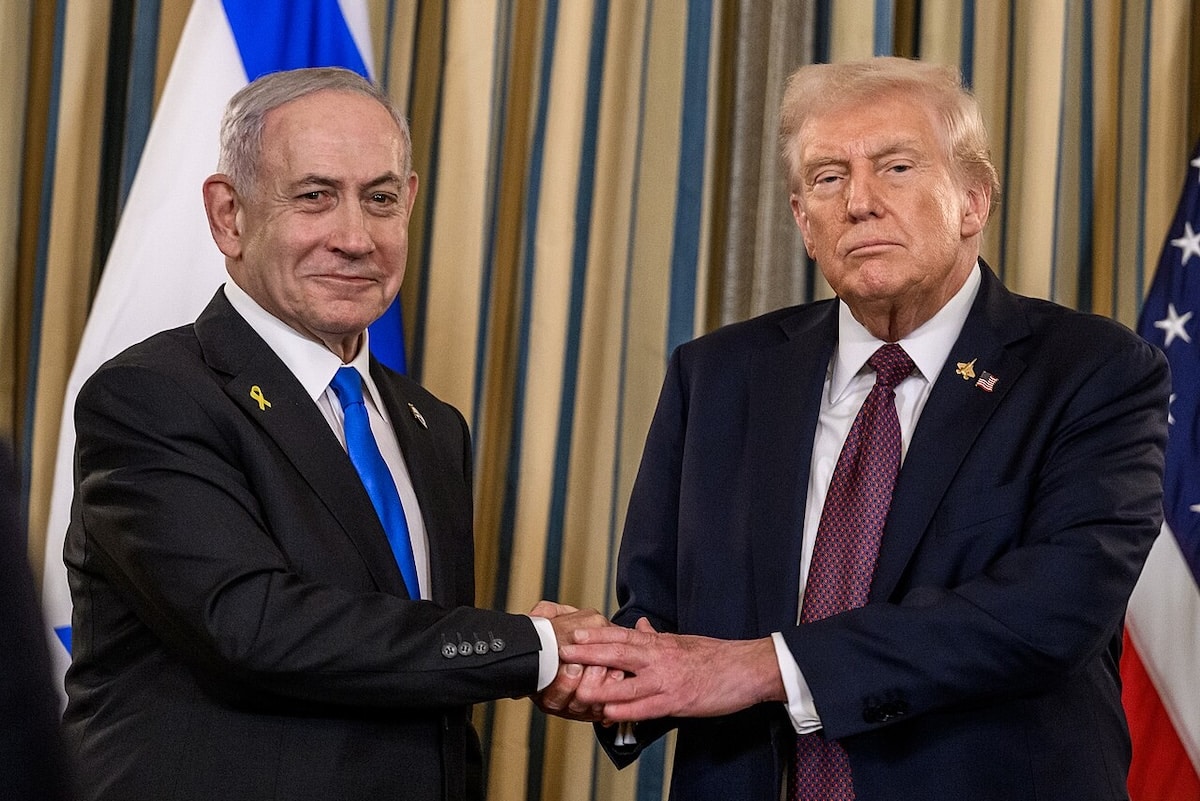
The plans for Donald Trump’s “Board of Peace” show that the goal is not just to make Gaza a playground for the wealthy, but to put it under permanent American occupation.
Mondoweiss, By Mitchell Plitnick January 30, 2026
This week, Drop Site News revealed a draft resolution from Trump’s newly christened “Board of Peace.” The resolution outlines what is, in essence, Phase Two of Trump’s unrealistic peace plan that ushered in a new phase of horror in Gaza under the guise of a ceasefire.
The actions outlined in the resolution ignore realities on the ground and paint a very grim picture of what the United States is planning for Gaza. Far from abandoning the ludicrous and offensive imagery Trump shared in that AI video from last year of himself and Elon Musk on a beach in an unrecognizable Gaza, this resolution is the battle plan to turn Gaza into the playground for the wealthy that Jared Kushner presented to the World Economic Forum at Davos last week. It’s a Gaza where the only Palestinians remaining are those chosen to be the servants in the new regime.
It’s a Gaza under permanent American occupation.
The “Executive Board” that would control Gaza
The Board of Peace (BoP) itself has drawn the most attention, but it is not the focal point for Gaza. The BoP is being set up as an international force to challenge the United Nations. It is currently populated entirely by far-right and autocratic figures, and will likely stay that way.
The BoP will be headed by Donald Trump and his role as Board Chair is personal, disconnected from his role as President of the United States. He has full power over the Board’s composition and full veto power over all of its actions. Trump will remain in control of the BoP until he decides to leave or he dies, and he has the sole authority to name his successor. You couldn’t build a clearer autocracy.
The BoP can delegate its authority as it wishes, and that is what it has done regarding Gaza. The “Executive Board” (EB) is the body that will govern Gaza. The EB itself will also have other areas within its portfolio, so it, too, has delegated its power to yet another group, dubbed the Gaza Executive Board (GEB). There is considerable overlap between the members of the EB and GEB.
The members of the GEB include some very familiar names like Steve Witkoff, Trump’s lead negotiator; Susan Wiles, his Chief of Staff; Jared Kushner, his son-in-law; and Tony Blair the former PM of the UK and a war criminal in the 2003 invasion of Iraq.
The rest of the names may be less familiar, but they are all important and, together, they draw a very worrisome picture of how this Board will behave ………………………………………………………………………………………………………………………………………………………………………………………………………………………………………………………..
Palestinians not included in planning Gaza’s future
While there are no Israelis on the Executive Board, it is stacked with extreme supporters of the Israeli right and of Netanyahu. This makes the vague mandate of the entire enterprise much more concerning.
The proposal published by Drop Site states that “the reconstruction and rehabilitation activities of the Board shall be dedicated solely to those who regard Gaza as their home and place of residence.”
But the proposal offers no opportunity for the people of Gaza to have any say at all in their present situation, let alone their future. The EB governs all of the laws. An American-led International Stabilization Force (ISF) controls all security.
The ISF is to be under the command of American Major General Jasper Jeffers. Trump, and Trump alone, has the power to remove the commander of the ISF and must personally approve any nominee to replace him.
The plan further states that “only those persons who support and act consistently [with Trump’s Comprehensive Plan for Gaza] will be eligible to participate in governance, reconstruction, economic development, or humanitarian assistance activities in Gaza.”
In other words, Palestinians who wish to be part of Gaza in any way must meet Trump’s litmus test of support for the external American control of the Gaza Strip. The same will be true for any business, NGO, or even individual who wants to participate in any way in rebuilding Gaza, physically, politically, or economically.
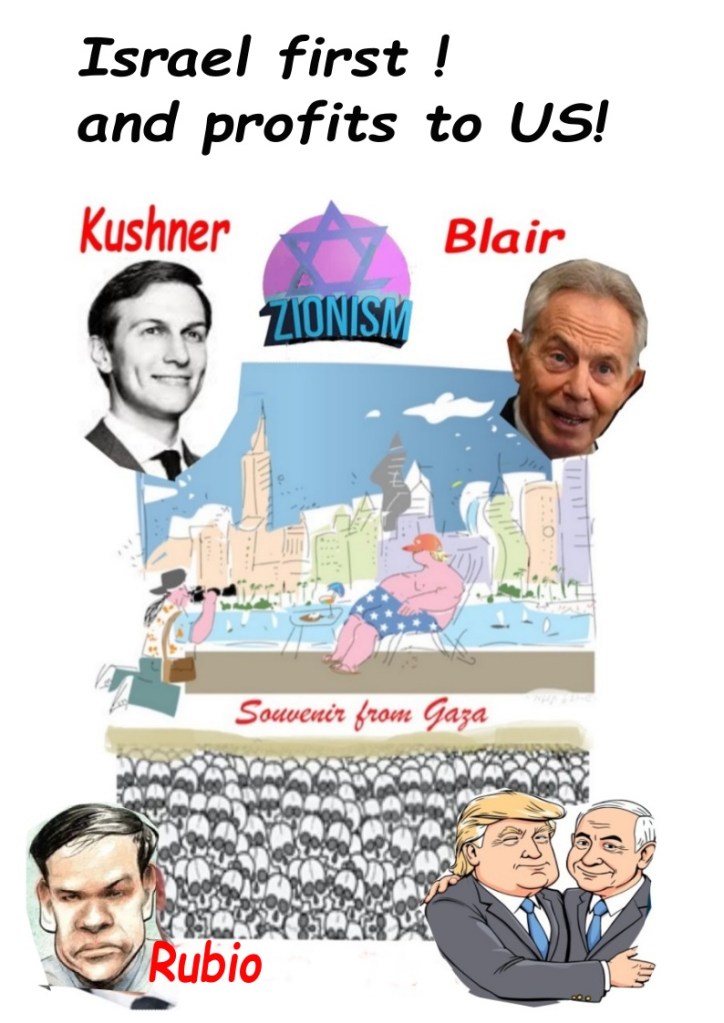
Ideally, for Trump and Jared Kushner, Gaza would be transformed into a giant “company town.” Most of the coastline would be dedicated to tourism. The bulk of Gaza’s eastern border with Israel would be dedicated to industrial zones and huge data centers, doubtless reflecting the massive investments Trump and his Emirati friends are making in AI.
In between would be residential areas separated by parks, agricultural, and sporting sites. In the West Bank, such parks and agricultural areas are frequently declared closed military zones and used for other purposes by the occupying force.
As has been apparent from the beginning, the only role currently envisioned for Palestinians is in the administration of the Executive Board’s decisions. In other words, Palestinian technocrats, laborers, and office workers would be “permitted” to carry out the decisions made for them by others.
The U.S. occupation of Gaza
This resolution provides only a bit more substance to the half-baked ideas Trump has been putting forward since October. And it continues to envision a near-future where Hamas has voluntarily disarmed, Israel has pulled out of Gaza, and the ISF has assumed security control that is welcomed by whatever Palestinians remain in Gaza.
All of that remains fully in the realm of fantasy.
Hamas has repeatedly made it clear that it is willing to discuss decommissioning its weapons, but would not disarm. Given that Israel is, once again, funding rogue Palestinian gangs in Gaza, complete disarmament is suicide for many members of Hamas, Islamic Jihad, and other factions.
The United States is discussing offering amnesty and even a buy-back program for the weapons, but these offers are hardly useful if the lives of Hamas members are put at grave risk by disarmament, even if we assume that the U.S. keeps to its word and that Israel does not itself hunt these fighters down.
Moreover, Israel is bristling at this entire plan. They prefer to bring the hammer down again on Gaza, especially now that there are no hostages, dead or alive, to be concerned with.
Netanyahu is openly stating that Israel will allow no rebuilding in Gaza—where it is killing people, including infants, not only with its weapons but by denying Palestinians the materials to shelter from the winter elements—until Hamas is “disarmed.”
…………………………Israel has already reportedly drawn up a plan for a major military operation, a return to the full-blown genocide of last year, which it plans to launch in March unless the U.S. refuses to allow it to do so.
…………………..What is taking shape in Gaza is a new kind of foreign occupation. This time, the U.S. would be the leading force on the ground unless it allows Israel to renew its aggression, something Trump doesn’t want.
………………………….An American occupation of Gaza on Israel’s behalf will be just as unwelcome by Palestinians as an Israeli one backed by the United States. It may take some time for the people of Gaza to regroup from the past two and a half years to organize impactful resistance, but it will come, as it always has.
The solution is simple: allow Palestinians their freedom and their rights. But that solution is beyond the imagination of Washington and Tel Aviv. So, meet the new occupation. It will be no more pleasant than the old one. https://mondoweiss.net/2026/01/the-u-s-occupation-of-gaza-has-begun/
Israel’s War on Iran: The Overkill No One Calls War
| urbanwronski on February 3, 2026, https://urbanwronski.com/2026/02/03/israels-war-on-iran-the-overkill-no-one-calls-war/ |
Tehran, June 13, 2025, 4:17 a.m. The first explosions light up the sky over Natanz. Israeli F-35s, invisible to radar, drop JDAMs on Iran’s largest uranium enrichment plant. Within minutes, no fewer than five car bombs detonate across Tehran, next to government buildings and the homes of nuclear scientists. The IDF, ever the courteous occupier, issues a warning to Iranian civilians: evacuate the areas around weapons factories and military bases in Shiraz. Or else.
By dawn, Israel has struck over 100 targets. Not just nuclear sites, but missile depots, air defences, and the homes of Iran’s top military brass. General Hossein Salami, commander of the Revolutionary Guards, is dead. So is Chief of Staff Mohammad Bagheri. So are nuclear scientists Fereydoon Abbasi and Mohammad Mehdi Tehranchi.
The Mossad, meanwhile, has spent years smuggling precision weapons into Iran, setting up covert drone bases near Tehran, and recruiting Iranian dissidents to sabotage air defences from within. This is not a flare-up. This is not a crisis. This is war, waged by Israel, enabled by the US, and dressed up as something else entirely.
The US Joins the Party On June 22, the Americans arrive. Twelve B-2 stealth bombers, escorted by 125 aircraft, drop 30,000 pound “bunker buster” bombs on Fordow, Natanz, and Isfahan. The GBU-57s, each capable of burrowing 200 feet underground before detonating, are the only weapons on Earth that can destroy Iran’s fortified nuclear sites. Trump calls it “Operation Midnight Hammer.” The Pentagon calls it “degrading Iran’s nuclear capabilities.” The rest of the world calls it what it is: the US and Israel bombing a country that, by all independent accounts, is not building a nuclear weapon. Nor intends to.
The Body Count By June 28, the numbers are in. Iranian health officials report 1,190 dead, including 435 military personnel and 436 civilians. Another 4,000 are wounded. Israel loses 28. The US? Zero. Iran fires back with missiles at Tel Aviv, drones at Haifa, a barrage at a US base in Qatar, but the Iron Dome and Patriot batteries swat most of them away. The Iranian air force, such as it is, never gets off the ground. Its fleet of MiG-29s and F-14s, some half a century old, are no match for Israel’s F-35s and the US’s B-2s. Iran has no air force to speak of. It has missiles, proxies, and little else.
The Mossad’s Shadow War This is not just a war of bombs. It’s a war of knives in the dark. The Mossad doesn’t just strike from the air, it strikes from within. In the months leading up to June 2025, Mossad operatives and recruited Iranian dissidents disable air defences, plant explosives, and assassinate scientists. They infiltrate government databases, steal passport data, and turn Iranian software against itself. When the war “ends,” the Mossad stays.
“We will be there,” Mossad Director David Barnea promises, “like we have always been there.”
The Next Round And there will be a next round. The US and Israel have already authorised fresh strikes. The CIA and Mossad are busy preparing the ground with cyberattacks, sabotage, the occasional hanging of an accused spy in Tehran’s Evin Prison. Iran, for its part, threatens to close the Strait of Hormuz, block oil shipments, and unleash its proxies across the region. But the pattern is set: Israel strikes, the US backs it up, and the world calls it anything but war.
The Language of Impunity Why does this matter? Because language is the first casualty. When Israel and the US bomb Iran, it’s a “campaign.” When Iran fires back, it’s “escalation.” When 1,190 Iranians die, it’s “collateral damage.” When the Mossad assassinates a scientist, it’s “targeted killing.” When the US drops bunker busters, it’s “degrading capabilities.” This is not neutral phrasing. It’s a lie by omission, a way to wage war without consequence, to turn atrocity into policy.
The Spectacle of Overkill Israel has 345 combat aircraft. Iran has 312, most of them museum pieces. Israel spends 5.6% of its GDP on defence. Iran spends 2.6%. Israel has the Iron Dome, David’s Sling, and the full backing of the US military. Iran has the S-300, a system so outdated that Israeli drones fly right through it. This is not a war. It’s a slaughter, dressed up as self defence.
What Comes Next The ceasefire is a pause, not an end. The Mossad is still in Tehran. The CIA is still running ops. The US with Donald Trump’s “beautiful Armada” is still offshore, waiting for the next excuse. And Iran? Iran is still standing, still defiant, still a target. Because for Israel and its American backer, the war never ends. It just gets rebadged.
Name it now. Or live with it forever.
Why Trump’s Denunciations of the Iranian Killings Ring Fatally Hollow
How the Ghost of Renee Nicole Good Haunts His Response to Iran’s Protests
By Juan Cole, TomDispatch, 3 Feb 26
The pro-democracy protesters in Iran deserved so much better. They deserved the support of a democratic United States that could sincerely urge the rule of law and habeas corpus (allowing people to legally challenge their detentions) be respected, not to speak of freedom of speech, the press, and assembly in accordance with the Constitution. Unfortunately, President Donald J. Trump has forfeited any claim to respect for such rights or a principled foreign policy and so has proved strikingly ineffective in aiding those protesters.
The arbitrary arrests and killings committed by agents of Trump’s authoritarian-style rule differ only in number, not in kind, from the detainments and killings of protesters carried out by the basij (or pro-regime street militias) in Iran. In fact, they rendered his protests and bluster about Iran the height of hypocrisy. Above all, the killing of Renee Nicole Good in her car in Minneapolis by a Trumpian ICE agent haunted his response, providing the all-too-grim Iranian regime with an easy rebuttal to American claims of moral superiority.
Rioters and Terrorists
Trump’s threats of intervention in Iran came after the latest round of demonstrations and strikes there this winter. In late December, bazaar merchants in Iran decried the collapse of the nation’s currency, the rial. For many years, it had been under severe pressure thanks to Trump’s “maximum pressure” sanctions, renewed European sanctions over Iran’s nuclear enrichment program, and incompetent government financial policies. In December, the rial fell to 1.4 million to the dollar — and no, that is not a misprint — having lost 40% of its value over the course of the previous year. Inflation was already running at 42%, harming those on fixed incomes, while the rial’s decline particularly hurt the ability of Iranians to afford imported goods. ……………….
A turning point came on January 8th, when security force thugs began shooting down demonstrators en masse and stacking up bodies. Until then, the demonstrations had been largely peaceful……………………………………………………………………………………………………
By mid-January, human rights organizations were estimating that thousands of demonstrators had been mown down by the Iranian police and military. Even Iran’s clerical leader, Ali Khamenei, confirmed that thousands were dead, though ludicrously enough, he blamed Donald Trump for instigating their acts. On January 9th, perhaps as a cover for its police and military sniping into crowds, the government cut the country’s internet off, while denouncing all protesters as “rioters” and “terrorists.”
Antifa-Led Hellfire
And here’s the truly sad thing: while such unhinged rhetorical excesses were once the province of dictatorships and other authoritarian regimes like those in Iran and North Korea, the White House is now competing with Tehran and Pyongyang on a remarkably even playing field. The Trump White House, for instance, excused the dispatch of the National Guard to Portland, Oregon, last year on the grounds of a “Radical left reign of terror,” “antifa-led hellfire,” and “lunatics” committing widespread mayhem in that city, even deploying “explosives.” Of course, Trump’s image of Portland as an apocalyptic, anarchist free-fire zone bore no relation to reality, but it did bear an eerie relation to the language of the authoritarian regimes in Iran and North Korea.
That means Trump’s America now stands on increasingly shaky ground when it accuses other regimes of atrocities. ……………………………………………………………………………………………………………………………………………………………………………………………………………………………..https://tomdispatch.com/why-trumps-denunciations-of-the-iranian-killings-ring-fatally-hollow/
US military action in Iran risks igniting a regional and global nuclear cascade.

The Conversation, Farah N. Jan, Senior Lecturer in International Relations, University of Pennsylvania, January 30, 2026
The United States is seemingly moving toward a potential strike on Iran.
On Jan. 28, 2026, President Donald Trump sharply intensified his threats to the Islamic Republic, suggesting that if Tehran did not agree to a set of demands, he could mount an attack “with speed and violence.” To underline the threat, the Pentagon moved aircraft carrier USS Abraham Lincoln – along with destroyers, bombers and fighter jets – to positions within striking distance of the country.
Foremost among the various demands the U.S. administration has put before Iran’s leader is a permanent end to the country’s uranium enrichment program. It has also called for limits to the development of ballistic missiles and a cutting off of Tehran’s support for proxy groups in the Middle East, including Hamas, Hezbollah and the Houthis.
Trump apparently sees in this moment an opportunity to squeeze an Iran weakened by a poor economy and massive protests that swept through the country in early January.
But as a scholar of Middle Eastern security politics and proliferation, I have concerns. Any U.S. military action now could have widespread unintended consequences later. And that includes the potential for accelerated global nuclear proliferation – regardless of whether the Iranian government is able to survive its current moment of crisis.
Iran’s threshold lesson
The fall of the Islamic Republic is far from certain, even if the U.S. uses military force. Iran is not a fragile state susceptible to quick collapse. With a population of 93 million and substantial state capacity, it has a layered coercive apparatus and security institutions built to survive crises. The Islamic Revolutionary Guard Corps, the regime’s military wing, is commonly estimated in the low-to-high hundreds of thousands, and it commands or can mobilize auxiliary forces.
After 47 years of rule, the Islamic Republic’s institutions are deeply embedded in Iranian society. Moreover, any change in leadership would not likely produce a clean slate. ……………………………………………….
What strikes teach
Whether or not regime change might follow, any U.S. military action carries profound implications for global proliferation.
Iran’s status as a threshold state has been a choice of strategic restraint. But when, in June 2025, Israel and the U.S struck Iran’s nuclear facilities, that attack – and the latest Trump threats – sent a clear message that threshold status provides no reliable security.
The message to other nations with nuclear aspirations is stark and builds on a number of hard nonproliferation lessons over the past three decades. Libya abandoned its nuclear program in 2003 in exchange for normalized relations with the West. Yet just eight years later, NATO airstrikes in support of Libyan rebels led to the capture and killing of longtime strongman Moammar Gaddafi……………………………………………………………………………………………………………………………………………………………………………
The domino effect
Every nation weighing its nuclear options is watching to see how this latest standoff between the U.S. and Iran plays out.
Iran’s regional rival, Saudi Arabia, has made no secret of its own nuclear ambitions, with Crown Prince Mohammed bin Salman publicly declaring that the kingdom would pursue nuclear weapons if Iran did.
Yet a U.S. strike on Iran would not reassure Washington’s Gulf allies. Rather, it could unsettle them. The June 2025 U.S. strikes on Iran were conducted to protect Israel, not Saudi Arabia or Iran. Gulf leaders may conclude that American military action flows to preferred partners, not necessarily to them. And if U.S. protection is selective rather than universal, a rational response could be to hedge independently………………………………………………………………………………………………………………………………………………………..
And the nuclear cascade would not likely stop at the Middle East. ………………………………………… https://theconversation.com/us-military-action-in-iran-risks-igniting-a-regional-and-global-nuclear-cascade-274599
Upcoming Trump attack on Iran likely to kill thousands of Americans and Israelis.
Walt Zlotow West Suburban Peace Coalition Glen Ellyn IL 30 Jan 26
In word and deed President Trump appears on the cusp of attacking Iran to decapitate its regime and destabilize the entire country of 93 million.
Trump threatens war and moves massive military might into the region near Iran. Trump did the same thing to Venezuela last September. On January 3, he pulled the trigger, attacking Venezuela, killing a hundred Venezuelans and kidnapping its president to stand trial in the US.
The criminal Venezuelan campaign would be small potatoes should Trump pull the trigger to utterly destroy the Iranian regime, consigning Iran to failed state status.
The US and Israel tried and failed to do that during the June Twelve Day War. Trump suckered Iran into complacency by scheduling negotiations, allowing Israel to launch a sneak attack June 13. Tho suffering massive destruction, Iran struck back, firing over 1,500 missiles and drones into Israel. It caused enough damage and chaos that Israel begged Trump to negotiate a ceasefire.
Israel and the US tried again last December by using provocateurs to support domestic Iranian government protests. Trump threatened military intervention based on protecting the protesters from death. But when Iran crushed the protests Trump backed down once again.
This time it appears Trump may go for broke with all out war. Big mistake. Iran understands, ‘Fool me once shame on Iran.’ This time they’re ready with tens of thousands of missiles and drones widely dispersed and impossible to neutralize.
Iran realizes America and Israel’s existential threat to Iran cannot be negotiated away. Any attack will likely inflict thousands of casualties in Israel and to US forces in the region. The US aircraft carrier Abraham Lincoln may end up in Davy Jones Locker. Iran could shut down the Strait of Hormuz, sending oil prices into the stratosphere and US economy into the dumpster.
War with Iran has nothing to do with America’s national security interests. It has to do with Israel’s determination to destroy its last hegemonic rival in the Middle East. For America, it has to do with acquiescing in whatever madness Israel demands of both parties under near total control by the Israeli government and its American lobby.
‘Deeply ideological’: the rationale behind Iran’s insistence on uranium enrichment
Tehran’s nuclear ambitions date back to the shah and the 1970s and remains undimmed despite the damage caused by sanctions.
A desperate effort to avert war between the US and Iran is once again under way, but trying to locate common ground between the two countries over Tehran’s nuclear programme has been made more difficult by escalating US demands, and by Iran’s ideological, deeply nationalist attachment to the right to enrich uranium.
Iran’s ambitions to run its own nuclear programme pre-date the arrival of the theocratic state in 1979, and can be traced back to the mid-1970s when the shah announced plans to build 20 civil nuclear power stations. This prompted an undignified scramble among western nations to be part of the action, with the UK energy secretary at the time, Tony Benn, having more than a walk-on part. At the heart of the programme was a desire for national sovereignty and power, symbolised by the ability
to enrich uranium.
Guardian 30th Jan 2026, https://www.theguardian.com/world/2026/jan/30/rationale-behind-iran-uranium-enrichment-nuclear-ambitions
1 This Month

Protect Sazan Island from the Trump family! https://secure.avaaz.org/campaign/en/protect_sazan_island_from_the_trump_family_loc/?bqFCVab&v=174511&cl=22707147157&_checksum=5e9dde668860e8231c33699735e16a1fbf22ab2cb01da50c999fe8732b9775ef&utm_source=email&utm_medium=blast_email&utm_campaign=174511


Cuba Is Not a Failed State – It Is a Besieged State
PETITION: “Global Appeal to Endorse Palestinian Right of Return of Refugees”
To see nuclear-related stories in greater depth and intensity – go to https://nuclearinformation.wordpress.com
-
Archives
- June 2026 (129)
- May 2026 (306)
- April 2026 (356)
- March 2026 (251)
- February 2026 (268)
- January 2026 (308)
- December 2025 (358)
- November 2025 (359)
- October 2025 (376)
- September 2025 (257)
- August 2025 (319)
- July 2025 (230)
-
Categories
- 1
- 1 NUCLEAR ISSUES
- business and costs
- climate change
- culture and arts
- ENERGY
- environment
- health
- history
- indigenous issues
- Legal
- marketing of nuclear
- media
- opposition to nuclear
- PERSONAL STORIES
- politics
- politics international
- Religion and ethics
- safety
- secrets,lies and civil liberties
- spinbuster
- technology
- Uranium
- wastes
- weapons and war
- Women
- 2 WORLD
- ACTION
- AFRICA
- Atrocities
- AUSTRALIA
- Christina's notes
- Christina's themes
- culture and arts
- Events
- Fuk 2022
- Fuk 2023
- Fukushima 2017
- Fukushima 2018
- fukushima 2019
- Fukushima 2020
- Fukushima 2021
- general
- global warming
- Humour (God we need it)
- Nuclear
- RARE EARTHS
- Reference
- resources – print
- Resources -audiovicual
- Weekly Newsletter
- World
- World Nuclear
- YouTube
-
RSS
Entries RSS
Comments RSS
 nuclear-news