There Is No ‘Magic Bullet’ That Can Turn The Tide For Ukraine
1945 By Daniel Davis 8 July 22
It is necessary, in light of these physical realities, for U.S. and Western policies to change. Continuing to give verbal support to Ukraine and claiming that eventually, Kyiv’s side will win the war is not likely to change the outcome and is likely to result in a policy failure for Washington.
There Is No ‘Magic Bullet’ That Can Turn The Tide For Ukraine,8 July 22, Last Sunday when the remaining Ukrainian soldier withdrew from Lysychansk, Ukrainian President Volodymyr Zelensky said evacuating his troops from the city “where the enemy has the greatest advantage in fire power,” was the right call, but “means only one thing… That we will return thanks to our tactics, thanks to the increase in the supply of modern weapons.” While many in the West would like that to be true, the reality is very different: there is no basis upon which to hope for a future offensive to drive Russian troops out of conquered territories.
The most likely result for the Ukrainian Armed Forces (UAF) if they continue fighting the Russians is that more of Zelensky’s troops will be killed, more Ukrainian cities will be turned to rubble, and more territory Kyiv will lose to the invaders. A sober analysis of the capacity of the of the two armed forces, an assessment of the military fundamentals that have historically proven decisive on the battlefield, and an examination of the sustainability potential for both sides, make it plain that Russia will almost certainly win a tactical victory.
Ukrainian Presidential Advisor Oleksiy Arestovych said that, to the contrary, the withdrawals in Severodonetsk and Lysychansk weren’t defeats at all, but instead “successful” in that he claimed they allowed Ukraine to “buy time for the supply of Western weapons and the improvement of the second line of defense, to create conditions for our offensive actions in other areas of the front.” This is a common belief in the West but one not borne out by the facts……………..
The much-ballyhooed supply of “heavy weapons” from the West that both Zelensky and Arestovych claim is coming will not be enough to turn the tide. Not even close. Zelensky advisor Mykhailo Podolyak correctly noted that the minimum needed by Ukraine to have a chance at reaching parity with the Russian invaders would require modern kit in the range of 1,000 howitzers, 500 tanks, and 300 rocket launchers.
As detailed by The Kiel Institute for the World Economy, the sum total of all heavy weapons delivered or promised by the West through last week’s G7 and NATO summits amounts to a paltry 175 howitzers, 250 Soviet-era tanks, and an anemic dozen or so rocket launchers. To date, no other help is being considered.
The ramifications of this mismatch should be clear: despite numerous and boisterous claims of Western support, it is militarily unsound for Ukraine to base its defense plans on the hope that major quantities of high quality Western heavy weapons will show up to help Ukraine stop the Russians. But there is a bigger, less obvious truth at play as well: even if Zelensky got everything on Podolyak’s list, it still would not likely change the battlefield dynamics.
The reason is that, like in all modern wars, military victory or defeat in the Russian-Ukraine War is likely to be determined by the side that has the highest quality of manpower and less on the platforms of war. For all its major missteps in the opening round, Russia began the war with a total active force of 900,000 whereas Ukraine had approximately 250,000…………………………
In short, there is no valid military path through which Ukraine can hope that trading space for time will result in stopping Russia’s methodical progress through Ukraine – much less reverse it. To continue contesting every town and city is to ensure the Ukrainian casualties continue to mount and its urban areas destroyed. In the end, Russia is still likely to achieve a tactical victory.
It is necessary, in light of these physical realities, for U.S. and Western policies to change. Continuing to give verbal support to Ukraine and claiming that eventually, Kyiv’s side will win the war is not likely to change the outcome and is likely to result in a policy failure for Washington.
No one wants to negotiate from a position of weakness with an invading power, but the harsh truth is that the longer Zelensky and his Western supporters continue pursuing unrealistic objectives, the more likely Ukraine eventually suffers an outright military defeat.
Expert Biography: Now a 1945 Contributing Editor, Daniel L. Davis is a Senior Fellow for Defense Priorities and a former Lt. Col. in the U.S. Army who deployed into combat zones four times. He is the author of “The Eleventh Hour in 2020 America.” Follow him @DanielLDavis. https://www.19fortyfive.com/2022/07/there-is-no-magic-bullet-that-can-turn-the-tide-for-ukraine/
How To End the War in Ukraine?
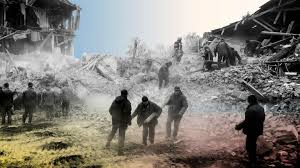
Anti War.com by Jean Bricmont
Given the devastating effects of this war, first in Ukraine but also, through sanctions, on the world economy and the risks of famine that they entail, it seems obvious that the first task of any diplomat and political leader should be to end this war.
The problem is that there are at least two ways of considering how this will end and they are irreconcilable.
The first, which until recently was the view of the U.S. government, which is the view of the Ukrainian government, European Greens, and the majority of our media, is that the Russian invasion is illegitimate, unprovoked, and must simply be repelled: Ukraine must regain all of its territory, including Crimea (which has been attached to Russia since 2014).
The other, supported by individuals as different as Chomsky, the Pope, Lula in Brazil, and Kissinger, is that a negotiated solution is inevitable, which in practice means Ukraine giving up territories such as Crimea and Donbass and presumably other regions, as well as agreeing to the neutrality of that country.
The supporters of the first solution shower those of the second with insults: Putin-lovers, pro-Russians, supporters of appeasement in the face of Russian fascism etc. But we can ask at least two questions about this first solution: is it fair? And is it realistic?
The fundamental problem with the fairness of this solution is that it assumes that there is one Ukraine and one Ukrainian people under attack by Russia. But Ukraine, which became independent in 1991 with the dissolution of the USSR, was not a former nation annexed by Russia in the past. Certainly, there was a historical Ukraine that had been absorbed into the Russian empire, but what became independent in 1991 was the former Ukrainian Soviet Socialist Republic, created in 1922 following the October revolution and which incorporated Russian-speaking populations in the east of the present Ukraine, and to whose opinion was never asked by anybody. It included also territories in the west added to Ukraine in 1939-1945 as well as the Crimea added in 1954.………………………………
If the right to self-determination of peoples is sacrosanct in the face of the territorial integrity of states in which they are minorities, then why does the territorial integrity of republics, which were in part administrative entities in dissolving multinational states, suddenly become sacrosanct in the face of the aspirations of minorities living in those republics?
……………………….. The precedent of the Kosovo war is often recalled by the Russians: if the NATO intervention there was legitimate to support the Kosovars, why is the Russian “military operation” to protect the inhabitants of Donbass not legitimate?
There have been many other conflicts of the same kind, and much bloodier: for example, the partition of the British Empire of India in 1948 between India and Pakistan, which initially included the present Bangladesh (called at the time East Pakistan) that became independent after a fierce war in 1971.
There is no simple solution to this kind of conflict. In principle, there could be one: ask by referendum on a local basis to which state each population wants to belong. But this solution is accepted by almost no one: if a referendum in Crimea is in favor of joining Russia, of which Crimea was a part between 1783 and 1954 (and, at that time, the joining of Crimea to Ukraine was decided in a purely authoritarian way), the West declares it illegitimate. If other referendums are held in the rest of Ukraine, they will also be declared illegitimate.
What we should hope for in order to resolve these local conflicts is that foreign powers do not use them to advance their economic and strategic interests. However, the United States and Britain have done exactly the opposite since 2014 (if not before) in Ukraine, first encouraging a coup that led to the overthrow of the legally elected president, Yanukovych, who had to flee for his life. This president was seen as pro-Russian, and the United States and Britain were not prepared to accept the situation. As the new power in Kiev was not only violently anti-Russian but also hostile to the Russian-speaking part of its population, a fraction of the latter demanded more autonomy within Ukraine, which was refused. Since then, there has been a more or less low-intensity war between part of the Donbass and the Ukrainian army.
Again, in principle, a peaceful solution could have been found through negotiations with the leaders of the rebel provinces, and this is what the Minsk agreements, accepted by the Ukrainian government but never implemented by it, provided.
It is true that there are other minorities in the world who are persecuted or badly treated by their governments, but it was particularly irresponsible for the Kiev government to behave in this way towards its minority in the east of the country, knowing that it could benefit from the protection of the Russian “big brother.” And it is unlikely that this conduct would have been adopted without the encouragement and political and military support of the United States and Britain.
This is why it can be considered that it was the American-British policy that pushed Russia to intervene. One can obviously condemn this intervention as contrary to international law, but then one would have to answer the question: what should the Russians have done to protect the populations of eastern Ukraine, assuming that their demands for autonomy are accepted as legitimate (and if not, in the name of what to refuse them)? Wait? Negotiate? But that is what they have been doing for eight years, sending very clear signals at the end of 2021 that their patience had limits.
Moreover, it is difficult for the architects of the wars in Yugoslavia, Iraq, Libya and Afghanistan to pose as great defenders of international law in the face of the Russians. Whatever one thinks of their military intervention in Ukraine, it is less illegitimate than the Western wars mentioned above.
…………………………………………….It is also necessary to point out the incredible hypocrisy of the discourse on the war in Ukraine, and on the accompanying sanctions, on the part of most of our journalists and intellectuals: when did we do anything similar during the US invasion of Iraq?
…………………………. In terms of interests, it is clear that the United States is using every weapon at its disposal, including espionage, to favor its businesses at the expense of ours.
………………………………………. As for the military issue, it is difficult to make definite predictions, but for the moment the Russians are moving forward, even if much more slowly than at the beginning. No Ukrainian counter-offensive has had a lasting effect. Some hope for a reversal of the situation following the delivery of sophisticated weapons to Ukraine by the United States and its allies, but this remains to be seen, and various voices in Washington itself are considering the need for negotiation as the only solution to the crisis.
it seems unlikely that Ukraine’s war aims of recovering the entire eastern part of the country and Crimea can be achieved. The Russians consider these territories, and especially Crimea, to be part of the “motherland” and they are far from having committed all their forces to this battle……………………………………..
In the end, it is likely that the only ones who will have defended the true interests of the Ukrainian people (as well as those of Europe) will be those who have advocated from the beginning (i.e., at least since 2014) for a negotiated solution to the conflict.
Jean Bricmont is a retired Belgian theoretical physicist. He is the co-author with Alan Sokal of Fashionable Nonsense Postmodern Intellectuals’ Abuse of Science (Picador, NY, 1998), of Humanitarian Imperialism; Using human rights to sell war (Monthly Review, NY, 2007), and of Quantum Sense and Nonsense (Springer, 2017).
https://original.antiwar.com/jean_bricmont/2022/07/11/how-to-end-the-war-in-ukraine/
Unconfirmed reports that Russian forces at Zaporizhzhia Nuclear Power Station might drain the cooling ponds

There have been unconfirmed reports that Russian forces at Zapphrizia
nuclear plant, Europe’s largest nuclear plant located in Ukraine, could be
attempting to drain the cooling ponds there – something which could spell
disaster for the continent and the UK.
The Russian forces reportedly want
to drain the cooling pond in order to conduct weapons searches. Dr Paul
Dorfman told Express.co.uk that this would be “utter madness” and
warned of disaster if the Russian forces went through with their plan.
Dr Dorfman is an Associate Fellow, Science Policy Research Unit (SPRU), Sussex
Business School, University of Sussex. He has worked with both the
Government as well as European Governments on various areas of nuclear
policy. He said: “Draining spent nuclear fuel ponds would be utter
madness, as cascading problems could lead to very significant radioactive
release – and depending on which way the wind is blowing, the radioactive
pollution could either go to Europe or Russia.”
Express 10th July 2022
Danger intensifies around Zaporizhzhia Nuclear Power Plant in southern Ukraine

The Russian army is transforming Europe’s largest nuclear power plant into a military base overlooking an active front, intensifying a monthslong safety crisis for the vast facility and its thousands of staff. At the
Zaporizhzhia Nuclear Power Plant in southern Ukraine, more than 500 Russian soldiers who seized the facility in March recently have deployed heavy artillery batteries, and laid anti-personnel mines along the shores of the reservoir whose water cools its six reactors, according to workers, residents, Ukrainian officials, and diplomats.
The Ukrainian army holds the towns dotted on the opposite shore, some 3 miles away, but sees no easy way to attack the plant, given the inherent danger of artillery battles around active nuclear reactors.
Wall St Journal 5th July 2022
U.N. report on crimes, human rights violations in Ukraine-Russia war includes abuses done by the Ukrainian side
 | |||
|
UN OHCHR report on human rights violations in Ukraine-Russia war reminds us of the ugly, inhumane nature of warfare. The relevance for Westerners is the documentation of Ukrainian crimes, incl torture, disappearances, abuse of POWs, corpse desecration &c
Ukraine Reform Conference – name changed to Ukraine Recovery Conference – to hide the reality of Ukraine’s endemic corruption.

Ukraine’s endemic corruption problems are suddenly forgotten as hungry Western investors smell ‘reconstruction’ profits,
The flagship “Ukraine Reform Conference” is suddenly rebranded to suit current needs. Rt. rachelmarsden.com 6 July 22,
Rachel Marsden is a columnist, political strategist, and host of independently produced talk-shows in French and English.
The annual Ukraine Reform Conference has, since 2017, brought together Western officials and their local ‘civil society’ foot soldiers to discuss ways that Ukraine can reduce its rampant corruption. But this year, before getting underway this week in Lugano, Switzerland, it underwent a name change to the Ukraine Recovery Conference.
Perhaps drawing attention to the existence of the country’s endemic corruption isn’t convenient for those looking to avoid heavy criminal penalties set up to explicitly prevent investment that fuels corruption?
Simply changing the marketing of the conference does nothing to alter the reality. If anything, it’s counterproductive for Ukraine itself and serves to enable and perpetuate serious systemic problems that prevent the country from progressing.
“The authorities are delaying the fulfillment of many important anti-corruption promises,” according to Andrey Borovik, executive director of the Ukraine office of Transparency International, an organization funded by Western governments and multinationals. As for Ukrainian President Volodymyr Zelensky, “corruption just doesn’t seem to worry Mr. Zelensky much – at least when those implicated are close to him,” claimed Kyiv Independent (another Western funded outfit) editor Olga Rudenko in a guest piece for the New York Times in February, right before the Russian military operation started.
Not exactly the kind of guy you’d want overseeing massive investment projects, one would think.
These days, tackling corruption is taking a rhetorical backseat to the Western push to frame Ukraine as just your typical European country. “For the last two years, we have been discussing large European values, mostly a theoretical debate,” Slovenian Prime Minister Janez Jansa has said. “Then, suddenly, we realised that those fundamental European values actually exist. And that they are threatened. And that Europeans are defending them. With their lives. In Ukraine.”
Despite acknowledging that Ukraine would have to enact “a number of important reforms,” EU Commission President Ursula von der Leyen said that “Ukraine has clearly shown commitment to live up to European values and standards. And embarked, before the war, on its way towards the EU.” In reality, the only thing that has actually changed is that Western officials saw an opening to exploit current public sympathy, if not ignorance, to gain acceptance for an idea that normally would be a much tougher sell to the average EU citizen. That is, the notion that Ukraine would be a net benefit to the bloc rather than an Achilles heel rife with problems that has no business being included in a zone that allows for free movement of people and goods among member states.
…………….. the head of Interpol, Jurgen Stock, has warned EU nations in particular that “the wide availability of weapons during the current conflict will lead to the proliferation of illicit weapons in the post-conflict phase.”
Neglecting to place Ukraine’s corruption problem uncompromisingly front and center in order to better peddle the premature public narrative of the need for investment under the guise of ‘reconstruction’ represents a threat to the EU – and one that Western officials are only too happy to facilitate, apparently. One has to wonder why that is.
It’s hardly a secret that Western nations have historically leveraged foreign aid to gain economic and political footholds within other countries, either through state-backed programs, civil society funding, or corporate opportunities. But there’s also another catch. Current Western laws such as the Foreign Corrupt Practices Act (FCPA) in the US, the UK Bribery Act, or the Loi Sapin II in France all create an obligation for any entity or individual investing in foreign countries to ensure a corruption-free transaction. If Western investment in Ukrainian reconstruction ends up in the wrong hands, then board members, employees, and managers could all end up facing criminal charges with penalties of prison.
………………………. Western entities have an economic interest in portraying Ukraine as a safe place to invest. Otherwise, they’re easy pickings for the authorities of other foreign countries who might choose to use corrupt investment dealings in Ukraine as a means of taking a competitor off the playing field.
…………………… to get the green light, and to convince the average taxpayer to accept funding the risk, everyone has to make the venture sound benevolent – hence the Marshall Plan comparisons – and reduce any references to corruption to a minor detail. https://www.rt.com/russia/558414-anti-corruption-ukraine-reform-conference
—
Not only Russian: Ukrainian forces also are killing children
Ukrainian shelling kills ten-year-old girl, Rt.com, 5 July 22
The child was torn apart by a shell that hit a residential district in Donetsk, the devastated family told journalists.
A 10-year-old girl was sitting by a bank in front of her house in Donetsk when a shell fired by Ukrainian forces landed in the middle of the street, killing her. The child was torn apart by shrapnel, the grieving family told RT’s Ruptly video news agency.
“My granddaughter has been blown into three pieces,” the girl’s grandfather told journalists. “Look there, there is blood everywhere,” he said, pointing to the metallic gates leading to the yard of his house.
Pools of blood were still covering the street in the spot where the girl had been hit by the shell’s fragments.
She did not make it home,” the girl’s grandfather added, pointing to the girl’s sneakers, which were lying on the ground near her home’s gate. The girl’s body has already been taken to a morgue. “She and a boy … they were just walking around,” the girl’s mother said. “She sought to run home…” she began, before bursting into tears.
The family’s neighbor told reporters she had heard a loud bang and rushed to the street only to find “one girl’s leg lying near a garden plot and another one here, at the gate.”
Ukrainian forces were shelling different parts of the capital of the Donetsk People’s Republic (DPR) on Tuesday, the city’s mayor, Aleksey Kuzmin, said in a Telegram post. Several people received shrapnel wounds, Kuzmin said, as he confirmed the girl’s death as well. The child’s identity has not been made public.
According to the mayor, the Ukrainian soldiers had used 155mm caliber shells. This caliber is common in NATO artillery systems, while the Russian and Ukrainian artillery pieces usually have a caliber of 152mm. RT could not independently verify which artillery type was used by the Ukrainian forces…………. https://www.rt.com/russia/558431-donetsk-child-killed-shelling-ukraine/
Greenpeace and other NGOs call for a green reconstruction plan for Ukraine
Activists from Greenpeace raised a replica wind turbine, close to the
venue of the Ukraine Recovery Conference today in Lugano, in a call for
recovery efforts to be based on sustainable energy systems, not nuclear or
fossil fuels. As donors meet to discuss reconstruction after the Russian
invasion, Greenpeace together with Ecoaction and more than 45 Ukrainian
civil society organisations is calling for a green reconstruction plan.
Ukrainian non-governmental organisations have developed guiding principles
to ensure that Ukraine’s green post-war reconstruction delivers
sustainable economic development and is beneficial to people and nature.
Greenpeace 4th July 2022
Ukraine says link restored to Zaporizhzhia nuclear station
July 1 (Reuters) – Ukraine’s nuclear power operator said on Friday it had re-established its connection to surveillance systems at the Zaporizhzhia nuclear plant, Europe’s largest, which is occupied by Russian forces.
The International Atomic Energy Agency (IAEA), the U.N.’s atomic watchdog, has said it wants to inspect the plant in southern Ukraine urgently, but Ukrainian authorities oppose any such visit while Russian forces remain in control………………………. https://www.reuters.com/world/europe/ukraine-says-link-restored-zaporizhzhia-nuclear-station-2022-07-01/
‘Russian-speakers will be second-class citizens unless they give up their language’: A view on Ukraine’s future from Donbass.
, RT interviews a journalist living in the Donetsk People’s Republic since 2014, During his 2019 election campaign, Ukraine’s current President Volodymyr Zelensky constantly repeated that his mission was to unite the country and breach the ideological gap between the EU-leaning West and the Russian-speaking East.
This was the division that resulted in the declaration of independence by the Donbass republics, in 2014.
However, but the differences are so deep that even the present, and obvious, threat to the state’s territorial integrity has failed to fully unite Ukrainians. One of the principal issues is language, those in the West prefer to use Ukrainian and the east is mostly Russian speaking.
There is a historical reason, of course. Modern Ukraine was created – by the Soviet Union – as a result of sticking various territories together. Thus, parts of the south-west came from Hungary and Romania, a large chunk of the West is historically Polish land and places like Odessa and Kharkov have long been Russian.
Indeed, many soldiers from the western regions don’t want to risk their lives fighting in the East, but would happily defend their home regions.
RT spoke with Vladislav Ugolny, a journalist and expert on the history of Novorossiya, about the attitude of one group in Ukrainian society towards the other. We also asked Vladislav if there is any hope for reconciliation.
[Ed. Author gives the complicated history of the various groups that make up Ukraine] ………………….
The nationalism in eastern Ukraine is more militaristic and employs Third Reich aesthetics, similar to many ultra-right groups in Western Europe and Russia for that matter………………..
The southeast is very diverse. You have Odessa and Kharkov on the one hand, where there is still significant potential for separatism. Then there is Zaporozhe, where the separatist mindset is present but not as prevalent. This is why the pro-Russian civil-military administrations have been successful in places like Melitopol for example. Dnepropetrovsk, on the other hand, has always been the domain of Ukrainian nationalism. ……………………..
The collective Lviv will always maintain that as long as you speak Russian, you’re an “agent of the enemy,” that is, an agent of Russia – even despite the fact that Russian-speaking ‘skhidnyaks’ are bearing the brunt of the combat. All that common people from the southeast can hope for in the Ukrainian statehood project is to die for it. The only party that benefits from this situation in the southeast is the ‘big money,’ that is, those who own the means of production. And, as I’ve said, they will never have any other choice but to support Ukrainian nationalism. https://www.rt.com/russia/558059-second-class-citizens-language/
As West blames Moscow for ‘food crisis’, ships sail from Mariupol with Moscow’s help while Ukraine holds vessels in its ports
https://web.archive.org/web/20220701161549/https://www.rt.com/russia/558011-foreign-ships-leave-mariupol/ Eva Bartlett, 3 July 22,
Western media and state officials keep blaming Russia for the ‘food crisis,’ but Moscow is trying to reopen Ukrainian and Donbass ports
Without much notice in the West, on June 21, the first foreign ship departed from the Port of Mariupol since Ukrainian and foreign mercenary forces were fully forced out of the Donbass city a month prior. Escorted by Russian naval boats, the vessel’s departure set the precedent for a resumption of normal port activity to and from Mariupol.
Russia’s Defense Ministry on May 20 announced the liberation of the Azovstal plant from Ukraine’s Nazi Azov Battalion, and some days later stated that sappers had demined an area of one and a half million square meters around the city’s port.
In early June, the ministry declared the facility ready for use anew. “The de-mining of Mariupol’s port has been completed. It is functioning normally, and has received its first cargo ships,” Defense Minister Sergey Shoigu said at the time.
Russia promised to give ships safe passage, and on June 21, the Turkish ship Azov Concord left with a Russian escort. At Mariupol port that day, prior to setting off, the captain of the ship, Ivan Babenkov, spoke to the media, telling us that the vessel, without cargo, was heading to Novorossiysk for loading, and then on to its destination.
Rear Admiral Viktor Kochemazov, commander of the Russian naval base in Novorossiysk on the Black Sea’s northeastern coast, down the Kerch Strait from Mariupol, explained that while the corridor has been operational since May 25, the nearly one-month delay in departing was because “ships were significantly damaged during the conduct of hostilities.” Notably, he also said that some ships were deliberately damaged by Ukrainian forces in order to prevent them from leaving.
From aboard a Russian anti-sabotage forces boat, media watched the Azov Concord leave port. Further on, the ship would be met by warships of the Novorossiysk base and escorted to the Kerch Strait where FSB border control ships would continue to escort the ship.
A Bulgarian ship, the Tsarevna, was readying to depart the port next, “also following the same humanitarian corridor to its destination in accordance with plans for the use of the court by the owner,” Rear Admiral Kochemazov said.
Western press ignoring developments
Predictably, just as the Western media continues to ignore Ukraine’s war crimes against the Donbass republics, including not only the bombing of houses, hospitals, and busy markets – plus the killing and maiming of civilians – so too do they omit coverage of anything positive emanating from areas where Ukrainian forces have been ousted and stability restored.
Instead, Western media continues to spin the story that it’s Russia that’s blocking ports and preventing grain exports, and blame Moscow for “aggravating the global food crisis” – when in reality, it is Ukraine that has mined ports and burned grain storages.
In fact, according to Russia’s Ministry of Defense, “70 foreign vessels from 16 countries remain blocked in six Ukrainian ports (Kherson, Nikolaev, Chernomorsk, Ochakov, Odessa and Yuzhniy). The threat of shelling and high mine danger posed by official Kiev prevent vessels from entering the high seas unhindered.”
While Russia maintains it has opened two maritime humanitarian corridors in the Black and Azov Seas, Kiev is apparently not engaging with representatives of states and ship-owning companies about the departure of docked foreign ships.
Meanwhile, in the same vein, media outlets like the New York Times (writing as always from afar) claim that Mariupol is “suffering deeply” under Russian rule (citing the runaway former mayor, nowhere near the city for months, who is the source of previous war propaganda) even describing the Azov Neo-Nazis as “the city’s last military resistance.”
Yet, what I’ve seen in multiple trips to Mariupol in the past couple of weeks is rubble being removed so that the rebuilding process can begin, newly established street markets, public transportation running, and calm in the streets.
The IAEA Needs Access to Ukraine’s Nuclear Power Plant. Biden Can Help

https://thedispatch.com/p/the-iaea-needs-access-to-ukraines
Since Russia seized the plant in March, the safety and security of the plant have been in jeopardy. Anthony Ruggiero and Andrea Stricker, 30 June 22,
“Untenable.” That’s how Rafael Grossi, director general of the International Atomic Energy Agency (IAEA), last week described the situation at Ukraine’s Zaporizhzhia nuclear power plant (ZNPP), which Russia seized in March. He said that every day “the independent work and assessments of Ukraine’s regulator are undermined,” the “risk of an accident or a security breach increases.” Grossi asserted he wants to send an IAEA mission to the ZNPP, which is Europe’s largest nuclear power plant. In a twist, however, Ukraine’s atomic energy regulators, presumably at the direction of Kyiv, have rejected Grossi’s request.
Ukraine believes an IAEA visit to the ZNPP would legitimize Russia’s control of the complex. Grossi has rejected that characterization, emphasizing that “it is absolutely incorrect. When I go there, I will be going there under the same agreement that Ukraine passed with the IAEA, not the Russian Federation.” President Joe Biden urgently needs to convince Ukrainian President Volodymyr Zelensky to let the IAEA in to ensure the ZNPP is safe and secure.
The ZNPP, located in east Ukraine, is a facility with six light water reactors, and it produced up to one-fifth of Ukraine’s electricity production before the war. To gain control of it, Russia shelled the area with missiles, sparking a widely reported fire. The missile attack spurred fears that Moscow could further damage the facility and cause a nuclear radiological incident that could harm Ukrainian civilians and neighboring countries.
Ukrainian authorities brought the fire under control, but Russia installed officials from its atomic energy agency, Rosatom, to oversee day-to-day work of Ukrainian personnel. The State Nuclear Regulatory Inspectorate of Ukraine warned in a statement that life at Zaporizhzhia has become intolerable under Moscow’s direction: Russia’s military and representatives of Russia’s Rosatom and its subsidiary Rosenergoatom “constantly terrorize and directly threaten the lives of the plant personnel.”
The Wall Street Journal reported this month that Russian military officers have been interrogating ZNPP employees to assess their loyalties to Moscow and reprimanding “workers who speak in Ukrainian rather than Russian and screening their cellphones for evidence of allegiance to Kyiv.” The Russians have also abducted, tortured, or shot workers. Russian officials at the plant have told workers that they intend to connect the ZNPP to Russia’s electricity grid, which would be costly and take years to accomplish, reinforcing Kyiv’s concerns that Moscow is preparing for long-term control of the facility.
Russia has not publicly opposed an IAEA visit. Grossi claimed in a June 6 statement to the IAEA Board of Governors that Ukraine had requested an IAEA mission to the plant and that the agency was ready to go. The day after Grossi’s statement, however, Ukraine’s atomic agency, Energoatom, wrote in a Telegram post that it had not invited the IAEA to visit. “We consider this message from the head of the IAEA as another attempt to get to the (power plant) by any means in order to legitimise the presence of occupiers there and essentially condone their actions,” the post stated.
In March, Grossi said that seven pillars of nuclear plant safety and security were at risk at the ZNPP. Those pillars include: maintenance of physical integrity; functional safety and security systems and equipment; freedom of operating staff to fulfill their safety and security duties and without undue pressure; a secure off-site power supply from the grid for all nuclear sites; uninterrupted logistical supply chains and transportation to and from the site; effective on-site and off-site radiation monitoring systems backed by emergency preparedness and response measures; and reliable communication with regulators and others. In his June 6 statement to the IAEA board, Grossi declared that five of seven pillars had been compromised. “This is why IAEA safety and security experts must go,” he said.
Moreover, the ZNPP stopped transmitting safeguards information to the IAEA on May 30, meaning the agency could not ascertain whether there had been theft or loss of nuclear material. “The Ukrainian regulator has informed us they have lost control of the nuclear material,” Grossi told the board.
President Biden is in a difficult spot: He is focused on fortifying Zelenskyy’s fighting forces against Russia, but Putin’s control of the ZNPP could lead to a safeguards or safety crisis in Ukraine. Biden should urge Ukraine to approve an IAEA visit. He should also insist that Russia stop its intimidation and violence against ZNPP workers and return the plant to Ukraine.
Biden officials privately doubt that Ukraine can win back all of its territory
Biden officials privately doubt that Ukraine can win back all of its territory https://edition.cnn.com/2022/06/28/politics/white-house-ukraine-projection/index.html
By Natasha Bertrand, CNN, June 28, 2022 White House officials are losing confidence that Ukraine will ever be able to take back all of the land it has lost to Russia over the past four months of war, US officials told CNN, even with the heavier and more sophisticated weaponry the US and its allies plan to send.
Advisers to President Joe Biden have begun debating internally how and whether Ukrainian President Volodymyr Zelensky should shift his definition of a Ukrainian “victory” — adjusting for the possibility that his country has shrunk irreversibly.
US officials emphasized to CNN that this more pessimistic assessment does not mean the US plans to pressure Ukraine into making any formal territorial concessions to Russia in order to end the war. There is also hope that Ukrainian forces will be able to take back significant chunks of territory in a likely counteroffensive later this year.
A congressional aide familiar with the deliberations told CNN that a smaller Ukrainian state is not inevitable. “Whether Ukraine can take back these territories is in large part, if not entirely, a function of how much support we give them,” the aide said. He noted that Ukraine has formally asked the US for a minimum of 48 multiple launch rocket systems, but to date has only been promised eight from the Pentagon.
And not everyone in the administration is as worried — some believe Ukrainian forces could again defy expectations, as they did in the early days of the war when they repelled a Russian advance on the Ukrainian capital of Kyiv. National security adviser Jake Sullivan has remained highly engaged with his Ukrainian counterparts and spent hours on the phone last week discussing Ukrainian efforts to recapture territory with Ukraine’s defense chief and Chairman of the Joint Chiefs of Staff Gen. Mark Milley, officials familiar with the call told CNN.
The growing pessimism comes as Biden is meeting with US allies in Europe, where he will try to convey strength and optimism about the trajectory of the war as he rallies leaders to stay committed to arming and supporting Ukraine amid the brutal fight.
“We have to stay together. Putin has been counting on from the beginning, that somehow NATO and the G7 would splinter, but we haven’t and we’re not going to,” Biden said Sunday while at the G7 summit in the Bavarian Alps.
The administration announced another $450 million in security assistance to Ukraine last week, including additional rocket launch systems, artillery ammunition and patrol boats. The US is also expected to announce as soon as this week that it has purchased an advanced surface-to-air missile defense system, called a NASAMS, for Ukrainian forces. Biden indicated in an op-ed earlier this month that he is committed to helping Ukraine gain the upper hand on the battlefield so that it has leverage in negotiations with Russia.
The mood has shifted over the last several weeks, though, as Ukraine has struggled to repel Russia’s advances in the Donbas and has suffered staggering troop losses, reaching as many as 100 soldiers per day. Ukrainian forces are also burning through their equipment and ammunition faster than the West can provide and train them on new, NATO-standard weapons systems.
A US military official and a source familiar with Western intelligence agreed it was unlikely that Ukraine would be able to mass the force necessary to reclaim all of the territory lost to Russia during the fighting — especially this year, as Zelensky said on Monday was his goal. A substantial counteroffensive might be possible with more weapons and training, the sources said, but Russia may also have an opportunity to replenish its force in that time, so there are no guarantees.
“Much hinges on whether Ukraine can retake territory at least to February 23 lines,” said Michael Kofman, a Russian military expert at the Center for Naval Analyses. “The prospect is there, but it’s contingent. If Ukraine can get that far, then it can likely take the rest. But if it can’t, then it may have to reconsider how best to attain victory.”
Russian forces gaining ground
Russian forces now control more than half of the eastern Ukrainian region of Donetsk, Pavlo Kyrylenko, the head of the Donetsk region military administration, said Thursday. Ukrainian forces retreated from the key eastern city of Severodonetsk on Friday after weeks of bloody battle.
Russian forces last week also captured ground around Lysychansk, the last city in the eastern Luhansk region still controlled by Ukraine. Ukrainian military commanders are now grappling with the reality that they may have to withdraw from the area to defend territory further west.
In the meantime, Russian oil revenues have only been going up as oil prices have skyrocketed, even amid the harsh sanctions imposed by the West. US officials said on Monday that the US and its allies are going to try capping the price of oil so Russia does not profit from it anymore, but how and when that cap will take effect remains to be seen.
Internally, there is a sense among some in the Biden administration that Zelensky will need to start moderating expectations for what Ukrainian forces can realistically achieve. Zelensky said late last month that he would “consider it a victory for our state, as of today, to advance to the February 24 line without unnecessary losses.”
He reiterated that goal last week.
“We don’t have any other choice left but to move forward — move to liberate all of our territories,” he said in a Telegram post. “We need to kick the invaders out of the Ukrainian regions. Though the width of the frontlines is as long as over 2,5000 km, we feel that we hold the strategic initiative.”
And on Monday, he put a timeline on it: He wants the war over, and for Ukraine to win, by the end of 2022, he told G7 leaders.
Russia is suffering acute combat losses as well, losing as much as a third of its ground force in four months of war, US intelligence officials estimate. Officials have also said publicly that Russia will struggle to make any serious gains further west, using the Donbas region as a staging ground, without a full mobilization of its reserve forces.
But Russia believes it can maintain the fight, wearing down Ukrainian and western resolve as the global economic effects of the war become more severe, officials have told CNN.
The hunt for Soviet-era weaponry
As CNN has previously reported, Russia is looking in particular to exploit the gap between how much Soviet-style ammunition Ukraine and its allies have in their stockpiles, and how long it will take the west to provide Ukraine with modern, NATO-standard weapons and munitions that require time-consuming training.
A senior defense official acknowledged to CNN that the Soviet-era stocks are “dwindling,” but haven’t yet reached “rock bottom.” The official said that some eastern European countries still have more they could provide — but only if they continue to be backfilled by allies with more modern equipment.
The US and its allies, meanwhile, have been scrounging the world for the kind of Soviet-era ammunition that fits the equipment Ukraine already has, including 152 mm artillery ammunition. NATO-standard weapons fire larger, 155mm rounds. But another US defense official told CNN that effort is effectively reaching its end, with almost everything available that countries are willing to provide having already gone in.
Given the prodigious rate at which the Ukrainians have gone through their older ammunition in the bruising artillery fight in the Donbas, the official said, “Soviet-era weapons are being wiped off the earth.”
CNN’s Katie Bo Lillis, Oren Liebermann and Barbara Starr contributed to this report.
Journalist branded enemy of state by Ukraine
Journalist branded enemy of state by Ukraine https://www.rt.com/russia/557990-reporter-rape-ukraine-blacklist/ 29 June 22
The journalist got into hot water after penning an expose highlighting how Ukraine’s now ousted human rights chief spread false rape claims.
The bombshell expose was published by the Ukrainskaya Pravda (Ukrainian Truth) newspaper on Monday. According to the piece, citing various official sources, a vast majority of allegations of “sexual atrocities,” purportedly committed by Russian troops amid the ongoing conflict, were false. The allegations have been spread by human rights chief Denisova, who got ousted in late May after a no-confidence vote over her failure to organize humanitarian corridors and prisoner exchanges as well as “inexplicably focusing” on spreading unverified and unsubstantiated claims.
According to the report, Ukrainian law enforcement officials tried to investigate Denisova’s claims but found no evidence to back them up. After interrogating Denisova several times, officials discovered she had received all her explosive revelations from her daughter, Alexandra Kvitko, “over tea.” The latter ran a ‘psychological hotline’ for victims of wartime violence, established in collaboration between Denisova’s office and UNICEF.
The hotline lacked transparency, and while Kvitko reportedly told investigators it received over 1,000 calls in only a month and a half, with some 450 of them detailing the rape of minors, the hotline’s logs suggested it got only 92 calls. The exact nature of the calls remained unclear as well, since Kvitko failed to provide investigators with any details on the alleged victims, according to the report.
Multiple Ukrainian public figures condemned the expose, insisting that reporting on the activities of the disgraced human rights chief and her daughter helps Russia. Political commentator and prominent supporter of ex-president Petro Poroshenko, Taras Berezovets, for instance, bluntly accused the reporter of producing prime material for “Russian propaganda.”
The author of the Denisova investigation, Sonya Lukashova, who accused the former human rights chief of creating numerous fakes about the rape of Ukrainian children, ended up on the Mirotvorets database. Lukashova’s material has been very heavily cited by Russian propaganda,” Berezovets said in a social media post.
The Mirotvorets website was created in 2014 as a public database of “pro-Russian terrorists, separatists, mercenaries, war criminals, and murderers.” The website provides links to social media accounts and personal information, such as home addresses, phones, and emails. Over the years, numerous high-profile public figures and politicians have ended up on the Mirotvorets list over actions deemed to be “anti-Ukrainian.” Hungary’s PM Viktor Orban and former US Secretary of State Henry Kissinger are among the latest additions to the database……..
Ukraine won’t pursue NATO membership – Zelensky adviser
Ukraine won’t pursue NATO membership – Zelensky adviser https://www.rt.com/russia/557824-ukraine-doesnt-want-to-join-nato/ 27 June 22,
However, Kiev wants the bloc to acknowledge its role as a “cornerstone” of European security.
Ukraine has accepted that NATO membership is off the table, and will not take any further steps toward joining the US-led military bloc, Igor Zhovkva, an adviser to President Volodymyr Zelensky, told the Financial Times on Saturday. Nevertheless, Kiev wants a say in NATO’s policy making.
The bloc’s leaders are set to meet in the Spanish capital of Madrid next week. During two days of meetings and consultations, the organization will unveil its Strategic Concept – a document that outlines its mission and stance toward perceived threats, including China and Russia.
Zhovkva told the Financial Times that Zelensky’s government wants NATO to acknowledge that Ukraine is “a cornerstone of European security,” and to reaffirm its partnership with Kiev, first established in 1997.
However, he said that Ukraine will not push to become a member of the bloc.
“Nato members have declined our aspirations. We will not do anything else in this regard,” he said.
Ukraine’s prospective membership was a key factor behind the current conflict with Russia. The previous Petro Poroshenko-led government added the goal of becoming a NATO member to the country’s constitution in 2019, despite Moscow’s warnings that having the bloc’s forces and weapons on its border would constitute an unacceptable security threat.
NATO Secretary General Jens Stoltenberg has insisted that membership remains open for interested nations, but has not promised or ruled out accession for Ukraine in the near term. Under the 2008 Bucharest Declaration, NATO’s official position is that Georgia and Ukraine “will become members of NATO” at an unspecified future date.
NATO’s Strategic Concept has not been updated since 2010. That version of the document states that the alliance seeks “a true strategic partnership” with Russia.
Zhovkva wants NATO to purge any mention of Russia as a “partner” from the coming update.
“We expect in the Nato strategic concept . . . there will be more strict and severe warnings to the Russian aggressor,” he said, urging the alliance “don’t be shy” in inserting anti-Russian text.
Furthermore, Zhovkva said that he wants the Ukrainian conflict to be described in the strategy document, arguing “it’s not enough just to cross out the word ‘partner.’”
1 This Month

of the week – THE ONENESS of HUMANITY
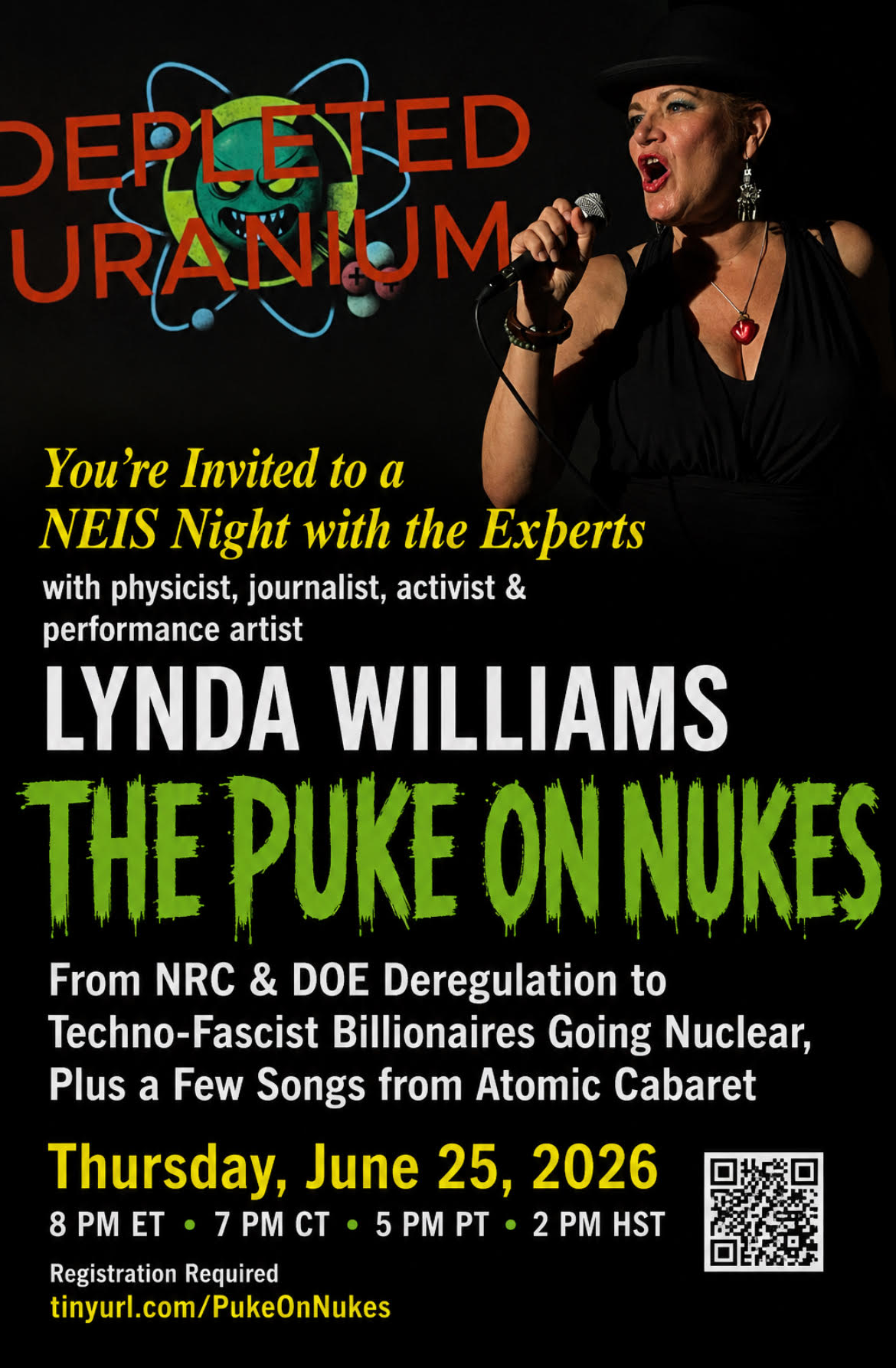
25 June- THE PUKE ON NUKES
Thursday, June 25, 2026
7pm Central Time (8pm ET, 6pm MT, 5pm PT) UTC – 5
From NRC & DOE Deregulation to Techno-Fascist Billionaires Going Nuclear, Plus a Few Songs from Atomic Cabaret REGISTER
26 June – Radiation Trainwreck at the NRC / Join the Protect Better Campaign – https://us02web.zoom.us/meeting/register/4ZlZ5_qLSHGiLSCg8FF6Bg#/registration

1st July – Webinar Waste of Space: The Environmental Harm of Military and Civil Space Activity st July, 7 pm

Report Launch Online: We are seeing an increasing exploitation of space for military and commercial purposes. This must change.

Protect Sazan Island from the Trump family! https://secure.avaaz.org/campaign/en/protect_sazan_island_from_the_trump_family_loc/?bqFCVab&v=174511&cl=22707147157&_checksum=5e9dde668860e8231c33699735e16a1fbf22ab2cb01da50c999fe8732b9775ef&utm_source=email&utm_medium=blast_email&utm_campaign=174511


Cuba Is Not a Failed State – It Is a Besieged State
PETITION: “Global Appeal to Endorse Palestinian Right of Return of Refugees”
To see nuclear-related stories in greater depth and intensity – go to https://nuclearinformation.wordpress.com
-
Archives
- June 2026 (241)
- May 2026 (306)
- April 2026 (356)
- March 2026 (251)
- February 2026 (268)
- January 2026 (308)
- December 2025 (358)
- November 2025 (359)
- October 2025 (376)
- September 2025 (257)
- August 2025 (319)
- July 2025 (230)
-
Categories
- 1
- 1 NUCLEAR ISSUES
- business and costs
- climate change
- culture and arts
- ENERGY
- environment
- health
- history
- indigenous issues
- Legal
- marketing of nuclear
- media
- opposition to nuclear
- PERSONAL STORIES
- politics
- politics international
- Religion and ethics
- safety
- secrets,lies and civil liberties
- spinbuster
- technology
- Uranium
- wastes
- weapons and war
- Women
- 2 WORLD
- ACTION
- AFRICA
- Atrocities
- AUSTRALIA
- Christina's notes
- Christina's themes
- culture and arts
- Events
- Fuk 2022
- Fuk 2023
- Fukushima 2017
- Fukushima 2018
- fukushima 2019
- Fukushima 2020
- Fukushima 2021
- general
- global warming
- Humour (God we need it)
- Nuclear
- RARE EARTHS
- Reference
- resources – print
- Resources -audiovicual
- Weekly Newsletter
- World
- World Nuclear
- YouTube
-
RSS
Entries RSS
Comments RSS
 nuclear-news