Nuclear lobby continues to infiltrate education

Pupils from Alde Valley Academy have joined the Sizewell C Youth Council.
This initiative aims to provide the nuclear power project with insights
into the needs of local young people. The students, from Years 7 to 11,
will have regular meetings with joint managing director, Julia Pyke, and
other project leaders. They will discuss local needs, aspirations, and the
project’s progress. Julia Pyke, Sizewell C joint managing director, said:
“Consultation for big infrastructure projects can sometimes be skewed
towards older people.
East Anglian Daily Times 21st Oct 2024
https://www.eadt.co.uk/news/24658473.alde-valley-academy-pupils-join-sizewell-c-youth-council/
Councillors raise concerns over fish populations at Hinkley C
Forty-four tonnes of fish could die every year once the site is running
South Gloucestershire Council have raised concerns over the potential loss
of wildlife at Hinkley Point C as bosses propose installing saltmarsh land
in parts of North Somerset and Gloucestershire. EDF energy, who run the
nuclear power station at Hinkley C, are planning to build the habitat to
compensate for the 44 tonnes of fish that could die every year once the
site is running. But land owners and councillors in South Gloucestershire
have raised concern about the loss of wildlife and the health of the
region’s rivers.
Rayo 18th Oct 2024,
https://hellorayo.co.uk/greatest-hits/bristol/news/hinkley-south-gloucestershire-letter/
Some Types of Pollution Are More Equal than Others
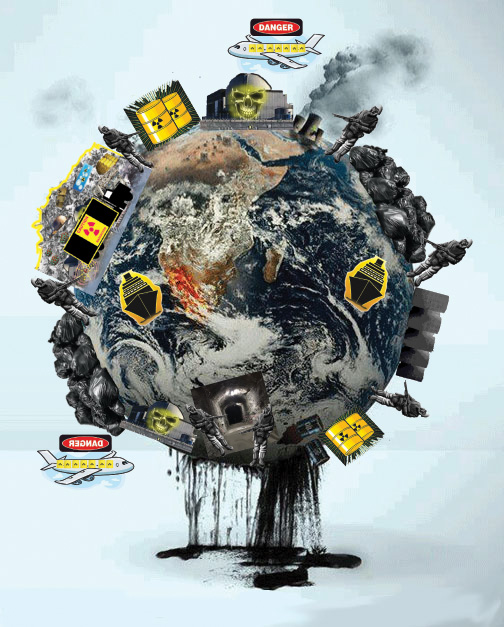
There is a BIG taboo around Radioactive Pollution. We published a report last June into acid mine pollution alongside radioactive pollution in Whitehaven Harbour – so far ignored by mainstream media.
Marianne Birkby, Oct 20, 2024 https://radiationfreelakeland.substack.com/p/some-types-of-pollution-are-more?utm_source=post-email-title&publication_id=2706406&post_id=150473856&utm_campaign=email-post-title&isFreemail=true&r=ln98x&triedRedirect=true&utm_medium=email
Whitehaven Mine Pollution- Report by Radiation Free Lakeland – evidence to inform Authorities in future mitigation/prevention regarding mine pollution
The Westmorland Gazette and other local press have today published a feel good article about beach cleans in Cumbria. So far so good but the beaches contain far more insidious and long lived pollution than plastic, in the form of radioactive wastes from decades of Sellafield’s operations. In Whitehaven Harbour these radioactive wastes are literally magnified by the presence of the ongoing acid mine pollution pouring into the harbour. Instead of addressing this ongoing pollution event the local MP Josh MacAlister is greenwashing the ongoing devastation by bigging up Whitehaven as the West Coast Riviera and fizzingly pushing for a ferry service while boats are understandably leaving because of the visible acid mine pollution.
Less visible is the “historic” radioactive pollution still pouring out of Sellafield with more radioactive waste arriving almost daily.
First ex-Royal Navy nuclear submarine to be disposed of enters final dismantling phase.
Navy Lookout 15th Oct 2024 https://www.navylookout.com/first-ex-royal-navy-nuclear-submarine-to-be-disposed-of-enters-final-dismantling-phase/
Work has started on the third and final phase of the project to dismantle ex-HMS Swiftsure. As the demonstrator project for the dismantling programme, she will be the first former RN SSN to be fully disposed of.
The glacial project to safely scrap the growing fleet of decommissioned boats has finally begun to make some progress at Rosyth in the last few years. Each submarine will undergo a three-step process which involves Low Level Radioactive Waste (LLW) being removed first. The second and most demanding stage involves the removal of the Reactor Pressure Vessel that holds the reactor core and is classed as Intermediate Level Radioactive Waste (ILW).
Work has started on the third and final phase of the project to dismantle ex-HMS Swiftsure. As the demonstrator project for the dismantling programme, she will be the first former RN SSN to be fully disposed of.
The glacial project to safely scrap the growing fleet of decommissioned boats has finally begun to make some progress at Rosyth in the last few years. Each submarine will undergo a three-step process which involves Low Level Radioactive Waste (LLW) being removed first. The second and most demanding stage involves the removal of the Reactor Pressure Vessel that holds the reactor core and is classed as Intermediate Level Radioactive Waste (ILW).
Swiftsure’s disposal is a notable achievement as the first Pressurised Water Reactor (PWR) anywhere in the world to be dismantled. Other nations use a much simpler process and cut the entire reactor compartment out of the submarine and transport it structurally complete for burial in land storage facilities. The US has successfully disposed of over 130 nuclear ships and submarines since the 1980s. The Russians have disposed of over 190 Soviet-era boats (with some international assistance) since the 1990s while France has already disposed of 3 boats from their much smaller numbers.
Besides the progress with Swifsure, LLW has been safely removed from ex-HMS Resolution, Revenge and Repulse. As experience has been gained working on successive boats techniques have been refined and more waste has been managed to final disposal at reduced cost. The optimisation of the process allowed 50% greater tonnage of waste to be removed in 75% of the time it took for Swiftsure. So far the work has been completed safely on budget and on time. Work has yet to begin on ex-HMS Dreadnought, Churchill and Renown still afloat in the basin at Rosyth.
While there is positive progress at Rosyth, 14 Dock at Devonport is still not ready to accept the first boat to begin defuelling and dismantling. There are now 15 decommissioned submarines filling up the basins in Plymouth (soon to be 16 when HMS Triumph goes in 2025). Work to get rid of this legacy cannot start soon enough. At least the lessons learned in Rosyth should give the teams at Devonport an advantage although the majority of these boats still have their nuclear fuel on board and will have to undergo a 4-stage process.
Apollo Global Management Inc in Talks to Partly Finance EDF’s Hinkley UK Nuclear Power Plant
By Aaron Kirchfeld, Silas Brown, and Francois de BeaupuyOctober 15, 2024
(Bloomberg) — Apollo Global Management Inc. is in talks with Electricite de France SA to provide financing for a nuclear power plant under construction in the UK, people with knowledge of the matter said.
The alternative asset manager has held early discussions about providing a complex mix of equity and debt that may total billions of pounds, the people said, asking not to be identified because deliberations are private.
EDF has been holding meetings with a series of investors including investment firms, sovereign wealth funds and infrastructure specialists to raise as much as £4 billion ($5.2 billion) through a deal that would give investors a stake in the Hinkley Point C project, Bloomberg News reported last week. Centrica Plc. is one of the companies considering investing.
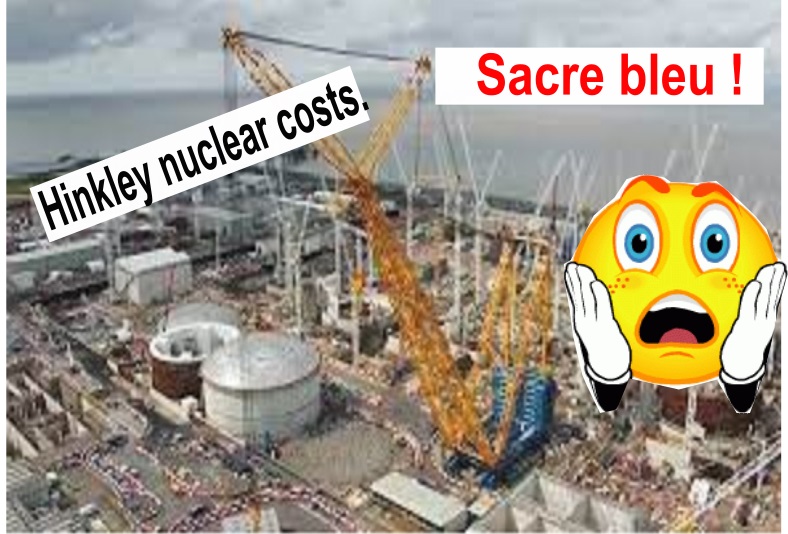
The estimated cost of building Hinkley has risen to as much as £47.9 billion in current terms, due in part to lingering labor shortages and supply chain issues. The first of the two reactors at the site is scheduled to become operational in 2030 — five years later than initially planned — under EDF’s base-case scenario.
Talks about financing Hinkley are at an early stage and may not result in a deal, the people said. Representatives for Apollo and EDF declined to comment………………… https://www.bnnbloomberg.ca/investing/2024/10/15/apollo-in-talks-to-partly-finance-edfs-hinkley-uk-nuclear-power-plant/
North Somerset MP objects to salt marsh at Kingston Seymour
North Somerset Times 16th Oct 2024
NORTH Somerset’s MP, Sadik Al-Hassan, objects to the creation of a salt marsh in the corner of his constituency, claiming his constituents are being “shut out of the conversation.”
The proposed salt marsh at Kingston Seymour, which sits on the boundary with the neighbouring Wells and Mendip Hills constituency, is one of four sites earmarked on the Severn Estuary by EDF as environmental mitigation measures for its construction of Hinkley Point C. The other sites include Littleton, Arlingham and Rodley………………………………………….. https://www.northsomersettimes.co.uk/news/24657962.north-somerset-mp-objects-salt-marsh-kingston-seymour/
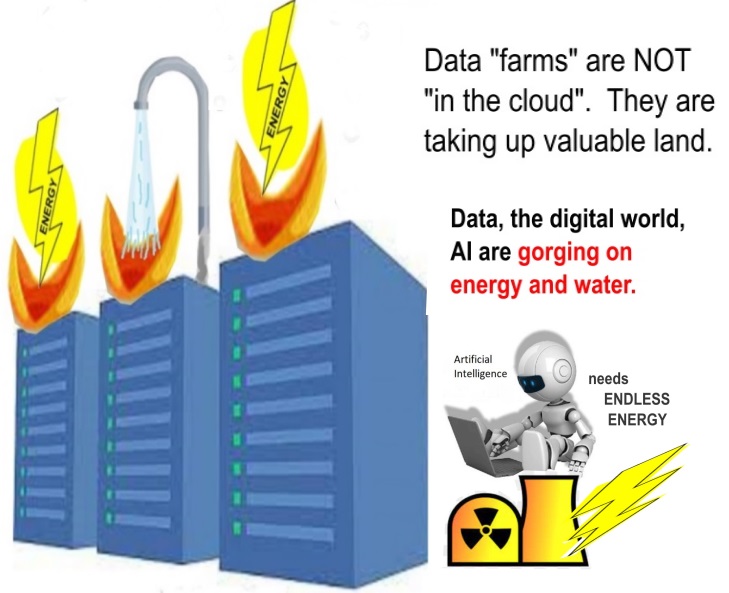
Small nuclear reactors won’t be ready in time for the needs of energy-guzzling needs of Artificial Intelligence.
As of last month, when [data centres] were classed as critical national
infrastructure, data centres are on a par with utilities, meaning the
government would step in were there a risk to connectivity. Nonetheless, as
Rohan Kelkar, the executive vice-president of power products at Schneider
Electric, puts it, the “lack of grid capacity puts UK’s AI and data
centre ambitions and energy transition goals at risk”.
So much so that we have seen the boroughs of Hillingdon, Ealing and Hounslow all rejecting
data centre projects in order to retain supply for housing. This is far
from a UK-specific issue. In Ireland, the pressure on the national grid
from computing needs is so acute they have had to pause some data centre
approvals over concerns that excessive demand from data centres could lead
to blackouts.
On the other side of the Atlantic, Big Tech companies are
also grappling with the energy conundrum: how to find low-carbon, reliable
sources of power for their power-hungry warehouses without jeopardising
customer needs or their net zero goals. Along with renewable energy and
improving battery storage, right now they all seem to be turning in one
direction: towards nuclear power. Microsoft signed a deal last month to
help resurrect a unit of the Three Mile Island plant in Pennsylvania.
Amazon bought a nuclear-powered data centre earlier in the year. On Monday,
Google became the latest to announce a nuclear energy deal to meet the
needs of its data centres, looking at mini reactors developed by a
Californian company.
A cocktail of technological innovation means this
could happen in the UK, too. Rolls-Royce, the engineer, is at the forefront
of developing mini reactors and is already having conversations with
operators in the UK about their use. While mini nukes would not have been
commercially viable in the past, now that demand for data centres has
jumped exponentially, their potential use has become more feasible. Another
key component in the future marriage of computing and nuclear power is that
data centres are becoming less location driven because of improvements in
latency, the time it takes for data to travel from one point to another.
The immediate problem with the introduction of small nuclear reactors?
Rolls-Royce estimates that they remain a decade or more away, with none
currently operating and generating electricity in the UK. In the meantime,
connection to the “constrained” grid, remains all-important headache
for those looking to build data centres.
Times 16th Oct 2024
‘A catastrophically poor bargain for the UK’: Experts verdict on government plan for new nuclear finance
NFLA 14th Oct 2024
As Prime Minister Sir Kier Starmer meets world finance leaders today at the UK International Investment Summit, the Chair of the Nuclear Free Local Authorities has co-signed a letter sent to the Energy Secretary and government departments challenging plans to use the Regulated Asset Base model to finance future nuclear power plants.
The letter, drafted by the former Chief Statistician of the Scottish Office, has been endorsed by thirty high-level experts, comprising senior academics, former civil servants, nuclear regulators, citizen scientists and NGOs. It has been sent to Energy Secretary, Ed Miliband, and several Whitehall departments – the Energy Security and Net Zero Committee, the National Audit Office, the Public Accounts Committee, and the Comptroller and Auditor General.
14th October 2024
‘A catastrophically poor bargain for the UK’: Experts verdict on government plan for new nuclear finance
As Prime Minister Sir Kier Starmer meets world finance leaders today at the UK International Investment Summit, the Chair of the Nuclear Free Local Authorities has co-signed a letter sent to the Energy Secretary and government departments challenging plans to use the Regulated Asset Base model to finance future nuclear power plants.
The letter, drafted by the former Chief Statistician of the Scottish Office, has been endorsed by thirty high-level experts, comprising senior academics, former civil servants, nuclear regulators, citizen scientists and NGOs. It has been sent to Energy Secretary, Ed Miliband, and several Whitehall departments – the Energy Security and Net Zero Committee, the National Audit Office, the Public Accounts Committee, and the Comptroller and Auditor General.
Due to the inevitable huge costs and construction delays, the private sector is loath to finance new nuclear power projects; Sizewell C is struggling to find financial backers. Consequently, new plants can only be built with a significant public subsidy.
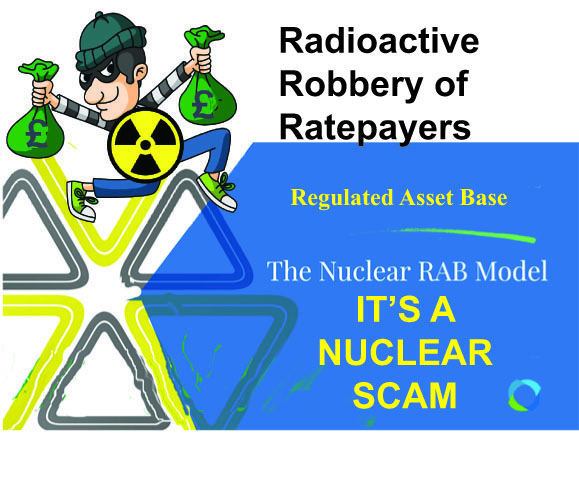
The latest subsidy mechanism to be adopted by the UK Government is the Regulated Asset Base model, in which an additional nuclear levy will be imposed on hard-pressed electricity consumers to make interim payments to developers of new nuclear projects to periodically offset their construction costs; this lifts the burden of rising costs and costly delays from the shoulders of developers and places this upon those of the customer. In so doing, not only is the project derisked for the developer, but the latter has less incentive to arrest costs or prevent delays because they know electricity consumers will have to meet them.
The experts have labelled RAB ‘a catastrophically poor bargain for the UK’.
The NFLAs have labelled RAB ‘ROB’, calling it daylight robbery and especially iniquitous when imposed upon the poorest and oldest customers. Many households are already struggling to pay huge, and rising, energy bills, and will be further burdened by a nuclear levy, and as new nuclear plants take so long to build many older customers are unlikely to be around to access any electricity from them.
In a response to a 2022 government consultation by the Business Department,[1] we denounced the proposal to impose a RAB levy on these groups, who are most vulnerable to cold and fuel poverty, and called for them to be exempted from the levy or promptly recompensed by the government if they are required to pay it.
14th October 2024
‘A catastrophically poor bargain for the UK’: Experts verdict on government plan for new nuclear finance
As Prime Minister Sir Kier Starmer meets world finance leaders today at the UK International Investment Summit, the Chair of the Nuclear Free Local Authorities has co-signed a letter sent to the Energy Secretary and government departments challenging plans to use the Regulated Asset Base model to finance future nuclear power plants.
The letter, drafted by the former Chief Statistician of the Scottish Office, has been endorsed by thirty high-level experts, comprising senior academics, former civil servants, nuclear regulators, citizen scientists and NGOs. It has been sent to Energy Secretary, Ed Miliband, and several Whitehall departments – the Energy Security and Net Zero Committee, the National Audit Office, the Public Accounts Committee, and the Comptroller and Auditor General.
Due to the inevitable huge costs and construction delays, the private sector is loath to finance new nuclear power projects; Sizewell C is struggling to find financial backers. Consequently, new plants can only be built with a significant public subsidy.
The latest subsidy mechanism to be adopted by the UK Government is the Regulated Asset Base model, in which an additional nuclear levy will be imposed on hard-pressed electricity consumers to make interim payments to developers of new nuclear projects to periodically offset their construction costs; this lifts the burden of rising costs and costly delays from the shoulders of developers and places this upon those of the customer. In so doing, not only is the project derisked for the developer, but the latter has less incentive to arrest costs or prevent delays because they know electricity consumers will have to meet them.
The experts have labelled RAB ‘a catastrophically poor bargain for the UK’.
The NFLAs have labelled RAB ‘ROB’, calling it daylight robbery and especially iniquitous when imposed upon the poorest and oldest customers. Many households are already struggling to pay huge, and rising, energy bills, and will be further burdened by a nuclear levy, and as new nuclear plants take so long to build many older customers are unlikely to be around to access any electricity from them.
In a response to a 2022 government consultation by the Business Department,[1] we denounced the proposal to impose a RAB levy on these groups, who are most vulnerable to cold and fuel poverty, and called for them to be exempted from the levy or promptly recompensed by the government if they are required to pay it.
Letter………………………………………………………………………………………………………. https://www.nuclearpolicy.info/news/a-catastrophically-poor-bargain-for-the-uk-experts-verdict-on-government-plan-for-new-nuclear-finance/
A nuclear kettle of fish at Hinkley Point C
Is a trawler’s worth of fish getting in the way of our nuclear
ambitions? Tali Fraser investigates something fishy going on around Hinkley
Point C. Among ministers of the last government, it is known as “the fish
disco”, and it is, they say, a cautionary tale that illustrates the
nation’s inability to build critical infrastructure.
The story centres on
the massive construction site on the Bristol Channel where EDF is building
the Hinkley Point C nuclear power station that is essential to meet the
nation’s future energy needs. Nuclear reactors need to be cooled – one
reason they are often based on the coast – but the intake of the water
poses a risk to fish. EDF’s initial solution included what they called an
“acoustic fish deterrent”, essentially a series of 280 underwater
speakers blasting a series of high-pitched sound pulses louder than a jumbo
jet. The company, however, has begun to argue that the deterrent, mockingly
dubbed “the fish disco” by former environment secretary Michael Gove,
is unnecessary and wants instead to mitigate the risk by other means.
Critics, however, say the company is reneging on a promise it made to win
planning consent because it wants to save cash (the cost of the deterrent
is estimated to run to the tens of millions of pounds).
Politics Home, 15th Oct 2024
https://www.politicshome.com/thehouse/article/fish-disco-hinkley-point-c-nuclear-energy
Open Letter to the Department for Energy Security -new nuclear power ‘a catastrophically poor bargain’.
1 Open Letter to the Department for Energy Security and Net Zero. Senior
academics, former civil servants, nuclear regulators, and NGOs write to
ESNZ, NAO, PAC, saying new nuclear power ‘a catastrophically poor bargain’………………………………………. signatures,
Bylines Scotland 14th Oct 2024
https://bylines.scot/environment/open-letter-to-the-department-for-energy-security-and-net-zero/
Campaigners welcome international investors to UK summit but urge them to boycott “toxic investment” Sizewell C 14.10.24
Campaigners opposed to Sizewell C unfurled two banners saying “Sizewell
C is a Toxic Investment” this morning outside the City of London’s
Guildhall. The protest took place as world business leaders gathered for
Labour’s first International Investment Summit, and the Labour government
launched its Industrial Strategy consultation.
A Sizewell C Final Investment Decision (FID) has been delayed and rumours are swirling around about which, if any, of the small pool of private investors reported to be
taking part in the equity raise are still involved. Alison Downes of Stop
Sizewell C said “It’s fantastic that Britain is open for business, but
we’re here to tell international investors that, unless they want to find
themselves embroiled in another HS2, they should put their money into
renewables instead of slow, risky, expensive, “toxic” Sizewell C. The
reality is that Sizewell C cannot help the Labour government achieve its
Energy Mission, and if UK investors won’t touch it, neither should
international ones, nor the taxpayer.” https://tasizewellc.org.uk/campaigners-welcome-international-investors-to-uk-summit-but-urge-them-to-boycott-toxic-investment-sizewell-c-14-10-24/
Stop Sizewell C 14th Oct 2024
Nuclear – not the way ahead

12 Oct 24 https://renewextraweekly.blogspot.com/2024/10/nuclear-not-way-ahead.html
Renewable energies consistently outperform nuclear power in terms of cost and deployment speed and are therefore chosen over nuclear power in most countries’ – so says this years independent World Nuclear Industry status report (WNISR). It notes that in 2023, 5 new nuclear reactors (5 GW) started up and 5 were closed (6 GW), capacity thus declining by 1 GW. So overall it says that nuclear energy’s share of global commercial gross electricity generation declined from 9.2 % to 9.1%, little more than half of its peak of 17.5 % in 1996. In 2023, total investment in non-hydro renewable electricity capacity reached a record US$623 billion, 27 times the reported global investment decisions for the construction of nuclear power plants, with solar and wind power capacities growing by 73% and 51%, respectively.
Nevertheless, some countries are still pushing on with new nuclear, despite its poor economics, including the UK and Sweden. Sweden has mooted a new financing model but its critics say support for nuclear ‘is like throwing money down the drain’ since ‘the expansion of solar energy will make nuclear power obsolete and push it out of the electricity market by the 2030s’. In the UK, and also in France, it has been argued that part of the reason for the political commitment to new nuclear is link between civil and military nuclear, with cross-funding and technical collaboration seen as beneficial.
However, be that as it may, Emeritus Profs. Stephen Thomas (University of Greenwich) and Andrew Blowers (OU) do not see nuclear civil power prospering in the UK, indeed they say that ‘it is time to expose the Great British nuclear fantasy once and for all.’ They claim that ‘no amount of political commitment can overcome the lack of investors, the absence of credible builders and operators or available technologies let alone secure regulatory assessment and approval. Moreover, in an era of climate change there will be few potentially suitable sites to host new nuclear power stations for indefinite, indeed unknowable, operating, decommissioning and waste management lifetimes. And there are the anxieties and fears that nuclear foments, the danger of accidents and proliferation and the environmental and public health issues arising from the legacy of radioactive waste scattered on sites around the country’.
They go on to suggest backing off new nuclear projects. They do recognise that ‘abandoning Sizewell C and the SMR competition will lead to howls of anguish from interest groups such as the nuclear industry and trade unions with a strong presence in the sector. It will also require compensation payments to be made to organisations affected. However, the scale of these payments will be tiny in comparison with the cost of not abandoning them’.
Certainly the cost of construction is vast- and expanding. The EPR being built by EDF at Hinkley Point may in the event cost £35bn, with there’s still being a way to go- 2030 for unit 1 start up, maybe 2031 for Unit 2. And as industry commentators have noted ‘as the cost of Hinkley Point has increased, the backers have had to provide more funding. The souring of relations between Britain & China saw CGN stop providing any more money, leaving EDF to fund the shortfall. EDF has called upon the UK government to help out with the escalating cost but it has refused. EDF was fully nationalised in 2023, leaving the French taxpayer to pick up the tab for the cost overruns’.
UK consumers will of course pay the high cost of the power when it comes on the grid. They will also be expected to shell out for the next EPR that is planned in the UK, at Sizewell, but this time in advanced of completion, under the RAB financing system. However, although the government has provided £5.5bn to move things along, the final (private) investment decision on Sizewell C keeps being delayed. EDF aimed to secure funding by the end 2024, but that may now be extended to 2025 – and EDF is still looking for £4bn to finish Hinkley Point!
All in all, with EDF’s finances in a mess, and few other companies keen to take risks with this technology, it looks a bit uncertain. Even the UK government seems to be having doubts, with plans for a new large project on Wylfa in Wales may be subject to a review. Proposals are currently being considered for small modular reactors under a UK SMR competition, but the US NuScale PWR has just been eliminated from the race. It was once seen as the leader, but it had lost a US order. EDF had earlier dropped out. So that leaves Rolls-Royce, GE-Hitachi, Westinghouse, and Holtec Britain, with the newly formed agency, Great British Nuclear, expected to announce 2 winners later this year or early next year. Up to £20bn is at stake. However few see any power being available anywhere from SMRs until the early or mid 2030s. Despite a lot of hype, in reality it has been slow going. And there are risks.
Overall then, the prospects for new nuclear in the UK, or indeed elsewhere, do not look too good. Even in China, renewables are expanding very much faster, with according to the WNISR/IRENA, at the end of 2023, there being over 1000GW of wind and solar and around 421GW of hydro in place, compared to just 53GW of nuclear. Given the scale and rate of deployment, and the costs, it’s pretty clear which should be the way forward in terms of energy supply there and everywhere else.
Nuclear fission may have a small role to play in some isolated locations and in some applications, and fusion may be viable at commercial scale at some stage, but we have to be aware of hype and overselling in this area, and also in the wider nuclear debate, with nuclear sometimes being sold as the answer to climate change. It’s not. As I have indicated in earlier posts, there is no shortage of studies from around the world confirming the view that nuclear is a costly and risky distraction from renewables, which are the main energy supply solutions to climate change. And Germany has shown how the exit from nuclear can be done, led by renewables. Although they do have some issues in terms of balancing, renewables, along with energy efficiency, demand management and storage, are the way ahead to an economically viable and sustainable energy future.
BBC viewers urge everyone to watch ‘bleak’ war film that has only ever been shown four times
Threads was the first film to ever show what devastation a nuclear winter would cause
Greg Evans, Friday 11 October 2024 ,
https://www.independent.co.uk/arts-entertainment/tv/news/threads-bbc-iplayer-1984-movie-b2627786.html
BBC iPlayer viewers are encouraging others to watch the nuclear war film Threads, often described as one of the most harrowing movies ever made.
The 1984 film was made for BBC TV by The Bodyguard director Mick Jackson and Kes writer Barry Hines, with Jackson wanting to focus on the scientific ramifications of a nuclear attack and its fallout.
Threads was first aired on BBC Two on 23 September 1984 at the height of the Cold War, when nuclear tensions were as prevalent a talking point as they are today.
Although the film revolves around the conflict between the United States and the Soviet Union, after the latter invades Iran, it predominantly focuses on the lives of a couple in Sheffield, England and how the war impacts their lives.
The South Yorkshire city was chosen due to the belief that the Soviets would opt to strike an industrial city in the UK and that the local council, at the time, had a “nuclear-free zone” policy.
Despite having a budget of just £400,000, Threads was the first film to ever depict what a nuclear winter would actually look like, giving an uncompromising and brutally bleak outlook on the implications of nuclear war and the devastation it would create. It has been widely praised by critics and audiences alike ever since and holds a 100 per cent rating on Rotten Tomatoes.
It has only been repeated on BBC TV three times since its original broadcast, with the most recent being on 9 October, to celebrate its 40th anniversary.
The film is now available to watch on iPlayer, with many encouraging those who haven’t seen it to watch it despite the heavy subject matter.
On X/Twitter, one person wrote: “Watching Threads as a youngster (too young really) was a massively transformative experience for me. If you haven’t watched it, you owe it to yourself to do so.”
Another said: “One of the earliest films to not treat nuclear bombs as the end point. But instead focus on the horrors and hauntings that accompany surviving their impact. Rarely shown on TV, a must watch.”
A third added: “I beseech you, if you’ve never watched Threads before, make sure you do now. It’s only been shown 4 times on telly in 40 years and it’s a bleak, harrowing, but essential watch. Something you’ll never forget.”
Watching it for the first time, one viewer said: “Waking up the morning after seeing Threads for the first time… … Like all great art, shakes you to the core and makes you see the world in a new way. While the kitchen sink (antithesis of Hollywood) context makes it all the more terrifying.
Renewable Energy Surge Lowers UK Blackout Risk

The risk of blackouts in the winter months in the U.K. has fallen to its lowest in four years thanks to the rise of the country’s renewable energy capacity.
To ensure a steady supply of electricity to households, Neso will encourage consumers to reduce their energy use during peak times by offering financial incentives through its demand flexibility scheme.
By Felicity Bradstock – Oct 12, 2024
https://oilprice.com/Alternative-Energy/Renewable-Energy/Renewable-Energy-Surge-Lowers-UK-Blackout-Risk.html
- The UK has significantly reduced its blackout risk by increasing renewable energy capacity and diversifying its energy sources.
- The closure of the UK’s last coal-fired power plant marks a major milestone in the country’s transition to clean energy.
- The government is actively encouraging energy conservation during peak times to further enhance grid stability.
The U.K. has been gradually boosting its energy security by increasing its renewable energy capacity while continuing to produce natural gas. It has done this while also moving away from the ‘dirtiest’ fossil fuel, coal. The diversification of the U.K.’s energy mix is helping the island country to develop its resilience and help it accelerate the green transition. Now, the government must ensure that the country’s transmission infrastructure is prepared for an influx of new clean energy projects in the coming years, and can reliably deliver clean energy to tens of millions of households across the U.K.
The risk of blackouts in the winter months in the U.K. has fallen to its lowest in four years thanks to the rise of the country’s renewable energy capacity. The National Energy System Operator predicts that the U.K.’s winter power supplies will outpace demand by nearly 9 percent this year. Neso is the new company in charge of keeping the lights on, which was bought by the government in September from National Grid for $825.5 million. The boost in the power supply margin is supported by the recent deployment of large-scale battery storage projects, small-scale renewables and imported electricity, according to Neso.
As well as producing greater quantities of clean energy at home, the U.K. has also begun importing renewable energy from Denmark through the world’s longest high-voltage power cable – the Viking power link. This cable now provides clean electricity for around 2.5 million U.K. homes, showing the significant potential for clean power sharing across countries.
The optimistic forecast comes in spite of the closure last month of the U.K.’s last coal-fired power plant. At the beginning of the year, the Ratcliffe-on-Soar coal plant was used to provide 2.3 percent of the country’s electricity supply during a period of cold weather. Britain kept its coal facilities on standby following the Russian invasion of Ukraine and subsequent sanctions on Russian energy, mainly natural gas, to ensure there would be power even in the face of severe gas shortages. However, there will be no such backup this year, and, according to Neso, no such need for a backup.
Gas reserves across Europe have been restored to around 95 percent full. The U.K. is no longer dependent on Russia for its gas, having doubled down on its long-standing relationship with Norway for its LNG supply. Britain will now import gas via Norwegian pipelines and tanker from the U.S. and Qatar during the winter months to use in its power plants, factories and residential buildings. To ensure a steady supply of electricity to households, Neso will encourage consumers to reduce their energy use during peak times by offering financial incentives through its demand flexibility scheme.
The U.K. was finally able to close its last coal-fired power plant in September, a target which was stated during the COP26 climate summit in Glasgow in 2021, after 142 years of reliance on coal. The U.K. was the birthplace of coal power, and it is the first G7 country to end coal production. The rapid transition away from a dependence on coal is impressive given that coal contributed 39 percent of the U.K.’s power in 2012. The U.K. established its first legally binding climate targets in 2008, which supported the phasing out of coal. In 2015, the then-energy and climate change secretary, Amber Rudd, stated that the country would stop using coal within the next decade. This has been made possible by the rapid expansion of the U.K.’s renewable energy capacity, with green energy rising to contribute over half of the country’s power in the first half of 2024, from just 7 percent in 2010.
Most of the U.K.’s electricity came from renewable energy sources for the first time in 2020, at around 43 percent. The green energy mix consists mainly of wind, solar, bioenergy and hydroelectric sources. In 2023, wind power contributed 29.4 percent of the U.K.’s total electricity generation, biomass contributed 5 percent, solar power accounted for 4.9 percent and hydropower added 1.8 percent of the mix. While the U.K. is currently depending on a mix of homegrown green and fossil fuel energy, as well as imports of energy from renewables and natural gas, the government plans to dramatically increase its renewable energy capacity by the end of the decade to solidify the country’s energy security. This includes increasing offshore wind output to 50 GW and solar capacity to 70 GW, as well as developing new nuclear plants.
Investing in the diversification of the U.K.’s energy mix has helped the country boost its energy security, as well as move away from a heavy reliance on fossil fuels. As the U.K. undergoes a green transition, the government is working in collaboration with utilities and regulators to ensure that the country does not face shortages, particularly in the winter months. This is further supported by strong energy agreements with other countries in Europe, North America and the Middle East, which will help to alleviate the burden of instability associated with renewable energy sources.
The climate crisis threatens societal collapse—how many more hurricanes will it take for us to wake up?
As a new scientific report warns that the world is on the ‘brink of an irreversible climate disaster’, why do politicians and the media seem so uninterested?

By Alan Rusbridger, October 11, 2024, https://www.prospectmagazine.co.uk/world/environment-news/climate-change/68197/how-many-more-hurricanes-before-we-wake-up-to-the-climate-crisis
It took a dangerous category 3 hurricane in Florida to force climate change onto some, but not all, newspaper front pages. Normally this is a subject for gentle condescension.
You’ll have read a dozen such pieces. Climate change is genuine—there’s no denying that—but let’s be real about so-called “net zero”. We need to be “financially prudent as well as environmentally responsible”, as the Times intoned this week in endorsing BP’s retreat from agreed targets. We must stand against the politicisation of the weather, as Florida governor Ron De Santis is fond of speechifying. Blah, blah, blah, as Greta Thunberg would say.
A mega storm lashing into Florida is difficult to ignore: well-off Americans as victims, lots of vivid film footage etc. And so Hurricane Milton will receive many more eyeballs and clicks than, say, the 1,700 people killed in 2022 when torrential flooding hit Pakistan, submerging a third of the country and affecting 33m people. For some reason this was considered not so newsworthy.
News judgements over such things can be fickle. The day before Milton made landfall a group of respected scientists issued a report which warned that “the future of humanity hangs in the balance” and that we could be facing “partial societal collapse”.
Now, it’s been some time since I worked in daily news, but this feels like what we call “a story”. Not just a story, but what is known in the trade as a “marmalade-dropper”—a story so gripping that it could lead to a distracted breakfast accident. The internal machinations of the Conservative party are important, sure, but how do they compare with the future of humanity?
The report was barely covered. Did any news editor deign to glance at this academic paper, in the journal Bioscience? If they had, they might have been struck by the very startling language of the scientists who wrote it.
“We are on the brink of an irreversible climate disaster,” it began. “This is a global emergency beyond any doubt. Much of the very fabric of life on Earth is imperilled. We are stepping into a critical and unpredictable new phase of the climate crisis.”
Let’s imagine a range of news desk reactions to this alarming news. The first might be a stifled yawn—as in “we’ve heard all this before, tell us something new.” The second might be to question: “Who are these so-called experts?”
There’s something in the first reaction: we have, indeed, heard dire warnings before—albeit not always in such stark terms. As to the second, the 14 authors are easily Googled: they come from top-notch universities around the world. The journal, published by Oxford University Press, comes from the American Institute of Biological Sciences. I think we can call this kosher.
But there are two deeper problems with the way the media thinks about climate change. The first is that it has become the subject of ideology more than science. Our imaginary news editor will have to factor in any prejudices his/her editor, or proprietor, may have in regard to the climate crisis. If the general newsroom feeling—arrived at by a process of mysterious osmosis—is that it’s all a load of overblown woke nonsense, then our news editor will ignore the story. The science doesn’t stand a chance.
The second problem is that journalism is most comfortable when looking in the rearview mirror. Something that happened yesterday is news: something that might, or might not, happen in 30 years’ time is prediction.
How can journalism adapt so that it can—with the assistance of experts—look forward as well as back? “I think journalism has to help us imagine and comprehend the true scale of what will happen if we don’t change course,” is how Wolfgang Blau, who created an Oxford University programme in climate journalism, puts it. It is sometimes referred to as “anticipatory journalism”.
But there are plenty of things in the here and now to be covered. One question might be, “Who is funding Kemi Badenoch?” The information is hiding in plain sight. Her register of interests shows that she’s accepted £10,000 for her leadership campaign from the chair of a climate science denial group.
Let’s make this really easy. Google the excellent research outfit desmog.com and you’ll find that climate campaigners have done the heavy lifting already, investigating the donation from Neil Record, a millionaire Tory donor and founder of the investment firm Record Financial Group. He is chair of Net Zero Watch (NZW), the campaign arm of the Global Warming Policy Foundation (GWPF).
“Based in 55 Tufton Street, Westminster, the GWPF is the UK’s leading climate science denial group,” reports desmog. The GWPF’s director Benny Peiser has suggested it would be “extraordinary anyone should think there is a climate crisis”, while the group has also expressed the view that carbon dioxide has been mischaracterised as pollution, when in fact it is a “benefit to the planet”.
What’s more, it turns out—and thanks to Bloomberg for this nugget of information—that Badenoch has been running her leadership campaign from Mr Record’s home. While she has declared the £10,000 donation from Mr Record, the use of the house has not been declared. A spokesman for the candidate suggested she had done nothing wrong.
Badenoch has previously criticised the UK’s climate targets, calling them “arbitrary” in a 2022 interview. Badenoch has previously suggested that she would be in favour of delaying the UK’s commitment to reach net zero by 2050. She argued that new fossil fuel licences were compatible with the UK’s climate targets.
Badenoch’s rival for the Tory leadership, Robert Jenrick, has also been examined by desmog, which found a growing record of attacks on climate action. He denounces “net zero zealotry” and has labelled the UK’s net zero target as “dangerous fantasy green politics unmoored from reality.” He has supported the opening of new coal mines.s previously critic.
Worth covering? Perhaps by the same newshounds who have so enthusiastically gone in search of the generous donors who have kept Labour’s top team in smart suits, Taylor Swift tickets and football freebies?
Hurricane Milton will soon be off the front pages. Normal service will resume. But it’s hard, once you’ve read it, to dislodge the spectre of “partial societal collapse” if we continue to pretend climate change isn’t an urgent threat to our way of life. We will all have to adapt—including politicians and journalists.
Alan Rusbridger is the editor of Prospect and the former head of Lady Margaret Hall, Oxford. He was editor of the Guardian from 1995 to 2015.
1 This Month

22 June – Virtual Event –Climate Change: New Data, New Debate

Monday, June 22, 2026 2:30 p.m. – 3:15 p.m. CT
YouTube. Register here
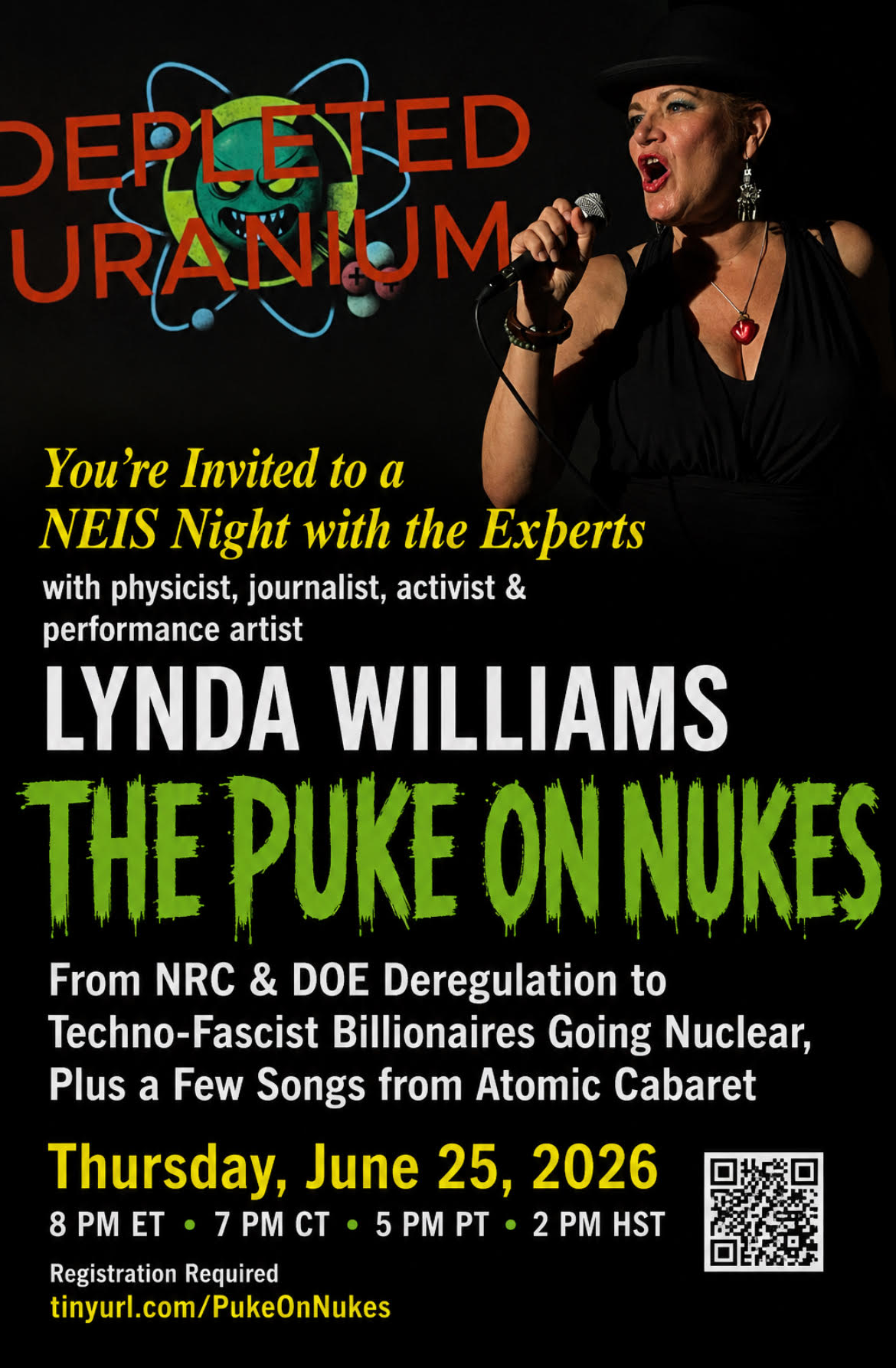
25 June- THE PUKE ON NUKES
Thursday, June 25, 2026
7pm Central Time (8pm ET, 6pm MT, 5pm PT) UTC – 5
From NRC & DOE Deregulation to Techno-Fascist Billionaires Going Nuclear, Plus a Few Songs from Atomic Cabaret REGISTER
26 June – Radiation Trainwreck at the NRC / Join the Protect Better Campaign – https://us02web.zoom.us/meeting/register/4ZlZ5_qLSHGiLSCg8FF6Bg#/registration
1st July – Webinar Waste of Space: The Environmental Harm of Military and Civil Space Activity st July, 7 pm

Report Launch Online: We are seeing an increasing exploitation of space for military and commercial purposes. This must change.

Protect Sazan Island from the Trump family! https://secure.avaaz.org/campaign/en/protect_sazan_island_from_the_trump_family_loc/?bqFCVab&v=174511&cl=22707147157&_checksum=5e9dde668860e8231c33699735e16a1fbf22ab2cb01da50c999fe8732b9775ef&utm_source=email&utm_medium=blast_email&utm_campaign=174511


Cuba Is Not a Failed State – It Is a Besieged State
PETITION: “Global Appeal to Endorse Palestinian Right of Return of Refugees”
To see nuclear-related stories in greater depth and intensity – go to https://nuclearinformation.wordpress.com
-
Archives
- June 2026 (221)
- May 2026 (306)
- April 2026 (356)
- March 2026 (251)
- February 2026 (268)
- January 2026 (308)
- December 2025 (358)
- November 2025 (359)
- October 2025 (376)
- September 2025 (257)
- August 2025 (319)
- July 2025 (230)
-
Categories
- 1
- 1 NUCLEAR ISSUES
- business and costs
- climate change
- culture and arts
- ENERGY
- environment
- health
- history
- indigenous issues
- Legal
- marketing of nuclear
- media
- opposition to nuclear
- PERSONAL STORIES
- politics
- politics international
- Religion and ethics
- safety
- secrets,lies and civil liberties
- spinbuster
- technology
- Uranium
- wastes
- weapons and war
- Women
- 2 WORLD
- ACTION
- AFRICA
- Atrocities
- AUSTRALIA
- Christina's notes
- Christina's themes
- culture and arts
- Events
- Fuk 2022
- Fuk 2023
- Fukushima 2017
- Fukushima 2018
- fukushima 2019
- Fukushima 2020
- Fukushima 2021
- general
- global warming
- Humour (God we need it)
- Nuclear
- RARE EARTHS
- Reference
- resources – print
- Resources -audiovicual
- Weekly Newsletter
- World
- World Nuclear
- YouTube
-
RSS
Entries RSS
Comments RSS
 nuclear-news