Labour Minister concedes no new nuclear power stations will be built in Scotland

Michael Shanks said the SNP Government’s opposition to new nuclear would see plants blocked
Paul Hutcheon, Political Editor, Daily Record, 21st Jan 2025
The UK Energy Minister has said there will be no new nuclear plants in Scotland because they would be blocked by the SNP Government. Michael Shanks said he disagreed with the Edinburgh administration’s position but said their stance was “legitimate”.
Shanks made his comments in an evidence session to Holyrood on the Labour Government’s plan for GB Energy. The publicly-owned company will be headquartered in Aberdeen and is aimed at spearheading a clean energy revolution.
But nuclear appears to have no future in Scotland as the SNP Government is opposed and can exercise a veto through the planning system.
………..“They’ve set a very clear statement that there will be no new nuclear in Scotland. I might disagree with that but that is the landscape they operate in and therefore there is no plans, there will be no engagement on that issue because it is very clear that those applications would be blocked by the Scottish Government and that is the legitimate position that the Scottish government [takes] on planning matters.”
He added that there was no “confrontation” and said GB Energy has to comply with the rules, regulations and planning statements in each part of the UK.
https://www.dailyrecord.co.uk/news/politics/labour-minster-concedes-no-new-34522820
It is only a matter of time before nuclear development at Bradwell falls by the wayside.

Energy and the role of nuclear power
7 January 2025, Andrew Blowers, Emeritus Professor of Social Sciences, Open University and Chair of BANNG considers this topic in the January 2025 column for Regional Life magazine
At the beginning of 2024, the Conservative Government published its Civil Nuclear: Road Map to 2050, proclaiming its commitment to recovering the UK’s global leadership in nuclear power. The Road Map was gung-ho for big nuclear at Hinkley Point C (still unfinished) and Sizewell C (still looking for investors just to get started); plus a fleet of Small (in fact rather large) Modular Reactors chosen by competition (still awaiting the winning design); and the (vanishingly) distant prospect of a raft of Advanced Modular reactors, including fusion (that tantalisingly evanescent Holy Grail of nuclear fulfilment)
It was the accompanying New approach to siting beyond 2025 which most attracted our attention. The Government proposed a developer-led approach, in effect a market free-for-all where developers are invited to find suitable sites for new nuclear power stations. At the same time, six sites identified back in 2011, including Bradwell, were carried forward as having ‘inherent positive attributes’ potentially suitable for consideration.
BANNG commented that developers would be unlikely to ‘identify sites beyond those that are being dangled in front of them already’. Yet again, we were at pains to stress that the Bradwell site is simply unsuitable and does not possess any of these ‘positive attributes’, least of all widespread public support. At a meeting with the then Minister for Energy, I made it crystal clear that there is widespread deep and extensive opposition from the local communities around the Blackwater.
A change of Government brought no change in nuclear policy; if anything Labour is even more effusive in its support for nuclear as essential in providing clean, stable and reliable power.
Once again, BANNG took up the challenge. With Stephen Thomas, Emeritus Professor of Energy Policy at Greenwich University, I wrote a paper exposing the ‘Great British Nuclear Fantasy’ which formed the basis of a discussion with the Minister for Energy, Lord Hunt.
We stressed that any expansion of nuclear power would be ‘too expensive, unrealistic but above all, simply unachievable’. There were no sites yet available for nuclear projects, least of all Bradwell. In response Lord Hunt reassured us that we were not ‘blockers’ and had presented a reasoned, professional argument which, to give him credit, he listened to.
Climate Change
As the impacts of Climate Change (CC) are becoming more evident it is ever more obvious that sites like Bradwell are wholly unsuitable for major infrastructures like nuclear power stations or big transformers. During the year BANNG helped to lead a series of workshops with the Office for Nuclear Regulation (ONR), responsible for the safety of nuclear plants, on the implications of CC for nuclear regulation.
The ONR confirmed that our work had been a significant influence on its understanding of CC. BANNG asserted that CC makes Bradwell the least suitable of all the sites currently in the ring for nuclear development. BANNG has urged the Chief Executive of ONR ‘to resist the presumption that Bradwell is an acceptable site and to declare that it should be withdrawn from further consideration’.
BANNG ended the year with a further challenge, this time to Great British Nuclear
(GBN), the body responsible for pushing forward nuclear development, inviting
it to confirm that any proposals ‘will be subject to scrutiny and consultation through
the open, democratic and participative processes of public engagement.’
Our conclusion is that despite all the rhetoric, the nuclear programme is stuttering
and Climate Change may well seal its fate. It is only a matter of time before
nuclear development at Bradwell falls by the wayside.
UK Nuclear Power Ambitions Hampered by Delays and Soaring Costs
The construction of Hinkley Point C and Sizewell C nuclear power plants is
facing significant delays and cost overruns, jeopardizing the UK’s energy
security. Sellafield Ltd’s cybersecurity failings have raised concerns
about the safety and security of the UK’s nuclear industry.
The UK government’s ambitious plans to expand nuclear power are facing criticism
due to the high costs and potential impact on taxpayers. As the U.K.
government doubles down on plans to develop the country’s nuclear power
industry following decades of neglect, severe delays and cost increases are
hampering progress. Delays and rising costs at the Sizewell C and Hinkley C
nuclear projects have drawn public criticism, while concerns over public
safety have been brought into question due to cybersecurity failings by
Sellafield Ltd. While public support for nuclear power is at its highest
level in decades, these failings could hinder the development of a strong
nuclear power industry in the U.K.
Oil Price 19th Jan 2025, https://oilprice.com/Alternative-Energy/Nuclear-Power/UK-Nuclear-Power-Ambitions-Hampered-by-Delays-and-Soaring-Costs.html
‘I was exposed to evil in British nuclear tests’

Kirsteen O’Sullivan & Marcus White, 15 Jan 25, https://www.bbc.com/news/articles/cvgpp5ze28ro?fbclid=IwY2xjawH5E-JleHRuA2FlbQIxMQABHegxfVRLO66gQNKipt3Y5f9BWzRPbu0h6QWkys9CWH2yBTjZhE1YRCwhmA_aem_E7q8FCNDKoWD6DMMToVaoQ
A nuclear test veteran who witnessed the detonation of several British atomic bombs in the 1950s has said he was “exposed to evil”.
Robert James, 87, was an RAF firefighter stationed in Maralinga in Australia, where seven major UK tests took place.
Mr James, from Fordingbridge, Hampshire, said many service personnel had suffered fatal illnesses as a result and he was angry that the UK government had still not offered compensation.
The Ministry of Defence (MoD) said ministers were continuing to discuss issues with families.
Veterans’ campaign groups have said British service personnel were lined up and deliberately exposed to bomb tests to see what effect they would have.
Mr James said many of his comrades had died as a result of cancers and diseases associated with radiation exposure.
He said: “A lot of the guys suffered a lot. There’s lads dying every day… and after having long illness.
“We were exposed to evil, we were exposed to radiation. That’s pretty serious and I think that warrants compensation.
“Not only for people that are surviving like myself but the families that have suffered where their husbands or fathers died.”
In 2019, the Labour Party, then led by Jeremy Corbyn, pledged £50,000 for each surviving British nuclear test veteran.
Sir Keir Starmer met veterans in 2021, before becoming Prime Minister, but made no promises – and the 2019 offer was not in the 2024 manifesto.
However, the current Defence Secretary John Healey posted on his website in 2021: “UK remains the only nuclear power that refuses them recognition or compensation, unlike the US, France, Canada and Australia.”
Mr James said: “Don’t go back on your word, Mr Starmer… You promised us full compensation and recognition. Keep to your word.”
Over time, over budget… will our new nuclear plants ever be built?

A damning report on EDF, the French company aiming to construct Sizewell C,
has thrown the project into doubt, while Hinkley Point C faces soaring
costs and delays.
The cost of nuclear power in the UK came roaring back
into the headlines last week after reports that the final bill for Sizewell
C, the planned new power station on the Suffolk coast, would be £40
billion — twice what was initially expected. This was followed by a
damning report on EDF, the French state-backed company that is proposing to
build Sizewell, which laid bare its financing problems, raising questions
about whether the plant will be built at all.
Hinkley is running years late and is massively over budget, prompting critics to wonder whether this is a model we should be copying. EDF had originally envisaged that [Hinkley]
would be in operation by this year; its most optimistic scenario now puts
the start date for the first of its two reactors at 2029. Meanwhile,
Hinkley’s original £18 billion cost on the eve of its construction has
ballooned to up to £35 billion in 2015 prices — or £46 billion in
today’s money.
Unfortunately, the financing for both plants is far from
settled. It is estimated that cost overruns at Hinkley mean it needs to
find another £5 billion to finish the work. This shortfall has been
exacerbated by EDF’s partner in the project, China General Nuclear Power,
refusing to put in more money after being excluded from Sizewell on
national security grounds.
Alison Downes of the Stop Sizewell C campaign
said: “We’ve no faith this project is being looked at objectively, so
it’s vital that the Office for Value for Money [the new government
agency] launches an immediate inquiry before ministers sleepwalk into a
disastrous decision.”
Having allocated £5.5 billion to Sizewell in the
budget, most observers expect Labour to give the green light at the
spending review. Some argue that the “sunk-cost fallacy” — a
reluctance to abandon projects in which a lot of money has been invested,
even if that would ultimately be a more cost-effective option — has
kicked in, and that cancelling it now would trigger a large and galling
write-down for the government. Nor are there obvious alternative vendors of
large nuclear projects — at least not yet. Bull, of Manchester
University, said axing Sizewell would send a terrible signal: “I think
the real cost of not doing Sizewell C is that we end up with another failed
project, and investors start to think we are just not serious.”
Times 19th Jan 2025 https://www.thetimes.com/business-money/companies/article/whats-happening-with-britains-nuclear-plants-and-when-will-they-be-built-tr6v0986f
Told you so: Financial Times follows NFLAs lead on Sizewell C cost estimate.

16 Jan 25 – https://www.nuclearpolicy.info/news/told-you-so-ft-follows-nflas-lead-on-sizewell-c-cost-estimate/
It is always nice when a media cornerstone of the finance world follows your lead in doing its sums – but that is what the Financial Times did yesterday in publishing an article indicating that the estimated cost of completing the new nuclear plant at Sizewell C will be £40 billion, something the NFLAs have been saying for ages.
One rule in nuclear is that the construction cost for new plants will always be far higher than the first estimate. And there has been no better example of this truism than that of Sizewell C’s sister plant, Hinkley Point C in Somerset, where an initial estimate of £18 billion for completion has now doubled to £34 billion (at 2015 prices).
It was hardly surprising that the FT reported that the final bill is more likely to be nearer £40 billion after speaking to ‘people close to negotiations over flagship energy scheme’; which are understood to be ‘one senior government figure and two well-placed industry sources.’ This figure is double that made in 2020 reflecting the recent surge in construction costs, and the inevitable delays and cost overruns will inevitably add to the eventual total.
The Sizewell C site presents its own costly challenges, namely a need for considerable expenditure on coastal defences as the East Coast will be increasingly subject to inundation and storm surges because of climate change and the need to provide in this water-stressed region for the provision of potable water with the likely installation of a dedicated desalination plant.
The British Government has already spent, or pledged, up to £8 billion in public funds to carry out preparatory groundwork around the site. Although private investors are being sought to finance the cost of construction, under the Regulated Asset Base being adopted by the British Government for the construction of any new nuclear plants, British electricity customers will ultimately have to bear the cost as the developer will be reimbursed these construction costs in stages through applying a nuclear levy to bills.
However, the Final Investment Decision to give the project the go-ahead has yet to be made. This is only expected in the late Spring after the completion of a Spending Review of overall government spending so there is still time for the Chancellor Rachel Reeves to stop it.
Local campaign group Stop Sizewell C is asking supporters to sign a petition to do so. The link to the petition is https://action.stopsizewellc.org/save-billions-cancel-sizewellc
Stop Sizewell C’s message to the Chancellor, via the Treasury, is: “As you carry out your multi-year spending review, I am reminded of your statement to Parliament during your mini-budget last year – “If we cannot afford it, we cannot do it”. I appreciate that you face many difficult choices, but with the Financial Times reporting that Sizewell C will cost at least £40 billion, I urge you not to throw more taxpayers’ money at this expensive, risky project that will raise energy bills during its lengthy and unpredictable construction. For alternative strategies that will help meet the UK’s 2030 target and create many thousands of jobs, I urge you to focus on renewables and energy efficiency.”
The NFLAs endorse this petition as it mirrors our position.
At present, the British Government is the majority stakeholder, but long-term only wishes to retain 20% as Ministers intend to offload much of their stake to private investors. So far however, no one is definitively biting, with mixed messages about interest from Centrica, British Gas’s parent, and Gulf States’ sovereignty funds.
As a second whammy to government hopes that more private sector partners will become involved, yesterday, the French State Auditor, the Cour des Comptes, criticised the expenditure already made by French state owned EDF on Hinkley Point C in a published report which suggested this could compromise investment in domestic nuclear power expansion plans and that “EDF should not take a final investment decision on Sizewell C before achieving a significant reduction in its financial exposure to Hinkley Point C.”
Stop Sizewell C is asking supporters to write to prospective investors asking them not to do so. The relevant links to take this action are shown below:
Amber Infrastructure: action.stopsizewellc.org/amber
Equitix: action.stopsizewellc.org/equitix
Schroders Greencoat: action.stopsizewellc.org/greencoat
Emirates Nuclear Energy Corporation: action.stopsizewellc.org/emirates
Centrica: action.stopsizewellc.org/centrica
The NFLAs has previously written to these prospective investors and endorse this action.
Finally Stop Sizewell C is petitioning the new Office of Value for Money’s independent Chair, David Goldstone, to call in the Sizewell C project for urgent scrutiny. Initial feedback from the Treasury indicated that Sizewell C would be examined, but more recent correspondence with officials has been less committal.
Supporters are asked to follow the NFLA’s example and sign the petition at https://action.stopsizewellc.org/valueformoney
Ends://..For further information, please contact NFLA Secretary Richard Outram by email to richard.outram@manchester.gov.uk
French energy giant EDF launches search for Hinkley Point finance after damning audit report

EDF Group’s chief executive Luc Rémont has hit
back at the national French auditor’s claims that the energy company
should delay its investment in UK nuclear power project Sizewell C.
He said the regulated asset base (RAB) model for financing the Suffolk nuclear
power station, where the cost of development is shared with the consumer,
should not be correlated with the refinancing of the Hinkley Point C
project in Somerset.
The French state-owned energy company has started a
search for financiers to help refinance the delayed project at Hinkley
Point C, following the French state auditor’s findings yesterday,
according to Rémont.
In October, the energy company issued £500m of
senior bonds to help finance investments in two nuclear reactors at the
site. Rémont said that the funding model for the Sizewell C nuclear power
project on the Suffolk coast “limits” EDF’s capital exposure.
The auditor’s report come a week after a letter was sent to the national
auditor in the UK, the National Audit Office, calling for a review of the
government’s spending assessment for Sizewell C. The campaign group
behind the letter raised concerns of rising costs at Hinkley Point C,
another nuclear power station being built by EDF, now estimated to be in
the region of £46 billion. The letter from Together Against Sizewell C
(TASC) followed a plea by Ecotricity founder Dale Vince, a Labour donor,
for the Treasury’s new Office for Value for Money to review plans to
develop the new nuclear power project in Suffolk.
Energy Voice 15th Jan 2025 https://www.energyvoice.com/renewables-energy-transition/565569/french-energy-giant-edf-launches-search-for-hinkley-point-finance-after-damning-audit-report/
EDF Energy Juggles Maintenance Amid UK’s Nuclear Energy Challenges
EDF Energy is ensuring Britain stays powered while handling scheduled
outages at several key nuclear reactors, including Heysham and Hartlepool,
all while preparing for future decommissioning.
With key nuclear capacities
offline for maintenance, the UK’s energy market faces uncertainties.
Investors should monitor energy stock dynamics and a possible shift towards
renewables, as EDF Energy’s planned outages may cause temporary price
swings.
Finimize 16th Jan 2025
https://finimize.com/content/edf-energy-juggles-maintenance-amid-uks-nuclear-energy-challenges
Dunfermline MP Graeme Downie calls for MoD commitment to dismantle dead nuclear submarines

ONE boat is being dismantled in Rosyth but there’s no commitment and no funding to deal with another 25 nuclear subs – with the total cost estimated to be around £300
million. That’s the concern of Dunfermline and Dollar MP Graeme Downie who
said a pledge to break up the other vessels would “guarantee decades of
work” at the dockyard. More than 200 people at Rosyth are already working
on HMS Swiftsure, it is being cut up and her radioactive waste removed as
part of a demonstrator project, and he said the site could become a
“worldwide centre of excellence for submarine dismantling”.
Dunfermline Press 15th Jan 2025,
https://www.dunfermlinepress.com/news/24860540.dunfermline-mp-graeme-downie-calls-mod-commitment/
Ask the locals: NFLA Chair says it is ‘prudent and proper’ for Nuclear Waste Services to consult residents over South Copeland flooding risk
The UK/Ireland Nuclear Free Local Authorities have urged Nuclear Waste
Services and the South Copeland GDF Community Partnership to ask the
residents of Millom and Haverigg for help in identifying local sites which
have been flooded.
As part of its ongoing effort to locate a potential site
for a Geological Disposal Facility, a repository into which Britain’s
legacy and future high-level radioactive waste will be dumped, NWS intends
to identity ‘Areas of Focus’ in the South Copeland Search Area which
incorporates the communities of Drigg, Haverigg, Kirksanton, and Millom.
These ‘Areas of Focus’ will be subject to more intensive geological
investigations and in the guidance published by NWS those sites ‘with
known flood risks’ will be excluded.
Sizewell C’s future in doubt as EDF told to prioritise French nuclear power
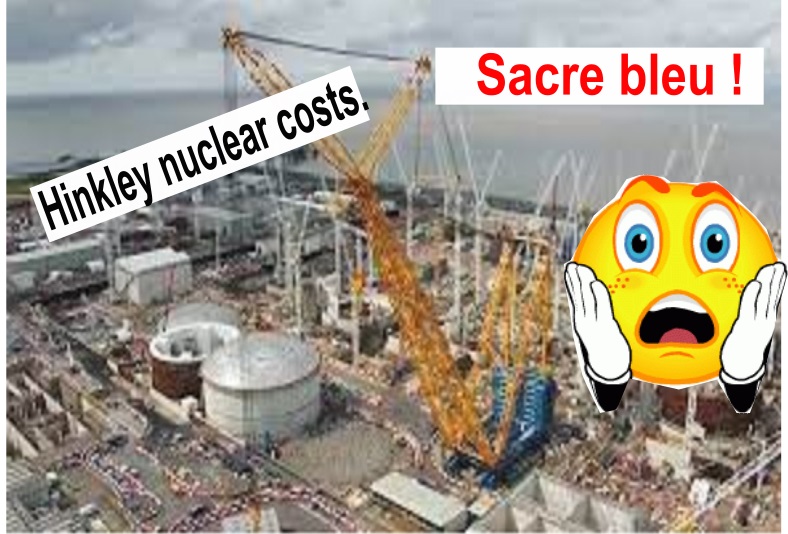
Auditor warns against costly foreign projects as energy giant considers investment decision into the plant
The future of Sizewell C has been thrown into doubt after EDF, the company
behind the project, was told to prioritise supporting nuclear power in
France. In a rare intervention, the French state auditor warned the
state-owned energy giant against backing risky new projects abroad, which
include plans to build a new nuclear power station in Suffolk.
Instead, the Cour de Comptes said EDF should focus on making a success of
multibillion-euro projects at home, ensuring they were profitable and built
on time. It comes as EDF prepares to make a final investment decision on
Sizewell C, which will increase its exposure in the UK given it is already
building Hinkley Point C in Somerset.
However, that project has been hit by
surging costs and delays, with the most recent forecasts saying it will
open after 2030 and cost around £45bn. Industry sources are also predicting
Sizewell C will cost £40bn to build, double EDF’s initial estimates in
2020.
EDF is working alongside the Government on Sizewell C, with £4bn of
taxpayer cash already spent on the project. However, the French auditor has
released a report saying EDF should not make a final investment decision on
the Sizewell project before cutting its financial exposure to Hinkley.
Telegraph 14th Jan 2025,
https://www.telegraph.co.uk/business/2025/01/14/sizewell-c-future-doubt-edf-told-prioritise-french-nuclear/
Cost of Sizewell C nuclear project expected to reach close to £40bn

“Nuclear is too expensive, too slow — and very expensive to contain at the end of its life.”
Final price tag for building new power plant is likely to be double 2020 estimate
Jim Pickard, Rachel Millard and Gill Plimmer , January 14 2025
The final price tag for building the planned Sizewell C nuclear power station in Suffolk is likely to reach close to £40bn, according to people close to the negotiations over the flagship energy scheme.
The sum is double the £20bn estimate given by developer EDF and the UK government for the project in 2020, reflecting surging construction costs as well as the implications of delays and cost overruns at sister site Hinkley Point C.
The higher estimate is likely to raise questions over the government’s strategy for a nuclear power revival, at a time of stretched government finances and cost of living concerns.
EDF says that once up and running, Sizewell C should be able to supply low carbon electricity to the equivalent of about 6mn homes for 60 years.
The Treasury is due to decide whether to go ahead with the project in this year’s multiyear spending review, according to officials.
The UK government and French energy group EDF were the initial backers of Sizewell C, but they are trying to raise billions of pounds from new investors, a process that is dragging on longer than planned.
Earlier this month the Department for Energy Security and Net Zero (Desnz) said it could not reveal the current cost estimate for the project as it was “commercially sensitive”. …………………
Alison Downes, executive director of campaign group Stop Sizewell C, urged the government to “come clean” on the “massive true cost” of the project given that households would be paying upfront for its construction via a levy on energy bills. “This secrecy around Sizewell C is inexcusable.”
Dale Vince, a big Labour party donor and founder of green energy company Ecotricity, has written to the government’s new Office for Value for Money warning that the construction of Sizewell “will saddle consumers with higher bills long before it delivers a single unit of electricity”.
But one senior government figure and two well-placed industry sources said a reasonable assumption for the cost of building Sizewell C would be about £40bn in 2025 prices.
The government has already awarded £3.7bn of state funding to the project. Ministers had planned to reach a final investment decision by the end of 2024 but were forced to delay this until spring 2025. Now there is industry speculation that any deal could slip beyond the autumn.
Speaking to the Financial Times, he added: “Nuclear is too expensive, too slow — and very expensive to contain at the end of its life”…………………………….
all but one of Britain’s current ageing fleet of plants is due to close by March 2030, potentially sooner if planned life extensions cannot go ahead.
Only one new nuclear power station, Hinkley Point C in Somerset, is at present being built in the UK but it is delayed and over budget.
The project is due to start generating in 2029 at the earliest, and cost up to £46bn. That compares with initial expectations from 2016 that it would start at the end of 2025 and cost £18bn. …………………….
there is scepticism inside government about how much lower Sizewell C’s price tag would be compared with Hinkley Point C………………………………
Destroyed Assange Files: Why Judge’s Rebuke Against Crown Prosecution Service Was So Significant.

“This is a significant victory in a long battle to get the truth out on the involvement of CPS in keeping Julian in arbitrary detention that later turned into political imprisonment, according to UN bodies and the Parliamentary Assembly of the Council of Europe.”
An unknown number of emails were apparently deleted after one of the U.K.’s lead prosecutor in the case, Paul Close, retired from the CPS. The deletions occurred despite the fact that the case against the award-winning journalist and publisher of the news and transparency website WikiLeaks was still active.
the dissenter, Mohamed Elmaazi, 14 Jan 2025,
A British judge issued an unusually critical rebuke against the Crown Prosecution Service of England and Wales.
A British judge issued an unusually critical rebuke against the Crown Prosecution Service of England and Wales (CPS) for its handling of freedom of information requests related to Sweden’s failed attempt to extradite WikiLeaks founder Julian Assange.
The decision by the United Kingdom’s information rights tribunal was made public on January 10. It followed an appeal by Italian investigative journalist Stefania Maurizi, who argued that the CPS failed in its duty to properly explain why a senior prosecutor’s emails were allegedly deleted or destroyed.
In writing the decision for the three-member tribunal, First-Tier Tribunal (FTT) Judge Penrose Foss pierced the veil of deference that is often shown to governmental bodies in England and Wales by the U.K.’s data protection regulator, the Information Commissioner’s Office (ICO). Foss was quite blunt in her criticism of the CPS’s handling of multiple Freedom of Information Act (FOIA) requests that Maurizi had submitted as early as 2015.
It is uncommon for the CPS to be a respondent in FOIA appeals. A review of FTT decisions regarding information rights cases since 2009 shows the CPS as a respondent in 16 out of 3,167 cases (0.5 percent). This includes two appeals filed by Maurizi.
The decision establishes a precedent that may make it easier for future FOIA requests to be successful in the long run, according to Estelle Dehon KC of London’s Cornerstone Barristers, who represented Maurizi.
When the information rights tribunal comes across instances of a public authority’s failure to comply with FOIA obligations it “has been known to be quite trenchant in its criticism,” Dehon, told The Dissenter. But it is “unusual in the run of cases that are specific to Stefania’s FOIA requests” for the tribunal to be as critical as it was last week, she added.
“What we can do now is say to the ICO, look at the quality of the search process [conducted by a public body when a FOIA request is made]. If the search process was poor, then that is an indication that the information is being, or might be, held despite the public authority’s claims to the contrary,” Dehon said.
Kristinn Hrafnsson, WikiLeaks’ editor-in-chief, told The Dissenter, “This is a significant victory in a long battle to get the truth out on the involvement of CPS in keeping Julian in arbitrary detention that later turned into political imprisonment, according to UN bodies and the Parliamentary Assembly of the Council of Europe.”
The tribunal ordered the CPS to confirm whether it holds information as to “when, how and why” it destroyed or deleted any “hard or electronic copies of emails” with the Swedish Prosecution Authority by February 21 at 4 p.m. If they have any such information they must provide it to Maurizi or otherwise explain why they are exempt from doing so.
‘Unfounded’ Assumptions Prevented Adequate Search For Records
“Overall, based on the evidence before us, our concern is that over a number of years the CPS has not properly addressed itself at least to recording, if not undertaking, adequate searches in relation to the CPS lawyer’s emails, with the result that, in 2023, when it has purported to answer [Maurizi’s] 2019 [FOIA] Request, it has not been able to give a clear and complete account,” the Tribunal stated in its decision.
The tribunal noted that the CPS’s approach “appears to have been informed by a combination of unfounded and incorrect assumptions or speculation, flawed corporate memory, and unreliable anecdotal instruction, much, but not all, of that resting inevitably in the natural succession of employees through the organisation over time.”
“The cumulative effect of those things, taken together with what we find to be (1) imprecisely worded questions and a failure to drill down into answers, and (2) the absence of any clear and complete audit trail of enquiries and responses at each stage, has very likely prevented adequate searches and has certainly prevented a full and satisfactory account of matters.”
An unknown number of emails were apparently deleted after one of the U.K.’s lead prosecutor in the case, Paul Close, retired from the CPS. The deletions occurred despite the fact that the case against the award-winning journalist and publisher of the news and transparency website WikiLeaks was still active.
…………………………………………………………………….. Taking Aim At the UK’s Data Protection Regulator
The tribunal was quite critical of the ICO for its willingness to accept that every reasonable step had been taken by the prosecution to search for the information Maurizi requested.
…………………………………………………………………. The tribunal found that claims made by the government were contradictory and lacking in evidence to support them and even found “no evidence as to what searches were undertaken” in relation to Maurizi’s earlier FOIA requests.
……………………………………….The tribunal’s decision represents the latest victory for Maurizi who has filed multiple FOIA requests and appeals over the U.K. and Swedish governments’ handling of Assange’s extradition case. Dehon summarized the decision succinctly, “The tribunal concluded the CPS likely still holds some information explaining what took place. Hopefully that will finally be disclosed.”
“So far we have learned that the CPS overstepped and dictated how the Swedish prosecutor’s office handled the case with the obvious intent to keep Julian in limbo and maintain for years his unlawful detention,” Hrafnsson said. “The world needs to know who dictated CPS staff to handle the case in this manner both inside the U.K. establishment at its initiative and with input from other governments. It is unacceptable that government files in the U.K. are disappeared in an effort to hide the truth from the public.”
Hrafnsson believes that the missing files, or “at least their fate,” will ultimately “shed light on the real story behind the political persecution of Julian Assange.”
………………………………………………………………………………………. more https://thedissenter.org/destroyed-assange-files-why-judges-rebuke-against-crown-prosecution-service-was-so-significant/
The UK military’s secret visits to Israel
Top British officers have made at least five unpublicised trips to Tel Aviv to meet Israeli officials, one to discuss ‘future operations’ in the Middle East.
MARK CURTIS, 9 January 2025, https://www.declassifieduk.org/the-uk-militarys-secret-visits-to-israel/?utm_source=drip&utm_medium=email&utm_campaign=What+you+might+have+missed
The most senior figures in the UK military made at least five unpublicised visits to Israel in the months after it began striking Gaza in October 2023, Declassified has found.
British government data shows that Admiral Sir Tony Radakin, the chief of the defence staff and the UK’s top soldier, visited Israel on 21 January 2024.
On the trip he met the Israeli military’s chief of staff, Herzi Halevi, “to discuss future operations in the region”.
By then, Israel had already killed around 25,000 Palestinians, as international condemnation mounted.
This was Radakin’s second known visit to Israel, after he accompanied then defence secretary Grant Shapps on an official trip in December 2023. Shapps’ visit was disclosed at the time by the British government.
Radakin is also known to have visited Halevi again in Israel in August last year, while in November the Israeli soldier was invited by Britain’s Ministry of Defence (MoD) to attend a meeting in London.
Halevi was given special immunity by the UK authorities to avoid the possibility of being arrested for war crimes while in Britain.
Another senior UK figure who has visited Israel is the head of the Royal Air Force (RAF), Air Chief Marshal Sir Richard Knighton, who undertook a trip on 9 January 2024, for purposes which are undeclared in the government data.
The RAF has since flown hundreds of spy missions over Gaza, in aid of Israeli intelligence. The UK says that only information related to Hamas hostage-taking is passed to Israel from these flights, which take off from the UK’s sprawling military and intelligence base on Cyprus.
‘UK-Israel bilateral’
James Hockenhull, the head of Strategic Command – the UK military’s senior leadership body – also quietly visited Tel Aviv for a “UK-Israel bilateral” on 28 December 2023.
This was one day before the South African government filed its genocide case against Israel at the International Court of Justice.
Six weeks later, on 13 February 2024, Hockenhull hosted an Israeli general, Eliezer Toledano, in London, in a further unpublicised visit.
Toledano serves as the head of the Israeli military’s Strategy and Third-Circle Directorate, which focuses on Iran.
Also visiting Israel have been other senior MoD officials, such as General Charles Stickland, the Chief Joint Operations at the UK’s Permanent Joint Headquarters which is responsible “for the command and integration of UK global operations”.
Stickland visited Israel on 18 March 2024, described in the government documents as “MoD Directed attendance at meetings to be held in Tel Aviv”.
On the same day, Paul Wyatt, the MoD’s Director General for Security Policy, was also “meeting counterparts” in Tel Aviv.
‘Tacit approval’
The unpublicised visits by senior UK figures raise further concerns about the level of military assistance Britain is providing to Israel.
Chris Law, the SNP MP for Dundee Central said: “This new information will only fuel suspicions that successive UK governments have given tacit approval to and are complicit in what many are now considering to be a genocide in Gaza.
“The UK government must be up-front about the full extent of the British armed forces’ involvement in Gaza and detail precisely what support they have given throughout this conflict to the Israeli Defence Forces. This must include details of any further visits by senior military figures to Israel.”
He added: “The UK government may think that it is being clever by withholding this information, but ultimately it will only cede ground to misinformation and encourage guesswork. By detailing the exact involvement of British military figures, the UK government can prove once and for all that they are not complicit in this tragedy.”
In addition to the RAF’s surveillance flights over Gaza, Declassified has also documented British military training of Israeli personnel in the UK, arms supplies to the Israeli military after Britain announced limited sanctions, and the use of UK airspace to send weapons to Israel.
An MoD spokesperson said: “As part of the concerted UK effort, along with allies and partners, to reach a peaceful resolution to the ongoing conflict in Gaza, senior defence officials have visited Israel for routine diplomatic visits.”
They added: “Discussions included the UK calls for an immediate ceasefire in Gaza and the need for all parties to comply with international humanitarian law while recognising Israel’s right to security.”
The Great British Nuke Off

by beyondnuclearinternational, https://beyondnuclearinternational.org/2025/01/12/the-great-british-nuke-off/
It’s time to expose the sham plan for new nuclear power, write Andy Blowers and Stephen Thomas in their new report
The following is the introduction and the conclusion from the report, “It is time to expose the Great British Nuclear Fantasy once and for all”. Read the full report.
In April 2022, the then UK Prime Minister, Boris Johnson, set a target of 24GW (equivalent to eight stations like Hinkley Point C) of new nuclear capacity to be completed in Great Britain by 2050. At the heart of the proposal was the creation of a new government owned entity, Great British Nuclear (GBN), with a mission of ‘helping projects through every stage of the development process and developing a resilient pipeline of new builds’ designed to ensure energy security and to meet the UK’s commitment to achieving net zero.
The new Labour Government, elected in July 2024, has been emphatic about the scaling up of renewables, and has confirmed that nuclear power ‘will play an important role in helping the UK achieve energy security and clean power’. While not explicitly committing to the 24GW target, the new Government expressed its belief that a scale expansion of new nuclear projects was a necessary part of the energy mix for the transition to achieving net zero carbon by 2050.
The Government is expected to continue with GBN but in a clearly subordinate role to its new creation, Great British Energy, its vehicle for driving development and investment into projects that will enable the energy transition to achieve net zero by 2050.
There has, so far, been little government recognition of the sheer difficulty of achieving a vast expansion of nuclear energy. As so often in the past, the nuclear programme has barely got off the ground and the flagship project of the new nuclear programme, Sizewell C, had, by October 2024, yet to receive a Final Investment Decision (FID) apparently because of the lack of interested investors.
In an attempt to keep the project from collapsing while it tries to find investors, Government has chosen to invest £8bn in the project, in addition to Electricité de France’s (EDF’s) contribution of about £700m, just to get it to FID, a process budgeted by EDF in 2016 to cost only £458m. Small Modular Reactors in which much hope is vested barely exist beyond the drawing boards and by the time they could be deployed, if all goes to plan, it will be too late for SMRs and Sizewell C to make any significant contribution to achieving ‘Net Zero’.
The recipe for expanding nuclear and overcoming the problems that have meant previous large nuclear programmes came to little remains the same as that of the previous government: create a flow of large nuclear projects starting with an FID for Sizewell C; bring Small Modular Reactors to commercial availability by 2029 and start ordering them then; and streamline the planning and regulatory processes.
Achieving these objectives in whole or in part will be impossible. In addition, the nuclear programme remains encumbered by its traditional ethical and sustainability problems, if anything, more so. The prevailing fear of nuclear accidents and radiation risks has intensified as nuclear is increasingly exposed to cyber-attack and the palpable threats from terrorism and warfare.
The accidents at Chernobyl and Fukushima, and the threats to Zaporizhzhia in Ukraine and Russia’s Kursk plant at the heart of the Russo-Ukraine war provide chilling evidence of dangers that are likely to materialise sometime somewhere.
With its embedded relationship to the bomb, nuclear energy is implicated in existential catastrophe. The other existential threat comes from accelerating Climate Change which will inundate some coastal sites, create problems of cooling water and, render the legacy of wastes scattered at vulnerable sites an unmanageable problem for generations far into the future.
We may well ask why, in the face of such deficiencies and dangers and with evidence of flagging momentum, this fantastical project is still proceeding? The answer lies in a powerful combination of political ambition, nuclear industry and trade union lobbying purveying the promise of skills, jobs investment, export markets and wealth associated with nuclear development and its supply chain. A mainstream discourse of nuclear as a mainstay of base load supply, energy security and the goal of net zero has been nurtured, to which powerful interests unthinkingly subscribe. Inertia ensures the persistence of the fantasy.
Yet, all the evidence in terms of renewables competition, the opportunity costs and long term economic and security risks of a swerve to new nuclear indicates a vast gulf between rhetoric and reality. In this paper it is our purpose to address the realities and to demonstrate why new nuclear expansion is not only impossible but acts as a barrier to achieve a rapid energy transition powered by renewable technology, storage and energy efficiency.
In the face of the evidence, we consider it reasonable to conclude that any expansion of civil nuclear power in the UK beyond that already committed is unachievable.
The history of nuclear power worldwide is of ambitious programmes falling far short of plans, with huge delays and time overruns. The impact of these failures has been masked by less than expected electricity demand growth and the availability of quicker and cheaper alternatives.
However, there has been a significant opportunity cost to money wasted on these ill-fated policies. For decades UK governments have been seduced by claims from the nuclear industry that, this time, a major nuclear programme will go to plan. More than ever before, the latest programme will be dependent on huge quantities of public money with financial risks falling squarely on the public.
It strains credibility that, with a massive hole in the finances and urgent priorities in health and welfare, the justice system, education and infrastructure, the idea of plugging the nuclear black hole will be met with universal enthusiasm.
The signs are all too clear, the rhetoric has no concrete foundations and the programme will vaporise slowly, perhaps but with inevitable termination. Future demand is again being over-estimated and cheaper, quicker alternatives exist.
The real cost of nuclear power continues to rise and the delays increase, while the cost of alternatives continues to fall. The latest prices for off-shore and onshore wind, and solar photovoltaic are about half the likely price for new nuclear. The IEA reported that over the 10 years from 2013-23, battery costs fell by more than 80%.
Authoritative analysis by an Oxford University team found that UK energy demand could be halved by 2050 with substantial welfare benefits in terms of reducing fuel poverty.
While government documents on nuclear invariably speak of things moving ‘at pace’, the reality is that in the period since the 24GW programme was announced, delays have mounted. In only two years, the completion date for Hinkley Point C went back up to four years and Sizewell C’s FID has been delayed by at least three years.
By October 2024, more than two years after it was announced, GBN barely exists. It has no permanent executive, no premises and no independent budget and its staff are temporary secondees.
GBN’s first substantive task was to complete the SMR competition and award contracts. In October 2023, it expected this to happen in spring 2024. It now seems likely this will not happen until the end of 2024, so a task expected to take about 6 months will, if there are no more delays, take 15 months.
The new Labour administration has yet to say whether GBN will remain as a separate body or whether it will be absorbed into its own new creation, Great British Energy. This uncertainty could delay the decision further.
Despite the sound and fury, the GBN project is bound to fail. Its contribution to achieving net zero by 2050 will be nugatory. No amount of political commitment can overcome the lack of investors, the absence of credible builders and operators or available technologies let alone secure regulatory assessment and approval.
Moreover, in an era of climate change there will be few potentially suitable sites to host new nuclear power stations for indefinite, indeed unknowable, operating, decommissioning and waste management lifetimes.
And there are the anxieties and fears that nuclear foments, the danger of accidents and proliferation and the environmental and public health issues arising from the legacy of radioactive waste scattered on sites around the country.
Abandoning Sizewell C and the SMR competition will lead to howls of anguish from interest groups such as the nuclear industry and trade unions with a strong presence in the sector. It will also require compensation payments to be made to organisations affected. However, the scale of these payments will be tiny in comparison with the cost of not abandoning them.
It is our hope that sanity and rationality may prevail and lead to a future energy policy shorn of the burden of new nuclear and on a pathway to sustainable energy in the pursuit of net zero.
Professor Andy Blowers is a British geographer and environmentalist and Emeritus Professor of the Faculty of Arts & Social Sciences at the Open University. Professor Stephen Thomas is a professor at the University of Greenwich Business School, working in the area of energy policy.
1 This Month

22 June – Virtual Event –Climate Change: New Data, New Debate

Monday, June 22, 2026 2:30 p.m. – 3:15 p.m. CT
YouTube. Register here

Protect Sazan Island from the Trump family! https://secure.avaaz.org/campaign/en/protect_sazan_island_from_the_trump_family_loc/?bqFCVab&v=174511&cl=22707147157&_checksum=5e9dde668860e8231c33699735e16a1fbf22ab2cb01da50c999fe8732b9775ef&utm_source=email&utm_medium=blast_email&utm_campaign=174511
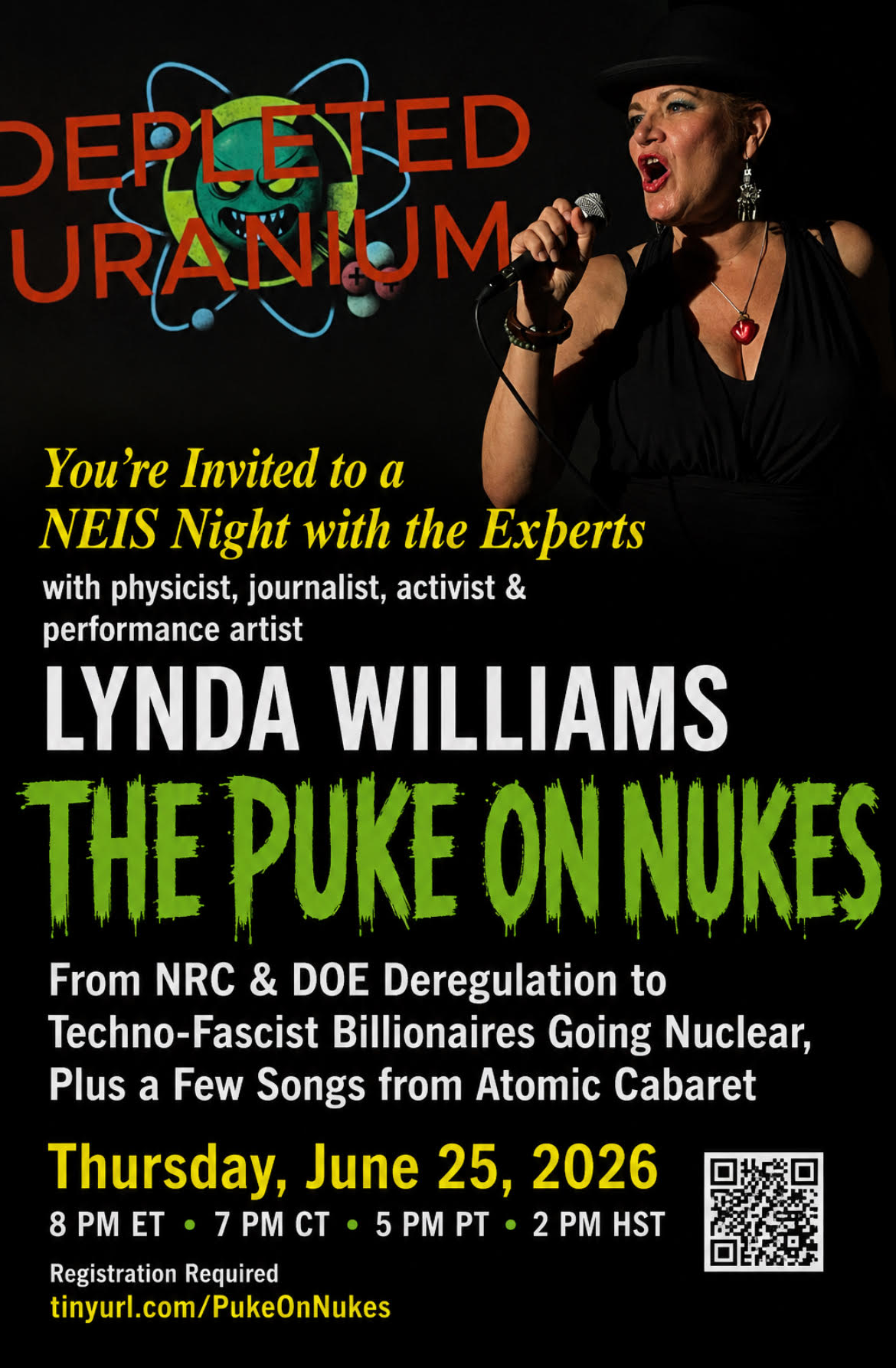
25 June- THE PUKE ON NUKES
Thursday, June 25, 2026
7pm Central Time (8pm ET, 6pm MT, 5pm PT) UTC – 5
From NRC & DOE Deregulation to Techno-Fascist Billionaires Going Nuclear, Plus a Few Songs from Atomic Cabaret REGISTER
26 June – Radiation Trainwreck at the NRC / Join the Protect Better Campaign – https://us02web.zoom.us/meeting/register/4ZlZ5_qLSHGiLSCg8FF6Bg#/registration


Cuba Is Not a Failed State – It Is a Besieged State
PETITION: “Global Appeal to Endorse Palestinian Right of Return of Refugees”
To see nuclear-related stories in greater depth and intensity – go to https://nuclearinformation.wordpress.com
-
Archives
- June 2026 (193)
- May 2026 (306)
- April 2026 (356)
- March 2026 (251)
- February 2026 (268)
- January 2026 (308)
- December 2025 (358)
- November 2025 (359)
- October 2025 (376)
- September 2025 (257)
- August 2025 (319)
- July 2025 (230)
-
Categories
- 1
- 1 NUCLEAR ISSUES
- business and costs
- climate change
- culture and arts
- ENERGY
- environment
- health
- history
- indigenous issues
- Legal
- marketing of nuclear
- media
- opposition to nuclear
- PERSONAL STORIES
- politics
- politics international
- Religion and ethics
- safety
- secrets,lies and civil liberties
- spinbuster
- technology
- Uranium
- wastes
- weapons and war
- Women
- 2 WORLD
- ACTION
- AFRICA
- Atrocities
- AUSTRALIA
- Christina's notes
- Christina's themes
- culture and arts
- Events
- Fuk 2022
- Fuk 2023
- Fukushima 2017
- Fukushima 2018
- fukushima 2019
- Fukushima 2020
- Fukushima 2021
- general
- global warming
- Humour (God we need it)
- Nuclear
- RARE EARTHS
- Reference
- resources – print
- Resources -audiovicual
- Weekly Newsletter
- World
- World Nuclear
- YouTube
-
RSS
Entries RSS
Comments RSS
 nuclear-news