Planners recommended against nuclear plant in 2019 citing fears for Welsh language
the inspectors’ report concluded that “the matters weighing against the proposed development outweigh the matters weighing in favour of it” and that despite planned mitigations the project could “adversely affect tourism, the local economy, health and wellbeing and Welsh language and culture”
Industry figures say fate of Anglesey facility to have been built by Hitachi shows problems with planning system
Guardian, Eleni Courea 7 Feb 25
Planning inspectors recommended against a Hitachi-built nuclear power plant in Anglesey on the basis that it could dilute the island’s Welsh language and culture, it has emerged.
Hitachi scrapped plans to build a £20bn nuclear power plant at Wylfa in 2020 over cost concerns after failing to reach a funding agreement with UK ministers.
Keir Starmer’s government has vowed to make it easier to build major infrastructure projects by reforming the planning system and stopping campaigners from launching “excessive” legal challenges.
The prime minister unveiled plans for a historic expansion in nuclear power this week, vowing to “push past nimbyism” and make sites across the country available for new power stations.
Nuclear industry figures believe that the fate of Hitachi’s proposed plant at Wylfa demonstrates the problems with the UK’s planning system.
Planning inspectors appointed by the UK government recommended that the project be rejected in 2019, warning of its impact on biodiversity, the local economy, housing stock and the Welsh language.
The inspectors’ 906-page report said the additional workers required by the project would put pressure on local housing and schools and that “given the number of Welsh-speaking residents, this could adversely affect Welsh language and culture”.
Hitachi carried out a Welsh language impact assessment as part of its application, which found that the project would need to bring 7,500 workers from outside the area. Anglesey has 70,000 residents and one of the highest concentrations of Welsh speakers in the country.
The impact assessment concluded the extra workers “could have a major adverse effect on the balance of Welsh and non-Welsh speakers” in the area and “could adversely affect the use and prominence of the Welsh language within communities”.
But the assessment also found that by creating high-skilled jobs for young people, the project would help preserve the Welsh language on the island. It would have created more than 2,000 local construction jobs for nine years, and about 85% of the plant’s workforce would be local under the plans.
Nevertheless, the inspectors’ report concluded that “the matters weighing against the proposed development outweigh the matters weighing in favour of it” and that despite planned mitigations the project could “adversely affect tourism, the local economy, health and wellbeing and Welsh language and culture”
It also found that the developers had not put forward enough evidence to demonstrate that the arctic and sandwich tern populations around the Cemlyn Bay area, where the plant was going to be built, would not be disturbed by construction. There were fears that the birds would abandon the area as a result.
The last Conservative government revived plans for a large-scale nuclear power station at Wylfa and bought the site from Hitachi for £160m. In its election manifesto, Labour pledged to “explore the opportunities for new nuclear at Wylfa”………………………………..
Linda Rogers of the campaign group People Against Wylfa B said Hitachi withdrew “because the government wasn’t able to provide adequate funding as far as they were concerned”.
She added: “[The plans] broke environmental regulations – which this present government is laughing at, at a time when we need to increase biodiversity – and affected very much the local wildlife, particularly terns. And it was bad for the Welsh language. There were a lot of issues why it was not appropriate to build at Wylfa.” https://www.theguardian.com/politics/2025/feb/07/planners-recommended-against-nuclear-plant-in-2019-over-welsh-language-and-cultural-concerns-hitachi
Council votes to end Holderness nuclear waste talks
22 February 2024, Richard Madden & David McKenna, BBC News
Councillors have voted to immediately pull out of talks over the siting of a nuclear waste disposal facility in East Yorkshire.
Nuclear Waste Services (NWS) had identified South Holderness as a potential area for a Geological Disposal Facility (GDF).
East Riding of Yorkshire Council said it had listened to the public and decided to withdraw.
NWS said it would now “wind down” the South Holderness proposal.
The proposal to pull out of the talks had been put forward by two Conservative councillors, Lyn Healing and Sean McMaster, and was voted through almost unanimously at a full council meeting on Wednesday.
Beverley and Holderness MP, Graham Stuart, said he was “delighted” at the result of the vote.
‘Hare-brained idea’
Ms Healing told the meeting she was concerned about safety and the impact on tourism and farming due to the area becoming industrialised.
She said both she and Mr McMaster had received hundreds of messages from concerned residents.
Speaking ahead of the vote, Councillor Denis Healy, Liberal Democrats, said local residents had “unequivocally” rejected the idea.
“So, let’s just show our residents the respect they deserve and give them our verdict on this hare-brained idea right now,” he added.
A GDF consists of a series of vaults and tunnels deep underground, or under the sea, where the material would be buried.
NWS, which had claimed a GDF would create thousands of jobs and opportunities for investment in infrastructure, said it “fully respected” any decision taken by the authority…………………………………… https://bbc.com/news/uk-england-humber-68350061
Concern UK’s AI ambitions could lead to water shortages

Zoe Kleinman, Technology editor•@zskm Brian Wheeler, Senior political reporter.
BBC 7th Feb 2025, https://www.bbc.co.uk/news/articles/ce85wx9jjndo
Sir Keir Starmer’s plan to make the UK a “world leader” in Artificial Intelligence (AI) could put already stretched supplies of drinking water under strain, industry sources have told the BBC.
The giant data centres needed to power AI can require large quantities of water to prevent them from overheating.
The tech industry says it is developing more efficient cooling systems that use less water.
But the department for science, innovation and technology said in a statement it recognised the plants “face sustainability challenges”. The government has committed to the construction of multiple data centres around the country in an effort to kick start economic growth.
Ministers insist the notoriously power-hungry server farms will be given priority access to the electricity grid.
Questions have been raised about the impact this might have on the government’s plans for clean energy production by 2030.
But less attention has been given to the impact data centres could have on the supply of fresh, drinkable water to homes and businesses.
Parts of the UK, in the south especially, are already under threat of water shortages because of climate change and population growth.
The government is backing plans for nine new reservoirs to ease the risk of rationing and hosepipe bans during droughts.
But some of these are in areas where new data centres are set to be built.
The first of the government’s “AI growth zones” will be in Culham, Oxfordshire, at the UK Atomic Energy Authority’s campus – seven miles from the site of a planned new reservoir at Abingdon.
The 4.5 sq mile (7 sq km) reservoir will supply customers in the Thames Valley, London and Hampshire. It is not known how much water the massive new data centres now planned nearby could take from it.
The BBC understands Thames Water has been talking to the government about the challenge of water demand in relation to data centres and how it can be mitigated.
In a new report, the Royal Academy of Engineering calls on the government to ensure tech companies accurately report how much energy and water their data centres are using.
It also calls for environmental sustainability requirements for all data centres, including reducing the use of drinking water, moving to zero use for cooling.
Without such action, warns one of the report’s authors, Prof Tom Rodden, “we face a real risk that our development, deployment and use of AI could do irreparable damage to the environment”.
The twelve ideal sites for mini nuclear reactors, according to an expert.
The Government might be pushing SMRs hard and they may be based on existing technology but they are still unproven.
A new generation of smaller nuclear reactors could be based on
decommissioned sites, speeding up the process considerably, a Government
adviser argues. The first generation of new mini nuclear reactors planned
by the government could be built on the sites of previous decommissioned
nuclear power stations, a leading expert has said.
The stations include 12
of the earliest nuclear sites in the UK, some of which date back to the
1960s and were much smaller than later nuclear power stations. Using a type
of reactor called Magnox, these first-generation nuclear sites were found
in counties such Gloucestershire, Essex, Kent, Oxfordshire, Dumfriesshire
in Scotland and Snowdonia in Wales – and are well placed to be used again
for so-called small modular reactors (SMRs), according to Dr Simon
Harrison, a member of the Government’s new advisory commission on hitting
its net zero target.
SMRs, or small nuclear reactors, are typically about a
tenth or a quarter of the size of a traditional nuclear power plant –
roughly the size of a school bus but six stories high.
The Government might be pushing SMRs hard and they may be based on existing technology but they are still unproven. While they are being promoted as quick and cheap there
is a risk that they could end up running over time and budget.
There are also questions over how SMRS could be financed, given that SMR projects
around the world need financial support from governments. The UK is
expected to use a ‘funding framework’, known as a regulated asset base
(RAB) model, which puts part of the upfront cost on to household energy
bills before the plants start generating electricity, effectively putting
households on the hook for any delays.

The Government is to loosen planning
regulations to allow SMRs to be built in the countryside, with Starmer
insisting he would use Labour’s massive majority to push through the
changes. Dr Harrison, of the Mott MacDonald engineering consultancy, told
The i Paper: “To get the first small modular reactors deployed quickly I
would expect there to be a focus on the old Magnox sites in the first
instance. Dr Harrison said the amount of space available on some of these
Magnox could limit the size of the SMR deployed. And he pointed out
“there has also been interest in old coal power station sites”, meaning
the list can’t be taken to represent the 12 best options. Which sites are
ideally suited to small nuclear reactors. Berkeley, Bradwell, Chapelcross
Dungeness, Harwell, Hinkley Point A, Hunterston A, Oldbury, Sizewell,
Trawsfynydd, Winfrith and Wylfa.
iNews 6th Feb 2025 https://inews.co.uk/news/environment/sites-mini-nuclear-reactors-experts-3522717
Starmer’s “anti-democratic” push to put Nuclear Reactors incommunities without consultation
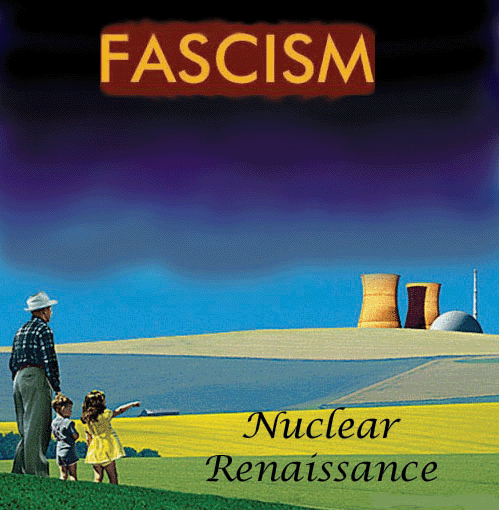
Starmer has announced plans to reform the
planning system around nuclear power. Under plans proposed on Wednesday,
nuclear development will not be restricted to the eight current designated
nuclear sites, but opened up to the general planning process.
Starmer, speaking in the commons, vowed to “break through” resistance by
utilising the party’s majority to ensure there is no dissent. These plans
are part of a package announced to encourage AI datacentres to be
established in the UK, with SMRs (small modular nuclear reactors) to power
them.
SMRs are an unproven technology sold as an alternative to massive
reactor sites such as those currently being built in Hinkley Point C and
proposed at Sizewell C. SMR development is often reliant on government
funding to do the R&D and eventual construction work – often funded by
“nuclear levies” via the RAB (Regulated Asset Base) on local
communities.
Communities charged by RAB models are often promised returns
in the form of lower bills, a claim hotly disputed. Research in Going
Nuclear, a book by CND Cymru chair Mabon ap Gwynfor MS shows that when
Trawsfynydd was operational in Gwynedd, the area paid some of the highest
per-unit cost of electricity anywhere in Britain. CND Cymru has already
recently raised concerns about inappropriate nuclear development in
Bridgend.
Last Energy, a US-based company, is currently consulting on a bid
to build 4 SMnRs in a site on the old Llynfi Power Station. CND Cymru
National Secretary, Dylan Lewis-Rowlands, said “If the proposals from
Westminster are to be believed, then not only could plans similar to this
pop up anywhere in Wales or England, but could also be pushed through
against community will from the UK Government.
The current ultimaten planning authority for projects under 300MW of generation, which includes this proposal, currently lies with Welsh Government Ministers – are the
plans here also a proposal to run roughshod over devolution?”
CND Cymru
vice-chair, Brian Jones, added: “This is not just a question of nuclear
development, but of democracy. The intention of this move by Starmer seems
to be something that the nuclear power and weapons industry has only dreamt
of before – the ability to ignore communities wishes and focus their vast
lobbying budgets on getting the central government to allow them to build
wherever they want, without opposition. It is fundamentally putting profit
before people and planet, and turning Britain into a nuclear power test
site for SMRs. It is, in one word, anti-democratic”.
CND Cymru 6th Feb 2024 Starmer has announced plans to reform the
planning system around nuclear power. Under plans proposed on Wednesday,
nuclear development will not be restricted to the eight current designated
nuclear sites, but opened up to the general planning process. Starmer,
speaking in the commons, vowed to “break through” resistance by
utilising the party’s majority to ensure there is no dissent. These plans
are part of a package announced to encourage AI datacentres to be
established in the UK, with SMRs (small modular nuclear reactors) to power
them. SMRs are an unproven technology sold as an alternative to massive
reactor sites such as those currently being built in Hinkley Point C and
proposed at Sizewell C. SMR development is often reliant on government
funding to do the R&D and eventual construction work – often funded by
“nuclear levies” via the RAB (Regulated Asset Base) on local
communities. Communities charged by RAB models are often promised returns
in the form of lower bills, a claim hotly disputed. Research in Going
Nuclear, a book by CND Cymru chair Mabon ap Gwynfor MS shows that when
Trawsfynydd was operational in Gwynedd, the area paid some of the highest
per-unit cost of electricity anywhere in Britain. CND Cymru has already
recently raised concerns about inappropriate nuclear development in
Bridgend. Last Energy, a US-based company, is currently consulting on a bid
to build 4 SMnRs in a site on the old Llynfi Power Station. CND Cymru
National Secretary, Dylan Lewis-Rowlands, said “If the proposals from
Westminster are to be believed, then not only could plans similar to this
pop up anywhere in Wales or England, but could also be pushed through
against community will from the UK Government. The current ultimate
planning authority for projects under 300MW of generation, which includes
this proposal, currently lies with Welsh Government Ministers – are the
plans here also a proposal to run roughshod over devolution?” CND Cymru
vice-chair, Brian Jones, added: “This is not just a question of nuclear
development, but of democracy. The intention of this move by Starmer seems
to be something that the nuclear power and weapons industry has only dreamt
of before – the ability to ignore communities wishes and focus their vast
lobbying budgets on getting the central government to allow them to build
wherever they want, without opposition. It is fundamentally putting profit
before people and planet, and turning Britain into a nuclear power test
site for SMRs. It is, in one word, anti-democratic”.
CND Cymru 6th Feb 2024 Starmer has announced plans to reform the
planning system around nuclear power. Under plans proposed on Wednesday,
nuclear development will not be restricted to the eight current designated
nuclear sites, but opened up to the general planning process. Starmer,
speaking in the commons, vowed to “break through” resistance by
utilising the party’s majority to ensure there is no dissent. These plans
are part of a package announced to encourage AI datacentres to be
established in the UK, with SMRs (small modular nuclear reactors) to power
them. SMRs are an unproven technology sold as an alternative to massive
reactor sites such as those currently being built in Hinkley Point C and
proposed at Sizewell C. SMR development is often reliant on government
funding to do the R&D and eventual construction work – often funded by
“nuclear levies” via the RAB (Regulated Asset Base) on local
communities. Communities charged by RAB models are often promised returns
in the form of lower bills, a claim hotly disputed. Research in Going
Nuclear, a book by CND Cymru chair Mabon ap Gwynfor MS shows that when
Trawsfynydd was operational in Gwynedd, the area paid some of the highest
per-unit cost of electricity anywhere in Britain. CND Cymru has already
recently raised concerns about inappropriate nuclear development in
Bridgend. Last Energy, a US-based company, is currently consulting on a bid
to build 4 SMnRs in a site on the old Llynfi Power Station. CND Cymru
National Secretary, Dylan Lewis-Rowlands, said “If the proposals from
Westminster are to be believed, then not only could plans similar to this
pop up anywhere in Wales or England, but could also be pushed through
against community will from the UK Government. The current ultimate
planning authority for projects under 300MW of generation, which includes
this proposal, currently lies with Welsh Government Ministers – are the
plans here also a proposal to run roughshod over devolution?” CND Cymru
vice-chair, Brian Jones, added: “This is not just a question of nuclear
development, but of democracy. The intention of this move by Starmer seems
to be something that the nuclear power and weapons industry has only dreamt
of before – the ability to ignore communities wishes and focus their vast
lobbying budgets on getting the central government to allow them to build
wherever they want, without opposition. It is fundamentally putting profit
before people and planet, and turning Britain into a nuclear power test
site for SMRs. It is, in one word, anti-democratic”.
CND Cymru 6th Feb 2024 https://www.cndcymru.org/en/about-us2/
Starmer pledges to ‘build, baby, build’ as green groups criticise nuclear plans
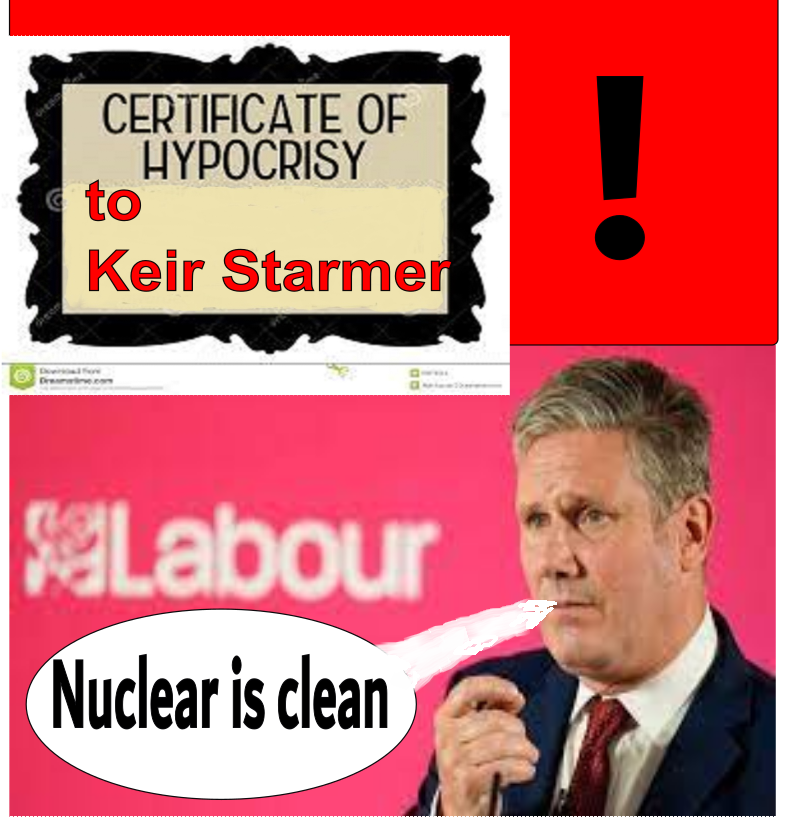
Greenpeace says PM has ‘swallowed industry spin whole’ after plans unveiled to expand in England and Wales
Peter Walker and Matthew Taylor, Guardian 6th Feb 2025
Keir Starmer has channelled his inner Donald Trump and promised to “build, baby, build” in his push for more nuclear power stations, despite warnings from environmental groups about the industry’s record for soaring costs and long delays.
A day after the prime minister unveiled his plans to revamp planning rules to bring in a series of small modular reactors (SMRs) across England and Wales, Greenpeace said Starmer had “swallowed the nuclear industry spin whole”, and Friends of the Earth described the plans as “overblown, costly hype”.
Formally announcing the plans on Thursday, however, Starmer insisted the recent glacial pace of nuclear power development was precisely why things had to change.
Asked if, much like Trump’s pro-fossil fuels mantra of “drill, baby, drill”, he now advocated “build, baby, build”, Starmer replied: “I say: build, baby, build. I say: we’re going to take on the blockers so that we can build.”………………………………………………………………………………………………..
However ambitious, the project faces obstacles, including likely local opposition, despite hints from Starmer that people could get lower bills if they lived near a new reactor. The technology also remains untested, there is not a single commercial SMR operating in the world, and the sector is heavily reliant on government support.
Dale Vince, a green electricity entrepreneur and a major donor to Labour under Starmer, said even large nuclear power stations made “the most expensive power known to mankind”, adding: “And the widely understood and experienced concept of economies of scale is all about things getting cheaper as they get bigger. The opposite is true in the other direction – miniaturisation always costs more.”
Doug Parr, Greenpeace UK’s policy director, said Starmer’s plan was unrealistic. “The Labour government has swallowed nuclear industry spin whole, seemingly without applying so much as a pinch of critical scrutiny or asking for a sprinkling of evidence,” he said.
“They present as fact things which are merely optimistic conjecture on small nuclear reactor cost, speed of delivery and safety, which is courageous – or stupid – given that not a single one has been built, and with the nuclear industry’s record of being over time and over budget unmatched by any other sector.”
Mike Childs, the head of policy for Friends of the Earth, said nuclear power was “extremely expensive and creates a legacy of radioactive waste that lasts for thousands of years”.
“The Hinkley C nuclear plant in Somerset, which is a decade late and almost £30bn over budget, makes HS2 look like a runaway success,” he said. “If ministers want to build a clean, affordable and energy-secure future they should focus on renewables, such as wind and solar, and better energy storage – not the overblown, costly hype offered by the nuclear industry.” https://www.theguardian.com/environment/2025/feb/06/starmer-pledges-to-build-baby-build-as-green-groups-criticise-nuclear-plans
Nuclear Dump “Reveal” of “Areas of Focus.” A Nuclear Dump Anywhere is a Nuclear Dump Everywhere – #GDFOFF.
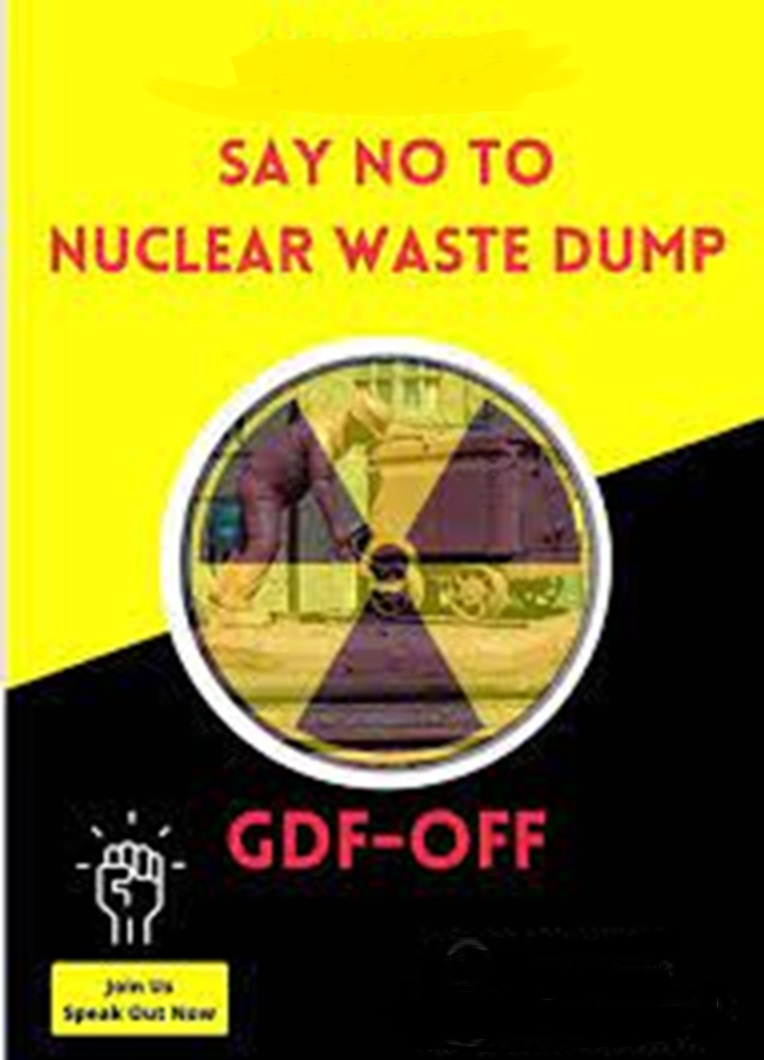
On By mariannewildart,
https://mariannewildart.wordpress.com/2025/02/04/nuclear-dump-reveal-of-areas-of-focus-a-nuclear-dump-anywhere-is-a-nuclear-dump-everywhere-gdfoff/
Nuclear Waste Services have “revealed” their “Areas of Focus” for Mid-Copeland and South Copeland along with Lincolnshire.
This is not so much of a reveal as now being more upfront with the maps which were previously obtuse so as not to scare the horses grazing happily on premium hay courtesy of the “bribes”.
Nuclear Free Local Authorities have produced a press release below which assumes that “Drigg has been spared” for now at least. This is unfortunately exactly what Nuclear Waste Services want folk to think. The reality is that Drigg is being eyed up for for so called “Near Surface Disposal” 10s of metres below ground for Intermediate Level Wastes, these are the wastes that were refused at the NIREX inquiry for a dump 1000 metres below ground, however, the inquiry found the wastes would percolate to the surface faster than the nuclear industry had forcast. At 10s of metres below ground the rate of percolation would be even faster!
Mark Kirkbride (the coal mine boss) has produced costings for the Committee on Radioactive Waste Management/Nuclear Decommissioning Authority for the “co-disposal” of Intermediate and High Level nuclear wastes. This would involve a dump for Intermediate Level Wastes underground with the above ground sprawl and drift tunnels also being used to access a sub-sea Geological Disposal Facility.
“Exploratory” boreholes have already been drilled for “Near Surface Disposal” of Intermediate Level Wastes at Drigg. The “tandem” plan to “co-locate” a Near Surface Disposal Facility for Intermediate Level Nuclear Wastes which would be fully delivered in 10 years ie within the lifetimes of many of the people within the so called Community Partnerships now. The Nuclear Decommissioning Authority have stated in their 2020 position paper on Near Surface Disposal that “The assessment of disposal costs has been made on the assumption that a nearer- surface disposal facility ..would be co-located with a GDF.” Lakes Against Nuclear Dump say that “Drigg would be the politically expedient choice for co-location given that the community has already been in receipt of decades worth of funding for the ongoing blight caused by hosting the Low Level Waste Repository.”
At a GDF drop in event at Drigg we were told that “the Near Surface Disposal Plan for Intermediate Level Wastes has nothing to do with a GDF.” Mmmm Rather like the hot plutonium now nonchalantly earmarked for a GDF? Boy does this industry love mission creep. Our report on the shifting sands of nuclear waste dumping is here outlining the Drigg plan
Here are the newly released “Areas of Focus” with Drigg being “spared” – yeah right we believe you. No area is safe – the only sane response is to oppose a geological disposal facility aka deep hot nuclear dump anywhere – all would be impacted.
The following press release is from Nuclear Free Local Authorities who have given a good summary of Nuclear Waste Services “Areas of Focus,” the veil is slipping. The “Areas of Focus” are for the surface nuclear sprawl which would blight towns and villages on the Lake District coast but not within the National Park. For this intergenerational toxic blight there is proposed a single “Test of Public Support” for a limited area and excluding the wider region for what would be the biggest and most dangerous infrastructure project in the UK. Nuclear Waste Services want to give the impression that “Drigg has been spared” – but we say buyer beware – Drigg may be the gateway to GDF via so called Near Surface Disposal of the high end of Intermediate Level Wastes 10s of meters below ground. The only sane response is to oppose this plan.
Continue readingHinkley Point plays down reports of suspected ‘spy’ at nuclear power plant
A spokesperson for Hinkley Point C has played down press reports about a
man suspected of being a spy at the nuclear power plant. A 67-year-old
Italian national who worked at Hinkley Point C from 2020 to 2023 was
questioned by counter-terrorism police after he flew into Heathrow airport
on April 12th, 2023.
It was reported that several documents were found in
his possession and were seized by the authorities. Counter terrorism police
retained the man’s hard drives for national security reasons. He was not
charged with any offence.
A spokesperson for EDF’s Hinkley Point C adds:
“Hinkley Point C takes information security very seriously and there are
rigorous measures in place to protect sensitive data.” “This individual
did not have access to sensitive nuclear information. The information he
removed was outdated.” The spokesperson adds that the man’s contract
with his employer, a supplier to EDF’s Hinkley Point C, has since ended.
Burnham-on-Sea.com 4th Feb 2025, https://www.burnham-on-sea.com/news/hinkley-point-plays-down-press-reports-of-suspected-spy-operating-at-nuclear-power-plant/
Fury over switch of possible nuclear waste dump site to village land near Louth
A previous survey revealed that 85 per cent of local residents were against the dump, which would store nuclear waste beneath up to 1,000 metres of solid rock until its radioactivity naturally decayed.
By Richard Silverwood, 3rd Feb 2025,
The bombshell news that a nuclear waste dump could now be built on greenfield land close to Louth has been greeted with dismay by campaigners and the town’s MP.
East Lincolnshire has long been identified as one of three potential locations for the dump, known as a GDF (geological disposal site).
And the government agency, Nuclear Waste Services (NWS), charged with finding a suitable area, has focused its attention on the former gas terminal site, operated by Conoco, within the coastal village of Theddlethorpe.
But now NWS has announced that it is looking inland and “beyond Theddlethorpe”. Instead, it is “prioritising” largely agricultural land to the north of the A157 road, between the villages of Gayton le Marsh and Great Carlton and south-west of Gayton Wind Farm.
A network of underground vaults and tunnels would transfer shipments of waste to a sealed storage area under the seabed which would extend 22 kilometres from the coast.
NWS insists nothing has been decided and has promised to keep all residents informed. A series of webinars and public drop-in events is already under way and will continue throughout February.
However, opponents of the dump, led by Conservative MP Victoria Atkins, are furious and are calling for a public vote on the entire scheme.
Ms Atkins said: “I have opposed the threat of a nuclear waste dump on the Lincolnshire coast since the proposal came to light several years ago.
“In that time, residents have had to live with the uncertainty, worry and financial costs of having this monstrous carbuncle threatened in their area.
“People have been left in limbo and have had their house prices severely impacted by these proposals.
“This latest news will be very distressing for the residents in and around the area. Rest assured, I will be meeting NWS in the coming week to continue to put pressure on them to move their focus away from Lincolnshire entirely………………………
The campaign group, Guardians Of The East Coast, has also lambasted the latest proposal, claiming the switch has been made because the Theddlethorpe site would not be large enough.
Chairman Mike Crookes said the fresh site would span 900 acres of agricultural land, including at least one farm. He called on Lincolnshire County Council to withdraw their apparent engagement with the dump scheme process.
“The council has expressed its outrage at agricultural land being taken for solar farms and pylons by National Grid,” Mr Crookes said.
“But it seems perfectly happy with a square mile of agricultural land being used to bury high-level nuclear waste, including weapons-grade plutonium.
“When the project was first announced, the council said it was policy to make use of ‘brownfield’ sites such as the gas terminal.
“But if it has a policy of opposing the industrial use of agricultural land, why is it apparently facilitating this project?”
Another group firmly against the nuclear waste dump is the Nuclear Free Local Authorities (NFLA), whose secretary Richard Outram described the fresh site as “worse than the original”.
“The news will have come as a tremendous shock to the residents of Gayton le Marsh and Great Carlton, where the threat of a dump suddenly appears writ large.
“Those residents are already up in arms and, doubtless in the coming days, new protest groups will be formed to represent the people affected.
“It is important to emphasise that the decision on the final site for a GDF is still a long way off. There is still time to organise and fight back.”
Coun Travis Hesketh, who represents the ward of Withern and Theddlethorpe on East Lindsey District Council, said residents were demanding a public vote – and this year, not in 2027 as previously promised.
A previous survey revealed that 85 per cent of local residents were against the dump, which would store nuclear waste beneath up to 1,000 metres of solid rock until its radioactivity naturally decayed.
However, NWS is hoping to win people over and has set up a community partnership group to fully explain the scheme.
Hidden history of RAF airfield may be lost in latest nuke dump plan
The latest announcement by Nuclear Waste Services making the site of RAF
Millom part of the Area of Focus in South Copeland may lead to the airfield
and its rich wartime history being lost to a nuclear waste dump.
NFLA 4th Feb 2025, https://www.nuclearpolicy.info/news/hidden-history-of-raf-airfield-may-be-lost-in-latest-nuke-dump-plan/
Engineer who worked on Hinkley Point C nuclear project quizzed on suspicion of being a Russian spy
A nuclear power station worker was quizzed on suspicion of being a spy
after he returned to the UK from Russia. Mario Zadra, a 67-year-old Italian
national, worked at Hinkley Point C in Somerset from 2020 to 2023, and was
questioned by counter-terrorism police after he flew into Heathrow airport
on April 12, 2023. It was reported that potentially sensitive documents
were found in his possession and were seized by the authorities to prevent
them being ‘used to carry out a hostile attack’.
Daily Mail 3rd Feb 2025,
https://www.dailymail.co.uk/news/article-14355483/Nuclear-power-worker-suspicion-Russian-spy.html
Threat of nuke dump falls on Cumbrian and Lincolnshire rural communities

NFLA 3rd Feb 2025, https://www.nuclearpolicy.info/news/threat-of-nuke-dump-falls-on-cumbrian-and-lincolnshire-rural-communities/
Residents living in rural villages in West Cumbria and East Lincolnshire will have been shocked to discover that Nuclear Waste Services has its eye on their backyard as the potential location for Britain’s high-level nuclear waste dump.
For contained amidst the detailed announcements made last week by NWS of that organisation’s plans to conduct more intensive investigations in so-called Areas of Focus in the three GDF Search Areas were revelations that several small villages are now potentially threatened by this huge civil-engineering project.
The Geological Disposal Facility will be the final repository for Britain’s historic and future high-level nuclear waste, including redundant nuclear submarine reactors, spent nuclear fuel, and the world’s largest civil stockpile of deadly plutonium. Nuclear Waste Services is charged with finding a forever site for the GDF that combines ‘suitable’ geology and a ‘willing’ community.
The facility will comprise a surface site approximately 1 km square that shall receive regular shipments of nuclear waste. This waste will be transferred downwards along a sub-surface accessway into a network of deep tunnels located between 400 and 1,000 metres below the seabed. Here the waste will be placed in permanent storage with tunnels sealed up as they are filled. The network of tunnels could be between 20 – 50 kms square in area and extend up to 22 kms out from the coast (the UK territorial limit).
Last week, Nuclear Waste Services published three ‘brochures’, which identified specific Areas of Focus within each Search Area that NWS consider may have potential to locate the surface facility, the accessway, and the tunnel network. NWS intends to conduct more intensive investigations in these areas, seeking official approval at a later stage to carry out deep borehole drilling at those sites deemed to be most geologically promising by NWS.
It is in the South Copeland and Theddlethorpe GDF Search Areas that the chosen Areas of Focus will court controversy.
In South Copeland, NWS has now finally conceded – as the NFLAs and many local Cumbrians have long suspected – that their area of choice is West of Haverigg, incorporating the former RAF airfield and surrounding the prison [Figure 1]. Although Nuclear Waste Services have made much of their efforts to avoid Haverigg and Millom, referencing the provision of a ‘buffer zone’, they have given no similar consideration to the poor residents of Kirksanton, who will find that the Area of Focus comes up to their very doorsteps and, in some sorry instances, incorporates their properties. In so doing NWS have provided for direct access to the railway line.
As the Area of Focus incorporates the former RAF airfield and surrounds the prison, it seems inconceivable that HMP Haverigg would remain open if the GDF surface facility were to be located there, and the two wind farms owned by Thrive Renewables and Windcluster might also be lost[i]. The prison’s closure would impact more than two hundred staff, over 100 of them local, as well as local businesses which supply the prison[ii].
There is at least some consolation for the good people of Drigg, living on the other side of the South Copeland Search Area. Although a parcel of land northeast of the village was identified as being of interest, in recognition that the Low Level (Radioactive) Waste Repository is located nearby it was considered that ‘an Area of Focus so close to the LLW Repository site could potentially impact ongoing operation of the site’. Consequently, NWS are ‘not prioritising it at this stage’, but this is one to watch as this may represent a stay, rather than a commutation, of execution.
In the Theddlethorpe Search Area, a huge bombshell has been dropped on the unsuspecting residents of Great and Little Carlton and Gayton-le-Marsh, as Nuclear Waste Services’ primary focus has moved from the former Theddlethorpe Conoco gas terminal to the fields that lie between these villages [Figure 2]. As the new site is so far inland, NWS are looking at a prospective accessway of considerable length under the King’s National Nature Reserve to the coast [Figure 3 on original].
The current site selection appears worse than the original. Local Theddlethorpe and Withern Ward Councillor Travis Hesketh explains why: “After 4 years NWS have abandoned the 69-acre brownfield former gas terminal site for 250-1000 acres of productive farmland”. The NFLAs look forward to hearing senior Lincolnshire politicians berating the loss of agricultural land to this energy project as they have so readily condemned the encroachment of solar farms and pylons. But we won’t be holding our collective breath!
Also worrying is the illustration used in the accompanying ‘brochure’, a more detailed version of which is used with this media release [Figure 4 on original and at top of this page]. This incorporates a jetty – termed a Marine Off-loading Facility – which suggests that if the Lincolnshire site is chosen, NWS might consider bringing waste shipments to the site by ship from Sellafield as there is no immediate rail station.
This news will have been a tremendous shock to many local people in Cumbria and Lincolnshire for now the threat of a nuclear waste dump suddenly appears writ large. Residents are already up in arms, and doubtless in coming days, there will also be new protest groups formed to represent the people affected.
It is important though to emphasise that the identification of the final site for a GDF is a long way off, is still very uncertain, and that there is still time to organise and fight back! Cllr Hesketh is clear what should happen next: “Residents are well informed and want a vote now. East Lindsey District Council and Lincolnshire County Council promises of a vote by 2027 are worthless as they will be abolished in local government reorganisations.”
As ever the NFLAs as always stands ready to offer advice and support to these new groups, as we continue to work with existing groups which have long campaigned against the GDF.
Nuclear delusion in Ynys Môn will deny islanders green jobs

NFLA 3rd Feb 2025
Welsh antinuclear campaigners believe that the continued fixation of certain Senedd politicians and civil servants on bringing a new nuclear project back to Wylfa amounts to a delusion which will deny local people of Ynys Môn the opportunity to take up green jobs in the interim and make of Ynys Môn a true ‘green energy island’.
Former Labour First Minister Vaughan Gething MS convened an inaugural meeting of the Nuclear Energy Senedd Cross-Party Group recently with the primary objective of bringing a new nuclear power plant to Wylfa. In the gushing pre-amble accompanying the meeting invite the organisers describe such a project as the ‘single biggest inward investment opportunity in Welsh history’, without seemingly being cognizant that such a project will be costly and uncertain with a previous gigawatt project being derailed by the enormous financial cost and a condemnatory Planning Inspector’s report setting out clear and valid reasons for refusal.
Antinuclear campaigners are adamant that new nuclear cannot deliver ‘clean Welsh power, good jobs and skills and investment in communities’; they believe there should instead be a focus on renewable energy technologies, which will guarantee new ‘green’ jobs and a boost to the Ynys Môn economy.
The promise of such a strategy was outlined in the publication a ‘Manifesto for Mon’, authored by the late renowned Dr Carl Clowes, who identified that the development of sustainable industries, including renewable energy, on the island could create 2,500 – 3,000 jobs for local people. Existing jobs decommissioning the old Wylfa plant would be retained as the project will take decades to complete.
In July 2022, campaign groups met in Caernarfon to adopt a declaration outlining their common goals in opposing new nuclear power and affirming the commitment to achieving a renewable energy future for the nation.

Of nuclear power, the declaration states that ‘it costs too much; takes too long; will come too late [to address the energy or climate change crisis]; is accompanied by operational risks; causes long-term damage to the natural environment; is dependent upon foreign technology, finance, and uranium; is inevitably linked to the production and possession of nuclear weapons; always represents a potential target for terrorists or hostile powers in times of war; and creates toxic waste, left for future generations to deal with.’ ………………………………………………………………………………………………
the reality, as established at the two existing gigawatt projects, at Hinkley Point C in Somerset and increasingly at Sizewell C in Suffolk, is that, for these large construction projects, large national and multinational civil engineering contractors are engaged, with experience in delivering mega projects at this scale, and they bring with them specialist subcontractors with their own transient workforces. These workers require housing and landlords, recognising that they are in highly paid employment and able to pay higher rents, displace existing tenants to free up houses for the workforce. Alternately local holiday camps have been acquired to house the workers denying this accommodation to tourists for years. It is hardly likely that any more than a tiny minority of this workforce would be local or Welsh-speaking.
Referencing specific concerns about its impact on Welsh-speaking Gwynedd and Ynys Môn, the Declaration states that new nuclear ‘will inevitably lead to a huge influx of temporary workers, most of whom will not use Welsh as their first language. This will lead to a dilution in the first use of the Welsh language for daily conversations and transactions, and inevitably adversely impact the linguistic heritage of the region.’
Wylfa was described by former Conservative Prime Ministers Boris Johnson and Rishi Sunak as the ‘best site for new nuclear in Europe’ without either backing this bold statement with any evidence. The Planning Inspectorate clearly had a contrary view as they published a report recommending refusal of Hitachi’s proposal to build the Wylfa Newydd plant.
Energy company Horizon – a subsidiary of Hitachi – needed a Development Consent Order to allow their £16bn project to go ahead, but refusal of the DCO was recommended on several grounds. Although the project was expected to create 1,000 permanent jobs and 9,000 temporary construction posts, planning officers believed that ‘on balance, the matters weighing against the proposed development outweigh the matters weighing in favour of it’ for their assessment identified that the project would displace the Arctic and Sandwich tern populations from Cemlyn Bay where the plant was set to be built, and that the influx of thousands of building workers would have an adverse impact on the local economy and tourism, put huge pressure on local housing, and dilute the prevalent use of the Welsh language.
For the reality, as established at the two existing gigawatt projects, at Hinkley Point C in Somerset and increasingly at Sizewell C in Suffolk, is that, for these large construction projects, large national and multinational civil engineering contractors are engaged, with experience in delivering mega projects at this scale, and they bring with them specialist subcontractors with their own transient workforces. These workers require housing and landlords, recognising that they are in highly paid employment and able to pay higher rents, displace existing tenants to free up houses for the workforce. Alternately local holiday camps have been acquired to house the workers denying this accommodation to tourists for years. It is hardly likely that any more than a tiny minority of this workforce would be local or Welsh-speaking.
In May 2024, Energy Secretary Claire Coutinho announced that Wylfa was the Conservative Government’s ‘preferred site’ for a third large-scale nuclear power plant. Although the Welsh Nuclear Free Local Authorities had urged the Welsh Government to themselves purchase and redevelop the site as a renewable energy hub as a step towards making Ynys Mon a ‘green energy island’, this suggestion was declined and instead the site was eventually bought by the British Government from the former owners – Hitachi – who had wound up its Horizon Nuclear Power subsidiary in March 2021 after failing to secure a satisfactory public subsidy from Conservative Ministers and must have been keen to sell the site, with Oldbury, for £160 million.
It remains unlikely that any third new gigawatt plant at Wylfa will be developed. With two similar projects currently in development securing the necessary finance for a third remains the overriding challenge.
Hinkley Point C is being developed at its own expense by EDF Energy, which is owned by the French state. It is significantly above budget and will be delivered years late. The original estimated cost was £18 billion, but this has risen to £34 billion, based on 2015 prices. Although the project was first expected to be generating by the end of 2017, it is now unlikely to be completed before 2031.
British newspapers have recently reported comments attributed to sources close to the Sizewell C project that the likely budget has doubled to £40 billion. EDF Energy is also a minority stakeholder in this project, but, based on their sobering experience in backing Hinkley Point C, French state auditors have just recommended that no further significant investment be made in such foreign enterprises. The UK Government is the majority stakeholder. It has so far burnt through, or committed, £5.5 billion of taxpayer cash to finance preliminary works, whilst conducting an extensive and, so far, elusive, search for committed private sector partners upon which to offload much of its stake.
With future French and British Government financial support likely to be limited or non-existent, with Chinese state investment being currently effectively excluded by government diktat, and with private finance so difficult to find, it is highly unlikely a third gigawatt project at Wylfa can be funded. Indeed, the Final Investment Decision to proceed at Sizewell C has been put on hold pending the conclusion of an overall Government Spending Review, amidst a backdrop of more and more cross-party voices in both Houses calling for its abandonment.
Prior to the 2024 general election, Conservative Ministers courted the American nuclear concerns Bechtel and Westinghouse as potential suitors to develop the site. The Welsh NFLAs have previously highlighted their very chequered history of working on the Vogtle and V C Summer projects in the United States, with huge cost overruns, work being charged to state taxpayers which has never been delivered, senior executives being prosecuted for corruption, a corporate bankruptcy, and, in South Carolina, $9 billion being squandered on an incomplete and abandoned nuclear plant which shall never generate electricity. Such businesses, averse to risk, focused on profit, and hooked on grift, would be looking for a big public handout to pique their interest; a handout which Chancellor Rachel Reeves, already contemplating the price tag of Sizewell C and an alleged £22 billion blackhole inherited from the Tories to boot, would baulk at.
With a gigawatt plant at Wylfa then unlikely, what then is the new Senedd committee seeking?
Well, the invite gives a big clue as it references potential developments in the spring. This could of course allude to the outcome of the Spending Review, but equally it might refer to the much-delayed decision about which two Small Modular Reactor designs the Department for Energy Security and Net Zero should take forward with support from the public purse (again) following the conclusion of the SMR competition that is being conducted by Great British Nuclear. Four designs are in the running, with the expectation that two will be selected and offered money and development sites for deployment.
As antinuclear campaigners have previously, and repeatedly, pointed out none of these SMR designs have yet fully navigated the regulatory road to approval for deployment, nor have any been built or operated, and it is uncertain where the finance would come from. It is also unlikely that any will be deployed before the early or mid-2030’s, even if they work; are economically viable; and an acceptable solution to the management and disposal of radioactive waste can be identified. Like gigawatt plants, these modular projects will be assembled on-site by specialist teams who doubtless will be moved from site to site by the developer. Operators will thereafter be often specialists who will be relocated with no family or Welsh connections to Wylfa.
Even were new nuclear to eventually come to the ‘energy island’, it would come far too late to help address the energy and climate change crisis we face now. Remember those 2,500 – 3,000 jobs for local people predicted in the Manifesto for Mon; they could be delivered far more quickly and at a much lower cost, and with local people engaged in renewable energy technologies they would also be contributing to reducing the carbon footprint of Wales and generating the affordable energy the nation’s electricity consumers need……………………………………… https://www.nuclearpolicy.info/news/nuclear-delusion-in-ynys-mon-will-deny-islanders-green-jobs/
No UK-Hungarian strategic cooperation deal on nuclear energy signed, says Britain
Hungary’s foreign minister Péter Szijjártó, and his British counterpart, David Lammy, discussed cooperation on energy in the context of reducing Hungarian dependence on Russia in talks earlier this week. https://tvpworld.com/84784041/no-uk-hungarian-strategic-cooperation-deal-on-nuclear-energy-signed-says-britain
However, Britain’s Foreign, Commonwealth and Development Office said no UK-Hungarian strategic cooperation agreement on nuclear energy was signed by the two ministers, as a story published by TVP World on January 30, 2025, had suggested.
Watchdog’s warning over nuclear waste rail crash
Federica Bedend, BBC News, North East and Cumbria, 1 Feb 25, more https://www.bbc.com/news/articles/c74m1rxynkxo
The nuclear watchdog has issued an improvement notice after two railway wagons carrying nuclear waste crashed.
It happened on the Sellafield site, in Cumbria, which manages more radioactive waste in one place than any other nuclear facility in the world.
The Office for Nuclear Regulation (ONR) said although no-one was injured and there were no radiation risks during the incident, which happened in November, it could have had “serious consequences”.
A Sellafield spokesman said: “An internal investigation was initiated to understand the root cause and to prevent this from happening again in future.”
The ONR said one of the wagons on the site’s railway had not been properly secured and it rolled about 200ft (60m), hitting a stationary wagon.
They added the wagons were left with minor damage and the nuclear containers were unaffected “due to their robust construction”, however health and safety improvements were needed to prevent future incidents.
Ian Bramwell, ONR’s head of regulation for Sellafield, said: “This will include improving how Sellafield plan, organise, monitor and review the measures in place to protect personnel directly and indirectly involved in rail activities on the site.”
The ONR will reinspect the site in the coming months and Sellafield has until 13 June to comply with the notice.
A Sellafield spokesman said it was working with the ONR to review its processes.
1 This Month
22 June – Virtual Event –Climate Change: New Data, New Debate

Monday, June 22, 2026 2:30 p.m. – 3:15 p.m. CT
YouTube. Register here

Protect Sazan Island from the Trump family! https://secure.avaaz.org/campaign/en/protect_sazan_island_from_the_trump_family_loc/?bqFCVab&v=174511&cl=22707147157&_checksum=5e9dde668860e8231c33699735e16a1fbf22ab2cb01da50c999fe8732b9775ef&utm_source=email&utm_medium=blast_email&utm_campaign=174511
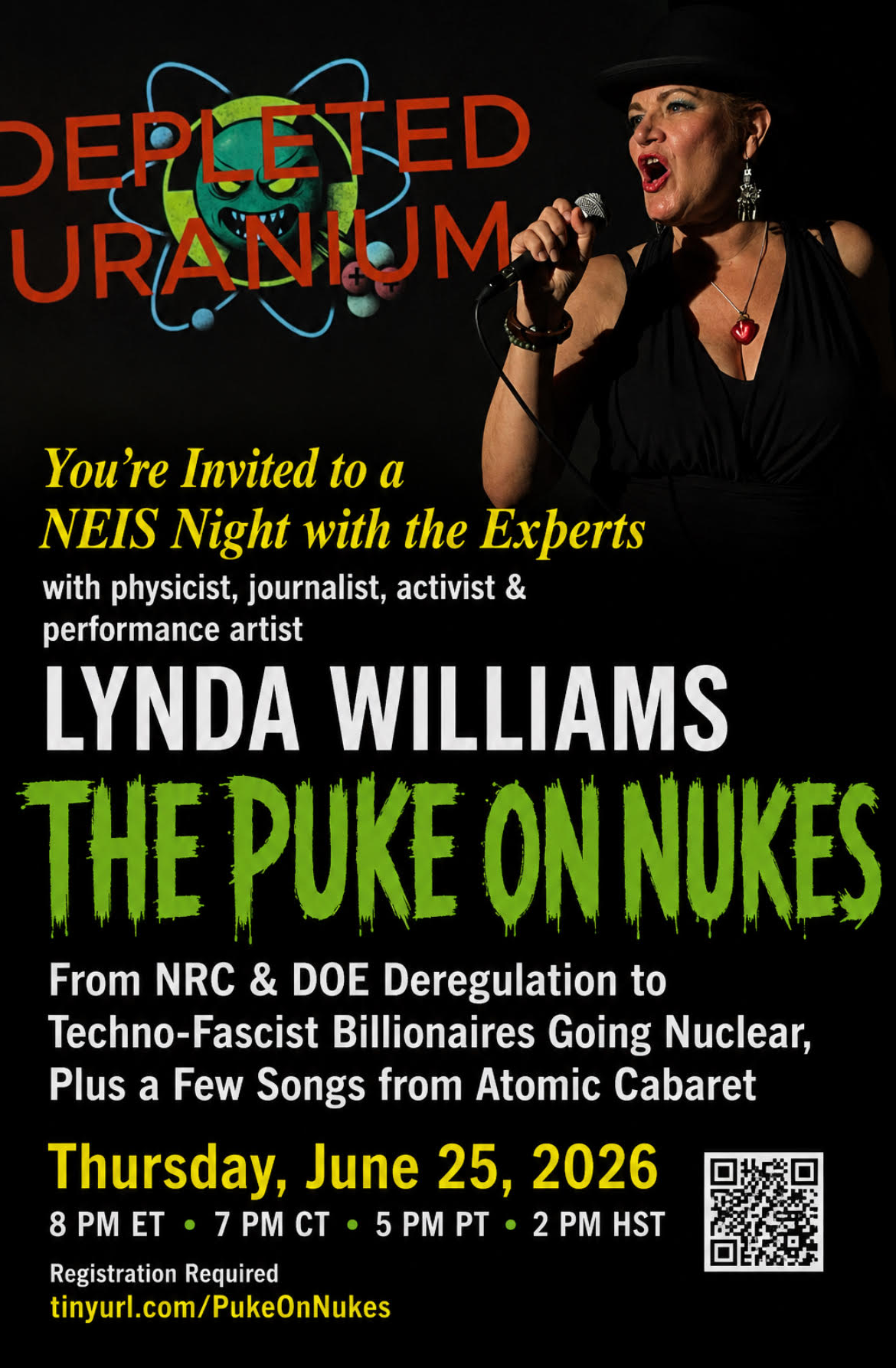
25 June- THE PUKE ON NUKES
Thursday, June 25, 2026
7pm Central Time (8pm ET, 6pm MT, 5pm PT) UTC – 5
From NRC & DOE Deregulation to Techno-Fascist Billionaires Going Nuclear, Plus a Few Songs from Atomic Cabaret REGISTER
26 June – Radiation Trainwreck at the NRC / Join the Protect Better Campaign – https://us02web.zoom.us/meeting/register/4ZlZ5_qLSHGiLSCg8FF6Bg#/registration


Cuba Is Not a Failed State – It Is a Besieged State
PETITION: “Global Appeal to Endorse Palestinian Right of Return of Refugees”
To see nuclear-related stories in greater depth and intensity – go to https://nuclearinformation.wordpress.com
-
Archives
- June 2026 (193)
- May 2026 (306)
- April 2026 (356)
- March 2026 (251)
- February 2026 (268)
- January 2026 (308)
- December 2025 (358)
- November 2025 (359)
- October 2025 (376)
- September 2025 (257)
- August 2025 (319)
- July 2025 (230)
-
Categories
- 1
- 1 NUCLEAR ISSUES
- business and costs
- climate change
- culture and arts
- ENERGY
- environment
- health
- history
- indigenous issues
- Legal
- marketing of nuclear
- media
- opposition to nuclear
- PERSONAL STORIES
- politics
- politics international
- Religion and ethics
- safety
- secrets,lies and civil liberties
- spinbuster
- technology
- Uranium
- wastes
- weapons and war
- Women
- 2 WORLD
- ACTION
- AFRICA
- Atrocities
- AUSTRALIA
- Christina's notes
- Christina's themes
- culture and arts
- Events
- Fuk 2022
- Fuk 2023
- Fukushima 2017
- Fukushima 2018
- fukushima 2019
- Fukushima 2020
- Fukushima 2021
- general
- global warming
- Humour (God we need it)
- Nuclear
- RARE EARTHS
- Reference
- resources – print
- Resources -audiovicual
- Weekly Newsletter
- World
- World Nuclear
- YouTube
-
RSS
Entries RSS
Comments RSS
 nuclear-news