Finland’s Fortum says building new nuclear power is too expensive, for now

New nuclear power production capacity is not commercially viable to
build for now, based on the current Nordic power market outlook of low
prices. The company on Monday concluded a two-year study into the
feasibility of new nuclear power but said it would focus on renewable
energy and nuclear lifetime extensions to cover growing electricity demand
in the Nordics for now.
“New nuclear could provide new supply to the
Nordics earliest in the second half of the 2030s, if market and regulatory
conditions are right,” Fortum CEO Markus Rauramo told reporters. He said
Fortum would continue to explore new nuclear generation and pumped
hydropower as long-term options in Sweden and Finland. Fortum said building
new nuclear reactors would require a solid risk sharing framework similar
to the one being prepared by the Swedish government.
Reuters 24th March 2025,
https://www.reuters.com/business/energy/finlands-fortum-explores-long-term-options-new-nuclear-power-2025-03-24/
It’s time to stop Sizewell C to generate ‘Warm Homes’ jobs instead
March 24 2025, Funding th Future – Tax Research UK.
Campaigners have called on Rachel Reeves and Ed Miliband to stop Sizewell C, and redirect its funding to generate ‘Warm Homes’ jobs in every constituency by the next election.
Their report’s summary says:
There is a clear political advantage from halting Sizewell C and redirecting the billions saved into making millions of homes more energy efficient, thus reducing fuel poverty. This approach will benefit every city, town, village and hamlet in Britain.
It will generate long-term, secure jobs, particularly for young people. It will be quick to implement, so by the next election new jobs and cheaper, warmer, healthier homes will have appeared in every constituency. By contrast, continuing to build Sizewell C and, post 2030, the development of new small modular nuclear reactors, will affect a limited number of constituencies.
Should Sizewell C go ahead, it is expected to cost around £40bn between now and when it opens, potentially around 2040: an average of £2.7bn per year for the next 15 years. Deducting money already spent, if Sizewell is cancelled now, the public money saved by 2030 is £7.1bn, assuming (as seems likely) no private investors are found to share the costs.
We propose that this £7.1bn should be added to the £6.6bn to be spent over the current Parliament on home energy efficiency, as promised in Labour’s 2024 manifesto. This shift of funds would massively increase the chances of achieving the Government’s aim to ‘Make Britain a clean energy superpower to cut bills, create jobs and deliver security with cheaper, zero-carbon electricity by 2030, accelerating to net zero‘. https://www.taxresearch.org.uk/Blog/2025/03/24/its-time-to-stop-sizewell-c-to-generate-warm-homes-jobs-instead/
Ukraine and Israel are not US allies.
Walt Zlotow, West Suburban Peace Coalition, Glen Ellyn IL , 25 Mar 25
They are essentially US Trojan Horses used to project US power dominance in Europe and Middle East respectively.
Both US Trojan Horses have come up lame and are heading for the glue factory.
The US marched their Ukraine Trojan Horse up to Russia’s borders armed with NATO entrance papers and billions in US weapons. When Russia pleaded with the US for years to discuss Russia’s valid security concerns, the US replied ‘Nyet.’ Former President Biden knew Russia would attack but believed any invasion would be a Vietnam style quagmire for Russia. Biden saw the upcoming Russian collapse as the shining achievement of his half century anti-Russian Cold War mantra. That failed spectacularly.
The election of Trump has injected a healthy dose of realpolitik that acknowledges Biden’s folly. Trump is currently in negotiations to put America’s Ukraine Trojan Horse to pastoral retirement. Can’t come soon enough.
America’s Israeli Trojan Horse to dominate the Middle East is a horse of a different color. It’s more like Israel’s Trojan Horse near totally financed by Uncle Sam. America gets to sit back while Israel marches around their neighborhood committing genocide is Gaza, indiscriminately bombing innocents in Syria and Lebanon, and promoting US attacks on Yemen and eventually Iran. All this senseless carnage constitutes Israel serving as the US battering ram to recreate the Middle East according to its dominant worldview.
Like our Ukraine Trojan Horse, our Israeli Trojan Horse is failing to promote America’s true national interests. Most of the world’s 193 countries are aghast America promotes the most grotesque genocide this century. America’s standing may be at an all time low. Like with Ukraine, we’re enabling Israel to self destruct. It’s now a pariah state. Tourism and investment are in decline. Its military is demoralized both from significant casualties and having to commit genocide.
Both allies are flirting with wider war; nuclear in Ukraine, regional war in Israel.
America gets nothing from allies Ukraine and Israel except worldwide condemnation, squandered treasure and diminishing unipolar world dominance.
With allies like Ukraine and Israel, America does not need enemies.
Zaporizhzhia nuclear plant to stay in Russian control, Moscow says

By Reuters, March 26, 2025, https://www.reuters.com/world/europe/zaporizhzhia-nuclear-plant-stay-russian-control-moscow-says-2025-03-25/
MOSCOW, March 25 (Reuters) – Russia’s Foreign Ministry said on Tuesday the Zaporizhzhia nuclear plant was a Russian facility and transferring control of it to Ukraine or any other country was impossible.
The ministry also said that jointly operating the plant was not admissible as it would be impossible to properly ensure the physical and nuclear safety of the station.
It said Zaporizhzhia region, partly controlled by Russian forces, was one of four in Ukraine that had been annexed by Russia by virtue of referendums staged seven months after Moscow’s full-scale invasion of its neighbour and a presidential decree had formally made the station Russian property.
Western nations have dismissed the referendums as shams.
“The return of the station to Russia’s nuclear sector has been a fait accompli for quite some time,” the ministry statement said. “Transferring the Zaporizhzhia plant to the control of Ukraine or another country is impossible.”
Russian forces seized the station early in the invasion and each side has since routinely accused the other of staging attacks that endanger safety at the plant, Europe’s largest with six reactors.
Although the plant now produces no electricity, the U.N.’s nuclear watchdog has monitors stationed there, as it does at all Ukrainian nuclear power sites.
Ukraine demands the return of the station to its jurisdiction and rejects the 2022 annexation of its territory as illegal.
U.S. President Donald Trump, during a phone conversation this month with his Ukrainian counterpart Volodymyr Zelenskiy suggested the United States could help run and possibly own Ukraine’s nuclear power plants.
Zelenskiy said the plants belong to the Ukrainian people. He said he and Trump had discussed potential U.S. investment in the plant. Reporting by Maxim Rodionov and Ron Popeski; Editing by Hugh Lawson and Rod Nickel
‘Deeply concerning’: British General’s Israeli weapons job criticised.
“That the UK’s former chief of the defence staff is now advising Israeli arms companies exemplifies the extent of the links between the British state and Israel’s arms industry. “
General Carter signed a military treaty with Israel. Now he advises Israeli arms firms.
PHIL MILLER, 20 March 2025, https://www.declassifieduk.org/deeply-concerning-british-generals-israeli-weapons-job-criticised/?utm_source=Email&utm_medium=Image&utm_campaign=ICYMI&utm_content=Image
The former head of Britain’s armed forces is providing advice to Israeli arms firms, sparking questions over his role in a country whose prime minister is wanted by the International Criminal Court (ICC).
General Sir Nick Carter was chief of the defence staff – Britain’s most senior military position – from 2018-21. Months before stepping down, he signed a military cooperation agreement with Israel.
That pact has never been published – despite freedom of information requests and questions in parliament – but it was hailed as a landmark moment in relations between the two militaries.
Carter had visited Israel earlier in his tenure, touring military bases and shaking hands with his opposite number, General Aviv Kohavi.
That experience of rubbing shoulders with the top of the IDF is likely to come in handy for his new job at Exigent Capital, a boutique financial services firm based in Jerusalem.
Carter is one of Exigent’s two “domain experts” in its “strategic advisory” wing, with his focus on “aerospace and defence”.
His role there is to “develop international growth strategies for our clients as well as identify and open doors to new business opportunities that accelerate growth”, according to the company’s website.
Or, as the Jerusalem Post put it, Carter provides “strategic consulting services to Israeli companies operating in the defense sector.”
Doing business
Carter attended a military tech summit in Tel Aviv in December 2024 – before the ceasefire had been signed in Gaza – when he told a journalist: “Israel is very significant in the world of defense tech.”
Carter added: “We appreciate the extraordinary innovation that Israeli defense companies exhibit and sometimes adopt what we see in Israel. It’s impressive to see the innovation of Israeli companies”.
The British army has bought Israeli-made drones, rifle sights and air defence systems.
More recently, he felt “privileged” to have signed the “successful” UK-Israel military deal in 2020, commenting: “It’s very important for both militaries to work together, share the best training, and understand together the complexity of the modern battlefield. This is a very good way to do business.”
General Carter: Caught in the revolving door?
However campaigners are criticising Carter’s business decisions. Dr Sara Husseini, director of the British Palestinian Committee, told Declassified: “That the UK’s former chief of the defence staff is now advising Israeli arms companies exemplifies the extent of the links between the British state and Israel’s arms industry.
“These revelations are deeply concerning, particularly at this moment in which Israel is recommencing its large-scale bombardment of Gaza, killing more than 400 Palestinians in the past two days.
“Rather than aligning with a state which is on trial for genocide and – as the Foreign Secretary acknowledged earlier this week – is in breach of international law, Keir Starmer’s government must now halt its military collaboration with Israel, including scrapping the agreement signed by Sir Nick Carter.”
Chris Doyle, director of the Council for Arab-British Understanding, said: “Serious questions arise from former defence officials working with arms companies in states that have a track record of serious violations of international law.”
Turning to Labour’s partial embargo on weapons exports to Israel, Doyle commented: “It also raises longer term questions about whether former officials should be allowed to work with arms companies in countries where there is a ban on arms exports because the government has already acknowledged a serious risk of human rights abuses.”
Arms trade expert Andrew Feinstein from Shadow World Investigations remarked: “This is an example of what used to be called the revolving door – or is now known as the open plan office – between the British state and arms companies. It raises the question of whose interests the most senior political and military figures are working in: their own material interests, or the interests of Britain?”
‘System is bust’
Under government rules supposed to prevent conflicts of interest, former Generals must inform Whitehall’s Advisory Committee on Business Appointments (ACOBA) of any job offers they receive for two years after leaving the military.
General Carter notified ACOBA of 12 jobs he had been offered since stepping down from the army in July 2022, although Exigent was not among them.
General Carter and Exigent did not respond to a request for comment on when they began working together. A LinkedIn post by the company shows they had started at least three months ago, when Exigent said: “We look forward to sharing his unparalleled expertise, insights and network with our clients.”
His other job offers encompassed unpaid roles at Harvard and Stanford universities, plus a trusteeship at the Royal United Services Institute think tank.
Paid positions included working part-time as a strategic advisor for Schroders bank, plus advisory roles at Helsing – a German AI defence start-up – and an insurance firm.
On top of this, Carter spends 30 days per year “as a thought partner for Tony Blair in his role as Executive Chairman” at the Tony Blair Institute for Global Change.
And he is chairman of Equilibrium Gulf Limited, which advises the crown prince of Bahrain on the autocratic country’s notoriously brutal interior ministry.
While he claims no military experience is required for the Bahrain role, previous Equilibrium directors include another former defence chief, General David Richards, and MI6’s one-time Middle East controller Geoffrey Tantum.
Lord Pickles, who oversees ACOBA, has acknowledged there are weaknesses in the system supposed to regulate Whitehall’s ‘revolving door’ between government positions and corporate careers.
Pickles said of ACOBA last year: “The system is bust and needs fixing.”
Militarize Ukraine ‘to the teeth’ – Finnish president
Comment: Is the Finnish President among those that do not really want a settlement in Ukraine any time soon?
Thu, 20 Mar 2025 https://www.sott.net/article/498616-Militarize-Ukraine-to-the-teeth-Finnish-president
Alexander Stubb has also called for stronger sanctions against Russia and the seizure of its frozen assets
Finnish President Alexander Stubb has called on Kiev’s Western backers to pump Ukraine with military resources and financial aid, claiming that this will deter Russia. He made the call shortly after meeting Vladimir Zelensky in Helsinki and as EU lawmakers negotiate doubling the bloc’s weapons budget.
EU foreign policy chief Kaja Kallas had pitched a plan to increase the bloc’s cashflow for Ukraine from €20 billion ($20.9 billion) in 2024 to €40 billion ($43.7 billion) this year. However she admitted to La Stampa that she was opposed by Italy, France, Spain, and Portugal. The Italian newspaper has reported that a €5 billion cap has been placed on the donation.
Stubb told Politico on Wednesday that “Deterrence – which is based on militarizing Ukraine to its teeth,” would be the best way to end the Ukraine conflict.
The Finnish president lamented the fact that Kallas failed to gather support for her plan, expressing hope that that heads of state and government would be able to salvage the package.
“It’s very important now to send a message from Europe that the military, political and economic support continues,” he said, emphasizing that sanctions against Russia should be bolstered, while its frozen assets should be seized to ramp up pressure.
Hungary has refused to sign a joint EU summit statement on Ukraine, according to TASS, which reported that both lethal and non-lethal aid had been rejected by Budapest.
The Finnish president also supported potential Ukrainian membership in the EU and in NATO. Finland, which only joined the US-led military bloc in 2023, has been a strong backer of Kiev since the escalation of the conflict with Russia in February 2022.
Moscow has consistently condemned NATO expansion towards its borders, describing the bloc as a threat to Russia’s national security. President Vladimir Putin and other officials have repeatedly stressed that efforts to include Ukraine in the military bloc had been one of the root causes of the escalation of the conflict in 2022.
Stubb’s comments come amid negotiations for a 30-day ceasefire aimed at halting long-range strikes on energy infrastructure by both sides advocated by US President Donald Trump. Another round of talks between Russian and US delegations is scheduled for March 24 in the Saudi city of Jeddah.
France delays EPR2 reactors to 2038
The 4th meeting of France’s Nuclear Policy Council (CPN – Conseil de
politique nucléaire), chaired by President Emmanuel Macron, decided to
delay the commissioning of EPR2 reactors to 2038 – a postponement of
three years. The CPN, which has been held regularly since 2022, defines the
main orientations of national nuclear policy.
The EPR2 programme, announced
in February 2022, envisages the construction of six upgraded EPR reactors
with an option for eight more. The first three pairs of EPR2 reactors are
planned for the Penly, Gravelines and Bugey NPP sites. Construction is
expected to start in 2027. The cost was originally estimated at €51.7bn
($56.4bn), but this was revised upwards to €67.4bn in 2023, according to
the Court of Auditors. Taking inflation into account, a total budget of
nearly €80bn is now being considered.
Nuclear Engineering International 21st March 2025, https://www.neimagazine.com/news/france-delays-epr2-reactors-to-2038/
Redirect Sizewell C funding to the Warm Homes Plan, say campaigners.

Alison Downes, https://stopsizewellc.org/sizewellcvswarmhomes/
Campaigners call on Rachel Reeves and Ed Miliband to stop Sizewell C, redirect its funding to generate ‘Warm Homes’ jobs in every constituency by the next election.
Building Sizewell C would likely cost around £40bn over the next 15 years. Deducting money already spent, if Sizewell C is cancelled now, the public money saved by 2030 would be £7.1bn.
A paper from Stop Sizewell C and the Green New Deal Group calls for this saving to be added to the £6.6bn the government is committed to spend in the current Parliament on energy efficiency in the nation’s homes. Turbocharging this ‘Warm Homes Plan’ by more than doubling its budget will generate long term, secure jobs, particularly for young people across the UK. It will be quick to implement, so by the next election new jobs and cheaper, warmer, healthier homes will have appeared in every constituency.
Alison Downes of Stop Sizewell C said: “The taxpayers’ money being ploughed into risky, expensive Sizewell C – which will inevitably soar higher due to cost overruns and building delays – would be far better spent improving the lives of households nationwide, bringing down their bills, and helping the UK meet its net zero target”.
Colin Hines of The Green New Deal Group said: “At absolutely no extra cost to the nation’s finances Rachel Reeves and Ed Miliband could stop funding the nuclear white elephant that is Sizewell C and not only improve the living conditions for homes in every constituency, but create jobs in every constituency, thereby improving their chances of winning the next election.”
Nuclear experts pour cold water on US idea to restore and run Ukrainian power plant.
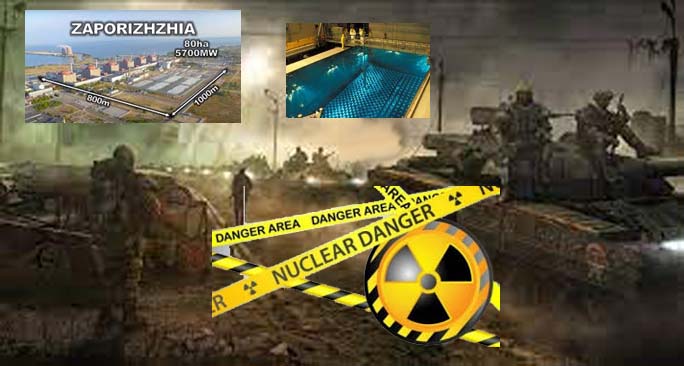
Nuclear experts have also highlighted that the US does not have any nuclear plants that use the same class of technology as Zaporizhzhia, which is a Soviet-designed “water water energetic reactor” (abbreviated as “VVER” in Russian).
By Lauren Kent, CNN, 20th March 2025, https://edition.cnn.com/2025/03/20/europe/ukraine-us-zaporizhzhia-nuclear-power-plant-explainer/index.html
Ukraine’s Zaporizhzhia nuclear power plant, occupied by Russian forces since the early days of the war, could be restored and protected by US ownership – at least according to the Americans.
But it’s unclear how the operation would work in practice, experts say, especially as the plant is on the front line, in territory controlled by Russia.
As part of ongoing talks to inch toward a partial ceasefire, US President Donald Trump and Ukrainian counterpart Volodymyr Zelensky “discussed Ukraine’s electrical supply and nuclear power plants” during a Wednesday phone call, according to the US readout of the call.
“(Trump) said that the United States could be very helpful in running those plants with its electricity and utility expertise. American ownership of those plants would be the best protection for that infrastructure and support for Ukrainian energy infrastructure,” the readout said.
On Thursday, Zelensky disputed that section, saying: “In terms of ownership, we definitely did not discuss this with President Trump.” Zelensky stressed that “all nuclear power belongs to the (Ukrainian) state, including the temporarily occupied Zaporizhzhia region.”
Zelensky said the day before that Ukraine is ready to consider the possibility of American investment in the restoration and modernization of Zaporizhzhia. During a news conference after his call with Trump, Zelensky said they only discussed the occupied Zaporizhzhia plant, rather than Ukraine’s wider nuclear power network.
“I believe that the station will not work under occupation. I believe that the station can be restored to operation,” Zelensky said, also cautioning that the process will take an estimated two years or more.
Before Russia’s full-scale invasion in 2022, the Zaporizhzhia plant supplied roughly 20% of Ukraine’s energy, with six reactors, making it the largest nuclear power station in Europe. Ukrainian staff remain at the plant under Russian occupation, and at one point staff were forced to work at “gunpoint.”
But the plant is now disconnected from the grid and the electricity infrastructure required to operate the plant safely has been damaged by drone strikes and frequent shelling. Russia also destroyed the nearby Kakhovka dam, emptying the reservoir that supplied water to cool the plant.
All six reactors are shut down and there are concerns over the plant’s ongoing maintenance, as explosions continue nearby, according to a UN nuclear watchdog team on the ground.
When asked about how the US could potentially run a Ukrainian nuclear plant, Energy Secretary Chris Wright told Fox News that he didn’t believe it would require American troops on the ground.
“Certainly, we have immense technical expertise in the United States to run those plants. I don’t think that requires boots on the ground,” Wright said. “But I’ll leave the foreign policy to President Trump and Secretary (of State Marco) Rubio. I know they are working tirelessly, ‘How do we bring peace to Ukraine?’
“But, if it was helpful to achieve that end – have the US run nuclear power plants in Ukraine? No problem. We can do that,” Wright added.
But experts question how feasible the idea floated by the Trump administration would be.
Operating the plant safely would require a safe, constant power supply to avoid a reactor meltdown, as well as the restoration of sufficient water supplies for cooling the plant.
“The first word of business would be to establish definitively that there could be no attacks on either the plant directly or on the supporting infrastructure – both power and water resources – and that would have to be iron-clad,” said Edwin Lyman, director of nuclear power safety at the Union of Concerned Scientists. “So far, that kind of agreement has been elusive, as shelling occurs at a daily basis in the vicinity of the reactors.”
“There’s no point in trying to rebuild a plant and operate it if it could be jeopardized at any moment,” Lyman said. “And the notion that US-ownership would somehow be more of a deterrent to Russia attacking the plant than now, when the Russians themselves control the plant, that doesn’t make sense either.”
The idea of US operation “raises a whole lot of logistical and technical and practical questions that are very unclear,” Lyman said, including the question of US liability for any accident at the facility. “With ownership or operator status comes responsibility.”
Nuclear experts have also highlighted that the US does not have any nuclear plants that use the same class of technology as Zaporizhzhia, which is a Soviet-designed “water water energetic reactor” (abbreviated as “VVER” in Russian).
“These are different technologies,” said Elena Sokova, director of the Vienna Center for Disarmament and Non-Proliferation, adding that there are strict licensing requirements for the plant’s operators.
“The US is an advanced country… but to be prepared to immediately take control of something that is of a different design, designed by different country, and where you have no experience of running it – I don’t think it’s a good solution or viable option.”
“Having said that, if we’re talking about a long process, I’m sure certain things could be worked out, particularly if there is an arrangement… to have the majority of the Ukrainian staff and operators running these reactors,” Sokova added.
Ukraine wants role in restoration of plant
Zelensky emphasized on Wednesday night that safe restoration of the plant is in the whole world’s interest, and Ukraine should have a role in that “because it is ours, and this is our land, this is our station.”
The Ukrainian president said any return of the plant would not be possible without control of the area where it is located – the city of Enerhodar – on the Russian-occupied side of the Zaporizhzhia region.
“If you just hand over the station, and a meter away from the station, everything is occupied or there are Russian weapons, no one will work like that,” Zelensky told reporters, raising concerns that the plant could be restored with US and Ukrainian investment, only to have Russia possibly damage or destroy it again later.
As fighting continues along the front line, the dire situation at the Zaporizhzhia plant “remains unchanged,” Andrian Prokip, energy program director at the Ukrainian Institute for the Future, wrote last month.
“It still does not receive adequate maintenance and it continues to serve as a Russian ammunition depot,” said Prokip, also a senior associate at the Wilson Center.
CNN’s Svitlana Vlasova, Christian Edwards and DJ Judd contributed to this report.
Nuclear Severnside…is this our future?
STAND (accessed) 23rd March 2025,
https://www.youtube.com/watch?v=wz9CaHbM-9o
The Severn Estuary, in Gloucestershire, is set to be a major hub for the
Government’s plans to expand nuclear power in the UK. This video, by STAND
(Severnside Together Against Nuclear Development)
https://www.nuclearsevernside.co.uk, explains the Government’s proposed
expansion of nuclear power by building the completely unproven technology
of SMRs (Small Modular Reactors. It also explains why they will be
disastrous for the economy, increase the cost for electricity bill payers,
rob renewable sources of power generation such as wind, solar and tidal of
essential resources, fail to secure energy security and come far too late
to help mitigate climate change or meet the country’s carbon emission
targets.
Ukraine will have to make territorial concessions – Waltz
https://www.rt.com/news/614323-waltz-ukraine-territorial-concessions/ 24 Mar 25
Trump’s national security adviser has also indicated that the US is ready to ramp up sanctions pressure on Russia if it declines a 30-day ceasefire.
Ukraine should be prepared to give up certain territories as part of any future peace negotiations with Russia, US National Security Adviser Mike Waltz has said.
Kiev claims sovereignty over Crimea, the Donetsk and Lugansk People’s Republics, as well as Kherson and Zaporozhye Regions. The territories officially became part of Russia after referendums in 2014 and 2022. Moscow has maintained that their status is non-negotiable.
Speaking to ABC News on Sunday, Waltz said that a potential settlement to the Ukraine conflict “is going to be some type of territory for future security guarantees” for Kiev.
According to the official, an alternative in the form of NATO membership for Ukraine “is incredibly unlikely.” Ukraine has demanded accession to the US-led military bloc whereas Moscow views Kiev’s NATO aspirations as a root cause of the ongoing conflict.
Attempts to “drive every Russian off of every inch of Ukrainian soil, including Crimea” would be unrealistic at this point, Waltz believes. The ongoing diplomatic efforts spearheaded by the US should focus on the “reality of the situation on the ground,” the national security adviser argued.
Also on Sunday, in an interview with Fox News, Waltz said that “we are engaging in diplomacy, and that will involve both carrots and sticks to get both sides to the table.” When asked whether US President Donald Trump was prepared to “punish” Russian President Vladimir Putin with more sanctions if he rejected a ceasefire, Waltz replied that “all options are on the table.”
Earlier this week, US Secretary of State Marco Rubio revealed that representatives from Washington and Kiev had “had conversations” on the issue of territorial concessions during the talks in the Saudi Arabian city of Jeddah on Tuesday. The diplomat argued that “neither side can militarily achieve their maximalist goals.”
He similarly predicted that “obviously, it’ll be very difficult for Ukraine in any reasonable time period to sort of force the Russians back all the way to where they were in 2014.”
Following the negotiations in Jeddah, Ukraine agreed to a 30-day ceasefire.
Trump’s special envoy, Steve Witkoff, traveled to Moscow on Thursday to present Putin with the details of the proposal.
The Russian head of state welcomed the ceasefire in principle but insisted on addressing several salient issues first, including the fate of the Ukrainian troops encircled in Russia’s Kursk Region
Dounreay learns what its share of £4bn decommissioning cash will be
Dounreay has been allocated a total spend of £221 million for the coming
financial year. Its share of the £4 billion budget overseen by the Nuclear
Decommissioning Authority (NDA) is a good outcome for the site, according
to Dave Wilson, managing director of operators NRS.
“It’s a really, really good settlement given the current financial challenges,” he said
at the latest meeting of Dounreay Stakeholder Group (DSG) on Wednesday. Mr
Wilson said it was just over £5 million up on the previous year after
taking account of inflation. He said: “It’s a very positive settlement
for Dounreay and will make sure the site is safe, secure and able to
continue to protect the environment.” The funding would underwrite the
ongoing clean-up of the site and the upgrading of its ageing
infrastructure.
John O’Groat Journal 22nd March 2025, https://www.johnogroat-journal.co.uk/news/dounreay-learns-what-its-share-of-4bn-decommissioning-cash-377633/
What is the fate of Russian-held Zaporizhzhia nuclear power plant after Trump talks?
The Zaporizhzhia Nuclear Power Plant is one of the world’s 10 largest and Europe’s biggest
Hanna Arhirova, Friday 21 March 2025, https://www.independent.co.uk/news/world/europe/ukraine-nuclear-power-plants-trump-putin-b2719353.html
President Donald Trump suggested a potential transfer of Ukrainian power plants to US ownership during a call with Ukrainian President Volodymyr Zelensky, according to a US statement.
The discussion, later clarified by Zelensky, centred on the Zaporizhzhia Nuclear Power Plant (ZNPP), currently under Russian occupation.
While the plant remains connected to Ukraine‘s grid, it is not producing electricity, raising questions about the feasibility and nature of any future US involvement.
The Zaporizhzhia Nuclear Power Plant is one of the world’s 10 largest and Europe’s biggest.
Who controls the Zaporizhzhia Nuclear Power Plant
Located in Ukraine’s southern Zaporizhzhia region, Russian forces occupied it shortly after Moscow’s February 2022 invasion.
While Russia declared the region annexed in Autumn 2022, its largest city, Zaporizhzhia, remains under Ukrainian control.
Ukraine has accused Russia of stationing troops and weapons at the plant and using it as a launchpad for attacks across the Dnipro River. Russia denies this, accusing Ukraine of shelling the facility.
How many nuclear power plants does Ukraine have?
Besides Zaporizhzhia, Ukraine operates three active nuclear power plants, which generate the majority of the country’s electricity following sustained Russian attacks on thermal and hydroelectric plants.
These facilities are located in southern, western and northwestern Ukraine, away from frontline areas.
What did Trump and Zelenskyy discuss and are there negotiations over Zaporizhzhia’s fate?
During their call on Wednesday, Trump suggested that Zelensky should consider giving the US ownership of Ukraine’s power plants to ensure their long-term security, according to a White House statement from US Secretary of State Marco Rubio and National Security Adviser Mike Waltz.
“American ownership of those plants could be the best protection for that infrastructure,” Trump suggested, according to the statement.
Zelensky later told journalists their conversation focused on the Zaporizhzhia nuclear power plant, and the following day, made it clear that “the issue of ownership” of the other three plants was never discussed.
“All nuclear power plants belong to the people of Ukraine,” he said.
Zelenskyy said that when they discussed Zaporizhzhia, the US leader had inquired about the facility’s future. “Trump asked my thoughts on the plant,” Zelensyy said. “I told him that if it is not Ukrainian, it will not operate. It is illegal.”
Even though ZNPP is a state-owned plant, Zelenskyy acknowledged that if the US were to claim it from Russian control, invest in it and modernise it, Ukraine might consider it. “That is a separate question, an open one,” he said.
What is the current state of Zaporizhzhia’s nuclear plant?
Since falling under Russian control, the plant’s conditions have deteriorated. While its six reactors have been shut down for years, they still require power and qualified staff to maintain cooling systems and safety features.
Energoatom, Ukraine’s state nuclear operator, said that after Russian forces took over, Ukrainian personnel were forced to sign contracts with Russian authorities and take Russian citizenship. Those who refused faced abduction or threats, forcing thousands to flee, leaving the facility understaffed and harder to manage.
The collapse of a dam in June 2023 further jeopardised the plant’s cooling systems, which relied on water from the reservoir. In response, plant administrators dug wells, according to the International Atomic Energy Agency (IAEA).
Zelensky said extensive repairs would be needed before the plant could operate again, estimating the process could take at least two years.
The IAEA has repeatedly warned the war could cause a radiation leak. While the plant no longer produces electricity, it still holds large amounts of nuclear fuel, requiring constant cooling.
Regular blackouts caused by the fighting have disrupted the facility, though power has been quickly restored each time.
IAEA experts permanently stationed there still face restricted access, with Russian authorities blocking some inspection requests, according to IAEA head Rafael Grossi.
Is any kind of deal imminent?
Zelensky said the discussions with Trump on restoring Zaporizhzhia were a positive step, but cautioned that no one would work at the plant if Russian forces remained stationed nearby.
Control over the plant is likely to remain a legal and logistical challenge, intertwined with a highly divisive issue for both warring sides: control over the land itself.
Russian troops hold the area, while Ukrainian forces are separated from it by the Dnipro River and more than 100 kilometres (62 miles) of terrain.
Macron ousts EDF boss accused of giving French industry ‘the middle finger’
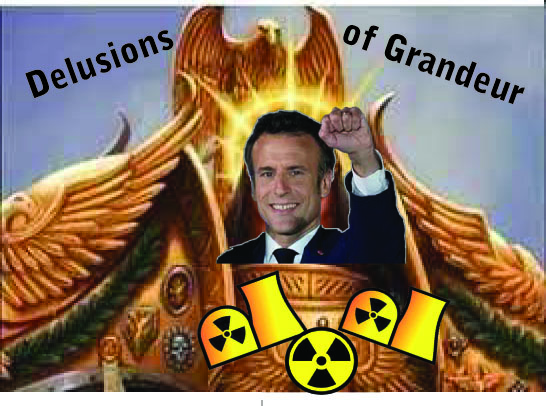
Luc Rémont will be replaced in a reshuffle with factory energy prices set to soar
Alex Singleton, Business Reporter, https://www.telegraph.co.uk/business/2025/03/21/macron-ousts-boss-state-run-edf-french-energy-prices-surge/
Emmanuel Macron has ousted the boss of the state-run EDF after French industrialists revolted over its high electricity prices.
Luc Rémont is to be replaced in a surprise reshuffling of the company’s top ranks, Mr Macron’s office said on Friday. Mr Rémont has run the the state-owned energy giant since November 2022.
The shake-up follows an outcry over the high energy prices EDF is poised to charge factories. Benoît Bazin, the boss of building materials giant Saint-Gobain, had accused EDF of “giving the middle finger to French industry” by increasing prices.
Rules that force EDF to sell energy to major industrialists at below-market prices are set to expire at the end of the year and the generator had announced plans to raise its prices.
Industry group Uniden, which represents dozens of France’s biggest manufacturers including Renault and steelmaker ArcelorMittal, claimed EDF was “deliberately turning its back” on French businesses at a time when manufacturers were “exposed to unprecedented non-European competition that threatens the very survival of many sites”.
The row is embarrassing for Mr Macron, who had pledged to “take back control of electricity prices” and who sees cheap electricity as a way of securing the French economy. Two years ago, he fully nationalised EDF by buying the 16pc of the company the government did not already own.
The shake-up comes days after the Macron administration said it had agreed state financing for six new nuclear reactors to be built by EDF over the coming decades.
Anger over high industrial energy prices is rising in the UK too. UK factories pay 50pc more for electricity than rivals in France and Germany, and four times as much as American plants. High prices have been blamed on net zero and slow-moving plans to expand nuclear power.
Warnings from industrialists that net zero energy policies are damaging the economy have fallen on deaf ears. Ed Miliband, the Energy Secretary, said this week the UK Government was “absolutely up for the fight” over net zero.
EDF is one of the largest players in the UK nuclear power market, after buying three formerly nationalised regional electricity boards and the nuclear operator British Energy.
It is currently building the UK’s first new nuclear power station for over 20 years, Hinkley Point C, and plans to embark on the construction of another, Sizewell C. But in January, the future of this new project was thrown into doubt after the French state auditor warned it against embarking on risky new foreign projects.
EDF declined to comment. The French government has been approached for comment.
Aaron Mate on how NATO provoked Russia in Ukraine and undermined peace
By Aaron Maté / The Grayzone March 23, 2025, https://scheerpost.com/2025/03/23/aaron-mate-on-how-nato-provoked-russia-in-ukraine-and-undermined-peace/
The Grayzone’s Aaron Maté argues that the US and NATO provoked Russia in Ukraine by expanding NATO, dismantling arms control, installing military assets threatening Russia, meddling in Ukraine and blocking multiple opportunities for peace.https://www.youtube.com/watch?v=z8IMtB6UkvM
1 This Month
26 April – Chernobyl: Inside the Meltdown airs on National Geographic on Sunday 26th April from 4pm


29 April – Nuclear Expert Webinar #1 – Radiation Impacts on Families with Mary Olson and Cindy Folkers
- 12:15 PM MT – 1:45 PM MT
- Location: Virtual – REGISTER TODAY

4 May -West Suburban Peace Coalition to discuss Iran war at May Educational Forum
Monday, May 4, 7:00 – 8:00 PM Central Standard Time
Title: : How Trump’s Narrative Tries to Shape the Reality of the War on Iran.
Contact Walt Zlotow, zlotow@hotmail.com 630 442 3045 for further information
14 May – online event From Bombs to Data Centres: the Face of Nuclear Colonialism

Pine Ridge Uranium is the real threat, not Tehran- Tell Burgum: Stop the Extraction.
Chernobyl: The Lost Tapes – A good documentary on Chernobyl on SBS available On Demand for the next 3 weeks– https://www.sbs.com.au/ondemand/tv-program/chernobyl-the-lost-tapes/2352741955560
To see nuclear-related stories in greater depth and intensity – go to https://nuclearinformation.wordpress.com
-
Archives
- April 2026 (317)
- March 2026 (251)
- February 2026 (268)
- January 2026 (308)
- December 2025 (358)
- November 2025 (359)
- October 2025 (376)
- September 2025 (257)
- August 2025 (319)
- July 2025 (230)
- June 2025 (348)
- May 2025 (261)
-
Categories
- 1
- 1 NUCLEAR ISSUES
- business and costs
- climate change
- culture and arts
- ENERGY
- environment
- health
- history
- indigenous issues
- Legal
- marketing of nuclear
- media
- opposition to nuclear
- PERSONAL STORIES
- politics
- politics international
- Religion and ethics
- safety
- secrets,lies and civil liberties
- spinbuster
- technology
- Uranium
- wastes
- weapons and war
- Women
- 2 WORLD
- ACTION
- AFRICA
- Atrocities
- AUSTRALIA
- Christina's notes
- Christina's themes
- culture and arts
- Events
- Fuk 2022
- Fuk 2023
- Fukushima 2017
- Fukushima 2018
- fukushima 2019
- Fukushima 2020
- Fukushima 2021
- general
- global warming
- Humour (God we need it)
- Nuclear
- RARE EARTHS
- Reference
- resources – print
- Resources -audiovicual
- Weekly Newsletter
- World
- World Nuclear
- YouTube
-
RSS
Entries RSS
Comments RSS
 nuclear-news