Securing the nuclear nation, (Russia)
Cambridge University Press: Kate Brown 20 November 2018, https://www.cambridge.org/core/journals/nationalities-papers/article/abs/securing-the-nuclear-nation/9D92C7AA447CC337F56999FC8C03C4D4
Abstract
In 1946, in the Southern Urals, construction of the Union of Soviet Socialist Republics first plutonium plant fell to the GULAG-Narodnyi Komissariat Vnutrennikh Del (NKVD). The chief officers in charge of the program – Lavrentii Beria, Sergei Kruglov, and Ivan Tkachenko – had been pivotal figures in the deportation and political and ethnic cleansing of territories retaken from Axis forces during WWII.
These men were charged with building a nuclear weapons complex to defend the Soviet Union from the American nuclear monopoly. In part thanks to the criminalization and deportation of ethnic minorities, Gulag territories grew crowded with foreign nationals and ethnic minorities in the postwar years. The NKVD generals were appalled to find that masses of forced laborers employed at the plutonium construction site were members of enemy nations. Beria issued orders to cleanse the ranks of foreign enemies, but construction managers could not spare a single healthy body as they raced to complete their deadlines.
To solve this problem, they created two zones: an interior, affluent zone for plutonium workers made up almost exclusively of Russians; and anterior zones of prisoners, soldiers, ex-cons, and local farmers, many of whom were non-Russian. The selective quality of Soviet “nuclearity” meant that many people who were exposed to the plant’s secret plutonium disasters were ethnic minorities, people whose exposures went unrecorded or under-recorded because of their invisibility and low social value.
Lincolnshire council pulls out of nuclear waste disposal siting process
Lincolnshire County Council has decided to withdraw from the geological
disposal facility (GDF) siting process – ending plans to potentially
store nuclear waste in the county. The council’s new executive voted to
withdraw from the Nuclear Waste Services’ (NWS’s) Community Partnership
on 3 June.
A Community Partnership in Theddlethorpe had been established by
the NWS as part of its search to find a GDF site with suitable geology for
storing higher activity radioactive waste underground. The council’s vote
means that it will no longer be a member of Theddlethorpe GDF Community
Partnership. The GDF siting process cannot continue without the support of
the council as the relevant principal local authority, and the Community
Partnership closed with immediate effect.
Ground Engineering 09 June, 2025 By Thames Menteth, https://www.geplus.co.uk/news/lincolnshire-council-pulls-out-of-nuclear-waste-disposal-siting-process-09-06-2025/
NFLAs welcome new group opposed to nuke waste dump in South Copeland

Hot on the heels of the victory in Lincolnshire, the UK/Ireland Nuclear
Free Local Authorities have welcomed the formation of a new ‘Anti GDF
Community Group’ in opposition to a Geological Disposal Facility (GDF) on
land near Millom and Haverigg in West Cumbria.
The GDF would be the final
repository for Britain’s inventory of legacy and future high-level
radioactive waste. Nuclear Waste Services has declared its interest in land
surrounding His Majesty’s Prison Haverigg and Bank Head Estate West of
Haverigg as the potential location for a future surface site for this
facility. This site is designated the Area of Focus in the South Copeland
GDF Search Area.
Following a meeting held by Whicham Parish Council on
Wednesday, at which a resolution was carried unanimously calling on NWS to
withdraw this area from consideration, a statement was issued by the new
group. There is also now a new private Facebook group for impacted
residents to join and a group logo.
The ‘Anti GDF Community Group’ will
aim to support and seek support from both Whicham and Millom Council in
their respective rejections of the area of focus and try to ensure that NWS
and Cumberland Council abide by the NWS statement “that express consent
must be given by those living alongside a GDF” Presently the group is
formed by a small committee and is seeking members to support the group
objective of removal from the process of the Kirksanton/Haverigg site. The
group will aim to support those who have and are being severely impacted
now and seek to demonstrate the flawed process and the contempt our
communities have been shown within that process.
NFLA 9th June 2025, https://www.nuclearpolicy.info/news/nflas-welcome-new-group-opposed-to-nuke-waste-dump-in-south-copeland/
Cumbrians receive postal call to back nuke dump democracy petition
NFLA 9th June 2025, https://www.change.org/p/massive-mine-shafts-and-nuclear-dump-for-cumbria-coast-tell-cumberland-council-vote-now
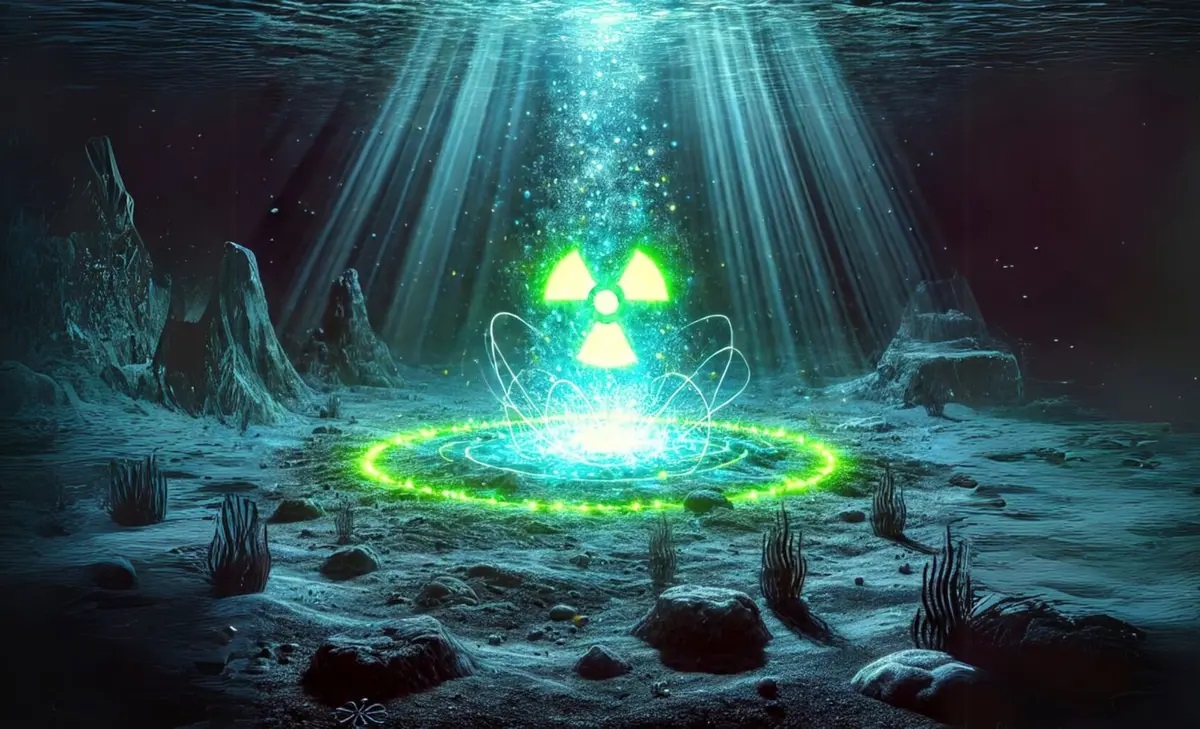
Residents of Millom, Seascale and Gosforth have just received a flyer from campaign group Radiation Free Lakeland calling on them to back a petition which asks Cumberland Councillors to host a debate followed by a vote about their engagement with the siting process for a Geological Disposal Facility in West Cumbria.
The GDF would be the eventual repository for Britain’s high-level radioactive waste which would be placed in tunnels beneath the seabed. A site in East Lincolnshire was also under consideration as a possible site. With the withdrawal of Lincolnshire County Council from the process last week, only sites in Mid and South Copeland in West Cumbria remain in contention and then only because Cumberland Council remains engaged in the process.
Bizarrely Cumberland Council only became involved in the process by default. The new authority on replacing Copeland District Council chose to accept unquestionably that Council’s decision to participate in the GDF process, even though the decision to participate had been taken by only four Copeland Councillors. There has never been any debate or vote amongst Cumberland Councillors about whether they should have accepted this obligation or still wish to continue with the process.
The petition calls on Cumberland Council to convene a belated special meeting of the Full Council where Councillors can debate and then vote on whether to continue to remain engaged or remain represented on the Mid and South Copeland GDF Community Partnerships. If Councillors say no, then the process would end, and NWS would withdraw. The NFLAs is happy to support Radiation Free Lakeland in urging all Cumbrians to sign it.
Here are links to the petition:
www.change.org/CumbriaNuclearDump https://www.change.org/p/massive-mine-shafts-and-nuclear-dump-for-cumbria-coast-tell-cumberland-council-vote-now
Paris wants to manufacture drones in Ukraine
9 June 25 https://www.rt.com/news/618818-paris-renault-produce-drones-ukraine/
The French Defense Ministry has asked Renault to set up military production for Kiev.
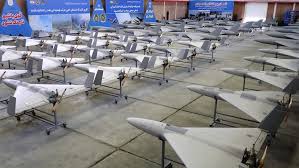
Paris is pushing France’s largest automaker, Renault, to establish a military drone production operation in Ukraine, the company has confirmed. Kiev has been significantly intensifying drone attacks on Russian infrastructure.
During the final week of May, 2,300 Ukrainian UAVs were shot down after being sent across the border to target Moscow and other regions, according to the Russian Defense Ministry.
“We have been contacted by the [French] Defense Ministry about the possibility of producing drones,” Renault said in a statement to several media outlets, including Reuters, on Sunday. Although “discussions” on the issue have taken place, the company insisted that “no decision has been taken at this stage,” and that it is awaiting further details from the ministry.
French Defense Minister Sebastien Lecornu first revealed the plan on Friday, describing it as an “unprecedented partnership” in an interview with broadcaster LCI.
“We are going to embark on a completely unprecedented partnership… to equip production lines in Ukraine to… produce drones,” Lecornu said, noting that the project would involve both a major carmaker and a smaller defense contractor.
Renault could be tasked with setting up drone assembly lines “a few dozen or hundreds of kilometers from the front line” in Ukraine, France Info reported on Sunday.
According to the newspaper Ouest-France, the project could also involve Delair – a Toulouse-based drone manufacturer that supplies UAVs for border surveillance, reconnaissance, intelligence, and special operations forces. The company has previously delivered kamikaze drones to the French Defense Ministry, which were later sent to Ukraine.
Lecornu described the initiative as a “win-win” for Paris and Kiev, claiming no French personnel would be deployed to Ukraine.
The production lines would be operated by Ukrainian workers, and the drones built for the country’s military would also be used by the French Armed Forces for “tactical and operational training that reflects the reality” of modern warfare, he said.
Russian Foreign Minister Sergey Lavrov condemned the strikes as deliberate attempts to sabotage peace talks. Moscow has repeatedly warned that any weapons production facilities in Ukraine are considered legitimate military targets and subject to “unequivocal destruction.”
Firm fined £26k after worker exposed to radiation at Teesside site

Mistras Group Limited was fined £26,000 after a radiographer was overexposed to ionising radiation while working at a site in Hartlepool.
By Nicole Goodwin, City Centre Reporter, Jade McElwee, Content Editor,
Teesside Gazette 7th June 2025, https://www.gazettelive.co.uk/news/teesside-news/mistras-group-limited-radiation-hartlepool-31808465
A global firm has been slapped with a £26,000 fine after a radiographer was exposed to ionising radiation at a North East site.
The 69-year-old man was working for Mistras Group Limited in December 2020 when the company was alerted by their approved dosimetry service that he had received a dose exceeding legal limits. The Health and Safety Executive (HSE) was also informed, leading to the prosecution of the company following an investigation.
Ionising radiation is widely used in various industries including energy production, manufacturing, medicine and research. While it offers numerous benefits to society, it’s crucial that its risks are sensibly managed to safeguard workers and the public.
The incident occurred at Mistras Group Limited’s former Hartlepool site when a gamma emitting radioactive source used for radiography failed to return to its shielded container. Due to lax adherence to the company’s own radiation safety protocols, this wasn’t promptly identified, resulting in the radiographer being overexposed to radiation.
Although no symptoms were reported, excessive exposure to ionising radiation can heighten the risk of developing certain cancers. The HSE investigation discovered that pre-use safety checks hadn’t been completed and recorded by the radiographer, reports Chronicle Live. These checks are vital stages in verifying that radiography systems are functioning properly and ensuring the safe use of equipment.
The firm Mistras Group Limited was hit with a £26,000 fine and must pay £11,353 in costs after admitting to breaches of radiation safety regulations at Newton Aycliffe Magistrates’ Court on May 22. The company, based in Norman Way, Cambridge, had provided alarming Electronic Personal Dosemeters (EPDs) and radiation monitors to employees, yet it emerged that a radiographer failed to use the equipment; this could have alerted them to dangerous radiation levels allowing for a safe retreat.
Radiation incidents had not been reported correctly. Additional failings by the company to ensure adherence to radiation protection rules and procedures included not following local rule instructions and insufficient supervision leading to a lack of compliance. Moreover, the firm previously faced enforcement actions from HSE for similar shortcomings.
Commenting on the case, HSE’s radiation specialist inspector Elizabeth Reeves stated: “Industrial radiography is a hazardous practice if not managed properly. Radiation protection is an area where employers and employees must not become complacent with.
“Safety checks and the use of monitoring equipment such as EPD’s and radiation monitors are essential elements to ensuring the safe operation of equipment and protection to personnel. This prosecution demonstrates that the courts, and HSE, take failure to comply with the regulations extremely seriously.”
The HSE’s enforcement lawyer, Jonathan Bambro, and paralegal officer, Rebecca Forman, led the prosecution in this case.
Britain has escalated the global nuclear arms race – and is bringing us closer to armageddon
Simon Tisdall, 8 June 2025, https://www.theguardian.com/commentisfree/2025/jun/08/uk-strategic-defence-review-nuclear-arms-race-armageddon
The UK’s strategic defence review risks normalising nuclear warfare. Don’t believe the PR hype: these weapons are immoral, irrational and catastrophic.
Britain has escalated the global nuclear arms race – and is bringing us closer to armageddon

The UK’s strategic defence review risks normalising nuclear warfare. Don’t believe the PR hype: these weapons are immoral, irrational and catastrophicSun 8 Jun 2025 15.00 AESTShare1,163
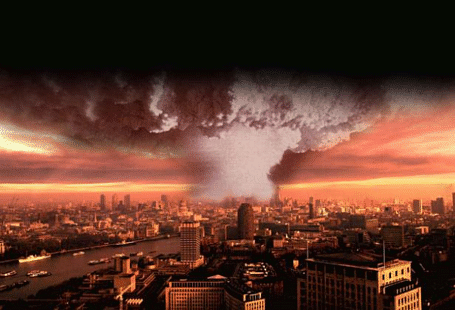
Plans by Keir Starmer’s government to modernise and potentially expand Britain’s nuclear weapons arsenal, unveiled in the 2025 strategic defence review (SDR), seriously undermine international non-proliferation efforts. They will fuel a global nuclear arms race led by the US, China and Russia. And they increase the chances that lower-yield, so-called tactical nukes will be deployed and detonated in conflict zones.
This dangerous path leads in one direction only: towards the normalisation of nuclear warfare.
These unconscionable proposals are a far cry from the days when Robin Cook, Labour’s foreign secretary from 1997 to 2001, championed unilateral nuclear disarmament and helped scrap the UK’s airdropped gravity bombs. They are a continuation of a redundant, inhuman, immoral, potentially international law-breaking deterrence policy that cash-strapped Britain can ill afford, will struggle to implement at cost and on time, and which perpetuates illusions about its global power status.
Starmer’s justification for spending an additional £15bn on nuclear warheads for four as yet un-built Dreadnought-class submarines, whose price tag is £41bn and rising, is that the world – and the threat – has changed. But in terms of nuclear arms, it really hasn’t. Even as cold war tensions receded, the eight other known nuclear-weapons states – the US, Russia, China, France, India, Pakistan, North Korea and Israel – clung on to their arsenals. Some expanded them.
Today, as the global security environment deteriorates again, governments that ignored an obligation to pursue nuclear disarmament “in good faith” under article six of the 1970 non-proliferation treaty (NPT) are finding new reasons to keep on doing so. Britain must not compound its decades-long failure to honour the spirit of the treaty. The SDR’s assertion that “continued UK leadership within the NPT is imperative” seems disingenuous, given government intentions.
The SDR concedes the NPT, up for review next year, is close to failing. “Historical structures for maintaining strategic stability and reducing nuclear risks have not kept pace with the evolving security picture,” it says. “With New Start [the 2010 US-Russia strategic arms reduction treaty] set to expire in February 2026, the future of strategic arms control – at least in the medium term – does not look promising.”
This is a Trident missile-sized understatement. Nuclear proliferation is once again a huge problem. The US will spend an estimated $2tn over 30 years on weapons development. Donald Trump said in February he wants to “denuclearise”. Guess what! He’s doing the opposite. The White House is seeking to raise the National Nuclear Security Administration’s annual weapons budget by 29%, to $25bn, while slashing funding for the arts, sciences and foreign aid. That’s on top of several multibillion-dollar Pentagon weapons programmes.
China’s nuclear strike force has more than doubled in size since 2020, with some pointed at Taiwan. Russia’s expanding capabilities include a nuclear-capable hypersonic missile, recently fired into Ukraine. And Trump’s Golden Dome plan upends prior undertakings on anti-missile defence. By joining the proliferators, hypocritical Britain sends a cynical signal to Iran, Saudi Arabia and others whose supposed nuclear ambitions it opposes.
One future scenario is especially chilling: the possible reintroduction by Britain of air-launched nuclear weapons for the first time since Cook scrapped them. This could involve buying US F-35A fighters and arming them with US-designed B61-12 bombs. These bombs have variable yields and could be used tactically, against a battlefield target, a command HQ or a city. They could be launched remotely, using unmanned drones. They bring the prospect of nuclear warfare measurably closer.
Starmer is leaning heavily on the review’s claim that Russian “nuclear coercion” is the biggest menace facing the UK. Even if true, no amount of nuclear missiles and bombs may suffice if political will is lacking to directly confront Vladimir Putin by, for example, deploying Nato conventional forces to defend Ukraine and responding forcefully to hybrid attacks on Britain. Like the former US president Joe Biden, Starmer gives too much credence to Moscow’s crude threats. Putin knows that if he presses the nuclear button, it will explode in his face. He’s many things – but not suicidal.
This is the conundrum at the heart of nuclear deterrence theory. Nuking a nuclear-armed adversary guarantees self-destruction (which is why India and Pakistan jibbed at all-out war last month). And hurling nuclear threats at states and foes that lack nuclear weapons is ineffective. As Ukraine shows, they grow more defiant. As a weapon, nuclear blackmail is overrated. Fear of British nukes did not deter Argentina’s 1982 Falklands invasion. Nukes did not stop al-Qaida in 2001 or Hamas in 2023. So why have nukes at all?
Retaining nuclear weapons at current or increased levels does not make Britain safer. Their use would be immoral, irrational and catastrophic. They are grossly expensive, consuming resources that the UK, facing painful Treasury cuts again this week, could more sensibly use to build hospitals and schools and properly equip its armed forces.
It’s uncertain how independent of the US the British deterrent really is in practice. Does Starmer or Trump have the final word on use? Official secrecy prevents adequate democratic scrutiny. And the idea that nuclear warfare, once the taboo is broken, might somehow be contained or limited is a fast-track ticket to oblivion. Gradual disarmament, not rearmament, is the only way to escape this nightmare.
The SDR urges a government PR campaign to convince the British people of the “necessity” of a nuclear arsenal. No thanks. As Russia again raises nuclear war fears, what’s needed is public education about the dangers of weapons proliferation. People worry about everything from an existential global climate emergency to the cost of living. But what we’re discussing here is the universal cost of dying.
Nuclear warfare is the most immediate threat to life on earth. Worry about that first. It’s a shortcut to apocalypse – now.
Group protest against Sizewell C ahead of Spending Review
Campaigners gathered to further protest against Sizewell C just days
before the conclusion of the Spending Review. Supporters of Stop Sizewell C
and Together Against Sizewell C (TASC) met for an ‘Outrage’ rally at
Sizewell Beach on Saturday, June 7. The weekend rally also paid tribute to
former TASC chair and campaigner Pete Wilkinson who died in January of this
year. His daughters Emily and Amy spoke at the protest and tied yellow
ribbons onto the fence. The protest came ahead of the conclusion of the
Spending Review on Wednesday, June 11 where it is believed the government
will set out its plans for future investment in Sizewell C.
East Anglian Daily Times 8th June 2025,
https://www.eadt.co.uk/news/25222586.group-protest-sizewell-c-ahead-spending-review/
£127M wasted on failed UK nuclear cleanup plan

Don’t worry, only 100 more years of Sellafield nuclear site cleansing to go
Lindsay Clark, Sat 7 Jun 2025,
https://www.theregister.com/2025/06/07/mps_find_127_million_wasted_sellafield/
The center for the UK’s nuclear industry wasted £127 million ($172 million) during delays and replanning as it scrambled to find alternatives for facilities which treat and repackage plutonium, a Parliamentary report found.
In the face of a 2028 deadline to replace its 70-year-old analytical lab, Sellafield Limited, part of a group of companies and government bodies on the northwest England Sellafield site, has abandoned plans for its Replacement Analytical Project (RAP). Ditching RAP was chalked up to multiple expected delays from 2028 until at least 2034 and a half-a-billion-pounds cost increase to £1.5 billion ($1.93 billion).
A new report from the Parliament’s public spending watchdog says RAP “has been managed very poorly indeed.”
Sellafield, formerly known as Windscale, has been the center of the UK’s nuclear industry since the 1950s. While the site is home to a number of companies, and the government’s Nuclear Decommissioning Authority, Sellafield Limited, is a British nuclear decommissioning Site Licence Company controlled by the NDA.
In October last year, the UK’s public spending watchdog said Sellafield depends on an on-site laboratory that is “over 70 years old, does not meet modern construction standards and is in extremely poor (and deteriorating) condition.”
The National Audit Office said [PDF] the laboratory is “not technically capable of carrying out the analysis required to commission the Sellafield Product and Residue Store Retreatment Plant (SRP)” to treat and repackage plutonium.
Sellafield’s plan in 2016 was to convert a 25-year-old laboratory on the site, which would replace the 70-year-old lab, under the “Replacement Analytical Project.” The outline business case was approved in 2019 with an estimated cost of between £486 million and £1 billion ($626 million – $1.3 billion).
It later emerged that it could take until December 2034 to deliver the full capability, while cost could reach £1.5 billion ($1.93 billion). Sellafield “strategically paused” RAP in February 2024.
In a report this week, the House of Commons’ Public Accounts Committee said: “Sellafield Ltd’s performance in delivering major projects (such as new buildings to store waste or make it safe) has historically been very poor, with large cost increases and delays occurring all too frequently.
“There are signs of improvement – however, given Sellafield’s track record, we are yet to be fully convinced that this is not another false dawn. Another reason to be skeptical is Sellafield’s poor management of the RAP. At the point it paused work, the forecast cost had risen by £820 million, and the project was five years delayed,” the PAC report said.
After abandoning the RAP, Sellafield plans to convert a different building to support a Store Retreatment Plant, which re-treats and repackages existing plutonium material, making it more suitable for durable, long-term storage. It also plans to refurbish the 70-year-old existing building — including replacing the roof — so it can carry on using it until 2040. The alternative plan would provide a service until 2040, whereas the RAP was expected to remain in use until 2070.
However, the Nuclear Decommissioning Authority told PMs the new plan would cost between £420 million and £840 million ($570 million – $1.1 billion), much less than the RAP. Although some of the costs from the early projects could be recouped in the new plan, the PAC said £127 million ($172 million) spent on RAP will have been wasted.
The NDA expects the clean-up of the Sellafield site to go on until 2125 and cost £136 billion ($184 billion), an estimate which has increased nearly 19 percent since March 2019. ®
Nuclear power: a dream not worth having
The Government wants more nuclear power stations, but renewable energy is cheaper, safer, and more sustainable.
by Steve Dawe, 7 June 2025, https://westenglandbylines.co.uk/business/energy/nuclear-power-a-dream-not-worth-having/
Labour is committed to building new nuclear power stations on eight coastal sites. Margaret Thatcher was also an enthusiast for nuclear power. She wanted one new nuclear power station built each year in the UK during the 1980s. Only one, Sizewell B, was built. Why? Because it cost too much, as was obvious in 1990:
Mr Illsley: “The Secretary of State must be aware that recent estimates have put the final cost of Sizewell B at about £3.8 bn, taking into account the cost overruns, delays and lack of economies of scale… £2bn can be saved by cancelling the project now. Does the Secretary of State agree that the time to cancel Sizewell B is right now?”
(House of Commons Debates, 25 June 1990).
Renewables are cheaper
Sizewell B did not come online until 1995. The Government admitted in 2020 that renewables can be cheaper than they thought. Given decades of nuclear industry propaganda intended to obscure the deficiencies of this sector, support for nuclear appears less about stating a technology preference than an indirect political statement in favour of nuclear weapons.
We need electricity; we don’t need it to come from nuclear. But successive UK governments have used public money to subsidise the industries involved, instead of using it for things actually sustainable, cost-effective, and with minimal pollution. Keir Starmer has even ignored the nuclear watchdog when he blamed regulations for implementation delays.
The extensive range of reasons to oppose nuclear power
Here is a short list of some of the reasons to oppose new nuclear power stations, and phase out existing ones:
- Nuclear power is too slow to implement to be relevant to the climate emergency. Construction times are an average of 10 years per nuclear power station.
- Nuclear power stations are at risk of terrorist sabotage or attack in war, as has been demonstrated in Ukraine.
There are comprehensive reasons to oppose nuclear power, based partly on the British experience and that of other states recently. These also include:
The radioactive waste that needs storage for at least 100,000 years makes the true costs of nuclear power incalculable.- Part of the reason for this storage is the known health effects of radiation.
- Since major nuclear accidents have continued to occur and spread radioactive material into the environment, preference for other means of generating electricity and for radically improving insulation in buildings to reduce energy needs is unarguable.
- This is especially the case when the water implications are considered: nuclear power stations require water for cooling, on a planet with increasing droughts and extreme weather events. Nuclear power stations using water from watercourses have had to shut down during periods of drought, emphasising the desirability of solar and wind power which do not require water to operate.
- Making it easier to build more nuclear power stations on the eight coastal sites the Government prefers completely ignores the risk of sea level rise discussed below. It is extraordinary that these sites have been chosen.
Hence, to quote from one of the recent critical analyses, new nuclear power is “doomed to fail“. It is certainly prone to extreme weather events such as storms, if the proposed sites are used.
Nuclear power supports nuclear weapons
Most countries in the world do not have nuclear weapons. Today, 120 countries belong to the Non-Aligned Movement, committing themselves not to belong to alliances which perpetuate long-term confrontations between states.
The UK Government admits part of its support for existing and new nuclear power stations is to maintain essential supplies to its nuclear weapons programme. What is true for the UK clearly applies to other states with nuclear weapons.
Since nuclear weapons proliferation is against the general interest of all species on the planet, phasing out both nuclear power and nuclear weapons would be rational when alternatives exist, are becoming cheaper, and are expanding in use year after year.
New nuclear is too expensive to consider
Nuclear power is notoriously expensive. The International Energy Agency reported in 2023 that new solar and on-shore wind are cheaper than fossil fuels. Greenpeace has summarised the current situation, comparing renewables to nuclear, as follows:
“The cost of generating solar power ranges from $36 to $44 per megawatt-hour (MWh), the World Nuclear Industry Status Report said, while onshore wind power comes in at $29–$56 per MWh. Nuclear energy costs between $112 and $189 per MWh. Over the past decade, the World Nuclear Industry Status Report estimates levelised costs… for utility-scale solar have dropped by 88% and for wind by 69%. According to the same report, these costs have increased by 23% for nuclear.”
Worse for the British Government, an authoritative report asserts that the new nuclear power in the UK would actually be the world’s most expensive. Support by political parties in the UK for nuclear power is therefore a choice of the most expensive of options under consideration.
Jonathon Porritt, former head of the Government’s Sustainable Development Commission, has indicated that the cost of Hinkley C and Sizewell C are both likely to rise to about £75bn each. Others have argued that nuclear power may simply not be cost-effective in relation to realistic cost assessments including paying for very long-term radioactive waste storage.
The toxic twins: Hinkley C and Sizewell C
“Hinkley C in Somerset will cost the energy bill payer up to £17.6bn in subsidies. The agreed price of £92.50 per MW/hour is over double the current wholesale price at just over £41 per MW/hour.” (People Against Wylfa-B)
The construction costs were already predicted to rise by a third in early 2024, illustrating the general problem of high-cost infrastructure in the UK. Sizewell C costs were also predicted to double in early 2025.
Nuclear is never ‘clean’
The UK is going ‘all out’ to be a clean energy superpower, said Keir Starmer. But nuclear power has never been a ‘clean’ technology. Essentially, many alleged solutions to the problem of radioactive nuclear waste need to rely on perfect storage for 100,000 years.
This is a conception worthy of science fiction. Uranium mining is known to cause health problems in proximate populations, often to indigenous peoples.
Small modular nuclear reactors – why bother?
The nuclear industry has problems with scaling up to reduce costs. Nuclear power construction and related expense means reduced costs do not materialise.
The small modular reactor (SMR) is allegedly going to change this. However, a US Department of Energy report of September 2024 suggested a cost per megawatt more than 50% higher than for large reactors.
There are only three operating SMRs: one in China, with a 300% cost overrun, and two in Russia, with 400% cost overrun. In March, a Financial Times analysis labelled such small reactors “the most expensive energy source.” Others concur that SMRs are very expensive, and slow to construct, with negative environmental implications.
Sea level rise and nuclear sites
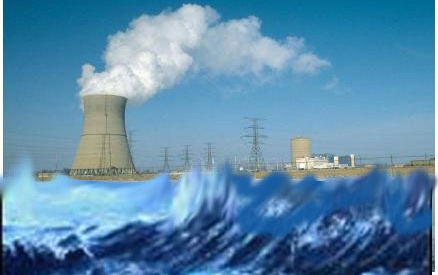
All eight of the Government’s preferred sites for new nuclear power development are coastal. There are concerns about the impact of sea-level rises for all the sites. There should also be concerns about storms increasing in power and frequency too as the climate changes.
Hinkley and Sizewell are already in development. Will an island be created to protect the proposed Sizewell C site from the sea? Does the Government privately think this might be necessary for all eight sites?
The Intergovernmental Panel on Climate Change(IPCC) may have under-estimated sea level rise up to 2100. Scientific papers have been predicting higher sea level rises than the IPCC since at least 2012. It has been suggested that: “All energy-related infrastructure is at risk from the impacts of climate change, especially due to the changing frequency and intensity of surface water and coastal flooding.”
And the rate of sea level rise has been increasing. Very low-lying sites like that of Sizewell C should be abandoned. And back in 1981, the Hinkley Point site was flooded, forcing closure of a nuclear power station there for a week.
Communities with nuclear legacies need alternatives
Communities with declining nuclear industry work would need alternative jobs. This is a general need for all localities experiencing employment transitions.
Each district and unitary council should have its own Green New Deal to promote and directly support just transitions. This would involve re-introducing a version of the Community Programme of the 1980s to employ people in projects and programmes, in cooperation with local voluntary bodies where possible. This should both support existing sustainability initiatives and help introduce new ones.
Training on the job should feature, to provide a better range of local skills appropriate to a just transition in areas like construction, forestry and nature, gardening, agriculture, energy efficiency, installing heat pumps in homes and more.
Just transition or another failure to future-proof the UK?
The colossal financial impact of nuclear power in the past and future in the UK is difficult to calculate, especially when radioactive waste storage is considered. The repercussions of public spending on this technology and its aftermath include inadequate spending on sustainable retrofitting of the existing built environment.
We certainly need electricity. We have never needed it to be specifically from nuclear power. The scale and diversity of energy alternatives are more than enough to meet future needs, including by increasing battery storage to address any potential problems in maintaining baseload supply.
Political will is absent. The long shadow of nuclear power remains in place over the major political parties, at public expense and with zero long-term vision.
Defence review dodges Britain’s nuclear blind spot.

THE UK’s nuclear enterprise is in crisis. Not just because of cost
overruns or ageing submarines, but because of the deepening secrecy and
silence that surrounds it. That silence should have been broken by the
Labour Government’s new Strategic Defence Review 2025.
Instead, it was quietly reinforced. Presented as a roadmap to “Make Britain Safer”, the
review promised clarity and accountability, but it fails to confront the
most pressing truths: that the UK’s nuclear programme is financially
unsustainable, strategically unbalanced, increasingly unaccountable and a
real and present danger to us all.
These concerns are not hypothetical. In
the final months of the last Parliament, I raised them on the floor of the
House of Commons, not out of party dogma, but in response to serious and
public allegations from Dominic Cummings, former chief adviser to the then
prime minister, remember him? He described Britain’s nuclear
infrastructure as a “dangerous disaster”, responsible for the secret
“cannibalisation” of other national security budgets and shielded from
meaningful scrutiny. Instead of confronting the truth, the review restates
familiar platitudes and leaves the public and Parliament no wiser about the
scale cost, or consequences of the UK’s nuclear commitment. The Defence
Secretary, who heard these warnings first-hand from the opposition bench,
is now in a position to act – he has chosen not to.
The National 8th June 2025,
https://www.thenational.scot/politics/25222635.defence-review-dodges-britains-nuclear-blind-spot/
Protesters raise environmental fears as wait continues for Sizewell C funding announcement
ITV 8 June 2025
Hundreds of people voiced their concerns over the multi-billion pound Sizewell C nuclear power station on the Suffolk coastline ahead of an expected announcement from the Government.
The rally on Sizewell Beach on Saturday, organised by Stop Sizewell C and Together Against Sizewell C, included speeches from campaigners against the major project including Greenpeace members, and musical performances.
The peaceful protest ended with the 300-strong crowd walking to the Sizewell complex and tying ribbons with messages, emphasising people’s concerns, to the gates.
Plans for Sizewell C were given the go ahead by the then Chancellor in November 2022 but the funding is yet to be approved by the Government, although an announcement on the project is expected in Labour’s Spending Review on Wednesday 11 June.
Construction has already started for the nuclear site and surrounding infrastructure on the Suffolk coast which will sit next to the Sizewell B plant, and has already been given £250m in local funding……………….
many people fear the environmental impact of Sizewell C and believe it will destroy the area.
Jenny Kirtley, from Together Against Sizewell C, said: “You’ve only got to look around the area and see the devastation that’s happened. I’ve been fighting this for 12 years. We knew it would be bad, but we didn’t know it would be so devastating. A whole area is changing before our very eyes and it’s heartbreaking.
“There are a huge mountains of earth everywhere and of course the wildlife is suffering. The deers don’t know where to go. They’re rambling around everywhere. The birds are leaving their nests.
“It’s all very well saying it’s going to create thousands of jobs but who’s going to work in the supermarkets, the care homes, the restaurants? This is a small area.
“We’ve got 6,000 people living around here so where are people going to live? We know rents are going sky-high so it’s going to get worse. It’s going to be a real problem.”
Alison Downes, from Stop Sizewell C, also believed the project would be a waste of tax-payers money and said there were better options to provide renewable energy.
She said: “We’ve always had people behind us in the local area. I think a lot of new people have woken up and seen the destruction that’s been caused by the project. They are now feeling the same sense of outrage that we do.
“Sizewell C is too slow, risky and expensive to be the solution to our climate emergency. This is the wrong type of reactor. It’s in the wrong place on an eroding coastline so we are here to express our outrage about Sizewell C.”
The outrage rally, which was the third of it’s kind, was also a tribute to Pete Wilkinson – a former chairman of campaign group, Together Against Sizewell C, who died in January 2025
His daughters Emily and Amy Wilkinson were at the event and spoke about their father.
Emily Wilkinson, 29, said: “Dad was such a fantastic human being. He was a passionate and courageous man who spent his entire life fighting whatever he saw is wrong. That’s what drove him in life. He saw the beauty in the planet and fought for it every single time.”…………………………………………………………….. https://www.itv.com/news/anglia/2025-06-07/protesters-take-to-suffolk-beach-against-sizewell-c-plans
The United States and Greenland, Part I: Episodes in Nuclear History 1947-1968
National Security Archive, 4 June 25
Greenland “Green Light”: Danish PM’s Secret Acquiescence Encouraged U.S. Nuclear Deployments
Pentagon Approved Nuclear-Armed B-52 Flights Over Greenland
State Department: U.S. Can Do “Almost Anything, Literally, That We Want to in Greenland”
Danish Officials Worried About Danger of U.S. Nuclear Accidents
Washington, D.C., June 3, 2025 – The Trump administration’s intention to acquire Greenland, including possibly by force, has put a focus on the history of its strategic interest to U.S. policymakers. Today, the National Security Archive publishes the first of a two-part declassified document collection on the U.S. role in Greenland during the middle years of the Cold War, covering the decisions that led to the secret deployment of U.S. nuclear weapons in the Danish territory in 1958 to the 1968 crash of a nuclear-armed B-52 bomber near Thule Air Base that left plutonium-laced debris scattered across miles of Arctic sea ice.[1]
The radioactive mess caused by the accident required a major clean-up and caused a serious controversy in U.S.-Denmark relations. The U.S. had never officially told Denmark that it was flying nuclear weapons over Greenland, although Danish officials suspected it; nor had the U.S. informed the Danes that it had once stored nuclear weapons in Greenland, although in 1957 they had received a tacit “green light” to do so from the Danish prime minister, according to documents included in today’s posting. But both the nuclear-armed overflights of Greenland and the storage of nuclear weapons there were in strong contradiction to Denmark’s declared non-nuclear policy. When the bomber crash exposed the overflights, Denmark tried to resolve the conflict by seeking a U.S. pledge that Greenland would be nuclear free.
This new publication revisits the nuclear and strategic history of the United States and Greenland as it emerged during the late 1940s through the crash in 1968, highlighting key declassified documents from the archival record, FOIA releases, the Digital National Security Archive (DNSA), and other sources. The analysis draws on the work of U.S. and Danish scholars who have written about the B-52 crash and the history of the U.S., Denmark, and Greenland during the Cold War, including revelations in the 1990s that prompted Danish experts to revisit the historical record.[2]
Part I, below, looks at U.S. strategic interests in Greenland in the early Cold War period, including Danish government acquiescence to the storage of nuclear weapons there, U.S. nuclear-armed airborne alert flights over Greenland, and the 1968 B-52 crash. Part II will document the aftermath of the accident, including the clean-up of contaminated ice, the U.S.-Denmark government nuclear policy settlement, and the failed search for lost nuclear weapons parts deep in the waters of North Star Bay.
Background
Greenland has been seen as an important strategic interest to United States defense officials and policymakers since World War II. After the fall of France in June 1940, the Nazis seized Denmark, and the Roosevelt administration feared that Germany would occupy Greenland, threatening Canada and the United States. In response, the U.S. insisted that Greenland was part of the Western Hemisphere and thus a territory that had to be “assimilated to the general hemispheric system of continental defense.” The U.S. began talks with Danish Ambassador Henrik Kauffmann, who was acting on his own authority as “leader of the Free Danes” and in defiance of the German occupiers. On 9 April 1941, Kauffmann signed an extraordinary agreement with Washington giving the United States almost unlimited access to build military facilities in Greenland and would remain valid as long as there were “dangers to the American continent,” after which the two parties could modify or terminate it. By the end of World War II, the U.S. had 17 military facilities in Greenland. After the liberation of Denmark from German rule, the Danish Parliament ratified the Kauffmann-U.S. agreement on 23 May 1945, but it assumed its early termination, with Denmark taking over Greenland’s defense.[3]
In 1946, the Truman administration gave brief consideration to buying Greenland because it continued to see it as important for U.S. security.[4] During 1947, with the U.S. beginning to define the Soviet Union as an adversary, defense officials saw Greenland as an important “primary base,” especially because they were unsure about long-term access to Iceland and the Azores.[5] Thus, maintaining U.S. access was an important concern, as exemplified in an early National Security Council report that U.S. bases in Greenland, along with Iceland and the Azores, were of “extreme importance” for any war “in the next 15 or 20 years.” For their part, Danish authorities had no interest in selling Greenland but sought to restore their nation’s sovereignty there; having joined NATO, they dropped their traditional neutrality approach and were more willing to accept a limited U.S. presence. In late 1949, the U.S. and Denmark opened what became drawn out negotiations over Greenland; during 1950, the U.S. even returned some facilities to Denmark, including Sandrestrom air base. But in late 1950, with Cold War tensions deepening, the Pentagon gave the negotiations greater priority, seeking an agreement that would let the U.S. develop a base at Thule as part of an air strategy designed to reach Soviet targets across the Arctic.[6]
In April 1951, the two countries reached an agreement on the “defense of Greenland” that superseded the 1941 treaty, confirmed Danish sovereignty, and delineated three “defense areas” for use by the United States, with additional areas subject to future negotiations. Under the agreement, each signatory would “take such measures as are necessary or appropriate to carry out expeditiously their respective and joint responsibilities in Greenland, in accordance with NATO plans.” Consistent with that broad guidance, the U.S. would be free to operate its bases as it saw fit, including the movement of “supplies,” and with no restrictions on its access to airspace over Greenland. With this agreement, Washington had achieved its overriding security goals in Greenland. To move the agreement through Parliament, the Danish government emphasized its defensive character, although the negotiators and top officials understood that U.S. objectives went beyond that.[7]
In 1955, a few years after the 1951 agreement, the Joint Chiefs of Staff tried to revive interest in purchasing Greenland to ensure U.S. control over the strategically important territory and without having to rely on an agreement with another government. But the JCS proposal never found traction in high levels of the Eisenhower administration. The State Department saw no point to it, since the United States was already “permitted to do almost anything, literally, that we want to in Greenland.” The 1951 agreement stayed in place for decades. Denmark and the United States finally modified it in 2004, limiting the “defense area” to Thule Air Base and taking “Greenland Home Rule” more fully into account.
Nuclear Issues
When the U.S. negotiated the 1951 agreement, nuclear deployments were not an active consideration in official thinking about a role for U.S. bases for Greenland. Yet by 1957, when U.S. government agencies, including the State Department, became interested in deploying nuclear bombs at Thule, they used the agreement’s open-ended language to justify such actions. According to an August 1957 letter signed by Deputy Under Secretary of State Robert Murphy, the Agreement was “sufficiently broad to permit the use of facilities in Greenland for the introduction and storage of [nuclear] weapons.” The problem was to determine whether Danish leaders would see it that way.
without consulting the Danish Government, Murphy thought it best to seek the advice of the U.S. ambassador, former Nebraska Governor Val Peterson. Peterson recommended bringing the question to Danish authorities and, having received the Department’s approval, in mid-November 1957 he asked Prime Minister Hans Christian Hansen if he wished to be informed about nuclear deployments. By way of reply, Hansen handed Peterson a “vague and indefinite” paper that U.S. and Danish officials interpreted as a virtual “green light” for the deployments. Hansen raised no objections, asked for no information, and tacitly accepted the U.S. government’s loose interpretation of the 1951 agreement. He insisted, however, that the U.S. treat his response as secret because he recognized how dangerous it was for domestic politics, where anti-nuclear sentiment was strong, and for Denmark’s relations with the Soviet Union, which would have strongly objected.[8]
When Prime Minister Hansen tacitly approved the deployment of U.S. nuclear weapons in Greenland, he was initiating what Danish scholar Thorsten Borring Olesen has characterized as a “double standard” nuclear policy. On the one hand, in a May 1957 address, Hansen had stated that the government would not receive nuclear weapons “under the present conditions.” Thus, Denmark abstained from NATO nuclear storage and sharing plans as they developed in the following years. On the other hand, the Danish leadership treated Greenland differently with respect to nuclear weapons even though, as of 1953, it was no longer a colony but a county represented in Parliament. This double standard was not necessarily a preference for Denmark’s leaders but they felt constrained by the need to accommodate U.S. policy goals in Greenland. Thus, by keeping their Greenland policy secret, Hansen and his successors kept relations with Washington on an even keel while avoiding domestic political crises and pressure from the Soviet Union.[9]
In 1958, the Strategic Air Command deployed nuclear weapons in Greenland, the details of which were disclosed in a declassified SAC history requested by Hans Kristensen, then with the Nautilus Institute. According to Kristensen’s research and the Danish study of “Greenland During the Cold War,” during 1958 the U.S. deployed four nuclear weapons in Greenland—two Mark 6 atomic bombs and two MK 36 thermonuclear bombs as well as 15 non-nuclear components. That SAC kept bombs there for less than a year suggests that it did not have a clear reason to continue storing them in Greenland. Nevertheless, the U.S. kept nuclear air defense weapons at Thule: 48 nuclear weapons were available for Nike-Hercules air missiles through mid-1965. There may also have been a deployment of nuclear weapons for Falcon air-to-air missiles through 1965, but their numbers are unknown.[10]
Airborne Alert and the January 1968 Crash
If it had only been an issue of the U.S. storing nuclear weapons on the ground in Greenland for a few years, the matter might have been kept under wraps for years. But the crash of a U.S. Air Force B-52 on 21 January 1968 near Thule Air Base exposed another nuclear secret and caused serious difficulties in U.S.-Denmark relations…………………………………………………………………………………………………………………………………………………
The Documents………………………………………………………………………………………………………………………………………. https://nsarchive.gwu.edu/briefing-book/nuclear-vault/2025-06-03/united-states-and-greenland-part-i-episodes-nuclear-history?eType=EmailBlastContent&eId=1b16b82b-2b4e-4a93-9ceb-91f5cda9b942
Opposition to Sizewell C Nuclear Power Station sea defence plans lodged
Campaign group Together Against Sizewell C (TASC) has filed a legal claim
over plans for additional coastal flood defences at Sizewell C Nuclear
Power Station, which were omitted from the original planning application
and which the group says could negatively impact local wildlife. The claim
comes after it emerged that developer Sizewell C Ltd had committed to
potentially building additional flood barriers which weren’t included in
the power station’s development consent order. TASC has raised concerns
that the construction of the additional barriers could disrupt nearby
protected areas of wildlife and says other less invasive flood defence
options were not pursued.
Leigh Day 5th June 2025, https://www.leighday.co.uk/news/news/2025-news/opposition-to-sizewell-c-nuclear-power-station-sea-defence-plans-lodged/
Will Russia’s Retaliation To Ukraine’s Strategic Drone Strikes Decisively End The Conflict?
Andrew Korybko, Jun 02, 2025, https://korybko.substack.com/p/will-russias-retaliation-to-ukraines
Tonight will be fateful for the conflict’s future.
Ukraine carried out strategic drone strikes on Sunday against several bases all across Russia that are known to house elements of its nuclear triad. This came a day before the second round of the newly resumed Russian-Ukrainian talks in Istanbul and less than a week after Trump warned Putin that “bad things..REALLY BAD” might soon happen to Russia. It therefore can’t be ruled out that he knew about this and might have even discreetly signaled his approval in order to “force Russia into peace”.
Of course, it’s also possible that he was bluffing and the Biden-era CIA helped orchestrate this attack in advance without him every finding out so that Ukraine could either sabotage peace talks if he won and pressured Zelensky into them or coerce maximum concessions from Russia, but his ominous words still look bad. Whatever the extent of Trump’s knowledge may or may not be, Putin might once again climb the escalation ladder by dropping more Oreshniks on Ukraine, which could risk a rupture in their ties.
Seeing as how Trump is being left in the dark about the conflict by his closest advisors (not counting Witkoff) as proven by him misportraying Russia’s retaliatory strikes against Ukraine over the past week as unprovoked, he might react the same way to Russia’s inevitable retaliation. His ally Lindsey Graham already prepared legislation for imposing 500% tariffs on all Russian energy clients, which Trump might approve in response, and this could pair with ramping up armed aid to Ukraine in a major escalation.
Everything therefore depends on the form of Russia’s retaliation; the US’ response; and – if they’re not canceled as a result – the outcome of tomorrow’s talks in Istanbul. If the first two phases of this scenario sequence don’t spiral out of control, then it’ll all depend on whether Ukraine makes concessions to Russia after its retaliation; Russia makes concessions to Ukraine after the US’ response to Russia’s retaliation; or their talks are once again inconclusive. The first is by far the best outcome for Russia.
The second would suggest that Ukraine’s strategic drone strikes on Russia’s nuclear triad and the US’ response to its retaliation pressured Putin to compromise on his stated goals. These are Ukraine’s withdrawal from the entirety of the disputed regions, its demilitarization, denazification, and restoring its constitutional neutrality. Freezing the Line of Contact (LOC), even perhaps in exchange for some US sanctions relief and a resource-centric strategic partnership with it, could cede Russia’s strategic edge.
Not only might Ukraine rearm and reposition ahead of reinitiating hostilities on comparatively better terms, but uniformed Western troops might also flood into Ukraine, where they could then function as tripwires for manipulating Trump into “escalating to de-escalate” if they’re attacked by Russia. As for the third possibility, inconclusive talks, Trump might soon lose patience with Russia and thus “escalate to de-escalate” anyhow. He could always just walk away, however, but his recent posts suggest that he won’t.
Overall, Ukraine’s unprecedented provocation will escalate the conflict, but it’s unclear what will follow Russia’s inevitable retaliation. Russia will either coerce the concessions from Ukraine that Putin demands for peace; the US’ response to its retaliation will coerce concessions from Russia to Ukraine instead; or both will remain manageable and tomorrow’s talks will be inconclusive, thus likely only delaying the US’ seemingly inevitable escalated involvement. Tonight will therefore be fateful for the conflict’s future.
1 This Month

petition to oppose the rapid increase of space-military industry threatening Jeju Island and the region.
[Petition by April 19th (KST)] Stop the joint military-Hanwha Systems-Jeju Provincial Government Sea Launch!
World Nuclear Power. Reactors 1951-2026, 75 Years of Nuclear Power.
Interactive Map– https://dv.worldnuclearreport.org/

Chernobyl: The Lost Tapes – A good documentary on Chernobyl on SBS available On Demand for the next 3 weeks– https://www.sbs.com.au/ondemand/tv-program/chernobyl-the-lost-tapes/2352741955560

of the week–London Campaign for Nuclear Disarmament

Tell the Ukrainian Government to Drop Prosecution of Peace Activist Yurii Sheliazhenko
To see nuclear-related stories in greater depth and intensity – go to https://nuclearinformation.wordpress.com
-
Archives
- April 2026 (211)
- March 2026 (251)
- February 2026 (268)
- January 2026 (308)
- December 2025 (358)
- November 2025 (359)
- October 2025 (376)
- September 2025 (257)
- August 2025 (319)
- July 2025 (230)
- June 2025 (348)
- May 2025 (261)
-
Categories
- 1
- 1 NUCLEAR ISSUES
- business and costs
- climate change
- culture and arts
- ENERGY
- environment
- health
- history
- indigenous issues
- Legal
- marketing of nuclear
- media
- opposition to nuclear
- PERSONAL STORIES
- politics
- politics international
- Religion and ethics
- safety
- secrets,lies and civil liberties
- spinbuster
- technology
- Uranium
- wastes
- weapons and war
- Women
- 2 WORLD
- ACTION
- AFRICA
- Atrocities
- AUSTRALIA
- Christina's notes
- Christina's themes
- culture and arts
- Events
- Fuk 2022
- Fuk 2023
- Fukushima 2017
- Fukushima 2018
- fukushima 2019
- Fukushima 2020
- Fukushima 2021
- general
- global warming
- Humour (God we need it)
- Nuclear
- RARE EARTHS
- Reference
- resources – print
- Resources -audiovicual
- Weekly Newsletter
- World
- World Nuclear
- YouTube
-
RSS
Entries RSS
Comments RSS
 nuclear-news