Israel ‘not an ally’, says former British ambassador
Sir Richard Dalton tells Declassified the US and Israel pose greater threat to Middle East peace than Iran.
MARK CURTIS, 26 June 2025, Declassified UK,
- Keir Starmer’s flouting of international law over Gaza and Iran does a “disservice” to Britain
- “Intense” lobbying by Israel exerts undue influence over UK foreign policy
- “Majority” of Iranians may support their country acquiring nuclear arms after Israeli/US attacks
“Israel is not an ally” of Britain, former UK ambassador Sir Richard Dalton has told Declassified in a wide-ranging interview.
He also warns that Britain’s Israel lobby is getting “stronger” and exerts “a very powerful force in our society” including over politicians and political parties.
In a discussion on the current conflicts in the Middle East, Dalton, who served as Britain’s top official in Tehran from 2003-06, said that the United States and Israel together constituted “a greater threat to the stability of the region than Iran”.
He added that prime minister Keir Starmer’s backing of Israeli and American air strikes on Iran this month does “a disservice to Britain, and a disservice to the cause of preserving international law as guidance for nations in their interactions with each other”.
Dalton told Declassified that the contention that Iran was on the verge of developing nuclear arms is “false” and that “no such threat existed”.
The seasoned diplomat, who served as Britain’s Consul-General in Jerusalem from 1993-7, observed, “I think that Israel cannot be regarded as an ally because their objectives in resolving the central problems of the Near East are so different from ours”.
“We believe in the self-determination of the Palestinian people. The Israelis do not. We believe in a two state solution. The Israelis, not all of them, but the dominant ones, do not.
“We believe that the state of Israel should be based on its 1948 borders. The Israelis do not. We believe that settlements across the Green Line are illegal and an obstacle to peace, the Israelis are bent on expanding them and, we believe that the Palestinians have a right to a peaceful existence on their own land”.
Dalton acknowledged that Israel does provide intelligence cooperation with Britain about extremist movements.
But he felt the idea that Israel is an ally because it is “the only democracy in the Middle East” is undermined since it “constantly oppresses its neighbouring people and subjects them to inhuman circumstances” such as in Gaza.
“It’s forfeited its right to be regarded as an ally just because it has an internal democracy”, Dalton said.
Condemning the “appalling and grossly illegal” Hamas attacks of 7 October 2023, the former ambassador added that “the balance indicates that this [Israel] is not a country with a similar set of values to us”.
‘Pro-Israel lobby in British foreign policy making’
Dalton, who held a range of positions in the Foreign Office until leaving in 2006, believes the UK has not taken a clear position on international legal issues over Gaza due to “the desire not to open up a wide gulf with the United States as a matter of principle”.
“I find it shocking”, he says. “There are European countries that have taken a much more robust and intelligent and humane and legal stance.”
Dalton added: “The reason we have never developed an independent policy on the turmoils and travails of the Middle East is because we are always looking over our shoulders at what the Americans want, what the Americans are saying”.
The second reason explaining UK support for Israel over Gaza is the Israel lobby, the former ambassador reasoned.
The “balance of opinion in parliament” is such that “those willing to uphold the Palestinian right to self-determination and to be free from gross human rights abuses are relatively weak”.
There’s also “the effect of intense Israeli lobbying and the linkage of Israeli lobbying to financial interests. It is a very powerful force in our society. Those who support the Israeli government through thick and thin, have traditionally been very influential”, Dalton added.
‘Powerful allies’
The Israel lobby has “powerful political allies in some political parties, and in some sections of the media. So a desire for a quiet life and a good career, means that many politicians swallow potential dislike of aspects of Israeli policy in order to toe the Israeli line”.
Asked if he sees evidence of the strength of the pro-Israel lobby in Britain’s Foreign Office and Ministry of Defence, Dalton replied: “Oh, yes. There’s no doubt that the Israeli public have a right to be proud of their diplomatic service and the ability of the State of Israel to leverage sources of influence within British society”………………………………………………………………………………………………………………………………………………………………………………………………………………………. https://www.declassifieduk.org/israel-not-an-ally-says-former-british-ambassador/
In Gaza, survivors accuse Britain of complicity

“This massacre was not random. Everything was calculated precisely, as if they were tracking every move.
“When I learned that the US and Britain provided Israel with intelligence from reconnaissance planes, I felt betrayed from above.
Eye witnesses to an Israeli massacre believe British intelligence contributed to the slaughter.
SHAIMAA EID, 29 June 2025, https://www.declassifieduk.org/in-gaza-survivors-accuse-britain-of-complicity/
The smell of blood and smoke still lingers in the memory of those who lived through the Nuseirat massacre in the heart of the Gaza Strip.
One year has passed since the slaughter on 8 June 2024, when Israeli forces launched a “hostage rescue” operation against Hamas.
However, that military raid – which killed more than 270 Palestinians, the vast majority of them civilians – left behind nothing in Nuseirat but devastation and collective loss.
As families continue to mourn, media reports, including by the New York Times, have added another layer of pain.
They revealed that Western countries, including the US and UK, provided intelligence ahead of the operation through surveillance flights and advanced monitoring technology.
Today, survivors of the massacre hold those countries responsible, saying that surveillance planes which filled the skies over the camp in the days leading up to the operation may have been “British and American eyes directing the fire from above.”
‘Unforgivable’
Raed Abdel Fattah, 38, is still unable to return to normal life after what he experienced that bloody morning.
“I was with my wife and our three children in the market when the airstrikes began. We ran aimlessly through the street, just trying to survive.
“We tried to take cover in a parked car on the side of the road. We passed it just seconds before it was struck by a missile and went up in flames. Had we been a moment later, we would have been buried under the rubble.”
Raed pauses, then continues in a tense voice: “We ran into the Nuseirat market as bullets rained down around us, with bodies and the wounded filling the streets.
“There was no safe place. In front of us was a young man selling sweets – suddenly, a quadcopter drone shot him in the head.
“His brain spilled out before my eyes. I couldn’t hold myself together. It was a moment of human collapse I haven’t recovered from to this day.”
He adds: “This massacre was not random. Everything was calculated precisely, as if they were tracking every move.
“When I learned that the US and Britain provided Israel with intelligence from reconnaissance planes, I felt betrayed from above.
“These planes were not only Israeli. If they supplied images or data, they are part of the decision – and partners in the outcome.”
Raed is not seeking sympathy: “We do not want diplomatic apologies. Whoever provided the information opened the door to the massacre, even from afar. This is unforgivable and cannot be forgotten.”
Britain has sent more than 500 surveillance flights over Gaza since the war began, supposedly to help Israel locate hostages.
The raid on Nuseirat is one of the only examples where Israel freed captives through military force, increasing the likelihood that British intelligence contributed in some way.
British pilots conducted 24 flights over Gaza in the two weeks leading up to and including the day of the massacre.
The Five Percenters: NATO’s Promise of War
Another misleading element in the declaration is the claimed unanimity of member states.
28 June 2025 Dr Binoy Kampmark, https://theaimn.net/the-five-percenters-natos-promise-of-war/
The confidence trickster was at it again on his visit to The Hague, reluctantly meeting members of the overly large family that is NATO. President Donald Trump was hoping to impress upon all present that allies of the United States, whatever inclination and whatever their domestic policy, should spend mightily on defence, inflating the margins of sense and sensibility against marginal threats. Never mind the strain placed on the national budget over such absurd priorities as welfare, health or education.
The marvellous irony in this is that much of the budget increases have been prompted byTrump’s perceived unreliability and capriciousness when it comes to European affairs. Would he, for instance, treat obligations of collective defence outlined in Article 5 of the organisation’s governing treaty with utmost seriousness? Since Washington cannot be relied upon to hold the fort against the satanic savages from the East, various European countries have been encouraging a spike in defence spending to fight the sprites and hobgoblins troubling their consciences at night.
The European Union, for instance, has put in place initiatives that will make getting more weaponry and investing in the military industrial complex easier than ever, raising the threshold of defence expenditure across all member countries to 3.5% of GDP by the end of the decade. And then there is the Ukraine conflict, a war Brussels cannot bear to see end on terms that might be remotely favourable to Russia.
The promised pecuniary spray made at the NATO summit was seen by NATO Secretary General Mark Rutte as utterly natural if not eminently sensible. Not much else was. It was Rutte who remarked with infantile fawning that “Sometimes Daddy has to use tough language” when it came to sorting out the murderous bickering between Israel and Iran. Daddy Trump approved. “He likes me, I think he likes me,” the US president crowed with glowing satisfaction.
Rutte’s behaviour has been viewed with suspicion, as well it should. Under his direction, NATO headquarters have made a point of diminishing any focus on climate change and its Women, Peace, and Security agenda. He has failed to make much of Trump’s mania for the annexation of Greenland, or the President’s gladiatorial abuse of certain leaders when visiting the White House – Ukraine’s Volodymyr Zelensky and South Africa’s Cyril Ramaphosa come to mind. “He is not paid to implement MAGA policy,” grumbled a European NATO diplomat to Euroactive.
In his doorstep statement of June 25, Rutte made his wish known that the NATO collective possess both the money and capabilities to cope, not just with Russia “but also the massive build-up of military in China, and the fact that North Korea, China and Iran, are supporting the war effort in Ukraine.” Lashings of butter were also added to the Trump ego when responding to questions. “Would you really think that the seven or eight countries not at 2% [of GDP expenditure on defence] at the beginning of this year would have reached the 2% if Trump would not have been elected President of the United States?” It was only appropriate, given the contributions of the US (“over 50% of the total NATO economy”), that things had to change for the Europeans and Canadians.
The centrepiece of the Hague Summit Declaration is a promise that 5% of member countries’ gross GDP will go to “core defence requirements as well as defence and security-related spending by 2035 to ensure our individual and collective obligations.” Traditional bogeyman Russia is the predictable antagonist, posing a “long-term threat […] to Euro-Atlantic security”, but so was “the persistent threat of terrorism.” The target is optimistic, given NATO’s own recent estimates that nine members spend less than the current target of 2% of GDP.
What is misleading in the declaration is the accounting process: the 3.5% of annual GDP that will be spent “on the agreed definition of NATO defence expenditure by 2035 to resource core defence requirements, and to meet NATO Capability Targets” is one component. The other 1.5%, a figure based on a creative management of accounts, is intended to “protect our critical infrastructure, defend our networks, ensure our civil preparedness and resilience, unleash innovation, and strengthen our defence industrial base.”
Another misleading element in the declaration is the claimed unanimity of member states. The Baltic countries and Poland are forever engaged in increasing their defence budgets in anticipation of a Russian attack, but the same cannot be said of other countries less disposed to the issue. Slovakia’s Prime Minister Robert Fico, for instance, declared on the eve of the summit that his country had “better things to spend money on.” Spain’s Prime Minister Pedro Sánchez has also called the 5% target “incompatible with our world view,” preferring to focus on a policy of prudent procurement.
Rutte seemed to revel in his role as wallah and jesting sycophant, making sure Trump was not only placated but massaged into a state of satisfaction. It was a sight all the stranger for the fact that Trump’s view of Russian President Vladimir Putin, is a warm one. Unfortunately for the secretary general, his role will be forever etched in the context of European history as an aspiring warmonger, one valued at 5% of the GDP of any of the NATO member states. Hardly a flattering epitaph.
‘Are we safe, if nuclear weapons are here?’: trepidation in Norfolk village over new jets
Some in Marham are troubled by news that its airbase could host nuclear warplanes, but others are relaxed
Matthew Weaver, Guardian, Sat 28 Jun 2025
The genteel west Norfolk village of Marham does not seem to be at the forefront of Britain’s military might. A dance class is about to start in the village hall, a game of crown green bowls is under way and swallows are swooping around the medieval church tower as wood pigeons coo.
“It’s a lovely, quiet little village,” says Nona Bourne as she watches another end of bowls in a match between Marham and nearby Massingham.
Like many, Bourne is troubled by the news that this week thrust Marham to the frontline of UK’s nuclear arsenal, in the biggest expansion of the programme for a generation.
Without consultation, RAF Marham is to be equipped with new F-35A jets capable of carrying warheads with three times the explosive power of the bomb dropped on Hiroshima.
Bourne said: “When they spread it all over the news that these planes are going to come here from America with these bombs, it makes you think we’re going to be targeted. My bungalow is five minutes from the base.”
The Campaign for Nuclear Disarmament is planning a protest in Marham on Saturday. Bourne, whose son-in-law used to work at the base, is tempted to take part. “I might join in,” she says. “My daughter says we’ve always been a target here, but I am concerned. If I was younger I’d think about moving, but I’m 83, I’m not going anywhere.”
Sisters Becky, 29, and Katherine Blakie, 31, are heading to a friend’s house for a plunge in their hot tub. “I read about the weapons on Facebook,” says Becky. “It’s strange to think they’ll be here in little old Marham.”
Becky, who works in fundraising, is annoyed that the village was not consulted about the decision. She says: “Marham and the RAF base are intertwined so we should definitely have had a say.”
Katherine, a medical student, says: “It makes you think, ‘Are we safe, if people know nuclear weapons are here?’”
At this stage it is unclear where the nuclear warheads will be housed, but new jets to be based at Marham have the capacity to drop them. Wherever they are stored, the fear Marham will be a target is widespread in the village.
“Look what happened at Pearl Harbor,” says Patricia Gordon after finishing her bowls match. “We’d be obliterated here.”
She adds: “And with Donald Trump’s finger on the button, does it matter that we’ve got nuclear weapons or not?”…………………………………………………………https://www.theguardian.com/uk-news/2025/jun/28/are-we-safe-nuclear-weapons-trepidation-norfolk-village-jets-marham
How Trump dumped the Ukraine war into Europe’s lap

it appears clear that any future Ukrainian purchases of American military materiel, if they happen, will in any case be made with European money…………… , Rutte appears single handedly trying to keep the European gravy train chugging forward.
President Zelensky has not given up on his aspiration for Ukraine to join NATO which renders any peace deal, and possibly any durable ceasefire with Russia, impossible.
One thing is clear, U.S. defense contractors will arguably benefit the most from The Hague Summit.
Daddy says, ‘spend more on defence, pay for the war yourselves, but buy American kit’
Ian Proud, Jun 28, 2025, https://thepeacemonger.substack.com/p/how-trump-dumped-the-ukraine-war?utm_source=post-email-title&publication_id=3221990&post_id=166996238&utm_campaign=email-post-title&isFreemail=true&r=1ise1&triedRedirect=true&utm_medium=email
The NATO Summit was a coup for Trump. Cajoling the Europeans into upping defence spend to 5%, something most countries, Britain included, can’t afford. I was pleased therefore to see that Lord McDonald, the former Head of the Diplomatic Service, coming out today to suggest that the 5% target might wreck the UK economy.
Either way, it would take most countries time to ramp up their spending and military industrial capacity to even near this level. But it does raise questions about whether, as Mark Rutte suggested in his meeting with Zelensky, that NATO can fund the war in Ukraine for another decade.
That statement was far more concerning that his calling Donald Trump ‘daddy’, given the continued losses Ukraine is facing on the battlefield. And its ongoing quest to force unwilling Ukrainian men into fighting. More videos continue to emerge of recruitment officers fighting off mothers and wives in the street, as they force more recruits into minibuses headed for the front. How many men would Ukraine have left if NATO kept the fight going for another decade?
Really not clear that Rutte has considered that, which is disgraceful.
The aerial war between Israel and Iran over the past two weeks sucked most of the world’s attention away from the war in Ukraine.
The Hague NATO Summit confirms that President Donald Trump now sees paying for the war as Europe’s problem. It’s less clear that he will have the patience to keep pushing for peace.
One of the biggest diplomatic casualties of Israel and Iran’s aerial war was U.S. focus on and media coverage of the war in Ukraine. Despite continued exchanges of dead bodies and prisoners of war, there has been no further progress in peace talks between both sides that commenced in Istanbul in early June.
However, there has been talk of a third round of talks as early as next week. Before then, The Hague NATO Summit offered an opportunity to keep Ukraine on the U.S. radar. It didn’t quite happen that way.
Instead, if the NATO Summit showed any real purpose, it was to lock in European allies’ commitment to spend 5% of GDP on defense, a key priority for President Trump since he assumed office.
Mission accomplished. With the exception of Spain, NATO allies have now made that commitment.
Chipper as ever, NATO Secretary General, Mark Rutte, sent a message to President Trump, so eye-wateringly obsequious that it might even make some pro-war neocons cringe and reach for a sick bag. “Mr President, dear Donald… you have driven us to a really, really important moment for America and Europe, and the world. You will achieve something NO American president in decades could get done.” He was then chided for making remarks like he was calling Trump “daddy” at the summit.
But there was nevertheless no escaping the feeling that Ukraine has fallen some way down Trump’s priority list, and therefore NATO’s.
While the 2024 Washington Summit Communique ran to over 5300 words rich in normative intent and bureaucratic babble, the 2025 Hague Summit Declaration ran to a pithy 425 words focused almost exclusively on the NATO spending goal.
Whereas, the Washington Communique said, “we will continue to support it [Ukraine] on its irreversible path to full Euro-Atlantic integration, including NATO membership,” The Hague Declaration did not, which has already been seized upon as a softening of NATO’s stance by some mainstream commentators.
European ire was further provoked by Secretary of State Marco Rubio’s indication that the U.S. would not support further Russia sanctions at this time.
The declaration simply said, “Allies reaffirm their enduring sovereign commitments to provide support to Ukraine, whose security contributes to ours, and, to this end, will include direct contributions towards Ukraine’s defence and its defence industry when calculating Allies’ defence spending.”
For those not familiar with interpreting the subtleties of communique language, this language said two things. First, including the word “sovereign” means that while some allies may make sovereign choices to fund Ukraine, others may choose not to.
This is a clear indication of what we have observed for some time, that President Trump sees paying for the Ukraine war as Europe’s problem, not America’s. Second, and more obviously, that funding for Ukraine can contribute to Allies’ 5% target although, at least for the UK, this is already the case.
During their meeting, it is understood that Ukrainian President Volodymyr Zelensky asked President Trump about the possibility of purchasing additional Patriot missiles. While Trump was non-committal on this point, it appears clear that any future Ukrainian purchases of American military materiel, if they happen, will in any case be made with European money.
For his part, Rutte appears single handedly trying to keep the European gravy train chugging forward. Speaking ahead of the Summit, he referred to pledges of $35 billion in additional support to Ukraine so far this year without providing specifics.
However, we do know that over half of the earlier April pledge of $24 billion included funds from Germany to be paid over 4 years. In reality, therefore, NATO has only, so far, secured a maximum total of $22 billion for 2025, adding further pressure to Ukraine’s huge war financing needs.
What we haven’t seen in The Hague is any impetus behind efforts to bring the war in Ukraine to a close. Instead, and on the back of a Hague Declaration that rowed back any condemnation of Russia, Sir Keir Starmer continues to insist that allies remain resolved to “push again to get Putin to the table for the unconditional ceasefire.”
Like the proverbial scratched record, the British Prime Minister still believes that with U.S. offering no new money, with Ukraine continuing to lose ground on the battlefield, and with Europe struggling to make up the difference, that Russia will make unconditional concessions from a position of strength.
For his part, President Zelensky has not given up on his aspiration for Ukraine to join NATO which renders any peace deal, and possibly any durable ceasefire with Russia, impossible.
If the Hague Summit proved one thing, it may have been that getting European allies to spend more on defense is a bigger priority to President Trump than bringing peace to Ukraine. More focussed on the conflict in the Middle East, President Trump has once again conceded the difficulty of bringing the war in Ukraine to an end.
“It’s more difficult than people would have any idea,” he said. “Vladimir Putin has been more difficult, and frankly, I had some problems with Zelensky, you might have read about them. It’s been more difficult than other wars.”
One thing is clear, U.S. defense contractors will arguably benefit the most from The Hague Summit. To hit 5% of GDP, Britain would need to increase its spending by around $114 billion per year by 2035 and Germany has already pledged to hit the 5% target six years early, in 2029, hiking spending by $128 billion per year.
To kick off the spending spree, the UK has agreed to purchase twelve of the most modern F35A aircraft at a cost of $700 million. The F-35A is capable of delivering U.S. provided B61 nuclear bombs that were first designed in 1963. Keeping us safer, in this regard, relies on aircraft being able to fly far enough into Russia through its sophisticated air defences, to deliver a gravity nuclear bomb to target.
The most recent upgrade to the B61, during the Obama Administration, involved addition of a tail assembly to provide limited stand-off capability; it was so over-priced that every Sixties-era nuke is now worth more than its weight in gold, perhaps, the perfect allegory for Western defence spending.
With the fanfare of The NATO Summit starting to subside, the big question now is how much patience President Trump will have to push a peace agenda in Ukraine now that European allies have stepped up to spend more and buy American kit? My worry is, not much.
Nuclear- a viable UK option? There are alternatives..

June 28, 2025, https://renewextraweekly.blogspot.com/2025/06/nuclear-viable-uk-option-there-are.html
ll of the expert advice says nuclear has a really important role to play in the energy system. So said UK Energy Secretary Ed Milliband, announcing an extra £14.2bn allocation for the proposed new Sizewell C reactor. Putting it charitably, he seems to have been poorly informed.
As I noted in an earlier post, there are many expert studies suggesting that there is no need for nuclear and that, in fact, it is a poor choice compared with renewables – which are cheaper as a way to respond to climate change. At least one of the submissions that I have seen to the ongoing Nuclear Roadmap Inquiry, run by the energy security and net zero Select Committee, takes a similar line- nuclear is too costly, slow and unreliable, with offshore wind being a better option.
However, it seems that the Select Committee will not start work on its report until later in the year, so it may be a while before we can see the results of its deliberations and all the submissions. And, meanwhile, the ground has certainly shifted. For good or ill, the UK is now heading for nuclear expansion, with Carbon Brief laying out a timeline chart showing what is expected. Of course, renewables are also expanding, and more rapidly. And the nuclear plans may come unstuck. For example the Times noted that ‘the government has commissioned just three SMR reactors, none expected before 2035. Rolls Royce said in 2015 that to make building a modular factory worthwhile, you would need an order book of 50 to 70’. So the £2.5bn diverted from Great British Energy’s renewable funding to SMRs, may not be enough, although it may still damage confidence in the progress of green power.
It also didn’t help that there was very little said about renewables in the spending review. That may have been understandable in terms of investment, since it was about major new capital/infrastructure projects like Sizewell, although the tidal energy lobby have complained about the Spending Review’s omission of tidal range energy commitments, warning that the government’s energy strategy dangerously over-relies on high-risk technologies. In a new report, the Tidal Range Alliance points to the quite large (~500MW) successful tidal barrages in France and S Korea, and says ‘Tidal Range is a proven, low-risk, high-reward technology’ adding that ‘it is time to mobilise it proactively as a resilient cornerstone of the clean energy system – not as a fall-back when other technologies falter.’ It claims that the UK’s tidal range potential, including tidal lagoons, could yield up to 30TW/h annually, and also offered additional benefits like coastal protection and local regeneration, with a levelised costs of energy put at £90–123/MWh. Hinkley Point C may end up with an inflation index linked CfD strike price well over that, maybe £130/MWh or more, by the time it finally gets to work, and who knows what Sizewell will really cost.
There are some CfD backed tidal stream projects already running in Scotland and more planned elsewhere, but the most advanced UK tidal range proposal is the 700MW Mersey barrage, although there is also a proposal for a huge 2.5GW tidal lagoon off Somerset, not far from Hinkley… There can be environmental problems with large tidal range systems, which is one reason why the 7GW Severn Barrage met with opposition, but smaller barrages and lagoons may have fewer impact issues. That’s also true tidal stream turbines, which can also be deployed in a modular way in large numbers, distributed around the coast, so that their peak outputs occur at different times of day, rather than just in two large bursts each day, as with individual tidal range systems.
While the Tidal Range Alliance is trying to move barrages and lagoons on, a Marine Energy Taskforce, has been launched aimed at developing a roadmap to realise the UK’s wave and tidal stream energy potential, which has been put at 25 GW for wave and 11 GW for tidal stream. Energy Minister, Michael Shanks said ‘With a coastline that stretches among the longest in Europe, it’s time we finally deliver on our marine energy potential and put our waves and tides to work. We will work closely with industry in breaking down barriers, unlocking investment, and kickstarting growth in our coastal communities, as we deliver clean homegrown power that we control.’
For the moment though, new areas like this await serious attention, and as far as renewables go, the focus is on PV solar and wind, on and offshore. They have been very successfully developed, in fact massively so since the early days. In 1986, with an election pending in 1987, Labours than leader Neil Kinnock gave an ‘unequivocal guarantee that the next Labour government will not sanction the ordering of another nuclear power station’, and added that ‘I am sure the advocates of alternative energy will not shirk the test the next Labour government will offer them’. But Labour lost…
Things have certainly changed since then, with the Tories, under Margaret Thatcher, backing nuclear. David Cameron too, later on. But renewables have nevertheless continued to live up to their promise – and are now supplying over 50% of UK power. Though we seem to keep going round the same cycle. Last time Labour was in power, in the 2000’s, it initially came up with a ‘no nuclear’ policy, but then changed its mind, with Tony Blair famously saying ‘nuclear is back with a vengeance.’ There was even talk of a 35-40% nuclear contribution ‘after 2030’. That came to nothing. But, now we are facing a big new Labour nuclear programme again….
However, at least this time around, although, if it goes ahead as planned, some resources will be diverted to nuclear, there is still over £6bn allocated to Great British Energy’s green power programme and renewable expansion, based on wind and solar, seems pretty unstoppable, with hydrogen also being part of that – now given £500m more. In addition, the Spending Review confirmed that the Warm Homes Plan would go ahead, with £13.2 billion helping to accelerate the uptake insulation and other domestic energy efficiency measures, as well as heat pumps and other low-carbon technologies, such as solar panels and batteries. So, one or two nuclear steps backwards maybe, but a lot of green steps forward, with a very welcome £1.2bn per year also earmarked for training and apprenticeships.
Zelensky clings to NATO hopes as Trump meeting looms
The Ukrainian president on Tuesday insisted the alliance would benefit from Kyiv’s joining, even as Washington has so far ruled out its bid.

By Victor Jack, Politico, 24 June,25
THE HAGUE — Ukrainian President Volodymyr Zelenskyy is forcefully pushing Kyiv’s NATO bid as he gears up for a high-stakes meeting with Donald Trump in The Hague on Wednesday.
The U.S. president will join his fellow leaders from the military alliance for a state dinner on Tuesday evening as the organization hosts its annual summit — where countries will agree to ramp up their defense spending to 5 percent of economic output by 2035.
Last year’s summit in Washington ended with a pledge to back Ukraine’s “irreversible path” to NATO. But this year’s declaration will focus instead on a broader vow of continued support for Kyiv, alliance officials said.
Zelenskyy on Tuesday insisted that his country is still looking to join the alliance. While flanked by NATO Secretary-General Mark Rutte, he said: “This direction is not changing.”
The alliance chief emphasized the organization was also working on “building that bridge” for Ukraine, while highlighting that European and Canadian members have pledged €35 billion in aid for Kyiv so far this year.
The U.S. under Trump has not requested any new military aid for Ukraine.
Zalenskyy also underlined that Ukraine’s accession was a “mutual opportunity” for the alliance, arguing his country now has the capacity to produce 8 million drones each year.
“It is an advantageous proposal for NATO today to have an ally like Ukraine, with NATO weapons, with new technology,” he told Sky News. “We have no secrets, and experienced people with 10 years of different types of fighting.”
Still, Trump and his administration have ruled out allowing Ukraine to join NATO. That’s a topic that could arise when the two leaders meet at The Hague………https://www.politico.eu/article/zelenskyy-trump-nato-hague-rutte-ukraine-russia-war/
British billpayers saved £300m through energy flexibility in 2024, figures show
Savings were driven by lower contributions to infrastructure costs, reduced connection charges and the increased use of low-carbon energy sources.

Rebecca Speare-Cole, Independent 26th June 2025
.Many customers reduced their bills by changing the time or
day that they used electricity. British billpayers saved more than £300
million by switching the time at which they turned on their washing
machines or ovens, according to figures released by the industry body for
network operators.
The data shows households and businesses reduced their
bills by changing the time or day they used electricity – such as by
cooking or washing earlier or later in the day, or setting electric cars to
charge at specific times. In the past when most of the UK’s electricity
generators were fossil-fuel power plants, supply of electricity adapted to
demand.
Today as the wind and the sun influence when renewables are being
produced, incentivising users to adapt their demand to when there is a lot
of supply can help take pressure off the grid. Flexibility can also be a
valuable tool to optimise capacity while longer-term infrastructure
upgrades are planned and delivered.
https://www.independent.co.uk/news/business/british-ofgem-mps-b2777498.html
Independent 26th June 2025
Greenham Common women urge new generation to ‘rise up’ against nuclear threat
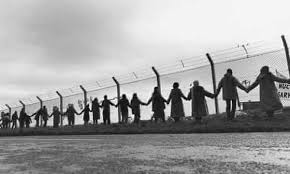
Those who set up protest camp in 1980s hope its spirit can be revived to oppose UK’s plan to buy nuclear-carrying jets
Alexandra Topping, https://www.theguardian.com/uk-news/2025/jun/27/greenham-common-women-urge-new-generation-rise-up-nuclear-threat
In August 1981, 36 people, mainly women, walked from Wales to RAF Greenham Common in Berkshire to protest against the storing of US cruise missiles in the UK. They were alarmed about the imminent threat the weapons posed for themselves and for their children, they later said.
More than 40 years on, the prospect of American nuclear weapons stationed on British soil has returned with urgent focus. And for some of the women who were at the Greenham Common women’s peace camp, it is time for dissenting UK citizens to rise up again.
In the wake of the UK government’s announcement this week that it plans to significantly expand its nuclear arsenal by buying a squadron of American fighter jets capable of carrying US tactical warheads, key figures at Greenham hope a new generation of campaigners will take up the baton.
Ann Pettitt, now 78, devised the original idea for a march that led to the formation of the camp. At its height, more than 70,000 women were there and it became the biggest female-led protest since women’s suffrage. It was, as Pettitt says, “actually successful” in managing to hugely raise awareness of the presence of US nuclear warheads in the UK – the last of which left RAF Lakenheath in 2008. The camp went on after the Greenham Common missiles had gone in 1991 and the base was closed in 1992. The remaining campaigners left Greenham Common after exactly 19 years.
Pettitt said this week’s news had left her “disillusioned” but she was hopeful that a younger generation would protest. “It certainly calls for protest, because it’s so stupid,” she said. “Nuclear weapons are like the emperor’s new clothes, they can’t be used and if they are they backfire because of radiation spreads and they target civilians. We should simply not have them.”
The decision to buy 12 F-35A jets, which are capable of carrying conventional arms and also the US B61-12 gravity bomb, a variant of which has more than three times the explosive power of the Hiroshima bomb, has energised the anti-nuclear movement, said Sophie Bolt, the general secretary of the Campaign for Nuclear Disarmament.
The group has organised a protest on Saturday at RAF Marham in Norfolk, and Bolt said Greenham women – many of whom are in their 70s – still form the “backbone” of the resistance.
“These are women who have got a huge history and totally understand how high the stakes are,” she said. “Their determination, creativity and strategic thinking is just really incredible. They are a massive inspiration and so enriching to the campaign.”
One of those women, Angie Zelter, 74, went on to found the civil disobedience campaign Snowball and the anti-nuclear weapons group Trident Ploughshares. In 2019, aged 68, she was found guilty of a minor public order offence for protesting with Extinction Rebellion. “We had a saying, ‘carry Greenham home’, and from the moment I was there that’s what I’ve done,” she said.
But Zelter said it was also time for a new generation of Greenham women. “I think we need a new women’s movement, but I think actually we need everybody to rise up, quite frankly. All we can do as elders is support younger activists and give advice, solidarity and support.”
There was no time for squabbles in despondency, she added. “I hope it is a moment of mass realisation when we come together now and say, look, enough is enough … It is a moment of hope that people will realise that they’ve got to come together and protest loud and clearly.”
Pettitt said those not ready to man the barricades could still join the struggle – by the simple act of writing a letter to MPs to protest about the “outrageous” decision to buy the jets without parliamentary debate. “The way to get it discussed in parliament is to write your MP a letter,” she said. “Parliament is still very archaic … the humble letter is part of that kind of archaic functioning that is surprisingly effective.”
Another original walker, Sue Lent, now 73 and a councillor on Cardiff council, said the general public had lost sight of the anti-nuclear movement, but she hoped that a silver lining from the news this week was that younger and older activists would start “joining the dots”.
“1981 is a long time ago,” she said. “But hopefully the spirit still lives on and can be revived.”
UK schools and offices not equipped for impact of global heating, report warns

The UK’s schools, care homes and offices are not equipped for the
effects of global heating and face lengthy heatwaves even in optimistic
scenarios, according to a groundbreaking report that calls for climate
resilience to be declared a national emergency.
The report by the UK Green
Building Council also predicts that towns including Peterborough and
Fairbourne will be uninhabitable by the end of the century because of
flooding.
Produced over two years, the roadmap sets out a blueprint for
action and warns that without the adaptation of millions of buildings,
there will be increased injury, health impacts, deaths and untold economic
damage. Five key threats are examined by the roadmap: overheating,
wildfires, flooding, drought and storms. Detailed thermodynamic modelling
on school buildings reveals that schools across London and the south-east
will face 10 weeks of extreme heat a year – defined as 28C and above –
in a low-warming scenario, defined as 2C above preindustrial levels. The
world is on track for 2.7C of heating.
Guardian 26th June 2025, https://www.theguardian.com/environment/2025/jun/26/uk-care-homes-schools-and-offices-not-equipped-to-deal-with-global-heating
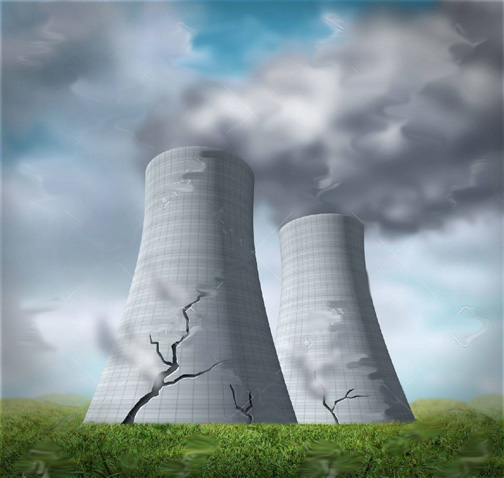
Revealed: 585 cracks in Torness nuclear reactor
Rob Edwards, The Ferret 26th June 2025
The estimated number of cracks in the graphite core of a nuclear reactor at Torness in East Lothian has risen to 585 – the highest so far – prompting fears of a nuclear “meltdown” and calls for its early closure.
In documents released under freedom of information law, the UK Government’s safety watchdog, the Office for Nuclear Regulation (ONR), said that the state of the graphite core posed a “significant challenge” to plans to keep Torness and other ageing nuclear stations running over the next five years.
In November 2024 ONR advised the French operator, EDF Energy, to “pause for thought” before deciding to extend the lives of Torness and other nuclear stations in England. Less than a week later EDF decided to extend the life of Torness from 2028 to 2030.
Campaigners accused EDF of putting profits before safety, and warned that keeping “clapped out reactors” running would endanger the public. It was “time for these ageing reactors to be closed”, they said.
EDF, however, insisted that nuclear safety was its “overriding priority” and that it would not consider operating Torness unless it was “confident it was safe”. Planned closure dates for reactors were “kept under review”, it said.
ONR said that cracking was “a well known phenomenon”, and that the number of cracks was “acceptable”. It stressed that the risks were “tolerable”, and that it would not allow any nuclear plant to operate “unless we are satisfied that it is safe.”
The Ferret previously reported that 46 cracks had been detected in April 2024 in the graphite bricks that surround the highly radioactive uranium fuel powering one of the two reactors at Torness. The first three cracks were found in February 2022.
But only a small proportion of the bricks were actually inspected, and no estimate has previously been given for the total number of cracks across the core. Following a freedom of information request by The Ferret, ONR has now disclosed that 59 cracks were found in a similarly limited inspection in March 2025.
In its response, ONR said that this “equated to around 585 cracks when forecast across the central area of the core where cracking is expected”. The high number of cracks did not “challenge safety margins” at Torness, it said.
EDF confirmed that it had found 59 cracks in the graphite bricks it sampled in March 2025. This suggested that in total around a third of the central part of the core had cracking, equivalent to about 585 cracks, it said.
ONR also revealed that another inspection in May 2025 discovered the first crack in the second reactor at Torness. It started generating electricity later than the first reactor.
Torness nuclear power station, near Dunbar, was officially opened in May 1989 by the then Conservative prime minister, Margaret Thatcher. The site had been the target of anti-nuclear protests since 1978.
Scotland’s other nuclear power station at Hunterston in North Ayrshire was closed down in January 2022, more than a year earlier than planned. This followed the discovery of an estimated 586 cracks in its two reactors.
‘Pause for thought’ on Torness
ONR also released to The Ferret the results of its assessment of EDF’s 2024 review of extending the lives of Torness, and other advanced gas-cooled reactors (AGRs) at Heysham, near Lancaster, and Hartlepool, on the north east coast of England.
Three scenarios were reviewed. One assumed Torness closed as planned in 2028, a second assumed its operation was extended to 2030, and a third envisaged keeping it going until 2032.
ONR concluded that because of cracking and other issues, “graphite represents one of EDF’s significant challenges for lifetime extension”. It also highlighted a series of other potential ageing problems with AGRs, including risks from leaking boilers, failing equipment, and corrosion.
“It is possible that safe operation of certain components might be undermined due to life extension,” ONR said. There were a number of issues which had not been fully covered in EDF’s review, it argued.
“Although these are not considered a blocker to potential life extensions, ONR expects EDF to manage and resolve these issues as part of its lifetime management of the AGRs,” ONR added.
“Moreover, coupled with the aspects identified by EDF in the submissions, this should give EDF pause for thought when reaching a decision on AGR lifetime extensions.”
ONR wrote to EDF with its advice on 27 November 2024. On 3 December – less than a week later – EDF decided to extend the life of Torness from 2028 to 2030, and to extend the lives of its English AGR stations.
Another document released by ONR was a June 2024 assessment of the “structural integrity” of the graphite core of the more badly cracked reactor at Torness. The majority of the 35-page document was redacted “for the purposes of safeguarding national security”.
The ONR assessment found “shortfalls” in the crack predictions made by EDF, and concluded that this “raises a question” over the company’s “ability to predict the future core state”. At the time ONR nevertheless gave EDF permission to keep running Torness on the grounds that the risks were “tolerable”.
The nuclear critic and consultant, Peter Roche, argued that there was “a significant design difference” which could make cracking at Torness worse than at Hunterston. “Graphite debris in the fuel channels or misshapen bricks could compromise the operator’s ability to keep the fuel cool and in a worst case lead to a meltdown,” he claimed.
This risked releasing radioactivity into the environment. “Clearly it’s time for these ageing reactors to be closed,” Roche said. “Keeping them open would be gambling with public safety.”
The veteran environmental campaigner, Dr Richard Dixon, accused EDF of trying to cover the costs of building new nuclear plants. “It cannot be a coincidence that running Torness for an extra two years would ease EDF’s major financial woes caused by the massive delays to its reactor projects elsewhere,” he said
“EDF’s inability to complete reactor projects anything remotely like on time or on budget should not mean that the public in Scotland face the extra risk of running clapped out reactors ever further past their sell-by date.”
The Scottish Greens described the Torness cracks as “potentially dangerous”. It was “deeply concerning” that EDF was planning to keep the station going until 2030, according to the party’s energy spokesperson and retiring co-leader, Patrick Harvie MSP.
“It appears that the profits of a giant energy company are being put ahead of safety here in Scotland,” he told The Ferret. EDF is owned by the French government, and earnt £15.6bn (€18.3bn) before interest and taxes in 2024…………………………………………………………..
https://theferret.scot/nuclear-reactor-torness-585-cracks/
Torness ideal for small modular nuclear reactor, says Britain Remade.

a recent analysis of the technology in the United States said that SMR are projected
to be the most expensive of all electricity technologies per KW. The report
by management consultancy firm ICF found that they would cost more than any
other source of electricity, including battery energy storage systems,
solar, wind, combustion turbines and gas.
A UK campaign for accelerated infrastructure-building has said that
Torness is “a prime site” for the next generation of small nuclear
reactors. Britain Remade, a group co-founded by a former energy and climate
advisor to Boris Johnson, says Torness as an ideal target for small modular
reactors of the type the UK Government recently backed. ………………………………….
Britain Remade, which is strongly focussed on campaigning
for “nuclear power alongside the rapid roll-out of renewables” and
infrastructure-building to drive growth, hosted a public meeting in Dunbar
in April. The campaign also conducted a poll which found that half of the
SNP’s voters believe nuclear power should be part of Scotland’s mix of
clean energy generation.
But many in Scotland still maintain a strong objection to nuclear.
Pete Roche, who campaigned against Torness in the
1970s, founding the Scottish Campaign to Resist the Atomic Menace, said:
“The last thing Scotland needs at Torness is more reactors, whether large
or small. Incidentally Rolls Royce’s so-called small reactors at 470MW are
only slightly smaller than Torness’s two 660MW reactors.”
Earlier this month, the UK Government announced its selection of Rolls-Royce SMR as the
preferred bidder “to develop small modular reactors, subject to final
government approvals and contract signature – marking a new golden age of
nuclear in the UK”. Dumitriu said: “SMRs are already being deployed in
Canada. The idea behind them is that because you build them in a factory
and 90% of the construction of them is done in a factory, you’re rolling
them off a production line and because of that you get all of the cost
reductions of economies of scale, of learning by doing and you’re able to
build them a lot cheaper than the current design.”
However a recent analysis of the technology in the United States said that SMR are projected
to be the most expensive of all electricity technologies per KW. The report
by management consultancy firm ICF found that they would cost more than any
other source of electricity, including battery energy storage systems,
solar, wind, combustion turbines and gas.
Campaigner Pete Roche said:
“There is no evidence that small modular reactors will be cheaper,
because almost none have ever been built. In fact it is beginning to look
like small reactors will be even more expensive than large reactors because
they won’t benefit from economies of scale.”
Energy Secretary Gillian Martin said: “Decommissioning Scotland’s nuclear sites will take
decades and will require the retention of a highly skilled workforce.
Meanwhile, the significant growth in renewables, storage hydrogen, carbon
capture and decommissioning are key opportunities for our future energy
workforce in Scotland – with independent scenarios from Ernst and Young
(EY), showing that with the right support, Scotland’s low carbon and
renewable energy sector could support nearly 80,000 jobs by 2050.“
Herald 28th June 2025,
https://www.heraldscotland.com/news/25261384.torness-ideal-small-modular-reactor-says-britain-remade/
As NATO Countries Pledge to Up Defense Spending, Will Food and Climate Security Have a Seat at the Table?

By Siena Cicarelli and Tom Ellison, https://climateandsecurity.org/2025/06/as-nato-countries-pledge-to-up-defense-spending-will-food-and-climate-security-have-a-seat-at-the-table/
This summer marks a critical juncture for European food and climate security. Before heading off on their summer holidays, leaders will attempt to navigate burgeoning crises in the Middle East, an unpredictable US government, growing defense needs, and an unstable global economy.
Several key political decision points are unfolding this summer, starting with this week’s NATO Summit, where a number of member state leaders committed to a new defense and security spending target of 5 percent of GDP by 2035, which, if implemented by the target date, could entail roughly hundreds of billions of dollars in new spending. However, given that the text of the commitment changed from “all Allies” to just “Allies,” in the final hours of negotiations, commitments will likely vary by member state. Furthermore, given the current combination of budget deficits, national politics, and a collective shift towards “competitiveness,” the European Union risks falling prey to false dichotomies and short-termism, placing climate and food security priorities essential to sustainable security on the back burner in favor of “hard” security goals. While 1.5% GDP of the new spending target can come from non-defense resilience, infrastructure, and civil preparedness spending, food and climate security were not prominent at the NATO Summit.
There are some positive signs, however, that countries are considering climate resilience as a core part of their defense and security strategies. This includes an explicit climate security pledge in the recent EU-UK defense partnership announcement and reported plans from some NATO members, like Spain and Southern Mediterranean states, to use the 1.5% resilience carveout for disaster response and climate investments.
A key indicator of how Europe will prioritize and balance food security, climate resilience, and defense needs will be the next five-year EU budget, also known as the Multiannual Financial Framework (MFF) and updates to the Common Agricultural Policy (CAP) – the initial proposals for which are expected to be released in mid-July. The CAP is a complex structure of subsidies and schemes related to farming, environmental protection, and rural development that aims to keep European farmers competitive, enhance food security, and protect biodiversity. It remains the EU’s second-largest budgetary line item at €387/$450 billion in the current MFF period (roughly 25% of the EU budget). The formation of the MFF is notoriously opaque, but initial reporting suggests a limited commitment from national governments to additional expenditures and a strong desire from the largest net contributors to allocate more to joint procurement and defense spending. This raises doubts about whether the bloc’s food security ambitions are feasible, or if policies will be fractured across EU member states in a so-called “27-speed” system.
While the topline goals of the CAP are relatively clear, implementation remains a perennial political challenge for the European Union. In 2024, farmers’ protests spread across Europe over concerns about fuel subsidy reductions, safety net cuts, and environmental regulations in the CAP. The protests at times featured misinformation, threats to political leaders, and property damage, and were exploited by right wing extremists and Russian propagandists to build influence and stoke division. This year, Commissioners have tried to reassure farmers that direct subsidies (which are €291/$338 billion, about three-quarters of the CAP budget) will likely remain protected in the next MFF, but concerns about cuts to rural development and national-level programs have already set top farming groups on edge.
More broadly, Europe cannot afford to ignore food and climate risks amid new defense spending obligations. Staple crops that underpin European food security and local agricultural economies are endangered in the coming decades, even with robust adaptation. In 2024, the European Environment Agency’s European Climate Risk Assessment rated risks from extreme weather disruptions to crop production and climate-driven food price spikes as rising from “substantial” to “critical” over the next two decades. Recent studies have showcased that agricultural vulnerability – and potential losses – are EU-wide. While the risks are severe in southern European states like Spain and Italy, they don’t stop there. The Benelux states, Germany, France, the United Kingdom, as well as southern regions of the Nordics, also face unusually hot and dry conditions. Drought alone currently drives over 50% of agricultural climate risk and is expected to contribute heavily to the EIB-estimated 42-66% increase in annual average crop losses (from EUR 17.4 billion to 24.8-28.9 billion annually) over the next 25 years. When incorporating other agricultural outputs, such as livestock or aquaculture, estimated annual losses reach EUR 40+ billion by 2050. These losses have cascading effects outside of the food and agricultural sector, straining supply chains and potentially boosting prices for consumers across the bloc.
With climate change contributing to rising food, energy, and insurance prices, demands for military disaster relief, and overseas instability risks and migration, turning a blind eye to these risks could intensify a vicious cycle of affordability crises and nativist politics that already constrain Europe’s security investments. Under-resourced or disorderly approaches to these challenges would hinder Europe’s resilience and security, with climate and economic shocks to food exacerbating divisions that could precipitate another round of protests and even political shifts in upcoming elections, undermining European unity.
The Center for Climate and Security (CCS) will be watching for how key issues play out as these challenges come into focus this summer and over the coming years, including:
How does the EU balance its commitments to the CAP and the MFF with the budgetary demands of the new NATO target?- To what extent are any reforms or substantial changes to the CAP structure done in consultations with producers, consumers and other stakeholders navigating the green transition, to insulate against green backlash or disinformation?
- What role can food and climate security investments play in the 1.5% of GDP portion of the NATO spending target that includes non-defense resilience, infrastructure, and civil preparedness?
EU and UK make contributions to EBRD-managed Chornobyl ICCA fund
EBRD 26th June 2025,
https://www.ebrd.com/home/news-and-events/news/2025/eu-and-uk-make-contributions-to-ebrd-managed-chornobyl-icca-fund.html
- EU and United Kingdom pledge up to €31.7 million to EBRD-managed International Chernobyl Cooperation Account
- Contributions will help fund emergency repairs to New Safe Confinement
- Total cost of emergency repairs could exceed €100 million
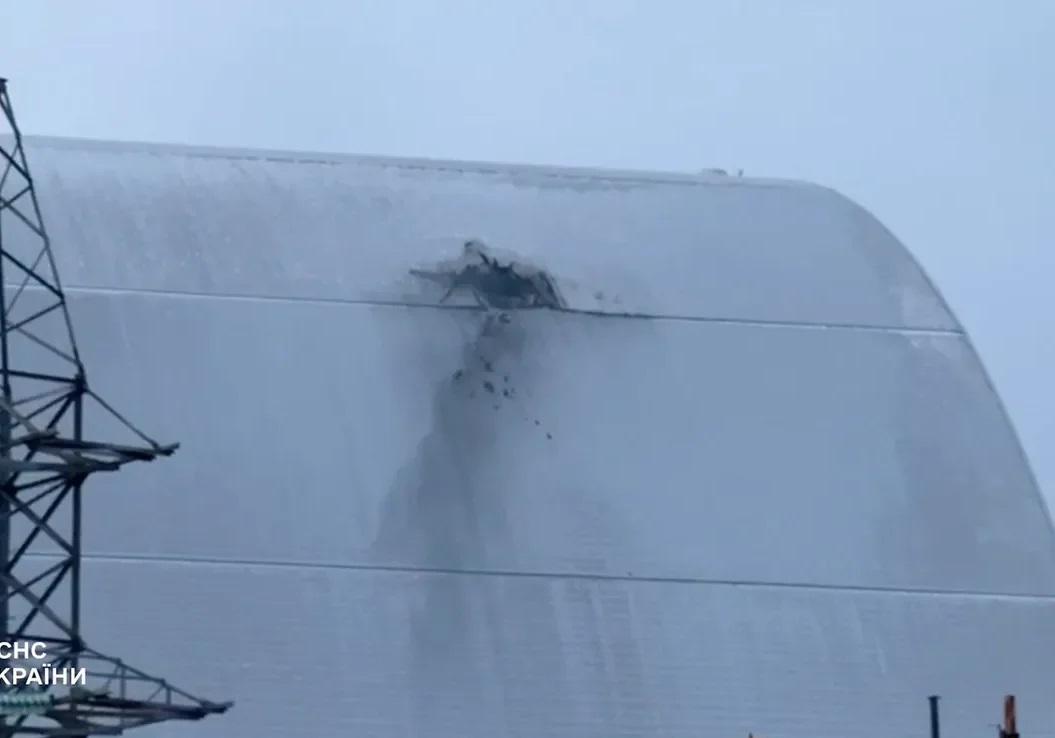
The European Union (EU) and the United Kingdom will make contributions to the EBRD-managed International Chernobyl Cooperation Account (ICCA) as part of ongoing international efforts to support the restoration of the key functions of the New Safe Confinement (NSC) at the Chornobyl nuclear power plant (ChNPP) in Ukraine.
The EU will contribute up to €25 million, while the United Kingdom will contribute up to €6.7 million, with both pledges being made at today’s ICCA Assembly meeting in London. The money will be used to fund emergency repairs to the NSC following the Russian drone attack in February 2025.
That strike has severely affected the NSC’s two primary functions: (i) containing radiological hazards and (ii) supporting long-term decommissioning. Key systems designed to ensure the NSC’s 100-year lifespan have been rendered non-operational, with a significant risk of further deterioration in the absence of swift emergency repairs. While it is difficult to provide an accurate estimate of the cost of repairs to the NSC at the moment, the scale of the damage and the complex radiological environment suggest that the total cost of the emergency works could exceed €100 million.
Balthasar Lindauer, EBRD Nuclear Safety Department Director, said, “These new pledges to the ICCA are a manifestation of the international community’s unwavering support for Chornobyl and its togetherness in the face of the major radiological threat that the damaged NSC poses. We are grateful to the EU and the United Kingdom for their contributions to the ICCA.”
The ICCA was established by the EBRD in November 2020 at the request of the Ukrainian government. It was set up as a multilateral fund to support the development of a comprehensive plan for Chornobyl. The EBRD manages the ICCA, which currently holds some €25 million in donor funds. Following the occupation of the Chornobyl Exclusion Zone (CEZ) at the start of Russia’s war on Ukraine, the scope of the ICCA was broadened to support the restoration of safety and security within the CEZ, as well as wider nuclear safety measures across Ukraine.
The international community has contributed around €2 billion to EBRD-managed programmes in Chornobyl since 1995. In addition, the Bank has made more than €800 million of its net income available for Chornobyl-related projects.
Centrica set to take 15% stake in Sizewell C nuclear project.
All sides are keen to reach an investment decision in July after years of delay and
months of negotiations. Centrica is set to take a 15 per cent stake in the
UK’s Sizewell C nuclear project after years of delay and months of drawn
out negotiations. All sides are keen to reach a final investment decision
on the project before parliament’s recess on July 21, according to people
familiar with the discussions.
The final cost of Sizewell — set to be
only the second new nuclear plant built in a generation in Britain —
could be close to £40bn, the Financial Times reported in January based on
assumptions from industry experts. Sizewell’s management has rejected
that figure although no new estimate has been given.
The planned investment
by Centrica means that the FTSE 100 energy company behind British Gas would
have the same size stake in Sizewell C as French state-owned energy group
EDF, which has progressively reduced its position in the Suffolk project to
15 per cent.
Centrica already holds a 20 per cent stake in the parent
company of the entity that operates EDF’s existing nuclear assets in the
UK. The investment in Sizewell could still come in time for French
President Emmanuel Macron’s visit to London for an Anglo-French summit on
July 8. However, timetables have slipped, according to the people familiar
with the situation, putting that goal in doubt.
FT 27th June 2025 , https://www.ft.com/content/5e107953-7f93-4a0d-ba73-6f28213e943c
1 This Month

petition to oppose the rapid increase of space-military industry threatening Jeju Island and the region.
[Petition by April 19th (KST)] Stop the joint military-Hanwha Systems-Jeju Provincial Government Sea Launch!
World Nuclear Power. Reactors 1951-2026, 75 Years of Nuclear Power.
Interactive Map– https://dv.worldnuclearreport.org/

Chernobyl: The Lost Tapes – A good documentary on Chernobyl on SBS available On Demand for the next 3 weeks– https://www.sbs.com.au/ondemand/tv-program/chernobyl-the-lost-tapes/2352741955560

of the week–London Campaign for Nuclear Disarmament


Tell the Ukrainian Government to Drop Prosecution of Peace Activist Yurii Sheliazhenko
To see nuclear-related stories in greater depth and intensity – go to https://nuclearinformation.wordpress.com
-
Archives
- April 2026 (211)
- March 2026 (251)
- February 2026 (268)
- January 2026 (308)
- December 2025 (358)
- November 2025 (359)
- October 2025 (376)
- September 2025 (257)
- August 2025 (319)
- July 2025 (230)
- June 2025 (348)
- May 2025 (261)
-
Categories
- 1
- 1 NUCLEAR ISSUES
- business and costs
- climate change
- culture and arts
- ENERGY
- environment
- health
- history
- indigenous issues
- Legal
- marketing of nuclear
- media
- opposition to nuclear
- PERSONAL STORIES
- politics
- politics international
- Religion and ethics
- safety
- secrets,lies and civil liberties
- spinbuster
- technology
- Uranium
- wastes
- weapons and war
- Women
- 2 WORLD
- ACTION
- AFRICA
- Atrocities
- AUSTRALIA
- Christina's notes
- Christina's themes
- culture and arts
- Events
- Fuk 2022
- Fuk 2023
- Fukushima 2017
- Fukushima 2018
- fukushima 2019
- Fukushima 2020
- Fukushima 2021
- general
- global warming
- Humour (God we need it)
- Nuclear
- RARE EARTHS
- Reference
- resources – print
- Resources -audiovicual
- Weekly Newsletter
- World
- World Nuclear
- YouTube
-
RSS
Entries RSS
Comments RSS
 nuclear-news