Energy Scotland’s John Proctor responds to The Herald’s pro-nuclear spread.
Nuclear power in Scotland – not needed, not economic, not wanted, not safe

Leah Gunn Barrett, Jul 07, 2025, https://dearscotland.substack.com/p/energy-scotlands-john-proctor-responds
Energy Scotland* convener John Proctor has given me permission to publish a letter he sent to The Herald in response to its series of pro-nuclear articles published at the end of June. The Herald is owned by London-based Newsquest which, in turn, is owned by US media conglomerate, Gannett. The Herald has not published his letter.
I see Joani Reid MP has joined Anas Sarwar MSP and Michael Shanks MP in the chorus calling for new nuclear energy plant in Scotland (The Herald 28th June).
Of course, Joani has no concerns about someone building one of these in her back-yard – as her back-yard is in London, but Michael Shanks was bit more bullish when he declared he would be relaxed about having a Small Modularised Reactor (SMR) erected in his constituency. I am not sure how the good people of Rutherglen feel about this.
What I find mystifying is the lack of proper scrutiny being applied to the claims made by those members of the Nuclear Energy All-Party Parliamentary Group and their well-funded nuclear lobbyists. It does not surprise me that they are unable to set out what configuration they favour, as the reactors which they claim will produce 400 MWs do not exist. They have not been manufactured, tested or installed – anywhere!
As an Engineer, I would be keen to ask the politicians if they have thought about some of the basic elements of a power plant. Do they have any ideas what the thermal capacity of the proposed reactors are? Have they understood what the cooling requirements might be? How about the status of design of the ‘core catcher’ (the system designed to prevent a Chernobyl type event)?
Be under no illusion, Ms Reid, Mr Shanks and Mr Sarwar and the Nuclear lobby are building a Potemkin village.
They of course don’t want to talk about the European Power Reactor (EPR) configuration being installed at astronomical cost at Hinkley C.
This project is forecast to cost £45,000,000,000 when it finally comes on line sometime next decade. It is not easy to get a proper sense of this sum – but it might surprise the readers of The Herald that this is the equivalent of paying £1 million every single day for 110 years – and this is just the construction cost. We have not even started talking about operational costs, asset management and asset decommissioning.
Hinkley C is the same configuration Labour have just committed to at Sizewell C. Are we really gullible enough to believe Julia Pyke (Managing Director of Sizewell C) when she assures us that the Consortium have learned the lessons from Hinkley C?
If I can be generous for a moment, and accept that they can achieve a 10% saving relative to Hinkley C, that would still indicate a £40 billion project cost – which is enough to build 80 hospitals similar to the Forth Valley Hospital.
When Ms Pyke was recently asked on BBC how the project was going, she answered airily that it is ‘on schedule and within budget’. I waited eagerly for the obvious follow up question – ‘What is the budget and schedule?’ but that question never came.
The supporters of nuclear energy tell us that we need these plants for baseload capacity. They fail to acknowledge that in Scotland, we already generate more capacity from renewables than we consume – and this surplus is only going to grow as we continue to see more investment in wind, solar, tidal and energy storage.
‘What about intermittency and lack of system inertia?’ is the nuclear advocates’ stock question when discussing the growth of renewables.
The answer is beautifully simple – we will continue to do what we do now – rely on gas fired CCGTs (Combined-Cycle Gas Turbines). Which is reassuring – as there will be no nuclear plant coming on stream anytime soon.
‘But what about Net Zero?’ might be the next question. Thankfully, there are a raft of solutions to this currently available and more coming on stream every week. For example, gas turbine manufacturers are again building on 50 years of experience of burning hydrogen in gas turbines, and they will be ready to burn hydrogen or blended hydrogen/methane as quickly as the hydrogen market can come on stream.
My prediction is that the hydrogen market will come on stream faster than any SMRs (Small Modular Reactors) can be built – and if UK politicians had a strategic bone in their body, they would be trying to beat our friends in Europe to win the hydrogen race.
However as we have seen with HS2 and the third runway at Heathrow, they will carry on with their blundering plans to build new nuclear.
This comes to the final question that is not asked of nuclear supporting friends in the English Labour and Tory parties. How will they reduce the cost of energy when they are committed to this ruinously expensive nuclear build program?
The UK Government have no answer to this – and this is why the Scottish Government must keep in place the moratorium on new nuclear in Scotland and continue their support of renewables such as tidal power and also fully commit to their Hydrogen Action Plan.
John Proctor
Convener – Energy Scotland
*Energy Scotland, a member of the Independence Forum Scotland (IFS), is an association of Scottish-based energy professionals committed to addressing Scotland’s energy challenge of building a secure, decarbonised, affordable energy system which benefits Scottish industry and consumers.
Sellafield nuclear power plant safety fears as ‘potentially deadly nitrogen gas leaks’
One incident involved an ‘elevated level’ of nitrogen gas,
which can cause asphyxiation, at the plant’s Magnox facility. The incident
was played down, the source claimed.
Safety at the UK’s biggest nuclear
site is under threat due to a culture of secrecy and ‘cover ups’, a whistle
blower told the Mirror. The source described a potentially deadly incident
in which nitrogen gas, which can cause asphyxiation, leaked at the
Sellafield Magnox storage facility. The incident was covered up, the source
claimed, adding that staff are afraid to raise safety issues because they
fear they will be “targeted”.
The leak was at the Magnox Swarf Storage
Silo – the most hazardous building within Sellafield in Cumbria – where
waste products from used nuclear fuel rods are stored. The source said the
leak in May 2023 was raised as an incident report and “was of a level
that needed to be escalated”. But it was not escalated, according to the
whistleblower, who added that “no lessons were learned”. They said:
“There is no confidence or trust in the senior management now. We are
dealing with nuclear waste and people are afraid to speak up.
The problem is that people are being victimised if they report safety issues. “Or
they are escalated to managers who then try to cover them up or sweep them
under the carpet. And that is a really dangerous culture in a place like
Sellafield.”
Mirror 5th July 2025,
https://www.mirror.co.uk/news/uk-news/sellafield-nuclear-power-plant-safety-35504096
From Scotland to Cumbria – Not All Waste Is Equal.
Next week Cumberland Councillors will be asking questions about the
“unacceptable” transport of wastes from Scotland to Cumbrian landfill.
Meanwhile the transport of thousands of tonnes of radioactive wastes from
Scotland to Cumbrian landfill continues entirely unchallenged.
Letter belowto Cumberland councillors and Scotland’s First Minister John Swinney.
Dear Councillor Dobson, Councillor Rollo and First Minister John Swinney,
Radiation Free Lakeland agree completely with the reported statement by
Scotland’s First Minister, that the situation of landfill waste arriving
from Scotland into England and specifically Cumbria is “not
acceptable..” A related issue of great concern is that so called High
Volume Very Low Level and Exempt Radioactive wastes from Scotland are being
increasingly diverted to landfill. We note that the Low Level Waste
Repository (LLWR) at Drigg, Cumbria, now only accepts less than 5% of waste
with the remainder being diverted to recycling (radioactive scrap metal),
landfills or via incineration.
Radiation Free Lakeland 6th July 2025, https://radiationfreelakeland.substack.com/p/from-scotland-to-cumbria-not-all
Nuclear Reliability- an uncertain route
July 05, 2025, https://renewextraweekly.blogspot.com/2025/07/nuclear-reliability-uncertain-route.html
uclear energy provides reliable, baseload, low-carbon electricity that complements the variability of wind and solar’. That, boiled down, is the UK governments view, as relayed in a response by the Department of Energy Security and New Zero to a critique by Prof Steve Thomas and Paul Dorfman. Well, none if it holds up to examination.
Low carbon? Not if you include uranium mining, waste handling and plant decommissioning. Baseload? A dodgy idea! A Department of Energy minister had previously admitted that ‘although some power plants are referred to as baseload generators, there is no formal definition of this term’ and the Department ‘does not place requirements on generation from particular technologies’.
A key point is that nuclear plants are not that reliable- if nothing else, they have to be shut down occasionally for maintenance and refuelling. Add to that unplanned outages, and nuclear plants are not very sensible as backup – especially given their high capital cost and lack of flexible operation. There are easier ways to provide the necessary grid balancing e.g. via flexible demand and supply management, smart grid transfer/green power trading, and via short and long duration energy storage, including green hydrogen storage.
All in all, as I’ve noted in earlier posts, it’s hard to see why the UK is pushing ahead with nuclear. As a recent US study found, the investment risk is high for nuclear compared to renewables. And as one of the authors put it ‘low-carbon sources of energy such as wind and solar not only have huge climatic and energy security benefits, but also financial advantages related to less construction risk and less chance of delays’
In which case it seems very strange that the UK Treasury seems happy to devote most of its new energy funding in the next few years to nuclear, with over £16bn evidently being earmarked for planned nuclear spending in 2025-2030, compared to under £6bn for renewables- see David Toke’s summary chart. It’s actually all a bit up the air at present since no one knows when Hinkley will be running- Toke even said it might not be until 2035! And no one knows for sure if Sizewell C will really go ahead and if so when – it’s still awaiting a final go-ahead decision. But some of the presumed nuclear spend is for Sizewell and some also possibly for SMRs, the latter getting £2.5bn diverted from renewables. And that’s not the end of it- consumers will also be shelling out to support Sizewell, if it goes ahead, paying an advanced surcharge on their bills to reduce construction risks under the RAB subsidy system.
To be fair, consumers do have to meet a range of green levies, including the Renewables Obligation, although that one may be phased out soon – with renewable technology support costs falling very well under its replacement, the Contract for Difference system. CfD strike prices were agreed in 2024 for wind at £54-59/MWh and solar PV at £50MWh, whereas Hinkley Point C got a £92.5 strike price in 2016, inflation index linked, so it would be over £128/MWh now and likely more by the time its running- in maybe 2030.
The next round of the CfD auctions for new renewable projects should be opening up soon, with the Clean Industry Bonus providing extra support for some key projects, including not just offshore wind as at present, but also possibly onshore wind and hydrogen systems. The next CfD round should also in indicate how tidal stream technology is getting on. However, it will be while before all the final strike prices are agreed for the various options – possibly not until early next year. But, by then, maybe the details of the Sizewell funding and SMR costs will have been revealed. So, we might then be able to see what makes economic sense for the future. It will be interesting to see what the Energy Security and Net Zero Select Committee has to say on all this in its updated nuclear roadmap review, which ought be out around then- if not before.
It certainly has felt like an uphill struggle over the years. But now at least there seems to be some progress, with, for example, the new Solar Roadmap setting out the steps needed for the government and industry to deliver 45-47 GW of solar by 2030, which it is claimed will support up to 35,000 jobs and use less than half a percent of total UK land area. It will be aided by governments aim to increase solar deployment on new build homes through the new Future Homes Standard requirements. In addition, the government says it has ‘taken action to deploy the technology at scale, approving nearly 3 GW of nationally significant solar – more than in the last 14 years combined’. It does seem more serious on solar now….certainly than the preceding Tories. And on wind too, including onshore wind, with, in all, the current wind industry workforce put at 55,000 and likely to double by 2030.
Of course this sort of expansion will face problems, for example leading to more wasteful curtailment of excess wind generation, unless transmission capacity is significantly expanded. Adding more inflexible nuclear to the system would of course not help – it would make it all harder to balance. But, oddly, that seems to be the plan with Sizewell C. And the proposed development of SMRs also has issues. For example, a recent review of nuclear options noted that ‘about 65% of Britain’s data centre capacity is concentrated in the London region’, and it suggested suggest that co-locating SMRs with data centre clusters could ‘assist in alleviating capacity constraints in areas of high data centre concentration like London.’ But would people in London, or indeed, other big cities, welcome SMRs, given the safety and security issues? And is this really the way to go?
New nuclear power plant in Switzerland not before 2050
The possible construction of new nuclear power plants in Switzerland, as currently
discussed, depends on many factors. Even if the ban on new construction
were lifted, there would still be numerous other political, technological,
economic, and social uncertainties, as the Energy Commission of the Swiss
Academies of Arts and Sciences outlines in a new report.
Even if the ban on
new construction is lifted, commissioning a new nuclear power plant is
unlikely before approximately 2050. Before connecting to the power grid,
various political, administrative, and economic decisions must be made.
Several referendums and even appeals are expected. The majorities are
uncertain from today’s perspective and could change due to individual
events such as Fukushima.
Swiss Academies of Arts and Sciences 1st July 2025, https://akademien-schweiz.ch/news/neues-kernkraftwerk-in-der-schweiz-fruehestens-2050
Corrosion-hit Civaux most modulated 1.5 GW French unit – study
French utility EDF’s Civaux 2 unit, where EDF recently detected fresh
stress corrosion, was the most modulated of France’s four 1.5 GW nuclear
reactors last year, according to a study by analytics firm Kpler requested
by Montel.
Montel News 3rd July 2025, https://montelnews.com/news/b24ca2fd-a322-4b72-9fc1-de737f3e9fe0/corrosion-hit-civaux-2-most-modulated-1-5-gw-french-unit-study
France and Switzerland shut down nuclear power plants amid scorching heatwave

By Euronews, 02/07/2025, https://www.euronews.com/2025/07/02/france-and-switzerland-shut-down-nuclear-power-plants-amid-scorching-heatwave
To cool down, nuclear power plants pump water from local rivers or the sea, which they then release back into water bodies at a higher temperature. However, this process can threaten local biodiversity if water is released which is too hot.
Due to a scorching heatwave which has spread across Europe in recent days, a number of nuclear power plants in Switzerland and France have been forced to either reduce activity or shut down completely as extreme temperatures have prevented sites from relying on water from local rivers.
To cool down, nuclear power plants pump water from local rivers or the sea, which they then release back into water bodies at a higher temperature.
However, Europe’s ongoing heatwave means that the water pumped by nuclear sites is already very hot, impacting the ability of nuclear plants to use it to cool down. On top of this, nuclear sites run the risk of posing a dangerous threat to local biodiversity, by releasing water which is too hot into rivers and seas.
In light of the heat, Axpo – which operates the Beznau nuclear power plant in Switzerland – said it had shut down one of its reactors on Tuesday, adding that a second reactor was operating at limited capacity.
“Due to the high river water temperatures, Axpo has been increasingly reducing the output of the two reactor units at the Beznau nuclear power plant for days and reduced it to 50 per cent on Sunday,” said the operator.
The Beznau nuclear power plant’s reactors are located directly on the River Aare, where temperatures have reached 25 degrees Celsius in recent days, leading Axpo to curtail its activities to prevent “excessive warming of the already warm water” which could strain local biodiversity.
Although Switzerland has decided to phase out nuclear power by 2033, existing plants are able to continue to operate as long as they are safe.
Meanwhile, on Monday French electricity company EDF shut down the Golfech nuclear power plant, located in the southern department of Tarn-et-Garonne, amid extreme heat warnings in the region and concerns that the local river could heat up to 28 degrees, even without the inflow of heated cooling water.
France has a total of 57 active nuclear reactors in 18 power plants. According to EDF, the country obtains around 65% of its electricity from nuclear energy, which the government considers to be environmentally friendly.
Output has also been reduced at other sites, including at the Blayais nuclear power plant in western France, as well as the Bugey nuclear power plant in southern France, which could also be shut down, drawing their cooling water from the Gironde and Rhône rivers.
Although the production of nuclear power has had to be curtailed in light of extreme heat, the impact on France’s energy grid remains limited, despite the fact that more electricity is being used to cool buildings and run air conditioning systems.
Speaking to broadcaster FranceInfo, French grid operator RTE ensured that “all the nuclear power sites which are running are able to cover the needs of the French population. France produces more electricity than it consumes, as it currently exports electricity to neighbouring countries.”
EDF shuts down Golftech nuclear plant due to high river temperature
French utility EDF said it shut down the No. 1 reactor at the Golftech
nuclear power plant in southwestern France late on Sunday, ahead of an
anticipated rise in the temperature of the Garonne river that supplies the
plant’s cooling water.
Reuters 30th June 2025, https://www.reuters.com/business/energy/edf-shuts-down-golftech-nuclear-plant-due-high-river-temperature-2025-06-30/
“More nuclear-powered weapons testing coming up in the Arctic”.
Russia is spending vast sums of money on the war against Ukraine, but nevertheless continues its expensive nuclear weapons development program. “We can expect more weapon testing this summer and fall,” says Barents Observer Editor Thomas Nilsen.
Atle Staalesen, 3 July 2025,https://www.thebarentsobserver.com/security/more-nuclearpowered-weapons-testing-coming-up-in-the-arctic/432549
In the studio is Thomas Nilsen, Editor of the Barents Observer and expert on nuclear weapons in the Arctic. In the podcast, Thomas explains how Russia is making big efforts on the development of nuclear-powered weapons, including the Burevestnik cruise missile and the Poseidon underwater drone. He also outlines Russia’s ongoing activities at the nuclear test sites in Novaya Zemlya and the continued construction of nuclear submarines.
Nilsen says that Ukraine’s recent Operation Spider Web was a game-changing attack which ultimately could make Russia move parts of its nuclear weapons from the Air Force to the Navy.
He argues that the nuclear weapon powers should return to the table to negotiate arms reduction and arms control treaties. Nevertheless, he believes that there is no immanent danger of Russia actually using nuclear weapons. It is more about the Kremlin trying to scare the world, he says.
“The fear of nuclear weapons is a weapon in itself.”
Over several years, you have written stories about the Kola Peninsula and the situation in the region. And you have used satellite maps that shows how Russia is developing its nuclear arsenals in the north. How is Russia developing nuclear weapons in the region?
Well, what we see on satellite images is that there has been a quite extensive rebuilding of the facilities at the northern test site at Novaya Zemlya over the last two, maybe three year period.
The northern test site is the active one. It’s where Russia conducted underground nuclear testings up to 1990. But we don’t know exactly what is happening on the ground. We see the buildings. This could be also a renewing of the quite run-down Soviet facilities that they had. In a kind of the same way as we have seen at other military sites in the Russian Arctic, where the Soviet buildings at Severnaya Zemlya, Franz Josef Land and so on, has been abandoned and they have built new buildings. So it is an area quite close to the Matochin Strait. It’s called the Severnaya base, the northern base, where a lot of new buildings has appeared over the last few years.
Do you think there is a possibility that Russia will resume actual testing in Novaya Zemlya?
Well, the northern test site at Novaya Zemlya is the only place where Russia actually can conduct full-scale nuclear tests if they want. And they are capable of it. They do have tunnels that are made ready. So it is actually a political question. And two years ago, Vladimir Putin withdrew Russia from the comprehensive test ban treaty in the way that they un-ratified it. That is a political sign. It is maybe not as dramatic as it sounds. It doesn’t mean that Russia will make nuclear tests at Novaya Zemlya, but they are in a way showing the United States that they are ready to do so if needed. And this comprehensive test ban treaty that were signed back in 1996 was actually never ratified by the United States itself. So in many ways, Russia is now on the same level as the United States that they have not ratified it. And by that, they can conduct nuclear weapon tests at Novaya Zemlya if needed.
Russia has all the time since the breakup of the Soviet Union maintained a few tunnels and another test site. And in two of those tunnels, we know that they are conducting so-called subcritical tests, which is using a small portion of either uranium or plutonium and test it with conventional explosives. And then they simulate a nuclear test. This is done both for maintaining the safety of existing nuclear weapons, but also we can presume that it’s some kind of new development of computer technologies and the warheads capabilities and so on. This test site is maybe two, three kilometers from the Severnaya main settlement on the northern test site. But what is most interesting is that they are also maintaining a couple of other tunnels that we believe are designed for real nuclear weapon tests. And there has been activities at these tunnels over the last few years. We saw it also last spring and last summer.
If Vladimir Putin decides to escalate the situation, conducting nuclear tests could be one way of showing such political disagreements with the United States. But historically, Russia has not been the country that have pushed the trigger first. So I think it is unlikely, but we can no longer exclude it.
Novaya Zemlya is important for Russia. And we know that the weapons designers of Rosatom are in the process of developing new weapons. Tell us a bit about this.
Yes, that is also a special location at Novaya Zemlya. It’s a test site called Pankovo, where we have seen on satellite images over the last few years that they have expanded the activities up there, especially after 2020. The Pankovo test site is a place where they are launching the so-called Burevestnik missile, or by NATO, named the Skyfall. This is a cruise missile that is powered by a small nuclear reactor. It has a scramjet to push it up in the air, and when it is airborne, they start the reactor. And according to Russian weapon designers and according to Vladimir Putin himself, when he is talking or bragging about this weapon, this cruise missile, the Burevestnik, has unlimited range. And it is also possible to navigate it midair, meaning that it can potentially avoid anti-missile systems. This weapon is kind of interesting to follow because it’s not deployed yet, but they are doing tests. And with a small nuclear reactor up in the air, it also has some releases of radioactivity that goes directly out behind the cruise missile as it is flying.
Very little is known about how successful these tests are. We know that a couple of them have crashed in the Barents Sea. They have been lifted from the seabed and brought safely ashore again. But it is very interesting to follow the Pankovo nuclear test site. That is one of several cruise missile test sites where we believe parts or the entire combat of the Burevestnik missile is tested. Another place that we have seen, and we published articles on that in the Barents Observer, is the Nenoksa site on the coast to the White Sea. And we quite recently published brand new photos, satellite photos, that show that it has been really a lot of construction work at that site modernised over the last two years.
So let’s stick a little bit with this Nenoksa test site, which is located very close to Arkhangelsk in the Russian north. And you’ve written, as you said, a story about this, and it can be read by everyone on the Barents Observer. So tell us what is special about this Nenoksa testing site.
Nenoksa made big headlines worldwide back in July 2019. Or it was actually early August 2019, when during work of recovering one of the missiles that were launched from that area, the radioactive component of the missile exploded. And it led to a release of radioactivity. So isotopes were blowing towards the city of Severodvinsk, which is some 30 kilometres to the east of Nenoksa. And it was not very high levels, but it lasted for about half an hour, with several isotopes measured in the town of Severodvinsk. And we learned after a few days that five of the experts in the Rosatom Development Division of the Burevestnik missile and the reactor were killed of radioactive sicknesses in that explosion. So it is a very serious area. And the big difference here between Nenoksa and Pankovo site on the Novaya Zemlya is that Nenoksa is close to densely populated areas. Severodvinsk with more than 200,000 inhabitants, and not far away is also the city of Arkhangelsk with 300,000 people. So there is actually more than half a million people living in an area where Russia conducts testing of reactor-powered weapons that both have experienced accidents and are releasing radioactivity as they are testing it. And these new satellite images are a sign that Russia plans to resume the Burevestnik testing at Nenoksa, and that is worrying. First of all for the population of northern Russia, but also for Russia’s neighbors in the north, Finland and us in Norway.
Nuclear-powered cruise missile is indeed a scary thought, but there are also other weapons under development. And you have also written a story about the Poseidon, which is an underwater drone capable of carrying nuclear weapons. Tell us about the Poseidon, please.
The Poseidon is a weapon we know much less about than the Burevestnik, quite naturally because it’s tested and developed for underwater warfare. But it’s also one of the weapons that were bragged about by Vladimir Putin when he showed Russia’s plans for new nuclear weapon delivery systems in his annual speech to the public a few years ago.
The Poseidon in basic is also powered by a small nuclear reactor that is giving it a quite long range. We don’t know how long, but potentially this drone that is more than 20 meters long and can navigate across the Atlantic. So it’s an intercontinental underwater weapon. And the idea with the weapon is to dive deeper than normal submarines can sail, which means also that it’s much more difficult for the enemy, in this case NATO, to stop the weapon as it is launched. So it is a deterrence weapon for Russia. In case Russia is taken out in a nuclear war, they will always have this weapon to retaliate on Europe or the United States.
The weapon is carried by a submarine that is called Belgorod. It is a redesigned former Oscar-class submarine, and this submarine brings the torpedo or underwater drone, the Poseidon, out in open water from where it is launched. We don’t know where this is happening. We see that the submarine is sailing out of Severodvinsk. We can see that on social media channels and photos and videos that are published in this town. But we know it’s sailing north. If the testing takes place in the White Sea area, the areas where other weapons are tested, submarine weapons are tested, or if it takes place in the eastern part of the Barents Sea or even in the more shallow southern part of the Kara Sea. We don’t know. But we know that they are testing it, and they haven’t yet deployed the weapon. They have developed a special class of submarines that one day will carry this weapon. It’s called the Khabarovsk submarines.
They started building them back in 2014, according to Russian sources. But these submarines are not yet put on the water, and they are not even rolled out of the ship hulls at the Sevmash yard in Severodvinsk. So we don’t know how far they have come in developing the Poseidon nuclear drone, but they are working on it, and that is a concern. It’s a kind of both a concern, of course, because it’s a very terrifying weapon, but it is also a concern because it will cause releases of radioactivity to the marine environment during development and testing.
Talking about submarines, which is indeed a very important part of Russian armed forces, and they are based – many of them at least – in the Kola Peninsula, not so many kilometers away from where we are sitting here today. But Russia is spending tremendous resources now on the war in Ukraine. Does really Russia have the capacity to follow up Vladimir Putin’s ambitions to build more nuclear submarines?
This is a key question when analyzing Russia’s military structures nowadays, and the short answer is yes, they are giving priority to building new submarines and new surface warships. But to focus on the submarines, they have the new fourth-generation submarines, both of the multipurpose class, the Yasen class, and the strategic submarines, the ballistic missile submarines of the Borey-A class. And, well, they are delayed according to the original plans, but they are rolling out approximately one of each every year, one Borey-A class ballistic missile submarine and one Yasen class submarines. And these are tremendously expensive weapons. They are high-tech technology, and they are kind of the best submarines that Soviet Union and Russia have ever built. They are sailing quietly, and they are armed with what we could call post-Soviet developed cruise missiles and ballistic missiles. The Borey class with the Bulava missiles, and the Yasen class with the Kalibr missile, the Tsirkon missile, and probably the Tsirkon missile is the one we should keep a special eye on because this is a missile that in case it is needed can be armed with a nuclear warhead. And it is also a missile that has a very long range. And the worrying part here is that this missile, when it has been tested, it has been launched from sea, flying over land and hitting targets in the sea. So the Yasen class nuclear-powered submarines actually have weapons that can be launched from Russia’s home waters in the Barents Sea and flying over northern Scandinavia and hitting targets in the North Atlantic, mainly the northern part of the Norwegian Sea. And that is Russia’s planning for expanding a kind of the buffer zone in case they need to protect the ballistic missile submarines. And for now, there are three Yasen class submarines based with the Northern Fleet, all of them in Zapadnaya Litsa, which is 65 kilometers from the border with Norway on the coast to the Barents Sea. And Russia has two Borei-A class submarines with the Northern Fleet based in Gadzhievo. And those are, of course, the ones that really are armed with nuclear warheads, four to six warheads on each of the 16 missiles in each of those submarines.
Can we expect testing of these weapons this summer, this fall? It’s quite expensive as well to do testing, isn’t it?
Testing is expensive, but it is highly needed. And Russia, like most other navies, before commissioning a warship, either it’s a submarine or a surface warship, they have to prove that the weapon systems on board actually work. And both for the latest Borei-A class submarine, the K555 Knyaz-Pozharsky, and for the latest Yasen class submarine, the Arkhangelsk, they need to conduct more testing of the weapons. The Borei-A class, we believed it was out over the last year and trying to test the Bulava, but we haven’t seen any actual reports of successful testings. And before transferring this vessel from the naval yard in Sevmash, Severodvinsk, to the Northern Fleet where it’s going to be based, they need to do a test. And this test, I’m pretty sure, will come during summer or autumn 2025. For the Yasen class submarine, Putin has been bragging about the options of launching a Tsirkon missile, that this submarine is specially designed to carry the Tsirkon missile. And when the chief, the dictator himself, says that it works, well, then the Navy and the weapon designers have to prove that it actually does. So we will see also tests of the Tsirkon missile in the near future in our northern maritime areas, either that is the White Sea or the Barents Sea.
So we see that Russia is building new submarines, building more submarines able to carry nuclear weapons. Does that mean that we will see more also nuclear weapons deployed in the Russian Navy and also in the Russian North?
We don’t know. There are different scenarios here. First of all, it is important to underline that although there hasn’t been any inspections by the United States to see if Russia fulfills the limits, the maximum limits that are set in the new START treaty on the amount of nuclear weapons on ballistic missile submarines, all intelligence reports that we see in Europe and in the United States tells that Russia is not basing more nuclear weapons than those 1,750 warheads that are in the triad, that’s not only submarines, it’s also the Air Force and on silo-based ballistic missiles. So we don’t think that Russia has more weapons than the limits in the START agreement. But on the other side, and this is the big question we don’t have insight to, that is how many tactical nuclear weapons are on storage at the naval bases in the Russian North and how many tactical nuclear weapons are potentially already on board the multipurpose submarines of the Yasen class. We know that they can carry it, but we don’t know actually if they are armed when they are on board or if they at all are placed on board the ships or if they are just at the naval bases in storages ready to be placed on board. And this is one of the big problems with the new START treaty is that it does not cover tactical nuclear weapon, it only focuses on the ballistic missile submarines and the strategic nuclear weapons.
The START treaty obviously is important both for Russia and for the United States. It expires, as you said, next year. But what about other countries? What is their role in this picture?
Nuclear weapons are making headlines worldwide nowadays. We were a bit scared when we saw the news about India and Pakistan and the near war situation up in Kashmir that could have triggered a war between two nuclear weapon states. Luckily, it did not. But one of the main points for the United States when they are now talking about the new START treaty and an option to prolong it or to renew it or to replace it with another treaty on strategic nuclear weapons.
And here the United States has a very good point, is that this is a bilateral treaty between Russia and the United States. And the United States says that they need to include China in this treaty as well. And up till quite recently, China was a nuclear weapon power state, but it did not have that many warheads, maybe only two, three hundred warheads, which is comparable with what the United Kingdom and France have. It’s a scary many, but it’s not on the same level as Russia and the United States. But in recent years, Beijing has expanded its nuclear arsenal and is building new silos and also the number of nuclear warheads is increasing. So China is a country to take a closer look at. And if there should be a new arms treaty regulating the number of warheads in each country, it is a very good idea to also include China into this treaty. But so far that has not happened.
I think the main focus now will be to maybe expand the time horizon for the existing START treaty, maybe with one year, maybe with two years, until a new, more global posture on arms reduction treaties can be signed. Meanwhile, nuclear weapons are also in discussions in Europe. It was up and at debate on the NATO summit in Hague last week. And the United Kingdom has announced that they will buy F-35 fighter jets that are capable of carrying tactical nuclear weapons. We know that France is very relying on their ballistic missile submarines and so on. So I think really it is important to bring back the nuclear weapon powers to the table, just like it was in the end of the Cold War, you know, when Mikhail Gorbachev and Ronald Reagan met in 1986 in Reykjavik and so on. Because the worst case scenario now is that in February next year, we don’t have one single arms reduction treaty or arms control treaty that limits the number of nuclear weapons in the world, except, of course, the non-proliferation agreement. But that one is also challenged by countries like Iran, North Korea, etc.
Talking about Russia, it’s not getting easier to follow developments in the country. How do we actually manage to keep an eye on what Russia is doing with its weapons, with its nuclear weapons, with the submarines? How can we get a glimpse at least of what’s going on?
I think based on the experiences we in the Barents Observer and we as journalists have, I think it is very important to not only focus on what Russia says, but to keep a very close eye on what Russia does. And in the north, we saw it in February 2022, when the full scale invasion of Ukraine happened. It was very quiet on the strategical nuclear forces in the Russian north. They did not deploy more ballistic missile submarines to the sea and also at the storage that they have five, six of in the Kola Peninsula area or Murmansk region. It was also very, very quiet. And this is important because we are today facing a political situation in the Kremlin where the Kremlin itself is not loudly talking about its nuclear weapon arsenal. But there are proxy players like Dmitry Medvedev, the Security Council, and not least to talk about the propaganda people in different Russian TV channels that are loudly talking about using nuclear weapons. Either it is tactical nuclear weapons against some Ukrainian cities or maybe if the situation escalates that they want to use it against Europe. But this is, of course, not in Russia’s interest at all because they know that they should not trigger the first use of nuclear weapons. So it’s rhetorics. Meanwhile, we in the media will focus on what we see actually is happening. And on that side, it is nothing deeply to worry about currently.
We have talked about a lot already, but are there any other things with regard to Russia’s nuclear capabilities in the north that we should keep an eye on?
Absolutely, absolutely. And the Ukrainian spectacular attack against the Olenya Air Base on the Kola Peninsula on June 1st, and not only the Olenya Air Base, but several air bases in Russia. Here in the north it is important also to remember that the Olenya is not only an air base that is home to strategic bombers flying and launching cruise missiles against Ukraine. It is also a very important air base for Russia’s nuclear deterrence. It’s the northernmost air base they have with strategical bombers that can carry nuclear weapons in case of an escalating conflict between east and west. And this is actually first time in the world history that it has been such a massive attack and destroying strategical bombers on an air base that is important for the nuclear deterrence of the United States and Russia. So I think we can expect that there will be changes in regards to how many nuclear weapons Russia have available for the air force, the strategic bombers, and maybe that it will be an increased number of nuclear weapons on the Navy instead. That means in the north, submarines. But this remains to be seen. But absolutely, the Ukrainian drone attacks on Russia’s air forces and the bases is changing the game in many ways. One of Russia’s largest storages, central storages for nuclear weapons warheads are in the mountains not far from the Olenya Air Base. And those are the weapons that Russia might deploy if they want to escalate the situation and bring it out to the naval bases and maybe even put it on submarines that are sailing the Barents Sea. So keeping an eye on what happens in the Russian north is key to understanding Russia’s nuclear weapon thinking and doing.
These are lots of scary stuff. Do people in Europe, in the Nordic region have reason to be afraid?
I don’t think so. I think that we should keep calm. I think that the biggest threat by nuclear weapons as we see it right now is actually the scaring of people with it. Russia always having people that are making statements that, oh, if you cross the red line now, we will trigger nuclear weapons and so on. And the fear of nuclear weapons is a weapon in itself. But the use of nuclear weapon, I think, is very unrealistic and it’s suicide for any nation that tries to use it.
Spying on Iran: How MI6 infiltrated the IAEA
The Iranian government has alleged that the IAEA supplied the identities of its top nuclear scientists to Israeli intelligence, enabling their assassinations, and provided critical intelligence to the US and Israel on the nuclear facilities they bombed during their military assault this June.
Leaked confidential files indicate the International Atomic Energy Agency was infiltrated by a veteran British spy who has claimed credit for sanctions on Iran.
The Grayzone, Jul 02, 2025, By Kit Klarenberg, https://thegrayzone.substack.com/p/spying-on-iran-how-mi6-infiltrated?utm_source=post-email-title&publication_id=474765&post_id=167288793&utm_campaign=email-post-title&isFreemail=true&r=n09ij&triedRedirect=true&utm_medium=email
A notorious British MI6 agent infiltrated the International Atomic Energy Agency (IAEA) on London’s behalf, according to leaked documents reviewed by The Grayzone. The agent, Nicholas Langman, is a veteran intelligence operative who claims credit for helping engineer the West’s economic war on Iran.
Langman’s identity first surfaced in journalistic accounts of his role in deflecting accusations that British intelligence played a role in the death of Princess Diana. He was later accused by Greek authorities of overseeing the abduction and torture of Pakistani migrants in Athens.
In both cases, UK authorities issued censorship orders forbidding the press from publishing his name. But Greek media, which was under no such obligation, confirmed that Langman was one of the MI6 assets withdrawn from Britain’s embassy in Athens.
The Grayzone discovered the résumé of the journeyman British operative in a trove of leaked papers detailing the activities of Torchlight, a prolific British intelligence cutout. The bio of the longtime MI6 officer reveals he “led large, inter-agency teams to identify and defeat the spread of nuclear, chemical and biological weapons technology, including by innovative technical means and sanctions.”
In particular, the MI6 agent says he provided “support for the [IAEA] and Organization for the Prohibition of Chemical Weapons [OPCW] and through high level international partnerships.”
Langman’s CV credits him with playing a major role in organizing the sanctions regime on Iran by “[building] highly effective and mutually supportive relations across government and with senior US, European, Middle and Far Eastern colleagues for strategy” between 2010 and 2012. He boasts in his bio that this achievement “enabled [the] major diplomatic success of [the] Iranian nuclear and sanctions agreement.”
The influence Langman claimed to have exerted on the IAEA adds weight to Iranian allegations that the international nuclear regulation body colluded with the West and Israel to undermine its sovereignty. The Iranian government has alleged that the IAEA supplied the identities of its top nuclear scientists to Israeli intelligence, enabling their assassinations, and provided critical intelligence to the US and Israel on the nuclear facilities they bombed during their military assault this June.
This June 12, under the direction of its Secretary General Rafael Grossi, the IAEA issued a clearly politicized report recycling questionable past allegations to accuse Iran of violating the Non-Proliferation Treaty. Three days later, Israel attacked the country, assassinating nine nuclear scientists as well as numerous top military officials and hundreds of civilians.
Iranian former Vice President for Strategic Affairs Javad Zarif has since called for the IAEA’s Grossi to be sacked, accusing him of having “abetted the slaughter of innocents in the country.” This June 28, the Iranian government broke ties with the IAEA, refusing to allow its inspectors into the country.
While Iranian officials may have had no idea about the involvement of a shadowy figure like Langman in IAEA business, it would likely come as little surprise to Tehran that the supposedly multilateral agency had been compromised by a Western intelligence agency.
Langman’s name placed under official UK censorship order
In 2016, Langman was named a Companion of the Order of St Michael and St George, the same title bestowed on fictional British spy James Bond. By that point, the supposed secret agent held the dubious distinction of being publicly ‘burned’ as an MI6 operative on two separate occasions.
First, in 2001, journalist Stephen Dorril revealed that Langman had arrived in Paris weeks prior to Princess Diana’s fatal car crash in the city on August 31 1997, and was subsequently charged with conducting “information operations” to deflect widespread public speculation British intelligence was responsible for her death.
Then, in 2005, he was formally accused by Greek authorities of complicity in the abduction and torture of 28 Pakistanis in Athens. The Pakistanis, all migrant workers, were suspected of having had contact with individuals accused of perpetrating the 7/7 bombings in London, July 2005.
Brutally beaten and threatened with guns in their mouths, the victims “were convinced their interrogators were British.” When Greek media named Langman as the MI6 operative who oversaw the migrants’ torture, British news outlets universally complied with a government D-notice – an official censorship order – and kept his identity under wraps when reporting on the scandal.
London vehemently denied any British involvement in torturing the migrants, with then-Foreign Secretary Jack Straw dismissing the charge as “utter nonsense.” In January 2006 though, London admitted MI6 officers were indeed present during the Pakistanis’ torture, although officials insisted the operatives played no active part in their arrests, questioning or abuse.
Following his withdrawal from Athens, Langman returned to London to head the UK Foreign Office’s Iran Department, a shift which highlights his importance to MI6 and suggests the British government had no qualms about his allegedly brutal evidence gathering methods.
Britain’s Foreign Office collaborates closely with MI6, whose agents use it as cover just as the CIA does with State Department diplomatic postings.
MI6’s man on Iran takes credit for “maximum pressure” strategy
While leading the Foreign Office’s Iran Department from 2006 – 2008, Langman oversaw a team seeking to “develop understanding” of the Iranian government’s “nuclear program.”
It’s unclear exactly what that “understanding” entailed. But the document makes clear that Langman then “generated confidence” in that assessment among “European, US and Middle Eastern agencies” in order to “delay programme [sic] and pressurise Iran to negotiate.” The reference to “Middle Eastern agencies” strongly implied MI6 cooperation with Israel’s Mossad intelligence services.
In April 2006, Tehran announced it had successfully enriched uranium for the first time, although officials denied any intention to do so for military purposes. This development may have triggered Langman’s intervention.
The Islamic Republic has rejected any suggestion it harbors ambitions to possess nuclear weapons. Its denials were corroborated by a November 2007 US National Intelligence Estimate expressing “high confidence that in fall 2003, Tehran halted” any and all research into nuclear weapons. This assessment remained unchanged for several years, and was reportedly shared by the Mossad, despite Benjamin Netanyhau’s constant declarations that Iran was on the brink of developing a nuclear weapon.
Langman’s IAEA support work overlaps with Iran sanctions blitz
International governmental attitudes towards Iran changed abruptly between 2010 and ‘12. During this period, Western states and intergovernmental institutions initiated an array of harshly punitive measures against the country, while Israel ramped up its deadly covert operations against Iran’s nuclear scientists.
This period precisely overlapped with Langman’s tenure at the Counter-Proliferation Centre of the UK Foreign Office. His bio implies he used this position to influence the IAEA and other UN-affiliated organizations to foment a campaign of global hostility towards Iran.
In June 2010, the UN Security Council adopted Resolution 1929, which froze the Iranian Revolutionary Guard Corps’ assets, and banned overseas financial institutions from opening offices in Tehran. A month later, the Obama administration adopted the Comprehensive Iran Sanctions, Accountability, and Divestment Act. This set off a global chain of copycat sanctions by Washington’s vassals, who often imposed even more stringent measures than those levied by the UN and US.
In March 2012, the EU voted unanimously to cut Iranian banks out of the SWIFT international banking network. That October, the bloc imposed the harshest sanctions to date, restricting trade, financial services, energy and technology, along with bans on the provision of insurance to Iranian companies by European firms.
BBC reporting on the sanctions acknowledged European officials merely suspected Tehran of seeking to develop nuclear weapons, but lacked concrete proof. And behind the scenes, the MI6 operative Langman was claiming credit for helping legitimize the allegations against Iran.
Following the Western-led campaign isolation of Iran from 2010 – 2012, over its purported nuclear weapon program, the Obama administration negotiated a July 2015 agreement known as the Joint Comprehensive Plan of Action (JCPOA). Under the JCPOA’s terms, the Islamic Republic agreed to limit its nuclear research activities in return for sanctions relief. In the years that followed, the IAEA was granted virtually unlimited access to Tehran’s nuclear complexes, ostensibly to ensure the facilities were not used to develop nuclear weapons.
Along the way, IAEA inspectors collected vast amounts of information on the sites, including surveillance camera photos, measurement data, and documents. The Iranian government has since accused the Agency of furnishing the top secret profiles of its nuclear scientists to Israel. These include the godfather of Iran’s nuclear program, Mohsen Fakrizadeh, who was first publicly named in a menacing 2019 powerpoint presentation by Israeli Prime Minister Benjamin Netanyahu. The following year, the Mossad assassinated Fakrizadeh in broad daylight with a remote-controlled machine gun.
Internal IAEA documents leaked this June indicated that IAEA Secretary General Rafael Grossi has enjoyed a much closer relationship with Israeli officials than was previously known, and suggested he leveraged his cozy ties with Tel Aviv to secure his current position.
During a June 24 interview with Fox News’ war-crazed anchor Martha MacCallum, Grossi did not deny making the inflammatory claim that “900 pounds of potentially enriched uranium was taken to an ancient site near Isfahan.” Instead the IAEA director asserted, “We do not have any information on the whereabouts of this material.”
Well before Grossi rose to the top of the IAEA with Western and Israeli backing, the agency appears to have been penetrated by a British intelligence agent who took responsibility in his bio for engineering the West’s economic attack on Iran.
The IAEA has not responded to an email from The Grayzone seeking clarification on its relationship with Langman and the MI6.
Sellafield supporting Whitehaven Science Fair -(nuclear lobby infiltrates education)

We were pleased to support Whitehaven Town Council in hosting the 5th
Annual Whitehaven Science Fair, working in partnership with Nuclear Waste
Services to plan and deliver a two-day programme focused on innovation,
scientific curiosity and community engagement. The first day welcomed
primary school pupils to experience an engaging theatre-style science
demonstration, followed by interactive exhibits located in the robotics and
technology marquees. Local employers, including ourselves and Nuclear Waste
Services, presented a range of technologies and provided hands-on
activities. These included opportunities to operate robots, participate in
educational games, test coordination skills, and meet Spot-the-dog.
Sellafield Ltd 30th June 2025 https://www.gov.uk/government/news/sellafield-supporting-whitehaven-science-fair
Nuclear waste near nature reserve plan ongoing
Residents and politicians have hit out at plans to allow radioactive waste
to be disposed of at a landfill site near a nature reserve and town. The
site, on Huntsman Drive in Port Clarence, Stockton, run by Augean, already
disposes of a range of hazardous waste but requires permission to deal with
nuclear material.
Tees Valley Mayor Ben Houchen said the plans were wrong
in 2019 when they were first put to the Environment Agency (EA) and were
“still wrong now”. But Augean said risk assessments demonstrated the
proposals “would not harm people in the local area or the environment”. The
EA previously asked for more information about the plan in September 2020
and it has now opened a public consultation, which will close on 4 August.
Lord Houchen said: “We absolutely want new nuclear power and we are working
hard to deliver this – but I will not allow Teesside to be seen as a
dumping ground for the country’s waste. “I will continue to stand firmly
against any plan, and I urge everyone to make their voices heard loud and
clear in this consultation.”
BBC 1st July 2025,
https://www.bbc.co.uk/news/articles/c80pp5vl49yo
Seizing Zaporizhzhia: A Meltdown in Nuclear Governance
By Robert Schuett – 30 June 2025, https://www.globalpolicyjournal.com/blog/30/06/2025/seizing-zaporizhzhia-meltdown-nuclear-governance
This is not just about Ukraine. Robert Schuett argues that Russia’s occupation of the Zaporizhzhia Nuclear Power Plant signals a broader unravelling of global nuclear governance—one that must urgently be addressed.
“There cannot be a crisis next week,” Henry Kissinger once quipped. “My schedule is already full.”
Decades later, the line reads less like a joke about the work ethic and demands of high office, and more like a grim diagnosis of the current global condition. From the ongoing war in Europe—where Russian armed forces continue their relentless aggression, with recent escalations in Kyiv and Odesa—to the deepening geopolitical fracture in the Middle East, international society is not short on crises, violence, and human suffering.
The real strategic risk for global policy is that when pre-emptive force becomes the de facto tool for upholding non-proliferation principles, the entire framework of nuclear governance begins to fracture.
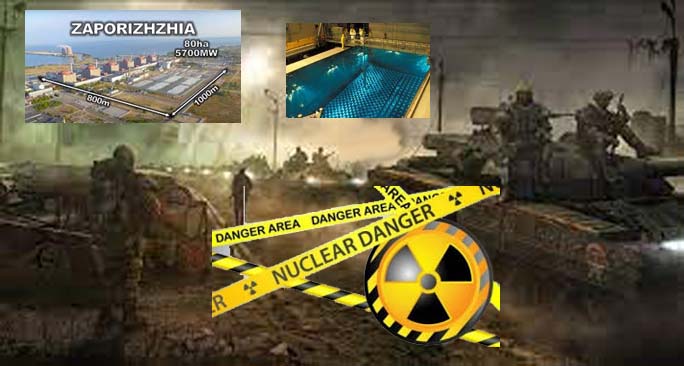
Yet among them, one threat quietly festers in a war zone on the east bank of the Dnipro River: the occupation of the Zaporizhzhia Nuclear Power Plant (ZNPP)—after all, the largest in Europe—located in the city of Enerhodar, in Ukraine’s Zaporizhzhia Oblast. Overshadowed by battlefield developments and Russia’s broader diplomatic brinkmanship, this overlooked flashpoint risks unravelling the foundational norms of nuclear safety, civilian infrastructure protection, and international law itself.
Captured by Russian forces in March 2022, the facility has become a symbol of everything that should not happen in modern warfare. Russia has consistently ruled out transferring control of the ZNPP—either back to Ukraine, the US, or any international authority. The Kremlin maintains a posture of legal reinterpretation, insisting on its operational authority despite international condemnation.
Although all six reactors remain in cold shutdown, the risk is far from neutralized. The plant now depends on a single functioning high-voltage line to power critical cooling and safety systems, which is a stark contrast to the ten off-site lines it had before the illegal Russian war of aggression. The destruction of the Kakhovka Dam in 2023 eliminated its primary cooling reservoir, forcing the plant to rely on makeshift groundwater wells.
Russian forces have reportedly deployed military assets within the facility, further compromising its integrity. While the International Atomic Energy Agency (IAEA) maintains a presence onsite, its ability to enforce safety protocols is severely limited under conditions of foreign military occupation.
As IAEA Director General Rafael Mariano Grossi recently warned, the power supply to Zaporizhzhia remains “extremely fragile,” placing the site, and the entire region, at persistent risk.
This is not merely a technical or regional issue, however. Russia’s nuclear blackmail is a serious threat to global nuclear order.
Russia’s occupation of ZNPP constitutes a rupture in the international legal and regulatory architecture that safeguards civilian nuclear infrastructure. For decades, global norms and laws—rooted in instruments like the Geneva Conventions, the Convention on the Physical Protection of Nuclear Material, and IAEA guidance—have treated nuclear power plants as protected, non-military assets. Seizing or attacking them was once unthinkable. Russia’s actions have shattered this principle, undermining legal norms from which it has historically benefited.
The twist is as alarming as it is cynical. Russian state entities like Rosatom, which in peacetime present themselves as responsible global stewards of nuclear safety, are now party to an act of strategic subversion and tool of ruthless state power. Rosatom and its subsidiaries regularly construct and operate nuclear plants abroad, complying with international standards and cultivating an image of professionalism. But at Zaporizhzhia, the same actor has helped transfer control of the facility to a newly created Russian-operated entity. The contradiction is jarring: the self-proclaimed guarantor of global nuclear norms is now violating them in pursuit of pseudo-geopolitical gain. Rosatom has recently confirmed its long-term intention to restart ZNPP, despite the unresolved security, political, regulatory, and moral challenges on the ground.
At a strategic level, this selective application of international rules and norms sets a dangerous precedent. If civilian nuclear infrastructure can be seized and operated by military force—while cloaked in the language of regulation—it opens the door to the normalization of impunity. The rulebook governing civilian nuclear conduct risks becoming a tool of expedience rather than a binding constraint. Such erosion undermines not only nuclear safety but also the predictability and trust that underpin broader technical agreements, from arms control to climate-related energy cooperation.
The longer Zaporizhzhia remains a “nuclear hostage,” the more the world risks sleepwalking into disaster. The plant is not operational, but that is no guarantee of safety. The worst-case scenarios, ranging from damage to spent fuel pools, sabotage of safety systems, or collapse of staff morale, are not theoretical. The ongoing uncertainty erodes public trust in nuclear energy, destabilizes non-proliferation efforts, and sends dangerous signals to other regimes watching how the world responds.
Moreover, the moral implications cannot be ignored. Civilian nuclear facilities were never meant to be pawns in geopolitical contests. They exist to serve public needs, not strategic or revanchist ambitions. Allowing one state to weaponize this infrastructure risks eroding the civilian character of nuclear energy itself.
What’s at stake is far more than a single nuclear plant—or even the authority of one international watchdog. This is a stress test for the entire system of rules that keeps the world from tipping into chaos. If the norms protecting nuclear safety can be so casually violated, what’s to stop similar breaches in artificial intelligence, biotechnology, climate regulation, or space?
The responsibility now lies with the international community not only to condemn, but to act. Diplomatic actors—especially those in Europe and within multilateral institutions—must ensure that the Zaporizhzhia crisis remains at the forefront of international attention. It cannot be allowed to drift into the background of conflict fatigue or be buried beneath newer headlines.
Sustained diplomatic pressure, public engagement, and policy innovation are essential to prevent normalization of the unacceptable. The defense of global norms must not be reactive or selective. Rather, it must be proactive, persistent, and principled.
If international society won’t defend longstanding rules at Zaporizhzhia, it may find itself unprepared when those rules collapse everywhere else.
Robert Schuett is co-founder and managing partner at STK Powerhouse, a global risk advisory firm. A former Defence civil servant, he also serves as Chairman of the Austrian Political Science Association and is a long-standing Honorary Fellow at Durham University.
Israel ‘not an ally’, says former British ambassador
Sir Richard Dalton tells Declassified the US and Israel pose greater threat to Middle East peace than Iran.
MARK CURTIS, 26 June 2025, Declassified UK,
- Keir Starmer’s flouting of international law over Gaza and Iran does a “disservice” to Britain
- “Intense” lobbying by Israel exerts undue influence over UK foreign policy
- “Majority” of Iranians may support their country acquiring nuclear arms after Israeli/US attacks
“Israel is not an ally” of Britain, former UK ambassador Sir Richard Dalton has told Declassified in a wide-ranging interview.
He also warns that Britain’s Israel lobby is getting “stronger” and exerts “a very powerful force in our society” including over politicians and political parties.
In a discussion on the current conflicts in the Middle East, Dalton, who served as Britain’s top official in Tehran from 2003-06, said that the United States and Israel together constituted “a greater threat to the stability of the region than Iran”.
He added that prime minister Keir Starmer’s backing of Israeli and American air strikes on Iran this month does “a disservice to Britain, and a disservice to the cause of preserving international law as guidance for nations in their interactions with each other”.
Dalton told Declassified that the contention that Iran was on the verge of developing nuclear arms is “false” and that “no such threat existed”.
The seasoned diplomat, who served as Britain’s Consul-General in Jerusalem from 1993-7, observed, “I think that Israel cannot be regarded as an ally because their objectives in resolving the central problems of the Near East are so different from ours”.
“We believe in the self-determination of the Palestinian people. The Israelis do not. We believe in a two state solution. The Israelis, not all of them, but the dominant ones, do not.
“We believe that the state of Israel should be based on its 1948 borders. The Israelis do not. We believe that settlements across the Green Line are illegal and an obstacle to peace, the Israelis are bent on expanding them and, we believe that the Palestinians have a right to a peaceful existence on their own land”.
Dalton acknowledged that Israel does provide intelligence cooperation with Britain about extremist movements.
But he felt the idea that Israel is an ally because it is “the only democracy in the Middle East” is undermined since it “constantly oppresses its neighbouring people and subjects them to inhuman circumstances” such as in Gaza.
“It’s forfeited its right to be regarded as an ally just because it has an internal democracy”, Dalton said.
Condemning the “appalling and grossly illegal” Hamas attacks of 7 October 2023, the former ambassador added that “the balance indicates that this [Israel] is not a country with a similar set of values to us”.
‘Pro-Israel lobby in British foreign policy making’
Dalton, who held a range of positions in the Foreign Office until leaving in 2006, believes the UK has not taken a clear position on international legal issues over Gaza due to “the desire not to open up a wide gulf with the United States as a matter of principle”.
“I find it shocking”, he says. “There are European countries that have taken a much more robust and intelligent and humane and legal stance.”
Dalton added: “The reason we have never developed an independent policy on the turmoils and travails of the Middle East is because we are always looking over our shoulders at what the Americans want, what the Americans are saying”.
The second reason explaining UK support for Israel over Gaza is the Israel lobby, the former ambassador reasoned.
The “balance of opinion in parliament” is such that “those willing to uphold the Palestinian right to self-determination and to be free from gross human rights abuses are relatively weak”.
There’s also “the effect of intense Israeli lobbying and the linkage of Israeli lobbying to financial interests. It is a very powerful force in our society. Those who support the Israeli government through thick and thin, have traditionally been very influential”, Dalton added.
‘Powerful allies’
The Israel lobby has “powerful political allies in some political parties, and in some sections of the media. So a desire for a quiet life and a good career, means that many politicians swallow potential dislike of aspects of Israeli policy in order to toe the Israeli line”.
Asked if he sees evidence of the strength of the pro-Israel lobby in Britain’s Foreign Office and Ministry of Defence, Dalton replied: “Oh, yes. There’s no doubt that the Israeli public have a right to be proud of their diplomatic service and the ability of the State of Israel to leverage sources of influence within British society”………………………………………………………………………………………………………………………………………………………………………………………………………………………. https://www.declassifieduk.org/israel-not-an-ally-says-former-british-ambassador/
In Gaza, survivors accuse Britain of complicity

“This massacre was not random. Everything was calculated precisely, as if they were tracking every move.
“When I learned that the US and Britain provided Israel with intelligence from reconnaissance planes, I felt betrayed from above.
Eye witnesses to an Israeli massacre believe British intelligence contributed to the slaughter.
SHAIMAA EID, 29 June 2025, https://www.declassifieduk.org/in-gaza-survivors-accuse-britain-of-complicity/
The smell of blood and smoke still lingers in the memory of those who lived through the Nuseirat massacre in the heart of the Gaza Strip.
One year has passed since the slaughter on 8 June 2024, when Israeli forces launched a “hostage rescue” operation against Hamas.
However, that military raid – which killed more than 270 Palestinians, the vast majority of them civilians – left behind nothing in Nuseirat but devastation and collective loss.
As families continue to mourn, media reports, including by the New York Times, have added another layer of pain.
They revealed that Western countries, including the US and UK, provided intelligence ahead of the operation through surveillance flights and advanced monitoring technology.
Today, survivors of the massacre hold those countries responsible, saying that surveillance planes which filled the skies over the camp in the days leading up to the operation may have been “British and American eyes directing the fire from above.”
‘Unforgivable’
Raed Abdel Fattah, 38, is still unable to return to normal life after what he experienced that bloody morning.
“I was with my wife and our three children in the market when the airstrikes began. We ran aimlessly through the street, just trying to survive.
“We tried to take cover in a parked car on the side of the road. We passed it just seconds before it was struck by a missile and went up in flames. Had we been a moment later, we would have been buried under the rubble.”
Raed pauses, then continues in a tense voice: “We ran into the Nuseirat market as bullets rained down around us, with bodies and the wounded filling the streets.
“There was no safe place. In front of us was a young man selling sweets – suddenly, a quadcopter drone shot him in the head.
“His brain spilled out before my eyes. I couldn’t hold myself together. It was a moment of human collapse I haven’t recovered from to this day.”
He adds: “This massacre was not random. Everything was calculated precisely, as if they were tracking every move.
“When I learned that the US and Britain provided Israel with intelligence from reconnaissance planes, I felt betrayed from above.
“These planes were not only Israeli. If they supplied images or data, they are part of the decision – and partners in the outcome.”
Raed is not seeking sympathy: “We do not want diplomatic apologies. Whoever provided the information opened the door to the massacre, even from afar. This is unforgivable and cannot be forgotten.”
Britain has sent more than 500 surveillance flights over Gaza since the war began, supposedly to help Israel locate hostages.
The raid on Nuseirat is one of the only examples where Israel freed captives through military force, increasing the likelihood that British intelligence contributed in some way.
British pilots conducted 24 flights over Gaza in the two weeks leading up to and including the day of the massacre.
1 This Month

petition to oppose the rapid increase of space-military industry threatening Jeju Island and the region.
[Petition by April 19th (KST)] Stop the joint military-Hanwha Systems-Jeju Provincial Government Sea Launch!
World Nuclear Power. Reactors 1951-2026, 75 Years of Nuclear Power.
Interactive Map– https://dv.worldnuclearreport.org/

Chernobyl: The Lost Tapes – A good documentary on Chernobyl on SBS available On Demand for the next 3 weeks– https://www.sbs.com.au/ondemand/tv-program/chernobyl-the-lost-tapes/2352741955560

of the week–London Campaign for Nuclear Disarmament

Tell the Ukrainian Government to Drop Prosecution of Peace Activist Yurii Sheliazhenko
To see nuclear-related stories in greater depth and intensity – go to https://nuclearinformation.wordpress.com
-
Archives
- April 2026 (205)
- March 2026 (251)
- February 2026 (268)
- January 2026 (308)
- December 2025 (358)
- November 2025 (359)
- October 2025 (376)
- September 2025 (257)
- August 2025 (319)
- July 2025 (230)
- June 2025 (348)
- May 2025 (261)
-
Categories
- 1
- 1 NUCLEAR ISSUES
- business and costs
- climate change
- culture and arts
- ENERGY
- environment
- health
- history
- indigenous issues
- Legal
- marketing of nuclear
- media
- opposition to nuclear
- PERSONAL STORIES
- politics
- politics international
- Religion and ethics
- safety
- secrets,lies and civil liberties
- spinbuster
- technology
- Uranium
- wastes
- weapons and war
- Women
- 2 WORLD
- ACTION
- AFRICA
- Atrocities
- AUSTRALIA
- Christina's notes
- Christina's themes
- culture and arts
- Events
- Fuk 2022
- Fuk 2023
- Fukushima 2017
- Fukushima 2018
- fukushima 2019
- Fukushima 2020
- Fukushima 2021
- general
- global warming
- Humour (God we need it)
- Nuclear
- RARE EARTHS
- Reference
- resources – print
- Resources -audiovicual
- Weekly Newsletter
- World
- World Nuclear
- YouTube
-
RSS
Entries RSS
Comments RSS
 nuclear-news