The unsolved hazard of damaged spent nuclear fuel rods – Andreeva Bay
In 2023, the risky part of Andreeva Bay nuclear cleanup starts https://thebarentsobserver.com/en/ecology/2017/12/2023-risky-part-andreeva-bay-nuclear-cleanup-starts
Donor countries agree to fund an additional study on how to extract the damaged spent nuclear fuel from Tank 3A. By Thomas Nilsen, December 08, 2017

Horizon nuclear venture wants direct tax-payer funding for its Wylfa nuclear station project
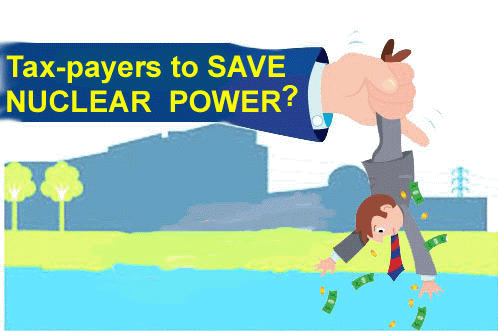
Times 8th Dec 2017. Hitachi could stop funding the development of a new nuclear plant on
Anglesey unless the government agrees a viable financial support package by
the middle of next year, the head of the project has warned.
Duncan Hawthorne, chief executive of the Horizon venture, said that its Japanese
owners had already spent £2 billion and would not keep “throwing a
bottomless pit of cash at a project without some certainty it can get to a
successful conclusion”.
Horizon is in talks with the UK and Japanese governments about possible direct state funding for its proposed plant at
Wylfa Newydd. Ministers appeared yesterday to move closer to agreeing
direct funding as the Nuclear Industry Council, a joint industry-government
body that is co-chaired by Richard Harrington, the energy minister,
recommended looking at models including the government taking an equity
stake in projects.
The National Audit Office has said that such models
could significantly reduce the cost to consumers compared with Hinkley
Point C, Britain’s first new plant in a generation. In further nuclear
industry developments yesterday The Nuclear Industry Council set targets
for reducing the costs to consumers of nuclear plants by up to 30 per cent
by 2030. The head of the Nugen venture developing reactors in Cumbria said
that its proposed acquisition from Toshiba by South Korea’s Kepco, which
plans to use its own reactor design, could delay its first power until
2030.
The government announced a fresh review into ways of financing small
nuclear reactors, and £4 million funding for feasibility studies into
other early-stage technologies. Mr Hawthorne acknowledged that the
government as a whole was yet to be convinced on the idea of direct
financing, with the Treasury concerned about anything that would put a
plant on its balance sheet, but said time was running out. He told The
Times: “We have been saying we need to have some confidence that the basis
of a transaction exists and we need to see some documentary evidence of
that. By the middle of 2018, we need to have something tangible to show to
our shareholders that allows them to keep funding.”
https://www.thetimes.co.uk/edition/business/hitachi-will-stop-anglesey-nuclear-plant-funds-without-deal-mbjzk6jj2
Scrutiny on Small Modular Nuclear Reactors as UK govt ploughs money into them , despite financial risks
 Telegraph 7th Dec 2017, Ministers are poised to plough almost £150m into developing new nuclear
technologies even after the Government’s own investigation revealed deep
uncertainties about the economics of next generation reactors.
The Government’s plan to reboot its stalled nuclear ambitions by investing in
research and development has been mired by indecision and delay since it
promised in 2015 to provide £250m to help developers find new, cheaper
ways to invest in the low-carbon power.
Government provoked furtherconfusion today after issuing a flurry of funding announcements for small
modular reactors, known as ‘baby nukes’, alongside findings that they may
prove even more expensive than traditional nuclear plants.
The new reactors, being developed by industrial giants including Rolls Royce and
NuScale, will face another round of financial scrutiny by industry experts,
the Government said. But in the meantime as much as £460m has been
promised for new nuclear research and development by the end of the decade.
The money will come from the Government, Innovate UK, and the Research
Councils, a Government spokeswoman said. The research funding windfall
includes £86m to develop nuclear fusion technology and a further £56m
towards research and development of next generation nuclear reactors.
http://www.telegraph.co.uk/business/2017/12/07/nuclear-windfall-new-technologies-concerns-cost-persist/
Russian authorities deny that radioactive cloud came from its Mayak nuclear plant
Russia claims radioactivity spike not due to nuclear plant http://abcnews.go.com/Technology/wireStory/russia-spike-radioactivity-unrelated-nuclear-plant-51665118, By VLADIMIR ISACHENKOV, ASSOCIATED PRESS, Russian authorities denied Friday that a radioactivity spike in the air over Europe this fall resulted from a nuclear fuel processing plant leak in the Ural mountains, saying their probe has found no release of radioactivity there.
Coal-fired power stations in Europe now facing a financial “death spiral”
FT 8th Dec 2017, More than half of the coal-fired power stations in the EU are lossmaking
and almost all will be by 2030, according to a study that says the fossil
fuel faces a “death spiral” in Europe. Analysis of more than 600 power
plants by Carbon Tracker, the climate think-tank, estimates that £22bn of
losses could be avoided by phasing out coal in the EU by the end of the
next decade. The research comes ahead of a climate summit to be hosted by
French president Emmanuel Macron in Paris on Tuesday aimed at building on
the international agreement on emissions cuts struck in the same city two
years ago.
https://www.ft.com/content/f32c3caa-daf3-11e7-a039-c64b1c09b482
USA claims that Russia is violating 1987 Intermediate-Range Nuclear Forces Treaty
U.S. presses Russia to comply with nuclear missile treaty WASHINGTON (Reuters) 9 Dec 17, – The United States is reviewing military options, including new intermediate-range cruise missile systems, in response to what it says is Russia’s ongoing violation of a Cold War-era pact banning such missiles, the State Department said on Friday.
Washington is prepared “to cease such research and development activities” if Russia returns to compliance with the 1987 Intermediate-Range Nuclear Forces Treaty, State Department spokeswoman Heather Nauert said in a statement.
The warning was the Trump administration’s first response to U.S. charges first leveled in 2014 that Russia had deployed a ground-launched cruise missile that breaches the pact’s ban on the testing and fielding of missiles with ranges of between 500-5,500 kms (310-3,417 miles).
U.S. officials have said the Russian cruise missile is capable of carrying a nuclear warhead, and that Moscow has refused to hold indepth discussions about the alleged breach.
Russia has denied that it is violating the accord.
The U.S. allegation has added to strains in relations between Moscow and Washington. U.S. and Russian officials are due to discuss the issue at a meeting in coming weeks of the special commission that oversees the treaty, said a U.S. official, who requested anonymity…….https://www.reuters.com/article/us-usa-nuclear-russia/u-s-presses-russia-to-comply-with-nuclear-missile-treaty-idUSKBN1E224A
Electricity from Small Modular Nuclear Reactors (SMRs) would be much more expensive than from ‘conventional’ reactors
 Power from mini nuclear plants ‘would cost more than from large ones’
UK government study finds electricity would be nearly one-third pricier than it would from plants such as Hinkley Point C, Guardian, Adam Vaughan, 7 Dec 17, Electricity from the first mini nuclear power stations in Britain would be likely to be more expensive than from large atomic plants such as Hinkley Point C, according to a government study.
Power from small modular reactors (SMRs) would cost nearly one-third more than conventional large ones in 2031, the report found, because of reduced economies of scale and the costs of deploying first-of-a-kind technology.
The analysis by the consultancy Atkins for the Department for Business, Energyand Industrial Strategy said there was “a great deal of uncertainty with regards to the economics” of the smaller reactors.
However, the authors said such reactors should be able to cut costs more quickly than large ones because they could be built and put into service in less time.
Advocates have argued that the reactors could be built in factories and achieve savings through their modular nature.
While the report covers the technology being used by several of the international companies seeking government support, it does not apply to the design being pushed by businesses including Rolls-Royce.
A government source said nuclear companies had told officials that the cost of the technology had come down since the report, which was finished in July last year but only published on Thursday.
As revealed by the Guardian earlier this week, ministers confirmed that SMR developers would receive £56m of public funding for research and development over three years. A further £86m was announced for work on nuclear fusion.
Greg Clark, the business secretary, said the backing would help the nuclear sector compete globally………
The government also defended Britain’s need for new nuclear power in the face of falling renewable costs.
Richard Harrington, the energy minister, said the record low subsidies recently awarded to offshore windfarms emphasised the challenge for the French, Korean, Chinese and Japanese companies building the UK’s new generation of nuclear plants to be competitive on price………
green groups and politicians accused the government of talking down renewables.
Doug Parr, the policy director at Greenpeace UK, said: “Instead of downplaying the rapid advancement of UK renewables, the government should concentrate on the export opportunities for this UK success story.”
Caroline Lucas, the Green party co-leader, called the UK’s energy policy a mess. “Ministers are ploughing huge sums of money into supporting overpriced nuclear, while retaining a de facto ban on onshore wind and failing to give solar the support the sector needs,” she said……. https://www.theguardian.com/environment/2017/dec/07/power-mini-nuclear-plants-cost-more-hinkley-point-c
Solar power to take over, on Chernobyl’s nuclear wasteland
 Chernobyl’s nuclear wasteland primed for solar power explosion. Bellona, by Charles Digges, Some would be rightly spooked by the idea of electricity produced by a glowing source emanating from Chernobyl, but thanks to a €100 million investment plan, that’s exactly what’s could happen.
It’s not, however, what you think. The electricity will come from a solar park sprouting in the middle of the carcinogenic wastelands surrounding the site of the 1986 nuclear disaster as part of a joint project between a Kiev engineering firm called Rodina Energy Group and Enerparc, a clean energy company based in Hamburg, Germany.
Ukraine’s minister of ecology, Ostap Semerak, announced a plan last July to revitalize the nearly 2000-kilometer swathe of land encircling the plant that gave nuclear disaster its name.
Long lasting radiation in the area makes farming, forestry, hunting, and just about anything else too dangerous, so renewable energy is seen as something productive to do with the huge empty area.
Luckily, all of the transmission lines that were laid to carry electrons from the notorious plant to Ukraine’s major cities – and that helped feed what is now the country’s 50 percent reliance on nuclear energy – remain largely intact.
When it’s done, the solar park could provide half the energy that originally flowed from Chernobyl, marking an inspiring comeback for an area inhabited by dystopian radioactive wild boar……..
the Chernobyl area could end up producing 2.5 gigawatts of solar produced electricity, pumping out half of what Chernobyl uses to produce before it melted down and exploded – with absolutely none of the danger……..
The European Bank for Reconstruction and Development – which financed Chernobyl’s New Containment Structure – is understandably wary of bankrolling projects in a radioactive exclusion zone. The solar farms, after all, are installed and maintained by people.
This poses some very real difficulties. Workers can only spend a limited amount of time in the exclusion zone, so their shifts are short, which means a bigger workforce is required – as is more money to pay them.
Yet they are challenges worth grappling with. If Ukraine manages to create a renewable energy rebirth on the site of the nuclear disaster that helped fell the Soviet Union, it would be a revolution of an altogether different kind.
Armenia considers plan to abandon nuclear power and go for renewables
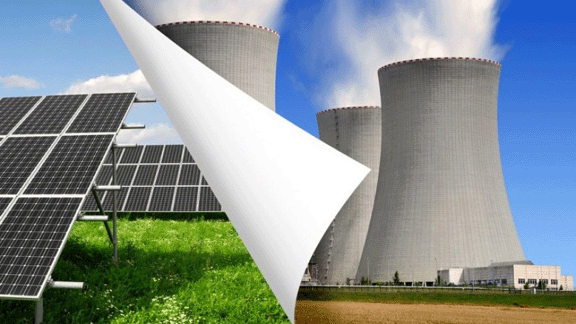 Armenia Debates Shift Away From Nuclear Power, Eurasia Net
Drones still buzz around France’s nuclear power plants!
 Liberation 5th Dec 2017, [Machine Translation] Drones still buzz around nuclear power plants. After
the autumn 2014 overflights, the authorities took technical and legislative
measures to put an end to them. These efforts only partially address this
new threat.
http://www.liberation.fr/france/2017/12/05/les-drones-bourdonnent-encore-autour-des-centrales-nucleaires_1614412
Risk of Chernobyl sarcophagus collapsing – radiation danger to workers now sealing it
Vice News 5th Dec 2017, Workers at the Chernobyl Power Plant are now facing some of the highest
radiation levels ever while they put the finishing touches on a new
decontamination structure for the world’s worst nuclear disaster. After
the fallout in 1986, workers at the plant built a sarcophagus to contain
the radiation in just three months.
But it was just a quick fix, designed
without future decontamination in mind. And now, after more than 30 years,
it’s at risk of collapse. Workers are sealing the old structure with a
new one they finished building a year ago, called the New Safe Confinement.
They hope it will hold for the next 100 years.
https://news.vice.com/story/inside-the-clean-up-of-chernobyl-the-worlds-worst-nuclear-disaster
Russia’s deception, denial and propaganda over the nuclear event at Mayak
 Nuclear Russia Scares The World (Again), Lobe Log, DECEMBER 5, 2017, by Tatyana Ivanova
“…….Denial, Pressure, and Propaganda
As soon as information about the likely Russian origin of the ruthenium cloud over Europe appeared in the mass media, the Russian nuclear state corporation sprang into action to prevent any Russian investigation. Rosatom and then Mayak stated that their facilities couldn’t be a source of Ru-106 release and that the background radiation around them is normal. At the same time, they didn’t provide any specific data on Ru-106 concentrations in the air. Rosatom only made reference to its website, which is monitoring the gamma background.
A Russian regulatory agency “inspected” Mayak, and after only one day came to the hasty conclusion that there had been no accidents or events at the plant. Its public report contained only one number: the Ru-106 concentration in Bucharest that the IAEA had already published.
Some days later Russian pro-government mass media published a flurry of propaganda, denying that the contamination was of Russian origin and making fun of the journalists and citizens who wrote of a cover-up. Some of the Russian mass media disseminated false information that the release could have been caused by a downed American spy satellite or even an alien spaceship.
The most radical websites started a second wave of defamation against Nadezhda Kutepova, blaming her for espionage and intentional misinformation about Mayak. Some Russian officials blamed IRSN for issuing “false information” about the Russian trace, saying that the French regulator is competing with Rosatom.
Rosatom went further by publishing a poster on behalf of Ru-106 with the headline “Everyone accuses the little one” in the style of a propaganda cartoon for children. The poster states that Ru-106 is “small and good” and does not appear at nuclear waste reprocessing plants. Then the official Rosatom Facebook page invited journalists and bloggers to visit Mayak to “touch and smell” Ruthenium-106. They selected 16 people from 200 who expressed interest, stating that experts were not invited because they “already understand all the fictitiousness of the hype.”
At the same time, the Russian regulatory agency altered its published report, removing the words “extremely high concentrations of Ru-106” in reference to the villages around Mayak and reported instead that the levels did not exceed the limits. Last week a special commission including representatives of all the aforementioned Russian state organizations began another inspection of Mayak. The results have not yet been announced.
The situation is reminiscent of the Chernobyl catastrophe of 1986, during the Soviet era. Indeed, the Mayak facility, which specializes in nuclear fuel reprocessing and the production of nuclear weapons materials, never really left the Soviet era. The enterprise avoids publishing any detailed figures on emissions In its environmental impact assessments. An iron veil of secrecy, as well as Rosatom’s influence over decision-makers at the highest level, protect it from the scrutiny of Russians and everybody else.
Tatyana Ivanova is a Belarusian journalist residing in the United States https://lobelog.com/nuclear-russia-scares-the-world-again/
Fundamental problems with the Russian nuclear industry
Nuclear Russia Scares The World (Again), Lobe Log, DECEMBER 5, 2017, by Tatyana IvanovaAn international scandal involving ruthenium-106 (Ru-106) contamination of the atmosphere in most European countries has revealed fundamental problems with the Russian nuclear industry. The Russian State Corporation (Rosatom) has denied the massive leak at its Ural reprocessing facility. Instead, it has withheld data and spread propaganda in the best Soviet tradition.

During the last two months, Western European countries have been trying to identify the source of the Ru-106 cloud, which according to the French IRSN drifted over a majority of European countries. Several European networks involved in the monitoring of atmospheric radioactive contamination detected Ru-106 in late September. Then, German and French nuclear regulators found traces in the atmosphere at low but not dangerous levels. Later, 36 countries reported their measurements of Ru-106 to the International Atomic Energy Agency (IAEA).
The countries were puzzled by the source of contamination. Such a large-scale spread of a man-made radionuclide—not routinely detected in the atmosphere—could indicate a serious accident at a nuclear facility. The IAEA’s Incident and Emergency Centre (IEC) therefore asked European member states to share information about “any recent events associated with an atmospheric release of Ru-106.” Member states reported their own measurements of Ru-106, but none of the countries (including Russia) reported an incident. The agency said that the contamination did not pose a danger, because of the low concentrations of Ru-106.
The agency nevertheless detailed the kinds of situations that do not cause such a leak. The lack of other fission products accompanying the Ru-106 precludes the possibility of an accident at a nuclear reactor or spent nuclear fuel storage. The IEC also said that relatively small amounts of Ru-106 used in cancer treatment are unlikely to cause the reported air concentration. Also, Ru-106 can be used in a satellite as a source for a radioisotope thermoelectric generator (RTG). However such usage is not common, and no satellite containing Ru-106 has fallen back to earth during this period.
There are not many options left. Experts say that one of two kinds of events could cause such contamination. IRSN concluded that the origin of the mysterious Ru-106 is to be found either in nuclear fuel cycle facilities or in radioactive source production. There are very few such facilities in the world.
Since the IAEA didn’t find the source of contamination, the French IRSN and later the Ukrainian nuclear regulator carried out their own investigations.
Russian Traces
The results of independent modeling carried out by the IRSN and the Ukrainian regulator—based on the aggregated Ru-106 pollution data and meteorological conditions—indicate that the release zone lies “between the Volga and the Urals.” IRSN also calculated its total activity, which was considerable – between 100 and 300 TBq.
The Russian meteorological agency (Roshydromet), which monitors radioactive environmental pollution, then corroborated these findings. It also revealed measurements of “extremely high levels” of Ru-106 air contamination at two Russian villages in the Urals: Argayash and Novogorny. The levels were about 400 and 900 times higher then usual.
In this region of the Southern Urals, about 30 kilometers from these two polluted sites, there is only one potential large-scale polluter: the “Mayak” nuclear waste reprocessing plant. Accordingly, suspicion has fallen on it. Mayak is part of the Russian Rosatom State Corporation and is located at the closed secret town of Ozersk, in the Chelyabinsk district.
The source of the Ru-106 release could be facility number 235, which vitrifies highly radioactive waste. The same accident, according to the IAEA, occurred in 2001 in a similar nuclear fuel reprocessing plant at La Hague in northern France. A new vitrification furnace—the SverdNIIkhimmash EP-500/5—was put into operation in plant number 235 at Mayak at the end of December 2016.
According to Edwin Lyman of the Union of Concerned Scientists, the vitrification process oxidizes high-level waste solutions before they’re added to the glass melter. This tends to convert ruthenium into the tetroxide state, which is volatile. Reducing agents are added to prevent tetroxide formation. Lyman hypothesizes that an insufficient quantity of reducing agent added to a particular batch could result in the accidental production of ruthenium tetroxide, which would exceed the capacity of the off-gas filters. “Gaseous ruthenium tetroxide would then condense into small aerosol particles that could be transported large distances,” he concludes.
Rashid Alimov, from Greenpeace Russia, points out that the Russian furnace EP-500/5 has a special ruthenium tetroxide filter, which could fail. He notes that, according Rosatom’s 2015 annual report, Mayak routinely emits ruthenium tetroxide, but the recent release was significantly larger and exceeded the annual limit.
If such a large scale release had happened in France, IRSN reports, inhabitants within a radius of several kilometers would have been evacuated and local food produced within tens of kilometers would have been declared unsafe for human consumption.
Greenpeace Russia has already appealed to the Russian prosecutor’s office to investigate this accident. But “to date, everything points to Mayak,” says Alimov. Nadezhda Kutepova, a Russian human rights defender from Ozersk who is now a political refugee in France, added that an accident with the vitrification furnace is probable because of a number of problems that occurred during its installation and testing…………https://lobelog.com/nuclear-russia-scares-the-world-again/
Hanford, USA and Mayak, Russia – their hidden radioactive megapollution
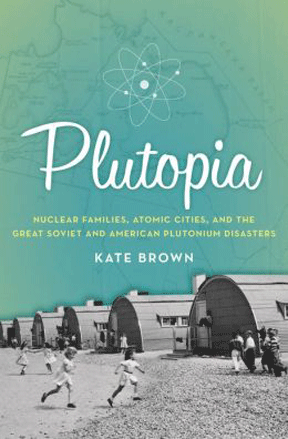 Radioactive Waste And The Hidden Costs Of The Cold War, Forbes, David Rainbow, Assistant Professor, Honors College, University of Houston, 4 Dec 17, Hanford, a dusty decommissioned plutonium production site in eastern Washington state, is one of the most polluted places in the country. The disaster is part of the inheritance of the Cold War.
A few months ago, a 110-meter-long tunnel collapsed at the site, exposing an old rail line and eight rail cars filled with contaminated radioactive equipment. This open wound in the landscape, which was quickly covered over again, is a tiny part of an environmental and human health catastrophe that steadily unfolded there over four decades of plutonium production. Big Cold War fears justified big risks. Big, secretive, nuclear-sized risks.
Hanford and other toxic reminders of the Cold War should serve as a cautionary tale to those who have a say in mitigating geopolitical tensions today, as well as to those who promote nuclear energy as an environmentally sustainable source of electricity. The energy debate must balance the downside – not just the risk of a nuclear meltdown but also the lack of a permanent repository for the still-dangerous spent fuel rods – with the environmental benefits of a source of electricity that produces no greenhouse gases. People on both sides of the issue have a vested interest in how the current geopolitical tussling over nuclear weapons plays out……
Even if, as we all hope, the “new Cold War” never gets hot, escalating tensions can have seriously harmful effects at home. The radioactive cave-in at the Hanford site earlier this year should serve as a reminder of that.
Nuclear refinement at Hanford began as a part of the Manhattan Project during World War II, the highly secretive plan to develop a nuclear bomb.
Initially, the drive to mobilize for war justified substantial costs, among them significant damage to human and environmental health in the U.S. resulting from the nuclear program. Hanford was integral to the program: its plutonium fell on Nagasaki. But after the end of the war, the scale of production at the site increased to a fevered pitch thanks to the ensuing competition for global influence between the U.S. and the Soviet Union that became the Cold War.
Our gargantuan stockpiles of nuclear arms demanded gargantuan quantities of plutonium. Forty-five years of work at Hanford – from 1943 to 1987 – yielded 20 million uranium metal plugs used to generate 110,000 tons of fuel. The process also generated 53 million gallons of radioactive waste, now stored in 177 underground tanks at the facility, and created 450 billion gallons of irradiated waste water that was discharged onto “soil disposal sites,” meaning it went into the ground. Some of the irradiated discharge simply ran back to where it had originally been taken from, the nearby Columbia River. The Office of Environmental Management at the Department of Energy is currently overseeing a cleanup project involving 11,000 people. It is expected to take several decades and cost around $100 billion.
Kate Brown’s award-winning book, “Plutopia: Nuclear Families, Atomic Cities, and the Great Soviet and American Plutonium Disasters,” is a history of the Hanford plant and its Soviet doppelgänger, a plant in the Ural Mountains called Maiak. Brown points out that over the course of a few decades, the two nuclear sites spewed two times the radiation emitted in the Chernobyl explosion. Yet few Americans at the time, even those involved in plutonium production, realized this was going on or how dangerous it was.
Naturally, the hidden nature of the project meant that information was hard to come by. As Brown shows, even the experts, managers and scientists involved directly in overseeing the production process knew little about the seriousness of the risk. Doctors studying the effects of radiation on people didn’t have access to the research related to environmental pollution. Scientists studying fish die-offs had no way of connecting their findings to the deteriorating immune systems of humans in the same areas. Most poignantly, researchers measuring the effectiveness of nuclear bombs on the enemy did not communicate with researchers measuring the threat of nuclear bombs on the workers making them.
Consequences for the workers were grave. Hanford and Maiak’s hidden mega-pollution was collateral damage in the fight to win the Cold War. Russia, like the U.S., is still living with the damage, and trying to bury it, too.
Within two days of the tunnel collapse at the Hanford site this past May, workers filled the breach with 53 truckloads of dirt and narrowly avoided a radiological event. However, these eight railcars are hardly the only waste left behind in the U.S. from our cold conflict with the Soviet Union, in which our willingness to risk human and environmental health was proportionate to our fears. It’s going to be a while before it’s all cleaned up. In the meantime, hopefully our leaders will work to keep the new Cold War from getting any worse. https://www.forbes.com/sites/uhenergy/2017/12/04/the-hidden-costs-of-cold-war/#a3593c1136ff
Incident at Russia’s Mayak nuclear reprocessing plant may have caused radiation cloud over Europe
 Environmentalists point the finger of blame at Mayak, the plant to process Kola’s Cold War legacy, ByThomas Nilsen, – Barents Observer 30th Nov 2017
A mysterious cloud of radioactive ruthenium-106 blowing over Europe earlier
this autumn triggered many speculations about Russia trying to
‘cover-up’ a leak from the country’s largest nuclear waste treatment
facility.
Nadezhda Kutepova a local environmentalists from the closed city
of Ozyorsk near Mayak who was forced to flee Russia in 2015, now reveals
more inside information. Kutepova says Mayak was testing new equipment on
September 25 and 26 at the reprocessing plant and that something abnormal
may have happened.«Emission of ruthenium may come from the reprocessing
plant 235 or RT-1 in Mayak where the vitrification plant for very
high-level nuclear waste is located,» Kutepova tells.
She points to the new vitrification furnace which started operation last December and
experienced problems during construction and testing. «My idea is that the
furnace was built with a lot of problems that emerge in the operation and I
think this is the cause of the ruthenium-106 leak we saw in September,»
she explains.
Mayak has loads of high-level liquid radioactive waste that
needs to be stabilized and made safer and starting the new plant was,
according to Kutepova, rather urgent. She calls the equipment bought for
the electric furnace «low-quality» https://thebarentsobserver.com/en/node/3260
1 This Month

Cuba Is Not a Failed State – It Is a Besieged State
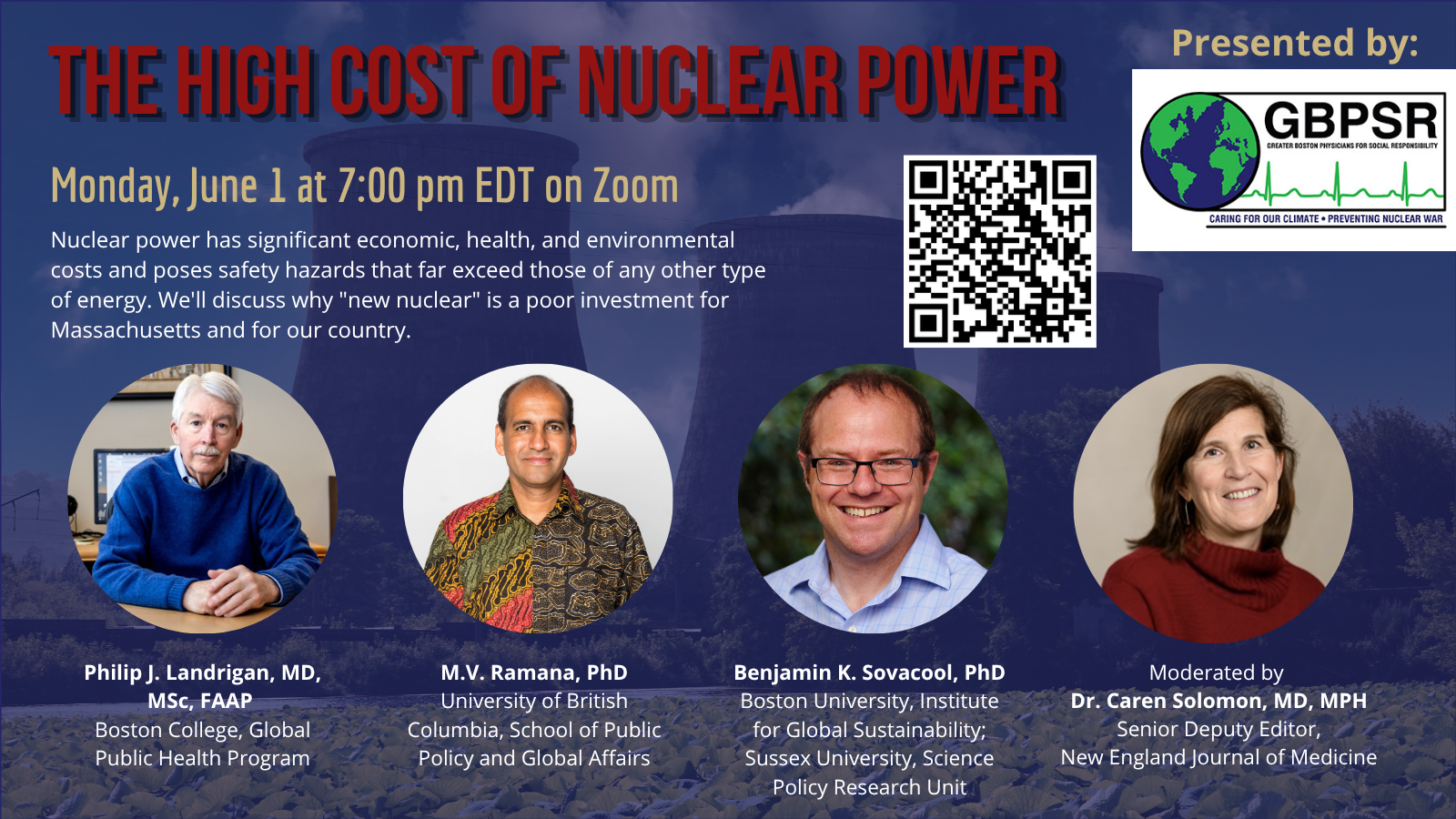
1 June Webinar – The High Cost of Nuclear Power – Register


of the week– Nuclear Reactor Information Task Force
To see nuclear-related stories in greater depth and intensity – go to https://nuclearinformation.wordpress.com
-
Archives
- May 2026 (272)
- April 2026 (356)
- March 2026 (251)
- February 2026 (268)
- January 2026 (308)
- December 2025 (358)
- November 2025 (359)
- October 2025 (376)
- September 2025 (257)
- August 2025 (319)
- July 2025 (230)
- June 2025 (348)
-
Categories
- 1
- 1 NUCLEAR ISSUES
- business and costs
- climate change
- culture and arts
- ENERGY
- environment
- health
- history
- indigenous issues
- Legal
- marketing of nuclear
- media
- opposition to nuclear
- PERSONAL STORIES
- politics
- politics international
- Religion and ethics
- safety
- secrets,lies and civil liberties
- spinbuster
- technology
- Uranium
- wastes
- weapons and war
- Women
- 2 WORLD
- ACTION
- AFRICA
- Atrocities
- AUSTRALIA
- Christina's notes
- Christina's themes
- culture and arts
- Events
- Fuk 2022
- Fuk 2023
- Fukushima 2017
- Fukushima 2018
- fukushima 2019
- Fukushima 2020
- Fukushima 2021
- general
- global warming
- Humour (God we need it)
- Nuclear
- RARE EARTHS
- Reference
- resources – print
- Resources -audiovicual
- Weekly Newsletter
- World
- World Nuclear
- YouTube
-
RSS
Entries RSS
Comments RSS
 nuclear-news