France’s EDF to spend 8 billion euros ($9.8 billion) by 2035 on energy storage
Utility Dive 29th March 2018. French national utility EDF says it plans to spend 8 billion euros ($9.8
billion) by 2035 in a move to become “the European leader” in energy
storage. EDF’s goal is to develop 10 GW of storage around the world by that
same timeframe. The company already operates 5 GW of storage facilities. In
particular, EDF is targeting the residential sector in France and Europe
with a variety of self-consumption services that use batteries, as well as
Africa where the utility company hopes to develop a portfolio of 1.2
million off-grid customers by 2035 through local partnerships.
https://www.utilitydive.com/news/edf-to-invest-nearly-10b-in-energy-storage-by-2035/520212/
Russia (discarded) plan for Nuclear ICBM’s on Trains
Russia Almost Brought Back a Terrifying Weapon: Nuclear ICBM’s on Trains, National Interest Robert Beckhusen, 3 Apr 18,
In October 1987, the first rail ICBM became operational in the form of the “Moldets,” a train armed with a 77-foot-long RT-23 — a type of ICBM which was also stored in silos — carrying 10 multiple-reentry warheads with 550 kilotons of explosive power each. In the 1990s and 2000s after the START II treaty, Russia decommissioned these missiles, which NATO referred to as the SS-23 Scalpel. The Kremlin produced 12 of these trains.
In 2013, the Russian military announced it would bring back rail-mobile intercontinental ballistic missiles. In other words, trains with big nukes crammed inside, capable of darting around Russia, raising their launchers and firing at a moment’s notice. It was called Barguzin and would begin testing in 2019.
That was the idea. In December 2017, the Russian government put the Barguzin project on hiatus, saving the world from the specter of doomsday trains roaming Siberia. The ostensible reason — the weapon is too expensive, according to Rossiyskaya Gazeta, the government’s paper of record.
The Barguzin project was a revival of a retired leg of the Soviet Union’s ground-based nuclear “triad.” While the Soviets had nuke-equipped submarines and nuclear-armed bombers, its ground-based component had nuclear missiles mounted on huge trucks, inside underground silos and on trains. The Soviet military first signed the order for the creation of rail-mobile ICBMs in 1969, but the launchers came later.
In October 1987, the first rail ICBM became operational in the form of the “Moldets,” a train armed with a 77-foot-long RT-23 — a type of ICBM which was also stored in silos — carrying 10 multiple-reentry warheads with 550 kilotons of explosive power each. In the 1990s and 2000s after the START II treaty, Russia decommissioned these missiles, which NATO referred to as the SS-23 Scalpel. The Kremlin produced 12 of these trains.
And that was the end of Russia’s rail-mobile missiles until the Kremlin announced in 2013 that it would create a new nuke-armed train under the moniker Barguzin, or BZhRK, this time equipped with the more advanced RS-24 Yars ICBM.
The RS-24 has a similar range to the RT-23 but is three meters shorter and weighs half as much — a considerable advantage for mobile missiles. The RS-24 is also, by the way, road-mobile.
……….During peacetime they require a network of bases for storage and maintenance, where international treaties require them to stay, and extensive security detachments to protect the missiles when they move during wartime. And they’re still stuck on railroad tracks — so U.S. spies have a general idea of where to look.
Which also begs the question as to whether the nuclear-war trains could even make it out of their bases in time before incoming missiles hit in the opening minutes of a nuclear war. Sure enough, the Pentagon studied the issue during the Cold War, and even built two prototype train cars intended for the Peacekeeper ICBM, but found them to be not worth the cost and rather vulnerable……. http://nationalinterest.org/blog/the-buzz/russia-almost-brought-back-terrifying-weapon-nuclear-icbms-25193
UK’s secret air transport of nuclear wastes – a cause for concern


 “Transporting nuclear waste is a risky business”. “It is disturbing to discover we are now using an extra airbase in heavily populated areas for a stop-off to transport nuclear waste”. “There is no truly safe way to move this nuclear waste from A to B”.
Top secret flights carrying NUCLEAR WASTE from Britain to US ‘to run until late next year’, Mirror UK, JIM LAWSON 1 APR 2018
Four US Air Force flights carrying highly enriched uranium from Dounreay power station in the Scottish Highlands are said to have left Wick John O’Groats airport bound for South Carolina. Top secret fights taking nuclear waste between Britain and the US will reportedly continue until late next year.
Four US Air Force flights carrying highly enriched uranium from Dounreay power station in the Scottish Highlands are said to have left Wick John O’Groats airport bound for South Carolina.
Dounreay, the Nuclear Decommissioning Authority, Police Scotland, the Civil Nuclear Constabulary and Wick Airport all refused to comment when asked.
Details of the flights apparently became public when Highland Council informed residents about road closures surrounding the airport – as it is legally obliged to do so. An order published last week was said to be code for “nuclear waste on the move”, suggesting the next consignment could be imminent.
The authority’s notice, published in two local newspapers, said: “The order has been made by reason that the council, as highway authority , is satisfied that traffic on the road should be restricted due to the likelihood of danger to the public.” It adds: “The purpose of the order is to enable abnormal load movements”.
The order will run from yesterday to September 30, 2019 with up to seven more flights expected during the period, it was reported.
A deal to transport highly enriched uranium – the basic building block for making a nuclear bomb – to be flown from Wick to the US was trumpeted by then Prime Minister David Cameron in 2016.
……..Highlands and Islands MSP John Finnie said: “Transporting nuclear waste is a risky business. By using two airports you are doubling the take-offs and landing in this country, which doubles the risk.
“It is disturbing to discover we are now using an extra airbase in heavily populated areas for a stop-off to transport nuclear waste”.
…….. Dr. Richard Dixon, director of Friends of the Earth, said flatly: “There is no truly safe way to move this nuclear waste from A to B”.
A spokesman for the Nuclear Decommissioning Authority said: “Our priority is to comply with the regulations governing the safety and security of nuclear material. Compliance with the regulations includes protecting information about the routes, times, dates and location”.
Flights left Britain on September 17, 2016, June 3, 2017, September 16, 2017 and December 9, 2017, it was reported. Wick John O’Groats airport is closed to civilian aircraft on Saturdays.https://www.mirror.co.uk/news/uk-news/top-secret-flights-carrying-nuclear-12287170
Irish Government ‘dozing at wheel’ over UK nuclear power plans
 Irish Times 29th March 2018, Irish Government and public urged to comment on Hinkley facility before April
17th. The UK’s nuclear power expansion programme, including the building
of the Hinkley Point C facility in Somerset, poses an unacceptable risk to
the island of Ireland, according to an alliance of political parties and
environmental groups.
Green Party Senator Grace O’Sullivan said the
Government “has been dozing at the wheel… and essentially failed the
Irish people because we have not had timely opportunity to be consulted”
about Hinkley, which is located less than 250km from south east Ireland.
Speaking at a press conference in Dublin, she said the UK government was
found to have failed to consult neighbouring states under the UN Espoo
Convention. After a five-year legal battle, in which Irish environmental
groups – An Taisce, Friends of the Irish Environment and the
Environmental Pillar – fought to uphold the rights of the Irish public,
“a long overdue consultation” began on February 20th. “People can
make their submissions to their relevant local authority. We strongly
encourage them to do so before April 17th.” https://www.irishtimes.com/news/environment/government-dozing-at-wheel-over-uk-nuclear-power-plans-1.3445065
An insider saboteur could cripple Britain’s nuclear power stations with a simple USB stick.

Mirror 31st March 2018, Britain’s nuclear power stations swept for Russian sleeper agents over
fears of crippling insider attack. An ex-senior intelligence officer has
warned that an insider could launch a malware attack with a simple USB
stick. https://www.mirror.co.uk/news/politics/britains-nuclear-power-stations-swept-12283716
Tracking the transport of nuclear weapons through the UK
 Nuclear Weapons Transport, Nukewatch 29th March 2018
A nuclear weapons convoy left AWE Burghfield on Thursday March 22. It was
later seen on the A1 at junction 49 near Dishforth (15 miles north of
Wetherby).
The following day it was spotted crossing over to the west on
the A66 and then on the M74 just south of Lesmahagow. It then continued
around the east of Glasgow on the M73 and past Cumbernauld on the M80 to
take a break at DSG Stirling mid-afternoon.
It then took the M9, A811 andA82 to RNAD Coulport. On Monday March 26 this convoy left Coulport to
return south. Taking a route through Balloch and Stirling then onto the M9
and M8 to the Edinburgh bypass it then took a break at Glencorse Barracks
in Penicuik.
After continuing south on the A1 passing Berwick on Tweed it
passed through Newcastle and after an overnight stop it then continued down
the A1. It crossed country to the A34 travelling around Oxford and getting
back to Burghfield around 5pm. http://www.nukewatch.org.uk/?p=809
Serious flaws in “community consultation” process for selecting a nuclear waste dump site in Cumbria
 CT responds to the BEIS consultation: “Working With Communities” https://cumbriatrust.wordpress.com/2018/03/31/ct-responds-to-the-beis-consultation-working-with-communities/ March 31, 2018
Britain’s uncompetitive electricty marke: big electricity companies don’t want the competition from renewables
Dave Toke’s Blog 1st April 2018, The media is awash with stories of the imminent emergence of ‘subsidy free’
wind and solar power in the UK, but the reality is that the uncompetitive nature of the British electricity market mostly undermines that prospect.
In theory onshore wind power and maybe some solar power projects would be able to generate power to sell at competitive prices on the British
wholesale electricity market.
In practice most of the potential buyers of energy from new renewable energy projects will not be interested in buying
the energy even at cheap prices simply because it conflicts with their own generation portfolios. True, there is a limited possibility for some very
large corporate consumers who are interested in buying green electricity to fund new projects by issuing corporate power purchase agreements (PPAs).
But in reality this market is small, and I have heard this estimated to be no larger than 100 MW a year. That means it would take around 20 years for
not quite 1 per cent of electricity to be supplied this way. PPAs are needed for new renewable energy projects that offer the generators the
certainty that they can be paid a minimum amount for each MWh that they produce for the long term. The UK Government’s PPAs, called contracts for
differences (CfDs), last 15 years. However they are no longer available for onshore wind and solar.
The problem is that most of the market for offering PPAs that can fund new renewable energy projects comes from the big
electricity suppliers, who have been known in the past as the ‘Big Six’.
Only PPAs offered by really large companies will be usually taken seriously enough by banks and and other institutions to enable renewable energy
projects can obtain long term loans or equity. The trouble is that the Big Energy suppliers will usually have little interest in offering long term
PPAs to new renewable energy projects since. For a start they can buy in power at much the same price as the renewable energy generator can offer
without needing to commit themselves to long term agreements.
Crucially, the big electricity companies are struggling to keep their own power stations in business, and are not going to sign up competition from other people for their own business!
http://realfeed-intariffs.blogspot.co.uk/2018/04/why-britains-distorted-electricity.html
The new arms race, as Russia tests its ‘Satan’ nuclear missile
 Russia just tested its ‘Satan’ nuclear missile amid Putin and Trump taunting an arms race, Business Insider, ALEX LOCKIEMAR 30, 2018, Russia says it has tested a new nuclear-capable intercontinental ballistic missile; Russian President Vladimir Putin has said the missile can defeat any US missile defences.
Small Modular Nuclear Reactors – their connection to nuclear weapons development

Although unstated, by far the most likely source for such support is a continuing national civil nuclear programme. And this where the burgeoning hype around UK development of SMRs comes in. Leading designs for these reactors are derived directly from submarine propulsion. British nuclear submarine reactor manufacturer Rolls-Royce is their most enthusiastic champion. But, amid intense media choreography, links between SMRs and submarines remain (aside from reports of our own work) barely discussed in the UK press.
This neglect is odd, because the issues are very clear. Regretting that military programmes are no longer underwritten by civil nuclear research, a heavily redacted 2014 MoD report expresses serious concerns over the continued viability of the UK nuclear submarine industry. And Rolls-Royce itself is clear that success in securing government investment for SMRs would “relieve the Ministry of Defence of the burden of developing and retaining skills and capability” for the UK’s military nuclear sector.
Why is the UK government so infatuated with nuclear power? https://www.theguardian.com/science/political-science/2018/mar/29/why-is-uk-government-so-infatuated-nuclear-power
As the nuclear option looks less and less sensible, it becomes harder to explain Whitehall’s enthusiasm. Might it be to do with the military? Guardian, Andy Stirling and Phil Johnstone, 29 Mar 18,
Against a worldwide background of declining fortunes for nuclear power, UK policy enthusiasm continues to intensify. Already pursuing one of the most ambitious nuclear new-build agendas in the world, Britain is seeking to buck 50 years of experience to develop an entirely new and untested design of small modular reactors (SMRs). In 2016, then energy and climate secretary, Amber Rudd, summed up the government’s position: “Investing in nuclear is what this government is all about for the next 20 years.”
Despite unique levels of long-term policy support, this nuclear new-build programme is severely delayed, with no chance of operations beginning as intended “significantly before 2025”, Costs have mushroomed, with even government figures showing renewables like offshore wind to already be far more affordable. With renewable costs still plummeting, global investments in these alternatives are now already greater than for all conventional generating technologies put together. With worldwide momentum so clear, the scale of UK nuclear ambitions are an international anomaly.
Unswerving British nuclear support contrasts sharply with obstructive national policy on other technologies. In 2015 various strategies supporting renewables and energy efficiency were abandoned, with the cheapest UK low-carbon power(onshore wind), effectively halted. The consequences of these cuts are now clear. The output of community energy projects has fallen by 99.4%. National investment in renewables has halved. Meanwhile, UK industrial strategy continues to prioritise nuclear. Nuclear R&D gets 12 times as much funding as renewables in the Department for Business, Energy and Industrial Strategy’s “Energy Innovation Programme”. Instead of considering alternatives to spiralling nuclear costs, the UK government is looking to accommodate them with entirely new models of public financing. It seems clear that – for some undeclared reason and regardless of comparative costs or global trends – Britain simply must have new nuclear power.
The depth of this Whitehall bias creates a challenging environment for reasoned debate over British energy policy. To many, it seems scarcely believable that UK plans are so massively out of sync with current trends. The sheer weight of UK nuclear incumbency has successfully marginalised the entirely reasonable understanding that – like many technologies before it – nuclear power is simply going obsolete.
With direct reasons for the UK’s eccentric national position still unstated, we should pay attention to body language. Here, clues may be found in the work of the National Audit Office (NAO). Its 2017 report of 2017 points out serious flaws in the economic case for new nuclear – highlighting “unquantified”, “strategic” reasons why the UK still prioritises new nuclear despite the setbacks and increasingly attractive alternatives. Yet the NAO remains uncharacteristically unclear as to what these reasons might be.
An earlier NAO report may shed more light. Their 2008 costing of military nuclear activities states: “One assumption of the future deterrent programme is that the United Kingdom submarine industry will be sustainable and that the costs of supporting it will not fall directly on the future deterrent programme.” If the costs of keeping the national nuclear submarine industry in business must fall elsewhere, what could that other budget be?
Although unstated, by far the most likely source for such support is a continuing national civil nuclear programme. And this where the burgeoning hype around UK development of SMRs comes in. Leading designs for these reactors are derived directly from submarine propulsion. British nuclear submarine reactor manufacturer Rolls-Royce is their most enthusiastic champion. But, amid intense media choreography, links between SMRs and submarines remain (aside from reports of our own work) barely discussed in the UK press.
This neglect is odd, because the issues are very clear. Regretting that military programmes are no longer underwritten by civil nuclear research, a heavily redacted 2014 MoD report expresses serious concerns over the continued viability of the UK nuclear submarine industry. And Rolls-Royce itself is clear that success in securing government investment for SMRs would “relieve the Ministry of Defence of the burden of developing and retaining skills and capability” for the UK’s military nuclear sector. Other defence sources are also unambiguous that survival of the British nuclear submarine industry depends on continuation of UK civil nuclear power. Many new government initiatives focus intently on realising the military and civil synergies.
Some nuclear enthusiasts have called this analysis a conspiracy theory, but these links are now becoming visible. In response to our own recent evidence to the UK Public Accounts Committee, a senior civil servant briefly acknowledged the connections. And with US civil nuclear programmes collapsing, the submarine links are also strongly emphasised by a former US energy secretary. Nuclear submarines are evidently crucial to Britain’s cherished identity as a “global power”. It seems that Whitehall’s infatuation with civil nuclear energy is in fact a military romance.
So why does the UK debate on these issues remain so muted? It is now beyond serious dispute that nuclear power has been overtaken by the extraordinary pace of progress in renewables. But – for those so minded – the military case for nuclear power remains. In a democracy, it might be expected that these arguments at least be tested in public. So, the real irrationality is that an entire policy arena should so comprehensively fail to debate such crucial issues. In the end, all technologies become obsolete. If we are not honest about UK civil nuclear policy, the danger is that British democracy may go the same way.
Wind and solar make more electricity than nuclear for first time in UK
 In 2017 Britain’s greenhouse gas emissions also fell 3% as coal use dropped and renewables climbed, Guardian, Adam Vaughan , 30 Mar 18
Windfarms and solar panels produced more electricity than the UK’s eight nuclear power stations for the first time at the end of last year, official figures show.
Britain’s greenhouse gas emissions also continued to fall, dropping 3% in 2017, as coal use fell and the use of renewables climbed.
Energy experienced the biggest drop in emissions of any UK sector, of 8%, while pollution from transport and businesses stayed flat.
Energy industry chiefs said the figures showed that the government should rethink its ban on onshore wind subsidies, a move that ministers have hinted could happen soon.
Lawrence Slade, chief executive of the big six lobby group Energy UK, said: “We need to keep up the pace … by ensuring that the lowest cost renewables are no longer excluded from the market.”…….https://www.theguardian.com/business/2018/mar/29/wind-and-solar-made-more-electricity-than-nuclear-for-first-time-in-uk
France’s govt sets cost of Bure underground nuclear waste burial at 25 billion euros (about double that is likely)
 France Info 26th March 2018, [Machine Translation] Nuclear: Bure, a colossal project at phenomenal cost.
Burying waste nuclear power plants 500 meters underground in Bure (Meuse) is a pharaonic site that will last a hundred years. EDF, which has to paythe bill, estimates the cost at 20 billion euros.
For Andra, the agency that will build the storage, the cost would be 34 billion euros. ” The Agency has an interest in the fact that the costing includes the safest security options possible while EDF has an interest in the fact that this storage costs the least possible, ” says Yves Marignac, independent expert
Wise Paris.
The government has decided: it will be 25 billion euros. “The cost is likely to be at least twice as high, and it is probably the only country where the government sets the future cost of such a huge and uncertain project by decree,” he said. ‘expert.
https://www.francetvinfo.fr/monde/environnement/dechets-nucleaires-a-bure/nucleaire-bure-un-chantier-colossal-au-cout-phenomenal_2675078.html
AREVA – failed company exhumed – now called “ORANO” and STILL losing money

Romandie 29th March 2018, Orano, a company resulting from the restructuring of giant Areva and refocused on the nuclear fuel cycle, has slightly widened its loss during
the year 2017, she said Thursday, in a context of nuclear market that remains difficult. The group’s net loss widened 4.5% to 252 million euros
compared to last year, according to a statement. EBITDA was down 29.3% to 946 million euros, mainly due to the impact of reduced volumes sold. Sales
reached € 3.9 billion, down 10.8%. These results, “in line with expectations” according to the text.
https://www.romandie.com/news/903937.rom
UK slowly recruiting nuclear safety staff that it will need when it leaves European union
Utility Week 28th March 2018, Half nuclear safety team recruited for post-Brexit Euratom role. The
government has recruited just over half of the staff it will need to police
the UK’s nuclear safeguarding regime once the UK leaves Euratom. The
Business, Energy and Industrial Strategy [BEIS] department published its
first quarterly update on the UK’s withdrawal from the EU umbrella nuclear.
https://utilityweek.co.uk/half-nuclear-safety-team-recruited-post-brexit-euratom-role/
Blackwater Against New Nuclear Group (BANNG) slams biased meeting promoting Bradwell nuclear power plan
 Blackwater Against New Nuclear Group (BANNG), 29 Mar 18, BANNG despairs at the lack of mention of potentially serious problems atBradwell B cheerleading event hosted by Maldon District Council.
Reports in the local press of Maldon District Council playing host to the recent
annual meeting of the New Nuclear Local Authority Group (NNLAG) have been
met with amazement by the Blackwater Against New Nuclear Group (BANNG).
The location was chosen because of the proposals for a new nuclear power
station and the meeting included a visit to the proposed Bradwell B site.
Stephen Speed of the Civil Nuclear and Resilience Directorate at the
Department of Business, Energy and Industrial Strategy (BEIS) and John
Devine from the Department for International Trade attended the meeting.
‘Not a whisper of the environmental problems at this utterly quite
unacceptable site is contained in the media reports – but they do talk of
the huge potential envisioned for the region from a new nuclear power
station. It is as if gold dust is being rained down on innocent citizens
and wildlife and landscape.
But it is gold dust that could quickly turn to
radioactive rain, polluted air, contaminated land and radioactive
discharges into the Blackwater estuary’, said BANNG’s Chair, Professor
Andy Blowers. ‘No word is spoken that this massive engine of radioactive
risk with its inevitable cargo of spent fuel and dangerous radioactive
wastes will be left on the site for way over a century.
And what will the territory be like then – if it exists at all? ‘No mention is made of the
fact that the site is only designated until 2025. Beyond that there is no
site at Bradwell. The site does not exist. So, to overcome this, the
Government is busily undertaking a deceptive consultation on siting
criteria, re-running the same ideas of a decade ago when Bradwell was
deemed a potentially suitable site for new nuclear development that could
be operational by 2025 – of course, it will not be.
If Bradwell was a poor site then, it is an impossible one now. And the case for nuclear
energy has, in the meantime, all but disappeared. By the time the Chinese
could build their reactors at Bradwell, a new nuclear power station will be
as dead as a dodo.
‘It’s scandalous that BEIS which is running the
consultation should be supporting this latest jamboree. It gives
credibility to the project, suggesting it is a foregone conclusion. But it
is not and the Government should insist it is neutral as to whether the
site should be designated. ‘BANNG and its supporters feel badly let down
by the biased approach being taken. Essex County and Maldon District
Councils appear to have totally ignored the fact that Colchester Borough
and West Mersea Town Councils do not support the new power station.
The environmental, public health, security and safety issues and the
indefinite, long-term storage on-site of radioactive wastes are not
mentioned – yet the public is overwhelmingly opposed to the project on
these grounds.’ BANNG has set out the case against the project in its
response to the consultation on siting criteria (see BANNG Paper 34 at
banng.info) and will shortly be meeting with the developers, EDF and China
General Nuclear Power Corporation.
https://www.banng.info/category/news/
1 This Month

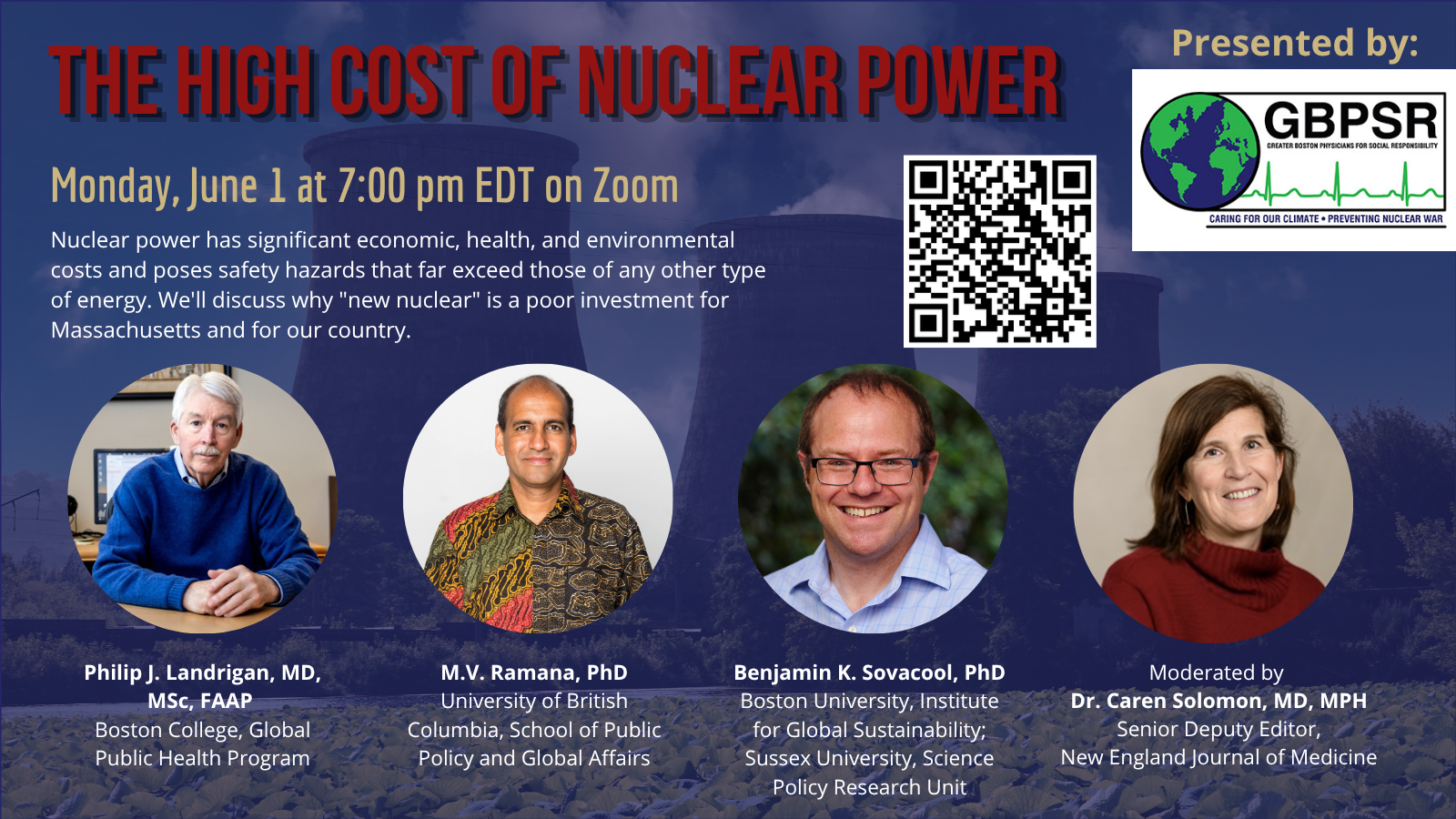
1 June Webinar – The High Cost of Nuclear Power – Register


of the week– Nuclear Reactor Information Task Force
To see nuclear-related stories in greater depth and intensity – go to https://nuclearinformation.wordpress.com
-
Archives
- May 2026 (262)
- April 2026 (356)
- March 2026 (251)
- February 2026 (268)
- January 2026 (308)
- December 2025 (358)
- November 2025 (359)
- October 2025 (376)
- September 2025 (257)
- August 2025 (319)
- July 2025 (230)
- June 2025 (348)
-
Categories
- 1
- 1 NUCLEAR ISSUES
- business and costs
- climate change
- culture and arts
- ENERGY
- environment
- health
- history
- indigenous issues
- Legal
- marketing of nuclear
- media
- opposition to nuclear
- PERSONAL STORIES
- politics
- politics international
- Religion and ethics
- safety
- secrets,lies and civil liberties
- spinbuster
- technology
- Uranium
- wastes
- weapons and war
- Women
- 2 WORLD
- ACTION
- AFRICA
- Atrocities
- AUSTRALIA
- Christina's notes
- Christina's themes
- culture and arts
- Events
- Fuk 2022
- Fuk 2023
- Fukushima 2017
- Fukushima 2018
- fukushima 2019
- Fukushima 2020
- Fukushima 2021
- general
- global warming
- Humour (God we need it)
- Nuclear
- RARE EARTHS
- Reference
- resources – print
- Resources -audiovicual
- Weekly Newsletter
- World
- World Nuclear
- YouTube
-
RSS
Entries RSS
Comments RSS
 nuclear-news