Remembering the radical anti-nuclear Greenham Women’s Peace Camp

Huck Mag 18th July 2025, https://www.huckmag.com/article/anti-nuclear-greenham-womens-peace-camp-life-fence-janine-wiedel
Life at the Fence — In the early ’80s, a women’s only camp at an RAF site in Berkshire was formed to protest the threat of nuclear arms. Janine Wiedel’s new photobook revisits its anti-establishment setup and people.
Coming of age in the shadow of the 1962 Cuban Missile Crisis, Janine Wiedel remembers the “duck and cover drills” of her childhood years, where students hid under school desks, head in hands, practicing quiet surrender to nuclear Armageddon.
By the ’80s, Wiedel was living and working as a photographer, documenting working-class life in the UK. With Ronald Reagan in the White House, Cold War tensions reached a fevered pitch. Across the pond, Margaret Thatcher, Reagan’s “comrade-in-arms”, welcomed the NATO bequest of 96 US-manufactured, nuclear “cruise missiles”, which were to begin arriving at RAF Greenham Common in 1983.
As NATO and the USSR ran up their arsenals, a grassroots resistance movement sprouted in Greenham, in the English county of Berkshire, taking the shape of a “women’s only” peace camp in 1982. Despite evictions, fences, and spies organised to bring them down, the resistance stayed the course until the American forces packed up their weapons and went home following the collapse of the Soviet Union in 1991.
Their struggle made headlines, with even the Soviet premier Mikhail Gorbachev paying homage to the ‘Greenham women and the peace movement of Europe’ at the signing of the 1987 Intermediate-range Nuclear Forces (INF) Treaty. But those initial media reports, Wiedel remembers, were ultimately disparaging of the women, so she decided to visit the camp for herself in 1983.
“I was fascinated by the community that had evolved as a result of it being ‘all women’ – there were no leaders,” Wiedel says. “The women built homes out of wood they collected, and they lit and tended the fires. They attended and spoke at conferences. They represented themselves in court when they were arrested. Everyone had an equal voice. Confidence grew. The actions were spontaneous and flexible; the authorities and police never knew what they would do next.”
The lesson became clear: don’t stop until the job is done. Now, Wiedel revisits this historic chapter of protest history with Life at the Fence: Greenham Women’s Peace Camp 1983 – 84 (Image & Reality). Through transportive imagery and interviews conducted at the time, the book brings together Wiedel’s masterful reportage as she takes us through the camps, which were built along the nine-mile perimeter of the RAF base, while paratroopers perched in lookout towers, binoculars in hand. Against the backdrop of gnarly barbed wire, the women sorted themselves out among different camp sites, each named for a different colour of the rainbow. It was a world of striking contrasts.
Drawn to women who had given up everything to live in primitive, volatile conditions, Wiedel listened to the women, recording their testimonies, songs, and remembrances which she weaves alongside documentary, portraits, landscape, still life, and reportage of non-violent direct actions.
“At the time, as a ‘women only’ protest, it was subjected to every form of abuse and ridicule by the media,” says Wiedel. “Its presence at the base also became an embarrassment to the Thatcher government. The women, however, managed to remain at the base for 19 years. Everyone I spoke with said it had transformed their lives.”
Life at the Fence: Greenham Women’s Peace Camp 1983 – 84 by Janine Wiedel is published by Image & Reality.
UK’s nuclear push may hand investors a cushy deal

while the financing looks “private”, the real backstop is public.
Yawen Chen, July 18, 2025, https://www.reuters.com/commentary/breakingviews/uks-nuclear-push-may-hand-investors-cushy-deal-2025-07-18/
Brookfield’s (BAM.TO), opens new tab reported plan to take a 25% stake, opens new tab in the Sizewell C nuclear project would mark a big vote of confidence in Britain’s atomic energy revival. But while it suggests that private capital could play a role in funding the country’s energy security, taxpayers are likely to take much of the risk.
The Canadian giant is no stranger to infrastructure, but nuclear power comes with high upfront costs, delays and cost overruns. Sizewell C could cost up to 40 billion pounds ($54 billion) to build, the Financial Times says, up from the latest government estimate of 20 billion pounds.
Britain’s track record is far from reassuring. Take Hinkley Point C, which was majority owned by EDF. Construction began in 2017 and was originally expected to be completed in 2025 and cost 18 billion pounds. It is now unlikely to be operational before 2030, with the overall cost revised to up to 35 billion pounds in 2015 prices. EDF had little protection against those delays as the chief backing it got from the government came from energy price commitments, which kick in when the plant is running.
Bringing in private investors may therefore require a new approach. That’s why the government passed legislation in 2022 so that the Sizewell C plant will be financed via a model, opens new tab seen in utilities like water companies or energy networks, dubbed the regulated asset base (RAB). That model fixes an allowed return to investors by passing on costs to consumers. Crucially, it allows a project to generate revenue from the moment construction begins, instead of only when it becomes operational.
The closest precedent is probably London’s Thames Tideway Tunnel, which funded the construction of a new sewer. There, consumer bills are charged enough to cover a blended return to debt and equity investors, or weighted average cost of capital (WACC), of 2.5% over inflation while the project is under construction. Given the risks in nuclear, industry experts reckon a WACC of 4% above inflation is more likely, equivalent to a nominal rate of 6%. And, as with Thames Tideway, nuclear plants will likely require a commitment from the government for it to compensate investors if cost overruns exceed a certain threshold.
That’s means the RAB model could easily end up becoming pretty expensive. The National Audit Office’s modelling suggests that the WACC of a hypothetical nuclear project could rise to 9% if expenses were to come over budget by between 75% and 100%. As Hinkley Point showed, that’s quite plausible.
UK Prime Minister Keir Starmer may not have much choice. The government says
, opens new tab it needs new nuclear power stations to help its transition to net zero and ensure energy security threatened by Russia. And Chancellor Rachel Reeves will be loath to fund them all on balance sheet, given the country’s fiscal state. Brookfield’s interest shows that institutional investors may be able to step up. But while the financing looks “private”, the real backstop is public.
Context News
UK energy secretary Ed Miliband said in June that Sizewell C would be the beginning of a “golden age” for nuclear in Britain. He also said the project would be “majority public funded”. The government has committed 14.2 billion pounds
The UK government is closing in on a final deal to secure private investment into the Sizewell C nuclear power project. Its 84% stake in the development is expected to be diluted to around 47.5%, with Canadian investor Brookfield Asset Management, British energy supplier Centrica and French energy giant EDF holding the remainder, the Financial Times reported on July 9 citing people with knowledge of the ongoing negotiations.
Brookfield is likely to take a 25% stake, with Centrica buying 15%, the report said.
France’s state-owned EDF, which is leading the development of the site, said on July 8 it would reduce its holdings to 12.5%.
Office for Nuclear Regulation says its ‘insufficient organisational capability’ is increasing strategic risk.

18 Jul, 2025 By Tom Pashby
The Office for Nuclear Regulation (ONR) has identified its “insufficient
organisational capability” as an increasing strategic risk in its latest
annual report. The risks are: Insufficient organisational capability, the
ONR being ineffective at discharging its duties as a regulator, failure to
deliver objectives due to an inability to respond to incidents, poor
knowledge management, inflexible funding, the impact of changes to deliver
leadership and insufficient security controls.
Each of these risks has been
analysed on whether it is static, increasing or decreasing. Notably, it
said the risk of “insufficient organisational capability” was found to
be increasing. This has “matured out of the former Insufficient
Organisational Capability and Capacity risk to allow for an enhanced focus
on the capability of the organisation. “We have implemented a review of
regulatory competence and capacity to meet future regulatory
requirements.” An ONR spokesperson told NCE: “The government has
announced its biggest expansion of nuclear power in several decades and so
maintaining a resilient regulatory capability and capacity to deliver our
mission remains a key priority.
New Civil Engineer 18th July 2025, https://www.newcivilengineer.com/latest/office-for-nuclear-regulation-says-its-insufficient-organisational-capability-is-increasing-strategic-risk-18-07-2025/
Trump sprang Ukraine surprise on NATO states – Reuters

Trump noted that the plan is seen by Washington as a business opportunity.
16 July 25, https://www.rt.com/news/621575-trump-ukraine-weapons-surprise/
Several bloc members reportedly only learned they were supposed to fund American weapons for Kiev when it was announced by the US president.
Several NATO member states were not notified in advance that they would be asked to fund new arms deliveries to Ukraine under US President Donald Trump’s latest proposal, Reuters has reported, citing European officials.
On Monday, Trump pledged to provide more US-made weapons to Kiev through a new scheme funded by European NATO members. “We’re not buying it,” Trump said during an Oval Office meeting with the bloc’s secretary-general, Mark Rutte. “We will manufacture it, and they’re going to be paying for it.”
Trump noted that the plan is seen by Washington as a business opportunity.
Rutte said six countries – Finland, Denmark, Sweden, Norway, the Netherlands, and Canada – were willing to take part in the arms procurement scheme. However, high-ranking sources at the embassies of two of those countries told Reuters they only learned of their supposed participation when the announcement was made.
“It is my clear sense that nobody has been briefed about the exact details in advance,” one European ambassador told Reuters. “And I also suspect that internally in the administration they are only now beginning to sort out what it means in practice.”
Several countries have already distanced themselves from Trump’s plan. According to Politico and La Stampa, France and Italy will not be financially supporting the effort. Hungary and the Czech Republic have also declined to participate, with Czech Prime Minister Petr Fiala saying Prague is focusing on other projects.
EU foreign policy chief Kaja Kallas, on the other hand, has welcomed the proposal but emphasized that Washington should “share the burden,” stating that if European countries pay for the weapons, it should be considered as “European support.”
Since taking office in January, Trump has renewed pressure on NATO members to increase defense spending and warned that the US may not defend allies who do not meet their obligations.
Russia has repeatedly condemned Western arms supplies to Ukraine, arguing that it only prolongs the bloodshed and does not change the course of the conflict. The Kremlin maintains that foreign military aid is being used to escalate the hostilities rather than seek a diplomatic resolution.
Call for evidence on building nuclear for a new UK “golden age of clean energy abundance”
The UK is embarking on an ambitious programme of
investment in nuclear energy, seeking to reverse decades of declining
capacity. The Government is counting on new nuclear to help deliver energy
security and decarbonise electricity generation. Announcing funding for the
Sizewell C nuclear power plant in June, the Energy Secretary said “we
need new nuclear to deliver a golden age of clean energy abundance.”
But past promises of a golden age of nuclear energy have failed to materialise.
A new reactor has not been connected to the grid for 30 years. Nuclear
projects have historically faced unique barriers, including complex
regulatory and planning processes. The Government now aims to deliver
reforms to streamline planning approvals and give greater certainty to
developers. The Energy Security and Net Zero Committee is now inviting
written submissions to help assess whether EN-7 provides a coherent and
effective framework for enabling the UK’s nuclear ambitions.
Energy Security and Net Zero Committee 17th July 2025, https://committees.parliament.uk/committee/664/energy-security-and-net-zero-committee/news/208378/call-for-evidence-on-building-nuclear-for-a-new-uk-golden-age-of-clean-energy-abundance/
We’ll stop Nimbys from blocking nuclear power stations, say Tories.
The rule changes would see planning officers ignore all environmental
considerations when building a new nuclear site,
Party wants to make it impossible to challenge plans using environmental impact assessments or habitat regulations
Nimbys will be stopped from blocking nuclear power stations in their area
under Tory plans. The party wants to end the “absurd” blocking of new
nuclear sites through environmental impact assessments or regulations on
habitats, and would make it impossible to challenge a new power station in
court.
The Tories have submitted amendments to the Government’s Planning
and Infrastructure Bill that would exempt nuclear power stations from being
blocked or delayed on environmental grounds, to speed up energy production
in the UK. They accused Ed Miliband, the Energy Secretary, of presiding
over “the highest prices for offshore wind in a decade” and called for
more nuclear power to meet the UK’s growing demand for electricity.
The rule changes would see planning officers ignore all environmental
considerations when building a new nuclear site, which is likely to anger
locals and lead to public opposition. Writing for The Telegraph, Claire
Coutinho, the shadow energy secretary, said the new Hinkley Point C power
station in Somerset is set to be the most expensive in history because of
“bureaucracy and rampant lawfarism”. “[There is] Endless lawfare,
environmental paperwork, and legal challenges that do little to protect
nature but create plenty of expensive work for planning consultants and
pencil-pushing bureaucrats,” she said. “Every single delay and absurd
mitigation measure adds more cost.”
The amendments would only become law
with the support of Labour MPs, which is not expected to happen. Labour has
previously said it will reform the same rules raised by the Conservatives,
but will not exempt them from judicial review or all environmental
assessments.

Responding to the Conservative proposal, Sam Richards, chief
executive of pro-growth campaign group Britain Remade, said the UK had the
“worst of both worlds” with a planning system that does not protect
nature and slows down infrastructure projects. “These amendments are
radical, but the status quo where safe, clean nuclear power projects are
delayed and made more expensive due to repeated legal challenges and poorly
drafted environmental legislation is intolerable,” he said.
Telegraph 18th July 2025, https://www.telegraph.co.uk/news/2025/07/18/tories-stop-nimbys-block-nuclear-power-hinkley-fish-disco/
Miliband bets on nuclear fusion in bid to lead (?)clean power race.

Energy Secretary to make it easier for developers to build reactors with planning shake-up
Ed Miliband has taken a bet on nuclear fusion one day powering Britain by
making it easier for developers to build new reactors with minimal planning
restrictions.
Fusion plants are to be included in the UK’s national
infrastructure planning system, meaning they can be built in any part of
Britain without needing consent from local authorities and with little
opportunity for local people to object. Mr Miliband said the aim was to
ensure fusion, if it ever works, could rapidly become part of the UK energy
system.
Telegraph 18th July 2025, https://www.telegraph.co.uk/business/2025/07/18/miliband-bets-on-nuclear-fusion-by-making-it-easier-to-buil/
Sizewell C | Investor withdraws from consortium set for 25% stake.

17 Jul, 2025 By Tom Pashby, https://www.newcivilengineer.com/latest/sizewell-c-investor-withdraws-from-consortium-set-for-25-stake-17-07-2025/
One of the investors reported to be considering a stake in Sizewell C has decided to withdraw, while the government is no longer planning to classify nuclear energy as “sustainable”.
Schroders Greencoat, which describes itself as “a specialist renewables infrastructure investor”, was previously reported to be one of the companies considering an ownership stake in Sizewell C.
It was widely reported that Schroders Greencoat was one of the companies in the consortium led by Brookfield Asset Management, which was in total considering a 25% stake in the nuclear power plant.
In an email dated 16 July seen by NCE, the investor said it no longer wishes to invest in the project on the Suffolk coast.
Wait for final investment decision continues
Sizewell C must achieve its final investment decision (FID) before main construction can start.
Despite the delay, Sizewell C has committed over £2.5bn on contracts.
It is now expected that the final investment decision will be taken this summer.
Nuclear dropped from sustainable finance classification plans
The UK Government recently decided to not go ahead with plans to create a UK Green Taxonomy for financial investments, meaning that it won’t have a specific classification of certain areas of activity, like nuclear power, as “sustainable”.
This had been a plan hatched by former chancellor Jeremy Hunt in the 2023 Spring Budget, but NCE found that no work had gone towards this 16 months later.
HM Treasury economic secretary to the treasury and city minister Emma Reynolds announced the decision in the UK Green Taxonomy Consultation Response.
“To make sure the UK is well-positioned to capture [growth in the green economy], the government is delivering a world-leading sustainable finance framework,” Reynolds said.
“This includes ensuring that we have the right tools in place and the proportionate regulation that is needed to support the transition, strengthening the UK’s position as the sustainable finance capital of the world so that the UK can lead the clean energy transition at home and abroad.
“That is why, after careful consideration, the government has concluded that a UK Taxonomy would not be the most effective tool to deliver the green transition and should not be part of our sustainable finance framework.
“Whilst our ambitions to continue as a global leader remain unchanged, the consultation responses showed that other policies were of higher priority to accelerate investment into the transition to net zero and limit greenwashing.”
It is understood that the decision to drop plans for the taxonomy may have contributed to Schroders Greencoat’s withdrawal from investing in Sizewell C.
Anti-Sizewell C campaign attributes withdrawal to taxonomy decision
Stop Sizewell C executive director Alison Downes said: “It’s welcome news that Schroders Greencoat won’t be investing in Sizewell C.
Based on our dialogue with Schroders, we attribute this to the government deciding not to adopt a green taxonomy, which thankfully has the outcome that nuclear energy cannot be erroneously labelled ‘green’.
“We wish that other investors would take the same view and exit Sizewell C forthwith.”
No comment from parties to negotiations
The negotiations around the final investment decision are often described as commercially sensitive, and as such the government doesn’t tend to comment.
This hasn’t stopped sources informing the media about certain parts of the negotiations, like the report in the FT that the government is now taking a minority ownership stake.
The Department for Net Zero and Energy Security, Sizewell C and Schroders Greencoat did not supply a comment.
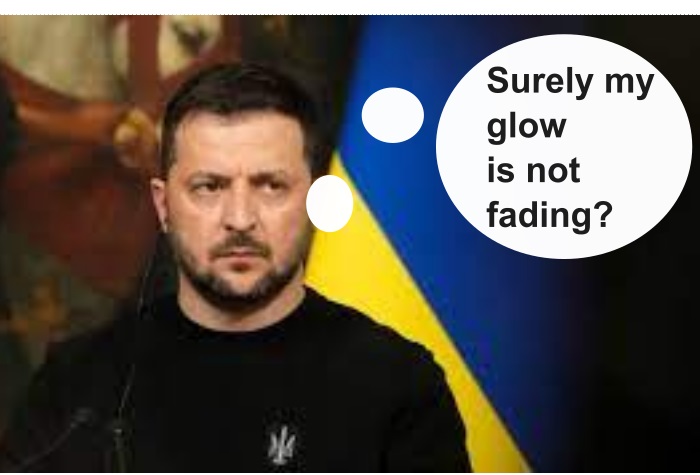
THE END FOR ZELENSKY?
Washington wants the Ukrainian president to leave office—will it happen?
Seymour Hersh, Jul 19, 2025
In fall of 2023, Ukrainian General Valerii Zaluzhnyi, the commander in chief of the country’s armed forces, gave an interview to the Economist and declared the war with Russia had become a “stalemate.” It took three months for President Volodymyr Zelensky to fire him. The general, who is the most popular public figure in Ukraine, was named ambassador to London a month later and has served there with distinction, if quietly.
Zaluzhnyi is now seen as the most credible successor to Zelensky. I have been told by knowledgeable officials in Washington that that job could be his within a few months. Zelensky is on a short list for exile, if President Donald Trump decides to make the call. If Zelensky refuses to leave his office, as is most likely, an involved US official told me: “He’s going to go by force. The ball is in his court.” There are many in Washington and in Ukraine who believe that the escalating air war with Russia must end soon, while there’s still a chance to make a settlement with its president, Vladimir Putin………………………………………………………… (Subscribers only) https://seymourhersh.substack.com/p/the-end-for-zelensky?utm_source=post-email-title&publication_id=1377040&post_id=168643905&utm_campaign=email-post-title&isFreemail=true&r=ln98x&triedRedirect=true&utm_medium=email
∙
Trump Asked Zelensky If He Could Strike Moscow If the US Provided Longer-Range Weapons.

Trump later denied that he was considering sending long-range weapons to Ukraine and said that Ukraine shouldn’t target Moscow
by Dave DeCamp | Jul 15, 2025, https://news.antiwar.com/2025/07/15/trump-asked-zelensky-if-he-could-strike-moscow-if-the-us-provided-longer-range-weapons/
President Trump has encouraged Ukraine to step up strikes deep inside Russia and even asked Ukrainian President Volodymyr Zelensky if his forces were capable of striking Moscow if the US provided longer-range weapons, the Financial Times reported on Tuesday.
Sources told the FT that the conversation occurred during a July 4 phone call. “Volodymyr, can you hit Moscow? . . . Can you hit St Petersburg too?” Trump asked. Zelensky replied that his forces could “absolutely” strike the Russian cities if the US provided the necessary weapons.
The report said that Trump signaled backing for the idea of providing long-range weapons in order to “make them [Russians] feel the pain” to pressure Moscow at the negotiating table. In comments to reporters, Trump later denied that he was considering providing Ukraine with long-range weapons and said that Zelensky “shouldn’t target Moscow.”
The White House confirmed that the conversation about striking Moscow took place, but insisted Trump wasn’t encouraging Ukrainian attacks inside Russia. A White House official told the BBC that Trump was “merely asking a question, not encouraging further killing. He’s working tirelessly to stop the killing and end this war.”
The FT report said that US officials have also provided Zelensky with a list of potential long-range weapons the US could supply. The Ukrainians have been asking for Tomahawk missiles, which have a range of over 1,000 miles, making them capable of hitting Moscow from Ukrainian territory.
Last year, the Biden administration gave Ukraine the green light to use ATACMS missiles in strikes on Russian territory. The ATACMS have a range of about 190 miles, which is not far enough to hit Moscow. Russia has made clear that attacks on its territory risk nuclear escalation since it lowered the threshold for its use of nuclear weapons in response to the US backing the ATACMS attacks.
The revelation about the Trump-Zelensky call came after the US president announced a new plan to provide Ukraine with “billions of dollars” worth of weapons by selling arms to NATO countries that will then transfer them to the war-torn nation. He also threatened major tariffs on Russia and its trading partners if a peace deal isn’t reached in 50 days, an ultimatum Moscow has rejected.
Hungary Refuses To Finance US Weapons for Ukraine

Donald Trump has shifted the financial burden of new US weapons to the EU, raising tensions among member states
News Desk, JUL 14, 2025, https://thecradle.co/articles/hungary-refuses-to-finance-us-weapons-for-ukraine
Hungarian Foreign Minister Péter Szijjártó said on 14 July that Hungary will not participate in financing US weapons for Ukraine, even if Washington formally proposes the initiative to the EU.
“I would like to emphasize that Hungarian money, Hungarian weapons, and Hungarian soldiers will not be sent to Ukraine.
Nothing will be sent there,” Szijjártó stated during a press conference in Budapest following a meeting with Moroccan Minister of Industry and Trade Ryad Mezzour.
Despite this, he expressed support for US President Donald Trump’s so-called peace efforts, stating: “No one has done as much for peace in Ukraine as Trump.”
He added that these efforts “could have been much more successful in recent months if they hadn’t been obstructed by European and Ukrainian leaders.”
Szijjártó’s remarks came shortly after Trump announced on 14 July that the US would deliver Patriot air defense missiles to Ukraine, saying the EU would cover the full cost.
“We will send them Patriots, which they desperately need … The EU is going to pay us 100 percent for that, and that’s the way we want it,” Trump told reporters at Joint Base Andrews.
Trump framed the weapons transfer as part of a broader strategy to pressure Moscow into negotiations, but did not specify how many systems would be delivered.
“Putin really surprised a lot of people. He talks nice and then bombs everybody in the evening. But there’s a little bit of a problem there. I don’t like it,” he said.
The announcement coincided with the arrival of Trump’s special envoy, retired Lt. Gen. Keith Kellogg, in Kiev. Ukrainian officials confirmed that discussions would center on weapons, sanctions on Russia, and deepening ties with Washington.
Ukrainian President Volodymyr Zelensky earlier confirmed Kiev’s readiness to purchase Patriot systems and long-range missiles from the US.
A significant announcement on further arms support is expected from Trump later this week, according to Axios.
Workers at Hinkley Point C nuclear plant stage wildcat strike over alleged bullying
Hundreds of mechanical engineers stopped work in protest over
‘management practices’ at construction site. A group of mechanical
engineers numbering in the low hundreds stopped work on Tuesday without the
backing of their trade unions amid deepening woes within the 26,000-strong
workforce over the conditions on the site.
It was the second unofficial
strike to take place in a week after a walkout last Wednesday in defiance
of union reps and the site developer, French utility company EDF, following
claims that senior managers on the Hinkley site have bullied engineering
staff. A contract worker on the project, which is running years late and
billions of pounds over budget, told the Guardian one of the incidents was
believed to have involved a senior manager bullying a young woman on the
team.
“They’ve had enough, and they’re out the gate,” he said.
Trade union Unite confirmed that a number of workers are taking part in a
protest over “management practices” which has resulted in the workers
being removed from the site. “Unite expects this matter to be resolved
soon,” a spokesperson said. The Guardian understands that EDF, which is
developing the first new nuclear reactor in a generation at Hinkley Point,
has begun an independent investigation into the alleged bullying on site.
The row has emerged days after the UK nuclear watchdog confirmed it would
prosecute EDF alongside the site’s main contractors Bouygues Travaux
Publics and Laing O’Rourke for health and safety offences over the death
of a site supervisor at the site after an accident in 2022.
Guardian 15th July 2025, https://www.theguardian.com/uk-news/2025/jul/15/workers-hinkley-point-c-nuclear-plant-stage-wildcat-strike-over-alleged-bullying
Improvements required at Sellafield after lead oxide release
The Office for Nuclear Regulation (ONR) has served an improvement notice
on Sellafield Ltd following an incident at the Cumbria site. In April, an
unintentional release of lead oxide was detected at the First Generation
Magnox Storage Pond (FGMSP) facility when workers noticed the degraded
condition of some flexible lead shielding.
Lead shielding sheets are used
across the site to protect workers from potential exposure to radiation.
The coating on the sheets used on the FGMSP skip handling machine had
degraded over time, resulting in lead oxide being released which posed a
potential risk to workers. Further enquiries have identified a number of
other locations across the Sellafield site where degraded flexible lead
shielding sheets caused a risk of lead exposure. Lead oxide is not a
radioactive substance, but can be harmful if ingested, inhaled or absorbed.
ONR 9th July 2025, https://www.onr.org.uk/news/all-news/2025/07/improvements-required-at-sellafield-after-lead-oxide-release/
Trump Announces Weapons Plan for Ukraine, Gives Russia 50-Day Deadline for Tariffs
Under the plan, the US will sell more weapons to NATO countries that will be transferred to Ukraine
by Dave DeCamp | Jul 14, 2025, https://news.antiwar.com/2025/07/14/trump-announces-weapons-plan-for-ukraine-gives-russia-50-day-deadline-for-tariffs/
President Trump on Monday met with NATO Secretary-General Mark Rutte at the White House and announced a plan to provide Ukraine with “billions of dollars” worth of US military equipment by selling US weapons to NATO countries that will be then transferred to the war-torn nation. The president also said that if a peace deal isn’t reached within 50 days, he will impose tariffs on Russia.
A source told Axios that the US is expected to sell $10 billion worth of military equipment to NATO countries in the first wave. Explaining the weapons plan to reporters, Rutte said the idea was to ensure that the US, which he described as the “police agent” of the world, is able to maintain its military stockpiles while also providing a “massive” amount of weapons to Ukraine.
“The US needs to make sure it can keep its hands on what the US needs to keep the whole world safe, because, in the end, you are the police agent of the whole world … but given that, the US has decided to indeed to massively supply Ukraine with what is necessary through NATO. Europeans [will be] 100% paying for that,” Rutte said.
Trump and Rutte said that they’d gotten commitments from European countries to purchase US weapons for Ukraine. “I will say that I spoke with Germany, spoke with most of the larger countries, and they are really enthusiastic about this, and they’re willing to go really far,” Trump said.
Trump and Rutte didn’t elaborate on the type of arms that would be sent, except to mention that more US-made Patriot air defense systems would be supplied to Ukraine. Sources told Axios that the weapons will also include long-range weapons that can strike deep inside Russia.
Regarding tariffs, Trump threatened to impose 100% tariffs on Russia and “secondary tariffs” that would target Moscow’s trading partners, which include China and India. “We’re going to be doing very severe tariffs if we don’t have a deal in 50 days,” he said.
While announcing measures to continue the proxy war, Trump is still trying to distance himself from the conflict, calling it a “Biden war” and a “Democrat war.” The president insisted that he still wants to bring the conflict to an end and that he hopes the new military aid and tariff threat will do that. “This is not Trump’s war. We’re here to get it finished and stopped,” he said.
Trump also expressed frustration with Putin, saying that he has nice conversations with the leader, but that missiles keep targeting Ukrainian cities. “My conversations with him are very pleasant, and then the missiles go off at night,” he said.
Russia has made clear that it won’t back down on its core demands for a peace deal: Ukrainian neutrality and the recognition of the four oblasts Moscow annexed in 2022 as Russian territory, which would require a Ukrainian withdrawal from the territory it still controls in those areas.
Ukrainian President Volodymyr Zelensky has refused to give up the territory and is unlikely to make concessions as long as the US and NATO continue to support his war effort. In the meantime, Russia continues to make gains on the battlefield and launch heavy missile and drone attacks across Ukraine.
Construction workers walk out at Hinkley Point C
Thousands of construction workers have walked out unofficially at the
massive Hinkley Point C nuclear power plant against bullying management. As
we go to press, they are still out. It has been estimated that there are
12,000 workers on the site, organised by Unite and the GMB, and it is
reported that anything from 2,000 to 4,000 workers are involved in this
dispute, reportedly at MEH Alliance – bringing together Altrad Services,
Cavendish, Balfour Beatty, NG Bailey and Altrad Babcock.
Socialist Party 15th July 2025,
https://www.socialistparty.org.uk/articles/140831/15-07-2025/construction-workers-walk-out-at-hinckley-c/
1 This Month

petition to oppose the rapid increase of space-military industry threatening Jeju Island and the region.
[Petition by April 19th (KST)] Stop the joint military-Hanwha Systems-Jeju Provincial Government Sea Launch!
World Nuclear Power. Reactors 1951-2026, 75 Years of Nuclear Power.
Interactive Map– https://dv.worldnuclearreport.org/

Chernobyl: The Lost Tapes – A good documentary on Chernobyl on SBS available On Demand for the next 3 weeks– https://www.sbs.com.au/ondemand/tv-program/chernobyl-the-lost-tapes/2352741955560

of the week–London Campaign for Nuclear Disarmament

Tell the Ukrainian Government to Drop Prosecution of Peace Activist Yurii Sheliazhenko
To see nuclear-related stories in greater depth and intensity – go to https://nuclearinformation.wordpress.com
-
Archives
- April 2026 (194)
- March 2026 (251)
- February 2026 (268)
- January 2026 (308)
- December 2025 (358)
- November 2025 (359)
- October 2025 (376)
- September 2025 (257)
- August 2025 (319)
- July 2025 (230)
- June 2025 (348)
- May 2025 (261)
-
Categories
- 1
- 1 NUCLEAR ISSUES
- business and costs
- climate change
- culture and arts
- ENERGY
- environment
- health
- history
- indigenous issues
- Legal
- marketing of nuclear
- media
- opposition to nuclear
- PERSONAL STORIES
- politics
- politics international
- Religion and ethics
- safety
- secrets,lies and civil liberties
- spinbuster
- technology
- Uranium
- wastes
- weapons and war
- Women
- 2 WORLD
- ACTION
- AFRICA
- Atrocities
- AUSTRALIA
- Christina's notes
- Christina's themes
- culture and arts
- Events
- Fuk 2022
- Fuk 2023
- Fukushima 2017
- Fukushima 2018
- fukushima 2019
- Fukushima 2020
- Fukushima 2021
- general
- global warming
- Humour (God we need it)
- Nuclear
- RARE EARTHS
- Reference
- resources – print
- Resources -audiovicual
- Weekly Newsletter
- World
- World Nuclear
- YouTube
-
RSS
Entries RSS
Comments RSS
 nuclear-news