Anxieties over the safety of nuclear wastes at Bradwell A site

 Mersea Life July 2018, A band of BANNG representatives, including myself, attended the June meeting of the LCLC at Mundon. The LCLC looks at what is happening at the Bradwell A site with regard to decommissioning and the future of the site.
The big issues discussed were: the entry of the site into Care & Maintenance (C&M); the long-term presence on site of the Intermediate-Level waste (ILW) store and of the highly radioactive graphite reactor cores. It was questioned how the site could really be said to be in C&M when it would still have activities ongoing.
The ILW store would require to be opened from time to time to accept deliveries of the 164 ILW casks still to come
from Dungeness and Sizewell (making Bradwell a regional nuclear waste store); and the highly radioactive reactor cores would continue to remain on site for the long-term.
This prompted questions: were the plans to monitor the site remotely from Sizewell during the C&M stage appropriate?;
what about the effects of public spending restraints on site security?; would cuts to police numbers affect the ability of Essex Police to respond to any incident at the site?
The Office for Nuclear Regulation (ONR) tried to reassure the meeting that the site will not be permitted to enter C&M
until the agency is satisfied with the safety case and it was known that Magnox and the police would be able to respond to events.
It was hoped to move the wastes to the national repository within 65-85 years. Andy Blowers pointed out that a repository does not yet exist, no-one knows when it will exist – or if it will exist at all. In any event, it is unlikely that wastes from Bradwell A will be high in the queue when Sellafield has first call on the repository.
http://edition.pagesuite-professional.co.uk/Launch.aspx?EID=46bf7f8d-da05-442f-83a8-2cc336bdc0a8
Russia and China pushing to create their economic nuclear empires
Russia on an international offensive to sell its nuclear plants, Vladimir Putin’s government vies with China to become a superpower in the field MOSCOW — Russia is stepping up its overseas sales of nuclear power plants, with state-run nuclear energy company Rosatom agreeing in July to cooperate in building a plant in the Central Asian country of Uzbekistan and reaching an accord with China to build a plant in that country.
Russia accounts for 67% of the world’s nuclear plant deals currently in development. By 2030, Rosatom aims to increase its overseas sales to two-thirds of total sales, from 50% at currently. Vladimir Putin’s government is looking to expand Russian influence through nuclear diplomacy, vying with China — which is promoting its own nuclear plants — for the status of nuclear energy superpower.
“We hope that a lot of other countries will become our partners, and as they say, ‘nuclear newcomers,'” Rosatom Chief Executive Alexey Likhachev told Prime Minister Dmitry Medvedev at a meeting in early July…….
During a visit by Putin to China in June, Rosatom entered into a framework agreement to cooperate in nuclear plant construction, including four reactors in Jiangsu and Liaoning provinces.
Russia intends to make nuclear power plants a major revenue earner alongside exports of crude oil and natural gas. Rosatom’s annual business report for 2016 showed it was involved in nuclear plant projects in more than 10 countries, including China, Bangladesh and India. The company had $133.4 billion of overseas orders, up 21% from a year earlier. It targets $150 billion to $200 billion in orders in 2030…….
Russia’s strength in the field is the all-out support of the government, and its ability to take on all aspects of a nuclear energy project. The Putin government attaches much importance to nuclear plants, seeing them as a globally competitive, technology-intensive industry with an important role to play in revitalizing Russia’s domestic industry. Putin himself has successfully pitched Russian nuclear plants to foreign leaders during international summits.
Russian nuclear plants also boast price competitiveness, with the government providing loans to finance the high costs. Not only does Russia build the plant, but it supplies the fuel, operates and maintains the reactors, and disposes of the used fuel. This makes a deal with Russia attractive for countries that want to build their first nuclear plant, but which lack the operational know-how…….
China has made it clear that its policy is to expand overseas nuclear plant deals by building on the technology of Russia, France and other countries that have been at the forefront of nuclear plant development. …….https://asia.nikkei.com/Business/Energy/Russia-on-an-international-offensive-to-sell-its-nuclear-plants
Biased and unreliable – UK’s ‘Expert Finance Working Group on Small Modular Reactors’
 NFLA 8th Aug 2018 , The Nuclear Free Local Authorities (NFLA) notes the report by the ‘Expert
Finance Working Group on Small Modular Reactors’ as another attempt to
promote the benefits of this technology despite large and quite possibly
insurmountable hurdles to cross.
The report was commissioned by the UK
Government to consider ways to provide market frameworks for the
development of small nuclear reactors to prosper. The Government suggests
it is an ‘independent’ group, yet at least half of the group have
strong links to the nuclear industry, including the Nuclear Industry
Association, the main UK supporter for such technology.
Over the past few
years, the UK Government has put forward the potential of small nuclear
reactors to be a part of a future ‘low carbon’ energy mix. The UK
appear to be one of the few governments pursuing such a strategy, as even
France and Finland, the only other countries in Europe currently developing
large nuclear projects, have no plans to develop such technology. Indeed
France has just commissioned a whole raft of new smaller-scale solar energy
projects.
http://www.nuclearpolicy.info/news/small-modular-nuclear-reactors-financing-report-nfla-remain-sceptical-such-technology-as-cost-effective-as-renewables/
Unlimited exposure to costs by taxpayers and consumers, to UK’s new nuclear plans
 Dave Toke’s Blog 7th Aug 2018 So finally the Government has, after I feared so long it would, chosen the
doomsday option to fund new nuclear power stations – one that will be
disastrous for the consumers and taxpayers.
After years of swearing that
they would not offer subsidies to nuclear power, and saying that in the
future the terrible drain of (historical) over-spending on nuclear power
would stop, the Government has gone back to square zero.
Essentially, under
the Government’s proposals for so-called ‘Regulated Asset Base’ (RAB) of
funding nuclear power (described in a recent article in ‘Unearthed’, a
Greenpeace publication), the nuclear developers will have no real limit on
what they can spend to build the power stations. It is a recipe for
national disaster.
No private developer is willing to take the construction
risks of funding nuclear power in the UK, whatever ‘strike price’ is
offered for the electricity that might be generated in future. Doesn’t that
tell you something?
So EDF stepped up to the mark. EDF, the French
state-owned company, may be starting the real part of the construction of
Hinkley C in 2019/2020. The French state will pay for the inevitable cost
overruns that come along with building the plant, combined quite probably,
with an out-of-contract bailout by the British Government when the going
gets tough.
But now the Government is casting around for another nuclear
power plant to be built, – Wylfa or Sizewell C – but neither developer
(Hitachi or now EDF) wants to take the risk of paying the almost inevitable
losses on the project. So enter the Government’s new proposals which will
no doubt be promoted as a simple accountancy trick to lower costs, but hide
the fact that the state will take the losses, to be divided up between us
as taxpayers (loss of guaranteed loans and construction risk guarantees)
and electricity consumers (advance payments on top of electricity bills).
And, note this, whatever ministers may say, the exposure by taxpayers and
consumers in UNLIMITED.
http://realfeed-intariffs.blogspot.com/2018/08/new-nuclear-plan-means-that-consumers.html
Europe’s heatwave -land and water – is crippling nuclear power
Europe’s heatwave is forcing nuclear power plants to shut down, Quartz, By Akshat Rathi,
UK Consumers could pay for new nuclear power plants years before they are built.
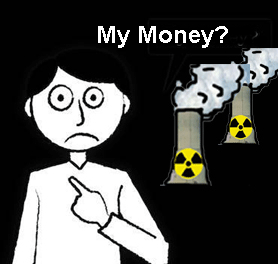 Unearthed 6th Aug 2018 , Consumers could pay for new nuclear power plants years before they are
built. The government is considering using a controversial financing system
to build new nuclear power stations which would see customers charged for
construction costs long before a project has actually been built.
The approach, called the Regulated Asset Base (RAB) model, has been described
as an “open cheque book” for developers, as consumers could be locked
into paying the costs of a project going wrong – like construction taking
longer than planned, or prices spiraling – indefinitely until it’s
complete.
Shadow energy minister Alan Whitehead MP said: “The problem
with this model as applied to new nuclear power stations is that it
transfers all the risk of construction from the developer to the customers,
with the rather wobbly promise of benefits to come in the future.
” Like other public-private finance models, the RAB model has a sticky history.
The government has already supported the use of RAB for the Thames Tideway
Tunnel, a £4.2bn project to revamp 15 miles of sewer lines in North
London, which Thames Water says a RAB model has helped lower costs. Much of
the work around taking a RAB approach to financing nuclear power has been
carried out by Dieter Helm, professor of Energy Policy at the University of
Oxford and a figure respected by government.
Writing in a blog about the
model’s application to nuclear last month, Helm highlighted a number of
open issues – such as which regulator would set the RAB for nuclear
projects, as well as the “very severe lobbying pressures” any regulator
would come under when making its RAB evaluations. Helm concludes that the
RAB may be an efficient approach to financing nuclear power, but still
doesn’t address fundamental issues about its cost competitiveness with
other technology like wind and solar, or what do with all its radioactive
waste. “It is for society to decide whether it wants new nuclear or
not,” he said. “The market cannot decide.”
https://unearthed.greenpeace.org/2018/08/06/new-nuclear-plants-funding-regulated-asset-base/
Scotland could rid of nuclear weapons
Clear process to rid us of nuclear weapons Herald Scotland, Isobel Lindsay, 7 Aug 18“……. The United Nations Treaty for the Prohibition of Nuclear Weapons which was formalised in 2017 would offer an independent Scottish state a clear route with international supervision to have these weapons removed if Scotland applied to join the Treaty. The SNP and the Greens support the treaty and after independence so would many Labour members. There would be a strong political majority for this.
US military flights through Shannon would be ‘illegal’ under new nuclear ban treaty
US military flights through Shannon would be ‘illegal’ under new anti-nuclear treaty
‘Doomsday Clock now stands at two minutes to midnight,’ Irish CND president says, Irish Times, Elaine Edwards
With more hot weather coming,, France forced to more cuts to nuclear power production
 French nuclear power supply cuts extended as hot weather lingers https://www.spglobal.com/platts/en/market-insights/latest-news/electric-
 power/080318-french-nuclear-power-supply-cuts-extended-as-hot-weather-lingers, AuthorAnuradha Ramanathan, EditorJeremy Lovell
HIGHLIGHTS
1,335 MW St Alban-1, 910 MW Bugey-2 offline until next Saturday
Reduced available capacity at St Alban-2, Bugey-3, Fessenheim-2
Prompt power price rally continues due to supply pressures
London — With France bracing for more hot to very hot weather in the coming week, nuclear power plant operator EDF said Friday it plans to halt production completely at two of its reactors near the river Rhone, water from which is used for cool them, and reduce available capacity at other units next week.
In its latest update on Friday, EDF said production capacity at the 1,335 MW St Alban-1 and 910 MW Bugey-2 reactors would drop to zero until Saturday next week, reducing capacity from Friday afternoon. The 910 MW Bugey-3 will also remain unavailable for power generation from late Friday but with an expected restart on Wednesday.
Out of the 1,335 MW St Alban-2 installed capacity, 950 MW will remain available to the market over the weekend, EDF said, while 600 MW will be available from its 880 MW Fessenheim-2 nuclear reactor over the weekend and until Monday midnight.
EDF, however, warned that the planning and duration of the unavailability due to environmental issues will be reassessed according to the weather forecast. These supply restriction warnings due to hot weather began late July at the onset of the heatwave which is currently covering Europe.
Furthermore, forecasters predict temperatures in France, Germany, Italy and Spain to stay above seasonal averages next week, with forecaster MeteoFrance expecting Portugal temperatures to hit 48 degrees Celsius over this weekend.
The hot weather and the resulting nuclear supply restrictions sent the prompt power prices in the wholesale market to winter levels as countries are ramping up the more expensive fossil fuel power plants, analysis shows.
French day-ahead baseload for Monday delivery was last heard trading at Eur66.50/MWh on the over-the-counter market, reaching a new summer high and the highest in more than five months, data showed.
–Anuradha Ramanathan, anuradha.ramanathan@spglobal.com Jeremy Lovell, jeremy.lovell@spglobal.com
Centre for Security Studies explains NATO Nuclear Sharing
 NATO Nuclear Sharing, Centre for Security Studies, The CSS Blog Network, By Tim Street , 3 Aug 18
Nato Nuclear Sharing – modernisation and the politics of this
NATO Nuclear Sharing, Centre for Security Studies, The CSS Blog Network, By Tim Street , 3 Aug 18
“……….What modernisation is planned?
Despite former President Obama’s much-publicised rhetoric on the need for concrete action towards a nuclear weapons free world, work on the modernisation of US B61 bombs began under his administration and is receiving continued support from President Trump. In addition, NATO has embarked on improvements to its security and infrastructure, which alliance members will pay for. These are taking place at the USAF base at Incirlik, in Turkey and at the USAF base at Aviano, Italy.
The B61 bomb modernisation programme is being driven by the US National Nuclear Security Administration (NNSA), which aims to upgrade and expand the lives of about 400 of the 520 B61 bombs in its inventory for approximately twenty years, through a Life Extension Program (LEP). More precisely, the NNSA plans to consolidate the four existing types or ‘MODs’ of the B61 bombs into one MOD—the B61-12. Key results of the planned modernisation will be to: make the existing ‘dumb’ bombs three times more accurate by adding a new tail kit and internal guidance system; allow the use of the weapons for both tactical and strategic missions; and for delivery by both fighter jets and long-range bombers. Completion of the first new B61-12 bomb is set for 2020, with work on the remaining bombs planned for 2024.
Such improvements, which, NATO argues, have been made to decrease the risk of radioactive fallout and result in fewer civilian casualties, have led to critics arguing that these weapons could be seen as more usable. Analysts such as Hans Kristensen have therefore concluded that the increased military capabilities provided by the new B61 bombs will signal to Russia that “it is acceptable for it to enhance its non-strategic nuclear posture in Europe as well”. Russia could do this by deploying its own TNW closer to NATO’s eastern border as well as keeping nuclear capabilities, which are, the US argues, in violation of the Intermediate-Range Nuclear Forces (INF) Treaty.
Critics have also pointed to the major costs involved in the LEP, estimates for which range up to $25 million per bomb. Some also argue that the programme is unnecessary given the capabilities of the existing arsenal, simpler options for life extension and the possibility that the weapons could soon be withdrawn from service.
Controversy has also dogged the replacement of nuclear host countries’ nuclear-capable aircraft, which are all set to retire in the 2020s. The Lockheed Martin F-35A is seen as particularly suitable for nuclear missions and can be modified to carry B61-bombs. However, whilst several NATO members, including Italy, the Netherlands and Turkey, have committed to purchasing the F-35A, nuclear host nations Belgium and Germany have proved more reluctant, both for cost reasons and because of their interest in procuring alternative, European-made aircraft. Like the Greeks in 2001, failure to procure suitable new aircraft could lead to them ceasing to participate and host TNWs.
What are the political dynamics of NATO nuclear sharing?
As NATO’s Strategic Concept of 1999 explains, “the fundamental purpose of the nuclear forces of the Allies is political” since these weapons “provide an essential political and military link between the European and the North American members of the Alliance”. The two key aspects of this ‘link’ are that it is: i) hierarchical, with Washington leading; ii) legitimating, so that political elites in NATO member states visibly assent to the dominant US presence and role in Europe.
A common objection raised by those who argue that NATO nuclear weapons should be removed from the continent is that the alliance’s conventional superiority in relation to Russia means that there is no military need for these weapons. If these weapons no longer have a meaningful military role, it is argued, then they are no longer justifiable from a political perspective.
In response, the value of NATO TNW as a bargaining chip in arms control and disarmament negotiations with Russia is sometimes raised. Arguably, Moscow does not maintain its TNW in order to balance against NATO TNW, but because of the disparity it suffers in terms of conventional military forces in Europe. NATO’s unwillingness to scrap its TNW also tends to warrant Moscow’s inaction and opacity regarding its own TNW.
Various studies and opinion polls show that several alliance member governments as well as many experts, civil society groups and significant numbers of citizens want TNW removed from their countries. The Belgian, German and Dutch governments have all officially acknowledged that they favour the withdrawal of TNW from their territories. Yet they have qualified this position by stating that withdrawal can only take place if there is consensus on the move by all 28 NATO members. However, there is a range of different positions within NATO on nuclear matters, for example, on the value of deterrence and disarmament. Such dynamics help explain the alliance’s inherent caution and conservatism regarding nuclear decision-making.
Other areas of political controversy involve safety and security issues. For example, the 2016 attempted coup in Turkey led critics to question how secure nuclear weapons were at the Incirlik airbase, which is also close to the Syrian border. Another possibility is that the command and control protocols for the weapons preventing unauthorised use could be overridden. Such concerns have led opponents of the weapons, such as German President Frank-Walter Steinmeier, to describe them as ‘absolutely senseless’ and potential targets for terrorists.
Another notable dimension to nuclear sharing is that US allies in other regions—such as North East Asia—closely observe how Washington handles its extended deterrence relations with NATO. Some analysts have thus proposed that US nuclear sharing be extended to South Korea and/or Japan given current instability in the region. Again, the rationale of disincentivising these allies from independently developing nuclear weapons in response to nuclear-armed rivals (i.e. North Korea) has been advanced.
How does nuclear-sharing fit with arms control, non-proliferation and disarmament regimes?
A common view in Europe and beyond is that the continued deployment in Europe of US TNW is a contravention of the nuclear non-proliferation treaty (NPT), which commits its members to “further diminish the role and significance of nuclear weapons in all military and security concepts, doctrines and policies”. Despite pressure within several nuclear sharing states for change, both the conventional and nuclear arms control and disarmament agenda are frozen. This is mainly due to the poor relations between the US and Russia, as well as the lack of political will in NATO governments to push these issues forward. Civil society groups have long called for the US to realise its NPT non-proliferation and disarmament obligations by repatriating its TNW to US soil prior to their dismantlement.
Russia has a far larger number of TNWs than the US (approximately 1,830) and Moscow insists upon the removal of US TNWs from Europe before it engages with Washington and NATO on accounting for and reducing these weapons. For its part, the US sees Russian TNW as threatening to its NATO allies, particularly in Eastern Europe and the Baltics. Russian and US experts have proposed a series of measures that could overcome existing reluctance and allow TNW to be included in wider nuclear arms reduction talks. For example:
- Former US Ambassador Steven Pifer has previously recommended that the two nations take: i) confidence-building and transparency measures; ii) parallel unilateral steps to freeze or reduce TNW stockpiles; and iii) begin negotiations aimed at a legally-binding TNW treaty with verification measures.
- Nuclear experts Pavel Podvig and Javier Serrat have recently argued that TNW should continue not being deployed during peacetime and that this should be codified into a “legally-binding, verifiable arrangement” to reduce crisis escalation and the risks of nuclear war.
- Other analysts such as Dr Andrew Futter have also highlighted the existence of other options, such as moving US TNW to bases in new countries or concentrating them in Italy and Turkey, but note that these ideas raise several problems.
- Russian analysts, meanwhile, argue that conventional arms control—such as an updated Conventional Forces in Europe treaty—would need to be implemented if Moscow is to further reduce its TNW.
In March 2011, NATO created a new Committee on WMD Control and Disarmament to provide oversight and policy discussion in this area, but it is unclear what this body has hitherto accomplished.
About the Author
Tim Street is an Associate Fellow of the Oxford Research Group’s Sustainable Security Programme, specializing in nuclear security and disarmament issues.
For more information on issues and events that shape our world, please visit the CSS website. https://isnblog.ethz.ch/defense/nato-nuclear-sharing
£10bn Moorside nuclear power plant plunged into further doubt
 Moorside nuclear bidder stripped of preferred status, Construction News, 3 AUGUST, 2018
The £10bn Moorside nuclear power plant has been plunged into further doubt after Korean energy firm Kepco lost its preferred bidder status to develop the scheme.
The plant’s current developer Toshiba is now looking at alternative options for the future of the site after negotiations with Kepco failed to reach a conclusion.
Kepco looked to have saved the embattled project when it swooped in December last year and was named preferred bidder ahead of China’s CGN.
Toshiba said this week that a sale to Kepco was still on the table and it was in “consultation with stakeholders including the UK government” to find a solution.
The protracted negotiations have also forced NuGen, Toshiba’s Moorside development body, to restructure its business………
the National Infrastructure Commission last month called on government to withhold financial support for all but one of the planned new nuclear projects until at least 2025.
The commission said the government should focus on investing in renewable energy projects instead, some of which are now being built with no government subsidies. https://www.constructionnews.co.uk/markets/sectors/nuclear/moorside-nuclear-bidder-stripped-of-preferred-status/10033902.article
Nordic nuclear power plants hit by unprecedented heat wave
 HOW SUMMER HEAT HAS HIT NORDIC NUCLEAR PLANTS http://ewn.co.za/2018/08/02/how-summer-heat-has-hit-nordic-nuclear-plants Reuters 2 Aug 18
OSLO – This year’s unusually warm summer in the Nordic region has increased sea water temperatures and forced some nuclear reactors to curb power output or shut down altogether, with more expected to follow suit.
The summer has been 6-10 degrees Celsius above the seasonal average so far and has depleted the region’s hydropower reservoirs, driving power prices to record highs, boosting energy imports from continental Europe and driving up consumer energy bills.
Nuclear plants in Sweden and Finland are the region’s second largest power source after hydropower dams and have a combined capacity of 11.4 gigawatts (GW).
Reactors need cold sea water for cooling but when the temperature gets too high it can make the water too warm for safe operations, although the threshold varies depending on the reactor type and age.
Unscheduled power output cuts in Swedish and Finnish reactors could push prices even higher, said Vegard Willumsen, section manager at Norway’s energy regulator NVE.
“If nuclear reactors in the Nordics shut down or reduce power due to the heatwave, it could also put pressure on the supply and consequently on the Nordic power prices,” he added.
WHY IS WATER TEMPERATURE AN ISSUE?
The Nordic region’s nuclear plants comprise either pressurised water reactors (PWR) or boiling water reactors (BWR) – and both can be affected by warm sea water.
Typically, power would be reduced at the 12 reactors after a certain temperature threshold has been reached and then fully shut down at a higher threshold.
BWRs can keep operating for longer and would only shut down after a several-degree rise in water temperatures from the moment power reductions are triggered.
However, PWRs require a shorter time to shut down after they start reducing power.
Utility Vattenfall, which operates seven reactors in Sweden, shut a 900-megawatt (MW) PWR unit – one of the four located at its Ringhals plant – this week as water temperatures exceeded 25 degrees Celsius.
The firm’s second plant at Forsmark consists of three BWRs and Vattenfall had to reduce output by 30-40 megawatt per reactor earlier in July as the sea water in the area exceeded 23 degrees Celsius.
Finland’s Fortum reduced power at its Loviisa plant last week when water temperatures reached 32 degrees C, close to a threshold of 34 degrees.
The extent to which water temperature affects nuclear plants also depends on the depth that they receive water from. Colder water is deeper.
It also depends on how warm the water is after being used in the reactors and released back into the sea. If used water exceeds 34 degrees Celsius, it can cause major output reductions or shutdowns for certain plants due to safety regulations.
Sweden’s biggest reactor – 1.4 GW Oskarshamn 3 – should be less vulnerable to very hot summers due to the depth of water, said a spokesperson for operator OKG, a unit of Uniper Energy.
“Water intake (is) at a depth of 18 metres where the water naturally is cooler than on the surface … should it be too hot, we would, of course, reduce the capacity accordingly,” he said.
Oskarshamn 3 will reduce power if sea water reaches 25 degrees but it was below 20 degrees on Tuesday.
Similarly, Teollisuuden Voima’s Olkiluoto plant in Finland has deeper water which is colder than a 27-degree threshold.
TVO has also built an additional safety mechanism – a canal – which it can use under certain conditions to release used warm water on the other side of the Olkiluoto island.
Climate change will bring sea level rise – bringing danger to Hinkley Point C nuclear site.
Burnham-on-sea.com 1st Aug 2018 , EDF reject fears Hinkley C will be vulnerable to sea level rise. T
 The Stop
Hinkley Campaign has written to the Office for Nuclear Regulation to
express concern about recent reports that we could be heading for a
sea-level rise of as much as 6 metres during the lifetime of the Hinkley
Point C site.
Some researchers say sea levels could rise by six metres or
more even if the 2 degree target of the Paris accord is met.
Sustained warming of one to two degrees in the past has been accompanied by
substantial reductions of the Greenland and Antarctic ice sheets and sea
level rises of at least six metres – several metres higher than what
current climate models predict could occur by 2100.
http://www.burnham-on-sea.com/news/2018/hinkley-c-rising-sea-levels-01-08-18.php
Wylfa nuclear power to be very expensive for both taxpayers and consumers
 Wind Power Monthly 31st July 2018 , David Milborrow:
In a complete policy reversal, the UK government has
announced it will consider direct investment in a proposed new nuclear
power station, Wylfa in North Wales.
This will enable the electricity price
to be brought down below the level agreed for the Hinkley Point C nuclear
plant, which attracted criticism from many quarters, including the
government’s own spending watchdog, the National Audit Office.
The UK government’s stake in Wylfa is likely to be around £5 billion, or around
30% of the total, although estimatesof the total cost vary between £12
billion and £20 billion. The government has not put a figure to the
expected electricity price for the Wylfa project, but speculation suggests
that it will be around £75-77/MWh, payable for 35 years.
The UK’s Guardian newspaper points out that the £75/MWh price (payable for 35
years) for nuclear power is significantly higher than the £62/MWh average
(payable for 15 years awarded for offshore wind projects due to come online
about the same time. The £13/MWh difference is higher than the cost of
backup for wind, which most studies putat around £5-£10/MWh.
https://www.windpowermonthly.com/article/1489040/windeconomics-uk-government-steps-support-nuclear-power
1 This Month
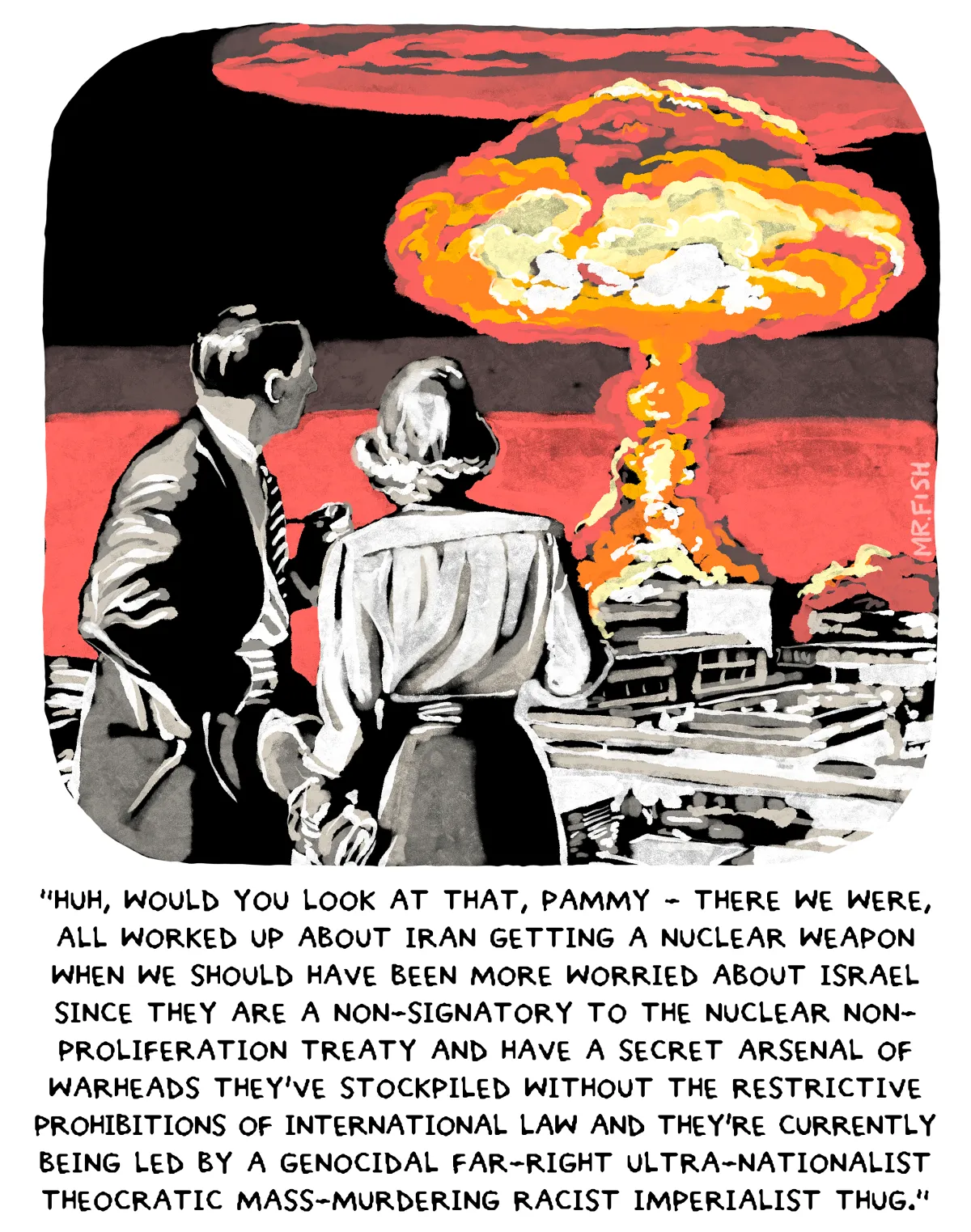
1 June Webinar – The High Cost of Nuclear Power – Register
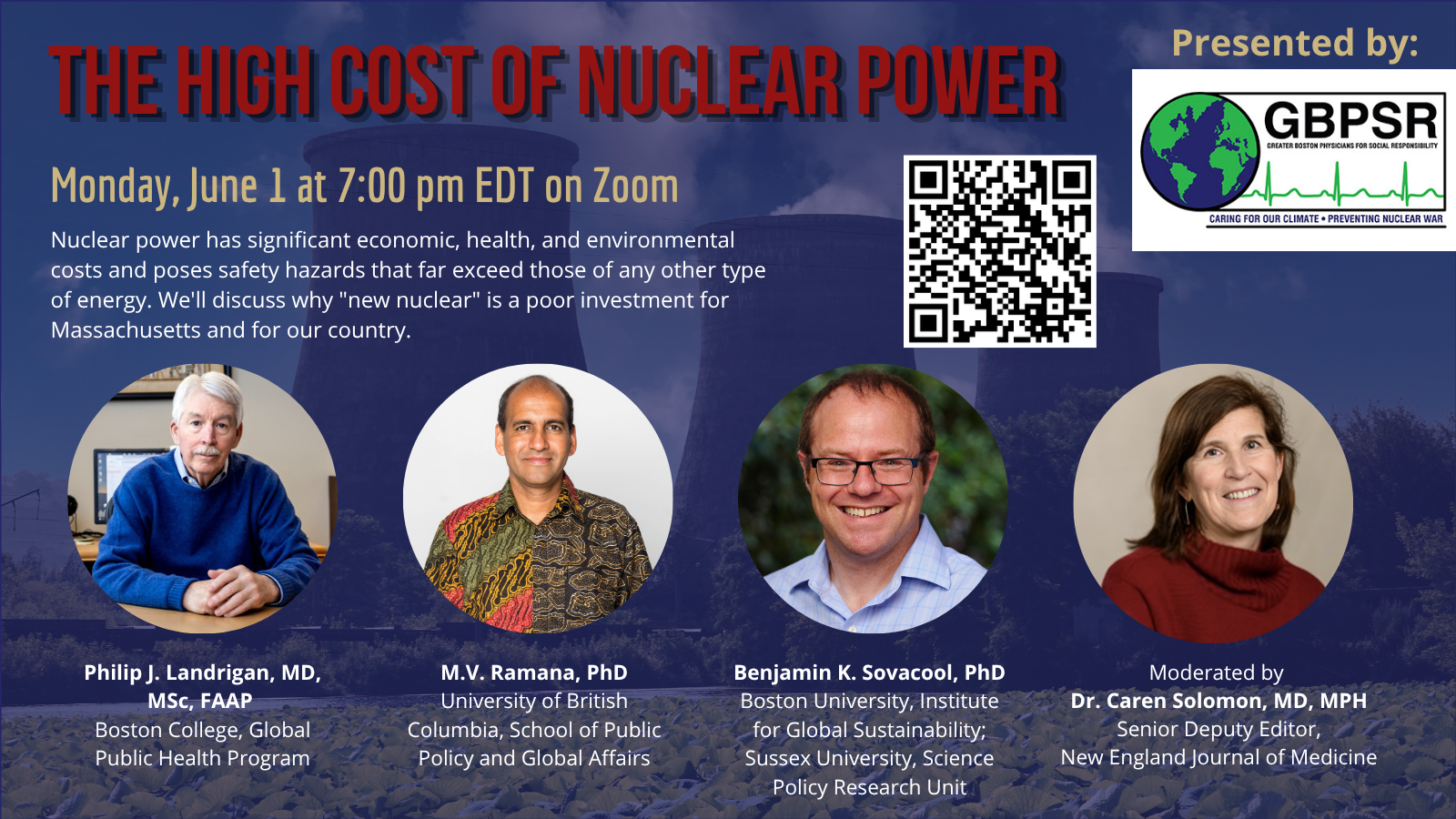


of the week– Nuclear Reactor Information Task Force
To see nuclear-related stories in greater depth and intensity – go to https://nuclearinformation.wordpress.com
-
Archives
- May 2026 (262)
- April 2026 (356)
- March 2026 (251)
- February 2026 (268)
- January 2026 (308)
- December 2025 (358)
- November 2025 (359)
- October 2025 (376)
- September 2025 (257)
- August 2025 (319)
- July 2025 (230)
- June 2025 (348)
-
Categories
- 1
- 1 NUCLEAR ISSUES
- business and costs
- climate change
- culture and arts
- ENERGY
- environment
- health
- history
- indigenous issues
- Legal
- marketing of nuclear
- media
- opposition to nuclear
- PERSONAL STORIES
- politics
- politics international
- Religion and ethics
- safety
- secrets,lies and civil liberties
- spinbuster
- technology
- Uranium
- wastes
- weapons and war
- Women
- 2 WORLD
- ACTION
- AFRICA
- Atrocities
- AUSTRALIA
- Christina's notes
- Christina's themes
- culture and arts
- Events
- Fuk 2022
- Fuk 2023
- Fukushima 2017
- Fukushima 2018
- fukushima 2019
- Fukushima 2020
- Fukushima 2021
- general
- global warming
- Humour (God we need it)
- Nuclear
- RARE EARTHS
- Reference
- resources – print
- Resources -audiovicual
- Weekly Newsletter
- World
- World Nuclear
- YouTube
-
RSS
Entries RSS
Comments RSS
 nuclear-news