Local ‘ceasefire’ area declared at Ukrainian nuclear plant for damage repairs
Without reliable external power, the Zaporizhzhia nuclear power risks losing the cooling needed to keep its reactors stable.
Politico, October 18, 2025 By Mathieu Pollet
Repairs are underway at Ukraine’s Zaporizhzhia nuclear power plant after “local ceasefire zones” were established in the area, the United Nations nuclear watchdog said on Saturday.
“Restoration of off-site power is crucial for nuclear safety and security. Both sides engaged constructively with the [International Atomic Energy Agency] to enable complex repair plan to proceed,” the IAEA wrote in a post on X.
The Russian-occupied facility in southeastern Ukraine has been cut off from the national grid for four weeks — its longest blackout since the Russia’s invasion in February 2022. The plant has been using on diesel generators since its last power line went down last month…………………………………………….. https://www.politico.eu/article/ukraine-russia-local-ceasefire-zone-declared-nuclear-plant-damage-repairs/
Bristol Airport generates record amount of renewable energy.

Bristol Airport has generated a record amount of renewable energy from its solar arrays, totalling more than 1,425,000 Kwh so far this year. The
energy output is equivalent to the annual electricity use of almost 400
homes and already surpasses last year’s total.
South Wales Argus 17th Oct 2025, https://www.southwalesargus.co.uk/news/25552365.bristol-airport-generates-record-amount-renewable-energy/
Trump downplays hopes he will supply Ukraine with US missiles after meeting with Zelenskyy
US president seemed more intent on brokering a peace deal after surprise phone call with Putin earlier in day
Pjotr Sauer Russian affairs reporter and Andrew Roth in Washington,Sat 18 Oct 2025
Donald Trump seemed more intent on brokering a peace deal than he was to supply Ukraine with Tomahawk cruise missiles during a White House meeting with Volodymyr Zelenskyy, saying that the US may need them for a future conflict.
While Trump did not rule out providing the long-range missiles Zelenskyy seeks, Trump appeared cool to the prospect as he looked ahead to a meeting with Vladimir Putin in Hungary in the coming weeks.
After speaking with Zelenskyy for more than two hours, Trump implored both Ukraine and Russia to “stop the war immediately”, even if it means Ukraine conceding territory.
“You stop at the battle line, and both sides should go home, go to their families,” Trump told reporters on his way to his home in West Palm Beach, Florida. “Stop the killing. And that should be it. Stop right now at the battle line. I told that to President Zelenskyy. I told it to President Putin.”
The Ukrainian leader was frank, telling Trump that Ukraine has thousands of drones ready for an offensive against Russian targets, but needs American missiles.
“We don’t have Tomahawks, that’s why we need Tomahawks,” he said.
Trump responded: “We’d much rather have them not need Tomahawks.”
Later, Trump reiterated that he wants the United States to hold on to its weaponry. “We want Tomahawks, also. We don’t want to be giving away things that we need to protect our country,” he said.
Trump’s doubtful tone on the cruise missiles follows a surprise phone call with Vladimir Putin on Friday during which the Russian leader told Trump that supplying the Tomahawks would damage US-Russian relations.
His position on supplying Ukraine with weapons has changed a number of times since he returned to office in January, often after negotiations with Putin or European backers of Ukraine.
During the White House meeting with Zelenskyy, Trump also discussed plans to hold a bilateral meeting with Putin in Hungary, saying it was “to be determined” whether Zelenskyy would join but that he would inform him of the discussions.
“There is a lot of bad blood,” Trump said.
After the talks on Friday, the US president issued a stern call to both sides on social media to “stop the killing, and make a DEAL!”.
“They should stop where they are. Let both claim Victory, let History decide!” Trump posted on Truth Social.
Zelenskyy told reporters he did not want to talk about long-range missiles, saying the US did not want escalation, and he was “realistic” about his chance of getting them.
The Ukrainian president, who spoke by phone with European leaders after the meeting, said he was counting on Trump to pressure Putin “to stop this war”.
The Kremlin’s top aide, Yuri Ushakov, earlier said Putin had initiated Thursday’s conversation with Trump, during which the Russian leader urged his US counterpart not to supply Ukraine with the Tomahawks.
“I did actually say: ‘Would you mind if I gave a couple of thousand Tomahawks to your opposition?’ I did say that to him. I said it just that way,” Trump said, recounting the conversation.
“He didn’t like the idea. You have to be a little bit lighthearted sometimes.”
Ushakov told reporters in Moscow that Putin warned Trump during the call that supplying Kyiv with Tomahawks “won’t change the situation on the battlefield, but would cause substantial damage to the relationship between our countries”.
It was the eighth known call between the two men since Trump began his second term in January, and followed a familiar pattern in the complex and often confusing contest between Putin and Zelenskyy for Trump’s ear.
On previous occasions, when Trump had seemed ready to tilt towards Kyiv and its European allies, a call from Putin was often followed by a sudden softening in the US leader’s tone towards Moscow.
A flurry of activity was also set off with Trump’s announcement after the call that he was planning to meet the Russian president in the Hungarian capital on a date still to be determined, in an effort to end the war.
Putin’s spokesperson, Dmitry Peskov, on Friday morning said that the summit could take place “within two weeks or later”.
Peskov said Putin had already discussed the planned meeting with Viktor Orbán, the Hungarian prime minister. Orbán – an outlier among European leaders with warm ties to Trump and Putin – said he had also spoken to Trump about the summit, writing on X: “Preparations for the USA-Russia peace summit are under way.”
It remains unclear how Putin would travel to Hungary, given EU sanctions and airspace restrictions imposed after Russia’s invasion of Ukraine, as well as the fact that he is wanted by the international criminal court (ICC). As a signatory to the ICC, Hungary would be obliged to arrest him, though Orbán has previously said this would not happen.
When asked about the logistical challenges, Peskov said the route was “so far, of course, unclear”.
Hungary’s foreign minister, Péter Szijjártó, said on Friday that Putin would be able to enter and leave the country. “There is no need for any kind of consultation with anyone, we are a sovereign country here. We will receive [Putin] with respect, host him and provide the conditions for him to negotiate with the American president,” he told a press briefing.
Trump and Putin last met in Alaska in August, which did not produce a diplomatic breakthrough. Trump added that fresh high-level talks between Washington and Moscow would be held next week, led on the US side by the secretary of state, Marco Rubio, before a presidential summit in Budapest.
The latest conversation, which lasted more than two and a half hours, appears to have sapped the momentum Zelenskyy had built with Trump, with the US leader now unlikely to show significant support for Ukraine before meeting Putin.
“Zelenskyy must be pulling his hair out. Today’s meeting with Trump is now completely overshadowed and overtaken by the Budapest meeting,” said John Foreman, a former British defence attache to Moscow and Kyiv.
Trump also has hinted that talks between Putin and Zelenskyy may need to take place indirectly, contradicting Zelenskyy’s longstanding aim of meeting Putin face to face to end the war.
“They don’t get along too well, those two,” Trump said. “So we may do something where we’re separate. Separate but equal.”
Zelenskyy, who touched down in Washington on Thursday and met US defence contractors before his White House visit, has not commented on the Putin-Trump call, though few in Kyiv are likely to view it positively.
Some Ukrainian officials tried to put a positive spin on the call, saying that Putin’s outreach underscored the Russian leader’s fear of new Ukrainian weapon supplies………….https://www.theguardian.com/world/2025/oct/17/trump-putin-phone-call-sinks-kyiv-ukraine-hopes-for-us-tomahawk-missiles
Fears raised that specialist Vulcan MoD work could shift to Sellafield
By Iain Grant, John O’Groat Journal, 16th Oct 2025
Concern has arisen that the plans to put the clean-up of Vulcan in the hands of next-door Dounreay could lead to the break-up of a long-time, specialist Ministry of Defence (MoD) support team in the far north.
The MoD has yet to comment on speculation that the intended transfer of the Rolls-Royce workforce to NRS Dounreay could lead to future work in support of the UK nuclear submarine fleet being switched to the Sellafield plant in west Cumbria.
The suggestion has emerged in the wake of the UK government’s confirmation that the decommissioning of Vulcan is to be undertaken by the Nuclear Decommissioning Authority (NDA), which currently oversees only the clean-up of redundant civil nuclear reactor sites.
A Vulcan worker has told the Caithness Courier that the transfer has triggered a lot of disquiet.
“The majority of the workforce don’t want transferred to the NDA as they would have to re-train to support a general decommissioning role,” said the individual, who wants to remain anonymous.
“They would much rather continue to work on the existing MoD contract to make best use of their specialist skills that they have taken years to develop.”
Rolls Royce had earlier this year been informed by the MoD to expect more work involved with the current submarine programme to come to Vulcan.
But the worker claims that the site management has since been told that this is now scheduled to go to Sellafield.
“We don’t think that is right as it is unlikely that Sellafield will deliver the work on time,” said the individual. “The Sellafield programme has slipped for the last few years whereas Vulcan has been consistently hitting its delivery targets and we have been praised for it.
“If this work goes to Sellafield, the great specialist team that has been built up at Vulcan will be broken up and forced to move into a decommissioning role which does not need the same specialist skill set.”
The worker maintains retaining the work in Caithness represents the best value for the taxpayer.
“The workforce don’t think that it is right that the MoD are going to break up the team at Vulcan when highly skilled people are desperately needed in the nuclear sector and it will take many years to train any other team up to this level of specialism.
“We don’t think that delivers best value to the taxpayers of this country. We think that highly skilled jobs being taken from Scotland to England would be unjustifiable if publicly challenged.
“This work is the next phase of the programme that has already been safely and efficiently been conducted at Vulcan over the last 60 years.”
At the end of March, then-junior defence minister Maria Eagle announced that Vulcan’s nuclear submarine support role would continue until at least April 2027…………………………
Both the MoD and Rolls-Royce declined to respond to the speculation about work being redirected to Sellafield. https://www.johnogroat-journal.co.uk/news/fears-raised-that-specialist-vulcan-mod-work-could-shift-to-416873/
Trump to Zelensky…’I haven’t got a weapon to spare’
Walt Zlotow, West Suburban Peace Coalition, Glen Ellyn IL, 17 Oct 25
Ukraine President Zelensky arrives at the White House Friday to once again beg President Trump for US weapons which will do nothing to prevent his impending defeat to Russia’s overwhelming military forces.
Because Trump knows the war is lost, he will give Zelensky what he’s given him all year…nothing. While President Biden gave Zelensky over $170 billion in military aid during Biden’s last 3 years in office, Trump will only sell US weapons to European NATO countries to gift Zelensky’s lost cause. But while the US has the wherewithal to fund Ukraine till their inevitable collapse, Europe does not.
NATO country leaders tried to fill the US void in the first 6 months of 2025 with an average of $3.8 billion in military aid. But that self-destructive policy has degraded their economies, tanked their polling, making right wing nationalist parties more popular than the interventionist incumbents. Beginning in July even diehards like UK’s Starmer, France’s Macron and Germany’ Merz have cut back on Ukraine’s lost cause. Total European military aid dropped to just $1.7 billion monthly for July and August with no possibility of heading north.
Trump must tell Zelensky Friday that with no cards to play he should capitulate to Russia’s very reasonable and non-negotiable peace demands. No NATO for Ukraine, neutrality between Western Europe and Russia going forward, and no return of lost territory.
Ukraine’s military will collapse on Trump’s watch. He’s correctly blaming America’s failed proxy war against Russia on predecessor Biden who made the Russian invasion of February 2022 inevitable. He’s also blaming Europe for not buying enough US weapons to keep Ukraine fighting.
Trump has plenty of weapons in his trillion dollar war warehouse. But he blew over $20 billion on weapons to enable Israel’s genocide in Gaza, and another $10 billion for related Israeli wars against Yemen and Iran. Now he’s ramping up weaponry to take out his Venezuelan bête noir Nicholas Maduro.
So many wars to gobble up Trump’s war weaponry is why he’ll tell Zelensky Friday…‘I haven’t got a weapon to spare.’
Exposed! The University of Sheffield’s role in Britain’s nuclear weapons
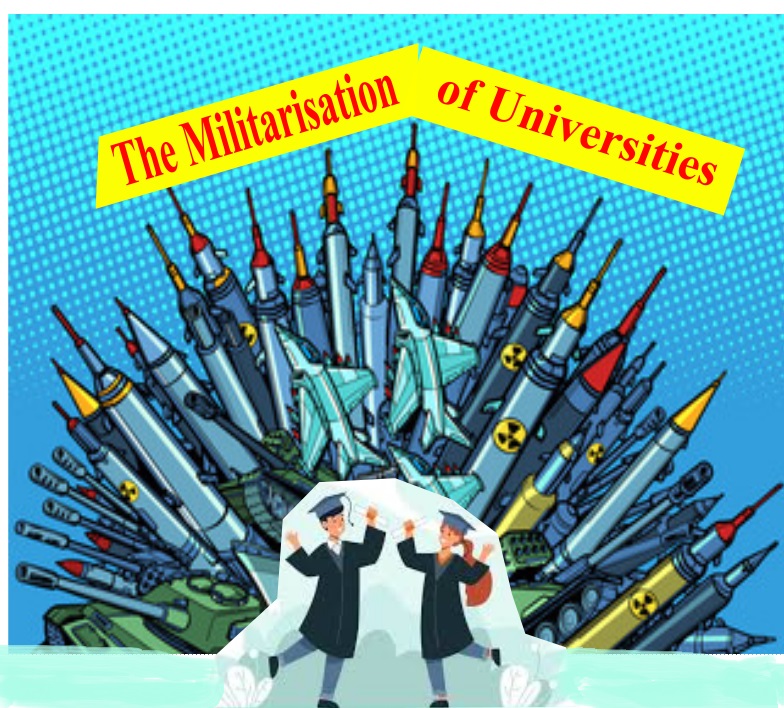
“It’s disappointing that there has been no public discussion of the university’s participation in Britain’s nuclear weapons system.”
By Sam Legg, 15 Oct 25, https://labouroutlook.org/2025/10/15/exposed-the-university-of-sheffields-role-in-britains-nuclear-weapons/
Working with local peace groups (such as Sheffield Action Group and Rotherham Friends of Palestine) we organised a protest outside the gates of the University of Sheffield’s Advanced Manufacturing Research Centre (AMRC). This is because of what was uncovered in the Sheffield Tribune’s article. So far, we know the following about the role of the AMRC in Britain’s nuclear weapons system:
- The AMRC is working with the Atomic Weapons Establishment (AWE) to design the Astraea, a new generation nuclear warhead.
- This research has been taking place for at least the past three years.
- The weapon being designed with AWE is expected to be 30 times as powerful as the bomb that was dropped on Hiroshima.
- This research is receiving government support from the South Yorkshire Mayoral Authority and 10 Downing Street.
Sheffield University was built thanks to the generosity of local residents (including steel and factory workers) in 1904, establishing itself as a civic university that aims to deeply connect and engage with its local community. Therefore, it’s disappointing that there has been no public discussion of the university’s participation in Britain’s nuclear weapons system. We are supporting calls for the AWE and AMRC to provide the public with an explanation.
One of the signs at the protest read ‘Make something useful instead’, harking back to the ideas laid out in the Lucas Plan and by Common Wealth to emphasise that the engineering skills being developed at the University of Sheffield should be put to better use. Minesh Parekh, a local councillor who attended the protest, told The Sheffield Tab that “there are so many areas that need cutting-edge research that could drive forwards our health and wellbeing, our net-zero transition, that are needed far more than nuclear weapons”.
With this year marking 80 years since the first atomic bombs were dropped on the cities of Hiroshima and Nagasaki, we need to urgently reflect on whether more weapons of mass destruction is what we want the skills of our talented researchers and workers to be used for. Sheffield was once a nuclear-free zone (declared in the 1980s), yet today we are concerned that the message of the film Threads (based in the city) is being forgotten by the people of Sheffield.
Yorkshire CND will continue to discuss future action to be taken. Alongside this, we are supporting efforts for local councils to adopt motions in favour of a world without nuclear weapons. Get in touch if you would like to find out more – info@yorkshirecnd.org.uk
Israel Tortured And Sexually Humiliated Greta Thunberg.
Caitlin Johnstone, Oct 16, 2025, https://www.caitlinjohnst.one/p/israel-tortured-and-sexually-humiliated?utm_source=post-email-title&publication_id=82124&post_id=176291910&utm_campaign=email-post-title&isFreemail=true&r=1ise1&triedRedirect=true&utm_medium=email
In an interview with Swedish paper Aftonbladet, Greta Thunberg has corroborated earlier eyewitness reports that she and her fellow Global Sumud Flotilla activists were subjected to monstrous abuses by Israeli officials after being abducted from their boats carrying aid for Palestinians in Gaza.
Here are some excerpts (quotes from Thunberg are italicized, quotes from Aftonbladet are in bold):
“They grab me, pull me to the ground, and throw an Israeli flag over me.”
“They dragged me to the opposite side from where the others were sitting, and I had the flag around me the whole time. They hit and kicked me.”
“They moved me very brutally to a corner that I was turned towards. ‘A special place for a special lady’, they said. And then they had learned ‘Lilla hora’ (Little whore) and ‘Hora Greta’ (Whore Greta) in Swedish, which they repeated all the time.”
In the corner where Greta was sitting, the police placed a flag. “The flag was placed so that it would touch me. When it fluttered and touched me, they shouted ‘Don’t touch the flag’ and kicked me in the side. After a while, my hands were tied with cable ties, very tightly. A bunch of guards lined up to take selfies with me while I was sitting like that.”
“They were thrown to the ground and beaten. But I could only see it out of the corner of my eye, because every time I lifted my head from the ground, I was kicked by the guard standing next to me.”
Greta was then taken into a building to be searched and undressed. “The guards have no empathy or humanity, and they keep taking selfies with me. There’s a lot I don’t remember. So much is happening at once. You’re in shock. You’re in pain, but you go into a state of trying to stay calm.”
Outside, she was forced to take off her clothes again, she says. “It was mockery, rough handling, and everything was filmed. Everything they do is extremely violent.”
“It was so hot, like 40 degrees. We begged the whole time: Can we have water? Can we have water? In the end, we screamed. The guards walked in front of the bars the whole time, laughing and holding up their water bottles. They threw the bottles with water in them into the trash cans in front of us.”
“When people fainted, we banged on the cages and asked for a doctor. Then the guards came and said, ‘We’re going to gas you.’ It was standard for them to say that.”
“This shows that if Israel, with the whole world watching, can treat a well-known, white person with a Swedish passport this way, just imagine what they do to Palestinians behind closed doors.”
Thunberg told Aftonbladet that the Swedish government greatly downplayed the abuse she and her fellow Sumud Flotilla activists suffered, and wouldn’t even bring them water:
“We were together and told them about the treatment we received. About the lack of food, water, about the abuse. The torture. We showed them the physical injuries we had — bruises and scratches. We gave them all our contact details — I gave them my father’s number and the number of our contact in the organization. We were clear: everything we say now must be released to the media.”
“They didn’t do anything, they just said: ’Our job is to listen to you. We are here and you are entitled to consular support.’”
“We said over and over again: we need water. And they saw that the guards had water bottles. The embassy staff said: ’We’ll make a note of that.’ One of us, Vincent, said: ’Next time we meet you, you must bring water.’”
Then it took two days before the embassy staff showed up again.
“They didn’t bring any water, except for a small bottle of their own that was half empty. Vincent, who was in the worst shape, got to drink it. We kept asking the guards, ‘Can we have some water?’ but they just walked around with their water bottles and didn’t answer.”
“I said, ‘Are you going to leave us like this? If you leave now, they will beat us up.’ But they just kept walking.”
When Aftonbladet compares emails sent by the Ministry of Foreign Affairs to relatives, with what the captives describe telling embassy staff, it becomes clear that the seriousness of the situation has been downplayed.
The Ministry of Foreign Affairs describes the scene at the port, where Greta Thunberg was beaten for hours, as follows: “She told us about harsh treatment and that she had been sitting on a hard surface for a long time.”
On Saturday, several media outlets published testimonies that Greta had been subjected to torture.
Aftonbladet has spoken to three other members of the flotilla who largely confirm what Greta Thunberg says and who have all experienced various types of abuse and humiliation. We have also spoken to relatives. Everyone is highly critical of how the Swedish embassy staff acted.
Thunberg’s statements are not just in alignment with eyewitnesses who said these things were done to her, but with statements from the Israeli government itself.
Israeli National Security Minister Itamar Ben-Gvir said last month that Sumud activists must be treated as terrorists in order to “create a clear deterrent” from future flotilla activism, declaring that “Anyone who chooses to collaborate with Hamas and support terrorism will meet a firm and unyielding response from Israel.”
“We will not allow individuals who support terrorism to live in comfort. They will face the full consequences of their actions,” Ben-Gvir said at the time.
After the flotilla activists were abducted by the IDF, Ben-Gvir filmed himself taunting them and calling them “terrorists” and said he “was proud that we treat ‘flotilla activists’ as terror supporters.”
Israel, needless to say, has an extensively documented record of torturing and raping individuals who’ve been given the “terrorist” label by the regime.
So what Thunberg is describing would be Israel doing what it said it was going to do in order to send a message and deter future efforts to feed starving Palestinians — perhaps singling out the most high-profile activist on the flotilla for special abuse in order to really drive the point home.
Israel is so evil it’s actually hard to wrap your mind around it.
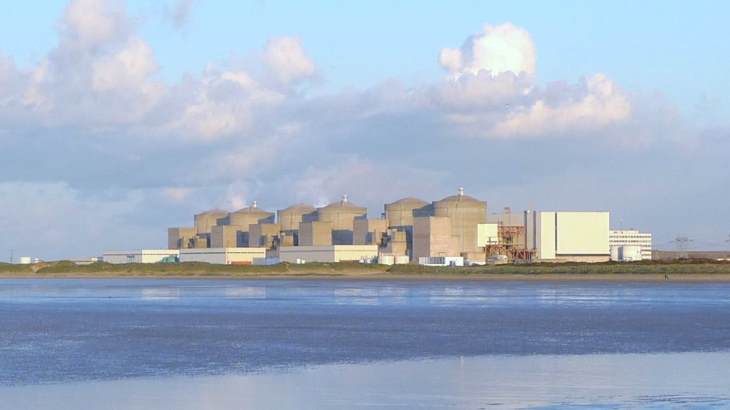
Gravelines: the Safety Expertise Department of ASNR’ damning opinion calls into question the EPR2
October 16, 2025, https://www.greenpeace.fr/espace-presse/gravelines-lavis-accablant-de-lasnr-remet-en-cause-les-epr2/
The Safety Expertise Department of ASNR, the nuclear safety and radiation protection authority, has just published a damning expert opinion on EDF’s project for the Gravelines power plant.
In addition to the already identified risks of submersion and flooding of the power plant, there is now the risk of soil settlement and liquefaction. The soil, which is designed to support the weight of the new EPR2 reactors, has “poor mechanical characteristics,” posing an unprecedented technical challenge regarding the robustness of the foundations over time and in the face of seismic hazards that could compromise nuclear safety.
“ This relentless opinion from the ASNR is further proof that the criteria for choosing sites for the construction of new EPR2 reactors are largely questionable. After underestimating the climate risks, EDF is underestimating the risk of building such a dangerous infrastructure on such unsuitable ground ,” emphasizes Pauline Boyer, nuclear campaigner for Greenpeace France. “This demonstrates once again the haste of EDF, which is rushing headlong into its plans to build new reactors in Gravelines. ”
A relentless opinion
In this opinion dated July 23, the ASNR severely rejects EDF’s copy of its first study of ground reinforcement on the Gravelines site, considering that the approach adopted by EDF is not sufficiently robust , ordering it to clarify the safety issues relating to ground reinforcement, to conduct new studies and to set up a monitoring system over time.
The opinion considers that the planned reinforcement of the ground at the Gravelines site constitutes “ a major technical challenge ” and that the system proposed by EDF is “of unprecedented scale, of great complexity and without representative feedback in France and internationally”.
A hard blow for EDF
The Gravelines nuclear power plant, built on a polder, is supposed to accommodate two new reactors (EPR2) as part of the nuclear recovery plan.
A year ago, Greenpeace published a report which, through mapping work projecting the rise in water levels in the Gravelines area until the end of the reactors’ lifespan, demonstrated that in 2100 and 2120, the entire Gravelines power plant site could be temporarily below sea level.
“The project to build new EPR2 reactors in Gravelines, EDF’s “seaside sandcastle,” is already sinking into quicksand. It’s time for EDF to make the most sensible decision: stop trying to build reactors at all costs, especially on such a vulnerable and unsuitable site, and invest this money in its renewable energy sector,” adds Pauline Boyer.
The difficulties and uncertainties of this nuclear construction project overlap, at the heart of an area accumulating risks (submersion, flooding, unsuitability of the soil, extreme climatic events, etc.). The 11-meter platform on which the EPR2 would be perched in an attempt to protect them from the risks of submersion and flooding (which Greenpeace always questions) makes the task even more difficult.
After the setbacks with the concrete intended for the construction of the future EPR2 in Penly, this is yet another example of EDF’s amateurism in wanting to build EPR2s in unsuitable areas without first carrying out a robust risk analysis.
The astronomic costs of decommissioning Sellafield

First Annual Report of the Chair of the Committee of Public Accounts.
(Paras 55&56) We were informed that the estimated cost of decommissioning the site was £136 billion, an increase of 18.8% since March 2019.
When the previous Committee last took evidence on Sellafield in 2018, the nine major projects that were underway then were between them delayed by 165 months and expected to cost £913 million more than originally budgeted.
However, the Committee heard that the combined costs of four of these projects are now expected to cost £1.15 billion more than when the previous Committee reported. Each of these four projects will also be delayed further by between 58 and 129 months each.
Sellafield Ltd has begun retrieving
hazardous waste from the site, and in the longer term, this waste will be
stored in an underground offsite Geological Disposal Facility (GDF) capable
of storing the waste for thousands of years. However, the Committee found
that the opening date of the GDF has slipped from 2040 to the late 2050s.
For every decade of delay, additional buildings could need to be
constructed to accommodate short-term storage of the waste at a cost of
£500–760 million.
As well as the serious implications for the value for
money of the project, this delay makes the ambition to completely
decommission the Sellafield site in the next hundred years even more
challenging.
In addition to this, in August the GDF project was rated red
in its Delivery Confidence Assessment by NISTA, meaning “successful
delivery of the project appears to be unachievable.” DESNZ has since
acknowledged that the NDA is “undertaking some replanning to mitigate
risks and support ongoing progress” across all of its programmes,
including the GDF. We will be following any further developments closely
over the coming months.
House of Commons 15th Oct 2025,
https://publications.parliament.uk/pa/cm5901/cmselect/cmpubacc/1300/report.html#heading-5
Exempt charities from nuclear levy on energy bills, government urged
Third Sector UK, 14 October 2025 by Emily Harle
Some charities could see their bills rise up to £2,500 a year
The government has been urged to provide an exemption for charities from a new levy that could cost some voluntary sector organisations up to £2,500 a year.
The nuclear regulated asset levy, which will be introduced in November, was developed by the previous government to provide a return to investors in Sizewell C, a new nuclear power station that is being built in Suffolk over the next decade.
Although industries that use the most electricity have been exempted from the levy by the government, the energy regulator Ofgem said this week that local charities, including youth clubs and community centres, will have to pay the full amount.
The Social Investment Business estimates that the average charity with a building could see their bills rise by up to £240 annually, but added that some will face an increase of more than £2,500 per year as a result of the levy.
This rise in electricity bills “will add even more pressure to charities”, SIB said, adding that the sector was particularly vulnerable to increasing prices due to the low income of volunteer-led clubs and the “often-draughty” buildings available for community groups.
In April, SIB’s research found that local youth charities were paying as much as half of their entire budget just to cover utilities.
Nick Temple, chief executive of the SIB, said: “Adding yet more charges on top of charity electricity bills penalises our most vital community spaces at a time when they are already struggling.
“The government must urgently provide an exemption to this new levy for charities, who are particularly vulnerable to rising costs.
“They should drop this model of adding charges onto electricity all together, which is no longer fit-for-purpose and is slowing down the country’s transition to renewables and inflates everyone’s bills.”
SIB have also urged charities to contact their energy providers, adding that if a charity is on a variable tariff, it will see charges introduced from 1 November, while those on fixed tariffs will need to check with their provider.
Wellspring Settlement, a charity based in Bristol delivering a range of community services to local families and young children, is one charity under threat due to the new levy costs, facing a potential uplift of more than £2,500 per year…………………………………….https://www.thirdsector.co.uk/exempt-charities-nuclear-levy-energy-bills-government-urged/finance/article/1936061
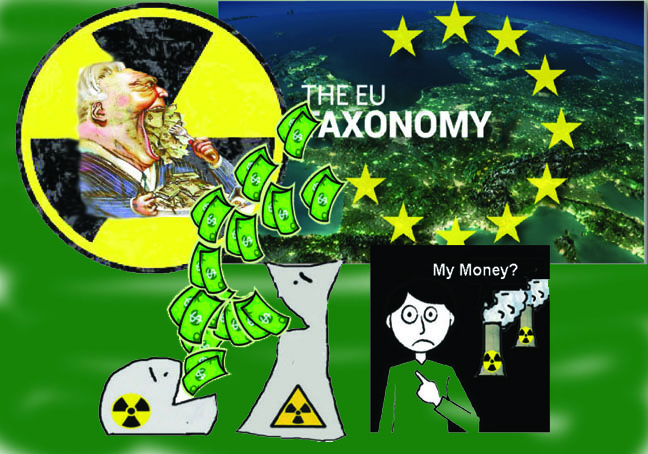
Monique Barbut, Minister for Ecological Transition, raises doubts among nuclear industry.
Monique Barbut has been appointed Minister of Ecological
Transition. She succeeds Agnès Pannier-Runacher, who, from the Ministry of
Energy Transition to that of Ecological Transition, has worked tirelessly
in favor of nuclear electricity.
The latter carried the law accelerating nuclear power adopted in 2023 and is at the origin of the Nuclear Alliance, which brings together a dozen European countries that have opted for this
energy and/or are in the process of reviving it.
The contrast with her successor is striking. When Monique Barbut was head of WWF France, between 2021 and 2024, the NGO, true to its line, took a stand against nuclear power. ” We call in particular on the European Parliament not to give in to pressure from France and other countries by agreeing to classify fossil gas and nuclear energy as sustainable in its taxonomy “…
Le Figaro 13th Oct 2025, https://www.lefigaro.fr/societes/monique-barbut-ministre-a-la-transition-ecologique-fait-douter-les-industriels-du-nucleaire-20251013
The £1m man: why did Boris Johnson take his donor to Ukraine?
Leaked files offer a glimpse of the ex-prime minister’s relationship with Christopher Harborne.
Tom Burgis. Guardian 10 Oct 25
As he boarded the night train to Ukraine, Boris Johnson had the usual entourage of aides and bodyguards – plus the man who had given him £1m.
Less than a year had passed since Johnson accepted what is thought to be the largest donation ever to an individual MP. It was from Christopher Harborne, one of the UK’s biggest and most private political donors.
Harborne, whose millions helped bankroll Brexit, made the payment to a private company Johnson set up after resigning as prime minister. Now leaked files show that Johnson, a champion of Ukraine in office and since, was accompanied in September 2023 by his benefactor on a two-day visit that included meetings with top officials.
What the files do not explain is why. And neither the former prime minister nor his backer will say.
The organisers of the high-level gathering they attended in Kyiv say Harborne was registered as “adviser, Office of Boris Johnson”.
Harborne has wide expertise: a self-described “digital nomad”, his holdings range from cryptocurrency and a wellness centre to jet fuel and stakes in at least three military contractors. His only apparent connection to Ukraine is as the biggest shareholder in a British weapons manufacturer whose robots and drones are reportedly supplied to its armed forces.
The Boris Files, leaked documents from Johnson’s private office, have exposed how the former PM has sought to enrich himself since leaving office by sitting down with a Venezuelan despot and courting Mohammed bin Salman, the Saudi crown prince accused of ordering the murder of a journalist.
The Ukrainian cause, by contrast, is “sacred” to Johnson, one political consultant says, an enduring source of moral authority for a politician who was forced out of Downing Street amid scandal.
The leaked files raise questions about whether, even here, he has blurred the lines between public service and money-making.
In an extraordinary statement to the Guardian when asked about his relationship with Harborne, Johnson said: “Your pathetic non-stories … seem mostly to be derived from some illegal Russian hack job. You should be ashamed of yourselves.” Distributed Denial of Secrets (DDoS), the US-based transparency group that obtained the leaked files, said it did not know their provenance.
Johnson added: “Why don’t you just change your name to Pravda? Your stories are rubbish and you are doing Putin’s work.”
‘Boris and Chris only’
In Downing Street, Johnson rallied western powers as Vladimir Putin’s armies poured into Ukraine in February 2022. Since resigning, he has continued to travel there, pledging to maintain allies’ commitment, and remains so popular that he is cheered in the streets.
When he disembarked from the night train in Kyiv on 8 September 2023, Johnson had time for a quick shower at his hotel before heading for the Yalta European Strategy (YES) forum, an itinerary in the leaked files indicates. According to a published list of participants, Ukrainian ministers, spymasters and military chiefs mingled with foreign diplomats, politicians, industrialists and executives.
The itinerary has “Boris and Chris [Harborne] only” down to attend the opening session of the high-level gathering. Images show Volodymyr Zelenskyy and Johnson addressed the gathered luminaries and the itinerary suggests they then retired for a private meeting. Zelenskyy’s office did not respond when asked if Johnson’s benefactor joined them…………………………………………………………………………………………………………………………………
The £1m donation
………………….He [Harborne]has given £10m to Nigel Farage’s Brexit party – now Reform UK – and £1m to the Conservatives while Johnson was completing the UK’s departure from the EU. And Johnson seems to have nurtured the beneficial relationship while he was in No 10.
Harborne visited Chequers at least twice during Johnon’s premiership. Once, he arrived at the prime ministerial retreat by helicopter. The second time was for a Tory megadonor barbecue in August 2022.
Within days, Johnson’s tenure was over, but his relationship with Harborne endured, and the £1m personal donation followed. A copy of the financial advice Johnson received soon after leaving Downing Street raises questions about it.
While Johnson was still an MP he set up a private company, The Office of Boris Johnson Ltd. The financial advice reveals that he was expecting a “payment to fund the company’s first few years”. He was advised to consider whether this would represent a political donation or if it “might be simpler for the company to invoice the donor’s company for services”.
The following month, in November 2022, Johnson’s entry in the register of MPs’ interests records a £1m donation to his company from Harborne. The payment does not appear on the Electoral Commission’s donation database of money “given towards the recipient’s political activities” as an MP. This appears to suggest it may have been a contribution towards Johnson’s money-making activities.
The month of the £1m payment, Johnson and Harborne dined together twice in Singapore. A January 2023 entry in Johnson’s schedule set aside half an hour for a call with his backer. It was labelled “Ukraine readout”. That September, by which time Johnson had quit parliament, he and Harborne stepped aboard a Dassault Falcon at Stansted airport, the leaked files indicate. The private jet, apparently operated by Harborne, carried them to eastern Poland to catch the sleeper to Kyiv.
Harborne’s lawyers said: “Mr Harborne’s donation was given to enable Mr Johnson to stay actively engaged in mainstream UK politics. It is and was a donation, and its reporting as such is appropriate.”…………
The letter
Harborne’s lawyers did not give substantive answers to questions about why he went on the trip to Ukraine, beyond saying they “appear to have little to no basis in reality”. But there are possible clues in the leaked files.
The itinerary features a “closed meeting at the military-tech R&D centre”. It does not say whether Harborne attended, but this is an area he knows well. While his position as the largest shareholder in QinetiQ, with 13%, does not give him a role in the day-to-day running of the privatised research unit of the UK armed forces, his financial stake in its operations is significant.
QinetiQ has interests in Ukraine, albeit not its biggest. Ukraine’s forces reportedly use the company’s Banshee drones and bomb-disposal robots. In April 2025, the UK Ministry of Defence announced QinetiQ would help Ukraine’s military make kit with 3D printers……………………. https://www.theguardian.com/politics/2025/oct/10/the-1m-man-why-did-boris-johnson-take-his-donor-to-ukraine
The UN nuclear watchdog seeks a local truce to restore power to the Zaporizhzhia plant
By ASSOCIATED PRESS, 14 October 2025
VIENNA (AP) – The U.N. nuclear watchdog is pushing Ukraine and Russia to agree to local ceasefires so that external power can be restored to Ukraine´s huge nuclear power plant in Zaporizhzhia, two diplomats familiar with the plan told The Associated Press.
The plant is in an area under Russian control since early in Moscow’s full-scale invasion of Ukraine and is not in service, but it needs reliable power to cool its six shutdown reactors and spent fuel, to avoid any catastrophic nuclear incidents.
It has been operating on diesel generators since Sept. 23 when its last remaining external power line was severed in attacks that each side blamed on the other. The International Atomic Energy Agency has repeatedly expressed alarm about the nuclear plant, Europe’s biggest.
The agency is proposing to restore external power to the plant in two phases, according to a European diplomat briefed on the proposal by the IAEA Director General Rafael Grossi. A Russian diplomat confirmed some aspects of the plan.
Both diplomats spoke on condition of anonymity because they were not authorized to discuss the confidential negotiations publicly.
During the first phase, a 1.5-kilometer-radius (1-mile-radius) ceasefire zone would be established to allow repair of the Dniprovska 750-kilovolt line, the main power line to the plant that has been damaged in an area under Russian control.
During the second phase, a second such ceasefire zone would be established to repair the Ferosplavna-1 330-kilovolt backup line, which is in area under Ukraine’s control.
IAEA experts would be on hand to monitor the repairs, which originally were proposed for a 7-day period from Oct. 11 to Oct. 17, according to the European diplomat and confidential documents seen by the AP.
However, although the Ukrainian side has given necessary guarantees of safe passage for repair crews, Russia did not give such guarantees in time for the work to start under that timetable, according to the European diplomat.
The Russian diplomat, on the other hand, said that preparations for the repairs are under way and that they can start very soon.
The IAEA declined to comment on the timing, saying only that Grossi was engaging “intensively with both sides” to enable the reconnection of power and to “help prevent a nuclear accident.”
Grossi held talks with both Ukraine and Russia last month. He met with Ukrainian Foreign Minister Andrii Sybiha on Sept. 29 at the Warsaw Security Forum, following meetings in Moscow with Russian President Vladimir Putin on Sept. 25 and Rosatom Director General Alexei Likhachev on Sept. 26.
The IAEA warned that if diesel generators fail, “it could lead to a complete blackout and possibly causing an accident with the fuel melting and a potential radiation release into the environment, if power could not be restored in time.”
The latest blackout is the tenth time that the Zaporizhzhia plant has lost all external power, and is by far the longest since the start of the war. The 330-kilovolt backup line was lost in May, and the main line was disconnected on Sept. 23.
The plant is close to the front line and has been occupied by Russia since March 2022. Ukraine and Russia have traded blame for shelling close to the plant……. https://www.dailymail.co.uk/wires/ap/article-15188795/The-UN-nuclear-watchdog-seeks-local-truce-restore-power-Zaporizhzhia-plant.html
Could Trump’s peace capsize the undead British Empire?
Peace in the Middle East and the defeat in Ukraine will prove extremely embarrassing for Britain.
Alex Krainer, Oct 14, 2025, https://alexkrainer.substack.com/p/could-trumps-peace-capsize-the-undead?utm_source=post-email-title&publication_id=1063805&post_id=176048481&utm_campaign=email-post-title&isFreemail=true&r=1ise1&triedRedirect=true&utm_medium=email
It’s only been four days since the Israeli cabinet approved Donald Trump’s Middle Eastern peace deal. In spite of much entrenched pessimism and incidents like the suspicious death of four Qatari negotiators in Egypt, so far the regional players have taken the deal seriously and it seems that their commitment is for real. My hunch, which I shared in Friday’s TrendCompass report, was that this development could turn out to be a “massive defeat for the Empire,” and that if the peace holds “the implications for the region would be nothing short of massive.”
Apart from repurposing the region’s “unsinkable aircraft carrier,” which could complicate the Empire’s efforts in prevention of peace, it seems that Trump has now wrested the loyalty of states like Qatar, Egypt and Saudi Arabia away from the Empire. Here’s what I mean by that: it is important for us not to regard the United States as a monolith. By “the Empire” I’m referring to the City of London with its satellites on Wall Street, in Paris, Frankfurt, Basel, Tokyo, etc. Also, its lackeys in the British government along with the American Neocons Jake Sullivan, Victoria Nuland and Antony Blinken. It also includes the Empire’s minions staffing the key positions in the EU and NATO.
I believe that President Trump and his government (some of them at least), are NOT part of this imperial cabal. Of course, it is possible, as some say, that Trump is “controlled opposition” and that we’re witnessing an elaborate deception. However, I believe that this is unlikely. Such deception would be needless and overly elaborate; I can’t imagine why keeping it up would even be necessary. At any rate, Trump’s peace deal in the Middle East indicates that his government is real, not controlled, opposition and it has now put the imperial cabal in a bind: where were they while Trump and other leaders in the region worked to stop the genocide? Suddenly, they seem to be in a damage-control mode.
Scrambling for moral high grounds
UK’s education secretary Bridget Phillipson, who had vocally opposed any ceasefire in Gaza, went to SkyNews yesterday (Sunday, 12 October 2025) to claim credit for the Middle East peace deal:
“We have played the key role behind the scenes in shaping this. It’s right that we do so because it’s in all of our interests, including our own national interest, that we move toward a lasting peace in the region.”
When her interviewer asked her to specify, “when you say, ‘behind the scenes,’ – like what?” Phillipson launched into an eloquent-sounding but hollow word salad that sounded like a student explaining the plot of “Ana Karenina” after she never read the book:
“These are complex matters of diplomacy that we are involved in, but we do welcome and recognize the critical role that the American government played in moving us to this point…”
It’s complex, you see, so I don’t want to burden you with the details, but look how noble and magnanimous we are in welcoming and recognizing the role of the American government: they too contributed a little bit. But it seems that Ms. Phillipson either doesn’t know, or pretended she didn’t, that the Empire created Israel precisely for the purpose of preventing a lasting peace from breaking out in the region. If you’re in the Empire’s camp, you don’t want peace and that’s why you exerted no effort towards it. Then you explain the perpetual war you engineered as something that’s near-impossible to solve: it’s the “centuries-old hatreds” that are incomprehensible to us pure-hearted Westerners.
Then Trump swaggered into the region and solved it (at least for now), forcing the obvious question: why wasn’t this done at any point after 7 October 2023, hundreds of thousands of dead Palestinians ago? If it wasn’t too complicated for Trump, how was it too complicated all the sophisticated folks with posh accents in London? These uncomfortable questions are reason why Bridget Phillipson went to SkyNews yesterday. She herself spent months explaining why her government was staunchly against any ceasefire and did less than nothing to de-escalate the conflict.
Nobody’s buying it anymore
But her disingenuous attempt to usurp credit for the peace deal didn’t go unnoticed and it was torpedoed in very undiplomatic terms. U.S. Ambassador to Jerusalem, Mike Huckabee posted the clip of her statement on X and commented that, “I can assure you that she’s delusional. She can thank @realDonaldTrump just to set the record straight.” That post got 2.4 million views in under 24 hours. Even if it’s from Mike Huckabee, it’s not bad. For the British government, that was a humiliating rebuke, and it wasn’t the only one!
Italy’s Giorgia Meloni was sharper still, publicly blasting Phillipson’s boss Sir Keir: “If anything [Keir Starmer] harmed peace negotiations, trying to impose his master Tony Blair on Palestinians. Now he wants to get a photo op and claim he helped.” She added: “He should stop wasting his time meddling in international affairs and sort out his own country, the people are fed up.”
Namely, documents have been leaked online showing that Johnson has profited from the ongoing conflict in Ukraine. According to The Guardian reports published on Friday, 10 October, Johnson visited Ukraine in September 2023 together with his billionaire donor Christopher Harborne, who donated £1 million to a private company he founded after resigning as Prime Minister. For Johnson, that was killing one stone with three birds: striking at Russia, contributing to depopulation (-1.7 million Ukrainian men) and making a buck quid in the process. No wonder Johnson felt as jubilant at the time (video at link):
It’s only a few bad apples, you see…
But the Middle East peace isn’t the only piece of bad news for London. There’s also Ukraine, which is being lost… Inevitably, if the Empire loses in Ukraine, it will also lose the opportunity to craft the dominant narrative. Britain’s role there, and particularly Boris Johnson’s consistent efforts to sabotage peace in April 2022, after only 5 weeks of hostilities, will prove extremely embarrassing. To contain the damage, it seems that the cabal is ready to throw Johnson overboard and cast the blame for the whole fiasco on him and another few bad apples.
Namely, documents have been leaked online showing that Johnson has profited from the ongoing conflict in Ukraine. According to The Guardian reports published on Friday, 10 October, Johnson visited Ukraine in September 2023 together with his billionaire donor Christopher Harborne, who donated £1 million to a private company he founded after resigning as Prime Minister. For Johnson, that was killing one stone with three birds: striking at Russia, contributing to depopulation (-1.7 million Ukrainian men) and making a buck quid in the process. No wonder Johnson felt as jubilant at the time (video at link):
Johnson dismissed this report, calling it a “pathetic non-story” derived from an “illegal Russian hack.” Of course: everything we hate is Russian, so please disperse, there’s nothing to see here… But through history, losing a war came with severe costs, and today may be no different. However, rather than taking the pain itself, the Empire will attempt to cast the blame to its unruly minions and push them under the bus.
Then, the narrative will be changed once more: we’ve always only wanted to be at peace with Eurasia but for a handful of corrupt bad apples… Once we’ve dealt with them, we’ll join the victory parade and celebrate the peace in which we ourselves played the key role, you see, behind the scenes we did, of course. By now however, anyone who’s paid any attention can see through this sinister game.
We want to keep Ukraine fighting and desire an all-out war with Russia!
In all this, the Empire’s scriptwriters and propagandists always counted on the public having low IQs and a short attention spans. But in the age of the Internet and social media, the same formula no longer works. In addition to throwing Boris Johnson and Christopher Harborne overboard, they’ll also have to explain Lieutenant General Charlie Stickland’s Project Alchemy which brought together a whole group of bad apples from Britain’s academic, military and intelligence institutions to put forward an array of plans “to keep Ukraine fighting,” along with plans to “aggressively pursue” and “dismantle” independent media outlets.
Project Alchemy’s “elders” were united by a desire for an all-out war between Russia and the West. That’s a very monstrous and sinister desire: the last time they orchestrated such a war, some 60 million people perished across Europe. What could possibly be the reason for desiring such a thing? The elders were kind enough to spell it out: in order to “defeat Putin in Ukraine and set the conditions for the reshaping of an open international order of the future.” Here are the full 36 pages of their monstrous recommendations:
Ukraine’s Next Chapter – Elders Grand Strategy Options Paper.
The fact that any group of “elders” would take such a cavailer attitude with a world war begs the question of whether there are any good apples in their ranks at all? Or is being a degenerated genocidal maniac a job requirement where they work? Judging by the quality of characters that have floated up to the top in the British institutions of power, and by the enterprise’s track record around the world over the past 300 years, this definitely seems to be the case.
The same system promotes individuals like Tony Blair and Boris Johnson to the very top while mercilessly destroying those like Andrew Bridgen, George Galloway and Jeremy Corbyn is selecting for dishonesty, degeneracy, and ruthlessness. Being a bad apple is par for the course and probably has been for centuries.
Hopefully, with the Empire’s defeat in Ukraine and Trump’s peace in the Middle East, the old, undead Empire will finally capsize along with its cabal’s dreams of an all-out war against Russia. That should be a good day for the rest of humanity, including for the people of the British isles.
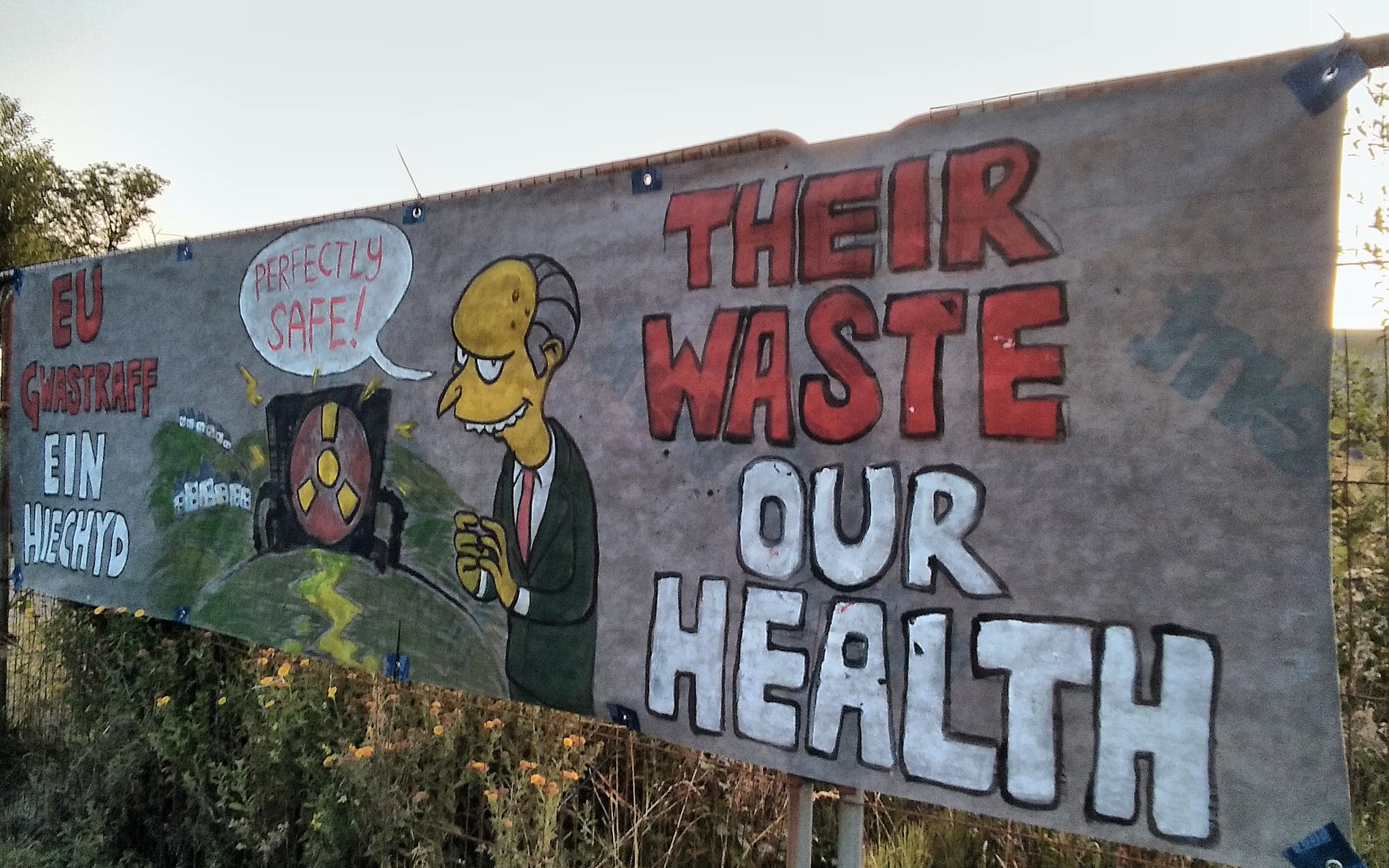
Campaigners warn of ‘dangerous experiment’ as nuclear plans face backlash.
Tom Sinclair, 10 Oct 25, https://pembrokeshire-herald.com/124146/campaigners-warn-of-dangerous-experiment-as-nuclear-plans-face-backlash/
Climate Camp Cymru supports Llynfi Valley protest against small modular reactors – campaigners urge Pembrokeshire to stay alert
ENVIRONMENTAL activists from across Wales – including several from Pembrokeshire – joined forces with Climate Camp Cymru this summer to support the No Nuclear Llynfi campaign near Llangynwyd in the Llynfi Valley, South Wales.
The group is opposing plans by American company Last Energy to build four small modular nuclear reactors (SMRs) on land within a mile of residential homes and two schools.
The company, a venture capital-backed start-up that has never built a reactor before, is currently seeking UK planning approval. Campaigners say it is deeply concerning that Last Energy is also suing the US Nuclear Regulatory Commission, claiming its safety regulations are “overburdensome” – while applying similar pressure in the UK to reduce oversight and speed up development.
Concerns over waste and flood risk
No Nuclear Llynfi campaigners have highlighted several risks, including plans to store radioactive waste on-site indefinitely, and the fact that the proposed location lies below the water table in a Zone 3 flood risk area – the highest flood designation.
Other worries include the need for 24-hour armed security, the site’s proximity to homes and schools, and the potential use of generated power for data centres running artificial intelligence systems, rather than for local homes or industry.
spokesperson for Climate Camp Cymru said the project “treats post-industrial communities as expendable,” adding that “people in the valleys, and in places like Pembrokeshire too, are being used as testing grounds for risky new energy technologies.”
Raising awareness
The summer camp, set up over the August bank holiday weekend, occupied open land near the proposed nuclear site. Volunteers raised banners along the A4063, distributed flyers, and knocked on around 1,000 doors to alert residents.
Most locals, campaigners said, were unaware of the nuclear proposal – despite claims by Last Energy that it had consulted the community. “There’s a legal duty to inform residents, and that simply hasn’t been met,” organisers said.
An open meeting at Maesteg Rugby Club on September 25 drew strong attendance and marked the beginning of organised local opposition.
Workshops and wider links
Throughout the weekend, the camp hosted workshops and talks from campaigners behind Save Kilvey Hill in Swansea – where activists are fighting a proposed adventure park development – and from CND, the Initiative for Nature Conservation Cymru (INCC), and academics from Cardiff University.
Discussions focused on linking environmental struggles across Wales, from open-cast mining and deforestation to speculative energy projects. Evenings featured live music and Welsh-language sessions celebrating Wales’ radical protest heritage.
Call for local action
Organisers say the success of the Llynfi camp shows the power of grassroots resistance. The camp was left clean and intact, with the landowner’s permission granted after the first day and support from nearby residents.
Pembrokeshire campaigners are now being encouraged to stay alert to similar proposals in the west. Sites such as Trawsfynydd and Wylfa are already under consideration for future SMR projects, and environmental groups warn that West Wales could be next.
Anyone interested in hosting or seeking support from next year’s Climate Camp Cymru can contact the group via email at climatecampcymru@proton.me.
1 This Month

22 June – Virtual Event –Climate Change: New Data, New Debate

Monday, June 22, 2026 2:30 p.m. – 3:15 p.m. CT
YouTube. Register here

Protect Sazan Island from the Trump family! https://secure.avaaz.org/campaign/en/protect_sazan_island_from_the_trump_family_loc/?bqFCVab&v=174511&cl=22707147157&_checksum=5e9dde668860e8231c33699735e16a1fbf22ab2cb01da50c999fe8732b9775ef&utm_source=email&utm_medium=blast_email&utm_campaign=174511

25 June- THE PUKE ON NUKES
Thursday, June 25, 2026
7pm Central Time (8pm ET, 6pm MT, 5pm PT) UTC – 5
From NRC & DOE Deregulation to Techno-Fascist Billionaires Going Nuclear, Plus a Few Songs from Atomic Cabaret REGISTER
26 June – Radiation Trainwreck at the NRC / Join the Protect Better Campaign – https://us02web.zoom.us/meeting/register/4ZlZ5_qLSHGiLSCg8FF6Bg#/registration


Cuba Is Not a Failed State – It Is a Besieged State
PETITION: “Global Appeal to Endorse Palestinian Right of Return of Refugees”
To see nuclear-related stories in greater depth and intensity – go to https://nuclearinformation.wordpress.com
-
Archives
- June 2026 (202)
- May 2026 (306)
- April 2026 (356)
- March 2026 (251)
- February 2026 (268)
- January 2026 (308)
- December 2025 (358)
- November 2025 (359)
- October 2025 (376)
- September 2025 (257)
- August 2025 (319)
- July 2025 (230)
-
Categories
- 1
- 1 NUCLEAR ISSUES
- business and costs
- climate change
- culture and arts
- ENERGY
- environment
- health
- history
- indigenous issues
- Legal
- marketing of nuclear
- media
- opposition to nuclear
- PERSONAL STORIES
- politics
- politics international
- Religion and ethics
- safety
- secrets,lies and civil liberties
- spinbuster
- technology
- Uranium
- wastes
- weapons and war
- Women
- 2 WORLD
- ACTION
- AFRICA
- Atrocities
- AUSTRALIA
- Christina's notes
- Christina's themes
- culture and arts
- Events
- Fuk 2022
- Fuk 2023
- Fukushima 2017
- Fukushima 2018
- fukushima 2019
- Fukushima 2020
- Fukushima 2021
- general
- global warming
- Humour (God we need it)
- Nuclear
- RARE EARTHS
- Reference
- resources – print
- Resources -audiovicual
- Weekly Newsletter
- World
- World Nuclear
- YouTube
-
RSS
Entries RSS
Comments RSS
 nuclear-news