The new normal for Northern Siberia – thawing permafrost,forests on fire
The Moscow Times reports economic losses from thawing permafrost alone is expected to cost Russia’s economy up to $2.3 billion US per year. Last year’s fires likely cost rural communities in the region almost $250 million US. In March, Russia announced 29 measures it would be taking to try to deal with climate change over its vast landmass but critics complained the efforts have been more focused on exploiting natural resources in the Arctic than mitigating the impacts of a warming climate.
“They are actively going after every mineral and oil and gas deposit that they can,”
As permafrost thaws under intense heat, Russia’s Siberia burns — again, https://www.cbc.ca/news/world/siberia-burning-climate-change-russia-1.5645428
Russia’s northern landscape is being transformed by heat and fire, Chris Brown · CBC News : Jul 12, Right around now, University of British Columbia climatologist and tundra researcher Greg Henry would usually be up at Alexandra Fiord on the central-east coast of Canada’s Ellesmere Island experiencing the Arctic’s warming climate up close.
Instead, the pandemic has kept his research team grounded in Vancouver — and his focus has shifted to observing the dramatic events unfolding across the Arctic ocean in northern Siberia.
“It’s remarkable — it’s scary,” said Henry of the incredible run of high temperatures in Russia’s far north that have been breaking records for the past month.
This week, a European Union climate monitoring project reported temperatures in June were up to 10 degrees higher than usual in some parts of Russia’s Arctic, with an overall rise of five degrees.
The heat and dry tundra conditions have also triggered vast forest fires. Currently, 1.77 million hectares of land are burning with expectations that the total fire area could eventually surpass the 17 million hectares that burned in 2019.
Equally striking is where the fires are burning.
“Now we are seeing these fires within 15 kilometres of the Arctic Ocean,” said Henry. “Usually there’s not much fuel to burn there, because it’s kept cold by the ocean so you don’t get ignition of fires that far north.”
This year though, he said the heat has dried the ground out enough to change the dynamics.
“It’s a harbinger of what we are in for because the Arctic has been warming at twice the rate of the rest of the planet.”
Environmental disaster Continue reading
France’s state auditor questions the wisdom of EDF’s Hinkley Point nuclear project in UK

Telegraph 11th July 2020, Doubts cast on EDF’s ability to build power stations on time and budget.
French auditor questions wisdom of state-owned utility’s involvement in building the new Hinkley Point C power station in Somerset.
France’s state auditor has questioned the ability of the company building Britain’s next nuclear power plant to construct new reactors within “acceptable” costs and timeframes. State-owned EDF has already said that its Flamanville nuclear plant in Normandy will now cost €12.4bn due to the expense of fixing 66 faulty welds. On top of that, the project will cost another €6.7bn, according to France’s Court of Accounts in a new report.
EDF has also said the plant’s start date will be delayed until the end of 2022. Flamanville was originally due to cost €3.3bn and start operations in 2012.
Presenting the damning 148-page report this week, Court of Accounts chief Pierre Moscovici said: “There is still uncertainty on the ability of the French nuclear industry, despite its current strong efforts, to build new nuclear reactors within a time frame and costs that remain acceptable.”
The criticism follows a £3bn surge in costs at the Hinkley Point C reactor EDF is building in Somerset. The bill for the project will now be £22.5bn – £2.9bn more than previously forecast – with overruns paid for by EDF. The energy giant has faced lags at its other projects, including Finland’s Olkiluoto 3 nuclear reactor, which is running more than
a decade behind schedule.
In its report, the state auditor questioned the wisdom of involvement in Hinkley Point C, saying its construction was
“weighing heavily” on the financial situation of EDF, whose net debt hit €41bn at the end of last year.
UK Ministers losing enthusiasm for small nuclear reactors developed with China
DBD, a Cheshire-based engineering firm, was working with China’s Institute of Nuclear and New Energy Technology to build a fleet of gas-cooled small reactors, and had hoped to win government funds. However, ministers have awarded £10m each to three rival projects — including an experimental plan for a fusion reactor. A version of the DBD reactor has already been built in China. DBD declined to comment……. (subscribers only) https://www.thetimes.co.uk/article/ministers-cool-on-chinese-nuclear-reactors-k2m8j76qf
Court reveals that EDF deceived UK about the true financial risks of Hinkley Point nuclear project
EDF boss suppressed report calling Hinkley Point ‘risky’Adam Sage, The Times, 10 July 20, thetimes.co.uk/article/edf-boss-suppressed-report-calling-hinkley-point-risky-gd5vcdhrx
The Times reports that the chief executive of the French company building the UK’s new nuclear reactors won boardroom approval for the project after suppressing an internal review labelling it as risk-laden. In a “highly critical report on the European Pressurised Reactors”, France’s Court of Audit said that the Hinkley Point project in Somerset, led by EDF, represented a “high financial risk” for the French state electricity group, the Times adds.
The court uncovered that the risks had been pointed out in a 2015 review that warned there “were not efficient enough to guarantee that risks would be controlled”. The Times continues: “The court said that Jean-Bernard Lévy, EDF’s executive chairman, had ‘refused to transmit the full report’ to directors or the government, even though the state has an 83.7% stake. They received only a synopsis.” The project received approval from the EDF board in 2016. The court also said that EDF must establish the financing and profitability of nuclear reactors before launching projects, reports Reuters, “dealing a blow to the state-owned utility’s ambitions to build new units”. And Reuters also reports that nuclear power generation at its reactors in France plunged 25.1% in June (compared to 2019) due to the effects of the coronavirus pandemic.
Meanwhile, writing in the Daily Telegraph, Sir Iain Duncan-Smith – MP and former leader of the Conservative Party – argues that the UK should “unwind its dependence on China” for “cheap goods and nuclear power”. He says: “The UK has enormous home grown tidal power potential, yet both tidal and hydrogen seem to have been brushed aside in favour of our growing dependence on large Chinese-run nuclear projects.” He concludes: “From Huawei to hydrogen and Hong Kong, we need to recognise the strategic threat China poses and, together with our allies, decide what we will do to reduce it, otherwise we risk repeating the failed lessons of the past.” And also in the Daily Telegraph, chief city commentator Ben Marlow says that the government should be stimulating manufacturing demand to contain the damage caused by Covid-19 to Rolls Royce – “Britain’s most illustrious engineering company”. He says: “It should start with nuclear where enlisting the expertise of Rolls-Royce in building so-called mini-nukes would help to solve its current geo-political nightmare with China. It would make it easier to ditch China General Nuclear Power Group from the plans to build giant new plants at Sizewell on the Suffolk coast and Bradwell in Essex, or scrap the proposals altogether.” These decisions would “also offer a greener and cheaper alternative to a technology that looks decidedly out of date already, and it would create jobs at a company in desperate need of a leg up – three birds with one stone”.
In 2020, a new radioological danger in Chernobyl
Chernobyl Is Again Close To A Disaster! What Happened There In 2020? http://www.thesentrybugle.com/2020/07/chernobyl-is-again-close-to-disaster.html#.XwZuet3J6Vg.twitter Ukrainian officials have sought calm after forest fires in the restricted zone around Chernobyl, scene of the world’s worst nuclear accident, led to a rise in radiation levels.
Reducing radioactive waste in processes to dismantle nuclear facilities
 Reducing radioactive waste in processes to dismantle nuclear facilities
https://www.eurekalert.org/pub_releases/2020-07/uotb-rrw070820.phpThe University of the Basque Country (UPV/EHU) has produced a methodological guide of in situ measurements for the purpose of optimizing waste management in nuclear dismantling processesUNIVERSITY OF THE BASQUE COUNTRY Recent years have seen a move into a phase to decommission and dismantle nuclear power stations and facilities, above all in Europe. By 2015, 156 reactors at nuclear facilities across the world had been shut down or were being decommissioned, and by 2050 over half of the current nuclear capacity of 400 GW across the world is programmed to be decommissioned so that it can be dismantled. “In Europe this will result in an increase in radioactive waste while current storage facilities have limited capacity. Optimizing this management is crucial,” said the UPV/EHU professor Margarita Herranz.
In situ measurements in constrained environments.
“The dismantling of facilities of this type is a very costly process, the waste takes up a huge amount of space and, what is more, people do not like having repositories of this type on their doorstep. And if we also talk about dismantling many nuclear facilities, it is crucial to specify what has to be regarded as radioactive waste inside a nuclear power station and what does not; this is because the cost of managing this waste increases significantly in terms of its level of activity, and the dismantling of a nuclear power station may result in the extracting of tonnes upon tonnes of waste,” explained the researcher in the UPV/EHU’s Department of Nuclear Engineering and Fluid Mechanics. Although the dismantling conducted so far has exhaustively complied with the regulations in force, “a considerable part of what has been regarded as nuclear and radioactive waste does not in fact fit into that category”, she said. “Erring too much on the side of caution has occurred in this respect.”
Margarita Herranz, who leads the working group responsible for organising and implementing measures in situ and conducting the subsequent analysis of the results, said that “it is essential to optimize the in situ measurements of radioactivity in walls, partition walls, machinery, metal shields, etc. owing to the impossibility of moving them in their entirety to the lab”. It is worth highlighting that these are difficult measurements “because you have to see what equipment has been adapted for this purpose and obtain good results in terms of the atmosphere existing in each environment: radiation, temperature, pressure, humidity, etc.”. In this context “we have specified the constrained environments from the standpoint of in situ measurements in nuclear and radioactive facilities, how these constraints affect the type of equipment that is going to be used, and how these constraints may end up affecting the results or the assessment of the results that are going to be obtained,” she said. They are also working to describe the different zones of a nuclear/radioactive facility and the problems that may be present in them, and also to recommend the types of instruments to be used in each of these zones.
Herranz pointed out that this project “is contributing towards optimizing the dismantling processes and towards improving the public perception of these processes. In other words, to show that they are being monitored and that work is being done in this respect. A lot of technology has been placed at the service of this aim. Basically, it is a social aim”. Within the framework of the European INSIDER project, many scientific articles are being published and are being used to compile an extensive methodological guide which can be accessed via the INSIDER website. The project is hoping to improve EU policy: “We hope this work will end up influencing the drawing up of international regulations,” concluded the researcher.
This study was conducted in collaboration with Raquel Idoeta, lecturer in the UPV/EHU’s Department of Nuclear Engineering and Fluid Mechanics. It also had the participation of Frederic Aspe and Gregoire Auge of the French company Onet Technologies, which is involved in taking measurements at French nuclear facilities.
Evacuation of a tiny Russian village, – in preparation for a nuclear missile test?
 Russian Village in ‘Danger Zone’ of Possible Nuclear Missile Test, Nenoksa is once again the crosshairs after a radioactive accident last year. AT TOP https://www.popularmechanics.com/military/research/a33219749/nenoksa-nuclear-missile/ BY KYLE MIZOKAMIJUL 6, 2020
- The tiny Russian village of Nenoksa will face voluntary evacuations due to an “unspecified test.”
- The test could well be of the Burevestnik nuclear-powered cruise missile.
- A nearby incident in 2019 involving Burevestnik killed five and triggered radiation warnings throughout the region.
The missile test comes just days after Scandinavian countries bordering Russia detected a mysterious release of radiation. An investigation pointed to northern Russia as a source, but Moscow insisted that nearby nuclear plants were running normally. An alternate theory was that there had been a second accident involving the new nuclear cruise missile, but with what looks like a Burevestnik test coming up that too now seems unlikely.
Britain’s nuclear future in trouble, aging reactors, and not enough money without China’s help
Britain’s Nuclear Future Uncertain as Relations With China Fray, https://business.financialpost.com/pmn/business-pmn/britains-nuclear-future-uncertain-as-relations-with-china-fray Rachel Morison and William Mathis, Bloomberg) 8 July 20, — Britain’s fraying relationship with China has the potential to undo a decade of mixed efforts to keep nuclear power flowing as an aging generation of plants drop out of service.
Once the heart of the U.K.’s energy plans, nuclear has been sidelined by spiraling costs and cheaper renewables. It also finds itself at the center of a diplomatic row spanning trade and human rights that threatens to undermine how the sector is financed.
Relations between China and the U.K. have been strained as the row over Huawei Technologies Co. intensified. When sweeping new national security laws were introduced in Hong Kong Prime Minister Boris Johnson offered its citizens the right to live and work in Britain.
China warned the U.K. Monday it’ll face “consequences” if it chooses to be a “hostile partner” after it emerged the government is planning to phase out the company’s equipment in the U.K.’s 5G telecommunications networks.
For nuclear, the sticking point has become the once-feted relationship with China General Nuclear Power Corp. that’s supposed to deliver the next generation of large nuclear plants. That link has come into sharp focus as the U.K. scrambles to find a funding model for projects that aren’t getting any cheaper.
Without CGN, its money and its technology, the U.K. will be left with a huge funding gap that other investors don’t seem willing to fill. It’ll also leave the country’s nuclear plans in disarray.
Equity funding for nuclear power stations is very difficult for private actors,” said Rob Gross, director of the U.K. Energy Research Centre. The risks are significant, timescales long and individual projects are very large. That’s why governments have always played a role in nuclear power, he said.
CGN’s involvement in Britain’s nuclear industry started in 2016 when a deal was signed with Electricite de France SA to cooperate on a trio of reactors totaling 8.7 gigawatts starting with Hinkley Point C in southwest England.
Nuclear remains important for the British government but it’s becoming increasingly pushed to the margins of energy policy as cheaper wind and solar have taken center stage.
Nuclear power has traditionally been seen as a low-carbon way of supplementing renewables — and as such a key part of the future energy mix envisioned in a net zero world.
Losing nuclear power probably wouldn’t pose a threat to the U.K.’s ability to generate enough power. The gap could be filled by gas, batteries or small modular reactors that can provide back-up to renewable energy and keep the lights on.
The sector is also important to the country as a way of building a large, skilled workforce and creating a supply chain using British companies.
False Starts
In 2017, ministers envisioned building 18 gigawatts of new projects but one by one each project folded, unable to negotiate the financing, leaving just EDF and CGN.
The government’s offer in 2018 to Hitachi to take a third of the equity at the Wylfa nuclear project wasn’t enough to keep the company interested.
How best to finance the technology, which costs billions, has become the latest hump in the road for policymakers. The Hinkley Point reactors – expected to start producing power by 2025 – have been hit by delays and cost overruns.
“The precise funding model for nuclear is up to the government to decide,” an EDF spokesman said.
That project will now cost as much as 22.5 billion pounds ($28.1 billion), taking into account inflation, and the guaranteed price of power is significantly higher than the latest round of offshore wind projects. Sizewell-C, still in the planning process, is slated to cost 20 billion pounds.
EDF is struggling and can’t afford to finance Sizewell on its own. The utility has cut costs and jobs, and pared investments setting out a plan to divest at least 10 billion euros of assets from 2015 to 2020 to help fund its share of Hinkley Point.
* CGN’s investment is in the planning and development stage only for Sizewell whereas it is involved in the construction of Hinkley.
The industry favors paying for the massive projects through a Regulated Asset Base model, a proven success on other infrastructure projects. The previous Conservative government was thought to back the financing option but the idea looks to be losing traction.
“If the Chinese pull out, then Sizewell will still go ahead but EDF will be unable to take on another major project,” Elchin Mammadov, a Bloomberg Intelligence analyst, said “So, Bradwell will be dead or put on hold for another decade.”
The debate has gone quiet following a consultation on the RAB model which closed in October.
RAB likely wouldn’t transfer enough risk from the project’s backers — EDF and CGN. The government would have to offer some kinds of guarantee on the project in order to get private investors to finance it.
One option would be for the government to take either a majority or minority stake in Sizewell C..
I wouldn’t be surprised if what is adopted is either a model with many of the characteristics of RAB, or potentially consideration of a more direct stake. This is about reducing the cost of capital.” said Tom Greatrex, chief executive officer of the Nuclear Industry Association.
But despite the long delays, there’s no indication that the government’s made up its mind how it will proceed.
“We are currently considering responses to inform the best approach to the financing of future nuclear projects,” a spokesperson for the Department for Business, Energy & Industrial Strategy said.
As much as 80% of electricity will be produced from low carbon sources by 2030, according to scenarios modeled by the U.K.’s Committee on Climate Change.
“With all but one of the nuclear fleet set to retire by 2030, and uncertainty over the scale of the new build program, it is likely that more electricity from renewable sources will be needed,” said Jonathan Marshall, head of analysis at the Energy and Climate Intelligence Unit.
EU lawmakers ban nuclear from green transition fund, leave loophole for gas
EU lawmakers ban nuclear from green transition fund, leave loophole for gas https://www.reuters.com/article/us-climate-change-eu-transitionfund/eu-lawmakers-ban-nuclear-from-green-transition-fund-leave-loophole-for-gas-idUSKBN2472HN
By Kate Abnett and Marine Strauss, 8 July 20,
BRUSSELS (Reuters) – European Union leaders are split over which fuels deserve support from the bloc’s flagship green energy fund, after lawmakers on Monday called for rules that could allow the money to be spent on some fossil gas projects.
The European Commission wants to launch a 40 billion euro ($45 billion) Just Transition Fund using cash from the bloc’s coronavirus recovery fund and its budget for 2021-27, to help carbon-intensive regions launch green industries and retrain workers currently in polluting sectors.
All EU member states agreed last week that the new fund should exclude nuclear and fossil fuels projects, including natural gas projects – a position also shared by the EU Commission.
But on Monday a committee of lawmakers leading talks on the issue in the European Parliament broke ranks. They said that while nuclear energy projects should not be eligible, some fossil gas projects could get just transition funding.
The committee voted in favour of requiring green finance rules to be applied to funding of gas projects – which would effectively exclude such projects. But they also said the EU Commission could make exemptions to this rule and approve some gas projects that don’t meet the green criteria.
The full legislative assembly will vote in September on whether or not to approve the rules. Once the assembly has agreed its position, talks will start with the EU Commission and national governments in the EU Council on the final terms of the funding.
Gas emits roughly 50% less CO2 than coal when burned in power plants, but it is not a “zero-carbon” fuel and is associated with leaks of methane, a potent greenhouse gas.
Arctic heat, uncontrolled fires, crumbling permafrost – very bad climate news
|
Arctic Oil Infrastructure Faces Climate Karma https://www.bloomberg.com/opinion/articles/2020-07-05/siberia-heatwave-climate-change-really-is-big-oil-industry-risk
Siberia’s heatwave reflects temperature changes that weren’t generally forecast to occur until the end of the century. That’s bad news for everyone.By Julian Lee July 5, 2020, Beaches, clear blue seas, scorching temperatures and long days. Forget the Caribbean, your next summer beach holiday could be on the shores of Russia’s Arctic Ocean.Temperatures at Nizhnyaya Pesha, some 840 miles (1,352 kilometers) northeast of Moscow and just 12 miles from Arctic Ocean coast, reached 86 degrees Fahrenheit (24 degrees Celsius) in early June — a disaster for anyone worried about the planet’s future. Further to the east and further inland, things got even hotter. Russia’s state weather authority confirmed that the temperature at the small town of Verkhoyansk — which sits about 70 miles north of the Arctic Circle and boasts the Pole of Cold District Museum of Local Lore as its only tourist attraction listed on Tripadvisor — hit 100.4 degrees Fahrenheit on June 20. Most alarming, though, is not the temperature itself, but the fact that this wasn’t an isolated incident. Rather, it is part of a heatwave that has persisted since the end of last year. On average, temperatures in western Siberia have been 10 degrees Fahrenheit above normal since December, according to the European Centre for Medium-Range Weather Forecasts. Uncontrolled fires are already sweeping across the forests of Russia, and have been for months. On Friday, the Russian Ministry of Natural Resources reported that efforts were being made to extinguish 272 forest fires covering an area 12 times the size of the District of Columbia, including 10 on specially protected natural territories extending over an area bigger than Manhattan. As I wrote here, rising Arctic temperatures strike at the heart of the Russian economy, which is largely built upon the extraction of oil and gas. Rising temperatures are melting the permafrost and impairing its ability to support structures built on it. The changes threaten the “structural stability and functional capacities” of oil industry infrastructure, according to the Ocean and Cryosphere in a Changing Climate report adopted in September by the Intergovernmental Panel on Climate Change (IPCC). In RetreatAreas of discontinuous permafrost could see a 50-75% drop in load bearing capacity by 2015-25 compared with 1965-75 We’re already seeing the impact. As my colleague Clara Ferreira Marques wrote here, a devastating Arctic fuel spill on May 29 appears to have been caused by melting permafrost. More than 20,000 tons of diesel fuel (or about 150,000 barrels) leaked from a storage tank owned by MMC Norilsk Nickel PJSC, polluting rivers and lakes that drain into the Arctic Ocean’s Kara Sea. The company blamed the “sudden subsidence of supports which served for more than 30 years without problems” for the damage that allowed the fuel to escape from the tank. Russia’s Prosecutor General’s office ordered thorough checks to be carried out on particularly dangerous installations built on territories exposed to permafrost melting. For the oil and gas sector, that’s likely to cover pipelines and processing plants, as well as storage tanks. It’s going to be a massive undertaking. Some “45% of the oil and natural gas production fields in the Russian Arctic are located in the highest hazard zone,” according to the IPCC report. Assets At RiskSome of Russia’s largest oil and gas fields are at risk from thawing permafrost While many of the country’s newest oil and gas fields are situated far to the north, in areas of continuous permafrost, many of the older ones, which form the bedrock of the industry, are in the discontinuous permafrost zone. That area is also crossed by the major pipelines that carry hydrocarbons to customers and export terminals. The heatwave experienced so far this year in Siberia reflects temperature changes that weren’t generally forecast to occur until the end of the century. The rapid changes that are happening to the climate of the world’s northern regions means that even the infrastructure built on areas of continuous permafrost may soon be at risk, too. And that mitigation measures deemed appropriate now may soon be viewed as inadequate. And what’s true in the Arctic north of Russia may also hold in the Arctic north of the Americas. Most of Alaska is underlain by permafrost — continuous across the North Slope (the borough that covers the northern third of the state and is home to its oil production), discontinuous over most of the rest of the state. The risks that bedevil oil and gas infrastructure are no less severe here. The U.S. Bureau of Land Management plans to open an Indiana-sized region of the National Petroleum Reserve-Alaska to new oil and gas development. Doing so is meant to be a boon to U.S. oil independence and Alaska’s state budget, capable of delivering 500,000 barrels of oil a day, according to BLM estimate It could also be a curse. The bureau warns in its environmental impact statement that the new development could be responsible for greenhouse gas emissions equivalent to about 1% of the U.S. total in 2018. Increased industrial activity in the area, on top of the already altered landscape thanks to global warming, creates a host of risks to wildlife from polar bears to eagles and could lead to deadly walrus stampedes. Environmental groups vow to fight the move, which is expected to be finalized by the end of July. Whether oil companies will rush to pour their dollars into frontier exploration in a region that will expose them to unflinching scrutiny and, very likely, unwanted social media campaigns, is questionable — particularly at a time when those investment dollars have become scarce and companies are increasingly focused on the quick returns from investing in the shale deposits of Texas, New Mexico and other, more climatically benign, states. If the northern latitudes continue warming as they are, the implications will be grave for all of us. — With assistance by Elaine He |
|
Can Hunterston nuclear power station restart? Are UK tax-payers to pay billions for new nuclear?
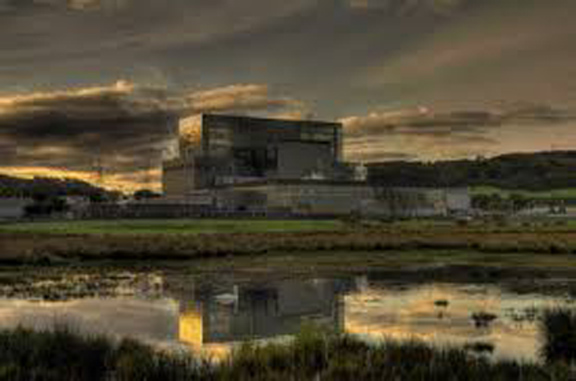
Times 5th July 2020, A high-stakes game of chance is being played at Hunterston B nuclear power
station on the west coast of Scotland. Engineers from the French giant EDF and safety experts from the Office for Nuclear Regulation are trying to work out if and when the plant’s two reactors can be restarted.
Forty-four years of hard use have not been kind to the plant’s graphite core — a vast chunk of carbon riddled with cracks that weighs the same as 110 double-decker buses. While the regulator and EDF insist that, with careful supervision, a cracked graphite core is nothing to worry about, it
is a symptom of its advancing years.
Hunterston, like the rest of EDF’s nuclear power stations around the UK, is on borrowed time. Seven nuclear stations capable of supplying about a sixth of the UK’s power needs will shut during the next decade. Unless ministers leap into action, the country that opened the first industrial-scale nuclear power station in 1956 at Calder Hall, Cumbria, will be left with just one replacement plant, Hinkley Point C on the Somerset coast, which is under construction.
The government faces difficult decisions: what next in its race to eliminate carbon emissions by 2050? A boom in renewable power has offered the beguiling prospect that wind and solar, combined with storage such as big batteries and hydrogen, could fill the void. A report from the National Infrastructure Commission has suggested that commercially unproven technologies, such as hydrogen generation, could negate the need for more nuclear power and be “substantially cheaper”.
With half an eye on this utopian future, successive governments have tried to persuade European
power giants such as Germany’s RWE and Eon, and Japan’s Toshiba and Hitachi, to pump cash into new reactors. However, one by one, those companies have dropped out, leaving just a handful of options remaining.
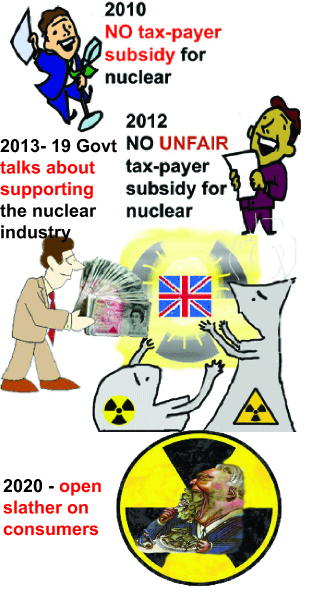
EDF and China General Nuclear (CGN) — both backed by their governments — are building the £22bn Hinkley plant. Without a state support package, EDF will struggle to build the planned Sizewell C in Suffolk. That would leave CGN as the only developer capable of going it alone without UK taxpayer support. ……
The prime minister’s adviser Dominic Cummings is thought to be a fan of small nuclear power stations, and Boris Johnson hinted about a role for nuclear last week………. Taxpayers are about
to find out whether billions of pounds will be pumped into nuclear power……
https://www.thetimes.co.uk/edition/business/atomic-quandary-for-ministers-after-years-of-dallying-over-nuclear-power-dzsc2s25l
Ruthenium and Caesium radioactive isotopes over Europe due to mismanagement at a nuclear reactor – says IAEA
 Low Levels of Radioisotopes Detected in Europe Likely Linked to a Nuclear Reactor – IAEA, 27/2020 The recent detection of slightly elevated levels of radioisotopes in northern Europe is likely related to a nuclear reactor that is either operating or undergoing maintenance, when very low radioactive releases can occur, the International Atomic Energy Agency (IAEA) said today. The geographical origin of the release has not yet been determined.
Basing its technical assessment on data reported by its Member States, the IAEA reiterated that the observed air concentrations of the particles were very low and posed no risk to human health and the environment.
Estonia, Finland and Sweden last week measured levels of Ruthenium and Caesium isotopes which were higher than usual. They also reported the detection of some other artificial radionuclides. The three countries said there had been no events on their territories that could explain the presence of the radionuclides, as did more than 40 other countries that voluntarily provided information to the IAEA.
Seeking to help identify their possible origin, the IAEA on Saturday contacted its counterparts in the European region and requested information on whether the particles were detected in their countries, and if any event there may have been associated with the atmospheric release.
By Thursday afternoon, 37 Member States in the European region (Albania, Austria, Belgium, Bosnia and Herzegovina, Bulgaria, Republic of Croatia, Cyprus, Czech Republic, Denmark, Estonia, Finland, France, Germany, Greece, Hungary, Iceland, Ireland, Italy, Latvia, Lithuania, Luxembourg, Netherlands, North Macedonia, Norway, Poland, Portugal, Romania, Russian Federation, Republic of Serbia, Slovak Republic, Slovenia, Spain, Sweden, Switzerland, Turkey, Ukraine and United Kingdom) had voluntarily reported to the IAEA that there were no events on their territories that explained the release. They also provided information about their own measurements and results……
Based on the IAEA’s technical analysis of the mix of artificial radionuclides that were reported to it, the release was likely related to a nuclear reactor, either in operation or in maintenance. The IAEA ruled out that the release was related to the improper handling of a radioactive source. It was also unlikely to be linked to a nuclear fuel processing plant, a spent fuel pool or to the use of radiation in industry or medicine.
Based on the data and information reported to the IAEA, no specific event or location for the dispersal of radionuclides into the atmosphere has yet been determined. To do this, the IAEA depends on receiving such information from a country where the release occurred. https://www.iaea.org/newscenter/pressreleases/low-levels-of-radioisotopes-detected-in-europe-likely-linked-to-a-nuclear-reactor-iaea
Long process ahead, if Estonia to get nuclear power – at least 15 years
Environment ministry: If Estonia gets nuclear power plant, not before 2035, ERR News, 3 July 20, Estonia’s first nuclear power plant would not start operating before 2035, according to a memorandum from the Ministry of the Environment (Keskkonnaministeerium), which the government will discuss later this summer.
The memorandum “Possibilities for the Deployment of Nuclear Energy in Estonia” (“Tuumaenergia kasutuselevõtmise võimalused Eestis”) describes a process of at which would take at least 15 years which would follow the government agreeing to a nuclear power plant. Estonia is starting this process almost from scratch.
The first proposal of the memorandum signed by Minister of the Environment Rene Koka calls for the establishment of an inter-ministerial working group on nuclear energy in order to form publicly agreed positions on the possibility of introducing nuclear energy in Estonia.
…….. The memorandum states it is important to determine society’s support for nuclear energy as soon as possible and to avoid problems caused by poor communication. Holding a referendum on this issue should also be discussed….
The memorandum lists the main risks and describes possibilities to mitigate them. These include problems with the introduction of new technology, the possibility of an emergency, concerns about the production and supply of nuclear fuel, financial and nuclear liability, radioactive waste management, lack of know-how and specialists, public involvement and communication.
……Finally, there are political risks.
If a referendum is held on the construction of a nuclear power plant and if the public vote against it, the ability to initiative nuclear energy projects in Estonia will be ruled out for a very long time, and Estonia’s energy policy may change with the change of government,
But there is also a broader, international view that Estonia’s neighbors, such as Sweden and Lithuania, who have themselves decided to abandon nuclear energy, or Russia, who may not want a nuclear power plant built in Estonia for geopolitical reasons if US technology is introduced…….. https://news.err.ee/1109118/environment-ministry-if-estonia-gets-nuclear-power-plant-not-before-203
Hunterston the most heavily cracked nuclear reactor: is it EDF’s guinea pig for how bad it can be?
Largs & Millport News 1st July 2020, A CALL has been made to shut down Hunterston B with immediate effect. West Kilbride councillor Todd Ferguson says that Hunterston should not be a‘guinea pig’ for the UK nuclear industry testing long far power stations can last. Cracks have been appearing in all of the EDF advanced cooling reactors fleet around the United Kingdom – and the Office of Nuclear Regulation (ONR) are currently examining the safety case presented by EDF to switching the reactors back on but the matter has been delayed several times this year.
big decision to make in relation to the safety case which has been presented by EDF.” At the recent Hunterston Site Stakeholders Group meeting, EDF were asked when it became economically prohibitive to re-start the reactors and the response was that the data coming from the testing of
the reactors was important information for the rest of the fleet of reactors around the UK.Councillor Ferguson said: “Hunterston is by far the most heavily cracked. When does it get to the points where the risks outweigh everything else? “I don’t want it to get into a position of a race of what is going to fail first – the graphite or the boilers.”………https://www.largsandmillportnews.com/news/18533657.dont-turn-hunterston-guinea-pig—call-shut-reactors-now/
Boris Johnson pledges to get ‘big nuclear things’ done in message to Copeland mayor
|
Boris Johnson pledges to get ‘big nuclear things’ done in message to Copeland mayor
By Liam Waite @imliamwaiteSports reporter We’re going to get massive things done and we’re going to get big, big nuclear things done as well.”Mr Starkie said he was “delighted” to receive the welcome and felt the message on nuclear made the future seem “bright”….. https://www.newsandstar.co.uk/news/18557769.boris-johnson-pledges-get-big-nuclear-things-done-message-copeland-mayor/
|
|
|
1 This Month
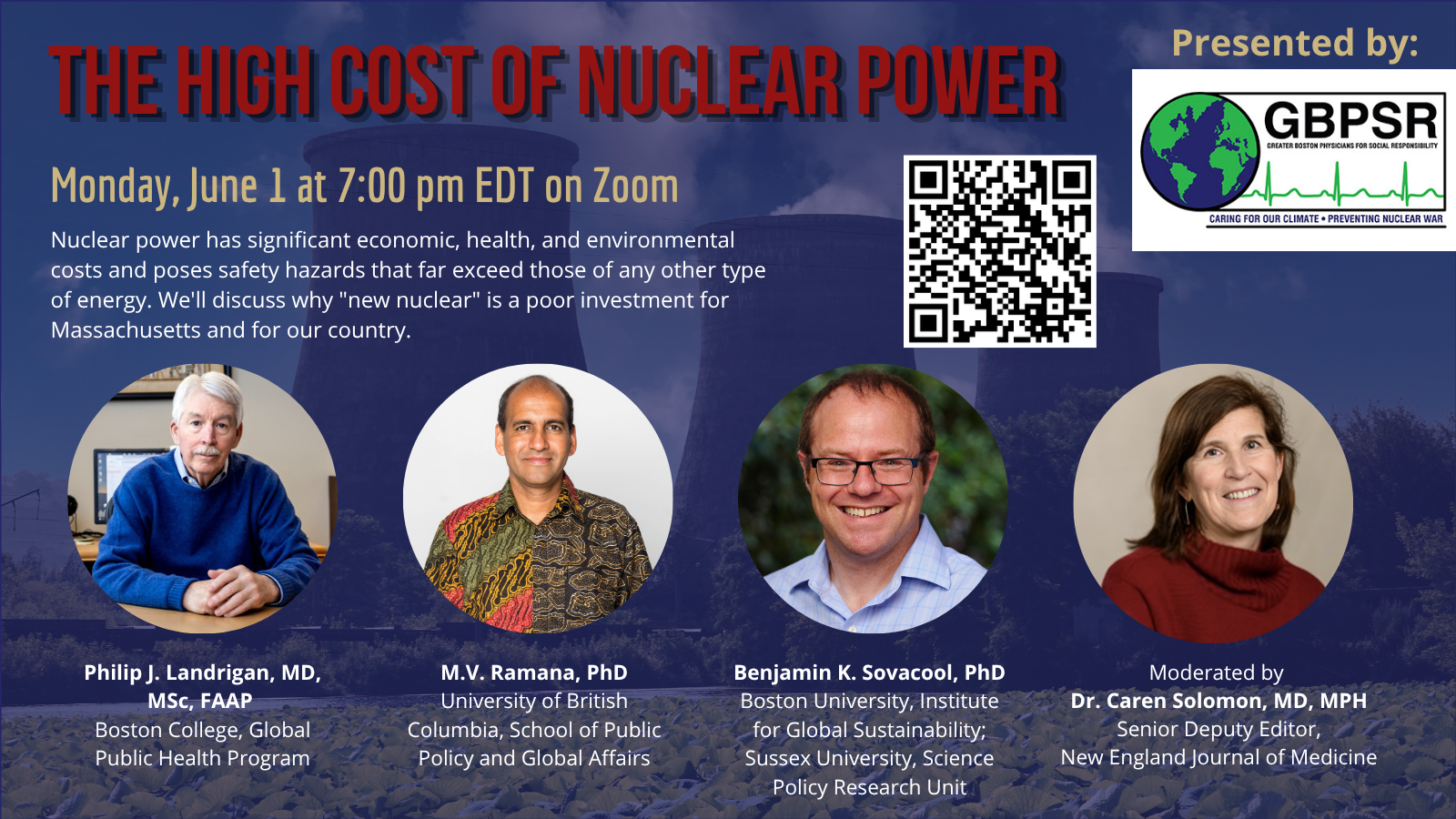
1 June Webinar – The High Cost of Nuclear Power – Register


of the week– Nuclear Reactor Information Task Force
To see nuclear-related stories in greater depth and intensity – go to https://nuclearinformation.wordpress.com
-
Archives
- May 2026 (235)
- April 2026 (356)
- March 2026 (251)
- February 2026 (268)
- January 2026 (308)
- December 2025 (358)
- November 2025 (359)
- October 2025 (376)
- September 2025 (257)
- August 2025 (319)
- July 2025 (230)
- June 2025 (348)
-
Categories
- 1
- 1 NUCLEAR ISSUES
- business and costs
- climate change
- culture and arts
- ENERGY
- environment
- health
- history
- indigenous issues
- Legal
- marketing of nuclear
- media
- opposition to nuclear
- PERSONAL STORIES
- politics
- politics international
- Religion and ethics
- safety
- secrets,lies and civil liberties
- spinbuster
- technology
- Uranium
- wastes
- weapons and war
- Women
- 2 WORLD
- ACTION
- AFRICA
- Atrocities
- AUSTRALIA
- Christina's notes
- Christina's themes
- culture and arts
- Events
- Fuk 2022
- Fuk 2023
- Fukushima 2017
- Fukushima 2018
- fukushima 2019
- Fukushima 2020
- Fukushima 2021
- general
- global warming
- Humour (God we need it)
- Nuclear
- RARE EARTHS
- Reference
- resources – print
- Resources -audiovicual
- Weekly Newsletter
- World
- World Nuclear
- YouTube
-
RSS
Entries RSS
Comments RSS
 nuclear-news