Safety of Belarus nuclear power station in question after IAEA report
Deficiencies discovered during IAEA INIR mission in Belarus may cause negative impact on safety of Belarusian NPP, Vates, 08/27/2020 International Atomic Energy Agency (IAEA) conducted the Integrated Nuclear Infrastructure Review (INIR) Phase 3 mission from 24 February to 4 March 2020 in the Republic of Belarus and recently published the report with 7 recommendations and 6 suggestions.
The mission evaluated the development status in the areas linked to Belarus nuclear infrastructure such as regulatory framework, nuclear safety, radioactive waste management, financial and human resources, nuclear security in order to commission and operate the first nuclear power plant (hereinafter – NPP).
The report emphasizes, that Belarus needs to further develop its legal and regulatory framework of nuclear energy, to assure regulatory body independence in cooperation with technical support organizations, to ensure sufficient funds for decommissioning and radioactive waste management, to allocate responsibility for establishing the radioactive waste management organization, to ensure reliable restart of the grid system in the event of total collapse once the NPP is in operation, to finalize all necessary programmes for starting operation, to ensure long term arrangements for maintenance of Belarusian NPP and to ensure capacity and competence of operating organisation.
Recommendations and suggestions concerning improvement of nuclear energy infrastructure are related to:
– deficiencies in legal and regulatory framework of nuclear safety;
– assurance of independence of regulatory body;
– deficiencies in implementing Integrated Management Systems of regulatory body and operating organization;
– ensuring readiness to restart of the grid system in the event of total collapse once the NPP is in operation;
– assurance of Belarussian NPP maintenance after the warranty period;
– deficiencies in the readiness of the physical security system in the operating organization;
– deficiencies in establishing responsibilities in the area of the radioactive waste management;
– international obligations (Belarus has not yet joined the Amendment to the Convention of Physical Protection of Nuclear Material and not ratified Protocol Additional to IAEA for the Application of Safeguards).
In VATESI experts’ opinion, not implementation of recommendations and suggestions, indicated in the report, may cause negative impact on safety of the Belarusian NPP during its commissioning and consequent operation…… http://www.vatesi.lt/index.php?id=551&L=1&tx_news_pi1[news]=882&tx_news_pi1[controller]=News&tx_news_pi1[action]=detail&cHash=e3cdcce90fb55e6650c0eb887e2cce12
Nuclear and gas industries desperate to win EU endorsement AND FUNDING, as clean and green

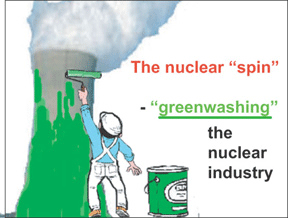
 Gas and nuclear industries fight to the end for ‘green’ EU investment label, Kate Abnett, Simon Jessop, BRUSSELS/LONDON (Reuters) 26 Aug 20 – The gas and nuclear industries have ramped up lobbying to secure last-ditch changes to European rules defining which investments are sustainable, fearing that exclusion from a new “green” list could deprive them of billions of dollars of funding. Gas and nuclear industries fight to the end for ‘green’ EU investment label, Kate Abnett, Simon Jessop, BRUSSELS/LONDON (Reuters) 26 Aug 20 – The gas and nuclear industries have ramped up lobbying to secure last-ditch changes to European rules defining which investments are sustainable, fearing that exclusion from a new “green” list could deprive them of billions of dollars of funding. The climate section of the EU’s Sustainable Finance Taxonomy is due to be finalised this year and it could prove crucial as nuclear power and most natural gas plants and pipelines were excluded from a provisional list published in March. By forcing providers of financial products to disclose which investments meet climate criteria from the end of 2021, the new EU green finance rules are designed to channel cash towards projects that support the bloc’s climate goals. In the four months since the rules were published, gas and nuclear industry representatives held 52 meetings – in person or virtually – with EU officials, according to EU logs analysed by non-profit Reclaim Finance and shared exclusively with Reuters.
Overall, industry representatives have held a total of 310 meetings with EU policymakers since the start of 2018, according to the data based on transparency filings published by July 8. Nuclear groups in particular have stepped up their lobbying, Of the 36 meetings they’ve held over the past two-and-a-half years, 10 have taken place since March. Brussels is facing calls to use the rules to guarantee spending from its 750 billion euro ($888 billion) COVID-19 recovery fund goes to green projects. The money starts flowing in 2021, meaning any delay to the rules could thwart this plan.
NEED TO BREAK FREE’Climate campaigners urged the EU not to bow to pressure from the oil and gas industry as the stakes were too high. “If EU institutions and member states are serious about building a sustainable Europe that confronts the climate emergency, they need to break free from fossil-fuel lobbyists,” said Paul Schreiber, a campaigner at Reclaim Finance. One of the main gripes of both energy industries is that they were locked out of the group of finance experts that came up with the proposals released in March. A new EU sustainable finance platform will take over as the European Commission’s advisor on taxonomy next month – and both industries are jostling to be included on the panel. ……
Nuclear industry groups say the energy deserves a sustainable label, based on its low carbon emissions and existing secure waste disposal sites. They fear that if nuclear isn’t deemed sustainable, the cost of capital for power plants will rise – a concern for an industry where flagship projects, such as Britain’s Hinkley Point C reactor, are struggling with spiralling costs. To help get the message across, several nuclear lobby groups enlisted the help of the public, tweeting to encourage responses to an EU consultation in April on the proposed rules – and suggesting what to write. That helped generate 126 responses to the EU consultation from concerned citizens asking for nuclear power to be termed sustainable – nearly a third of all the responses received, according to InfluenceMap analysis. The expert finance group was split on how to brand nuclear power and the Commission has now asked its scientific arm to report on the issue next year. Lobby groups told Reuters they were confident nuclear power would ultimately be considered sustainable, but they want the energy section of the taxonomy delayed until the report is done…….. Reporting by Simon Jessop in London and Kate Abnett in Brussels; Editing by David Clarke https://www.reuters.com/article/us-europe-finance-lobbying-analysis/gas-and-nuclear-industries-fight-to-the-end-for-green-eu-investment-label-idUSKBN25L0GA |
|
Sizewell nuclear plant to take 20 years to build, emitting 5.7 million tonnes of carbon dioxide


|
|
Times 25th Aug 2020 A proposed new nuclear plant in Suffolk could take six years to offset the greenhouse gas
emissions generated in its construction, EDF has admitted. The French energy group estimates that 5.7 million tonnes
of carbon dioxide will be emitted in the nine to twelve years that it will take to build the Sizewell C plant. It argues
that this is “small in comparison to the savings that would be achieved once the power station becomes operational,
when the station will be displacing more carbon-intensive energy from the national grid”.
In publicity material, EDF claims that Sizewell C will “save nine million tonnes of carbon dioxide emissions for every
year of its operation”, based on it replacing gas-fired power plants. However, in planning documents it admits that
the actual savings may be far lower. By the time that the proposed plant is built, Britain’s power mix is expected to
be far greener, as more wind and solar farms are built.
Alison Downes, of Stop Sizewell C, said this meant that it would be 2040 before the plant was “making a positive
contribution to the UK’s net zero targets . . . EDF’s revelation that it will be 20 years before Sizewell C is built and has
paid off the carbon from its construction exposes what a hopeless — as well as expensive and risky — solution it is to
our urgent climate crisis.” National Grid has said that it plans to be able to run Britain’s power network with entirely
“zero carbon” electricity by 2025 whenever there is sufficient renewable generation to do so — well before Sizewell
|
Russia releases previously classified film of “Tsar Bomba” the most powerful nuclear bomb blast E\eve
Russia Releases “Tsar Bomba” Test Footage Of The Most Powerful Nuclear Bomb Blast Ever This previously classified film provides a new and fascinating glimpse into the 50-megaton Cold War nuclear test that occurred nearly six decades ago. The Drive BY THOMAS NEWDICK, AUGUST 24, 2020 The nuclear bomb, codenamed “Ivan,” that was dropped by the Soviet Union over Novaya Zemlya in the Arctic Ocean on October 30, 1961, was the largest device of its kind ever detonated. The monstrous weapon had a yield of around 50 megatons — equivalent to 50 million tons of TNT. Until now, the available imagery of that test has been strictly limited, consisting of short, grainy clips and poor-quality stills.
for “dozens of kilometers” in every direction, the earth has been scorched, most of the snow vaporized, and the few structures that existed above the surface have been obliterated.
Analysing the evidence on effects of ionising radiation on wildlife
Nature 21st Aug 2020, Tim Mousseau et al: We re-analyzed field data concerning potential effects
of ionizing radiation on the abundance of mammals collected in the
Chernobyl Exclusion Zone (CEZ) to interpret these findings from current
knowledge of radiological dose–response relationships, here mammal
response in terms of abundance.
In line with recent work at Fukushima, and
exploiting a census conducted in February 2009 in the CEZ, we reconstructed
the radiological dose for 12 species of mammals observed at 161 sites. We
used this new information rather than the measured ambient dose rate (from
0.0146 to 225 µGy h−1) to statistically analyze the variation in
abundance for all observed species as established from tracks in the snow
in previous field studies.
All available knowledge related to relevant
confounding factors was considered in this re-analysis. This more realistic
approach led us to establish a correlation between changes in mammal
abundance with both the time elapsed since the last snowfall and the dose
rate to which they were exposed. This relationship was also observed when
distinguishing prey from predators.
The dose rates resulting from our
re-analysis are in agreement with exposure levels reported in the
literature as likely to induce physiological disorders in mammals that
could explain the decrease in their abundance in the CEZ. Our results
contribute to informing the Weight of Evidence approach to demonstrate
effects on wildlife resulting from its field exposure to ionizing
radiation.
East Suffolk Council dithers over Sizewell C nuclear project, many questions unanswered
Concern over unanswered questions as Sizewell C plans progress East Anglian Daily Times, 24 August 2020 , Richard Cornwell
Community leaders say there are still “many unknowns” over the proposals for a new £20billion nuclear power plant on the Suffolk coast – and work is taking place on mitigation and funding packages should it receive the go-ahead.
East Suffolk Council is preparing to submit its views on EDF Energy’s Sizewell C project, currently being considered by the Planning Inspectorate.
On September 3 councillors will discuss a draft report and then on September 21 the final version.
Council leader Steve Gallant says it is essential east Suffolk remains “open for business” during the twin reactor’s decade-long construction, and the council is working with stakeholders, government and EDF to “to get the best possible outcome for East Suffolk”.
He said: “I am clear that if the potential concerns cannot be fully mitigated, we will require fully funded programmes to further compensate any adverse impacts.
“Furthermore, I entirely acknowledge there is a difficult balance to be struck between supporting the national and local economy and the environmental impacts this proposal will have in such a sensitive location and I want to hear from all our councillors about local concerns so that this information can be fed in to the final submission. ……..
Craig Rivett, deputy council leader and lead member for the Sizewell C project, said: “The report contains a detailed early assessment of all the submission material and it is clear that whilst many aspects of the proposal are now clear there are still many unknowns that we want to understand further before finalising our position on all aspects………
As part of the Development Consent Order process, all interested parties must submit their views on the project (Relevant Representations) to the Planning Inspectorate by September 30 so that the Examiners can consider all issues and prepare an Examination of the proposal.
Receipt of Relevant Representations from all parties to the Planning Inspectorate is the start of the process that will continue through a formal Examination period which East Suffolk Council will take part in, before the Planning Inspectorate’s Examining Authority submit a report to the Secretary of State for Business, Energy and Industrial Strategy who will make the final decision. https://www.eadt.co.uk/news/east-suffolk-council-draft-sizewell-c-dco-report-1-6806704
Scotland’s Covid-19 recovery and Climate Policy
|
THE Scottish Government remains “absolutely committed” to meeting emissions
reduction targets despite the Covid-19 crisis, Environment Secretary Roseanna Cunningham has said. She described the virus as an “unprecedented global crisis” but also insisted the need to tackle climate change has not gone away. She spoke out on the issue on Earth Overshoot Day – which marks
the date when global demand for ecological resources and services exceeds what the planet can regenerate. Although Cunnignham insisted that “no aspect of this terrible pandemic is to be celebrated” she said coronavirus had underlined “the changes we could see in our environment in the long term if, at this critical juncture, we choose not to return to previous practice”. She added: “Resetting our pathway towards a sustainable net-zero
future, while creating good jobs for people across Scotland, will be the core objective of a just and green recovery from Covid-19.” Cunningham stressed: “We must learn lessons for the future, redesign our economy and create a different way of life to support a greener, more sustainable society which will secure the wellbeing of our planet for generations to come. |
|
Researchers find black and white solution to wind turbine bird deaths
A Norwegian research team has demonstrated a relatively simple and potentially very effective way to drastically reduce the number of bird deaths at wind farms, by painting one of the three blades of a wind turbine black.
In a study conducted over 10 years at a 68MW wind farm on the Norwegian archipelago of Smøla, the research team found an average of nearly 72% reduction in annual bird fatality rate at painted turbines, compared to non-painted control turbines.
The team from the Norwegian Institute for Nature Research said the contrast painting method significantly reduced the fatality rate for a range of birds at the Smøla wind farm, but appeared to be particularly effective for raptors……..more https://reneweconomy.com.au/researchers-find-black-and-white-solution-to-wind-turbine-bird-deaths-96526/
Cumulative exposure to ionising radiation from diagnostic imaging tests
|
Cumulative exposure to ionising radiation from diagnostic imaging tests: a 12-year follow-up population-based analysis in Spain. https://www.docwirenews.com/abstracts/cumulative-exposure-to-ionising-radiation-from-diagnostic-imaging-tests-a-12-year-follow-up-population-based-analysis-in-spain/ August 22, 2020 Cumulative exposure to ionising radiation from diagnostic imaging tests: a 12-year follow-up population-based analysis in Spain.BMJ Open. 2019 09 18;9(9):e030905
Authors: Lumbreras B, Salinas JM, Gonzalez-Alvarez I Abstract |
|
Installing solar PV can increase house prices by an average of £32,459 across the UK.
 Solar Power Portal 21st Aug 2020, The value of residential solar has been touted after new research revealed
that the technology can boost the value of houses by over £30,000. The
research comes from EffectiveHome.co.uk, a website dedicated to providing
information and guidance for homeowners regarding solar. It found that
installing solar PV can increase house prices by an average of £32,459
across the UK. Houses in London see the biggest increase, with the value
jumping by £90,000. The country’s capital therefore has the largest
increase in value of the ten largest cities in the UK, followed by Bristol
(£45,142), Edinburgh (£40,095) and Leicester (£31,577).
https://www.solarpowerportal.co.uk/news/residential_solar_boosts_house_prices_by_average_of_30000
Huge electricity transformer will land on a Gwynedd beach, headed for nuclear power project
 Daily Post 22nd Aug 2020, A huge electricity transformer will land on a Gwynedd beach on its way to a
nuclear power station. The 128-tonne unit is being brought to North Wales
by barge and will be landed on the beach at Traeth y Graig Ddu (Black Rock
sands) at Morfa Bychan in Gwynedd. It will then be transferred onto a lorry
and taken by road to the National Grid site near the decommissioned nuclear
power station at Trawsfynydd. It had been planned to bring the barge into
Porthmadog harbour last April, but this was delayed by the coronavirus
pandemic. There had been concern the delivery would have badly disrupted
the harbour so, in a first for National Grid, the transformer is arriving
at the beach.
https://www.dailypost.co.uk/news/north-wales-news/huge-delivery-headed-nuclear-plant-18798277
France’s nuclear energy continues to be hit by global heating, drought, water shortage
 Low flow rate may halve output at France’s Saint-Alban nuclear plant, https://in.reuters.com/article/france-nuclear/low-flow-rate-may-halve-output-at-frances-saint-alban-nuclear-plant-idINL8N2FM54B PARIS, Aug 20 (Reuters) – A low flow rate on the Rhone River will likely restrict output on Saturday and Sunday at EDF’s Saint-Alban nuclear plant in southeastern France, French grid operator RTE said on Thursday.The two Saint-Alban reactors produce 1.3 gigawatts (GW) of power each, and the output reduction could be equivalent to the production of one unit, RTE said.
EDF’s use of water is regulated by law to protect plant and animal life. It is obliged to reduce output during hot weather when water temperatures rise, or when river levels and the flow rate are low.
Last month was the driest July in at least 60 years and the first half of August was the second hottest on record, making it the fifteenth consecutive month with higher than average temperatures, Meteo France data showed.
RTE published a similar warning for the Chooz reactors in northern France on Tuesday, as low water levels on the Meuse river risk extending current maintenance periods.
French nuclear availability is currently at 63.6% of total capacity, with 22.7 GW offline. (Reporting by Forrest Crellin; Editing by Jan Harvey)
Court actions over delays in delivering Russia’s giant nuclear icebreaker line
|
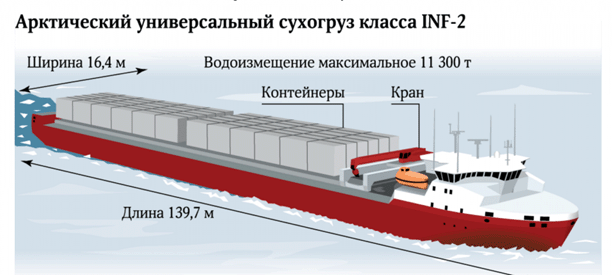
Delays in delivering Russia’s giant nuclear icebreaker line sparks lawsuitsDelays plaguing the launch of the Arktika nuclear icebreaker, billed to be Russia’s largest to date, have prompted a number of lawsuits against the ship’s builder as frustrations mount over a series of technical faults thwarting the vessel’s scheduled release. Bellona , August 21, 2020 by Charles Digges
According to the Barents Observer, which cites industry news portals, Atomflot, Russia’s nuclear icebreaker headquarters, has filed three multi-million dollar lawsuits against the Baltic Shipyard, the St Petersburg-based shipbuilder that has forged most of the country’s icebreaking muscle. Details of the lawsuits are sketchy. But the Barents Observer reports that the suits seek nearly $13.5 million in damages over faulty ship systems and overdue part deliveries, all of which have caused the icebreaker project to overshoot its 2017 deadline. The latest of these mishaps involves a 300-ton electric propulsion engine that failed during the Arktika’s sea trials in February, crippling one of the vessel’s three propeller systems. While the breakdown is not related to the Arktika’s nuclear propulsion system, it was nonetheless an embarrassing setback that will ultimately require the engine to be entirely replaced. Russian media now suggest that the Arktika won’t be repaired before 2021. A new series of upgraded nuclear icebreakers are central component of a Kremlin strategy to keep Arctic sea routes open on a year-round basis. Russia has since Soviet times maintained the world’s largest stable of these vessels. But many have been decommissioned in recent years, and Moscow has embarked on renewing the fleet. The target of this effort is the Northern Sea Route, a 5,600-kilometer sea artery joining Europe to Asia, whose frozen shores are laden with fossil fuels and mineral deposits. To stimulate its development, President Vladimir Putin ordered in 2017 that cargo volumes along the passage reach 80 million tons by the middle of this decade – more than double current volumes. The Arktika, and two other icebreakers in its class – the Ural and the Sibir – are meant to lead the way. Each vessel measures up to 173 meters in length and all are powered by twin RITM-200 nuclear reactors, which deliver a combined 175 megawatts of power – making them the most powerful civilian vessels in the world. Atomflot has filed its suits against the Baltic Shipyard in Moscow’s Arbitration court, the Barents Observer reports. In turn, the shipyard is suing one of its own suppliers – the giant Kirov Plant in St Petersburg, which manufactures heavy machinery. The Arktika’s rollout has face previous delays. In March of 2017, turbines produced by a Ukraine-based manufacturer were held up by military tensions between Moscow and Kiev. https://bellona.org/news/nuclear-issues/2020-08-%EF%BB%BF%EF%BB%BFdelays-in-delivering-russias-giant-nuclear-icebreaker-line-sparks-lawsuits |
|
Northern Europe: detecting radiation and where it comes from
|
Radiation detections in northern Europe: what we do and don’t know https://thebulletin.org/2020/08/radiation-detections-in-northern-europe-what-we-do-and-dont-know/# By Cheryl Rofer, August 21, 2020 Alarming events may not be what they initially seem. When an enormous explosion created a mushroom cloud over Beirut on August 4, some people immediately jumped to the wrong conclusion, spreading rumors on social media that a nuclear bomb had gone off. It hadn’t.
Eventually it became clear that the explosion was caused by chemicals stored improperly in warehouses at Beirut’s port. But weapons experts knew from the start that the powerful explosion was not nuclear, because it did not produce a blinding flash of light, or a blast of heat intense enough to set a city on fire. In the hours that followed the explosion, the Comprehensive Test Ban Treaty Organization (CTBTO), which operates a network of monitoring stations around the world, did not detect a telltale spike in atmospheric radiation. That last clue is how experts are able to narrow down the location of nuclear events, from the smallest accidents to major disasters like Chernobyl, and to make educated guesses about what happened. A release of nuclear material spreads its signature on the wind. But that signature is often incomplete or garbled. Nuclear experts are still puzzling over a mysterious event that happened in June, when several monitoring stations in northern Europe detected extremely small quantities of radionuclides in the atmosphere. That event was not a nuclear weapons test, because the CTBTO stations did not detect any seismic activity. So what was it? Experts have scrutinized the radiation signature and narrowed down the possibilities. The finger points to Russia. Radiation alerts. Radioisotope monitoring stations cover most of the globe. The CTBTO runs the biggest network. National radiation safety agencies—for example, in Finland and Sweden—operate other stations. Universities also operate monitoring stations, often in cooperation with the CTBTO or national agencies. Independent monitoring organizations, like the volunteer-driven Safecast, also report radiation measurements. In early June, Norwegian monitoring stations and a CTBTO station detected iodine 131 in far northern Norway. On June 16 and 17, Finland’s Radiation and Nuclear Safety Authority (STUK) detected cobalt 60, ruthenium 103, cesium 134, and cesium 137 in Helsinki. On June 22 and 23, a CTBTO station in Sweden detected ruthenium 103, cesium 134, and cesium 137. Radiation is easy to detect at low levels. The iodine 131 readings were around 1 microbecquerel per cubic meter of air. (A microbecquerel is one atomic disintegration per second in one million cubic meters of air.) But our knowledge of the Chernobyl explosion began with measuring small amounts of radionuclides, so any detection raises an alert. Interpreting the detections. The types of radionuclides detected also provide information. The radionuclides detected in June, except cobalt 60, are produced by nuclear fission. The half-lives of iodine 131 and ruthenium 103 are 8 days and 39 days, respectively, so they must be from recent fission events. These are common fission products from a nuclear reactor. A wider suite of radionuclides would help to pin down what kind of reactor. The iodine 131 detection is ambiguous, though. It is produced by fission, but it is also used fairly commonly to treat hyperthyroidism, in pet cats as well as people. It is easily sent into the air. So it may come from sewage plants or other sources. The fact that it showed up without the other fission products means that its source may be something other than a nuclear accident. Cobalt 60 is not a fission product, but rather an activation product of steel that has been in or very close to a nuclear reactor. It doesn’t usually show up with fission products. It could mean that something was broken in the reactor that released the fission products, or it could be that the Finnish reading was in error. Narrowing down the location. Airborne radionuclides by themselves cannot tell us how or precisely where they were released. The CTBTO tweeted a map indicating the region in northern Europe where the June release may have occurred. This map was probably constructed by tracing the winds during the period just before the radionuclides were detected. A couple of Russian nuclear power plants are located in the area identified, which also covers the location where the United States believes a Russian experimental reactor exploded last summer while it was being raised from the seabed. Last month’s release was probably a minor incident, like a breach in a filter at a nuclear power plant. But Russia has said that there were no incidents at its nuclear power plants. The presence of cobalt 60 and the location have led some to suggest that the release may have been from a new attempt to raise that experimental reactor. It’s not possible, with the limited additional data available so far, to do more than guess the origin of the June radionuclides. The source of a similarly ambiguous release of ruthenium 106 in 2017 took two years to identify. In that case, the release of a single fission product suggested a processing facility, and the wind patterns suggested the Mayak facility in Russia. A detailed study of the stable ruthenium isotopes collected with the ruthenium 106 confirmed those early provisional conclusions. Pinning down the source. Last year’s deadly accident seems to have occurred when a reactor for an experimental nuclear-powered cruise missile was being lifted from the seabed. Again, radionuclide readings from monitoring stations some distance from the source gave early warning to the rest of the world. The amounts and numbers of radionuclides were larger than in the recent release, and reporting on the accident, as people were brought to hospitals, provided more information, including radioisotope detection closer to the site, along with satellite photos and, later, photos of the damaged barge. The radioisotopes indicated that a fission source was involved, although early reports from Russia described an “isotopic source,” a phrase usually reserved for single-isotope heat sources, which would be unsuitable for propulsion. In all three of these cases over the past three years, the radionuclides initially detected by air sampling were ambiguous. Additional information was needed to pin down a source. The best information would come from the country responsible for the release – in all three cases, Russia, which is a signatory to the Convention on Early Notification of a Nuclear Accident. Somebody knows what happened in these cases. We need to hear from them. |
|
UK relations with China at a low point; bad news for nuclear power projects
|
UK nuclear power: The next Huawei? DW, 21 Aug, 20Once a key part of the UK’s energy plans, nuclear power faces rising costs, cheaper renewables and domestic opposition. It also finds itself at the center of a row between London and Beijing that could prove fatal.
London’s relations with China — hailed as entering a “golden era” only four years ago — have deteriorated badly over Hong Kong, hitting a nadir when the UK finally bowed to US pressure to ditch Huawei’s involvement in its new-generation internet (5G) rollout. In late 2019, the US published a list of companies linked to the Chinese military, and after Huawei came the China General Nuclear Power Group (CGN). The state-owned Chinese firm has invested 3.8 billion pounds (€4.1 billion, $4.3 billion) in Britain to date, mainly in the Hinkley Point nuclear plant under construction in Somerset, southwest England, and the Sizewell plant in eastern England. It is also seeking UK regulatory approval to build its own nuclear reactor at Bradwell in Essex, east of London. China warned the UK it would face “consequences if it chooses to be a hostile partner” after London announced its Huawei’s decision. Liu Xiaoming, the Chinese ambassador to the UK, reportedly said China could cut its backing for UK nuclear plants altogether. Years of Chinese involvement in UK nuclear industryCGN’s involvement in the UK nuclear industry began in 2016 when a deal was signed with French state-owned utility Electricite de France (EdF) to collaborate on three reactors totaling 8.7 gigawatts (GW) of power generation, starting with Hinkley Point. The agreement spoke of CGN’s “progressive entry” into the UK’s “resurgent” nuclear ambitions. The UK currently has 15 operational nuclear reactors at seven locations. At its height in 1997, 26% of the country’s power was generated from nuclear, but this has slipped since to 19%. In the Sizewell and Hinkley projects, CGN is providing cash, holding 66% stakes, but with Bradwell it wants to build the reactor itself, using its own technology, and it wants to operate it. Observers say Bradwell is the prize CGN is really seeking: the first Chinese-built nuclear plant outside China. In May, EdF outlined its plans to start work on Sizewell by the end of next year. The project would create 25,000 jobs, it said. But EdF’s continued involvement could be thrown into doubt if no other investor came forward to replace CGN. This is especially troubling given the project is also expected to result in cost overrun. Hinkley Point now costs about 3 billion pounds more than the 20 billion pounds originally planned. Sizewell is also slated to cost 20 billion pounds. “Several projects were planned but only Hinkley Point will likely go ahead,” Jonathan Marshall, Energy and Climate Intelligence Unit (ECIU), told DW. “Bradwell would be a Chinese project, but is now unlikely for political reasons.” Bradwell looks surplus to requirements for the reasons the National Infrastructure Assessment (NIC), a government advisory body, outlined in its most recent long-term assessment: “Given the balance of cost and risk, a renewables-based system looks a safer bet at present than constructing multiple new nuclear power plants,” it read. Financing of nuclear plans unclear“Sizewell is not dependent on CGN investment,” a spokesman from the the Department for Business, Energy and Industrial Strategy (BEIS) said. But not many agree. “Equity funding for nuclear power stations is very difficult for private actors,” Rob Gross, director of the UK Energy Research Centre, told DW. The government’s offer in 2018 to Hitachi to take a third of the equity at the Wylfa nuclear project wasn’t enough to keep the company interested, for example. As Paul Dorfman of University College London’s energy institute and founder of the Nuclear Consulting Group told environmental news platform electrictyinfo.org, it was hard to see who else might invest in Sizewell if the Chinese pull out. “The market won’t touch nuclear with a barge pole. You only see nuclear being built in command-and-control economies, like China and Russia, and a few outliers,” he said. One option would be for the government to take either a majority or minority stake in Sizewell. Another option is a Regulated Asset Base (RAB) model, where consumers are charged a fixed price to cover infrastructure costs. But this would hike energy prices in the long term and make it politically hard to justify. …….https://www.dw.com/en/uk-nuclear-power-the-next-huawei/a-54631808 |
|
1 This Month

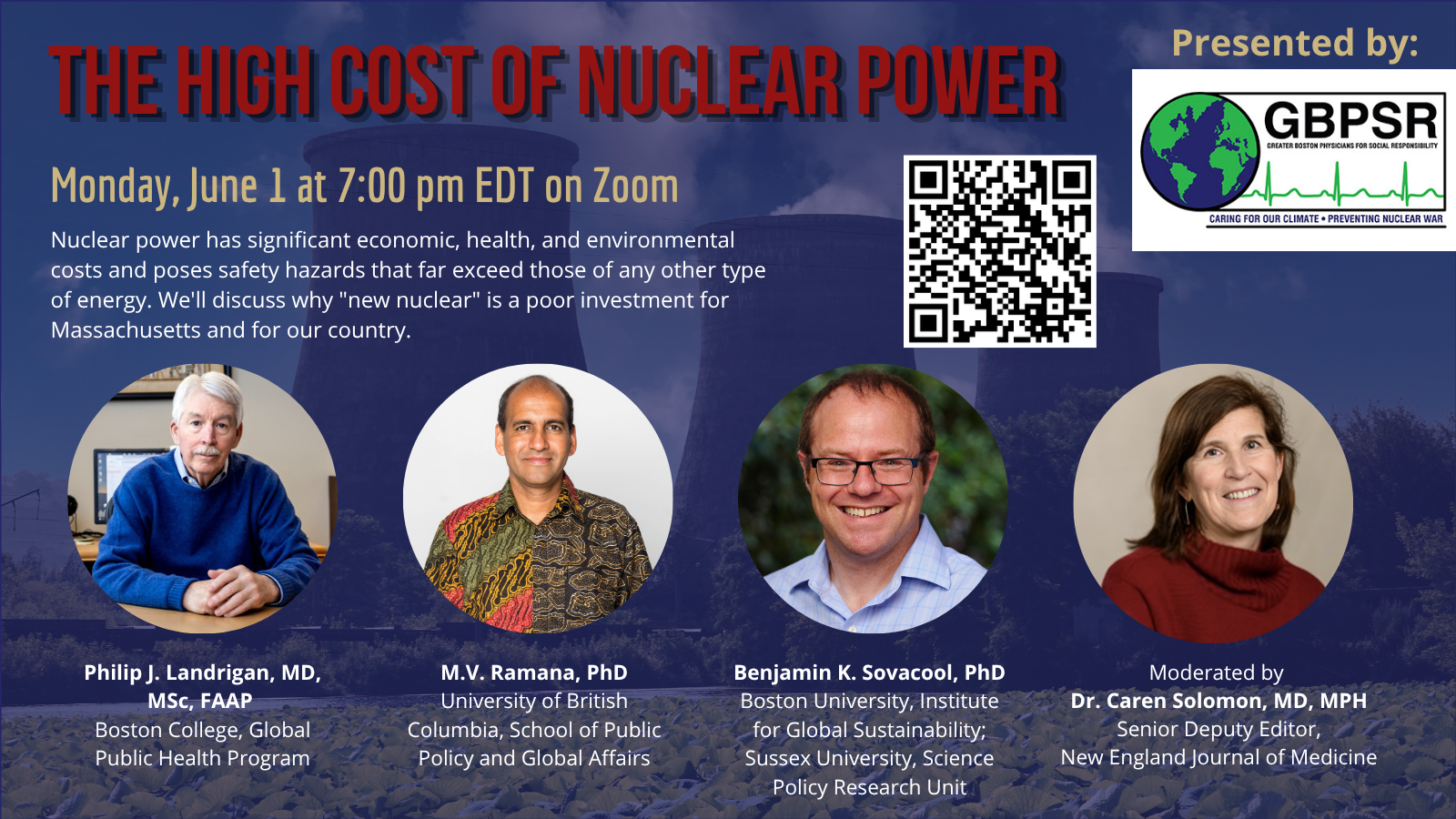
1 June Webinar – The High Cost of Nuclear Power – Register


of the week– Nuclear Reactor Information Task Force
To see nuclear-related stories in greater depth and intensity – go to https://nuclearinformation.wordpress.com
-
Archives
- May 2026 (225)
- April 2026 (356)
- March 2026 (251)
- February 2026 (268)
- January 2026 (308)
- December 2025 (358)
- November 2025 (359)
- October 2025 (376)
- September 2025 (257)
- August 2025 (319)
- July 2025 (230)
- June 2025 (348)
-
Categories
- 1
- 1 NUCLEAR ISSUES
- business and costs
- climate change
- culture and arts
- ENERGY
- environment
- health
- history
- indigenous issues
- Legal
- marketing of nuclear
- media
- opposition to nuclear
- PERSONAL STORIES
- politics
- politics international
- Religion and ethics
- safety
- secrets,lies and civil liberties
- spinbuster
- technology
- Uranium
- wastes
- weapons and war
- Women
- 2 WORLD
- ACTION
- AFRICA
- Atrocities
- AUSTRALIA
- Christina's notes
- Christina's themes
- culture and arts
- Events
- Fuk 2022
- Fuk 2023
- Fukushima 2017
- Fukushima 2018
- fukushima 2019
- Fukushima 2020
- Fukushima 2021
- general
- global warming
- Humour (God we need it)
- Nuclear
- RARE EARTHS
- Reference
- resources – print
- Resources -audiovicual
- Weekly Newsletter
- World
- World Nuclear
- YouTube
-
RSS
Entries RSS
Comments RSS
 nuclear-news