Severe floods in Italy and France
A storm which moved overnight across southeastern France, and then northern Italy caused major flooding on both sides of the border, damaging homes, destroying bridges, blocking roads and isolating communities………
Unrelenting rainfall overnight hit levels not seen since 1958 in northern Italy’s Piedmont region, where 630mm (24.8 inches) of rain fell in 24 hours, according to the Italian civil protection agency.
Two brothers were swept away by floodwaters while they were tending animals near the French border. One brother managed to grab onto a tree and was saved, while authorities were searching on the French side for the other brother.
Flooding in France
On the other side of the border, in southeastern France, almost a year’s average rainfall fell in less than 12 hours in the mountainous area surrounding the city of Nice.
Local firefighters said at least eight people were missing, including two firefighters whose vehicle was swept away by water when the road collapsed during a rescue operation. Several dozen people were evacuated from their homes overnight, firefighters said.
The storm, dubbed Alex, ravaged several villages around the city of Nice on the French Riviera. Nice Mayor Christian Estrosi called it the most severe flooding disaster in the area for more than a century after flying over the worst-hit area by helicopter.
“The roads and about 100 houses were swept away or partially destroyed,” he told French news channel BFM……. https://www.aljazeera.com/news/2020/10/3/one-killed-25-missing-in-severe-floods-in-italy-and-france
Daunting task of removal of Russia’s spent nuclear fuel rods from Andreeva Bay
One-third of all nuclear waste removed from Cold War dump site https://thebarentsobserver.com/en/nuclear-safety/2020/10/one-third-all-nuclear-waste-removed-cold-war-dump-site
Another 12 special design casks with spent nuclear fuel from Cold War submarines are soon to be shipped out of Andreeva Bay on Russia’s Arctic Barents Sea coast. ByThomas Nilsen October 02, 2020
About 35% of the 21,000 spent uranium fuel elements originally stored in three rundown tanks is so far lifted out, repacked and sent to Russia’s reprocessing plant at Mayak in the South-Urals, informs Aleksandr Krasnoshchekov, director of the SevRAO’s branch in Andreeva Bay. SevRAO is the federal enterprise for handling radioactive waste in the northwestern region.
The company has a staff of 100 in Andreeva Bay in the Litsa fjord, a closed-for-civilians fjord near the border to Norway where the Northern Fleet has two basing points for nuclear submarines.
Here, the navy started to store casks with highly radioactive spent uranium fuel from its first nuclear-powered in the 1960s. First in rusty containers outdoor, later in a pool-building that broke down. In the 1980s, the elements were moved over to three concrete tanks in very poor conditions.
After nearly 20 years of improving the infrastructure, securing the site from leakages and building a new crane at the port, the first shipment with nuclear waste left Andreeva Bay in 2017.
Neighboring Norway has spent more than €30 million to support the cleanup of the nuclear dump located only about 50 km from its border.
Also Sweden, Great Britain, Italy and the European Commission have contributed. Italy, as an example, paid for building the “Rossita”, a special purpose ship sailing in shuttle from Andreeva Bay to Atomflot in Murmansk where the containers are reloaded to rail wagons. According to director Krasnoshchekov, the ongoing work is done based on contracts with these countries, he says in an interview with Vesti Murman.
Most of the work done so far concerns the elements easy to lift out.
Way more challenging times are ahead, as the damaged elements in the third tank, 3A, are to be secured and lifted out.
Take a closer look at the photo below to understand the scoop of the challenge. Some of these rusty, partly destroyed steel pipes contain fuel rods where the uranium will fall out if lifted straight up.
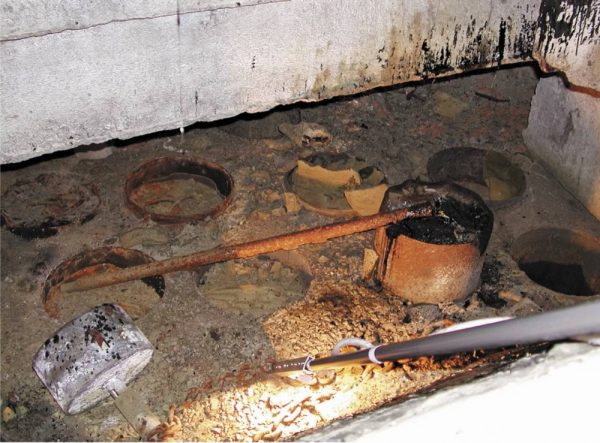
The work on tank 3A is scheduled to start in 2023, after tank 2A and 2B is completed. The experts are don’t want to start the most risky work before as much as possible of the other waste elements are removed. A criticality accident in Andreeva Bay is worst-case scenario.
As previously reported by The Barents Observer, the total radionuclide inventory in the three tanks is estimated to be equal to the remains of Rector No. 4 inside the Chernobyl sarcophagus in Ukraine. This according to a study by the British nuclear engineering company Nuvia.
The original 22,000 spent fuel elements dumped in Andreeva Bay are coming from 90-100 reactor cores powering the Soviet Union’s Cold War submarines sailing out from the naval bases along the coast of the Kola Peninsula from the late 1950s to 1982.
The first reactor cores of the November class submarines were reloaded in the early 1960s.
Additional to the spent fuel elements, some 10,000 cubic meters of solid radioactive waste from Andreeva Bay are shipped to the regional handling and storage facility in Saida Bay, a few hours sailing to the east on the Kola Peninsula. Huge piles of solid radioactive waste were stored outdoor summer and winter in the same area. Now, a building is erected to protect the boxes from rain and snow, before being repacked and shipped to the Saida Bay.
In September, French nuclear production reached its second lowest level on record
record – also its second lowest this year – at 21.6 TWh, down 21.5%
compared to 2019, while outages several reactors have been extended, RTE
data said Thursday. Nuclear output last month was thus slightly higher, by
0.3 TWh, the lowest recorded in June, at 21.3 TWh, according to Montel’s
calculations. And it has decreased by 1.2 TWh compared to August. On
average, nuclear represented 68.4% of electricity production in France,
against 69% in August. https://www.montelnews.com/fr/story/production-nuclaire-%C3%A0-un-2me-plus-bas-record-en-septembre/1153335
Two new appeals against the Flamanville EPR
have decided to seize the Council of State in order to cancel the decree
extending the construction of the Flamanville EPR until 2024. On March 25,
in the confinement, the government issued a decree extending to 2024 the
validity of the creation authorization decree of the EPR in Flamanville,
which set earlier in April 2020 its deadline for commissioning.
France, France Nature Environnement Normandy, Crilan, Stop EPR neither in
Penly nor elsewhere) “strongly denounce this government obstinacy in
tolerating the continuation of this catastrophic project.”
Heavy military clashes between Armenian and Azeri forces
|
Fierce clashes rage in Azerbaijan’s ethnic Armenian enclave, SMH, by Nvard Hovhannisyan and Nailia Bagirova
September 29, 2020 Yerevan: Armenian and Azeri forces have deployed heavy artillery during the latest fighting over the breakaway region of Nagorno-Karabakh, they both said.
The Azeri Defence Ministry said the opposing forces attempted to recover lost ground by launching counter-attacks in the directions of Fizuli, Jabrayil, Agdere and Terter. The ministry said in a statement there was fighting around Fizuli city and the Armenian army shelled the Dashkesan region on the border between the two countries, miles away from Nagorno-Karabakh on Tuesday morning. Armenia denied those reports but reported fighting throughout the night and said that Nagorno-Karabakh’s army repelled attacks in several directions along the line of contact. At least 29 people were killed on Monday when the two sides pounded each other with rockets and artillery in the fiercest round of the decades-old conflict in more than a quarter of a century. “This is a life-and-death war,” Arayik Harutyunyan, the Nagorno-Karabakh leader, told a briefing. Any move to all-out war could drag in major regional powers Russia and Turkey. Moscow has a defence alliance with Armenia, which provides vital support to the enclave and is its lifeline to the outside world, while Ankara backs its own ethnic Turkic kin in Azerbaijan. “We haven’t seen anything like this since the ceasefire to the war in the 1990s. The fighting is taking place along all sections of the front line,” said Olesya Vartanyan, senior analyst for the South Caucasus region at Crisis Group…….. Vartanyan said the use of rockets and artillery brought a higher risk of civilian casualties that could make the escalation hard to stop by diplomatic means: “If there are mass casualties, it will be extremely difficult to contain this fighting and we will definitely see a full-fledged war that will have a potential intervention of Turkey or Russia, or both of them.” Russia called for an immediate ceasefire, and Turkey said it would support Azerbaijan……….. https://www.smh.com.au/world/asia/fierce-clashes-rage-in-azerbaijan-s-ethnic-armenian-enclave-20200929-p56051.html |
|
Armenian Ambassador on Azerbaijani threats of missile strike against Metsamor Nuclear Power Plan
Armenian Ambassador on Azerbaijani threats of missile strike against Metsamor Nuclear Power Plant Public Radio of Armenia, Siranush Ghazanchyan August 3, 2020, Armenia has undertaken a number of measures to raise awareness about Azerbaijan’s threat to strike the Metsamor Nuclear Power Plant, Armen Papikyan, Armenia’s ambassador to the IAEA, said in an interview with Energy Intelligence.
“Given that the Azerbaijani leadership has no qualms about targeting civilian installations, we took the threat extremely seriously,” he said.
On Jul. 16, amid renewed fighting on the Armenia-Azerbaijan border, the spokesperson for the Azerbaijan defense ministry threatened a missile strike against Armenia’s Metsamor nuclear power plant (NIW Jul.17’20). This threat reverberated in Vienna, where Armenia’s mission to the International Atomic Energy Agency (IAEA) submitted a “Note Verbale” to the agency’s director general (DG) on Jul. 17, noting taht such threats “are an explicit demonstration of state terrorism and genocidal intent of Azerbaijan.” Baku soon responded……….. https://en.armradio.am/2020/08/03/armenian-ambassador-on-azerbaijani-threats-of-missile-strike-against-metsamor-nuclear-power-plant/
Call to British govt to not allow restart of Hinkley Point B nuclear reactors, with cracks in their cores

 Stop Hinkley 29th Sept 2020, EDF Energy has just announced that it intends to submit new safety cases to the Office for Nuclear Regulation (ONR) to re-open Reactors 3 and 4 at Hinkley Point B. It currently expects reactor 4 to return to service on 26 February 2021 and reactor 3 on 12 March 2021.
The Stop Hinkley Campaign is calling for both reactors to remain closed. Stop Hinkley spokesperson Roy Pumfrey said: “Nuclear engineer, the late John Large said more than a decade ago that it was gambling with public safety to allow reactors with cracks in their core to keep operating. (3) Every minute these reactors operate that gamble become riskier.
We call upon the UK Government to intervene and request the ONR to re-consider their unwise decisions at Hunterston B and to refuse to accept EDF’s safety cases for Hinkley Point B. It is EDF in Paris, France which will benefit from the restart of these reactors, but it is those of us who live in Somerset and middle England who are being exposed to these involuntary risks”
UK govt to give EDF a blank cheque for building Sizewell C nuclear power plant.
 Dave Toke’s Blog 29th Sept 2020, It is looking increasingly likely that the British Government is about to cave-in to EDF’s demand that the British energy consumers should pay what could be massive cost overruns for building Sizewell C nuclear power plant.
http://realfeed-intariffs.blogspot.com/2020/09/is-treasury-about-to-cave-in-over-edfs.html
Plans for Bradwell B nuclear power station could collapse
 Campaigners claim plans for Bradwell B nuclear power station could collapse, Clacton Gazette , By Alex Gidden Reporter 28 Sept 20, CAMPAIGNERS claim plans to build a nuclear power station off the coast of Essex could collapse before the end of the year.
Group chairman Prof Andy Blowers made the bold claim after seeing Japanese firm Hitachi pull out of plans to build its own nuclear power station in north Wales.
He says Hitachi’s decision underlines the “huge expense” associated with building nuclear power stations and believes the Bradwell B project will be binned because of the costs and scale of opposition.
Both Colchester and Maldon councils have rejected planning applications for the power station in the past month.
The applications were jointly submitted by the China General Nuclear Power Group, also known as CGN, and energy firm EDF.
A spokesman for the Blackwater Against New Nuclear Group said: “CGN is now fully aware of the mountain it has to climb to get anywhere near planning permission for its massive nuclear juggernaut, which will utterly destroy the environment and wellbeing of the Blackwater region.
“Widespread public protest and influential councils have produced a powerful coalition of outright opposition to the proposals.
Its progress will not be straightforward and will take years to complete.
“By the time it could start operating, it will be a white elephant, unnecessary, uneconomic and redundant……… https://www.clactonandfrintongazette.co.uk/news/north_essex_news/18749213.campaigners-claim-plans-bradwell-b-nuclear-power-station-collapse/
90 areas in Germany identified as potentially suitable for nuclear waste burial
 Agency report identifies 90 areas in Germany suitable as nuclear waste repository, https://www.thestar.com.my/news/world/2020/09/29/agency-report-identifies-90-areas-in-germany-suitable-as-nuclear-waste-repository By M OritzRommerskirchen and Zhang Yirong, BERLIN, Sept. 28 (Xinhua) — Germany had 90 areas with favorable geological conditions to facilitate the final storage of nuclear waste, the federal agency for radioactive waste disposal (BGE) announced on Monday.According to the interim report of the BGE, around 54 percent of Germany’s total territory, or about 194,000 square kms, were classified as potential sites for nuclear waste repository.
“The geology in Germany is so favorable that we can say with conviction that the one site with the best possible safety for the repository of high-level radioactive waste can be found,” said BGE managing director Stefan Studt during a press conference.
However, identifying a potential area is “still a long way off” from becoming a repository site in Germany, said Studt but stressed the chances of finding a site in Germany that offers safety for a million years are “very good.”
The German government is scheduled to close all of its nuclear power plants by 2022. The process of looking for a repository site for nuclear waste in Germany has been ongoing since 2017. The BGE interim report started the first of the three phases and would also serve as a basis to involve the public.
“We have achieved the first widely visible progress in the search for a repository,” said Environment Minister Svenja Schulze, adding that “this is a good news. Because it is a task for society as a whole.”
In the coming months and years, the list of potential locations would be gradually narrowed down further. According to BGE, after the completion of the underground exploration, the final recommendation of a site is expected in 2031.
UK to return high-level nuclear waste to Germany
|
UK to return high-level nuclear waste to Germany https://www.energylivenews.com/2020/09/28/uk-to-return-high-level-nuclear-waste-to-germany/
28 Sept 20, Preparations are underway for the first of the three shipments in late 2020, The UK will be returning high-level nuclear waste in the form of vitrified residues to Germany over the coming years.The waste results from the reprocessing and recycling of spent nuclear fuel at the Sellafield site in West Cumbria, which had previously been used to produce electricity by utilities in Germany. Preparations are underway for the first shipment in late 2020 under the Vitrified Residue Returns programme, which is a key component of the UK’s Nuclear Decommissioning Authority (NDA) strategy to repatriate high-level waste from the UK. A total of three shipments will be made to storage facilities in Germany, with the returns involving Sellafield Ltd working with International Nuclear Services (INS), a subsidiary of the NDA. INS will transport the waste by sea on a specialised vessel to a German port, followed by rail to the final destinations. Daher Nuclear Technologies has been contracted to safely manage the overland transport in Germany. |
|
Germany launches new search for permanent nuclear waste disposal site
|
Germany has named 90 locations that could safely house containers of radioactive nuclear waste permanently. The controversy over what to do with waste from the country’s nuclear power plants has been long and divisive. Germany formally launched its new search for a permanent nuclear waste disposal site on Monday. BGE, the nation’s waste management organization, named 90 areas around the country as possible candidates for the permanent waste disposal. It said in a long-awaited report that a location needs to be found by 2031. The aim is to start storing containers of radioactive waste at the site by 2050. Germany is seeking a safe place to store 1,900 containers of waste. The containers make up only 5% of the country’s nuclear waste but 99% of its radioactivity, according to BGE chairman Stefan Studt. Regions in Bavaria and Baden-Württemberg in southern Germany, as well as Lower Saxony and states in eastern Germany, are among the potential waste disposal sites. The locations suggested “favorable geological conditions for the safe disposal of radioactive waste,” the BGE said. The sites will now be vetted to account for other factors, including population density. Gorleben ruled outNot on the list of possible storage sites is Gorleben, a small settlement in Lower Saxony of 650 residents, and the location of a salt mine which had been earmarked as a site for nuclear waste disposal almost forty years ago. The dispute that led to so much bitterness in Germany over the years began on 22 February 1977: the State Premier of Lower Saxony, the conservative Ernst Albrecht, father of the current European Commission President Ursula von der Leyen, made an announcement: Gorleben, near the border to what was then East Germany, was to be the site of Germany’s facility for permanent nuclear waste storage. Locals never accepted the decision, arguing that the salt in the ground cold weaken containment structures and cause radioactive leaks. Gorleben became the focus of Germany’s anti-nuclear movement. Protestors staged sit-ins at the building site and rallied round the farming community in the region. In subsequent years, every transport of nuclear waste to Gorleben was accompanied by major demonstrations. Despite these massive protests, construction work on a new mine began there, in which the salt dome’s geological characteristics were to be explored. This mine alone, which never produced a grain of salt or any other natural resource, has already cost the German tax-payer 1.6 billion euros ($1.9 bn.) So much money has been spent conducting research there that the announcement by Kanitz that the salt dome’s surface cover is not intact and that the chemical composition of the ground water is unsuitable, amounts to a political bombshell. This is exactly what opponents of nuclear power have been saying for years. The debate is almost certain to keep reverberating. But Monday’s announcement in Berlin by Stefan Kanitz, managing director of the state “Federal Society for Permanent Nuclear Waste Storage” still marks a milestone: “Gorleben is not the best possible location,” he said. Following decades of debate which, above all, fueled the rise of the anti-nuclear Green Party, the German government decided after the reactor disaster at Fukushima in Japan in 2011 to permanently phase out nuclear power. Of the roughly 20 nuclear power plants once built, many have already been disconnected from the grid. Currently, six are still in use. They are all scheduled to be decommissioned by the end of 2022. Germany is likely to run into resistance from local politicians at whichever waste disposal site it chooses. Bavaria’s state government has already insisted that it is unsuited for permanent waste disposal. The plan now is to discuss things step by step with the local communities in the 90 regions shortlisted. That is one reason why the process is scheduled to take so long. Construction is to begin on a new permanent storage facility for nuclear waste in 2031. ……… https://www.dw.com/en/germany-launches-new-search-for-permanent-nuclear-waste-disposal-site/a-55077967 |
|
A Sellafield nuclear disaster would spread across Cumbria – new map shows
|
Sellafield nuclear disaster would spread across Cumbria – new map shows, The Mail, By Staff Reporter 27 Sept 20, THE majority of south Cumbria could be affected if there was a major nuclear incident at Sellafield, a new report has revealed…….
Part of the new strategy means Outline Planning Zone’s must be put in place. These are areas outside of the immediate vacinity which could be affected by a disaster. A report from Steve Healey, the chief fire officer for Cumbria, revealed the affected area covers a 50-kilometre circular zone from an epicentre at Sellafield. The area includes as far south as Walney, east as Bowness and north almost to the Scottish border. Cumbria County Council has accepted the report at a meeting of the cabinet, which was chaired by Cllr Stewart Young….. This new concept of an Outlying Planning Zone is new. The zone is determined by kilometres from the centre of the Sellafield site. It takes you way beyond the boundaries of Copeland, showing that other areas of Cumbria would also be affected by a serious incident. “It includes BAE and the docks at Barrow. So, the implications of an accident are so significant for the whole county. It is a responsibility that sits then with Cumbria County Council as well as Barrow, Copeland and Allerdale. This is an important piece of work.” The new regulations allow for a transitional period of 12 months and all changes required to have been made by this May. The authority was on track to meet the deadlines until resources were diverted to respond to Covid-19. A plan has been agreed with the Office for Nuclear Regulation allowing the council to prepare the plans before November 21 this year. The report said Sellafield’s OPZ was the largest in the United Kingdom and whilst only outline planning is required there is a substantial amount of work being undertaken to identify vulnerable premises and infrastructure in the zone. ……… https://www.nwemail.co.uk/news/18752191.sellafield-nuclear-disaster-spread-across-cumbria—new-map-shows/ |
|
French taxpayers don’t want to pay for Sizewell nuclear station, neither do British.
 France’s EDF demands clarity on British nuclear power plans Times John Collingridge 27 Sept 20, French energy giant EDF is set for a showdown with the Treasury over state funding for nuclear power stations as Britain’s atomic future faces a make-or-break moment.Jean-Bernard Lévy, chairman and chief executive of Électricité de France, will speak to chancellor Rishi Sunak via video link on Wednesday to demand clarity over Britain’s plans for funding nuclear power.
The industry was left reeling this month when Japan’s Hitachi quit its Horizon project to build a £20bn plant on Anglesey.
That shock retreat, after years of prevarication by Westminster over state support for nuclear power and turmoil in the Japanese nuclear industry, left only EDF and China General Nuclear with plans for atomic power stations in the UK.
EDF and China are building the delayed and over-budget £22.5bn Hinkley Point C power station in Somerset, but Paris has balked at
the prospect of French taxpayers funding the next nuclear project in Britain.
Instead, EDF, which is 84% owned by the French state, wants British taxpayers to underwrite a new plant at Sizewell in Suffolk. A
proposed new financial structure, the regulated asset base, would levy a tax on UK household energy bills to help pay for the project.
Other options include the British government taking a stake — although that has worried the Treasury, which is anxious about adding to its debt mountain.
EDF declined to comment. With most of Britain’s ageing reactors due to close by the end of the decade, Sunak and Boris Johnson face the dilemma of whether to fund more big nuclear plants, or rely on wind, solar, gas, small reactors and imported power to keep the lights on.
The American government has warned Hitachi against selling the Anglesey site to China, and is understood to be considering bankrolling US companies to take it over. Westinghouse, which makes the AP1000 nuclear plant, and NuScale Power,
which is developing small, modular reactors, are both believed to be
exploring options for the site. South Korea’s Kepco is also understood to
be interested, as is EDF.
Former UK Energy Minister Sir Ed Davey says new Sizewell nuclear station is too expensive
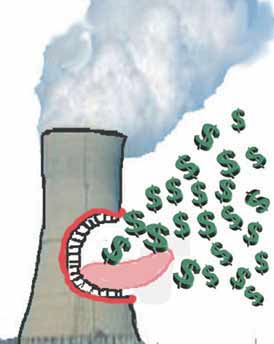 Suffolk’s Sizewell C too expensive, says Sir Ed Davey, BBC, By Vikki Irwin & Chris Bond
28 Sept 20, Former energy secretary Sir Ed Davey has said building a new nuclear power station at Sizewell is “too expensive”.
1 This Month
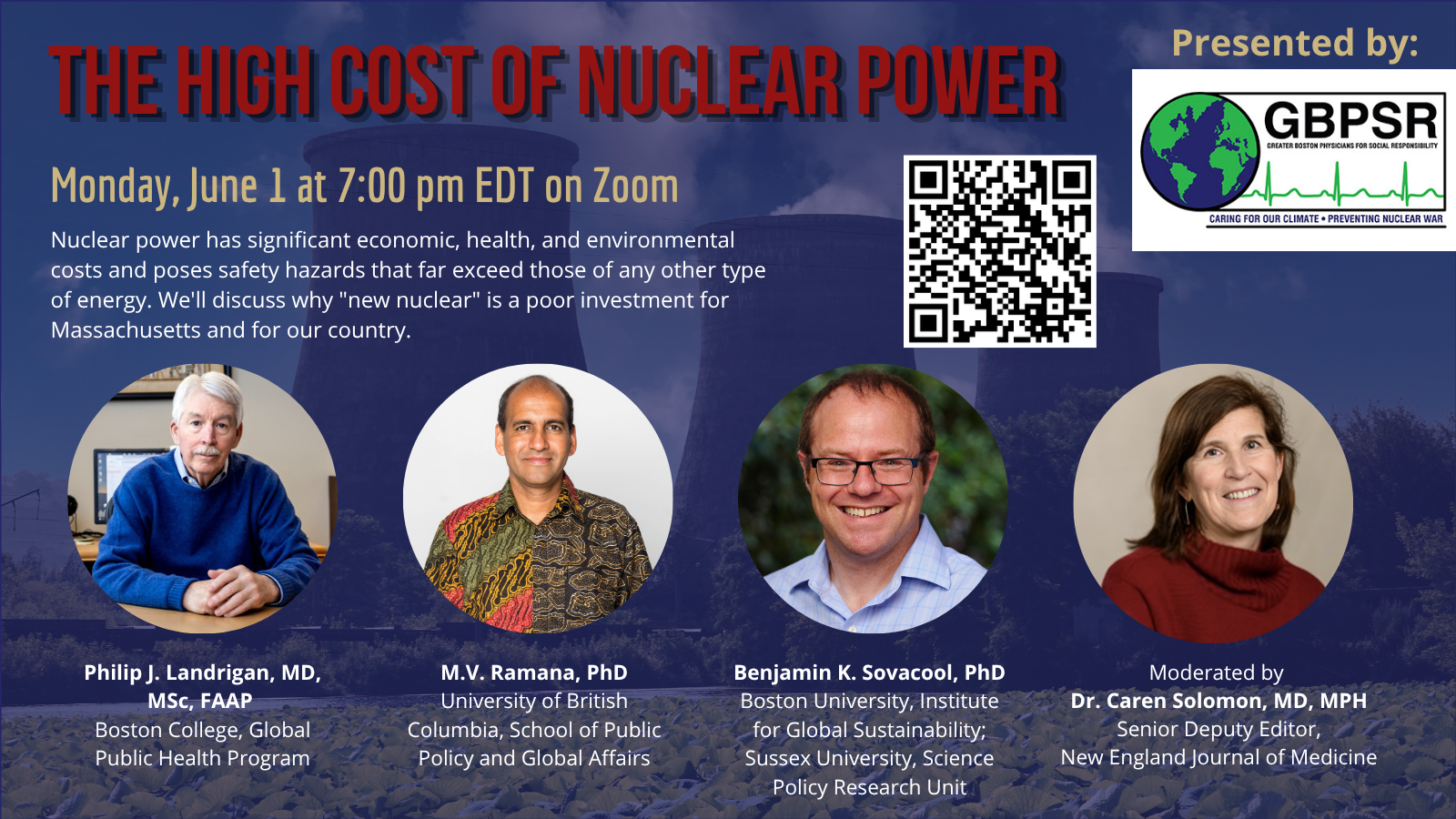
1 June Webinar – The High Cost of Nuclear Power – Register


of the week– Nuclear Reactor Information Task Force
To see nuclear-related stories in greater depth and intensity – go to https://nuclearinformation.wordpress.com
-
Archives
- May 2026 (225)
- April 2026 (356)
- March 2026 (251)
- February 2026 (268)
- January 2026 (308)
- December 2025 (358)
- November 2025 (359)
- October 2025 (376)
- September 2025 (257)
- August 2025 (319)
- July 2025 (230)
- June 2025 (348)
-
Categories
- 1
- 1 NUCLEAR ISSUES
- business and costs
- climate change
- culture and arts
- ENERGY
- environment
- health
- history
- indigenous issues
- Legal
- marketing of nuclear
- media
- opposition to nuclear
- PERSONAL STORIES
- politics
- politics international
- Religion and ethics
- safety
- secrets,lies and civil liberties
- spinbuster
- technology
- Uranium
- wastes
- weapons and war
- Women
- 2 WORLD
- ACTION
- AFRICA
- Atrocities
- AUSTRALIA
- Christina's notes
- Christina's themes
- culture and arts
- Events
- Fuk 2022
- Fuk 2023
- Fukushima 2017
- Fukushima 2018
- fukushima 2019
- Fukushima 2020
- Fukushima 2021
- general
- global warming
- Humour (God we need it)
- Nuclear
- RARE EARTHS
- Reference
- resources – print
- Resources -audiovicual
- Weekly Newsletter
- World
- World Nuclear
- YouTube
-
RSS
Entries RSS
Comments RSS
 nuclear-news