Belarus postpones launch of nuclear reactor
Radio Free Europe 9th Oct 2020, Belarus says it has postponed the full launch of the first reactor at its
Astravets nuclear power plant by two years to 2022. The plant, located near
the Lithuanian border, was scheduled to be launched on October 6 until the
cabinet order on October 9. Built by the Russian state firm Rosatom and
financed by Moscow with a $10 billion loan, the project is opposed by
neighboring EU member Lithuania, whose capital, Vilnius, is just 50
kilometers away. Lithuania, Latvia, and Estonia are moving to a full
decoupling from their Soviet-era common power system by 2025.
U.S. and Russian negotiators try tosalvage arms control pact
their nuclear warhead stockpiles in a bid to salvage their last remaining
arms control pact before it expires next year, a source has said.
https://www.thenational.scot/news/18785398.us-russia-agree-freeze-nuke-stockpile/
Big doubts about the economics of small nuclear reactors for the UK
 FT 11th Oct 2020, The big challenge facing small nuclear reactors. When Britain unveiled its
first commercial nuclear reactor back in 1956, Calder Hall in Cumbria had
the ability to generate 50 megawatts of electricity. Fast-forward four
decades to the last reactor the UK completed, at Sizewell in Suffolk. Still
functioning, it has a capacity of 1,200MW. Spot the theme? Yup, ever bigger
reactors.
Size has steadily increased because of simple nuclear economics.
Sizewell B may be able to generate 24 times as much power as a 50MW
reactor. But it doesn’t need 24 times the material inputs and staffing to
generate that extra power. Which all makes it seem faintly
counter-intuitive that Britain is considering downsizing and spending money
on a fleet of so-called small modular reactors.
The government is considering plans to put up to £2bn into developing the technology. A
number of companies, including Britain’s Rolls-Royce and GE Hitachi, are
pitching to sell their products. The aim is to fund prototypes with a view
to kick-starting a new SMR industry.
This would build perhaps dozens of
mini-reactors to [supposedly] help the UK meet its net zero emissions target while also
keeping the lights on, as well as exporting this technically advanced kit.
Large nuclear hasn’t exactly a spotless record when it comes to cost
containment. So why make it harder by forgoing those scale advantages?
Research by a team led by Tony Roulstone at Cambridge university looked at
the relative costs of building a “first of a series” SMR against a
comparable large reactor. It concluded that if you used the same project
techniques as for conventional plants, the SMR would cost (once the
interest costs incurred in construction were taken into account) roughly 70
per cent more per kilowatt (kW) to build than the larger one.
Squeezing that cost back down requires a wholly different approach to construction.
Instead of building everything in the open on a massive building site, as
with large reactors, it means making as much as possible in factories
before shipment to site. The same Cambridge team estimated that with ever
more prefabrication and standardisation of parts, you could ultimately
squeeze the cost down roughly to parity with the larger reactor.
A glance at the history of overruns and delays that plagued the Advanced Gas-cooled
Reactor project in the 1960s should suffice as a reminder. For SMRs to
avoid a similar miserable fate, the government must pick a single
commercial technology which can bring in sufficient private sector
investment and attract export orders. This cannot be some “made in
Britain” industrial exercise. If that’s what’s in prospect, then,
honestly, big is probably best.
https://www.ft.com/content/99307126-bb21-48e3-87aa-301749dec870
Conflict of interest – UK’s Centre for Environment, Fisheries and Aquaculture Science (CEFAS)
Stop Hinkley Press Release 8th Oct 2020, EDF’s Hinkley C Nuclear Power Station will be wiping out fish stocks in
Severn Estuary for 60 years. The Stop Hinkley Campaign is accusing
EDFGenco, the French and Chinese owned Company building Hinkley Point C, of
trying to bully the UK Environment Agency into allowing them to destroy
environmentally precious fish stocks for the 60 year lifetime of the
nuclear power station.
A condition placed on EDFGenco by the Environment
Agency was that permission to build Hinkley C was dependent on Acoustic
Fish Deterrents (AFDs) being placed on the two massive cooling water intake
heads 3 kilometres offshore from the Nuclear site.
Now EDFGenco is trying
to renege on its commitment to install AFDs and is seeking a variation on
the planning conditions imposed. EDFGenco claims that the Centre for
Environment, Fisheries and Aquaculture Science (CEFAS) the government’s
marine and freshwater science expert body – is happy for them to go ahead
without AFDs. The Wildfowl and Wetland Trust points out that “CEFAS’s
relationship as a paid contractor to EDFGenco and an agent of Government
raises unavoidable questions of conflict of interest”.
Lower Saxony opposes building of nuclear power plants by Netherlands – location all too close

 German state of Lower Saxony against nuclear power plant in bordering Netherlands, Nuclear phase-out 08 Oct 2020, Kerstine Appunn,– NWZ Online
The northern German state of Lower Saxony has been rattled by Dutch plans to assess the construction of up to 10 new nuclear power plants, one of which could be located near the German border. “I will do everything in my power to prevent the Netherlands from seeing a new dawn of nuclear power,” Lower Saxony’s environment minister Olaf Lies (SPD) told Stefan Idel at NWZ online. The Netherlands has only one of formerly two nuclear power stations operating but governing party VVD has suggested that reaching the Paris Agreement climate targets would require the construction of new nuclear plants.
Lies said he was surprised by the Dutch announcement, calling it a “a gigantic step backwards into old times” to invest into new nuclear power plants and “irresponsible” to produce more nuclear waste. The minister said he expected strong resistance in the Northwest of the state. Members of the Green Party in Lower Saxony’s parliament announced they would work together with their Dutch sister party “GroenLinks” to stop this “economic and ecologic lunacy”.
While a study for the Dutch government said that nuclear power had a similar price as renewable installations, critics insist that nuclear power is by now much more expensive. Lies said he would focus on promoting joint renewable energy projects. Germany will phase-out its last nuclear power plants by the end of 2022 and is currently in the decade-long process of finding a permanent repository for the nuclear waste generated in the past 60 years. https://www.cleanenergywire.org/news/german-state-lower-saxony-against-nuclear-power-plant-bordering-netherlands
Conservative UK government is considering a carbon tax, in its commitment to reduce greenhouse gas emissions
 Times 9th Oct 2020, Rishi Sunak is examining proposals for a UK-wide carbon tax that could
raise billions of pounds while encouraging the drive towards net-zero emissions. The chancellor is seeking to replace existing EU carbon-reduction schemes with the new tax when the transition period finishes at the end of the year.
“The danger with relying solely on a carbon tax is that no one believes politicians will not scrap it when things get tough, so no one invests. A cap and trade scheme that guarantees an outcome, alongside regulation and innovation support, is much more likely to lead to cuts in emissions.”https://www.thetimes.co.uk/edition/news/sunak-plans-carbon-emissions-tax-to-help-rebuild-economy-jbl3gs993
European Commission, and France’s Hercules project, plan to break up the nuclear company EDF
Reporterre 8th Oct 2020, The European Commission, according to a document obtained by Reporterre,
intends to impose on the French State the disintegration of the EDF group
in the name of respect for competition rules. The “reform” of Brussels goes
even further than the government project Hercules, which wants to dismember
EDF .
https://reporterre.net/Exclusif-Le-projet-fou-de-Bruxelles-pour-demanteler-ED
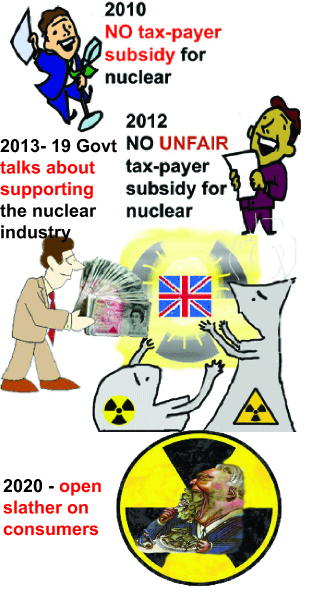
Will the UK government sacrifice the beautiful Suffolk coast in its misguided, uneconomic, Sizewell nuclear power push?
 East Anglian Daily Times 8th Oct 2020, As councils lose patience with EDF, will Suffolk businesses follow suit?
Today East Suffolk lies at a crossroads – the future of the east of the county now seems certain to rest in the hands of London-based civil servants and ministers – and to be honest I don’t know which way they will jump when push comes to shove. The deadline has now passed for councils, businesses, and residents to have their say on whether a two new nuclear reactors should be built on the Suffolk coast at Eastbridge, north of the existing stations at Sizewell.
landscape. But I do worry that there are some in government who do not understand the value of this area to the country as a whole who will be prepared to look on Sizewell C as a shiny investment to try to kick-start the UK economy after the pandemic and in a world no longer governed by EU rules, will pour in government subsidies to make up for the loss of Chinese money.
https://www.eadt.co.uk/ea-life/last-chance-to-stop-sizewell-c-1-6871419?s=09
BBC 8th Oct 2020, Campaigners against a new nuclear power station say they are “resolute”
after their bid to protect woodland was thrown out by the High Court. EDF
Energy, which wants to build two new reactors next to Sizewell B in
Suffolk, was given approval in 2019 to fell Coronation Wood on the site.
Together Against Sizewell C (Tasc) sought a judicial review, claiming that
decision was unlawful.
USA trying to beat China, in marketing nuclear reactors to Romania
 Romania, U.S. to sign cooperation agreements over nuclear reactors, By Reuters Staff, 9 Oct 20, BUCHAREST (Reuters) – Romania’s economy ministry will sign cooperation and financing agreements with the United States
Russia’s nuclear giant Rosatom moving into renewable energy, energy storage, grid development
The state-owned company will manufacture module type lithium-ion traction batteries for electric vehicles, as well as energy storage systems for emergency power supplies, renewable energy resources, and the smoothing of load demand. PV Magazine , OCTOBER 9, 2020 EMILIANO BELLINI Rosatom State Nuclear Energy Corp. (Rosatom) is entering the energy storage business through its TVEL Fuel Company (TVEL) unit, which has set up a dedicated subsidiary, Renera.The new company will produce module type lithium-ion traction batteries for electric vehicles, as well as energy storage systems for emergency power supplies, renewable energy resources, and the smoothing of load demand, TVEL stated……
Rosatom is already operating in the renewable energy sector via its NovaWind unit, which mostly focuses on the wind power business.
“We have an R&D center which is capable to develop energy storage solutions as for grids and substations, as well as for renewable energy sources, including both wind and solar,” the spokesperson said.,,,,,,,,https://www.pv-magazine.com/2020/10/09/russian-nuclear-giant-rosatom-enters-storage-business/
Poland to build nuclear reactor starting in 2026, excludes Small Modular Reactors (SMRs)
Construction of Poland’s first nuclear power plant to start in 2026, The government has adopted a resolution to update the Polish Nuclear Power Programme (PPEJ), the Ministry of Climate announced on Friday.
The updated PPEJ provides for the construction of six nuclear reactors with a total capacity of 6-9 GW. The first reactor should be operational in 2033…….
The programme excludes the use of boiling water reactors (BWRs) and small modular reactors, referred to as SMRs……… https://www.thefirstnews.com/article/construction-of-polands-first-nuclear-power-plant-to-start-in-2026-16542
Ukraine’s President enthuses over their nuclear reactors – but they’re all ageing Soviet ones

On a visit to Ukraine’s Rivne nuclear plant, President Volodomyr Zelensky issue full throated support for the development of his country’s nuclear industry, despite opposition from other countries and a fleet of elderly Soviet-era reactors that are reaching retirement age, Interfax reported.
His remarks came on October 1 and highlight his recent decree that orders the government to submit bills concerning the country’s nuclear power sector for parliamentary debate. Ukraine’s 15 reactors – all of which were built while the country was still a republic of the Soviet Union – supply more than half of the domestic electricity supply.
“We have a strategy for the development of nuclear energy and the completion of nuclear power plants in Ukraine,” the Zelensky said, addressing the possibility of completing two reactors at the country’s Khmelnitsky nuclear plant. The construction of those reactors, which are Russian-designed VVER-1000 units, began in the 1980s but was shelved in 1990.
He also dismissed opposition to nuclear development on grounds of safety, saying: “We understand that if professionals are doing the construction, if the state is working on the safety of nuclear power plants, then there is no threat either to the environment or the climate. It’s a safe form of electricity.”
Pushing back against a host of European countries that have begun to back away from nuclear power, Zelensky said Ukraine would instead embrace it as a national priority.
“In the coming years, many countries will work against nuclear power generation,” he said. “We, on the other hand, will defend it. We must do this because today we have every opportunity to be among the first [in nuclear energy], both in Europe and in the world.”
Zelensky’s remarks come as work to fully clean up the site of the 1986 Chernobyl disaster is still ongoing. Since 2015, an enormous steel dome, called the New Safe Confinement, has enclosed the plant’s exploded No 4 reactor, trapping radiation and facilitating risky dismantlement efforts. But most experts say it will take another 20,000 years before the area immediately surrounding the plant – called the exclusion zone from which more than 100,000 people were evacuated – will again be fit for human habitation.
When the Soviet Union collapsed in 1991, Ukraine inherited not only the embers of Chernobyl, but also four other nuclear power plants: The Rivne plant in the country’s northwest; the Khmelnitsky plant, to Rivne’s south; The South Ukraine plant, near the Black Sea, and the Zaporizhia plant, whose six VVER-1000 reactors make it the largest nuclear power plant in Europe.
All but three of Ukraine’s reactors began operations in the 1980s, putting most of them troublingly close to the end of their engineered lifespans of 40 years. In fact, 12 of Ukraine’s reactors were slated to retire this year.
To continue to produce some 52 percent of the country’s energy, it is presumed that all of these reactors will eventually be granted extensions on their runtimes of several decades.
Given the age of the nuclear industry as a whole, such lifetime extensions have become common practice worldwide. But two recent Bellona publications – one on Ukraine’s nuclear industry, and another on the practice of reactor lifetime extensions – have cast light on the dangers of this approach.
One study by Ukrainian experts, cited in Bellona’s report, shows that Ukraine’s older reactors are becoming more prone to accidents and malfunctions. It is hoped that safety upgrades that would precede the granting of lifetime would eliminate such technical glitches.
But the Bellona study highlighted that two reactors at the Rivne plant – the one Zelensky visited – had been given lifetime extensions without any safety upgrades at all.
The longer Ukraine’s reactors operate, the more they will contribute to the country’s supply of radioactive waste, which is currently the second largest in Europe. This problem has only gotten more serious since 2018, when Russia began returning to Ukraine the spent nuclear fuel and radioactive waste Moscow had been accepting and reprocessing after the Soviet Union dissolved.
The problem of Ukraine’s overabundant radioactive waste would seem less critical if the country were taking steps to build a long-term repository, such as finding a suitable location for one – or indeed even had plans to do so. But as the Bellona report reveals, the bureaucracies in Kiev that are responsible for such questions are inefficient, if not, in some instance, entirely lacking, and in any case have little in the way of public faith in their competent operation.
Prospects are slightly brighter when it comes to dealing with spent fuel from Ukraine’s nuclear reactors. Ukrainian nuclear Officials know how much there is and they intend to build a centralized facility to store it. But as is the case in other parts of the industry, Kiev has little hope of building it without significant funding from other countries.
While it’s unclear if Zelensky’s new embrace of nuclear energy has taken full account of the issues facing his aging reactors, it is hoped that any continued reliance on Ukraine’s Soviet inheritance will do so.
Design not even finished! But UK govt to subsidise Small Nuclear Reactors (SMRs)
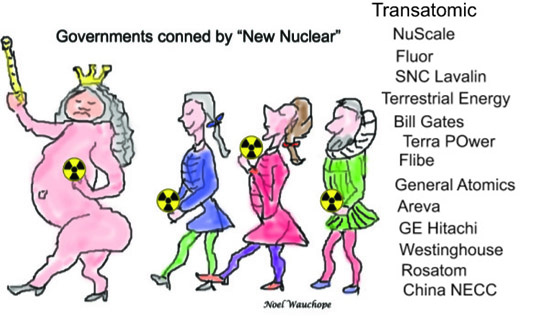
The plan is for 16 of them – at ? £2bn each?
FT 7th Oct 2020, Downing St considers £2bn support for mini nuclear reactors
Consortium wants to build up to 16 generators . Downing Street is supporting plans to spend up to £2bn of taxpayers’ money on a
new generation of mini nuclear reactors. Consortium wants to build up to 16 generators to help UK meet carbon emissions targets. The first SMR is expected to cost £2.2bn and be online by 2029.
Government and industry figures confirmed that a pledge of £1.5bn-£2bn is being discussed which could even see taxpayers acquire an equity stake in the programme.
However, discussions are still ongoing and any final decision will be subject to the Treasury’s current multiyear spending review, which is due later this year. The government could also commission the first mini power station, giving confidence to suppliers and investors. The consortium, which also includes the National Nuclear Laboratory, will seek additional funding of at least £2bn, including from private investors and the capital markets.
Support for SMR technology is expected to form part of Boris Johnson’s “10-point plan for a green industrial revolution” which he will set out later in the autumn. …….. Under the plans being considered by Number 10, the small
modular reactors would be manufactured on production lines in central plants and then transported to sites for assembly. Each mini power station would operate for up to 60 years, providing 440MW of electricity per year — enough to power a city the size of Leeds.
The government’s support “should deliver sufficient cash to get the consortium through building
factories and well on the way to construction of power stations prior to finding more money from other sources,” said one person with knowledge of the situation.
The consortium is expected to finalise the SMR design by April next year, when it hopes to launch the four-year licensing process.
During that time it hopes to begin recruiting employees for the business, and identifying the sites for powers stations and the factories to build the components and modules for the SMRs. The business department hasalready pledged £18m towards the consortium’s early-stage plans.
https://www.ft.com/content/d7016b80-e0c4-4444-a059-2daf32b9a4ab
Nuclear no option for hydrogen production: German government
Energy ministry state secretary Feicht says, however, that the rule of nuclear will be discussed at an EU level, Recharge 6 October 2020 By Bernd Radowitz
“Nuclear isn’t an option for our energy system, be it the production of electricity for our electricity demand, [or] for the production of hydrogen,” Andreas Feicht, secretary of state in Germany’s economics and energy ministry, said at a virtual conference on hydrogen organized by his ministry……..
Green’ or ‘carbon-free’ hydrogen?
Germany by the end of 2022 will phase out its last atomic power stations, and in its €9bn ($10.6bn) national hydrogen strategy has laid down that it strives to ramp up a ‘green hydrogen’ economy mostly based on renewables such as offshore wind, with a temporary and limited role for ‘blue hydrogen’ produced from natural gas linked to carbon capture and storage (CCS)…………..
the Dutch government is planning to launch a consultation on building new nuclear power plants after a study commissioned by its economics and climate ministry claimed atomic energy is as cheap as wind or solar power – and supposedly the safest way to produce electricity in the country.
The study was conducted by a nuclear energy consultancy with links to the nuclear industry, though. At the same time, a flurry of studies advises against a nuclear renaissance.
‘Nuclear and renewables don’t mix’
The University of Sussex Business School and the ISM International School of Mangement this week published an analysis of 123 countries over 25 years in Nature Energy that concludes that nuclear and renewables don’t mix, and only the latter can deliver truly low carbon energy.
The researchers found that unlike with renewables, countries around the world with larger scale nuclear attachments do not tend to show significantly lower carbon emissions – and in poorer countries nuclear programmes actually tend to associate with relatively higher emissions.
The researchers found that unlike with renewables, countries around the world with larger scale nuclear attachments do not tend to show significantly lower carbon emissions – and in poorer countries nuclear programmes actually tend to associate with relatively higher emissions.
Champagne of power fuels
Michael Bloss, a Green Party member of the European Parliament, at the same hydrogen conference stressed that only “green hydrogen is clean hydrogen.”
Blue hydrogen as considered as a temporary option by the German government is no real option due to high amounts of methane leakage during its production, which he argued is “much more detrimental for the climate than CO2.”
Despite €3.7bn in EU investments into CCS since 2009 (according to the European Court of Auditors), the technology remained at the “beginning of its development” and is still “not ready to be applied,” Bloss said.
Renewable energies such as offshore wind, meanwhile, are the most cost-competitive energy source and should be used for hydrogen production, he added, without going into the nuclear versus renewables controversy.
Bloss, however, stressed that it has been said that “hydrogen is the Champagne among power fuels,” which must be used only in difficult-to-decarbonise sectors where it cannot be replaced by other applications, such as steel, cement or chemicals.https://www.rechargenews.com/wind/nuclear-no-option-for-hydrogen-production-german-government/2-1-887905
France should reveal the location of its nuclear waste dump in Algeria

|
Calls for France to reveal location of nuclear waste dumped in Algeria https://www.middleeastmonitor.com/20201005-calls-for-france-to-reveal-location-of-nuclear-waste-dumped-in-algeria/ October 5, 2020 France should take initiative to solve the problem of the nuclear waste buried in the Algerian Sahara in the early 1960s, as no one knows its exact location, which is a classified military secret, the head of the Paris-based Observatory for Armament said.In an interview with Radio France Internationale yesterday, Patrice Bouvre said: “When France suspended its nuclear tests in 1966, it simply buried the waste of the 17 experiments it conducted over the years.”
He added that Paris classified the location or locations of the buried nuclear waste and the documents related to the affair as “a military secret”, which remains to date. As a result, there is no information available about the exact location of the nuclear waste buried in the Algerian desert, Bouvre explained. He called on the French authorities to reveal the truth about this file and to cooperate with Algeria to clean up the areas contaminated by the nuclear waste that still exposes these regions to serious environmental damages. France conducted 17 nuclear tests between 1960 and 1966 in the Algerian Sahara, and the waste from these experiments is buried in an unknown location in the area, hindering attempts to remove the radioactive materials and protect the population and the environment |
|
1 This Month
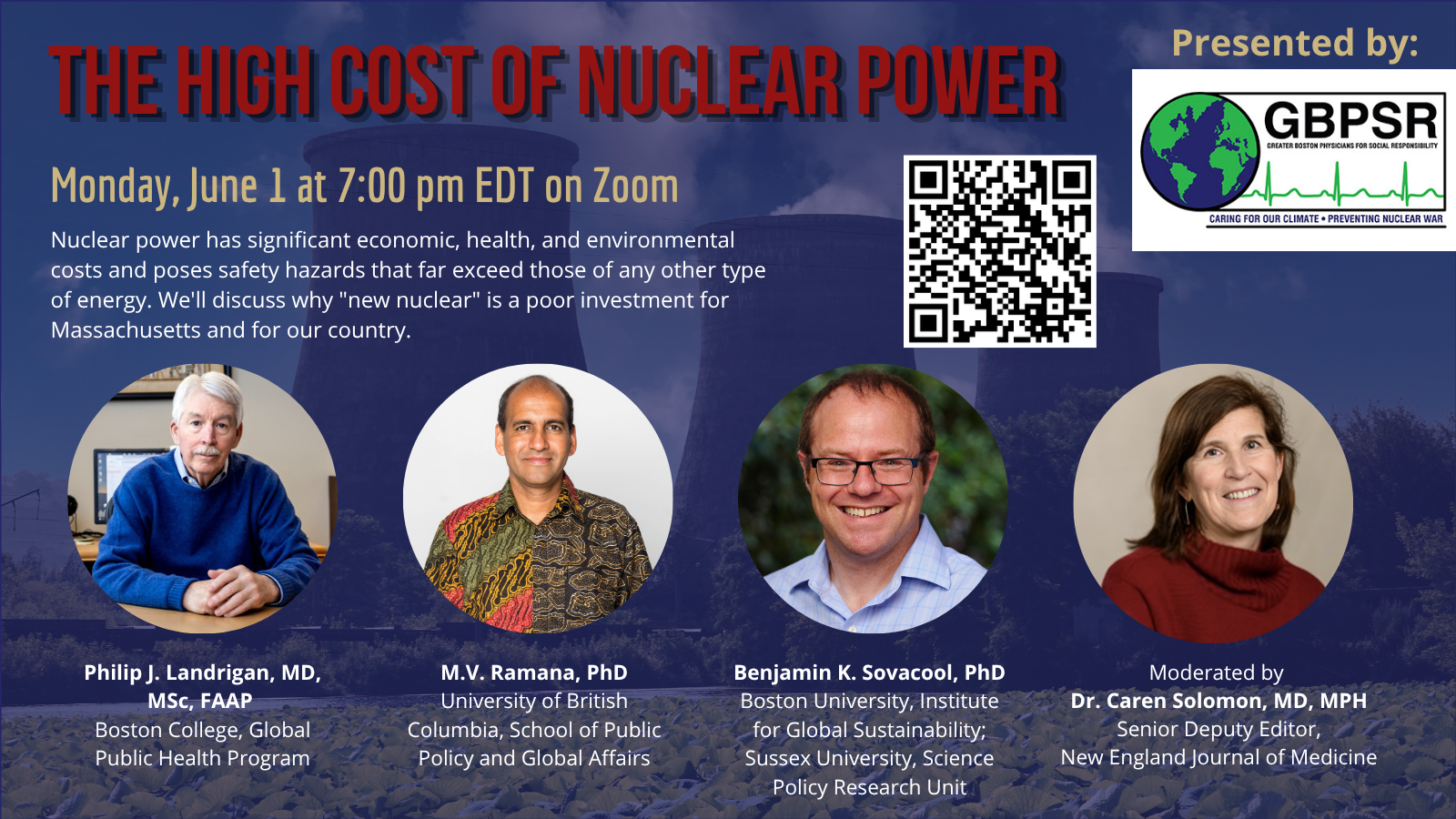
1 June Webinar – The High Cost of Nuclear Power – Register


of the week– Nuclear Reactor Information Task Force
To see nuclear-related stories in greater depth and intensity – go to https://nuclearinformation.wordpress.com
-
Archives
- May 2026 (225)
- April 2026 (356)
- March 2026 (251)
- February 2026 (268)
- January 2026 (308)
- December 2025 (358)
- November 2025 (359)
- October 2025 (376)
- September 2025 (257)
- August 2025 (319)
- July 2025 (230)
- June 2025 (348)
-
Categories
- 1
- 1 NUCLEAR ISSUES
- business and costs
- climate change
- culture and arts
- ENERGY
- environment
- health
- history
- indigenous issues
- Legal
- marketing of nuclear
- media
- opposition to nuclear
- PERSONAL STORIES
- politics
- politics international
- Religion and ethics
- safety
- secrets,lies and civil liberties
- spinbuster
- technology
- Uranium
- wastes
- weapons and war
- Women
- 2 WORLD
- ACTION
- AFRICA
- Atrocities
- AUSTRALIA
- Christina's notes
- Christina's themes
- culture and arts
- Events
- Fuk 2022
- Fuk 2023
- Fukushima 2017
- Fukushima 2018
- fukushima 2019
- Fukushima 2020
- Fukushima 2021
- general
- global warming
- Humour (God we need it)
- Nuclear
- RARE EARTHS
- Reference
- resources – print
- Resources -audiovicual
- Weekly Newsletter
- World
- World Nuclear
- YouTube
-
RSS
Entries RSS
Comments RSS
 nuclear-news