Anxieties, memories of Chernobyl, as Belarus launches new nuclear power station
|
Chernobyl fears as Belarus launches new nuclear power station: Lithuania distributes iodine tablets to 500,000 close to border over safety concerns
Daily Mail, RACHAEL BUNYAN FOR MAILONLINE and AFP , 4 Nov 20, Belarus today launched its controversial Russia-built nuclear power station despite safety concerns from neighbouring Baltic states three decades after the Chernobyl nuclear disaster. Lithuania’s Foreign Minister Linas Linkevicius criticised the launch saying it had gone ahead despite unresolved safety issues The government in the Lithuanian capital, Vilnius, has also offered free iodine tablets to around half a million people living close to the Belarus border to help protect them from radiation in case of an accident The Astravets nuclear power plant, Belarus’s first nuclear station, is just 30 miles away from Vilnius. ……… Lithuania’s Foreign Minister Linas Linkevicius criticised the launch saying it had gone ahead despite unresolved safety issues and described the energy project as ‘geopolitical’. The EU and the international community ‘simply cannot stay indifferent to such cynical ignorance,’ Linkevicius wrote on Twitter. Lithuania said it had immediately stopped electricity imports from Belarus and neighbouring Latvia said it had also blocked imports of energy generated at the plant.…….. https://www.dailymail.co.uk/news/article-8909665/Chernobyl-fears-Belarus-launches-new-nuclear-power-station-despite-safety-concerns.html |
|
No guarantee that Britain’s £20 billion Sizewell nuclear project will actually go ahead
 Planet Radio 1st Nov 2020, No one should assume Sizewell C is now a foregone conclusion’. Campaign group Stop Sizewell C say there are still many obstacles to overcome, following reports that the Government is ‘close’ to giving the project the green light. The group say they’ve written to the Business, Energy and Industrial Strategy Secretary of State, Alok Sharma, to seek assurances about the due process behind the Sizewell C project.
https://planetradio.co.uk/greatest-hits/norfolk/news/sizewell-not-a-forgone-conclusion/
Before the UK’s govt White Paper, approval to be given for Sizewell nuclear development
 UK to approve new nuclear plant at Sizewell C ahead of White Paper: report, S and P Global Author, Henry Edwardes-Evans Editor, Norazlina Jumaat 3 Nov 20, UK to approve new nuclear plant at Sizewell C ahead of White Paper: report, S and P Global Author, Henry Edwardes-Evans Editor, Norazlina Jumaat 3 Nov 20,
HIGHLIGHTS EDF’s second UK twin reactor EPR plant Details of new funding model awaited 10-point plan and White Paper imminent London — The UK government is close to approving Sizewell C, the 3.2 GW EPR nuclear power station project proposed by EDF Energy in Suffolk, England, the BBC reported late Oct. 30…… Key to the new project would be the funding model, RBC said. “It may be that the government takes a direct stake in the project, and that the construction will be remunerated under some form of RAB [regulated asset base] model with a “regulated” return,” the bank said. RAB modelThe government has been working on a RAB-based funding model for new nuclear plants, but a proposal due last summer has yet to materialize. Under a RAB model, energy regulator Ofgem would establish an estimated allowable cost for the project and set a fixed rate of return for investors. Payments from UK retail power consumers would be made during construction and operation to a project company, with payments increasing over the construction period in line with cumulative spending.Sizewell C could generate power at a cost of GBP40-GBP60/MWh if construction was funded via a RAB model, Sizewell C’s finance director Julia Pyke said on Oct. 21. The final cost of power within the estimated range would be “determined by how government allocates risk in terms of the cost of money,” she said.
Further details on a funding model for Sizewell C were likely to be included in the government’s Energy White Paper, Pyke said.In October, 2015, EDF and China’s CGN signed a heads of terms agreement to develop two 1.65 GW EPR reactors at Sizewell C — EDF taking 80% and CGN 20% during the development phase.
Europe’s first EPRs, being built in Finland and France, are many years behind schedule and billions of euros over budget.,…… https://www.spglobal.com/platts/en/market-insights/latest-news/electric-power/110220-uk-to-approve-new-nuclear-plant-at-sizewell-c-ahead-of-white-paper-report |
|
Nuclear wastes from Sellafield UK to arrive in Germany
A ship carrying six containers of waste from the Sellafield reprocessing plant in England docked in the early morning in Nordenham, news agency dpa reported. From there, it is to be transported by train to the now-closed Biblis nuclear power plant south of Frankfurt, several hundred kilometres (miles) away.
Germany has a strong anti-nuclear movement and waste transports have often drawn large protests. Activists question the safety of the waste containers and storage sites.
Following the Fukushima nuclear disaster in Japan nine years ago, Germany decided to phase out its own nuclear power generation by the end of 2022. The Biblis plant is one of several that was taken offline in 2011, but the site remains in use as a provisional storage facility for nuclear waste.
Germany recently launched a new search for a permanent site to store its most radioactive waste. A final decision is slated for 2031 and the aim is to start using the selected site in 2050.
84% of Finland’s population support signing up to the U.N. Nuclear Weapons Ban Treaty
 It is time to end our reliance on nuclear weapons Nuclear non-proliferation is a fundamentally European issue which is not yet part of any EU agenda https://ecfr.eu/article/it-is-time-to-end-our-reliance-on-nuclear-weapons/, Erkki Tuomioja, – View from the Council 2 November 2020, Finland did not participate in the negotiations leading up to the treaty, and it did not vote for it. Public opinion is, however, in favour of the treaty, with one poll showing that 84 per cent of Finns would support signing up. Three parties in Finland’s coalition government also want the country to join. Foreign ministry officials have argued in hearings of the Finnish parliament’s Foreign Relations Committee that joining would weaken the Non-Proliferation Treaty (NPT) – a faulty reasoning that the Committee unanimously rejected.
“The prohibition treaty is an important reinforcement to the half-century-old Non-Proliferation Treaty, which, though remarkably successful in curbing the spread of nuclear weapons to more countries, has failed to establish a universal taboo against the possession of nuclear weapons. The five nuclear-armed nations that had nuclear weapons at the time of the NPT’s negotiation — the United States, Russia, Britain, France and China — apparently view it as a licence to retain their nuclear forces in perpetuity. Instead of disarming, they are investing heavily in upgrades to their arsenals, with plans to retain them for many decades to come. This is patently unacceptable.”
It is precisely the frustration at the lack of progress with nuclear disarmament – to which the nuclear weapons states committed themselves in the grand bargain to get the non-nuclear countries to accept the NPT treaty signed in 1968 – that gave decisive impetus to the prohibition treaty. Obviously, without the participation of the nuclear weapons states, not one nuclear weapon will be dismantled. But without pressure from the non-nuclear weapons states in the form of this treaty, neither will they engage in serious efforts at disarmament. Nuclear weapons states will instead continue the present trend of modernising existing and developing new nuclear weapons systems.
Support in NATO countries for doing away with all weapons of mass destruction is growing, as evidenced by the signatories to the statement above. This is important because one argument made in Finland and Sweden, although it is rarely made in public, for opposing joining the prohibition treaty is the displeasure the US would show at such a step, which could hinder the deepening of these countries’ partnership relations with NATO. Given the growing demand in non-nuclear NATO countries to sign the treaty this is just as spurious as the NPT argument against joining.
The time has come for all states in the world to bring an end to the misguided, illegitimate, and immoral reliance on nuclear weapons. An all-out nuclear war is a threat to human life as a whole and would immediately bring about all the disasters we are trying to avoid with our efforts to curtail climate change and implement the Sustainable Development Goals of Agenda 2030.
No responsible leader disputes this. Yet we continue to conduct exercises in preparation for a nuclear war. The risk of accidental or miscalculated nuclear weapon use may today be even greater than at the height of the cold war. The Treaty on the Prohibition of Nuclear Weapons is, as the statement quoted says, “a beacon of hope in a time of darkness”.
There is one nuclear weapons state in the EU (formerly two) and 21 EU member states in NATO, but nuclear weapons and related issues have never formed part of the EU’s agenda. This is a fundamentally European issue, given the likelihood that Europe would face the greatest level of destruction in the event of a conflict and because of the European preference for achieving change through rules-based processes. All EU member states should address it and join the treaty banning all nuclear weapons. Three member states in the EU have already done so; others should follow them.
Erkki Tuomioja is ECFR member and former Minister for Foreign Affairs in Finland.
Britain to nationalize its nuclear weapons industry
Britain to nationalize its nuclear weapons industry. https://www.upi.com/Defense-News/2020/11/02/Britain-to-nationalize-its-nuclear-weapons-industry/5981604341239/ By Ed Adamczyk Nov. 2 (UPI) — Britain announced on Monday that management of its nuclear weapons facilities will return to government control instead of leadership by an industry consortium.
Atomic Weapons Establishment PLC builds nuclear weapons inBritain and has been operated since 2000 by a groupof manufacturers led by Lockheed Martin.
The contract was expected to be completed in 2025 but British Defense Secretary Ben Wallace told Parliament this week that the AWE will be wholly owned by the Ministry of Defense, beginning in June 2021.
“Following an in-depth review, the MOD concluded that AWE plc will become an arms-length Body, wholly owned by the MOD,” Wallace wrote in a Ministry of Defense statement.
“The change in model will remove the current commercial arrangements, enhancing the MOD’s agility in the future management of the U.K.’s nuclear deterrent, whilst also delivering on core MOD objectives and value for money to the taxpayer,” Wallace wrote.
AWE is based at Aldermaston, England, and develops nuclear warheads for the Royal Navy’s submarines.
In February, the ministry announced plans to develop new nuclear warheads, and nationalizing the British nuclear weapons industry reflects the government’s interest in creating a better alignment between AWE and the ministry’s priorities.
The end of the lucrative 25-year contract can be seen as a blow to Lockheed Martin, Serco Group and Jacobs Engineering, all AWE owners. In 2019, AWE paid $105 million to shareholders, despite controversial cost overruns and worker safety violations, and has been the subject of criticism from Britain’s National Audit Office.
The Ministry of Defense has also been a target of demands by the government, under Prime Minister Boris Johnson‘s leadership, to control wasteful spending.
Climate Policy – Scotland
The National 2 Nov 2020 , EXTINCTION Rebellion have walked away from the Scottish Government’s
Climate Assembly, accusing ministers of allowing “vested interests” to
take over. They claim the civil service has tried to water down the urgency
of the summit due to start this weekend.
https://www.thenational.scot/news/18838753.extinction-rebellion-quit-scottish-governments-citizens-assembly-climate/
Shares in nuclear weapons company Serco crash, As UK govt nationalises the industry
 Serco shares crash as outsourcer loses role on nuclear weapons consortium, City A.M. Edward Thickness, 2 Nov 20,
Shares in Serco plummeted this morning after the outsourcing giant confirmed that the government had taken back management of its atomic weapons development facility.
Shares dropped nearly 12 per cent as markets opened as traders digested the news.
Yesterday Sky News reported that the government was due to announce that it would take over the running of the Atomic Weapons Establishment (AWE) from next year.
AWE has been run by a consortium made up of US defence giant Lockheed Martin, Serco and Jacobs since 2000.
The contract was due to expire in 2025, so the government’s decision to renationalise the facility is a considerable blow to the FTSE 250 company.
Serco said that it was expecting to make £17m in profit from its 24.5 per cent stake in AWE this year. In its last full year results the firm reported profit of £120m.
However, it said that it would stick to its full year financial forecasts for 2020/21……..
AWE, which makes nuclear warheads for the UK’s submarines, will pass back into government ownership on 30 June.
Earlier this year the facility came under fire from spending watchdog the National Audit Office (NAO).https://www.cityam.com/serco-shares-crash-as-outsourcer-loses-role-on-nuclear-weapons-consortium/
Russian company with powerful connections withdraws from Turkish nuclear plant operation
|
Russian company with powerful connections withdraw from Turkish nuclear plant operation, Greek City Times,
by PAUL ANTONOPOULOS, 2 Nov 20, A Russian company withdrew from plans to build Turkey’s first nuclear power plant following tensions between Moscow and Ankara over issues including the conflicts in Libya, Syria, and Artsakh, a columnist for Turkish newspaper Dünya, and translated by Ahval, said on Saturday.The construction of the Akkuyu Nuclear Power Plant to the north of Cyprus is a joint project between Turkey and Russia.Although Turkish President Recep Tayyip Erdoğan and his Russian counterpart Vladimir Putin signed the deal in 2010, major construction only started in March 2018 and the first unit of the four to be constructed will not become operational until at least 2023. According to Dünya columnist Kerim Ülker, Inter RAO, one of Russia’s largest public energy companies, withdrew from the project following a board meeting on October 26 partly because of the Turkish-sponsored invasion attempt of Artsakh by the Azerbaijani military and Syrian mercenaries. ……..https://greekcitytimes.com/2020/11/02/russian-turkish-nuclear-plant/ |
|
USA should accept Russia’s offer of a one-year extension of the Strategic Arms Reduction Treaty
 Russia and the U.S. Need a Timeout on Nuclear Weapons, With New START about to expire, the U.S. should accept Moscow’s offer of a one-year extension. Bloombeerg By James Stavridis, 31 October 2020, “…….. The stakes are vastly higher when it comes to negotiations involving the possible use of strategic nuclear weapons, such as those on intercontinental ballistic missiles, which have the potential to end civilization as we know it. In my final military job, as supreme allied commander at NATO, I argued contentiously with senior Russian officials that U.S. Aegis missile systems in Eastern Europe — which are intended primarily to avert an Iranian attack on the continent — could not threaten their strategic nuclear force. It was a debate that went around and around in circles.
The administration’s goals are overambitious for now — particularly given that Trump may not be in office in three months — so it would be smart to take up Russia’s offer.
Strong feeling in UK public that the Covid recovery must be a green recovery, too
 Centre for Science & Policy 12th Oct 2020, According to Professor Rebecca Willis, the findings from the UK Climate Assembly suggest that the general public feels strongly that covid recovery must be aligned with net zero goals, both in terms of a green economic stimulus and in terms of not giving government money to big polluters. She also noted that the pandemic has create an opportunity space, in which people are more open to lifestyle changes – including those that might be more environmentally friendly.
http://www.csap.cam.ac.uk/news/article-understanding-challenges-green-recovery/
Russia’s nuclear doctrine – both Russia an USA benefit from nuclear weapons control agreements
A Closer Look At Russia’s Nuclear Doctrine, https://www.globalzero.org/updates/a-closer-look-at-russias-nuclear-doctrine/ June 4, 2020 Emma Claire Foley On June 1, Russia released a document detailing its nuclear doctrine. Though the 7-page document is much shorter than U.S. Nuclear Posture Reviews, it plays a similar role as a publicly available statement of the situations under which a country would use its nuclear weapons.
In some ways, this release is unprecedented. Though Russia has released information about its nuclear posture before, this is the longest and most comprehensive public statement of that posture to date. A similar document, signed in 2010, was classified.
Until now, much of what is publicly known about Russia’s nuclear doctrine was drawn from its 2014 Military Doctrine. The new document draws heavily from the sections of the 2014 document that dealt with nuclear weapons, but sheds new light on some issues, particularly having to do with Russia’s weapons developed after its withdrawal from New START.
The document confirms Russia’s adherence to a launch-on-warning posture, as discussed by President Putin in 2018. That means Russia would launch a nuclear strike once it received information that another country had launched missiles at Russia, leaving open the possibility that a technical failure or mistaken intelligence could lead to an unintended first strike.
It also leaves open a broad range of situations in which Russia could respond to an attack with nuclear weapons, including “critical state or military facilities of the Russian Federation, the failure of which will lead to the disruption of the retaliatory action of nuclear forces,” an attack with a nuclear weapon or other weapon of mass destruction, or a conventional attack that threatens “the existence of the state.” Though this largely corresponds with what experts had gathered from previous statements, it leaves open to interpretation the definition of “critical state or military facilities.”
The document’s release must be viewed in context. It articulates a launch-on-warning posture as part of a larger defensive role for nuclear weapons, yet history has shown that nuclear “false alarms” that might compel Russia to launch an inadvertent first-strike are not only possible—they’re relatively common. A global No-First-Use agreement, accompanied by changes to nuclear force structure so that nuclear weapons are not kept ready to launch at a moment’s notice, would eliminate this very real risk.
In recent months, Russia has repeatedly, explicitly conveyed its willingness to extend the New Strategic Arms Reduction Treaty (New START), which expires in 2021 and would leave the world without key limits on the two largest nuclear arsenals. These overtures seem to have fallen on deaf ears in the Trump administration, which has expressed its intention to replace the treaty with a trilateral agreement with China despite China’s persistent rejections of the idea. In light of U.S. withdrawals from the Intermediate-Range Nuclear Forces (INF) Treaty and the Open Skies Treaty, the prospects for a New START renewal look dim.
Despite the lack of U.S. participation in international arms control efforts, however, it’s clear that the rest of the world sees the value in maintaining these hard-won agreements. Other signatories have worked hard to maintain the Iran Deal’s frameworks, even after the U.S. withdrew and in the face of its ongoing attempts to start a conflict with Iran. The Trump administration’s knee-jerk rejection to any international agreement reveals a fundamental inability to understand that an international agreement could be in the interest of all of its signatories.
Russia’s step to increase transparency while remaining clear about its faith in its nuclear deterrent, on the other hand, may be another acknowledgment that both countries stand to win from a return to arms control. The only way to make sure that nuclear weapons are never used is to eliminate them. But extending New START maintains progress made by earlier generations and leaves the door open for more ambitious negotiations in the future. It’s a key next step toward making sure nuclear weapons are never used again.
UK government’s economic recovery plan funds fossil fuels £3.8bn, but renewables only £121m
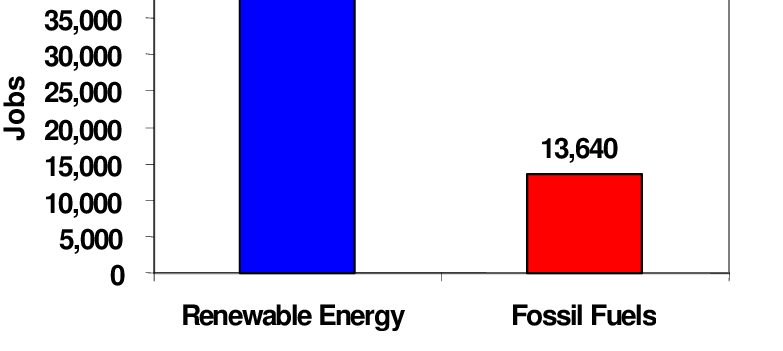
Edie 29th Oct 2020, The UK Government has earmarked £3.8bn of stimulus funding for legacy fossil fuel and nuclear generation, compared to just £121m for renewables, a damning new report has claimed. Published by global technology company Wärtsilä’s energy arm, the analysis concludes that the UK Government’s short-term plans for helping the energy sector recover from the financial impacts of Covid-19 are not aligned with the 2050 net-zero target or the interim carbon budgets.
storage capacity would be scaled up dramatically.
Putin’s Russia keen to exploit the Arctic for fossil fuels: more nuclear-powered icebreakers on the way
|
Putin decrees development of Arctic with more nuclear icebreakers – This will help Russia cash flow from fossil fuels. Russian President Vladimir Putin has signed an executive order, On the Strategy for Developing the Russian Arctic Zone and Ensuring National Security until 2035, which foresees the construction of at least five new nuclear-powered icebreakers of the Project 22220 series, and three of the Project 10510 series. The vessels are needed to ensure year-round navigation along the Northern Sea Route. Project 10510, also known through the Russian type size series designations LK-110Ya and LK-120Ya or the project name Leader, will supersede Project 22220 icebreakers as the largest and most powerful in the world…….. https://www.oilandgas360.com/putin-decrees-development-of-arctic-with-more-nuclear-icebreakers-this-will-help-russia-cash-flow-from-fossil-fuels/ |
|
|
1 This Month
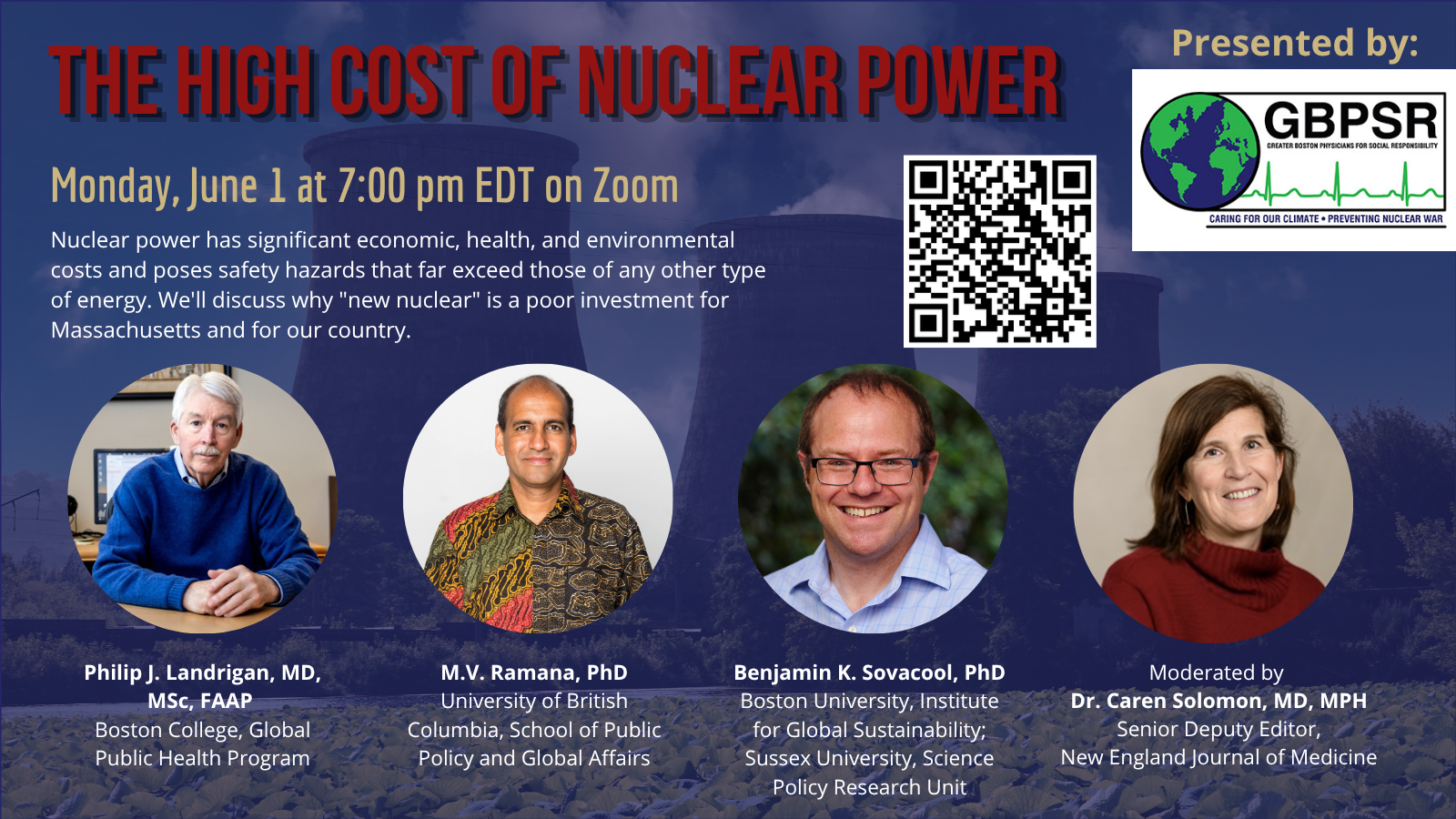
1 June Webinar – The High Cost of Nuclear Power – Register


of the week– Nuclear Reactor Information Task Force
To see nuclear-related stories in greater depth and intensity – go to https://nuclearinformation.wordpress.com
-
Archives
- May 2026 (225)
- April 2026 (356)
- March 2026 (251)
- February 2026 (268)
- January 2026 (308)
- December 2025 (358)
- November 2025 (359)
- October 2025 (376)
- September 2025 (257)
- August 2025 (319)
- July 2025 (230)
- June 2025 (348)
-
Categories
- 1
- 1 NUCLEAR ISSUES
- business and costs
- climate change
- culture and arts
- ENERGY
- environment
- health
- history
- indigenous issues
- Legal
- marketing of nuclear
- media
- opposition to nuclear
- PERSONAL STORIES
- politics
- politics international
- Religion and ethics
- safety
- secrets,lies and civil liberties
- spinbuster
- technology
- Uranium
- wastes
- weapons and war
- Women
- 2 WORLD
- ACTION
- AFRICA
- Atrocities
- AUSTRALIA
- Christina's notes
- Christina's themes
- culture and arts
- Events
- Fuk 2022
- Fuk 2023
- Fukushima 2017
- Fukushima 2018
- fukushima 2019
- Fukushima 2020
- Fukushima 2021
- general
- global warming
- Humour (God we need it)
- Nuclear
- RARE EARTHS
- Reference
- resources – print
- Resources -audiovicual
- Weekly Newsletter
- World
- World Nuclear
- YouTube
-
RSS
Entries RSS
Comments RSS
 nuclear-news