Suffolk County Council raised over 50 concerns about the Sizewell nuclear project, but UK govt going ahead anyway?
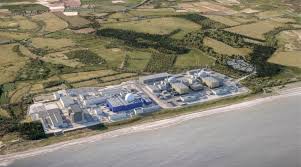 Anglian Daily Times 10th Nov 2020, The Government has vowed to ensure it considers whether Sizewell C mitigation measures are stringent enough, after a Suffolk MP called for adequate scrutiny of the plans. Sources have indicated that the Government is close to giving the go ahead for the £20 billion scheme on the Suffolk coast, prompting Central Suffolk and North Ipswich MP Dr Dan Poulter to call on the Secretary of State for Business, Alok Sharma, to ensure developers EDF will be “held to account and will properly engage with theconsultation to implement the changes needed to improve road and rail infrastructure”.
Raising the issue in Parliament on Tuesday morning, Dr Poulter said that while the development would bring benefits such as de-carbonisation and thousands of new jobs, it was “not a case of Sizewell C being built at any cost”. He said: “Many people in Suffolk have concerns about the failure of EDF to properly engage with the consultation process. “There are still over 50 outstanding concerns raised by Suffolk County Council.”
https://www.eadt.co.uk/news/government-sizewell-c-scrutiny-pledge-1-6924184
Campaign group project images on side of Government building. Stop Sizewell C, who are against the development of a nuclear plant in Suffolk, have projected two images on the side of a Government building.
Hunterston nuclear reactor allowed to restart, despite increasing cracks in the graphite core.
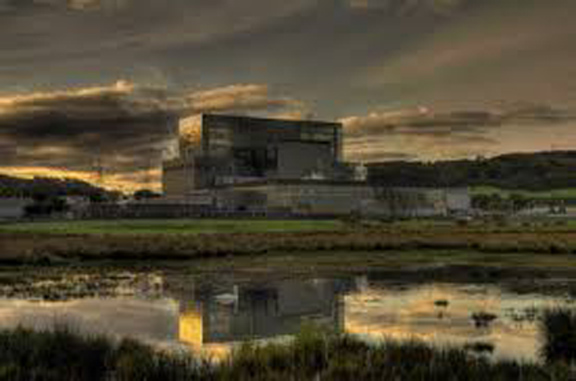
 No to Nuclear Power, November 2020, On 27th August, the Office for Nuclear Regulation (ONR) announced it was giving EDF permission to restart Reactor 3 at Hunterston B for a limited period – generating up to a total of 16.425 Terawatt days, approximately six months’ operation. (1) Then on 24 September ONR gave EDF permission for Reactor 4 to return to service for a similar limited period. By the end of September both reactors were operating. (2)
The ONR report also contains some interesting remarks on EDF assessments. It says for example that the company’s estimates of the likelihood of fragments of debris broken off graphite blocks “migrating to safety significant locations” are “inherently subjective”. It also suggests that EDF’s safety case methodology is “approaching its limit of viability”. The ONR report also contains some interesting remarks on EDF assessments. It says for example that the company’s estimates of the likelihood of fragments of debris broken off graphite blocks “migrating to safety significant locations” are “inherently subjective”. It also suggests that EDF’s safety case methodology is “approaching its limit of viability”.
Russia shuts down West Russian nuclear reactor
Russia retires Leningrad 2 RBMK, 10 November 2020
The Leningrad 2 nuclear power unit in in Sosnovy Bor in Western Russia was shut down permanently today. The RBMK, which has been in operation for 45 years, is to be replaced by Leningrad II-2, a VVER-1200, which on 6 November received regulatory approval to start pilot operation…… https://www.world-nuclear-news.org/Articles/Russia-retires-Leningrad-2-RBMK
Dismantling of Trawsfynydd nuclear power plant held back due to coronavirus outbreak
 Covid outbreak at former Trawsfynydd nuclear power plant, BBC 11 Nov 20, Covid outbreak at former Trawsfynydd nuclear power plant, BBC 11 Nov 20,
Work has been scaled back on the site of former nuclear power station following an outbreak of Covid. Magnox said a “small number” of employees tested positive at the Trawsfynydd site in Gwynedd, where they are working to remove nuclear reactors and towers. Those affected and others found through track and trace are self-isolating. It said some key work will continue on site but other staff can work from home. ………. T https://www.bbc.com/news/uk-wales-54904337rawsfynydd was shut down in 1991 after operating for a quarter of a century.
The twin reactors will become the first in the UK to be fully decommissioned. Over 20 years the remaining reactor buildings will be demolished, while a new low-level radioactive waste store is built on the site to hold the material. https://www.bbc.com/news/uk-wales-54904337 |
|
China’s ambition to build Bradwell nuclear plant in Essex will likely fail on national security grounds.
 Guardian 11th Nov 2020 , China’s ambition to build a nuclear plant in Essex will likely
 fail on national security grounds. The new national security and investment bill, aiming to give the government sweeping powers to block foreign takeovers and investments, will inevitably be viewed through the lens of China and new nuclear power plants in UK.
“progressive entry” into UK nuclear to China General Nuclear, the state-backed firm that owns a 33% stake in Hinkley Point C in Somerset and has ambitions to build its own plant in Bradwell in Essex. That entry ticket will surely have to be cancelled.
Consortium wants to take over Wylfa nuclear power project
New Civil Engineer 11th Nov 2020, A consortium led by Bechtel is reportedly in talks with the government
about acquiring the Wylfa Newydd site on Anglesey earmarked for nuclear
development. Plans for a £20bn nuclear plant were recently scrapped by
developer Horizon after 18 months of talks with government about a funding
mechanism eventually fizzled out. The site is however still safeguarded and
the project could theoretically be restarted by a third party. Led by the
Bechtel, the consortium includes Southern Company, an electricity utility,
and Westinghouse, a nuclear engineering company.
https://www.newcivilengineer.com/latest/bechtel-led-consortium-in-talks-about-wylfa-site-11-11-2020/
City AM 10th Nov 2020, A group of US companies has reportedly approached the government about
taking over the development of a nuclear power plant at Wylfa in north
Wales. Engineering giant Bechtel will lead the consortium, and will be
joined by utility firm Southern and nuclear engineers Westinghouse.
https://www.cityam.com/us-consortium-mulls-taking-on-abandoned-wylfa-nuclear-project/
Belarus shuts down its newly inaugurated nuclear power plant to replace equipment
|
Belarus shuts down its newly inaugurated nuclear power plant to replace equipment, VILNIUS, Nov 9 (Reuters) – Belarus has shut down production at its new nuclear power plant, inaugurated on Saturday by President Alexander Lukashenko, to replace some of its equipment, its Ministry of Energy said in a statement on Monday.It did not say when the need to replace the equipment was first discovered. Lithuanian grid operator (TSO) Litgrid , located 20km from the plant, said it had detected a production stoppage at the plant at 1000 GMT on Sunday. The power plant was built by Russian state-owned firm Rosatom and financed by Moscow with a $10 billion loan…… https://www.reuters.com/article/belarus-nuclearpower-stoppage/belarus-shuts-down-its-newly-inaugurated-nuclear-power-plant-to-replace-equipment-idINL1N2HV26T
|
|
Rolls Royce and Exelon get together to market ‘small’ nuclear reactors
|
Industrial technology company Rolls-Royce has signed a memorandum of understanding (MoU) with Exelon Generation for the operation of compact nuclear power stations in the UK and overseas locations. Under the contract, Exelon Generation agreed to assist Rolls Royce in the development and deployment of UK small modular reactors (UKSMR)…… In January, Rolls-Royce announced that it will be leading a consortium to build and install small modular reactors (SMRs) on former nuclear sites to power the UK by 2029. Members part of the consortium are Assystem, Atkins, BAM Nuttall, Jacobs, Laing O’Rourke, National Nuclear Laboratory, Nuclear Advanced Manufacturing Research Centre, Rolls-Royce and TWI. Working with its partners, as well as the UK government, the consortium will secure a commitment for a fleet of factory-built nuclear power stations, each with a 440MW capacity, developed inside a weatherproof canopy…….. https://www.power-technology.com/news/rolls-royce-exelon-mou/ |
|
U.S and Russia battling it out to market new nuclear reactors to Eastern Europe countries

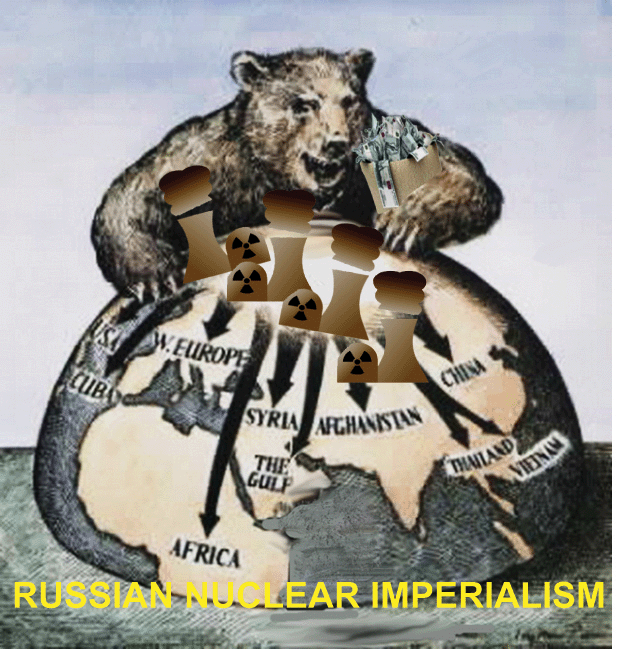 China and Russia lead world ranking for supplying new nuclear reactors, Bloomberg, 9 Nov 20, Source: UxC ResearchThe former Cold War frontier of eastern Europe is becoming a battleground in the $500 billion business of building nuclear power plants.
Four months after lifting a prohibition on financing nuclear-energy deals overseas, the U.S. is finding an opening for companies such as General Electric Co., Westinghouse Electric Co. and Bechtel Group Inc.
In the span of a few weeks, the U.S. signed a memorandum with Romania for the financing of a new reactor and other accords with Poland as well as Bulgaria, which plans to revive an older reactor project.
The plan to win business for U.S. companies in this geopolitically key market started under Donald Trump is poised to survive the transition to a new U.S. administration under President-elect Joe Biden. That may nudge eastern European partners to move forward with stalled nuclear projects.
Greater access to financing may be the chief advantage on the American side as it pushes back against Russian and Chinese interests in the region.
“The projects in countries such as Romania, Bulgaria and Poland could be accelerated if the U.S. helps them come up with funding sources at competitive costs and, eventually, without the need for state aid or guarantees,” said Razvan Nicolescu, a Bucharest-based partner at Deloitte specializing in the energy industry.
Eastern European nations, which are dependent on fossil fuels from Russia and their own coal deposits, have even more reasons than others to seek nuclear options. Being subject to stringent European Union emissions standards also creates additional incentives.
The recent change in regulation is allowing the U.S. to compete for a larger share of the market, whose value it estimates at $500 billion-$740 billion over the next 10 years.
Barriers to expansion remain formidable.
Westinghouse, which was one of the leading nuclear industry suppliers in the U.S., went bankrupt in 2017 as it faced billions in potential liabilities related to domestic projects in Georgia and South Carolina. After the South Carolina project was canceled in 2017, the two at Southern Co.’s Plant Vogtle remained the only reactors under construction in the world using Westinghouse’s flagship AP1000 technology, though that is also behind schedule and over budget.
Political rhetoric may prevail over actual investment decisions, said Martin Vladimirov, an analyst at the Sofia-based Center for the Study of Democracy.
“While the U.S. seeks to counter Russian and Chinese economic interference, those projects may not follow the market logic and will need significant state support,” Vladimirov said.
Nuclear Love Affair in Europe’s Poorer East Is Hitting the Rocks
Russia doesn’t see current U.S. nuclear deals in Europe as a threat to its flagship Rosatom Corp. because the U.S. companies don’t have the bandwidth to build new plants now, a government official close to Russia’s nuclear industry said. The U.S. projects in Europe will likely be limited to servicing agreements, the official added, asking for anonymity as they’re not authorized to speak publicly.
State-owned Rosatom itself also played down the risk from increased competition, saying there’s room for many projects in the region.
“We believe that the U.S. nuclear sector has a great potential,” Rosatom said. “The most important thing now for the U.S. vendors is to grow skills by building more in the markets where they have presence and experience.”
Romania’s need to refurbish an existing reactor makes it the most likely candidate to tap U.S. funding or start work with backing from the U.S., Canada and France. There are bigger doubts over the economics and political will behind the nuclear push announced by Poland and Bulgaria.
Some have stuck by Russia as their main technological and financing partner, such as Hungary for its 10 billion-euro ($12 billion) nuclear expansion deal, though GE will get a chance to supply turbines there.
Others have turned away from the long-standing deals with Russia and rebuffed newer attempts by China to step in as financier and supplier.
Funding will be the key determinant whether these projects can get off the ground, according to Bloomberg Intelligence analyst Elchin Mammadov.
“It’s a very risky and expensive venture that is unlikely to be funded by anyone but the state,” Mammadov said.
Even with state backing, most of the projects flagged across eastern Europe may face years of delay and many may be eventually abandoned.
Russia and China have an edge because they offer package deals. The U.S. is “entirely absent” from the global new build reactor market, the U.S. Energy Department said in an April report.
The U.S. has “lost its competitive global position as the world leader in nuclear energy,” the American department concluded.
— With assistance by Will Wade, Zoltan Simon, Maciej Martewicz, Daryna Krasnolutska, Stepan Kravchenko, and Zoe Schneeweiss https://www.bloomberg.com/news/articles/2020-11-09/u-s-goes-nuclear-to-compete-with-russia-china-in-europe-s-east
UK’s ‘small nuclear reactors’ – the real agenda is the funding of nuclear weapons
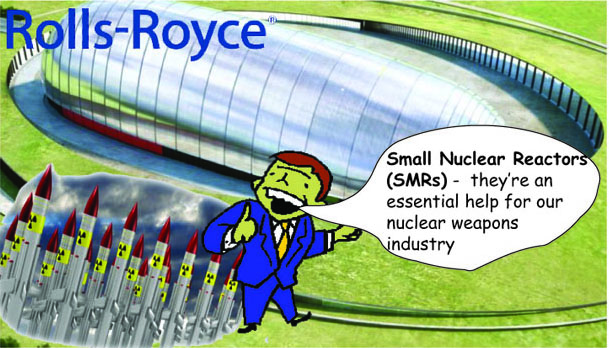
A secret military agenda. UK defence policy is driving energy policy – with the public kept in the dark, Beyond Nuclear
By David Thorpe, 8 Nov 20,The UK government has for 15 years persistently backed the need for new nuclear power. Given its many problems, most informed observers can’t understand why. The answer lies in its commitment to being a nuclear military force. Here’s how, and why, anyone opposing nuclear power also needs to oppose its military use.
“All of Britain’s household energy needs supplied by offshore wind by 2030,” proclaimed Prime Minister Boris Johnson at a recent online Conservative Party conference. This means 40 per cent of total UK electricity. Johnson did not say how, but it is likely, if it happens, to be by capacity auctions, as it has been in the recent past.
But this may have been a deliberate distraction: there were two further announcements on energy – both about nuclear power.
16 so-called “small nuclear reactors”
Downing Street told the Financial Times, which it faithfully reported, that it was “considering” £2 billion of taxpayers’ money to support “small nuclear reactors” – up to 16 of them “to help UK meet carbon emissions targets”.
It claimed the first SMR is expected to cost £2.2 billion and be online by 2029.
The government could also commission the first mini power station, giving confidence to suppliers and investors. Any final decision will be subject to the Treasury’s multiyear spending review, due later this year.
The consortium that would build it includes Rolls Royce and the National Nuclear Laboratory.
Support for this SMR technology is expected to form part of Boris Johnson’s “10-point plan for a green industrial revolution” and new Energy White Paper, which are scheduled for release later in the autumn.
Johnson will probably also frame it as his response to the English citizens assembly recommendations– a version of the one demanded by Extinction Rebellion in 2019 – which reported its conclusions last month.
While the new energy plan will also include carbon capture and storage, and using hydrogen as vehicle fuel, it’s the small modular reactors that are eye-popping.
They would be manufactured on production lines in central plants and transported to sites for assembly. Each would operate for up to 60 years, “providing 440MW of electricity per year — enough to power a city the size of Leeds”, Downing Street said, and the Financial Times copied.
The SMR design is alleged to be ready by April next year. The business and energy department has already pledged £18 million (US $23.48 million) towards the consortium’s early-stage plans.
They are not small
The first thing to know about these beasts is that they are not small. 440MW? The plant at Wylfa (Anglesey, north Wales) was 460MW (it’s closed now). 440MW is bigger than all the Magnox type reactors except Wylfa and comparable to an Advanced Gas-cooled Reactor.
Where will they be built? In the town of Derby – the home of Rolls Royce – where, as nuclear consultant Dr. David Lowry points out, the government is already using the budget of the Housing and Communities Department to finance the construction of a new advanced manufacturing centre site.
When asked why this site was not being financed by the business and energy department (BEIS), as you’d expect, a spokesperson responded that it was part of “levelling up regeneration money”.
Or perhaps BEIS did not want its budget used in such a way. Throwing money at such a “risky prospect” betrays “an irrationally cavalier attitude” according to Andrew Stirling, Professor of Science & Technology Policy at the University of Sussex Business School, because an “implausibly short time” is being allowed to produce an untested reactor design.
Only if military needs are driving this decision is it explicable, Stirling says. “Even in a worst case scenario, where this massive Rolls Royce production line and supply chain investment is badly delayed (or even a complete failure) with respect to civil reactor production, what will nonetheless have been gained is a tooled-up facility and a national skills infrastructure for producing perhaps two further generations of submarine propulsion reactors, right into the second half of the century.
“And the costs of this will have been borne not by the defence budget, but by consumers and citizens.”
Yes, military needs
UK defence policy is fully committed to military nuclear. The roots of civil nuclear power lay in the Cold War push to develop nuclear weapons. Thus has it ever been since the British public was told nuclear electricity would be “too cheap to meter”.
The legacy of empire and thrust for continued perceived world status are at the core of a post-Brexit mentality. It’s inconceivable to the English political elite that this status could exist without Great Britain being in the nuclear nations club, brandishing the totem of a nuclear deterrent.
“The civil-military link is undisputable and should be openly discussed,” agrees Dr Paul Dorfman at the Energy Institute, University College London.
Andrew Stirling talks of the “tragic relative popularity of (increasingly obsolescent) nuclear weapons”. The coincidental fact that civil nuclear installations are also crumbling provides a serendipitous opportunity for some.
The stores of plutonium in the UK are already overflowing and the military has its own dedicated uranium enrichment logistics.
Any nation’s defence budget in this day and age cannot afford a new generation of nuclear weapons. So it needs to pass the costs onto the energy sector.
“Clearly, the military need to maintain both reactor construction and operation skills and access to fissile materials will remain. I can well see the temptation for Defence Ministers to try to transfer this cost to civilian budgets,” observes Tom Burke, Chairman of think tank E3G.
The threat of nuclear proliferation
The threat of nuclear proliferation is therefore linked to the spread of civil nuclear power worldwide, says Dr David Toke, Reader in Energy Politics, Department of Politics and International Relations at the University of Aberdeen. David Lowry agrees: “India, Pakistan and above all Israel are obvious examples, each of which certainly has built nuclear weapons.”
It’s impossible to separate the tasks of challenging civil nuclear power without also challenging military nuclear interests, Stirling strongly believes. “The massive expense of increasingly ineffective military nuclear systems extend beyond the declared huge budgets. They are also propped up by large hidden subsidies from consumer and taxpayer payments for costly nuclear power.
“Huge hidden military interests will likely continue to keep the civil nuclear monster growing new arms. Until critics reach out and engage the entire thing, we’ll never prevail in either struggle.”
How new plants would be paid for still remains a question. Nuclear power is prohibitively expensive………..https://wordpress.com/read/feeds/72759838/posts/3011373103
The Public Relations battle for nuclear power in the UK- editors giving it a free ride?
 A secret military agenda. UK defence policy is driving energy policy – with the public kept in the dark, Beyond Nuclear, By David Thorpe, 8 Nov 20 , “…………The PR battle for nuclear
There is a PR battle in the UK media for new nuclear – and now there are two sides to it.
Editors seem to favour giving pro-nuclear writers a clear ride and rarely question their baseless claims that nuclear is zero carbon. This is misguided and not based on empirical data, says Dr Lowry.
If the carbon footprint of the full uranium life cycle is considered – from uranium mining, milling, enrichment (which is highly energy intensive), fuel fabrication, irradiation, radioactive waste conditioning, storage, packaging to final disposal – nuclear power’s CO2 emissions are between 10 to 18 times greater than those from renewable energy technologies, according to a recent study by Mark Jacobson, professor of civil and environmental engineering at Stanford University, California.
Another recent peer-reviewed article in Nature Energy shows that nations installing nuclear power don’t have lower carbon emissions, but those installing lots of renewables do. Moreover, investment in new nuclear “crowds out” investment in renewables.
Renewables therefore offer a more rapid and cost-effective means to address net zero targets. The opportunity cost of nuclear is severely negative. The 2019 version of the World Nuclear Industry Status Report comprehensively demolishes any evidence-based arguments on the utility of nuclear to help address climate change.
But that’s not the real argument. It’s military. At the very least, we deserve to be told………. https://wordpress.com/read/feeds/72759838/posts/3011373103
David Thorpe is author of books such as Solar Technology and One Planet Cities. He also runs online courses such as Post-Graduate Certificate in One Planet Governance. He is based in the UK. https://wordpress.com/read/feeds/72759838/posts/3011373103
Boris Johnson at a critical point on the decision about Sizewell C nuclear construction
Times 7th Nov 2020, The prime minister was set to announce a ten-point plan to meet the UK’s climate change promises due the week after next.https://www.thetimes.co.uk/article/petrol-and-diesel-car-sales-face-2030-ban-x8bn3rjgp
UK government influenced by pro nuke advisor Dominic Cummins and Rolls Royce to invest in uneconomic nuclear power
By David Thorpe, 8 Nov 20 A secret military agenda. UK defence policy is driving energy policy – with the public kept in the  dark, Beyond Nuclear By David Thorpe, 8 Nov 20 ” ……………..Rolls Royce and Dominic Cummings This sad, radioactive site is operated by – guess who – Rolls-Royce (under the Vulcan Trials Operation and Maintenance contract).
And Rolls Royce is already benefiting from public money flowing into new nuclear. It has for years been lobbying the government to support its small nuclear reactors wheeze.
Its 2017 pitch document contained phrases like “providing 440MW of electricity per year — enough to power a city the size of Leeds” – that Downing Street has literally copied and pasted into the above article fed to the Financial Times.
It doesn’t take much insight to see that Rolls Royce has turned Boris Johnson’s right-hand elf – the one who hates energy efficiency – Dominic Cummings. One can see his hand in the push for SMRs, while BEIS is pushing support for Sizewell C.
Rolls Royce is axing up to 8,000 jobs because of the pandemic-related aviation crash. This troubled company is a huge symbol of Great Britain plc. Millions of public money for SMRs is just what it needs.
But to back both Sizewell and the SMRs would be far too expensive for the public purse, already heavily in debt because of the coronavirus pandemic. Burke believes the SMR pitch is “Cummings fight back against the public pressure for Sizewell from EDF and (Tom) Greatrex”.
Tom Greatrex is the Nuclear Industry Association’s chairman. In a Times article he recently called for “a strong and unambiguous statement of the need for new nuclear to be able to meet the net-zero target” with backing for Sizewell……… https://wordpress.com/read/feeds/72759838/posts/3011373103
Belarus opens nuclear plant opposed by neighboring Lithuania
The president of Belarus has formally opened the country’s first nuclear power plant over the objections of neighboring Lithuania, abc News ByThe Associated Press, 8 November 2020, KYIV, Ukraine — Belarusian President Alexander Lukashenko on Saturday formally opened the country’s first nuclear power plant, a project sharply criticized by neighboring Lithuania……
In line with a law banning electricity imports from Belarus once the nuclear plant started up, Lithuania’s Litgrid power operator cut the inflow of electricity from Belarus when the plant began producing electricity on Tuesday…….
Belarus suffered severe damage from the 1986 Chernobyl nuclear disaster, which spewed radioactive fallout from a plant in then-Soviet Ukraine across large areas of Europe. That painful legacy has fueled opposition to the nuclear plant project in Belarus.
Andrei Sannikov, a prominent opposition figure who was imprisoned for 16 months after running against Lukashenko in the 2010 presidential election, tweeted Saturday that the plant constitutes a “geopolitical weapon” against the European Union.
Lithuania closed its sole Soviet-built nuclear power plant in 2009. In recent weeks, Lithuanian authorities have handed out free iodine pills to residents living near the Belarus border. Iodine can help reduce radiation buildup in the thyroid in case of a leak at the nuclear plant. https://abcnews.go.com/International/wireStory/belarus-opens-nuclear-plant-opposed-neighboring-lithuania-74073929
Britain’s second option for new nuclear – Big Nuclear Reactors
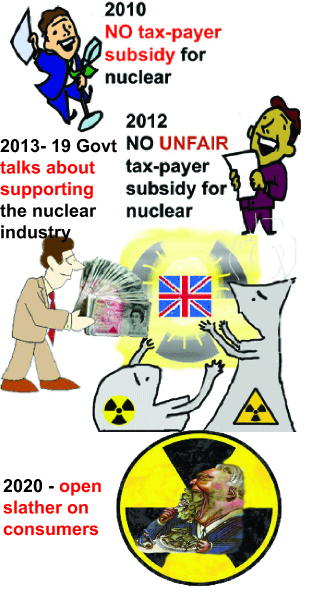 A secret military agenda. UK defence policy is driving energy policy – with the public kept in the dark, Beyond NuclearBy David Thorpe, 8 Nov 20 “……..The second option for new nuclear. While Downing Street is pushing SMRs, BEIS has been looking for a way to finance the £20 billion Sizewell C reactor which EDF has been lobbying to build in Suffolk. This could be why it did not want to bankroll Rolls Royce’s expansion.
One idea being floated by BEIS is the government taking equity stakes in future nuclear plants such as Sizewell C, the energy minister has confirmed.
French energy company EDF is unable to continue with its plans for a new UK nuclear power station without even more government support than it has already had.
The CEO of EDF, Jean-Bernard Lévy, met the Chancellor of the Exchequer Rishi Sunak recently to beg for such support. The head of Greenpeace UK, John Sauven, wrote to the Chancellor saying giving support may be in EDF’s interests, but it is not in the UK’s. Nevertheless, the government is considering taking a direct stake in the project, using a “Regulated Asset Base” (RAB) financing model, where costs are added to consumers’ bills during construction.
This would still result in multibillion-pound liabilities showing on the government’s balance sheet. So the Treasury is studying whether the government should in return have equity stakes in EDF’s Sizewell plant.
The government previously offered to take a one-third stake in Hitachi’s Wylfa plant on Anglesey, but the Japanese company still scrapped the project last month – even then it was too expensive.
The RAB approach is being challenged anyway by the national nuclear regulator, the Office for Nuclear Regulation, because it could introduce a dual regulator for the industry, which it does not regard as sensible or workable.
Renewables can supply UK energy needs and net zero targets sooner and cheaper than nuclear
Renewables are safer, cheaper, quicker to install and genuinely low carbon, with no fuel supply chain.
The Sizewell reactor could not realistically be supplying power until 2034 at the earliest, while wind and solar plants take less than two years to commission, on average.
The ability of the national grid to absorb more fluctuating renewable electricity input is improving, helped by the collapsing cost of batteries, and investment in hydrogen and other forms of storage.
The National Infrastructure Commission has testified that the absorption of 65 per cent renewables on the grid by 2030 is cost-effective – and more is technically achievable.
Implicitly recognising the truth of this, the Ministry of Defence’s Chief Scientific Adviser on nuclear science and technology matters, Robin Grimes, has just opened up another front against renewables.
Grimes is advocating nuclear power’s potential for cogeneration – using its “waste” heat for all manner of things from district heating and seawater desalination to synthetic fuel production and industrial process heat.
This is not likely to make much of a dent in the cost-benefit equation.
Alarm bells should be set ringing when you know that this same Grimes was also co-author of a once-secret report in 2014 for the Ministry of Defence where it was recommended that the UK nuclear submarine industry needs to forge links with civil nuclear power in order to extricate itself from the dire situation it is in.
This secret report discussed what to do about the radiation-leaking Vulcan Naval Reactor Test Establishment, a military submarine reactor testing facility built in 1950 at Dounreay in Scotland.
Engineers with nuclear expertise are dying out with the reactors. New nuclear subs need a new supply chain and new expertise. What better place to tackle all these issues?…………….https://wordpress.com/read/feeds/72759838/posts/3011373103
1 This Month
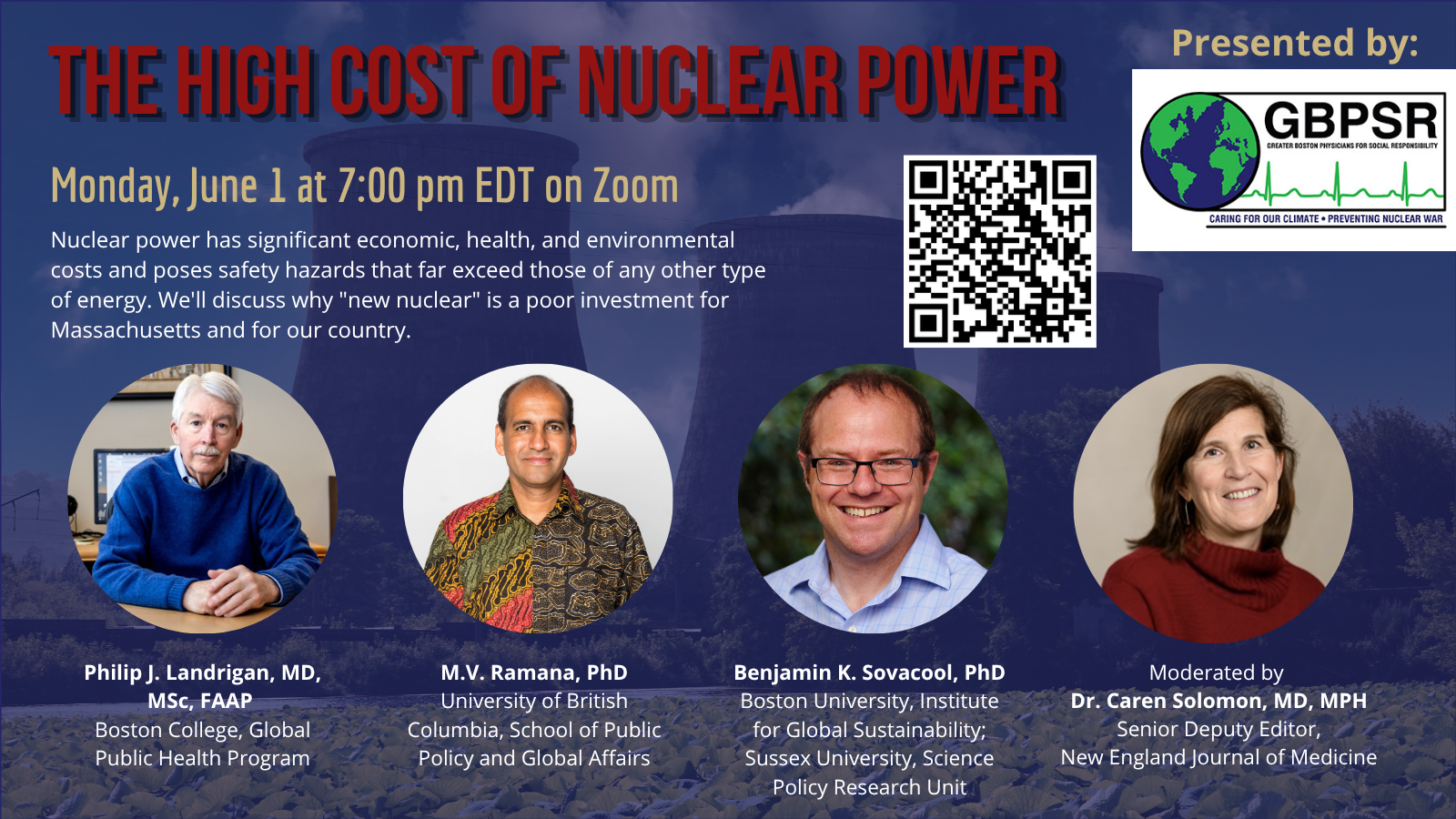
1 June Webinar – The High Cost of Nuclear Power – Register


of the week– Nuclear Reactor Information Task Force
To see nuclear-related stories in greater depth and intensity – go to https://nuclearinformation.wordpress.com
-
Archives
- May 2026 (225)
- April 2026 (356)
- March 2026 (251)
- February 2026 (268)
- January 2026 (308)
- December 2025 (358)
- November 2025 (359)
- October 2025 (376)
- September 2025 (257)
- August 2025 (319)
- July 2025 (230)
- June 2025 (348)
-
Categories
- 1
- 1 NUCLEAR ISSUES
- business and costs
- climate change
- culture and arts
- ENERGY
- environment
- health
- history
- indigenous issues
- Legal
- marketing of nuclear
- media
- opposition to nuclear
- PERSONAL STORIES
- politics
- politics international
- Religion and ethics
- safety
- secrets,lies and civil liberties
- spinbuster
- technology
- Uranium
- wastes
- weapons and war
- Women
- 2 WORLD
- ACTION
- AFRICA
- Atrocities
- AUSTRALIA
- Christina's notes
- Christina's themes
- culture and arts
- Events
- Fuk 2022
- Fuk 2023
- Fukushima 2017
- Fukushima 2018
- fukushima 2019
- Fukushima 2020
- Fukushima 2021
- general
- global warming
- Humour (God we need it)
- Nuclear
- RARE EARTHS
- Reference
- resources – print
- Resources -audiovicual
- Weekly Newsletter
- World
- World Nuclear
- YouTube
-
RSS
Entries RSS
Comments RSS
 nuclear-news