£525 million pledged to build UK small nuclear reactors, no funding package yet revealed for £20 billion Sizewell plant
Times 18th Nov 2020. A total of £525 million has been pledged “to help develop large and
smaller-scale nuclear plants, and research and develop new advanced modular
reactors”. However, there is no word as yet on a funding package to
support the proposed £20 billion new nuclear plant at Sizewell in Suffolk.
British govt’s foolhardy plan to pay up for non existent Rolls Royce small nuclear reactors
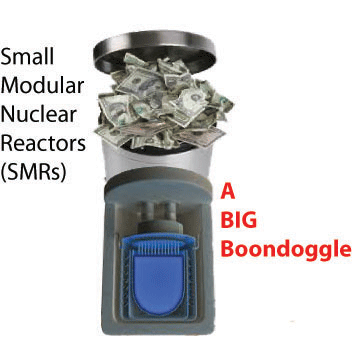 Guardian 17th Nov 2020, Boris Johnson’s £12bn plan for a “green industrial revolution” spans renewable energy, nuclear power and countryside restoration. However, some of the objectives are likely to be difficult to reach, and the plan has been criticised for a lack of ambition in key areas.
UK government wastes tax-payer money on small and large nuclear reactors that will never be cheap or safe
 FoE Scotland 17th Nov 2020, Friends of the Earth Scotland gave a scathing reaction to
  the UK Government’s announcement of a 10-point plan on climate and energy, calling for much more priority on solutions which can reduce emissions and create jobs today.
crisis like carbon capture and storage, hydrogen and nuclear. “While there are some crumbs from the table in terms of the welcome new target of 2030 to phase out fossil-fuelled cars, overall there is too little new money and too much funding committed to long-term, dangerous distractions.
https://foe.scot/press-release/response-to-the-uk-10-point-climate-plan-for-net-zero/
Sizewell C nuclear plant ‘not value for money’, and would sabotage the govt’s pledge for nature
|
New Civil Engineer 18th Nov 2020, Plans for proposed Sizewell C nuclear power station on the Suffolk coast,
which is currently waiting for planning approval, would “sabotage” the |
|
Uranprojekt -The Nazi Nuclear Program
|
Uranprojekt -The Nazi Nuclear Program , Heritage Daily, 17 Nov 20,
Uranprojekt, also known informally as the Uranverein (meaning Uranium Club) was a secret German project, to research and develop atomic weapons and energy during the Second World War.Prior to the outbreak of hostilities, Germany was at the forefront of nuclear fission, with the discovery of the first nuclear fission of heavy elements by Otto Hahn (referred to as the father of nuclear chemistry), and his assistant Fritz Strassmann from the Kaiser Wilhelm Institute in 1938. This was shortly followed by Lise Meitner, an Austrian-Swedish physicist who theorised, and then proved in 1939 that the uranium nucleus had been split, giving the name “fission”. In light of the recent discoveries, Germany was encouraged by a paper submitted by experimental physicist Wilhelm Hanle, which proposed the use of uranium fission in a reactor. This led to a small team being tasked to study the potential military applications of nuclear energy. The Germans then established a new research project on the 1st September 1939 (the same day generally considered to be the start of WW2 with the invasion of Poland by Germany), under the auspices of the Wehrmacht’s Heereswaffenamt (HWA), the German Army Weapons Agency responsible for researching weaponry, ammunition, and equipment. The USA also became aware of the German program that same year, when Albert Einstein wrote to President Roosevelt, warning of the German threat in creating a “nuclear chain reaction in a large mass of uranium, by which vast amounts of power and large quantities of new radium-like elements would be generated.” It was quickly realised by the HWA that the project would be unable to make a decisive contribution to ending the war in the near term, so authority was placed under the Reichsforschungsrat (RFR, Reich Research Council), maintaining its kriegswichtig (war importance) designation. The project was then expanded into three main areas of research, the Uranmaschine to investigate creating a nuclear reactor, the production of uranium and heavy water, and the separation of uranium isotopes. Research struggled with the German invasion of the Soviet Union in 1941 (Operation Barbarossa), as the majority of Germany‘s scientific minds were turned to focus on developing other new technologies that could have a more immediate impact on the war effort (namely rocket technology and jet aircraft). The project also suffered from a drained talent pool. Many top German scientists and nuclear physicists (some of which were Jewish or with Jewish heritage) had fled the country, and there was a lack of understanding and investment from the regime in the pure scientific application of the research (in comparison, the Manhattan Project consumed some $2 billion (1945) in government funds, compared to a mere 8 million reichsmarks $2 million (1945) on the Uranprojekt). This resulted in the Germans never achieving a successful chain reaction, nor did they manage to develop a method of enriching uranium (having never seriously considered plutonium as a viable substitute). In 1942, a conference was initiated by Albert Speer as head of the “Reich Ministry for Armament and Ammunition” (RMBM: Reichsministerium für Bewaffnung und Munition) to discuss the continuation of research, and the prospects for developing nuclear weapons……. https://www.heritagedaily.com/2020/11/uranprojekt-the-nazi-nuclear-program/136152 |
|
Russia’s latest nuclear icebreaker had to abort maiden Arctic voyage
|
Russia’s latest nuclear icebreaker had to abort maiden Arctic voyage The powerful “Arktika” set off from Murmansk on Saturday for a three-week assignment to the Northern Sea Route. Mid-Barents Sea, though, the icebreaker turned around and sailed back to port. Barents Observer, By Thomas Nilsen. November 17, 2020
Following last month’s test voyage to the North Pole, and formal launch ceremony in Murmansk, the new giant icebreaker was now supposed to embark on her first real-working tour to the Northern Sea Route.“Arktika” left from Atomflot’s service base in the Kola Bay on Saturday, according to the state-owned operator Rosatomflot. “On November 14, the leading universal nuclear-powered icebreaker “Arktika“ left the port of Murmansk on its maiden voyage. The vessel headed towards the Kara Sea. Until mid-December, the nuclear-powered icebreaker “Arktika“ will operate in the Northern Sea Route,” a press release posted November 16 said. The Northern Sea Route Administration’s permission granted for ”Arktika” to enter the Kara Gate, where the Northern Sea Route starts, is valid from November 16. Online ship tracking service VesselFinder.com shows the path of the icebreaker sailing out the Kola Bay on a steady course towards the Kara Sea. Halfway in the Barents Sea, the ship suddenly makes a 180 degrees turnaround and sails back on a northwestern course before turning south on Tuesday directly towards Murmansk. Asked about the hastily return to port, Head of the Communication department with Atomflot, Evgeny Sviridov says to The Barents Observer that “Staff is conducting adjustment works onboard.” He would not elaborate but adds: “The icebreaker will leave the port of Murmansk in the nearest future.” In Murmansk, people have already started to post speculations on the regional Vkontakte page on what could have gone wrong. Unconfirmed reports hint at “mechanical problems” onboard, and nothing related to the two nuclear reactors. “Arktika” is the lead of five vessels of Project 22220, the world’s most powerful nuclear-powered icebreakers. Construction of two similar vessels, the “Ural“ and “Sibir” are currently well underway at the yard in St. Petersburg, while keel-laying of the fourth icebreaker, the “Yakutia” took place in May this year. The contract for the fifth, the “Chukotka” is signed. When sailing north from the shipyard on September 22, there was already a problem with the propulsion. During sea trials in the Baltic Sea in February this year, a short circuit caused serious damage to the winding in one of the three electro engines. The damaged propulsion motor is 50 % functional and can deliver 10 megawatts of propulsion power to the starboard wing propeller. It’s a tandem unit and only one half of it was damaged during the sea trials….. https://thebarentsobserver.com/en/arctic/2020/11/russias-latest-and-most-powerful-nuclear-icebreaker-had-abort-maiden-arctic-voyage |
Destruction of wildlife habitat, Coronation Wood to be felled, for Sizewell C nuclear project
(TASC), and the invaluable financial and moral support from many concerned
citizens, TASC are devastated to learn that the Courts have refused its
application to make a final appeal to overturn the decision to allow the
destruction of Coronation Wood.
case to court, said “Due to the crass decision-making of East Suffolk
Council, EDF have now been given the green light to carry out their
Sizewell B relocation plans which include taking their chain-saws to and
destroying the whole of Coronation Wood.
allow the felling of the wood. Sizewell C may never get permission and a
100 year old wood cannot be replaced. Due to its removal there will be a
major loss of visual screening of the nuclear industrial complex causing
increased noise and light pollution, totally ignoring the site’s status
as an Area of Outstanding Natural Beauty.
setts, bird and bat habitats blows EDF’s environmental credentials out of
the water. There are alternatives but EDF and the council chose not to
pursue them. EDF is not concerned in any way, shape or form for the well
being of the ecology of the area, nor that of locals who are deeply upset
by their plans”
https://tasizewellc.org.uk/latest-on-coronation-wood-judicial-revue/
 |
ReplyForward
|
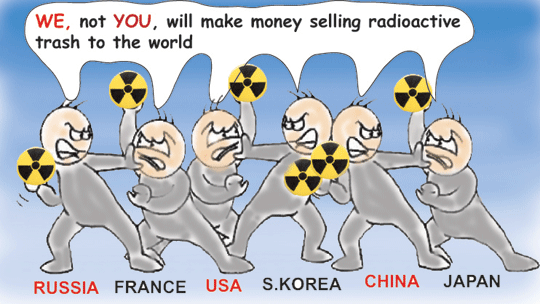
USA looks to get $18billion now, maybe $40billion later, in flogging off nuclear reactors to Poland
|
U.S. sees $18 billion from purchases in nuclear power agreement with Poland, By Timothy Gardner, WASHINGTON (Reuters) 16 Nov 20, – The United States and Poland have struck a nuclear power agreement in which Poland will likely buy $18 billion in nuclear technology from U.S. companies, the U.S. energy department said on Monday.
The United States has been competing with China and Russia and other countries to supply nuclear power technology to countries hoping to build their first reactors, or boost their programs. “We are hopeful that the ultimate decisions that are made by Poland … over a period of time will result in them choosing U.S. technology,” U.S. Energy Secretary Dan Brouillette told reporters in a teleconference. …… Over the next 18 months, the United States and Poland will work on an a report for the program that seeks to build six reactors, as well as potential financing arrangements, the department said. The first reactors are planned to be in operation by 2033 in a program that will potentially be worth $40 billion, a senior U.S. energy department official said. Poland would buy at least $18 billion from U.S. companies, the official said. Westinghouse, owned by Brookfield Asset Management BAMa.TO, Bechtel and Southern Co SO.N and the U.S. government, will participate in a first step in the agreement, an engineering study for planned plants, the official said. This month the United States and Romania came to an initial $8 billion agreement on the construction of two reactors on the river Danube. Romanian state-owned nuclear power producer Nuclearelectrica ROSNN.BX ended talks with China General Nuclear (CGN) about the construction of the reactors after they had dragged on for six years. Reporting by Timothy Gardner; Editing by Nick Zieminski and Marguerita Choy https://www.reuters.com/article/us-usa-nuclearpower-poland-idUSKBN274239 |
|
The Irish sea – plagued by dumped munitions and radioactive trash
Belfast Telegraph 13th Nov 2020, A report highlighting the dangers of underwater explosions and radioactive
waste has cast doubt on the viability of any Irish Sea bridge. The UK and Ireland Nuclear Free Local Authorities (NFLA) study focused on Beaufort’s Dyke, one of the deepest sections of water in Europe and a training sitefor nuclear submarines. Munitions from both world wars and radioactive waste, when it was permitted in Europe, are known to have been dumped in the stretch of sea.
Relentless lobbying by Small Nuclear Reactor companies still doesn’t make them economic or safe

Telegraph 14th Nov 2020 ”………Rolls-Royce, via a relentless lobbying campaign over the past few years, seems to have convinced the  Government that its “mini-nukes” project is a runner. It claims billions are needed from taxpayers to underpin investment in a new production line that will reduce the costs and risks compared with bespoke new reactors such as the £22bn monster at Hinkley Point C.
There are plenty of reasons to be sceptical that even with its nuclear submarine experience, Rolls and its partners can pull it off. The technology is unproven anywhere and – as anti-nuclear campaigners argue – more reactors inevitably mean more potential points of failure. Nuclear power has a poor record of delivering its budgets too…….”
Putin and officials discuss huge new underground bunker almost completed
Putin Reveals Existence Of New Nuclear Command Bunker
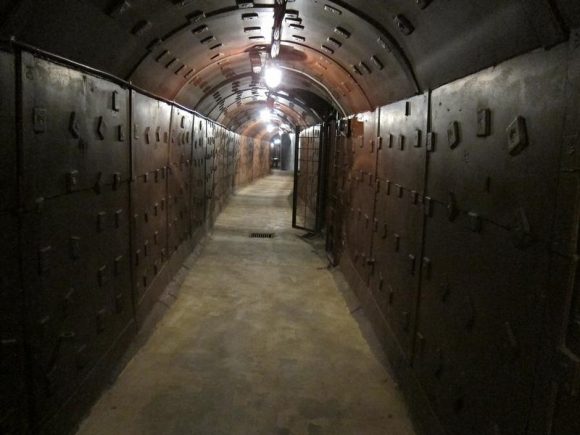
Russia already has two very large bunker complexes built underneath mountains, including one housing a key nuclear doomsday command system. The Drive, BYJOSEPH TREVITHICK NOVEMBER 11, 2020, The Kremlin has released an unusual transcript of a meeting between Russian President Vladimir Putin and senior defense and other government officials, as well as representatives of Russia’s defense industries, regarding the modernization of the country’s nuclear command and control infrastructure. In it, among other things, Putin disclosed that work on a new hardened strategic command post, possibly a deeply buried underground bunker, is nearing completion.
Putin held the meeting in Sochi on Nov. 11, 2020. Russian Minister of Defense Sergei Shoigu and Russian Army General Valery Gerasimov, Chief of the General Staff of the country’s military, were also in attendance, among others. The day before, the Russian President had held another meeting, which touched on the country’s general nuclear deterrence policy, where he indicated that he would only authorize a nuclear strike in response to one against Russia. This apparent declaration of a so-called “no first use” policy would seem to conflict with previous official statements in recent years.
“It is absolutely clear that the combat capability of the nuclear triad, and the capability of the army and navy on the whole to adequately and quickly respond to potential military challenges directly depend on the stability, effectiveness and reliability of these systems under any circumstances,” Putin said at the Nov. 11 gathering. “I would like to point out that a great deal has been done during the past few years to maintain all the command elements of our strategic nuclear forces at the highest possible level.”……..
It’s not completely clear from these comments whether Putin was talking about an entirely new facility or the refurbishment, improvement, and/or expansion of an existing one. His remarks about the need to protect the overall command and control infrastructure against any threats, including a nuclear attack, strongly point to the site he’s talking about being deeply buried underground bunker of some kind. Russia already understood to have two sites that would match this general description, one at Kosvinsky Kamen in the Northern Ural Mountains and another under Mount Yamantau in the Southern Ural Mountains.
The construction of both sites reportedly began in the late 1970s. It’s worth noting that no facility on earth is totally survivable in the face of strikes by modern nuclear weapons, but deeply buried sites offer probably the best possible defense. As such, the Soviets and the United States both, among others, invested heavily in such bunker complexes during the Cold War, ………
Kosvinsky Kamen, at least some portions of which are believed to be buried under around 1,000 feet of solid granite, is probably the better known of the two, due to its connection to a semi-automated nuclear command and control system first developed under the Soviet Union called Perimeter. This system was long described as a “dead hand” doomsday machine akin to the fictional one in Stanley Kubrick’s famous Cold War black comedy film Dr. Strangelove that could carry out an entirely automatic retaliatory launch of Russian nuclear-tipped intercontinental ballistic missiles (ICBM) after an attack.
More recent reporting has indicated that actual humans, who could be pre-authorized in a crisis to launch nuclear strikes if certain conditions were met, were still very much involved in the operation of Perimeter and operated its central components from within the Kosvinsky Kamen complex. That being said, reports still indicate that this main Perimeter bunker was like something you’d find in a villain’s lair in a James Bond movie………
Less is known about the facility at Mount Yamantau, which reportedly lies, at least in part, under some 3,000 feet of rock, primarily made up of quartz, and has been said to be absolutely massive, encompassing an area “as big as the Washington area inside the Beltway,” or around 400 square miles. The complex is situated within Mezhgorye, which is what is known in Russia as a closed town, where only authorized individuals are allowed to live and work………
President Donald Trump’s Administration also announced in 2018 that it had decided to maintain an operational stockpile of B83-1 nuclear gravity bombs, which have very large yields, reported to be around 1.2 megatons, as an alternative nuclear means of striking at especially hardened facilities. These weapons had previously been slated for retirement……..
It is worth noting that there are understood to be at least two underground bunker complexes in Moscow, one under the Kremlin and another nearby, similar to ones in Washington, D.C., plus to more nearby in the Russian capital’s suburbs, but these are nowhere near as deeply buried as the ones at Kosvinsky Kamen and Mount Yamantau. In 2016, there was also a report that Russia was building “dozens” of new bunkers under the Kremlin and elsewhere to support its nuclear command and control infrastructure…… https://www.thedrive.com/the-war-zone/37569/putin-reveals-existence-of-new-nuclear-command-bunker-and-says-its-almost-complete
New European Court of Auditors report has concerns about the EU’s nuclear fusion project.
|
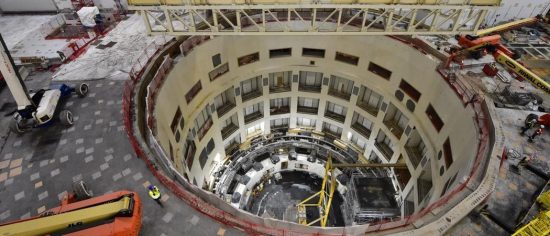
Auditors say EU’s nuclear fusion project still causing concern https://sciencebusiness.net/news/auditors-say-eus-nuclear-fusion-project-still-causing-concern–13 Nov 20, New European Court of Auditors report finds there is a risk of further cost increases and delays to the ITER project. All other Horizon 2020 joint undertakings have ‘healthy’ financial management but some are behind schedule on implementation
By Florin Zubașcu The EU could see its financial contribution to the International Thermonuclear Experimental Reactor (ITER) project going up at a time when a new report by the European Court of Auditors says there are weaknesses in procurement procedures, the management of its human resources and in project monitoring.
ITER is part of Fusion for Energy (F4E), the 35-year long public-private partnership set up to manage Europe’s contribution to the building of the pilot nuclear fusion reactor in southern France. “F4E’s weaknesses in procurement planning, as well as human resource and project management, place its operational effectiveness at risk,” the auditors say. Nuclear fusion Within the ITER project, the EU is coordinating the contribution of a 35 countries to the construction of the world’s largest tokamak, a magnetic fusion device designed to provide proof of concept that nuclear fusion that powers the sun can be harnessed as a carbon-free source of energy. Europe is paying 45.6 per cent of construction costs, of which 80 per cent is funded from the EU budget and 20 per cent by France as the ITER host country. The remainder is shared equally by China, India, Japan, Korea, Russia and the US (9.1 percent each). After various delays, in November 2016, the ITER Council approved new timelines, putting the start of the operational phase back to 2025 and the completion of the construction phase to 2035. The previous estimate was that construction would be completed in 2020. The EU’s contribution to the construction phase was revised to €12 billion euros (in 2008 prices), up from the €6.6 billion approved by the EU Council in 2010. However, these figures do not include the contingency of up to 24 months in terms of schedule, and 10-20 per cent in terms of budget, that the commission has recommended the project should have. “While positive steps have been taken to improve the management and control of the JU’s contribution to the project construction phase, there remains a risk of further cost increases and delays in project implementation compared to the current approved baseline,” the auditors say. The future of research partnerships F4E is one a number of joint undertakings the EU established with industry in 2014 to carry out research in fusion energy, bio-based industries, clean air transport, fuel cells and hydrogen, medicines, air traffic management, electronic components and innovative rail solutions. According to the audit, in 2019, the European Commission contributed around €1.9 billion to these research and innovation activities. The private partners include industry, various research groups, and international organisations that provide in-kind contributions. The undertakings are slated to continue in some form alongside new partnerships on driverless cars, space and clean steel under the EU’s next research programme, Horizon Europe. In their report published today, the auditors signed off the 2019 accounts of all joint undertakings. However, the auditors noted that while internal controls on payments were generally effective, several undertakings still had weaknesses in their procurement, grant payments and recruitment procedures. “Our audit for 2019 confirms that their financial management is healthy, although several aspects can be further improved, for instance the management of procurements, grant payments and human resources,” said Ildikó Gáll-Pelcz, the member of the European Court of Auditors responsible for the audit. The auditors also checked how much progress the joint undertakings have made to date. Some undertakings under Horizon 2020 fell short of targets, and on average only 51 per cent of Horizon 2020 and related activities had been implemented so far in the partnerships, which have a life span of 10 years, from 2014 to 2024. |
|
German Court rules that government must review compensation for exit from nuclear power
German Court Demands Gov’t Review Compensation for Nuclear Exit, Courthouse News, November 12, 2020 FRANKFURT , Germany (AFP) — Germany’s highest court said Thursday the government must revise the terms of compensation paid to energy companies forced to switch out of nuclear power, calling current arrangements “unreasonable.”
Ruling on a case brought by Swedish group Vattenfall, the constitutional court took aim at a payout condition set by Berlin in 2018 that would essentially require energy companies to make the change first before knowing how much compensation they would receive.
Judges in Karlsruhe urged the government to “revise the regulation as soon as possible”, saying the 2018 amendment to nuclear energy legislation, which is still not in force, was tainted by irregularities.
Environment Minister Svenja Schulze said the government respects the decision, and that it will “thoroughly analyse the ruling and swiftly initiate a legal regulation that meets the requirements of the court.” https://www.courthousenews.com/german-court-demands-govt-review-compensation-for-nuclear-exit/
Guardians of UK’s precious habitat in Suffolk are fearful of government decision on Sizewell nuclear plan.
East Anglian Daily Times 12th Nov 2020, Guardians of one of Britain’s most precious habitats are waiting to see
how Prime Minister Boris Johnson’s 10-point plan for the environment will
affect their Suffolk site.
https://www.eadt.co.uk/news/rspb-minsmere-sizewell-c-damage-1-6926669
UK’s Royal Society for the Protection of Birds condemns the Sizewell nuclear project
 The Government looks set to fail in its first major domestic test over its declared commitment to the environment ahead of an upcoming speech by the Prime Minister.
A recent PR charm offensive by the energy company EDF extolling the green credentials of its proposals to build the Sizewell C nuclear reactor seems to be swaying government opinion, despite the fact that the project may irreversibly damage one of the UK’s most important and well protected wildlife sites. It is rumoured that the Prime Minister will announce the importance of future nuclear energy development in his upcoming 10-point speech on the environment.
The Royal Society for the Protection of Birds ’s Chief Executive, Beccy Speight, said: “The Government has committed to protect 30% of the UK’s land by 2030 to boost biodiversity, so allowing the destruction of one of the most nature rich places we already have in the UK would be a crazy decision. The Prime Minister must not let EDF pull the wool over his eyes regarding what a damaging project this would be.
“If EDF were to be given permission to build a brand-new twin nuclear reactor slap bang on the border of a globally important wildlife haven, then we believe that contrary to the ambition set out by this Government, nowhere in the UK is sacred anymore. The Government has stated that we are in an ecological emergency as well as a climate emergency and it simply cannot afford to waste taxpayer’s money destroying flagship reserves which mean so much to wildlife and people.”
The RSPB has waited for over a decade for EDF Energy to show them evidence that RSPB Minsmere won’t be irrevocably damaged if the energy giant builds the UK’s latest white elephant: Sizewell C. That evidence has never materialised and EDF continue to try and paint the development as environmentally friendly despite evidence to the contrary.
Home to a whopping 6000 species, Minsmere is widely acknowledged as one of Europe’s most important wildlife sites and has legal protection at both the national and international level. Protected animals that call the Suffolk coast home like otters, water voles, marsh harriers, bats and many more could all fall victim to this huge infrastructure project and legally protected land, Sizewell Marshes SSSI, could be built directly on. The concerns extend to marine life too with proposals suggesting waters off the local beaches could warm and that toxic chemicals could be pumped into the sea along with worrying numbers of dead fish.
Beccy Speight continued: “We could be witnessing the horrors of HS2 all over again, wasting tax payers’ money on destroying irreplaceable homes for nature. If Sizewell C was to be built, it should come as no surprise to us all that we would once again be witnessing chainsaws and diggers decimating precious habitats which are not only important to wildlife, but to people’s health and wellbeing too. For this to happen as we attempt to recover from a pandemic caused by a zoonotic disease only adds to the bitter irony of the situation. We urge the Government to think again.”
1 This Month
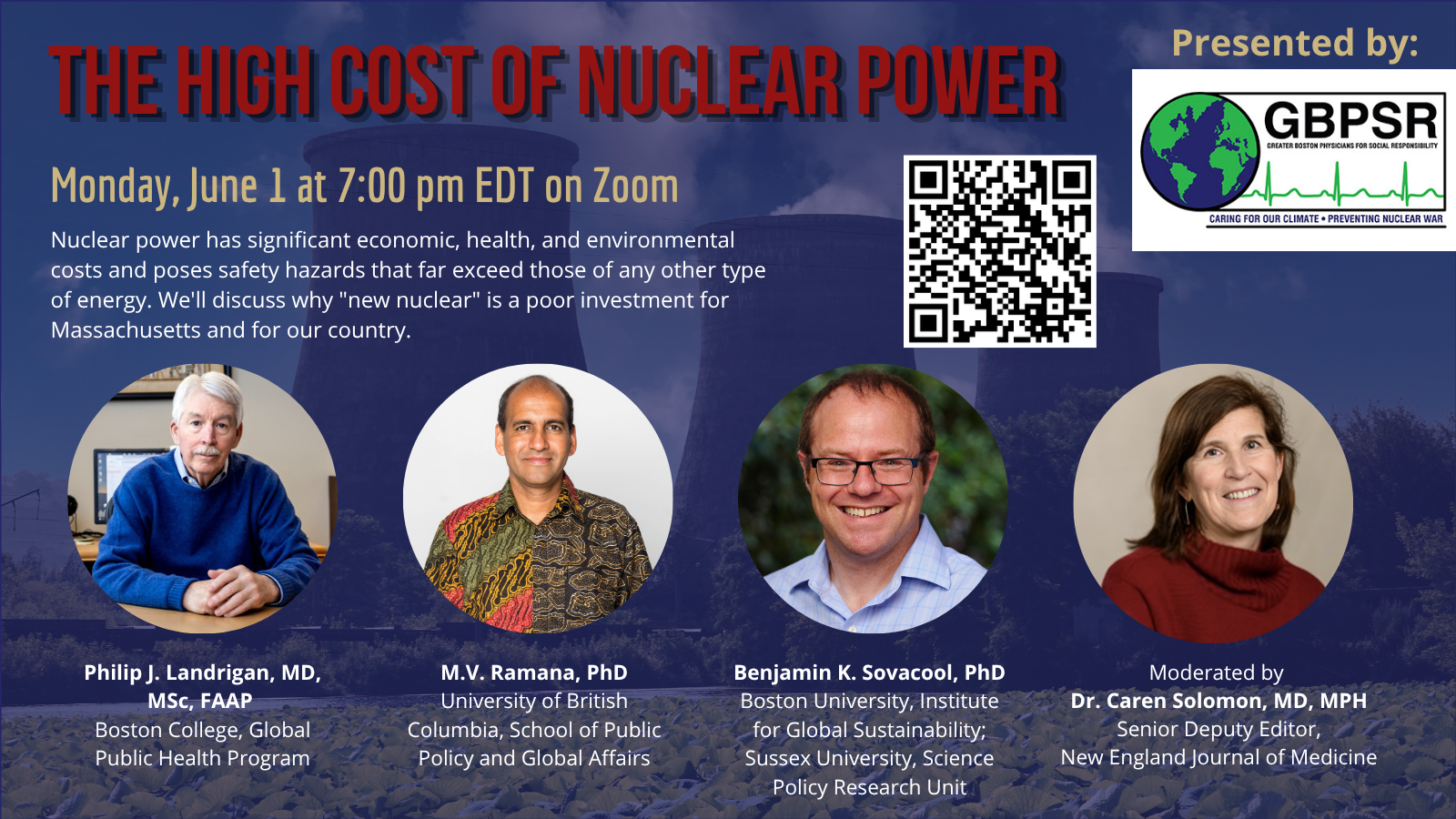
1 June Webinar – The High Cost of Nuclear Power – Register


of the week– Nuclear Reactor Information Task Force
To see nuclear-related stories in greater depth and intensity – go to https://nuclearinformation.wordpress.com
-
Archives
- May 2026 (225)
- April 2026 (356)
- March 2026 (251)
- February 2026 (268)
- January 2026 (308)
- December 2025 (358)
- November 2025 (359)
- October 2025 (376)
- September 2025 (257)
- August 2025 (319)
- July 2025 (230)
- June 2025 (348)
-
Categories
- 1
- 1 NUCLEAR ISSUES
- business and costs
- climate change
- culture and arts
- ENERGY
- environment
- health
- history
- indigenous issues
- Legal
- marketing of nuclear
- media
- opposition to nuclear
- PERSONAL STORIES
- politics
- politics international
- Religion and ethics
- safety
- secrets,lies and civil liberties
- spinbuster
- technology
- Uranium
- wastes
- weapons and war
- Women
- 2 WORLD
- ACTION
- AFRICA
- Atrocities
- AUSTRALIA
- Christina's notes
- Christina's themes
- culture and arts
- Events
- Fuk 2022
- Fuk 2023
- Fukushima 2017
- Fukushima 2018
- fukushima 2019
- Fukushima 2020
- Fukushima 2021
- general
- global warming
- Humour (God we need it)
- Nuclear
- RARE EARTHS
- Reference
- resources – print
- Resources -audiovicual
- Weekly Newsletter
- World
- World Nuclear
- YouTube
-
RSS
Entries RSS
Comments RSS
 nuclear-news