“They’ll be able to dream up some bogus price” – UK nuclear proponents want financing system

|
UK needs new finance model for nuclear – experts, Montel News , KELLY PAUL, London 18 Jan 2021
The UK must adopt a regulated asset base model (RAB) to kickstart investment in nuclear development, or risk the country missing its target to be net zero by 2050, proponents of the financing mechanism say.
A RAB model for financing could attract pension funds, insurance firms, sovereign wealth funds and infrastructure asset managers to shore up French utility EDF’s funds and carry a new nuclear project through to completion, industry experts told Montel. The UK’s plans to build new nuclear infrastructure in the country have stalled against a backdrop of political reticence to commit, spiralling costs associated with Hinkley Point C, which EDF is building, and the steady retreat of potential investors. …… Under RAB, an economic regulator would grant a licence to a company to charge a regulated price to users in exchange for the provision of infrastructure, in this case a nuclear reactor. …….
The UK government recently confirmed it has entered into negotiations with EDF on the Sizewell C reactor in Suffolk and has pledged to reach an investment decision on at least one nuclear power station by the end of the current parliament. High cost EDF itself signalled that the cost for the Hinkley C reactor would be between GBP 21.5 billion and GBP 22.5 billion, a rise of between GBP 1.9 billion and GBP 2.9 billion as compared with previous estimates. In France, meanwhile, the operator’s Flamanville reactor is running 11 years behind schedule and EDF’s estimated cost of completion has spiralled to EUR 12.4bn, up from its original estimate of EUR 3.3bn.
Blank cheque Detractors of the RAB model have dismissed the mechanism as a “blank cheque” for UK consumers to sign, while others called into question the price competitiveness of new nuclear given the falling cost of renewables. Critics maintain that by guaranteeing a significant source of capital ahead of the expensive construction phase, as RAB does, consumers are essentially being asked to pay for a reactor when they have no way of assessing how costly it will be, or if any of the delays that have marred Hinkley could occur again. At the government’s recent consultation on the RAB model, specific figures relating to financing were not discussed. “They’ll be able to dream up some bogus price,” said Stephen Thomas, emeritus professor of energy policy at the University of Greenwich. https://www.montelnews.com/en/story/uk-needs-new-finance-model-for-nuclear-experts/1187367 |
|
The hidden costs of France’s old, past-their-use-by-date nuclear reactors
Ian Fairlie’s Blog 16th Jan 2021, In early 2019, four French EDF scientists wrote a 22 page report on load following in French nuclear reactors. The English version was first published on April 1 2020 but this has only recently been brought to my attention (ie mid Jan 2021).
This report is instructive and worrying, and requires careful reading. In essence, it discusses how French nuclear engineers have managed to retrofit and configure France’s reactors so that they can follow the diurnal loads increasingly required by France’s electricity needs.
It should be borne in mind that EDF’s 58 nuclear reactors are very old and past their sell-by dates. Most are between 30 and 40 years old with an average age of 33 years in 2018.
Some background is necessary to explain why this report was written. French reactors have been
operating since the 1980s. Since their gross output has usually exceeded French domestic requirements, especially at night, much is exported to France’s neighbours i.e. UK, Belgium, Netherlands, Germany, Italy and Spain.
Large amounts were until recently also sent to large pumped storage schemes in Switzerland at night. These transfers have been at a considerable financial loss to EDF and the French Treasury as the prices for such supplies are understood to be low. In addition, during the day, France imports significant amounts of electricity- mainly from the renewables in Germany.
https://www.ianfairlie.org/news/french-report-nuclear-power-plant-flexibility-at-edf/
22 January – Trident Ploughshares, Scotland to celebrate entry into force of nuclear weapons ban
 The National 18th Jan 2021, MEMBERS of the anti-nuclear weapons group Trident Ploughshares will celebrate the entry into force of the UN Treaty on the Prohibition of Nuclear Weapons (TPNW) on January 22 with banner drops, billboards and
projections on buildings, and bell ringing in town centres across the UK.
In Edinburgh, messages will be projected on city centre buildings with
billboards proclaiming “UN outlaws nuclear weapons. Time for a clean
break”, with a variation asking “What about Scotland?” depicting
Nicola Sturgeon alongside her words: “No ifs, no buts, no nuclear weapons
on the Clyde, or anywhere.”
Russia to withdraw form Open Skies Treaty, EU concerned
The horror of Russia’s nuclear submarines and nuclear trash dumped at sea
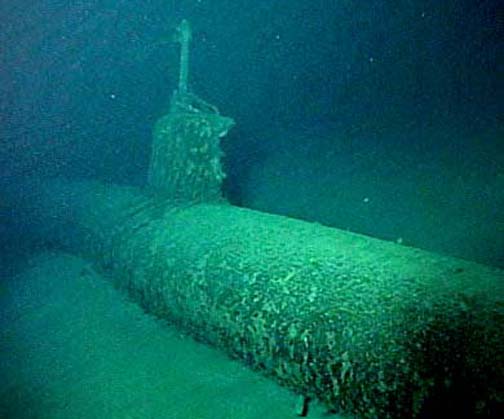
CTY Pisces – Photos of a Japanese midget submarine that was sunk off Pearl Harbor on the day of the attack. There’s a hole at the base of the conning tower where an artillery shell penetrated the hull, sinking the sub and killing the crew. Photos courtesy of Terry Kerby, Hawaii Undersea Research Laboratory. August 2003.
For decades, the Soviet Union used the desolate Kara Sea as their dumping grounds for nuclear waste. Thousands of tons of nuclear material, equal to nearly six and a half times the radiation released at Hiroshima, went into the ocean. The underwater nuclear junkyard includes at least 14 unwanted reactors and an entire crippled submarine that the Soviets deemed proper decommissioning too dangerous and expensive. Today, this corner-cutting haunts the Russians. A rotting submarine reactor fed by an endless supply of ocean water might re-achieve criticality, belching out a boiling cloud of radioactivity that could infect local seafood populations, spoil bountiful fishing grounds, and contaminate a local oil-exploration frontier.
“Breach of protective barriers and the detection and spread of radionuclides in seawater could lead to fishing restrictions,” says Andrey Zolotkov, director of Bellona-Murmansk, an international non-profit environmental organization based in Norway. “In addition, this could seriously damage plans for the development of the Northern Sea Route—ship owners will refuse to sail along it.”
News outlets have found more dire terms to interpret the issue. The BBC raised concerns of a “nuclear chain reaction” in 2013, while The Guardian described the situation as “an environmental disaster waiting to happen.” Nearly everyone agrees that the Kara is on the verge of an uncontrolled nuclear event, but retrieving a string of long-lost nuclear time bombs is proving to be a daunting challenge.
Nuclear submarines have a short lifespan considering their sheer expense and complexity. After roughly 20-30 years, degradation coupled with leaps in technology render old nuclear subs obsolete. First, decades of accumulated corrosion and stress limit the safe-dive depth of veteran boats. Sound-isolation mounts degrade, bearings wear down, and rotating components of machinery fall out of balance, leading to a louder noise signature that can be more easily tracked by the enemy. …….
The Soviet Union and Russia built the world’s largest nuclear-powered navy in the second half of the 20th century, crafting more atom-powered subs than all other nations combined. At its military height in the mid-1990s, Russia boasted 245 nuclear-powered subs, 180 of which were equipped with dual reactors and 91 of which sailed with a dozen or more long-range ballistic missiles tipped with nuclear warheads………
A majority of the Soviet’s nuclear submarine classes operated from the Arctic-based Northern Fleet, headquartered in the northwestern port city of Murmansk. The Northern Fleet bases are roughly 900 kilometers west of the Kara Sea dumping grounds. A second, slightly smaller hub of Soviet submarine power was the Pacific Fleet, based in and around Vladivostok on Russia’s east coast above North Korea. Additional Soviet-era submarines sailed from bases in the Baltic and Black Seas.
…….. the disposal of these submarines posed more problems than previous conventional vessels. Before crews could chop the vessels apart, the subs’ reactors and associated radioactive materials had to be removed, and the Soviets didn’t always do this properly.
Mothballed nuclear submarines pose the potential for disaster even before scrapping begins. In October of 1995, 12 decommissioned Soviet subs awaited disposal in Murmansk, each with fuel cells, reactors, and nuclear waste still aboard. When the cash-strapped Russian military didn’t pay the base’s electric bills for months, the local power company shut off power to the base, leaving the line of submarines at risk of meltdown. Military staffers had to persuade plant workers to restore power by threatening them at gunpoint.
The scrapping process starts with extracting the vessel’s spent nuclear fuel from the reactor core. The danger is immediate: In 1985, an explosion during the defueling of a Victor class submarine killed 10 workers and spewed radioactive material into the air and sea. Specially trained teams must separate the reactor fuel rods from the sub’s reactor core, then seal the rods in steel casks for transport and storage (at least, they seal the rods when adequate transport and storage is available—the Soviets had just five rail cars capable of safely transporting radioactive cargo, and their storage locations varied widely in size and suitability). Workers at the shipyard then remove salvageable equipment from the submarine and disassemble the vessel’s conventional and nuclear weapons systems. Crews must extract and isolate the nuclear warheads from the weapons before digging deeper into the launch compartment to scrap the missiles’ fuel systems and engines.
When it is time to dispose of the vessel’s reactors, crews cut vertical slices into the hull of the submarine and chop out the single or double reactor compartment along with an additional compartment fore and aft in a single huge cylinder-shaped chunk. Once sealed, the cylinder can float on its own for several months, even years, before it is lifted onto a barge and sent to a long-term storage facility.
But during the Cold War, nuclear storage in Soviet Russia usually meant a deep-sea dump job. At least 14 reactors from bygone vessels of the Northern Fleet were discarded into the Kara Sea. Sometimes, the Soviets skipped the de-fueling step beforehand, ditching the reactors with their highly radioactive fuel rods still intact.
According to the Bellona, the Northern Fleet also jettisoned 17,000 containers of hazardous nuclear material and deliberately sunk 19 vessels packed with radioactive waste, along with 735 contaminated pieces of heavy machinery. More low-level liquid waste was poured directly into the icy waters.
But during the Cold War, nuclear storage in Soviet Russia usually meant a deep-sea dump job. At least 14 reactors from bygone vessels of the Northern Fleet were discarded into the Kara Sea. Sometimes, the Soviets skipped the de-fueling step beforehand, ditching the reactors with their highly radioactive fuel rods still intact.
According to the Bellona, the Northern Fleet also jettisoned 17,000 containers of hazardous nuclear material and deliberately sunk 19 vessels packed with radioactive waste, along with 735 contaminated pieces of heavy machinery. More low-level liquid waste was poured directly into the icy waters.
Another submarine is perhaps a bigger risk for a radioactive leak. K-159, a November class, suffered a radioactive discharge accident in 1965 but served until 1989. After languishing in storage for 14 years, a 2003 storm ripped K-159 from its pontoons during a transport operation, and the battered hulk plunged to the floor of the Barents Sea, killing nine crewmen. The wreck lies at a depth of around 250 meters, most likely with its fueled and unsealed reactors open to the elements.
Russia has announced plans to raise the K-27, the K-159, and four other dangerous reactor compartments discarded in the Arctic. As of March 2020, Russian authorities estimate the cost of the recovery effort will be approximately $330 million.
The first target is K-159. But lifting the sunken sub back to the surface will take a specially built recovery vessel, one that does not yet exist. Design and construction of that ship is slated to begin in 2021, to be finished by the end of 2026. Now, in order to avoid an underwater Chernobyl, the Russians are beginning a terrifying race against the relentless progression of decay. https://www.popularmechanics.com/military/navy-ships/a34976195/russias-nuclear-submarine-graveyard/
While European organisations discuss nuclear wastes, UK unveils plan for Cumbria waste burial
 David Lowry’s Blog 15th Jan 2021, I have spent the past few days engaged in an excellent webinar on nuclear waste and information disclosure, titled: Aarhus convention and nuclear David Lowry’s Blog 15th Jan 2021, I have spent the past few days engaged in an excellent webinar on nuclear waste and information disclosure, titled: Aarhus convention and nuclear(acn) round table on radioactive waste management (rwm), online 13-15 January 2021 The promotional blurb reads “The European Commission (DG ENER) and Nuclear Transparency Watch (NTW) have organized an “Aarhus Convention and Nuclear” Roundtable [with] the objective to gather concerned stakeholders by Radioactive Waste Management (operators, regulators and institutional representatives, experts and researchers, NGOs, civil society representatives) in order to discuss concrete implementation of the Aarhus Convention principles (public information and participation)”
As this three day forum was underway across the European a digital airwaves, the UK nuclear waste management implementer- Radioactive Waste Management Limited and Nuclear Decommissioning Authority (NDA) unveiled a new atomic aspirant to bury nuclear waste under their land in Cumbria, near Sellafield.
http://drdavidlowry.blogspot.com/2021/01/why-truth-matters-including-on-nuclear.html |
|
France says Iran is building nuclear weapons capacity, urgent to revive 2015 deal
|
France says Iran is building nuclear weapons capacity, urgent to revive 2015 deal, ABC, 17 Jan 21, Iran is in the process of building up its nuclear weapons capacity and it is urgent that Tehran and Washington return to a 2015 nuclear agreement, France’s Foreign Minister Jean-Yves Le Drian has said.
Key points:
Iran has been accelerating its breaches of the nuclear deal and earlier this month started pressing ahead with plans to enrich uranium to 20 per cent fissile strength at its underground Fordow nuclear plant. That is the level Tehran achieved before striking the deal with world powers to contain its disputed nuclear ambitions. The Islamic Republic’s breaches of the nuclear agreement since President Donald Trump withdrew the United States in 2018 and subsequently imposed sanctions on Tehran may complicate efforts by president-elect Joe Biden, who takes office on January 20, to rejoin the pact………. https://www.abc.net.au/news/2021-01-17/french-minister-says-iran-is-building-nuclear-weapons-capacity/13064994 |
|
Belarus Nuclear Plant Taken Offline After ‘Protection System Activated’
|
Belarus Nuclear Plant Taken Offline After ‘Protection System Activated’, Radio Free Europe, 17 Jan, MINSK — Belarusian authorities say the country’s new nuclear power plant has been taken offline during testing procedures after the generator protection system was triggered.At 7:02 p.m., Unit 1 at the Astravets plant was “disconnected from the network after the generator protection system was activated,” the Energy Ministry said in a statement on January 16.
This occurred “during the pilot industrial operation of Power Unit 1, as part of which the systems and equipment are being tested,” the ministry said, adding that radiation levels in the area were “normal.” In November 2020, just three days after it was inaugurated near the western city of Astravets, Belarus’s only nuclear plant halted electricity production after voltage transformers were said to have exploded. The plant resumed operations several days later…… https://www.rferl.org/a/belarus-nuclear-plant-taken-offline-after-protection-system-activated-/31049225.html |
|
Profound questions raised by the employment tribunal case; bullying at Sellafield nuclear site?

 Byline Times 15th Jan 2021, An employment tribunal case that has been running for more than two yearshas started to raise profound questions over management at Europe’s
largest nuclear reprocessing plant, the ability of the employment tribunal
system to defend the rights of whistleblowers, ethical conduct by major law firms, and a conflict of interest at the Equality and Human Rights Commission.
The case of McDermott versus Sellafield, the Nuclear
Decommissioning Authority and former Sellafield HR director Heather Roberts
has been brought under the Public Interest Disclosure Act 1998 – also
known as the Whistleblowers’ Act. Alison McDermott, an HR professional
and diversity specialist, claims that the sudden termination of her
freelance contract in October 2018 by Sellafield was linked to her
protected disclosures containing evidence of systemic bullying, and racist
and sexist incidents at the Sellafield site in Cumbria.
Russia eager to salvage nuclear weapons treaty, once Biden is USA president
 For Russia, nuclear arms curbs with Biden are a ‘no brainer’ https://www.thejakartapost.com/news/2021/01/15/for-russia-nuclear-arms-curbs-with-biden-are-a-no-brainer-.html Jonathan Brown Agence France-Presse Moscow / Fri, January 15, 2021 Russian President Vladimir Putin holds a video conference call with Mikhail Degtyarev, an LDPR party lawmaker, in Kerch, Crimea, on July 20, 2020. (Sputnik/AFP/Alexey Druzhinin ) For Russia, nuclear arms curbs with Biden are a ‘no brainer’ https://www.thejakartapost.com/news/2021/01/15/for-russia-nuclear-arms-curbs-with-biden-are-a-no-brainer-.html Jonathan Brown Agence France-Presse Moscow / Fri, January 15, 2021 Russian President Vladimir Putin holds a video conference call with Mikhail Degtyarev, an LDPR party lawmaker, in Kerch, Crimea, on July 20, 2020. (Sputnik/AFP/Alexey Druzhinin )
When US President-elect Joe Biden enters the White House next week his administration will be in a race against time to salvage a landmark nuclear arms accord with Russia. The New START treaty, which expires just 16 days after Biden’s inauguration, is the last major arms reduction pact between old foes whose bulging nuclear stockpiles dominated fears for global security during the Cold War.
But the fast-approaching deadline to find compromise comes as tensions between Moscow and Washington are at fever pitch over recent hacking allegations, and after Biden vowed to take a firm stand against Russia. The stakes of reaching an agreement are high, says Elena Chernenko, a foreign editor at Russia’s Kommersant newspaper who has closely followed negotiations. “The treaty limits the chances of one side miscalculating the intentions or plans of the other, which we saw happen several times leading to very dangerous moments during the Cold War,” she told AFP.
Any agreement is also likely to define spending priorities for both governments, said Russian political columnist Vladimir Frolov. Extending New START could determine both in Moscow and Washington whether “more money than necessary would have to be spent on nuclear toys as opposed to health care,” he told AFP.
New START was signed in 2010 between then-US president Barack Obama and former Russian leader Dmitry Medvedev, curbing warheads to 1,550 each and restricting numbers of launchers and bombers.
Biden will be eager to score a big diplomatic win early in his term, but he is also under pressure to tread a fine line and make good on a campaign promise to be tough on Russia. Lawmakers in the US demanded punishment for Russia last year after concluding that Kremlin-backed hackers were behind a sweeping cyber intrusion into government institutions.
That standoff is just the latest in a litany of disagreements over conflicts in Ukraine and Syria and allegations of Russian election meddling. Still, rhetoric from Moscow and Washington as the New START expiration deadline approaches has raised hopes that arms control could offer a rare area of compromise. Biden’s incoming national security advisory Jake Sullivan said this month that the president-elect had tasked officials with looking at extending New START “right out of the gates”.
In Moscow, Putin recently proposed a one-year extension without preconditions and tasked Foreign Minister Sergei Lavrov with getting a “coherent” US response to the offer. Former Soviet leader Mikhail Gorbachev, a champion of Soviet-era arms accords with the United States, said this week he expects Biden to prolong the accord and urged both sides “to negotiate further reductions”.
“Russia is on record at the highest level that it wants to extend the treaty for five years without any preconditions,” said Frolov, the columnist. Moscow is in favor of an extension, he said, because it would allow Russia to modernize its own nuclear forces at an affordable and measured pace, without rushing into an arms race. Frolov added that Russia was unlikely to sabotage negotiations just to make Biden appear weak at the onset of his tenure, saying the Kremlin “does not care about Biden’s wins”.
For Putin, extending New START is “a no brainer,” Frolov said. Negotiations under US President Donald Trump stumbled over an American demand that China become party to the agreement – Beijing having shown no interest in joining. That demand was highlighted in an embarrassing episode last June, when a US negotiator at arms control talks in Vienna tweeted a picture of China’s flag next to empty chair. “China is a no-show,” US Special Presidential Envoy for Arms Control Marshall Billingslea wrote, even though Beijing was never expected to attend.
With the dawn of the Biden era, that tone of negotiation has likely come to an end, analysts believe. “There are now adults in the room in the United States, so even with these areas of confrontation, maybe this is the one avenue where Moscow and Washington will be able to compromise to make the world a little bit safer,” Chernenko said.
While both Washington and Moscow have signaled a positive outcome for Feb. 5 – the New START expiration date – what comes next is a different question. “That’s the moment when Russia will come to the table with a big portfolio of grievances and demands,” Chernenko cautioned.
|
|
Church leaders call on UK to sign nuclear weapons ban treaty
 UK is urged to sign UN nuclear-weapons treaty https://www.churchtimes.co.uk/articles/2021/15-january/news/uk/uk-is-urged-to-sign-un-nuclear-weapons-treaty by PAT ASHWORTH, 15 JANUARY 2021 But there is resistance to change, say peace campaigners.
CAMPAIGNERS are urging the UK to sign the United Nations Treaty on the Prohibition of Nuclear Weapons, which will come into effect on 22 January.
The Archbishops of Canterbury and York, with more than 30 Church of England bishops, called on the Government in November to accept the treaty, which, they said, would “give hope to all people of goodwill who seek a peaceful future” (News, 20 November 2020).
It has been signed by 51 states. They will now be required to stop producing, developing, testing, or stationing nuclear weapons, and will be required to help any victims of their testing and use. Their financial institutions will be expected to stop investing in companies that produce nuclear weapons.
The UK, the United States, France, and Russia have not signed the treaty. Clergy and church leaders were reminded in a briefing by the Network of Christian Peace Organisations (NCPO), on Tuesday, of the overwhelming support given to a Lambeth Conference resolution in 1998, which called on the Government and the UN to press for an international mandate for all member states to prohibit nuclear warfare.
Now was the time to fulfil that, Rebecca Johnson, one of the architects of the treaty and a founder member of the International Campaign to Abolish Nuclear Weapons (ICAN), said. Nuclear weapons must be known for what they really were — weapons of mass destruction — and the phrase “nuclear powers” must be replaced with “nuclear-armed states”.
The treaty was a legal one, but it would work by persuasion and not by coercion; it was normative in taking away any status attached to hanging on to nuclear weapons, and in labelling as pariahs those who did. “We all need to think about what we can do to bring this treaty into force in our own countries. There is an important job here for faith leaders to do,” she said.
Although the C of E had a blanket policy of not investing in companies with an interest in nuclear weapons, everyone should examine investment practice in their churches, the policy adviser on international affairs for the ecumenical Joint Public Issues Team, Steve Hucklesby, said.
The treaty brought “a very real possibility of a new norm on nuclear weapons across the whole finance and business sectors; but be clear: there is resistance to change,” he continued. Pressure could be applied to banks and pension providers if individuals saw this as something relating to their own lives. “The issue now becomes compliance with an international treaty, to be applied across the whole of an institution’s business.”
An international meeting to be held in Vienna later this year will establish mechanisms for compliance. It will be open to observers from nuclear-armed states, who will not be able to vote but who should be urged to “attend, listen, and learn,” Ms Johnson said. “It is so important for the UK to join sooner rather than later . . . to be at the table.”
Russell Whiting, who chairs Christian CND, described a world in which President Trump, or even Joe Biden, had their finger on the nuclear button, as “an incredibly dangerous place”. The treaty has been declared dangerous by the Prime Minister, and by the former Foreign Secretary Philip Hammond. These governments had “misrepresented” the treaty wherever they went, saying that it would undermine the existing non-proliferation treaty, Ms Johnson said.
The General Synod called for the elimination of nuclear weapons in July 2018, but it stopped short of urging the Government to sign the treaty. The Government’s refusal to do so was described by the Archbishop of York, the Most Revd Stephen Cotrrell, then Bishop of Chelmsford, as “hugely disappointing” and “a decision that looks like complacency”. He questioned the billions of pounds spent on Trident (News, 13 July 2018).
The general secretary of the Roman Catholic peace movement Pax Christi, Pat Gaffney, said on Tuesday that RC bishops had issued a statement asking the Government to support the treaty — a move that she described as “a huge step forward, because they have habitually said it undermined the existing non-proliferation treaty. Catholics need to write to their bishops affirming what they are doing.”
The NCPO is holding a service online at 11.30 a.m. on 22 January, to mark the treaty. It will conclude with the ringing of the peace bell at Coventry Cathedral.
Leeds and Brighton cities pass resolutions supportint the Treaty on Prohibition of Nuclear Weapons
NFLA 14th Jan 2021, With just 9 days to go before the entry into force of the Treaty on the Prohibition of Nuclear Weapons, Leeds and Brighton pass resolutions
supporting the Treaty.
Property developer volunteers Allerdale, Cumbria for UK’s nuclear waste
anyone to volunteer anywhere, even an individual who doesn’t live in the area, or a company can volunteer it.
of the local population.
mirrored by the ease of withdrawing. There the government have chosen a highly prescriptive system.
As Britain’s plan for Wyfla nuclear project founders, it’s time to start a green revolution
PAWB 11th Jan 2021, On the last day of troubled 2020, the Westminster Government has deferred a decision on a Development Consent Order for a nuclear power station at Wylfa until the end of April 2021.
This is the fourth time this has happened, and the second time in a row for Duncan Hawthorne, chief executive Horizon, to ask for a deferral.
 On January 10 the Times revealed that Hitachi is winding Horizon up completely by March 31, 2021. This is the logical conclusion of the process that started exactly two years ago when Hitachi suspended Horizon’s operations at Wylfa. Then in September 2020, they announced that they were ditching their plans to build two huge reactors at Wylfa completely.
The attempt to build Wylfa B has been shambolic from the start. It’s high time to abandon the foolish dream that has paralyzed Anglesey’s development since 2006. As we approach the 10th
anniversary of the Fukushima disaster, the latest to be mentioned as ‘saviours’ of the radioactive poisoning project that would threaten the health of everyone on the island and beyond are three US companies.
Here they are: Bechtel Corporation, Westinghouse and Southern Company. Here are
some of the trio’s transgressions: Bechtel – recently fined nearly $58million for financial fraud with another company over a 10-year periodat Hanford Nuclear Reservation, the most radioactively contaminated site in the United States. This followed a fine of $125million for low quality work on the same site in 2016. Much more could be said about Bechtel. Westinghouse and Southern Company – Westinghouse went bankrupt while trying to build Vogtle Power Station in the state of Georgia.
The two AP1000 reactors of the type destined for Wylfa are five years behind Schedule, have doubled in cost to $25billion, and there is no guarantee that thepower station will ever be completed. Another of their projects was the V C Summer nuclear plant in South Carolina. It was abandoned unfinished in 2017, and is still being paid for by taxpayers.
However, with this latest information, it looks very unlikely that these three American companies are prepared to pay through their noses for two white elephant sites at Wylfa and Oldbury.
This is the end of Horizon’s journey. And the end once and for all of the nuclear industry’s plans to destroy an especially beautiful part of northern Ynys Môn. It is high time that politicians on Ynys Môn andGwynedd Councils, the Senedd in Cardiff, and at Westminster to recognise
this fact and to turn their attention towards cleaner, cheaper and more sustainable ways of producing electricity. The renewable technologies are available. This is the time to start a real green revolution.
Nuclear power – a dubious and very costly addition in UK’s energy plan
|
Renew Extra 9th Jan 2021, Dave Elliott: The White Paper on modelling UK electricity supply has some very odd things to say: it seems to see nuclear (and carbon capture) as low cost: ‘low-cost solutions at low carbon intensities can only be achieved with a combination of new nuclear and gas CCUS’.
However, it says that the use of hydrogen makes it more flexible, and it admits that ‘it is
technically possible for higher levels of hydrogen-fired generation to also replace nuclear and gas CCUS’, although it adds that ‘this is dependent on the quantity and cost of hydrogen available for generating electricity’. The White paper promised that a review of all existing energy National Policy Statements (NPSs), and presumably their cost and demand assumptions, would be carried out over the next year.
This is important since the old very dated NPSs (which were all designated by the government in 2011) have been used to justify decisions on energy. For example, the old NPSs were sometimes used to justify nuclear expansion on the basis of then expected growth in demand for electricity, whereas it’s actually fallen a lot.
It may help that the White Paper also noted that BEIS is to further upgrade its energy modelling work, going beyond its Mackay Carbon Calculator, its update of the late Prof. David Mackay’s 2011 modelling system.
There certainly are cost issues to face up to up. As far as it has panned out so far, nuclear would add even more costs (including curtailment costs) and doesn’t seem very suited to balancing variable renewables. CCS/CCSU may be similarly expensive and operationally
constrained. But although renewables have got dramatically cheaper and green hydrogen conversion for balancing may do too, there will still be system integration costs. As I noted in a recent post, they have been put, in an Imperial College London review, at €14 per MWh at up to 35%renewable penetration, right up to £30/MWh at up to 85% penetration, well below typical green generation cost. Some of there costs will fall, as the technology improves, and will be offset by efficiency savings, as energy supply and demand balancing gets better, but they are not zero.
https://renewextraweekly.blogspot.com/2021/01/hydrogen-flexibility-in-energy-white.html |
|
1 This Month
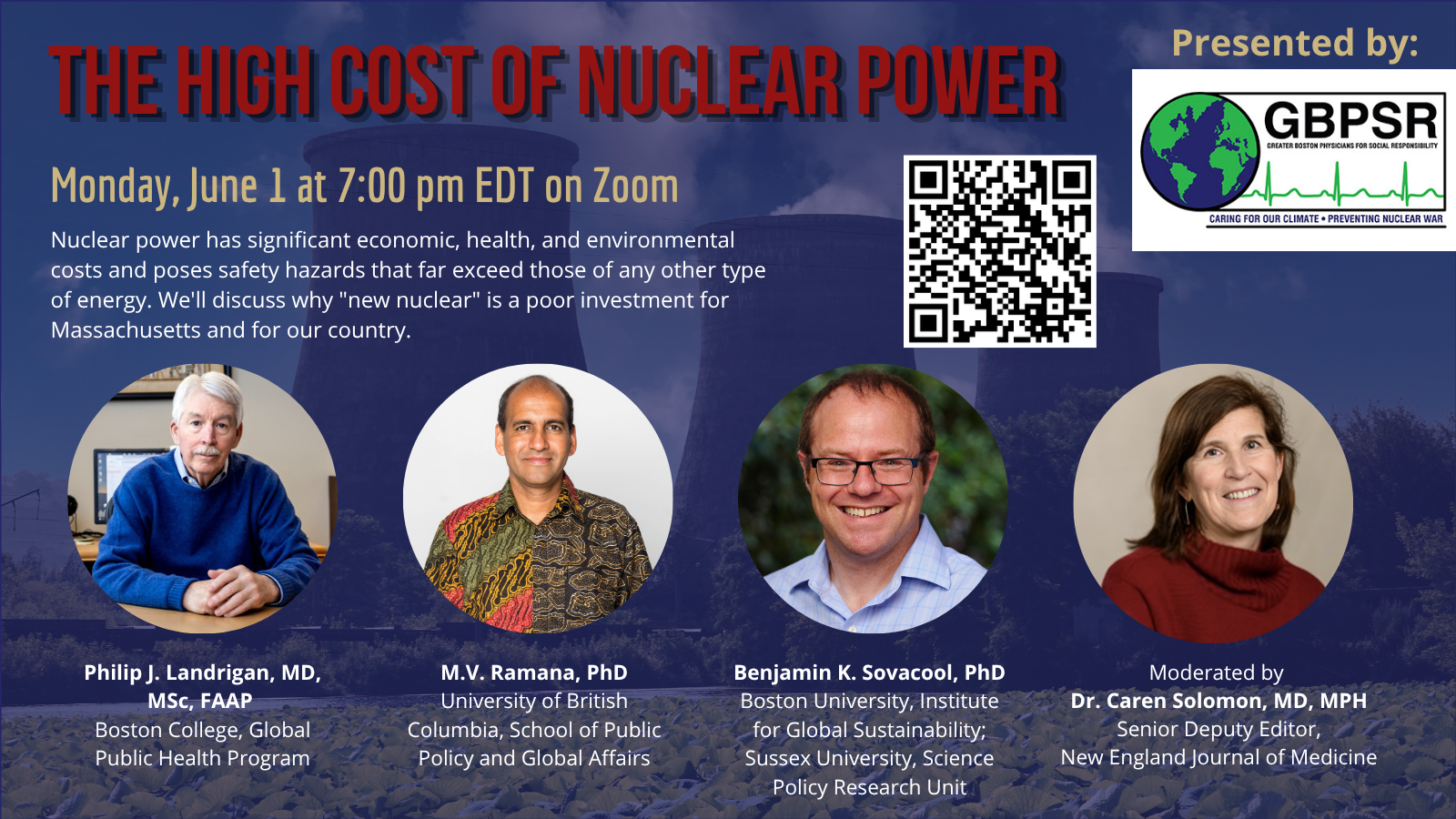
1 June Webinar – The High Cost of Nuclear Power – Register


of the week– Nuclear Reactor Information Task Force
To see nuclear-related stories in greater depth and intensity – go to https://nuclearinformation.wordpress.com
-
Archives
- May 2026 (225)
- April 2026 (356)
- March 2026 (251)
- February 2026 (268)
- January 2026 (308)
- December 2025 (358)
- November 2025 (359)
- October 2025 (376)
- September 2025 (257)
- August 2025 (319)
- July 2025 (230)
- June 2025 (348)
-
Categories
- 1
- 1 NUCLEAR ISSUES
- business and costs
- climate change
- culture and arts
- ENERGY
- environment
- health
- history
- indigenous issues
- Legal
- marketing of nuclear
- media
- opposition to nuclear
- PERSONAL STORIES
- politics
- politics international
- Religion and ethics
- safety
- secrets,lies and civil liberties
- spinbuster
- technology
- Uranium
- wastes
- weapons and war
- Women
- 2 WORLD
- ACTION
- AFRICA
- Atrocities
- AUSTRALIA
- Christina's notes
- Christina's themes
- culture and arts
- Events
- Fuk 2022
- Fuk 2023
- Fukushima 2017
- Fukushima 2018
- fukushima 2019
- Fukushima 2020
- Fukushima 2021
- general
- global warming
- Humour (God we need it)
- Nuclear
- RARE EARTHS
- Reference
- resources – print
- Resources -audiovicual
- Weekly Newsletter
- World
- World Nuclear
- YouTube
-
RSS
Entries RSS
Comments RSS
 nuclear-news