Nuclear exit to unleash wind power in Northern Germany

Nuclear exit to unleash wind power in Northern Germany
By Charlotte Nijhuis and Nikolaus J. Kurmayer | EURACTIV.com with CLEW 10 Dec 2021
The shutdown of the last nuclear power plant in Schleswig-Holstein will unclog the electricity grid and unleash wind power in the northern German state, according to its environment minister Jan Philipp Albrecht, reports Clean Energy Wire.
“Nuclear power is clogging our grids, especially in the direction of the south,” Albrecht told press agency dpa.
Due to grid bottlenecks, offshore wind turbines indeed have to be switched off in some cases.
The importance of nuclear power as a whole is therefore overestimated,” Albrecht added.
After the shutdown of the nuclear plant at the end of this year, the north of Germany could cover 160% of its electricity needs with renewable energy and there will be more wind power exports to the south, Albrecht said.
Fears of power blackouts due to the nuclear phaseout are unfounded, he said. “After all, we will continue to massively expand renewable energies in Germany now. In the future, we will not be dependent on nuclear power being generated in France.”
His anti-nuclear party, the Greens, have recently entered federal government in Germany, with Super-Minister Robert Habeck in charge of boosting the expansion of renewable energies up to 80% of the country’s power supply.
Germany is set to turn off the nuclear reactors Grohnde, Gundremmingen C and Brokdorf by the end of December.
Shutting down the remaining three nuclear reactors in 2022 will then conclude a decades-long struggle by the anti-nuclear movement that gave rise to the Green Party and other environmental groups in the 1980s.
…….researchers are confident that the shutdown of Germany’s last nuclear power plants will not cause supply shortages, according to calculations by the German Institute for Economic Research (DIW Berlin).
In order to keep grid operation stable, congestion management will need to be adjusted. But “the lights will not go out in Germany,” study author Claudia Kemfert said in statement.
“On the contrary: the [nuclear] shutdown paves the way for the overdue expansion of renewable energies. Nuclear energy was uneconomical from the start and characterised by incalculable risks,” she added………https://www.euractiv.com/section/electricity/news/nuclear-exit-to-unleash-wind-power-in-northern-germany/
Hunterston and Continuous Decommissioning
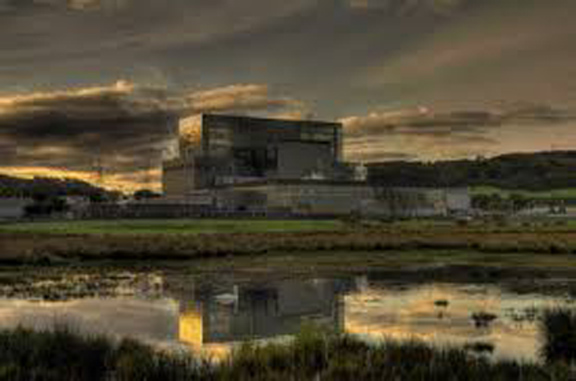
nuClear News No136 Dec 21, Hunterston and Continuous Decommissioning The Nuclear Decommissioning Authority’s 2021-24 Business Plan (1) says it has reviewed the Magnox reactor decommissioning strategy and endorsed a site-specific approach to Magnox reactor decommissioning which will involve a mix of decommissioning strategies. For some sites this will result in their decommissioning being brought forward whilst for others a deferral strategy will be the chosen approach. New Site-Specific Strategies will be developed for each Magnox station across Britain. These will support optimal sequencing of reactor dismantling – a rolling programme of decommissioning which will maximise the opportunity for sharing any lessons learned, developing and implementing new technologies and strengthening wider capability.
These new site-specific decommissioning strategies are currently being defined. A timetable will be set that best suits each site and a business case developed to set out the benefits and cost and schedule impacts of any changes.
Reactor dismantling at the Hunterston A Magnox station, which ceased generation in 1990, is now expected to start in 2035. The previous strategy was to place the reactors into care and maintenance for up to 85 years to allow for radioactivity to decay. The current work programme which involves packaging various waste, sludges etc and placing the packages into an Intermediate Level Waste store will now take until 2030, 40 years after it ceased operation. The plant opened in 1964, so by 2030 Hunterston A will have spent longer being cleaned up than it actually spent generating electricity. Originally the current work programme was expected to be completed by 2022, but problems associated with retrieving waste in 5 bunkers has caused delays. The period between 2030 and 2035 will be spent demolishing various buildings.
Under the old strategy the NDA was going to install a “weather envelope” around the old Magnox reactors. Work on this has now been suspended.
Hunterston B Meanwhile, Hunterston B – Reactor 3 switched off for final time on 26th November. The reactor was first switched on on 6th February 1976. When EDF acquired the power station it was expected to end generation in 2016. (2) Hunterston B Reactor 4 – is scheduled to shut down in January, which will see the end of power generation for the site in North Ayrshire, Scotland. (3)
Reactor 3 and Reactor 4 were taken offline on 9 March and 3 October 2018, respectively, after cracks in their graphite cores were discovered during routine inspections. In August 2020, the UK’s Office for Nuclear Regulation (ONR) gave approval to EDF to restart Reactor 4 in August 2020 and Reactor 3 the following month. The reactors were taken offline earlier this year for further inspections of their graphite cores. In April, the ONR gave permission for the units to be switched back on. However, it said continued operation would be for up to a total of 16.7 terawatt days for Reactor 3 and 16.52 terawatt days for Reactor 4 – about six months of operation for each reactor. Reactor 3 returned to service on 23 April and Reactor 4 on 5 June.
In June, the UK government and EDF agreed on improved arrangements to decommission the UK’s seven AGR nuclear plants that are scheduled to close this decade. This followed an announcement by EDF that it had decided not to restart the first of the AGRs, Dungeness B, and to begin defuelling with immediate effect. (4) Each of the AGR sites will move across to the NDA on a rolling basis once defueling and fuel free verification are complete, for the decommissioning work to be overseen and managed by the NDA’s Magnox division. However, EDF’s defueling work will be supported by the NDA divisions Sellafield Ltd and Nuclear Transport Solutions (NTS) alongside other parts of the NDA group. Spent fuel from Hunterston B will be sent by train to Sellafield. (5)
EDF has now submitted a defueling safety case to ONR. First there will be what’s called “defueling outage” which will last about 60 days – making sure everything is safe to commence defueling. Defueling is then expected to start in March 2022 and will take around 3 years.
After defueling the NDA will take control of the AGR reactors. Under the old regime it would have taken until about 2030 to prepare the reactors for a period of care and maintenance. Now Hunterston B will develop a site-specific decommissioning strategy which should involve reactor dismantling sooner rather than later, thus providing the prospect of more continuous employment on the site.
The NDA, EDF and Magnox have been working together to investigate the feasibility of Hunterston B sharing the use of the Hunterston A Intermediate Level Waste (ILW) store and processing facility. Seems obvious that they should, but EDF has recently been working on plans for a standalone store. EDF and NDA have now agreed to share the Hunterston A store and EDF has suspended work on a Hunterston B store. ONR & SEPA still need to be consulted and a planning application made to North Ayrshire Council (NAC). (6) https://www.no2nuclearpower.org.uk/wp/wp-content/uploads/2021/12/nuClearNewsNo136.pdf
British pensioners funding France’s ”nuclear renaissance” with white elephant nuclear projects?
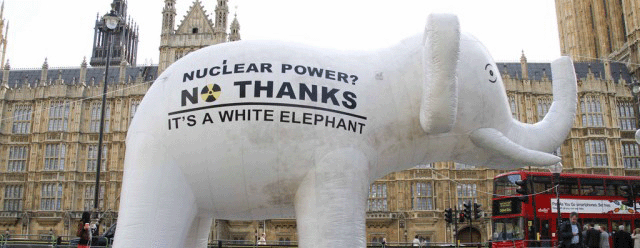
According to Gérard Magnin, a former EDF director, the French company sees Hinkley as ‘a way to make the British fund the renaissance of nuclear in France’. He added: ‘We cannot be sure that in 2060 or 2065, British pensioners, who are currently at school, will not still be paying for the advancement of the nuclear industry in France.’ ..……….
White elephant energy projects that are tomorrow’s HS2, The Conservative Woman, 10 Dec 21, -December 10, 2021AS someone who has in a small way been opposing the climate catastrophe narrative* and has had to study the government’s energy plans, I’m beginning to wonder why Suffolk has been chosen for not one but two white elephant energy projects. What have we done to deserve this? An even more pertinent question is ‘What the hell does this technologically-illiterate government think it is doing?…….
The proposed Sizewell C will house a pair of French-designed nuclear fission reactors of 1600MW output each which are slated to be built next to the decommissioned Sizewell A. …………
Superficially (i.e. as assessed by a typical minister who has the same knowledge of science, technology, engineering and mathematics as the average 12-year-old) Sizewell seems an obvious place to dump a pair of the new generation large nuclear reactors, that is if you ignore the fact that it will take a big bite out of the Suffolk Coastal Area of Outstanding Natural Beauty, ruin the tourist trade for decades and require the building of a temporary town to house the thousands of workers who will be imported to build it. More to the point, they’ll come in late while costing far more than the estimate.
It seems no one in government has noticed that European Pressurised Water Reactors (EPRs) like the two planned for Sizewell C are proving extremely difficult to build. For example, the Finnish Olkiluoto Nuclear Power Plant already had two reactors of a different design, so they are not nuclear tyros. They applied for planning permission for the third, the first Finnish EPR, in 2000. It was due to begin feeding power to the grid in 2010. The latest estimate is June 2022. That’s 22 years between application and delivery of electricity instead of ten. It comes as no surprise that Finland has cancelled plans for a second EPR. Another example: the Hinkley C EPRs in Somerset have a strike price of £106/MWh at 2021 prices and will, unless there are further delays, be contributing to the grid in 2026 after approval in 2008. As well as being late it is over budget: the cost estimate was £18billion in 2016, but by 2019 it was up to £22,500,000,000 and the electricity it produces will cost more than forecast.
The deadline for the UK Planning Inspectorate to submit their recommendation for Sizewell C is January 14, 2022. The minister then has three months to think it over. It will be interesting to see what he or she decides if, as is perfectly possible, we are then in the middle of a fuel and energy crisis.
Working on the Olkiluoto timescale, Sizewell C would begin to power UK homes in 2044, by which time climate hysteria may well have abated. And of course there is the matter of cost. Initial estimate for Olkiluoto was €3billion for the single reactor. Latest and nearly final estimate is €11,000,000,000. It makes HS2 look a bargain.
According to the Financial Times Her Majesty’s Government has noticed that China General Nuclear (CGN) may not be the ideal partner to be involved in building nuclear reactors in the UK: like all Chinese firms it is the tool of its owner, the Chinese State, and as such has strategic interests which may not chime with those of the UK. Permitting any foreign state-controlled company to have its hand on the off switch of the National Grid is obviously undesirable – which is unfortunate as there’s another foreign state-owned ‘partner’ in the car crash that is the UK’s nuclear development plan. Électricité de France (EDF) owns 75 per cent of Framatome, the firm responsible for the disastrous EPR design. There are various subsidies, name changes and takeovers that complicate matters but here is the underlying reality: Framatome designs, manufactures, and installs components, fuel and instrumentation and control systems. It is involved in Hinkley C, the Chinese reactors at Taishan where there have recently been safety concerns, and has recently bagged a contract to supply control and support equipment for a Russian reactor. So this foreign firm is supplying Russia and China with duplicates of the equipment which is being installed in the UK…………
And while we’re on the subject of EDF, here’s a report from the Guardian in 2017: According to Gérard Magnin, a former EDF director, the French company sees Hinkley as ‘a way to make the British fund the renaissance of nuclear in France’. He added: ‘We cannot be sure that in 2060 or 2065, British pensioners, who are currently at school, will not still be paying for the advancement of the nuclear industry in France.’ …………
DRUMS OF WAR Biden is pushing us to brink of NUCLEAR WAR over Ukraine in chilling echo of Cuban missile crisis, Russia claims

FIRES OF WAR Biden is pushing us to brink of NUCLEAR WAR over Ukraine in chilling echo of Cuban missile crisis, Russia claims, The Sun UK, Katie Davis, 10 Dec 2021
RUSSIA has warned Joe Biden is pushing the nation to the brink of NUCLEAR WAR as tensions over Ukraine hit boiling point.
Sergei Ryabkov, Russia’s deputy foreign minister, has warned a chilling echo of the 1962 Cuban missile crisis is possible as the US closely watches unrest at the border.
“You know, it really could come to that,” he said.
“If things continue as they are, it is entirely possible by the logic of events to suddenly wake up and see yourself in something similar.”
A standoff between Russia and the US brought the world close to nuclear war when Washington blocked Moscow from shipping nuclear missiles to Cuba in 1962 – and Ryabkov has warned escalating tensions between the nations risk a repeat of that.
After strained negotiations, John Kennedy and Nikita Khrushchev reached an agreement, with the Soviet leader dismantling their offensive weapons in Cuba on the condition the US would sign a public declaration to not invade the Caribbean country again.
It comes amid mounting tensions between the West and Moscow over a potential invasion of Ukraine – with growing fears war could break out.
Last week US intelligence detected Russia massing 175,000 troops on the border with Ukraine as fears of a potential invasion in early 2022 are mounting.
Meanwhile, Moscow claimed its fighter jets intercepted a US spy plane that was flying over the Black Sea.
Russia has denied that it plans to attack Ukraine.
Ryabkov’s warning comes after Joe Biden held a high-stakes call with Vladimir Putin as tensions between Washington and Moscow intensify over Ukraine.
The two-hour call between the leaders was held in a bid to de-escalate tensions – with the US President threatening sanctions over the situation at Russia’s border…………….
Russia has been demanded Ukraine not join NATO and raged that the US must stop all military activity in the region.
Ukraine commanders have warned that a Russian invasion would overwhelm the country without help from the West…………
it’s reported Britain and her allies are ready to use force to stop Russia invading Ukraine – despite warnings it would lead to the worst conflict since World War Two…………
a US senator has warned America could “rain destruction” on Russia with nuclear weapons if Putin invades Ukraine……
Senator Roger Wicker said “We don’t rule out first-use nuclear action, we don’t think it will happen, but there are certain things in negotiations, if you are going to be tough, that you don’t take off the table.”
But the Russian Embassy in Washington hit back at Wicker’s remarks, branding his suggestion that the US should consider using nuclear weapons against Moscow in the event of invasion as “irresponsible”.
“Such statements are irresponsible,” the statement, posted on Facebook, said.
“We advise all the unenlightened to read the joint statement of the Presidents of Russia and the United States of June 16, 2021 thoroughly. This document reaffirms the two countries’ commitment to the principle that a nuclear war cannot be won and must never be fought.”………. https://www.thesun.co.uk/news/16999520/biden-pushing-brink-nuclear-war-ukraine-russia/
The latest court case for Australian Julian Assange – and the death of democracy
Assange is too important to the establishment to let get away. No matter that the C.I.A. wanted to kill him; no matter that the C.I.A. spied on his privileged conversations with his lawyers; no matter that the chief witness in the computer conspiracy charge admitted he made it all up.
The Old Boy Network of trust between the rulers of the Anglo-Saxon powers was enough.
To save their hides from more exposure about how they try to violently and deceptively dominate the world, they are willing to sacrifice the last vestiges of their pretend democracy.
Julian Assange is that important to them.
Democracy Dying in the Darkness of the Assange Case https://consortiumnews.com/2021/12/10/democracy-dying-in-the-darkness-of-the-assange-case/ December 10, 2021 The establishment figures on the bench took American promises as “solemn undertakings from one government to another” because Assange is too important to let go, By Joe Lauria.
It is a very dark day indeed for the future of press freedom. If Julian Assange does not find relief at the U.K. Supreme Court, it won’t be an exaggeration to say that democracy, already on life support, is done for. The U.S., and its best ally Britain, have behaved in this affair no better than any tinpot dictator tossing a critical reporter into a dungeon.
This judgement by the High Court today to allow Assange’s extradition to the U.S. comes on U.N. Human Rights Day; the day that Washington concluded its so-called Democracy Summit and the day when the Nobel Prize was awarded to two journalists, one of whom dismissed Julian Assange and said the purpose of journalism is to support national security.
That’s exactly what the national security state wants from its journalists. And they reward them with the highest honors. Assange did the opposite. He fulfilled journalism’s supreme purpose and he may be about to pay for it with his life.
The Choices Available
The High Court could have denied extradition to a country whose intelligence service plotted to kill or kidnap him. It could have sent the case back to magistrate’s court to be reheard.
Instead Lord Chief Justice Ian Burnett and Lord Justice Timothy Holroyde found an extremely narrow way to overturn the lower court’s decision not to extradite Assange.
Continue readingEuropean Union passes sustainable taxonomy law, but postpones decision about nuclear power.

“The commission must deliver a science-based taxonomy regulation that excludes fossil gas, nuclear, and factory farming. Otherwise, the credibility of the taxonomy is ruined.”
EU green taxonomy becomes law, gas and nuclear postponed, Institutional investors have signalled they want a taxonomy that is based on science – not political compromise. euobserver, By WESTER VAN GAAL 11 Dec 21,
BRUSSELS, The first two chapters of the sustainable taxonomy, the EU’s ambitious labelling system for green investment, were passed on Thursday (9 December).
Until midnight on Wednesday, EU member states had time to reject this first set of rules – the so-called ‘first delegated act’.
But despite opposition from a group of countries, the proposal passed and will come into force on 1 January 2022. It will describe the sustainable criteria for renewable energy, car manufacturing, shipping, forestry and bioenergy and more, and include a “technology-neutral” benchmark at 100 grams of CO2 per kilowatt-hour for any investments in energy production.
The criteria for the list has mainly been compiled by the Sustainable Finance Platform, a group of 57 NGOs, scientific and financial experts, making the first part of taxonomy “science-based”…..
The European Commission will now likely unveil the second delegated act on 22 December.
This will describe how nuclear and gas will be labelled under the taxonomy. But the process has become highly-politicised over the last months.
Second act
In a meeting of member states on 29 November the project nearly faltered.
An EU diplomat, speaking anonymously, explained to EUobserver that a French-led group of 13 member states tried to block the first list “out of principle” – because the commission had not agreed to include nuclear and gas in the green taxonomy.
France and Finland pushed for nuclear to be “fully part of the taxonomy.” Ten other mainly eastern European countries want gas included. Sweden joined the group because the new rules endanger its forestry sector.
The group tried to gain a supermajority of 15 to force the commission’s hand but fell short. Germany and Italy abstained, but did not respond to requests for explanation made by EUobserver.
The commission will now decide how to label nuclear and gas before the end of the year, and it is not yet clear how the issue will pan out…………..
Whatever the commission will decide, only a supermajority in the council – 15 member states – or a parliamentary majority can block the second delegated act. Both are unlikely.
What next?
Institutional investors have already signalled they want a taxonomy based on science, not political compromise.
This will “harm the objective-scientific, transparent character of the taxonomy and increases the risk of ‘greenwashing’. Europe promised the world climate leadership, it is time to show it,” a group of banks wrote this week.
Sebastien Godinot, a senior economist at WWF and member of the EU’s Sustainable Finance Platform, said the commission must not give in to blackmail and bullying.
“The commission must deliver a science-based taxonomy regulation that excludes fossil gas, nuclear, and factory farming. Otherwise, the credibility of the taxonomy is ruined.”
But the commission may have no choice but to compromise between the gas and nuclear-supporting member states on one side, and countries opposing these on the other – while also being mindful that investors and experts from its Sustainable Finance Platform will reject a system containing contradictory political concessions. https://euobserver.com/climate/153776
The shutdown of Germany’s last nuclear power plant could enable Germany’s North to cover 160% of its electricity needs with renewables.
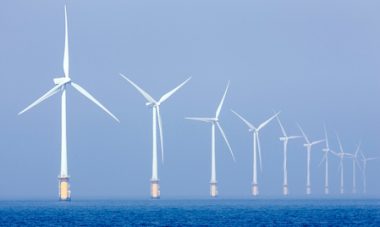
The shutdown of the last nuclear power plant in Schleswig-Holstein will boost wind power in the northern German state, its environment minister Jan Philipp Albrecht (Greens) expects. “Nuclear power is clogging our grids, especially in the direction of the south,” Albrecht told press agency dpa in an article carried by Focus Online.
Due to grid bottlenecks, offshore wind turbines would have to be switched off in some cases. “The importance of nuclear power as a whole is therefore overestimated,” he added.
After the shutdown of the nuclear plant at the end of this year, the north of Germany could cover 160 percent of its electricity needs with renewable energy and there will be more wind power exports to the south, Albrecht said.
Fears of power blackouts due to the nuclear phaseout are unfounded, he said. “After all, we will continue to massively expand renewable energies in Germany now. In the future, we will not be dependent on nuclear power being generated in France.”
Clean Energy Wire 9th Dec 2021
Nuclear fusion – not as clean as they say: it produces considerable amounts of radioactive trash
NuClear News No 136 Dec 21, Fusion Waste The Committee on Radioactive Waste Management (CoRWM) has published a preliminary position on the implications for decommissioning, radioactive waste management, and radioactive waste disposal associated with fusion energy. (1) CoRWM member Claire Corkhill says: “Although nuclear fusion does not produce long lived fission products and actinides, neutron capture by the fusion reactor structural materials and components forms short, moderate and some long-lived activation products. In addition to tritium emissions and contaminated materials, it is clear that there will be a need to manage radioactive materials and wastes produced by neutron activation, within regulatory controls, over the whole life cycle of a fusion reactor.” (2)
The paper itself says: “The activation of components in a fusion reactor is low enough for the materials to be recycled or reused within 100 years.”
It continues:
“Minimising the generation of long lived activation products, and tritium inventory at source, is therefore of fundamental importance in achieving the primary objective in the waste hierarchy of waste prevention. However, it is to be recognised that future generations will be committed to managing wastes arising from decommissioning and waste management plans that are predicated on extended decay storage, such as those discussed herein.”
However, the paper goes on to says that “The primary components of the fusion reactor system are likely to require disposal, including the activated front wall, blanket, divertor and vacuum vessel materials … From a radiological perspective, it is reasonable to consider that, conceptually, wastes from a nuclear fusion power programme should be compatible with geological disposal, however, they may prove challenging for disposal in a near surface facility, given the long half-life and potential mobility of 14C and 94Nb.”
“…some key activation products of concern, such as 14C and 94Nb, which are long lived, should be limited in near surface disposal facilities, given the reliance on engineered barriers to assure containment.14C poses a particular challenge given its potential mobility in the near subsurface.
“Nuclear fusion technology is advocated as not being compromised by the burden of generating long lived nuclear wastes. It is evident that this claim is challenged by the expected generation of some significant volumes of LLW and likely ILW arisings. It may be noted that the recent call for expressions of interest to accommodate siting the STEP facility makes no mention of management of the arising radioactive waste. Future dialogue with local communities needs to ensure it is as open and transparent as possible on such matters.”
The Government is consulting on proposals for a regulatory framework for fusion. The consultation closes on 24th h December. See: https://assets.publishing.service.gov.uk/government/uploads/system/uploads/attachment_da ta/file/1032848/towards-fusion-energy-uk-government-proposals-regulatory-frameworkhttps://www.no2nuclearpower.org.uk/wp/wp-content/uploads/2021/12/nuClearNewsNo136.pdf
Even when he is silenced, immobilized, locked up and hidden from public view, Julian Assange continues to shine a light on the abusive mechanisms of power.
Assange: The Masks are Crumbling https://consortiumnews.com/2021/12/10/assange-the-masks-are-crumbling/
December 10, 2021 The U.S. and its allies don’t care about press freedom beyond the extent it can be used to conduct propaganda, writes Caitlin Johnstone after the High Court’s ruling against Julian Assange. By Caitlin Johnstone
CaitlinJohnstone.com The U.S. government has won its appeal against a lower British court’s rejection of its extradition request to prosecute Julian Assange for journalistic activity under the Espionage Act. Rather than going free, the WikiLeaks founder will continue to languish in Belmarsh Prison where he has already spent over two and a half years despite having been convicted of no crime.
“As a result, that extradition request will now be sent to British Home Secretary Prita Patel, who technically must approve all extradition requests but, given the U.K. Government’s long-time subservience to the U.S. security state, is all but certain to rubber-stamp it,” writes Glenn Greenwald. “Assange’s representatives, including his fiancee Stella Morris, have vowed to appeal the ruling, but today’s victory for the U.S. means that Assange’s freedom, if it ever comes, is further away than ever: not months but years even under the best of circumstances.”
“Mark this day as fascism casts off its disguises,” tweeted journalist John Pilger of the ruling.
This ruling, which allows the U.S. to continue working to extradite a journalist for exposing U.S. war crimes, comes on the final day of Washington’s so-called “Summit for Democracy“, where the U.S. secretary of state made a grandiose show about of press freedom playing “an indispensable role in informing the public, holding governments accountable, and telling stories that otherwise would not be told.” And then adding: “The U.S. will continue to stand up for the brave and necessary work of journalists around the world.”
This ruling also comes on UN Human Rights Day.
This ruling comes on the same day two journalists formally received the Nobel Peace Prizes they’d been awarded and demanded protections for journalists in their acceptance speeches.
This ruling comes as the U.S. government pledges hundreds of millions of dollars in support for “independent media” around the world in coordination with British state media.
This ruling comes after it was revealed that the C.I.A. drew up plans to kidnap and assassinate Assange in the Ecuadorian embassy after the 2017 Vault 7 releases embarrassed the agency.
This ruling comes after it was revealed that C.I.A. proxies spied on Assange and his lawyers at the Ecuadorian embassy, thereby making a fair trial in the United States impossible.
This ruling comes after it was revealed that the U.S. prosecution relied on false testimony from a diagnosed sociopath and convicted child molester.
This ruling comes after recent investigative reports on civilian-slaughtering U.S. airstrikes reminded us why it’s so important for the press to be able to conduct critical coverage of the most powerful military force ever assembled.
The facts are in and the case is closed: the U.S. and its allies do not care about press freedoms beyond the extent that they can be used to conduct propaganda. The way journalists who offend the powerful are dealt with by the U.S. government and the way they are dealt with by the Saudi monarchy differ only in terms of speed and messiness.
The masks are crumbling. Even when he is silenced, immobilized, locked up and hidden from public view, Julian Assange continues to shine a light on the abusive mechanisms of power. He is arguably exposing them more now than ever before.
As fascism casts off its disguises, it becomes more and more important to highlight the hypocrisy, fraudulence and depravity of the people who rule our world.
Who’s Telling the ‘Big Lie’ on Ukraine?
A former U.S. intelligence official who has examined the evidence said the intelligence to support the claims of a significant Russian invasion amounted to “virtually nothing.”
But these doubts and concerns are not reflected in the Post’s editorial or other MSM accounts of the dangerous Ukraine crisis. Indeed, Americans who rely on these powerful news outlets for their information are as sheltered from reality as anyone living in a totalitarian society
ROBERT PARRY: Who’s Telling the ‘Big Lie’ on Ukraine? Consortium News, December 8, 2021 The U.S. group think still driving the Ukraine crisis began at least eight years ago, as detailed in this article by Robert Parry on Sept. 2, 2014.
Exclusive: Official Washington draws the Ukraine crisis in black-and-white colors with Putin the bad guy and the U.S.-backed leaders in Kiev the good guys. But the reality is much more nuanced, with Americans consistently misled on key facts, wrote Robert Parry. By Robert Parry Sept. 2, 2014
Special to Consortium News If you wonder how the world could stumble into World War III much as it did into World War I a century ago all you need to do is look at the madness that has enveloped virtually the entire U.S. political/media structure over Ukraine where a false narrative of white hats vs. black hats took hold early and has proved impervious to facts or reason.
The original lie behind Official Washington’s latest “group think” was that Russian President Vladimir Putin instigated the crisis in Ukraine as part of some diabolical scheme to reclaim the territory of the defunct Soviet Union, including Estonia and other Baltic states. Though not a shred of U.S. intelligence supported this scenario, all the “smart people” of Washington just “knew” it to be true.
Yet, the once-acknowledged though soon forgotten reality was that the crisis was provoked last year by the European Union proposing an association agreement with Ukraine while U.S. neocons and other hawkish politicos and pundits envisioned using the Ukraine gambit as a way to undermine Putin inside Russia.
The plan was even announced by U.S. neocons such as National Endowment for Democracy President Carl Gershman who took to the op-ed page of The Washington Post nearly a year ago to call Ukraine “the biggest prize” and an important interim step toward eventually toppling Putin in Russia.
Gershman, whose NED is funded by the U.S. Congress, wrote:
“Ukraine’s choice to join Europe will accelerate the demise of the ideology of Russian imperialism that Putin represents. Russians, too, face a choice, and Putin may find himself on the losing end not just in the near abroad but within Russia itself.”
In other words, from the start, Putin was the target of the Ukraine initiative, not the instigator. But even if you choose to ignore Gershman’s clear intent, you would have to concoct a bizarre conspiracy theory to support the conventional wisdom about Putin’s grand plan.
To believe that Putin was indeed the mastermind of the crisis, you would have to think that he somehow arranged to have the EU offer the association agreement last year, then got the International Monetary Fund to attach such draconian “reforms” that Ukrainian President Viktor Yanukovych backed away from the deal.
Then, Putin had to organize mass demonstrations at Kiev’s Maidan square against Yanukovych while readying neo-Nazi militias to act as the muscle to finally overthrow the elected president and replace him with a regime dominated by far-right Ukrainian nationalists and U.S.-favored technocrats. Next, Putin had to get the new government to take provocative actions against ethnic Russians in the east, including threatening to outlaw Russian as an official language.
And throw into this storyline that Putin all the while was acting like he was trying to help Yanukovych defuse the crisis and even acquiesced to Yanukovych agreeing on Feb. 21 to accept an agreement brokered by three European countries calling for early Ukrainian elections that could vote him out of office. Instead, Putin was supposedly ordering neo-Nazi militias to oust Yanukovych in a Feb. 22 putsch, all the better to create the current crisis.
While such a fanciful scenario would make the most extreme conspiracy theorist blush, this narrative was embraced by prominent U.S. politicians, including ex-Secretary of State Hillary Clinton, and “journalists” from The New York Times to CNN. They all agreed that Putin was a madman on a mission of unchecked aggression against his neighbors with the goal of reconstituting the Russian Empire. Clinton even compared him to Adolf Hitler.
This founding false narrative was then embroidered by a consistent pattern of distorted U.S. reporting as the crisis unfolded. Indeed, for the past eight months, we have seen arguably the most one-sided coverage of a major international crisis in memory, although there were other crazed MSM stampedes, such as Iraq’s non-existent WMD in 2002-03, Iran’s supposed nuclear bomb project for most of the past decade, Libya’s “humanitarian crisis” of 2011, and Syria’s sarin gas attack in 2013.
But the hysteria over Ukraine with U.S. officials and editorialists now trying to rally a NATO military response to Russia’s alleged “invasion” of Ukraine raises the prospect of a nuclear confrontation that could end all life on the planet.
The ‘Big Lie’ of the ‘Big Lie’
This madness reached new heights with a Sept. 1 (2014) editorial in the neoconservative Washington Post, which led many of the earlier misguided stampedes and was famously wrong in asserting that Iraq’s concealment of WMD was a “flat fact.” In its new editorial, the Post reprised many of the key elements of the false Ukraine narrative in the Orwellian context of accusing Russia of deceiving its own people.
The “through-the-looking-glass” quality of the Post’s editorial was to tell the “Big Lie” while accusing Putin of telling the “Big Lie.” The editorial began with the original myth about the aggression waged by Putin whose
“bitter resentment at the Soviet empire’s collapse metastasized into seething Russian nationalism………………..
But the truth is that the U.S. mainstream news media’s distortion of the Ukraine crisis is something that a real totalitarian could only dream about. Virtually absent from major U.S. news outlets across the political spectrum has been any significant effort to tell the other side of the story or to point out the many times when the West’s “fair and factual version of events” has been false or deceptive, starting with the issue of who started this crisis.
Blinded to Neo-Nazis
In another example, the Post and other mainstream U.S. outlets have ridiculed the idea that neo-Nazis played any significant role in the putsch that ousted Yanukovych on Feb. 22 or in the Kiev regime’s brutal offensive against the ethnic Russians of eastern Ukraine.
However, occasionally, the inconvenient truth has slipped through. For instance, shortly after the February coup, the BBC described how the neo-Nazis spearheaded the violent seizure of government buildings to drive Yanukovych from power and were then rewarded with four ministries in the regime that was cobbled together in the coup’s aftermath.
When ethnic Russians in the south and east resisted the edicts from the new powers in Kiev, some neo-Nazi militias were incorporated into the National Guard and dispatched to the front lines as storm troopers eager to fight and kill people whom some considered “Untermenschen” or sub-human.
Even The New York Times, which has been among the most egregious violators of journalistic ethics in covering the Ukraine crisis, took note of Kiev’s neo-Nazi militias carrying Nazi banners while leading attacks on eastern cities albeit with this embarrassing reality consigned to the last three paragraphs of a long Times story on a different topic. [See Consortium News’s “NYT Discovers Ukraine’s Neo-Nazis at War.”]
Later, the conservative London Daily Telegraph wrote a much more detailed story about how the Kiev regime had consciously recruited these dedicated storm troopers, who carried the Wolfsangel symbol favored by Hitler’s SS, to lead street fighting in eastern cities that were first softened up by army artillery. [See Consortium News‘s “Ignoring Ukraine’s Neo-Nazi Storm Troopers.”]
You might think that unleashing Nazi storm troopers on a European population for the first time since World War II would be a big story given how much coverage is given to far less significant eruptions of neo-Nazi sentiment in Europe but this ugly reality in Ukraine disappeared quickly into the U.S. media’s memory hole. It didn’t fit the preferred good guy/bad guy narrative, with the Kiev regime the good guys and Putin the bad guy.
Now, The Washington Post has gone a step further dismissing Putin’s reference to the nasty violence inflicted by Kiev’s neo-Nazi battalions as part of Putin’s “Big Lie.” The Post is telling its readers that any reference to these neo-Nazis is just a “fantasy.”
Even more disturbing, the mainstream U.S. news media and Washington’s entire political class continue to ignore the Kiev government’s killing of thousands of ethnic Russians, including children and other non-combatants. The “responsibility to protect” crowd has suddenly lost its voice. Or, all the deaths are somehow blamed on Putin for supposedly having provoked the Ukraine crisis in the first place.
A Mysterious ‘Invasion’
And now there’s the curious case of Russia’s alleged “invasion” of Ukraine, another alarmist claim trumpeted by the Kiev regime and echoed by NATO hardliners and the MSM.
While I’m told that Russia did provide some light weapons to the rebels early in the struggle so they could defend themselves and their territory and a number of Russian nationalists have crossed the border to join the fight, the claims of an overt “invasion” with tanks, artillery and truck convoys have been backed up by scant intelligence.
One former U.S. intelligence official who has examined the evidence said the intelligence to support the claims of a significant Russian invasion amounted to “virtually nothing.” Instead, it appears that the ethnic Russian rebels may have evolved into a more effective fighting force than many in the West thought. They are, after all, fighting on their home turf for their futures.
Concerned about the latest rush to judgment about the “invasion,” the Veteran Intelligence Professionals for Sanity, a group of former U.S. intelligence officials and analysts, took the unusual step of sending a memo to German Chancellor Angela Merkel warning her of a possible replay of the false claims that led to the Iraq War.
You need to know,” the group wrote, “that accusations of a major Russian ‘invasion’ of Ukraine appear not to be supported by reliable intelligence. Rather, the ‘intelligence’ seems to be of the same dubious, politically ‘fixed’ kind used 12 years ago to ‘justify’ the U.S.-led attack on Iraq.”
But these doubts and concerns are not reflected in the Post’s editorial or other MSM accounts of the dangerous Ukraine crisis. Indeed, Americans who rely on these powerful news outlets for their information are as sheltered from reality as anyone living in a totalitarian society.The late investigative reporter Robert Parry broke many of the Iran-Contra stories for The Associated Press and Newsweek in the 1980s. He founded Consortium News in 1995 as the first online, independent news site in the United States. https://org.salsalabs.com/o/1868/p/salsa/donation/common/public/?donate_page_KEY=14124&okay=True
Nuclear reactors in the Middle East are vulnerable to missile strikes
Report: Missile strike risks to Middle East nuclear reactors, A new study explores potential radiological fallout and evacuations from a missile strike on commercial nuclear power plants. [Excellent maps] Aljazeera, By Patricia Sabga, 8 Dec 21,
Deliberate attacks on nuclear reactors may seem almost unthinkable – unless the reactor is located in the Middle East, a region that has the dubious distinction of being the only place on the planet where aerial assaults on nuclear facilities are known to have happened.
As debate intensifies in the wake of the United Nations Climate Change Conference (COP26) over what role nuclear energy should play in global decarbonisation efforts, a new report published on Wednesday brings to light the radiological fallout and subsequent evacuations that could result if a state-of-the-art missile or drone successfully attacks an existing or planned commercial nuclear power plant in the Middle East.
Produced by the Nonproliferation Policy Education Center (NPEC), a Washington, DC-based research institute, the study offers a rare publically available analysis of conflict risks to nuclear facilities in the Middle East, warning that a successful strike on a commercial nuclear power plant there “could result in the evacuation of millions of people, many of whom would not be able to return to their homes for several decades”.
“Building large, vulnerable power reactors in the Middle East is a pretty weird way to hug Mother Earth,” NPEC Director Henry Sokolski told Al Jazeera. “It was time to spell out what the implications [of a successful missile attack] would be in a place like the Middle East, which is clearly entertaining building and operating more nuclear plants.”
Produced by the Nonproliferation Policy Education Center (NPEC), a Washington, DC-based research institute, the study offers a rare publically available analysis of conflict risks to nuclear facilities in the Middle East, warning that a successful strike on a commercial nuclear power plant there “could result in the evacuation of millions of people, many of whom would not be able to return to their homes for several decades”.
“Building large, vulnerable power reactors in the Middle East is a pretty weird way to hug Mother Earth,” NPEC Director Henry Sokolski told Al Jazeera. “It was time to spell out what the implications [of a successful missile attack] would be in a place like the Middle East, which is clearly entertaining building and operating more nuclear plants.”
Other nuclear safety experts agree.
“I think it is absolutely critical that people and communities are made aware of the very great risk involved in building nuclear [power plants] in an area of high potential conflict risk,” Paul Dorfman, an associate fellow at the Sussex Energy Group at the University of Sussex, told Al Jazeera.
The map below, [on original] for example, illustrates four current and planned commercial nuclear power plants and the evacuation footprints – including in surrounding countries – that could follow a successful aerial assault on a densely packed spent fuel pool, where discarded radioactive fuel rods are cooled before being moved to more permanent storage.
“This alarming image should prompt nations to carefully evaluate and mitigate the risks and plausible consequences of constructing and operating nuclear power reactors,” said the report…………..
Given the increased interest in nuclear energy in the Middle East, its unique history of air strikes on nuclear facilities, and the emergence of non-state actors wielding advanced military firepower, NPEC believes that any cost-benefit analysis of commercial nuclear power plants in the region needs to include a public disclosure of the potential radiological fallout and population displacements that could result from a successful aerial strike on a facility.
“There have been no fewer than 13 air strikes since the very early 80s against a variety of [nuclear] reactors [in the Middle East], mostly by air forces and attempts with very inaccurate missiles like Scuds,” said Sokolski…………….
aerial strike technology has come a long way since the early 1980s, when Israel and Iran bombed Iraq’s Osirak reactor, or even 2007, when Israel destroyed a suspected reactor under construction in Syria.
“Missiles and drones with high accuracies of 1-10 meters, one thousand times more accurate than during the 1990s,” are available to both state and non-state actors, the report warns…….. https://www.aljazeera.com/economy/2021/12/8/report-missile-strike-risks-to-middle-east-nuclear-reactors
Inherent design flaw in EPRs (European Pressurised or Evolutionary Power Reactors) casts doubt on future of UK’s Hinkley and Sizewell nuclear projects.
The Nuclear Free Local Authorities network (NFLA) has been alarmed to
receive a French scientific report that a radioactive leak recently
reported by the operators of a Chinese nuclear power plant could signify a
potentially fatal design flaw in new reactors planned for the UK.
In June 2021, nuclear operator, Framatome, a subsidiary of French-state owned power
utility, EDF, reported a leak of radioactive gas at the Taishan 1 nuclear
power plant in China. It is still unclear what the cause was, but a rupture
of the uranium rods within the reactor core as a result of abnormal wear
and tear was suspected.
Now the French Commission for Independent Research
and Information on Radioactivity (Criirad) has reported to the French
Nuclear Safety Authority that a problem with the design of the vessel
causes early wear in the reactor, that this inherent design flaw is common
to all EPRs (for European Pressurised or Evolutionary Power Reactors), and
that the accident at Taishan ‘raises serious questions in terms of
nuclear safety and radiation protection, both for plant workers and for
residents.
Although French worries revolve around the future safety of the
Flammaville 3 EPR, the NFLA is also gravely concerned that the latest news
puts into question the future safety of EPRs planned for the UK. An EPR to
the same design is currently under construction at Hinkley Point C in
Somerset and there is a further proposed plant at Sizewell, Suffolk.
NFLA 7th Dec 2021
Norway faces up to fast increasing radiation risks. Drones monitor the nuclear ships, icebreakers, submarines that clutter the Arctic

Norway deploys radiation drones along its coast amidst nuclear emergency concerns
Five Coast Guard ships are soon to carry drones with sensors capable of detecting radioactivity in case of a maritime accident involving a potential release from a reactor-powered civilian or military vessel. Barents Observer, By
Thomas Nilsen, December 03, 2021 A sharp increase in nuclear-powered vessels and ships with radioactive materials pose an increasing risk of accidents, a recent radiological- and nuclear risk assessment study for the Arctic Council concludes.
The risk is moderate and increasing in regards to nuclear-powered vessels and floating nuclear power plants, the report reads.
Now, authorities take action and deploy drones with radiation detectors on board Norway’s fleet of five Inner Coast Guard patrol vessels, from the North Sea region in the south to the Barents Sea in the north.
The danger is obvious. A worst-case scenario is a nuclear-powered vessel with a reactor leakage drifting at sea or running aground with a wind direction towards populated areas. In northern Norway, nine out of ten inhabitants live less than four kilometers from the sea.
A drone can help measure levels of radiation in close vicinity to the vessel in distress without exposing any of the emergency response teams to danger. The Coast Guard is already on 24/7 watch and plays an important role in emergency preparedness.
Nuclear-powered icebreakers are more frequently sailing between the yard in St. Petersburg and their homeport in Murmansk, like this weekend when the newest icebreaker, the “Arktika“ sails around Scandinavia a few nautical miles off the coast.
The civilian nuclear-powered “Sevmorput” is also regularly sailing between the Far East and St. Petersburg via the coasts of Siberia, Norway, Sweden, Denmark, Poland, Estonia and Finland loaded with seafood and other products. The ship is 33 years old and is not allowed to make port calls to countries outside Russia.
Every now and then, cargo vessels bring spent nuclear fuel or radioactive substances to the port of Murmansk.
Navy submarines
Caused by increased military tensions, both NATO and Russian nuclear submarines are more frequently patrolling the strategically important North Atlantic. Allied submarines even make port calls to harbors in Norway, like this spring when “USS New Mexico” came to Tromsø in a high-profile visit.
Detailed emergency response plans were made ahead of the submarine’s visit. For Norway, which has a comprehensive network of radiation detectors on land, the challenge however is what to do if something happens at sea. …………………….
Submarines and icebreakers
Norway’s Inner Coast Guard includes the five vessels “Nornen”, “Tor”, “Heimdal”, “Njord” and “Farm”. The latter has Kirkenes as homeport and sails the waters closest to Russia’s Kola Peninsula where several tens of nuclear-powered submarines are based as well as being home to the increasing Arctic fleet of nuclear-powered icebreakers.
Two brand new icebreakers, powered by two reactors each, will be added to the fleet before the end of the year. The first is this weekend en route along the coast of Norway from St. Petersburg to Russia’s ice-covered waters around the Yamal Peninsula and the Kara Sea. ………..
Circumpolar cooperation
Two years ago, the Norwegians and Americans sailed north to Svalbard together with Russian experts from the emergency response unit of Rosatom, working on remote-controlled systems for measuring radiation in case of accidents.
Collaboration on nuclear accident preparedness is a priority for all circumpolar nations which agree that shared resources in sparsely populated areas benefit all………
“We never know where accidents might happen. But with the Coast Guard and their skills on operating drones, we are about to become world-class in preparedness,” Aas-Hansen elaborates. …….
“The new drone detectors for radiation are unique. What we learn from this is something we absolutely will share with other nations,” says Øyvind Aas-Hansen. He underlines that cross-sector collaboration with other agencies in Norway has brought the project forward………
Large nuclear exercise in 2022
In May 2022, the partners will test the systems in a large international Arctic radiation exercise in the area around Bodø, northern Norway…….
Sharp increase in reactors
The Barents Observer has published an overview (pdf) listing the increasing number of reactors in the Russian Arctic. The paper is part of Barents Observer’s analytical popular science studies on developments in the Euro-Arctic Region.
According to the list, there are 39 nuclear-powered vessels or installations in the Russian Arctic today with a total of 62 reactors. This includes 31 submarines, one surface warship, five icebreakers, two onshore and one floating nuclear power plant.
Looking more than a decade ahead, the number of ships, including submarines, and installations powered by reactors is estimated to increase to 74 with a total of 94 reactors, maybe as many as 114. Additional to new icebreakers and submarines already under construction, Russia is brushing dust of older Soviet ideas of utilizing nuclear power for different kinds of Arctic shelf industrial developments, like oil- and gas exploration, mining and research.
Although Russia’s existing “Akademik Lomonosov” and four planned floating nuclear power plants are to operate on the coast of the Chukotka Peninsula thousands of kilometers east of the European Arctic, maintenance, testing and change of spent nuclear fuel elements will take place at the Atomflot base in Murmansk, a city with about 300,000 inhabitants a few hours drive from the border to Norway.
“By 2035, the Russian Arctic will be the most nuclearized waters on the planet,” the paper reads.
Also, existing icebreakers and submarines get lifetime prolongation. The average age of the Northern Fleet’s nuclear-powered submarines has never been older than today. Several of the submarines built in the 1980s will continue to sail the Barents Sea and under the Arctic ice cap until the late 2020s.
Serious accidents happen
In recent years, two serious accidents in Russia’s northern waters have shaken the world.
On July 1, 2019, a fire broke out on the top-secret deep-diving submarine Losharik on 60 nautical miles from Russia’s border to Norway. The submarine was at the time working on the seabed in the Motovkiy Bay, just north of the important navy bases of the Northern Fleet. All 14 sailors on board were killed in the fire that likely started in the batteries.
Losharik was powered by one nuclear reactor and operated on a secret mission for GUGI, the Main Directorate for Deep-Sea Research, a top-secret unit directly subordinated the General Staff of the Russian Armed Forces.
No leakages of radiation were reported at the time.
Later that summer, on August 8, a serious radiation accident happened in the waters just outside Nenoksa naval missile test site on the southern shores of the White Sea.
Five Rosatom experts were killed and at least three others injured as a Burevestnik missile exploded. The Burevestnik is a nuclear-powered cruise missile currently under development by the Armed Forces. The small reactor is aimed at giving the missile “unlimited range”.
Shortly after the blast, radiation levels in the nearby city of Severodvinsk were measured to be several times higher than background for about half an hour, the Barents Observer reported. The data was based on the public automated monitoring system in Severodvinsk with eight sensors in town and at the Zvezdockha shipyard.
While normal background in the town with a population of 190,000 is around 0.11 µSv/h (microsievert per hour), the levels measured at the monitor on the Lomonosov Street near Lake Teatralnoye peaked at 2 µSv/h, nearly 20 times higher gamma radiation than normal. That, though, is still way within permissible levels for population exposure.
Fears more accidents
In its annual threat assessment report the following year, Norway’s Intelligence Service warned that more accidents with Russia’s reactor-powered weapons systems could happen.
“The development will bring, additional to the military challenges, also challenges related to both environment and security. In 2019, about 25 Russians were killed during military activity near Norway,” the Intelligence Service Director Morten Haga Lunde said and added:
“I consider the risk for more such unintended incidents in our neighborhoods to be big in the years to come.”
In the next extradition court case for Julian Assange, we can expect the judge there to be very biased against Assange

Now the most powerful judge in England and Wales, Burnett will soon rule on Assange’s extradition case. The founder of WikiLeaks faces life imprisonment in the US. ……………………
As minister, Duncan did not hide his opposition to Julian Assange, calling him a “miserable little worm” in parliament in March 2018.
Duncan watched UK police pulling the WikiLeaks publisher from the Ecuadorian embassy via a live-feed in the Operations Room at the top of the Foreign Office.
He later admitted he was “trying to keep the smirk off [his] face”, and hosted drinks at his parliamentary office for the team involved in the eviction.
ASSANGE JUDGE IS 40-YEAR ‘GOOD FRIEND’ OF MINISTER WHO ORCHESTRATED HIS ARREST
Julian Assange’s fate lies in the hands of an appeal judge who is a close friend of Sir Alan Duncan – the former foreign minister who called Assange a “miserable little worm” in parliament. DECLASSIFIED UK
MATT KENNARD AND MARK CURTIS 2 DECEMBER 2021 LORD CHIEF JUSTICE IAN BURNETT, THE JUDGE THAT WILL SOON DECIDE JULIAN ASSANGE’S FATE, IS A CLOSE PERSONAL FRIEND OF SIR ALAN DUNCAN, WHO AS FOREIGN MINISTER ARRANGED ASSANGE’S EVICTION FROM THE ECUADORIAN EMBASSY.
The two have known each other since their student days at Oxford in the 1970s, when Duncan called Burnett “the Judge”. Burnett and his wife attended Duncan’s birthday dinner at a members-only London club in 2017, when Burnett was a judge at the court of appeal.
Now the most powerful judge in England and Wales, Burnett will soon rule on Assange’s extradition case. The founder of WikiLeaks faces life imprisonment in the US. ……………………
As minister, Duncan did not hide his opposition to Julian Assange, calling him a “miserable little worm” in parliament in March 2018.
In his diaries, Duncan refers to the “supposed human rights of Julian Assange”. He admits to arranging a Daily Mail hit piece on Assange that was published the day after the journalist’s arrest in April 2019.
Duncan watched UK police pulling the WikiLeaks publisher from the Ecuadorian embassy via a live-feed in the Operations Room at the top of the Foreign Office.
He later admitted he was “trying to keep the smirk off [his] face”, and hosted drinks at his parliamentary office for the team involved in the eviction.
Duncan then flew to Ecuador to meet President Lenín Moreno in order to “say thank you” for handing over Assange. Duncan reported he gave Moreno “a beautiful porcelain plate from the Buckingham Palace gift shop.”
“Job done,” he added………………………………. https://declassifieduk.org/assange-judge-is-40-year-good-friend-of-minister-who-orchestrated-his-arrest/
Nuclear power is a failure – former French Environment Minister

Yves Cochet: “The nuclear failure” Former Minister of the Environment. Against the recent projects announced by the President of the Republic for the revival of nuclear power in France, Yves Cochet, former Minister of the Environment, recalls how the history of this energy sector is marked by a
succession of setbacks.
Despite seventy years of nuclear energy research and development, nuclear energy remains a failure caused by a list of setbacks such that one is enough to destroy any prospect of lasting success. Nuclear power today only contributes 5% of global energy supply and 10% of electricity production, this share has been steadily declining for twenty-five years, while the share of renewable electricity has now surpassed that of nuclear power.
Le Monde 4th Dec 2021
https://www.lemonde.fr/idees/article/2021/12/04/yves-cochet-l-echec-du-nucleaire_6104683_3232.html
1 This Month


of the week– Nuclear Reactor Information Task Force

14 May – online event From Bombs to Data Centres: the Face of Nuclear Colonialism
To see nuclear-related stories in greater depth and intensity – go to https://nuclearinformation.wordpress.com
-
Archives
- May 2026 (187)
- April 2026 (356)
- March 2026 (251)
- February 2026 (268)
- January 2026 (308)
- December 2025 (358)
- November 2025 (359)
- October 2025 (376)
- September 2025 (257)
- August 2025 (319)
- July 2025 (230)
- June 2025 (348)
-
Categories
- 1
- 1 NUCLEAR ISSUES
- business and costs
- climate change
- culture and arts
- ENERGY
- environment
- health
- history
- indigenous issues
- Legal
- marketing of nuclear
- media
- opposition to nuclear
- PERSONAL STORIES
- politics
- politics international
- Religion and ethics
- safety
- secrets,lies and civil liberties
- spinbuster
- technology
- Uranium
- wastes
- weapons and war
- Women
- 2 WORLD
- ACTION
- AFRICA
- Atrocities
- AUSTRALIA
- Christina's notes
- Christina's themes
- culture and arts
- Events
- Fuk 2022
- Fuk 2023
- Fukushima 2017
- Fukushima 2018
- fukushima 2019
- Fukushima 2020
- Fukushima 2021
- general
- global warming
- Humour (God we need it)
- Nuclear
- RARE EARTHS
- Reference
- resources – print
- Resources -audiovicual
- Weekly Newsletter
- World
- World Nuclear
- YouTube
-
RSS
Entries RSS
Comments RSS
 nuclear-news