Ukraine Is a Problem Only as Long as the West Makes It One
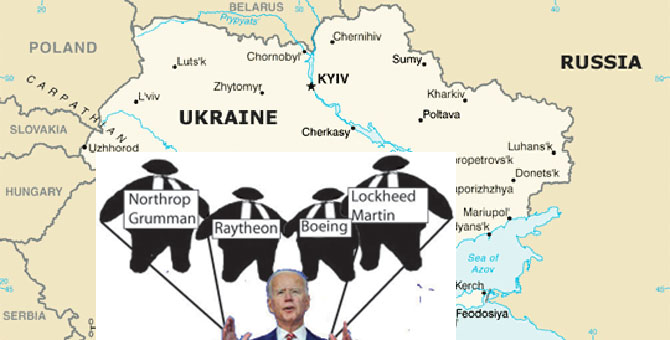
President Biden has the opportunity to re-direct US policy on Ukraine in a peaceful direction,
But it will take serious, steadfast courage. We don’t know how compromised he is by his previous dealing in Ukraine, or his son’s. We don’t know if he has the clarity of mind to see the obvious. And we don’t know if he has the strength to wage peace.
Ukraine Is a Problem Only as Long as the West Makes It One
https://www.rsn.org/001/ukraine-is-a-problem-only-as-long-as-the-west-makes-it-one.html
by William Boardman10 December 21,
Since the fall of the Soviet Union thirty years ago, US policy on Ukraine has been an ugly mix of inconsistency, quiet aggression, fear-mongering and stupidity. Now President Biden is recklessly intensifying the same failed tactics while expecting a different outcome and risking a confrontation of the world’s two major nuclear-armed states.
What could possibly go wrong?
What passes for conventional wisdom nowadays is expressed by the cover headline of the November 29 issue of The Nation magazine, of all places:
Ukraine: The Most Dangerous Problem in the World
That is such hogwash. The Nation’s knows better. But the fear-mongering leads, even though the magazine’s sub-head is: “But there’s already a solution.” Author Anatol Lieven argues persuasively that the essence of a solution for Ukraine issues have already been outlined in the so-called “Minsk II” agreement of 2015, reached by leaders of France, Germany, Russia, and Ukraine. The agreement was endorsed unanimously by the United Nations Security Council. Despite their formal assent to Minsk II, three US administrations have supported Ukraine in refusing to implement the agreement. Nor have they proposed any better idea. This is an example of foreign policy guided by denial of reality.
Ukraine remains a “dangerous problem” only as long as the US and Ukraine insist on making it one. (It’s hardly “the most dangerous,” given climate change, or US provocation of China, or the US-led nuclear arms race, or the self-gutting of US democracy.)
With the Soviet Union gone in 1991, US President Bush assured Russian leaders that NATO would not expand to include former Soviet states. Whether this was a lie or a broken promise hardly matters.
NATO expanded. Russia was confronted with the prospect of an avowedly hostile military alliance approaching its borders along the same invasion route followed by Napoleon and Hitler. As long as Ukraine remained unaligned, Russian historical memory could rest quietly. Ukraine puts almost 1,000 miles between Russia and NATO member Poland. Ukraine’s population of about 45 million ranges from very pro-western to virtually Russian. The country has long been deeply corrupt with a quasi-functional democracy (an opportunistic playground for the likes of Paul Manafort and Hunter Biden). All in all, from a geopolitical perspective, Ukraine was (and still is) a combustible potential best left undisturbed.
In 2013, Ukrainian President Viktor Yanukovych put NATO and European Union membership in play, then reversed course under Russian pressure. In November 2013, he cancelled an EU association agreement just days before it was to take effect. With US connivance, pro-western Ukrainian forces launched the Maidan Revolution that lasted into the spring of 2014. Elected president Yanukovich was forced out of office (shades of Iran 1953) and the country entered a period of chaos. Russia took advantage of this to walk into Crimea unopposed and to annex it, as voted by the Crimean parliament, despite objections from the West. These objections have continued to the present, together with economic sanctions and military provocations from the Black Sea.
The US and NATO have justified their hostile actions by claiming Russia was also about to invade eastern Ukraine, which still hasn’t happened. Eastern Ukraine, the Donbas, has been a war zone since March 2014 when separatist Ukrainian forces in Donetsk and Luhansk started fighting for independence from the central government in Kiev. This is a civil war between the self-declared People’s Republics of Donetsk and Luhansk against the Ukraine government. The People’s Republics comprise about 6,200 square miles (bigger than Connecticut) with almost 4 million people, mostly Russian-speaking, whose currency is the ruble. Russia has supported the People’s Republics, but short of introducing its own troops. Likewise, the US and NATO have supported Kiev, but short of introducing their own troops into the Donbas. The fighting has been intense in the past, with some 10,000 killed on both sides, but the conflict in recent years has been limited to trench warfare along a 400-mile front, with most casualties coming from sniper fire. Neither side has made significant advances in years.
In 2014, Russia and Ukraine met under the auspices of the European Union and signed the first Minsk Protocol in an ultimately ineffective effort to reach a ceasefire. The following year, five parties signed a second Minsk Protocol – Ukraine, Ukraine Separatists, Russia, France, and Germany – which led to reduced fighting but no lasting solution. Through all of this, the US under President Obama, played no useful role in resolving the issues or assuring anything like a stable peace.
The US remains gripped, apparently, by a reflexive Cold War rigidity which requires that Russia be to blame for anything we don’t like, such as the results of the US-sponsored coup in Ukraine in 2014. The new Cold War is manifested by the expansion of NATO, needlessly threatening Russia on the basis of a paranoid Western sense of threat.
Another manifestation of Cold War thinking is Biden’s choice of Victoria Nuland as his current special ambassador to Russia to discuss Ukraine. Nuland was notoriously involved in efforts to manipulate the 2013 Madan uprising and supporting the coup against Yanukovich. When apprised of European desires to proceed cautiously, Nuland was recorded on cell phone saying, “Fuck the EU.” Such assertions of American exceptionalism continue to make the world a more dangerous place.
What could Biden do now to make the world a safer place?
Biden could ease sanctions over Crimea, acknowledging that its return to Russia is a done deal with strong historic and geo-political justifications. Biden could also stop US nuclear-capable bombers from probing Russia in the Black Sea region. It’s hard to see how continuing such provocative flights can have a calming effect.
Most importantly, Biden could assure Russia (as the US did once before in 1992) that NATO would not expand to include Ukraine. In his recent conversation with Putin, Biden did the opposite, making it all but non-negotiable. That has the obvious effect of continuing the conflict, asserting the right to hold a knife to another’s throat.
This particular knife was forced into NATO’s hands in April 2008 by the illegitimate President Bush against the will of the majority of NATO members. The issue came up at NATO’s North Atlantic Council meeting in Bucharest. NATO members easily accepted the future membership of Albania and Croatia, but balked at approving Ukraine or Georgia. Instead, in the Bucharest Summit Declaration, members approved a compromise article drafted by the British with intentional imprecision, paragraph 23 of 50, that began:
ATO welcomes Ukraine’s and Georgia’s Euro-Atlantic aspirations for
membership in NATO. We agreed today that these countries will become
members of NATO….
The paragraph continues with generalizations about the countries’ contributions to the war in Afghanistan, their promised democratic reforms, and so on. But there is no date for membership, no process for achieving membership (as distinct from Albania and Croatia), and actual approval is only anticipated at some unknown future date. This paragraph in the Bucharest Declaration is essentially a throwaway line, putting off to an indeterminate future the clearly divisive and dangerous issue of relating to Russian border states.
ATO welcomes Ukraine’s and Georgia’s Euro-Atlantic aspirations for
membership in NATO. We agreed today that these countries will become
members of NATO….
The paragraph continues with generalizations about the countries’ contributions to the war in Afghanistan, their promised democratic reforms, and so on. But there is no date for membership, no process for achieving membership (as distinct from Albania and Croatia), and actual approval is only anticipated at some unknown future date. This paragraph in the Bucharest Declaration is essentially a throwaway line, putting off to an indeterminate future the clearly divisive and dangerous issue of relating to Russian border states.
The Alliance will continue to support, as appropriate, these efforts as guided by regional priorities and based on transparency, complementarity and inclusiveness, in order to develop dialogue and cooperation among the Black Sea states and with the Alliance. [paragraph 36]
The Bucharest Declaration does not express an alliance seeking confrontation with Russia, for all that George W. Bush wanted it.
The Bucharest Declaration treats NATO’s war in Afghanistan as a success and expresses the need for possible future military actions against Iran and North Korea (but no mention of China). There is no hint of anyone wondering why something called the North Atlantic Treaty Organization thinks it has any legitimate business operating in landlocked Afghanistan.
More than a decade later, four American presidents have turned Afghanistan into a world class disaster. America has turned its back on mass starvation there. And still there is no sense of national responsibility or shame as Biden and the US governing elite stumble provocatively toward new looming catastrophes with Iran, China, climate change, public health, and functioning democracy itself.
Ukraine is a wholly American-made pseudo crisis in which the US national interest is close to zero. The US forced NATO to put Ukraine in play in 2008 by breaking the earlier US pledge not to put Ukraine in play. Now our obtuse leadership poses as acting on principle by refusing to break the pledge that broke the first pledge, even though that is the most obvious, effective de-escalation available: guarantee Russia a border with no more NATO threats and negotiate (as others have done) in good faith to defuse the rest of the Ukrainian mishmash.
When Secretary of State Anthony Blinken says that “one country trying to tell another what its choices should be, including with whom it associates, that’s not an acceptable proposition,…” what we’re hearing is a US official ignoring reality and denying what the US does every day. And when former US ambassador Michael McFaul tweets: “Putin invented this ‘crisis’ single-handedly. Nothing changed in Ukraine. Nothing changed regarding NATO policy” – he’s just lying.
Worse, the blind rigidity of the likes of Blinken and McFaul serves to enable the truly mindless warmongers like US Senator Roger Wicker, R-MS, who doesn’t have the sense not to invite nuclear war when he tells Fox News:
Military action could mean that we stand off with our ships in the Black Sea, and we rain destruction on Russian military capability. It could mean that. It could mean that we participate, and I would not rule that out, I would not rule out American troops on the ground. We don’t rule out first use nuclear action.
President Biden has the opportunity to re-direct US policy on Ukraine in a peaceful direction,
But it will take serious, steadfast courage. We don’t know how compromised he is by his previous dealing in Ukraine, or his son’s. We don’t know if he has the clarity of mind to see the obvious. And we don’t know if he has the strength to wage peace.
“Nuclear power has no future inFrance”.
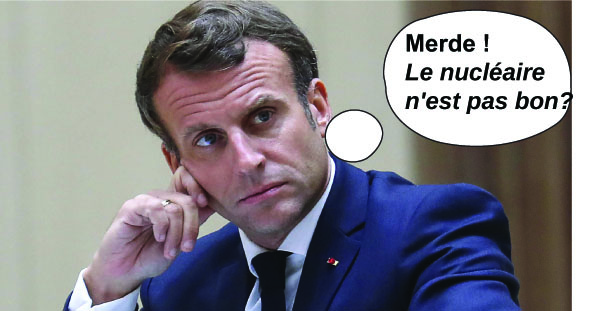
Thierry Gadault gave a conference on French nuclear power on December 3,
2021 in Orleans with a shocking title: “Nuclear power has no future in
France”. This independent journalist who has been investigating the atom
for ten years is the co-author of the book Nuclear, immediate danger (2018,
Flammarion) and the TV documentary Nuclear, the end of a myth broadcast on
Public Senate in 2018. He granted at Magcentre an exclusive interview.
Magcentre 8th Dec 2021
Radionuclides found from Hinkley nuclear mud Bristol Channel Citizens Radiation Survey .
Radionuclides found…! Bristol Channel Citizens Radiation Survey, Tim Deere-Jones, Stop Hinkley C. A new survey has concluded the spread of man-made radioactivity from reactor discharges into the Bristol Channel is far more extensive and widespread than previously reported.
The research has also detected a high concentration of radioactivity in Splott Bay, which could be linked to the controversial dumping of dredged waste off the Cardiff coast in 2018.The survey was undertaken over the summer by groups from both sides of the Bristol Channel after EDF Energy refused to carry
out pre-dumping surveys of the Cardiff Grounds and Portishead sea dump sites where they have disposed of waste from the construction of the Hinkley Point C nuclear power plant.
The survey found that shoreline concentrations of two radio nuclides (Caesium 137 and Americium 241)
typical of the effluents from the Hinkley reactors and indicators of the presence of Plutonium 239/240 and 241, do not decline significantly with distance from the Hinkley site as Government and Industry surveys had previously reportedOverall, the study found significant concentrations of Hinkley derived radioactivity in samples from all 11 sites, seven along the Somerset coast and four in south Wales and found unexpectedly high concentrations in sediments from Bristol Docks, the tidal River Avon, the
Portishead shoreline, Burnham-on-Sea and Woodspring Bay.
Public Enquiry 11th Dec 2021
Research finds ‘significant concentrations’ of radioactivity in
samples taken from across the Somerset and south Wales coast. Nation Cymru 9th Dec 2021
UK’s Hinkley B nuclear power station to shut down permanently next summer.
Hinkley Point B to start final run of producing electricity before
shutting down next summer. Hinkley Point B is about to start its final run
of producing electricity before it shuts down for good next summer. The
nuclear power station on the West Somerset coastline has been operating for
over 45 years and it’s expected that many members of staff will stay on to
help with de-fuelling and decommissioning.
ITV 11th Dec 2021
‘Spend money on the National Health Service – not nuclear submarines’
‘Spend money on the NHS – not nuclear subs’ https://www.newsandstar.co.uk/news/19777700.spend-money-nhs—not-nuclear-subs/ Philip Gilligan On behalf of South Lakeland and Lancaster District CND, 12 Dec 21, SINCE September, local Conservative politicians have seemed very eager to praise the new military pact known as AUKUS.
They are apparently unconcerned that the US and UK will be assisting Australia to acquire new long-range strike capabilities for its air force, navy and army, including the provision of nuclear-powered submarines fuelled by weapons grade uranium.
They clearly hope that BAE Systems staff in Barrow will be involved in designing and building the submarines, but appear to have ignored the potential threats to peace and stability inherent in such military escalation.
They seem unconcerned that AUKUS has already sparked tensions between the UK and France and seems likely to provoke a regional arms race in the South China Sea.
In the UK, the Campaign for Nuclear Disarmament (CND) is calling on the UK government to focus its resources instead on funding our NHS more adequately and on meeting the social care needs of our communities.
Indeed, CND wants the government to halt all its dangerous and provocative nuclear adventures.
Meanwhile, in Australia, the Maritime Union is also calling for a shift away from wasteful and environmentally harmful military spending to investment in health care and socially useful jobs.
They say that the pact will “continue to escalate unnecessary conflict with China”, and state “We don’t want war”.
This Saturday, Australian peace campaigners and trade unionists are holding an international day of action in opposition to the AUKUS pact.
South Lakeland and Lancaster District CND expresses its solidarity with the Australian campaign, while calling on the UK government to make genuine efforts to invest in increased and more diverse employment opportunities in Barrow.
U.S. European Command, NATO Supreme Headquarters Allied Command Europe leaders meet to “improve warfighting readiness” — Anti-bellum
The two commands share a top commander, currently General Tod Wolters. U.S.-NATO staff talks fortify ironclad security alliance U.S. European Command and NATO Supreme Headquarters Allied Command Europe leaders met today for staff talks, enhancing military coordination for deterrence and security. *** The collaborative meeting strengthens…improving warfighting readiness between the two military organizations and is […]
U.S. European Command, NATO Supreme Headquarters Allied Command Europe leaders meet to “improve warfighting readiness” — Anti-bellum
President of the European Commission to have the final say on whether Europe considers nuclear power to be ”clean” and ”green”?

Gas and nuclear: Fate of EU green taxonomy ‘now in the hands of von der Leyen’ By Frédéric Simon and Kira Taylor | EURACTIV.com, 10 Dec 2021
European Commission President Ursula von der Leyen has taken charge of a soon-to-be-published list of sustainable investments amid controversy around the possible classification of fossil gas and nuclear energy as “green” or “transitional” activities under certain conditions, according to several sources familiar with the process.
The European Union is moving closer to integrating nuclear power and natural gas into the bloc’s sustainable finance taxonomy – a set of rules designed to provide investors with a common definition of what is green and what is not in order to channel more capital into sustainable businesses.
The list of activities that Europe considers “green” or “transitional” investments will be laid down in a so-called ‘delegated act’ adopted by the European Commission setting out detailed implementing rules under the EU’s sustainable finance taxonomy regulation, adopted in December 2019.
But after several failed attempts and mounting controversy over the role of gas and nuclear power in the energy transition, President von der Leyen has now taken matters into her own hands, several sources told EURACTIV………
On Wednesday evening, the EU passed the first part of its taxonomy rulebook, setting out environmental criteria for investments including renewable energy, shipping and car manufacturing that will apply as of January 2022.
But no decision has been taken yet on the most politically sensitive part of the taxonomy, dealing with gas and nuclear investments…………. Contacted by EURACTIV, the European Commission did not confirm whether von der Leyen had taken charge. Most likely, the proposal will be presented to the College of Commissioners by Mairead McGuinness, the EU financial services commissioner, and Valdis Dombrovskis, the vice-president in charge of the economy, a spokesperson said.
Given internal procedures, a final proposal should be ready by Friday before it is submitted to the college for approval next week, according to an EU source.
Europe divided
European countries are deeply divided on the subject. While France is leading a group of twelve countries supporting the inclusion of nuclear energy in the taxonomy, five other EU countries expressed their opposition to the move, with Austria even warning it was ready to challenge the decision before the EU court of justice.
Central and eastern European countries are also pushing to include fossil gas as a “transitional” activity in the taxonomy, arguing that gas is needed as a stepping stone for them to exit coal, the most polluting of all fossil fuels.
But the United Nations Principles for Responsible Investment (PRI), a network of international investors, has advised the EU against allowing these energy sources a sustainable label.
The inclusion of gas-fired power “would seriously compromise” the taxonomy’s role as an independent and scientific tool in line with Europe’s climate goals, PRI warned in a briefing note.
And while a report from the European Commission’s Joint Research Centre (JRC) looked favourably at the inclusion of nuclear, it did “not sufficiently [address] risks related to the storage of nuclear waste, severe incidents and nuclear proliferation,” UNEP said.
The UN-supported initiative recommends that Europe explores alternatives, either by developing a proposal for sectors involved with the energy transition or extending the taxonomy “to recognise intermediate economic activities and transition pathways such as gas-fired power that operates below the ‘significant harm’ threshold of 270g CO2/kWh”………
Technology neutral
In the end, it looks increasingly likely that both gas and nuclear will be included in the list of sustainable investments as transitional fuels………….
For nuclear, however, the choice to call it transitional is still subject to controversy, with supporters arguing it should labelled “sustainable” because of its low-carbon [?]nature………..
Nuclear split in three categories
According to the EU’s energy commissioner Kadri Simson, the proposal “will be ready in the coming weeks…and it will clarify whether or not nuclear energy generation, waste disposal or fuel supply can be classified as sustainable activities for investors.”
Simson’s comments suggest that the upcoming delegated act could split nuclear activities into three categories: fuel supply, energy generation and waste.
…. the management of radioactive waste and the possibility of a nuclear incident remains a cause of concern for the United Nation’s PRI, which says these were not sufficiently explored in the JRC report.
“The materialisation of the risks above could seriously harm most – if not all – of the five environmental objectives other than climate mitigation that are part of the EU Taxonomy Regulation,” the PRI said in its briefing note.
…….. There is still no confirmed date for the publication of the taxonomy’s delegated act, but the European Commission says it will be published before the end of the year. Some expect it to be published alongside the gas package on 14 December while others are talking about it coming out on 22 December. https://www.euractiv.com/section/energy/news/gas-and-nuclear-fate-of-eu-green-taxonomy-now-in-the-hands-of-von-der-leyen/
UK’s Nuclear Energy Finance Bill Committee hears problems about funding of new nuclear projects, that will be too late to affect climate change.
nuClear News No 126 December 21, . New Nuclear Energy Developments In Safe Energy Journal No.92 and nuClear News No.135 we reported on a debate in the House of Commons on the Second Reading of the Nuclear Energy Finance Bill, which took place on 3rd November. (1) Since then, there have been several meetings of the Nuclear Energy Finance Bill Committee, including one session which took evidence from Doug Parr of Greenpeace, Mycle Schneider of the World Nuclear Industry Status Report and Professor Steve Thomas. (2)

The SNP’s Energy Spokesperson at Westminster, Alan Brown, asked Mycle Schneider about the argument that the UK needs baseload power and can’t meet its net zero targets without nuclear power. Mycle pointed out that we are in a climate emergency, so we need reductions in carbon emissions as quickly as possible. For every pound we spend we need to see large and fast results. It’s clear that there are other options beside nuclear which are more climate effective. The cost of renewables is cheaper and nuclear is five times slower. Possible investments in nuclear which might deliver after 2030 are much too slow.
Regarding the need for baseload electricity, the National Grid’s scenarios say nothing about the need for reliable baseload. Only one out of their three scenarios needs Sizewell C. Nuclear is not flexible. If the wind isn’t blowing nuclear doesn’t help. What is required is batteries and demand-side responses to compensate for intermittency.
Analysis of the French nuclear fleet shows that nuclear power is not a reliable source providing power 24/7. For 2019 – the year before Covid – when EDF starts an outage for maintenance and refuelling it has lost control entirely over the date and time it is able to restart its reactors. There were over 40 cases of revised times and dates. EDF was not even able to make reliable predictions 24 hours before the reactors were due to restart.
Labour’s Alan Whitehead asked Mycle Schneider about the experience of the United States using the Regulated Asset Base (RAB) funding model for two plants in South Carolina which were abandoned recently. Should there be measures in any Bill which make sure any nuclear plant is finished to avoid consumers being dumped with the cost of a plant that wasn’t finished. Construction of VC Summer started in 2013 and it was supposed to come on-line in 2017. By 2017 the cost estimate had increased by 75%. In July 2017 construction was abandoned. This was one of the consequences of the fact that Westinghouse filed for bankruptcy. The affair has cost consumers billions.

Steve Thomas said what marked out the VC Summer project and a similar project in Georgia from other US projects was that they allowed the recovery of costs from consumers before completion of the reactors. The Summer experience shows very clearly the folly of using the RAB model. We would have to be careful with any legislation which prevents nuclear plants under construction being abandoned. Dungeness B took 24 years from the start of construction to commercial operation, and over its 32 years of operation its availability was well below 50%. It should have been abandoned before it was completed.
Matthew Pennycook said there is a lack of clarity around the Chinese company, CGN’s investment in Sizewell C and how that interacts with the intentions of this Bill. He asked what is in the 2016 Strategic Investment Agreement and what provisions there are in that agreement that would allow the Government to remove CGN. And related to that there was £1.7 billion in the budget to enable a final investment decision for a large scale nuclear project. Is that money to buyout the CGN stake?

Steve Thomas said in the 2016 Agreement CGN agreed to take up to 20% of the Sizewell C project up to the Final Investment Decision (FID). They have an option to take 20% of the construction and operation of the plant if it goes ahead. EDF and CGN have spent about half a billion pounds so far, It may take another £0.5 billion at the most to get to FID. So £1.7bn seems too much. In terms of how you get CGN out of Sizewell C it probably depends on what happens to Bradwell B. The Chinese really want to get the endorsement of UK nuclear regulators for it HPR1000 reactor. If they are not going to be allowed to build Bradwell B, they are unlikely to be interested in putting money into Sizewell C.
Steve Thomas told MPs there is a lot of missing detail in the RAB proposals. One of the biggest elements is how much the surcharge will be during the construction. The Government has said it will be a maximum of about £10 per year per consumer. That would yield £6bn. In the context of a project that will cost £24-40bn, plus financing costs, £^bn is not much of a game changer.
PMQs On 24th November, during Prime Minister’s Questions Matthew Pennycook asked: “The Government’s integrated review has concluded that the Chinese state poses a systemic challenge to our national security, and the Prime Minister has made it clear that when it comes to China, we must remain vigilant about our critical national infrastructure. Can he therefore confirm unequivocally today that plans for China General Nuclear to own and operate its own plant at Bradwell in Essex have been abandoned, and explain to the House precisely how and when his Government intend to remove CGN’s interest from the Sizewell C nuclear project?”
Boris Johnson replied that “…we do not want to see undue influence by potentially adversarial countries in our critical national infrastructure. That is why we have taken the decisions that we have. On Bradwell, there will be more information forthcoming – What I do not want to do is pitchfork away wantonly all Chinese investment in this country, or minimise the importance to this country of having a trading relationship with China.” (3)
The Times pointed to the National Security and Investment Bill, going through parliament at present, which will allow the government to “screen” and potentially block sensitive foreign investments, and concluded that China will be cut out of future involvement in developing new nuclear power stations, but this is still not entirely clear. (4)
Mr Pennycook later responded to the PMs answer via Twitter: “We need certainty on the future of China’s involvement in UK nuclear power and clarity about how and when the Government intends to remove China’s state-controlled nuclear energy company from involvement in any future UK project.”
Subsequently the team behind Bradwell B said China’s nuclear group remains committed to the project. (5) https://www.no2nuclearpower.org.uk/wp/wp-content/uploads/2021/12/nuClearNewsNo136.pd
European Union passes sustainable taxonomy law, but postpones decision about nuclear power.

“The commission must deliver a science-based taxonomy regulation that excludes fossil gas, nuclear, and factory farming. Otherwise, the credibility of the taxonomy is ruined.”
EU green taxonomy becomes law, gas and nuclear postponed, Institutional investors have signalled they want a taxonomy that is based on science – not political compromise. euobserver, By WESTER VAN GAAL 11 Dec 21,
BRUSSELS, The first two chapters of the sustainable taxonomy, the EU’s ambitious labelling system for green investment, were passed on Thursday (9 December).
Until midnight on Wednesday, EU member states had time to reject this first set of rules – the so-called ‘first delegated act’.
But despite opposition from a group of countries, the proposal passed and will come into force on 1 January 2022. It will describe the sustainable criteria for renewable energy, car manufacturing, shipping, forestry and bioenergy and more, and include a “technology-neutral” benchmark at 100 grams of CO2 per kilowatt-hour for any investments in energy production.
The criteria for the list has mainly been compiled by the Sustainable Finance Platform, a group of 57 NGOs, scientific and financial experts, making the first part of taxonomy “science-based”…..
The European Commission will now likely unveil the second delegated act on 22 December.
This will describe how nuclear and gas will be labelled under the taxonomy. But the process has become highly-politicised over the last months.
Second act
In a meeting of member states on 29 November the project nearly faltered.
An EU diplomat, speaking anonymously, explained to EUobserver that a French-led group of 13 member states tried to block the first list “out of principle” – because the commission had not agreed to include nuclear and gas in the green taxonomy.
France and Finland pushed for nuclear to be “fully part of the taxonomy.” Ten other mainly eastern European countries want gas included. Sweden joined the group because the new rules endanger its forestry sector.
The group tried to gain a supermajority of 15 to force the commission’s hand but fell short. Germany and Italy abstained, but did not respond to requests for explanation made by EUobserver.
The commission will now decide how to label nuclear and gas before the end of the year, and it is not yet clear how the issue will pan out…………..
Whatever the commission will decide, only a supermajority in the council – 15 member states – or a parliamentary majority can block the second delegated act. Both are unlikely.
What next?
Institutional investors have already signalled they want a taxonomy based on science, not political compromise.
This will “harm the objective-scientific, transparent character of the taxonomy and increases the risk of ‘greenwashing’. Europe promised the world climate leadership, it is time to show it,” a group of banks wrote this week.
Sebastien Godinot, a senior economist at WWF and member of the EU’s Sustainable Finance Platform, said the commission must not give in to blackmail and bullying.
“The commission must deliver a science-based taxonomy regulation that excludes fossil gas, nuclear, and factory farming. Otherwise, the credibility of the taxonomy is ruined.”
But the commission may have no choice but to compromise between the gas and nuclear-supporting member states on one side, and countries opposing these on the other – while also being mindful that investors and experts from its Sustainable Finance Platform will reject a system containing contradictory political concessions. https://euobserver.com/climate/153776
Appeal to UK’s Supreme Court will just lengthen Julian Assange’s legal torment
Edward Fitzgerald QC, for Assange, previously told the High Court that Australia had not indicated whether it would accept Assange, who “will most likely be dead before it can have any purchase, if it ever could”……..
Assange lawyers eye UK Supreme Court, The North West Star.Jess Glass and Tom Pilgrim, PA
11 Dec 21, Julian Assange’s lawyers intend to take his case to the Supreme Court, his fiancee says, after the High Court allowed the WikiLeaks founder’s extradition to the United States.
Assange, 50, is wanted in the US over an alleged conspiracy to obtain and disclose classified information following WikiLeaks’ publication of hundreds of thousands of leaked documents relating to the Afghanistan and Iraq wars
US authorities brought a High Court challenge against a January ruling by then-district judge Vanessa Baraitser that Assange should not be sent to the US, in which she cited a real and “oppressive” risk of suicide.
After a two-day hearing in October, the Lord Chief Justice Lord Burnett, sitting with Lord Justice Holroyde, ruled in favour of the US on Friday………..
The judges ordered that the case must return to Westminster Magistrates’ Court for a district judge to formally send it to UK Home Secretary Priti Patel.
Assange’s fiancee Stella Moris called the ruling “dangerous and misguided” and said his lawyers intended to seek an appeal at the Supreme Court……..
The legal wrangling will go to the Supreme Court, the United Kingdom’s final court of appeal.
“It is highly disturbing that a UK court has overturned a decision not to extradite Julian Assange, accepting vague assurances by the United States government,” Assange’s lawyer Barry Pollack said.
“Mr Assange will seek review of this decision by the UK Supreme Court.”
Supporters of Assange gathered outside of the court after the ruling, chanting “free Julian Assange” and “no extradition”.
They tied hundreds of yellow ribbons to the court’s gates and held up placards saying “journalism is not a crime”.
If Assange’s lawyers do take his case to the Supreme Court, justices will first decide whether to hear the case before any appeal is heard.
During October’s hearing, James Lewis QC for the US said that the “binding” diplomatic assurances made were a “solemn matter” and “are not dished out like Smarties”.
The assurances included that Assange would not be held in a so-called “ADX” maximum security prison in Colorado or submitted to special administrative measures (SAMs) and that he could be transferred to Australia to serve his sentence if convicted.
But lawyers representing Assange had argued that the assurances over the WikiLeaks founder’s potential treatment were “meaningless” and “vague”.
Edward Fitzgerald QC, for Assange, previously told the High Court that Australia had not indicated whether it would accept Assange, who “will most likely be dead before it can have any purchase, if it ever could”……..
The United Nations’ special rapporteur on torture Nils Melzer sharply criticised the verdict.
“This is a shortcoming for the British judiciary,” Melzer told the DPA news agency on Friday.
“You can think what you want about Assange but he is not in a condition to be extradited,” he said, referring to a “politically motivated verdict”.
with reporting from Reuters and DPA https://www.northweststar.com.au/story/7547237/assange-lawyers-eye-uk-supreme-court/?cs=13136
Industrial action set to ”cripple” the effective running of UK’s nuclear submarine base.
SPECIALIST staff are to escalate industrial action in a dispute which a
union has said is expected to “cripple” the effective running of UK’s
nuclear submarine base on the Clyde. Unite Scotland has confirmed that its
pay dispute with the ABL Alliance at the Royal Naval Armaments Depot (RNAD)
Coulport is to escalate with around 70 workers set to take strike action
from next week.
Herald 9th Dec 2021
UK government will ”prove the potential”of advanced nuclear reactors with its Advanced Modular Reactor Research, Development and Demonstration Programme.
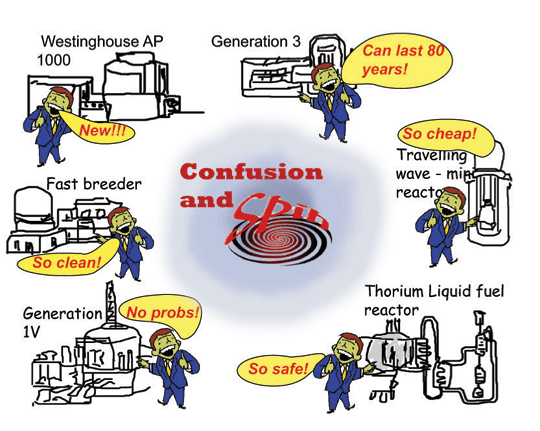
nuClear NewsNo 136 Dec 21, Advanced Reactors , Energy minister Greg Hands told the Nuclear2021 conference organised by the Nuclear Industry Association that the UK will build a high-temperature gas reactor (HTGR) as the centrepiece of its Advanced Modular Reactor Research, Development & Demonstration Programme.
The goal of the research programme is to “prove the potential” of advanced reactors and have a demonstration unit in operation “by the early 2030s, at the latest”. The key focus would be to produce high temperature heat which could be used for hydrogen production, to supply industrial processes and potentially district heating as well as electricity generation.
Several other reactor concepts could have been selected. The emerging category of ‘advanced’ reactors includes the lead-cooled fast reactor, molten salt reactor, supercritical water-cooled reactor, sodium-cooled fast reactor and very-high-temperature gas reactor in addition to hightemperature gas reactors.
Paul Howarth, CEO of the National Nuclear Laboratory (NNL), called it “a further signal of the resurgence of nuclear.” He added, “With the opportunity HTGRs bring to deliver high temperature heat, hydrogen and synthetic fuels, the potential of this technology to help decarbonise our industries and energy grid is significant.” He noted that NNL is “actively working on the fuel, graphite and high temperature materials required for HTGRs.”
The Advanced Modular Reactor Research, Development & Demonstration Programme counts on £170 million of government funding from a £385 million package intended to accelerate development of highly flexible nuclear technologies. (1)
In July the Government sought views on its preference to explore the potential of High Temperature Gas Reactors (HTGRs) for the Advanced Modular Reactor Research Development & Demonstration (AMR RD&D) Programme. It says the call found no significant, additional evidence to materially change the outcome of the Government’s underpinning analysis. As a result, the Programme will focus on High Temperature Gas Reactors with the ambition for this to lead to a HTGR demonstration by the early 2030s at the latest. In parallel, government continues to support the development of all AMRs as part of wider policy on advanced nuclear activities. This includes: opening the Generic Design Assessment (GDA) process to advanced nuclear technologies and developing a siting approach for further nuclear developments. (2) https://www.no2nuclearpower.org.uk/wp/wp-content/uploads/2021/12/nuClearNewsNo136.pdf
Bradwell nuclear project would become vulnerable to sea level rise
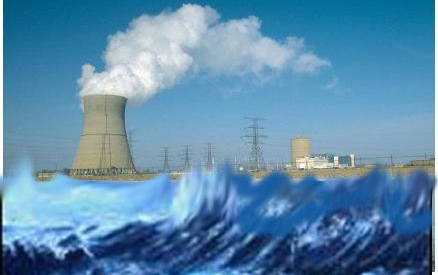
BANNG refutes recent statement by BRB that Bradwell B would be Essex’s
biggest contribution to reduced carbon emissions. Low lying land at
Bradwell would become vulnerable to sea level rise. And Bradwell B would be
unlikely to start operating before the middle of next decade – far too
late to make an appreciable contribution to a net zero 2050. In fact it
would have a negative impact on renewable energy and flexibility.
Maylands Mayl 10th Dec 2021
UK’s failure to reduce energy demand – the most important measure to address climate change.

No2NuclearPower No. 136 December 21 Overtly and comprehensively ignoring demand side management . In nuClear News No.135 we asked if UK electricity demand is really going to double. While many other countries are spending billions on energy efficiency measures and proactively aiming to reduce energy and electricity consumption, the UK seems to be giving up on the old ‘fabric first’ idea and putting all its eggs into the nuclear and electricity supply basket. On transport there seems to be far too much focus on electric vehicles rather than public transport and active travel. With a nuclear tax on consumers’ bills in prospect and a large percentage of the population dependent on non-car travel options, the Government’s climate policies threaten to exacerbate inequalities rather than promote ‘climate justice’.
Unlike the UK, Denmark has a policy to reduce total energy demand by 50% by 2050. (1) And, Germany is not projecting a doubling of electricity demand either, in fact gross electricity generation is projected fall by 2050. Energy efficiency is the main mechanism, but also less waste in the system, more flexibility in storage and grids, integration of the heat sector. These all come together to work towards less (or certainly no more) electricity use whilst switching to renewables. In 2010, the Federal Environment Agency wrote that in the households, industrial as well as trade, commerce and services sectors “a reduction of final energy consumption by 58%, from 1639.4 TWh in 2005 to 774.2 TWh in 2050” is expected. Electricity consumption by these sectors decreases by 19%, from 492.9 TWh in 2005 to 396.7 TWh in 2050. Electricity demand experiences a lower reduction rate than final energy consumption due to the switch from fossil fuels to electricity. Total electricity consumption is expected to fall from 564 TWh in 2005 to 506 TWh. (2)
The National Audit Office (NAO) published a damning report on the Green Homes Grant debacle. It has seldom issued a more excoriating report. The scheme was originally supposed to make 600,000 homes more energy efficient. It may just have reached 47,500. It was meant to create somewhere between 100,000 and 140,000 jobs, but may have only sustained 5,600 people in employment. It was supposed to last 18 months. It was ignominiously abandoned over a weekend, after just 6 months. The NAO reckon “the rushed delivery and implementation of the scheme has significantly reduced the benefits that might have been achieved, caused frustration for homeowners and installers, and had limited impact on job creation for the longer term.” ……………….. https://www.no2nuclearpower.org.uk/wp/wp-content/uploads/2021/12/nuClearNewsNo136.pdf
1 This Month


of the week– Nuclear Reactor Information Task Force

14 May – online event From Bombs to Data Centres: the Face of Nuclear Colonialism
To see nuclear-related stories in greater depth and intensity – go to https://nuclearinformation.wordpress.com
-
Archives
- May 2026 (187)
- April 2026 (356)
- March 2026 (251)
- February 2026 (268)
- January 2026 (308)
- December 2025 (358)
- November 2025 (359)
- October 2025 (376)
- September 2025 (257)
- August 2025 (319)
- July 2025 (230)
- June 2025 (348)
-
Categories
- 1
- 1 NUCLEAR ISSUES
- business and costs
- climate change
- culture and arts
- ENERGY
- environment
- health
- history
- indigenous issues
- Legal
- marketing of nuclear
- media
- opposition to nuclear
- PERSONAL STORIES
- politics
- politics international
- Religion and ethics
- safety
- secrets,lies and civil liberties
- spinbuster
- technology
- Uranium
- wastes
- weapons and war
- Women
- 2 WORLD
- ACTION
- AFRICA
- Atrocities
- AUSTRALIA
- Christina's notes
- Christina's themes
- culture and arts
- Events
- Fuk 2022
- Fuk 2023
- Fukushima 2017
- Fukushima 2018
- fukushima 2019
- Fukushima 2020
- Fukushima 2021
- general
- global warming
- Humour (God we need it)
- Nuclear
- RARE EARTHS
- Reference
- resources – print
- Resources -audiovicual
- Weekly Newsletter
- World
- World Nuclear
- YouTube
-
RSS
Entries RSS
Comments RSS
 nuclear-news