Ukraine planning to resume control of Chernobyl nuclear site, as Russians withdraw
The International Atomic Energy Agency (IAEA) has been notified by Ukraine
that it is examining the possibility to resume regulatory control of the
Chornobyl Nuclear Power Plant (NPP), after the withdrawal of the Russian
military from the site.
Ukraine also informed IAEA that it is also planning
to rotate staff members at the Chornobyl NPP but did not specify any date.
Last week, Ukraine told IAEA: “Russian forces were leaving the Chornobyl
NPP after controlling the site for five weeks.
The withdrawal was confirmed
by senior Russian officials at a meeting with Director General Grossi in
the Russian city of Kaliningrad on Friday morning. “Ukraine later told
the IAEA that while all Russian forces had left the NPP site, the situation
in the Exclusion Zone around the plant was unclear.
Power Technology 4th April 2022
Nuclear Free Local Authorities back international challenge to UK nuclear weapons policies in UN Human Rights Council
Nuclear Free Local Authorities have this week backed a challenge to the British Government’s nuclear weapons policies in the UN Human Rights Council.
The NFLA has joined with international partners in charging that the UK Government’s policy of retaining, and reserving the right to use, a nuclear weapons arsenal is in violation of the Right to Life, a right enshrined in Article 6 of the International Covenant on Civil and Political Rights (ICCPR), to which the UK is a signatory. The NFLA is a partner member of ICAN, the International Campaign to Abolish Nuclear Weapons.
“The destructive power of these weapons is truly frightening, and their primary targets are cities and their civilian populations,” said Councillor David Blackburn, Chair of the NFLA Steering Committee. “Any nation contemplating their use must realise that their victims would be millions of innocent men, women and children peacefully going about their daily lives. In no way can the possession or threat of use by any state be compatible with that state’s obligations under international law to maintain the right to life. The UK is such a nuclear weapon armed state and that is why the NFLA is backing this challenge.”
The report has been submitted to the Human Rights Council by the Basel Peace Office, in cooperation with other civil society organisations, as part of the UN periodic review of the obligations of the United Kingdom under international human rights law, including the ICCPR.
Russia has recently made nuclear threats to the USA and NATO if they intervene in the invasion of Ukraine, whilst in the past a British defence secretary threatened a pre-emptive strike on Russia. Such threats highlight the importance of addressing the risks associated with nuclear deterrence policies. Nine states continue to possess nuclear weapons and maintain the option of initiating nuclear war.
“In times of high tensions involving nuclear-armed and/or allied states, plans and preparations for the use of nuclear weapons elevate the risk of nuclear war which would be a humanitarian catastrophe, severely impacting rights of current and future generations,” says Alyn Ware, Director of the Basel Peace Office. “Compliance with the Right to Life with respect to nuclear weapons is therefore an urgent matter, impacting not the rights of all humanity and of future generations.”
The UK deploys about 160 nuclear warheads (40 on each of their 4 strategic nuclear submarines) which are ready to be fired at any time, including, according to a revised government policy, in response to threats from chemical and biological capabilities or emerging technologies that could have a comparable impact.
In 2018 the UN Human Rights Committee affirmed that the threat or use of nuclear weapons is incompatible with the Right to Life, and that signatories to the ICCPR have obligations to refrain from developing, acquiring, stockpiling and using them, and also have obligations to destroy existing stockpiles and pursue negotiations in good faith to achieve global nuclear disarmament.
he submission makes several recommendations to enable the UK Government to comply with its obligation to maintain the Right to Life. These include adopting no-first-use policies, cancelling plans to renew nuclear weapons systems, taking measures to phase out the role of nuclear weapons in their security doctrines and advancing at the 2022 Non-Proliferation Treaty Review Conference a goal for the global elimination of nuclear weapons by 2045, the 75th anniversary of the NPT.
The submission also highlights the connection between nuclear weapons and climate change, with a recommendation to the UK Government to re-allocate nuclear weapons budgets to renewable energy development and climate action financing.
If the UN Human Rights Council decides to pick up on the challenges and recommendations in the submission and direct these to the UK Government, they are required to respond.
To see the submission to the Human Rights Council please go to this link:
http://baselpeaceoffice.org/sites/default/files/imce/HumanRights/submission_to_the_human_rights_council_regarding_uk_nuclear_weapons_policies_and_practices_final_version_with_annex.pdf
UK government’s energy strategy relying on massive nuclear expansion will fail credibility test
The government is expected finally to publish its much-delayed energy
strategy review on Thursday. The review is urgently needed both to address
the soaring energy prices that are inflicting financial hardship on many
households but also to end Britain’s reliance on Russian oil and gas so
as to avoid funding Vladimir Putin’s war machine. The clear test of the
credibility of whatever the government announces must be whether and how
quickly it reduces Britain’s dependence on expensive hydrocarbons for the
bulk of its energy.
The chances of meeting that test look slim, given the
rifts within the government and Conservative Party that have so far held up
the review for more than a month. Bizarrely, Tory MPs have fought furiously
in favour of restarting fracking, which would do nothing to reduce
Britain’s reliance on hydrocarbons, while fiercely resisting any reversal
of the de-facto ban on new onshore wind farms, which would be by far the
quickest and cheapest way to bring new energy on stream.
Both would of course be difficult to deliver since they are beholden to local planning
decisions. But whereas polls indicate that the public is overwhelmingly
opposed to fracking, they reveal strong public support for onshore wind.
Indeed, a YouGov poll last year found that nearly 70 per cent of the public
would support onshore wind farms near where they live. Polls indicate that
support rises higher if it means cheaper energy for residents. A large
expansion of onshore wind ought to be a key feature of a credible strategy,
yet comments yesterday by Grant Shapps, the transport secretary, suggest
that opposition in cabinet rules this out.
On the other hand, an energy
strategy that rests upon a massively expanded role for nuclear risks
failing the credibility test. That’s not because there isn’t a role for
nuclear as a source of baseload electricity for when solar and wind
supplies are low. There is a strong case for expanding Britain’s nuclear
fleet of 11 reactors, all but one of which are due to be deactivated by
2030, with only one new one, Hinkley Point C, under construction.
The
problem is the same one that has dogged all recent efforts to expand the
nuclear fleet: vast costs of construction. The energy review needs to
contain realistic plans with deliverable timelines. Boris Johnson’s hopes
of delivering six or seven new nuclear power stations by 2050 look
implausible given that Britain has succeeded in starting construction of
one in the past 16 years and even that is nearly a decade behind schedule
and far over budget.
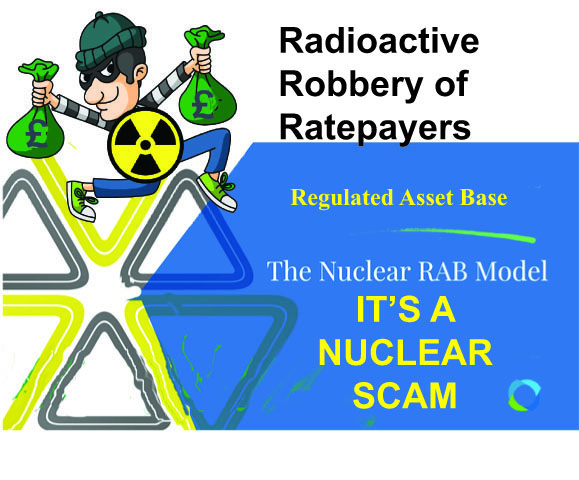
What’s more, under the government’s preferred funding model, construction costs would be passed on to consumers long before any electricity is delivered, further pushing up energy bills.
The review must therefore include plans to expand other sources of baseload,
including battery storage and carbon capture for gas-fired power stations.
Finally a credible strategy must include plans to reduce energy demand as
well as expand supply. The government needs to turbo-charge the drive to
improve home insulation, the switch to heat-pumps and the optimisation of
the energy network. A smart grid that allows differential pricing and
households to sell electricity from home solar panels and electric car
batteries could dramatically reduce energy supply requirements. Such plans
may lack the glamour of Mr Johnson’s fantasy of a floating wind farm in
the Irish Sea. But they would show that the government is serious.
Times 4th April 2022
https://www.thetimes.co.uk/article/the-times-view-on-britains-energy-strategy-power-play-p8g9hp0qp
Nuclear safety incidents in UK, as inspection numbers fall

Four nuclear safety incidents reported to ministers in 2021 as inspection
numbers fall. Incidents included a reactor shutdown in Lancashire, a fire
at Sellafield, and a package of radioactive material found in a London
street. Four nuclear safety incidents were reported to UK Government
ministers due to their severity last year, i can reveal, with experts
raising fears over the declining number of inspections.
In the most serious
safety breach, on 22 July, the Heysham One nuclear power station in
Lancashire had a complete loss of 400kV power after a National Grid
transformer failed. Both reactors tripped automatically and were cooled and
safely shut down, according to an Office for Nuclear Regulation (ONR)
report.
On 11 September, a package of radioactive materials was found in
the street by a member of the public after being lost in transit between
two London hospitals. The ONR said there was no risk to the public or the
environment.
Two incidents at Sellafield in Cumbria also met ministerial
reporting criteria under nuclear safety laws. An analysis of reports from
the Office for Nuclear Regulation (ONR) revealed the four incidents in
2021, which met ministerial reporting criteria under nuclear safety laws.
The overall number of Incident Notification Forms documenting security
issues at UK nuclear facilities was 368 in the first 10 months of last
year. This is 72 per cent higher than the 214 submitted in 2018. However,
the number of nuclear security inspections carried out by the ONR appears
to have fallen. Data shows there were 136 inspections up to 17 December
2021, compared with 169 in 2019. The Heysham One incident, which was stood
down after 16 hours, was rated as level 2 – the third lowest on the
International Nuclear Event Scale, which ranges from zero to seven. The
report said there were “no radiological consequences”.
iNews 4th April 2022
Kremlin condemns Polish comments on readiness to host nuclear weapons
Kremlin condemns Polish comments on readiness to host nuclear weapons , April 4 (Reuters) – The Kremlin on Monday condemned comments by the leader of Poland’s ruling party, who said Warsaw would be open to having U.S. nuclear weapons on its soil and would welcome a 50% increase in the number of U.S. troops in Europe.
Speaking to reporters on a conference call, Kremlin spokesman Dmitry Peskov said such a move would only lead to heightened tensions.
Jaroslaw Kaczynski, who heads the Law and Justice (PiS) party, said at the weekend that Poland would be open to having nuclear weapons stationed on its territory – but that this was not currently under consideration…………https://www.reuters.com/world/europe/kremlin-condemns-polish-comments-readiness-host-nuclear-weapons-2022-04-04/
France pays the steep cost of inflexible and ageing nuclear as electricity prices soar

French baseload and peak prices soar due to a combination of massive outages of French nuclear power plants, cold weather and inefficient heating
France pays the steep cost of inflexible and ageing nuclear as electricity prices soar — RenewEconomy 3 Apr 22,
The common refrain among critics of wind and solar is to blame their “variability” or “intermittency” for soaring electricity prices as Europe wrestles with gas shortages worsened by the war in Ukraine. But France, the nuclear “pin-up” country for the anti-renewables brigade, is not faring so well either.
Over the weekend, the key “day ahead” prices of electricity in France surged to unprecedented levels. On Friday, the futures price for “baseload” for wholesale French electricity price hit the eye-watering level of €714 a megawatt hour ($A1050/MWh).
It didn’t get much better by Sunday, when the day-ahead price for Monday settled at €515/MWh ($A758/MWh), which is the predicted average price over a 24-hour period. The price for peak electricity between 8am and 9am was €2,987/MWh ($A4,400/MWh).
The prices for both baseload and peak prices in the rest of the European market were significantly cheaper, and in Germany it was dramatically so.
The main reasons? Both supply and demand. Less than half (30GW) of France’s 64GW of nuclear capacity was available, thanks to planned and unplanned outages, and extended repairs due to corrosion issues in their ageing plants.
The forecast is for cold weather, and many French homes are fired with inefficient, energy hungry electric resistance heating, largely as a result that the French believed they had no reason to be energy efficient because of the their massive investment in nuclear.
“Massive outages of French nuclear power plants, in combination with cold weather and electric (often resistance) heating, are causing a critical situation for electricity supply there tomorrow,” energy analyst Kewes van der Leun tweeted over the weekend.
The French authority called on consumers to reduce their power consumption.
The situation in Europe is similar to the growing “north-side” divide in electricity prices in Australia, identified by the Australian Energy Market Operator, which has noted that since early 2021 average prices in the most heavily coal dependent states of Queensland and NSW are considering higher than elsewhere.
Partly that is due to a lack of transmission (France has similar problems), but also to the inflexibility of baseload, and the desperation of baseload owners to bid up prices when they can to recoup their costs.
Sure, states with high amounts of renewables do experience price spikes, but they tend to be short lived and the average price is significantly lower than so-called “cheap” coal.
The situation in France is not likely to get better any time soon. President Emmanuel Macron has pledge to invest significantly more in nuclear and his far-right opponent, Marine Le Pen (who is given an outside chance of unseating him) has pledge to stop all new wind and solar development.
But new nuclear won’t help. At the very best, a new reactor could be online by 2035, although France’s recent experience with massive cost over-runs and delays would put a major question mark over that being achieved.
French baseload and peak prices soar due to a combination of massive outages of French nuclear power plants, cold weather and inefficient heating
France pays the steep cost of inflexible and ageing nuclear as electricity prices soar — RenewEconomy
The common refrain among critics of wind and solar is to blame their “variability” or “intermittency” for soaring electricity prices as Europe wrestles with gas shortages worsened by the war in Ukraine. But France, the nuclear “pin-up” country for the anti-renewables brigade, is not faring so well either.
Over the weekend, the key “day ahead” prices of electricity in France surged to unprecedented levels. On Friday, the futures price for “baseload” for wholesale French electricity price hit the eye-watering level of €714 a megawatt hour ($A1050/MWh).
It didn’t get much better by Sunday, when the day-ahead price for Monday settled at €515/MWh ($A758/MWh), which is the predicted average price over a 24-hour period. The price for peak electricity between 8am and 9am was €2,987/MWh ($A4,400/MWh).
The prices for both baseload and peak prices in the rest of the European market were significantly cheaper, and in Germany it was dramatically so.
The main reasons? Both supply and demand. Less than half (30GW) of France’s 64GW of nuclear capacity was available, thanks to planned and unplanned outages, and extended repairs due to corrosion issues in their ageing plants.
The forecast is for cold weather, and many French homes are fired with inefficient, energy hungry electric resistance heating, largely as a result that the French believed they had no reason to be energy efficient because of the their massive investment in nuclear.
“Massive outages of French nuclear power plants, in combination with cold weather and electric (often resistance) heating, are causing a critical situation for electricity supply there tomorrow,” energy analyst Kewes van der Leun tweeted over the weekend.
The French authority called on consumers to reduce their power consumption.
The situation in Europe is similar to the growing “north-side” divide in electricity prices in Australia, identified by the Australian Energy Market Operator, which has noted that since early 2021 average prices in the most heavily coal dependent states of Queensland and NSW are considering higher than elsewhere.
Partly that is due to a lack of transmission (France has similar problems), but also to the inflexibility of baseload, and the desperation of baseload owners to bid up prices when they can to recoup their costs.
Sure, states with high amounts of renewables do experience price spikes, but they tend to be short lived and the average price is significantly lower than so-called “cheap” coal.
The situation in France is not likely to get better any time soon. President Emmanuel Macron has pledge to invest significantly more in nuclear and his far-right opponent, Marine Le Pen (who is given an outside chance of unseating him) has pledge to stop all new wind and solar development.
But new nuclear won’t help. At the very best, a new reactor could be online by 2035, although France’s recent experience with massive cost over-runs and delays would put a major question mark over that being achieved.
Portugal to speed up switch to renewable power in wake of Ukraine war

https://www.reuters.com/business/sustainable-business/portugal-speed-up-switch-renewable-power-wake-ukraine-war-2022-04-01/?fbclid= By Sergio Goncalves,
LISBON, April 1 (Reuters) – Portugal aims to accelerate its energy transition and increase the proportion of renewable sources by 20 percentage points to 80% of its electricity output by 2026, four years earlier than previously planned, the government said on Friday.
As part of a global shift away from carbon-emitting fossil fuels, countries are betting on renewable energies such as wind and solar, a transition that is being accelerated in Europe after Russia’s invasion of Ukraine.
The new Socialist government that was sworn in on Wednesday, said in its overall programme released on Friday that the energy plans should mobilize more than 25 billion euros of investment in the next 10 years, involving public and private players, incentives and financing.
“Portugal has already taken very significant measures in the energy transition, but the evolution and duration of the war in Ukraine must necessarily imply new measures,” Cabinet Minister Mariana Vieira da Silva told a news conference.
The country, committed to become carbon neutral by 2050, currently gets 60% of its electricity from renewable sources – one of the largest proportions of green energy use in Europe.
Unlike central European countries, Portugal does not depend on Russian natural gas pipelines, as it mainly imports liquefied natural gas from Nigeria and the United States, and has not imported Russian crude since 2020.
The government also wants to “more than double the installed capacity of renewable sources in the next decade”.
Portugal, which closed its two coal-fired power plants last year, has 7.3 GW of hydroelectric capacity and 5.6 GW of onshore wind parks, which together represent 83% of its total installed capacity. Reporting by Sergio Goncalves Editing by Andrei Khalip and Frances Kerry
Why UK Labour’s green policies are fatally undermined by its ‘nuclear first’ stance

Dave Toke’s green energy blog, https://realfeed-intariffs.blogspot.com/2022/04/why-labours-green-policies-are-fatally.html
It is now clear from Labour’s stance in the House of Commons, that nuclear power comes before every thing else. Indeed, aside from Keir Starmer’s emphasis on ‘nuclear first’ attacks on the Government in the House of Commons, Labour’s allegedly massive green energy spending strategy seems likely to be swallowed up almost entirely by its pledge to rush to embrace the Sizewell C development.
The Treasury knows full well that to get Sizewell C going reasonably quickly the Government will have to commit to a potential bill of £30 billion or more in public spending. This must come, either or both, from hard-pressed energy consumers by adding to their bills, or directly from Treasury coffers. The Department of Business Energy and Industrial Strategy’s (BEIS) spending plans are closely controlled by the Treasury, and the commitment to Sizewell C will swamp the budget and reduce Labour’s ability to spend on things like insulation and heat pumps to a trickle.
Keir Starmer thinks he has seen a weak point in the Conservative’s energy strategy in that it is finding it difficult to turn the commitment to support Sizewell C into reality. But that’s because funding Sizewell out of a public commitment is likely to present the Government with a crippling financial burden. It is especially crippling because Starmer will refuse to acknowledge the fact that to get Sizewell C going will require the Government to fund a black hole of spending as cost overruns inevitably escalate on the project.
It’s a cynical ploy on Labour’s part. They know full well that the Government’s difficulties with launching Sizewell C are to do with the sheer financial unviability of new nuclear power, not from any lack of faith in nuclear power on the part of the Government. But apparently, Starmer does not care about this, and it also seems that he takes the green energy lobby for granted in that he expects that it will support him regardless.
But if other Labour commitments to support really big programmes in areas like heat pumps and insulation are to happen, there’s just not enough money going to be made available for them if BEIS’s budgets are swallowed up by the commitment to support Sizewell C.
So how should green energy supporters react to this? Well, there’s plenty of other parties to vote for. Indeed if this Government does actually go ahead and reverse the English planning ban on onshore wind, there’s probably not going to be much difference, in practice, between Labour and Conservatives on energy. Except of course that the Conservative will be more cautious, it seems, on accepting unmanageable commitments to new nuclear power!
Macron rubbing hands with glee as UK energy crisis means EDF poised for ‘£30bn payday’

Macron rubbing hands with glee as UK energy crisis means EDF poised ‘£30bn payday’. EMMANUEL MACRON could win big from the UK energy crisis, with EDF being tipped to secure contracts worth nearly £30 billion.
Dr Paul Dorfman, an associate fellow at the University of Sussex said: “The UK has a very strong relationship with EDF, they own and run the substance of UK reactors and are helping to build Hinckley point and the rest of it.
“However, EDF are in debt. Moodys, the financial organisation has recently downgraded EDF’s credit rating. A quarter of all of France’s reactors are currently offline due to safety and security problems, that’s
largely because they have an ageing nuclear fleet, like us.
“In order to kind of try to prolong their lifespan, the French government has big upgrade of their nuclear. “The cost estimates are around £70-80 billion just to upgrade, just to keep them tottering on.”
EDF is currently constructing the Hinckley Point C nuclear power station and is also adding new reactors to Sizewell C in Suffolk and Bradwell B in Essex. Dr Dorfman has warned that these new reactors constructed by EDF are the same type of EPR reactors that were built in France, which the French court of Auditors estimated cost an extra €19billion (almost £16 billion). He continued: “EDF is clear about the need for Government investment in order to proceed with Sizewell C.”
Express 1st April 2022
To wean UK off Russian gas – the key is energy efficiency + wind projects – not nuclear power, says new research.
Fixing energy-leaking homes and funding wind projects – not nuclear power stations – is key to weaning the UK off Russian gas, a new studysays, amid cabinet clashes over policy.
Boris Johnson is pushing to get 25 per cent of the UK’s electricity from nuclear power – requiring up to
six new power stations – at a cost that is alarming Rishi Sunak, the
chancellor.
Meanwhile, cabinet rows over relaxing planning rules to lift
the block on onshore wind turbines are also holding up a new energy
strategy, prompted by the Ukraine crisis. Now an analysis by the climate
change think tank E3G says a strategy that “starts at home” is the
route to reducing reliance on Vladimir Putin’s gas supplies.
Dramatically improving the energy efficiency of the UK’s buildings “could secure an
80 per cent cut in the amount of gas we import from Russia this year”, it
is arguing. If combined with government funding for solar and onshore wind
projects already in the planning pipeline, “the UK could cut the amount
of gas we get from Russia by 100 per cent within a year”.
“Energy security starts at home,” said Ed Matthew, E3G’s campaigns director,
ahead of the expected release of the “energy independence plan” this
week. “By ramping up the energy efficiency of UK buildings and
accelerating renewables deployment, the government can take an axe to UK
gas demand.
Independent 3rd April 2022
https://www.independent.co.uk/news/uk/politics/energy-russia-gas-wind-turbines-b2049677.html
Switzerland’s nuclear-war-readiness – bunkers for all

Nuclear bunkers for all: Switzerland is ready as international tensions mount , euronews, By Charlotte Lam & AFP 03/04/2022 Russia’s invasion of Ukraine has reawakened interest in Switzerland’s concrete nuclear fallout shelters, built during the Cold War with enough space to shelter everyone in the country
Nuclear bunkers for all: Switzerland is ready as international tensions mount , euronews, By Charlotte Lam & AFP 03/04/2022 Russia’s invasion of Ukraine has reawakened interest in Switzerland’s concrete nuclear fallout shelters, built during the Cold War with enough space to shelter everyone in the country.
Since the 1960s, every Swiss municipality has had to build nuclear bunkers for their residents – and they’re mandatory in large homes and residential buildings.
“I think this shelter system makes sense,” says Marie-Claude Noth-Ecoeur, who heads civil and military security services in the mountainous southern Wallis region.
“We remember the problems that occurred at Fukushima because there was a time when the Federal Chambers wanted to remove shelters but then Fukushima happened. We realise that there are nuclear power plants in Switzerland and in Europe. So yes, this is useful, it was designed for that and I think we must keep them, at least with what is happening in the world, we must keep them in a state of readiness.”
The shelters have become an integral part of the Swiss identity, on par with the country’s famous chocolate, banks and watches…………
The wealthy Alpine country has pledged that each and every resident will have a shelter space if needed. The country of 8.6 million people counts nearly nine million spaces across 365,000 private and public shelters.
But while there are more than enough spots at a national level, there are vast regional differences. Geneva is worst off, with only enough places for 75 per cent of its population.
Nicola Squillaci, head of Geneva’s civil protection and military affairs division, said the shelters were conceived to provide protection “, especially in the case of a bombing and a nuclear attack”…………..
Switzerland’s vast network of nuclear bunkers have a range of other day-to-day uses, including as military barracks or as temporary accommodation for asylum seekers.
But Swiss authorities require that they can be emptied and reverted back to nuclear shelters within five days. https://www.euronews.com/2022/04/03/nuclear-bunkers-for-all-switzerland-is-ready-as-international-tensions-mount
UK Business Secretary Kwarteng boasts about new nuclear plants, but admits that local consent will be needed
Britain could build up to seven new nuclear power stations as part of a
radical expansion of homegrown energy following Vladimir Putin’s invasion
of Ukraine, the Business Secretary has said. In an interview with The
Telegraph,…………………
but, in the face of significant opposition from ministers and backbenchers, Mr Kwarteng acknowledged: “Anymovement has to have a large measure of local consent.” The Great British
Nuclear delivery body is likely to be a government-owned company
Telegraph 2nd April 2022
Chernobyl: radiation sickness in soldiers, theft of radioactive materials, wildfires – a frightening case of the multiple dangers of nuclear power.
Russian soldiers in Chernobyl suffering from radiation poisoning, Several Russian soldiers in Chernobyl have fallen sick with radiation sickness after digging trenches in contaminated forests, news.com.au , Katie Davis and The Sun, 1 Apr 22,
Dozens of Russian troops stationed at the Chernobyl nuclear site in Ukraine have reportedly been struck down with radiation sickness after digging trenches in the contaminated forests.
Seven buses of soldiers suffering from acute radiation syndrome were taken from the exclusion zone to a hospital across the border in Belarus, The Sun reports.
Chernobyl was captured in the opening days of the current invasion of Ukraine by Russian President Vladimir Putin’s troops. However it was the site of a nuclear disaster in 1986 when a reactor exploded, contaminating the surrounding area.
As Russian soldiers took hold of the site, it sparked fears of a major radioactive disaster as a result of heavy fighting around the plant
Already, just three days after entering the area, the disturbing of soil by military vehicles saw radiation levels spike.
It also has been alleged Russian troops dug trenches in the highly toxic Red Forest zone, according to UNIAN News Agency.
And according to workers at the site, Russian soldiers drove their tanks and armoured vehicles without radiation protection through the area – kicking up clouds of radioactive dust.
A Chernobyl employee branded their actions as “suicidal” because the dust they inhaled was likely to cause internal radiation in their bodies.
The two Ukrainian sources said soldiers in the convoy did not use any anti-radiation gear while in the Red Forest – the most contaminated part of the zone around Chernobyl.
Dozens of Russian troops stationed at the Chernobyl nuclear site in Ukraine have reportedly been struck down with radiation sickness after digging trenches in the contaminated forests.
Seven buses of soldiers suffering from acute radiation syndrome were taken from the exclusion zone to a hospital across the border in Belarus, The Sun reports.
Chernobyl was captured in the opening days of the current invasion of Ukraine by Russian President Vladimir Putin’s troops. However it was the site of a nuclear disaster in 1986 when a reactor exploded, contaminating the surrounding area.
As Russian soldiers took hold of the site, it sparked fears of a major radioactive disaster as a result of heavy fighting around the plant.
Already, just three days after entering the area, the disturbing of soil by military vehicles saw radiation levels spike.
It also has been alleged Russian troops dug trenches in the highly toxic Red Forest zone, according to UNIAN News Agency.
And according to workers at the site, Russian soldiers drove their tanks and armoured vehicles without radiation protection through the area – kicking up clouds of radioactive dust.
A Chernobyl employee branded their actions as “suicidal” because the dust they inhaled was likely to cause internal radiation in their bodies. The two Ukrainian sources said soldiers in the convoy did not use any anti-radiation gear while in the Red Forest – the most contaminated part of the zone around Chernobyl.
Yaroslav Yemelianenko, an employee at the Public Council at the State Agency of Ukraine for Exclusion Zone Management, said Russian troops were taken to the Belarusian centre of radiation medicine in Gomel.
“Digging the trenches in the Rudu forest?” he wrote on Facebook. “Now live the rest of your short life with this.
“There are rules of handling this territory. They are mandatory to perform because radiation is physics – it works regardless of status or chases………………
Radioactive material stolen from Chernobyl
Earlier this week, it was reported that radioactive material was stolen from the site of the damaged nuclear power station…………………….
Ukraine’s State Agency blamed Russian troops for stealing “unstable” nuclear samples from Chernobyl after ransacking a lab.
They are believed to have then destroyed the November Central Analytical Laboratory which was full of nuclear waste and located in the radioactive exclusion zone.
The agency said the stolen radionuclides are “highly active”…………
Just last week, wildfires around Chernobyl sparked by Russian shelling scorched 10,000 hectares of forest.
Ukraine’s Deputy Prime Minister Iryna Vereshchuk accused Russia of “irresponsible” acts around the Chernobyl power station as she urged the United Nations to dispatch a mission to assess the risks.
She claimed Russian forces were preventing firefighters from bringing large numbers of fires in the zone under control……….
Ukraine’s human rights commissioner Lyudmila Denisova warned an increased level of radioactive air pollution could threaten neighbouring countries.
“Control and suppression of fires is impossible due to the capture of the exclusion zone by Russian troops,” she wrote on Facebook.
“As a result of combustion, radionuclides are released into the atmosphere, which are transported by wind over long distances. This threatens radiation to Ukraine, Belarus and European countries.”
The politician warned that failing to intervene could see “irreparable consequences” for “the whole world”.
“Catastrophic consequences can be prevented only by immediate de-occupation of the territory by Russian troops,” Ms Denisova said………… https://www.news.com.au/world/europe/russian-soldiers-in-chernobyl-suffering-from-radiation-poisoning/news-story/d98c53269a9602841331453438c482dd
Anxieties at Varash nuclear power station, and other ones in Ukraine – ”town smells of fear”

Ukraine worries about disaster as Russia targets nuclear power plants, WP, By Max Bearak, 1 Apr 22, VARASH, Ukraine — The director of the largest nuclear power plant still under Ukrainian control was exhausted, curt with his replies and fidgeting with his glasses, which he turned around and around in his hands.
In the past two weeks, Ukraine’s military said it has shot down two Russian drones that approached as close as three miles from the plant in the northwestern city of Varash, which supplies 12 percent of the country’s electricity — but that wasn’t even the biggest of Pavlo Pavlyshyn’s concerns.
………….. Chernobyl, while decommissioned, houses thousands of spent cooling rods that if not properly cared for could lead to an increase in radioactive leaking at the site of the world’s worst nuclear disaster 36 years ago……………
…………Militarization wasn’t the only threat. Ukrainian staff at the plant haven’t had a day off since March 20 and are barely getting sleep. A power outage could disrupt the ventilation system and lead to overheating.
……………At Europe’s biggest nuclear plant, near Zaporizhzhia in southeastern Ukraine — which has been under Russian occupation since March 4 — Galushchenko said between 300 and 500 Russian soldiers and as many as 100 heavy vehicles including tanks were stationed within the plant’s perimeter. To take control of that plant, Russian forces fired artillery shells into one of the cooling units.
Besides the one in Varash, two other smaller Ukrainian plants are still under Ukrainian control. More than half of Ukraine’s electricity is provided by nuclear plants, and despite being under Russian control, the plant in Zaporizhzhia is still supplying the Ukrainian grid, though at a reduced capacity. Electricity consumption is also down across the country ……………
Varash, on the other hand, is carrying on much as usual. The town’s 8,000-plus plant workers are exempt from conscription into the military. Few have fled. Buses carrying workers to and from the plant, which looms over the whole city, bounce along wide boulevards while their families go about their daily lives.
The plant, which was built by the Soviet Union in the 1970s, is the entire reason for the city’s existence. About 30 miles south of the border with Belarus, Varash is otherwise relatively secluded and in one of the few areas of Ukraine that is still largely forested.
Here, residents worry about a reckless Russian attempt to take over the plant or even an errant shell causing a release of radiation.
City officials are already taking steps to prepare, including giving 50,000 residents potassium iodide tablets — which can help block the absorption of radioactive iodine in humans during prolonged exposure.
The mayor, Oleksandr Menzul, 49, worked for 25 years as a safety adviser at the plant, planning for various scenarios that could trigger a meltdown.
“We never estimated risk of Russian shelling,” he said. “Because it’s nonsense, right? Varash doesn’t even have bomb shelters, because who would bomb a city with a nuclear facility? But for Russia, an international disaster is just one mistake away…..
Menzul calms himself with the possibility that in the event of a disaster in Varash, prevailing winds might carry the worst of the radioactive steam from a blast into nearby Belarus or areas of Ukraine now occupied by Russia.
“If it blows in the enemy’s direction, at least there is some benefit to us,” he said, nervously chuckling.
This week, the chief of the International Atomic Energy Agency arrived in Ukraine to offer technical assistance, meeting with Galushchenko and other top officials.
“There have already been several close calls. We can’t afford to lose any more time,” Rafael Mariano Grossi, the agency’s head, said in a statement. “This conflict is already causing unimaginable human suffering and destruction. The IAEA’s expertise and capabilities are needed to prevent it from also leading to a nuclear accident.”
But Ukrainian officials have criticized the IAEA for not directly calling out Russia, which they say would bring more attention to the risks at nuclear facilities that, if shelled or otherwise damaged by Russia, could lead to a disaster with regional and potentially global implications.
The recent shooting down of two Russian drones over Varash — which was confirmed by Vitaly Koval, the regional military administrator — has raised questions about Russia’s possible surveillance of plants that are far from the front line.
The city is on edge. Despite being accompanied by a minder from the local government, visiting reporters were questioned by law enforcement. Citizens were apparently worried that the journalists could be Russian saboteurs.
It also is a city filled with memorials to past disasters. A monument to the Chernobyl victims stands prominently in the city center. Not far away is one to the victims of World War II. And a memorial to those killed in the ongoing war is already being planned.
“It should be a peaceful town, but it smells of fear,” the local minder said. https://www.washingtonpost.com/world/2022/03/31/nuclear-power-plant-ukraine-danger/
Head of IAEA to visit Chernobyl, as Russians withdraw from the site
 | |||
UN nuclear watchdog to head mission to Chernobyl as Russians withdraw from site
Russians leaving Chernobyl have taken Ukraine soldiers with them, say officials https://www.theguardian.com/world/2022/apr/01/russians-fled-chernobyl-with-radiation-sickness-says-ukraine-as-iaea-investigates Jon Henley, Fri 1 Apr 2022 22
The head of the UN atomic watchdog has said he aims to lead a mission to Chernobyl as soon as possible, after Russian troops were reported to have largely withdrawn from the decommissioned nuclear power station.
Rafael Grossi tweeted on Friday that he would head an International Atomic Energy Agency (IAEA) “assistance and support” mission to the highly contaminated site of the world’s worst nuclear accident in the first of a series of such visits to Ukrainian nuclear plants.
The announcement came after Ukrainian officials said the Russian soldiers who had occupied the highly contaminated plant since 24 February – the first day of the invasion – had left taking several Ukrainian service personnel with them. Some Russians remained in the surrounding exclusion zone, they said.
The Ukrainian state power company Energoatom alleged that the pullout followed a number of Russian soldiers receiving “significant doses” of radiation from digging trenches in the forest in the exclusion zone, a claim the IAEA said it could not independently confirm but would investigate.
Energoatom said the troops had “panicked at the first sign of illness”, which “showed up very quickly”. Chernobyl’s No 4 reactor exploded on 26 April 1986, killing hundreds and spreading radioactive contamination west across Europe.
The IAEA said earlier on Friday Kyiv had informed it that Russia had transferred control of the site back to the Ukrainians charged with overseeing the safe storage of spent fuel rods and maintaining the concrete-encased ruins of the reactor.
But the UN agency said it could not independently confirm the claim that the Russian soldiers, whose capture of the plant raised fears around the world of increased radiological risks, had been exposed to radiation.
Energoatom did not say how many soldiers were involved and gave no details of how they had been affected. The Ukrainian deputy prime minister Iryna Vereshchuk also said Russian troops were exposed to radiation after digging trenches in the forest.
Some Ukrainian reports have suggested the soldiers were taken to a special medical facility in nearby Belarus after driving tanks through the exclusion zone, kicking up radioactive dust. The Kremlin has not commented on the claims.
Edwin Lyman, a nuclear expert with the US-based Union of Concerned Scientists, told the Associated Press on Friday it seemed unlikely a large number of troops would develop severe radiation illness, but added that it was impossible to know for sure without more details.
Citing plant workers, Energoatom said in a statement on Friday that the “Russian occupiers, as they ran away from the Chernobyl nuclear power plant, took members of the national guard, whom they had held hostage since 24 February, with them”.
The Ukrainian government had repeatedly expressed safety concerns about Chernobyl and demanded the immediate withdrawal of the Russian troops, whose presence prevented the normal rotation of personnel for several weeks.
Russian forces also retreated from the nearby town of Slavutych, where Chernobyl workers lived, Energoatom said, and the IAEA said it was preparing to send its first assistance and support mission to Chernobyl within the next few days.
Grossi was due to hold talks with senior Russian officials in Kaliningrad on Friday after visiting a nuclear power plant in southern Ukraine on Wednesday on his first trip to the country since the invasion.
The IAEA chief, who has repeatedly warned of the dangers of the conflict – Ukraine has 15 reactors at four active nuclear power plants, as well as stores of nuclear waste at Chernobyl and elsewhere – was expected to hold a press conference at the IAEA’s headquarters in Vienna later on Friday.
1 This Month


of the week– Nuclear Reactor Information Task Force

14 May – online event From Bombs to Data Centres: the Face of Nuclear Colonialism
To see nuclear-related stories in greater depth and intensity – go to https://nuclearinformation.wordpress.com
-
Archives
- May 2026 (180)
- April 2026 (356)
- March 2026 (251)
- February 2026 (268)
- January 2026 (308)
- December 2025 (358)
- November 2025 (359)
- October 2025 (376)
- September 2025 (257)
- August 2025 (319)
- July 2025 (230)
- June 2025 (348)
-
Categories
- 1
- 1 NUCLEAR ISSUES
- business and costs
- climate change
- culture and arts
- ENERGY
- environment
- health
- history
- indigenous issues
- Legal
- marketing of nuclear
- media
- opposition to nuclear
- PERSONAL STORIES
- politics
- politics international
- Religion and ethics
- safety
- secrets,lies and civil liberties
- spinbuster
- technology
- Uranium
- wastes
- weapons and war
- Women
- 2 WORLD
- ACTION
- AFRICA
- Atrocities
- AUSTRALIA
- Christina's notes
- Christina's themes
- culture and arts
- Events
- Fuk 2022
- Fuk 2023
- Fukushima 2017
- Fukushima 2018
- fukushima 2019
- Fukushima 2020
- Fukushima 2021
- general
- global warming
- Humour (God we need it)
- Nuclear
- RARE EARTHS
- Reference
- resources – print
- Resources -audiovicual
- Weekly Newsletter
- World
- World Nuclear
- YouTube
-
RSS
Entries RSS
Comments RSS
 nuclear-news