UK Ministers taking the public for fools, as they tout grandiose and delusional nuclear power schemes
Betting on the French will not keep Britain’s lights on, EDF’s latest
Hinkley Point delay shows PM’s nuclear ambitions are divorced from
reality.
It is testament to the sheer incompetence of France’s
state-backed utility EDF that Hinkley Point C has become Britain’s most
radioactive construction project and it hasn’t even been built yet. In
fact, one wonders if it ever will be at this rate after yet more delays and
cost overruns.
For critics of atomic energy, Hinkley Point is the gift that
keeps on giving. For the rest of the country it remains laughably elusive.
After repeated setbacks, Britain’s first new plant in three decades was
already scheduled to be nine years overdue and £7bn over budget having
been pushed back to 2026, while estimated build costs had rocketed to
£23bn.
And now? An announcement from EDF, snuck out at 10pm on Thursday
night, reveals that the project has been delayed by another year at best,
and will cost a further £3bn, with Covid the excruciatingly predictable
excuse being provided. It is the fourth time that EDF has had to revise the
timetable and budget since construction began in October 2016.
At this point, any suggestion that the Prime Minister’s recently announced
ambition to build 24 gigawatts of new nuclear capacity, equivalent to
another six Hinkleys, each costing £20bn, have any chance of being
realised should be banished. Ministers are taking us for fools with these
grandiose yet delusional schemes.
Like so many of this Government’s plans
to transform important areas of the economy, Britain’s nuclear ambitions
are totally divorced from reality, and will remain so while we continue to
depend on the same unreliable partner with a risible track record of
delivering on its promises.
But it is in France where the major red flags can be found. EDF’s flagship Flamanville plant in
Normandy, which is being built using the same European Pressurised Reactors
(EPR) that are set to be deployed at Hinkley, was originally meant to come
on line in 2009. Instead, it won’t be ready until 2023, nearly a decade and
a half later than originally planned, and is £10bn over budget after costs
quadrupled from initial estimates in 2004.
Yet Flamanville is just one of
many plants where EDF is experiencing problems. The company has been forced
to launch a programme of checks on its entire fleet of 56 nuclear reactors
after the discovery of corrosion caused outages at some. A total of 12 are
offline, exacerbating a perilous financial squeeze as it prepares to
spearhead Emmanuel Macron’s plans to put nuclear power at the heart of
his country’s pursuit of carbon neutrality by 2050. And yet, incredibly,
EDF harbours ambitions to build another plant in the UK, at Sizewell C in
Suffolk.
Telegraph 21st May 2022
https://www.telegraph.co.uk/business/2022/05/21/betting-french-will-not-keep-britains-lights/
UK’s energy policy (for a nuclear ”renaissance”) ignores the fastest and most cost-effective measure – SAVING ENERGY

| Andrew Warrant: Energy policy is big news again. Initially, because fuel prices are rocketing, and set to rise even more this autumn. Plus the invasion of Ukraine has precipitated a determination to minimise the amount of gas and oil purchased in future from Russia. These two factors have prompted Prime Minister Boris Johnson to devise a new energy security strategy. Published last month, its reception was uniformly dismissive. Not so much because of the energy supply sources it concentrated upon but mainly because it entirely omitted any serious consideration of the policy area deemed most capable of providing swift cost-effective solutions. Saving energy. The Times’ editorial was unsparingly contemptuous. The UK government’s new energy security strategy amounted to “little more than a glorified press release.” The “eye-catching announcement” of eight new nuclear power plants offers “no analysis of why Britain had succeeded in starting construction on just one new reactor in the 16 years since Tony Blair announced a nuclear renaissance.” It added: “What is certain isthis new nuclear programme will not bring energy bills down any time soon. if ever. Instead, it will push bills up as the costs of construction are passed on to consumers. Nor will it do much in the near term to reduce Britain’s reliance on Russian oil and gas given that it takes at least a decade to build a nuclear power station.” While no doubt well-intentioned, Rishi Sunak’s attempts to alleviate the cost of living – including through a £150 council tax rebate for most homes and a £200 loan towards energy bills – have been overly complicated and badly targeted. And, as Helen Barnard of the Joseph Rowntree Foundation has pointed out, the £2.4bn the Treasury lost cutting fuel duty would have covered the cost of insulating a third of all social housing in the country. “Theconsultancy E3G has calculated that new energy efficiency measures could reduce the heating bills for poorly insulated homes by an average of £500 and end the UK’s dependence on Russian gas (which is admittedly quite limited) within a year. There is a very revealing explanation for why no new plans are being proposed. It is that “this is not being imposed on people and is a gradual transition following the grain of behaviour. The British people are no-nonsense pragmatists who can make decisions based on the information.” But if an Englishman’s home really is his castle, then why did fears for COVID 19 lock everybody inside their castle? If we want people to support delivery of a collective good like energy security or climate mitigation, then it is sensible to see it as collective action. And for Government to lead it. The parallel with the pandemic is spot on.Energy in Buildings and Industry 18th May 2022 https://eibi.co.uk/article/collective-spirit-required-to-ensure-energy-security/ |
UK Home Secretary PRITI PATEL WAS PART OF CIA-LINKED LOBBY GROUP WITH HUSBAND OF ASSANGE JUDGE

Home Secretary Priti Patel, who will soon decide whether to extradite Julian Assange to the US, has been a political adviser to – and been funded by – a right-wing lobby group which has attacked Assange in the British media for a decade. DECLASSIFIED UK, MATT KENNARD, 29 MARCH 2022
- Patel sat on advisory council of Henry Jackson Society (HJS) with Lord Arbuthnot, whose wife later made two key legal rulings against Assange
- Former CIA director James Woolsey has been an HJS patron since 2006
- HJS has hosted three other ex-CIA directors in London since 2014
- Patel was paid £2,500 by HJS to fly to Washington for a “security” programme in the US Congress
- Patel ignores Declassified’s request for clarification of her role in HJS
Priti Patel sat on the Henry Jackson Society’s (HJS) advisory council from around 2013-16, although the exact dates are unclear as neither the HJS nor Patel responded to Declassified’s requests for clarification.
She has also received funds from the HJS, and was paid £2,500 by the group to visit Washington in March 2013 to attend a “security” programme in the US Congress.
Patel, who became an MP in 2010 and was appointed Home Secretary in 2019, also hosted an HJS event in parliament soon after she returned from Washington.
After the UK Supreme Court said this month it was refusing to hear Assange’s appeal of a High Court decision against him, the WikiLeaks founder’s fate now lies in Patel’s hands. He faces life in prison in the US.
The HJS, which was founded in 2005 and does not disclose its funders, has links to the CIA, the intelligence agency behind the prosecution of Assange and which reportedly developed plans to assassinate him.
One of the HJS’s international patrons is James Woolsey, CIA director from 1993-95, who was in this role throughout the period Patel was advising the group. Woolsey’s affiliation to the HJS goes back to at least 2006, soon after it was founded.
In 2014, the group hosted General David Petraeus, CIA director from 2011-12, at a UK parliament meeting from which all media were barred.
Three years later, in 2017, the HJS organised another event at parliament with General Michael Hayden, CIA director from 2006-9, to “discuss the current state of the American Intelligence Community and its relationships with foreign partners.”
Hayden described “the relationship within the Five Eyes community as strong as ever, despite potential concerns over recent intelligence leaks between members.” Five Eyes is an intelligence alliance comprising Australia, Canada, New Zealand, the UK, and the US.
‘Perception of bias’
During a visit to the UK in July 2020, then US Secretary of State Mike Pompeo spoke at a roundtable hosted by the HJS with what the Washington Post referred to as a group of “hawkish” members of the Conservative Party.
As director of the CIA in 2017, Pompeo had launched a blistering attack on WikiLeaks calling the media organisation a “hostile intelligence service” that makes “common cause with dictators”.
Pompeo did not provide evidence but added a threat: “To give them the space to crush us with misappropriated secrets is a perversion of what our great Constitution stands for. It ends now.”
On the HJS advisory council at the same time as Patel was Lord James Arbuthnot, a former Conservative defence minister. His wife, Lady Emma Arbuthnot, was Westminster Chief Magistrate from 2016-2021.
For part of her tenure, she was in charge of the Assange case and made two key rulings against him in 2018. Lady Arbuthnot eventually stepped aside from ruling on the case because of a “perception of bias” but never declared a conflict of interest.
The links between Patel and Lord Arbuthnot go further. In 2010, soon after becoming an MP, Patel was appointed one of five parliamentary officers of the Conservative Friends of Israel (CFI) when the group was chaired by Lord Arbuthnot.
CFI has been described as “beyond doubt the most well-connected and probably the best funded of all Westminster lobbying groups”. It also does not disclose its funders.
Patel was forced to resign as Secretary of State for International Development in November 2017 after it was revealed that she had held more than a dozen undeclared meetings with Israeli ministers and organisations while on holiday in the country.
Many of these were arranged by CFI’s honorary president, Lord Polak. Patel’s resignation letter accepted that her conduct “fell below…standards of transparency and openness”.
HJS staff have been repeatedly critical of Julian Assange and WikiLeaks in the British media since 2011 when its then associate director, Douglas Murray, engaged in a combative debate with Assange.
………. Over the following years, the HJS and its staff continued to be among the most active civil society voices for impugning the motives and reputation of Assange.
This stands in contrast to nearly all human rights and press freedom organisations which argue that extraditing the WikiLeaks publisher to the US would be a grave blow to media freedom.
‘Conspiracy theories’
In October 2016, the HJS released a statement to the media, which claimed: “Mr Assange has a long track record of stealing and distributing information, peddling conspiracy theories, and casting aspersions on the moral standing of western democratic governments. He has done this whilst supporting, and being supported by, autocratic regimes.”
No evidence was supplied to support the assertions.
A number of other HJS staff—including spokesperson Sam Armstrong and then chief of staff Ellie Green—have made anti-Assange interventions in the British media.
Secrecy
In October 2019, as home secretary, Patel visited Washington again to meet William Barr, the US Attorney General who was then in charge of the Assange case as head of the Department of Justice.
Together they signed the Cloud Act which made it easier for American and British law enforcement agencies to demand electronic data on targets as they undertake investigations.
Assange’s defence team had previously raised the concern in court that Barr may be using Assange’s extradition case in the UK for political ends.
In August 2020, Declassified requested basic information about Patel’s 2019 trip to Washington. The Home Office confirmed it held the information but refused to release it because the department considered “that disclosure of some of the information would prejudice relations between the UK and the United States”.
In May 2020, Declassified also requested information about any calls or emails made or received by Patel since she became Home Secretary which concerned the case of Julian Assange, or mentioned his name.
The Home Office told us “we can neither confirm nor deny whether we hold the information you have requested” because “to do so either way would disclose information that constitutes the personal data of Julian Assange”.
The same request for Sajid Javid’s tenure as Home Secretary from 2018-19 was rejected because the department said “we have carried out a thorough search and we have established that the Home Office does not hold the information that you have requested.”
This was despite the fact Javid signed the initial US extradition request for Assange in June 2019. The shadow home secretary at the time, Diane Abbott, opposed approving the US extradition request.
Declassified previously revealed that before signing the US request, Javid had attended six secretive meetings, some attended by former CIA directors, which were organised by a US lobby group which has published calls for Assange to be assassinated or taken down.
The Home Office recently admitted it had eight officials working on Operation Pelican, the UK government campaign to seize Assange from the Ecuadorian embassy in London.
The department, however, claimed it did not know which other UK government ministries were involved in the operation.
Priti Patel and the Henry Jackson Society did not respond to requests for information and comment. https://declassifieduk.org/priti-patel-was-part-of-cia-linked-lobby-group-with-husband-of-assange-judge/
Ukraine War Has No End in Sight

Ukraine’s current status as a wartime non-Nato ally has strengthened a long-held goal of the US and Nato of neutralizing Russia as a long-term military threat to Europe — in short, by transforming Ukraine’s military into a de facto Nato proxy.
As things stand, the best Russia can hope for is a permanent state of conflict with Ukraine — which would accomplish the US goal of “weakening” Russia.
Neither Russia nor Nato knows where and how escalation would end.
https://www.energyintel.com/00000180-d669-d410-aba9-f66dbd120000, Author Scott Ritter, Washington, May 18, 2022
Russia’s invasion of Ukraine is grinding its way toward its inevitable conclusion, namely Russian control over the Donbas region. But this will not end the conflict between Russia and Ukraine, which has expanded in scope and scale beyond the capabilities of the Russian military resources originally allocated. With no diplomatic off-ramp on the horizon, the war risks becoming a permanent state of conflict between Russia and Ukraine — with unknown consequences.
As the Ukraine conflict enters its third month, the Kremlin looks likely to achieve its major military objective of securing physical control over the eastern Donbas region. Peripheral territorial acquisition of the strategic southern city of Kherson, as well as a swath of territory connecting Crimea to the Donbas and the border of the Russian Federation, also looks likely.
While it seems clear that Ukraine will not be formally joining Nato any time soon, if ever, the reality is that the war has reforged the relationship between Ukraine and the trans-Atlantic alliance in a way that transforms the way the two entities work together. Ukraine’s current status as a wartime non-Nato ally has strengthened a long-held goal of the US and Nato of neutralizing Russia as a long-term military threat to Europe — in short, by transforming Ukraine’s military into a de facto Nato proxy.
Game Changer
Nato’s decision to arm Ukraine, combined with the willingness of several Nato nations to allow their territory to be used for training, has provided the Ukrainian military with the kind of strategic depth that was unimaginable when the war began on Feb. 24. The transition from supplying light anti-armor and anti-aircraft missiles to heavy weaponry such as artillery and armor has also enabled Ukraine to begin the process of reconstituting the heavy brigades that Russia is destroying in eastern Ukraine.
The creation of an impregnable Ukrainian strategic rear is a game changer. First and foremost, it provides Ukraine with the means to rearm, refit and re-equip its forces to Nato standards without fear of Russian intervention. This not only counters Russia’s stated military objective of “demilitarization” of Ukraine’s forces, but also steels the resolve of the Ukrainian government to reject any settlement that obliges them to embrace neutrality in perpetuity.
Russia’s efforts to disrupt the injection of Nato-provided supplies and material have proven haphazard at best. While warehouses containing military equipment have been identified and destroyed, Ukrainian units equipped with the latest US and Nato weapons are still appearing on the front lines. Likewise, while Russia has targeted Ukraine’s petroleum refining and storage capacity, the continued provision by Nato countries of refined petroleum products allows the Ukrainian military to remain mechanized. In short, while Russia will likely accomplish the objective of securing the Donbas and associated regions, unless it is willing to expand the scope and scale of its current interdiction efforts, it will not be able to bring to a successful conclusion its state of war with Ukraine.
Escalating Tensions
There currently is no identifiable diplomatic off-ramp for either Ukraine or Russia to end the conflict. Rather, all existing trends point to continued escalation. While Ukraine and Nato have constructed the strategic depth to allow Ukraine’s continued resistance, Russia’s current military configuration remains inadequate to the task of matching this mobilization. As things stand, the best Russia can hope for is a permanent state of conflict with Ukraine — which would accomplish the US goal of “weakening” Russia.
Add in expected pressures on Russia from Nato expansion in northern Europe (Finland and Sweden), and rising tensions involving Transnistria (a pro-Russian breakaway state between Ukraine and Moldova), and the current situation appears untenable for Russia without a broader mobilization of its military resources. While the outcome of any such action is impossible to predict, one thing is sure: Neither Russia nor Nato knows where and how such escalation would end.
Scott Ritter is a former US Marine Corps intelligence officer whose service over a 20-plus-year career included tours of duty in the former Soviet Union implementing arms control agreements, serving on the staff of US Gen. Norman Schwarzkopf during the Gulf War and later as a chief weapons inspector with the UN in Iraq from 1991-98.
UK Public Accounts Committee warns on need to double-check on safety of aging nuclear reactors
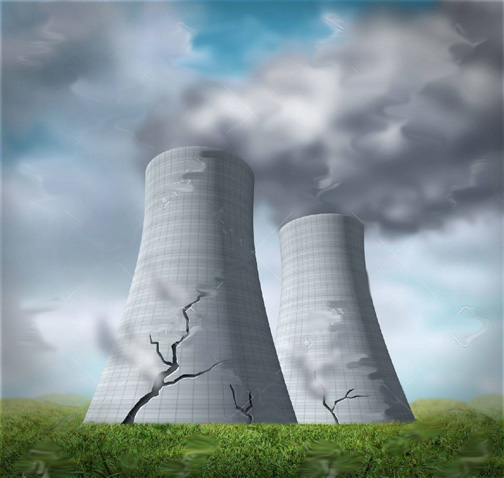
Ageing nuclear reactors must be ‘double-checked’ for safety before
being kept going to ease energy crisis. Closure of seven nuclear reactors
by 2028 will ‘significantly reduce’ UK energy generation, the Public
Accounts Committee warns, and taxpayers face billions of pounds in extra
costs.
iNews 20th May 2022
UK Parliament’s Public Accounts Committee sets out the grim facts on costs of decommissioning nuclear reactors
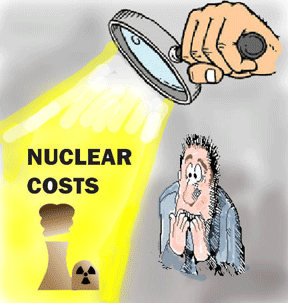
Despite government already having had to provide additional funding of
£10.7 billion, there remains a strong likelihood that more taxpayers’
money will be required to meet the costs of decommissioning the seven
Advanced Gas-cooled Reactor nuclear power stations.
The Nuclear Liabilities Fund, which was set up to meet the decommissioning costs of these stations,
has not kept up with the increased costs of decommissioning or met its
investment targets. In response, government has chosen to top up the Fund
with taxpayers’ money, providing an injection of capital of £5.1 billion
in 2020–21 with a further £5.6 billion expected in 2021–22. HM
Treasury and the Department for Business, Energy & Industrial Strategy have
opted to maintain an investment strategy for the Fund whereby around 80% of
its assets are invested in the National Loans Fund currently earning
minimal returns.
Estimated decommissioning costs on the other hand have
almost doubled since March 2004, estimated at £23.5 billion in March 2021,
and there remains a significant risk that the costs could rise further
putting strain on the Fund.
Public Accounts Committee 20th May 2022
https://publications.parliament.uk/pa/cm5803/cmselect/cmpubacc/118/summary.html
UK nuclear power stations’ decommissioning cost soars to £23.5bn
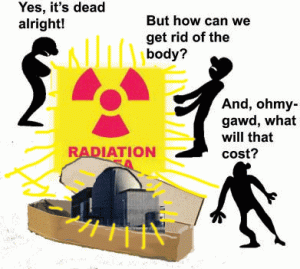
UK nuclear power stations’ decommissioning cost soars to £23.5bn https://www.theguardian.com/environment/2022/may/20/uk-nuclear-power-stations-decommissioning-cost Failures in government’s investment strategy mean taxpayer has contributed £10.7bn in just two yearsm Sandra Laville Environment correspondent Fri 20 May 2022
The cost of decommissioning the UK’s seven ageing nuclear power stations has nearly doubled to £23.5bn and is likely to rise further, the public accounts committee has said.
The soaring costs of safely decommissioning the advanced gas-cooled reactors (AGRs), including Dungeness B, Hunterston B and Hinkley B, are being loaded on to the taxpayer, their report said.
Failures in the government’s investment strategy for the fund, which was set up to pay for the decommissioning, have led to the taxpayer topping it up by an additional £10.7bn in just two years.
The nuclear power stations are owned by EDF Energy and provide much of the UK’s nuclear power-generated electricity, which makes up 16% of the energy mix. But the stations are nearing the end of their lives and are scheduled to stop generating electricity during this decade.
The government has recently agreed that once the stations have been defuelled by EDF, which involves the removal of all the spent fuel from the reactor core and cooling ponds, ownership of the stations will be transferred to the government’s Nuclear Decommissioning Authority (NDA) to complete decommissioning.
“The pace at which the stations can be defuelled could have a big impact on the costs, between £3.1bn and £8bn depending on the time taken,” the inquiry report said. “Successful defuelling will depend on all parties being ready and working together, including the NDA being ready to receive and dismantle the volume of fuel arriving at Sellafield. Any delays in the defuelling process could result in costs increasing substantially.
“The handover agreement does not appear to sufficiently ‘incentivise cost efficiency and ensure a smooth transfer of defuelled stations to the NDA’.”
The public accounts committee also said it had concerns over whether the NDA had the capacity to take on the seven AGR stations in addition to its other responsibilities, which includes decommissioning the older Magnox reactors.
It will cost the UK taxpayer £132bn to decommission all the UK’s civil nuclear sites and the work will not be completed for another 120 years, according to latest estimates.
Boris Johnson has pledged to build eight nuclear power stations in eight years. But the UK has no facility for permanently and safely storing the waste from past, present or future nuclear power stations. Most is currently stored at Sellafield, one of the most complex and hazardous nuclear sites in the world.
Nuclear Waste Services, an arm of the government, is seeking a site to build a geological deposit facility deep underground for all the UK’s nuclear waste.
MPs on the public accounts committee said in their report on Friday the government must learn lessons from the rising costs of decommissioning the seven AGR reactors and be clear how the decommissioning of proposed new nuclear stations would be funded.
The seven stations were sold by the government to EDF in 2009, with the later agreement that the French company would remove the fuel from the stations when they closed, and the Nuclear Decommissioning Authority would take on the decommissioning of the sites. But the cost of decommissioning the seven AGR reactors that began to close last year, plus Sizewell B, has more than doubled from £12.6bn in 2004-05 to £23.5bn in 2020-21, the public accounts committee report said.
“There remain significant uncertainties that will need to be managed to prevent further increases in costs and ease pressures on the fund,” the report said. “The cost of defuelling will depend on the stations not closing significantly earlier than planned and how quickly they can be defuelled once electricity generation ceases.”
The public accounts committee, in a previous report, said the cost of decommissioning the older Magnox reactors – which were the first generation of UK nuclear stations – had increased by billions of pounds because of uncertainty over the condition of the sites and how to tackle the decommissioning.
The PAC report said the closure of seven nuclear stations by 2028 would have a significant impact on energy production, but EDF has said there can be no extensions to the life of the reactors while the UK waits for new generating capacity to come online.
Nuclear Fusion Is Already Facing a Fuel Crisis

It doesn’t even work yet, but nuclear fusion has encountered a shortage of tritium, the key fuel source for the most prominent experimental reactors
” ………………… Like many of the most prominent experimental nuclear fusion reactors, ITER relies on a steady supply of both deuterium and tritium for its experiments. Deuterium can be extracted from seawater, but tritium—a radioactive isotope of hydrogen—is incredibly rare.
Atmospheric levels peaked in the 1960s, before the ban on testing nuclear weapons, and according to the latest estimates there is less than 20 kg (44 pounds) of tritium on Earth right now. And as ITER drags on, years behind schedule and billions over budget, our best sources of tritium to fuel it and other experimental fusion reactors are slowly disappearing.
Right now, the tritium used in fusion experiments like ITER, and the smaller JET tokamak in the UK, comes from a very specific type of nuclear fission reactor called a heavy-water moderated reactor. But many of these reactors are reaching the end of their working life, and there are fewer than 30 left in operation worldwide—20 in Canada, four in South Korea, and two in Romania, each producing about 100 grams of tritium a year. (India has plans to build more, but it is unlikely to make its tritium available to fusion researchers.)
But this is not a viable long-term solution—the whole point of nuclear fusion is to provide a cleaner and safer alternative to traditional nuclear fission power. “It would be an absurdity to use dirty fission reactors to fuel ‘clean’ fusion reactors,” says Ernesto Mazzucato, a retired physicist who has been an outspoken critic of ITER, and nuclear fusion more generally, despite spending much of his working life studying tokamaks.
The second problem with tritium is that it decays quickly. It has a half-life of 12.3 years, which means that when ITER is ready to start deuterium-tritium operations (in, as it happens, about 12.3 years), half of the tritium available today will have decayed into helium-3. The problem will only get worse after ITER is switched on, when several more deuterium-tritium (D-T) successors are planned.
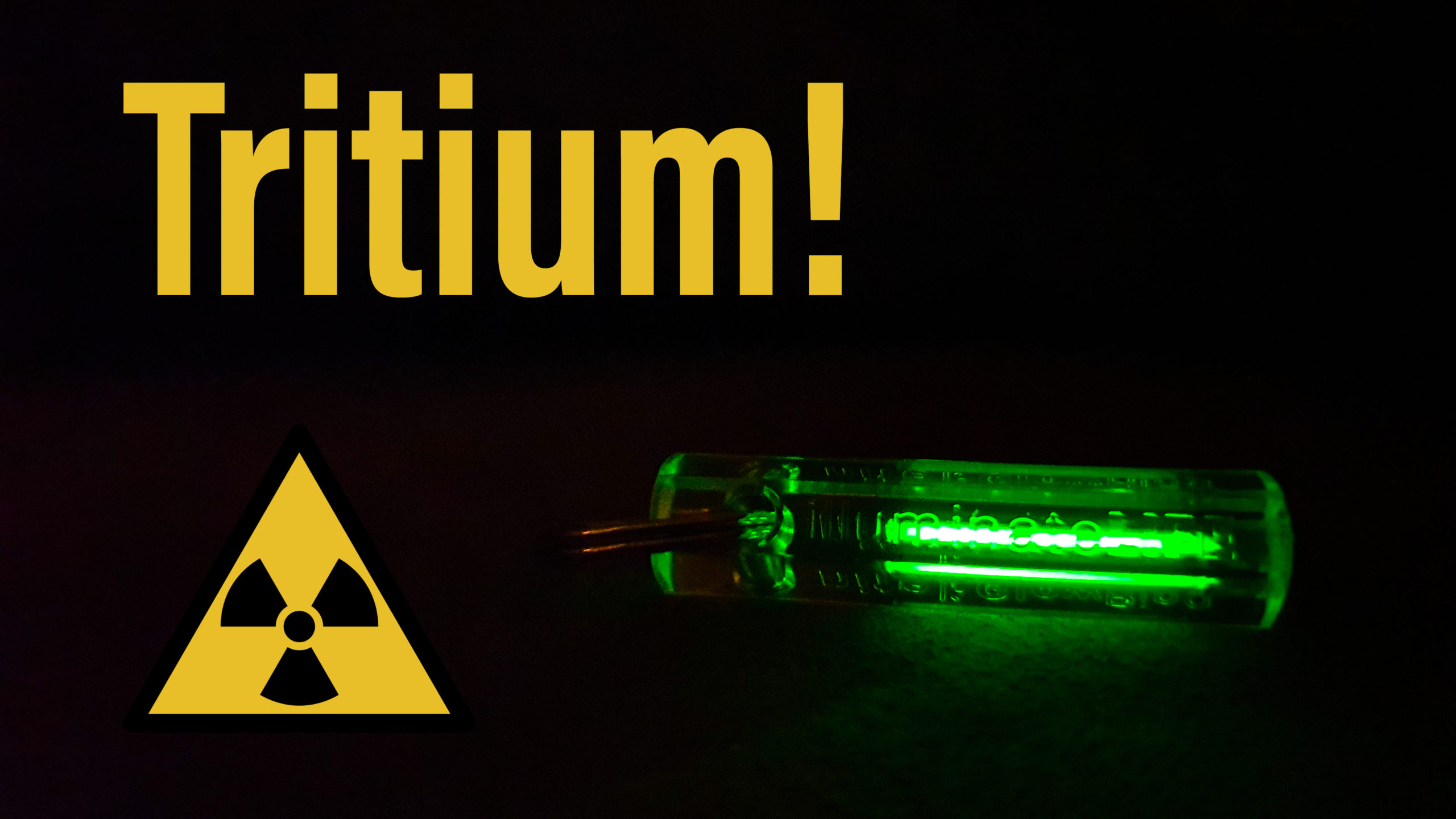
These twin forces have helped turn tritium from an unwanted byproduct of nuclear fission that had to be carefully disposed of into, by some estimates, the most expensive substance on Earth. It costs $30,000 per gram, and it’s estimated that working fusion reactors will need up to 200 kg of it a year. To make matters worse, tritium is also coveted by nuclear weapons programs, because it helps makes bombs more powerful—although militaries tend to make it themselves, because Canada, which has the bulk of the world’s tritium production capacity, refuses to sell it for nonpeaceful purposes.
………………………………… the mainstream fusion community is still pinning its hopes on ITER, despite the potential supply problems for its key fuel. “Fusion is really, really difficult, and anything other than deuterium-tritium is going to be 100 times more difficult,” says Willms. “A century from now maybe we can talk about something else.” https://www.wired.com/story/nuclear-fusion-is-already-facing-a-fuel-crisis/
France’s woes with nuclear power plants means more energy uncertainty for Europe
The utility cut its forecast as it realised that “stress corrosion” issues affecting some of its reactors will require more checks and repairs. Irish Examiner, THU, 19 MAY, 2022. LARS PAULSSON, JESPER STARN AND FRANCOIS DE BEAUPUY
The woes facing the nuclear power stations at France’s EDF — Europe’s largest electricity producer — will increase the pressure on war-hit European energy markets after the summer.
EDF, which is the backbone of Europe’s integrated power system, cut its nuclear output target for a third time this year, the latest sign that Europe’s power crisis is worsening.
Western Europe has for decades relied on exports of power from EDF’s nuclear stations. The cuts are another blow to European energy security just as the region is weaning itself off Russian supplies of everything from natural gas to coal and oil because of the war in Ukraine.
Less output from EDF is sending prices higher just as soaring inflation is pushing up costs for everything from petrol to food. It could get even worse in winter as France, traditionally an exporter of electricity, may be forced to import more from its neighbours.
French prices are the most expensive in Europe, with contracts for the period almost double levels in Germany. The utility cut its forecast as it realised that “stress corrosion” issues affecting some of its reactors will require more checks and repairs. The outlook for the following year remains unchanged for now, the firm said.
| “We fine-tuned the repairs to be made,” Regis Clement, deputy head of the company’s nuclear division, said during a media conference. “We’ve got to cut more pipes” to carry out further checks “and more repairs to handle”, he said.The big test will come when temperatures start to fall toward the end of the year. It won’t take many days of cold weather to jeopardise French power supplies, according to Emeric de Vigan, chief executive officer at French energy analysis firm Cor-e.“With such poor nuclear availability, if we reach 2 degrees Celsius below normal in the winter for a few days we could be in trouble, it would be really tight,” Mr de Vigan said. Paying customers and factories to lower consumption are steps that likely will need to be taken, he said. ………………. https://www.irishexaminer.com/business/economy/arid-40876541.html |
Russia’s grip on Europe’s nuclear power industry – this is being ignored
Europe needs a plan in place for cutting ties with Russia’s nuclear
giant Rosatom, says 2021 Right Livelihood Award winner and co-chairman of
Ecodefense Vladimir Slivyak. With the European Union tightening its
sanctions against Russia, banning Russian imports of oil, gas, and coal has
emerged as one powerful tool to starve the Kremlin’s war machine of
funding it needs to continue its brutal aggression in Ukraine.
But one other major source of Russia’s revenue in Europe has largely remained
unnoticed: Russia’s supplies of nuclear fuel and services to European
nuclear power plants.
Seeking to close this gap in Europe’s concerted
action against the war in Ukraine and to provide a comprehensive picture of
the union’s reliance on Russian nuclear technology, environmentalists
Patricia Lorenz, of Friends of the Earth Europe, and Vladimir Slivyak, a
2021 Right Livelihood Award laureate and co-chairman of the Russian
environmental group Ecodefense, on Wednesday jointly presented Russian Grip
on EU Nuclear Power – an overview of Russia’s businesses and supply
chains serving the European nuclear market.
Eco Defense 19th May 2022
Cost of shutting down UK’s old nuclear reactors is doubling and then some
The cost of decommissioning the UK’s seven ageing nuclear power stations
has nearly doubled to £23.5bn and is likely to rise further, the public
accounts committee has said. The soaring costs of safely decommissioning
the advanced gas-cooled reactors (AGRs), including Dungeness B, Hunsterston
B and Hinkley B, are being loaded on to the taxpayer, their report said.
Failures in the government’s investment strategy for the fund, which was
set up to pay for the decommissioning, have led to the taxpayer topping it
up by an additional £10.7bn in just two years. The nuclear power stations
are owned by EDF Energy and provide much of the UK’s nuclear
power-generated electricity, which makes up 16% of the energy mix. But the
stations are nearing the end of their lives and are scheduled to stop
generating electricity during this decade. The government has recently
agreed that once the stations have been defuelled by EDF, which involves
the removal of all the spent fuel from the reactor core and cooling ponds,
ownership of the stations will be transferred to the government’s Nuclear
Decommissioning Authority (NDA) to complete decommissioning.
Guardian 20th May 2022
https://www.theguardian.com/environment/2022/may/20/uk-nuclear-power-stations-decommissioning-cost
EDF shares fall after new profit warning due to nuclear outages
Shares in EDF fell 1.8% on Thursday after the French utility warned
outages at its nuclear power plants would result in a steeper-than-expected
cut in power output and thus have a greater than previously estimated
impact on 2022 core earnings. EDF said the impact of the outages largely
related to a program of inspections and repairs the company is carrying out
on some of its reactors would have a negative impact of around 18.5 billion
euros on the group’s core earnings this year instead of the 14 billion
euros previously forecast.
Financial Post 19th May 2022
Chernobyl nuclear fears as forest near Exclusion Zone in FLAMES – emergency triggered

CHERNOBYL nuclear fears have surged after a forest near the Exclusion Zone erupted in flames as emergency services battled to extinguish the huge blaze.
By PAUL WITHERS, May 18, 2022 The State Emergency Service of Ukraine reported that litter in the forest near the Chernobyl Exclusion Zone had caught fire. More than a dozen firefighters and four units of equipment were involved in battling to put out the massive fire. At 2.10am local time, the fire had been localised to an area of 45 hectares.
Video footage shared on Twitter shows the forest next to the Exclusion Zone engulfed in flames that are several metres high.
Rescue workers wearing protective face masks are also seen leading a local resident to safety.
The State Emergency Service of Ukraine shared footage of the fire on its Telegram channel.
The service also wrote alongside this: “May 17 near the village. “In the forest of Vyshhorod district, forest litter caught fire.
“During the fire, our firefighters rescued a local resident.
“At 02:10 on May 18, the fire was localized on an area of 45 hectares.
“As of 09:00 there is decay of dry grass and stumps.
“Sixteen rescuers and four units were involved in the firefighting techniques.
The Chernobyl Exclusion Zone is an officially designated 1,000 square mile area in Ukraine around the site of the Chernobyl nuclear reactor disaster.
It covers an area where radioactive contamination is highest and public access and habitation are restricted.
The Exclusion Zone aims to restrict access to hazardous areas, reduce the spread of radiological contamination, and conduct radiological and ecological monitoring activities.
It remains one of the most radioactively contaminated areas in the world, attracting widespread interest over the high levels of radiation exposure in the environment.
The Exclusion Zone had been established by the Soviet Armed Forces soon after the nuclear power plant disaster in 1986. This initially existed as an area with a radius of 30 miles from the structure, designated for evacuation and placed under military control.
Over the years, its borders have been widened to cover a much larger area of Ukraine.
Ukraine controlled by US and UK – Russia
Rt.com 17 May 22, The stalling of the peace talks is a result of the wish of London and Washington to drag out the Ukraine conflict, Lavrov claimed. London and Washington have been exercising their control over the Ukrainian negotiators with the aim of dragging out the conflict, and this policy has led to the suspension of peace talks between Moscow and Kiev, Russian Foreign Minister Sergey Lavrov claimed on Tuesday.
Speaking at the New Horizons educational marathon, Lavrov said that Ukraine may have made its own decision in Istanbul, when it came up with some “acceptable principles for reaching agreements” during negotiations with Russia. However, according to the minister, these ideas were apparently not supported by the West.
“We have information coming through various channels that Washington and especially London ‘lead’ the Ukrainian negotiators and control their freedom of maneuver. They want to drag out the conflict, and it seems to them that the longer it will last, the more damage they will inflict on Russian servicemen,” Lavrov said.
The foreign minister doubts, however, that “transferring the conversation to the level of Washington or London” would be able to change anything in terms of the progress.
“Anyway, neither London, nor Washington, nor the West as a whole has put forward any proposals,” Lavrov said.
The West actually acknowledged that Ukraine is “expendable in a hybrid total war against the Russian Federation,” Lavrov claimed, citing remarks by the EU, UK and US officials who have said on multiple occasions that Russia should not be allowed to win in the Ukrainian conflict.
“The war was declared by them. And not at all between Ukraine and Russia, but between the West and Russia,” Lavrov said.
Earlier on Tuesday, Deputy Foreign Minister Andrey Rudenko said that diplomatic dialogue between Moscow and Kiev had been completely suspended after Kiev withdrew from negotiations without providing any response to the latest Russian proposals.
A Ukrainian presidential adviser, Mikhail Podolyak, later confirmed that “after the Istanbul communiqué [in March], there have been no changes, no progress.”……. https://www.rt.com/russia/555640-russia-lavrov-west-ukraine/
Greens oppose Nato membership for Scotland and ‘evil’ nuclear weapons
The National By Angus Cochrane@_Anguscchrn, Multimedia Journalist 18 May 22, NUCLEAR weapons are “simply evil”, the Scottish Greens have said as they detailed their reasons for opposing Nato membership for an independent Scotland.
West Scotland MSP Ross Greer said it would be “morally wrong” for Scotland to join Nato if it were to become independent. It comes after Nicola Sturgeon reaffirmed her party’s support for joining the military alliance in the event of a Yes vote.
Greer explained both parties, who signed a historic co-operation deal in Holyrood last year, “agreed to disagree” on Nato. The MSP told BBC Scotland’s The Nine: “It’s no surprise to anyone that the Scottish Greens and the SNP have different positions on Nato.
“For the Scottish Greens, we enthusiastically believe in co-operation, especially in areas like security and defence.
“Patrick Harvie lists one of them and that is Nato’s first strike nuclear policy. Nato reserves the right to launch the first strike in a nuclear war.
“That would be world ending and we believe that is simply evil. No-one has the right to do that and we believe it would be morally wrong for Scotland to join such an alliance.”
BBC Scotland put it to Greer that nuclear weapons were a deterrent.
Greer added: “But it is a Nato policy. First strike is not about responding to an attack, first strike is about the right to launch, to actually start that war, to start the last world war, because it would be the war that ended the world as we know it.
| “That’s the nature of nuclear weapons.“The very existence of nuclear weapons risks the chance of nuclear war.“If we want to persuade rogue and hostile states to reduce their nuclear stockpiles, asking them to do it, demanding that they do it unilaterally, has no chance of success.”“This is a fundamental moral question. I don’t want the last thing that my country potentially does in its existence is to wipe another country off the map. Nuclear weapons are simply evil.”…………………….. The intervention comes after Nicola Sturgeon said the Russian invasion of Ukraine has strengthened the case for joining Nato…………………………… https://www.thenational.scot/news/20147291.greens-oppose-nato-membership-scotland-evil-nuclear-weapons/ |
“We agree with the First Minister that Scotland has a really positive role to play in Europe’s collective security arrangements. But we disagree on membership of Nato for two reasons.
1 This Month


of the week– Nuclear Reactor Information Task Force

14 May – online event From Bombs to Data Centres: the Face of Nuclear Colonialism
To see nuclear-related stories in greater depth and intensity – go to https://nuclearinformation.wordpress.com
-
Archives
- May 2026 (163)
- April 2026 (356)
- March 2026 (251)
- February 2026 (268)
- January 2026 (308)
- December 2025 (358)
- November 2025 (359)
- October 2025 (376)
- September 2025 (257)
- August 2025 (319)
- July 2025 (230)
- June 2025 (348)
-
Categories
- 1
- 1 NUCLEAR ISSUES
- business and costs
- climate change
- culture and arts
- ENERGY
- environment
- health
- history
- indigenous issues
- Legal
- marketing of nuclear
- media
- opposition to nuclear
- PERSONAL STORIES
- politics
- politics international
- Religion and ethics
- safety
- secrets,lies and civil liberties
- spinbuster
- technology
- Uranium
- wastes
- weapons and war
- Women
- 2 WORLD
- ACTION
- AFRICA
- Atrocities
- AUSTRALIA
- Christina's notes
- Christina's themes
- culture and arts
- Events
- Fuk 2022
- Fuk 2023
- Fukushima 2017
- Fukushima 2018
- fukushima 2019
- Fukushima 2020
- Fukushima 2021
- general
- global warming
- Humour (God we need it)
- Nuclear
- RARE EARTHS
- Reference
- resources – print
- Resources -audiovicual
- Weekly Newsletter
- World
- World Nuclear
- YouTube
-
RSS
Entries RSS
Comments RSS
 nuclear-news