No end to nuclear costs for UK taxpayers
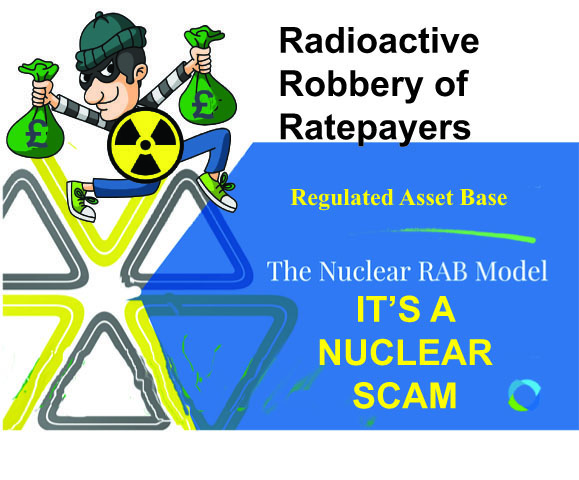
Varrie Blowers unpacks the impacts of the Nuclear Industry (Financing) Act
2022 in BANNG’s Regional Life column for June 2022.
Heard the fantasy about constructing an airport in the Thames estuary? And the one about
constructing a bridge from Scotland to Northern Ireland?
Well, there is a new fantasy going the rounds: that eight new nuclear power stations will be
constructed in the UK in the next decade. And where is the Government proposing to obtain the huge sums required for construction? From your pocket, of course! Under the Nuclear Industry (Financing) Act, 2022, it is intended that in order to attract investors a levy will be added to consumers’ energy bills to pay the upfront costs. Energy Minister, Kwasi Kwarteng, thinks this will be ‘a small amount’ but at this time of
soaring energy bills seems unable to reveal the actual figure. And, on top of this, taxpayers will be paying £1.7bn to enable a large-scale nuclear
plant to achieve a final investment decision in this Parliament.
BANNG 13th June 2022
EDF the first company to take advantage of the European Union’s taxonomy classification of nuclear power as ”green”
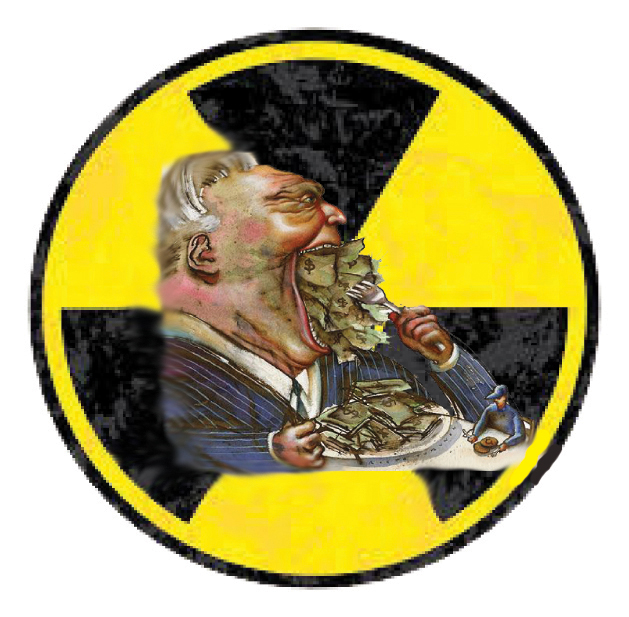
EDF has become the first issuer to harness last week’s hard-fought
inclusion of nuclear power in the European Union’s taxonomy of
sustainable activities and will use a new green financing framework to
support nearly €8bn of annual nuclear spending.
IFR 12th July 2022
https://www.ifre.com/story/3439095/edf-galvanises-nuclear-green-bonds-d6zm8jhtf5
Nearly 50,000 people have signed a petition calling for a full council debate and vote on the plans for seismic testing in the Irish Sea.
Anti-nuclear waste campaigners have protested over plans for seismic
testing in the Irish Sea. The research, which uses sound waves, is being
carried out to determine if the seabed contains suitable geology for
underground nuclear waste storage. Mid and South Copeland are among areas
in the UK mooted for what is known as a Geological Disposal Facility (GDF).
Nearly 50,000 people have signed a petition calling for a full council
debate and vote on the plans.
BBC 13th July 2022
France’s Competition Authority accuses 6 nuclear decommissioning companies of being an illegal cartel
France’s Competition Authority has accused six companies in the nuclear
decommissioning market of illegally exchanging information and rigging
public procurement procedures.
GCR 12th July 2022
https://globalcompetitionreview.com/article/france-alleges-nuclear-decommissioning-cartel
By classifying nuclear as ”green”, Europe benefit’s Putin’s Russia – a major supplier of nuclear fuel
By classifying gas and nuclear as “green” investments the EU has
indirectly handed Putin a pay check. More must be done, including sanctions
on uranium, to end his grip on Europe’s power supply.
At least a fifth of the uranium for Europe’s nuclear reactors comes from Russia
Tortoise 12th July 2022
https://www.tortoisemedia.com/2022/07/12/putins-other-nuclear-project/
Developer dismisses B-52 crash radiation fears at proposed site of Spanish resort
Two nuclear bombs exploded in 1966 after US aircraft involved in mid-air collision over Palomares in Almería
https://www.theguardian.com/world/2022/jul/14/developer-dismisses-b-52-crash-radiation-fears-at-proposed-site-of-spanish-resort Stephen Burgen in Barcelona, Thu 14 Jul 2022
A British company has defended its plans to develop a resort in south-east Spain after environmental groups claimed the area could be contaminated with radioactivity from nuclear bombs that fell after a plane crash in the 1960s.
On 17 January 1966 a US air force B-52 collided mid-air with a refuelling plane over Palomares in Almería, killing seven of the 11 crew.
Of the four 1.5 megatonne nuclear bombs the B-52 was carrying, three fell to Earth, of which two exploded as conventional bombs, spreading radioactive debris over a wide area, while the fourth landed in the sea. It was recovered 80 days later.
Shortly after the accident, the US shipped 1,700 tonnes of contaminated earth to South Carolina, after which it was largely forgotten.
British-based Bahía de Almanzora plans to build 1,600 homes, a hotel and a sports complex about a mile (1.5km) from the contaminated zone in Palomares, which has been fenced off for the past 56 years. The Almanzora proposal makes no mention of the 1966 incident or the contamination.
José Ignacio Domínguez, a lawyer who heads the local Ecologists in Action group, said: “The plutonium isn’t just in the fenced-off area because it’s carried on the wind and by animals such as birds and rabbits.” Domínguez said his group’s own tests have revealed dangerously high levels of radiation outside the closed zone.
Meritxell Bennasar from Greenpeace said: “A chain-link fence isn’t much of a barrier. Some of the contamination is only a few centimetres deep. There are places where the United States secretly buried contaminated soil and we’re only just finding out where they are.”
Fraser Prynne, development director for Bahía de Almanzora, said the contaminated land was “nowhere near the development” and that “this stuff about particles flying about is nonsense”.
“There’s no need to say it’s close to contaminated land,” he said. “There are probably 150 existing houses that are closer.”
The 1966 accident happened as Francoist Spain was opening up to tourism and shortly afterwards Manuel Fraga, the tourism minister, and Angier Biddle Duke, the US ambassador, staged a photo-op of them swimming in the sea at Palomares in an attempt to demonstrate that the waters were safe.
Fifty-six years later, 103 hectares (254,000 acres) remain fenced off and neither the Spanish nor US governments have complied with a mutual agreement signed in 2015 to clean up the zone.
“We’re as keen as anyone to see the area cleaned up,” Prynne said. “It’s American plutonium but there’s no nuclear cemetery in Spain and no one else wants it.”
Palomares was not mentioned during the recent visit to Madrid by the US president, Joe Biden, and when Julissa Reynoso Pantaleón, the US ambassador to Spain, was asked about the long-delayed clean-up in an interview this week in El País newspaper, she said only that “we are prepared to listen to any proposal from the Spanish government”.
Aside from the radiation issue, environmentalists say the proposed development will destroy what is virtually the last stretch of virgin coast in Almería.
“The only reason this part of the coast hasn’t been destroyed is because it’s radioactive,” said Domínguez.
The developers however say the mayor and the local population are in favour of the plan. “They’ve seen all the development along the coast and it’s been disappointing not to see it happening in their area,” Iain Anderson Moody said on behalf of the Almanzora
Office for Nuclear Regulation (ONR) finds shortfalls in EDF’s cybersecurity plans
French energy giant EDF has been placed under ‘enhanced attention’ by the
UK’s Office for Nuclear Regulation (ONR) after identifying shortfalls in
its cybersecurity plans, according to reports this weekend.
The ONR is
taking action due to the findings of routine inspections over the past 12
months. The Telegraph newspaper quoted the body as saying it had
“identified shortfalls in governance, risk and compliance in certain
technical controls” during these inspections. EDF owns and runs the UK’s
network of nuclear power stations at five locations and is currently
building a new nuclear power station at Hinkley Point in Somerset, together
with minority Chinese partner CGN.
The action takes place against a
backdrop of increased awareness of the vulnerability of energy
infrastructure around Europe to cyber-attack. In particular, Russia has
been blamed for cyber-attacks on both windfarms and nuclear power plants in
Europe as part of its invasion of Ukraine.
Info Security 11th July 2022
https://www.infosecurity-magazine.com/news/edf-scrutiny-cybersecurity-record/
Les Echos 11th July 2022
Danger intensifies around Zaporizhzhia Nuclear Power Plant in southern Ukraine

The Russian army is transforming Europe’s largest nuclear power plant into a military base overlooking an active front, intensifying a monthslong safety crisis for the vast facility and its thousands of staff. At the
Zaporizhzhia Nuclear Power Plant in southern Ukraine, more than 500 Russian soldiers who seized the facility in March recently have deployed heavy artillery batteries, and laid anti-personnel mines along the shores of the reservoir whose water cools its six reactors, according to workers, residents, Ukrainian officials, and diplomats.
The Ukrainian army holds the towns dotted on the opposite shore, some 3 miles away, but sees no easy way to attack the plant, given the inherent danger of artillery battles around active nuclear reactors.
Wall St Journal 5th July 2022
Scotland not impressed with UK Tory government’s enthusiasm for nuclear power

THE Scottish Government has rejected UK Energy Minister Greg Hands plea to “rethink” its stance on new nuclear power stations in Scotland. The Tory minister said it’s a “great pity” Scotland has opposed the construction of any fission power plants amid the cost of living crisis and that he would be willing to sit down with First Minister Nicola Sturgeon and Scottish Energy Secretary Michael Matheson to hear their concerns.
It has been a longstanding Scottish Government and SNP policy to oppose nuclear, with the focus instead on the just transition to renewables.
Hands made the comments during a round table with Scottish journalists in London, where he also said there was no reason to re-assess licences for fossil fuel projects in the North Sea – despite persistent warnings from the United Nations on any more oil and gas fields being brought into production.
Scottish Net Zero Secretary Matheson has previously said safety concerns are the main reason the government has rejected any new nuclear sites, adding that “it is probably the most expensive form of electricity you can choose to produce”.
Following the closure of Hunterston B in North Ayrshire in January, due to cracks found in graphite bricks which make up the reactor core, the only functioning nuclear power station in Scotland is the Torness plant near Dunbar, East Lothian.
The UK Government has said it will not “impose” any new nuclear power on Scotland despite
plans to approve up to eight new fission reactors –by 2030, boosting overall capacity up to 24GW by 2050. But Hands has insisted the Scottish government should reconsider its stance.
When The National pointed out that nuclear power is expensive, takes a long time to be brought online and produces harmful toxic waste, Hands said: “This country has an amazing
safety record when it comes to nuclear. …………………..
. Maggie Chapman, the Scottish Greens MSP for North East Scotland, criticised his comments and said that renewables are “cheaper, cleaner and safer” than nuclear, and are easier to scale up.
She said: “Time and again the Tories have shown that they cannot be trusted with our environment. Nuclear power is neither safe nor reliable, and it leaves a toxic legacy that could last for centuries. “As Hinkley Point shows us, it is also very expensive. Any expansion would take years, and need to be paid for on top of skyrocketing bills.
The National 11th July 2022
New Energy Security Bill waters down regulation for fusion, warns Nuclear Free Local Authorities
As the Nuclear Free Local Authorities have feared, following a pre-Christmas BEIS consultation, the Johnson Government has recently revealed its plans to relax the regulatory regime applicable to future fusion reactors by choosing not to classify them as ‘nuclear installations’.
Fission nuclear reactors are subject to nuclear site licencing requirements overseen by the Office of Nuclear Regulation under the Nuclear Installations Act 1965 (NIA 1965), but government ministers have now decided that fusion plants should instead be regulated by the Health and Safety Executive and Environment Agency like other industrial facilities. The new Energy Security Bill just introduced to Parliament by the Business Secretary will exclude fusion reactors from the provisions of the NIA 1965.
Ministers claim that fusion does not present the same ‘higher hazards’ found in fission plants, but the NFLA fears that their decision is about making the UK attractive to investors in their haste to make the UK a ‘fusion industry superpower’ rather than prioritising public safety.
In its response to the Department of Business, Energy and Industrial Strategy (BEIS) consultation, the NFLA had called for ‘no watering down’ of the regime, challenging the notion that fusion was largely without risk.
For research commissioned by the NFLA revealed that fusion would result in the production of large quantities of radioactive waste, with the risk that radioactive tritium could enter the water supply. Fusion also requires immense temperatures, hotter than the sun, to spark and sustain a fusion reaction and this energy must be safely contained using challenging and unproven engineering solutions. Operation would also result in the whole structure being subjected to prolonged exposure to neutron radiation, a situation which if not carefully monitored could result in the very integrity of the reactor vessel being placed in jeopardy.
The Chair of the NFLA Steering Committee, Councillor David Blackburn, said: “The NFLA’s view is that the government’s decision is misguided. It seems blasé to treat a fusion plant for regulatory purposes in the same way as a factory making chemical products. Fusion presents some of the same hazards and challenges as fission, but some are new; surely then fusion is nuclear and so a plant utilizing this technology must be a ‘nuclear installation’.
“In the view of the NFLA, there is no logical reason on safety grounds not to apply the same regulatory regime to fusion reactors as fission reactors. By signalling through the Energy Security Act their determination to exclude fusion from the rigours of the licencing regime, it seems clear that the present government is more focused on reducing the regulatory and cost burden on investors and commercial operators entering the market, putting expediency and profits before public safety.”
On waste management and decommissioning, the government’s position is even more unclear with ministers calling it ‘premature’ to outline clear proposals at this time, something the NFLA is especially perturbed about.
Councillor Blackburn added: “It is a shame that ministers have missed a trick by refusing to state clearly that future operators will have to share a greater burden of the cost of decommissioning and waste management, rather than passing the bill to the Nuclear Liabilities Fund and ultimately the British taxpayer.”
Macron’s nationalisation of EDF could have major implications for the UK
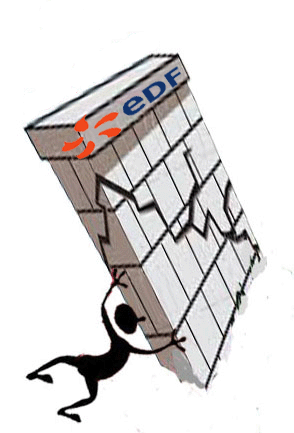
EDF has a more fundamental problem than state ownership can fix: the expense and long build times of nuclear power, compared to other technologies. “[Nationalisation] may change the capacity of the state to directly back the plans, but it doesn’t change the fact that it won’t be profitable,” argues Yves Marignac, at the négaWatt Association think-tank. “Nuclear is profoundly uneconomic. The market has said no,” adds Dr Paul Dorfman, associate fellow at the University of Sussex.
What Macron takeover means for Britain and France’s ‘nuclear renaissance’.
EDF nationalisation could have major implications for the UK’s nuclear fleet. France’s prime minister Elisabeth Borne faced boos and heckling as she set our her government’s plans to the National Assembly last week, striving for coalition after President Emmanuel Macron lost his outright majority in June.
High on her list was an announcement for France to take full ownership of its debt-laden energy giant EDF, as the weakened president tries to tackle the deepening energy and cost of living crisis
rippling across Europe amid the war in Ukraine.
Across the Channel, political turmoil was also affecting EDF. An announcement on planning approval for its Sizewell C nuclear project in Suffolk was pushed back until July 20 amid the chaos surrounding Boris Johnson’s resignation.
The company has a massive role in the UK’s energy sector, as owner of the UK’s nuclear fleet and only developer currently forging ahead with the country’s nuclear renaissance. Yet ballooning debts, outages and delays have raised doubts about its abilities on both sides of the Channel.
Will nationalisation in France be enough to fix its problems? The company’s problems stretch back beyond the turmoil in energy markets this year. Its debts of €43bn have swelled over several years amid high capital costs and spells of low electricity prices. Each year, EDF has to sell a chunk of its output at a fixed price to rivals, under state efforts to encourage competition.
Meanwhile, development of its flagship next-generation EPR reactors has been troubled. Though the first EPR power plant started running in China in 2018, one of its units has had to be shut for repairs due to cracked fuel rods. EDF says the problems have been “investigated and understood” and a solution found, with no risk posed to people or the environment. A second plant opened in Olkiluoto, Finland, in March – more than 10 years late and €8bn over budget. A third EPR in Flamanville, France, is running more than a decade behind schedule.
Meanwhile, Hinkley Point C, the new EPR power plant that EDF is building in Somerset, is now not expected to start generating until June 2027, with the pandemicdisrupting work. Sceptics of nuclear power argue EDF has a more fundamental problem than state ownership can fix: the expense and long build times of nuclear power, compared to other technologies. “[Nationalisation] may change the capacity of the state to directly back the plans, but it doesn’t change the fact that it won’t be profitable,” argues Yves Marignac, at the négaWatt Association think-tank. “Nuclear is profoundly uneconomic. The market has said no,” adds Dr Paul Dorfman, associate fellow at the University of Sussex.
Telegraph 10th July 2022
France and the big nuclear energy mistake
The French government wants to expand nuclear production in France and it also wants EDF to spend big money on the rehabilitation of numerous nuclear power generating stations. It has put pressure on EDF to embrace those policies and we suspect that it could force the issue as the majority shareholder.
France plans to renationalize EDF, its giant utility. That doesn’t sound like a big deal because the government already owns 84% of EDF’s outstanding shares.
But here is how we read the story.
The French government wants to expand nuclear production in France and it also wants EDF to spend big money on the rehabilitation of numerous nuclear power generating stations. It has put pressure on EDF to embrace those policies and we suspect that it could force the issue as the majority shareholder.
But a board of directors, with a fiduciary responsibility to shareholders and other providers of capital, would have a hard time approving a strategy that looked too risky or economically uncompetitive. EDF is, after all, not a division of the ministry of defense, but rather a somewhat privatized company with the government as its biggest and controlling shareholder. At least that is the appearance it would want to give to its shareholders. If France requires more nuclear power for geopolitical or strategic reasons,
despite its seeming cost disadvantage in the marketplace, we have no quarrel with that decision.
Our issue is with the current policy—to require some non-governmental shareholders to bear national security burdens and take financial risks that really belong uniquely to the government. The French have approached the matter with admirable clarity.
Oil Price 8th July 2022
https://oilprice.com/Energy/Energy-General/Europes-Big-And-Expensive-Energy-Mistake.html
The dilemma of disposal of radioactive trash

I don’t disagree with the opinion here, but why does no-one ever suggest STOPPING MAKING RADIOACTIVE TRASH ?
Roy Payne: FINLAND and Sweden are building their GDFs under the Baltic
sea. In the UK, the deepest potash mine in Europe stretches out for 20km
under the North Sea, and is as bone dry as any desert when you are 1km
beneath the surface. The European Parliament has conducted its own
independent analysis, ‘The World Nuclear Waste Report 2020’, which
concluded geological disposal is the ‘least worst option’ for the long-term
management of radioactive waste.
This is also the position of the German
Green Party, one of whose MEPs led the report. Those concerned about
burying radioactive waste deep underground argue the waste should be kept
on the surface – presumably on the assumption that over the next 100,000
years the planet’s surface will remain as constant, benign and unchanging
as deep rock formations, AND that humans will never ever make a mistake.
There are only two options available to us with regards radioactive waste
— keep it overground on the surface or bury it deep underground.
Because IF something goes wrong, it will either go wrong deep underground, or it
will go wrong overground on the surface. You don’t need to have a PhD to
work out which is the lesser of two evils — radioactivity leaking
underground harmlessly far away from the surface and people (which has
happened once), or radioactivity on the surface leaking instantly into the
air we breathe, the soil we grow our food in, and the water we drink.
But those are our only two choices — hence why the European Parliament,
German Green Party, and the international scientific community conclude
that geological disposal is the ‘least worst option’. I have no axe to
grind for NWS, and I certainly do not advocate for more nuclear. Nor do I
advocate for a GDF in Cumbria. But I do believe that if we are to build a
greener future, we have an ethical and environmental responsibility to
start the process of cleaning up the mess we’ve inherited.
Carlisle News & Star 10th July 2022
European Heatwave Risks Curbing French Nuclear Power Production
- Output from Golfech plant may be reduced from Thursday
- That comes as Europe needs France’s electricity more than ever
By Lars Paulsson July 12, 2022
The hot weather hitting Europe this week is set to reduce power output from France’s fleet of nuclear reactors, risking even higher electricity prices as the continent endures its worst energy crunch in decades.
Warm temperatures in the Garonne River mean that production restrictions are likely at the Golfech nuclear plant in the south of the country from Thursday, Electricite de France SA said in a filing with grid operator RTE. Temperatures in France and the Iberia region will be well above average over the next five days and even hotter next week, according to forecaster Maxar. ….. (subscribers only) https://www.bloomberg.com/news/articles/2022-07-12/french-nuclear-output-seen-curtailed-as-river-temperatures-rise#xj4y7vzkg
Europe divided over “greenwashing” gas and nuclear energy, but parliament ready to support the bill
For the European Parliament natural gas and nuclear power plants have been designated as climate-friendly investments. The European Commission released the proposal, formally called the EU taxonomy, in December as a list of economic activities that investors can label and market as green in the EU.
A motion to block the proposal received 278 votes in favor and 328 against, while 33 lawmakers abstained.
Unless 20 of the EU’s 27 member states oppose the proposal, it will be passed into law. The proposal was initially met with resistance among some EU member states, with one camp led by France strongly backing the green label for natural gas and nuclear energy, while Germany which has been phasing out its nuclear power plants — had opposed the plan.
Some environmental groups and EU lawmakers have also criticized the plan for “greenwashing” fossil fuel and nuclear energy.
Austria and Luxembourg have even pledged to sue the EU if the plan becomes law. Still, the proposal had the backing of the majority of the center-right European People’s Party, the European Parliament’s biggest lawmakers’ group.
Lawmakers of the centrist Renew Europe group were largely in favor of the proposal, while the Greens and Social Democrats mostly opposed it.
A total of 353 lawmakers — a majority of the Parliament’s 705 lawmakers — are needed to reject a plan for it to fail. The ongoing conflict over Russian gas supply to Europe has fueled opposition to the plan to label gas as environmentally friendly.
“It’s dirty politics and it’s an outrageous outcome to label gas and nuclear as green and keep more money flowing to Vladimir Putin’s war chest,” Greenpeace EU sustainable finance campaigner Ariadna Rodrigo said. “We will fight this in the courts,” she added.
Paul Tang, a Dutch EU lawmaker with the center-left Social Democrats, had criticized the plan as influenced by “the lobby from Gazprom and Rosneft,” both Russian state-owned energy companies.
Tang also slammed the move as “institutionalizing greenwashing.”
“It is now important to prevent this vote from setting a precedent for other countries to temper climate ambitions,” he wrote in a statement.
Bogdan Rzonca, a Polish member of the European Parliament (MEP) for the right-wing Law and Justice party (PiS), said less wealthy EU countries need private investments in gas and nuclear power to be able to move away from coal.
Gilles Boyer, a French MEP with the Renew group, said that meeting energy demand with renewable energy in the long-term “would be ideal, but it’s not possible right now.”
Czech Prime Minister Petr Fiala, whose country has just taken over the rotating EU presidency, said Wednesday’s vote was “excellent news” for Europe.
1 This Month


of the week– Nuclear Reactor Information Task Force

14 May – online event From Bombs to Data Centres: the Face of Nuclear Colonialism
To see nuclear-related stories in greater depth and intensity – go to https://nuclearinformation.wordpress.com
-
Archives
- May 2026 (156)
- April 2026 (356)
- March 2026 (251)
- February 2026 (268)
- January 2026 (308)
- December 2025 (358)
- November 2025 (359)
- October 2025 (376)
- September 2025 (257)
- August 2025 (319)
- July 2025 (230)
- June 2025 (348)
-
Categories
- 1
- 1 NUCLEAR ISSUES
- business and costs
- climate change
- culture and arts
- ENERGY
- environment
- health
- history
- indigenous issues
- Legal
- marketing of nuclear
- media
- opposition to nuclear
- PERSONAL STORIES
- politics
- politics international
- Religion and ethics
- safety
- secrets,lies and civil liberties
- spinbuster
- technology
- Uranium
- wastes
- weapons and war
- Women
- 2 WORLD
- ACTION
- AFRICA
- Atrocities
- AUSTRALIA
- Christina's notes
- Christina's themes
- culture and arts
- Events
- Fuk 2022
- Fuk 2023
- Fukushima 2017
- Fukushima 2018
- fukushima 2019
- Fukushima 2020
- Fukushima 2021
- general
- global warming
- Humour (God we need it)
- Nuclear
- RARE EARTHS
- Reference
- resources – print
- Resources -audiovicual
- Weekly Newsletter
- World
- World Nuclear
- YouTube
-
RSS
Entries RSS
Comments RSS
 nuclear-news