Cracking in the graphite core of Advanced Gas Cooled Nuclear Reactors

Today (10am, 1 August) Reactor 3 at the Hinkley Point B nuclear power plant
will cease generation for the last time. After the closure of Reactor 4
last month, this will finally bring all electricity production at the
Somerset site to a halt.
Although there were calls for the plant to be
granted a lifetime extension, recent revelations about the extent of
graphite core cracking at Hinkley Point B have convinced the Nuclear Free
Local Authorities that EDF Energy made the right call in sticking to its
closure plan, and the NFLA fears that core cracking will increasingly
compromise the safety of Britain’s remaining aging Advanced Gas Cooled
Reactors if their operating lifetimes are further extended.
Hinkley Point B was the first plant to be equipped with two Advanced Gas Cooled Reactors
(AGRs), entering service in 1976. Over 300 fuel channels and 10 layers of
graphite bricks make up the core of each AGR. EDF Energy has described the
graphite structure as ‘the major safety requirement of the core’.
Each graphite brick is loosely connected to its neighbouring bricks by graphite
‘keys’ and there are also ‘keyways’ at the top and bottom of each
brick. The continued integrity of the structure is vital to operational
safety as it provides pathways for the fuel rods, which generate the
fission reaction, to be loaded and for the control rods, which moderate the
reaction, to be inserted.
Although overall cracking in the other AGRs is
presently reported to be under 10%, worryingly cracks in the vital keyway
bricks have been discovered at Heysham 2, Reactor 7 and at Torness, Reactor
1, which is the currently the last reactor scheduled to be closed in 2028,
suggesting a worsening situation.
NFLA 1st Aug 2022
A fake ‘community partnership’ on ocean nuclear waste dumping

Nuclear Waste Service have announced their decision to form a community partnership. Their choice of name for the new group is almost as comic as it is misleading.
At present there is only one member who comes from “the affected community.” Even the two council representatives live 30 and 50 miles from the site. As for partnership, NWS pay the chair and the so called independent facilitator. NWS have written the recruitment criteria for potential members.
To be a true partnership their has to be a level of equality but to quote George Orwell “everyone is equal but the pigs are more equal than others.” In truth this cannot be considered either a community based project or a partnership.
Guardians of the East Coast GOTEC 17th July 2022
Over 50,000 petition against seismic testing to find ocean nuclear dump site

Campaigners say seismic surveys are damaging marine life. The research
which involves sending sound waves down to the seabed is to find a suitable
site for burying nuclear waste. For the next 2 to 3 weeks the ship will be
off the Copeland coast. Marianne Birkby says there has been a petition of
over 50k signatures. Volker Deeke at Cumbria University says there is good
evidence it has an impact on marine mammals.
BBC Look North (From 3.18 to 5.58) 2nd July 2022
Hinkley Point B leaves radioactive waste to be expensively managed for many generations to come.
FRENCH-owned EDF Energy has formally switched off Hinkley Point B’s
second reactor, a nuclear power station in the UK that has generated more
electricity than any other during its 46 years of service. The closure of
the plant at Bridgwater, Somerset, on 1 August, has prompted concerns that
the cost of energy in the UK will have to rise.
Hinkley Point B had been
expected to close in March next year, after EDF announced in 2012 that it
would extend the generating life of the plant by seven years from 2016.
However in November 2020, the energy firm said it had made the “proactive
decision” to move the nuclear power plant into the defuelling phase – the
first stage of the nuclear decommissioning process – no later than 15
July 2022.
Local campaigner Roy Pumfrey, said that Monday’s closure
should “not be a day to celebrate the life of [Hinkley Point B]…Rather,
it’s a day to mourn the production of radioactive waste that is going to
have to be carefully and expensively managed and monitored for many
generations to come.”
Chemical Engineer 2nd Aug 2022
https://www.thechemicalengineer.com/news/hinkley-point-b-nuclear-power-station-closes/
No one can win a nuclear war: Putin
https://www.canberratimes.com.au/story/7843236/no-one-can-win-a-nuclear-war-putin/ 2 Aug 22, Russian President Vladimir Putin says there can be no winners in a nuclear war and no such war should ever be started.
The Kremlin leader made the comment in a letter to participants of a conference on the nuclear non-proliferation treaty (NPT), more than five months into his war on Ukraine.
“We proceed from the fact that there can be no winners in a nuclear war and it should never be unleashed, and we stand for equal and indivisible security for all members of the world community,” he said.
His words to the NPT forum appeared aimed at striking a reassuring note and portraying Russia as a responsible nuclear power.
They contrasted with earlier statements by Putin and other Russian politicians that have been interpreted in North America and Europe as implicit nuclear threats.
In a speech on February 24, as he launched the Russian invasion of Ukraine, Putin pointedly referred to Russia’s nuclear arsenal and warned outside powers that any attempt to interfere would “lead you to such consequences that you have never encountered in your history”.
Days later, he ordered Russia’s nuclear forces to be put on high alert.
The world is facing a level of danger from nuclear weapons not seen since the height of the Cold War, UN Secretary General Antonio Guterres said at the start of the NPT conference on Monday.
The NPT is subject to review every five years, and the 10th review was to have taken place in 2020 but was postponed on account of the pandemic.
CIA director William Burns said in April that given the setbacks Russia had suffered in Ukraine, “none of us can take lightly the threat posed by a potential resort to tactical nuclear weapons or low-yield nuclear weapons”.
Russia, whose military doctrine allows for the use of nuclear weapons in the event of an existential threat to the Russian state, has accused the US of leading a “proxy war” against it by arming Ukraine and imposing sanctions.
Earlier on Monday, a Russian foreign ministry source questioned the seriousness of comments by US President Joe Biden calling for talks on a nuclear arms control framework to replace a treaty expiring in 2026.
“Is this a serious statement or has the White House website been hacked?” a Russian foreign ministry source told Reuters.
Grief for the abuse of nature that will come with Sizewell C nuclear station

East Anglia – already in drought and water scarcity, and climate change bringing heat waves – and they want to inflict more water-guzzling nuclear power upon this fragile environment
It’s hard not to be a nimby when nuclear meets nature. The margins of
our village lanes are thick with yellow leaves. It looks autumnal, but
they’ve changed colour and fallen due to heat stress. The fields are
tinder-dry; crop fires have sprung up here and there, some sparked by chaff
from combine harvesters hitting power lines, some thought to have been
started by the sun glancing off glass bottles left as litter.
In my garden the sparrows are no longer busy and voluble but sit out each day’s heat
in the privet, tiny beaks agape.
East Anglia gets little rain; the region
includes some of the driest places in the UK. Even so, aerial images
comparing now with last July are shocking — only the larger forests and
the damper creases of the watercourses still appearing green.
When I went to our local river for a cooling paddle, the water didn’t even reach my
knees. I drove to the coast. Suffolk’s seasides can be busy, but the long
dog-friendly beach south of the fishing hamlet of Sizewell is largely
overlooked by tourists and is a great place to swim. Kwasi Kwarteng, the
business secretary, had just given the proposed new nuclear power station
the go-ahead, and, bobbing in the waves, I gazed at the existing site’s
faraway blocks and sphere and tried to come to terms with what’s likely
to happen to this lovely stretch of coast — not to mention the Minsmere
nature reserve and all the sleepy villages, nightingale-filled woods and
family farms that the long building process will irrevocably change.
My grief for the countryside here is acute. I wish there were other options
than Sizewell on the table. You might say that’s nimbyism, but without
people willing to protect their home patches even more of our precious
landscapes, habitats and creatures will disappear — and that’s not just
a loss to locals, it’s a loss to all of us.
Times 29th July 2022
https://www.thetimes.co.uk/article/its-hard-not-to-be-a-nimby-when-nuclear-meets-nature-sd2wgdt9b
Is it environmentally sound to bury a massive stockpile of nuclear waste beneath the ocean floor? Probably not.
In case you were wondering if it was environmentally sound to bury a
massive stockpile of untreated nuclear waste beneath the ocean floor, the
answer that many UK-based experts will likely give you is: probably not.
But according to The Guardian, that’s exactly what the UK government is
planning to do — and experts are begging them to reconsider, arguing that
burying the waste beneath the seabed could devastate marine life in the
short-term, and leave future generations with an even more serious
environmental catastrophe to sort out.
Futurism 30th July 2022
https://futurism.com/the-byte/uk-bury-nuclear-waste-under-ocean-floor
Hinkley Point B nuclear power station to close permanently, due to safety concerns
Hinkley Point B closure adds to strain on Britain’s power supplies. The
nuclear plant is due to stop generating power on Monday,… Hinkley Point B, near Bridgwater in Somerset, will stop generating at 10am on Monday morning, 46 years after it first
sent power to the grid. It is closing due to age, with hairline cracks appearing in its graphite
bricks. EDF said it was too late to try and keep it open for winter, given the detailed safety case required.
Telegraph 30th July 2022
French finance minister and MPs clash over future of nuclear power

to “all those who confuse reality with their fantasies […] nuclear power does not work”.
By Paul Messad | EURACTIV.fr | translated by Arthur Riffaud, Jul 29, 2022
Left-wing MPs and Economy Minister Bruno Le Maire came to heated debate in the French National Assembly over a reduction in nuclear power production during the vote on the rectifying finance bill.
On Tuesday night (26-27 July), French MPs adopted the rectifying finance bill, in which it was agreed the country’s public energy supplier EDF should be nationalised. At a minimum, it was agreed that the state will make a public offer to buy the remaining 16% of the company that it does not already own, a sum amounting to €9.7 billion……….
LFI MP Antoine Léaument said that the cost of the ‘Grand Carénage’ programme, aimed at extending the life of power plants, would represent the same budget as the construction of 33 to 76 offshore wind farms, which would produce more installed power than that of nuclear.
The themes of the discussion are not new. In June, LFI’s party leader Jean-Luc Mélenchon revived debate over nuclear’s votality, saying that while this is not a “fact”, the current situation of climate breakdown is such that “what was not intermittent yesterday will become more and more so.”
He added that “France is now the country lagging furthest behind in its renewable energy objectives” within the European Union.
On renewable profitability
On 18 July, the French Energy Regulation Commission (CRE) unveiled its assessment of the public service costs of energy to be compensated by the state for 2023.
The report concludes that renewables will generate revenue for the State in 2023, due to the current very high price of megawatt hours (MWh). When prices are set higher than the feed-in tariff set by the state, operators pay the difference to public authorities.
This has prompted some observers to insist on the profitability of renewable energies, in particular wind power.
“France is reactivating its coal power plants while at the same time there are currently 4.7 GW of wind projects and 3 GW of solar projects being put on hold”, said Anne-Catherine Tourtier, president of the France Energie Eolienne association.
The government has already announced a bill to speed up the development of renewable energies for the autumn. https://www.euractiv.com/section/energy-environment/news/french-finance-minister-and-mps-clash-over-future-of-nuclear-power/
However, the outcome was not easy to swallow, particularly for those on the left.
In reality, nuclear production is at half mast. France is significantly importing electricity: up to 10 GW on a single day, as the country’s transmission system operator RTE figures show, a noteworthy figure considering that the country is usually a net exporter.
Nuclear capacity
Currently, about thirty reactors are shut down, more than half of France’s fleet. Some are closed for maintenance, and 12 for problems with corrosion. Others have been impacted by the weather, with extreme temperatures endangering the cooling capacities of the plants.
EDF announced that it has lost €5.3 billion euros in the first half of the year, mainly associated with the forced closure of many of the nuclear plants.
The French Nuclear Safety Authority (ASN) extended a temporary derogation to the shutdown rules for such situations on Friday (22 July) to “ensure the safety of the electricity network” during this critical period. The power plants of Golfech, Saint-Alban, Blayais and Bugey will thus be permitted to operate until 7 August 2022.
Heated debate in the National Assembly
During the debate on the draft rectifying finance law in the National Assembly, Green MPs and others from the left-wing party La France Insoumise (LFI) condemned the government’s irresponsibility in its approach to nuclear energy.
Julien Bayou, Europe Écologie Les Verts (EELV) MP for Paris and party executive, repeatedly said: to “all those who confuse reality with their fantasies […] nuclear power does not work”.
A new nuclear power station needs a vast supply of water. But where will Sizewell C get it from?
As one of the driest parts of the country, Suffolk is described by the Environment Agency as “seriously water stressed”. By 2043, eight years into Sizewell C’s 60-year operating life, the agency anticipates a water deficit in the county of more than 7m litres a day.
https://www.theguardian.com/commentisfree/2022/jul/27/nuclear-power-station-sizewell-c-water-suffolk William Atkins 28 Jul 2022 Plans for the site have got the go-ahead. The knock-on effect for Suffolk’s rivers and seawater will soon be clear
Last week, the government gave the go-ahead for a new nuclear power station to be developed on the Suffolk coast. Providing low-carbon electricity for about 6m homes, Sizewell C will stand alongside two existing stations, Sizewell B and the decommissioned Sizewell A. I live close enough to see the 60-metre tall, white dome of Sizewell B almost every day. When I want to torture myself, I look at developer EDF’s “construction phase visualisations” of the 1,380-acre building site, with its towering spoil heaps and forest of cranes, and wonder if this is what it will take to save the planet.
What might not have been immediately obvious in the coverage of the government’s decision was that the Planning Inspectorate, tasked with assessing such projects, had recommended that permission be refused. The problem, the examiners explained, was fairly simple: EDF couldn’t say exactly where it would obtain one of the main substances needed to make a nuclear power station work, that substance being water.
As well as uranium, a reactor of the kind EDF plans to build needs water in very great volumes. Saltwater will do for part of the process, which is one reason why nuclear power stations are usually built beside the sea. But fresh or “potable” water will also be needed – first, to cool the two reactors, and then, just as importantly, to cool the irradiated fuel once it has been removed from the reactors. For this, absolutely pure water is essential. Sizewell B uses about 800,000 litres of potable water per day; Sizewell C, with its twin reactors, will need more than 2m litres per day, and as much as 3.5m litres per day during construction.
Last September, during the closing hearings of the six-month public planning examination, the question of just where the developer was going to get the water to run Sizewell C, let alone build it, was becoming urgent. Those who had raised concerns about precisely this issue more than 10 years earlier would have been forgiven for feeling frustrated. As one of the driest parts of the country, Suffolk is described by the Environment Agency as “seriously water stressed”. By 2043, eight years into Sizewell C’s 60-year operating life, the agency anticipates a water deficit in the county of more than 7m litres a day. Northumbrian Water, which operates locally as Essex and Suffolk Water, had made it clear to EDF that there was not enough local groundwater for either construction or operation. EDF’s plan, therefore, was to build a pipeline to bring water from the River Waveney, 18 miles away on the Norfolk border. During at least the first two years of construction, while the pipeline was being built, EDF planned to install a temporary desalination plant on the site to turn saltwater from the sea into fresh.
Then, in August, the water company broke the news that its abstraction licenses dictating how much water it could extract from the Waveney, granted by the Environment Agency, were likely to be reduced by up to 60% to safeguard downstream levels. It subsequently confirmed that the Waveney did not, after all, have the capacity to supply water for for any of the 10-year construction phase.
Desalination, opponents of the project noted, was a solution EDF itself had discounted in January 2021 “due to concerns with power consumption, sustainability, cost and wastewater discharge”. And yet, desalination, with all the problems it had set out (including discharging millions of litres a day of saline concentrate and phosphorus into the North Sea), remains EDF’s “fallback” solution for running the station, as well as building it, if another source can’t be found. Northumbrian Water has since confirmed that: “Existing water resources (including the River Waveney) will not be sufficient to meet forecast mains water demand, including the operational demand of Sizewell C.”
Then, in August, the water company broke the news that its abstraction licenses dictating how much water it could extract from the Waveney, granted by the Environment Agency, were likely to be reduced by up to 60% to safeguard downstream levels. It subsequently confirmed that the Waveney did not, after all, have the capacity to supply water for for any of the 10-year construction phase.
Desalination, opponents of the project noted, was a solution EDF itself had discounted in January 2021 “due to concerns with power consumption, sustainability, cost and wastewater discharge”. And yet, desalination, with all the problems it had set out (including discharging millions of litres a day of saline concentrate and phosphorus into the North Sea), remains EDF’s “fallback” solution for running the station, as well as building it, if another source can’t be found. Northumbrian Water has since confirmed that: “Existing water resources (including the River Waveney) will not be sufficient to meet forecast mains water demand, including the operational demand of Sizewell C.”
The more I look at those mock-ups of the building site, the more they seem like a metaphor for another kind of despoilment. Given the government’s stated intention to build a fleet of new nuclear power stations across the country, it’s not just people who live in Suffolk who have reason to wonder what the secretary of state’s decision to wash his hands of Sizewell C’s water problem says about the resilience of the systems we entrust with safeguarding our environment. Still, the foundations will be laid, I suppose, and the cranes will rise, and after 10 years and £20bn (by EDF’s reckoning), Sizewell C will be built. And when the time comes for its reactors to go critical, there will be water, because if there isn’t, Suffolk will have a new tourist attraction to rival Framlingham Castle: the most expensive white elephant in human history.
What this fait accompli means for Suffolk’s rivers and seawater, let alone for the county’s householders and farmers, are not questions that will be answered before building begins. It’s enlightening, in this context, to consider that the past six months have been the driest in Suffolk for more than a quarter of a century, and the driest in England since 1976.
“The secretary of state disagrees with the examining authority’s conclusions on this matter,” Wednesday’s decision letter states, “and considers that the uncertainty over the permanent water supply strategy is not a barrier to granting consent to the proposed development.” During last year’s planning hearings, two stories kept coming back to me: the biblical account of Moses in the desert, making water gush from a rock by striking it with his staff; and the Brothers Grimm tale in which a giant clasps a stone in his fist, and crushes it until, finally, water is forced out.
William Atkins is the author of The Immeasurable World: Journeys in Desert Places and The Moor
How professional lobbyists have worked to generate enthusiasm in Washington for a long proxy military conflict in Ukraine
Kiev’s influence blitz in Washington is exposed as revealing Foreign Agent registration figures emerge
Rt.com.By Slobodan Kolomoets.29 July 22,” …………………
On July 11, Washington DC-based public affairs consultancy Ridgely Walsh registered as a Foreign Agent on behalf of Ukrainian interests with the US Justice Department.
The company – which typically advises Silicon Valley big hitters such as eBay, Google, Snapchat, SpaceX, and Uber – is just the latest Beltway operator to enlist under the Foreign Agent Registration Act (FARA)
Last July, just 11 US-based firms were registered as lobbyists for Ukrainian clients under FARA. Over the course of 2021, these influencers attempted to pressure Washington to kill the Nord Stream 2 project, increase lethal aid shipments to Kiev, and post ever-more US and NATO forces along Russia’s border.
In the process, they amassed over 10,000 contacts with lawmakers, think tanks, and journalists. This is a staggering figure when one considers the Saudi lobby – one of the largest and most influential in the US – had just 2,834 interactions with these elements in the same timeframe.
Lobbying activity on behalf of Kiev over 2022 will inevitably dwarf even that vast total. Now, the number of registered pro-Ukrainian agents in Washington stands at an unprecedented 24, with six being compelled to register in June alone. Strikingly too, many of these companies are providing their services free of charge – to the extent pro bono lobbying for Zelensky’s government has been dubbed the ‘hottest trend’ in Washington DC political circles.
This phenomenon cannot be attributed to generosity of spirit, or altruism. Some lobbyists work for the Ukrainian government without remuneration for a positive PR boost, others to rehabilitate their reputations and remain in favor with US clients after enthusiastically representing Russian corporations prior to the February 24 invasion. As we shall see, there are potentially other, more spectral factors at work in some cases, too.
It is likely many more firms are effectively representing Ukrainian interests than are officially recognized under FARA. Ridgely Walsh only registered in July, after Vox documented its work chaperoning two Ukrainian pilots around Washington, meeting with journalists, senators and representatives, and Defense and State Department representatives. It had been working for the Ukrainian government for over five months by that point.
The FARA filing indicates that Ridgely Walsh engages directly with Yury Sak, adviser to Ukrainian Defense Minister Aleksey Reznikov, and Lieutenant Colonel Denis Smazhny, and an appendix in the document sets out the terms of Ridgely Walsh’s work for Kiev.
It states that the company “provides public relations and media relations support to Ukraine, including by engaging with US media representatives, government officials, NGOs, educational institutions, think tanks, investors, and foreign policy experts; arranging media interviews; developing and pitching op-eds; [and] organizing events.” The firm also creates “opportunities for Ukrainians to interact” with journalists, politicians, pundits, and “other sections of the US public.”…………………………..
The constellation of troublemaking initiatives funded by Ribachuk also received significant financing from American oligarch Pierre Omidyar, and US intelligence agency fronts USAID and the National Endowment for Democracy (NED), which were fundamental to supporting the 2014 Maidan in Kiev.
Writing in February 2014, veteran journalist Bob Parry noted that the NED had over the previous year funded 65 projects in Ukraine totaling over $20 million, amounting to “a shadow political structure of media and activist groups that could be deployed to stir up unrest when the Ukrainian government didn’t act as desired.”
………………………………………………… the vast majority of Western media coverage of the conflict has amounted to simply regurgitating Ukrainian statements, without any attempt at fact checking.
………………………….. Evidently, Washington and Kiev are preparing for a very long war indeed. And a vast army of lobbying firms are ready, willing, and able to make that happen, by deluging the media and legislative chambers the world over with eminently suspect narratives to maintain inexorable and ever-increasingly vast Western arms shipments to Kiev…. https://www.rt.com/russia/559386-foreign-agent-registration-document/
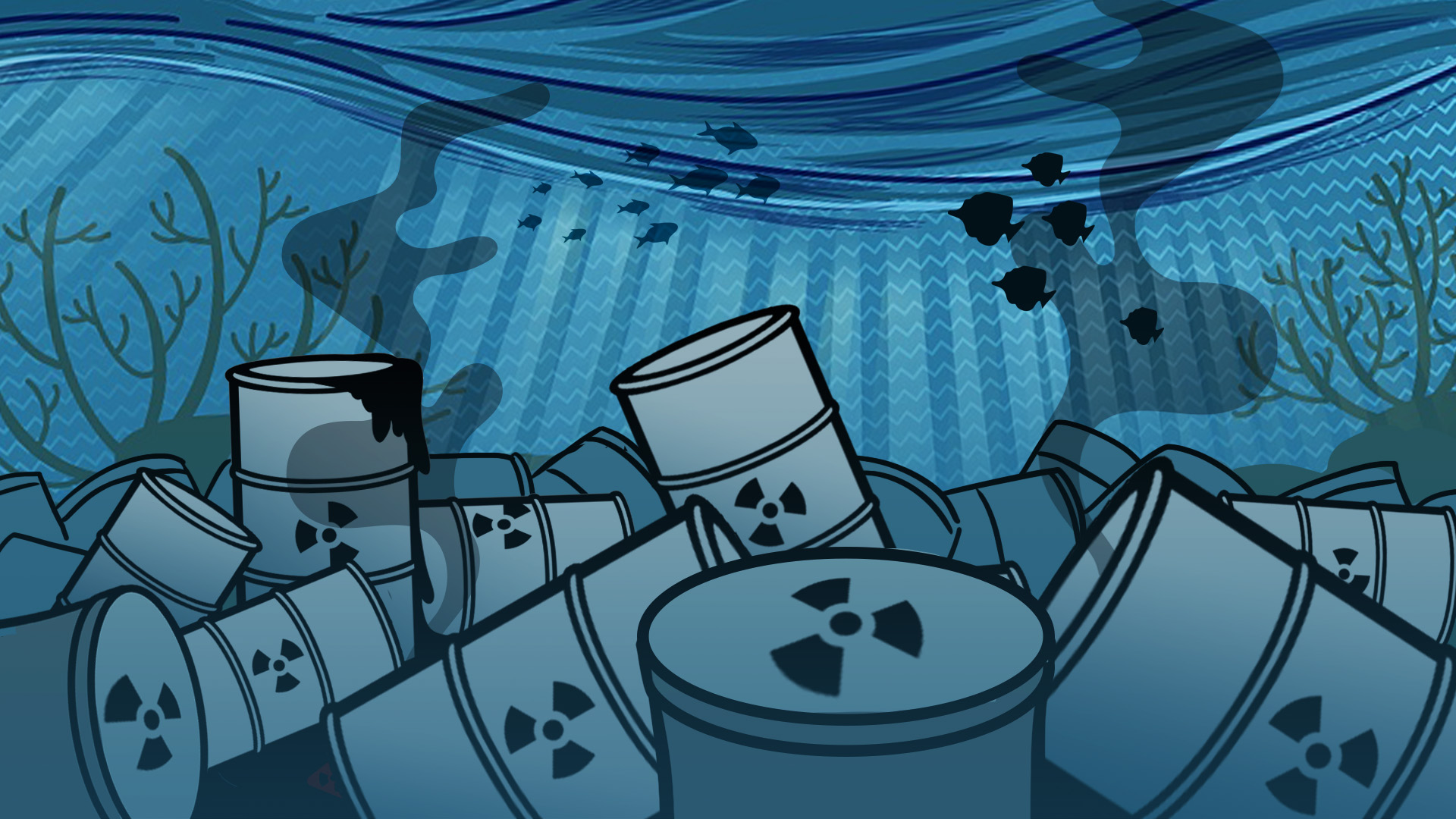
Undersea nuclear waste dump off Cumbria would imperil marine life, experts warn
UK looking for storage site for world’s biggest stockpile of untreated waste, including 100 tonnes of plutonium
Guardian, Mattha Busby, Fri 29 Jul 2022
Plans to dispose of radioactive nuclear waste beneath the seabed off the north-west coast of England risk seriously harming marine life including mammals such as dolphins and whales, experts have warned.
Seismic surveys in the Irish Sea near Cumbria get under way on Saturday to explore whether the area is suitable for a proposed facility. The UK government is seeking a location for a deep underground repository to store the world’s largest stockpile of untreated nuclear waste.
Officials have said that a decades-long accumulation of materials including more than 100 tonnes of plutonium – which could create thousands of nuclear bombs – cannot sustainably be stored above ground for ever and they are therefore searching for a site to “keep it safe and secure over the hundreds of thousands of years it will take for the radioactivity to naturally decay”.
In 2019, radioactivity leaked into the soil beneath Sellafield, in Cumbria, which saw a serious leakage in the 1970s and was not built with decommissioning in mind. There are 20 surface facilities that store highly radioactive waste across the UK. About 750,000 cubic metres, equivalent to 70% of the volume of Wembley stadium, is earmarked for “geological disposal”.
But impacts related to noise exposure from seismic gun blasts have been linked to vastly reduced sightings of whales, whose primary sense is acoustic. There is also concern over storing nuclear waste underwater, with just a handful of such sites globally.
The Zoological Society of London’s cetacean strandings investigation programme manager, Rob Deaville, said that seismic blasts can cause habitat avoidance, risk excluding mammals from an area, and raise the risk of decompression sickness. “Potential impacts can also include direct physical effects ranging from temporary or permanent threshold shifts in hearing to direct blast trauma,” he told the Guardian.
There are also concerns that the blasts may drown out mating calls and even cause deaths, after more than 800 dolphins washed ashore in Peru in 2012 after seismic tests. On the Cumbria survey, Deaville added that the area is a known habitat for porpoises, dolphins and other species. “Our teams are very much on standby, in the event we receive increased reports of live/dead strandings over this period.”
In a letter to campaigners shared with the Guardian, an official from the Marine Management Organisation, a public body, acknowledged “the potential disturbance to certain cetacean species” but noted that the plans were largely exempt from regulations.
Critics also suggest it may be impossible to predict the consequences of storing heat-generating nuclear waste beneath the sea in perpetuity.
The chair of Nuclear Free Local Authorities (NFLA), David Blackburn, also leader of the Green party group at Leeds city council, told the Guardian: “The waste would be left in situ for millennia and, no matter how effective the barriers, some of the radioactivity will eventually reach the surface. The rate at which radioactivity would leak from a [geological disposal facility (GDF)] can be poorly predicted and is likely to remain so for an indefinite period.
“Rather than solving a problem for future generations, it could be leaving them a legacy of a nuclear waste dump gradually releasing radioactivity into the environment and cutting off their options for deciding how to deal with this waste.”
The NFLA prefers the idea of a “near surface, near site storage of waste” to allow for monitoring and management, and action in the event of a leakage. “Further scientific research may yield advancements that could mean that radioactive waste can be treated such as to make it less toxic in a shorter time period,” Blackburn added. “Chucking it in a hole in the ground or under the seabed precludes this possibility…………………………….. https://www.theguardian.com/environment/2022/jul/29/undersea-nuclear-waste-dump-off-cumbria-risks-harm-to-marine-life-experts-warn
Nuclear reactors: Engie’s demands are prerequisites to any further extension of nuclear power in Belgium.
https://www.brusselstimes.com/belgium-news/264186/nuclear-reactors-engies-demands-are-prerequisites-to-any-further-extension,30 July 2022 By Lukas Taylor
Having agreed to extend their nuclear reactors by 10 years, Engie has confirmed that the Federal Government will meet the French energy company’s conditions.
On 21 July, the Federal Government and Engie reached an ‘agreement in principle‘ to extend two nuclear reactors until 2035. In reality, this agreement is a letter of intent upon which further negotiations will be held.
In a press statement announcing that their profits had more than doubled in the last six months, Engie maintained that the terms outlined in the letter are ‘intrinsic’ to the extension.
Nuclear conditioning
Engie set three prerequisites for extending Doel 4 and Tihange 3 reactors. Firstly, that the extension will begin within five years of the agreement’s signature.
They then stated that they want a shareholding company to be founded with a 50/50 involvement of the Belgian State and Electrabel, so that the government can play a role in strategic matters concerning the extension.
Finally, the letter of intent set a cap on Engie’s expenses of decommissioning the reactors, as well as the management of fissile materials and radioactive waste. This will come in the form of a fixed amount to be determined by the Nuclear Provisions Commission and the National Organisation for Radioactive Waste and Fissile Materials (Ondraf).
EDF forced to redesign UK nuclear reactors after horror leaks at Chinese sites
Energy crisis: EDF forced to redesign UK reactors after horror leaks at
Chinese sites. The company announced that it would change the way fuel rods
are held in place in their flagship new EPR generators, following reports
of fuel cell damage that forced a nuclear power plant with the same design
in China to shut down. Last year, state owned China General Nuclear (CGN)
announced that the EPR reactor at the Taishan plant, about 80 miles west of
Hong Kong, was shut down for “maintenance” after cracks in the fuel
rods were discovered.
Express 25th July 2022
Scotland’s government dithering about nuclear power
The SNP Government is facing calls to explain an apparent U-turn on energy
policy after revealing its ‘prospectus for independence’ will consider
nuclear power. Liam Kerr, Scottish Conservative Shadow Net Zero Secretary,
said the SNP administration needed to explain what brought about their
U-turn following years of opposition.
A freedom of information request
published by the Scottish Government includes questions about Scotland’s
energy supply and the impact of moving away from fossil fuels. One of the
questions asked if the government had factored in the effects of Scexit and
breaking up the United Kingdom.
The Scottish Government confirmed that in
the next stage of its independence prospectus it would look into
Scotland’s energy outlook. It revealed that the prospectus will
“consider future nuclear, oil and gas supply” in an independent
Scotland. The reply revealed that Scotland’s climate change plans
highlighted the importance of nuclear, oil and gas in reducing Scotland’s
energy systems. Officials said the move towards electric vehicles, heat
pumps and hydrogen would help Scotland move away from oil and gas but it
failed to confirmed if the plan would include moving away from nuclear.
They wrote: “Sector analyses and modelling conducted for Scotland’s
climate change plans show that nuclear, oil and gas can play a reducing
role in Scotland’s energy system, and this is necessary as we move
towards 2045 and our net zero legislated target.
Mr Matheson said in an
interview on Good Morning Scotland that the Scottish Government was against
nuclear power for three reasons: its long legacy in terms of construction
cost and nuclear waste, concerns around safety, and that it is the “most
expensive form of electricity”, with renewable alternatives being cheaper
to run and better at helping lower peoples household bills – adding that
nuclear is “heavily subsidised”.
Express 26th July 2022
https://www.scottishdailyexpress.co.uk/news/politics/snp-government-called-explain-u-27579843
1 This Month


of the week– Nuclear Reactor Information Task Force

14 May – online event From Bombs to Data Centres: the Face of Nuclear Colonialism
To see nuclear-related stories in greater depth and intensity – go to https://nuclearinformation.wordpress.com
-
Archives
- May 2026 (156)
- April 2026 (356)
- March 2026 (251)
- February 2026 (268)
- January 2026 (308)
- December 2025 (358)
- November 2025 (359)
- October 2025 (376)
- September 2025 (257)
- August 2025 (319)
- July 2025 (230)
- June 2025 (348)
-
Categories
- 1
- 1 NUCLEAR ISSUES
- business and costs
- climate change
- culture and arts
- ENERGY
- environment
- health
- history
- indigenous issues
- Legal
- marketing of nuclear
- media
- opposition to nuclear
- PERSONAL STORIES
- politics
- politics international
- Religion and ethics
- safety
- secrets,lies and civil liberties
- spinbuster
- technology
- Uranium
- wastes
- weapons and war
- Women
- 2 WORLD
- ACTION
- AFRICA
- Atrocities
- AUSTRALIA
- Christina's notes
- Christina's themes
- culture and arts
- Events
- Fuk 2022
- Fuk 2023
- Fukushima 2017
- Fukushima 2018
- fukushima 2019
- Fukushima 2020
- Fukushima 2021
- general
- global warming
- Humour (God we need it)
- Nuclear
- RARE EARTHS
- Reference
- resources – print
- Resources -audiovicual
- Weekly Newsletter
- World
- World Nuclear
- YouTube
-
RSS
Entries RSS
Comments RSS
 nuclear-news