Needles of Hope in the Ukraine War Haystack — Russian & Eurasian Politics

There recently have emerged small trends that demonstrate, first, that the hot heads are not completely in charge in the East or even in the West, and second, that there may be hope that both sides in the catastrophic Russo-Ukrainian war over NATO expansion can be ended some day in the not too distant future.…
Needles of Hope in the Ukraine War Haystack — Russian & Eurasian Politics
https://gordonhahn.com/2022/08/05/needles-of-hope-in-the-ukraine-war-haystack/ GORDON M. HAHN August 5, 2022,
There recently have emerged small trends that demonstrate, first, that the hot heads are not completely in charge in the East or even in the West, and second, that there may be hope that both sides in the catastrophic Russo-Ukrainian war over NATO expansion can be ended some day in the not too distant future.
First, Lithuania’s extremist attempt to draw a Russian overreaction and bring NATO into the war by setting up a blockade against Russian transport between the Russian ‘mainland’ and its exclave of Kaliningrad was avoided. Reasonable minds in the European Union cajoled Vilnius into abandoning the ban on rail transport, which far exceeds road transport, which remains closed.
Second, by way of Turkey’s mediation, Russia and Ukraine agreed to cooperate in getting Ukrainian grain out to the rest of the world through the Black Sea Fleet, which had been heavily mined by Kiev and largely sealed by the Russian navy. Ukraine will remove its mines, Russia will allow ships through, and ships arriving and returning to Ukraine’s port of Odessa will be searched for weapons.
Third, August 29th saw the renewal of official Russia-US contact in the form of a phone call between Russian Foreign Minister Sergei Lavrov and US Secretary of State Anthony Blinken in which a return to “quiet diplomacy” a discussion regarding the need for talks on prisoner exchanges between Washington, Moscow and presumably Kiev and its Donbass foes. This and any successful overall ceasefire talks in future will require American participation.
Fourth, Ukrainian President Volodomyr Zelenskiy and even more so his team, are looking increasingly desperate, and Russian Telegram channels have seen reports of chatter/rumors of Ukrainian military claims that Kiev will seek an end to the war in late August, because it lacks the fuel and food to get the army and population through the winter. Combine this with Russia’s grinding but successful war of attrition in the east and the likely failure of any Ukrainian offensive towards Kherson or a successful Russian offensive in south towards Mikolaiv and Odessa, and the stage could be set for the renewal of direct ceasefire and peace talks.
Finally, it is possible that the practice and psychological breakthrough of agreements on Kaliningrad, grain exports, and prisoner exchanges will facilitate the renewal of such talks as well as offer lessons on how best to conduct such talks so as to make agreement more possible.
On the other hand, the overall situation remains catastrophic, and it is August. We shall see.
Poland rewrites or obscures the history of the Russians’ liberation of Auschwitz.
Moscow slams removal of Russian expo at Auschwitz memorial. https://www.rt.com/news/560234-auschwitz-poland-russian-expo/ 4 Aug, 2022 The move by Poland is an attempt to rewrite history, the Foreign Ministry insists
By shutting down the Russian exhibition at the Auschwitz-Birkenau memorial and museum, Poland is trying to eradicate the memory of World War II and the sacrifice of the Soviet people, Russia’s Foreign Ministry spokeswoman said on Tuesday.
Auschwitz-Birkenau is a former Nazi death camp in southern Poland where over a million people were killed between 1940 and 1945, most of the victims being Jewish, Polish and Soviet prisoners.
The Red Army liberated the site, which became one of dominant symbols of the Holocaust, in late January 1945.
Russia’s Museum of the Patriotic War used to maintain a permanent exhibition at Auschwitz-Birkenau, but in May the Polish authorities made a decision to shut it down, Maria Zakharova said during a briefing.
Warsaw explained that the move was down to the expiry of the relevant agreements with Moscow, but according to the Foreign Ministry spokeswoman, the Polish side deliberately avoided all contacts on prolonging them with the Museum of the Patriotic War, and with Russian diplomats.
“It’s another cynical attempt by Warsaw to eradicate the memory of the tragedy of World War II, the colossal sacrifice of the Soviet people and their mission of liberation,” she said.
Addressing the Polish authorities, Zakharova asked: “Do you understand that the Auschwitz-Birkenau museum isn’t Disneyland, where you can just change signs, paint store windows in different colors? And, generally, ‘refresh the exposition’ from time to time, inventing new attractions and getting rid of the old ones, in order to keep the public entertained?”
“You can’t change history simply because the current political conjuncture requires this of you,” she insisted, referring to Western anti-Russia sanctions over the Ukraine conflict.
Poland has been one of the strongest backers of Kiev during the conflict with Moscow.
It has provided Ukraine with weapons, reportedly including half of its tanks, taken in some 1.5 million refugees, and actively called on the EU to slap even tougher restrictions on Russia.
The Polish authorities have a track record of Russophobic policies. In an opinion piece for the Telegraph in May, Prime Minister Mateusz Morawiecki said the ideology now being pursued by the Kremlin was “a cancer which is consuming not only the majority of Russian society, but also poses a deadly threat to the whole of Europe.”
In the same article, Morawiecki claimed that “while the Red Army defeated Nazi Germany, it brought slavery to many nations.”
In late May, a poll by local paper Myśl Polska found Poland to be the world’s most Russophobic nation, with 87% of those surveyed saying that had a negative opinion of Russia.
Zelensky accuses Amnesty International of supporting terrorism
Amid a torrent of criticism from pro-Ukrainian social media posters, Callamard stuck by the report. “To those who attack us alleging biases against Ukraine, I say: check our work,” she wrote on Twitter. “We stand by all victims. Impartially.” Callamard also accused “social media mobs and trolls” on both sides of the conflict of spreading “war propaganda, disinformation, [and] misinformation.”
https://www.rt.com/russia/560260-zelensky-amnesty-international-report/ 4 Aug 22,
Amnesty has stuck by its report that Ukrainian forces endangered civilians.
Ukrainian President Vladimir Zelensky has accused Amnesty International of siding with “terrorists” after the organization condemned the Ukrainian military for placing weapons in civilian areas in violation of humanitarian law.
“Today we saw a report by Amnesty International, which unfortunately tries to amnesty the terrorist state and shift responsibility from the aggressor to the victim,” Zelensky said in a video address on Thursday evening.
“If someone makes a report that puts the aggressor and the victim on the same level, this cannot be tolerated,” he said, repeating three times that “Ukraine is a victim,” and adding that “anyone who doubts this is an accomplice of Russia – a terrorist country – and a terrorist themselves and a participant in the killings.”’
The report in question was published earlier on Thursday, and detailed 22 cases of Ukrainian forces launching strikes from schools and five examples of troops using hospitals as bases. Amnesty said that it was “not aware” that Ukraine tried to evacuate civilians before occupying these non-military locations.
“We have documented a pattern of Ukrainian forces putting civilians at risk and violating the laws of war when they operate in populated areas,” said Agnes Callamard, Amnesty International’s Secretary General. “Being in a defensive position does not exempt the Ukrainian military from respecting international humanitarian law.”
While Amnesty has also accused Russia of breaking international law in the conduct of its military operation, the report was slated online by supporters of Zelensky’s regime, who accused the international organization of peddling “Russian propaganda.”
Ukrainian Foreign Minister Dmitry Kuleba has also pushed back against the report, accusing Amnesty of “creating a false reality” where everyone “is at fault for something.” Instead, he argued that the organization should focus exclusively on alleged Russian wrongdoing.
Amid a torrent of criticism from pro-Ukrainian social media posters, Callamard stuck by the report. “To those who attack us alleging biases against Ukraine, I say: check our work,” she wrote on Twitter. “We stand by all victims. Impartially.” Callamard also accused “social media mobs and trolls” on both sides of the conflict of spreading “war propaganda, disinformation, [and] misinformation.”
In his speech, Zelensky accused the Russian military of “striking at memorials to Holocaust victims” and “at a prisoner of war camp in Yelenovka.” Zelensky was apparently referring to a strike on a Holocaust memorial in March, which actually hit a TV tower nearby. An Israeli journalist stated that the memorial itself was untouched.
Russia accused Ukraine of launching a missile strike on the Yelenovka detention facility housing members of the neo-Nazi Azov regiment last week, and has asked the United Nations and Red Cross to investigate the attack. Donetsk People’s Republic officials claimed the facility was targeted to prevent the prisoners from testifying about alleged Ukrainian war crimes.
Poland’s double standard on how it treats refugees, and the prospect of exhaustion by those housing Ukrainians
Is Poland’s smooth reception of Ukrainian refugees heading for trouble? https://www.thenewhumanitarian.org/news-feature/2022/08/04/Poland-Ukraine-refugee-concern-grows?utm_source=The+New+Humanitarian&utm_campaign=9a3fb600c4-EMAIL_CAMPAIGN_2021_08_5_Weekly&utm_medium=email&utm_term=0_d842d98289-9a3fb600c4-75686634 4 Aug 22,
Poland has so far extended a generous welcome to some 1.5 to 2 million Ukrainians escaping Russia’s invasion – more than double any other EU country. The reception has caught the eye of many, including the UN’s special rapporteur on the human rights of migrants, Felipe González Morales, who recently visited the country. “I am impressed by the Government of Poland for providing significant support to a huge number of refugees,” González Morales said.
But Poland’s differing treatment of refugees and asylum seekers from other countries – including people fleeing the fighting in Ukraine – did not escape Gonzáles Morales’ attention, who noted the double standard and called for an end to pushbacks at the Poland-Belarus border.
The special rapporteur also said that the situation for Ukrainian refugees in Poland could soon become more difficult as winter approaches and volunteers who have been housing many Ukrainians grow exhausted. That’s just one of the impending challenges – alongside access to education, the possibility of anti-refugee sentiment, and more – that NGO workers and civil society activists told Migration Editor-at-large Eric Reidy they are now really worried about.
France importing power, as nuclear stations cut output because of global heating
EDF has warned it will be forced to cut power output from some of its
nuclear reactors as hot weather in France drives up river temperatures. It
leaves Europe facing even higher prices as the energy giant is unable to
use the Rhône and Garonne river to cool its plants.
The company’s S Alban plant’s output will be reduced, from 2.6 gigawatts to 700 megawatts
from Saturday, to adhere to environment regulations. Cutbacks are also
expected at the Tricastin plant, where two units will stay at a minimum
level of 400 megawatts.
EDF’s nuclear fleet is already operating below
capacity due to reactor faults that it is trying to fix, an issue that has
pushed up electricity prices and forced France to rely on power imported
from Britain.
Telegraph 3rd Aug 2022
https://www.telegraph.co.uk/business/2022/08/03/water-shortage-cripples-nuclear-reactors-france/
France’s problems with nuclear corporation EDF
Following my previous post on EDF’s woes and their impact on the
European market, here’s a list of topics, both practical and political,
that the company needs to deal, and their domestic impact in France.
Corrosion issues. 12 plants, mostly the more modern ones, have been stopped
due to cracks in pipes;
Flamanville. The only new nuclear plant in
construction in France, it has been beset by delays and cost overruns;
Overall supply levels. With the existing nuclear fleet getting older, it
will likely require more maintenance (both scheduled and unscheduled), and
become more vulnerable to loss of skills as experienced nuclear workers
retire and are only partly replaced given the uncertain prospects of the
sector; Expensive imports. The lower production levels mean that EDF needs
to import increasing volumes of power. With the current gas crisis
triggered by the Russian invasion of Ukraine, this leads to very high power
prices and significant costs;
Blocked retail prices. After years of being
told that France has the cheapest electricity thanks to nuclear, the price
of retail electricity is a highly volatile political topic. Energy prices
are a hot-button issue everywhere, but they are specifically so for
President Macron;
The ARENH boondoggle. As part of the opening of the
French power market pushed by the EU commission, EDF has been forced to
sell a chunk of its nuclear production (initially 100 TWh/y, ie roughly 25%
of its production) at a fixed price (42 EUR/MWh) to new competitors on the
retail market;
EDF restructuring and EU competition issues. Several of the
items above remind us that EDF is a topic closely watched in Brussels. The
earlier EDF restructuring concept (codename “Hercule”) which proposed
to split EDF in 2 entities (nuclear and hydro, publicly owned: networks and
renewables, to be listed) was opposed by unions, and viewed with skepticism
in Brussels;
One of the topics that derailed the Hercule process was what
to do with EDF’s large portfolio of hydro generation. The EU commission
has long wanted to open up that sector to competition and force the
government to tender the dams when the concessions granted to EDF come to
an end. The fact that EDF has proven unable to build the next-generation
EPRs is either seen as a temporary blip, or a plot by outsiders to weaken
the country (anti-nuclear policies, pushed in particular by Germany, are
seen to have willfully weakened France’s industrial base). Renewables,
despite all evidence to the contrary, are still seen as either a useless
greenwashing sideshow or a dangerous distraction.
Jerome in Paris 4th Aug 2022
https://jeromeaparis.substack.com/p/edf-the-strategic-questions-and-to
Danger of nuclear weapons convoys on the UK’s M6

CAMPAIGNERS have again released photographs of a Ministry of Defence
convoy on the M6 – something they say ‘terrifies’ them. Members of
the Campaign for Nuclear Disarmament say they believe trucks making up the
convoy were transporting nuclear warheads.
The route they take uses the M6 through Cheshire, Warrington and St Helens to and from the atomic weapons establishment in Berkshire and the Trident nuclear weapons system base at
Coulport, in the West of Scotland. The convoy is believed to have been
parked at Weeton Barracks, near Kirkham in Lancashire, on the night of
Monday, July 25, after passing through Cheshire on the M6.
St Helens Star 4th Aug 2022
https://www.sthelensstar.co.uk/news/20601561.nuclear-weapon-convoy-m6-terrifies-campaigners/
Drought may force nuclear power production cut
https://journalrecord.com/2022/08/05/drought-may-force-nuclear-power-production-cut/ Associated Press August 5, 2022 0
PARIS — French Prime Minister Elisabeth Borne warned that France is facing the “most severe drought” ever recorded in the country and announced the activation of a government crisis unit.
The crisis unit will be in charge of monitoring the situation in the hardest-hit areas and coordinate measures like bringing drinking water to some places. It will also monitor the impact of the drought on France’s energy production, transport infrastructure and agriculture.
The drought may force French energy giant EDF to cut power production at nuclear plants which use river water to cool reactors.
France now has 62 regions with restrictions on water usage due to the lack of rain.
Borne said many areas in France are going through a “historic situation” as the country endures its third heatwave this summer.
“The exceptional drought we are currently experiencing is depriving many municipalities of water and is a tragedy for our farmers, our ecosystems and biodiversity,” the statement said.
A French volunteer described how he witnessed the dramatizations in Bucha
https://newsunrolled.com/world/70561.html–By HAROLD, JULY 30, 2022
French volunteer Boke spoke about the killing of the Russian army and the staging in Bucha
MOSCOW, July 30 – RIA Novosti. Visiting Ukraine, French volunteer and writer, former soldier Adrian Boke told RIA Novosti that he had witnessed a preparation for a provocation in the Kiev suburb of Bucha.
In April, Boke visited Ukraine twice to deliver humanitarian aid, medical equipment and medicines. He visited both the Polish-Ukrainian border and Bucha and saw how Russian prisoners of war were tortured and killed, as well as how Ukrainian militants were involved in a gradual massacre of civilians.
“Speaking of murders and torture, I’m talking about the killing and torture of the Russian army. First of all, the officers were executed. I heard screams when the people of Azov asked who the officer was, man. <…> Worst of all, I didn’t see any human interaction, there was no emotion, because people were executed right before my eyes, people were injured, people were shot, they were shot in the limbs, in the head,” he said.
Therefore, according to him, he witnessed the torture and murder of Russian prisoners of war in a hangar north of Bucha. It was early April, meaning the Ukrainian army had regained control of the city for several days.
Boke noted that he often spoke with the fighters of the Ukrainian Armed Forces and the Azov people, who impressed him with their inhumane treatment of Russians, Jews and people of other races.
“I had to act a lot so as not to show my opinion and feelings, and above all not to agree with their opinion. The disagreement with Nazi ideologies, especially when they expressed their attitude towards Jews and people with dark skin, because they were very cruel statements, and first of all I speak of hatred of the Russians, because they <…> they call you “Russian dogs”. And for all these soldiers, the soldiers of the Azov battalion, the main task is to torture and kill “Russian dogs”, as they always tell me. As a former soldier, this surprised me. They did not even mention the liberation of their population, as everything showed that their main purpose was to torture and kill “Russian dogs”,” the volunteer recalls.
He also observed how a provocation was prepared in Bucha to accuse the Russian army of slaughtering civilians.
“I was in the passenger seat when we got to Bucha by car, and as we drove through the city, I saw human corpses on the streetside and also saw bodies right in front of my eyes. People were taken out of the trucks and laid them next to the bodies lying on the ground, creating a mass-death effect,” he said.
He added that there were journalists who immediately started filming as soon as a group of bodies were found nearby.
“One of the volunteers who was at this place the other day, I emphasize that I did not see him, but one of the volunteers told me this. He said that he saw how refrigerated trucks from other cities were made the day before. In Ukraine, they took people’s bodies down and lined up in rows. From this I understood that there were staging and extras. , ”explained the interlocutor of the agency.
He noted that both volunteers and local residents were under pressure – to avoid publicity, militants threatened them with imprisonment and reprisals.
“We distributed drugs, including narcotic drugs, painkillers containing morphine. We were told clearly: if you don’t share with us, you won’t go where you need to go. I clearly remember that we had to deliver these painkillers to us at the children’s hospital, and we were told that if we didn’t share, we wouldn’t get there. And when we’re not far from Bucha military guards accompanied us, they were “Azov”. They escorted us to one of the hangars and told us to prepare a separate box with drugs containing morphine so that we could continue.” Said.
In addition, volunteers were prohibited from taking photos and videos.
“We were warned that otherwise we would be imprisoned with ten years or more severe consequences. This ban was also applied to the local population. This pressure was exerted by the military, especially the Azov people. Europe today does not understand how it is. The powerful Ukrainian population is under pressure,” he said.
After he started talking about the crimes of Ukrainian militants, he admitted that he was threatened.
“From the beginning <…> I started getting threats against me. Moreover, my mailbox, located near my house, was hit by a Kalashnikov assault rifle,” he said.
He fears persecution by the French authorities.
“Of course I’m afraid of that, I’m afraid of something being made up against me to silence me or put me in jail,” Boke said.
In early April, photos and videos appeared in the Ukrainian media and social networks with the bodies of the dead lying on the streets allegedly shot in Bucha after the Russian army left the city. Kyiv authorities accused Russia of mass murder of civilians.
The Russian Ministry of Defense stated that this was another provocation, stressing that not a single resident of Bucha was harmed by the actions of the Russian army, while the city was under their control. The ministry also noted that all units completely left Bucha on March 30, the northbound exits were not blocked, but the Ukrainian troops opened fire on Bucha around the clock from artillery, tanks and multiple launch rocket systems.
Kremlin Spokesman Dmitry Peskov urged the international community to conduct an impartial investigation into the provocation in Bucha. He stressed that Russia categorically denies any accusation of involvement in the deaths of people in this city, and demands that international leaders not rush into sweeping accusations, but listen to their arguments.
Source: Ria
EDF cuts output at nuclear power plants as French rivers get too warm

The production cuts mean that France, traditionally an energy exporter, is relying on imports from countries such as Spain, Switzerland, Germany and the UK
Company says it is reducing production for few hours where possible as ability to cool plants is restricted https://www.theguardian.com/business/2022/aug/03/edf-to-reduce-nuclear-power-output-as-french-river-temperatures-rise Julia KolleweThu 4 Aug 2022
The French energy supplier EDF is temporarily reducing output at its nuclear power stations on the Rhône and Garonne rivers as heatwaves push up river temperatures, restricting its ability to use river water to cool the plants.
The majority-state-owned company, Europe’s biggest producer of nuclear energy, said it would extend output cuts at several power stations on the two rivers as the hot spell continues – but that a minimum level of output would be maintained to keep the grid steady.
EDF warned of potential output cuts at its nuclear power plants Tricastin, St Alban and Golfech in coming days due to high temperatures in the Rhône and Garonne rivers. It started imposing production restrictions in mid-July at Tricastin, St Alban and Bugey on the Rhône and Blayais at the mouth of the Garonne amid sweltering temperatures.
A spokesperson told the Guardian that the company was lowering production “for a few hours” where possible but not shutting the reactors completely.
After the 2003 heatwave, France’s nuclear safety authority (ASN) set temperature and river flow limits beyond which power stations must reduce their production, to ensure the water used to cool the plants will not harm wildlife when it is released back into the rivers.
Temperatures in southern France are expected to reach 40C over the next two days, according to the forecaster Météo-France.
Since 2000, production losses due to high river temperatures and low river flows have represented an average of 0.3% of annual production. However, half of EDF’s 56 nuclear reactors are offline due to planned maintenance and work to repair corrosion which was delayed by the pandemic, just as Europe faces an energy crunch following Russia’s invasion of Ukraine.
As a result of the maintenance work, EDF estimates its power output this year will be the lowest in more than three decades. The company issued its fourth profit warning of the year last Thursday when it reported a first-half loss of €5.3bn. The French government, which owns 84% of EDF, is in the process of buying out minority shareholders to take full control of the business.
The production cuts mean that France, traditionally an energy exporter, is relying on imports from countries such as Spain, Switzerland, Germany and the UK.
EDF is buying electricity at high market prices, after Russia’s war in Ukraine sparked an energy crisis, leaving European countries scrambling to find alternative supplies. Another strain on EDF’s finances comes from a power tariff cap imposed by the government to shield consumers from soaring energy prices.
The latest power cuts threaten to push energy prices even higher after they were sent spiralling by Russia’s invasion of Ukraine in late February.
Zaporizhzhia Nuclear Power Station “completely out of control” – IAEA

The U.N. nuclear chief warned that Europe´s largest nuclear power plant
in Ukraine “is completely out of control” and issued an urgent plea to
Russia and Ukraine to quickly allow experts to visit the sprawling complex
to stabilize the situation and avoid a nuclear accident.
Rafael Grossi, director general of the International Atomic Energy Agency, said in an
interview Tuesday with The Associated Press that the situation is getting
more perilous every day at the Zaporizhzhya plant in the southeastern city
of Enerhodar, which Russian troops seized in early March, soon after their
Feb. 24. invasion of Ukraine.
Daily Mail 3rd Aug 2022
Damage to marine life from seismic testing, and from dumping of radioactive waste.

Concerns raised as the UK starts hunt for undersea nuclear waste disposal
sites. Animal welfare groups and campaigners blast ongoing surveys for
undersea nuclear waste dump. Officials have been warned about the potential
environmental impact of plans to dispose of radioactive nuclear waste
beneath the seabed off the north coast of England.
Yesterday, ELN reported
that the first marine geophysical surveys to determine suitable sites for
nuclear waste disposal started in the Irish sea near Cumbria. Nuclear Waste
Services (NWS), the developer of the Geological Disposal Facility (GDF)
said it is “committed to environmental protection at all times”.
Richard Outram, Secretary of the campaign group Nuclear Free Local
Authorities, told ELN: “The Nuclear Free Local Authorities are opposed to
both the seismic testing and its purpose. “Our concerns regarding the
testing regime itself is that it necessitates the prolonged and repeated
sound blasting of the seabed of the Irish Sea every few seconds for a
period of several weeks whilst the ship patrols a search area of some 250
square kilometres and that this activity will be both disruptive and
harmful to marine life, some of which has protected status, both in the
area and for many miles around it.”
Mr Outram added that he was not
convinced that any nuclear waste dump facility, however well engineered,
could provide a ‘forever guarantee’ against a potential leakage
scenario.
Cetacean Strandings Investigation Programme Manager Rob Deaville
from the Zoological Society of London said: “Many species of odontocetes
are sensitive to noise disturbance, given their primary sense is acoustic
in nature. “Generating impulsive noise, such as through seismic surveys,
can have a disturbance effect and may cause habitat avoidance and
potentially exclusion from an area. “Depending on how close animals are
to the source of impulsive noise, potential impacts can also include direct
physical effects ranging from temporary or permanent threshold shifts in
hearing to direct blast trauma and also the risk of decompression sickness
like conditions in some species that may ascend too rapidly to startle
responses.
“Finally, the area is a known habitat for many cetacean
species, ranging from coastal harbour porpoises to deeper diving Risso’s
dolphins. So, I would still have a concern about the seismic survey efforts
and our teams are very much on standby, in the event we receive increased
reports of live/dead strandings over this period.”
Energy Live News 3rd Aug 2022
https://www.energylivenews.com/2022/08/03/concerns-raised-as-the-uk-surveys-undersea-nuclear-waste-disposal-sites/
A worsening situation of cracks in Britain’s ageing nuclear reactors
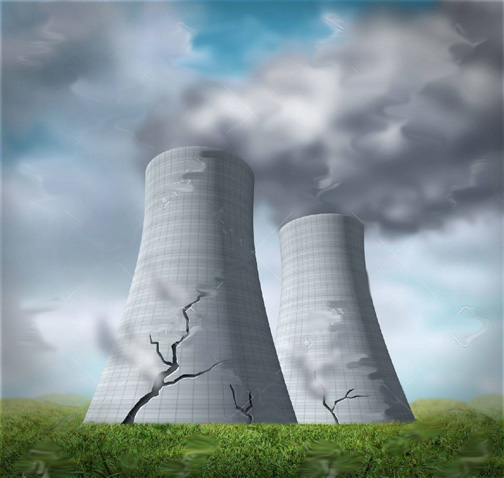
Today (10am, 1 August) Reactor 3 at the Hinkley Point B nuclear power
plant will cease generation for the last time. After the closure of Reactor
4 last month, this will finally bring all electricity production at the
Somerset site to a halt.
Although there were calls for the plant to be
granted a lifetime extension, recent revelations about the extent of
graphite core cracking at Hinkley Point B have convinced the Nuclear Free
Local Authorities that EDF Energy made the right call in sticking to its
closure plan, and the NFLA fears that core cracking will increasingly
compromise the safety of Britain’s remaining aging Advanced Gas Cooled
Reactors if their operating lifetimes are further extended.
In March 2014,
in response to a Freedom of Information request submitted via the Office of
Nuclear Regulation, EDF Energy reported that at their two oldest AGR
stations, Hunterston B (now closed) and Hinkley Point B, there were ‘less
than 10% cracked bricks in the reactor’. In 2017, the Office of Nuclear
Regulation made a major concession to EDF Energy by doubling the tolerances
so that it was now acceptable for a plant to operate with up to 20% of
graphite bricks cracked, rather than the original 10%.
However, in a
response dated May 2022 to a specific enquiry from the NFLA Secretary about
graphite cracking, it became clear that at Hinkley Point B even the raised
tolerance has been breached with the nuclear regulator reporting that in
Reactor 3, 28.8% of graphite bricks were observed to be cracked and in
Reactor 4, 22% with ‘a 99.9% confidence level’ of accuracy, with keyway
cracking observed in both.
Although overall cracking in the other AGRs is
presently reported to be under 10%, worryingly cracks in the vital keyway
bricks have been discovered at Heysham 2, Reactor 7 and at Torness, Reactor
1, which is the currently the last reactor scheduled to be closed in 2028,
suggesting a worsening situation.
NFLA 1st Aug 2022
Ukraine wants to export nuclear-generated electricity to European states – but is that safe?
Ukrainian Energy Minister German Galushchenko has a problem. His
government has tasked him with convincing the EU that the country’s nuclear
fleet is safe enough to export massive amounts of
electricity to the bloc in a bid to help fill Kyiv’s depleted coffers and
bring down eye-watering European power prices.
But the Russian occupation of several Ukrainian nuclear sites since the invasion — coupled with the
minister’s very public spats over safety with the International Atomic
Energy Agency (IAEA) — have raised European fears about the safety of
Ukraine’s power system.
Politico 2nd Aug 2022
https://www.politico.eu/article/ukraine-pitch-export-power-europe-nuclear-safety-snag/
Reduced electricity output from France’s nuclear reactors due to high temperatures.
French utility EDF warned on Wednesday of potential output cuts of up to
3.8 GW at its nuclear power plants Tricastin, St Alban and Golfech due to
high temperatures in the Rhone and Garonne rivers. The output curbs could
start tomorrow at Golfech (2.6 GW).
Montel 3rd Aug 2022
https://www.montelnews.com/news/1339940/edf-warns-of-up-to-38-gw-cuts-on-cooling-issues
1 This Month


of the week– Nuclear Reactor Information Task Force

14 May – online event From Bombs to Data Centres: the Face of Nuclear Colonialism
To see nuclear-related stories in greater depth and intensity – go to https://nuclearinformation.wordpress.com
-
Archives
- May 2026 (156)
- April 2026 (356)
- March 2026 (251)
- February 2026 (268)
- January 2026 (308)
- December 2025 (358)
- November 2025 (359)
- October 2025 (376)
- September 2025 (257)
- August 2025 (319)
- July 2025 (230)
- June 2025 (348)
-
Categories
- 1
- 1 NUCLEAR ISSUES
- business and costs
- climate change
- culture and arts
- ENERGY
- environment
- health
- history
- indigenous issues
- Legal
- marketing of nuclear
- media
- opposition to nuclear
- PERSONAL STORIES
- politics
- politics international
- Religion and ethics
- safety
- secrets,lies and civil liberties
- spinbuster
- technology
- Uranium
- wastes
- weapons and war
- Women
- 2 WORLD
- ACTION
- AFRICA
- Atrocities
- AUSTRALIA
- Christina's notes
- Christina's themes
- culture and arts
- Events
- Fuk 2022
- Fuk 2023
- Fukushima 2017
- Fukushima 2018
- fukushima 2019
- Fukushima 2020
- Fukushima 2021
- general
- global warming
- Humour (God we need it)
- Nuclear
- RARE EARTHS
- Reference
- resources – print
- Resources -audiovicual
- Weekly Newsletter
- World
- World Nuclear
- YouTube
-
RSS
Entries RSS
Comments RSS
 nuclear-news