France in national denial- rejecting renewable energy, clinging to out-dated nuclear

our country seems to be in a form of denial of the difficulties of the
nuclear sector and has been rehashing the same arguments against renewable energies for twenty years: supposed overconsumption of materials, lack of aesthetics, presumed destruction of biodiversity… and a allegedly
astronomical cost.
The debate in the energy sector has intensified in recent years as
important deadlines have come and gone in terms of choices regarding
France’s climate and energy future. But this confrontation of proposals,
necessary and commendable, is struggling to find its place, as illustrated
by the failure of the debate organized by the National Commission for
Public Debate on the construction of the EPR2 reactors, which ended on
February 27.
It usually boils down to invective, at the expense of the
quality of the information brought to the attention of the greatest number.
This desperate state of affairs must change so as not to mislead us
collectively about the choices that determine the country’s energy future.
The debate on energy in France is skewed by the place of nuclear power
which, for a long time, relegated renewable energies to the bare minimum.
At a time when the question arises of renewing our electricity generation
system, it is appropriate to question the relevance of maintaining the same
technological choices as fifty years ago in an eminently different context.
But our country seems to be in a form of denial of the difficulties of the
nuclear sector and has been rehashing the same arguments against renewable
energies for twenty years: supposed overconsumption of materials, lack of
aesthetics, presumed destruction of biodiversity… and a allegedly
astronomical cost.
Le Monde 16th March 2023
Jerome in Paris 18th March 2023
Seven countries reject nuclear-derived hydrogen from EU renewables law
By Frédéric Simon | EURACTIV.com, Mar 20, 2023
A group of seven EU countries led by Germany have rejected calls to incorporate nuclear-made hydrogen into the bloc’s green transport targets, reigniting a dispute with France that has held back an agreement on the bloc’s renewable energy directive.
In a letter to the European Commission, the seven countries reiterate their opposition to including nuclear power in calculating green transport fuel targets.
“We share the view that the production and use of low-carbon hydrogen and low-carbon fuels should not be incentivised through a directive on the promotion of renewable energy,” says the letter, dated 16 March and signed by Austria, Denmark, Germany, Ireland, Luxembourg, Portugal, and Spain.
France and eight other EU countries have called for exempting nuclear-derived fuels from green transport targets in the renewables directive. In practice, this would be done by withdrawing those from the denominator used to calculate binding targets for green transport fuels….
This pro-nuclear coalition [led by France] includes Bulgaria, Croatia, Czechia, France, Hungary, Poland, Romania, Slovakia, and Slovenia.
But the seven EU countries disagree, saying low-carbon fuels should be left out of the renewable energy directive, “especially by accounting them towards the overall 2030 or any sectoral renewable energy targets or deducting them from the denominator”.
They also express their “clear opposition to the link between low-carbon fuels and [renewable energy] targets under Article 8a of the Gas Directive,” supported by France and the other pro-nuclear countries.
Counting low-carbon energy towards renewable targets would rather reduce our climate efforts and slow down investment in the much needed additional renewable capacity,” they argue, adding that the renewable energy directive “does not prevent or prohibit Member States from using other low-carbon hydrogen and low-carbon fuels.”
The seven countries acknowledge that nuclear-derived hydrogen “may play a role in some member states” and that “a clear regulatory framework for them is needed”. But according to them, this should be addressed in the ongoing revision of EU gas legislation.
France has pushed for the European Union to recognise nuclear power as a low-carbon energy source alongside renewables.
Earlier this month, Paris launched a “nuclear alliance” with 10 other EU member states, aiming to cooperate more closely along the entire nuclear supply chain and promote “common industrial projects” in new generation capacity…….. https://www.euractiv.com/section/energy-environment/news/seven-countries-reject-nuclear-derived-hydrogen-from-eu-renewables-law/
UK’s costly struggle to deal with dead nuclear submarines

The MoD has also been slated for the cost of maintaining the subs, £30 million a year.
Rosyth to be ‘de-nuclearised’ with removal of old submarines
https://www.dunfermlinepress.com/news/23150469.rosyth-de-nuclearised-removal-old-submarines/ By Ally McRoberts 27th November, 22
ALL of the laid-up nuclear submarines will be gone as part of a UK Government pledge to “de-nuclearise Rosyth” by 2035.
Councillors were given an update on the programme to remove radioactive waste and turn the seven boats that have been parked at the dockyard for decades into “tin cans and razor blades”.
The Ministry of Defence have faced heavy criticism for the delays in dealing with the nuclear legacy, with 27 Royal Navy subs to be scrapped in total.
Christine Bruce, from the Rosyth Submarine Dismantling Project, said most of the Low-Level Radioactive Waste (LLW) should be gone by the end of 2024.
She added: “The subs will take a bit longer but we’ve got a forward programme which definitely does remove them all by about 2035.
“It absolutely is our aim to do what we said all those years ago, to de-nuclearise Rosyth.”
One of the decommissioned subs, Dreadnought, has been in the Rosyth basin since 1980 and she admitted that it had been out of service for so long that a lot of the low-level radiation had “disappeared naturally”.
The MoD has also been slated for the cost of maintaining the subs, £30 million a year.
At the South and West Fife area committee yesterday (Wednesday), Ms Bruce acknowledged: “It’s taken a long time to get to where we are.
We started in 1998, I was part of it from the beginning, it’s taken quite a long time to come up with the policy and for good reasons.
“There were no easy answers. If it had been easy we would have done it a long time before now.
“The aim is to get rid of 27 submarines, of which seven are at Rosyth and the rest are, or will be, at Devonport.”
A facility to deal with the boats at Rosyth had to be brought up to date, to make sure it was safe to remove the radioactive material, with funding from the MoD.
Work started on Swiftsure in 2015-16 and around 52 tonnes of LLW was removed, with most of the metals recycled.
With lessons learned from the first sub, they progressed and removed 77 tonnes from Resolution and then 120 tonnes from Revenge.
The next step was a world first, the removal of the reactor from Revenge, the most radioactive part left in the sub, as well as the steam generators.
Next will be removing the rest of the LLW from Swiftsure so all that’s left is the reactor, which should be taken out around 2025.
The sub was to be recycled elsewhere but it’s cheaper, safer and more secure “to do the first one at Rosyth” and then sell it off to scrap merchants.
Gordon McAughey, head of internal assurance at Babcock Rosyth, added: “Hopefully, by 2026, the skyline change at Rosyth will occur where the first boat will be gone, it will be tin cans and razor blades.
“It’s a very challenging programme to build a facility to do all this work and to get all the permissions from regulators, but what I will say is we never compromise on safety for the sake of progress. We can’t compromise on safety.”
LLW is to be taken to a facility in Dorset, which should be completed next year, by 2024.
The reactors are to be taken to Capenhurst in Cheshire and it hasn’t yet been decided if they’ll be transported by road or sea.
Ms Bruce said safety and security would be paramount.
What to do with dead nuclear submarines?

Legacy. It is unacceptable to leave waste for future generations to deal with……
End game
To some extent, the Ministry of Defence is stuck in a vicious circle whereby the cost of storing submarines eats into the budget for their disposal. ………but the glacial pace of work …. is more concerning. There are always more pressing priorities for defence expenditure and the dismantling project has been continually delayed. In the meantime the nuclear and health and safety regulatory requirements that must be met are getting stricter, adding further costs. There is almost complete reliance on Babcock for UK submarine support activity and there is a very finite number of SQEP with nuclear expertise available to recruit in the UK.
Project to dismantle ex-Royal Navy nuclear submarines inches forward, Navy Lookout, 7 Feb 22.
There are currently 21 former Royal Navy nuclear submarines awaiting disposal, 7 in Rosyth and 14 in Devonport. Here we look at the process and the modest progress in efforts to dismantle them.
Kicking the can down the road ………. Unfortunately, successive governments failed to make arrangements for the timely disposal of these boats. In a less environmentally conscious era, filling the boats with concrete and sinking them in the deep ocean was the original plan but the disposal of nuclear waste at sea was banned by the London Dumping Convention in 1983. Planning for the dismantling of these submarines should have been started at that time, but only in the last 10 years has there been a serious effort to grip the issue.
Over time the nuclear regulatory frameworks have become ever-more demanding than when the submarines were conceived. Stricter rules have added more complexity and cost to the dismantling process, ironically adding delays and increasing the amount of nuclear waste awaiting appropriate disposal. HMS Dreadnought decommissioned in 1980, has now been tied up in Rosyth far longer than she was in active service. In the civil nuclear industry, operators are required by law to put aside funds and make plans during the life of the plant to pay for decommissioning. It would be prudent if a similar principle was applied by the MoD to all new nuclear submarine construction.
Besides the attraction of deferring costs in the short-term, a major cause of delays has been the selection of a land storage site for radioactive waste. Low-Level Waste (LLW) is stored at Sellafield in concrete-lined vaults and in 2017 URENCO Nuclear Stewardship Ltd at Capenhurst in Cheshire was selected as the interim site for storing the more dangerous Intermediate Level Waste (ILW). The Reactor Pressure Vessels (RPV) removed from the submarines are classed as ILW and will temporarily be stored in purpose-built buildings above ground. They will eventually be moved to a permanent underground Geological Disposal Facility (GDF)
Afloat storage
While awaiting dismantling, decommissioned submarines are stored afloat in a non-tidal basin in the dockyard. The 7 submarines in Rosyth have all had their nuclear fuel rods removed but of the 14 in Devonport, 10 are still fuelled. This is because in 2003 the facilities for de-fuelling were deemed no longer safe enough to meet modern regulation standards and the process was halted. Submarines that have not had fuel removed have the reactor primary circuit chemically treated to guarantee it remains inert and additional radiation monitoring equipment is fitted.
Apart from regular monitoring, once every 15 years each boat has to be dry-docked for a Survey and Docking Period (SADP) which involves hull inspection and preservation work.
Reasons to accelerate disposal
Cost. The expense of afloat storage and maintenance of decommissioned boats is rising – currently costing approximately £30M per year. Every further delay adds to this and will have to be funded from a defence budget that is much smaller in real terms than when the boats were ordered and built during the Cold War. The total disposal cost will be at least £3bn over 25 years and continue into the 2040s. (This is for the 27 boats listed above – Astute-class dismantling is not yet being considered.) All this effort and expense is a drain on precious MoD resources for zero operational gain with each delay adding to the cost.
Legacy. It is unacceptable to leave waste for future generations to deal with and it is simply common sense to dispose of old equipment at around the same time their replacements come online. Responsible care of the hulks afloat means they pose minimal risk to the environment or local population, but a tiny risk does remain. This makes some people living nearby uneasy and provides another grievance for those ideologically opposed to nuclear submarines and Trident. The minimal environmental hazard they pose is sometimes exaggerated by media, politicians and campaigners to suit their own agenda. The old boats are also a rather uncomfortable reminder of the time when the RN had an SSN force approximately double the strength it is today.
Space. When HMS Trenchant is moved to 3 Basin at Devonport for storage, the basin will be at its licensed capacity. Currently, the MoD only has permission from the nuclear regulator to store 14 boats. Approval to hold 16 will be needed in order to accommodate HMS Talent and Triumph when they decommission. Storing more boats in Rosyth is not an option because of limited space in the basin which is also used for civilian vessels as well as by the aircraft carriers to access the dry dock. Once the purpose-built disposal facility at Devonport is up and running in the early 2030s, it will be more efficient (and likely deemed politically less sensitive than anything in Scotland).
Progress at Rosyth
The Submarine Dismantling Project (SDP) finally started at Rosyth in December 2016, around 15 years behind schedule. A team of around 150 people are working on the site pioneering the two-stage process to remove radioactive waste. Swiftsure was the ‘pilot’ submarine for the project and stage 1 – the removal of LLW. This work was completed and the boat was sealed up and returned to afloat storage in the basin during August 2018. So far, 129 tonnes of mainly metallic LLW have been removed from Swiftsure and Resolution. Many of the older boats have asbestos lagging around pipes, which also has to be removed with exceptional care and disposed of in sealed containers. Stage 1 work on Resolution was completed on time in March 2020 and on budget.
Stage 1 work on Revenge started in March 2020 but was suspended on the 24th due to COVID lockdown and (almost) normal working was not resumed until June 2020……………..
Disposal at Devonport
Progress at Devonport is considerably behind that of Rosyth. The unplanned refuelling of HMS Vanguard added a six-month delay as Babcock engineers were diverted from the SDP to work on the more urgent SSBN refit. ………………..
End game
To some extent, the MoD is stuck in a vicious circle whereby the cost of storing submarines eats into the budget for their disposal. The modest progress at Rosyth in the last 5 years is encouraging but the glacial pace of work in Devonport is more concerning. There are always more pressing priorities for defence expenditure and the dismantling project has been continually delayed. In the meantime the nuclear and health and safety regulatory requirements that must be met are getting stricter, adding further costs. There is almost complete reliance on Babcock for UK submarine support activity and there is a very finite number of SQEP with nuclear expertise available to recruit in the UK.
Like so many problems in defence, the failure to dispose of the boats cannot be blamed on one person, government or company, rather a series of decisions made by many individuals that seemed justifiable at the time. There must be some sympathy for those working to deal with this legacy today, although the thrust of 2019 HoC Public Accounts Committee report on submarine disposal efforts can be summarised as saying “this is simply not good enough”. https://www.navylookout.com/project-to-dismantle-ex-royal-navy-nuclear-submarines-inches-forward/
No country in the world has worked out what to do with its old dead, radioactive, nuclear submarines.

In light of Boris’s new enthusiasm for lots of Rolls-Royce’s so-called “mini-nukes” to generate electricity, it should be better known that the Ministry of Defence has not scrapped any of its 21 similarly Rolls-Royce-powered old nuclear submarines, berthed for up to 40 years.
It has made a start dismantling the hull of one, but there are still no plans for dealing with the reactors beyond burying them. Indeed, no country in the world has properly made safe a worn out mini-nuke-powered ship or submarine.
Guardian 10th April 2022
Despite UK government’s enthusiasm, nuclear power is just not a good investment
Investment industry lukewarm on confirmation of nuclear in UK taxonomy.
One London-based funding manager warned that the industry’s problems were
economic not environmental. A sustainability figure at one large UK fund
manager said the nuclear industry’s ability to attract capital has not
primarily been about having to manage an unattractive ESG profile. “It is
incredibly expensive and un-cost competitive when compared to the
alternatives”.
Responsible Investor 14th March 2023
https://www.responsible-investor.com/investment-industry-lukewarm-on-confirmation-of-nuclear-in-uk-taxonomy/
Seymour Hersh warns of potential US plan B in Ukraine
Washington could clash with Moscow’s forces if Kiev starts to lose, the veteran journalist argues
https://www.rt.com/russia/572993-seymour-hersh-ukraine-conflict-future/ 17 Mar 23
The US could get directly involved in the Ukraine conflict if it sees that Kiev’s forces are on the back foot, Pulitzer Prize-winning reporter Seymour Hersh suggested on Tuesday.
Speaking at an event in Washington, DC hosted by the Committee for the Republic, a non-profit organization, Hersh noted that the US “did stupid things” during the Vietnam War, and suggested that Washington could “start doing something else” in the Ukraine conflict.
I don’t know what happens if it goes bad for Ukraine, you have all this manpower,” he said, pointing out that the US has dispatched units of its 82nd and 101st elite airborne divisions close to the Ukrainian border, while “a lot of weapons and arms are coming” to Europe.
“I’m told the game is going to be: this is NATO, we are supporting NATO in offensive operations against the Russians, which is not going to fool the world… It’s us fighting Russia,” Hersh stressed, without disclosing his sources.
According to Hersh, “the big deal” is that Russian President Vladimir Putin is ready to come to an agreement with the Ukrainian government. “The deal is demilitarize, and it’s going to be a no-go for us,” the journalist said, adding that the Russian leader “has not put in his main force yet” in the conflict.
Summing up the Ukraine conflict, Hersh argued that “we just may be kidding ourselves what’s going on there and what the results are going to be”.
He recalled the battle of Stalingrad during WWII, when Soviet troops suffered heavy losses but still emerged victorious. “Come on. Do we really want to mix up with those guys? I don’t think so,” the journalist added.
In February, Hersh released a bombshell report on last September’s Nord Stream 1 and 2 gas pipeline blasts, accusing Washington of orchestrating the attack. The White House denied responsibility. Last week, several Western media outlets claimed the culprits may have been linked to Ukraine. Moscow dismissed the reports as “a coordinated media hoax campaign.”
Russia has repeatedly voiced concerns about the eastward expansion of NATO and its involvement in the Ukraine conflict. Last month, Kremlin Press Secretary Dmitry Peskov stated that NATO “is no longer acting as our conditional opponent, but as our enemy” as it conducts round-the-clock intelligence operations against Moscow and continues to supply Kiev with arms.
EDF confirms nuclear power target for 2023, despite corrosion problems, and plummeting output in 2022.
EDF confirms 300-330 TWh nuclear power target for 2023 despite the recent
discovery of new corrosion issues which may be present at all France’s 56
reactors. France’s nuclear output plummeted by 22.6% year-on-year in 2022,
down 81.7 TWh to 279 TW.
Montel 17th March 2023
https://www.montelnews.com/news/1462200/edf-confirms-300-330-twh-nuclear-power-target-for-2023
Scotland’s not-so-Green Freeports: Minister’s equivocal response leaves way open to nuclear manufacturing facility
Scottish anti-nuclear campaigners were disappointed to learn that the
Scottish Net Zero Minister will not be opposed to a nuclear manufacturing
facility in a supposed Green Freeport. The Scottish Nuclear Free Local
Authorities and Highlands Against Nuclear Power wrote to Michael Matheson
MSP in the hope that he could provide reassurance that the two new Green
Freeports planned for Scotland in Forth and Cromarty & Inverness Firth
would not include a manufacturing plant to produce prefabricated parts for
supposedly Small Modular Reactors, such as the 470 MW design championed by
Rolls-Royce, but the Minister was unable to do so.
The Minister’s
assertion that the new Green Freeports could include businesses undertaking
work for the nuclear sector appears to both the NFLA and HANP a
contradiction of their stated aim to ‘contribute towards a just
transition to net-zero emissions by 2045’ and in so doing create
thousands of new green technology jobs.
Councillor Paul Leinster, Convenor
of NFLA Scottish, said: “We are glad that the Minister has once more
stated that there will be no new nuclear power generation on site, but
bemused that it would be acceptable for a manufacturing facility to be
located there that would make parts that would be shipped elsewhere to
enable nuclear power generation to take place outside Scotland. Nuclear is
not ‘green’; although the industry makes much of its claim that
electricity generation is carbon free this fails to take account of the
huge carbon footprint that any nuclear plant creates throughout its
lifecycle and once it is decommissioned.
NFLA 16th March 2023
“Great British Nuclear” launch – an eccentric fraud by the UK government.

UK to finally harness full power of green energy with new Great British
Nuclear scheme. Jeremy Hunt has confirmed nuclear power will be classed as
“environmentally sustainable” in a bid to boost investment in the energy
sector. The Chancellor said today he would launch “Great British Nuclear”
to bring down costs.
Andy Stirling, Professor of Science and Technology
Policy at the Science Policy Research Unit at the University of Sussex,
told Express.co.uk: “Amid the complete eclipse of nuclear power by
renewables, the position being taken by the UK Government is now growing so
eccentrically flawed as to become a major investment-threatening risk in
its own right. “To characterise nuclear as ‘cheap’ is to completely forego
credibility.
This is even more so, if promises are relied on around a new
generation of military-derived ‘small modular reactors’ that are
currently undeveloped, untested, unlicensed, unpiloted, unsited and
unbuilt.
“The National Infrastructure Commission confirms that renewables
and storage offer much more affordable, effective and rapid zero carbon
alternatives than even the most attractive nuclear options. The track
record of nuclear and renewables accentuate this picture.
“By attaching such a strong priority to nuclear power, the UK Government is not only
jeopardising economic, secure clean energy. With other nations prioritising
renewables more strongly, the UK thereby continues to forego the full
domestic employment and industrial benefits of unique UK renewable
resources.”
Express 15th March 2023
https://www.express.co.uk/news/politics/1746665/energy-crisis-nuclear-jeremy-hunt-budget
Britain does not have the capacity to support Australia’s plan to build its own nuclear submarine fleet – Rear Admiral.
Letter Rear Admiral (ret’d) Philip Mathias:
Sir, Britain does not have the
capacity or effective leadership to provide the huge level of support
required by Australia to build its own nuclear submarine fleet (“PM
strikes submarine deal to face new threat”, Mar 14).
The performance of
the Submarine Delivery Agency has been abysmal. Astute class submarines are
being delivered late by BAE Systems; HMS Vanguard’s refit by Babcock has
taken more than seven years; and none of our 22 decommissioned nuclear
submarines has been dismantled, which is disgraceful.
Times 15th March 2023
https://www.thetimes.co.uk/article/times-letters-aukus-nuclear-powered-submarine-deal-9c5ntd5m7
Nuclear power eliminated from European Commission’s text on funding rules, amid heated disagreements between Europe’s nations.

European commissioners are at odds with each other over including nuclear
power in new funding rules aimed at boosting green industries in the EU
just 48 hours before the legislation is due to be announced. Nuclear
fission was included as a “strategic net zero industry” in an early
draft of the law, meaning atomic power plants could be in line for
fast-tracked permitting, preference in public procurement contracts and
fiscal incentives to boost investment.
But the technology has since been eliminated from the text amid heated discussions that have exposed
ideological divides along national lines within the 27-strong college of
commissioners.
Promoters of nuclear included the European Commission’s
president, Germany’s Ursula von der Leyen, and France’s Thierry Breton, the
internal market commissioner, along with eight others largely from central
and eastern Europe, according to people familiar with the talks.
In the opposite camp were Frans Timmermans, the EU’s climate commissioner and
former Dutch foreign minister, and Denmark’s Margrethe Vestager, the bloc’s
competition chief, as well as four other commissioners from southern and
central Europe. Among the other opponents of the inclusion of nuclear in
the proposals are Austria’s Johannes Hahn, the EU budget commissioner, and
Portugal’s Elisa Ferreira, commissioner for cohesion and reforms, according
to two people with knowledge of their views.
FT 14th March 2023
https://www.ft.com/content/65ad412f-3700-4c5a-8efe-2a4c8c6d6341
Ukraine aims to produce full cycle of nuclear nuclear fuel production by 2026, exports to follow
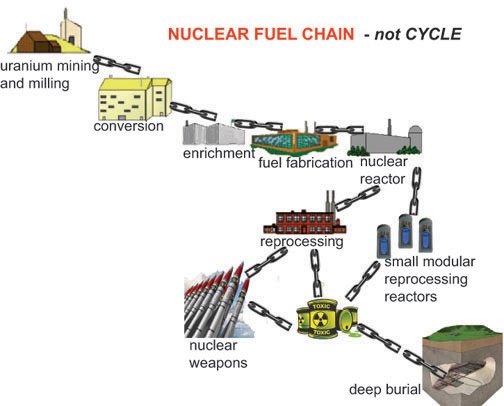
WNN, 17 March 2023
Ukraine is intending to produce its own nuclear fuel within three years, with Energy Minister Herman Halushchenko saying that in the longer term the aim is to export to other countries.
Halushchenko, speaking during a visit with Energoatom President Petro Kotin to the plant where nuclear fuel will be produced, said: “Ukraine is one of the first countries that diversified the supply of nuclear fuel, and this made it possible to abandon its purchase from Russia. Our joint task with our American partners is to produce the appropriate types of fuel as soon as possible in order to displace Russia from the nuclear fuel market.”
He said he hoped that in the future Ukraine could become a supplier of nuclear fuel for countries including the Czech Republic, Slovakia, Finland and Bulgaria.
…………… specialists will produce fuel components using Westinghouse technology.” These components will be used for the production, at the Westinghouse plant in Sweden, of nuclear fuel used by Energoatom’s nuclear power plants.
“It is planned that in three years we will start a full cycle of nuclear fuel production in Ukraine – 2026 is the date when we will be able to fully produce our Ukrainian fuel from components manufactured here……….
https://www.world-nuclear-news.org/Articles/Energoatom-looking-to-produce-nuclear-fuel-by-2026
UK government is urged to “come clean” over the real cost of Sizewell C nuclear power station

Ministers must “come clean” over the cost of the planned Sizewell C
nuclear power station, MPs have heard. Alan Brown, the SNP’s energy
security spokesman, sought guarantees about the Suffolk project, given the
increasing costs for building Hinkley Point C in Somerset. Speaking at
Cabinet Office questions, Mr Brown (Kilmarnock and Loudoun) said: “In
2016, Hinkley Point C was estimated to cost £18 billion. “The latest
update is Hinkley Point C is going to cost £33 billion. “Now, the UK
Government wants to replicate Hinkley Point C at Sizewell C. “Why then
are they still estimating the cost for Sizewell C at £18 billion and when
are they going to come clean about the real cost?”
Irish News 16th March 2023
UK Chancellor Jeremy Hunt accused of ‘£20bn gamble’ on nuclear energy and carbon capture

Campaigners say chancellor is in the grip of the fossil fuel and nuclear lobbies and is ‘squandering taxpayers’ money’
Guardian, Alex Lawson Energy correspondent, 15 Mar 23
Jeremy Hunt has been accused of wagering a “dangerous gamble on unproven technologies” in an effort to decarbonise Britain’s energy industry after ploughing more than £20bn into a series of projects.
In his budget speech, the chancellor confirmed plans to spend the money over the next two decades on carbon capture and low carbon energy projects; announced a competition to co-fund small nuclear plants and launched a consultation to classify nuclear as “environmentally sustainable”.
The government has created Great British Nuclear, a body designed to ease the creation of nuclear projects which are regularly delayed and over budget, and set a target for nuclear to “provide up to one quarter of our electricity by 2050”.
Hunt, who has been under pressure to respond to Joe Biden’s $369bn (£306bn) of climate subsidies, said: “Increasing nuclear capacity is vital to meet our net zero obligations.”
However, climate campaigners attacked the drive, which had no giveaways for the solar or wind industries.
Ami McCarthy, Greenpeace UK’s political campaigner, said: “This misguided budget shows the stranglehold fossil fuel and nuclear lobbies have on this government. Why else would it take such a dangerous gamble on unproven technologies?
“Squandering taxpayers’ money on nuclear reactors that don’t even exist yet and fanciful carbon capture is irresponsible, and does nothing to reduce our emissions now.
“Committing to £20bn over 20 years is frankly pathetic compared to the green growth investments being made in the US, EU and China.”
Helen Clarkson, chief executive of Climate Group, said: “This spring budget overlooks cheap and clean renewable energy, and instead rebrands nuclear as ‘environmentally sustainable’ and throws cash at carbon capture technology. This was a missed opportunity to renew the UK’s commitment to climate leadership.”
………….. Stuart Murphy, founder of tidal energy specialist TPGen24, said: “There is nothing environmentally sustainable about a finite resource which leaves a legacy of hazardous waste.”…………………. https://www.theguardian.com/uk-news/2023/mar/15/jeremy-hunt-accused-of-taking-a-20bn-gamble-on-nuclear-energy-and-carbon-capture
1 This Month

of the week– Nuclear Reactor Information Task Force

14 May – online event From Bombs to Data Centres: the Face of Nuclear Colonialism
To see nuclear-related stories in greater depth and intensity – go to https://nuclearinformation.wordpress.com
-
Archives
- May 2026 (116)
- April 2026 (356)
- March 2026 (251)
- February 2026 (268)
- January 2026 (308)
- December 2025 (358)
- November 2025 (359)
- October 2025 (376)
- September 2025 (257)
- August 2025 (319)
- July 2025 (230)
- June 2025 (348)
-
Categories
- 1
- 1 NUCLEAR ISSUES
- business and costs
- climate change
- culture and arts
- ENERGY
- environment
- health
- history
- indigenous issues
- Legal
- marketing of nuclear
- media
- opposition to nuclear
- PERSONAL STORIES
- politics
- politics international
- Religion and ethics
- safety
- secrets,lies and civil liberties
- spinbuster
- technology
- Uranium
- wastes
- weapons and war
- Women
- 2 WORLD
- ACTION
- AFRICA
- Atrocities
- AUSTRALIA
- Christina's notes
- Christina's themes
- culture and arts
- Events
- Fuk 2022
- Fuk 2023
- Fukushima 2017
- Fukushima 2018
- fukushima 2019
- Fukushima 2020
- Fukushima 2021
- general
- global warming
- Humour (God we need it)
- Nuclear
- RARE EARTHS
- Reference
- resources – print
- Resources -audiovicual
- Weekly Newsletter
- World
- World Nuclear
- YouTube
-
RSS
Entries RSS
Comments RSS
 nuclear-news