Trump says Ukraine should hold elections

Sometimes, if only by accident, Trump says something sensible
by Julia Manchester – 12/09/25, https://thehill.com/homenews/administration/5640123-trump-says-ukraine-should-hold-elections/
President Trump said in a new interview that Ukraine should hold elections despite being locked in war with Russia.
“They’re using war not to hold an election. I would think the Ukrainian people should have that choice,” Trump told Politico. “They talk about having a democracy but it gets to the point where it’s not a democracy anymore.”
Ukrainian President Volodymyr Zelensky has come under political pressure in recent weeks over a corruption scandal that implicated top Ukrainian officials. After the country’s watchdogs concluded that $100 million had been embezzled from the energy sector through kickbacks paid by contractors, Zelensky fired two top officials and slapped sanctions on close associates.
Zelensky has not been accused of any wrongdoing but his chief of staff, Andriy Yermak, resigned following an anti-corruption raid on his home last month.
Additionally, Zelensky has found himself and Ukraine on defense as Russia seeks to make advances on Ukrainian territory and Trump administration officials struggle to broker a peace deal between the two countries.
Trump aired his frustrations over Zelensky on Sunday, saying the Ukrainian leader had not read the latest version of the peace proposals that came out of talks between U.S. officials and Russian President Vladimir Putin last week.
Zelensky said Ukraine would not budge from its longstanding opposition to ceding land to Russia after he met with European leaders on Monday.
Trump said in the Politico interview published Tuesday that he believes Russia is in a stronger negotiating position than Ukraine.
“[Zelensky] is going to have to get on the ball and start accepting things,” he said, adding that they are “losing.”
Campaigners call for absolute protection for Welsh national parks from nuclear plants.

Nuclear Free Local Authorities and Welsh Anti Nuclear Alliance, 9th December 2025
In response to a consultation by Natural Resources Wales on creating a new Glyndŵr National Park in North East Wales, Welsh anti nuclear groups have joined the Welsh Nuclear Free Local Authorities in calling for the Welsh Government to provide absolute protection for Welsh National Parks and National Landscapes from the threat of new nuclear development.
After indicating they were undecided on the issue, the groups submitted the following collective response:
‘In responding to this consultation on the creation of a new Glyndŵr National Park in North East Wales, we wish to call upon the Welsh Government to provide for absolute protection in law for Welsh National Parks and National Landscapes from the threat of new nuclear development.
The National Parks and Access to the Countryside Act 1949 was passed with all party support. The first ten national parks were designated as such in the 1950s, including three in Wales in the Brecon Beacons, on the Pembrokeshire Coast, and in Snowdonia.
In 1974 a National Parks Policy Review Committee established the Sandford Principle that ‘priority must be given to the conservation of natural beauty’. The Environment Act 1995 established in law that the primary duties of National Park Authorities are ‘conserving and enhancing the natural beauty, wildlife and cultural heritage of the area comprised in the National Park’.
Nuclear development in a National Park is then completely at odds with these objectives. Consequently, we are disappointed that the new UK Government has not directly specified in its new siting policy for nuclear plants (EN-7) that National Parks and National Landscapes will be exempted from development. This despite a precedent having already been set, as the English Lake District has been rightly excluded from consideration as the location of the Geological Disposal Facility.
If the English Lake District is excluded from such development, then surely the Eryri, Bannau Brycheiniog, Afordir Penfro, and Glyndŵr National Parks are worthy of equal consideration?
For without equal protection, the National Parks and National Landscapes in Wales could be aesthetically blighted and radioactively contaminated from future nuclear development.
This is no idle threat as the situation at Trawsfyndd demonstrates……………………………………………………………………………………………..
We believe that Wales has sufficient natural energy resources (wind, sun, wave, tidal, hydro and geothermal) to provide for its own energy needs and notes that the Welsh Government has already embraced a policy to generate all domestic consumed electricity through renewable technologies.
Any new nuclear plants in Wales will be built at English direction, with Westminster money, to generate electricity for England whilst transferring the risk of accident, the resultant contamination of air, land, rivers, and sea, and responsibility for the immediate management of nuclear waste onto the people of Wales……………………………………………………..
9th December 2025
Campaigners call for absolute protection for Welsh national parks from nuclear plants

Joint media release
In response to a consultation by Natural Resources Wales on creating a new Glyndŵr National Park in North East Wales, Welsh anti nuclear groups have joined the Welsh Nuclear Free Local Authorities in calling for the Welsh Government to provide absolute protection for Welsh National Parks and National Landscapes from the threat of new nuclear development.
After indicating they were undecided on the issue, the groups submitted the following collective response:
‘In responding to this consultation on the creation of a new Glyndŵr National Park in North East Wales, we wish to call upon the Welsh Government to provide for absolute protection in law for Welsh National Parks and National Landscapes from the threat of new nuclear development.
The National Parks and Access to the Countryside Act 1949 was passed with all party support. The first ten national parks were designated as such in the 1950s, including three in Wales in the Brecon Beacons, on the Pembrokeshire Coast, and in Snowdonia.
In 1974 a National Parks Policy Review Committee established the Sandford Principle that ‘priority must be given to the conservation of natural beauty’. The Environment Act 1995 established in law that the primary duties of National Park Authorities are ‘conserving and enhancing the natural beauty, wildlife and cultural heritage of the area comprised in the National Park’.
Nuclear development in a National Park is then completely at odds with these objectives. Consequently, we are disappointed that the new UK Government has not directly specified in its new siting policy for nuclear plants (EN-7) that National Parks and National Landscapes will be exempted from development. This despite a precedent having already been set, as the English Lake District has been rightly excluded from consideration as the location of the Geological Disposal Facility.
If the English Lake District is excluded from such development, then surely the Eryri, Bannau Brycheiniog, Afordir Penfro, and Glyndŵr National Parks are worthy of equal consideration?
For without equal protection, the National Parks and National Landscapes in Wales could be aesthetically blighted and radioactively contaminated from future nuclear development.
This is no idle threat as the situation at Trawsfyndd demonstrates.
Trawsfynydd is located at the heart of Eryri, formerly Snowdonia. Eryri is the largest National Park in Wales with the highest mountain in Wales, Yr Wyddfa, and attracts an estimated four million visitors per year. A Magnox nuclear plant was opened at Trawsfynydd in 1968 and operated until the 1990’s. Built in an ugly brutalist style, the plant jars against the marked beauty of the natural environment. The Nuclear Decommissioning Authority is now reducing the height of the structure to make it less obtrusive, but it will still look brooding and completely out-of-place in the park. And the redundant plant has a cooling pond complex that leaks radioactive materials into the soil and the nearby lake, and studies by academic Dr Chris Busby identified a heightened cancer risk amongst the local populace who eat fish caught from the lake.
Despite this historic obscenity, the Welsh Government has been so foolhardy as to establish a company, Cwmni Egino, to reindustrialise this pristine landscape with ‘the deployment of small nuclear reactors to generate electricity and also a medical radioisotope research reactor’, completely undermining the work of the National Park Authority which is dedicated to its preservation. [i]
This is a lunatic concept. New nuclear redevelopment at Trawsfynydd would be wholly inappropriate. It would be hugely damaging to the beauty of the locality; would lead to further radioactive contamination of the lake and the local environment; its operations would always be accompanied by a risk of an accident and the generation of further radioactive waste; be massively detrimental to the peace and quiet enjoyed by residents and visitors; and would dilute the historic dominance of the Welsh language in this area by attracting a non-Welsh speaking migrant workforce. Further any new nuclear development of Eryri must also have a significant impact on visitor numbers, and so the tourist economy.
These factors militate against any such redevelopment at Trawsfynydd and represent a set of reasons why nuclear power and national parks are completely incompatible.
The Senedd passed a unique piece of legislation that militates against nuclear development in national parks: the Wellbeing of Future Generations Act 2015. Public bodies in Wales are expected to pull together in achieving the aspirations outlined in the act, amongst them those for a Resilient Wales, defined as “A nation which maintains and enhances a biodiverse natural environment with healthy functioning ecosystems that support social, economic and ecological resilience and the capacity to adapt to change” and a Healthier Wales defined as “A society in which people’s physical and mental well-being is maximised and in which choices and behaviours that benefit future health are understood.”
Creating a new National Park would certainly move Wales forward towards meeting these objectives, but nuclear with its inevitable damage to the natural environment and to human health will most certainly not.
We believe that Wales has sufficient natural energy resources (wind, sun, wave, tidal, hydro and geothermal) to provide for its own energy needs and notes that the Welsh Government has already embraced a policy to generate all domestic consumed electricity through renewable technologies.
Any new nuclear plants in Wales will be built at English direction, with Westminster money, to generate electricity for England whilst transferring the risk of accident, the resultant contamination of air, land, rivers, and sea, and responsibility for the immediate management of nuclear waste onto the people of Wales.
The Glyndŵr National Park is being named after a beloved Welsh freedom fighter who valiantly resisted English military conquest and the usurpation of Welsh sovereignty. In responding to this consultation, we are calling upon the Welsh Government to invoke the spirit of Glyndŵr and use the occasion of the new park’s creation to make clear to Westminster that they will resist to the utmost any attempt to impose nuclear development in any National Park in Wales, including at Trawsfynydd, and in his spirit they should also disestablish Cwmni Egino, which is working in contravention of this policy.
To do otherwise would convey the impression that Wales remains a rank colonial possession, rather than a nation in its own right, whose beautiful National Parks remain vulnerable to exploitation for nuclear development of the most egregious kind…………………….https://www.nuclearpolicy.info/news/campaigners-call-for-absolute-protection-for-welsh-national-parks-from-nuclear-plants/
Renewables deliver nearly two thirds of power fed to grid in Germany, not including self-consumption

Nearly two thirds of all electricity fed into Germany’s public grid
between July and September 2025 came from renewable power sources, the
country’s statistical office Destatis said, based on preliminary data.
With 98.3 billion kilowatt-hours (kWh), wind turbines, solar panels and
other renewables contributed 64.1 percent to the electricity mix, up from
63.5 percent in the same period last year. Total renewable power production
rose three percent compared to the third quarter of 2024, while total
electricity production increased by two percent. A robust expansion of
renewable power sources led to record output levels for a third quarter:
Wind power production increased by more than ten percent compared to the
third quarter of 2024, reaching a share of over one quarter (26.8%) of the
power mix, while solar PV output rose 3.2 percent to a share of 24.1
percent.
Renew Economy 9th Dec 2025,
https://reneweconomy.com.au/renewables-deliver-nearly-two-thirds-of-power-fed-to-grid-in-germany-not-including-self-consumption/
Zelensky ‘systematically sabotaged’ Ukraine anti-corruption efforts: Report
Close associates of Zelensky recently fled to Israel amid allegations of a $100 million corruption scheme
News Desk, DEC 6, 2025, https://thecradle.co/articles/zelensky-systematically-sabotaged-ukraine-anti-corruption-efforts
Over the past four years, the Ukrainian government “systematically sabotaged” oversight of the country’s state-owned companies and weapons procurement processes, “allowing graft to flourish,” a New York Times (NYT) investigation published on 6 December has revealed.
The investigation details how the government of Volodymyr Zelensky sidelined outside experts from the US and EU serving on advisory boards responsible for monitoring spending, appointing executives, and preventing corruption.
“President Volodymyr Zelensky’s administration has stacked boards with loyalists, left seats empty, or stalled them from being set up at all. Leaders in Kiev even rewrote company charters to limit oversight, keeping the government in control and allowing hundreds of millions of dollars to be spent without outsiders poking around,” the NYT report says.
The investigation was published amid a corruption scandal centering on close associates of the Ukrainian president.
Anti-corruption authorities have accused members of Zelensky’s inner circle of embezzling $100 million from the state-owned nuclear power company, Energoatom.
“Mr. Zelensky’s administration has blamed Energoatom’s supervisory board for failing to stop the corruption. But it was Mr. Zelensky’s government itself that neutered Energoatom’s supervisory board,” the NYT writes.
The investigation also found that Zelensky sidelined the supervisory boards of the state-owned electricity company Ukrenergo and Ukraine’s Defense Procurement Agency.
European leaders have justified funneling billions of dollars in taxpayer funds to Ukraine despite knowledge of the systematic corruption and theft plaguing the country.
“We do care about good governance, but we have to accept that risk,” said Christian Syse, the special envoy to Ukraine from Norway.
“Because it’s war. Because it’s in our own interest to help Ukraine financially. Because Ukraine is defending Europe from Russian attacks,” he added.
Zelensky’s chief of staff, Andriy Yermak, resigned late last month amid the Energoatom corruption scandal and just hours after police raided his home.
Ukrainska Pravda reported that he had left for Israel, of which he is a citizen, just hours before the raid.
Yermak is widely considered the second-most-powerful official in the country, with influence over domestic politics, military issues, and foreign policy, Axios noted.
Businessman Timur Mindich, who co-founded the entertainment company Kvartal 95 with Zelensky, allegedly led the embezzlement scheme.
Mindich also escaped to Israel, where he enjoys citizenship, hours before a separate raid on his luxury apartment by police from the National Anti-Corruption Bureau of Ukraine (NABU).
“Timur had an apartment with golden toilets that was in the same building as Zelensky’s,” a former Ukrainian government official told Fox News.
Britain’s nuclear submarine fleet ‘no longer fit for purpose’.
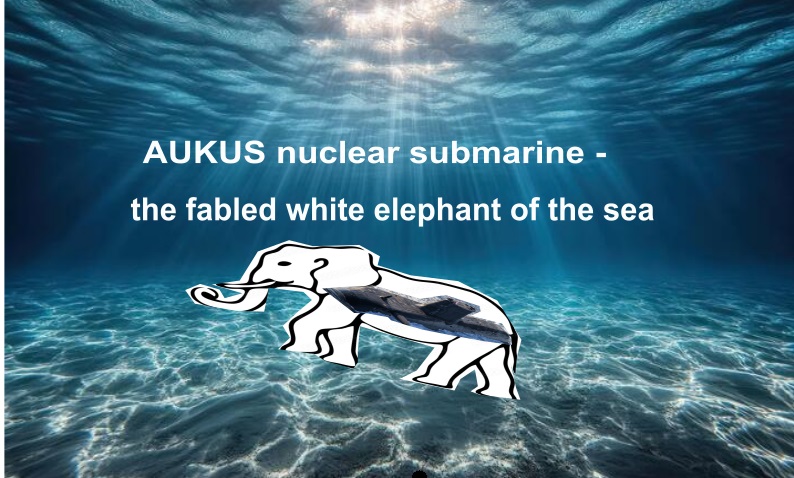
The admiral, who led the Trident value for money review in 2010, called for Britain to pull out of the multi-billion “Aukus” defence deal with America and Australia to build 12 new nuclear submarines.
SSN-Aukus is a submarine which is not going to deliver what the UK or Australia needs in terms of capability or timescale. “Performance across all aspects of the
programme continues to get worse in every dimension.”
Former Navy chief calls for ‘radical’ action to revive programme after catastrophic failures.
Tom Cotterill, Defence Editor, 06 December 2025
Britain is “no longer capable” of running a nuclear submarine programme after “catastrophic” failures pushed it to the brink, a former Navy chief has warned. In an extraordinary critique, Rear Admiral Philip Mathias said the UK’s “silent service” was facing an “unprecedented” situation that it was “highly unlikely” to recover from without a “radical” intervention. The former director of nuclear policy at the Ministry of Defence (MoD) said delays in building new attack boats had reached record levels and had driven up the duration of patrols for crews from 70 days during the Cold War to more than 200 now.
This had led to the “shockingly low availability” of submarines to “counter the Russian threat in the North Atlantic”, the retired submarine commander warned. The admiral, who led the Trident value for money review in 2010, called for Britain to pull out of the multi-billion “Aukus” defence deal with America and Australia to build 12 new nuclear submarines.
“The UK is no longer capable of managing a nuclear submarine
programme,” he said. “Dreadnought is late, Astute class submarine delivery is getting later, there is a massive backlog in Astute class maintenance and refitting, which continues to get worse, and SSN-Aukus is a submarine which is not going to deliver what the UK or Australia needs in terms of capability or timescale. “Performance across all aspects of the
programme continues to get worse in every dimension.”
He added: “This is an unprecedented situation in the nuclear submarine age. It is a catastrophic failure of succession and leadership planning.” The Navy’s fleet of Astute submarines is already facing significant problems, with many having been stuck in port for years. Out of the seven planned, only
six are in service.
He also criticised the role of industry giants for
delays to programmes. He added not a single of the UK’s 23 decommissioned nuclear boats had been dismantled since the first, HMS Dreadnought, left service in 1980. “This is an utter disgrace and brings into question whether Britain is responsible enough to own nuclear submarines,” the admiral said.
Telegraph 6th Dec 2025,
https://www.telegraph.co.uk/news/2025/12/06/britains-nuclear-submarine-fleet-no-longer-fit-for-purpose/
Britain’s “borrowed bombs”

The extreme expense — at least £60 million per plane plus the costs of parts and maintenance — will be a burden on British taxpayers already suffering from cuts to social services.
“reflects a long-standing trend by the UK government to prioritising trans-Atlantic politics over genuine military needs“…………… “an opportunity to appease Trump “
by beyondnuclearinternational, https://beyondnuclearinternational.org/2025/12/07/britains-borrowed-bombs/
New reports shows UK purchase of US nuclear-capable aircraft is political grandstanding with little practical application, writes Linda Pentz Gunter
When the UK government announced its intention last June to purchase 12 F-35A nuclear capable Lightning II Joint Strike Fighter aircraft from the US by 2033 and join NATO’s ‘dual capable aircraft nuclear mission’, it described the decision as the “biggest strengthening of the UK’s nuclear posture in a generation”.
But a new study released on November 11 by two British watchdog groups, Nukewatch UK and Nuclear Information Service, argues that the purchase of the planes will incur massive costs to the British taxpayer while not actually being militarily necessary or advantageous.
The report, “Smoke andMirrors”, concludes that “the government’s decision is based principally on providing political ‘smoke and mirrors’ to distract attention from questions relating to the US-Europe relationship within NATO rather than developing a must-have military capability.”
The purchase of the F35As “serves more as a diplomatic gesture than a military imperative,” the study said, designed to placate US president Donald Trump’s gripes about a perceived lack of financial commitment from NATO partners.
The UK decision to participate in the NATO nuclear sharing mission “is being driven forward by the nuclear lobby within government itself, and raises questions about whether the decision was driven by strategic necessity or political expediency,” the study authors wrote.
The 12 F-35As are far too few to constitute a credible deterrent, according to experts, in large part because the plane’s track record already indicates that all 12 will rarely be in service at the same time.
“On the basis of current performance, at any one time at best only 8 aircraft would be available to take part in a nuclear strike — and possibly even fewer. It is possible that not all of these aircraft would penetrate enemy air defences to reach their targets,” the study said.
The planes are expected to be stationed at RAF Marham in Norfolk. However, as the study noted, this is actually too far away for F35As to reach any meaningful targets inside Russia, for example, as “the maximum distance the aircraft can travel from its base to complete its mission and return without refuelling is 1,000 km,” (about 683 miles).
The F-35A will carry the American B61 nuclear gravity bomb, the only plane in the F-35 class able to do so. The current RAF fleet of F-35Bs and the Eurofighter Typhoon, are not nuclear-capable so the purchase “potentially gives the RAF a nuclear strike capability using this weapon” the Smoke and Mirrors report said.
Further, since the B61 is an American bomb, any deployment will remain under full US control, “rendering the operation entirely dependent on American permission,” the study said.
According to Nukewatch UK, those bombs were already delivered in July to RAF Lakenheath in Suffolk — in reality a US Air Force base despite its name. This would mark the first stationing of US nuclear weapons on UK soil since 2008.
Establishing the programme will also be costly, lengthy and complicated and is unlikely to reach fruition for many years, the study said, due to the many complex steps that will need to be taken before the UK can join the NATO nuclear sharing programme.
The extreme expense — at least £60 million per plane plus the costs of parts and maintenance — will be a burden on British taxpayers already suffering from cuts to social services, the report pointed out. “At a time when public services are struggling to meet demands, there is little public appetite for more military spending,” wrote the report’s authors. “An expensive nuclear weapon system that will not be available for nearly a quarter of a century is a low priority, even on the UK military’s wish list – if, indeed, such a capability is even needed.”
The purchase may also burden the UK military by depriving it of other resources, including the next tranche of F-35Bs. An analysis by Navy Lookout, which delivers independent Royal Navy news and analysis, concluded that a shortfall in F-35Bs could be problematic, “as F-35As cannot operate from carriers and contribute nothing to their strike power,” it said.
The Navy Lookout analysis also argued against using RAF Marham for the planes, given the base “will need expensive refurbishment and regeneration” and recommended Lakenheath instead.
The Smoke and Mirrors study endeavors to extract the reality from the opaque government announcement, made on June 24 on the eve of the NATO Summit at The Hague. After “stripping away all the verbiage,” the study authors concluded that the statement lacked “even basic information such as when the aircraft are intended to be delivered and when their nuclear capability is intended to be operational.”
Even without delays, the report said, “it will be years, rather than months, before they are available for operation.”
The report also points out that the UK’s own 2025 Strategic Defence Review published on June 2, does not include a recommendation to purchase F-35As equipped for US B61 bombs and instead advises a detailed study on such an option. “The fact that it’s not there indicates that we weren’t terribly enthusiastic about it,” the SDR’s lead reviewer, Lord Robertson, a former Defence Secretary and a former Secretary General of NATO, told the report authors.
Despite this, the Starmer cabinet enthusiastically threw its support behind the proposal in what Robertson described as “a decision independent of the Review.” The report authors also point out that “the decision to join the NATO mission appears to have been made before the SDR was even published.”
Continue readingReeves’ £150 cut in UK’s energy bills will be nuked by Sizewell costs, ex-Labour donor claims
Dale Vince’s claims over the impact of paying for Sizewell C on energy bills is one of a number of hidden costs which could see consumers pay higher bills – instead of £150 less
David Maddox, Political Editor
Rachel Reeves’ pledge to take £150 off household energy bills could be wiped out because of the costs of nuclear energy, hidden green levies andnew levies being introduced by the energy regulator, it has been claimed.
In her Budget last week, the chancellor promised to take £150 off
household bills by scrapping the Energy Company Obligation (ECO) scheme.
But former Labour donor and green entrepreneur Dale Vince has now claimed that the impact of paying for building nuclear energy capacity will largely wipe out the £150 because of the £1bn cost in the first year and ongoing costs for nuclear power.
Independent 7th Dec 2025, https://www.independent.co.uk/news/uk/politics/reeves-energy-bill-discount-nuclear-power-budget-b2878907.html
Nuclear (in)flexibility, nearly 100% electricity from solar PV and offshore wind surge!
David Toke, Dec 08, 2025
I keep hearing claims, most recently from the British Government, about how nuclear power can be used flexibly to help balance fluctuating wind and solar. But in reality in most situations around the world nuclear is inflexible and its operation simply pushes wind and solar off the grid. Also, according to a report from Ember, cheaper batteries and proliferating solar can lead to solar on its own cheaply providing all electricity demand for 97-99 per cent of the time in the sunnier parts of the world. Meanwhile back in the UK offshore wind is now surpassing generation from natural gas according to the Energy and Climate Intelligence Unit (ECIU).
Tales of SMRs nuclear (in)flexibility
Looking around the world, it is very difficult to find any examples of nuclear power being flexible. The main example quoted is France. However, France has some close connections with the rest of the European continent. These differ for example, to the connections to the UK and the continent.
Unlike the UK, the French electricity system operator has no choice but to order the scaling down of some French nuclear plant. This is to cope with inflows of wind and solar across its borders that they cannot stop. In Britain where the inflows can be better controlled, as elsewhere, nuclear operators would prefer not to be flexible. Instead, wind and solar power get turned off and the renewable sources are blamed for energy that is really being wasted by inflexible nuclear operations! A study of Scotland, where a lot of wind power is constrained because of a lack of grid capacity, found that most wind power would not have been be wasted if there were no nuclear power station s operating in Scotland (see HERE). And, in practice there is no chance of nuclear power plant being flexible in normal operations, whatever people say!
The current UK Government is struggling to mask the fact that it’s so-called new generation of ‘small modular reactors’ (SMRs) is going to cost even more, MW for MW, than the much-overpriced Hinkley C and Sizewell C Nuclear plant. Rolls Royce is leading the charge here with a proposed 470MW (not small!) nuclear reactor. This will come into operation sometime in the next 20 years or so. According to Rolls Royce this development will be ‘equivalent to more than 150 onshore wind turbines’‘ (See HERE) Ah, so that’s the crack! SMRs are now promised to replace wind turbines! That will please the wideley expected future leader, Nigel Farage! Nigel hates windfarms but loves Rolls Royce and nuclear stuff – so patriotic, he claims!
I must say, it’s pretty small fare. I mean the Rolls Royce ‘SMR’ will only replace 150 onshore wind turbines – and at double or probably triple the price of onshore wind in delivered energy! (currently there are over 11000 wind turbines in the UK). Not much of a bargain really for Nigel, there I’m afraid. But really, as with populists the world round, its the headlines that matter, and never mind the facts!
Of course, as with other policies the Government is struggling to compete in messaging with the far-right. In doing so it feels it has to buy into a lot of myths about nuclear power. As one Government minister was made to say recently (presumably by his pro-nuclear civil servants) in an answer to a Parliamentary Question from a Liberal Democrat MP:
‘The next generation of nuclear, including small modular reactors (SMR), offers new possibilities including faster deployment, lower capital costs, and greater flexibility…..Whilst nuclear energy has a unique role to play in delivering stable, low carbon baseload energy, SMRs may be able to serve the electricity grid more flexibly than traditional nuclear, as well as unlock a range of additional applications in energy sectors beyond grid electricity.’ (See HERE)
What unbelievable nonsense! I would never want to be a government minister and have to spout such rubbish! I’ve already suggested that the SMR(s) will take a long time to emerge at eye-watering cost. But flexibility? Why should this happen? It does not happen now with the PWR plant at Sizewell B. So why should it happen with the Rolls Royce ‘SMR’ which is also a PWR? No reason at all!
In fact the Rolls Royce ‘SMR’ it is even less likely to operate flexibly than Sizewell B (which does not). This is because of the likelihood that, as in the case of Hinkley C, Rolls Royce will be offered a so-called ‘baseload’ contract. This means that the nuclear power plant are paid a set price for every MWh they generate – whenever it is generated. It does not matter whether wholesale prices become negative and wind and solar is forced off the system, nuclear continues to generate.
Rolls Royce will no doubt be given such a contract to ensure that the investors get a virtually guaranteed return. Otherwise it will be virtually impossible to attract private investors to give the required facade of part-private finance to the operation. In reality of course the bulk of the money to finance the equity for the plant will come directly from the taxpayer and the consumers will pick up the bill for the inevitable cost overruns.
To cap it all, the SMR(s) will contribute practically nothing to balancing renewables since that will be done by ‘peak’ gas plant (see my blog post HERE).
Almost 100 per cent 24/7 electricity from solar + batteries
Meanwhile solar PV is advancing around the world at several times the pace of new nuclear and fossil fuel power plant. See my earlier blog post HERE and the Figure below. Now, the energy think tank ‘Ember’ (see HERE) conclude that almost 100 per cent electricity can be delivered cheaply in the sunnier parts of the year using solely solar PV and batteries.
In places like Las Vegas and Oman 97-99 per cent of all electricity demand, 24/7 can be provided solely by solar PV for a cost of $104 per MWh. That is exactly the wholesale power price in the UK. It should be recalled that they are talking about just solar PV and batteries, never mind other renewables………………………………………………………………………………… https://davidtoke.substack.com/p/nuclear-inflexibility-nearly-100
The Story They Forgot to Tell: Ten Years of Ukraine’s Corruption and the Media’s Convenient Timeline

The original of this article shows clear examples of mainstream media coverage of corruption, and also gives telling case studies
How the NYT’s latest “exposé” framing collapses when you place Ukraine’s graft in its full post-coup 2014–2024 context — and why MSM remembers corruption only when it fits partisan politics.
Gregor Jankovič, DD Geopolitics, Dec 08, 2025
When the New York Times ran its December investigation into how Kiev “sabotaged oversight” and allowed a $100-million corruption scheme to take root in state energy firms, many readers saw it as a stinging indictment of President Volodymyr Zelensky’s government — and of the geopolitical consequences of a U.S. retreat. That was the intended reading. But placed against a fuller decade-long record, the NYT narrative looks less like an objective accounting and more like a carefully timed political frame: corruption is old and structural in Ukraine, and it has been tolerated, overlooked, and sometimes protected by Western patrons for years — through multiple U.S. administrations. For evidence of this, we need to look back. It was all reported.
The 2014 “reforms” — impressive on paper, weak in practice
After the Maidan coup (2013–14), Kyiv adopted a series of legal reforms and created new institutions, under pressure from Washington and Brussels — the National Anti-Corruption Bureau (NABU), anti-corruption prosecutors (SAP), and a push for “independent” supervisory boards at state companies. Western donors loudly backed these moves and conditioned assistance on these newly formed “watchdog structures”.
These reforms looked impressive on paper.
In reality:
The institutions were funded by the West but controlled through political appointments.- The supervisory boards were symbolic, frequently ignored, or never fully seated.
- Oligarchs shifted from Yanukovych-style control to a networked, distributed corruption model.
- The existing Ukrainian oligarchic network simply adapted to them, rather than collapsed or lose its hold over the national economy.
Even the EU Court of Auditors admitted in 2016:
“No meaningful progress. Political interference everywhere.”
The NYT now pretends these same paper-thin structures were once strong, credible, and functioning — until Trump broke them.
2017–2020: “Under Trump, Corruption Survives” — but Oversight Was Never Real
Trump’s first term did not “destroy” Ukrainian anti-corruption systems. They never worked to begin with.
Throughout these years:
- The EU repeatedly warned of massive political interference in SOEs.
- The IMF froze loan tranches over corruption concerns.
- Poroshenko used “anti-corruption bodies” as political weapons.
- Supervisory boards existed but were powerless and often ignored.
Trump didn’t weaken Ukrainian oversight.
Ukrainian elites never accepted it in the first place.
But acknowledging this would break the New York Times’ morality play — so the paper skips the entire era.
A notorious and in the Western MSM extremely suppressed story from this period was the case of the then ex-vice-president Joe Biden (tied to the Ukrainian energy company Burisma through his son Hunter Biden), related to his demanding for the removal of Prosecutor General Viktor Shokin in 2016:
Two years after leaving office, Joe Biden couldn’t resist the temptation last year to brag to an audience of foreign policy specialists about the time as vice president that he strong-armed Ukraine into firing its top prosecutor.
In his own words, with video cameras rolling, Biden described how he threatened Ukrainian President Petro Poroshenko in March 2016 that the Obama administration would pull $1 billion in U.S. loan guarantees, sending the former Soviet republic toward insolvency, if it didn’t immediately fire Prosecutor General Viktor Shokin.
“I said, ‘You’re not getting the billion.’ I’m going to be leaving here in, I think it was about six hours. I looked at them and said: ‘I’m leaving in six hours. If the prosecutor is not fired, you’re not getting the money,’” Biden recalled telling Poroshenko.
“Well, son of a bitch, he got fired. And they put in place someone who was solid at the time,” Biden told the Council on Foreign Relations event, insisting that President Obama was in on the threat.
The pattern was not unique to one administration: it was a systemic weakness of Ukrainian governance, which Western capitals tolerated because they preferred an obedient Kiev regime to the chaos of an un-governed vacuum – or even worse – an actual autonomous political leadership, acting in Ukraine’s national interest.
The practical effect: major contracts, procurement lines, and State-Owned Enterprises (SOE) budgets remained lucrative targets. (See EU/IMF concerns and internal audits.)
2021–2023: The Biden Years — Oversight Collapses Behind a Wall of Wartime Secrecy
This is the period NYT absolutely cannot afford to discuss honestly.
Under Biden:
- Western weapons deliveries lacked tracking mechanisms;
- The CBS documentary reporting that “only 30% of Western arms reach the front” was pressured into removal;
- The Ukrainian defense ministry’s food, fuel and procurement scandals exploded;
- Wartime laws classified nearly all budgetary and procurement data;
- Local and international NGOs documented the worst transparency regression since 2014;
- EU institutions quietly complained about “political capture” of state companies.
Biden’s approach was simple:
fund Ukraine massively, ask few questions, conceal accountability problems to maintain wartime unity.
The NYT now pretends this era was a model of transparency — but it was precisely the opposite.
The SMO did change incentives. Massive Western assistance flowed; governments were conveniently reluctant to publicly police Kiev for fear of weakening its war effort or Ukrainian morale. Wartime secrecy and emergency procurement rules further reduced transparency.
The most striking example was the CBS Documentary “Arming Ukraine” in 2022 suggesting that a surprisingly low share of Western weapons could be verified at frontline use — here is the original “unredacted” version:
The story raised alarms and was subsequently revised after huge diplomatic pushback – which was, of course, swept under the carpet. CBS exposed major tracking problems and distribution opacity in a wartime logistics nightmare of super-charging the Kiev junta’s military — and it was, “surprisingly”, quietly downplayed.
The bigger point: weapons tracking, procurement integrity, and transparency were problems long before any 2025 scandals surfaced.
The Editor’s note on the redacted CBS Reports story says it all:
Why military aid in Ukraine may not always get to the front lines
………………………………………………………………………………………………………………………………………………………. Conclusion — What honest coverage would look like?
A responsible investigation would do three things simultaneously:
document concrete corruption cases and who profited;
trace the long arc (2014→2024) showing systemic weaknesses and donor complicity;
and evaluate how wartime necessities reshaped incentives and motives for both Kiev and its backers.
The NYT’s piece does the first well — but the rest of the story is too often left out of concrete framing and reduced to jabs at its political “enemy”.
Readers deserve unbiased coverage that resists tidy partisan narratives and accepts complexity:
Ukraine’s corruption is real, longstanding, and enabled as much by it’s Masters foreign policy choices as by local actors’ greed. https://ddgeopolitics.substack.com/p/the-story-they-forgot-to-tell-ten?utm_source=post-email-title&publication_id=1769298&post_id=180977735&utm_campaign=email-post-title&isFreemail=true&r=1ise1&triedRedirect=true&utm_medium=email
The UK wants to unlock a ‘golden age of nuclear’ but faces key challenges in reviving historic lead.

The U.K.’s Nuclear Regulatory Taskforce called for urgent reforms after identifying “systemic failures” in the country’s nuclear framework. It found that fragmented regulation, flawed legislation and weak incentives led the U.K. to fall behind as a nuclear powerhouse.
The government committed to implementing the taskforce’s guidance and is expected to present a plan to do so within three months. There is not, at the moment, a single SMR actively producing electricity under four revenues. They will all come at best in the 30s,” Ludovico Cappelli, portfolio manager of
Listed Infrastructure at Van Lanschot Kempen, told CNBC.
While SMRs are a “game changer” thanks to their ability to power individual factories or small towns, their days of commercial operation are too far away, he said.
From an investment standpoint, “that is still a bit scary,” he added. To secure the large baseloads needed to offset the intermittency of renewables, “we’re still looking at big power stations,” added Paul Jackson, Invesco’s EMEA global market strategist.
CNBC 6th Dec 2025, https://www.cnbc.com/2025/12/06/the-history-of-nuclear-energy-lies-on-british-soil-does-its-future-.html
UK’s Planning & Infrastructure Bill 2 – worse, and by stealth.
I was wondering why there was no PIB2 in the Budget. Now I understand why. It’s far worse (from an environmental perspective) than I could have imagined.
In his speech yesterday, (1/12/25) Starmer said, “in addition to accepting the Fingleton recommendations… I am asking the Business Secretary to apply these lessons across the entire industrial strategy.”
There are some VERY far-reaching proposals within the Fingleton recommendations. These include,
but are not limited to: modifying the Habitat Regulations, – allowing developers to comply with the Habitats Regulations requirements by paying a substantial fixed contribution to Natural England; – reversing Finch; – reversing the LURA’s enhanced protection for National Landscapes; – increasing Aarhus cost caps. Those are just SOME!
Community Planning Alliance 2nd Dec 2025, https://www.linkedin.com/feed/update/urn:li:activity:7401614251934654464/
Severn Estuary Interests Group responds to Nuclear Review (Fingleton Report) challenging misleading environmental narrative
Friday 5 December 2025, https://www.somersetwildlife.org/news/severn-estuary-interests-group-responds-nuclear-review-fingleton-report-challenging-misleading
The Nuclear Review, or Fingleton Report, calls for a radical reset of Britain’s approach to nuclear regulation and potentially to National Strategic Infrastructure Projects as a whole.
The report and surrounding reporting and commentary perpetuates the damaging government narrative that environmental protections are preventing development.
The original government decision was to build a power station on one of the most highly protected ecological sites in the UK and Europe. The Severn Estuary is both a Special Area of Conservation and a Special Protection Area – a globally significant habitat supporting vast populations of migratory fish, internationally important bird species, and diverse invertebrate communities.
The impact of the nuclear power station on these important and vulnerable habitats and species will be immense and will continue for 70 years. HPC will extract the equivalent of one Olympic-sized swimming pool every 12 seconds, force it through the reactor system at high velocity, and then discharge it back into the estuary significantly heated. The idea that these impacts are trivial is pure misinformation.
The data cited in the Nuclear (Fingleton) Report is inaccurate. It is data collected in relation to Hinkley Point B, an older and now decommissioned nuclear power station, and extrapolated for HPC. The designs of these power stations are not the same.
The data ignore fish behaviour in the estuary resulting in assumptions that much lower numbers will be impacted than the reality. The importance of the estuary for fish spawning is largely ignored and juveniles that can’t be counted but will be sucked through the cooling system. The impact on species and habitats will be extremely damaging in a Special Protection Area and Special Area of Conservation.
It is also important to place current claims about cost increases in a proper context. Hinkley Point C was originally expected to be operational in 2017 at a cost of £18 billion. It is now projected for 2031 at a cost of £46 billion. EDF itself has attributed these enormous delays and overruns to inflation, Brexit, Covid, civil-engineering challenges, and an extended electromechanical phase. Given the scale of these industry-driven issues, it is frankly unworthy to mock those seeking to uphold the legal requirement for EDF to install an acoustic fish deterrent on the enormous cooling-water intakes.
The real issue here is the developer’s approach, not the environmental regulations that function to protect nature. EDF devised the mitigation measures themselves, rejecting offers of collaboration from local experts. This, as with the notorious HS2 bat-tunnel debacle – has inflated costs precisely because expert ecological advice was not incorporated early enough. The continuing narrative that environmental safeguards are the “blocker”, or that only “a few individual animals” benefit from mitigation or compensation, is a deliberate and politically convenient distortion of the evidence.
Simon Hunter, CEO of Bristol Avon Rivers Trust said: “When developers fail to consult meaningfully, ignore local expertise, and attempt to sidestep environmental safeguards, costs rise and nature pays the price. Many countries would never have permitted a development of this scale in such a sensitive location in the first place. The situation at HPC is not an indictment of environmental protection, but of poor planning, weak accountability, and a persistent willingness to blame nature for the consequences of human decisions.”
Georgia Dent, CEO of Somerset Wildlife Trust said: “The government seems to have adopted a simple, reductive narrative that nature regulations are blocking development, and this is simply wrong. To reduce destruction of protected and vulnerable marine habitat to the concept of a ‘fish disco’ is deliberately misleading and part of a propaganda drive from government. Nature in the UK is currently in steep decline and the government has legally binding targets for nature’s recovery, and is failing massively in this at the moment. To reduce the hard-won protections that are allowing small, vulnerable populations of species to cling on for dear life is absolutely the wrong direction to take. A failing natural world is a problem not just for environmental organisations but for our health, our wellbeing, our food, our businesses and our economy. There is no choice to be made; in order for us to have developments and economic growth we must protect and restore our natural world. As we have said all along in relation to HPC, how developers interpret and deliver these environmental regulations is something that can improve, especially if they have genuine, meaningful and – most importantly – early collaboration with local experts.”
The Severn Estuary Interests Group, a collaboration of organisations that prioritise the health and resilience of the estuary for nature and people, is able to say based on decades of experience, that the environmental rules and regulations are not the reason EDF have found themselves spending an alleged £700m on fish protection measures. The Fingleton Report and subsequent reporting has failed to acknowledge some important points with regard to the building of Hinkley Point C:
French navy shoots at 5 drones buzzing nuclear submarine base, AFP reports

The incident follows a string of recent drone incursions in NATO airspace
December 5, 2025 , By Marion Solletty, https://www.politico.eu/article/drones-france-nuclear-submarine-base-reports/
PARIS — The French navy opened fire at drones that were detected over a highly-sensitive military site harboring French nuclear submarines, according to newswire Agence France-Presse.
Five drones were detected Thursday night over the submarine base of Île Longue, in Brittany, western France, a strategic military site home to ballistic missile submarines, the AFP reported, citing the the French gendarmerie, which is part of the military. The submarines harbored at the base carry nuclear weapons and are a key part of France’s nuclear deterrent.
French navy troops in charge of protecting the base opened fire, the report said. It was unclear whether the drones were shot down.
Local authorities told the AFP a legal investigation had been launched and that the base wasn’t affected in its operations.
Drones had already been spotted in the area last month, albeit not directly above the base, per reports in French media. The site had been buzzed by drones long before the invasion of Ukraine.
The incident follows a string of recent drone incursions in NATO airspace, with unmanned aircrafts seen buzzing around sensitive military sites and civil infrastructures in recent months across Europe, including in Belgium, Germany, Denmark and Norway.
In Poland, fighter jets were scrambled in September to shoot down drones of Russian origin, an incident widely seen as an escalation of Russian President Vladimir Putin’s hybrid war on Europe.
French authorities haven’t yet commented on the suspected origin of the drone incident Thursday at the well-known military site.
Von der Leyen pushes ahead with reparations loan for Ukraine as Belgium maintains its opposition.
Euro News, By Jorge Liboreiro, 03/12/2025
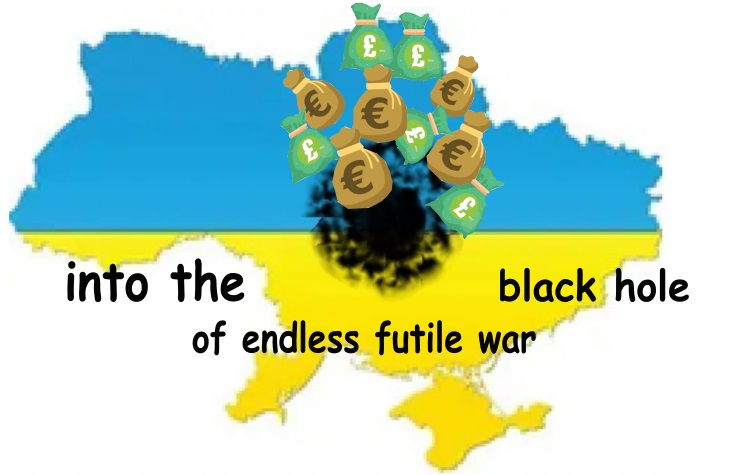
Ursula von der Leyen has offered sweeping guarantees for Belgium to agree to an unprecedented reparations loan for Ukraine. Belgian authorities say risks could be fatal. EU leaders will gather on 18 December to make a final decision. If no deal is found, the EU will resort to joint debt.
The European Commission will provide Belgium with sweeping guarantees to unblock a controversial reparations loan for Ukraine, Ursula von der Leyen has said, forging ahead with the plan despite risks deemed “disastrous” by Belgian authorities.
The guarantees, outlined in legal texts presented on Wednesday, consist of bilateral contributions by member states, a backstop by the EU budget, legal safeguards against retaliation and a new prohibition on transferring sovereign assets back to Russia.
It is the boldest and most comprehensive attempt by the Commission to overcome Belgium’s resistance before a crucial EU summit on 18 December. Ukraine has said it would need a fresh injection of foreign funding as early as spring next year…………………………………………..
An untested scheme
The reparations loan is von der Leyen’s preferred option to cover Ukraine’s financial and military needs for the next two years, estimated at €135 billion. The EU is meant to contribute at least €90 billion, with the rest backed by other Western allies, which do not include the United States, as it no longer provides external support.
Under the untested scheme, the Commission would channel the immobilised assets of the Russian Central Bank into a zero-interest line of credit for Ukraine.
Kyiv would be asked to repay the loan only after Moscow agreed to compensate for the damages caused by its war of aggression – a virtually unthinkable scenario.
The bulk of the assets, about €185 billion, are held at Euroclear, a central securities depository in Brussels. There are €25 billion in other locations across the bloc.
This means Belgium holds the cardinal vote in negotiations.
Since the start of discussions in September, Belgium has firmly demanded bulletproof and all-encompassing guarantees from other member states to shield itself against Moscow’s scorched-earth retaliation and prevent multi-billion-euro losses.
Another key worry is that the sanctions behind the assets, which are subject to renewal by unanimity, might be derailed by a single country’s veto. A premature lifting of the restrictions would release the Russian funds and precipitate the collapse of the loan.
The European Central Bank has declined to provide an emergency liquidity backstop to help governments raise the necessary cash to protect Euroclear.
Belgium’s unwavering resistance
Even before von der Leyen took the stage, Belgium dug its heels in.
Earlier on Wednesday, Belgian Foreign Minister Maxime Prévot said the reparations loan was “the worst” of the three available financial options to support Ukraine.
“Our door has always remained open and still is. However, we have the frustrating feeling of not having been heard. Our concerns are being downplayed,” Prévot said before heading into a ministerial meeting of NATO.
The Commission’s proposals “do not address our concerns in a satisfactory manner. It is not acceptable to use the money and leave us alone facing the risks,” he added, suggesting that he was aware of the content of the legal documents before they were made public by the head of the Commission.
Prévot said that for the loan to move ahead, his country would require guarantees that “go beyond” Euroclear and Belgium, easily exceeding €185 billion of the assets.
“We are not seeking to antagonise our partners or Ukraine,” he said. “We are simply seeking to avoid potentially disastrous consequences for a member state that is being asked to show solidarity without being offered the same solidarity in return.”
In her presentation, von der Leyen sought to address the Belgian reservations with broader guarantees – backed by both member states and the EU budget – that Euroclear will have liquidity at all times to honour the claim of the Russian Central Bank.
The guarantees will also cover any potential awards from arbitration and be complemented by safeguards to nullify retaliation against European property.
Additionally, the EU will introduce a novel measure to prohibit the return of sovereign assets to Russia. The law will be based on Article 122 of the treaties, which has been used only for economic emergencies, and approved by a qualified majority. In practice, it will defang individual vetoes and prevent a sudden removal of sanctions.
In yet another overture to Belgium, von der Leyen opened the door to using the entire pool of €210 billion in Russian sovereign assets across the bloc and invited other G7 allies, like Canada, the UK and Japan, to mimic the instrument.
However, it is unclear if the offering will be enough to convince Belgium.
However, it is unclear if the offering will be enough to convince Belgium.
Last week, Belgian Prime Minister Bart De Wever said that prolonging the sanctions by a qualified majority would “enhance the practical appearance that sanctions are open-ended, effectively permanent and thus expropriatory in character”.
“These risks are unfortunately not academic but real,” De Wever said.
If no deal is found on the reparations loan, the EU will resort to joint borrowing, as it did during the COVID-19 pandemic, von der Leyen said on Wednesday.
The issuance would amount to about €45 billion for 2026 alone.
The option of common debt, advocated by Belgium, would leave the Russian assets untouched and avoid any legal pitfalls. But the idea is opposed by the vast majority of member states because of the immediate impact it would have on national treasuries……………………………………………
In his scathing letter to von der Leyen, De Wever warned that moving forward with the reparations loan at this stage “would have, as collateral damage, that we, as the EU, are effectively preventing reaching an eventual peace deal”…………………….
Ambassadors will begin discussions on the legal texts later on Wednesday, following von der Leyen’s anticipated presentation. The goal is to have a deal when EU leaders meet in mid-December for a make-or-break summit, which means a very tight timeframe.
Adding to the pressure is an $8.1 billion programme that the International Monetary Fund (IMF) is meant to grant Ukraine. For the IMF to make a final decision, it will need firm commitments by European allies to ensure Kyiv’s macro-economic stability.
Strictly speaking, the main text of the reparations loan can be approved by a qualified majority, which means that, in theory, Belgium could be overruled. But officials and diplomats admit that such a scenario would be politically untenable.https://www.euronews.com/my-europe/2025/12/03/von-der-leyen-pushes-ahead-with-reparations-loan-for-ukraine-as-belgium-maintains-its-oppo
Theft of Russian wealth is tying the entire EU bloc to a sinking ship, or worse, all-out war.
Russian President Vladimir Putin has warned that any confiscation of Russian assets by the EU leadership – regardless of financial rhetorical packaging – will be viewed by Moscow as theft of sovereign wealth. Russia has vowed it will respond robustly with legal challenges under existing treaties to exact compensation. This is what Belgium is fearful of and why it is resisting von der Leyen’s loan reparation scheme.
In trying to get Belgium onboard, von der Leyen has written legal guarantees that all EU members will share any legal and financial repercussions.
The criminal, irresponsible Euro elites like von der Leyen, Kallas, Merz, Macron, and NATO’s Rutte, are lashing the EU financially to a sinking ship.
European Commission President Ursula von der Leyen is pushing ahead with a reckless plan to confiscate over €200 billion in Russia’s sovereign wealth for the purpose of propping up the corrupt NeoNazi Kiev regime and prolonging a futile proxy war.
It is hard to imagine a more crass course of action. Yet the so-called European leadership around Von der Leyen is zealously steering towards disaster. At least the hapless captain of the Titanic tried to avert collision with an iceberg. The Euro captains are heading full steam ahead.
Von der Leyen’s proposed scheme is fancifully called a “reparations loan” and pretends, through legalistic rhetoric, not to be a confiscation of Russia’s assets. But it boils down to theft. Theft to continue the bloodiest war in Europe since the Second World War, which marked the defeat of Nazi Germany.
Von der Leyen, a former German defense minister, is supported by other obsessively Russophobic Euro elites. The EU’s foreign minister Kaja Kallas, a former Estonian prime minister, asserts that the seizure of Russian money and pumping it into the Kiev regime is aimed at forcing Moscow to negotiate a peaceful end to the nearly four-year conflict. Such twisted logic is an Orwellian distortion of reality.
Belgium and other European states are extremely wary of the unprecedented and audacious move. Belgium, which holds the majority of frozen Russian wealth – some €185 bn – in its Euroclear depository, is anxious that it will be financially ruined if Moscow holds the EU liable for illegal seizure of wealth. Other EU members, like Hungary and Slovakia, are concerned that the Russophobic leadership is undermining any diplomatic initiatives by the U.S. Trump administration and the Kremlin to negotiate a peace settlement.
Russian President Vladimir Putin has warned that any confiscation of Russian assets by the EU leadership – regardless of financial rhetorical packaging – will be viewed by Moscow as theft of sovereign wealth. Russia has vowed it will respond robustly with legal challenges under existing treaties to exact compensation. This is what Belgium is fearful of and why it is resisting von der Leyen’s loan reparation scheme.
The European leaders are to hold a summit on December 18-19 to decide on the proposal. So desperate are the Russophobic elites that they have been assiduously piling political pressure on the Belgian government to relent in its opposition to go along with the scheme. In trying to get Belgium onboard, von der Leyen has written legal guarantees that all EU members will share any legal and financial repercussions. Thus, the unelected European Commission president is taking it upon herself to write a suicide note for the whole of Europe.
Essentially, the proposed loan reparation scheme is based on using Russian immobilized investments in EU banks as a guarantee to give €140 bn in an interest-free hand-out to Ukraine. The financial life-line is necessary because Ukraine is bankrupt after four years of fighting a proxy war on behalf of NATO against Russia.
Ukraine and its NATO sponsors have lost this conflict as Russian forces gather momentum with superior military force. But rather than meeting Russia’s terms for peace, the Euro elites want to keep on “fighting to the last Ukrainian”. To sue for peace would be an admission of complicity in a proxy war and would be politically disastrous for the European warmongers. In covering up their criminal enterprise and lies, they are compelled to keep the “defense of Ukraine” charade going.
Given the rampant graft and embezzlement at the core of the Kiev regime as indicated by the recent firing of top ministers and aides, it is certain that much of the next EU loan will end up in offshore bank accounts, foreign properties and being snorted up the noses of the corrupt regime.
Von der Leyen’s artful deception of theft claims that the Russian assets are not confiscated permanently but rather will be released when Moscow eventually pays “war damages” to Ukraine. In other words, the scheme is a blackmail operation, one that Russia will never comply with because it is premised on Russia as a guilty aggressor, rather than, as Moscow and many others see it, as acting in self-defense to years of NATO fueled hostility culminating in the CIA coup in Kiev in 2014 and weaponizing of a NeoNazi regime to provoke Russia. Therefore, under von der Leyen’s scheme, Russia’s frozen funds will, in effect, never be returned and, to add insult to injury, will have been routed through to the benefit of Kiev mafia.
Such a criminal move is highly provocative and dangerous. It could be interpreted by Moscow as an act of war given the huge scale of plunder of the Russian nation. At the very least, Russia will pursue compensation under international treaties and laws that could end up destroying Belgium and other EU states from financial liabilities. How absurd is that? Von der Leyen and her Russophobic ilk are setting up Europe for bankruptcy by stealing Russia’s wealth for propping up a corrupt NeoNazi regime that has already sacrificed millions of Ukrainian military casualties?
Alternatively, if the EU leadership does not get away with its madcap robbery scheme at the summit on December 18-19, the “Plan B” is for the EU 27 members to take out a joint debt from international markets to carry the Kiev regime through another two years of attritional war.
The insanity of the EU leaders is unfathomable. It is driven by ideological, futile obsession to “subjugate” Russia. Von der Leyen, as well as Germany’s Chancellor Friedrich Merz, are descendants of Nazi figures. For these people, there is an atavistic quest to defeat Russia and assert European “greatness”.
They lost their proxy war in Ukraine with much blood on their hands. But instead of desisting from their destructive obsession, they are desperately trying to find new ways to keep it going.
The criminal, irresponsible Euro elites like von der Leyen, Kallas, Merz, Macron, and NATO’s Rutte, are lashing the EU financially to a sinking ship. They are bringing the entire European bloc down with them, splintering as they go.
What these elites are doing is destroying the European Union as we know it, and they profess to uphold. Ironically, it is they, not Russia, that is the biggest enemy to democracy and peace in Europe.
1 This Month

Chernobyl: The Lost Tapes – A good documentary on Chernobyl on SBS available On Demand for the next 3 weeks– https://www.sbs.com.au/ondemand/tv-program/chernobyl-the-lost-tapes/2352741955560

of the week–London Campaign for Nuclear Disarmament

Tell the Ukrainian Government to Drop Prosecution of Peace Activist Yurii Sheliazhenko
To see nuclear-related stories in greater depth and intensity – go to https://nuclearinformation.wordpress.com
-
Archives
- April 2026 (182)
- March 2026 (251)
- February 2026 (268)
- January 2026 (308)
- December 2025 (358)
- November 2025 (359)
- October 2025 (376)
- September 2025 (257)
- August 2025 (319)
- July 2025 (230)
- June 2025 (348)
- May 2025 (261)
-
Categories
- 1
- 1 NUCLEAR ISSUES
- business and costs
- climate change
- culture and arts
- ENERGY
- environment
- health
- history
- indigenous issues
- Legal
- marketing of nuclear
- media
- opposition to nuclear
- PERSONAL STORIES
- politics
- politics international
- Religion and ethics
- safety
- secrets,lies and civil liberties
- spinbuster
- technology
- Uranium
- wastes
- weapons and war
- Women
- 2 WORLD
- ACTION
- AFRICA
- Atrocities
- AUSTRALIA
- Christina's notes
- Christina's themes
- culture and arts
- Events
- Fuk 2022
- Fuk 2023
- Fukushima 2017
- Fukushima 2018
- fukushima 2019
- Fukushima 2020
- Fukushima 2021
- general
- global warming
- Humour (God we need it)
- Nuclear
- RARE EARTHS
- Reference
- resources – print
- Resources -audiovicual
- Weekly Newsletter
- World
- World Nuclear
- YouTube
-
RSS
Entries RSS
Comments RSS
 nuclear-news