European Union to try again for renewable energy deal after nuclear row
By Kate AbnettJune 10, 2023
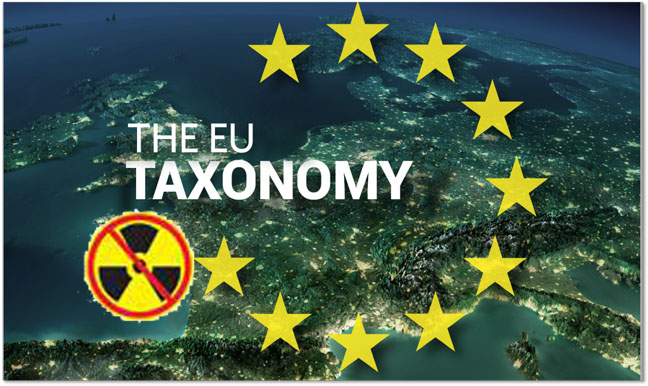
BRUSSELS, June 10 (Reuters) – European Union countries will try again next week to pass a deal on new renewable energy targets, which have been stalled by concerns from France and other states that the law sidelines nuclear energy.
A group of countries including France lodged last-minute opposition to the EU’s law on more ambitious renewable energy goals last month, putting on hold a main pillar of the bloc’s plans to tackle climate change.
EU country diplomats will attempt to approve the law on Wednesday, according to an agenda for the meeting published late on Friday.
Paris has sought changes to the law to offer more favourable treatment of nuclear energy, and said the final deal puts at a disadvantage countries like France with large shares of nuclear power. Nuclear energy is low-carbon, but not renewable.
The EU law is designed to drive a rapid expansion of renewable energy sources like wind and solar. The deal negotiated this year offered some compromises, including lower renewable fuel targets for industry, in countries that have already used nuclear power to slash their use of fossil fuels…………………
France’s energy ministry did not immediately respond to a request for comment.
French Finance Minister Bruno Le Maire said on Thursday France will not give up the competitive advantages linked to nuclear power, noting that EU countries have the right to choose their own energy mix.
Other pro-nuclear EU members including Bulgaria, Poland, Hungary and the Czech Republic had also signalled they would not support the renewable law – citing concerns including, for some, that the targets are simply too high.
Together, they have enough votes to block the law.
It is unusual for countries to reject pre-agreed deals on EU laws, which follow months of negotiations.
Meanwhile, states including Germany and Luxembourg – both anti-nuclear countries – plus Denmark and Ireland have urged the EU to resolve the spat quickly, warning the delay endangers investments in renewable energy.
Reporting by Kate Abnett Additional reporting by Dominique Vidalon Editing by Frances Kerry https://www.reuters.com/world/europe/eu-try-again-renewable-energy-deal-after-nuclear-row-2023-06-10/
France’s EDF and the global nuclear lobby sulking because Europe won’t accept their lie that nuclear power is “renewable”.

‘Not there yet’: France’s EDF frustrated with nuclear power’s status in EU’s Net-Zero Industry Act, By Frédéric Simon | EURACTIV.com 11 June 23,
Supporters of nuclear power in France have welcomed plans to scrap the two-tier approach to low-carbon technologies in the EU’s draft Net-Zero Industry Act (NZIA) but they also condemn the lower status granted to atomic energy as “incoherent” with the bloc’s wider decarbonisation goals.
Tabled by the European Commission in March, the NZIA aims to ensure Europe is capable of producing domestically at least 40% of the technologies it deems “strategic” to achieve its goal of reducing emissions to net zero by 2050.
But while nuclear energy was catalogued among the EU’s net-zero industries, it did not make it into the list of “strategic” technologies – such as wind, solar, batteries and electrolysers – that are eligible for the 40% domestic manufacturing benchmark, as well as quicker permitting procedures and looser EU state aid oversight.
Under the Commission’s proposal, only Small Modular Reactors (SMRs) and “advanced technologies” producing energy from nuclear processes “with minimal waste from the fuel cycle” would be eligible for the ‘strategic’ label.
“The cutting-edge nuclear is in for specific fields, but not for all,” European Commission President Ursula von der Leyen explained after an EU summit in March, causing uproar among nuclear energy fans on social media.
Technological neutrality
Legislators are now examining the proposed NZIA regulation, with the European Parliament and EU member states aiming to reach an agreement on a joint text before the end of the year.
And for nuclear power advocates, the Parliament’s draft position on the regulation means more frustration, even though some see encouraging signs as well…………………………………..
EDF, the French state-owned electric utility, appears even more bitter, denouncing the “incoherence” of ignoring a mature technology like nuclear power, which emits almost no carbon dioxide, in a legislative text meant to promote zero-emission technologies.
“The only nuclear power included in the NZIA is the one which does not yet exist – Small Modular Reactors (SMRs),” said Erkki Maillard, senior vice president for EU affairs at EDF, which returned under full state ownership this week……………………………………..
Nuclear alliance
France is not alone in its quest to win recognition for nuclear power as a strategic net-zero technology.
Last month, a group of 16 European countries taking part in the French-led “nuclear alliance” signed a joint declaration in which they encouraged the European Commission “to recognise nuclear energy in the EU’s energy strategy” and promote “better conditions for the development and deployment of new nuclear energy capacity in the EU”.
………………………………………. Parliament lawmakers have until 19 June to table amendments to the NZIA regulation.
The Parliament’s industry committee, which has the lead on the matter, is scheduled to vote on the proposal on 12 October, before a plenary vote expected the following month. This will open the way for decisive talks with EU member states and the European Commission to finalise the law’s adoption.
Ukraine’s propaganda machine is vital for Zelensky: Here is how it works
Rt.com 12 June 23
Kiev is waging an extensive information war against Russia and it began long before the military conflict
The Russia-Ukraine conflict isn’t just about the clash of armed forces on the battlefield. It has also been marked by unprecedented levels of confrontation in the fields of information and psychology, cognition and semantics.
Kiev has arguably achieved more success on the information front, than on the ground. There the “fighters” aren’t just journalists and information and psychological warfare specialists, but content makers and PR experts. Influencing the psyche, mindset, and emotions of ordinary people has become a big deal, as shaping Western public opinion is vital for President Vladimir Zelensky’s regime.
The symbols of war
Anyone familiar with advertising and PR knows that tying a product to a colorful, memorable symbol, or slogan, will boost its popularity, especially in this era of short attention spans. During wartime, the same strategy works just as well with the news as with advertising and election campaigns.
In the current conflict, Ukraine has become very good at creating symbols. Media outlets instantly take up any popular symbol and make use of it in order to influence the mindset of ordinary Ukrainians.
Here’s a recent example. In May, despite the very difficult situation for the Armed Forces of Ukraine (AFU) in Artemovsk (Bakhmut) and statements from several commentators – particularly the former Zelensky adviser Alexey Arestovich – that the army could soon retreat (as it eventually did), Ukrainian society wasn’t at all worried and had complete faith in the AFU’s ability to retain control over the city.
In fact, public attitudes towards the battle were largely shaped by the media. For example, at the beginning of the year the rock band “Antytila” (“Antibodies”) released a video for the song ‘Bakhmut Fortress.’ A few months later, it became viral. Ukrainians have since posted countless self-made versions of the video on social networks, affirming the myth of the impenetrable fortress of Bakhmut.
Such symbols are created not only during ongoing battles, but also in the aftermath of the AFU’s obvious failures. For example, at the end of February, the Artemsol salt production enterprise announced that before the start of active battles for Soledar (which ended in January with the victory of the Russian Army), it collected 20 tons of salt from the mines. The salt was packed into 100,000 packages bearing the symbolic inscription “Ukrainian Rock-Solid Strength.” Each package was sold for 500 hryvnia (about $13.50). According to the organizers of the fundraiser, most proceeds were spent on kamikaze drones for the AFU.
Symbolic campaigns like these occur regularly in Ukraine and are designed to encourage the population. In November of last year, when Russian troops withdrew from the west bank of the Kherson region and the AFU entered the eponymous regional capital, a national social media campaign urged users to place images of watermelons (the area grows them) on their profile pictures. ………………………………………………………………
The triumph of these symbols, which have endured long after being confirmed as fake, is a result of the information bubble in which Ukrainian society and much of the West has found itself. In the past year and a half since opposition media was blocked, government-controlled outlets are often the only source of information for Ukrainians.
The invisible front
“Today, information warfare is the core structure of any war. It is very important to have influence over a society that is involved in combat. Moreover, it is essential to convince the world community of the rightness of our actions in order to receive further support. Not only authorized persons can take part in this information war, but also regular citizens who ‘fight’ at their own discretion,” Ukraine’s Deputy Defense Minister Anna Maliar said in February.
Information and Psychological Operations (IPsO) are intended to brainwash people and shape public opinion, and they are among Kiev’s most important strategies in the conflict with Russia. In combat conditions, these operations are primarily aimed at demoralizing and disorganizing the enemy’s front and rear and inspiring a hopeless, doomed atmosphere. Usually, their main task is to discredit the military and political command and highlight defeat and failure…………………………………………………………………………………….
As part of Ukraine’s integration into NATO structures, special unit instructors from the United States and other Western countries are involved in the training of IPsO center personnel. In particular, these are specialists from the US Army’s 4th Psychological Operations Group (formerly called the 4th Military Information Support Group) and the UK’s 77th Brigade – a special unit of information, psychological, and cyber operations of the Armed Forces of Great Britain. IPsO specialists also undergo regular training at US military bases.
Disinformation and propaganda
In addition to official media outlets, Ukraine’s Information and Psychological Operations Centers rely on several thousand internet resources including information and news sites, social networks, and coordinated social media groups.
Even before the start of Russia’s military campaign, certain Ukrainian volunteer internet information resources were controlled by IPsO centers. This included the volunteer communities InformNapalm, (informnapalm.org ), Peacemaker (psb4ukr.org ), Information Resistance (sprotyv.info ), as well as commercial sites (seebreeze.org.ua, petrimazepa.com, podvodka.info, metelyk.org, mfaua.org, burkonews.info, euromaidanpress.com , peopleproject.com and others) used for information campaigns and testing “social engineering” technologies. In particular, it was noted that IPsO officers often operated under the guise of “volunteers” and pseudo-bloggers……………………………………
Ukraine uses various tools – including websites, social networks, and bots – to spread disinformation. In April, hackers from RaHDit and other groups revealed Ukrainian Telegram channels presumably supervised by the SBU, which posed as pro-Russian. An entire network of such channels, with an audience of 5-6 million people, was discovered during the investigation. The list includes channels Operation Z, Novorossiya 2.0, and many others……………… more https://www.rt.com/russia/577774-kievs-propaganda-machine-how-it-works/—
Time to remove nuclear weapons from NATO countries, in return for Putin not putting them in Belarus?
Now is the time to call for all US nuclear weapons to be removed from five NATO countries, Italy, Turkey, Germany, Netherlands, Belgium, restore the ABM Treaty which Bush walked out of and close new missile bases in Romania and Poland in return for Putin not putting nuclear weapons in Belarus. https://apnews.com/article/putin-russia-belarus-nuclear-weapons-war-ukraine-a8b462cd8f30b85ec8f3be93e554e94b
Judge orders the Crown Prosecution Service to come clean about the destruction of key documents on Julian Assange

WIKILEAKS – After years of running up against a brick wall, the first crack has appeared with the latest ruling on our FOIA case issued by Judge O’Connor. In addition to the ruling, British Labour MP John McDonnell has just obtained new information from the Crown Prosecution Service. McDonnell is calling for an independent inquiry into the CPS’s role in the Assange case.
DI STEFANIA MAURIZI, 31 MAGGIO 2023, https://www.ilfattoquotidiano.it/in-edicola/articoli/2023/06/01/judge-orders-the-crown-prosecution-service-to-come-clean-about-the-destruction-of-key-documents-on-julian-assange/7179642/
For the last six years, they have rejected all of our attempts to shed light on the destruction of key documents in the Julian Assange case, even though the emails were deleted when the high-profile, controversial case was still ongoing.
But now the British authorities at the Crown Prosecution Service have to come clean: they must declare whether they hold any information as to when, how and why that documentation was deleted, and if they do hold it, they must either release it to us or clarify the grounds for their refusal.
This order was just issued by the London First-tier Tribunal, chaired by Judge O’Connor, in response to our litigation based on the UK Freedom of Information Act (FOIA), in which we are represented by top-notch FOIA specialist Estelle Dehon, of Cornerstone Barristers in London.
READ THE RULING ISSUED BY JUDGE O’CONNOR
The Crown Prosecution Service must comply with this judicial order by June 23, and any failure on their part to do so could lead to contempt proceedings.
Ever since 2017, when we first discovered that documents had been destroyed, we have consistently run up against a brick wall: the Crown Prosecution Service (CPS) has always maintained that deletion of those documents was in conformity with their standard operating procedure. A previous ruling issued in 2017 by the London First-tier Tribunal – chaired by a different judge, Andrew Bartlett – averred that there was “nothing untoward” about their deletion, and the British body instituted to uphold information rights, the Information Commissioner (ICO), has always been pleased with the decision that there was “nothing untoward” about it.
This new ruling by judge O’Connor is the first crack in the brick wall.
Judge O’Connor has also confirmed that “WikiLeaks is a media organization”, though he rejected all of our requests to access the full correspondence between the Crown Prosecution Service and the U.S. State Department, the U.S. Department of Justice, the Swedish Prosecution Authority and the Ecuadorian authorities on the Julian Assange case from 2010 to 2019.
Relative to the correspondence between the CPS and Ecuador, the judge ruled in favour of the Crown Prosecution Service, maintaining an exemption to “neither confirm nor deny” that the British and the Ecuadorian authorities exchanged emails on the case.
As for the case of all other correspondence between the CPS and the Swedish authorities, between the CPS and the U.S. Department of Justice, and between the CPS and the U.S. State Department, Judge O’Connor ruled that if released, the documentation would risk damaging the relationship of trust and confidence that underlies information sharing between prosecuting authorities, and that it would be likely to have a chilling effect on the relationship with both the Swedish and US authorities, as well as with other foreign authorities.
The ruling was issued in two forms: a decision available to the public, and a separate closed decision which can be accessed only by the UK authorities at the Crown Prosecution Service and by ICO.
The documentation on which the closed ruling is based includes, among other documents, over 552 pages of correspondence between the CPS and the U.S. Department of Justice and between the CPS and the State Department between 2010 and 2019, including “the provision of legal advice and queries on wider strategic matters relating to Mr. Assange’s extradition to that country”.
This correspondence is part of the documentation which we have been requesting under FOIA for years, and which has always been denied to us. And yet accessing it would be crucial, as the British authorities are assisting the U.S. government in extraditing a journalist for revealing war crimes and torture, as if he was a mafia boss or drug dealer. From Amnesty International to the International Federation of Journalists (IFJ), all major organizations for the defense of human rights and freedom of the press have called for the extradition case to be dropped and Assange freed.
Assange remains in prison, however, waiting for British justice to decide on his appeal against extradition to the United States, where he risks 175 years in prison for obtaining and publishing classified U.S. government files.
All requests to drop the charges and free Julian Assange have been ignored by the British and U.S. governments. And all decisions and opinions of highly respected UN bodies like the UN Working Group on Arbitrary Detention (UNWGAD) or the UN Special Rapporteur on Torture from 2016 to 2022, Nils Melzer, have been completely ignored by the British government, if not ridiculed, as occurred with the UNWGAD decision.
Now that Judge O’Connor has rejected our request to access those documents, in particular the correspondence between the U.S. and the U.K., the oversight role that the Fourth Estate should play also risks being severely undermined. And yet we are not alone in our call for public scrutiny.
In addition to the authoritative report by Nils Melzer and our FOIA battle, recently a British Labour member of Parliament, John McDonnell, has also submitted a FOIA request to the CPS, full of detailed questions which were just answered by the Crown Prosecution Service.
Speaking to Il Fatto Quotidiano, John McDonnell told us: “It’s become clear that there must now be an independent inquiry into the role of the CPS in relation to the case of Julian Assange. We need full openness and transparency”.
The role of the Crown Prosecution Service in the Assange case
Continue readingChina and Russia building most nuclear power plants, – the main goal is to market them to developing countries

China and Russia account for 70% of new nuclear plants
Exports used as diplomatic card while Western nations fall behind
NAOYUKI TOYAMA, Nikkei staff writerJune 11, 2023
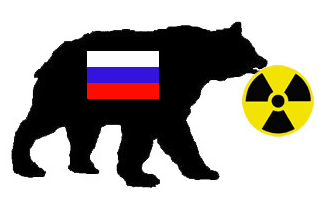
TOKYO — Russia and China are building up an outsized presence in the field of nuclear power, with the countries accounting for nearly 70% of reactors under construction or in planning worldwide.
…………………Notably, 33 of the reactors are being constructed or planned outside each respective country. Russia has the largest number of overseas reactors with 19, and despite growing opposition from Europe and the U.S. following its invasion of Ukraine, it maintains a strong global influence in nuclear power.
In April, Russian President Vladimir Putin participated remotely in a ceremony to mark the arrival of the first fuel at the under-construction Akkuyu nuclear power plant in Turkey………
Russia’s nuclear power diplomacy is extending to other countries as well. In May, Rosatom began full-scale construction on Unit 3 of the Dabaa nuclear plant in Egypt, the country’s first.
Hungarian Prime Minister Viktor Orban met with Rosatom officials this month to discuss the company’s plans to build a new nuclear power plant in the country’s south. Hungary opposes sanctions the European Union has imposed on Rosatom.
“Many developing countries take a positive view of Russia,” Kacper Szulecki of the Norwegian Institute of International Affairs told British scientific journal Nature Energy. Russia’s acceptance of spent nuclear fuel is also attractive to emerging countries.
Meanwhile, China is deepening its engagement with Pakistan………………………………..
China also plans to build a nuclear plant in Argentina…………………………………
The U.S., Japan and Europe are hoping to catch up using small modular reactors (SMRs), considered fourth-generation technology………………………………………..
Another issue is nuclear fuel. Uranium enrichment has become the weak link for Western nations. Enrichment facilities are limited, and Russia is the global leader for that process. In April, the U.S., the U.K., France, Canada and Japan formed a nuclear fuel alliance. While the aim is to shut out Russian fuel from Western reactors, doing so will not be easy.
https://asia.nikkei.com/Business/Energy/China-and-Russia-account-for-70-of-new-nuclear-plants
Last reactor at Ukraine’s biggest nuclear power plant shut down for safety
The last operating reactor at Europe’s largest nuclear power plant has
been put into a “cold shutdown” as a safety precaution amid
catastrophic flooding from the collapse of a nearby dam, Ukraine’s
nuclear energy agency said Friday.
NBC 10th June 2023
Metro 10th June 2023
Irish Examiner 10th June 2023
UK: Julian Assange Dangerously Close to Extradition Following High Court Rejection of Appeal

byEDITORJune 8, 2023
Reporters Without Borders (RSF) is deeply concerned by the UK High Court’s decision rejecting WikiLeaks publisher Julian Assange’s appeal against his extradition order, bringing him dangerously close to being extradited to the United States, where he could face the rest of his life in prison for publishing leaked classified documents in 2010.
In a three-page written decision issued on 6 June, a single judge, Justice Swift, rejected all eight grounds of Assange’s appeal against the extradition order signed by then-UK Home Secretary Priti Patel in June 2022. This leaves only one final step in the UK courts, as the defence has five working days to submit an appeal of only 20 pages to a panel of two judges, who will convene a public hearing. Further appeals will not be possible at the domestic level, but Assange could bring a case to the European Court of Human Rights.
“It is absurd that a single judge can issue a three-page decision that could land Julian Assange in prison for the rest of his life and permanently impact the climate for journalism around the world. The historical weight of what happens next cannot be overstated; it is time to put a stop to this relentless targeting of Assange and act instead to protect journalism and press freedom. Our call on President Biden is now more urgent than ever: drop these charges, close the case against Assange, and allow for his release without further delay.Rebecca Vincent, RSF’s Director of Campaigns
Stella Assange, Julian’s wife, made a statement on Twitter: “On Tuesday next week my husband Julian Assange will make a renewed application for appeal to the High Court. The matter will then proceed to a public hearing before two new judges at the High Court and we remain optimistic that we will prevail and that Julian will not be extradited to the United States where he faces charges that could result in him spending the rest of his life in a maximum security prison for publishing true information that revealed war crimes committed by the U.S. government.”
This is the latest stage in more than three years of legal proceedings in UK courts, as the US government has made its case to extradite Assange in order to try him on 18 counts in connection with WikiLeaks’ publication of hundreds of thousands of leaked classified documents that informed public interest reporting around the world. Although the first instance court ruled against extradition on mental health grounds, the Court of Appeals overturned the decision in consideration of diplomatic assurances presented by the US government. Assange would be the first publisher prosecuted under the Espionage Act, which lacks a public interest defence. He faces a combined total sentence of a possible 175 years in prison.
RSF is the only NGO to have monitored the entire extradition proceedings despite extensive barriers to observation. In April 2023, RSF Secretary-General Christophe Deloire and Director of Campaigns Rebecca Vincent were arbitrarily barred access to visit Assange in Belmarsh prison, where he has been held on remand for more than four years. RSF continues to seek access to the prison and to campaign globally for Assange’s release.
Ukraine rebuffs Vatican peace attempt

https://www.rt.com/russia/577589-ukraine-vatican-peace-meeting/ 9 June 23
An envoy of Pope Francis visited Kiev in search of ways to end the conflict
The only end to the conflict that Kiev considers acceptable is the Ukrainian “peace formula,” President Vladimir Zelensky told the Holy See envoy Cardinal Matteo Zuppi in a meeting on Tuesday.
“Ukraine welcomes the willingness of other states and partners to find ways to achieve peace, but since the war is on our territory, the formula for achieving peace can only be Ukrainian,” Zelensky said after meeting the papal emissary in Kiev.
Zelensky added that he discussed the situation in Ukraine and the humanitarian cooperation with the Vatican “within the framework of the Ukrainian peace formula,” and urged the Holy See to join the efforts to pressure Russia.
Zuppi arrived in Ukraine on Monday, in what the Vatican called a “search for paths to a just and lasting peace.” In addition to Zelensky, he met with other Ukrainian officials, including parliamentary commissioner for human rights Dmitry Lubinets.
“The results of these talks, like those with religious representatives as well as the direct experience of the atrocious suffering of the Ukrainian people as a result of the ongoing war, will be brought to the Holy Father’s attention,” the press office of the Holy See said in a statement on Tuesday evening.
This is the second time in two months that Zelensky has declined an offer by Pope Francis to mediate in the conflict with Russia. After his meeting with the pontiff at the Vatican last month, the Ukrainian president told Italian media outlets that Kiev was only interested in its own vision of peace.
“It was an honor for me to meet His Holiness, but he knows my position: the war is in Ukraine and the [peace] plan must be Ukrainian,” Zelensky told talk show host Bruno Vespa.
The “peace formula” in question is a list of Zelensky’s demands first revealed
The “peace formula” in question is a list of Zelensky’s demands first revealed in November 2022, ranging from Russia’s withdrawal from all territories Ukraine claims – including Crimea and the Donbass – payment of reparations, war crimes trials for the Russian leadership, and Ukraine’s membership in NATO.
Moscow has rejected Zelensky’s “peace platform” as delusional. Russia understands that any peace talks will not be held “with Zelensky, who is a puppet in the hands of the West, but directly with his masters,” Russian Foreign Minister Sergey Lavrov told reporters last month.
ASSANGE JUDGE IS 40-YEAR ‘GOOD FRIEND’ OF MINISTER WHO ORCHESTRATED HIS ARREST
Julian Assange’s fate lies in the hands of an appeal judge who is a close friend of Sir Alan Duncan – the former foreign minister who called Assange a “miserable little worm” in parliament.
MATT KENNARD AND MARK CURTIS, 2 DECEMBER 2021, Declassified UK
Lord Chief Justice Ian Burnett, the judge that will soon decide Julian Assange’s fate, is a close personal friend of Sir Alan Duncan, who as foreign minister arranged Assange’s eviction from the Ecuadorian embassy.
The two have known each other since their student days at Oxford in the 1970s, when Duncan called Burnett “the Judge”. Burnett and his wife attended Duncan’s birthday dinner at a members-only London club in 2017, when Burnett was a judge at the court of appeal.
Now the most powerful judge in England and Wales, Burnett will soon rule on Assange’s extradition case. The founder of WikiLeaks faces life imprisonment in the US. ……………………………….
Duncan served as foreign minister for Europe and the Americas from 2016-19. He was the key official in the UK government campaign to force Assange from the embassy.
As minister, Duncan did not hide his opposition to Julian Assange, calling him a “miserable little worm” in parliament in March 2018.
In his diaries, Duncan refers to the “supposed human rights of Julian Assange”. He admits to arranging a Daily Mail hit piece on Assange that was published the day after the journalist’s arrest in April 2019.
Duncan watched UK police pulling the WikiLeaks publisher from the Ecuadorian embassy via a live-feed in the Operations Room at the top of the Foreign Office.
He later admitted he was “trying to keep the smirk off [his] face”, and hosted drinks at his parliamentary office for the team involved in the eviction.
Duncan then flew to Ecuador to meet President Lenín Moreno in order to “say thank you” for handing over Assange. Duncan reported he gave Moreno “a beautiful porcelain plate from the Buckingham Palace gift shop.”
“Job done,” he added. https://declassifieduk.org/assange-judge-is-40-year-good-friend-of-minister-who-orchestrated-his-arrest/
Ukrainian dam is destroyed; nuclear plant lives in a ‘grace period’
Bulletin, By François Diaz-Maurin | June 6, 2023
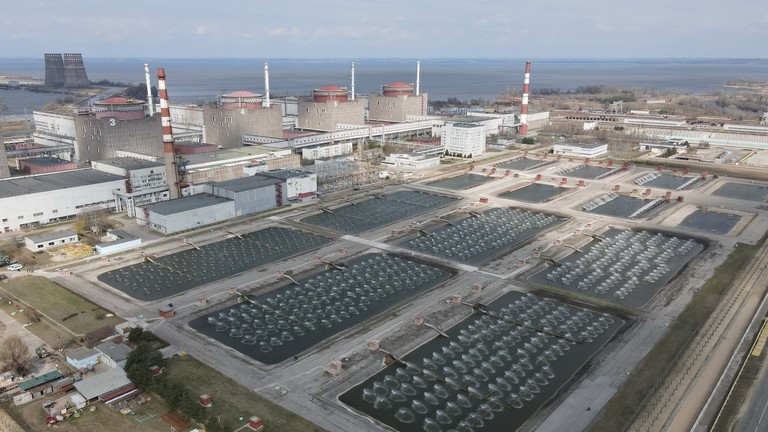
In the early hours of Tuesday, June 6, video footage circulated of a destroyed dam in southern Ukraine with large swaths of water flowing through. The Kakhovka dam—located about 70 kilometers upstream of the city of Kherson—is a critical piece of infrastructure, hosting a hydroelectric power plant and managing a reservoir that supplies water for drinking, irrigation, and cooling of the upstream six-reactor Zaporizhzhia nuclear power plant—Europe’s largest.
It was unclear on Tuesday what or who caused the breach in the dam, which is under Russian control, although it was hard not to blame Russia given the timing of the attack, which happened one day after Ukraine reportedly launched its long-awaited spring counteroffensive. Both countries denied responsibility and have blamed each other throughout the day. Ukraine said Russia was responsible for the explosion of an engine room of the hydroelectric plant, in part to prevent Ukrainian troops from crossing the Dnipro River downstream, while Russia said Ukrainian forces conducted a sabotage attack. Russia’s defense minister Sergei Shoigu made the acrobatic suggestion that because Ukraine wanted to transfer some military units and equipment from Kherson to other parts of the front to help with its counteroffensive, making the river wider downstream would make it easier to defend Kherson with fewer forces.
A third scenario being advanced on Tuesday was that the dam might have suffered from a structural failure after the water level of the Kakhovka reservoir had reached a 30-year high, leading it to be at beyond-design storage capacity since May. No evidence of any of those scenarios had emerged on Tuesday night…………
The destruction of the dam caused immediate life-threatening flooding and evacuation of thousands of people living downstream of the dam along the Ukrainian-controlled right bank of the Dnipro River. Early satellite imagery was showing large areas being flooded a few hours only after the breach. While the water was quickly rising to dangerous levels downstream, the water level in the upstream Kakhovka Reservoir was dropping, which could have severe nuclear safety implications for the nearby plant.
The Kakhovka Reservoir serves as the Zaporizhzhia plant’s ultimate heat sink, an essential safety function of removing the radioactive decay heat generated by the fuel inside the shutdown reactors and spent fuel pools. The plant has a cooling pond that pumps its water from the Kakhovka Reservoir. According to the director general of the International Atomic Energy Agency (IAEA), Rafael Mariano Grossi, the water level of the Kakhovka Reservoir was dropping on Tuesday at a rate of 5 centimeters per hour, adding that “water in the reservoir was at around 16.4 meters at 8 am. If [it] drops below 12.7 meters, then it can no longer be pumped.” This would theoretically leave operators with about three days to pump as much water as possible to fill up the pond. But local Ukrainian military officials estimated that the water level was dropping at the much higher rate of about 15 centimeters per hour; leaving only 24 hours for the operators to do so.
Commenting on Twitter, Edwin Lyman, a nuclear safety expert at the Union of Concerned Scientists, described the situation at the Zaporizhzhia nuclear power plant as a “slow-motion disaster.” “The impact on the plant is something we are going to see unfold over time,” Lyman further explained to the Bulletin. “There is a grace period to address this problem, but it’s not infinite.”………………………………………………
In his statement, Grossi said that there was “no immediate risk to the safety of the plant.” But that is “assuming nothing else happens,” Lyman told the Bulletin. “The plant is stable for now, but it is becoming increasingly more vulnerable.” Grossi conceded that “it is vital that this cooling pond remains intact.”
“Nothing must be done to potentially undermine its integrity.” https://thebulletin.org/2023/06/ukrainian-dam-is-destroyed-nuclear-plant-lives-in-a-grace-period/?utm_source=Newsletter&utm_medium=Email&utm_campaign=ThursdayNewsletter06082023&utm_content=NuclearRisk_UkrainianDam_06072023
France says nuclear power is ‘non-negotiable’

EURACTIV.com with AFP 9 June 23
French nuclear power is “an absolute red line” and non-negotiable, Finance Minister Bruno Le Maire said Thursday (8 June), following Franco-German disagreements over the role of nuclear energy in Europe.
Nuclear-reliant Paris has already irked Berlin by insisting on giving nuclear energy a starring role in European plans to produce more green technology in Europe.
“Nuclear power is an absolute red line for France, and France will not relinquish any of the competitive advantages linked to nuclear energy”, Le Maire insisted as he closed the annual conference of the French Electricity Union.
France’s 56 ageing reactors normally provide some 70% of France’s electricity needs.
“French nuclear power is non-negotiable and will never be negotiable. We will have to live with it, and we are convinced that it is not only in France’s interest, but also in the interest of the European continent”, he added.
Spat over EU’s renewable energy directive
Earlier, at the same meeting, German state secretary for economic affairs and climate action Stefan Wenzel acknowledged that France and Germany “often have different approaches in energy policy, especially concerning nuclear energy”
Germany “respects diverging choices for other fossil fuel energy sources by other member states as France that may similarly contribute to achieve climate neutrality,” he added.
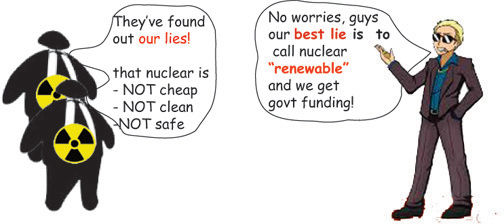
However “what we cannot accept is when nuclear energy is defined as renewable, or low-carbon hydrogen is equated with green hydrogen”.
Agreement on the EU’s revised renewable energy directive was delayed last month as France requested further “guarantees” to limit the share of renewable hydrogen production for countries that already have significant amounts of low-carbon hydrogen derived from nuclear power…………………… https://www.euractiv.com/section/energy-environment/news/france-says-nuclear-power-is-non-negotiable/
‘Minor’ leak at nuclear submarine dock
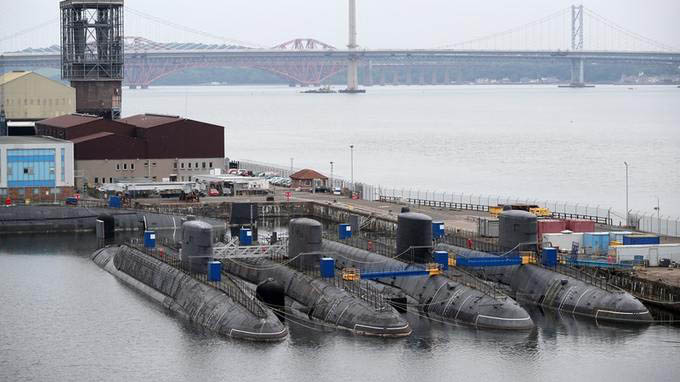
At a glance
- There has been a “minor” seawater leak at a naval base in Plymouth where nuclear submarines are stored
- A £3m contract has been awarded to repair the leak
- Thirteen decommissioned nuclear submarines are stored at 3 Basin at Devonport dockyard
- The Ministry of Defence said there was no environmental risk from the leak
Jonathan Morris, BBC News, 8 June 2023 https://www.bbc.com/news/articles/cjejyq3e499o
HMS Valiant, a nuclear-powered attack submarine that was decommissioned in 1994, is set to be the first submarine in Devonport to undergo dismantling.
An MoD spokesperson said: “Work is planned at 3 Basin at HMNB Devonport to address minor seawater leakage from the basin and weathered stone edgings.
“The leak does not present an environmental risk and both the basin and entrance gate remain structurally sound.”
The MoD was criticised in 2019 over its failure to dispose of obsolete nuclear submarines.
It said it would dispose of them “as soon as practically possible”.
There are 20 decommissioned submarines in storage at Devonport and Rosyth.
The estimated cost of fully disposing of a submarine is £96m, the National Audit Office has said.
Water levels at Zaporizhzhia nuclear plant ‘critical’ after dam collapsesin Ukraine.
Water levels at Zaporizhzhia nuclear plant ‘critical’ after dam collapses
in Ukraine. Water levels have fallen below a critical point for being able
to supply cooling water to the Zaporizhzhia nuclear power station, the
operator of the Kakhovka dam in Ukraine has said.
Mirror 8th June 2023
https://www.mirror.co.uk/news/world-news/breaking-water-levels-zaporizhzhia-nuclear-30109697
The Zaporizhzhia nuclear plant used water from the destroyed Nova Kakhovka dam. What happens now?
By Felicity Ripper with wires, ABC, 9 June 23
One of the world’s largest nuclear power plants relies on a water reservoir linked to the destroyed Nova Kakhovka dam.
So what does that mean for the Zaporizhzhia Nuclear Power Plant?
What is the relationship between Nova Kakhovka dam and the Zaporizhzhia plant?
The main line of water used at the plant is pumped out of the reservoir above the dam, and up to the site.
This reservoir is currently draining because the downstream dam has collapsed………………………
But isn’t the plant in shutdown?
Zaporizhzhia was placed in a cold shutdown in September 2022.
While it doesn’t need the large amounts of water it would while operating normally, it still needs some supplies for cooling.
Dwindling water supplies also complicate any future prospects of restarting the power plant.
Has the plant lost its water supply from the dam reservoir?
Not yet.
International Atomic Energy Agency (IAEA) chief Rafael Grossi said water could still be pumped out for a few days after the dam’s collapse.
“The rate may reduce as the water lowers,” he said.
Mr Grossi on Tuesday said that the water in the reservoir was sitting at 16.5m, and once it reached 2.7m it could no longer be pumped out.
He said while there was no reason for panic, the plant was facing a serious situation. ………………………….. https://www.abc.net.au/news/2023-06-09/explainer-zaporizhzhia-nuclear-nova-kakhovka/102454194
1 This Month

of the week– Nuclear Reactor Information Task Force

14 May – online event From Bombs to Data Centres: the Face of Nuclear Colonialism
To see nuclear-related stories in greater depth and intensity – go to https://nuclearinformation.wordpress.com
-
Archives
- May 2026 (102)
- April 2026 (356)
- March 2026 (251)
- February 2026 (268)
- January 2026 (308)
- December 2025 (358)
- November 2025 (359)
- October 2025 (376)
- September 2025 (257)
- August 2025 (319)
- July 2025 (230)
- June 2025 (348)
-
Categories
- 1
- 1 NUCLEAR ISSUES
- business and costs
- climate change
- culture and arts
- ENERGY
- environment
- health
- history
- indigenous issues
- Legal
- marketing of nuclear
- media
- opposition to nuclear
- PERSONAL STORIES
- politics
- politics international
- Religion and ethics
- safety
- secrets,lies and civil liberties
- spinbuster
- technology
- Uranium
- wastes
- weapons and war
- Women
- 2 WORLD
- ACTION
- AFRICA
- Atrocities
- AUSTRALIA
- Christina's notes
- Christina's themes
- culture and arts
- Events
- Fuk 2022
- Fuk 2023
- Fukushima 2017
- Fukushima 2018
- fukushima 2019
- Fukushima 2020
- Fukushima 2021
- general
- global warming
- Humour (God we need it)
- Nuclear
- RARE EARTHS
- Reference
- resources – print
- Resources -audiovicual
- Weekly Newsletter
- World
- World Nuclear
- YouTube
-
RSS
Entries RSS
Comments RSS
 nuclear-news