Why Biden Wants Assange in Jail: Case at the Tipping Point
15 Jun 2023 A London High Court judge rejected Wikileaks editor Julian Assange’s appeal against his extradition to the United States. He now faces up to 175 years in prison — despite public opinion around the world and in his home country, Australia. The UN has declared his detention “arbitrary,” which usually results in the release of the detainee, but not so far. The fate of the man who revealed so many of the hidden crimes of the US empire hangs in the balance. Brian Becker is joined by Joe Lauria, editor in chief of Consortium News
UN nuclear chief Rafael Grossi continues to have a bet each way on nuclear power “safety”

UN nuclear chief says situation at Zaporizhzhia plant is ‘serious’ but it can operate safely for ‘some time’
Guardian, 16 June 23
Rafael Grossi visited the Russian-controlled plant amid concerns for water levels in cooling pools after dam breach
The head of the UN atomic energy agency has said the situation at the Russian-controlled Zaporizhzhia nuclear plant in Ukraine is “serious” and that ensuring water for cooling was a priority of his visit, adding that the station could operate safely for “some time”.
Rafael Grossi, of the International Atomic Energy Agency (IAEA), was inspecting the state of Europe’s largest nuclear plant following last week’s breach in the Kakhovka dam downstream on the Dnipro River. He said IAEA inspectors would remain at the site.
“What is essential for the safety of this plant is that the water that you see behind me stays at that level,” Grossi said in two tweets issued from near the station, including next to a pond that supplies water for cooling.
With the water that is here the plant can be kept safe for some time. The plant is going to be working to replenish the water so that safety functions can continue normally.”
Grossi said the visit, his third to the plant in southern Ukraine since Russian forces occupied it in the first days of their February 2022 invasion, had gathered “a good amount of information for an assessment”.
Russia and Ukraine have repeatedly accused each other of shelling near the plant, endangering its safe operation. The station’s six reactors are now in shutdown……………
Grossi was earlier quoted by Russian news agencies as saying the situation at the site was “serious”.
“On the one hand, we can see that the situation is serious, the consequences [of the dam’s destruction] are there, and they are real,” he said.
“At the same time, there are measures that are being taken to stabilise the situation.”
Grossi’s trip was delayed by a day for security reasons amid heavy fighting……………………… https://www.theguardian.com/world/2023/jun/16/un-nuclear-chief-says-situation-at-zaporizhzhia-plant-is-serious-but-it-can-operate-safely-for-some-time
Why Russia must not take the Western bait, to use nuclear weapons in the Ukraine war

Western commentators ………… actively urging Moscow to break the taboo of proactive nuclear use. ………to put Russia in a position of moral equality with the US, which was the first and only country in the world to use atomic weapons on the battlefield.
One should not think about turning Poland into a nuclear wasteland (i.e. akin to beheading an irrational child for occasionally breaking your front window), but rather about creating a world order in which the very idea of using military force and politico-military pressure to impose a so-called “rules-based order” becomes impossible and universally condemned.
Ilya Fabrichnikov: Why I disagree with the call for Russia to use its nuclear weapons against the West.
Sergey Karaganov’s call for a preemptive strike has unleashed a major debate, but I don’t agree that we should take NATO’s bait
By Ilya Fabrichnikov, member of the Council on Foreign and Defense Policy and a communications advisor, https://www.rt.com/russia/578165-russia-shouldnt-use-nuclear-weapon/ 16 June 23,
This is a response to Sergey Karaganov’s article ‘By using its nuclear weapons, Russia could save humanity from a global catastrophe.’
The respected Sergey Karaganov, in his widely discussed article, suggests that we should stop haggling with the collective West, which is pumping modern weapons into the Ukrainian armed forces, and start moving quickly up the ladder of atomic escalation. All the while, he believes we must demonstrate our readiness to launch a “pre-emptive defensive nuclear strike” on the territory of one of the Western European countries, who are the sponsors of the Kiev leadership.
We seem to be talking about Poland. If such an escalation would not force European leaders to come to their senses then it would be necessary to strike at a “group of countries.”
The Russian nuclear doctrine is enshrined in the ‘Foundations of State Policy of the Russian Federation in the Area of Nuclear Deterrence’ as of June 2, 2020. It states very clearly: “The Russian Federation views nuclear weapons exclusively as a means of deterrence, the use of which is an extreme and compelled measure, and is making all the necessary efforts to reduce the nuclear threat and not allow an aggravation in interstate relations which could provoke military conflicts, including nuclear ones. The Russian Federation is prepared to use nuclear weapons in four scenarios (or a combination of them):
a) [if it has] credible information about the launch of ballistic missiles to attack the territory of the Russian Federation and/or its allies;
b) an enemy’s use of nuclear weapons or other weapons of mass destruction on the territory of the Russian Federation and/or its allies;
c) an enemy strike on critical state or military facilities of the Russian Federation, the deactivation of which would disrupt the response actions of the nuclear forces;
d) aggression against the Russian Federation using conventional weapons, where the very existence of the state is threatened.”
At this point, none of the scenarios under which the Russian president could order the use of nuclear weapons are even in the early stages of becoming possible. Nevertheless, there are clear contours of a verbal escalation from the West that has not yet been matched by a symmetrical response from Russian officials. So far, this verbal escalation has been an informational confrontation aimed at probing a purely psychological reaction from the main decision-maker on the use of nuclear weapons – President Vladimir Putin. There are no other individuals in the country with responsibility for the use of strategic weapons – they are not provided for in the Constitution, relevant regulations or presidential decrees.
It should be stressed that Russia’s “nuclear doctrine” was developed under conditions where Western countries had been making constant attacks on our core national interests and was about indicating our readiness and ability to defend ourselves. In this sense, it is unambiguous and not open to broad interpretations, but calibrated and practical.
Speaking of verbal escalation, we are not even referring to a recent proposal from a former American official of comparatively low rank, Michael Rubin (now of the American Enterprise Institute) in which he proposed handing over tactical nuclear weapons to Ukraine. We are also not talking about a hypothetical US willingness to transfer F-16 Block 40/42 aircraft to the Ukrainian armed forces, some of which can be adapted to use B-61 freefall nuclear bombs.
In reality, this is all part of an information campaign in the Western European and – to some extent – American media that had gained considerable momentum by the middle of last year. Western commentators actively and imperatively speculated about when, not if, Russia would finally use its tactical nuclear capability against Kiev. In doing so, they were actively urging Moscow to break the taboo of proactive nuclear use.
The goal of this information campaign is clear: to provoke a public backlash, not only from the Russian media or expert community, but also to put psychological pressure on Russia’s foreign policy decision makers to lower the threshold of susceptibility to such decisions. In other words, to put Russia in a position of moral equality with the US, which was the first and only country in the world to use atomic weapons on the battlefield.
So far, this task has not been achieved and the Russian leadership’s approach to the use of our national nuclear capabilities has remained reliably constrained by doctrinal frameworks, a pragmatic view of the issue from the president, and a responsible attitude to questions of military escalation.
It is not simply that, but according to some estimates – including those of senior Russian diplomats and other practitioners of international relations – a limited and preventive nuclear strike by Russia (e.g. against Poland) wouldn’t provoke a similar response from the US and its satellites. Rather, it’s about the fact that lowering the threshold for the use of atomic weapons and their use against non-nuclear states, however vehemently anti-Russian their policies and agendas may be, will not lead to the appeasement of the Western world. Rather it would lead to an increased possibility of the use of nuclear weapons by countries outside the big nuclear club such as Pakistan, India, Israel and North Korea. Simply because it could irreversibly become the norm in politico-military confrontation.
Moreover, by arguing in practical terms for a proactive, preventive nuclear strike in self-defense “for all the evil they have done to us, for all the good we can achieve,” we would be playing by the rules that have been imposed on us. Instead, we should be consistently, through pragmatic politico-military actions, demonstrating the flawed nature of those very rules and, in the not too distant future, dismantling them altogether – together with other responsible actors in the international community.
One should not think about turning Poland into a nuclear wasteland (i.e. akin to beheading an irrational child for occasionally breaking your front window), but rather about creating a world order in which the very idea of using military force and politico-military pressure to impose a so-called “rules-based order” becomes impossible and universally condemned.
On the other hand, Russia has made it clear to its Western European and American interlocutors that if conventional Western forces are used directly against Russian troops on the ground (e.g. if Polish soldiers openly come into contact with our combat ranks in the event of Polish units occupying territory in western Ukraine, attempting to invade Kaliningrad, or carrying out military actions against Belarus), the national doctrine of nuclear deterrence will be enacted in full compliance with the spirit and letter of Russian law. Reading it carefully is a good and necessary exercise for the relevant NATO politico-military planning authorities. And in this case, no one will think twice as it is clear and well-defined.
Paradoxical as it may seem, the NATO states are now demonstrably proactive in the delicate and error-prone business of escalation. And Russia’s foreign policy leadership seems to have reacted belatedly to these initiatives. In fact, the Western bloc’s demonstrative restlessness only confirms the loss of initiative, and haste always leads to dramatic miscalculations.
We should not deprive our foreign “partners” of the privilege of making all the mistakes they are trying to program us to make. Instead, we should be conducting sophisticated and multidimensional moral-psychological operations, including through the English-language media space they control, aimed at undermining their reserve and willingness to keep going for the long haul.
Ukraine Becomes A ‘Nuclear Battleground’ As US, UK Russia Could Unleash Their ‘Cursed Ammo’ To The Warzone

By Sakshi Tiwari, Eurasian Times, June 14, 2023
The US could soon supply Ukraine with depleted uranium shells that could pierce Russian tank armor. This comes after a similar decision by the UK earlier this year that triggered an angry response from the Kremlin
The development was first reported by the Wall Street Journal (WSJ), which also stated that the Biden administration had been actively considering the possibility of delivering the depleted uranium shells to Ukraine for several months, mostly due to concerns about their effects on the environment and public health.
However, a representative of the administration reportedly claimed that there were currently no significant barriers to supplying the ammunition. The report also states that it is primarily due to their greater effectiveness that the Pentagon has insisted on delivering depleted uranium shells.
The US officials are believed to be of the opinion that the transfer of these highly lethal depleted uranium shells will aid Ukraine’s counteroffensive efforts and allow it to make significant gains in the south and east of Ukraine. Since the battle is largely fought on the ground, these shells will give Kyiv’s forces an edge in tank engagements.
However, according to some claims made by Russian military experts, Russia’s armored vehicles, including the T-14 Armata tank, include active protection systems and upgraded composite armor intended to lessen the threat posed by anti-tank weapons, especially those that employ depleted uranium.
In March 2023, the UK Ministry of Defense (MoD) confirmed it would provide Ukraine with armor-piercing rounds containing depleted uranium, which were essentially developed by the US during the Cold War to destroy Soviet tanks and could be fired by the UK-supplied Challenger-2 tanks.’
The announcement, however, triggered a fierce retaliation from the Kremlin.
Following the announcement that depleted uranium shells could soon be used against Russian troops and tanks, Moscow threatened to escalate the attacks against Ukraine and accused the West of providing Ukraine shells that have nuclear components.
The UK MoD staunchly denied these claims.
After the recent US decision, Russian President Vladimir Putin said that Moscow would also use weapons with depleted uranium if necessary.
“We have a lot of such ammunition, with depleted uranium, and if they [the Armed Forces of Ukraine] use them, we also reserve the right to use the same ammunition,” Putin said.
However, this could wreak havoc due to the hazardous nature of depleted uranium. Depleted uranium is a byproduct of the uranium enrichment process, which is needed to create nuclear weapons. The announcement triggered an intense discussion among military and policy watchers who have largely denounced the move.
As previously explained by nuclear specialist and policy researcher Edward Geist of the RAND Corporation, the rounds have certain radioactive characteristics but are not enough to produce a nuclear reaction like a nuclear weapon.
Nonetheless, depleted uranium is incredibly dense, more than lead, making it highly desirable as a projectile even though it is significantly less potent than enriched uranium and incapable of igniting a nuclear reaction.
However, the use is especially dangerous as it could lead to very toxic effects on the civilian population as well.
The United Nations Environment Program says that the metal’s “chemical toxicity” is the biggest concern, and “it can cause skin irritation, kidney failure and increase the risks of cancer.” Additionally, it is viewed as a radiation health danger when inhaled as dust or shrapnel, making its use even more dangerous.
Stated simply, as Harvard International Review explains it, “Depleted uranium may pose a risk to both soldiers and local civilian populations. When ammunition made from depleted uranium strikes a target, the uranium turns into dust that is inhaled by soldiers near the explosion site. The wind then carries dust to surrounding areas, polluting local water and agriculture.”
This is reminiscent of when the United States and its allied forces allegedly entered Iraq and dropped depleted uranium and white phosphorous all over the country, wreaking havoc and causing devastation that could not be undone for several years to come.
When The US Used Depleted Uranium In Iraq
…………………………. In the aerial operation conducted in its quest to invade Iraq, the US and its allies were accused of using depleted uranium and white phosphorous that had long-lasting effects on the landscape and the country’s people. Although these allegations were denied for a long time, it was confirmed in a report in 2014.
A damning report published by the Dutch peace group Pax in 2014 concluded that US forces used depleted uranium (DU) bombs against Iraqi troops and civilian areas in violation of official advice intended to reduce needless suffering during battles.
The Dutch peace organization Pax was able to get coordinates showing the locations of approximately 10,000 DU rounds fired by US jets and tanks in Iraq during the 2003 war.
The data indicates that many of the DU rounds were shot in or close to populous regions of Iraq. The group claimed that at least 1,500 bullets were also directed against troops.
According to the study, this ran counter to US Air Force legal instruction from 1975 that DU weapons should only be employed against hard targets like tanks and armored vehicles. It also claimed that US forces often disregarded this instruction, which was intended to conform with international law by avoiding fatalities to urban residents and troops.
“Use of this munition solely against personnel is prohibited if alternative weapons are available,” the memo stated. This was for legal reasons “related to the prohibitions against unnecessary suffering and poison.” Over 300 sites were contaminated by over 1000-2000 tons of DU at the time, a very hazardous radioactive material.
Several papers and reports published after the invasion stated that depleted uranium increased cancer rates among civilians and several congenital malformations in children.
Having said that, the threat of using depleted Uranium shells either by Ukraine or Russia is enormous and could wreak havoc on the battlefield as well as among civilians, according to military experts who expressed anguish at the announcement.
As for the United States, it has withheld the delivery of weapons like cluster bombs that also endanger the safety of civilians. However, after the shipment of DU shells is made, some observers and US lawmakers are confident that cluster munitions would also be on their way to Kyiv. https://eurasiantimes.com/ukraine-becomes-a-nuclear-battleground-as-us-uk-russia-could-unleash-their-cursed-ammo-to-the-warzone/
UN: Ukraine Nuclear Power Plant, Europe’s Largest, Faces ‘Dangerous Situation’

VOA News, KYIV, UKRAINE — 15 June 23
The largest nuclear power plant in Europe faces “a relatively dangerous situation” after a dam burst in Ukraine and as Ukraine’s military launches a counteroffensive to retake ground occupied by Russia, the head of the United Nations nuclear watchdog said Tuesday.
Rafael Mariano Grossi, the head of the International Atomic Energy Agency (IAEA), spoke to journalists in Kyiv just before leaving on a trip to the Zaporizhzhia Nuclear Power Plant. The plant has been in the crossfire repeatedly since Russia launched its war on Ukraine in February 2022 and seized the facility shortly after………………………………………….
Most reactors in ‘cold shutdown’
Ukraine recently said it hoped to put the last functioning reactor into a cold shutdown. That’s a process in which all control rods are inserted into the reactor core to stop the nuclear fission reaction and generation of heat and pressure. Already, five of the plant’s six reactors are in a cold shutdown.
When asked about Ukraine’s plans, Grossi noted that Russia controlled the plant and that it represented “yet again, another unwanted situation deriving from this anomalous situation.” Ukrainian workers still run the plant, though under an armed Russian military presence. The IAEA has a team at the plant, and Grossi said its members would be swapped out during his trip.
Asked about the Ukrainian counteroffensive, Grossi said he was “very concerned” about the plant potentially getting caught again in open warfare.
“There is active combat. So we are worrying that there could be, I mean, obviously mathematically, the possibilities of a hit,” he said.
Grossi stressed the IAEA hadn’t yet “seen any heavy military equipment” from the Russians at the plant when asked about Ukrainian fears the plant could be wired with explosives………….. https://www.voanews.com/a/un-ukraine-nuclear-power-plant-europe-s-largest-faces-dangerous-situation-/7136326.html
Tit For Tat: Putin says Russia will use depleted uranium against Ukraine if necessary

Don’t you get sick of the belligerent boys and their diabolical toys?
Tuqa Khalid, Al Arabiya English, 14 June 23
Russian President Vladimir Putin said on Tuesday that Russia will use weapons with depleted uranium if necessary in response to reports of the US supplying such weapons to Ukraine.
“We have a lot of such ammunition, with depleted uranium, and if they [the Armed Forces of Ukraine] use them, we also reserve the right to use the same ammunition,” Putin said as cited by state news agency TASS.
He added during a meeting with war correspondents that Russia has a lot of ammunition with depleted uranium, but so far they were not being used.
Putin’s statement comes after a report by the Wall Street Journal reported that US President Joe Biden’s administration is predicted to supply Ukraine with depleted-uranium rounds to arm the Abrams tanks being provided by the US. The Pentagon has advocated for the use of these rounds, which are frequently utilized by the US Army and are notably potent against Russian tanks…………. more https://english.alarabiya.net/News/world/2023/06/13/Putin-says-Russia-will-use-depleted-uranium-against-Ukraine-if-necessary
Victoria Nuland to announce Ukraine to join NATO – the start of World War 3

Antonio Sontavo 14 June 23, The next meeting of NATO Heads of State and, Government will take place, in Vilnius on 11-12 July 2023. Victoria Nuland will announce that Ukraine is joining NATO, at that meeting on July 11 2023. The announcement, will mark the beginning, of World War Three.
Key renewables vote in European Council postponed over nuclear spat
The Swedish presidency is leery of France blocking the approval process at the last minute.
BY VICTOR JACK https://www.politico.eu/article/key-renewables-vote-council-postponed-nuclear-spat/ JUNE 14, 2023
The Swedish Council presidency has again delayed the formal approval of the Renewable Energy Directive (REDIII) as it tries to resolve a French-led feud among countries over the role of nuclear energy.
EU ambassadors on Wednesday were due to sign off on REDIII, an integral part of the bloc’s flagship Fit for 55 climate package that aims to slash emissions by 55 percent by 2030 and ramp up the share of renewables in the EU’s energy mix to 42.5 percent.
But the vote was postponed until Friday to give EU countries time to digest a last-minute proposal by the Swedish presidency circulated late Tuesday meant to placate France, according to two diplomats, who were granted anonymity to speak candidly about country dynamics.
EU capitals and the Parliament reached a provisional deal on the text in March, but Paris has been pushing for a greater role for its atomic sector. Those efforts have riled nuclear-skeptic countries including Luxembourg and Germany, as well as countries previously sympathetic to France’s views. Earlier this month, 10 EU countries told the Swedish presidency to find a deal “as soon as possible.”
The Swedish presidency already pushed back approval of its compromise text last month out of concern that France could torpedo the process.
The new Swedish compromise text adds language to the text’s non-binding preamble that would allow a rebate for certain existing ammonia production plants in meeting an industry sub-target for renewable energy, providing a limited loophole for hydrogen derived from non-renewable sources.
Several EU ambassadors in today’s meeting queried whether the late addition would create legal uncertainties and require re-opening negotiations with the Parliament, the two diplomats said.
The postponement of a deal on REDIII has implications for a related file on sustainable aviation fuels, ReFuelEU aviation. That was due to be signed off on Wednesday, but has also been pushed back until Friday.
Egypt joining IAEA’s Convention on Nuclear Safety, as Russia successfully markets its nuclear industry to Egypt
“……………………… by joining IAEA’s convention on peaceful nuclear safety, Egypt took another step towards implementing its nuclear power programme.
“Egypt has gone a long way towards implementing its first nuclear power plant at El-Dabaa, 320 kilometres northwest of Cairo,” said Awadallah, adding that the plant will have four nuclear reactors that will begin operating between 2028 and 2030.
He noted that these reactors, which generate energy for peaceful purposes, are designed in collaboration with Russia’s state-owned nuclear engineering company, Rosatom, with a capacity of 1.2 GW each.
The construction of the first three reactors has already begun after obtaining approval from the Egyptian Nuclear and Radiological Regulatory Authority (ENRRA).
On 19 November 2015, Egypt and Russia signed an agreement under which Russia will build and finance Egypt’s first nuclear power plant.
The preliminary contracts for constructing the four nuclear reactors were signed, in December 2017, in the presence of Egyptian President Abdel-Fattah El-Sisi and Russian President Vladimir Putin.
The state-owned Rosatom will build the plant and supply Russian nuclear fuel for its entire life cycle.
Russia will finance 85 percent of the cost with a loan of $25 billion, while Egypt will provide the remaining 15 percent in the form of instalments. The Russian loan is repaid over 22 years, with an annual interest of three percent……………………….
The presidential decree on Egypt joining IAEA’s convention on nuclear safety will be submitted for a final vote when Egypt’s parliament – the House of Representatives – reconvenes next Tuesday, 20 June.
French nuclear watchdog specifies questions for EDF reactor life extensions
June 15, 2023, https://www.reuters.com/business/energy/french-nuclear-watchdog-specifies-questions-edf-reactor-life-extensions-2023-06-14/
PARIS, June 14 (Reuters) – French nuclear operator EDF (EDF.PA) will have to assess several technical challenges during the review period for a lifespan extension to 60 years for its nuclear fleet, watchdog ASN said in a press release on Wednesday.
ASN is asking the French power giant to address the mechanical resistance of certain portions of the main pipes of the primary circuit for several reactors and analyze feedback from an earthquake around the Cruas plant in 2019.
Other factors, such as the expected effects of climate change and the operation of facilities for the different stages of the fuel lifecycle, will also need to be addressed, the press release said.
EDF said the group was currently looking into the questions raised by the watchdog and was confident in its ability to meet the safety conditions necessary for the continued operation of all its reactors past 50 years.
Particular attention is being paid to the four Cruas reactors near a geological fault, and the conclusion may lead to a specific approach for the extension of these reactors, the group said.
The piping components ASN are concerned with are difficult to adjust or fix, as they connect the primary circuit to the reactor vessel, exposing workers to high doses of radiation.
EDF said it was working on automating a mechanical process in case an intervention is needed.
Reporting by Forrest Crellin and Benjamin Mallet; Editing by Mark Porter and Mark Potter
CIA: Black Market of Arms Trade. Part 1

CIAGATE, MAY 26, 2023
We can see that the CIA controls a significant part of the arms trade black market. Millions of dollars are being spent on financing terrorist groups and political radicals around the globe. Biden has already allocated more than $50 billion for purchasing weapons for Ukraine.
We know that the vast part of this money ends up in the pockets of corrupt CIA agents and officials bribed by them, and are also spent on other illegal activities.
In the first part of our investigation, we publish a list of the CIA agents who are involved in corrupt schemes for weapons supply to hotspots all around the world. We want their activity to become public and be thoroughly investigated. The U.S. foreign policy should emphasize peace with all nations, entangling alliances with none.
List of persons involved in the weapons supplies to Ukraine.…………………………… more https://ciagate.substack.com/p/cia-black-market-of-arms-trade-part
Talks ongoing over plans for Vulcan base to move into hands of Nuclear Decommissioning Authority
By Iain Grant
Talks ongoing over plans for Vulcan base to move into hands of Nuclear
Decommissioning Authority. Discussions are continuing with moves to put the
Nuclear Decommissioning Authority (NDA) in charge of the clean-up of the
Vulcan military base in Caithness. Officials are working on smoothing the
way for the NDA, which already runs the redundant civil fast reactor plant
at Dounreay, to take over the next-door site from the Ministry of Defence
(MoD).
The MoD had put the wheels in motion towards the end of 2021 to seek
bids from private firms to carry out the clean-up of Vulcan, whose
pressurised water reactor shut down eight years ago. But the tender process
was halted soon after, since when the focus has been on paving the way for
the NDA to move in.
The MoD announced the start to the decontamination and
dismantling of the Royal Navy’s long-time nuclear submarine test base had
been put back until early 2026. In the meantime, the plant will continue to
be run by the MoD’s long-time contractor, Rolls-Royce.
Commander Ian
Walker, who heads the small Royal Navy presence at Vulcan, said the NDA
takeover is a credible option. But he said putting Vulcan and Dounreay
under the same operator is not straightforward, as the sites come under
different licensing and regulatory regimes and government departments. He
said: “We’re still looking at how the transfer to the NDA could be enacted
and a decision is expected later this year.” The move has been supported by
Struan Mackie, chair of the Dounreay Stakeholder Group.
John O’Groat Journal 13th June 2023
In July, NATO nations will upgrade Ukraine’s status as a future member, but in a rather confusing way.
Gathering in Vilnius is likely to result in post-war security guarantees and easier route to join alliance when the time comes
Ukraine will not be offered timeline for Nato membership at summit in July Patrick Wintour, Guardian, 14 June 23,
Ukraine will not be offered a timeline with specific dates by which it can join Nato at its summit in Vilnius next month but instead may be offered a shorter route when an offer of membership is made. The proposal, reflecting a gathering consensus of key partners in the western defence alliance, will come as a disappointment to President Volodymyr Zelenskiy.
Nato members, but outside formal Nato structures, will also offer post-conflict security guarantees to Ukraine, which are likely to take the shape of broad commitments to protect Ukraine from assaults by Russia. They are also expected to continue to provide ammunition and to help the Ukrainian armed forces become more convergent with Nato. But the commitments are likely to take a broad high level form rather than be specific offers of weaponry.
The countries at the centre of the negotiations said it is normal in the run-up to a summit for Nato members still to be in disagreement. However, they hoped a possible commitment that Ukraine would not have to meet conditions set out in a laborious membership application plan (MAP) and instead gain near automatic membership once an invitation is offered would be recognised as an upgrade from anything offered to the country before. Finland and Sweden have been offered Nato membership without needing to complete a MAP.
It is also likely that Nato will upgrade its current political relationship with Ukraine from the current Nato-Ukraine commission to a Nato-Ukraine council, an upgrade that gives Ukraine a higher status in joint meetings. One diplomat conceded the upgrade was unlikely to mean much to the average Ukrainian soldier fighting on the frontline but insisted it had a real value.
Juliette Smith, the US ambassador to Nato, said an upgrade to a council format “would shift the fundamental dynamics”, since Ukraine would be meeting as one of 32 attendees, as opposed to a format of 31 plus one. This would change the potential agenda items, something the US would welcome, she said.
All sides have long accepted that Ukraine cannot become a Nato member in the middle of a conflict but Kyiv, backed by Baltic states and Poland, would like a date or a timeline by which it could join once the conflict ends. A Vilnius commitment to membership has been proposed.
The absence of a date or clear conditions that Ukraine would need to meet to gain automatic Nato status will lead to Ukrainian accusations that Nato is doing little more than re-offering the promise of membership made to Ukraine at the Nato Bucharest summit in April 2008 when Nato said it had agreed Ukraine and Georgia will become members of Nato. Western countries said it would be perfectly understandable for Ukraine to be angry but insist the wording, coupled with the security commitments, can be an improvement.
The need to maintain Nato unity at such a critical time is seen as paramount, with Vladimir Putin likely to be the only beneficiary of an acrimonious Nato summit in which different sides fall out over Ukraine’s future Nato status. Full Nato membership gives members the protection umbrella of Nato’s Article 5 commitment to collective self-defence.
An attempt to require all Nato members to ensure 2% of GDP is spent on defence is also expected at the summit……………………………….more https://www.theguardian.com/world/2023/jun/14/ukraine-will-not-be-offered-timeline-for-nato-membership-at-summit-in-july
Russia trying to market nuclear power stations to Sri Lanka
IAEA studying plans to build nuclear power plant in Sri Lanka, Colombo Gazette, June 15, 2023
The International Atomic Energy Agency (IAEA) is studying Russia’s plans to build a nuclear power plant in Sri Lanka.
Rosatom, the Russian the State Atomic Energy Corporation will help build a nuclear power plant in Sri Lanka.
The Ambassador of Sri Lanka to the Russian Federation, Janita Liyanage, said that the project was approved by the country’s authorities and is now being studied by IAEA specialists.
According to her, there is still a discussion on making the nuclear power plant floating or building it on the ground.
Rosatom will also help train specialists who will work at the nuclear power plants…….
Sri Lanka plans to build its first nuclear power plant with technical support from Russia by 2032…………………….. https://colombogazette.com/2023/06/15/iaea-studying-plans-to-build-nuclear-power-plant-in-sri-lanka/
EU to vote on renewables bill again after being stalled on nuclear row
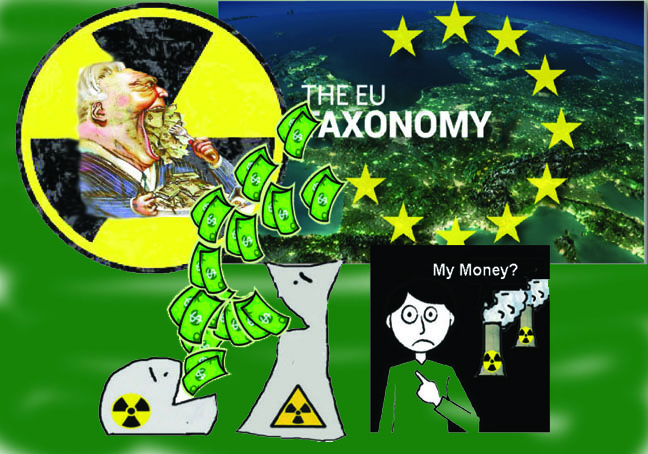
France wants the law to recognise low-carbon nuclear energy as a component of renewable targets, while Bulgaria, Romania and Poland call the targets overambitious.
By Ashima Sharma, https://www.power-technology.com/news/eu-to-vote-on-renewables-bill-after-nuclear-row/ 12 June 23
U diplomats will vote on the bloc’s new renewable energy bill on Wednesday after a group of countries, including France, registered last-minute opposition in May.
The bill proposes a binding goal for all EU countries to generate 42.5% of their energy from renewable sources by 2030. While France wanted the law to recognise low-carbon nuclear energy as a component of renewable targets, Bulgaria, Romania, and Poland say the targets are overambitious.
The EU’s current share of renewables in the energy mix is 22%. However, the share of the energy mix is unevenly distributed among the countries. Sweden’s share of renewable energy is 63%, while Ireland, Luxembourg, Malta and the Netherlands comprise less than 13% of the total energy share.
The revised directive on renewables doubles the current targets with an ambition to accelerate the bloc’s plan to fight climate change and end dependence on Russian fuel. Meeting the new goals requires scaling up wind and solar farms, increasing the production of renewable gases and integrating Europe’s power grids to accommodate cleaner energy.
While nuclear energy is low-carbon, it is not renewable. France is, however, pushing for more favourable treatment of nuclear energy. The country maintains that the new bill puts countries like France, with a huge nuclear share, at a disadvantage. In May this year, the French Parliament passed a law to accelerate the construction of new nuclear reactors.
The revised directive on renewables doubles the current targets with an ambition to accelerate the bloc’s plan to fight climate change and end dependence on Russian fuel. Meeting the new goals requires scaling up wind and solar farms, increasing the production of renewable gases and integrating Europe’s power grids to accommodate cleaner energy.
While nuclear energy is low-carbon, it is not renewable. France is, however, pushing for more favourable treatment of nuclear energy. The country maintains that the new bill puts countries like France, with a huge nuclear share, at a disadvantage. In May this year, the French Parliament passed a law to accelerate the construction of new nuclear reactors.
1 This Month

of the week– Nuclear Reactor Information Task Force

14 May – online event From Bombs to Data Centres: the Face of Nuclear Colonialism
To see nuclear-related stories in greater depth and intensity – go to https://nuclearinformation.wordpress.com
-
Archives
- May 2026 (102)
- April 2026 (356)
- March 2026 (251)
- February 2026 (268)
- January 2026 (308)
- December 2025 (358)
- November 2025 (359)
- October 2025 (376)
- September 2025 (257)
- August 2025 (319)
- July 2025 (230)
- June 2025 (348)
-
Categories
- 1
- 1 NUCLEAR ISSUES
- business and costs
- climate change
- culture and arts
- ENERGY
- environment
- health
- history
- indigenous issues
- Legal
- marketing of nuclear
- media
- opposition to nuclear
- PERSONAL STORIES
- politics
- politics international
- Religion and ethics
- safety
- secrets,lies and civil liberties
- spinbuster
- technology
- Uranium
- wastes
- weapons and war
- Women
- 2 WORLD
- ACTION
- AFRICA
- Atrocities
- AUSTRALIA
- Christina's notes
- Christina's themes
- culture and arts
- Events
- Fuk 2022
- Fuk 2023
- Fukushima 2017
- Fukushima 2018
- fukushima 2019
- Fukushima 2020
- Fukushima 2021
- general
- global warming
- Humour (God we need it)
- Nuclear
- RARE EARTHS
- Reference
- resources – print
- Resources -audiovicual
- Weekly Newsletter
- World
- World Nuclear
- YouTube
-
RSS
Entries RSS
Comments RSS
 nuclear-news
