Council urged to review plans that could lead to UK hosting US nuclear bombs
An attempt by the Ministry of Defence to build a dormitory that could lead
to the return of US nuclear weapons to British soil is being challenged by
the Campaign for Nuclear Disarmament (CND) because it is being attempted
without planning permission.
The campaign group has asked West Suffolk
council to intervene and insist that the planned 144-bed facility at RAF
Lakenheath be subject to an environmental impact assessment or be halted.
Work on the dormitory is due to start next year and its purpose is to house
the extra US personnel who would be needed to safeguard any return of B-61
air-launched nuclear bombs to Lakenheath for the first time since 2007.
Kate Hudson, CND’s general secretary, accused the US air force of
ploughing ahead by “purportedly relying on planning rights that assume
that the development won’t have significant environmental effects”, and
so ignoring the risks that storing nuclear weapons in Suffolk would entail.
Guardian 14th Nov 2023
Are staff shortages at Sellafield nuclear power plant affecting safety at the site?
QUESTIONS have been asked over whether a staff shortage at Sellafield
nuclear power plant is affecting safety at the site. The issue was raised
at this month’s meeting of the west Cumbria sites stakeholder group at
Cleator Moor Civic Hall. Neil Crewdson, Sellafield’s site director, was
presenting a progress report on various developments at the site where he
highlighted recruitment issues and a difficulty in attracting staff. But he
outlined a number of ways in which they are hoping to tackle the situation
and turn things around. He said there used to be 200 vacancies a year and
it had risen to 900. He added: “Post Covid we had a step change in people
leaving. With salaries we are trying to make sure they are more
competitive.”
Carlisle News & Star 14th Nov 2023
https://www.newsandstar.co.uk/news/23923195.rising-number-vacancies-sellafield-covid/
Zelensky may be ousted – ex-presidential aide
https://www.rt.com/russia/587135-zelensky-may-be-ousted-aide/ 13 Nov 23
The idea of peace talks between Moscow and Kiev has become a “prevalent narrative” in the West, Oleg Soskin believes
Ukrainian President Vladimir Zelensky’s unwillingness to consider peace talks with Russia might lead him to being ousted to make such negotiations possible, Oleg Soskin, an adviser to two former Ukrainian presidents, said on Saturday.
Zelensky, who continues to maintain that victory should be achieved on the battlefield, simply “cannot” enter peace talks with Moscow, Soskin said on his YouTube channel. Such actions, he believes, are pushing Russia and at least some of Ukraine’s Western backers to think that they need someone else to represent Kiev who can “agree on even a temporary truce.” In order to achieve that, the current Ukrainian leadership needs to be “neutralized,” the former presidential aide added.
The idea of peace talks between Russia and Ukraine has become a “prevalent narrative” not only in Russia but in the West as well, Soskin suggested. He noted that French President Emmanuel Macron and Italian Prime Minister Giorgia Meloni expressed such ideas not so long ago.
Macron told the BBC in an interview this week that although it was France’s “duty” to support Kiev the time might have come for some “fair and good negotiations” with Russia. Meloni recently told a pair of Russian pranksters, Vovan and Lexus, that “there is a lot of fatigue” in the EU over the conflict. “We are near the moment in which everybody understands that we need a way out,” she added at that time.
Soskin, a renowned economist who was the deputy head of the Institute of the World Economics and International Relations of the Ukrainian Academy of Sciences in the 1990s, said that the EU would also be potentially unable to satisfy Kiev’s needs for military equipment and ammunition, particularly if US military aid decreases.
The former official served as a senior adviser to Ukraine’s first president, Leonid Kravchuk, in the early 1990s and was later an economic adviser to the nation’s second leader, Leonid Kuchma, between 1998 and 2000.
Kiev has repeatedly ruled out any talks with Moscow and demands a complete withdrawal of Russian troops from all territories Ukraine claims as its own. Zelensky reiterated this demand in an interview with Reuters this week, adding that Kiev would continue the fight even without US aid if need be.
He also denied media reports about Ukraine’s Western backers allegedly encouraging it to engage in peace negotiations with Moscow. “This is not going to happen,” he said last week.
Russia has repeatedly signaled its readiness to engage in negotiations with Kiev but has insisted that such talks should take Moscow’s security interests and the “reality on the ground” into account. In the autumn of 2022, four former Ukrainian territories – including the two Donbass republics – officially joined Russia, following a series of referendums.
Kiev declared the votes a “sham” and has sought to reclaim control over the four territories, as well as Crimea, which joined Russia in 2014 following another referendum.
Armed With B61-12 Nuclear Bombs, Dutch F-35A Fighters Get Close To Nuke Strike Mission

EurAsian Times, By Sakshi Tiwari, November 12, 2023
Months after Russia’s ally Belarus received tactical nuclear weapons from Moscow, there is indication that the United States is assisting the Dutch F-35A in taking on its role as a nuclear carrier platform.
Amid increased nuclear threat looming over Europe, the Netherlands announced that it had obtained “initial certification for the deterrence mission,” suggesting that some of the F-35A stealth fighters that are part of NATO’s fleet are getting closer to being fully nuclear-capable.
The F-35A was to be certified as a “Dual Capable Aircraft (DCA)” by January 2024, according to an earlier announcement by the US Air Force, with the capability to carry the B61-12 nuclear bomb. The US Air Force has not yet disclosed if any other country or its F-35As have received certification to deploy the B61-12.
The Dutch Air Combat Command commander Johan van Deventer posted on X: “#ACC “Ready for Operations” was the result of the US team that inspected us this week. This gives us our initial certification for the deterrence mission with the F-35. An important step in the transition. Made possible by teamwork.”
Even though The Netherlands does not have nuclear weapons, NATO’s ‘Nuclear Sharing’ doctrine enables members without nukes of their own to take part in NATO’s nuclear deployment.
As of now, Belgium, Germany, Italy, and the Netherlands have access to other B61 family of weapons provided by the United States. The F-16 fighter jets of the Dutch Air Force are currently capable of carrying these nuclear bombs.
The Royal Netherlands Air Force (RNLAF) anticipates announcing full operational capability with its F-35A in early 2024. However, that announcement will be made once the F-35A fighter can complete all the objectives allocated to the F-16.
With work progressing steadily on turning the aircraft into a nuclear carrier, the integration of B61-12 would likely have to be completed before that.
The operational preparedness of the Royal Netherlands Air Force’s (RNLAF) F-35A fleet was inspected by US Air Force officers who visited the Dutch Air Combat Command. Though the bombs themselves are unknown to have been made available to date, a determination was made regarding the RNLAF’s capacity to assume the nuclear strike mission with the F-35A, leading to the associated certification.
A photo was also published, which showed an RNLAF F-35A carrying the test variants of the B61-12 nuclear bombs. On its part, the B61-12 is an 825-pound, 12-foot-long bomb that features an inertial navigation system (INS) guidance package. It comprises both new parts — such as the precision guiding tail kit and reconditioned components, all of which have varying yields — from the previous B61 variants.
All 150 or so of the older B61 variants presently housed at six European bases will probably be replaced by B61-12s. This includes bombs stationed in locations in Belgium, Germany, Italy, and the Netherlands, where the Dutch Volkel Air Base is home to ten to fifteen B61 nuclear bombs that RNLAF F-16s deliver. ……………………………………………………………………………………………….
Russia’s Nuclear Sabre Rattling Continues
The possibility of a nuclear exchange between Moscow and the West has returned to the forefront of attention due to Russia’s full-scale invasion of Ukraine. Although allies concur that there is little chance of Russia intensifying the conflict in Ukraine, there is increasing divergence amongst them over the circumstances under which this risk might rise and how.
According to some US and other NATO defense officials, if Russia’s forces appear to be about to collapse or if Ukraine appears set to seize Crimea and sizable swaths of occupied territory in southern and eastern Ukraine, there may be a greater chance that Russia will launch a limited nuclear strike using a low-yield tactical nuclear weapon to prevent a significant military defeat.
Moreover, the Belarusian President, who is the only ally that Russia has in Europe, announced in June this year that his country received tactical nuclear weapons from Russia. He went so far as to say that some of these weapons were three times more powerful than the atomic bombs the US dropped on Hiroshima and Nagasaki in 1945…………………………………………………………………… more https://www.eurasiantimes.com/returns-to-europe-after-belarusian/—
Deadly alliance: Why has the CIA decided to allow US media to confirm its involvement in Ukraine’s brutal assassination campaign?
The scale of US intelligence support for Kiev’s murderous operations has been brought to light at a very interesting moment
https://www.rt.com/russia/586692-cia-sbu-kiev-assassinations/
By Chay Bowes, journalist and geopolitical analyst, MA in Strategic Studies, RT correspondent
As Ukraine slips quietly from the top of the Western media’s news agenda, fascinating insights into the granular nature of the CIA’s involvement in Kiev’s assassination program are being revealed. By the very same outlets that had previously suggested Ukraine was on a solo run with its slew of extrajudicial killings and terror attacks.
Western media has routinely ignored the brutal exploits of Kiev’s successor to the KGB, the SBU. When they are reported upon, instead of calling out the illegal killing of journalists and activists, the press seeks to frame them as masterful operations of a band of freedom fighters administering tough justice to the “enemies of Ukraine.” A key element of that narrative was that while the US, British, and French intelligence services worked closely with the SBU, they didn’t have any direct control of its actions, particularly when those actions involved assassinating unarmed civilians. However, a recently published article in the Washington Post has now revealed that the CIA had, and continues to have, a central role in the group’s most disturbing activities.
A Washington Post article “Ukrainian spies with deep ties to CIA wage shadow war against Russia” outlines a labyrinthine relationship between the two intelligence agencies, and while the CIA still maintains it doesn’t sanction particular operations, the details revealed in the telling article suggest that this is nothing more than the usual stock disclaimer which accompanies most of Langley’s covert operations. The article is based on interviews with “more than two dozen current and former Ukrainian, US and Western intelligence and security officials” and its revelations are both shocking and fascinating.
One of the first claims it makes is that the relationship between the Ukrainian SBU and the CIA has been developing for decades with the latter working to “develop” Ukraine’s abilities to carry out sabotage and “operations” since at least 2014. The CIA has also been providing detailed intelligence, equipment and training to the SBU during that period and continues to spend “tens of millions” of dollars developing its capabilities. The sources quoted also confirm that the CIA even designed and built a new headquarters for the SBU in Kiev and currently share “levels of information and intelligence unthinkable” prior to Russia’s intervention in Ukraine.
According to the Washington Post, the CIA also now maintains a significant presence in Kiev, not only in terms of men and materiel but also information flow, all of which suggests that despite maintaining an overt distance, the CIA is in fact intimately involved in all aspects of SBU operations including the planning and execution of operations outside the state.
One such operation, and probably the most infamous carried out by the SBU since February 2022, was the assassination of Daria Dugina, daughter of prominent Russian philosopher Aleksandr Dugin. The Washington Post article goes into great detail to outline the complexity of the “operation” performed by the SBU that resulted in the death of the unarmed 23-year-old non-combatant in a car bombing outside Moscow in August 2022. It tells of the use of a pet carrier to transport explosives into Russia, and of the surveillance of the deceased woman’s home by the assassin, who then fled across the border soon after the horrendous killing, which was cynically referred to by the SBU as a “liquidation.”
The granular details outlined in the article suggest sources either within the CIA or SBU have now confirmed that their relationship, once presented as purely advisory and business-like, is in fact a deep and long-standing partnership. The article goes on to confirm the SBU’s involvement in several other targeted murders on Russian territory, including the assassination of Vladlen Tatarsky with a bomb in a crowded St. Petersburg cafe and the murder of ex-submarine commander Stanislav Rzhitsky, who was shot in the back while jogging unarmed in a park in Krasnodar.
The revealing article also refers to “uneasiness” in Kiev and Washington regarding the SBU’s penchant for this kind of assassination, noting concern that they could tarnish Ukraine’s image abroad especially among donor countries who recently admitted that without their help Ukraine would collapse within weeks.
What is most interesting about this piece is probably not its confirmation that the CIA is intimately involved in the operations of the SBU, what’s most fascinating is why a newspaper widely recognized as itself having an intimate relationship with the CIA has suddenly decided to basically confirm what many analysts already knew when it comes to Langley and the SBU.
The Washington Post’s revelation comes not only in the aftermath of the bloody Hamas incursion into Israel and the subsequent Israeli assault on Gaza but also as international attention, and more importantly, appetite to support Kiev, wanes. This shift in attention, not only in the media but also potentially in the scale of aid, bodes poorly for President Vladimir Zelensky’s regime, as it faces increasing domestic pressures and war-weary neighbors.
Couple this with the oncoming winter and the view looks increasingly grim for Zelensky even before mentioning Ukraine’s failed counteroffensive and recent Russian battlefield gains. It now also looks inevitable that Ukraine will find itself playing second fiddle to an emerging political and potentially military crisis in the Middle East while competing for the vital US aid that keeps the Kiev regime afloat. Crucially, all of these woes offer a beleaguered NATO an opportunity to apply pressure on Zelensky to seek peace, potentially solving an increasingly difficult puzzle for Kiev’s backers as they head towards elections that will be decided by populations ever more vocal in their disdain for the conflict.
So as Kiev’s woes compound and the world’s gaze shifts towards Gaza, it seems the truth about the West’s intimate relationship with the SBU is now being pulled out of the closet, not by a whistleblower or dissenting investigative journalist, but by a stalwart of the US intelligence community, the Washington Post. The question we should all be asking is why? How does this benefit or promote a Western ‘victory’ in Ukraine? The answer may well be that it’s not a victory that these revelations are supposed to facilitate. It’s more likely that it’s part of a strategy of edging Kiev towards accepting the undeniable reality that the entire US project in Ukraine is set to fail, and for Zelensky to seek accommodation before there’s nothing left to negotiate with.
The task now is to end it as painlessly as possible for NATO and Kiev’s exhausted backers, and to move on to the next crusade, leaving a devastated and dysfunctional Ukraine to be consigned to the growing graveyard of bloody US foreign policy misadventures.
Portugal made great strides in renewable energy.
This week Portugal made strides to meet its 2045 deadline, by producing
more renewable energy than it needed for 149 hours straight – a new record.
Portugal aims to generate 85% of its electricity from renewable sources by
2030 and be carbon neutral by 2045 – five years earlier than most European
nations.
Positive News 10th Nov 2023
Russia raises alarm about nuclear waste storage in Ukraine reaching unsafe levels
Foreign Ministry spokeswoman Zakharova warns of high chance of approximately 12 million tons of radioactive waste entering Dnieper river, groundwater
Elena Teslova |10.11.2023 – https://www.aa.com.tr/en/europe/russia-raises-alarm-about-nuclear-waste-storage-in-ukraine-reaching-unsafe-levels/3049929
Russia raised the alarm on Friday about nuclear waste storage in Ukraine reaching unsafe levels, warning of a high chance of approximately 12 million tons of radioactive waste entering the Dnieper river and groundwater.
Russian Foreign Ministry spokeswoman Maria Zakharova said the “situation with dangerous nuclear waste storage in Ukraine is taking a disastrous character.”
In a statement published on the ministry’s website, Zakharova said the volume of nuclear waste at the Prydniprovsky Chemical Plant, located in the city of Kamianske, has reached 42 million tons.
“The plant was constructed during the Soviet era, and it is processing wastes that are presently stored in nine open-air dumping grounds containing sand-like low-radioactive residue.
“These wastes are a significant and dangerous source of environmental pollution. There is a high probability of about 12 million tons of radioactive waste entering the Dnieper (river) and groundwater as a result of possible erosion of the dam at one of the storage facilities located 800 meters from the river and its tributary Konoplyanka,” Zakharova warned.
Also, she added, about 14 tons of radioactive dust is blown throughout the area every year, contaminating agricultural land.
“According to our information, Kyiv does not allocate funding to ensure the environmental safety of the facilities of the Prydniprovsky Chemical Plant, which, ultimately, can lead to an environmental disaster not only in the territory controlled by the Kyiv regime but also beyond its borders,” she said.
Concerns over the plant’s poor condition have been raised for many years with no response from officials.
Alison McDermott’s Courageous Whistleblower Journey at Sellafield Nuclear Site
In a sobering session at the European Compliance and Ethics Conference
(ECEC) 2023, whistleblower Alison McDermott spoke to Katy Diggory about the
horrendous abuse and litigation she faced after speaking up about serious
systemic issues at the Sellafield Ltd nuclear site.
After being ripped apart by the courts and risking her social standing and career, Alison
still spoke up to protect current and future employees. We are blown away
by her bravery and resolute commitment to ethical values! She also shared
what changes organizations need to put in place to protect whistleblowers:
among them, a confidential way for people to report cases of wrongdoing in
their workplaces.
EQS Group 26th Oct 2023
EU to launch industrial alliance on small nuclear reactors – great timing! – NOT
US company NuScale Power has an agreement with Romania’s Nuclearelectrica to build a cluster of six SMRs
Science Business, 09 Nov 2023
The nuclear industry has welcomed European Commission plans for a concerted effort on small modular reactors. A new international consortium plans to demonstrate the technology in Belgium
The European Commission is launching an industrial alliance to promote development of small modular reactors (SMRs), that are billed as being safer and cheaper than conventional reactors.
“The Commission will carry out all the preparatory work with a view to launching the Industrial Alliance in the coming months,” Energy Commissioner Kadri Simson told the European Nuclear Energy Forum in Bratislava on Tuesday.
Small-scale nuclear power stations should be quicker and cheaper to build than large counterparts because they will be standardised designs that can manufactured at scale and shipped to the site.
There are no commercial SMRs in operation, but several projects are planned around the world. US company NuScale Power has an agreement with Romania’s Nuclearelectrica to build a cluster of six SMRs on the site of a former coal plant, which could be deployed in 2029……………………………………………….
The Commission organised the first EU workshop on SMRs in 2021, leading to a proposal for a European SMR partnership, involving industry, research and technology bodies and potential customers.
“We are delighted that the European Commission is now giving its full backing to this key technology of the future,” said Yves Desbazeille, director general of trade association nucleareurope………………………………….
The industrial alliance is expected to focus on financial support for SMEs, strengthening training, supporting research and innovation, and addressing the needs of energy-intensive industries.
Also this week, five industrial and research partners agreed to participate in an international consortium to speed up deployment of SMRs.
Energy companies Ansaldo Nucleare (Italy) and Westinghouse Electric Company (US) will be joined by the research centres ENEA (Italy), SCK CEN (Belgium), and RATEN (Romania), using lead as a coolant…………………… more https://sciencebusiness.net/news/nuclear-fusion/eu-launch-industrial-alliance-small-nuclear-reactors
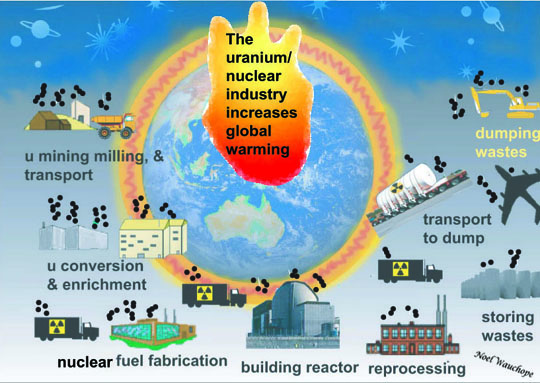
Investing in nuclear energy is bad for the climate, NGOs say
7 November 2023 https://eeb.org/investing-in-nuclear-energy-is-bad-for-the-climate-ngos-say/
Today, EU nuclear energy stakeholders are meeting at the European Nuclear Energy Forum. The nuclear industry and certain EU countries call for more support and subsidies for nuclear power, particularly for Small Modular Reactors (SMRs), in the name of reaching the EU’s climate goals.
Environmental NGOs join voices to contest this claim, arguing that investing in new nuclear power plants will delay decarbonisation and that SMRs fail to answer the industry’s problems. Governments should rather focus on cheap renewable energy, grids and storage.
At the European Nuclear Energy Forum, NGOs call on the EU and its member states to subsidise energy sources that can reliably and cheaply achieve our climate goals, not nuclear power. Rather, investing in new nuclear power plants may prove detrimental to EU climate goals:
Prolonged delays: The latest nuclear plants built in Europe have experienced delays of over a decade. We cannot risk such delays on our path to reduce fossil fuel emissions.
Cost overruns: Nuclear power plants have faced huge cost overruns. The nuclear industry seeks to pass these high costs on to taxpayers and households via state and EU subsidies. The French nuclear industry has been nationalised.
Geostrategic interests: Nuclear energy is being pushed by powerful lobbies and geostrategic interests. Several EU states’ nuclear energy relies on the state-owned Russian nuclear firm Rosatom, importing uranium from unstable countries outside the EU.
Decentralised transition: To quickly decarbonise, we must choose cheap technologies, easy to deploy at scale, like solar panels and windmills. Nuclear power contradicts the vision of a decentralised energy system with citizen engagement.
Environmental impact: According to the IPCC report published in March 2023, nuclear power is one of the two least effective mitigation options (like Carbon Capture and storage). It’s an inefficient option that poses serious contamination risks during use and for future generations due to everlasting toxic waste
Small Modular Reactors (SMRs) do not answer any of the industry’s fundamental problems:
- Unproven technology: Even the simplest designs used today in submarines will not be available at scale until late next decade, if at all.
- Waste and proliferation risks: SMR designs fail to address the persistent nuclear waste problem and pose new risks associated with the proliferation of nuclear materials.
Quotes
Luke Haywood, from the European Environmental Bureau, said:
“It is highly unlikely that small modular reactors will change anything about the poor economics of investments in nuclear energy. Our focus should be on what we know works to rapidly reduce emissions: energy savings and renewables. Every euro invested in nuclear could help replace fossil fuels faster and cheaper if directed to renewables, grids and energy storage. This would also reduce air pollution, radioactive waste, and energy bills while allowing for more citizen participation.”
Marion Rivet, from Réseau Sortir du nucléaire, said:
“New nuclear power plant projects in France are estimated to cost around 52 billion euros. All this money should be invested in immediate and effective solutions for a real energy transition. The reduction of the greenhouse gas our countries produce has to be effective in the next 10 years and has to come from a source fully sustainable (meaning that does not create long-term wastes, that does not rely on uranium.”
Antoine Bonduelle, from Virage Energie, said:
“Small reactors are not an option for the Climate Crisis. At best, they cost double or more per kWh than other nuclear options, and even much more than efficiency or renewables, as shown extensively in the models and in the consensus of the recent AR6 IPCC report. Small reactors would produce more waste than classical reactors, and use more materials and fuels. Accidents are still possible and proliferation risks are much higher. In France, several proposed projects are shady arrangements aimed at using more public money or justifying unproductive research teams. In the end, it is a costly impasse, a loss of time and public money.”
Antoine Gatet, from France Nature Environnement, said:
“For France Nature Environnement, energy choices must be discussed democratically taking on board citizens in general and organized civil society in particular. Discussions must be based on transparent economic, social and environmental data. Discussions must include the whole lifecycle from mining to waste management. To this day, the nuclear renaissance has fallen flat every time, and the 100% renewables options are winning. When will we move to environmental democracy?”
Signatories
European Environmental Bureau (EU), Foundation for Environment and Agriculture (Bulgaria), France Nature Environnement (France), Global Chance (France), Klimaticka Koalicia (Slovakia), Réseau Sortir du Nucléaire (France), Virage Énergie (France), NOAH Friends of the Earth Denmark, Védegylet/Protect the Future (Hungary), Estonian Green Movement – Friends of the Earth Estonia, MKG – Swedish NGO Office for Nuclear Waste Review (Sweden), Milkas – The Swedish Environment Movement`s Nuclear Waste Secretariat (Sweden).
Contact persons in Bratislava:
- Luke Haywood, European Environmental Bureau, Luke.Haywood@eeb.org
- Albena Simeonova, Foundation for Environment and Agriculture (Bulgaria), ealbenas@gmail.com, agroecobg@gmail.com
- Antoine Bonduelle, Virage Énergie (France), contact@ee-consultant.fr
- Jan Haverkamp, WISE (Netherlands), jan@wisenederland.org
- Lucia Szabová, Klimaticka Koalicia (Slovakia), luia.szabova@gmail.com #nuclear #antinuclear #nuclearfree #NoNukes
No American money left for Ukraine – USAID
USAID’s help has enabled Ukraine to spend all of its own government revenue on its defense, including soldier salaries.
https://www.rt.com/news/586853-us-ukraine-humanitarian-funding-runs-out/ 10 Nov 23
Kiev faces economic collapse if new funding isn’t approved, an official has warned US lawmakers
The US government agency overseeing Washington’s humanitarian relief program for Ukraine has warned lawmakers that funding has run out, putting Kiev at risk of economic ruin if more money isn’t allocated amid the former Soviet republic’s conflict with Russia.
“We have no more direct budget support,” Erin McKee, an assistant administrator for the US Agency for International Development (USAID), testified on Wednesday to the Senate Foreign Relations Committee in Washington. “The last tranche was disbursed at the end of the fiscal year. This jeopardizes, particularly over the coming months, Ukraine’s ability to maintain its economic stability while it continues to fight the war. It’s urgent.”
The US government’s latest fiscal year ended on September 30. Ukraine has relied on Washington not only as its biggest provider of weaponry, but also for money to meet its non-military expenses. President Joe Biden has proposed a $106 billion emergency spending bill that combines aid to help Ukraine fight Russia and Israel fight Hamas. It also includes $9.2 billion in humanitarian aid tied to both conflicts.
McKee said USAID’s help has enabled Ukraine to spend all of its own government revenue on its defense, including soldier salaries. “That means they don’t have any resources to take care of their own people and govern,” she added.
Such outlays as paying teachers, police and health care workers would be suspended without new US funding being approved, McKee said. A prolonged funding disruption would cripple the Ukrainian economy, she claimed, giving Russian President Vladimir Putin the upper hand in the ongoing conflict. “If their economy collapses, Putin will have won.”
Congressional opposition to Biden’s Ukraine policy has grown in recent months. The Republican-controlled House of Representatives passed a $14 billion aid bill for Israel alone last week, leaving new funding for Ukraine to be decided separately. The Democrat-controlled Senate blocked the House bill on Tuesday, demanding that Biden’s bundled aid package be approved instead.
Congress previously approved $113 billion in Ukraine aid in four rounds of legislation. McKee warned that without the approval of a new tranche of funding, Ukraine’s government “would need to use emergency measures, such as printing money or not paying critical salaries, which could lead to hyperinflation and severely damage the war effort.”
European Commission to create SMR Industrial Alliance dedicated to small modular nuclear reactors (SMRs)

In response to calls from the nuclear industry, research community and
nuclear safety regulators, the European Commission will establish an
Industrial Alliance dedicated to small modular reactors (SMRs) in early
2024, European Commissioner for Energy Kadri Simson has announced.
World Nuclear News 7th Nov 2023
https://www.world-nuclear-news.org/Articles/European-Commission-to-create-SMR-Industrial-Allia
Detained Under UK Terrorism Law, Whistleblower Says Police Questioned His Support for Assange
SCHEERPOST, November 8, 2023, By Mohamed Elmaazi / The Dissenter
On his way back home from Iceland, British whistleblower and former diplomat Craig Murray was stopped by police and interrogated at Scotland’s Glasgow Airport under Schedule 7 of the United Kingdom Terrorism Act 2000.
Murray was subjected to a barrage of questions on October 16 for nearly an hour.
The questions partly focused on his sources of income and his connection to WikiLeaks, the Don’t Extradite Assange campaign, and WikiLeaks founder Julian Assange and his family.
The former diplomat has since made his way to Switzerland to, in his words, “seek protection from the United Nations.” Sharof Azizov of the Switzerland-based group Justice for All International, and Emeritus Professor of International Law Douwe Korff, have co-authored a letter detailing Murray’s situation and expressing their “grave concern” over his Schedule 7 stop.
The letter, which is addressed to a number of U.N. experts known as special rapporteurs and based in Geneva, requests an urgent meeting to discuss Murray’s case, and the use of terrorism laws to “intimidate” and “silence” journalists and activists.
The U.N. experts addressed in the letter include the Special Rapporteur for the promotion and protection of the right to freedom of opinion and the Special Rapporteur on the promotion and protection of human rights and fundamental freedoms while countering terrorism.
‘You Do Not Have A Right To A Lawyer’
The powers granted to “examining officers” to question people arriving in the U.K., at any air, sea or land port, are incredibly broad. A person can be detained and interrogated for up to six hours without being arrested. The normal rights afforded to people questioned by the police (“Miranda warnings,” as they are known in the U.S.) do not apply.
Murray, who said that he was “used to life being a bit strange,” told The Dissenter that three police officers, two male and one female, were waiting for him after passport control. “They just walked up to me, identified themselves as police and asked to see my passport.”
“They then took me to a small room, it was like a small office. I sat down and they said, ‘We are detaining you. You are not arrested, you are detained, therefore you do not have the right to a lawyer, you do not have the right to remain silent,’” Murray added.
When police asked about his job, he explicitly identified himself as a “journalist”.
“They didn’t identify themselves at all. They didn’t show anything with their names on. No badges, they were just in plain clothes,” he said.
The Terrorism Act 2000 was controversial at the time that it was passed by the U.K. Parliament over a year before the terrorist attacks on September 11, 2001. The law permits detention without charge for 48 hours, and subsequent amendments allow detention for up to 28 days without charge, “the longest of any common law country,” according to the U.K.-based civil liberties group JUSTICE.
The government may ban organizations and criminalize association with those organizations as well as speech deemed to be supportive of those groups or organizations.
Groups banned under the Terrorism Act include those associated with the Basque, Kurdish, Tamil, and Palestinian struggles for self-determination. Entire U.K.-based diaspora communities have found themselves subject to stops, interrogations, surveillance, arrest, and asset seizures under the various U.K. terrorism laws.
Returning From Assange Defense Meeting In Iceland…………………………………
Are You Financed By WikiLeaks?’
“They were keen to tie me to Assange or WikiLeaks,” Murray said. They asked, “‘Are you financed by [Don’t Extradite Assange]? Are you financed by WikiLeaks? Are you financed by the Assange Family?” The answer to all of those questions was “no,” Murray added.
“I wouldn’t even know why [they asked these questions]. Even if the answer was yes, I don’t know what the crime would be.” The police also demanded to know if Murray belonged to any groups.
“I’m not really a member of anything,” he said, other than the pro-Scottish independence Alba Party and the FDA, a trade union for civil servants.
………………………………………….. The interrogators seized Murray’s laptop and phone, and took photocopies of all of his documents, including bank cards, library card, and Alba Party membership card.
While they returned his laptop, Murray still has yet to have his phone returned to him.
The law says that seized items should be returned within seven days. He was told his phone was being retained for “the purpose of investigation,” though Murray has yet to find out what investigation. “I still don’t know what the hell is happening.”
Targeting Journalists And Human Rights Activists
Journalists, activists, and human rights workers are among the hundreds of thousands of everyday men, women, and children who have been subjected to Schedule 7 stops.
Schedule 7, which was even more expansive a decade ago, allows police, customs agents, and immigration officers to stop any adult or child and subject them to questioning. ……………………………………………………………………………………………..
Between 2009 and 2019, 419,000 people have been subjected to Schedule 7 stops, according to data analysed by CAGE. Out of those, only 83 were charged with an offense and only 30 people, less than 0.007% of those stopped, have been convicted of an offense.
The government refuses to release the data it has on those stopped and interrogated between 2000 and 2009, including on their real or perceived religion. Although a 2014 report by Cambridge University determined that 88 percent of those stopped were Muslim…………………………………………
People targeted by U.K. authorities using “national security” and “terrorism” legislation, such as Schedule 7, include those associated with the Kurdish, Tamil, Palestinian, Basque and Somali movements for self-determination, those who simply happen to hail from these ethnic communities (regardless of whether they have engaged in political activism), critics of the U.S.-led “War on Terror,” and more broadly, critics of the foreign policy of Western governments.
There has also been a steady increase in the use of “terror” powers to target journalists in the U.K., with Craig Murray as the latest example. https://scheerpost.com/2023/11/08/detained-under-uk-terrorism-law-whistleblower-says-police-questioned-his-support-for-assange/
U.S., European officials broach topic of peace negotiations with Ukraine, sources say
The conversations have included very broad outlines of what Ukraine might need to give up to reach a deal with Russia.
nbc news, Nov. 4, 2023, By Courtney Kube, Carol E. Lee and Kristen Welker
WASHINGTON — U.S. and European officials have begun quietly talking to the Ukrainian government about what possible peace negotiations with Russia might entail to end the war, according to one current senior U.S. official and one former senior U.S. official familiar with the discussions.
The conversations have included very broad outlines of what Ukraine might need to give up to reach a deal, the officials said. Some of the talks, which officials described as delicate, took place last month during a meeting of representatives from more than 50 nations supporting Ukraine, including NATO members, known as the Ukraine Defense Contact Group, the officials said.
The discussions are an acknowledgment of the dynamics militarily on the ground in Ukraine and politically in the U.S. and Europe, officials said.
They began amid concerns among U.S. and European officials that the war has reached a stalemate and about the ability to continue providing aid to Ukraine, officials said. Biden administration officials also are worried that Ukraine is running out of forces, while Russia has a seemingly endless supply, officials said. Ukraine is also struggling with recruiting and has recently seen public protests about some of President Volodymyr Zelenskyy’s open-ended conscription requirements.
And there is unease in the U.S. government with how much less public attention the war in Ukraine has garnered since the Israel-Hamas war began nearly a month ago, the officials said. Officials fear that shift could make securing additional aid for Kyiv more difficult.
Some U.S. military officials have privately begun using the term “stalemate” to describe the current battle in Ukraine, with some saying it may come down to which side can maintain a military force the longest. Neither side is making large strides on the battlefield, which some U.S. officials now describe as a war of inches. Officials also have privately said Ukraine likely only has until the end of the year or shortly thereafter before more urgent discussions about peace negotiations should begin. U.S. officials have shared their views on such a timeline with European allies, officials said…………………………………………………………………………………..
The Biden administration has spent $43.9 billion on security assistance for Ukraine since Russia’s invasion in February 2022, according to the Pentagon. A U.S. official says the administration has about $5 billion left to send to Ukraine before money runs out. There would be no aid left for Ukraine if the administration hadn’t said it found a $6.2 billion accounting error from months of over-valuing equipment sent to Kyiv.
Public support slipping
Progress in Ukraine’s counteroffensive has been very slow, and hope that Ukraine will make significant advances, including reaching the coast near Russia’s frontlines, is fading. A lack of significant progress on the battlefield in Ukraine does not help with trying to reverse the downward trend in public support for sending more aid, officials said. https://www.nbcnews.com/news/world/us-european-officials-broach-topic-peace-negotiations-ukraine-sources-rcna123628 #Ukraine #nuclear #antinuclear #nuclearfree #NoNuke
Ukraine’s counteroffensive is finished – governor
https://www.rt.com/russia/586687-ukraine-counteroffensive-halted-zaporozhye/ 6 Nov 23
The attempt to cut Russia’s land corridor to Crimea in Zaporozhye Region has failed, Evgeny Balitsky has said
Moscow’s forces have stopped the Ukrainian counteroffensive dead in its tracks, Evgeny Balitsky, the governor of Zaporozhye Region, has said.
He further described what he called Kiev’s last-ditch attempts to breach Russian defenses as not particularly impressive. In recent months, Zaporozhye has emerged as a scene of some of the fiercest fighting.
Speaking to reporters on Monday, Balitsky stated that “the enemy has been halted, as has been its much-hyped counteroffensive.” He said that the ongoing fighting near the settlements of Rabotino and Shcherbaki and on the Vremievsky Ridge was “almost an agony for the Ukrainian regime.”
The official declared that Ukrainian forces, which have been trying to storm Russian positions for months, have “completely run out of steam.”
“Now, when the enemy launches an attack, they deploy only small forces because their companies are understrength,” he added.
According to Balitsky, the plan to reach the Sea of Azov and cut Russia’s land bridge to Crimea – widely seen as the main objective of Kiev’s summer campaign – has been thwarted. He also claimed that Ukrainian attacks are now largely unsupported by armor, as Russian forces have knocked out many vehicles.
The governor stated that the current “meat onslaught” had been organized by Kiev’s Western backers, suggesting that the latter would prefer to lose Ukrainian soldiers rather than their own expensive military equipment.
Ukraine began a large-scale offensive in early June, but has failed to make substantial progress. Russian Defense Minister Sergey Shoigu said last week that “the Kiev regime is losing.” He has previously estimated Ukraine’s losses at more than 90,000 troops, nearly 600 tanks, and 2,000 armored vehicles since the start of the push.
Meanwhile, Ukrainian officials have admitted difficulties with the campaign, blaming a lack of progress on delays in Western support, strong Russian defenses, and extensive minefields as well as Moscow’s air superiority.
Last week, Ukraine’s commander-in-chief, Valery Zaluzhny, characterized the frontline situation as a “stalemate” due to the level of technological prowess of both sides. That assessment, however, was rejected by Ukrainian President Vladimir Zelensky, who insisted that while his country found itself in a “difficult” situation, it still had the initiative. #Ukraine
1 This Month

of the week– Nuclear Reactor Information Task Force

14 May – online event From Bombs to Data Centres: the Face of Nuclear Colonialism
To see nuclear-related stories in greater depth and intensity – go to https://nuclearinformation.wordpress.com
-
Archives
- May 2026 (81)
- April 2026 (356)
- March 2026 (251)
- February 2026 (268)
- January 2026 (308)
- December 2025 (358)
- November 2025 (359)
- October 2025 (376)
- September 2025 (257)
- August 2025 (319)
- July 2025 (230)
- June 2025 (348)
-
Categories
- 1
- 1 NUCLEAR ISSUES
- business and costs
- climate change
- culture and arts
- ENERGY
- environment
- health
- history
- indigenous issues
- Legal
- marketing of nuclear
- media
- opposition to nuclear
- PERSONAL STORIES
- politics
- politics international
- Religion and ethics
- safety
- secrets,lies and civil liberties
- spinbuster
- technology
- Uranium
- wastes
- weapons and war
- Women
- 2 WORLD
- ACTION
- AFRICA
- Atrocities
- AUSTRALIA
- Christina's notes
- Christina's themes
- culture and arts
- Events
- Fuk 2022
- Fuk 2023
- Fukushima 2017
- Fukushima 2018
- fukushima 2019
- Fukushima 2020
- Fukushima 2021
- general
- global warming
- Humour (God we need it)
- Nuclear
- RARE EARTHS
- Reference
- resources – print
- Resources -audiovicual
- Weekly Newsletter
- World
- World Nuclear
- YouTube
-
RSS
Entries RSS
Comments RSS
 nuclear-news