Small Modular Reactors do not solve the many problems of nuclear, NGOs say

As the European Commission prepares to launch its industry alliance for Small Modular Reactors (SMRs) on 6 February, civil society organisations stress the high costs and slow progress, making this technology a risky distraction for the climate.
The European Union (EU) should concentrate its efforts on climate solutions that are already working to reduce emissions quickly, rather than costly experiments.
Davide Sabbadin, Deputy Manager for Climate and Energy at the EEB, said:
In its desperate fight for survival, the European nuclear industry is pleading for public support for SMRs, but smaller-scale nuclear won’t change the poor economics of investments in atomic energy. We don’t even know how long it would take to build SMRs, as all previous attempts have been scrapped. Why should the EU invest in costly alternatives over existing climate solutions? Every euro wasted on nuclear projects could help replace fossil fuels faster and cheaper if invested in renewables, grids, and energy storage instead.”
Like other industry alliances fostered by the Commission, the purpose of the new SMR alliance is to bring together governments, industry players, and stakeholders who seek to accelerate the development of the SMR industry. However, the launch of this alliance signals a dangerous shift of direction for the EU institutions prompted by the nuclear industry’s increasing calls for public funding and administrative support.
Despite the hype, SMRs do not currently answer any of the industry’s fundamental problems:
- Too expensive: In relative terms, the construction costs for SMRs are higher than for large nuclear power plants due to their low electricity output.
- Unproven technology: Even the simplest designs used today in submarines will not be available at scale until late next decade, if at all. Taking into account the learning curve of the nuclear industry, an average of 3,000 SMRs would have to be constructed in order to be financially viable.
- Ineffective climate solution: According to the latest IPCC report published in March 2023, nuclear power is one of the two least effective mitigation options (alongside Carbon Capture and Storage).
- Waste problem: Current SMR designs would create 2-30 times more radioactive waste in need of management and disposal than
- conventional nuclear plants.
- Geostrategic interests: Several EU countries rely on technology and nuclear fuel supplied by Russia’s state-owned Rosatom. Switching from importing Russian fossil fuels to Russian nuclear energy tech does not serve the EU’s energy security interests in the slightest.
New nuclear ventures take time and resources that we simply don’t have to tackle the climate crisis. Diverting attention from energy efficiency and faster-to-deploy renewables to costly and experimental technologies risks pushing Europe further away from meeting its climate commitments under the Paris Agreement.
The science is clear and must guide EU climate policy. In the 20 pages of the European Scientific Advisory Board on Climate Change’s report dedicated to the various “levers” the EU can use to curb carbon emissions in the energy sector, there is not a single reference to nuclear or SMRs.
Over $1 Billion in Weapons Missing In Ukraine
Real Clear Wire, By Adam Andrzejewski, February 07, 2024
Topline: The Department of Defense has failed to properly track $1 billion worth of weapons provided to Ukraine, according to an internal audit released on Jan. 10 by the DOD Inspector General.
Key facts: The DOD is supposed to use special “enhanced end-use monitoring” techniques” to “safeguard” key weapons such as smaller, high-tech weaponry provided to Ukraine, which are likely targets for theft.
The audit says these monitoring procedures are not properly being followed in Ukraine, due to staffing shortages, poor internal logistics and more.
The audit found that $1 billion of the $1.7 billion — or 59% — in enhanced end-use monitoring designated weapons provided to Ukraine as of June 2023 are “delinquent,” meaning they can’t be accounted for in inventory reports.
Maybe the weapons are being used properly; maybe they have been stolen by Russian forces. No one can be completely sure…………………………….
The report also found that inventory databases were not regularly updated and that the Ukrainian Armed Forces failed to properly report missing weapons……………….
Background: The Biden administration has sent over $75 billion to Ukraine since February 2022, including $44 billion in military aid.
Some Republican leaders are already trying to block Biden’s request for additional funds for Ukraine. The missing weapons could strengthen their arguments.
This is not the first time weapons have gone missing during Biden’s administration……………………………………………………
Summary: While there is no direct evidence that weapons in Ukraine have actually been misused, the $1 billion inventory error calls into question the White House’s constant assurances that any aid would be carefully tracked.
Zelensky military purge to extend beyond top general – media
Rt.com 7 Feb 24
Together with General Valery Zaluzhny, the Ukrainian leader allegedly plans to let go of Chief of the General Staff Sergey Shaptala
Ukrainian President Vladimir Zelensky is reportedly considering letting go not only of Armed Forces Commander-in-Chief Valery Zaluzhny, but also of the Chief of the General Staff, according to the news outlet Ukrainskaya Pravda.
The report comes after Zelensky admitted last week that he intends to fire the top commander of the Ukrainian Armed Forces. The two have had a major falling out following Kiev’s failed summer counteroffensive. Zaluzhny has described the battlefield situation as a “stalemate,” while Zelensky has vehemently rejected this assessment, especially in light of waning support from Kiev’s Western backers.
In an interview with Italy’s RAI TG1 news channel on Sunday, Zelensky announced that he is planning a “serious” overhaul of the country’s leadership, noting that these changes will not be “about a single person.” He did not, however, list any specific names.
Citing sources within the Ukrainian government, Ukrainskaya Pravda reported on Monday that Zaluzhny may indeed not be the only one getting canned amid Zelensky’s purge and suggested that Sergey Shaptala, who currently serves as the Chief of the General Staff, will also be leaving his position as early as this week.
“[The fate of] everyone else has not yet been decided,” the source told the outlet.
Rumors of Shapatala’s resignation appear to be partially confirmed by a post from Zaluzhny, who posted a picture with his colleague on Monday, wishing him a happy birthday and writing: “It will still be difficult for us, but we will never be ashamed.”………………………………………………………………… more https://www.rt.com/russia/591911-ukraine-zelensky-shapatala-firing/
The dangerous craze for SMRs
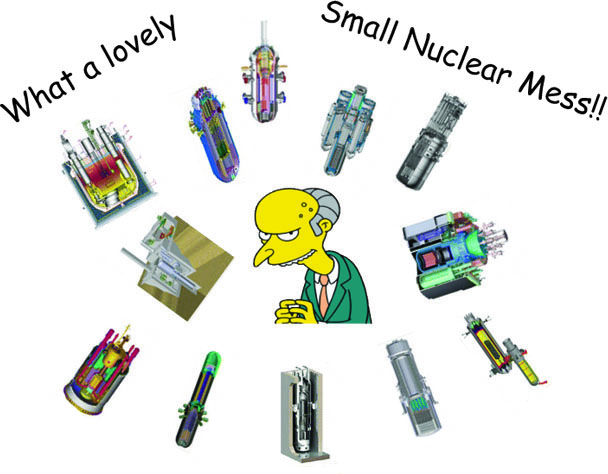
This is going too far in trivializing risk. And this is not limited to “acceptability” which seems to be ASN’s major concern, but to the risks of such “mixed” installations.

a serious accident situation (AZF, Lubrizol) could damage the SMR unit and transform the accident into a disaster.
Bernard Laponche, Doctor of Science in Nuclear Reactor Physics, President of the Global Chance association, Le Club Mediapart, 5th Feb 2024 https://blogs.mediapart.fr/bernard-laponche/blog/050224/le-dangereux-engouement-pour-les-smr
The development of small modular nuclear reactors (SMR) is the subject of spectacular announcements.Based on the declarations of the Nuclear Safety Authority (ASN) on this
subject, we launch an appeal for reason on the realities and difficulties of such projects, on the technical, safety and security levels .
During his press conference on January 31, 2024, the president of the Nuclear Safety Authority (ASN) addressed the issue of small modular nuclear reactors, known as SMRs, and answered some questions on this subject.
In his presentation, the president highlights the technical and societal questions posed by these new reactors, as well as the safety, security and non-proliferation issues “to be integrated upstream of the projects”.
These are the usual concerns when we are interested in nuclear reactors, which produce heat and possibly electricity from fission and chain reactions of fissile elements (uranium, plutonium), but also products fission and transuranium elements found in irradiated fuels currently intended for reprocessing, leading to the accumulation of radioactive waste in addition to that from the dismantling of reactors. These are the problems that will have to be analyzed for candidate SMR reactors, as for any nuclear reactor and with the same rigor as for conventional reactors.
In the same way that a conventional industrial installation cannot claim to be free from all risk of accident, no nuclear installation can claim to be free of any risk of accident. The declaration “a nuclear accident is possible in France” by successive ASN officials is valid for SMRs, even if, as its current president says, certain innovative SMRs “present potentially promising intrinsic safety characteristics” .
The first “prototype” examples of candidate reactors under the title of SMR, that is to say intended to be mass-produced in a factory before installation on site, will therefore have to be built on nuclear sites, probably those housing research reactors.
As ASN points out, the use of SMR in France would not be of great interest for the production of electricity given the importance of the current fleet of EDF power plants and the announced projects. But, on the other hand, SMRs could be very useful for the production of heat or steam for the process industries (paper, food, chemical industries, etc.) of which there are very many.
It would then be necessary to install the SMR reactor very close to the industrial installation or even, according to ASN, inside this installation.
This is going too far in trivializing risk. And this is not limited to “acceptability” which seems to be ASN’s major concern, but to the risks of such “mixed” installations.
Indeed, we cannot admit the presence of a basic nuclear installation, containing highly radioactive materials within a classic industrial installation, of the ICPE type in which a serious accident situation (AZF, Lubrizol) could damage the SMR unit and transform the accident into a disaster.
Furthermore, it is clear that each promoter of an SMR candidate aims for a large order in the number of copies (of the order of a hundred say some) which will allow the “modular” manufacturing of reactors in a dedicated factory, this allowing the supposed reduction in unit cost.
In this case, by eliminating the solution of an SMR in the plant itself, we would have the creation of a large number of INB-ICPE couples. Even if we admit that the probability of an accident on the SMR is lower than for a conventional reactor (which remains to be demonstrated for each case), this probability is multiplied by the number of reactors, all identical.
In examining the safety files for EDF’s large power reactors and nuclear fuel plants, ASN and IRSN pay very close attention to “external attacks” of natural or malicious origin. What happens to these concerns for SMS located almost everywhere on the territory, on locations which are those of the industrial installation which they must supply with heat and whose location was chosen without any concern for nuclear safety and security? ? How would specific protection be organized which, to be effective, would certainly be expensive, especially since the SMRs concerned would be of low power?
The profusion of candidate projects for SMR, some of which are financially supported by the Government, leads to each being examined by the IRSN and the ASN, as announced by the latter. This examination can be postponed over time depending on the maturity of the projects, all of which currently only exist on file, more or less elaborate.
If this examination is done correctly, that is to say with as much care as for a power reactor, the examination of the technical and safety files of each SMR prototype is a considerable task. We can fear that the “craze” for SMRs that ASN speaks of will exert dangerous pressure on the quality of studies and safety and security injunctions.
Finally, but this is not the problem of the IRSN and the ASN, we would still need to have serious information on the costs. Not only that of the construction of a prototype (the example of NuScale in the United States is edifying) but also that of its exploitation and especially that of the fuel, from its manufacture to its treatment after use, dismantling and management garbage.
When we examine in the light of what we know of the climatic upheavals which are already affecting our territory and will intensify considerably, we can really ask ourselves the question of the fragility and the risk of installing a little small nuclear reactors everywhere which will obviously be subject, depending on the period and their site, to floods, droughts, storms, tornadoes, earthquakes, etc.
All those who today say they want to welcome an SMR on their territory should really think about it seriously.
Energy Security Minister Graham Stuart opposes Holderness nuclear waste site
By Stuart Harratt, BBC News
A MP said he is supporting efforts to oppose plans to bury nuclear waste in East Yorkshire.
Beverley and Holderness Conservative MP Graham Stuart called on East Riding Council to withdraw from discussions with Nuclear Waste Services (NWS).
The government agency has named South Holderness as a potential site for a Geological Disposal Facility (GDF).
Mr Graham, who is also the Minister for Energy Security, had previously called for a public vote on the proposals.
He now says he is supporting a motion by two local Conservative councillors, Lyn Healing and Sean McMaster, asking that the local authority stop talks with NWS.
‘Community says no’
“South Holderness is a special place, and the news that the area was being considered as the site for the UK’s GDF shocked many in our community,” Mr Stuart said.
“It is the people of Holderness who should determine what happens in their area and they have made clear their opposition to these plans.”
He added: “Our community says ‘No’ and Lyn and Sean have my backing to seek our withdrawal.”
Ms Healing and Mr McMaster said their motion to withdraw from discussions would be submitted to a full council meeting on 21 February.
“Yes, investment in Holderness is badly required but is this the right investment? We now believe it isn’t,” the councillors said……………………………………………………………………………… more https://www.bbc.com/news/uk-england-humber-68233882
Campaigners deeply concerned at Dr Thérèse Coffey’s support for Bradwell new nuclear power
A CAMPAIGNER group opposing new nuclear power in Bradwell-on-Sea said they
are “deeply concerned” following comments made by an MP. According to
the Blackwater Against New Nuclear Group (BANNG), former deputy prime
minister Dr Thérèse Coffey showed support for Bradwell as a “logical”
landfall site for a substation and converter linking East Anglian offshore
wind farms to the on-land national grid. BANNG have now refuted these
comments. A spokesman said: “National Grid has made it clear that
Bradwell is in the wrong place for the connection, would require upgraded
transmission infrastructure and faces environmental constraints from the
many designated areas on the Essex coastlands.
Maldon Standard 6th Feb 2024
Ukraine’s top general sparing neo-Nazis from frontline slaughter – ex-CIA analyst
https://www.rt.com/russia/591948-zaluzhny-zelensky-nationalist-allies/ 7 Feb 24
Valery Zaluzhny may find allies in radical nationalists in his standoff with President Vladimir Zelensky, Larry Johnson says
Ukrainian President Vladimir Zelensky, who has reportedly been attempting to fire his top general, Valery Zaluzhny, could find himself out of a job before the nation’s top military commander, considering that the latter is backed by armed neo-Nazis, former CIA analyst Larry Johnson has argued.
Amid widespread reports that Zelensky had unsuccessfully tried to sack Zaluzhny, Ukrainian and foreign media described a tense meeting between the pair, with the general reportedly rejecting a call to resign voluntarily and the president hesitating to remove him under pressure from military top brass. Zelensky has since told the press that a major overhaul of the military command was imminent.
In conversation with Nima Alkhorshid, the Brazil-based host of the YouTube channel, Dialogue Works on Sunday, Johnson claimed the soap opera would be hilarious “if hundreds of thousands of Ukrainians weren’t dead and maimed.”
”The guy with the gun usually wins and last time I checked Zaluzhny’s got more guns than Zelensky,” Johnson said.
Comparing the two men, he said the general should not be seen as a “great guy.”
“I don’t want to present Zaluzhny as some sort of military genius or really a good-hearted man,” the commentator remarked. He is “a bit of a scumbag” who “embraces the neo-Nazi ideology,” Johnson claimed.
”He’s been very careful to not insert the most ideologically driven troops – the Azov and the Kraken units – into the front lines where they get killed, because he wants to preserve them. Instead, he is sending the cannon-fodder guys.”
Whether or not Zaluzhny shares the radical nationalist ideology of the Ukrainian far-right is hard to tell from his public statements, but he is believed to have considerable support in those circles.
A social meia post on Friday by Andrey Stempitsky, a Ukrainian military leader and prominent member of the nationalist Right Sector group, featured a photo of him giving Zaluzhny an honorary ID, certifying the general as the first member of Stempitsky’s brigade. A portrait of Stepan Bandera, a Ukrainian nationalist leader and Nazi collaborator, was in the background of the image.
Zelensky was elected president in 2019 on a platform of reconciliation with rebels in the east and with Russia, but threats of violence by the extreme right made his office pull back from early attempts to deliver on that promise
IAEA watchdog to visit nuclear plant in occupied Ukraine to assess safety of ageing fuel and low staffing.
UN nuclear watchdog chief Rafael Grossi said
he would visit the Zaporizhzhia nuclear power plant in Russian-occupied
Ukraine today to see if it can be run with a reduced number of staff and
whether its years-old uranium fuel is safe. Russia gained control of
Europe’s largest nuclear power plant after launching a full-scale
invasion of Ukraine in early 2022, and its six nuclear reactors are now
idled.
Irish Independent 7th Feb 2024
The future of nuclear: France’s nuclear dreams or nightmares?

The Macron Government has laid out ambitious plans for its capricious nuclear sector, but such optimism should not blind us to potential challenges.
Alfie Shaw, February 5, 2024, Power Technology
t last year’s COP28 climate conference in Dubai, French President Emmanuel Macron triumphantly declared that “nuclear energy is back”. His celebratory remark was uttered after France led a group of 20 countries in signing a pledge to “triple nuclear energy capacity from 2020 by 2050”.
Since the summit, a range of announcements and promises have been made that appear to support France’s ‘nuclear renaissance’. In November, the European Parliament backed the development of small modular reactors (SMRs), a versatile technology that many consider to be the future of the industry. Two months later, Energy Transition Minister Agnes Pannier- Runacher said that France will need to build 14 new nuclear power plants rather than the six currently planned if the country is to meet its energy transition goals.
Is all this optimism warranted? France has long been a nuclear superpower but lost its position as the world’s second-largest producer of nuclear energy to China in 2022, with the US coming in first. It is worth considering whether Macron’s positivity is justified in the context of several issues that currently beset the country’s industry, including EDF’s unpredictable performance, lack of strong allies in the European Council, slow progress on SMR development and Russian interdependence.
EDF’s annus horribilis
Électricité de France (EDF) is the French multinational electric utility company that runs the country’s 56 reactors. Throughout 2022, many were forced offline for maintenance work, causing output to fall below 1990 levels, despite installed capacity being 5GW lower at this time.
Nuclear shutdowns are in themselves not a huge cause for concern. Older power plants need to be updated with the latest technologies and France was planning on widespread shutdowns for its ‘Grand Carénage’ refurbishment programme anyway. However, the nature of these specific stoppages was worrying.
In December 2021, the discovery of cracks in the emergency core cooling systems of four of the newest French reactors led to them being shut down. The four units, which each produce 1.5GW, did not generate a single kilowatt-hour throughout 2022. Other 1.3GW reactors also showed similar symptoms, and by mid-2022, 12 additional reactors were shut down due to the same problem. In its annual electricity review, Réseau de Transport d’Électricité highlighted the crux of the issue, stating, “these outages, or outage extensions to carry out maintenance, tests and repairs where needed, primarily involved the newest reactors in the fleet (N4 and P4 designs), i.e. reactors that were not targeted for investment in the Grand Carénage refit programme”.
Although EDF’s nuclear output was 14.8% higher in 2023 than 2022 as reactors came back online, Macron will have to square his desire for new reactors with the ongoing threat of unplanned shutdowns at existing newer plants. Mycle Schneider, nuclear analyst and author of the annual World Nuclear Status Reports, commented on the ongoing unpredictability of EDF’s output, stating: “We have repeatedly seen that EDF was off by several gigawatts of nuclear capacity availability in predictions for the following week. If you look at availability on a certain day, and then go back one week, nuclear availability is several gigawatts different to the projection made a week previously.”
Seeking international allies……………………………………………….
SMRs – a false dawn?
The creation of the EU SMR Industrial Alliance in November accentuates the blocs’ commitment to modular technology in its nuclear drive. Naturally, France led the group of 11 countries signing the alliance.
The International Atomic Energy Agency (IEAE) defines SMRs as advanced nuclear fission reactors that have a power generation capacity of up to 300MW per unit – around a third of the capacity of traditional reactors. The ‘small’ and ‘modular’ nature of their design means they can be sited at locations unsuited to larger nuclear power plants. Their diminutive size is also meant to save on construction time and cost.
Despite significant optimism around the technology, little progress has been made on the ground. The most advanced SMR project in the western world was forcibly abandoned in November 2023 due to excessive costs. US-based NuScale scrapped the development with a conglomerate of Utah municipalities after the cost estimate of the project increased to $9.3bn, bringing the cost per kilowatt to $20,000 for the plant, around twice the cost of the most expensive European pressurised water reactor.
Subsequently, there are no SMRs in commercial operation in the west. Placing the EU alliance in this context, Schneider said: “We are not talking commercial contracts. It is like this alliance [EU SMR Industrial Alliance], which is kind of nice. Everybody [the 11 signatories] puts a name under it, but it does not mean anything in industrial terms.”
Even in Russia, where SMR output has been achieved (although, not commercially), there have been construction issues. The reactor took more than 12.7 years to build, more than three-times the 3.7-year target. Schneider noted that this “was not really the demonstration of easy, quick feasibility” that SMRs are meant to be. China too has two operational SMRs, but no production or cost figures on the reactors are yet available.
Overcoming Russian interdependency
Russia is still the primary constructor and exporter of nuclear reactors, with the state company Rosatom, as of mid-2023, building 24 out of the 58 constructed around the world. While France has taken part in a host of EU sanctions placed on Russian energy exports designed to curb revenue for the Kremlin’s war on Ukraine, the measures have not included sanctions on the nuclear sector………………………………………………….
While France is looking to build an alliance with EU nations that still have strong links with the Russian nuclear sector, its own institutions are also interlinked. Framatome, an EDF subsidiary, originally planned to set up a joint venture with Rosatom subsidiary TVEL to manufacture VVER fuel elements in its Lingen plant in Germany. However, in spring 2023, it became clear that the German Government would likely oppose the deal, so the Franco-Russian company was set up in France, with TVEL owning 25% of it. Advanced Nuclear Fuels, a Framatome subsidiary that operates the Lingen plant, wants to extend the manufacturing plant with a dedicated VVER-fuel production line. The Lower Saxony Government is opposed to the project, but under the Atomic Law it does not have a veto right. This leaves the decision in the hands of the federal government, which as of January 2024, has not been taken. Schneider noted the irregularity of the Framatome-Rosatom partnership, considering Framatome could have worked with Westinghouse given the US company’s capability to manufacture VVER fuel. He added that although the reason for this decision is unclear and there is limited evidence to illustrate strong reasoning, “it is quite likely to do with technical difficulties” with the Westinghouse fuel.
As France looks to expand its nuclear industry, there will be challenges, both within its domestic industry and its international relations, that the country will have to address. France’s nuclear watchdog recently said there was “lack of rigour and performance” in EDFs supply chain monitoring and this will have to improve if output is to become stable. While Italy has signalled its desire to re-establish nuclear power, if plans remain unrealised, it is unlikely to be a reliable nuclear ally within the EU council – something which France desperately needs if it is to push through nuclear friendly legislation. SMRs could become a key source of nuclear energy if on-the-ground development begins in earnest, but so far progress has been limited to hopeful pledges. As long as it remains largely dependent on the tenuous, unpredictable Russian regime for its nuclear fuel generation, France’s nuclear plans will have an insecure foundation. If France is to materialise its abstract nuclear dreams into everyday energy production, it will need to address each of these issues pragmatically. https://www.power-technology.com/news/france-has-laid-out-ambitious-nuclear-plans-but-challenges-remain/?cf-view&cf-closed
Zaporizhzhia Nuclear Power Plant is falling apart, and the world is ignoring the danger
Leaks, power outages, low staffing, and no maintenance plan. Europe’s largest nuke plant is falling apart.
Malcontent, February 3, 2024, By David Obelcz
[WBHG 24 News] – The latest reports from the International Atomic Energy Agency (IAEA), which has had a team of international inspectors at the Zaporizhzhia Nuclear Power Plant for 16 months, painted an alarming picture of leaking steam generation circuits and safety systems, inadequate staff, and no 2024 maintenance plan.
Europe’s largest nuclear power plant is located in occupied Enerhodar. Previously located on the banks of the Kakhovka Reservoir, the primary source of cooling water for ZNPP drained away in June 2023 after the Kakhovka Dam was destroyed. Russian forces captured the plant on March 3, 2022, during the opening days of the expanded war of aggression against Ukraine. Webcams showed Russian tanks firing on the power plant and shooting into administrative buildings during the brief siege.
After pictures, videos, and satellite images proved that Russian forces had militarized the plant in violation of international humanitarian law and the pillars of nuclear safety, the IAEA, backed by the United Nations, pressured Russia to establish an international group of permanent monitors. On September 1, IAEA Director General Rafael Grossi and a team of experts, accompanied by Russian state media, arrived at the plant. There have been 15 rotations of monitors since.
Three reactors have various leaks, and Russia doesn’t plan to fix them
Currently, five of the six reactors at ZNPP are in cold shutdown, with Reactor 4 in hot shutdown to provide steam for plant operations and heat for the nearby town of Enerhodar.
On November 17, IAEA inspectors were told by Russian occupiers that boron had been detected in the secondary cooling circuit of Reactor 4, which was in hot shutdown at the time. Boron is added to the primary cooling and steam circuits of modern nuclear reactors as an extra safety measure. Boron isn’t supposed to be the secondary cooling system, but trace amounts are acceptable.
Four days later, the reactor was shut down, with Russia declaring the boron leak was within acceptable levels and would not be repaired. This was the second unscheduled shutdown of 2023. On August 10, Reactor 4 had to be shut down after a water leak was discovered in one of its steam generators. Plant technicians also found that the heat exchangers needed to be cleaned and did regular maintenance on the reactor’s transformers and emergency diesel generators.
On December 22, inspectors found boric acid deposits on valves, a pump, and on the floors of several rooms in the containment building of Reactor 6. Russian occupation officials said the leak was coming from a cracked boric acid storage tank and it would not be repaired. After IAEA Director-General Rafael Grossi published the finding in a January 3 update, inspectors were barred from accessing parts of Reactor 6 for almost two weeks.
On February 1, the IAEA reported that boric acid leaks were also discovered in Reactor 1.
Unreliable external power connections
Although power plants generate electricity, power to run a power plant is provided by external sources. This provides a layer of safety by assuring that there is always electricity to support normal operations in the event of a facility shutdown. Although a nuclear reactor can be “shut down,” it still needs external power to continuously circulate cooling water in the reactors and on-site spent fuel storage. In the event of a total power failure, backup generators running on diesel fuel become the last line of defense. ZNPP has 20 generators and keeps enough diesel for a minimum of ten days of operation.
It’s estimated that if a ZNPP reactor is in cold shutdown, it can go more than three weeks without water circulation. But in hot shutdown, a meltdown can start 27 hours after the loss of all external power. In the worst-case scenario, the absolute last line of defense is when a nuclear plant operates in “island mode.” That’s when a reactor or reactors are used to generate onsite power to maintain plant operations. It’s inherently dangerous because it requires bringing a reactor online, leaving no margin for error if there are any additional failures. None of ZNPP’s reactors have produced electricity in the last 18 months…………………………………………………………………………………………………………… https://malcontentment.com/zaporizhzhia-nuclear-power-plant-is-falling-apart/
Assange’s Very Life Is at Stake
Julian Assange will soon find out whether he will be granted a final appeal in the U.K. in his fight against extradition, or will soon face the cruel vengeance of the U.S.
By Mary Kostakidis, 4 Feb 24, https://consortiumnews.com/2024/02/04/mary-kostakidis-assanges-very-life-at-stake/
In Julian Assange’s extradition case, Magistrate Judge Venessa Baraitser determined he would not survive imprisonment in a U.S. Supermax facility – that he is very likely to commit suicide.
One of the final witnesses in the 4 week extradition trial in 2020 was an American lawyer whose client Abu Hamza was held in ADX Colorado where Julian is likely to be sent. Abu Hamza has no hands. He was extradited from the U.K. following assurances by the U.S. that the prison system was able to deal with the special requirements of such a prisoner.
His lawyer testified that despite assurances he would not be placed in total isolation, that is indeed where he was kept, under Special Administrative Measures, and the U.S. had also failed to delivered on other undertakings to protect his human rights – he did not have a toilet in his cell he could operate – he was stripped of all dignity, contrary to guarantees.
In the case of David Mendoza Herrera, the Spanish government successfully pursued the return of their citizen who was extradited to the U.S. following assurances the U.S. reneged on – a process that took many years while the prisoner attempted first to seek redress in the U.S. but ultimately only succeeded after suing the Spanish government for failing to protect his rights. It was forced to act after the Spanish Supreme Court virtually threatened to suspend the Spain-U.S. Extradition Treaty.
The assurances provided by the U.S. in their 2021 High Court Appeal of the District Court’s decision in Assange’s case were not tested in Court. They were automatically accepted, a judge expressing complete confidence in the reliability of a guarantee from the United States Government, and differentiating between the guarantee of a State and that provided by a Diplomat.
(Whilst a Diplomat’s assurance may involve a different signature at the bottom of the page, surely it appears there only after the boss’s approval, but evidently this makes a difference).
Significantly however, the assurances were also conditional — they could be revoked at any time, so not worth the paper they were written on, no matter who signed them.
Since that decision was handed down though, the U.K. Supreme Court has delivered a landmark ruling in a case where the U.K. government had accepted assurances provided by a foreign government (Rwanda). It determined that such assurances cannot be automatically accepted – that there is a requirement for ‘meaningful, independent, evidence- based judicial review focusing on the protection of human rights on the ground in that country’.
In Julian’s case, it is the human rights of national security prisoners in the U.S., their treatment and the conditions in which they are kept.
The U.N. considers solitary confinement beyond 2 weeks as torture – special rapporteurs have been arguing this for decades. In condemning the treatment of Chelsea Manning in a U.S. prison, then Special Rapporteur on Torture Juan Mendez said:
“Prolonged solitary confinement raises special concerns, because the risk of grave and irreparable harm to the detained person increases with the length of isolation and the uncertainty regarding its duration… I have defined prolonged solitary confinement as any period in excess of 15 days. This definition reflects the fact that most of the scientific literature shows that, after 15 days, certain changes in brain functions occur and the harmful psychological effects of isolation can become irreversible.” [Emphasis added.]
Abu Hamza has been in solitary confinement for nine years. His lawyer testified walking was too painful for him because his toe nails were so long, and his pleas for them to be cut were ignored.
Significant Recent Changes in Assange’s Health
The automatic acceptance and reliability of the assurances were not the only problem at that time.
A serious problem that arose during that hearing was its failure to note or take into account the change in Julian’s medical condition. It is a critical failure because the decision delivered was based on assurances the U.S. prison system could mitigate against his known risk factors – the risk he would commit suicide. But he had developed another serious physical risk factor.
After the four-week Extradition hearing in the lower court where Assange appeared boxed in a glass booth at the back of the court where he was prevented from communicating with his lawyers, he was permitted to appear via videolink from Belmarsh at subsequent substantive hearings.
At the start of the U.S. Appeal there was a brief pre-hearing chat between Assange’s lawyer and the judge to the effect that the defendant has elected not to appear due to an increase in medication.
It was extraordinary and inconceivable he would choose not to observe the hearing via videolink. Indeed I was later informed by his wife Stella he had wanted to appear but had not been permitted to by the prison.
Both his absence and the explanation flagged a problem.
Assange had not missed a single hearing. He had shown great determination in his struggle to engage with the drama unfolding in court despite enormous challenges such as not being able to attract his lawyers’ attention (after being denied the tools and time to prepare for his own defence), and in spite of medication and a dramatic deterioration in his health as was so throughly documented by former U.N. Rapporteur on Torture Nils Melzer in his book The Trial of Julian Assange: A Story of Persecution.
Why was he so heavily medicated so as not to be able to sit in the video-link room at Belmarsh? What had necessitated this increase in medication? This question was directly pertinent to the decision the court had to make, but I heard no question from the judge about it and the hearing proceeded.
Then, remarkably, some time into the hearing, Julian appeared.
We journalists observing via a link could see him in a window on our screens. He would have been able to see and hear the judge, and those in the courtroom would be able to see him on a monitor as we could.
He looked mighty unwell, not only drugged. He had to use his arm to prop up his head but one side of his face was noticeably drooping and one eye was shut.
During these hearings we were given very occasional, brief glimpses of the defendant – time enough to note he is still observing his own legal proceeding, be it in a depersoned way. I asked the video link host on the chat facility to show us more of the defendant – we needed a better and more frequent look at him as he looked unwell.
Journalists are warned when we join the video-link that using the chat facility for anything other than communicating about technical issues and only with the host (hearings were frequently hamstrung by audio problems) could result in access being withdrawn. But many of the other 30 or so journalists on the link were sending Me Too messages on the Chat. Remarkably and to my relief the host obliged & we were shown Julian more often and for longer than in any previous hearings.
So after the bizarre news Julian was not going to attend his own hearing, the second thing I could not understand is that given his condition when he did appear, there were no questions or adjournment. Those deciding his fate were not perturbed by his state, or had failed to notice what was immediately evident to us.
Julian persisted in his attempt to focus, but he was clearly severely hampered. He eventually gave up, stood up & moved away from the monitor camera. It was as if he could no longer abide the humiliation of being scrutinised by people unknown, witnesses to a feeble, failed attempt to command his body and mind, a mind that has been razor sharp and never before let him down.
The public learnt some nine weeks later, and days after the judgement came down clearing the way for Julian’s extradition, that he in fact had had a TIA – a Transient Ischemic Attack or minor stroke – often a precursor to a major, catastrophic one when prompt access to an MRI machine would be vital if his life was to be saved.
I don’t know whether it is known, exactly when Julian had the stroke. The monitoring of prisoners is not exactly tailored to pick up and quickly respond to such silent stealthy symptoms. Did the stroke occur before the hearing? Was that why he was so heavily medicated? Or did it occur at the time of the hearing?
One thing is clear – he has had a stroke, so his condition has changed, and the assurances accepted took no account of this, though the Court’s decision was handed down long after he had the stroke and a fewsdays before it was finally made public.
One of the two Justices presiding over the U.S. Appeal, Ian Duncan Burnett, was the Chief Justice of the High Court at the time. His decision in the case of U.K. citizen Lauri Love set a precedent where extradition to the U.S. was denied on the basis of a medical condition.
This engendered a little hope that he may not reverse the District Court’s decision in Julian’s case. But as Law Professor Nils Melzer remarked, you don’t need the Chief Justice on a case where he has already set a precedent that can be followed. However you do need him if his precedent is to be overturned.
Throughout the hearing, the Love decision loomed large in our minds and Love was present in Court, but we realised this potential pathway was a dead end when it was finally raised by Julian’s lawyers.
The Chief Justice responded swiftly, dismissively and categorically: ‘Oh but that was an entirely different case. He had eczema.’ (Verbatim to my memory)
So the difference between being extradited or not, was eczema, and there would be no joy for Julian in this court despite the marked deterioration in his physical and psychological health.
Julian sought leave to appeal the decision of the High Court, in the Supreme Court, but that Supreme Court’s determination was that there were no arguable points of law to form a basis for an Appeal.
The Upcoming Hearing
Over two days on Feb. 20-21, a panel of two High Court judges will rule on whether Julian can appeal both the Secretary of State’s decision to extradite him and Judge Baraitser’s decision on the basis of all the grounds he argued which she knocked back, such as the political nature of the prosecution and the impossibility of a fair trial for him in the U.S..
The reliability and adequacy of the U.S. assurances that he will not be held in a super max prison, nor under S.A.M.s, that his suicide can be prevented, that he would be returned to Australia to serve out a sentence at some point, have not been tested in court, and now the medical condition for which they were furnished has changed. And in the meantime there has been a landmark ruling by the [U.K.] Supreme Court in another case, regarding the necessity for judicial review of foreign govt assurances.
A letter very early this year to the U.K. home secretary from a cross party group of our Parliamentarians is an important and timely one, requesting he “undertake an urgent, thorough and independent assessment of the risks to Mr. Assange’s health and welfare in the event he is extradited to the United States.”
Assange has made an application to attend this month’s hearing in person so he can communicate with his legal team.
The judges may make an immediate decision at the conclusion of the two-day hearing or reserve their judgement.
If Assange wins this case, a date will be set for a full Appeal hearing.
If he is denied the right to appeal there are no further appeal avenues at the domestic level.
He can then apply to the European Court of Human Rights, which has the power to order a stay on his extradition – a Rule 39 Instruction, which is only given in “exceptional circumstances”. It may however be a race to lodge the Appeal before he is bundled off on a plane to the U.S.
If Julian Assange is extradited and the U.S. is successful in prosecuting him he will not receive a fair trial there and unlikely to receive the constitutional protection afforded to its own citizens, the U.S. will have redefined in law, investigative journalism as ‘espionage’.
It will demonstrate that U.S. domestic laws, but not protections, apply internationally to non-U.S. citizens.
It will have cost Assange his freedom & likely his life – an example to anyone who attempts to discredit the state sanctioned narrative. A narrative that has been shattered by independent and citizen journalists in Gaza – explosively, daily, globally, and irrevocably.
This is the text of a speech delivered by Mary Kostakidis to a conference on Julian Assange held in Sydney, Australia on Jan. 29.
Journalist Mary Kostakidis presented SBS World News for two decades as Australia’s first national primetime news anchorwoman. Previous articles include “Watching the Eyes” for Declassified Australia. She covers Julian Assanges’s extradition court proceedings live on Twitter.
Russia has no plans to deploy nuclear arms beyond Belarus, says deputy minister
By Dmitry Antonov and Guy Faulconbridge
February 2, 2024, https://www.reuters.com/world/europe/russia-has-no-plans-deploy-nuclear-arms-beyond-belarus-says-deputy-minister-2024-02-01/
- Summary
- U.S. likely to deploy nuclear weapons in England – researchers
- Russia says UK deployment will not deter Russia
- Russia says discussing Ukraine as part of BRICS
MOSCOW, Feb 1 (Reuters) – Russia will not deploy nuclear weapons abroad except in its ally Belarus but will find ways to counter any deployment of U.S. tactical nuclear weapons in Britain, the deputy minister in charge of arms control said on Thursday.
President Vladimir Putin said last year that Moscow had transferred some tactical nuclear weapons to Belarus, blaming what he casts as a hostile and aggressive West for the decision.
2
Top nuclear researchers at the Federation of American Scientists, opens new tab say there is no conclusive evidence to show where the weapons are in Belarus, or even if they are there at all.
Asked by reporters if Russia would deploy nuclear weapons beyond Belarus, for example in South America, Deputy Foreign Minister Sergei Ryabkov said: “No, it is not planned.”
“The deployment of tactical nuclear weapons on the territory of Belarus was carried out to counter the increasingly aggressive and threatening activities of the North Atlantic Alliance (NATO) led by the United States.”
Ryabkov, who oversees arms control, also scolded the United States for including what he said were openly declared “nuclear free” European countries in NATO nuclear missions. He did not elaborate.
Separately, Ryabkov told Russia Today in an interview that U.S. plans to deploy tactical nuclear weapons to Britain would not deter Moscow.
“If they believe that re-introduction of nuclear weapons in the UK is a deterrent to Russia, then they are mistaken,” Ryabkov said. “We urge them to stop… this endless circle of escalation.”
Zelensky wants to fire his top general over peace talks – Seymour Hersh
https://www.rt.com/russia/591705-zelensky-zaluzhny-peace-talks/ 4 Feb 24
A secret plan has been hatched in Washington to bring about the Ukrainian leader’s downfall, the veteran journalist claims
Ukrainian President Vladimir Zelensky wants to fire his top general, Valery Zaluzhny, over secret talks he has held with the West to end the conflict with Russia, Pulitzer Prize-winning investigative journalist Seymour Hersh has reported, citing his sources. He also suggested that some US officials want to help Zaluzhny in a “power struggle” with Zelensky.
Numerous reports have claimed that the president fell out with the general last autumn after Zaluzhny declared in an interview that Ukraine’s much-hyped counteroffensive against Russia had ground to a “stalemate” on the battlefield. The two are also believed to have had several other disagreements regarding military issues.
While Ukrainian officials have denied reports of Zaluzhny’s imminent dismissal, following a spate of reports in Western media, CNN reported on Wednesday that it could happen as early as this week.
In an article published on Hersh’s Substack on Friday, he offered a different version of why Zelensky was seeking to boot his top general.
The Ukrainian president’s desire to fire the commander, according to Hersh, stems from “his knowledge that Zaluzhny had continued to participate… in secret talks since last fall with American and other Western officials on how best to achieve a ceasefire and negotiate an end to the war with Russia.”
At the same time, according to the article, some members of the US military and intelligence community support Zaluzhny’s peacemaking overture and want reforms in the Ukrainian government.
Hersh noted that the concept outlined by a number of US officials insists that Ukraine must embark on financial reforms, root out corruption, and improve the economy and infrastructure. However, the journalist continued, citing one official, the real plan is “far more ambitious” as it “envisions sustained support for Zaluzhny and reforms that would lead to the end of the Zelensky regime.”
According to Hersh, for this reason, the talk of firing Zelensky left some proponents of the plan “dismayed.” One official, the journalist said, described the tensions between Zelensky and Zaluzhny as “an old-fashioned power struggle.” However, they continued that “we couldn’t have gotten airborne without a willing and courageous pilot,” referring to the general.
Hersh noted that this plan was developed without the involvement of the White House, which has publicly stated it will support Ukraine “as long as it takes.” However, an unnamed US official told the reporter that Russian President Vladimir Putin is also “looking for a way out” of the conflict.
Moscow has repeatedly said that it is ready for talks with Ukraine, provided it recognizes territorial reality on the ground. Putin also stated last year that for any engagement to occur, Zelensky should cancel his decree prohibiting negotiations with the current Russian leadership.
Czech Republic / Government Seeks Binding Tenders For Four Nuclear Reactors From EDF And KHNP

By Kamen Kraev, 1 February 2024
Prague hopes to cut down new-build costs via a ‘package’ deal
The Czech government announced on Wednesday (31 January) that it will be seeking binding bids from two technology vendors, France’s EDF and South Korea’s KHNP, for the construction of up to four new reactor units at the existing Dukovany nuclear power station……. (Subscribers only) m https://www.nucnet.org/news/government-seeks-binding-tenders-for-four-nuclear-reactors-from-edf-and-khnp-2-4-2024
Strong opposition on plans to store nuclear waste in East Yorkshire
A consultation event took place in Patrington yesterday
Andy Marsh, 2nd Feb 2024
There appears to be very strong opposition to plans to store nuclear waste in East Yorkshire
A series of public pop-in centres will give people in the area more information about the proposals for Holderness.
We were at the first consultation event in Patrington yesterday.
Another is being held in Withernsea later.
There are some who were convinced by the plans but many weren’t.
I would oppose it 100 per cent
Beverley and Holderness MP Graham Stuart has called for a referendum.
Here are some of the views of people we spoke to:
“They don’t know exactly where the site is going to be.”
“Somebody has to have it – to be honest I’ll be dead before all the this takes place anyway.
“I would oppose it – 100 per cent – on behalf of my children, my grandchildren and my future great grandchildren.”
We feel like guinea pigs
“This is bad for this community.”
“The whole of Holderness – everybody involved in it – it can only lead to bad things.”
“I think it’ll be a positive thing for the area if it happens here.”
“There are terms such as may and could – that’s not absolute certainty.”
“It feels like we’re just guinea pigs.”……………………………………………… https://planetradio.co.uk/greatest-hits/east-yorkshire-north-lincolnshire/news/strong-opposition-on-plans-to-store-nuclear-waste-east-yorkshire/
1 This Month

4 May -West Suburban Peace Coalition to discuss Iran war at May Educational Forum
Monday, May 4, 7:00 – 8:00 PM Central Standard Time
Title: : How Trump’s Narrative Tries to Shape the Reality of the War on Iran.
Contact Walt Zlotow, zlotow@hotmail.com 630 442 3045 for further information
14 May – online event From Bombs to Data Centres: the Face of Nuclear Colonialism
To see nuclear-related stories in greater depth and intensity – go to https://nuclearinformation.wordpress.com
-
Archives
- May 2026 (49)
- April 2026 (356)
- March 2026 (251)
- February 2026 (268)
- January 2026 (308)
- December 2025 (358)
- November 2025 (359)
- October 2025 (376)
- September 2025 (257)
- August 2025 (319)
- July 2025 (230)
- June 2025 (348)
-
Categories
- 1
- 1 NUCLEAR ISSUES
- business and costs
- climate change
- culture and arts
- ENERGY
- environment
- health
- history
- indigenous issues
- Legal
- marketing of nuclear
- media
- opposition to nuclear
- PERSONAL STORIES
- politics
- politics international
- Religion and ethics
- safety
- secrets,lies and civil liberties
- spinbuster
- technology
- Uranium
- wastes
- weapons and war
- Women
- 2 WORLD
- ACTION
- AFRICA
- Atrocities
- AUSTRALIA
- Christina's notes
- Christina's themes
- culture and arts
- Events
- Fuk 2022
- Fuk 2023
- Fukushima 2017
- Fukushima 2018
- fukushima 2019
- Fukushima 2020
- Fukushima 2021
- general
- global warming
- Humour (God we need it)
- Nuclear
- RARE EARTHS
- Reference
- resources – print
- Resources -audiovicual
- Weekly Newsletter
- World
- World Nuclear
- YouTube
-
RSS
Entries RSS
Comments RSS
 nuclear-news